A short history of Cooper
Before establishment
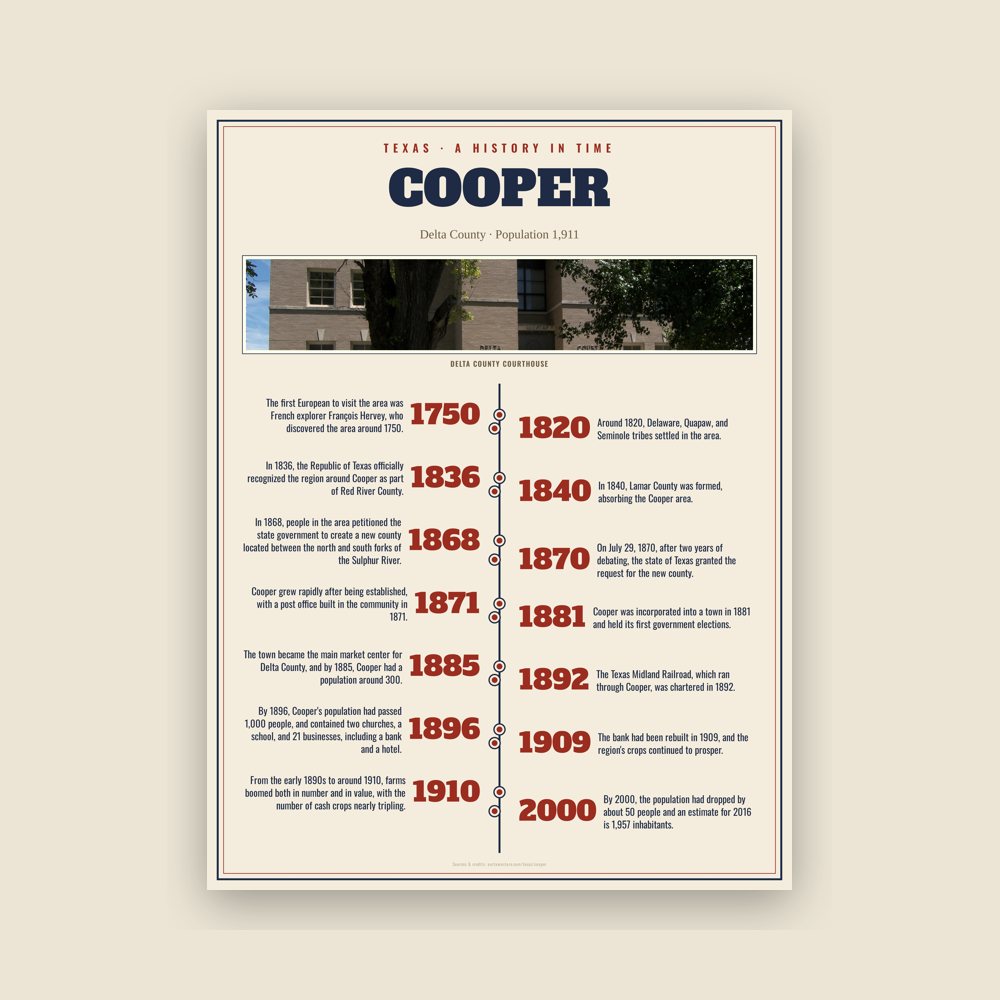
The first inhabitants of the area that is now the site of Cooper were the Caddo Indians, who settled large portions of eastern Texas as early as 800 CE. The Caddo were highly advanced, living in large wooden structures, and were skilled farmers. The first European to visit the area was French explorer François Hervey, who discovered the area around 1750. However, a few decades later, some of the Indians caught European diseases and along with attacks from neighboring Indian tribes, forced the Caddo out of the area around Cooper. Around 1820, Delaware, Quapaw, and Seminole tribes settled in the area. In 1836, the Republic of Texas officially recognized the region around Cooper as part of Red River County. In 1840, Lamar County was formed, absorbing the Cooper area. However, just six years later, the region was designated as part of the newly formed Hopkins County.
After the Civil War, the region around the site of Cooper began to grow and develop. People in nearby Ben Franklin, Texas, grew tired of the poor road conditions that connected the region. In 1868, people in the area petitioned the state government to create a new county located between the north and south forks of the Sulphur River. On July 29, 1870, after two years of debating, the state of Texas granted the request for the new county. Shortly afterwards, the first settlements were built in Cooper and the town was established. The community was named after Leroy Cooper, the chairman of the Texas House Committee on Counties and Boundaries, who helped establish the new county. Cooper was selected as the seat for the county, which was named Delta County due to its triangular shape.
Read the full history
Since establishment
Cooper grew rapidly after being established, with a post office built in the community in 1871. Cooper was incorporated into a town in 1881 and held its first government elections. That same year, Cooper constructed the county courthouse. The town became the main market center for Delta County, and by 1885, Cooper had a population around 300. The Texas Midland Railroad, which ran through Cooper, was chartered in 1892. The railroad helped promote the rapid growth of the town. By 1896, Cooper's population had passed 1,000 people, and contained two churches, a school, and 21 businesses, including a bank and a hotel. The town also had two weekly newspapers. Cooper continued to grow into the early 1900s, especially in the area of agriculture. From the early 1890s to around 1910, farms boomed both in number and in value, with the number of cash crops nearly tripling. The region produced over 70,000 chickens and almost 7,000 pigs yearly.
Cooper continued to grow into the 1920s. The bank had been rebuilt in 1909, and the region's crops continued to prosper. Cooper reported its largest population, 2,563, in 1925. Delta County was hit by the Great Depression early, though. In late 1926, the community's cotton crop failed, forcing many residents to withdraw their savings. The bank was forced to close in 1927, and by the time it reopened a few months later, the region's economy had plummeted. Several families moved away from Cooper during the early 1930s, and in 1933, the bank was forced to close again. The Midland Texas Railroad failed, hurting Cooper's economy further. The New Deal program offered government-financed construction projects in Cooper, and in 1940, the Works Progress Administration demolished the former courthouse in Cooper and replaced it with a new one at a cost of $110,450 (equivalent to $2,538,300 respectively in 2022). However, even with the stability of the economy, Cooper's population remained low until the 1950s, when it returned to about 2,350 people. The population declined again in the 1980s, and has continued to slowly decline. Cooper had roughly 60 businesses in the 1970s and 1980s, and in 1986, work on Cooper Lake had begun. Filling of the lake began in September 1991, and by the next year, the lake was open for recreation. At that time, Cooper reported having 70 businesses, and a population around 2,200. By 2000, the population had dropped by about 50 people and an estimate for 2016 is 1,957 inhabitants.
Adapted (trimmed) from the Wikipedia article Cooper, Texas, revision 1377841798 by its contributors, licensed CC BY-SA 4.0.
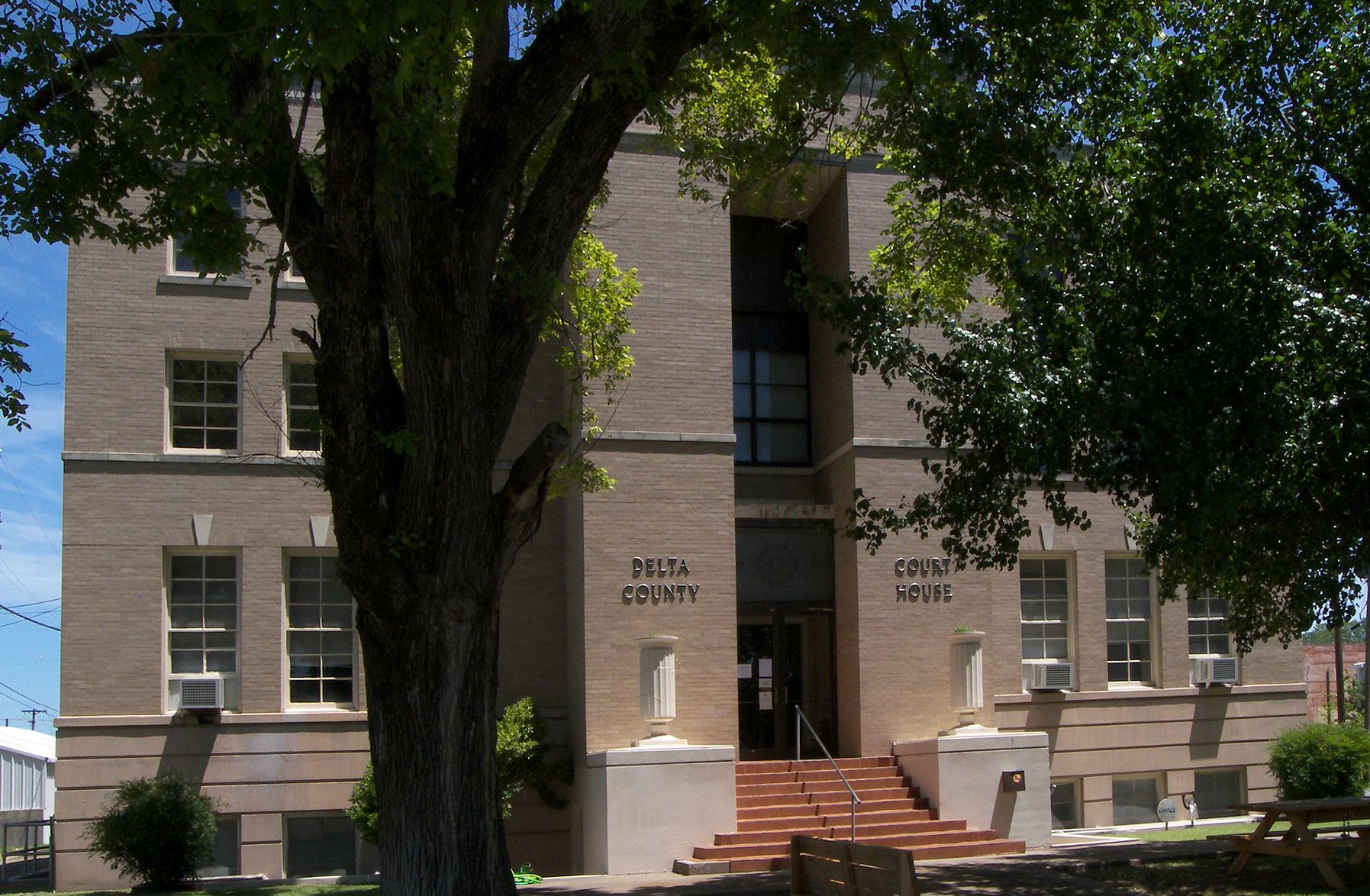























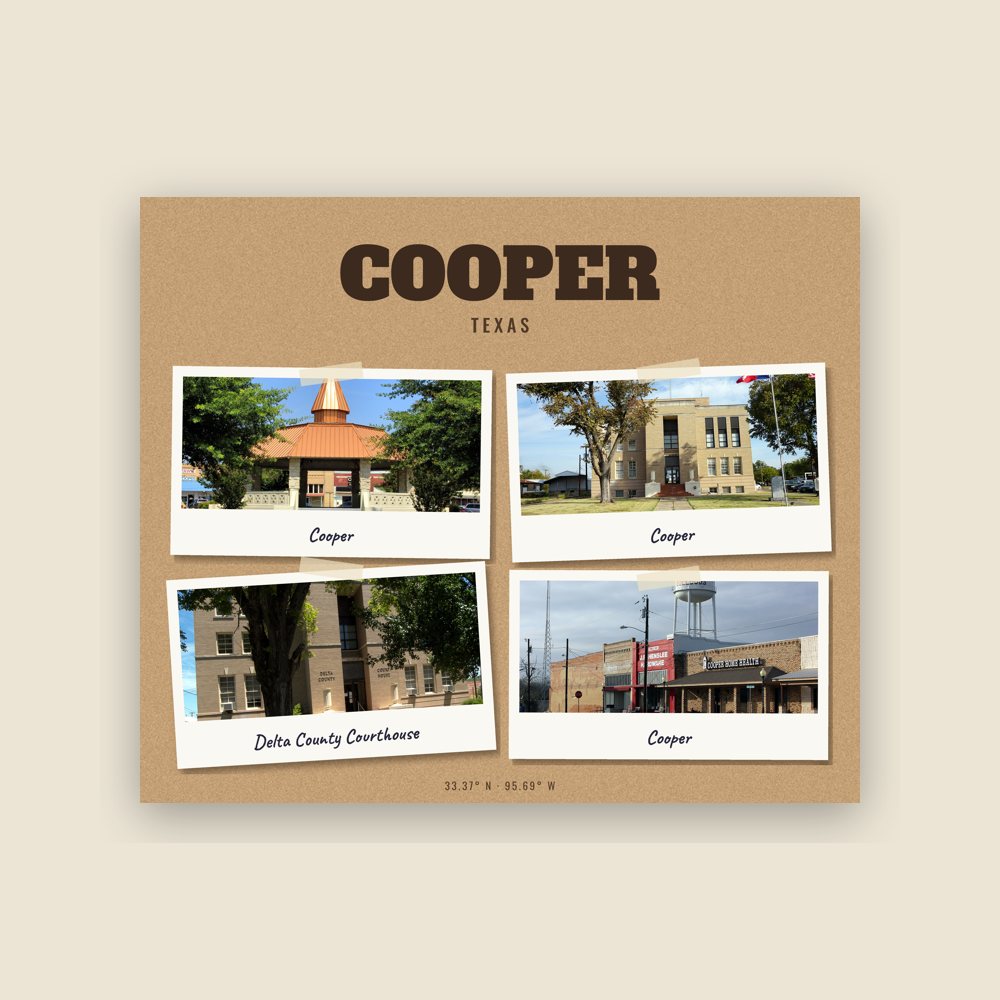

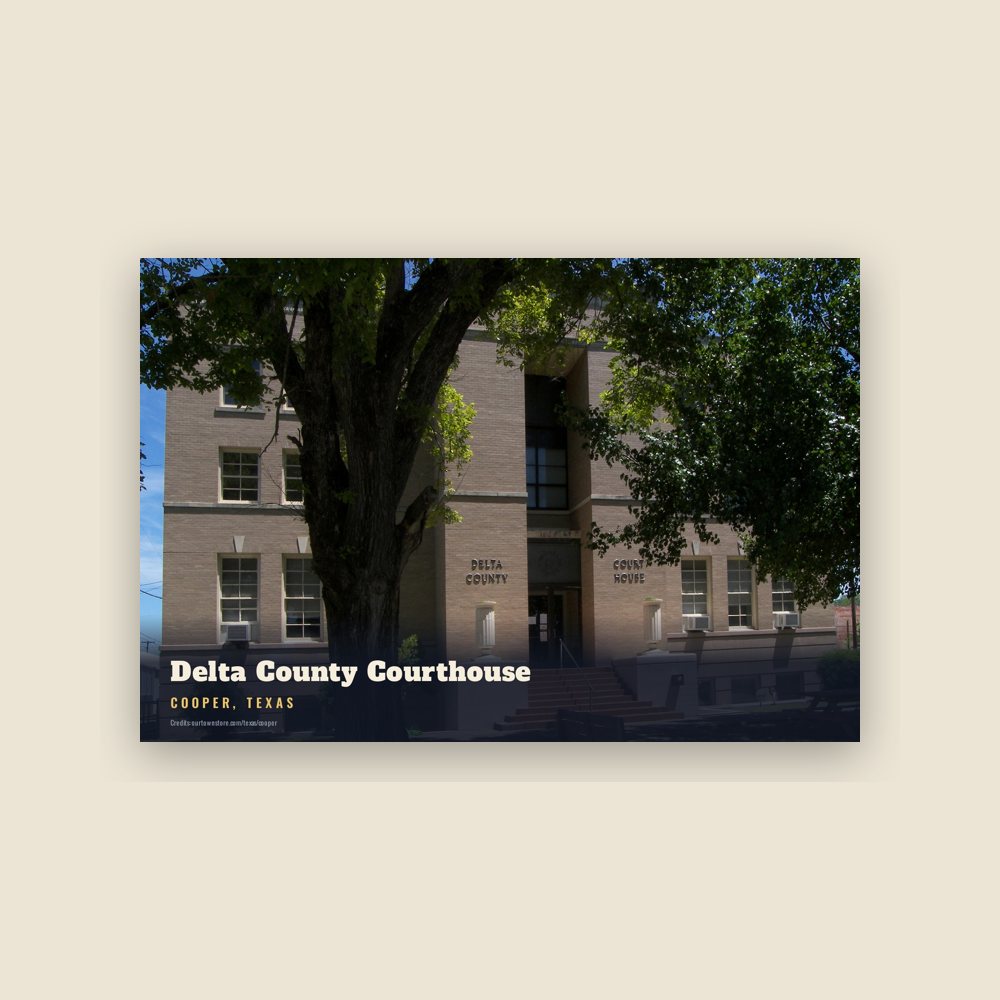
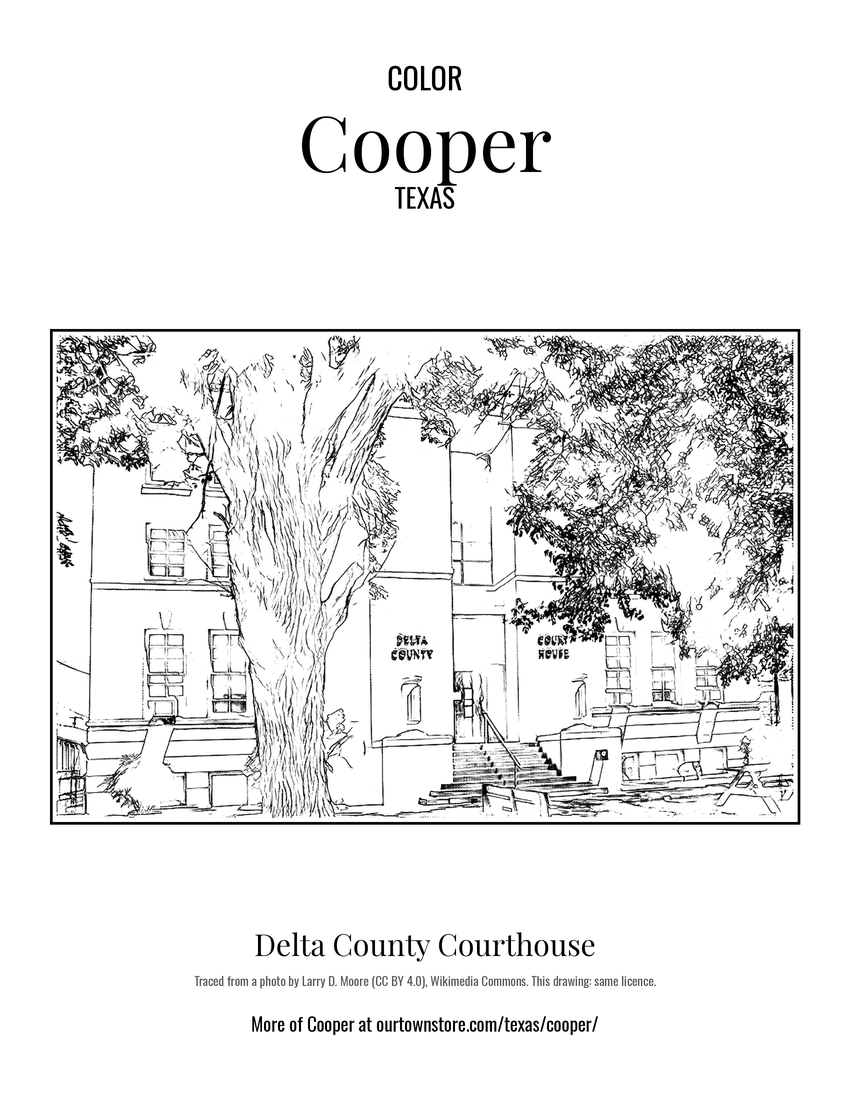 Delta County Courthouse
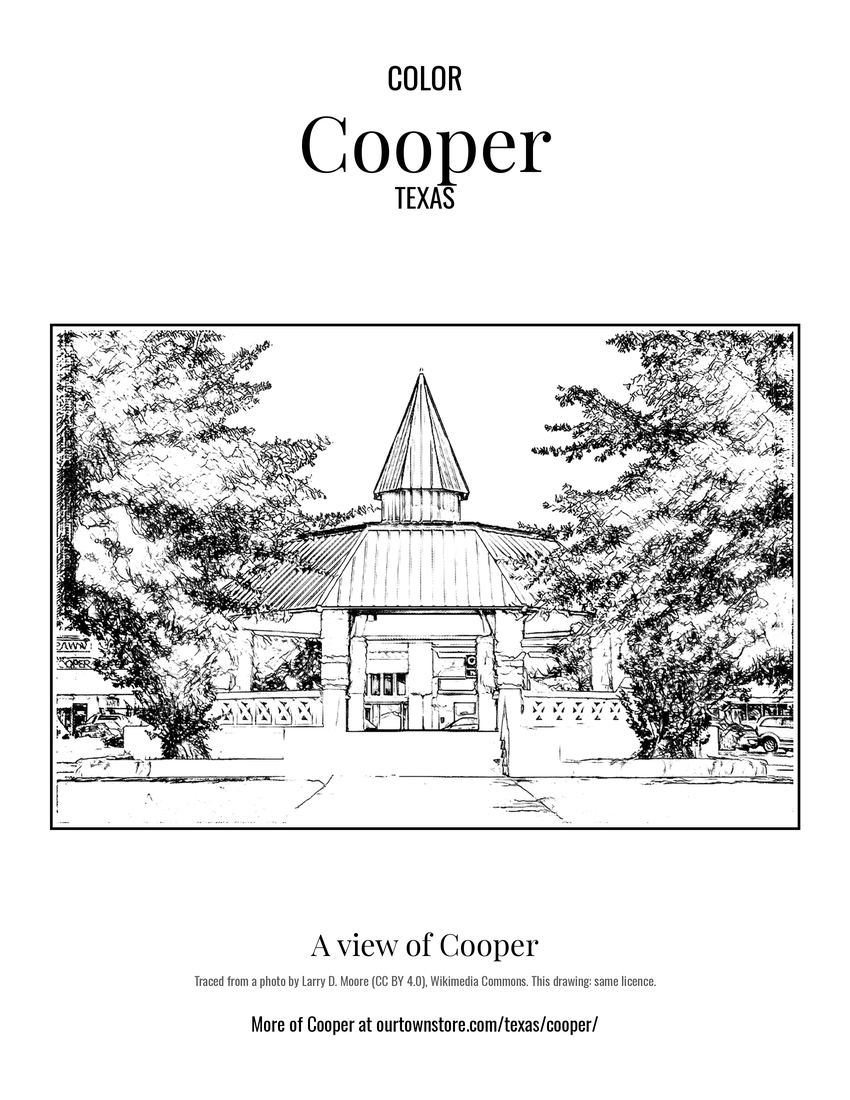 A view of Cooper
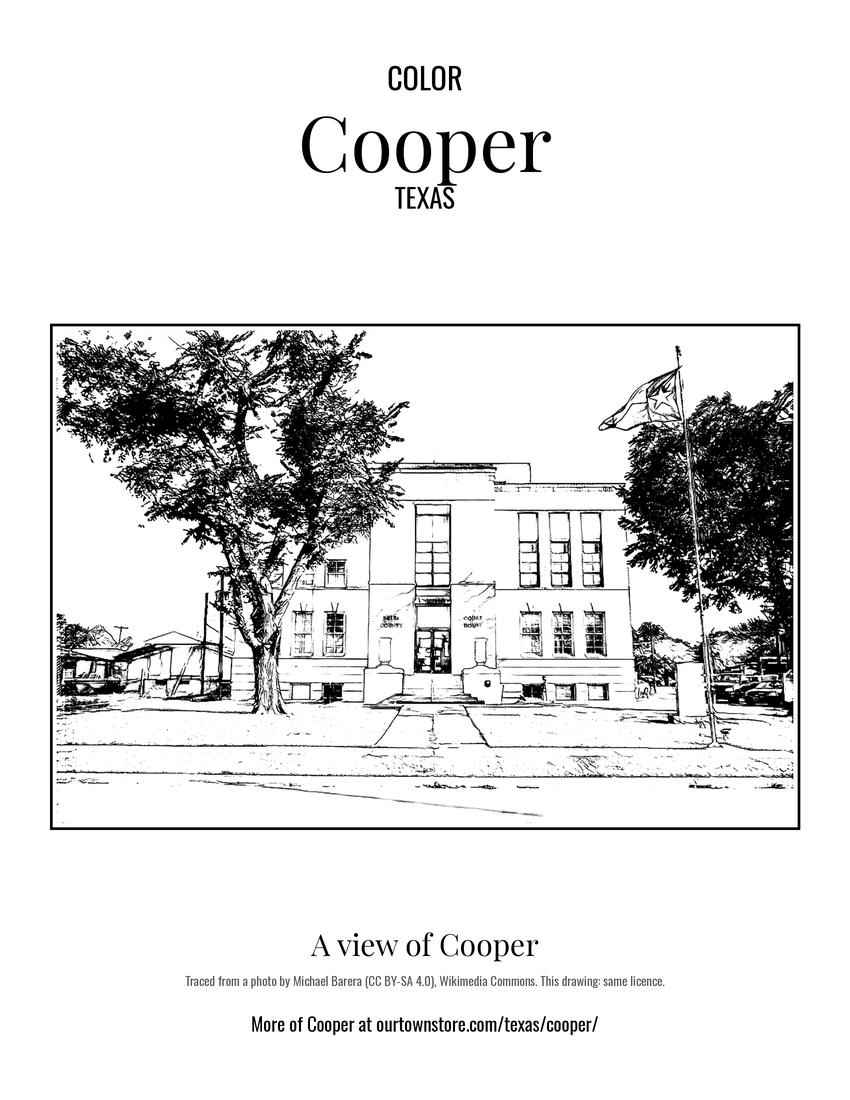 A view of Cooper
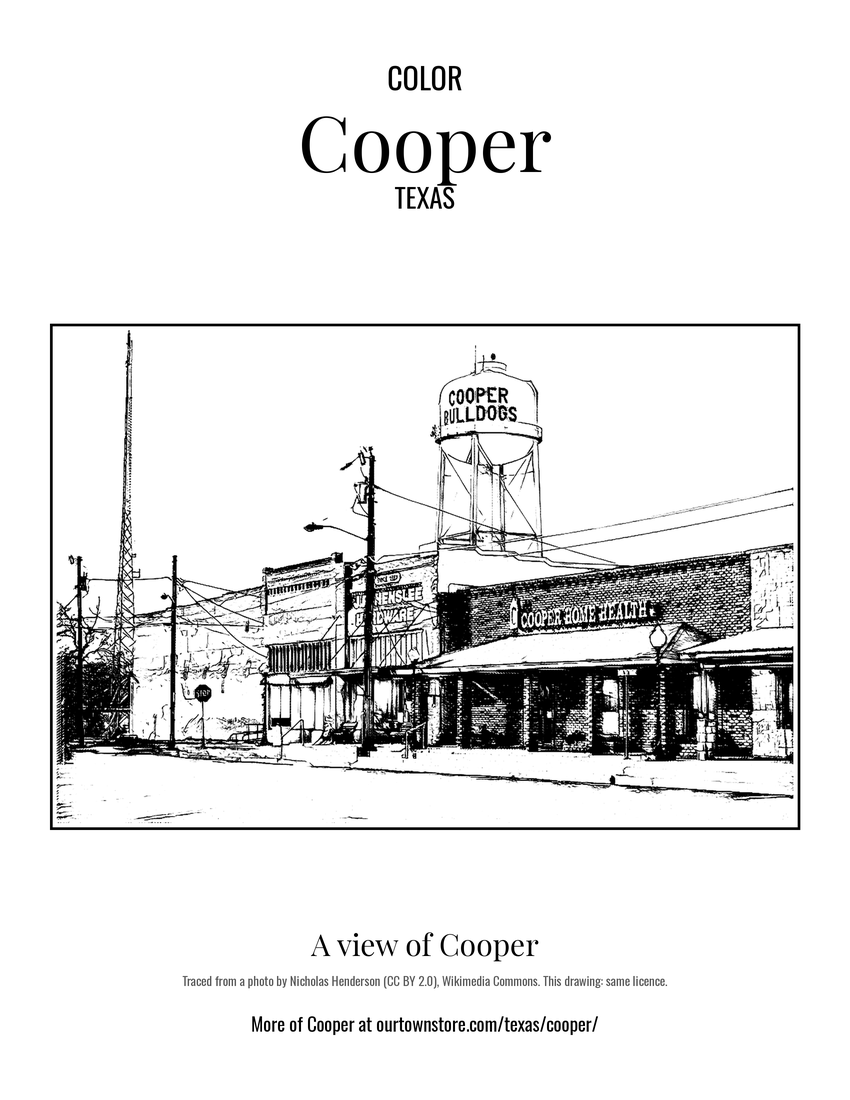 A view of Cooper