A short history of Atlanta
Atlanta was established in 1872 with the building of the Texas and Pacific Railway and was named for Atlanta, Georgia, former home of many early settlers; a post office was opened that same year.
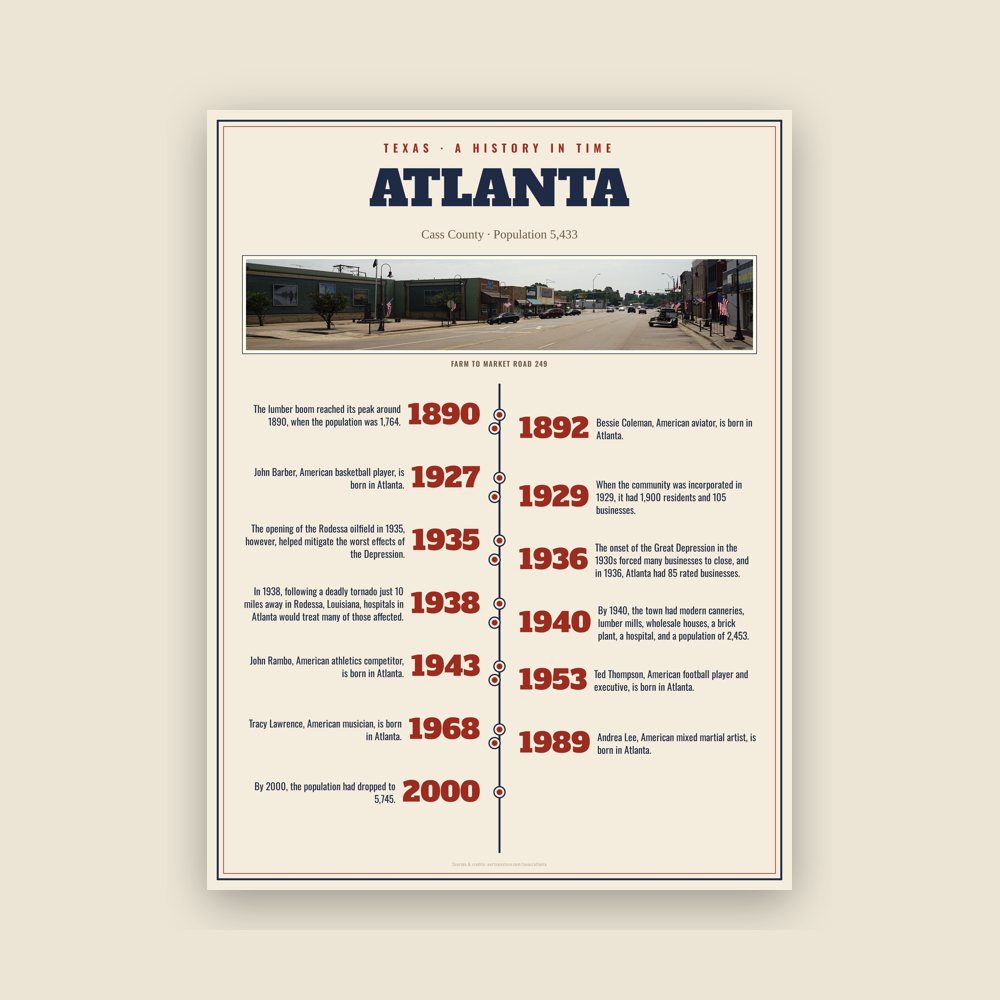
By 1885, the community had 1,500 residents, who had founded three White and two Black churches, two schools, a bank, several sawmills, a number of general stores, and a weekly newspaper, the Citizens' Journal. Lumbering was the chief industry. The lumber boom reached its peak around 1890, when the population was 1,764. When the community was incorporated in 1929, it had 1,900 residents and 105 businesses.
In 1938, following a deadly tornado just 10 miles away in Rodessa, Louisiana, hospitals in Atlanta would treat many of those affected.
The onset of the Great Depression in the 1930s forced many businesses to close, and in 1936, Atlanta had 85 rated businesses. The opening of the Rodessa oilfield in 1935, however, helped mitigate the worst effects of the Depression. By 1940, the town had modern canneries, lumber mills, wholesale houses, a brick plant, a hospital, and a population of 2,453. Subsequently, Atlanta grew steadily, topping the 4,000 mark for the first time in the early 1960s. In 1990, its population was 6,118. By 2000, the population had dropped to 5,745. Principal industries include farming, forestry, oil, and tourism.
Adapted (trimmed) from the Wikipedia article Atlanta, Texas, revision 1378480444 by its contributors, licensed CC BY-SA 4.0.

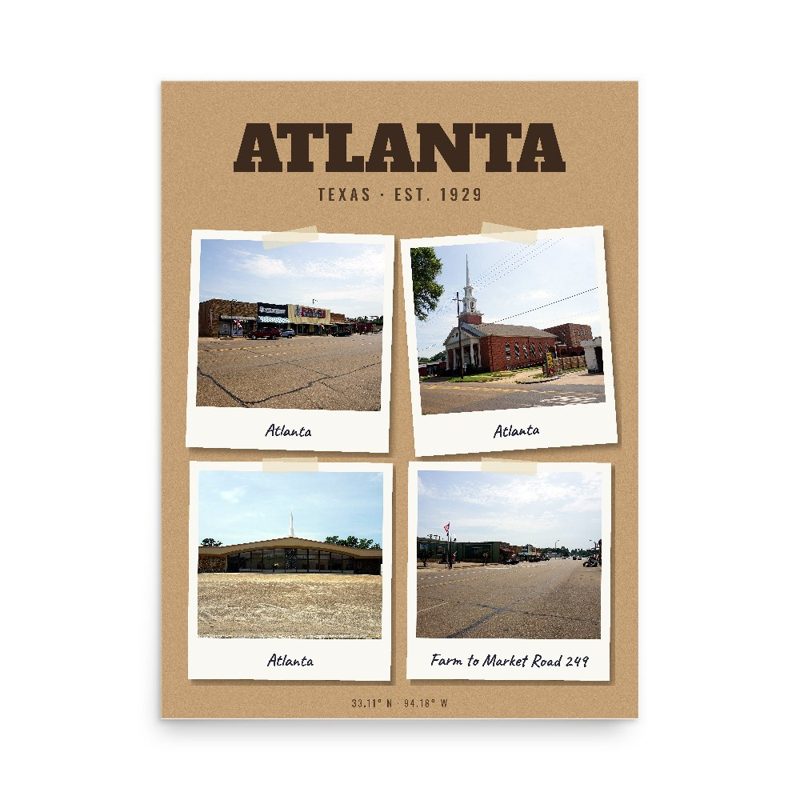
















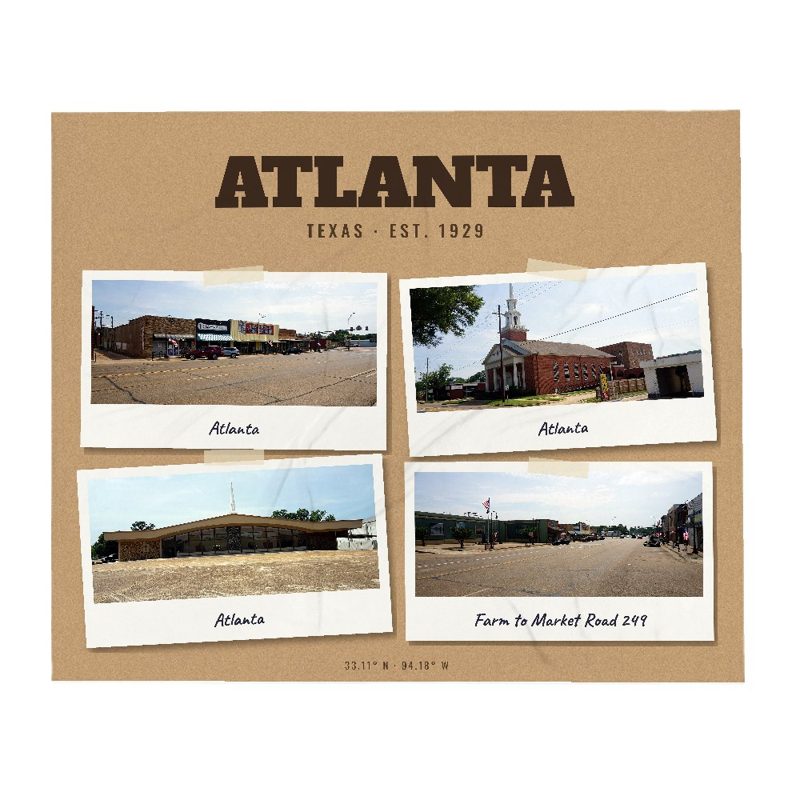

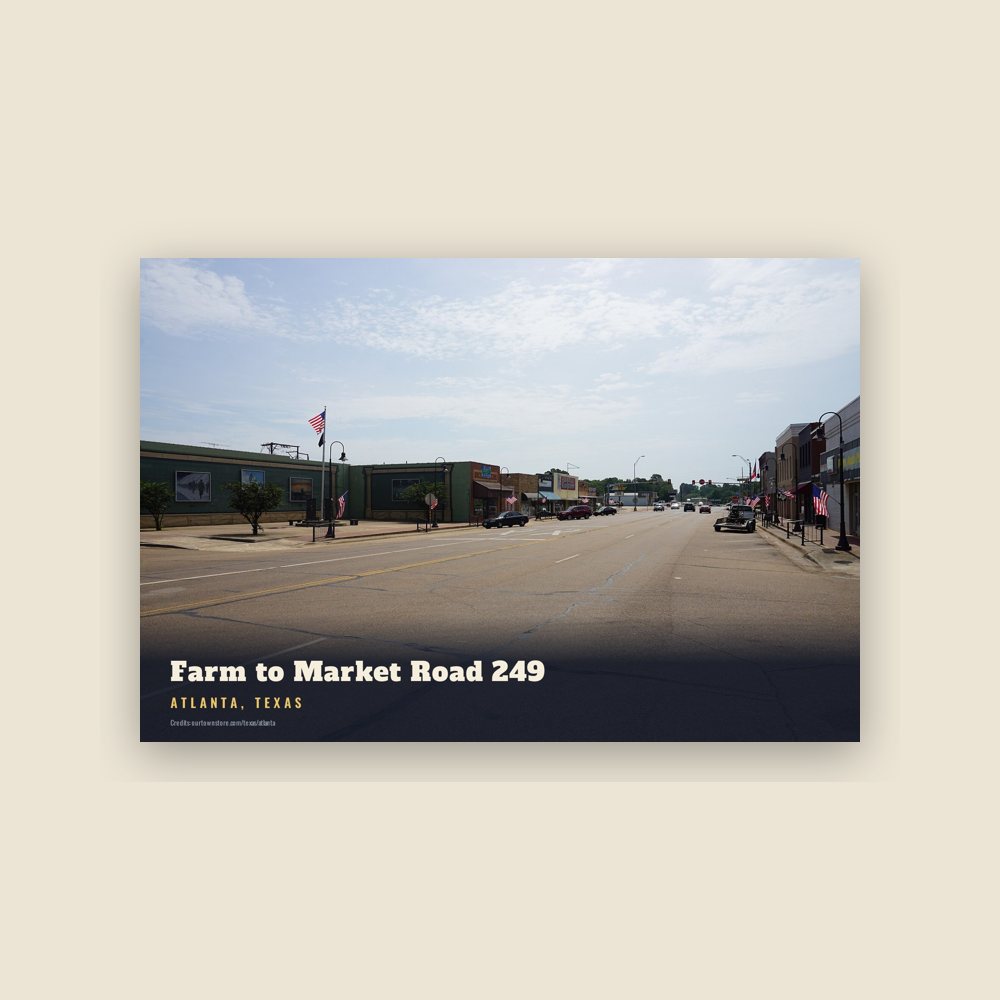
 Farm to Market Road 249
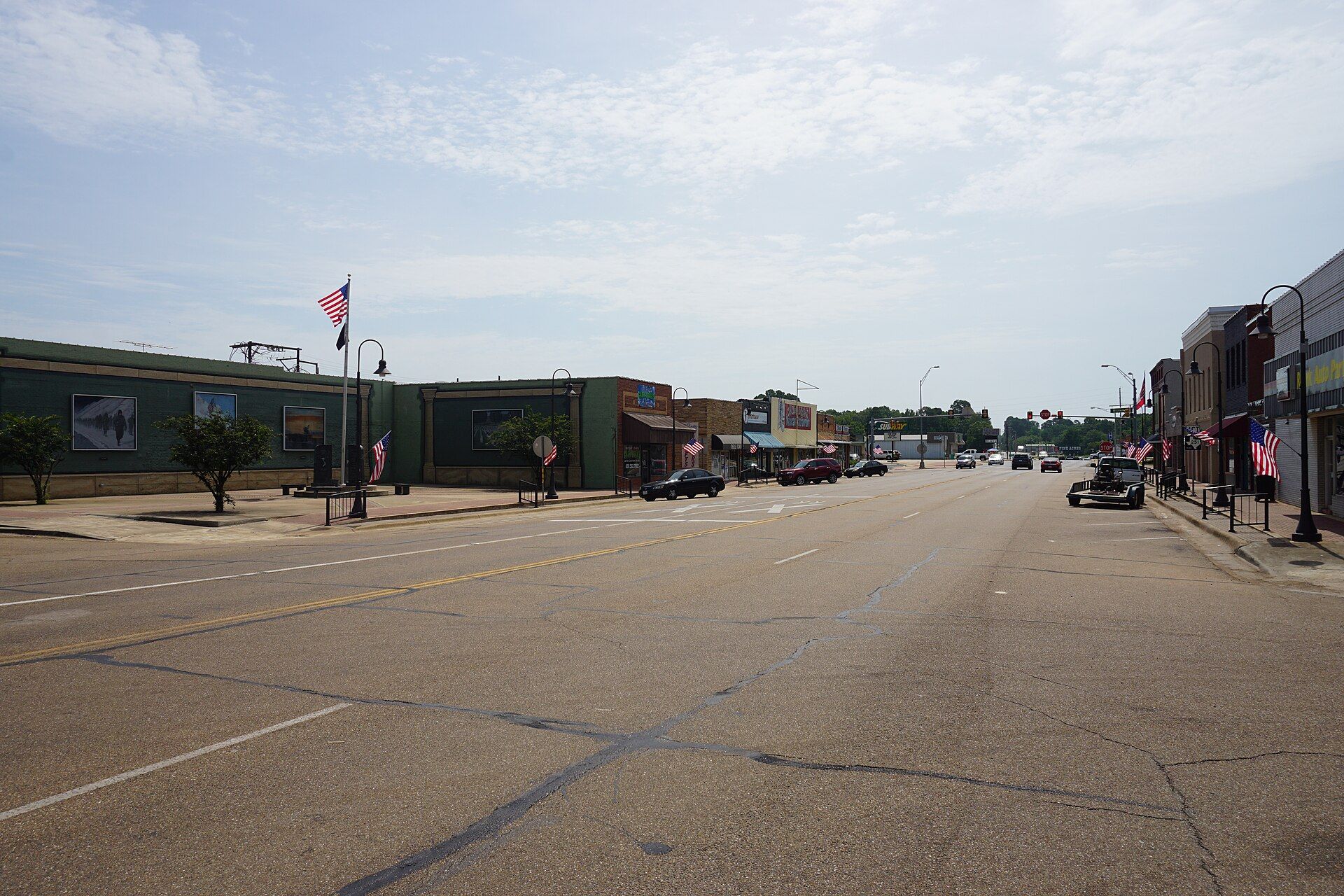
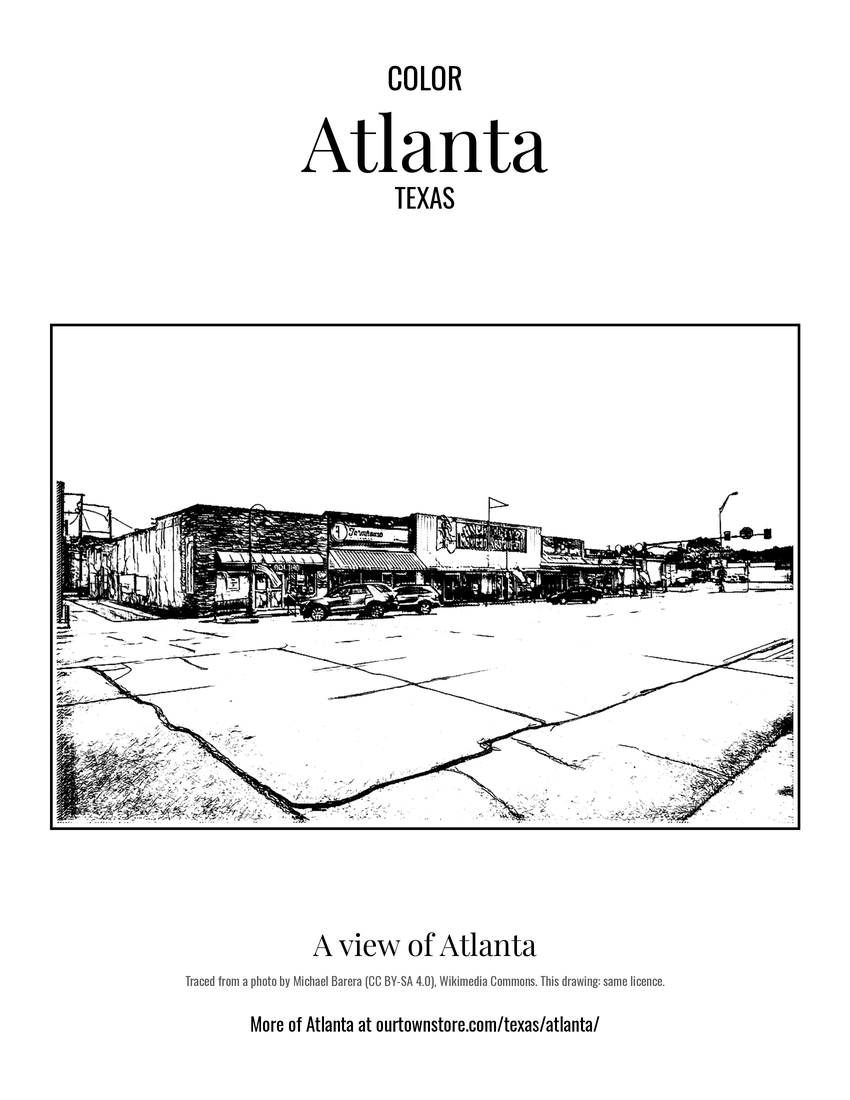 A view of Atlanta
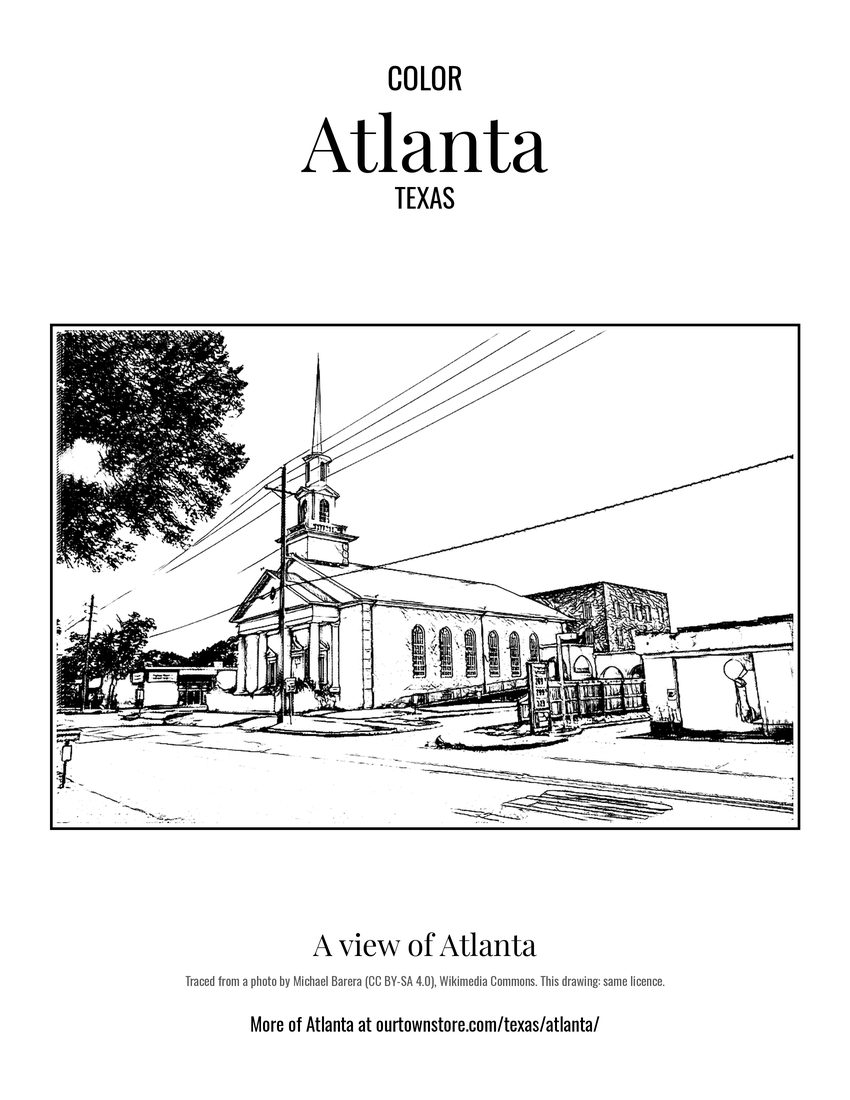 A view of Atlanta
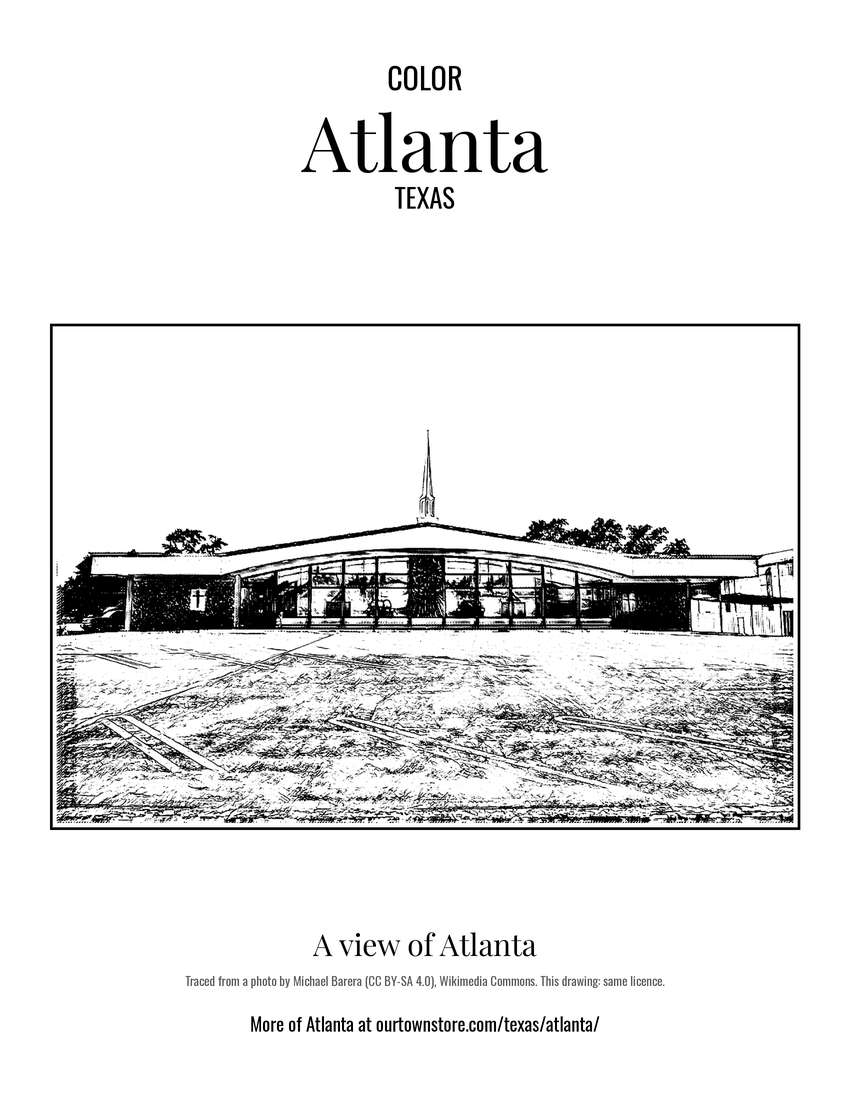 A view of Atlanta