Native Americans of the Woodland period were among the first human inhabitants of the area that became Sevierville. They arrived circa 200 A.D.
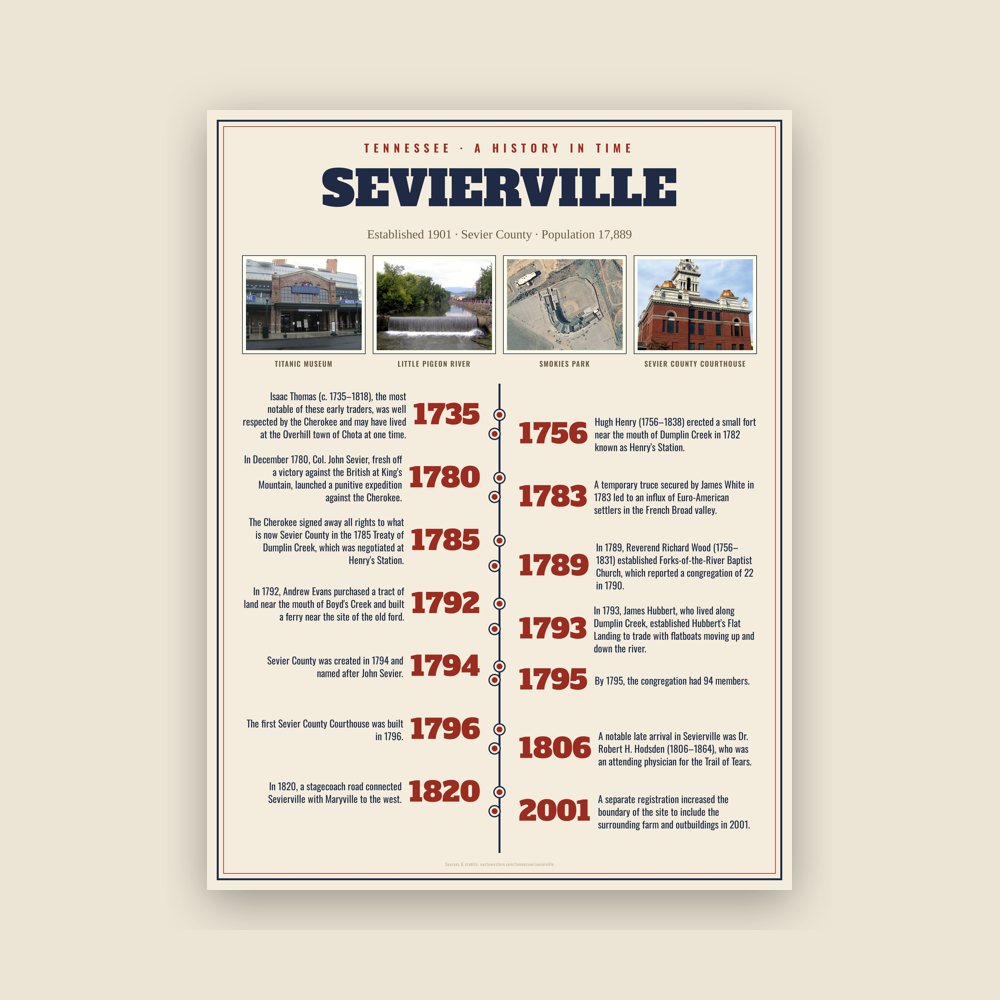
Between 1200 and 1500 A.D., during the Dallas phase of the Mississippian period, a group of Native Americans established McMahan Mound Site, a relatively large village centered on a platform mound and surrounded by a palisade just above the confluence of the West Fork and the Little Pigeon River. This mound was approximately 16 feet (5 m) high and 240 feet (73 m) across. An excavation in 1881 unearthed burial sites, arrowheads, a marble pipe, glass beads, pottery, and engraved objects. At the time of this first excavation, the mound was located on a farm owned by the McMahan family, and was thus given the name "McMahan Indian Mound."
By the early 18th century, the Cherokee controlled much of the Tennessee side of the Smokies and had established a series of settlements along the Little Tennessee River. A section of the Great Indian Warpath forked at the mouth of Boyd's Creek, just north of Sevierville. The main branch crossed the French Broad and continued along Dumplin Creek to the Nolichucky basin in northeastern Tennessee. The other branch, known as the Tuckaleechee and Southeastern Trail, turned south along the West Fork of the Little Pigeon River. This second branch forked again at modern-day Pigeon Forge, with the main trail turning east en route to Little River and the other branch, known as Indian Gap Trail, crossing the crest of the Smokies to the south and descending into the Oconaluftee area of North Carolina. The various Cherokee trails crossing Sevier County brought the first Euro-American traders and settlers to the area.
Read the full history
Early Euro-American settlement
European long hunters and traders arrived in the Sevierville area in the mid-18th century. Isaac Thomas (c. 1735–1818), the most notable of these early traders, was well respected by the Cherokee and may have lived at the Overhill town of Chota at one time. Europeans like Thomas were mainly in the area in search of animal furs, which they exchanged for manufactured goods.
As settlers began to trickle into East Tennessee, relations with the Cherokee began to turn hostile. During the Revolutionary War, the Cherokee, who had aligned themselves with the British, launched sporadic attacks against the sparse settlements in the Tennessee Valley. In December 1780, Col. John Sevier, fresh off a victory against the British at King's Mountain, launched a punitive expedition against the Cherokee. Sevier defeated the Cherokee at the Battle of Boyd's Creek and proceeded to destroy several Cherokee settlements along the Little Tennessee.
A temporary truce secured by James White in 1783 led to an influx of Euro-American settlers in the French Broad valley. Hugh Henry (1756–1838) erected a small fort near the mouth of Dumplin Creek in 1782 known as Henry's Station. He was joined the following year by Samuel Newell (1754–1841), who established Newell's Station along Boyd's Creek, and Joshua Gist, who settled near the creek's mouth. Other early forts in the area included Willson's Station at the confluence of the East and Middle Fork of the Little Pigeon and Wear's Fort at the junction of the Southeastern and Tuckaleechee Trail and Indian Gap Trail. The Cherokee signed away all rights to what is now Sevier County in the 1785 Treaty of Dumplin Creek, which was negotiated at Henry's Station.
In 1783, Isaac Thomas established a farm, trading post, and tavern at the confluence of the West Fork and the Little Pigeon River. He was joined shortly thereafter by Spencer Clack and James McMahan, and a community known as "Forks of the Little Pigeon" developed around them. In 1789, Reverend Richard Wood (1756–1831) established Forks-of-the-River Baptist Church, which reported a congregation of 22 in 1790. By 1795, the congregation had 94 members.
Antebellum Sevierville
Sevier County was created in 1794 and named after John Sevier. At a meeting at Thomas' house the following year, the Forks-of-the-Little-Pigeon area was chosen as the county seat and renamed "Sevierville." James McMahan donated a 25-acre (100,000 m2) tract of land for erecting a town square. This tract was parceled out into lots of 0.5 acres (2,000 m2) that purchasers were required to build brick, framed, or stone structures on.
The first Sevier County Courthouse was built in 1796. According to local legend, court was held in a flea-infested abandoned stable before its construction. The lore suggests that irritated lawyers paid an unknown person a bottle of whiskey to burn down the stable, forcing the new county to build an actual courthouse.
As the county grew, several large farms were established in the fertile Boyd's Creek area. In 1792, Andrew Evans purchased a tract of land near the mouth of Boyd's Creek and built a ferry near the site of the old ford. In 1798, he sold the farm to John Brabson, and it became known as Brabson's Ferry Plantation. In the early 1790s, Thomas Buckingham established a large farm between Boyd's Creek and Sevierville. He went on to become the county's first sheriff. In the early 19th century, Timothy Chandler and his son, John Chandler (1786–1875), established the Wheatlands plantation in Boyd's Creek.
As towns situated along the French Broad are connected via waterway to New Orleans, flatboat trade flourished along the river in the early 19th century. In 1793, James Hubbert, who lived along Dumplin Creek, established Hubbert's Flat Landing to trade with flatboats moving up and down the river.
In the early 19th century, Knoxville and Asheville were connected via Route 17, a crude road that followed the banks of the French Broad. This new road gave Tennessee's cattle drovers greater access to markets along the east coast. In 1820, a stagecoach road connected Sevierville with Maryville to the west. Sevierville's status as a county seat along these early roads helped it grow. By 1833, the town had a population of 150, including two doctors, two carpenters, a tanner, two tailors, a shoemaker, three stores, a hatter, two taverns, and two mills. Distilleries were popular means of supplemental income. By 1850, John Chandler's distillery was producing 6,000 gallons of whiskey per year.
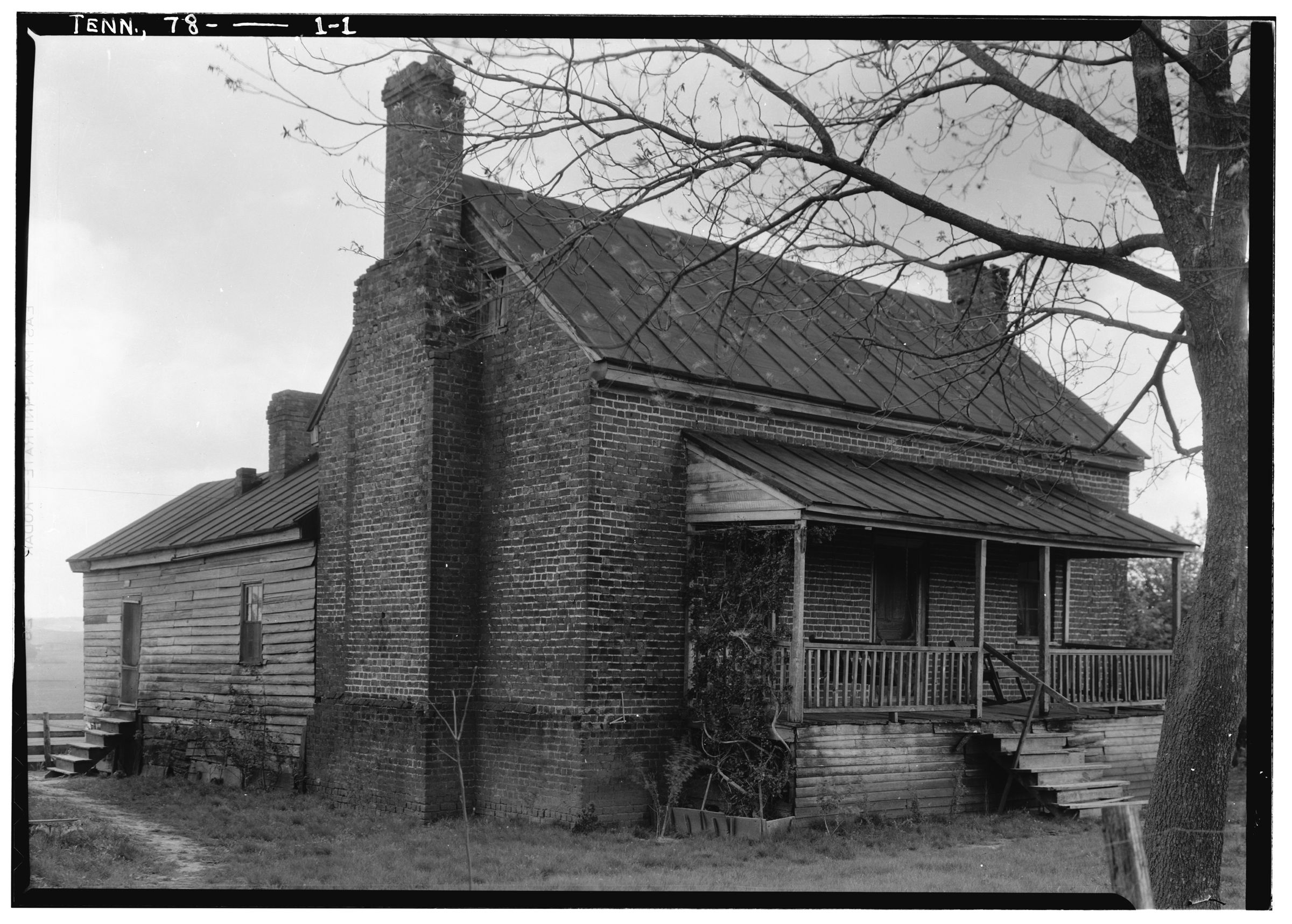
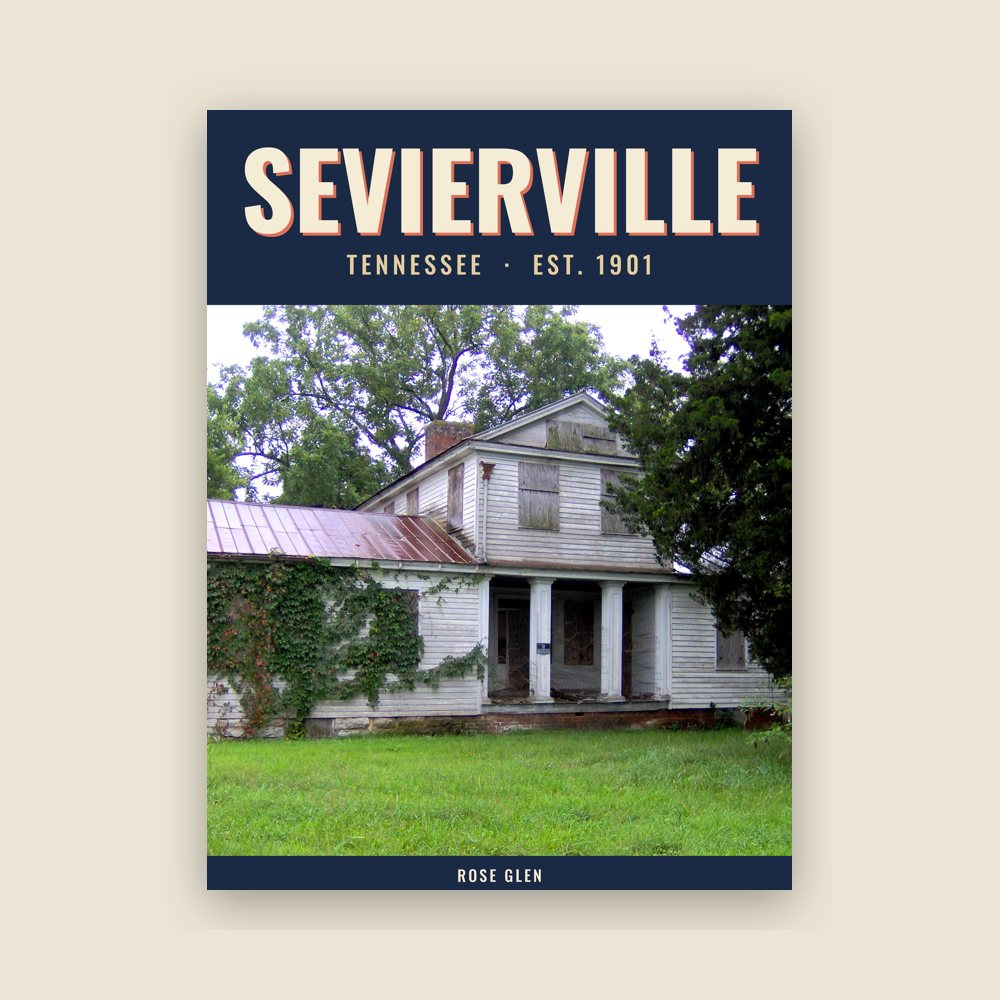
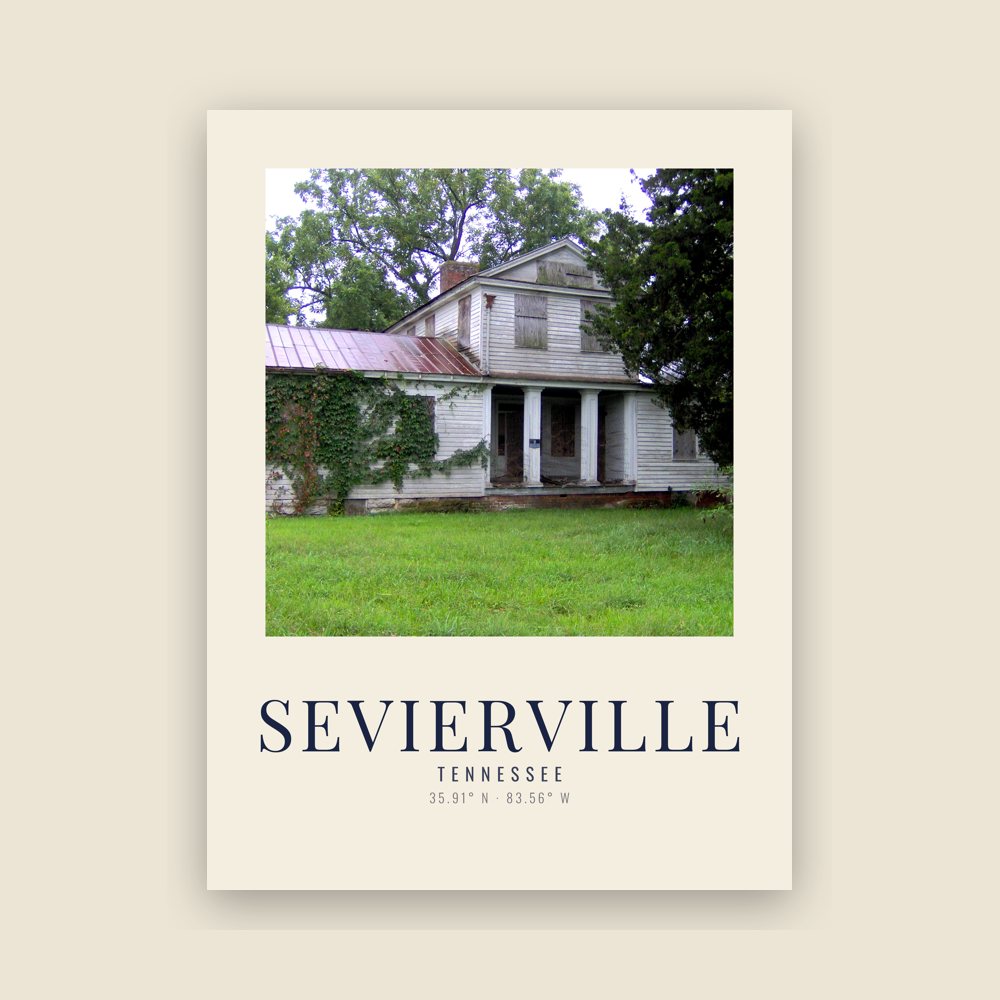
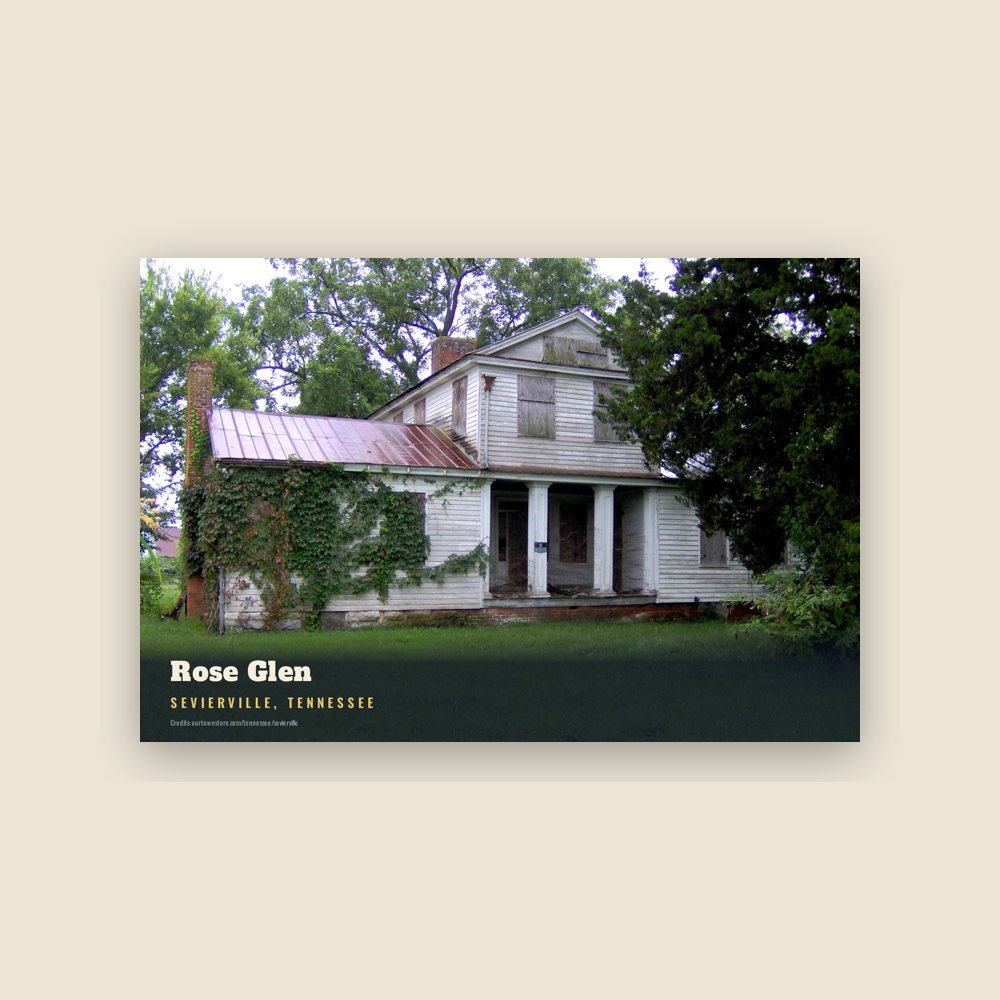
A notable late arrival in Sevierville was Dr. Robert H. Hodsden (1806–1864), who was an attending physician for the Trail of Tears. In 1846, Hodsden began construction on a plantation near Fair Garden, just outside Sevierville to the east. Known as Rose Glen, this plantation was worth $28,000 in 1860, making it one of the most valuable in the county.
In 1856, a fire swept through Sevierville, burning a recently constructed courthouse, 41 houses, and several shops in the downtown area. The county lost nearly all of the vital records of its early settlers.
The Civil War
Slavery was not common in Sevier County, although it did occur, especially at the large plantations along the French Broad River. Even before the American Civil War, Sevierville – a hotbed of abolitionist activity – was home to a relatively large community of free African-Americans. In 1861, only 3.8% of the residents of Sevier County voted in favor of secession from the Union.
In late 1861, a pro-secession speech delivered by Henry Foote sparked an angry response in Sevierville and was followed by a series of explosive anti-secession speeches. The following year, pro-Union Knoxville newspaper editor Parson Brownlow gave a rousing anti-secession speech in Sevierville en route to a hideout in Wears Valley. Brownlow's audience remained gathered throughout the night after a rumor spread that Confederate forces were approaching. Union supporters in Sevier County were harassed and threatened throughout the war, even after Union forces under Ambrose Burnside occupied Knoxville in September 1863.
A guard of rebel soldiers in 1864 threatened to burn my house, and the rebel soldiers so often threatened to take my life that I cannot particularize. They were always after me because of my Union sentiments.
The robbers have come at last, they robbed my husband of his pocketbook, money and papers and pocket knife. Times get worse everyday. We know not what will come next. I feel this morning like nothing but destruction awaits us.
At the war's end, most of the county's few remaining Confederate sympathizers, most notably members of the Brabson family, were forced to flee.
Postwar-present
Sevierville recovered quickly from the war, with a number of new houses and businesses being built in the 1870s. Two members of the town's African-American community — house builder Lewis Buckner (1856–1924) and brickmason Isaac Dockery (1832–1910) — played a prominent role in Sevierville's post-war construction boom. Buckner designed a number of houses in the Sevierville area over a 40-year period, 15 of which are still standing. Dockery's contributions include the New Salem Baptist Church in 1886 and the Sevier County Courthouse in 1896, both of which are still standing.
By the 1880s, Sevierville was growing rapidly, as was the population of Sevier County. In 1887, the town had four general stores, two groceries, a jeweler, a sawmill, and two hotels. It was also home to the Sevierville Lumber Company, which was established to harvest trees in the area. Tourists also started to trickle into Sevier County, drawn by the reported health-restoring qualities of mountain springs. Resorts sprang up throughout the county, with Seaton Springs and Henderson Springs located just south of Sevierville.
In 1892, a vigilante group known as the "Whitecaps" was formed to rid Sevier County of vice. The group wore white hoods to conceal their identities and used Ku Klux Klan-like tactics, although they were not considered a racist entity. The Whitecaps initially threatened women accused of prostitution, and the group began launching nightly attacks in the mid-1890s. In 1893, Sevierville physician J.A. Henderson took over an anti-Whitecap group, which he renamed the "Blue Bills." The two vigilante groups clashed at Henderson Springs in 1894, with deaths occurring on both sides. In 1896, the Whitecaps' murder of a young Sevierville couple led to widespread outrage, and in 1898, the Tennessee State Legislature banned "extra-legal conspiracies" and vigilante groups. Due to this measure and the efforts of Sevier County Deputy Sheriff Thomas Davis, the Whitecaps largely vanished by the end of the century.
After a fire destroyed much of the downtown area in 1900, businesses shifted from the old town square at Main Street to the new Sevierville Commercial District, viz. Court Avenue and Bruce Street, which centered on the new courthouse. The town incorporated in 1901.
In 1910, Indiana entrepreneur William J. Oliver finished work on the Knoxville, Sevierville and Eastern Railroad, which was Sevier County's first standard gauge rail line. Known as the Smoky Mountain Railroad, this line offered passenger service between Knoxville and Sevierville until 1962.
With the opening of Great Smoky Mountains National Park in 1934, tens of thousands of tourists began passing through Sevierville, which was situated about halfway between the park and Knoxville. U.S. 441, initially known as Smoky Mountain Highway, was completed to Sevierville in 1934 and later extended to North Carolina.
Entertainer Dolly Parton was born in Sevierville in 1946. Her Parton ancestors had migrated to Greenbrier sometime around 1850 and later moved to Locust Ridge (near Pittman Center), where Parton was born, after the establishment of the national park. In more recent years, the town erected a statue of Parton on the lawn of the courthouse and named Dolly Parton Parkway after her.
Registered historic sites
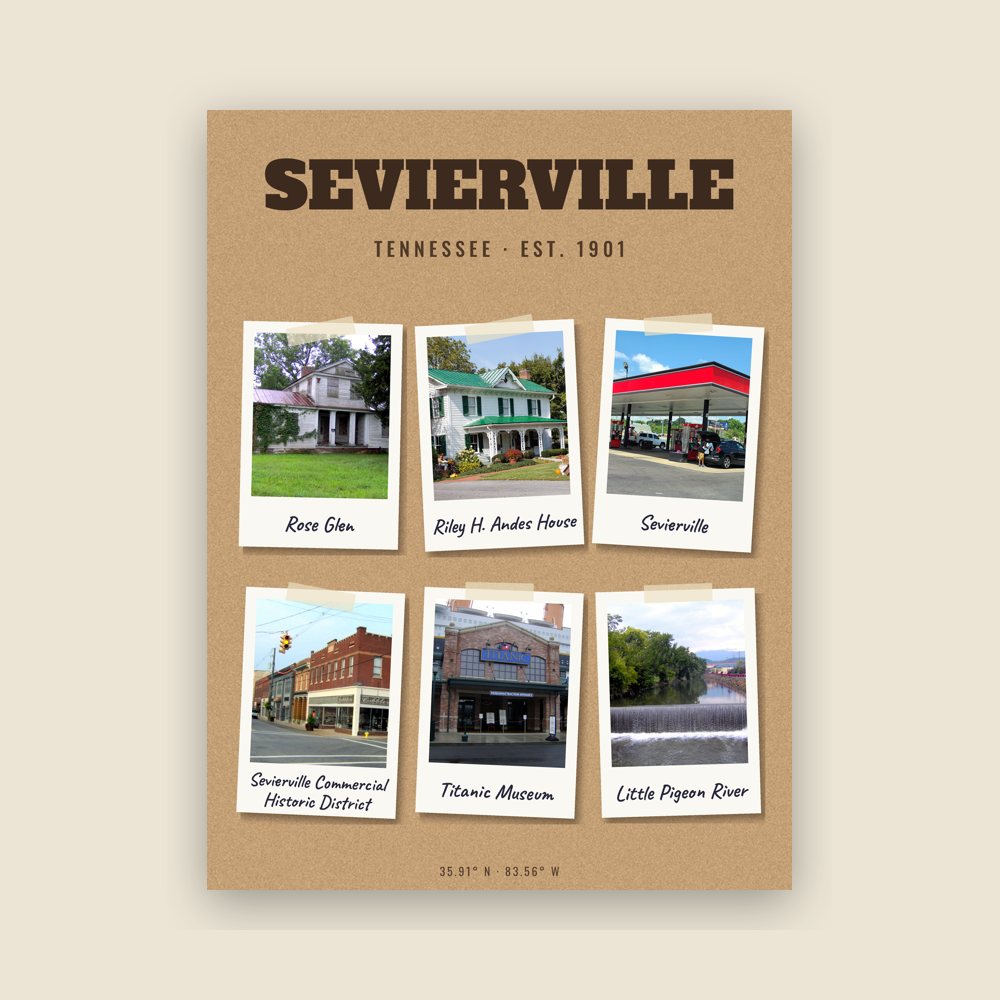
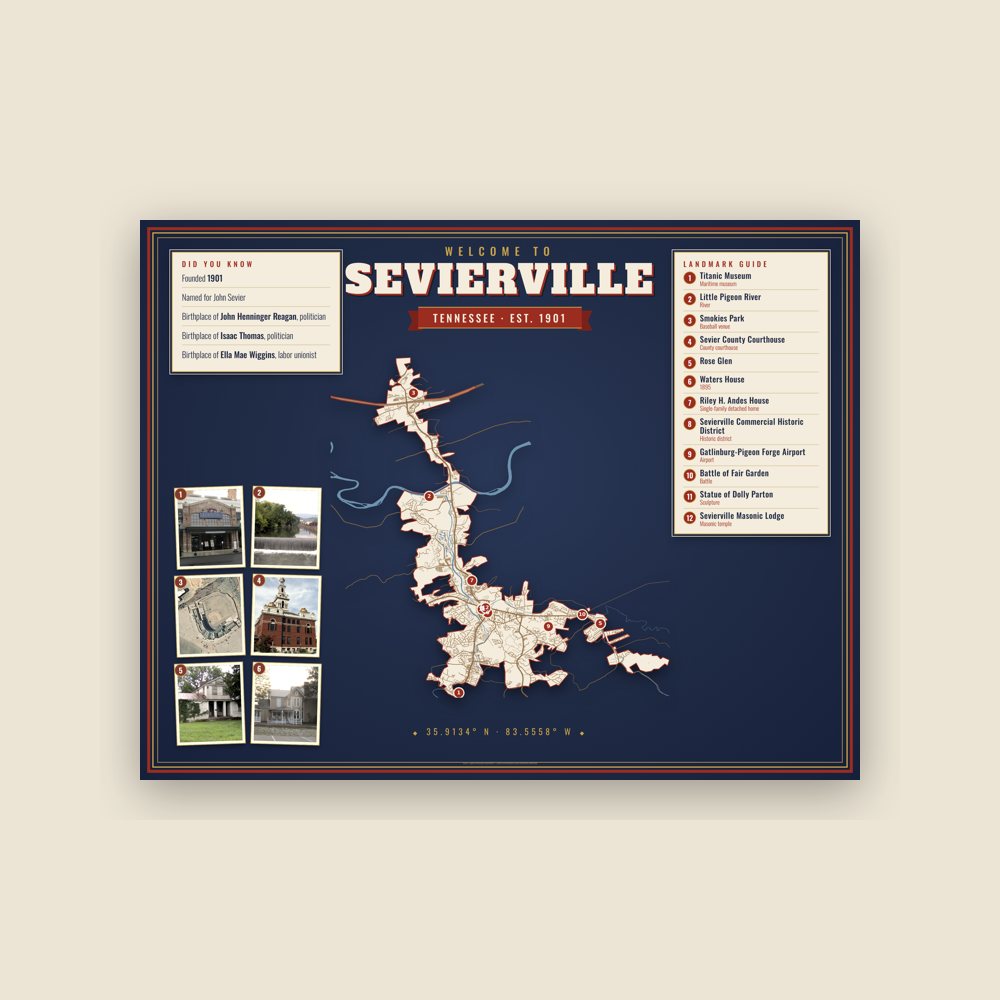
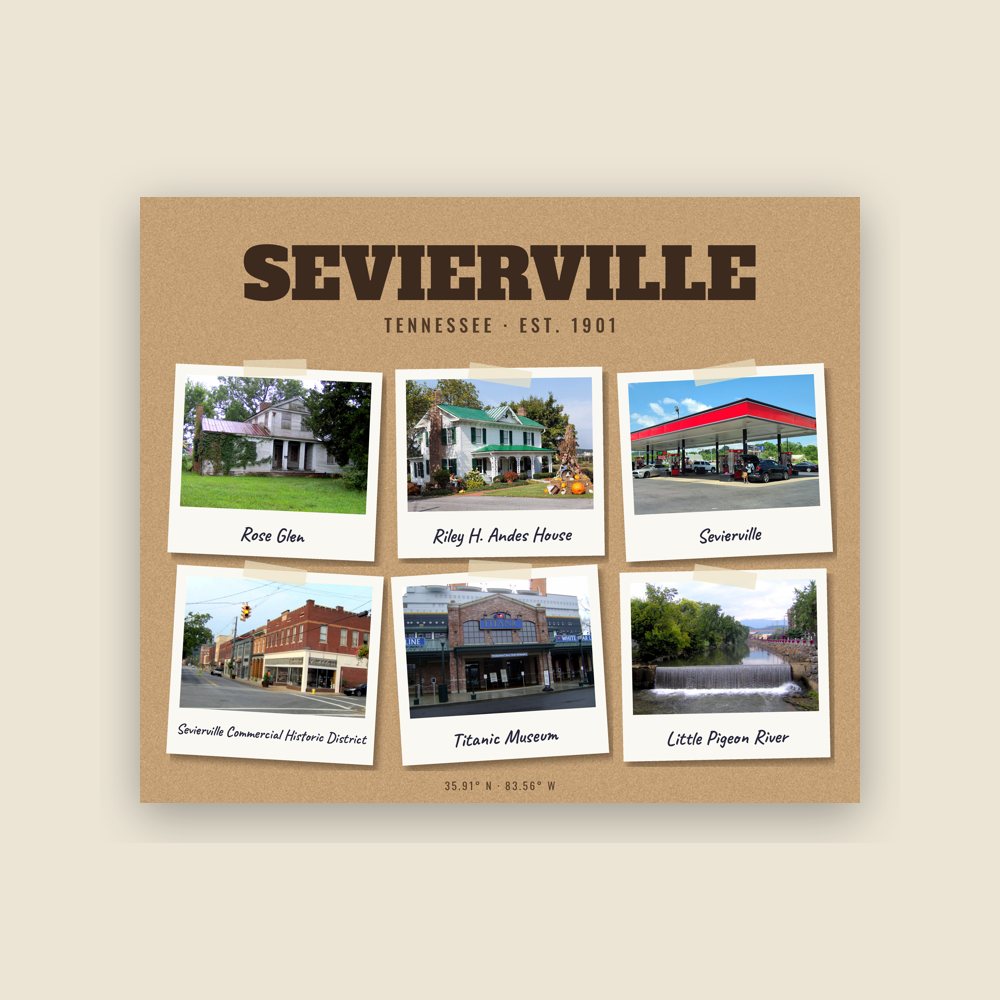
Riley H. Andes House: African-American carpenter Lewis Buckner designed and built this house in 1890. Added to the National Register of Historic Places in 1980, the house is still in use today as an art gallery.
Brabson's Ferry Plantation: Established by Andrew Evans in the early 1790s and purchased by John Brabson in 1798, this plantation site near Boyd's Creek includes a plank house from the late 18th century and two plantation houses. The site was added to the National Register of Historic Places in 1975.
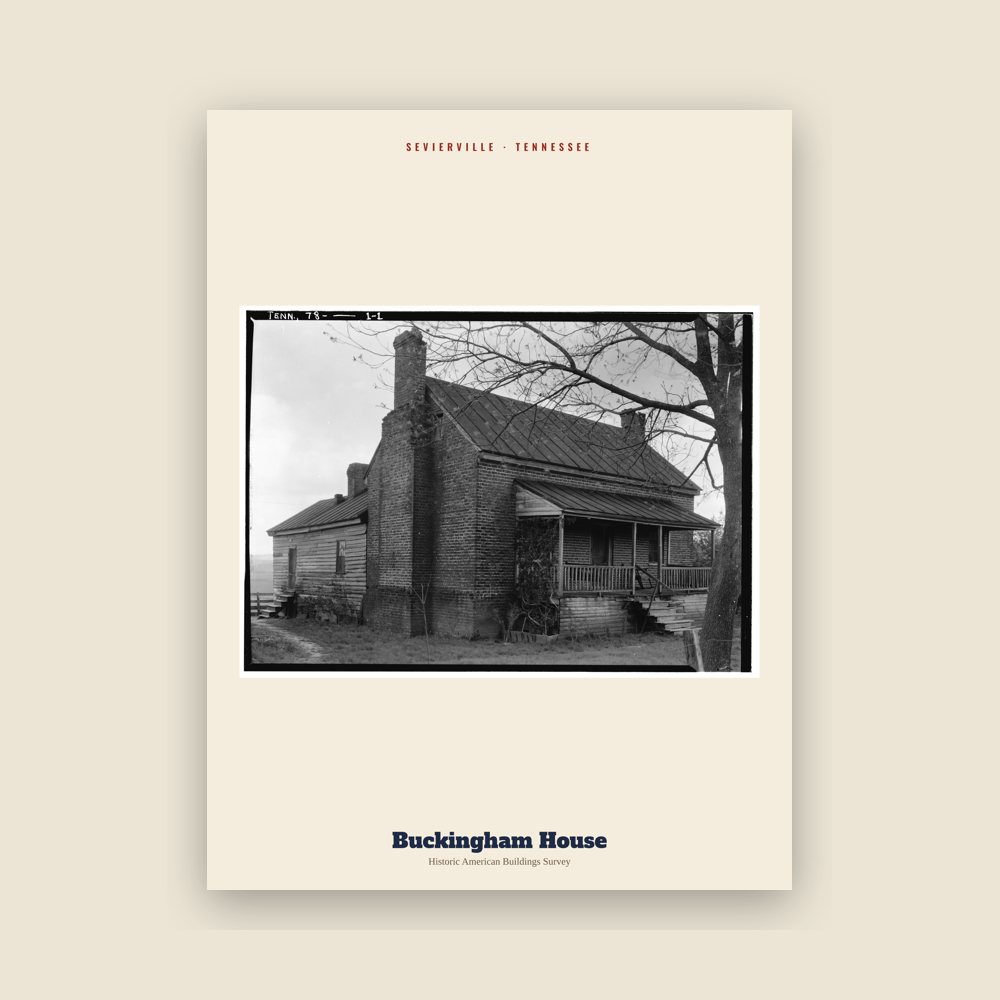
Buckingham House: Located between Sevierville and Boyd's Creek, this home was built in the late 18th century by Thomas Buckingham, the first sheriff of Sevier county. It is the oldest house in the county and was added to the National Register of Historic Places in 1971.
New Salem Baptist Church: This historic church was built by Isaac Dockery for the local African-American community in 1886. It was added to the National Register of Historic Places in 2003.
Perry's Camp: Now known as Flat Branch Cottages, the area was developed as a tourist resort by Charlie Perry in the late 1920s. The site was added to the National Register of Historic Places in 1992.
Rocky Springs Presbyterian Church: Built in 1891, this Folk Victorian-style church also has elements of Queen Anne architecture. It was added to the National Register of Historic Places in 2013.
Rose Glen: The former home of Dr. Robert H. Hodsden, it was built in the 1840s and added to the National Register of Historic Places in 1975. Surviving buildings include the plantation house, loom house, physician's office, and a barn.
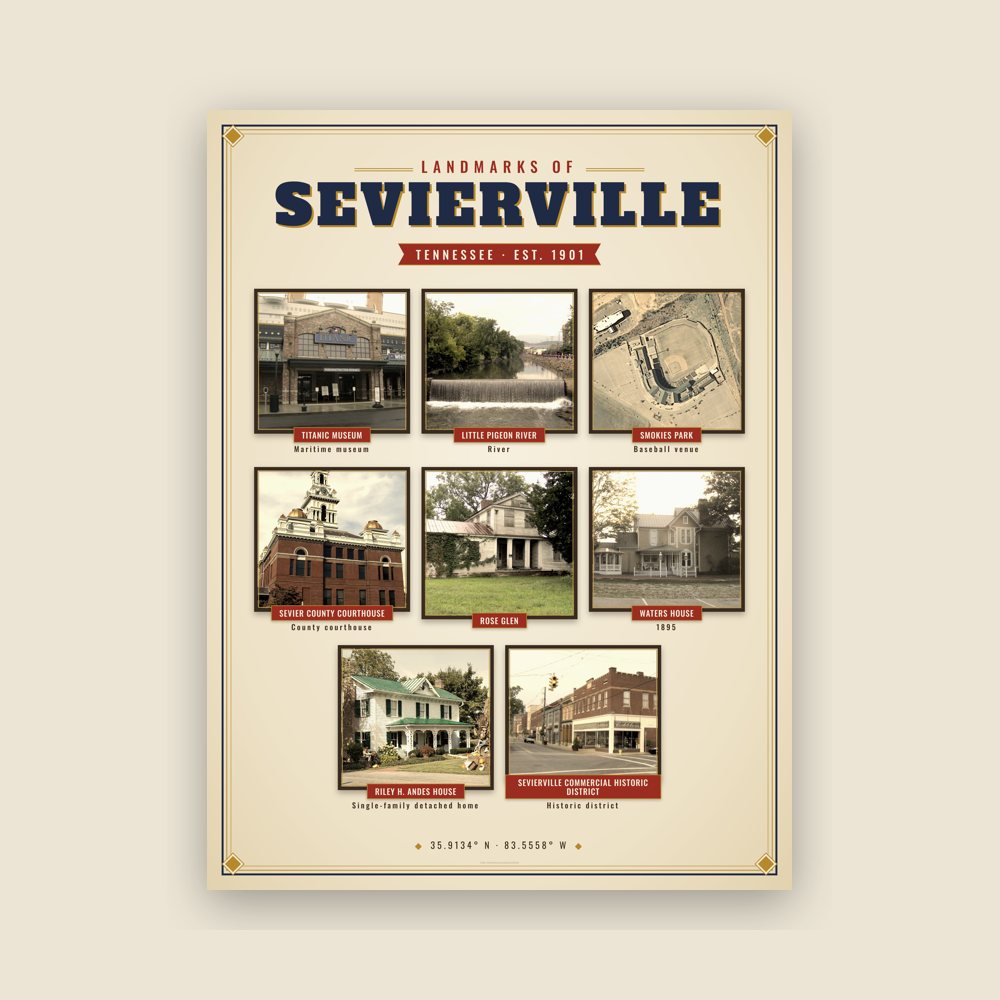
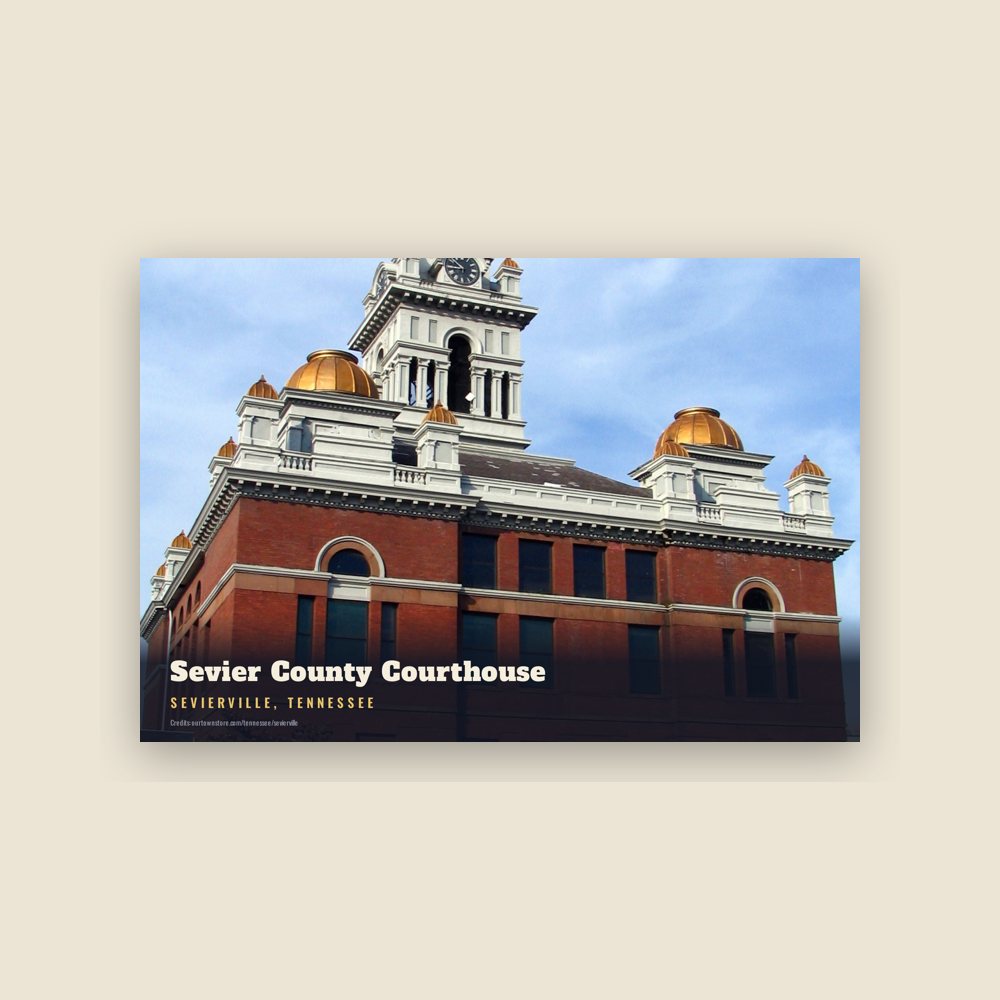
Sevier County Courthouse: Designed by the McDonald Brothers of Louisville and constructed by C.W. Brown of Lenoir City in 1895, this courthouse was added to the National Register of Historic Places in 1971. It's an example of the Beaux Arts style and has brickwork completed by Isaac Dockery.
Sevierville Commercial Historic District: Added to the National Register of Historic Places in 1986, this district includes Court Avenue, Bruce Street, and Commerce Street, all near the courthouse. The area became a commercial center when the old commercial district burned in the early 20th century.
Sevierville Masonic Lodge: Built in 1893 for use by a local Masonic lodge, this building was added to the National Register of Historic Places in 1980.
Thomas Addition Historic District: This housing area in southeast Sevierville is mostly made up of bungalows and Queen Anne cottages built in the late 19th and early 20th centuries. The area was added to the National Register of Historic Places in 1994.
Trotter–McMahan House & Farm (Boundary Increase): Built in 1848 by Dr. William Harrison Trotter, this house has a style designed by architect Frederick Emert to be different from other houses in the area. It was added to the National Register of Historic Places in 1975. A separate registration increased the boundary of the site to include the surrounding farm and outbuildings in 2001.
U.S. Post Office – Sevierville: A Colonial Revival style building built in 1940 by the Works Project Administration, it has been the site of a heritage museum since 1995 and was added to the National Register of Historic Places in 1997.
Dwight and Kate Wade House: This Colonial Revival home was designed by female architect Verna Cook Salomonsky based on plans for a home she designed for the 1939–1940 New York World's Fair. Built in 1940, it was added to the National Register of Historic Places in 1997.
Walker Mill Hydroelectric Station: Located on the West Prong of the Little Pigeon River near Sevierville, the site includes a dam, substructure, and powerhouse. It began generating electricity in 1914 and was added to the National Register of Historic Places in 1990.
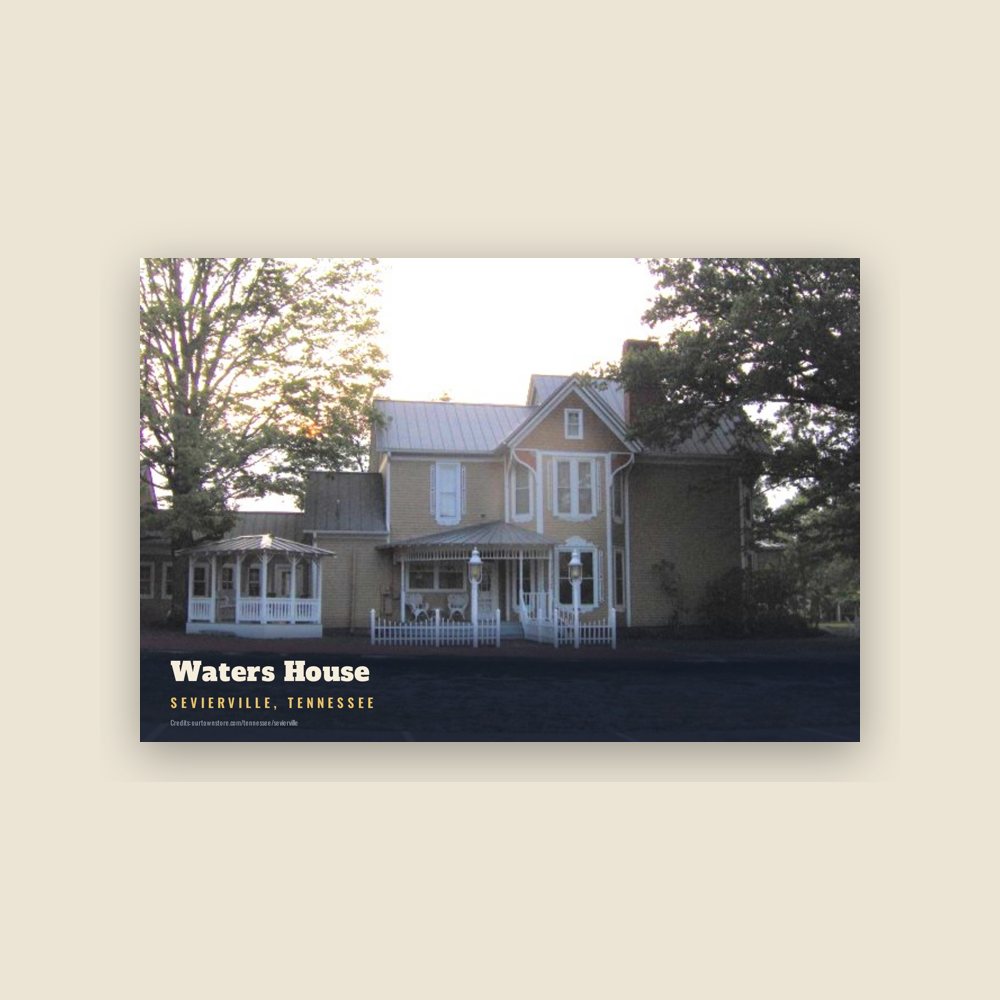
Waters House: This Victorian home was designed by Lewis Buckner and built around 1895. It was added to the National Register of Historic Places in 1975.
Wheatlands: Named for its focus on wheat farming, this plantation was built in the early 19th century by John Chandler, who also owned a distillery that made wheat whiskey. The smokehouse, storage shed, and plantation house were added to the National Register of Historic Places in 1975.
Harrisburg Covered Bridge: Crossing the East Fork of the Little Pigeon River near Sevierville, this king post truss style bridge was completed in 1875 and added to the National Register of Historic Places in 1975.






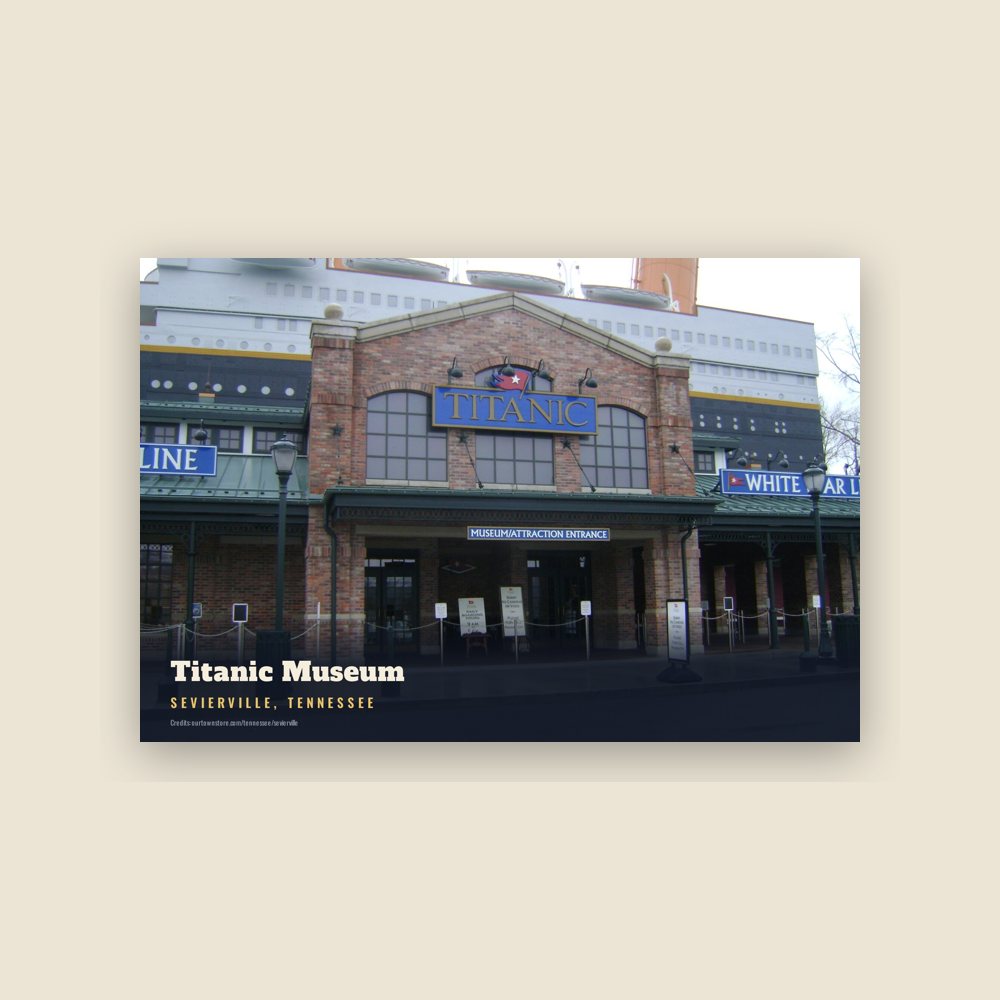
 Titanic Museum
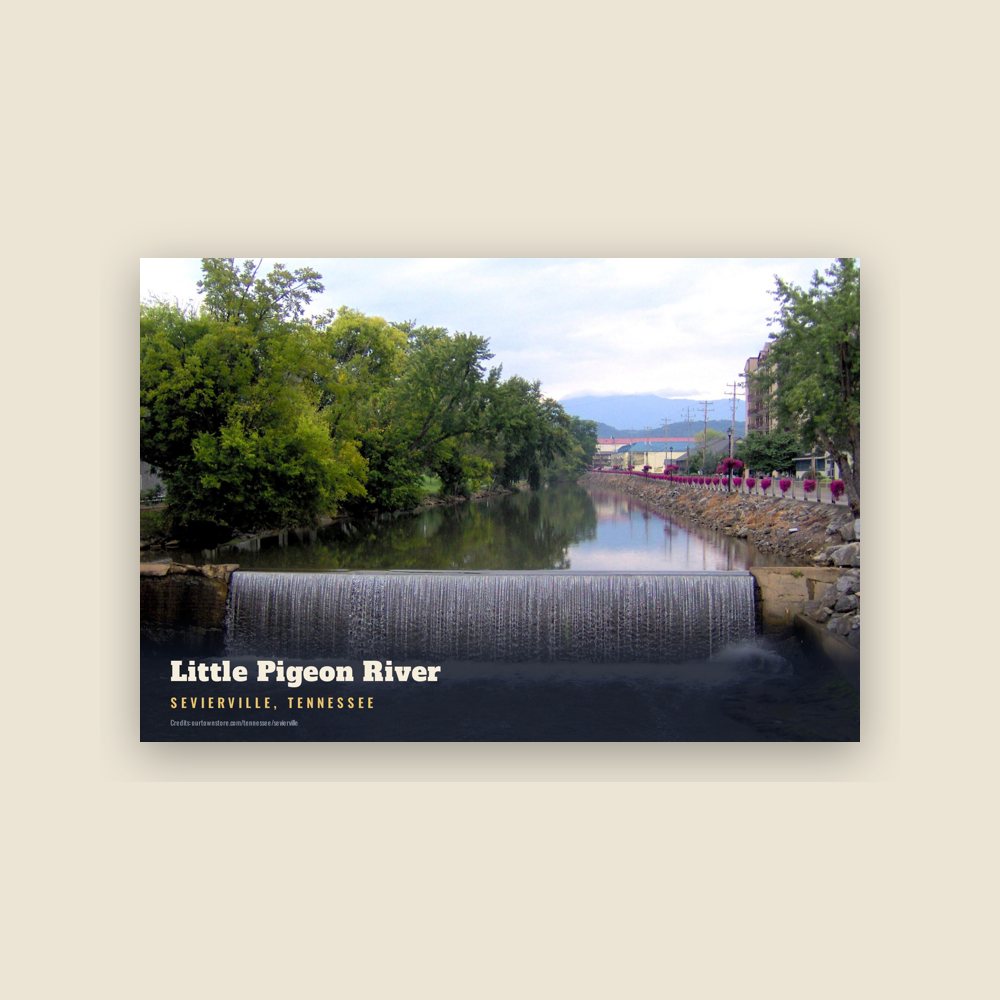
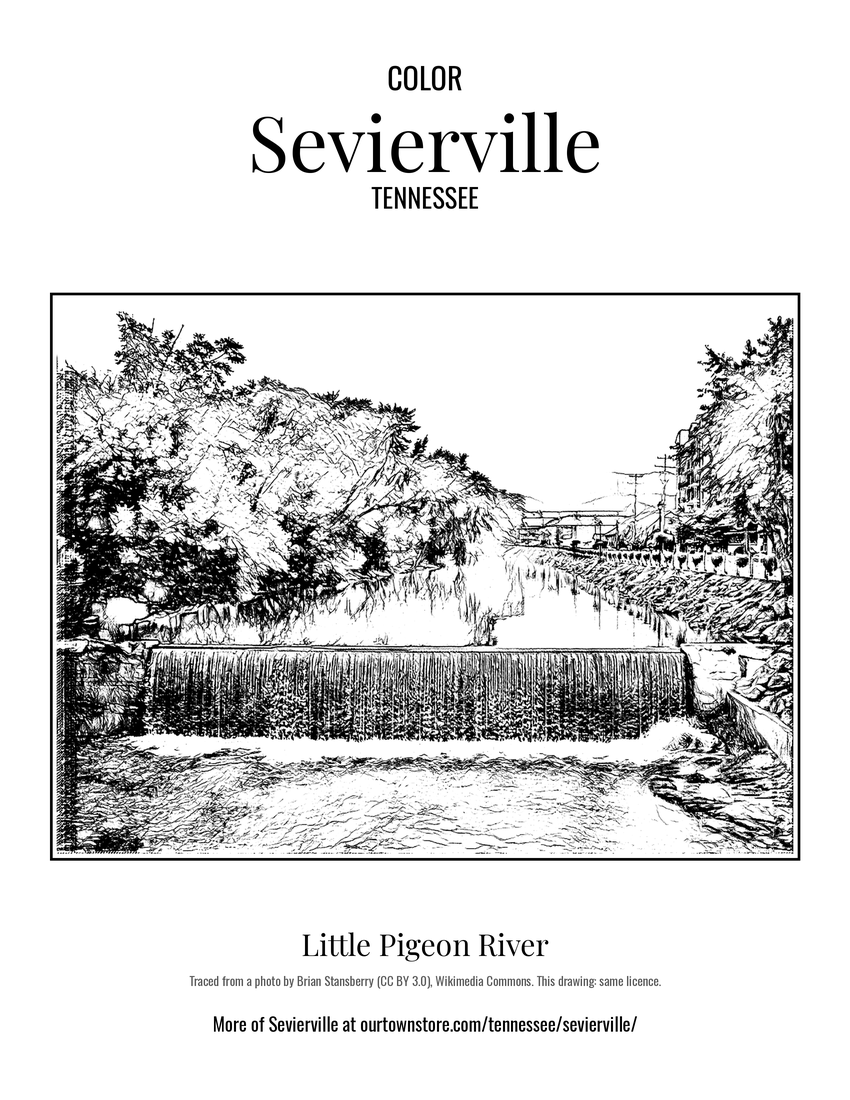 Little Pigeon River
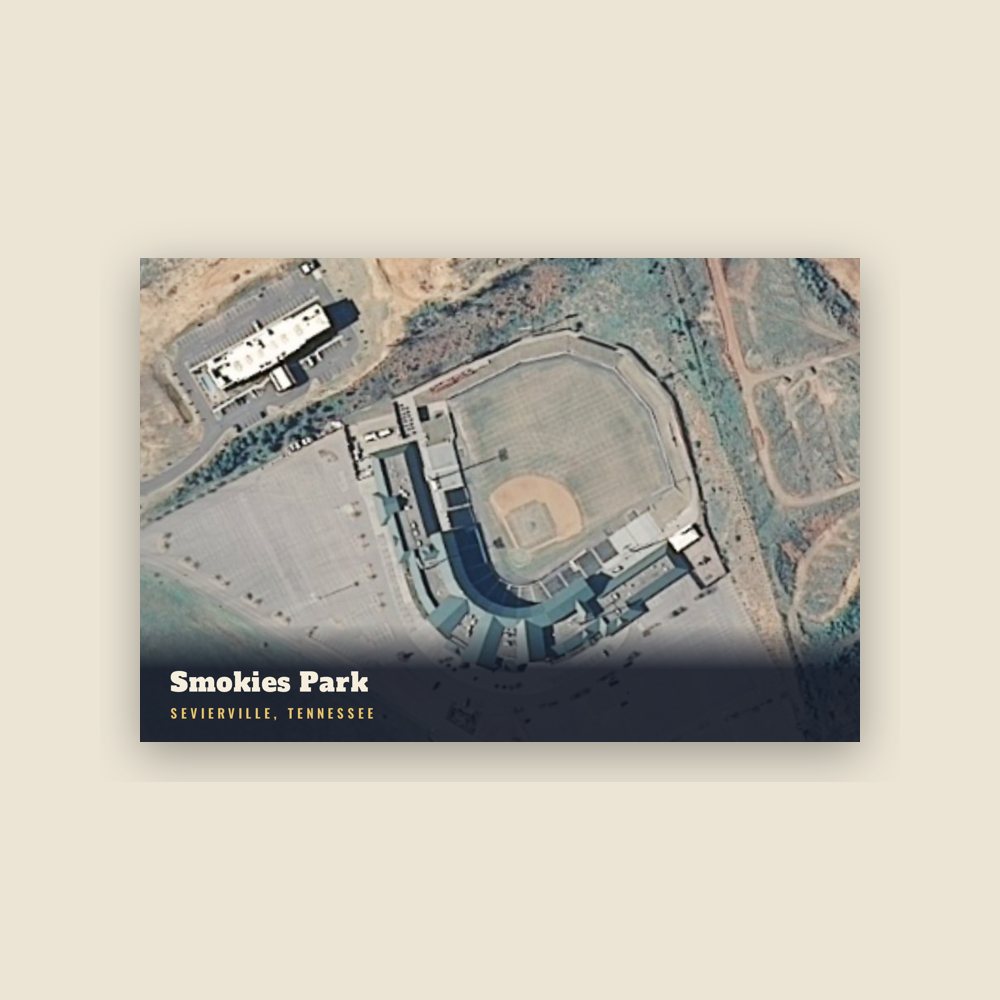
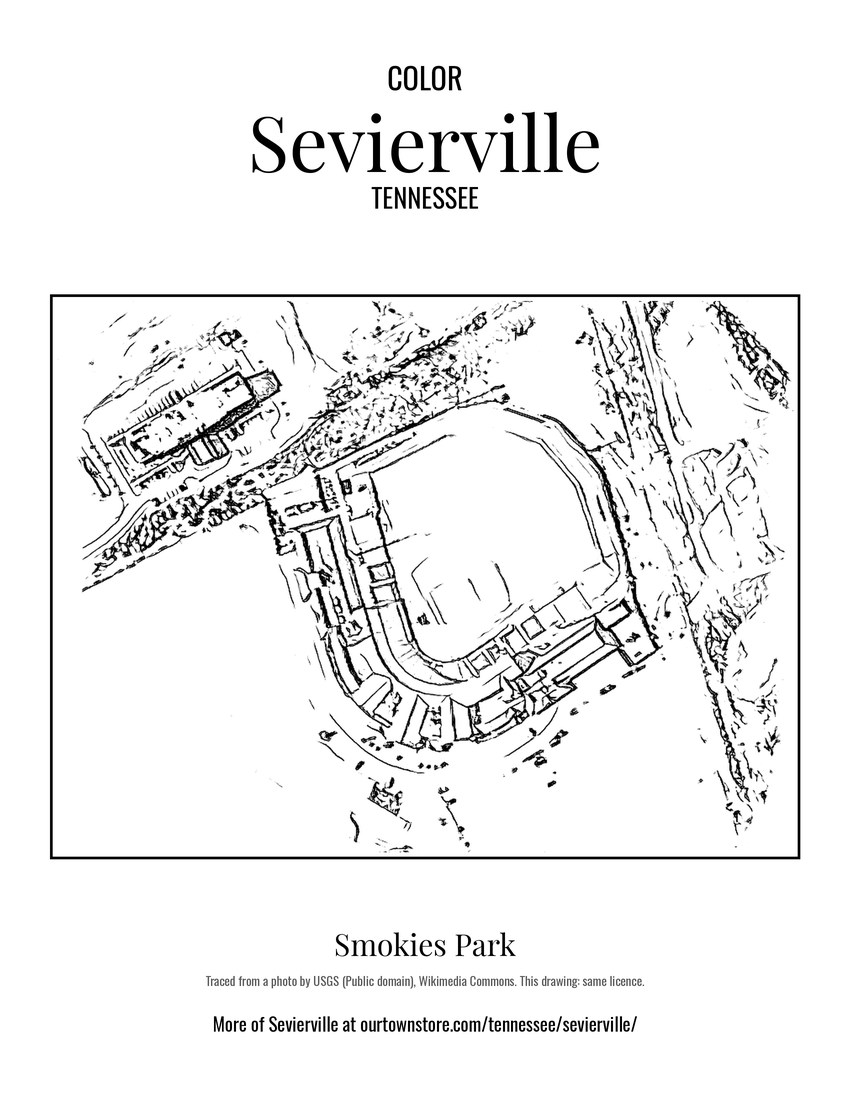 Smokies Park
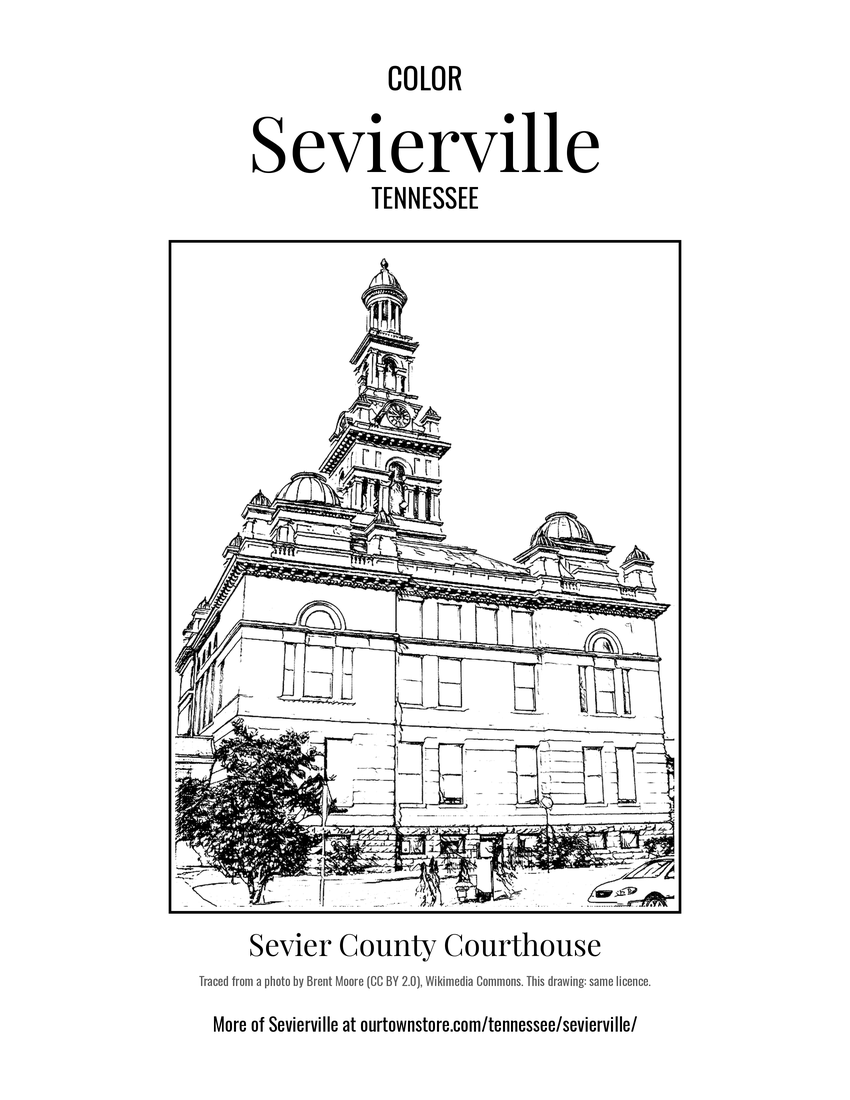 Sevier County Courthouse