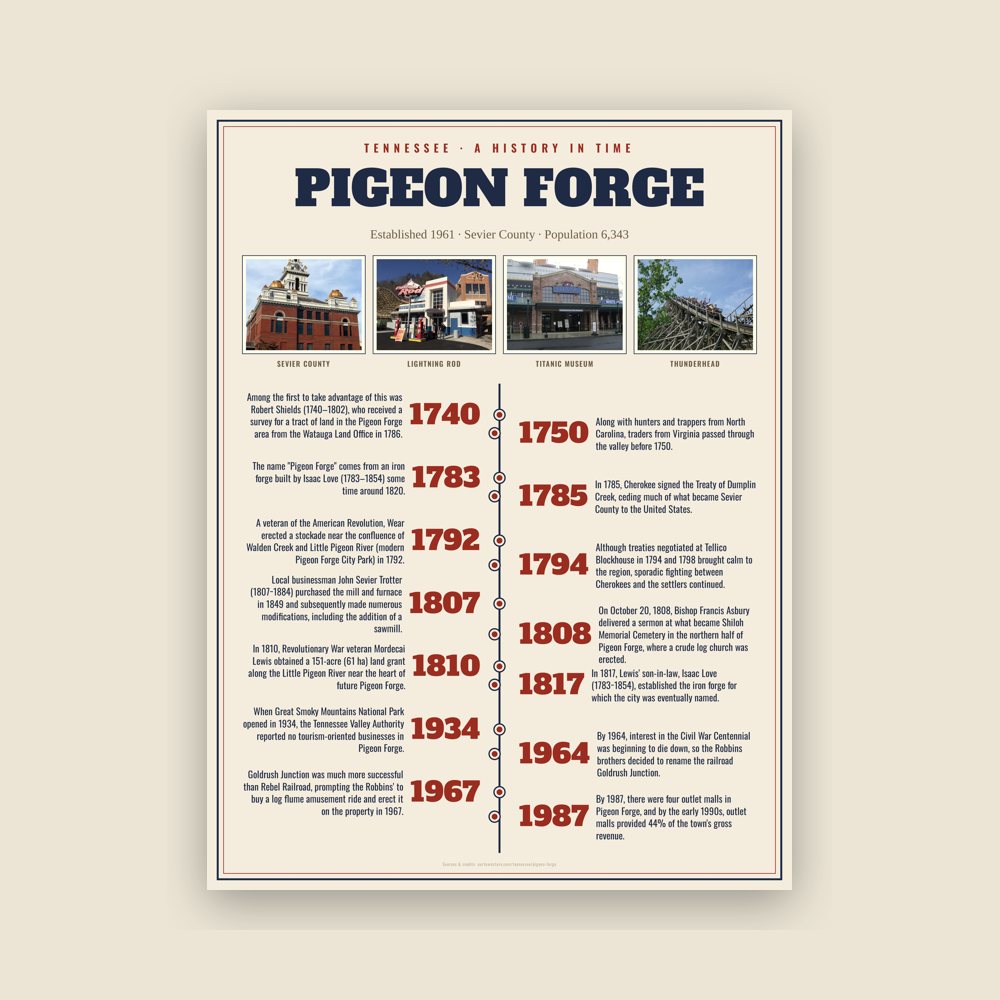
The name "Pigeon Forge" comes from an iron forge built by Isaac Love (1783–1854) some time around 1820. The name of this forge referred to its location along the Little Pigeon River, in the vicinity of what became the Old Mill. The name of the river comes from the flocks of passenger pigeons that frequented its banks when the first Euro-American settlers arrived.
For centuries, the Cherokee used the valley where Pigeon Forge is located as a hunting ground. A Cherokee footpath known as "Indian Gap Trail" crossed the Great Smokies from North Carolina and passed through the Pigeon Forge valley en route to its junction with Great Indian Warpath in modern Sevierville. (US-441 closely parallels this ancient trail, although it crests the mountains at Newfound Gap rather than Indian Gap). From Sevierville, Great Indian Warpath headed west toward the Overhill Cherokee towns along the Little Tennessee River.
Read the full history
18th century
Indian Gap Trail brought the first Europeans to the Pigeon Forge area in the early 18th century. Along with hunters and trappers from North Carolina, traders from Virginia passed through the valley before 1750. Some time after 1783, Colonel Samuel Wear became one of the first permanent white settlers in the Pigeon Forge area. A veteran of the American Revolution, Wear erected a stockade near the confluence of Walden Creek and Little Pigeon River (modern Pigeon Forge City Park) in 1792. This "fort" provided a safe stopover for early pioneers in the Sevier County area. Wear later served as a member of the committee that drafted Tennessee's state constitution.
In 1785, Cherokee signed the Treaty of Dumplin Creek, ceding much of what became Sevier County to the United States. Among the first to take advantage of this was Robert Shields (1740–1802), who received a survey for a tract of land in the Pigeon Forge area from the Watauga Land Office in 1786. Shields, who was also a veteran of the Revolution, established a small fort along Middle Creek near modern Dollywood. Shields' son later wrote that the fort was 100 feet (30 m) long and 16 feet (4.9 m) wide, with 12-foot (3.7 m) walls constructed with "heavy logs". The fort contained living quarters for six families, with a common kitchen at one end and a common living room at the other. As his family grew, Shields constructed separate houses for his children, one of which was purchased by Horatio Butler in 1797 and remained with his descendants until it was torn down in 1994.
Although the Shields Fort was too far from the main Cherokee trails to ever experience a serious assault, the Wear Fort straddled Indian Gap Trail, making it a target for small bands of Cherokee warriors. After the Cherokee attacked his fort in 1793, a frustrated Wear led a band of 60 frontiersmen across the northwestern Smokies into the Overhill Cherokee region, where they attacked and destroyed the town of Tallassee (near modern Calderwood Dam), killing at least 15 Cherokees and capturing several others. In 1794, the Cherokee fired on Wear and his two sons just outside Calvin's Blockhouse (near Maryville), but they both escaped unharmed.
Although treaties negotiated at Tellico Blockhouse in 1794 and 1798 brought calm to the region, sporadic fighting between Cherokees and the settlers continued. One incident occurred in 1802, when Tavenor Runyan (1787–1802), the son of Isaac Barefoot Runyan (1749–1845) and Margaret Rambo (who had settled near the heart of modern Pigeon Forge), was killed by a Cherokee warrior. The recently elected Governor Archibald Roane was forced to personally intervene to prevent retaliatory strikes.
19th century
Like many Appalachian communities, religion played a major role in the early history of Pigeon Forge. In the early 19th century, circuit riders preached in the valley, creating a large Methodist following that remains to the modern day. On October 20, 1808, Bishop Francis Asbury delivered a sermon at what became Shiloh Memorial Cemetery in the northern half of Pigeon Forge, where a crude log church was erected. The first "tourists" to visit Pigeon Forge came for the extended revivals that were held in the Middle Creek area on the grounds of what became Middle Creek Methodist Church as early as 1822. These revivals could last for weeks at a time.
In 1810, Revolutionary War veteran Mordecai Lewis obtained a 151-acre (61 ha) land grant along the Little Pigeon River near the heart of future Pigeon Forge. In 1817, Lewis' son-in-law, Isaac Love (1783−1854), established the iron forge for which the city was eventually named. The complex included a bloomery furnace and water-powered trip hammer to smelt and mold ore into iron bars. Love erected the Pigeon Forge Mill in 1830, and on May 29, 1841, Love's son, William, established a post office – which he named "Pigeon Forge" – for the mill and the small community that had developed in its vicinity. Local businessman John Sevier Trotter (1807−1884) purchased the mill and furnace in 1849 and subsequently made numerous modifications, including the addition of a sawmill. Although the iron furnace was sold and relocated in the 1880s, the Pigeon Forge Mill – usually called "Old Mill" – still stands and has been placed on the National Register of Historic Places.
In the 1870s, a health resort was established in Pigeon Forge at Henderson Springs, adjacent to the Fort Wear site on the town's north side. It was common during this period for the residents of large urban areas to visit mountain springs, the waters of which were believed to have health-restoring qualities.
20th century
In the early 20th century, Pigeon Forge was an isolated mountain hamlet with no major roads. The nearest railroad station was in Sevierville. Bridges were also rare, with the only major water crossings being a string of fords along the Little Pigeon.
When Great Smoky Mountains National Park opened in 1934, the Tennessee Valley Authority reported no tourism-oriented businesses in Pigeon Forge. By the 1950s, improvements to US 441 led to the establishment of a few campgrounds and lodges, but they did not generate major revenue. During this period, however, two factors in nearby Gatlinburg led to the eventual commercial boom Pigeon Forge experienced in the latter half of the 20th century. First, surrounded by high mountain ridges, Gatlinburg had limited land resources. Second, its land resources were largely controlled by a few local families who thwarted attempts by outside businesses to take advantage of the town's prime location. Thus, outside entrepreneurs were forced to look elsewhere. Pigeon Forge, located just north of Gatlinburg along US-441, became a target.
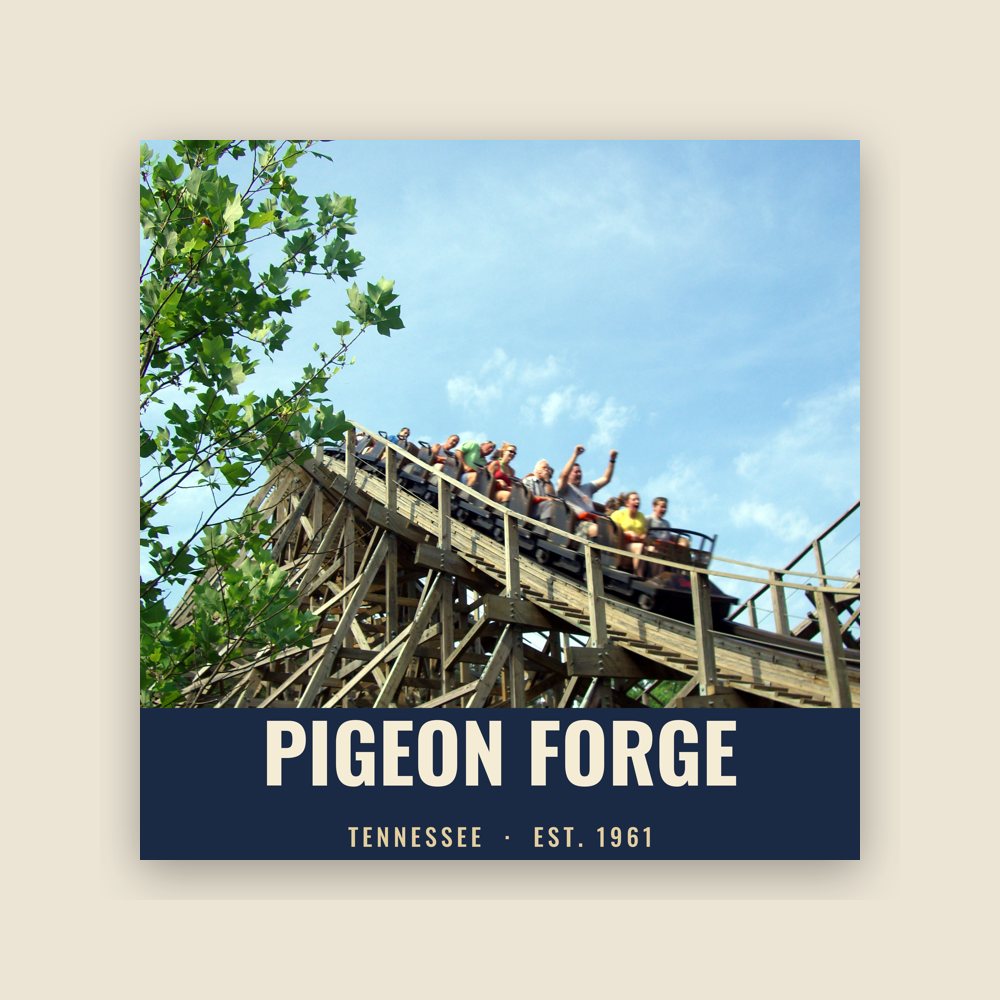
In 1961, shortly after Pigeon Forge incorporated, North Carolina brothers Grover and Harry Robbins opened Rebel Railroad in the town's Middle Creek area. The railroad simulated a ride on a Confederate steam train that was under attack by Union soldiers during the Civil War, playing upon the centennial of the war. After the Union assault was beaten back, the railroad came to a stop at a mock frontier mountain town, complete with blacksmith shop, general store, and saloon. By 1964, interest in the Civil War Centennial was beginning to die down, so the Robbins brothers decided to rename the railroad Goldrush Junction. The attraction was reworked with a "Wild West" theme replacing the Civil War theme, in a similar fashion to the Robbins' other tourist train ride in North Carolina, Tweetsie Railroad. Goldrush Junction was much more successful than Rebel Railroad, prompting the Robbins' to buy a log flume amusement ride and erect it on the property in 1967. According to a park tourist brochure of the time, the ride was "brought to Goldrush Junction from the New York World's Fair, where it was one of the most successful attractions."
In 1969, after Pigeon Forge issued a zoning plan assigning the entire strip along US-441 for tourism use, Art Modell (owner of the Cleveland Browns) purchased Goldrush Junction. In 1976, Modell sold it to the Herschend Brothers of Branson, Missouri. The Herschends renamed the park Silver Dollar City after their successful theme park in Branson. The Ozark mountain theme of the Branson location was easily reapplied as an Appalachian theme in Pigeon Forge, and the park's attendance began to climb.
In 1982, hoping to capitalize on the publicity generated by the Knoxville World's Fair, Pigeon Forge initiated an aggressive economic plan that centered around theme parks, outlet malls, and live music venues. The first outlet mall, Factory Merchants, opened that same year. By 1987, there were four outlet malls in Pigeon Forge, and by the early 1990s, outlet malls provided 44% of the town's gross revenue.
The increasing number of tourist attractions brought competition for Silver Dollar City and its chief competitor in Pigeon Forge, Magic World, which had constructed a theme park on the slopes of Pine Mountain in the city's south section. In 1985, the Herschends approached entertainer Dolly Parton (who was born in nearby Sevierville) with a proposal for a partnership in the promotion and operation of Silver Dollar City. After lengthy negotiations, Parton became a majority partner in the enterprise, and Silver Dollar City was renamed Dollywood to launch a major marketing campaign. Magic World folded in 1994.
21st century
Although the commercial boom in Pigeon Forge vastly increased the town's revenue, it had several undesirable effects. As land value increased, many farmers could no longer afford the accompanying high property taxes and were forced to sell their land. The high cost of living in Pigeon Forge is difficult to offset with the low wage jobs that often accompany the tourist industry.
Registered historic sites
Pigeon Forge Mill: Listed on the National Register of Historic Places in 1975, this working gristmill, also known as Old Mill, is on the West Fork of the Little Pigeon River (along its east bank), and is accessible via Old Mill Drive (which intersects the Parkway at Light #7). The site includes a millhouse, milldam, and breastshot wheel.
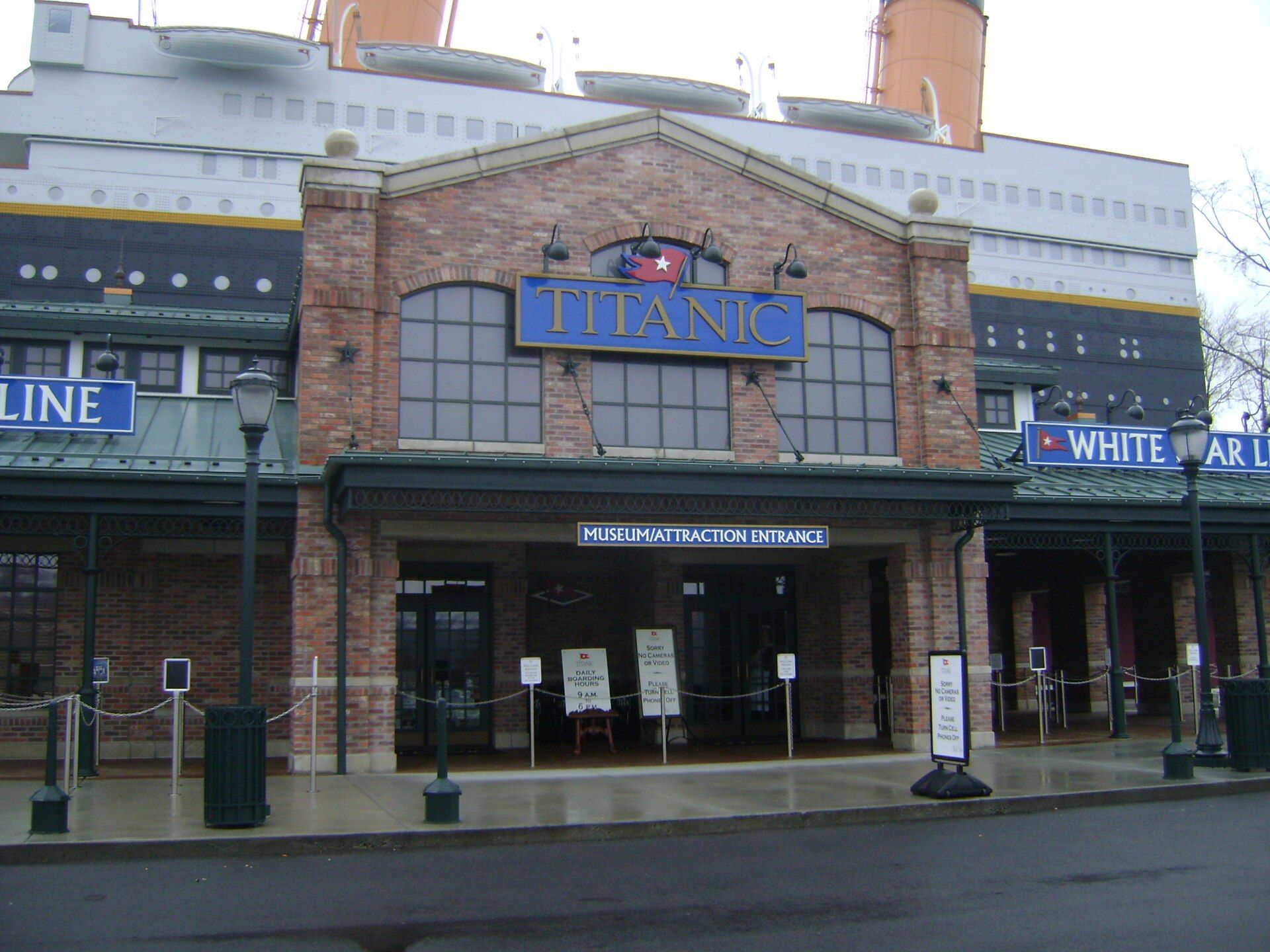
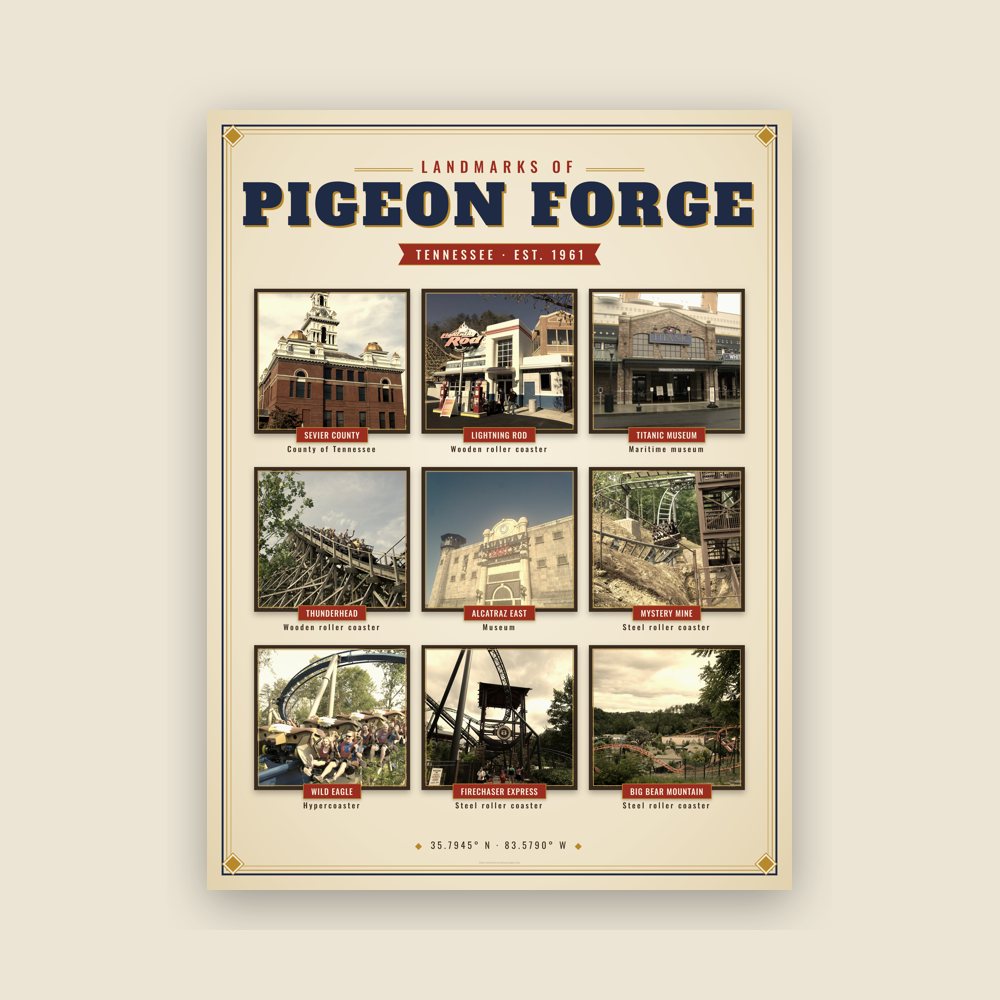

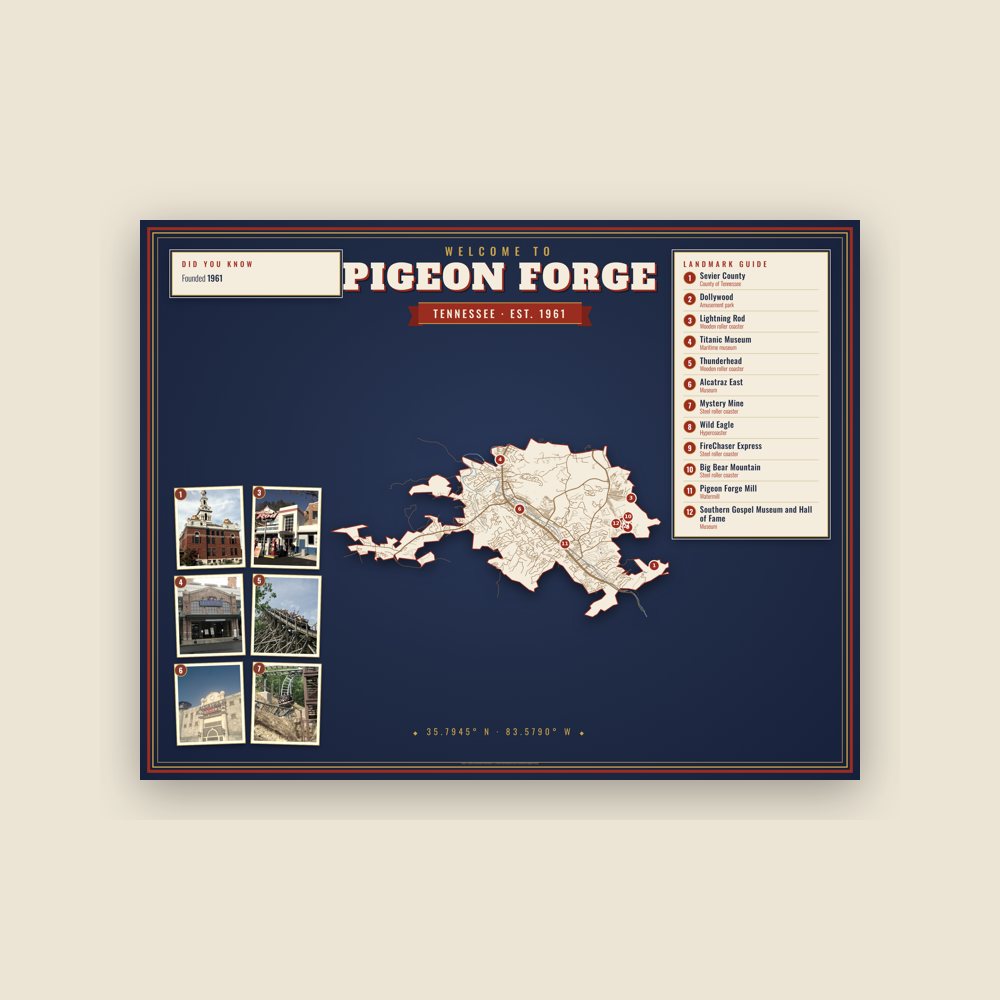
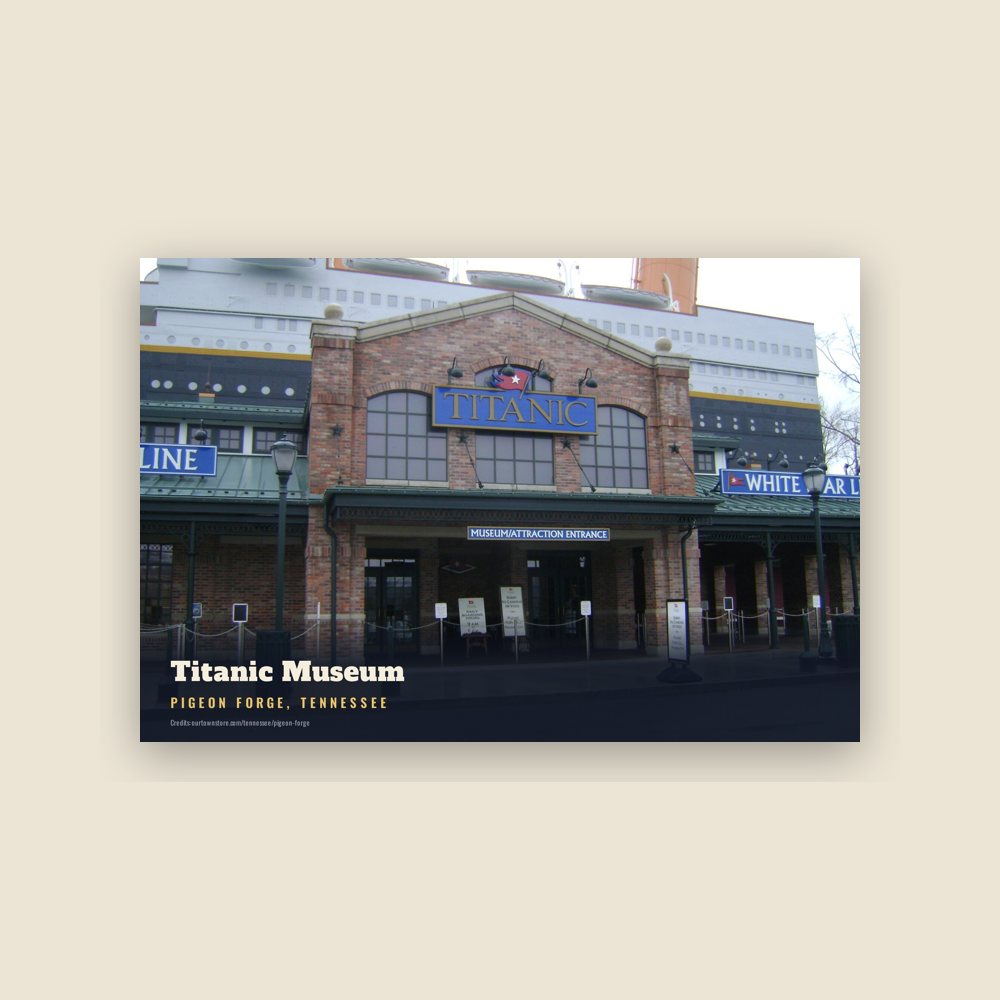
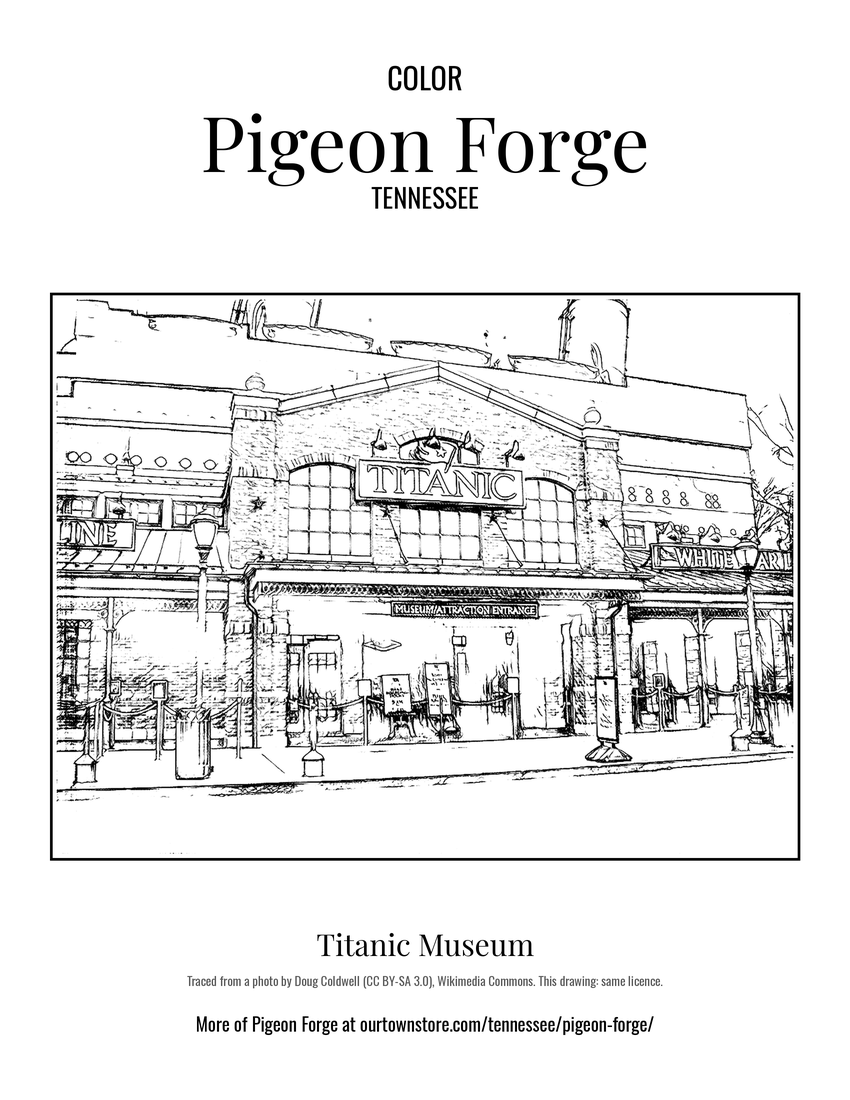 Titanic Museum
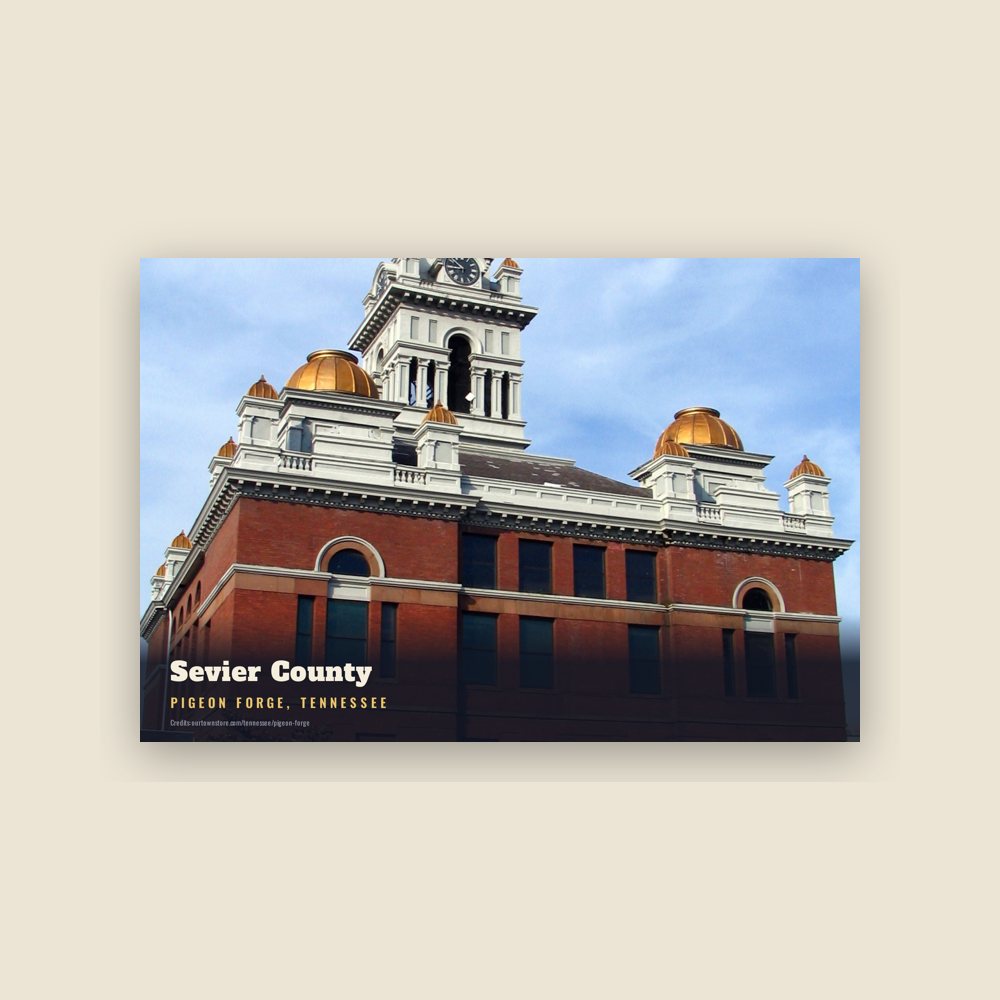
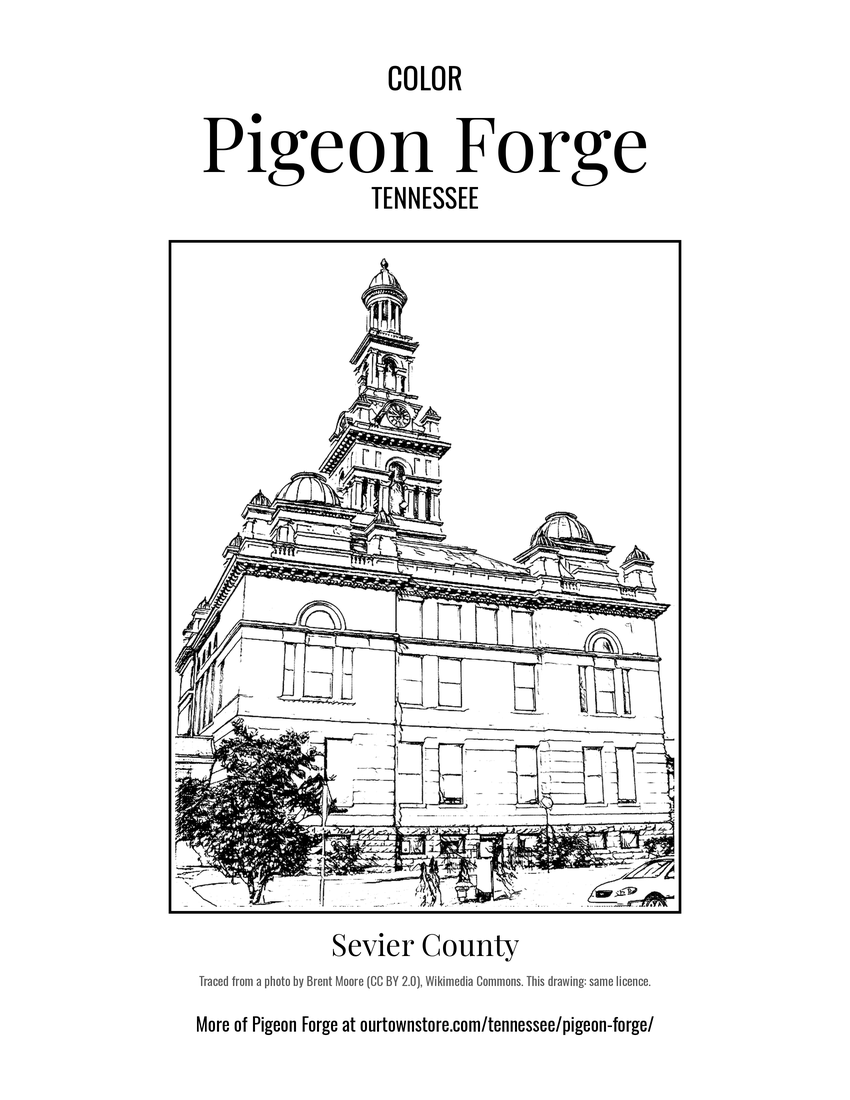 Sevier County
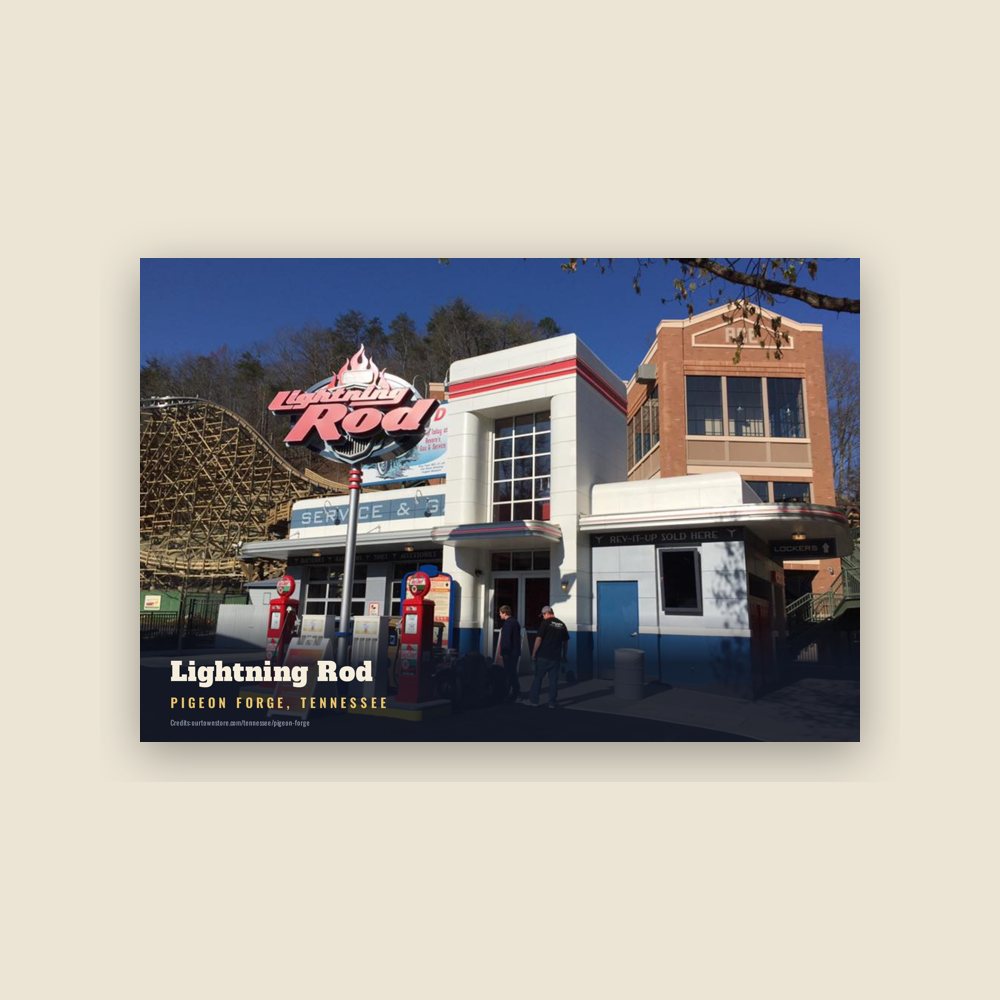
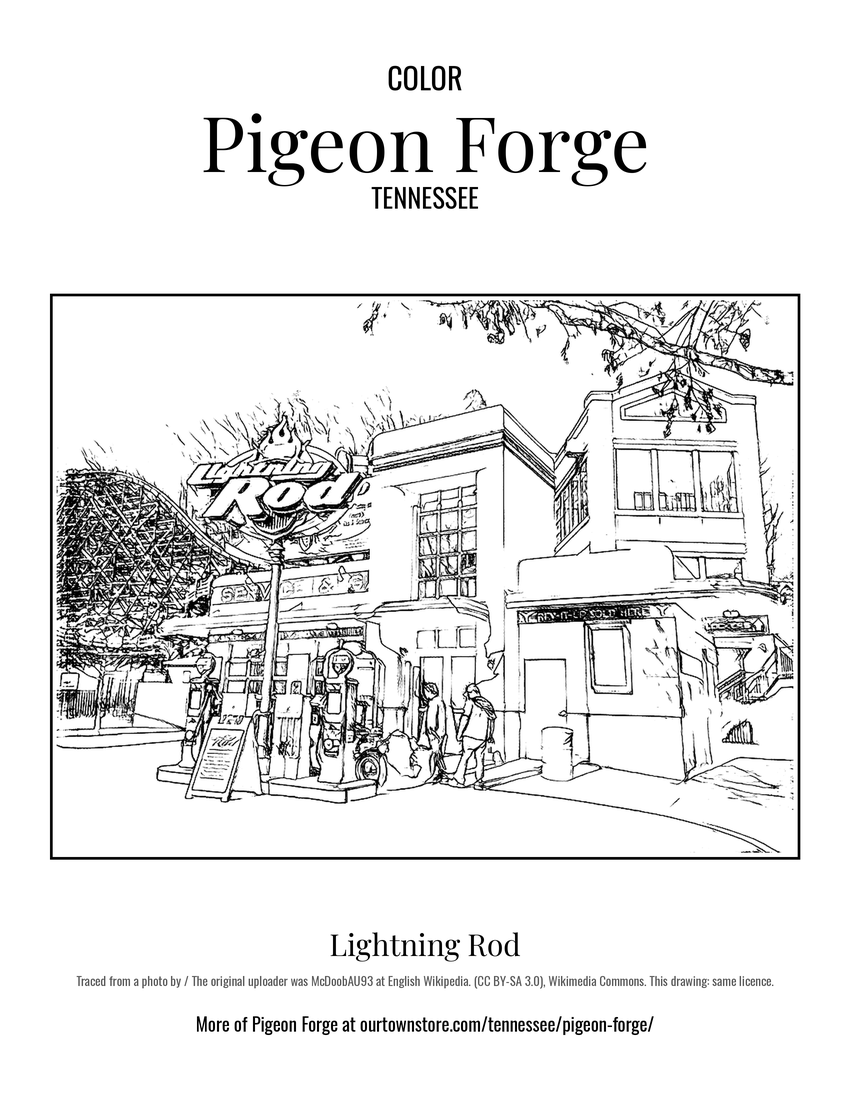 Lightning Rod