Since 1855
A short history of Morristown
Early years and establishment
Before its settlement by European-Americans, the area of Morristown was inhabited by Native Americans, predominately members of the Cherokee tribe. During the Cherokee's inhabitance, the area was based around two major pathways, an east-west route that was later developed into the Great Stage Road in the settlement era, and a north-south route known as Buffalo Trail, named for a legend stating the path was formed from herds of buffalo traveling from Asheville, North Carolina to the Powell River near the Cumberland Gap for the river's salt licks.
The settlement of Morristown was established by trans-Appalachian pioneer Gideon Morris, a farmer who arrived with his brothers Daniel and Absalom from the Watauga Settlement, a semi-autonomous government based on land that was leased to European-American settlers from the inhabiting Cherokee tribes. Prior to his settlement, Morris had fought alongside John Sevier in the Cherokee Expedition in 1776, and obtained land grants after serving in the American Revolutionary War at the Battle of Kings Mountain.
Morris, along with his siblings, petitioned to have the Watauga Settlement annexed in the State of North Carolina. With the petition's success, the settlement was named Morristown, and land grants containing present-day Hamblen and Jefferson counties were assigned to Morris and his brothers in 1787 by North Carolina state officials. The Morris household built their first home off of present-day South Cumberland Street in Morristown, which remained occupied by descendants of the Morris family for several generations.
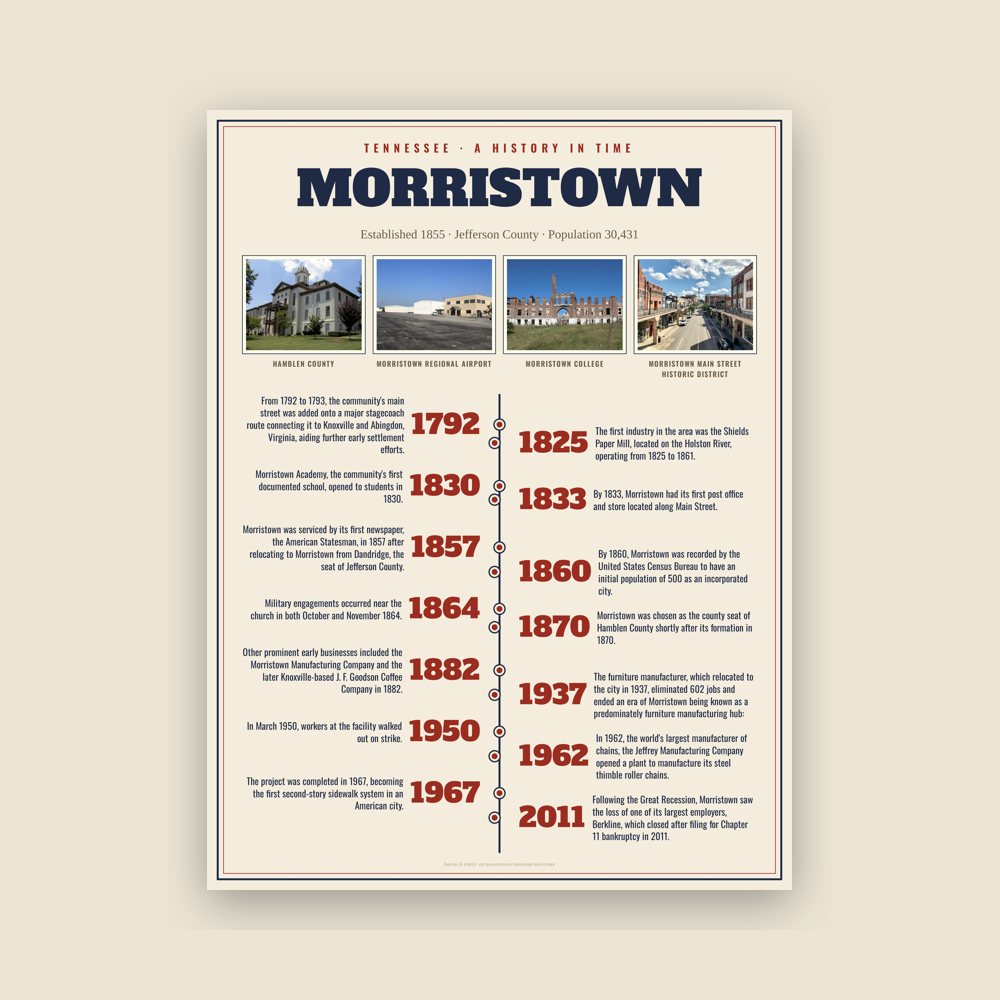
From 1792 to 1793, the community's main street was added onto a major stagecoach route connecting it to Knoxville and Abingdon, Virginia, aiding further early settlement efforts. Among these settlers was frontiersman John Crockett, who arrived and settled east of the Morris residence in 1794 with his son, famed pioneer and folk-hero Davy Crockett who was seven years old at the time. John Crockett constructed a log cabin that later served as a tavern, and a hospital treating smallpox during the American Civil War. After the Civil War, the Crockett Tavern was destroyed to prevent further infections of smallpox. The current-day Crockett Tavern Museum sits at the approximate location of the former tavern and is listed on the National Register of Historic Places. John's son, Davy resided in Morristown until 1809, when he relocated to Middle Tennessee to go into Tennessee state politics.
By 1833, Morristown developed into a small village, consisting of a post office, a general store, a blacksmith and machine shop which was the first major enterprise in the town, and several log cabin residences along the main stagecoach route known as the Great Stage Road that divided the community into two counties, Grainger to the north, and Jefferson to the south. Morristown Academy, the community's first documented school, opened to students in 1830. In 1855, Morristown was incorporated into a city to provide new services to the community's growing population. Railroad access became available to Morristown when construction completed on the East Tennessee and Virginia Railroad in 1858, which was the first railroad line to be operational in the state of Tennessee. Morristown was serviced by its first newspaper, the American Statesman, in 1857 after relocating to Morristown from Dandridge, the seat of Jefferson County. By 1860, Morristown was recorded by the United States Census Bureau to have an initial population of 500 as an incorporated city.
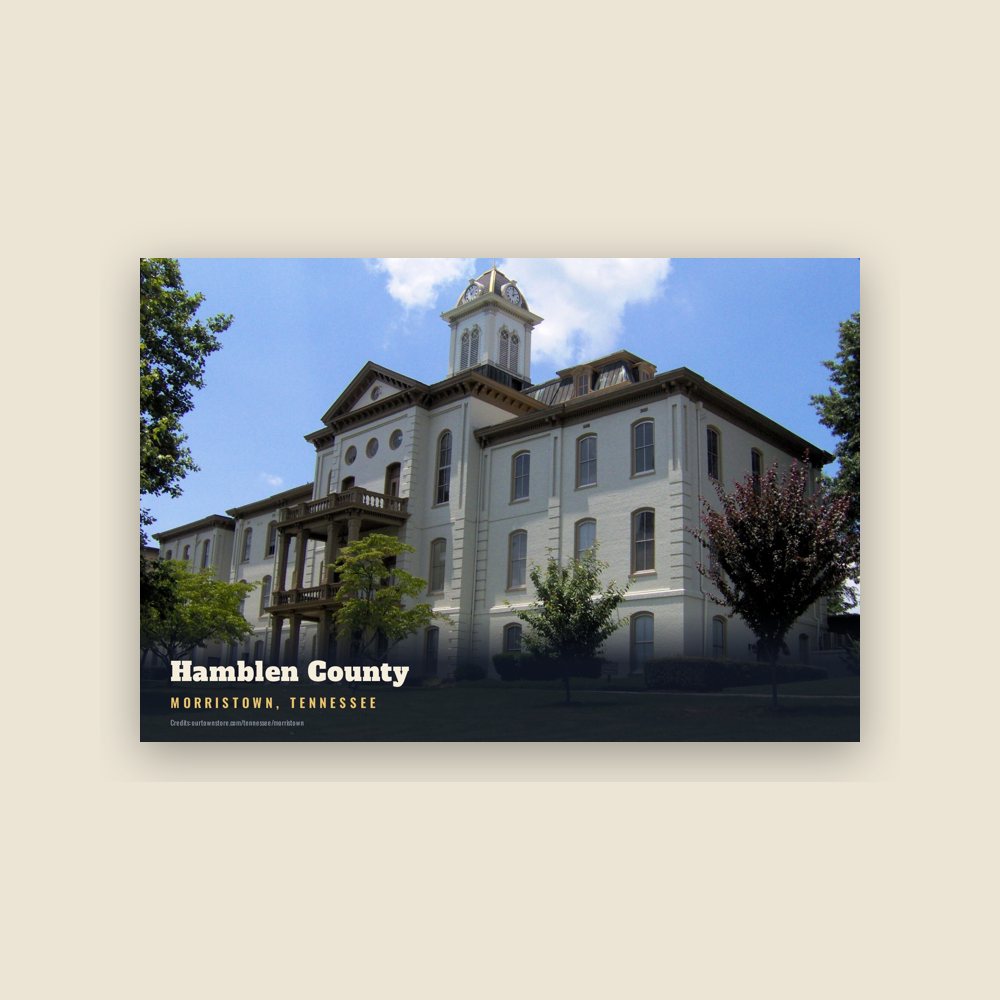
Between 1855 and 1870, Morristown's municipal limits were divided along Main Street into Grainger and Jefferson counties. Many residents brought concerns regarding transportation and communication access in Morristown, and neighboring communities such as Russellville and Panther Springs raised concerns as well regarding accessibility to Morristown. After working with government officials from the neighboring counties and the state government, Hamblen County was formed from portions of Grainger, Jefferson, Hawkins, and Greene counties. Morristown was chosen as the county seat of Hamblen County shortly after its formation in 1870.
Read the full history
Civil War
As the Civil War approached, the town's sympathies were divided between the Union and secessionist sides. In December 1863, some 25,000 Confederate Army soldiers under the command of General James Longstreet arrived at Bethesda Presbyterian Church, northeast of the town, to spend the winter, after the Battle of Bean's Station. They remained there until February 1864 and used the Bethesda Church building as a hospital. Military engagements occurred near the church in both October and November 1864. On October 28, 1864, Union General Alvan C. Gillem attacked Confederate forces under General John C. Vaughn in the Battle of Morristown. They fought in and around the town with Gillem routing Vaughn's Confederates in what became known as "Vaughn's Stampede." Vaughn was forced to retreat to Carter's Station on the Watauga River in northeastern Tennessee. The battle resulted in about 335 total casualties. In the Battle of Bull's Gap ("Gillem's Stampede") in November, Confederate forces under General John C. Breckinridge prevailed over Gillem's troops, chasing the Union forces westward to a defensive position at Strawberry Plains near Knoxville. During one of these skirmishes, a cannonball penetrated one of the church walls, causing structural damage that was repaired by reinforcing the walls with large iron rods. The Union Army used the church as a hospital for soldiers wounded in these operations. Many soldiers from both sides are interred in the Bethesda Church cemetery. Eighty of the wartime burials are unidentified.
Later 19th century developments
Morristown saw a steady shift into an industrially-based economy in the early beginnings of the Industrial Revolution, around the early to late 19th century. The first industry in the area was the Shields Paper Mill, located on the Holston River, operating from 1825 to 1861. Other prominent early businesses included the Morristown Manufacturing Company and the later Knoxville-based J. F. Goodson Coffee Company in 1882.
From 1891 to 1928, Morristown was a terminal on the Knoxville and Bristol Railroad, commonly known by locals as the "Peavine Railroad." The railroad was a branch line of the Southern Railway that ran from downtown Morristown on Main Street to Corryton, a bedroom community outside of Knoxville. The Peavine Railroad had first operated between Morristown and Bean Station, with plans to connect north to the Cumberland Gap, but instead extended west through Grainger County towards Knoxville due to feasibility concerns regarding construction through the Clinch Mountain valley.
Mid 20th century to present day
American Enka and the labor movement
In 1944, the American Enka Company, a rayon fiber producer based out of Asheville, North Carolina, began construction on a 230-acre plant in the Lowland region of Morristown, beginning operations in 1947.
In March 1950, workers at the facility walked out on strike. Officials from American Enka Company then advertised for replacements of the striking workers. Tensions soon built when residents of Morristown and Lowland appeared at the gates of the Enka plant to apply for the listed jobs. Violence then followed, with shots fired, cars damaged, and one adjacent house destroyed by dynamite. The then-governor of Tennessee, Gordon Browning, dispatched National Guard troops to restore order at the Enka factory. By the end of the strike, and following acts of violence and vandalism, its story had become national front-page news, and on-site congressional hearings regarding labor relations and the labor movement were held in Morristown, led by Democratic Senator Hubert Humphrey.
In 1985, the American Enka facility was acquired by BASF and continued under their operations until 1992, when it was sold to Lenzing AG. The plant closed in 2005, after the company that operated the plant, Liberty Fibers, filed for bankruptcy. The plant site and its adjacent wastewater treatment plant have since been annexed into the Morristown city limits.
Industrial development
Beginning in 1959, following then presidential candidate John F. Kennedy's exposure to poverty in Appalachia, Morristown officials began a joint effort with Tennessee economic development representatives to establish the city as a major industrial hub, and the program began with the construction and completion of the East Tennessee Valley Industrial District (ETVID) industrial park in eastern Morristown near Russellville. In 1962, the world's largest manufacturer of chains, the Jeffrey Manufacturing Company opened a plant to manufacture its steel thimble roller chains.
In the 1990s, the City of Morristown acquired over 900 acres (3.6 km2) near Interstate 81 exit 8 for its third industrial park, the East Tennessee Progress Center (ETPC). Initial site development such as roadway and utility upgrades were completed in 2001. Several large manufacturers opened facilities at the site, but further infrastructure upgrades, grading work, and property acquisition was done on the site throughout the 2000s and 2010s.
"For two or three generations, Morristown has been considered a furniture town, and this is the last of the major furniture operations here."
In 2018, Belgian bus manufacturer Van Hool announced the construction of a 500,000 square feet (46,000 m2) facility at the ETPC (East Tennessee Progress Center), one of the largest industrial development projects in the history of Morristown. The project expects to create an estimated 650 jobs, over $47 million in private investment and an influx of interest of further industrial development in the Morristown area.
Downtown emergence and the "Skymart" project
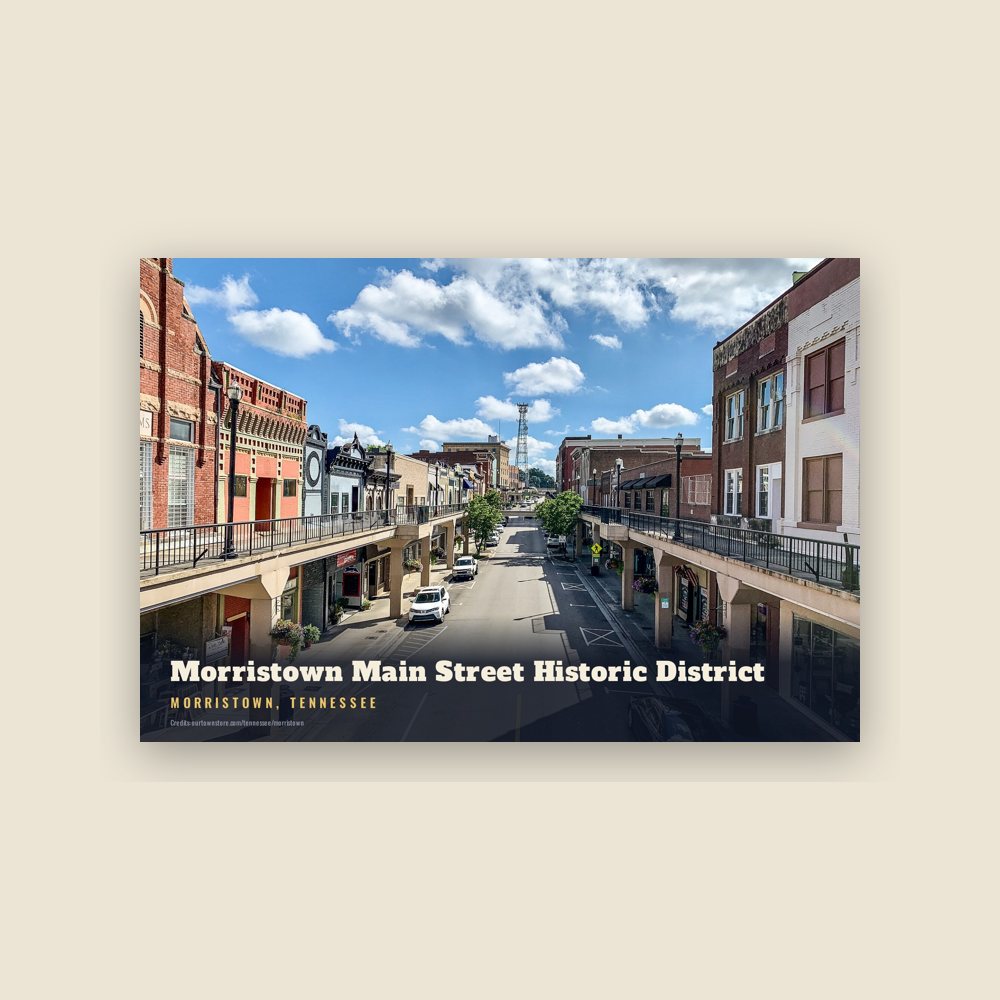
By 1833, Morristown had its first post office and store located along Main Street. Fourteen years later, railroad lines were built, stimulating further commercial growth until the beginning of the American Civil War. Morristown's Main Street district, measuring approximately 1 square mile (2.6 km2), arose from the intersection of two railroad lines, gradually turning Morristown into wholesale/retail hub after the end of the Civil War.
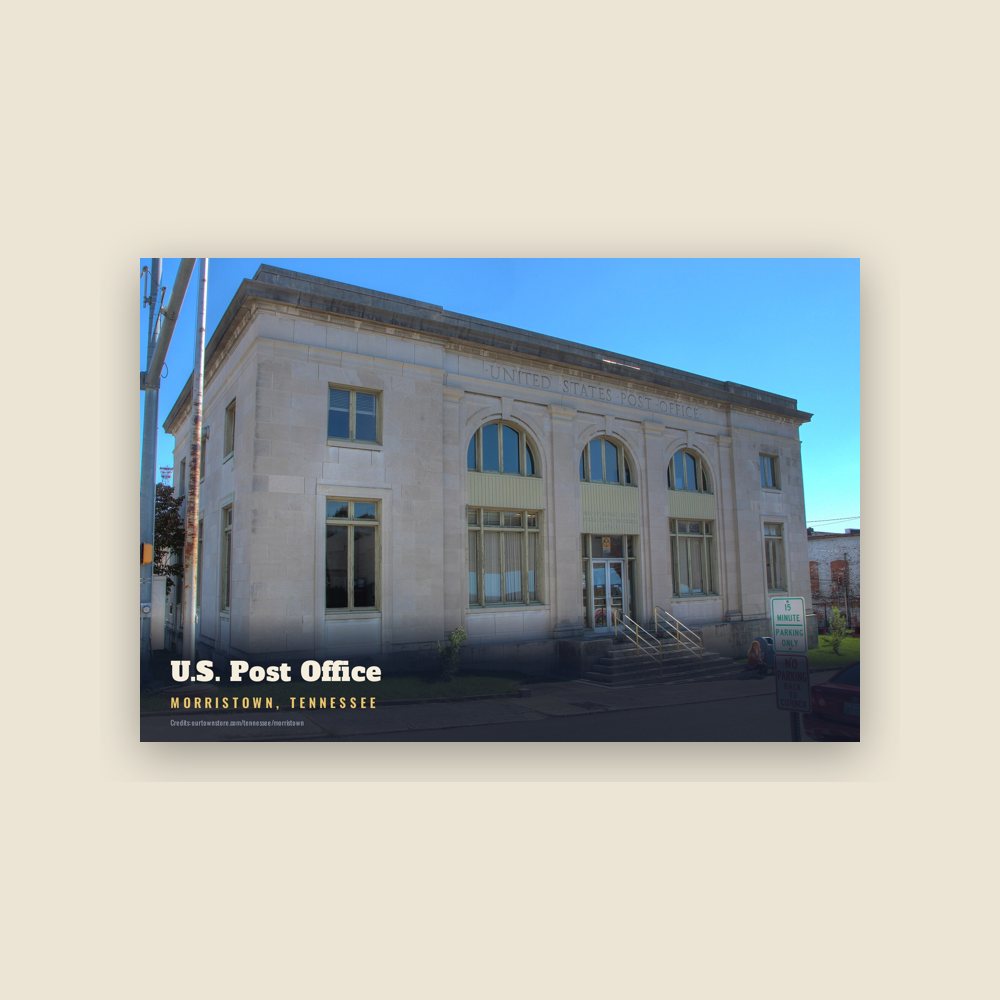
At the start of the 20th century, new buildings were erected in the downtown area, including the Henry Street Post Office, the First National Bank Building, and the Princess Theater. The Princess Theater was the first theater in Morristown and showcased touring musical acts, ministerial shows, pageants, films, and special Grand Ole Opry performances. Following the opening of theaters in neighboring shopping complexes, the Princess Theater closed in 1982, and was demolished in 1995.
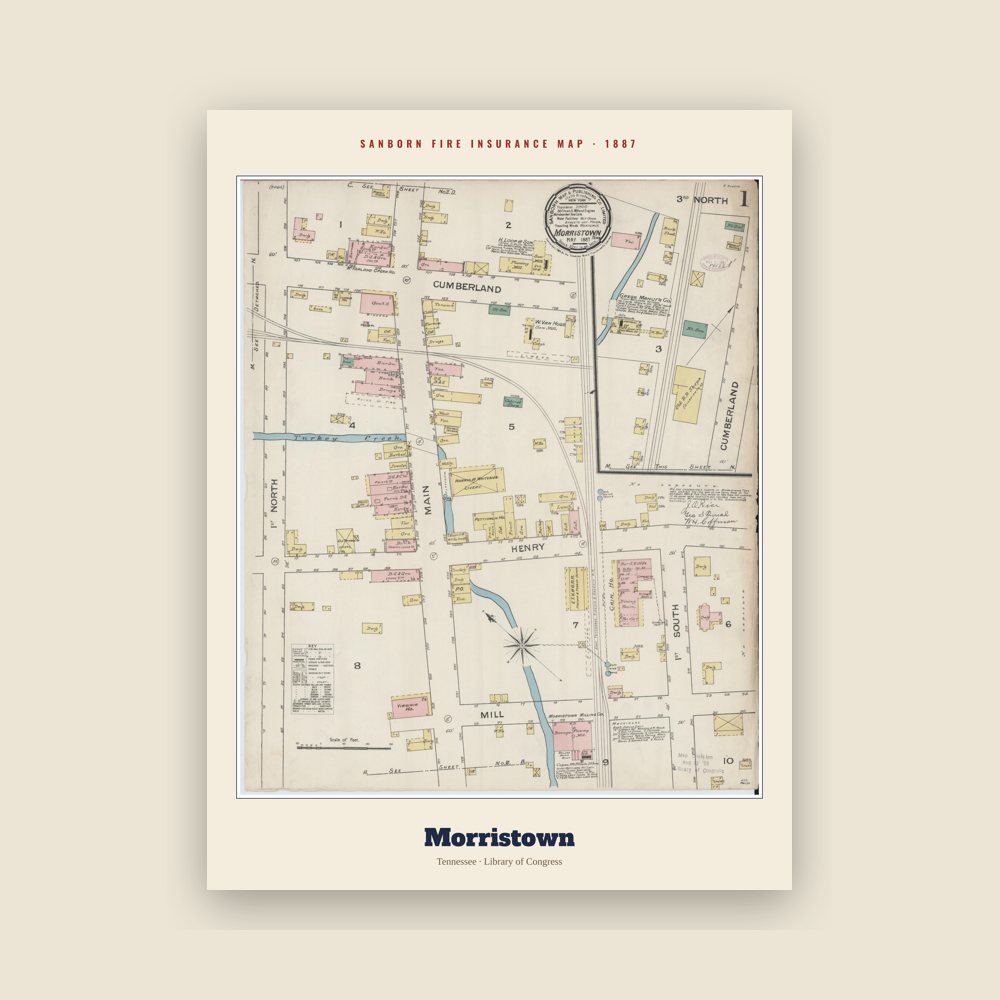
Following the 1950s, the downtown district saw losses in revenue, as a suburban shopping mall on the city's west side jeopardized businesses downtown. The city developed a plan to modernize Main Street by creating an "overhead sidewalk" as part of the nationwide push for urban renewal projects, enabling businesses to form on the second floor of existing buildings while serving as a canopy for passage below. Building owners spent nearly $2 million ($16 million today) upgrading their properties and linking them to ramps, while the government contributed over $5 million to build the elevated walkways. The underground channel for Turkey Creek was also enlarged and rerouted. In 1962, Turkey Creek, which bisects the street, flooded and damaged the downtown commercial district. The project was completed in 1967, becoming the first second-story sidewalk system in an American city. Over time, the Skymart has served as little more than a remnant of the idealism of 1960s urban renewal projects. Despite the aftermath of the project, the overhead sidewalks still stand in the downtown area.
Morristown is embarking on a resurrection of the Skymart, eyeing the structure as a key redevelopment tool for turning downtown into a social and commercial hub. It has been made a key element in a greenway master plan along Turkey Creek, with plans to connect downtown Morristown to Cherokee Park and Cherokee Lake. In an effort to renew public interest, city officials, the Crossroads Downtown Partnership, and the Morristown Area Chamber of Commerce hold events in the city's downtown or the "Skymart District" throughout the year, mainly during the warmer months of May to September.
Since the 1990s, the Latino population in Morristown has been one of the fasting growing in the Southeastern United States, with the population growing from a few hundred in the 1990s, to over 10,000 in the 2000s, and in 2023 with 31% of students in the Morristown-Hamblen school system having a Latin American immigrant background.
Adapted (trimmed) from the Wikipedia article Morristown, Tennessee, revision 1383249453 by its contributors, licensed CC BY-SA 4.0.
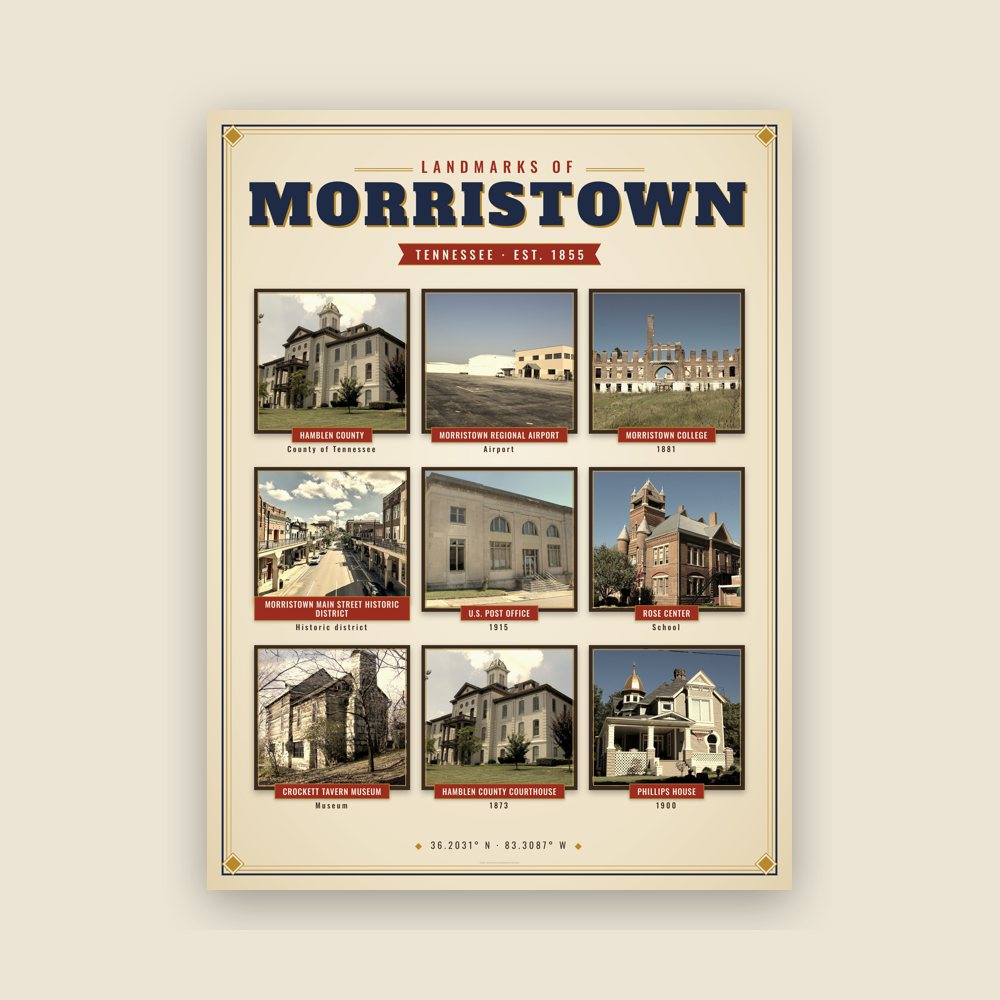
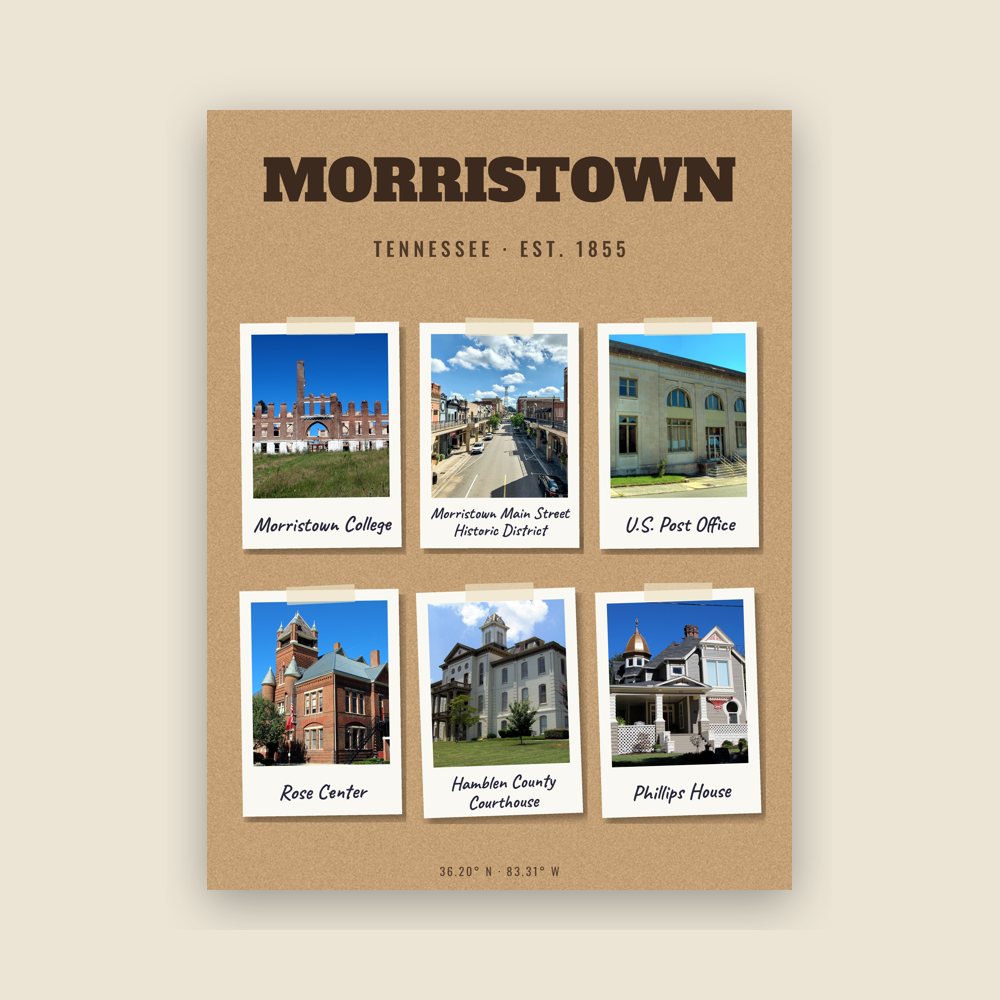
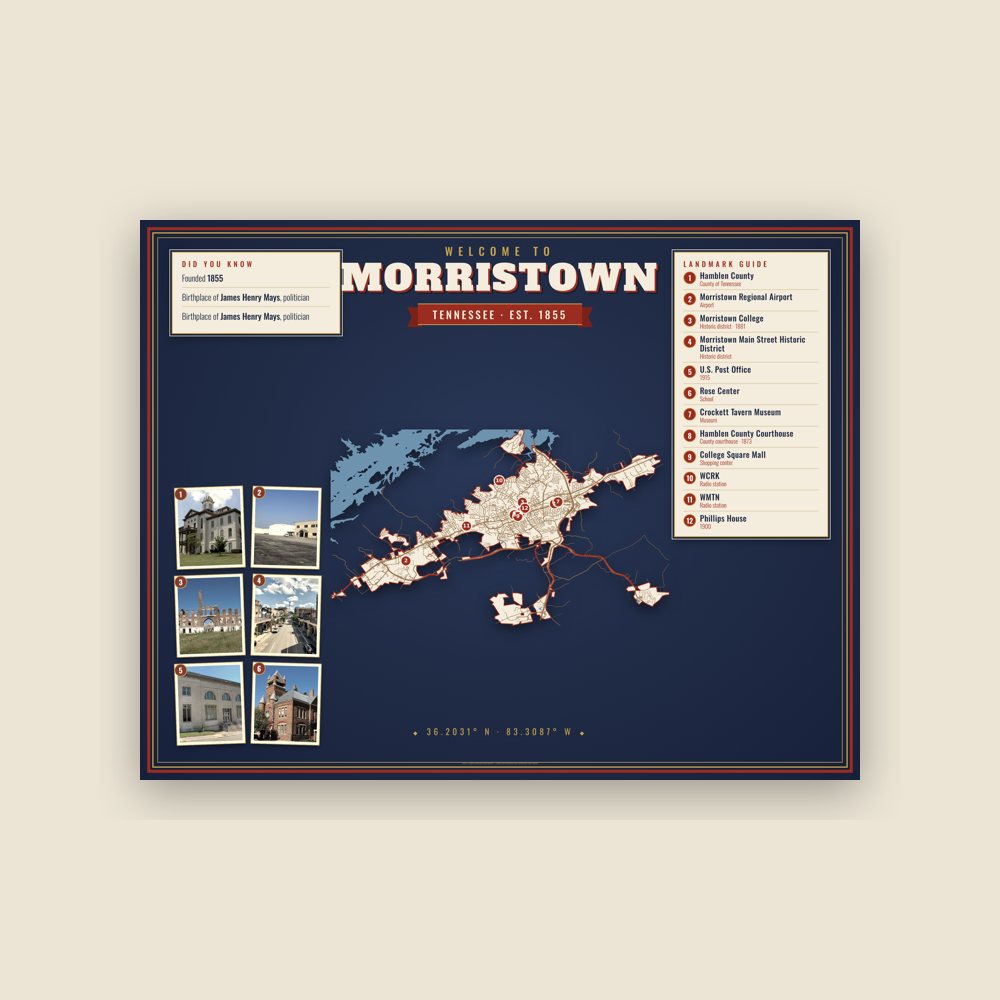
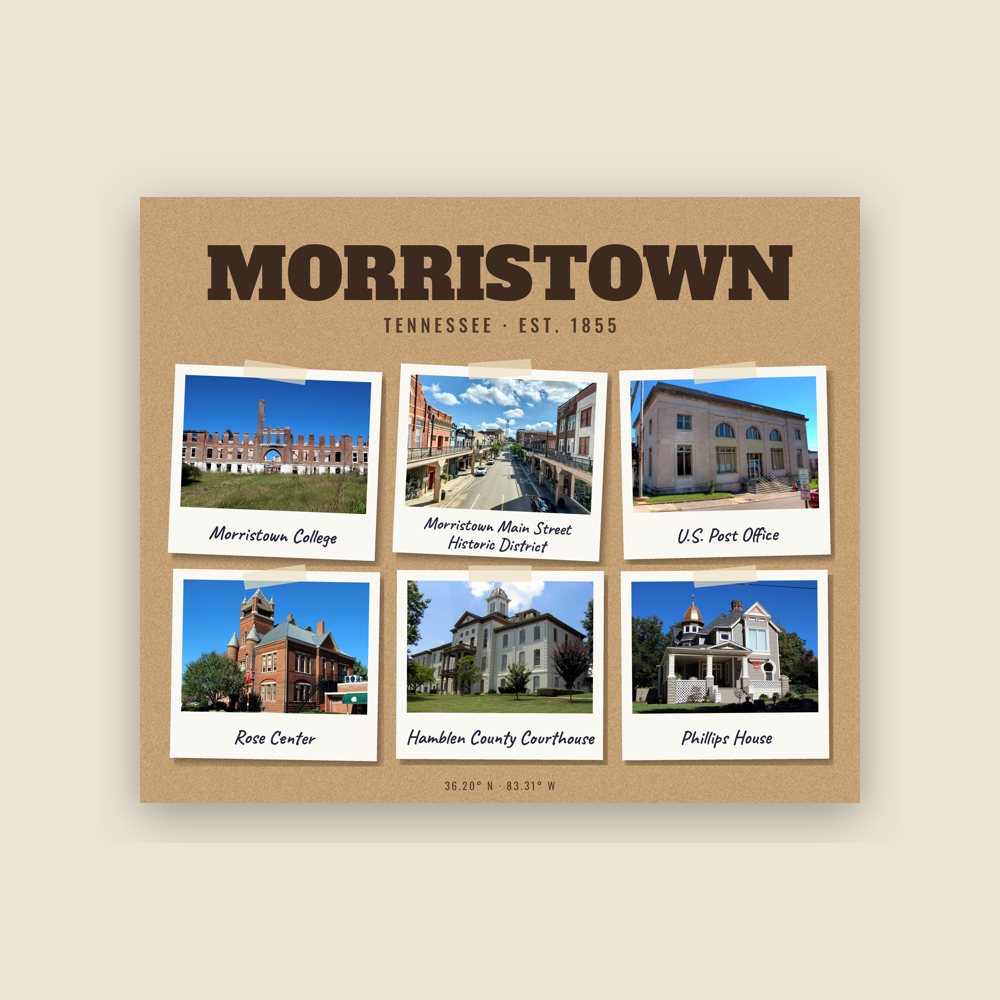
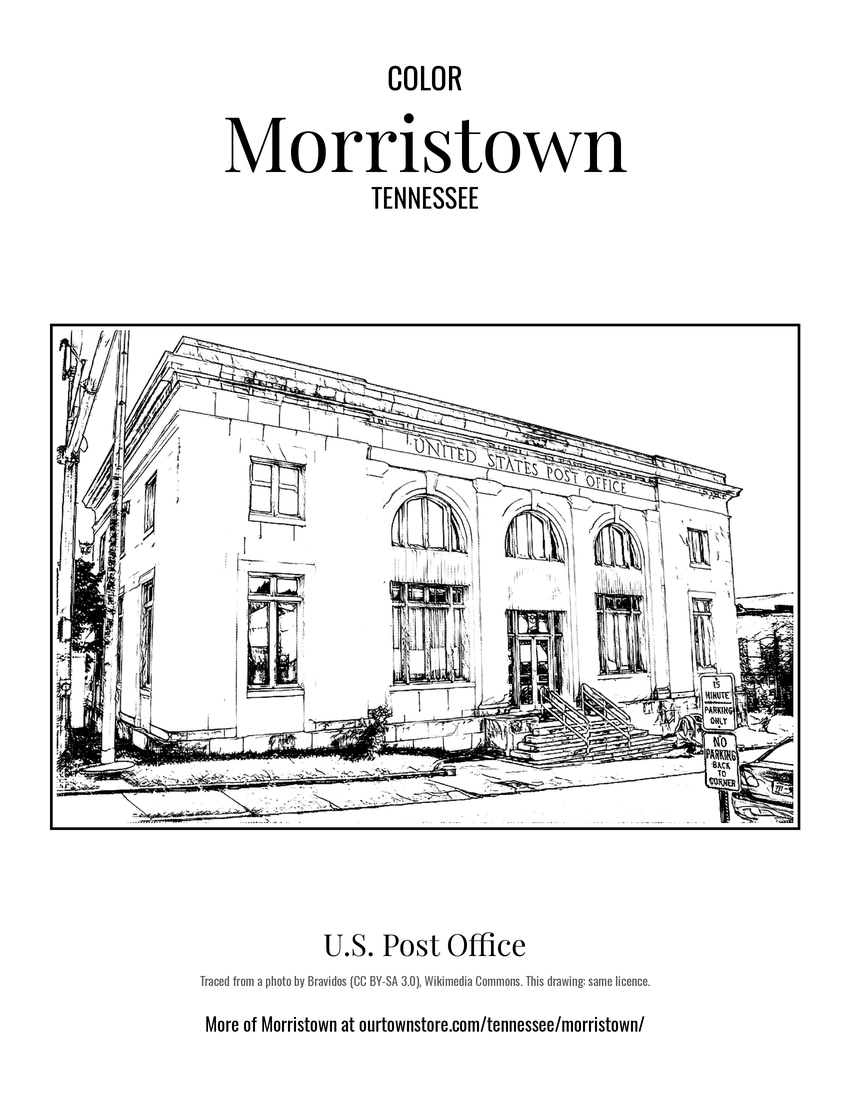 U.S. Post Office
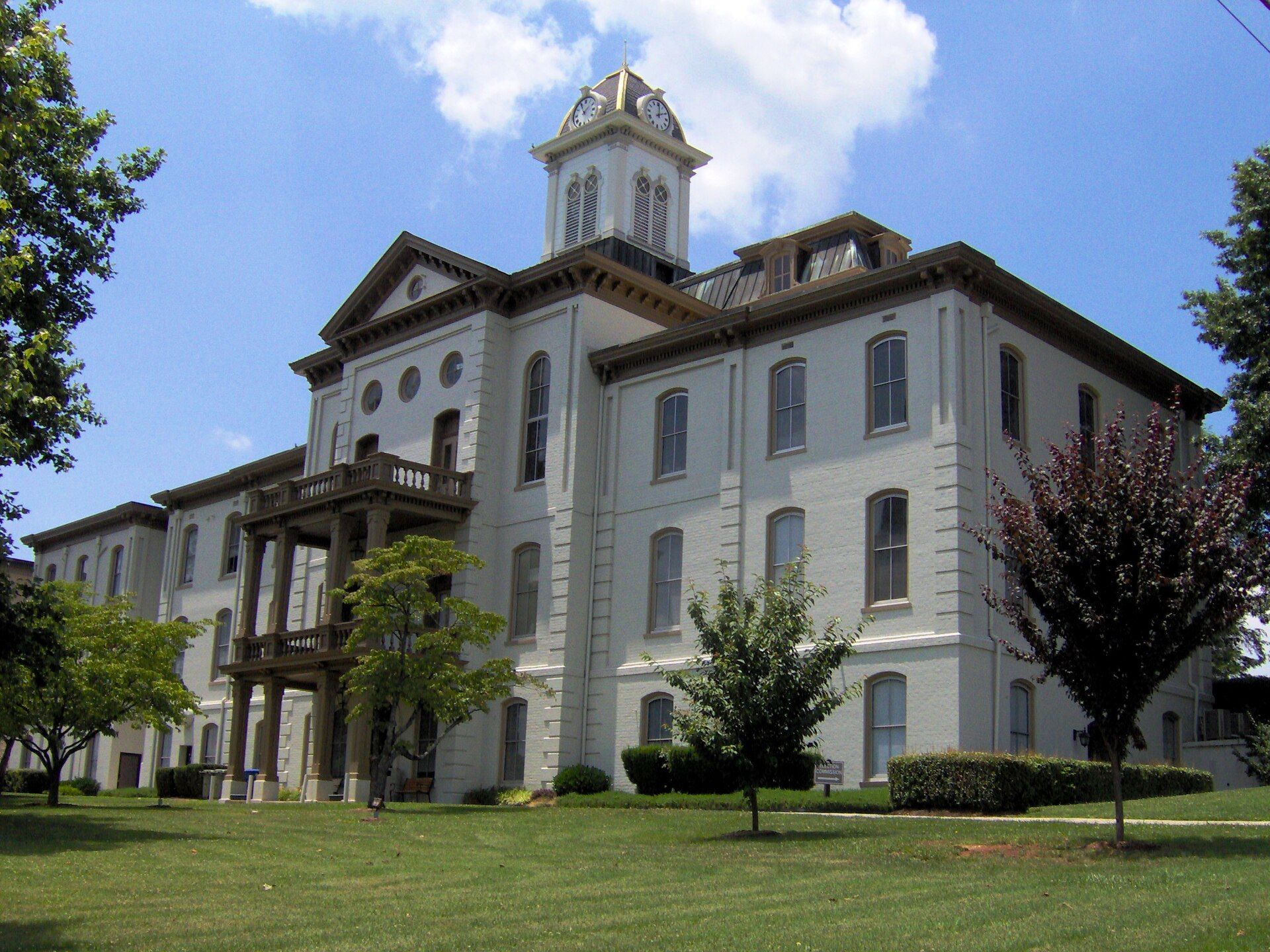
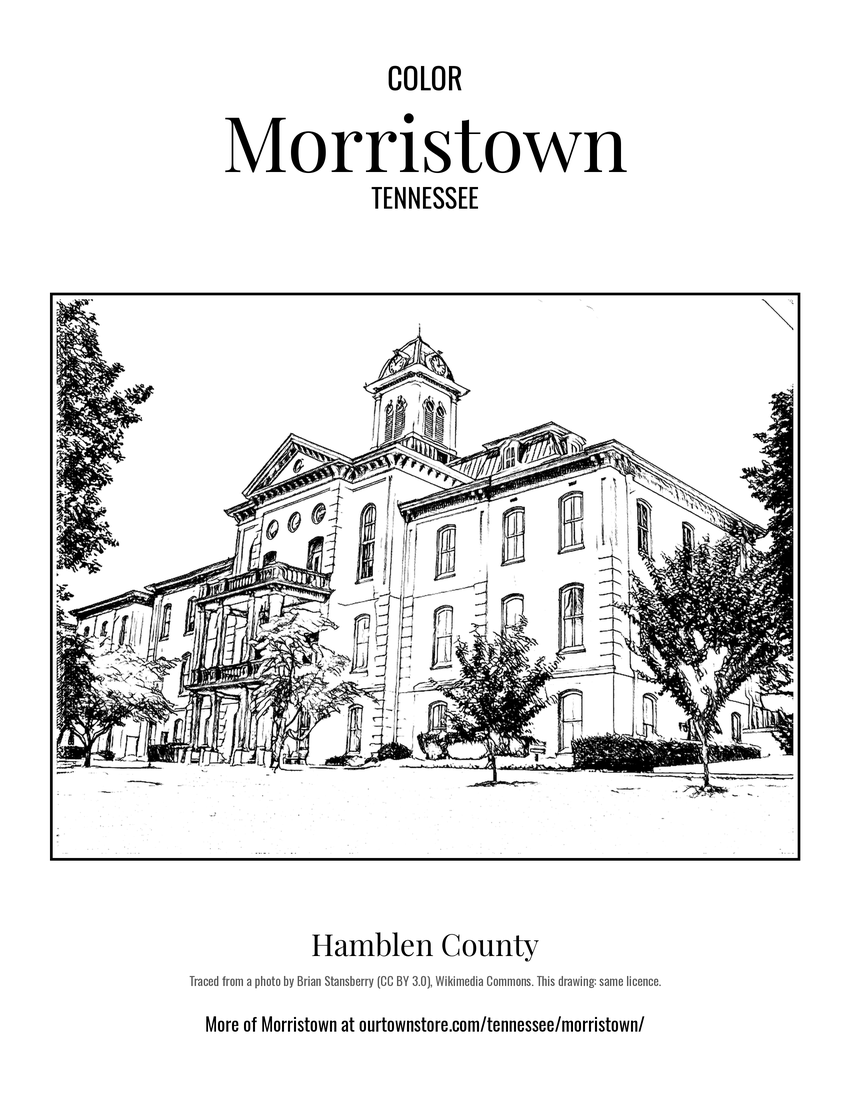 Hamblen County
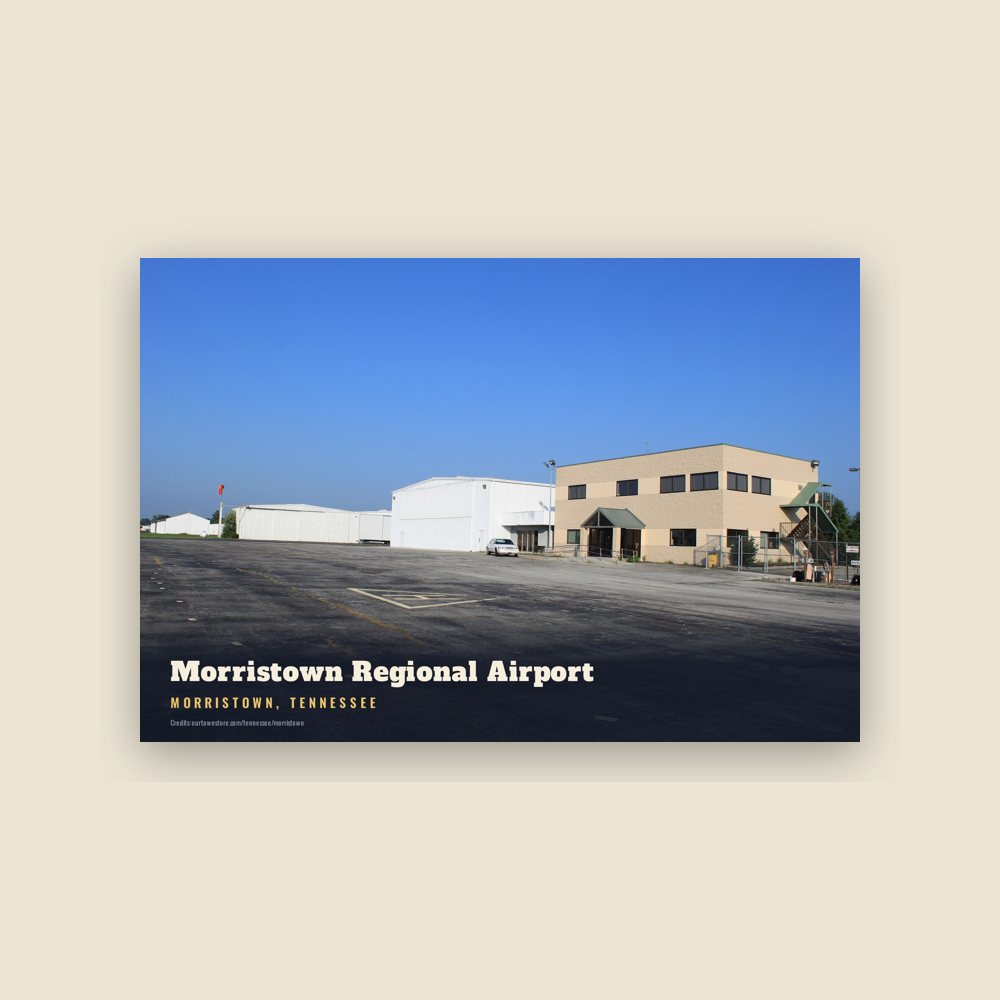
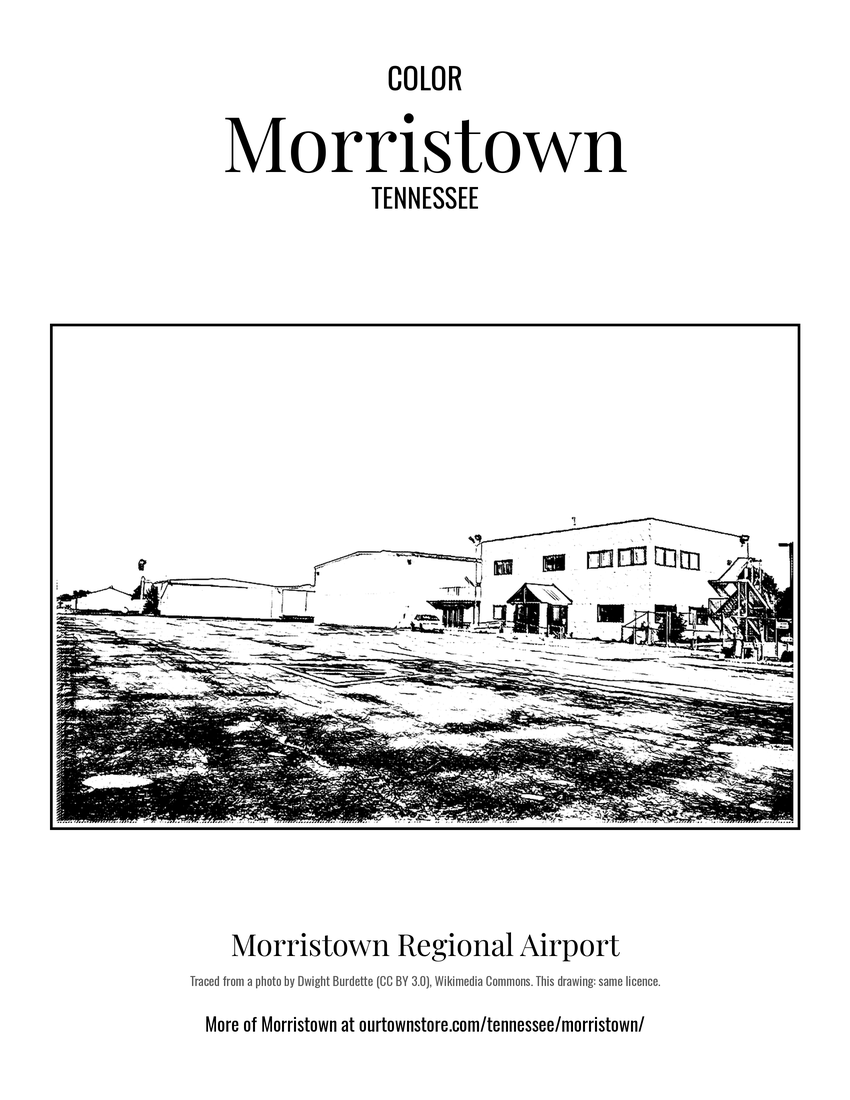 Morristown Regional Airport
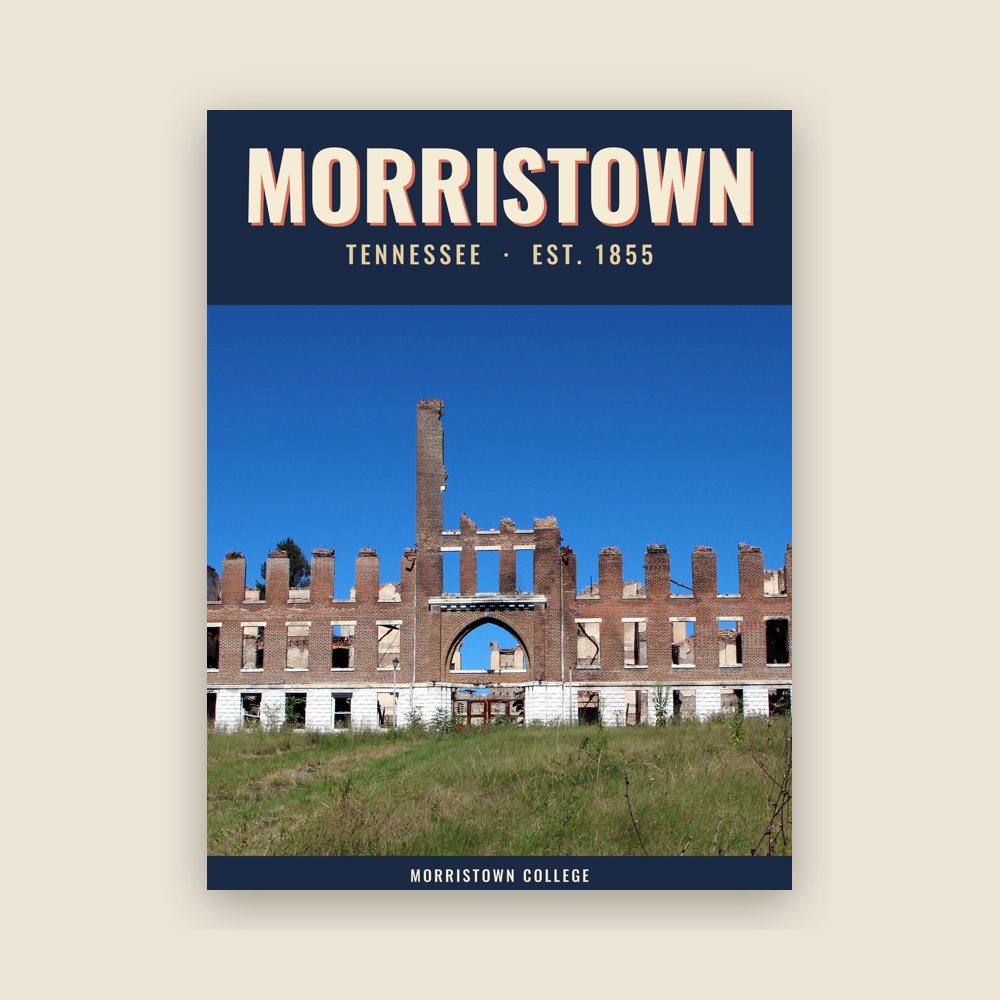
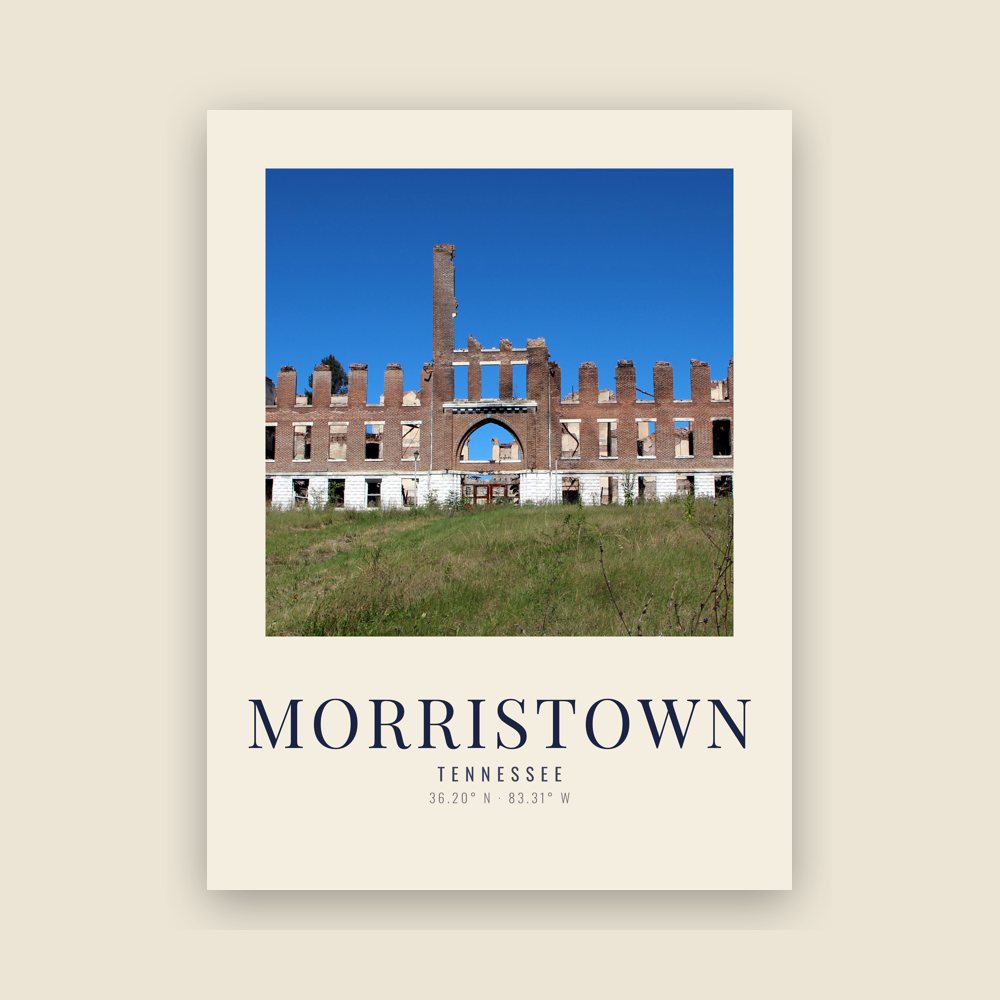
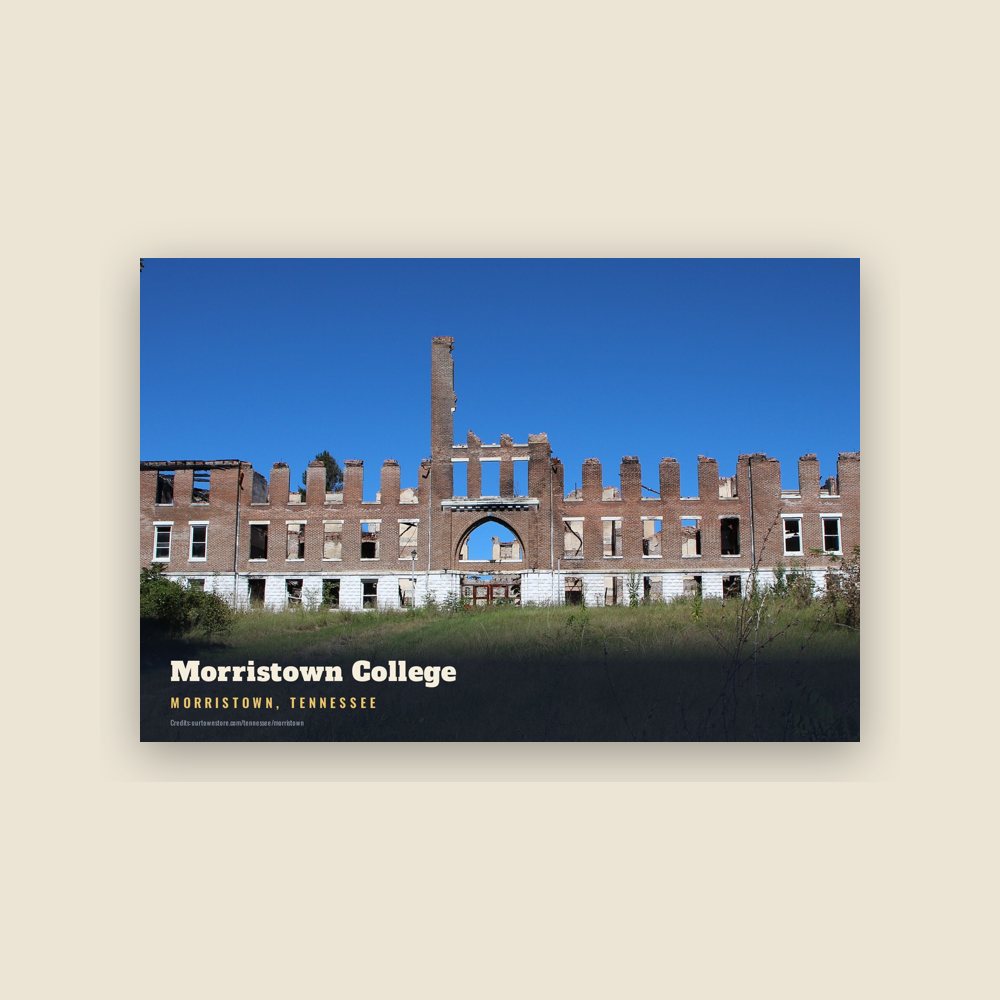
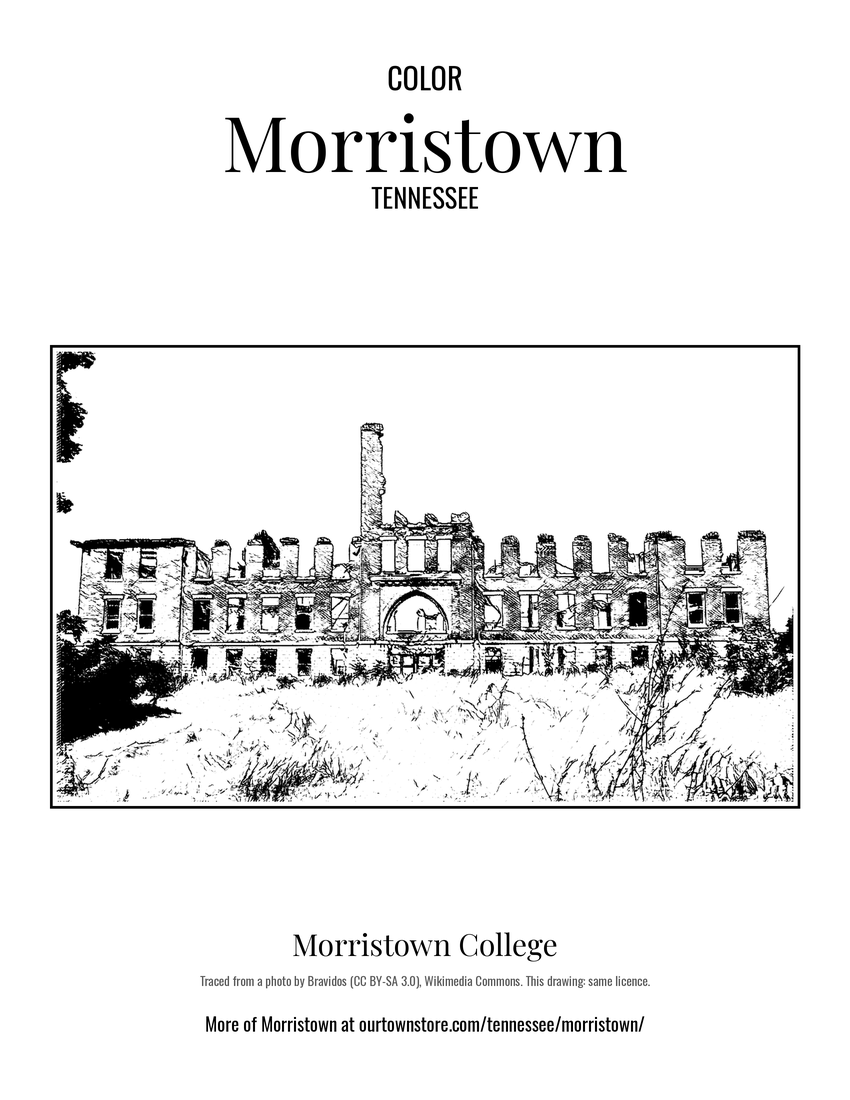 Morristown College