A short history of Forest Hills
Nashville was settled by Anglo-Europeans in 1780, and over the next two decades settlers staked claims on what was originally land cultivated and hunted by Native Americans. Several land grants were awarded to Revolutionary War veterans. The recipients of these grants seldom settled the land themselves, but either sold them to individuals or passed them along to their children or other relatives. In the Forest Hills area, William Nash received a 640-acre (2.6 km2) grant along what is now Granny White Pike south of Tyne Boulevard. Nash opted to sell off parcels of his land, including a 160-acre (0.65 km2) tract to Henry Compton in the early 19th century. Much of the land west of Hillsboro Road was part of a grant awarded to James Robertson.
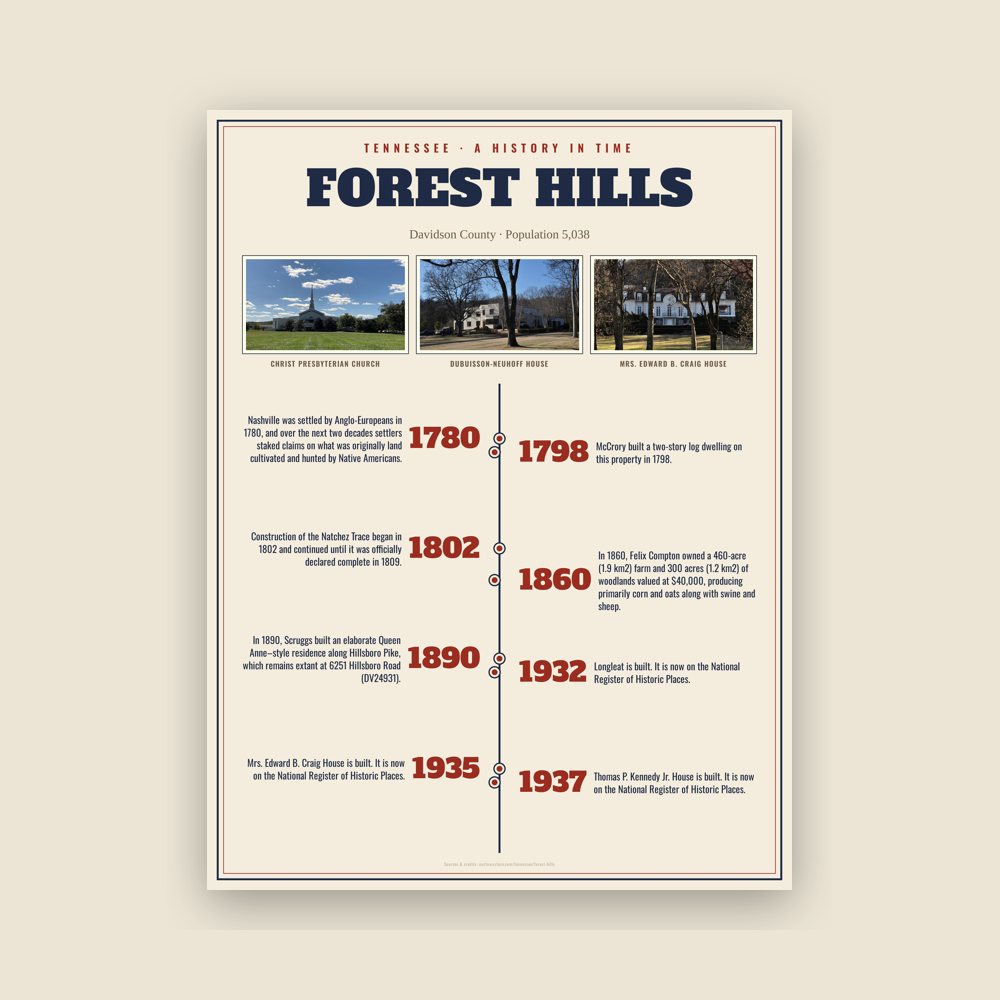
A Revolutionary War veteran named McCrory chose to give his land grant to his son Thomas, who came to the area in 1790. The younger McCrory went on to acquire some 3,700 acres (15 km2) in Davidson and Williamson counties, including land along what is now Old Hickory Boulevard. McCrory built a two-story log dwelling on this property in 1798. The property was purchased by William B. Carpenter in 1837, and his daughter and son-in-law Mary E. and George Mayfield inherited the house in 1869. It remained in the Mayfield family until 1939. This is the oldest building remaining in Forest Hills, and it was listed on the National Register of Historic Places in 1982.
As Nashville assumed prominence on the western frontier, a road known as the Natchez Trace was created to provide an overland route for settlers returning from New Orleans. Many settlers in the Ohio and Cumberland River valleys floated on rafts down the Mississippi River to New Orleans to sell their goods. Prior to the invention of the steamboat, western settlers had no choice but to walk home through the wilderness. To provide an improved route, the Natchez Trace was constructed from Nashville to Natchez, Mississippi.
Construction of the Natchez Trace began in 1802 and continued until it was officially declared complete in 1809. From the early 19th century through the 1820s, the Trace served as the primary north–south route through central Tennessee. With the advent of steamboat travel, its use declined significantly, and by the mid-19th century the old roadbed functioned largely as local farm roads. Various surveys and land records from the 19th century refer to the “Natchez Trace” or “Natchez Road” along at least three routes in Davidson County, two of which ran through Forest Hills. As National Park Service historian Dawson Phelps wrote in the 1940s, “All this has been very confusing to many Nashvillians who dabble in local history. Each has a definite idea that one or the other of the roads mentioned above is the Old Trace and is eager, at the drop of a hat, to defend his position obstinately, profanely, and at great length.” A later National Park Service study identified one of the primary routes as passing through what is now Forest Hills along either side of present-day Hillsboro Pike.
In northern Williamson County, the Natchez Trace crossed the Harpeth River near present-day Union Bridge Road. The Trace then turned north along what is now Stockit Road, where two branches diverged in the area now encompassed by Edwin Warner Park. One branch continued north along present-day Page Road and followed the route of State Route 100 (Harding Pike) to its terminus at Cockrill’s Spring in Centennial Park. The second branch ran east to present-day Hillsboro Pike, passed north of Otter Creek, recrossed Hillsboro Pike, and continued through Green Hills to Cockrill’s Spring. This route is shown on a National Park Service map prepared in 1935.
With declining use of the Natchez Trace, this roadbed became known as Compton Road, named for the prominent Compton family of the area. Shown on numerous 19th-century maps, Compton Road was distinct from Hillsboro Pike through Green Hills. Residential and commercial development obliterated most traces of the road north of Harding Place, though a small intact section remains just north of Woodlawn Drive.
Another route connecting Franklin to Nashville followed what was historically known as the Middle Franklin Turnpike, now Granny White Pike. This branch of the Natchez Trace left the main road at Leiper’s Fork and traveled east to Franklin before continuing north to Nashville.
Settlement in Forest Hills remained limited during the early 19th century due to the area’s steep, forested topography, which made large-scale farming difficult. Fertile bottomlands existed primarily along tributaries of Richland Creek and Otter Creek. Primary crops included oats, Indian corn, and potatoes, while livestock—especially swine and sheep—played a central role in the local agricultural economy. Wool production was common, while cattle were primarily raised for dairy rather than beef.
Members of the Compton family became among the area’s most influential landowners. William Compton, a cousin of Henry Compton Sr., established farms along Hillsboro Pike and later served under Andrew Jackson at New Orleans. His sons Felix and Henry W. Compton acquired extensive property holdings. In 1860, Felix Compton owned a 460-acre (1.9 km2) farm and 300 acres (1.2 km2) of woodlands valued at $40,000, producing primarily corn and oats along with swine and sheep. His Hillsboro Pike residence stood until the 1980s, when it was dismantled and relocated to Dickson County.
Henry Compton Sr. (1784–1873) settled in the area in 1806 and, following his marriage to Sarah Cox in 1815, established a 325 acres (1.32 km2) farm in present-day Forest Hills. Around 1819, he constructed a two-story log dwelling near what is now Tyne Boulevard. By 1860, Compton owned approximately 900 acres (3.6 km2) of improved land and 400 acres (1.6 km2) of woodlands, with his farm valued at $195,000. His ca. 1819 log house and family cemetery remain extant at 1645 Tyne Boulevard.
William Scruggs established another prominent estate along Hillsboro Pike during the 19th century, eventually acquiring approximately 700 acres (2.8 km2). His nephew Edward Scruggs inherited the property and later played a key role in the Hillsboro Turnpike Company, which constructed Hillsboro Pike. In 1890, Scruggs built an elaborate Queen Anne–style residence along Hillsboro Pike, which remains extant at 6251 Hillsboro Road (DV24931).
Adapted (trimmed) from the Wikipedia article Forest Hills, Tennessee, revision 1378783804 by its contributors, licensed CC BY-SA 4.0.
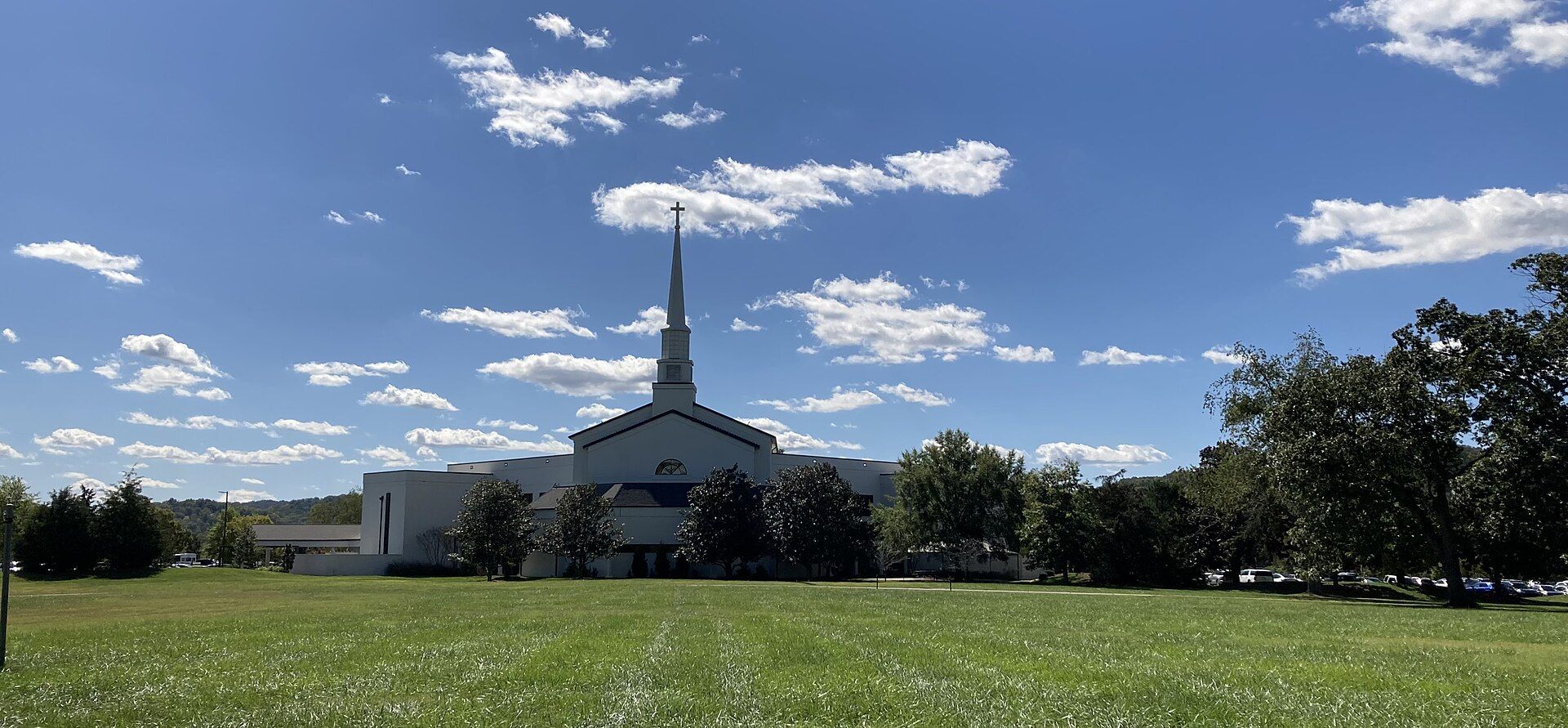
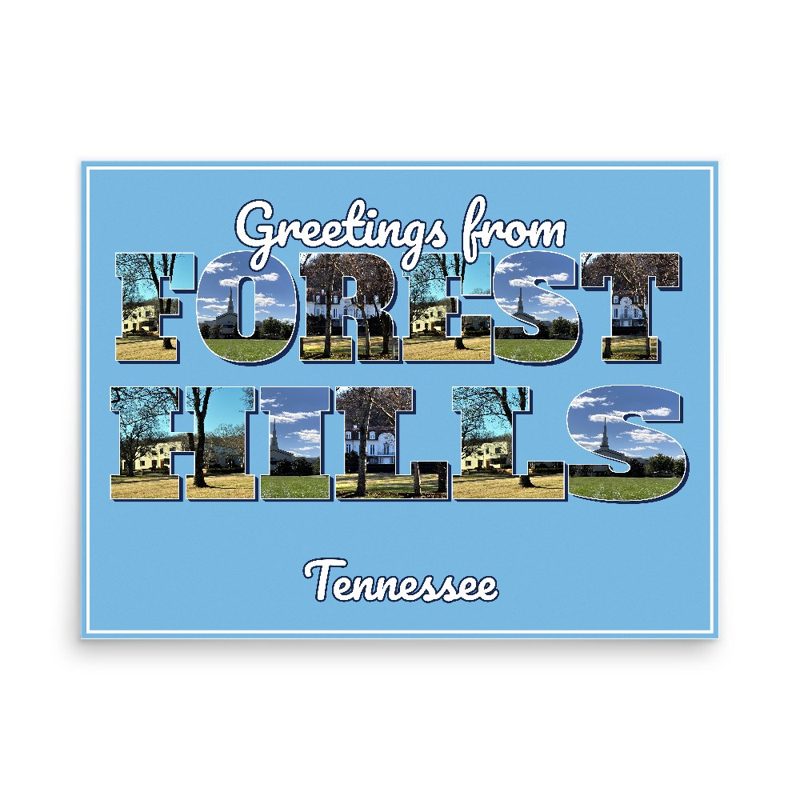
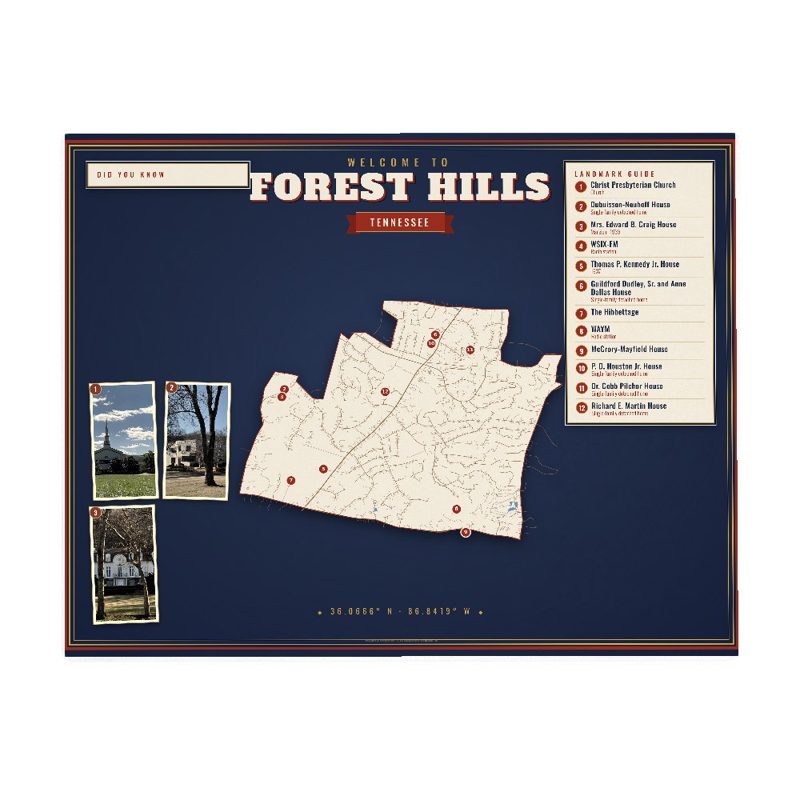










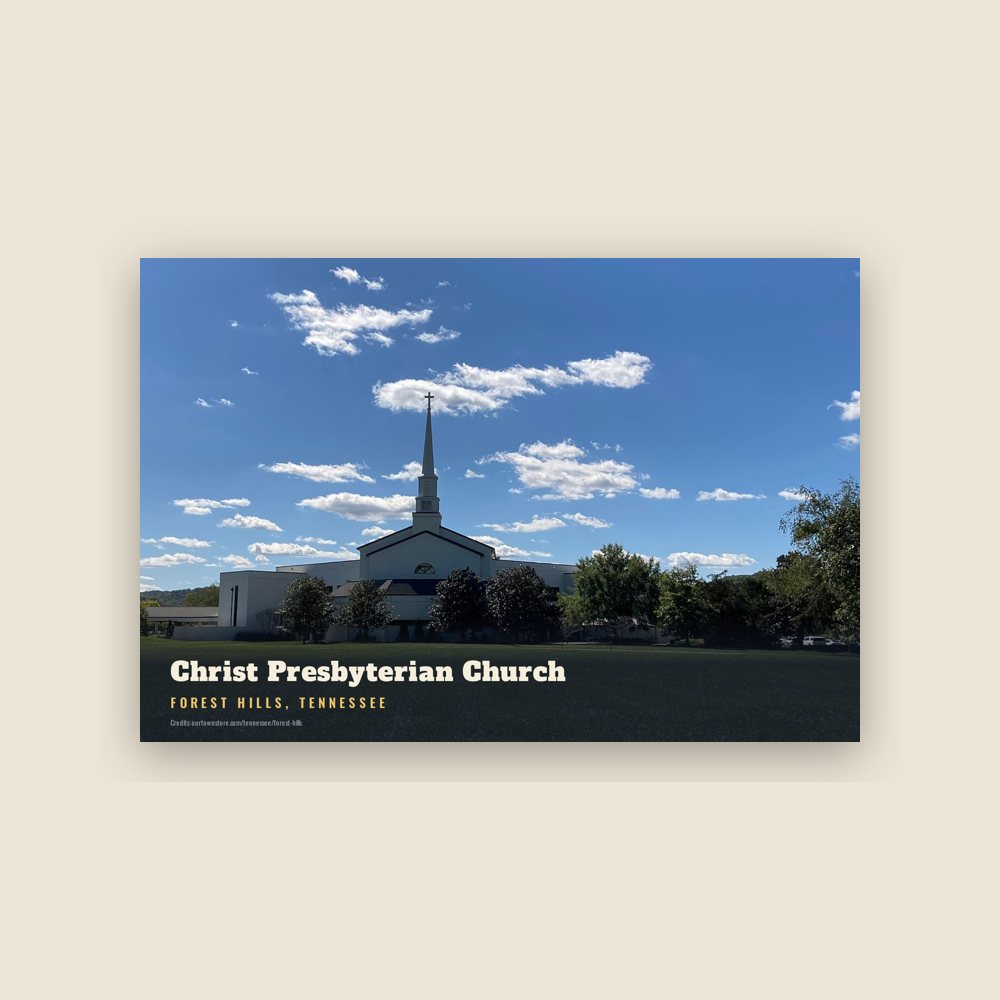
 Christ Presbyterian Church
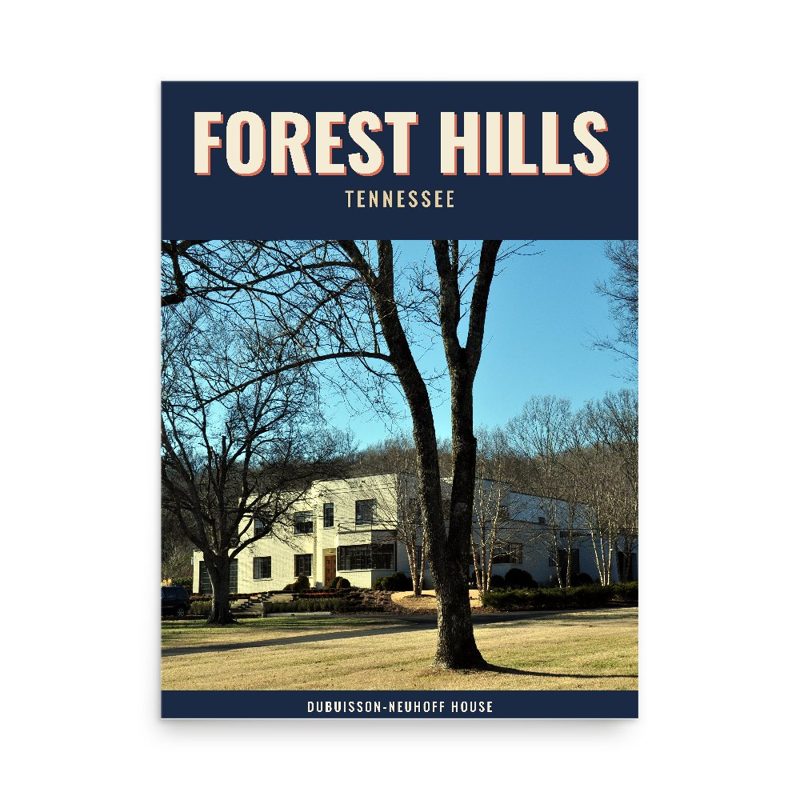
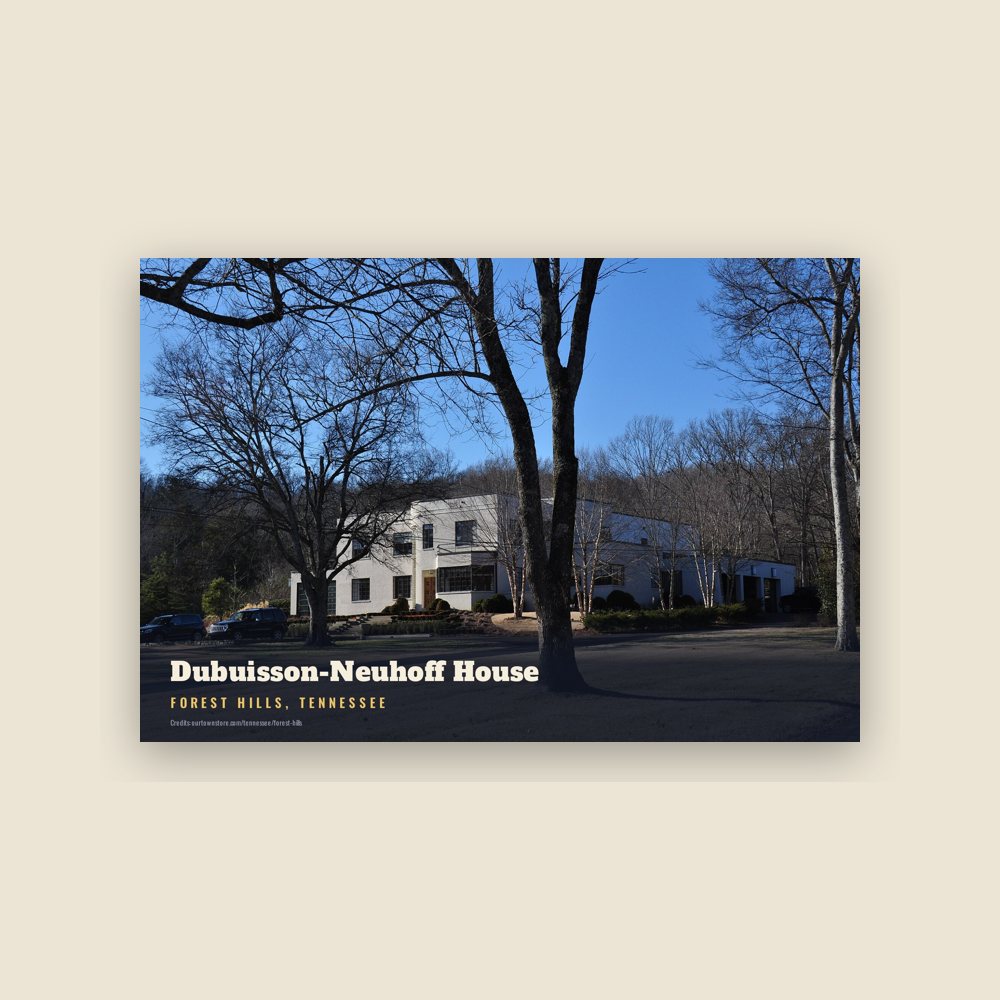
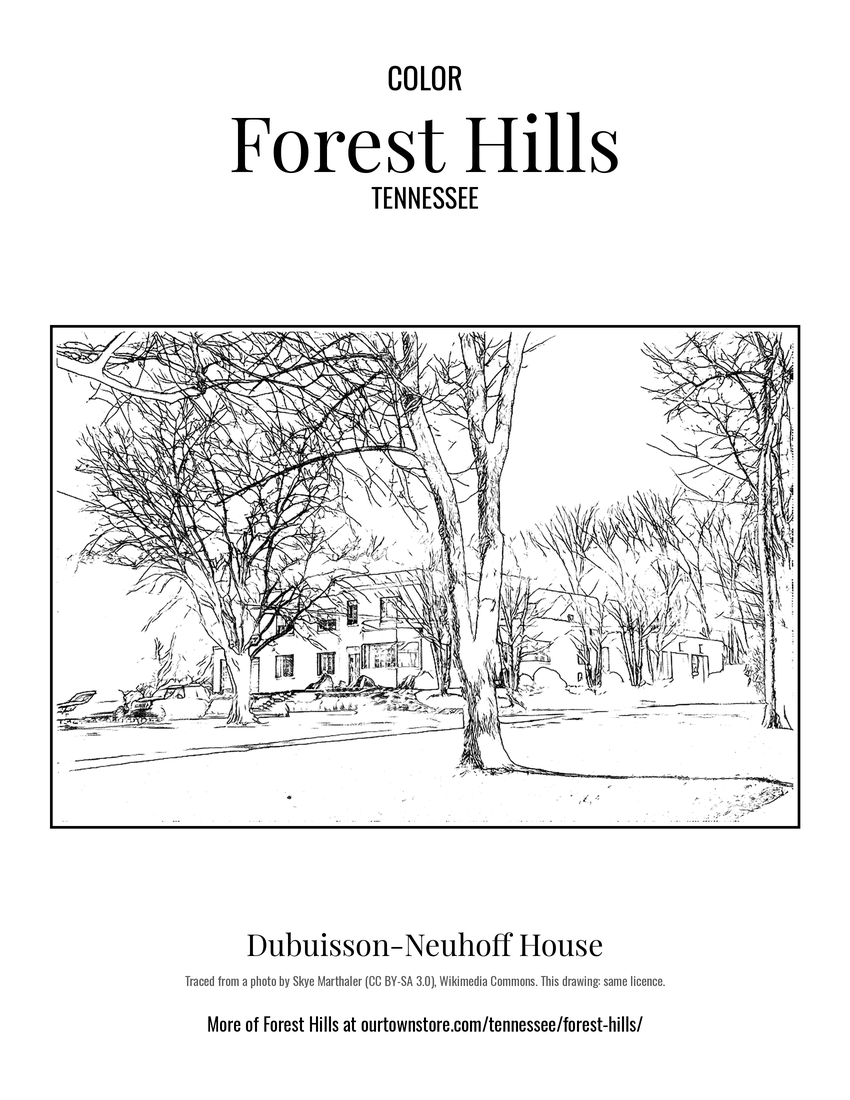 Dubuisson-Neuhoff House
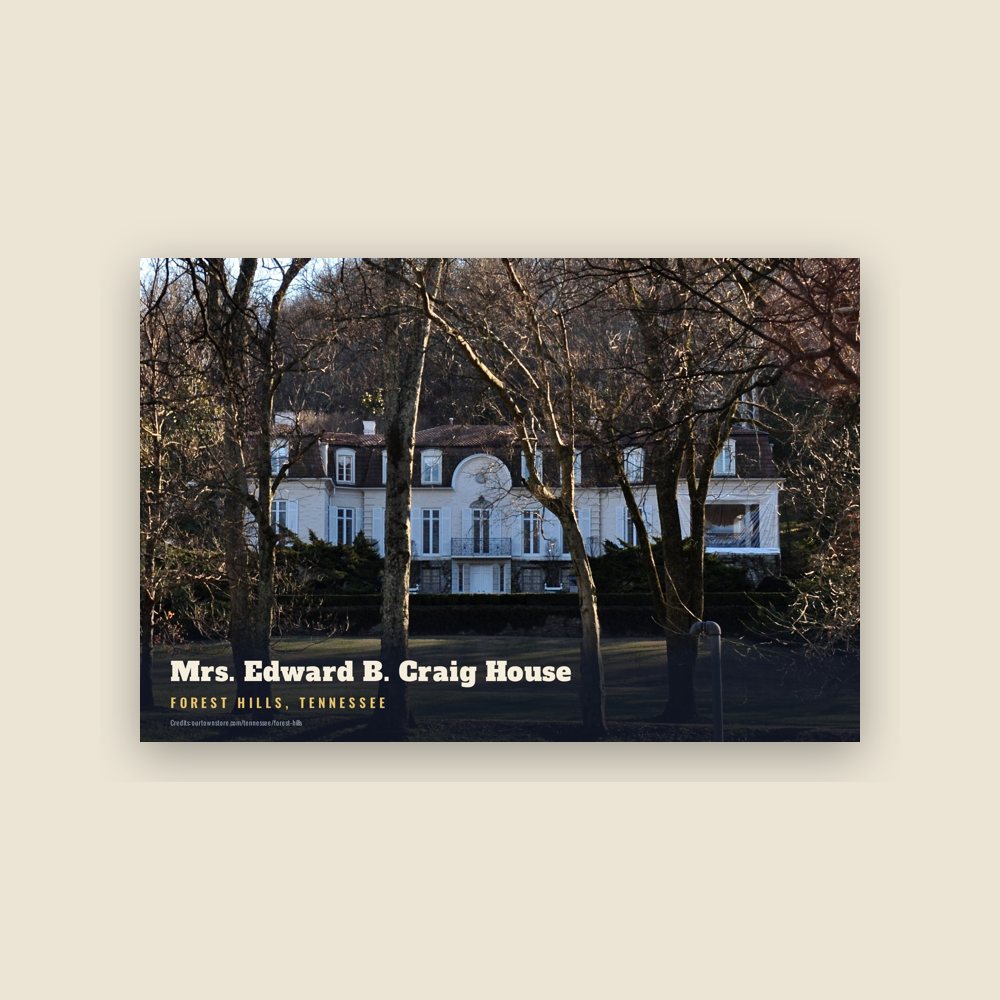
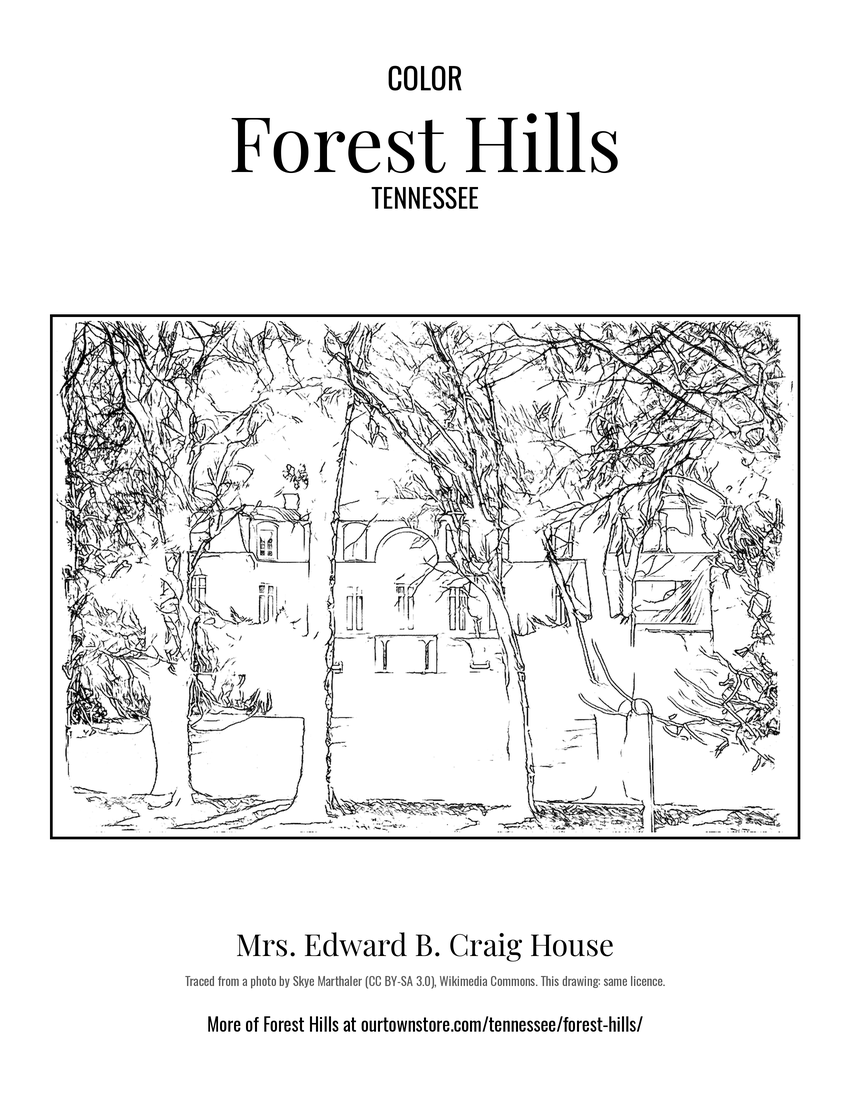 Mrs. Edward B. Craig House