Since 1951
A short history of Ducktown
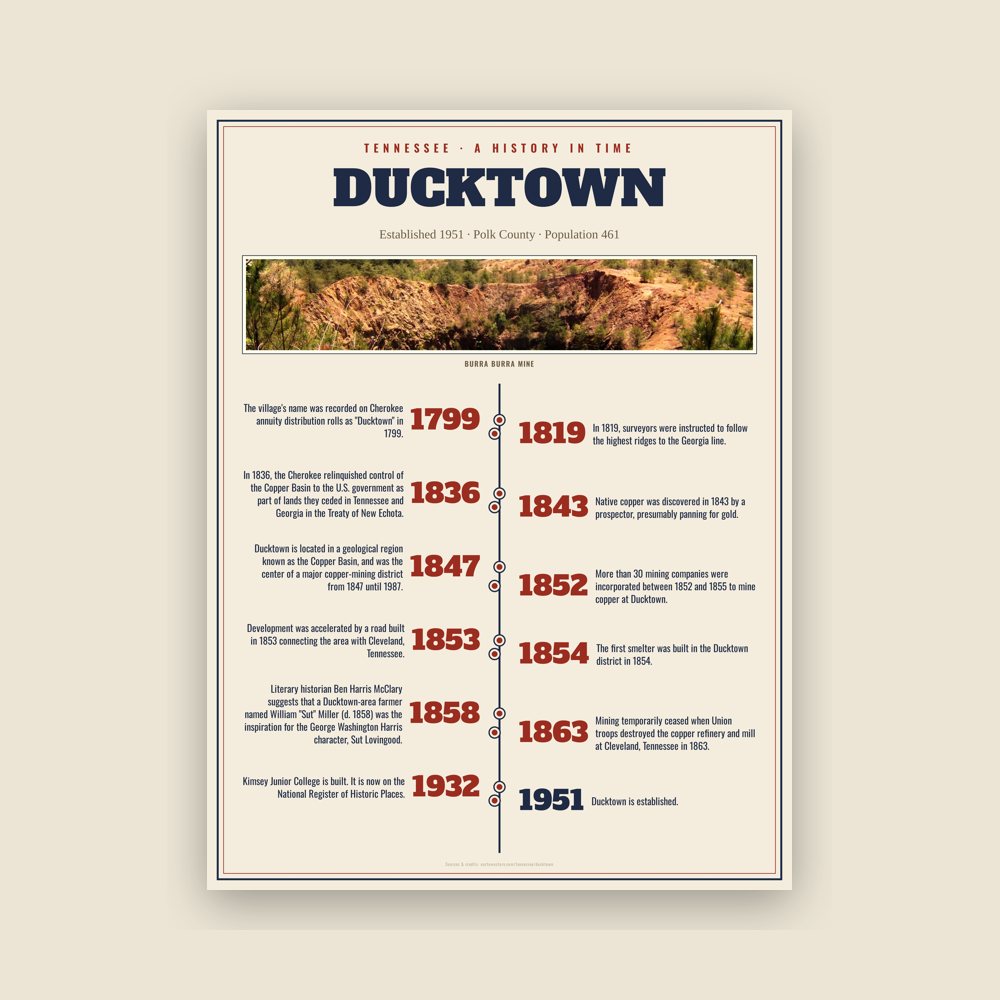
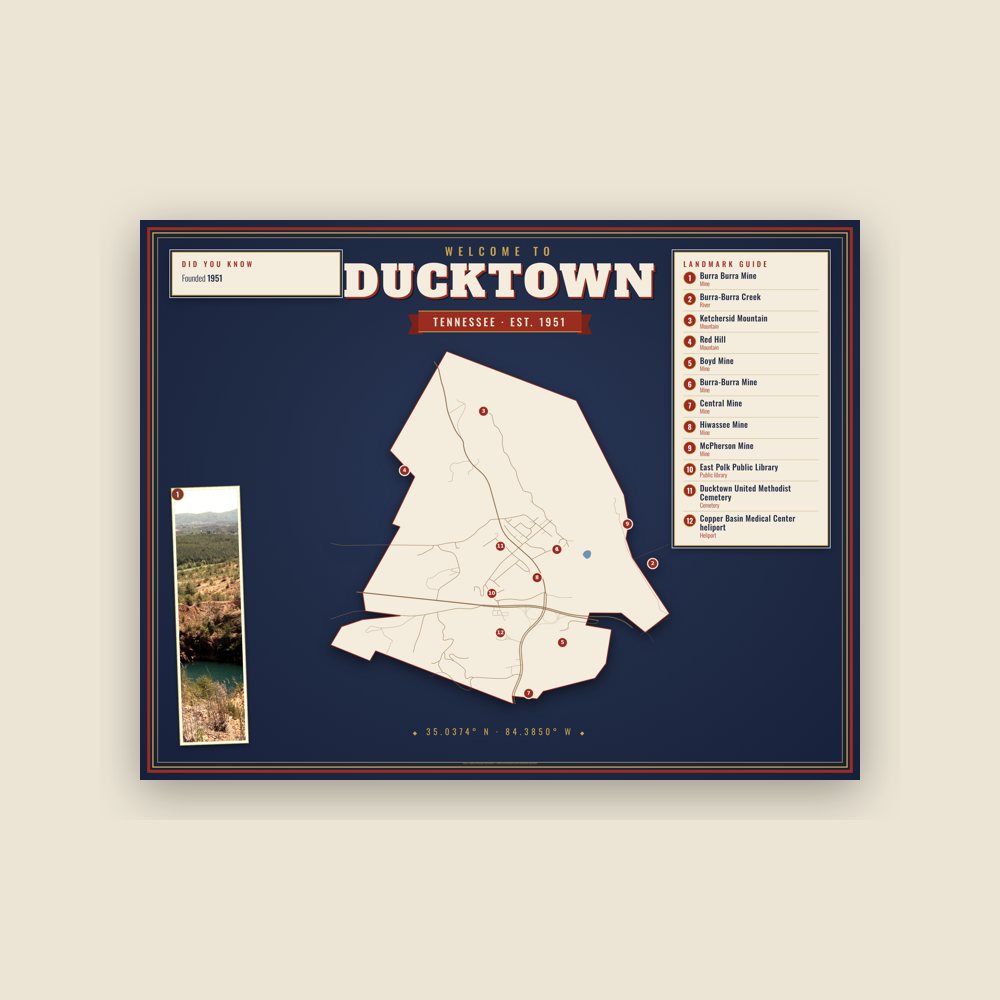
Ducktown is located in a geological region known as the Copper Basin, and was the center of a major copper-mining district from 1847 until 1987. The district also produced iron, sulfur and zinc as byproducts. Ducktown was the birthplace of Rockabilly Hall of Famer, Stan Beaver.
Literary historian Ben Harris McClary suggests that a Ducktown-area farmer named William "Sut" Miller (d. 1858) was the inspiration for the George Washington Harris character, Sut Lovingood. Ducktown and several Ducktown-area features, such as Big Frog Mountain and the Ocoee River ("Oconee"), are mentioned in the Sut Lovingood tales.
Read the full history
Pre-mining period
The Cherokee inhabited the Copper Basin as early as the late 18th century, well before the arrival of the first Euro-American settlers. Their territory extended into northern Georgia. The Cherokee village of Gawonvyi (also known as Kawana)— which means “duck place” in English— is believed to have been located at the confluence of the Ocoee River and Tumbling Creek. The village's name was recorded on Cherokee annuity distribution rolls as "Ducktown" in 1799. According to tradition, Ducktown was named after a Cherokee leader named Chief Duck.
According to the original border surveying plan, Ducktown (and Copperhill, Tennessee) would have been in North Carolina. In 1819, surveyors were instructed to follow the highest ridges to the Georgia line. However, at Unicoi Gap surveyors immediately turned south for 15 miles, reportedly because they ran out of liquor and heard there was a moonshine still at the Georgia line.
In 1836, the Cherokee relinquished control of the Copper Basin to the U.S. government as part of lands they ceded in Tennessee and Georgia in the Treaty of New Echota. Although the U.S. removed many of the basin's Cherokee inhabitants in the march to Indian Territory, some avoided the roundup by hiding out in the surrounding mountains. They would later help build the Old Copper Road (now part of US U.S. Route 64). In the 1840s and 1850s, Ducktown was called Hiwassee or Hiawassee, after the Cherokee name for a major river in the area. This name was subsequently adopted for the city's first major mining operation.
Early mining years
Native copper was discovered in 1843 by a prospector, presumably panning for gold. The first shipment of copper ore was taken out on muleback in 1847. More than 30 mining companies were incorporated between 1852 and 1855 to mine copper at Ducktown. Development was accelerated by a road built in 1853 connecting the area with Cleveland, Tennessee. The first smelter was built in the Ducktown district in 1854.
Mining temporarily ceased when Union troops destroyed the copper refinery and mill at Cleveland, Tennessee in 1863. It resumed in 1866, and continued until 1878, when the mines had exhausted the shallow high-grade copper ores.
Later years
By 1906, the Tennessee Copper Company had begun constructing an acid reclamation plant near Copperhill to recover most of the sulfur in the form of sulfuric acid rather than releasing it to the atmosphere. Froth flotation was added in the 1920s.
Adapted (trimmed) from the Wikipedia article Ducktown, Tennessee, revision 1378771581 by its contributors, licensed CC BY-SA 4.0.
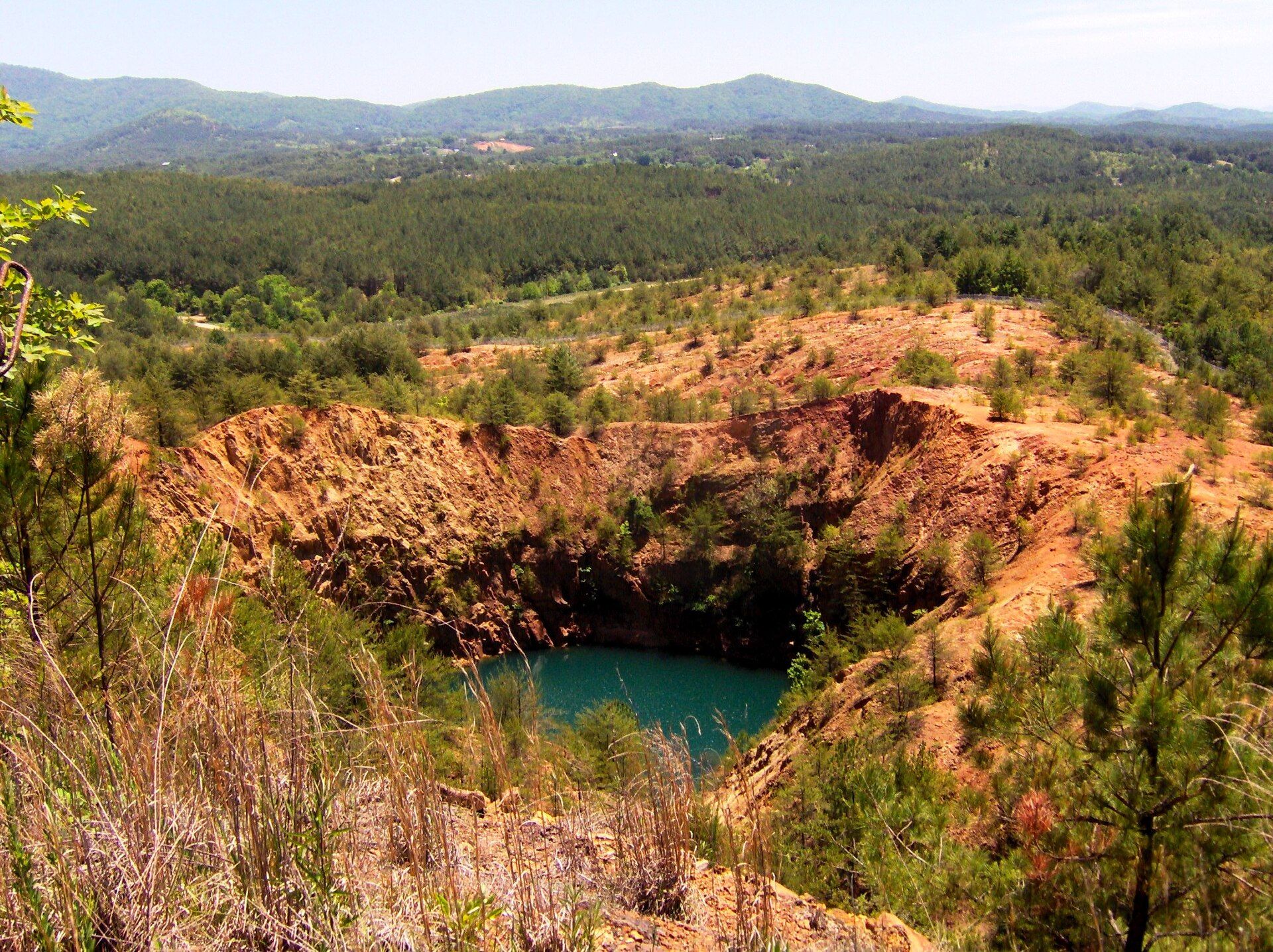
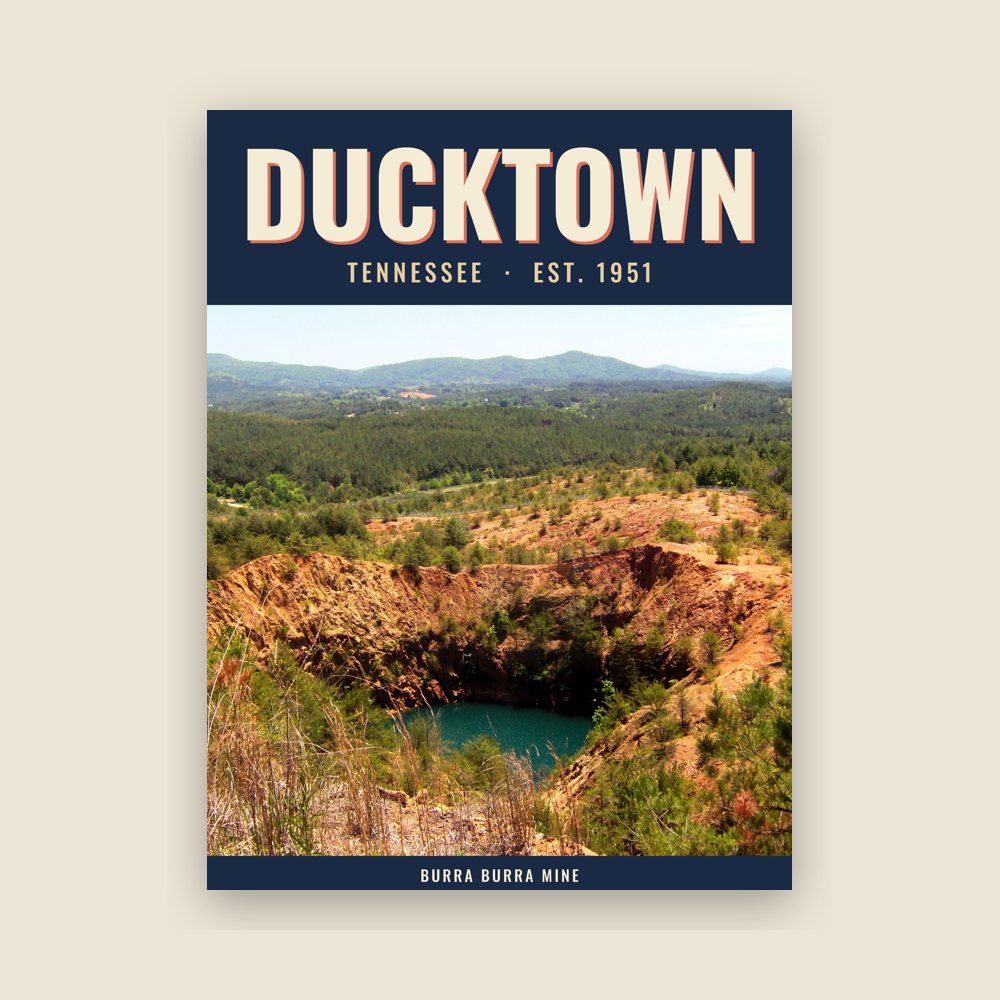
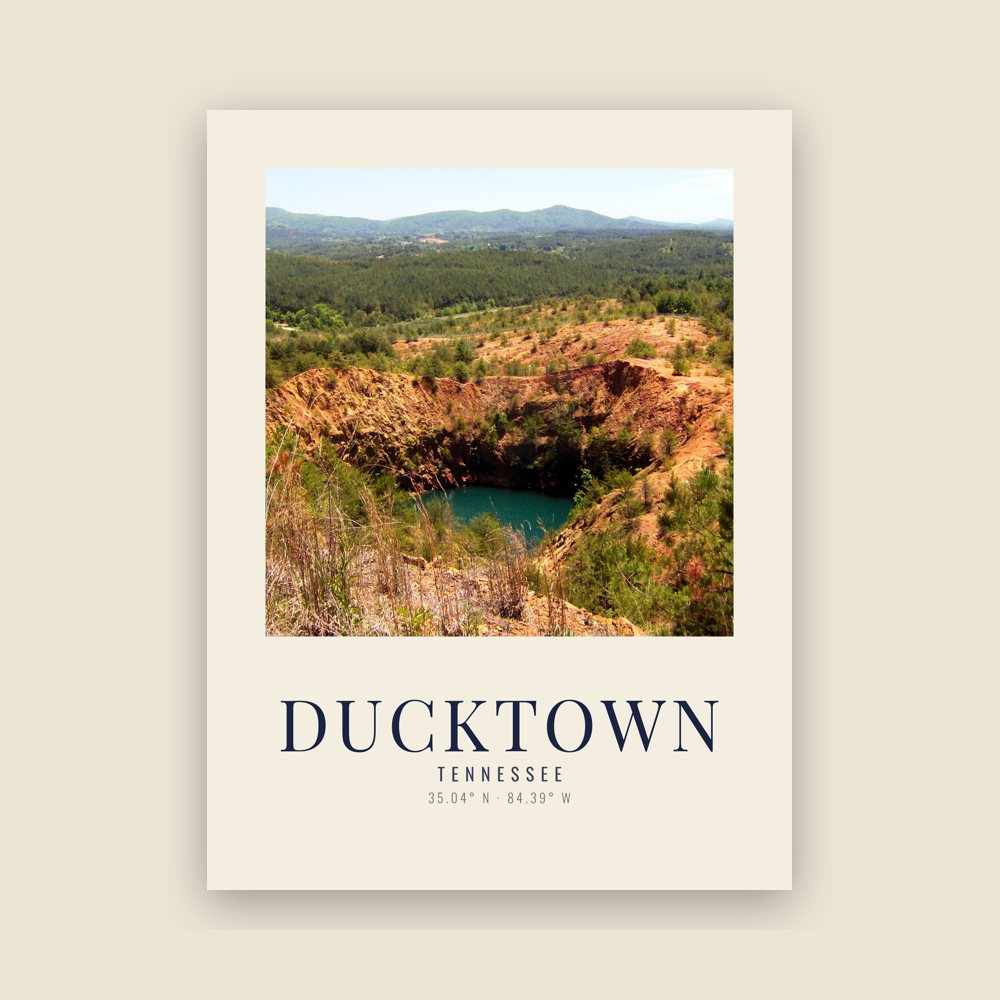
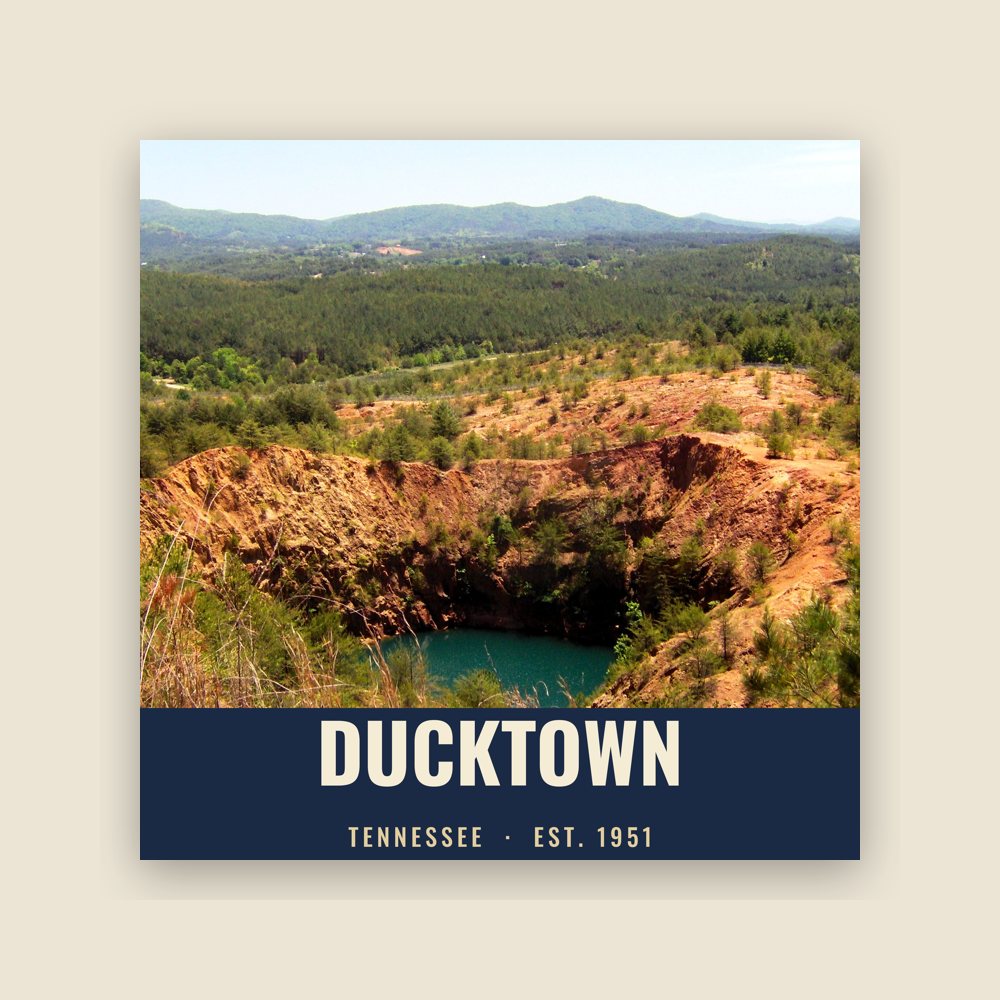
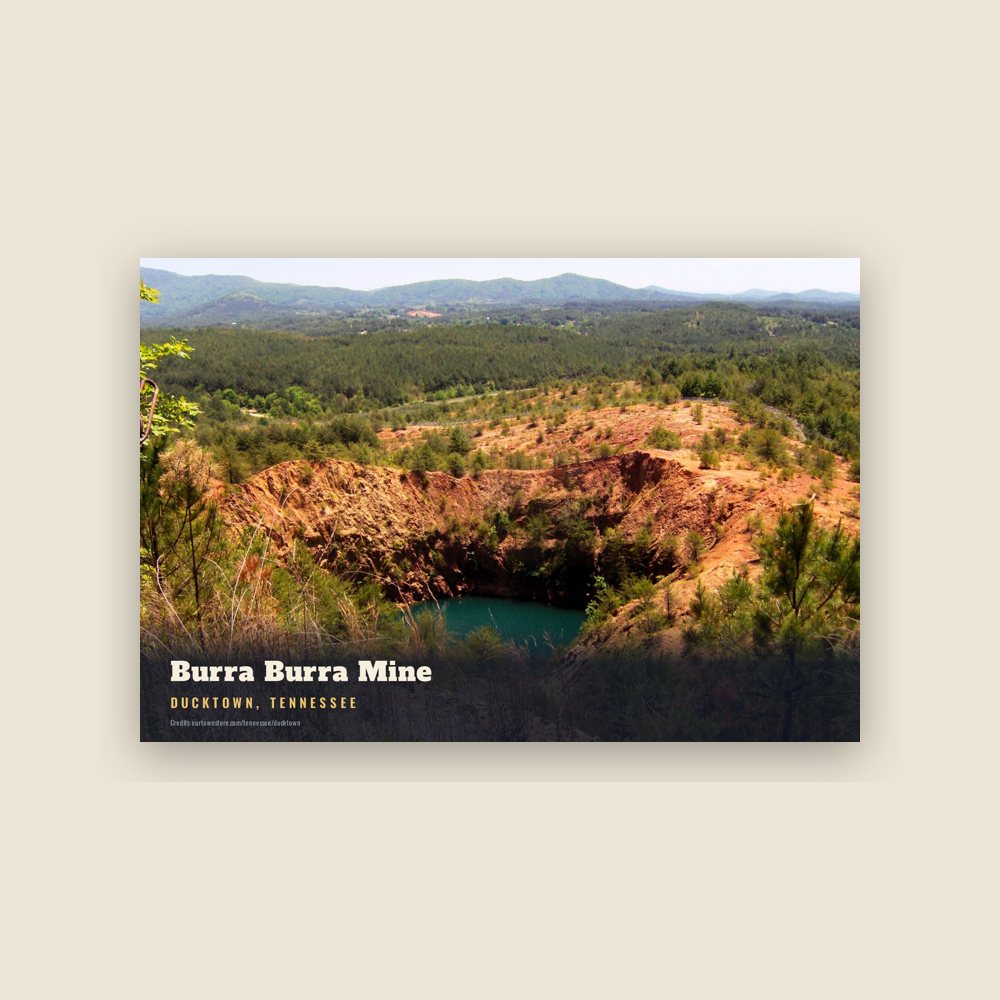
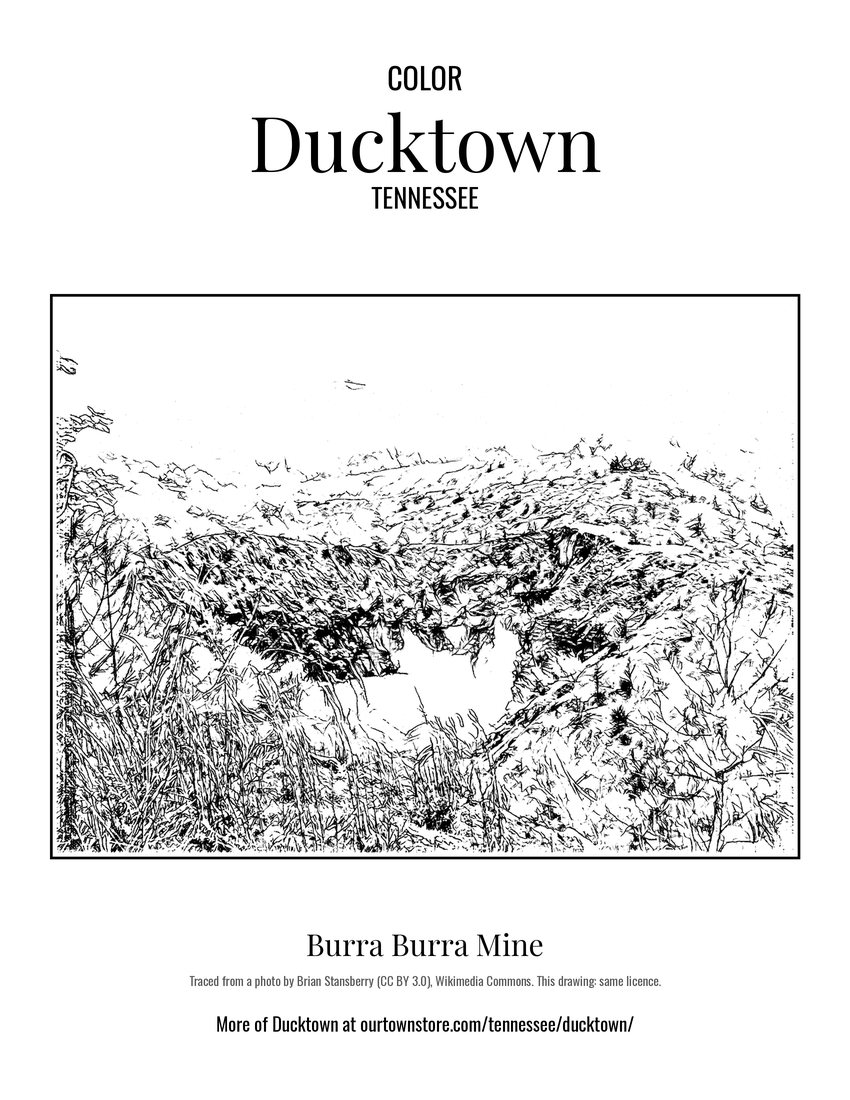 Burra Burra Mine
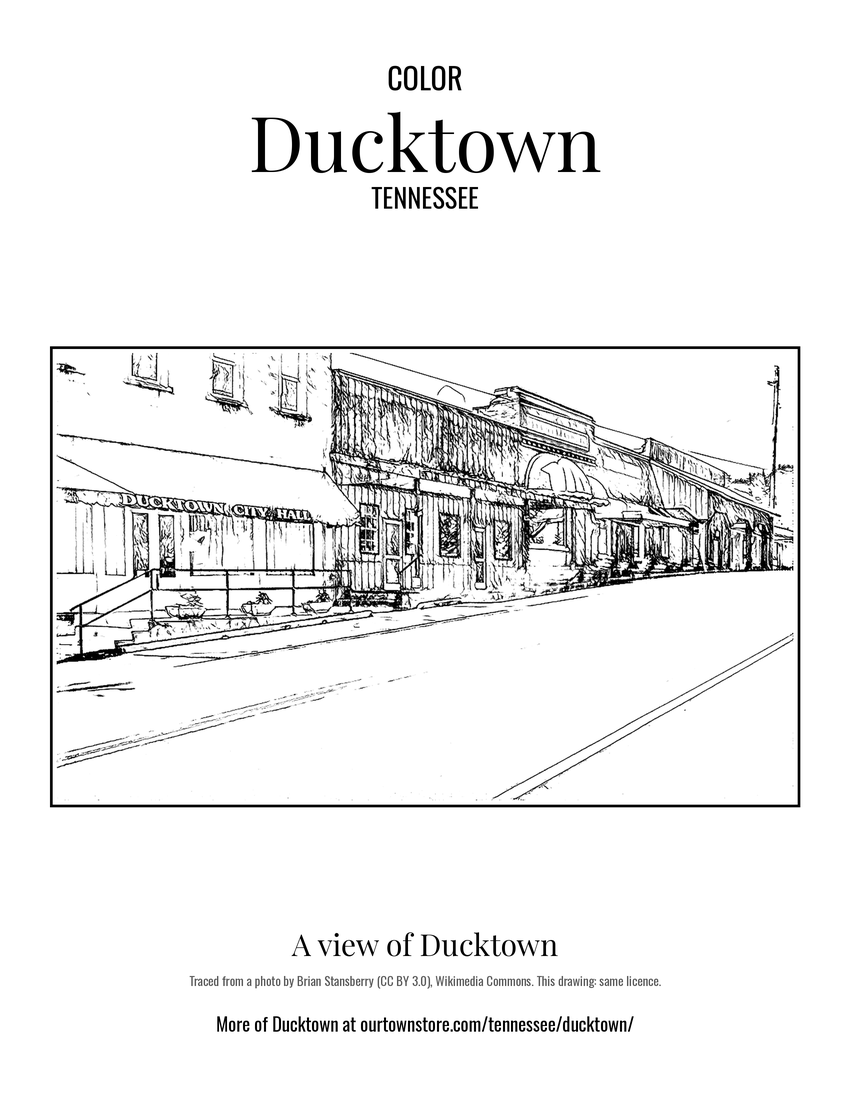 A view of Ducktown