A prominent resort town in the 19th century, Beersheba Springs was developed in 1854 by retired wealthy slave trader, John Armfield, who bought property in the area.
- CountyGrundy County
- Population434 (2020 U.S. Census)
Beersheba Springs, Tennessee gifts and souvenirs: 19 designs made from Beersheba Springs's own map, landmarks and history, from $16 to $95. Printed to order and shipped free in the USA.
| Popular | Price |
|---|---|
| Beersheba Springs Hometown Ornament | $23 |
| Beersheba Springs Vintage Travel Poster | from $40 |
| Beersheba Springs Varsity Crewneck | from $57 |
| Beersheba Springs Est. Tee | from $33 |
| Beersheba Springs Town Line Mug | from $26 |
| Beersheba Springs Market Tote | $37 |
Ceramic keepsake, gold ribbon
Its landmark photo in a classic travel-poster layout
A local landmark photo as a gallery print
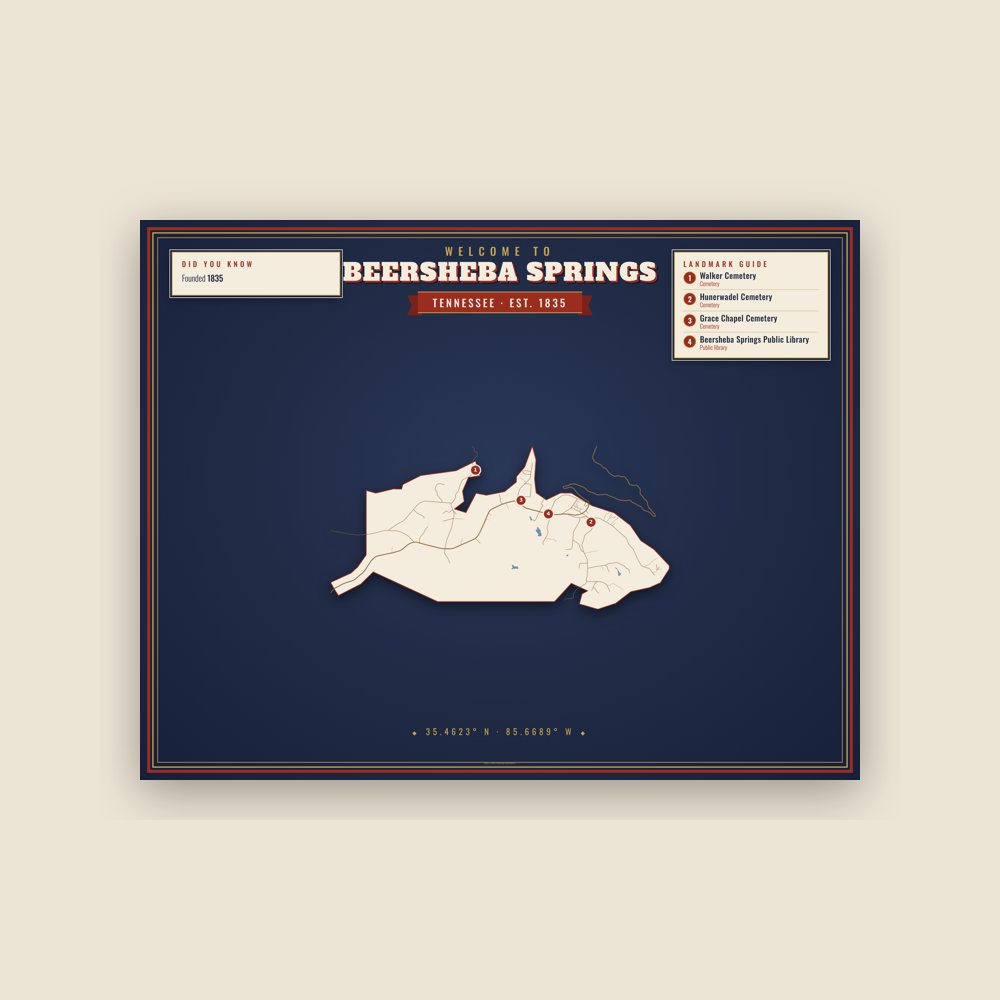
Map of local landmarks, washable fabric
Heavy-blend fleece, street map printed on the back
Soft Bella+Canvas jersey
Kids' Bella+Canvas jersey, youth sizes
Bella+Canvas toddler jersey
Bella+Canvas baby bodysuit
Glossy ceramic, dishwasher safe
Weatherproof, for the front walk
24″×16″, printed coir-look fibers, rubber back
12″×12″ printed wood, ready to hang
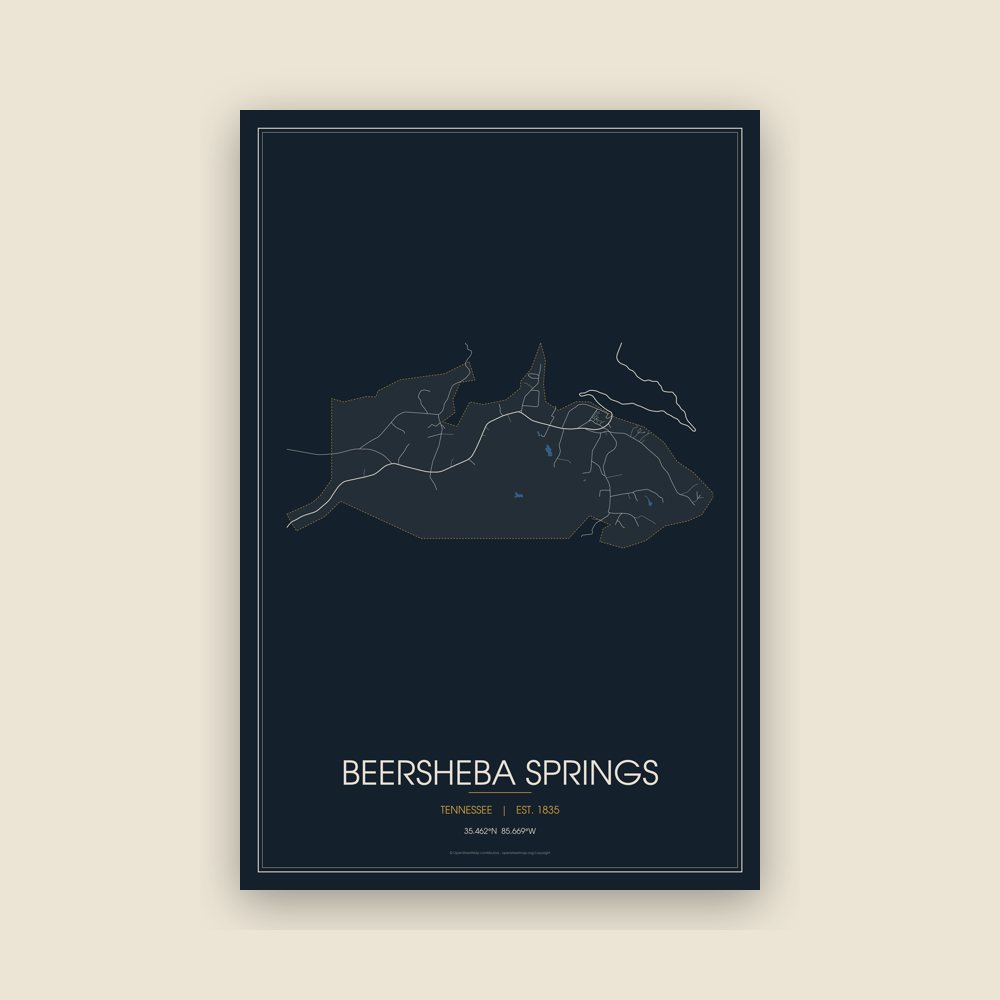
Soft-touch, zip cover
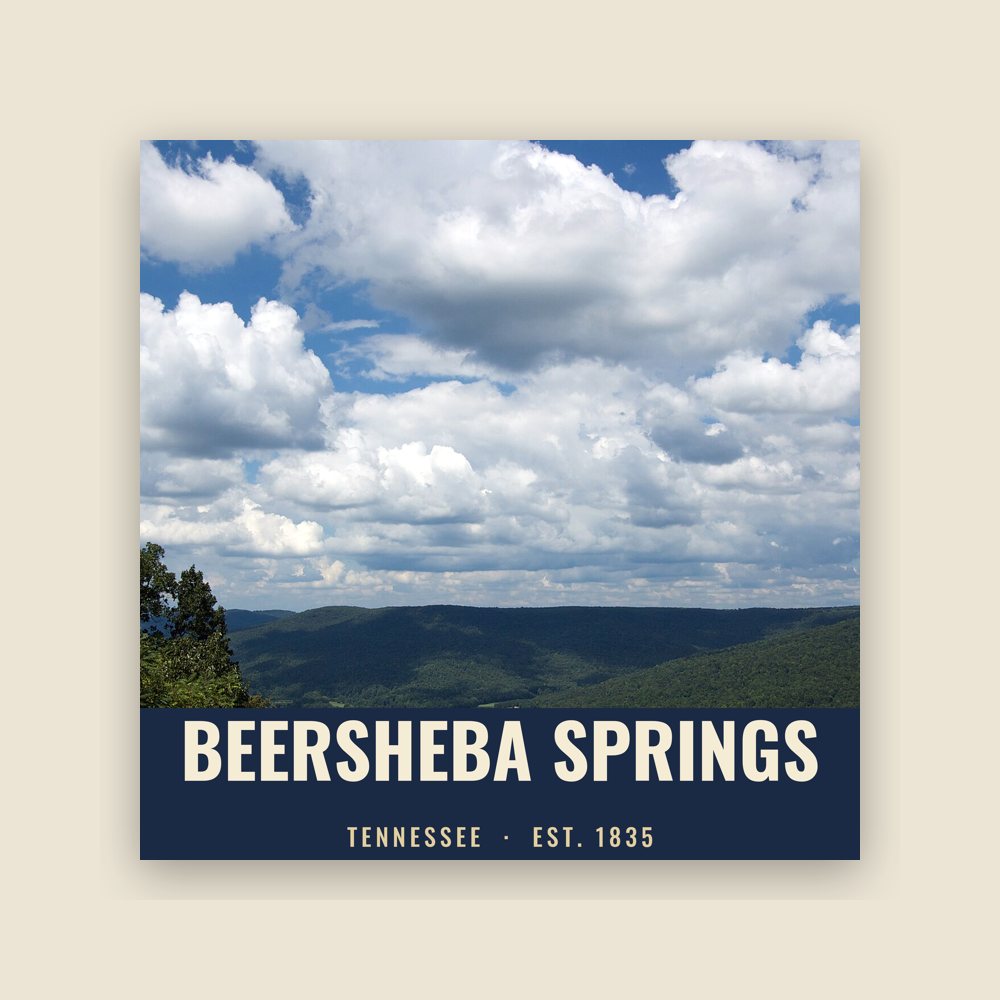
A local landmark photo with the town name, 18″×18″
Sturdy all-over-print tote
Glossy top, cork back
Soft fleece, 50″×60″
20 oz, double-wall stainless
A prominent resort town in the 19th century, Beersheba Springs was developed in 1854 by retired wealthy slave trader, John Armfield, who bought property in the area.
In 1833 Beersheba Porter Cain discovered a chalybeate spring. The spring and surrounding area, located above Collins River Valley, were incorporated in 1839. Upon its incorporation, Beersheba Springs was developed as a summer rural resort with a small hotel and log cabins. It was notable for its mineral waters, which were thought to have health-giving properties. The resort would be popular with stagecoach traffic that would travel between Chattanooga and McMinnville.
Eventually Louisiana planters also moved into the area, leaving behind the notoriously hot and humid summers of their home state. Beersheba Springs served as the summer home for Tennessee author Mary Noailles Murfree.
In 1854 Colonel John Armfield, a planter and former slave trader based in Alexandria, Virginia and New Orleans, Louisiana, acquired the property. He transported upwards of 100 slaves to Beersheba Springs to develop the property as a resort destination with a new luxury hotel, cabins and grounds to accommodate 400 guests. The resort also featured laundry facilities, ice houses, billiard rooms, and bowling alleys. French chefs were brought in to serve guests, as were musical acts from New Orleans.
Enslaved African Americans built a wooden observatory at the front of the hotel. From the observatory, white guests could watch Confederate and Union armies battle during the Civil War. Eventually the threat of war, raids, and plundering caused a decline in visitors to Beersheba Springs. It was sold to Northern investors.
The resort re-opened in the 1870s during the Reconstruction era, but it never returned to its former glory. In 1940, the Methodist Church purchased the resort and re-opened it for assembly and summer camps.
Architecturally the resort remains largely unchanged, although in the late 20th century, parts of the hotel were "modernized" or restored. The camp now serves as the site of the annual Beersheba Springs Arts and Craft Fair. It is still a site for Methodist Church assemblies and summer camps.
Adapted (trimmed) from the Wikipedia article Beersheba Springs, Tennessee, revision 1374136659 by its contributors, licensed CC BY-SA 4.0.
We share a part of every Beersheba Springs sale with local partners, and we'd love to print from your collection. Old photographs, maps and postcards make the best keepsakes.
Partner with usA favorite landmark, your street, a school or team, an anniversary gift, a different product. Tell us and we'll get back to you by email.
1 free coloring page of Beersheba Springs, each traced from a photo of a local landmark. Print them at home, at school or for story hour.
Beersheba Springs's population was 434 in the 2020 U.S. Census, down from 477 in 2010.
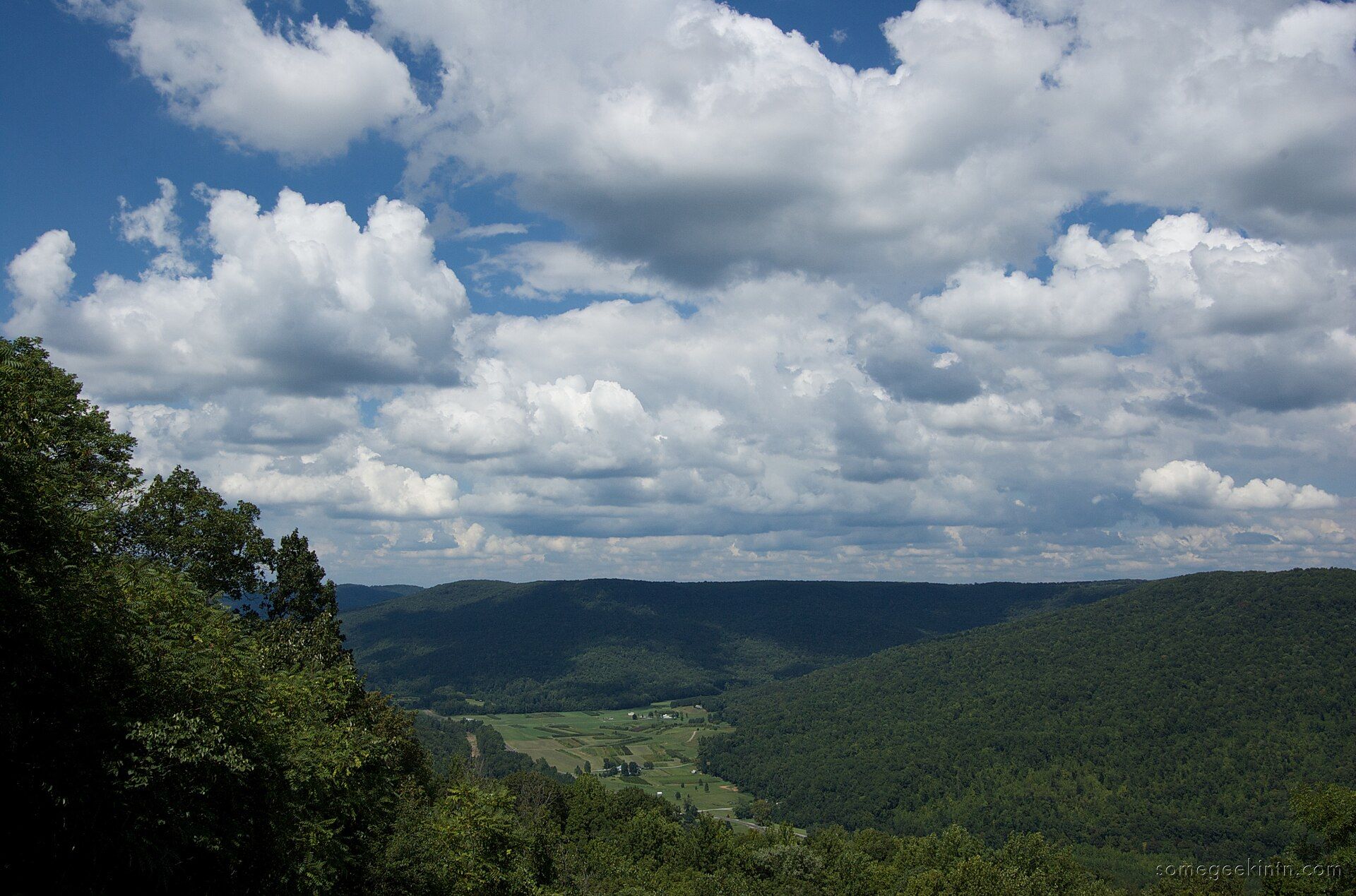
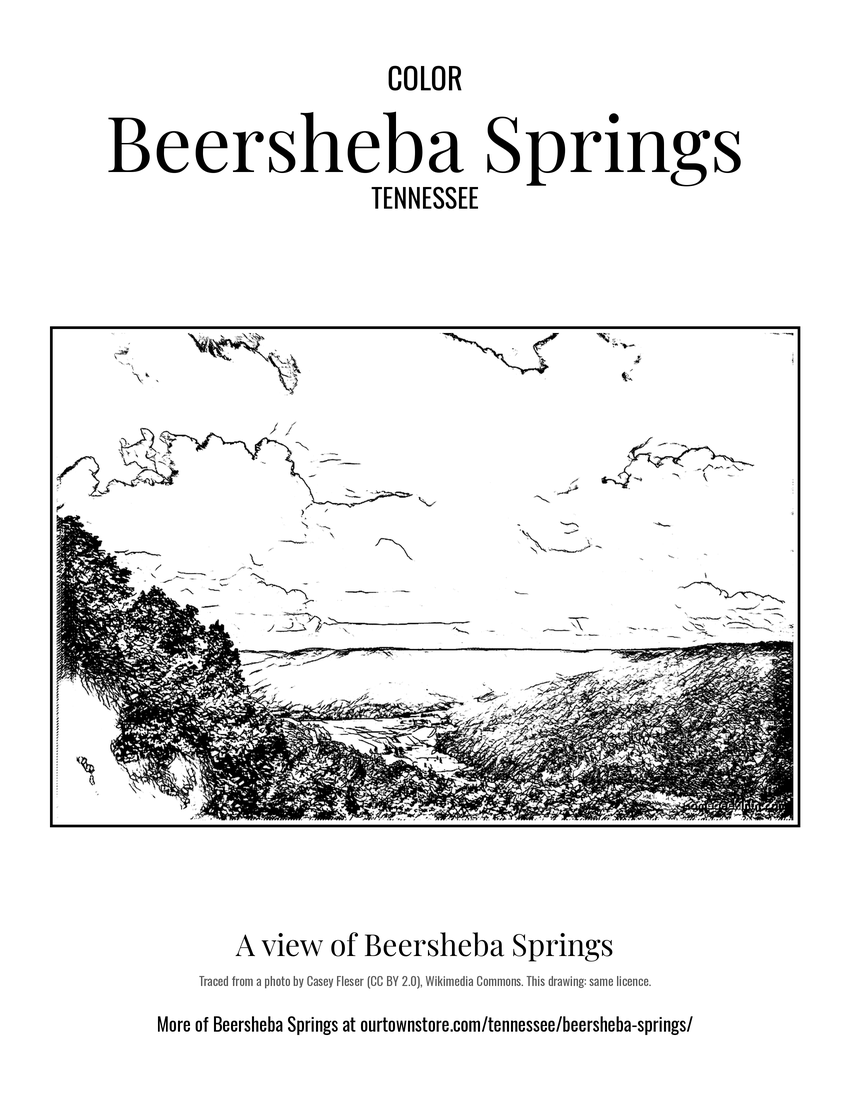 A view of Beersheba Springs