A short history of Deadwood
19th century
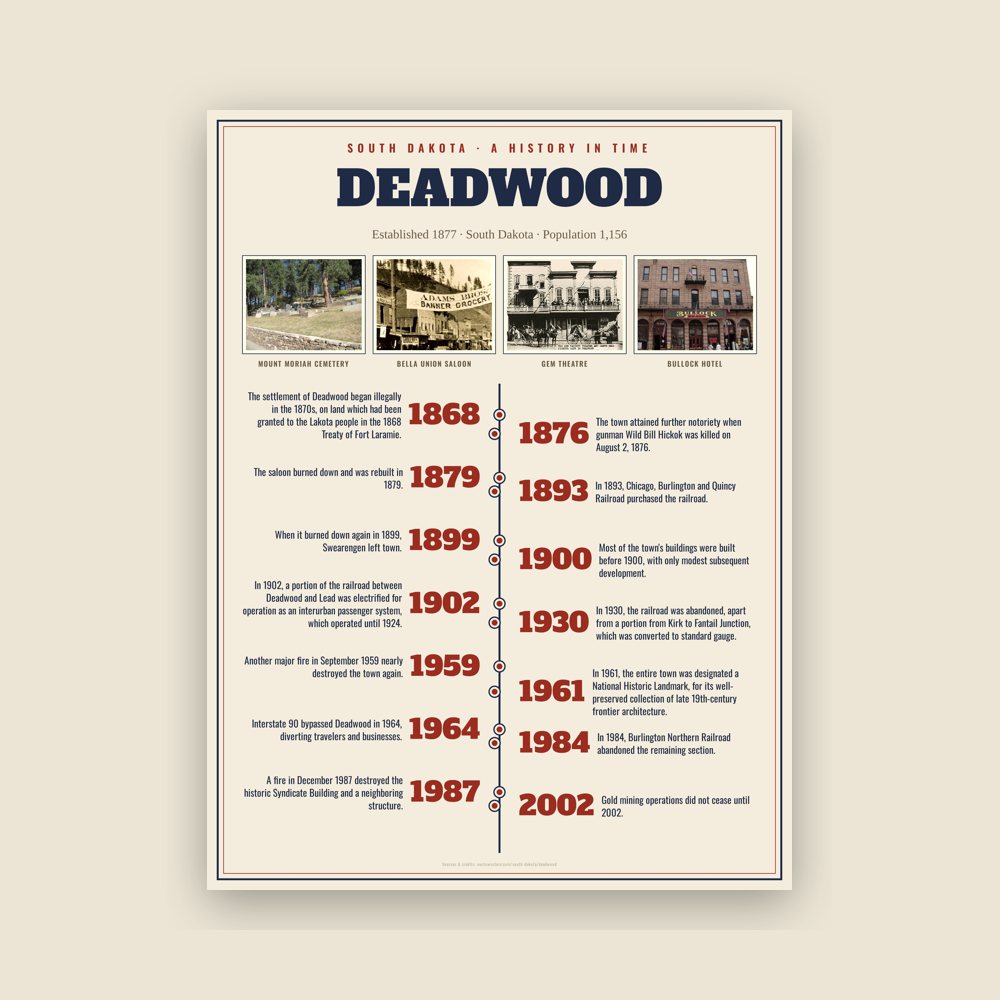
The settlement of Deadwood began illegally in the 1870s, on land which had been granted to the Lakota people in the 1868 Treaty of Fort Laramie. The treaty had guaranteed ownership of the Black Hills to the Lakota people, who consider this area to be sacred. The settlers' squatting led to numerous land disputes, several of which reached the United States Supreme Court.
Everything changed after Lieutenant Colonel George Armstrong Custer was ordered to lead an expedition into the Black Hills and announced the discovery of gold in 1874, on French Creek near present-day Custer, South Dakota. This announcement was a catalyst for the Black Hills Gold Rush, and miners and entrepreneurs swept into the area. They created the new and lawless town of Deadwood, which quickly reached a population of approximately 5,000. By 1877, about 12,000 people settled in Deadwood, while other sources put the peak number even at 25,000 in 1876.
In early 1876, frontiersman Charlie Utter and his brother Steve led to Deadwood a wagon train containing what they believed were needed commodities, to bolster business. The town's numerous gamblers and prostitutes staffed several profitable ventures. Madame Mustache and Dirty Em were on the wagon train, and set up shop in what was referred to as Deadwood Gulch. Women were in high demand by the miners, and the business of prostitution proved to have a good market. Madam Dora DuFran eventually became the most profitable brothel owner in Deadwood, closely followed by Madam Mollie Johnson.
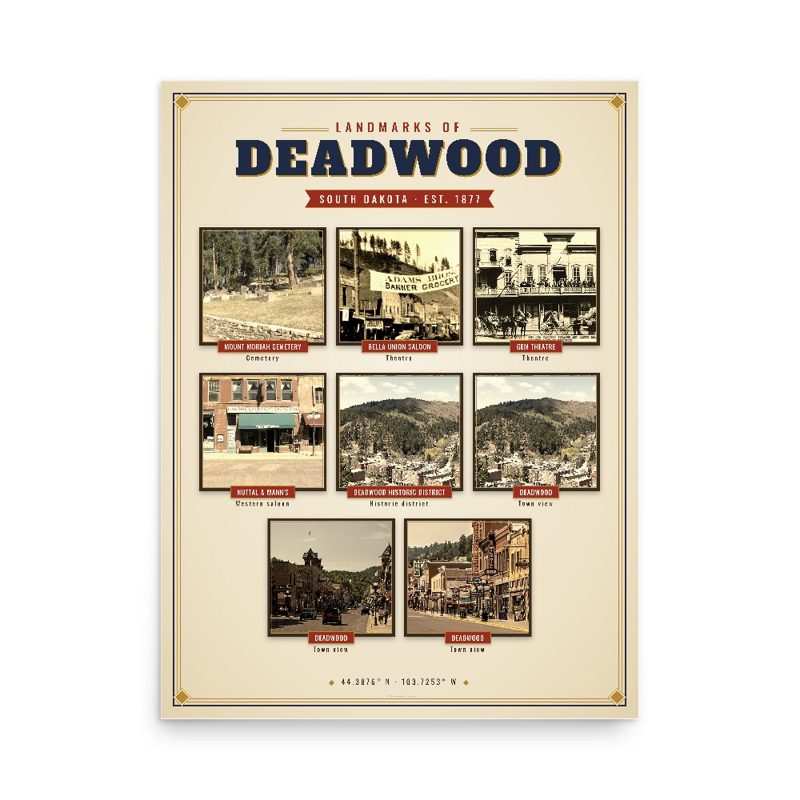
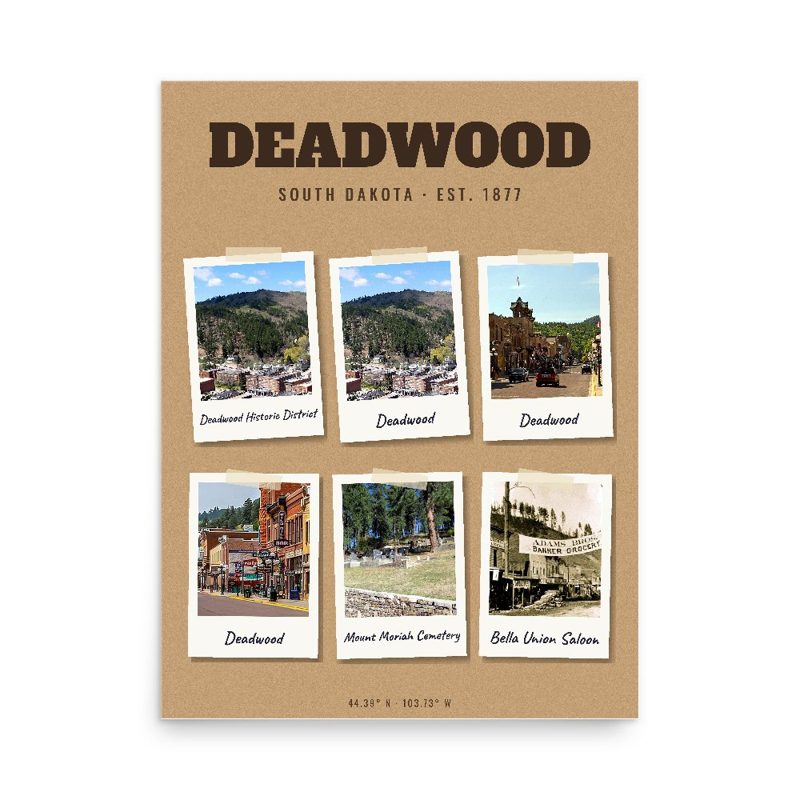
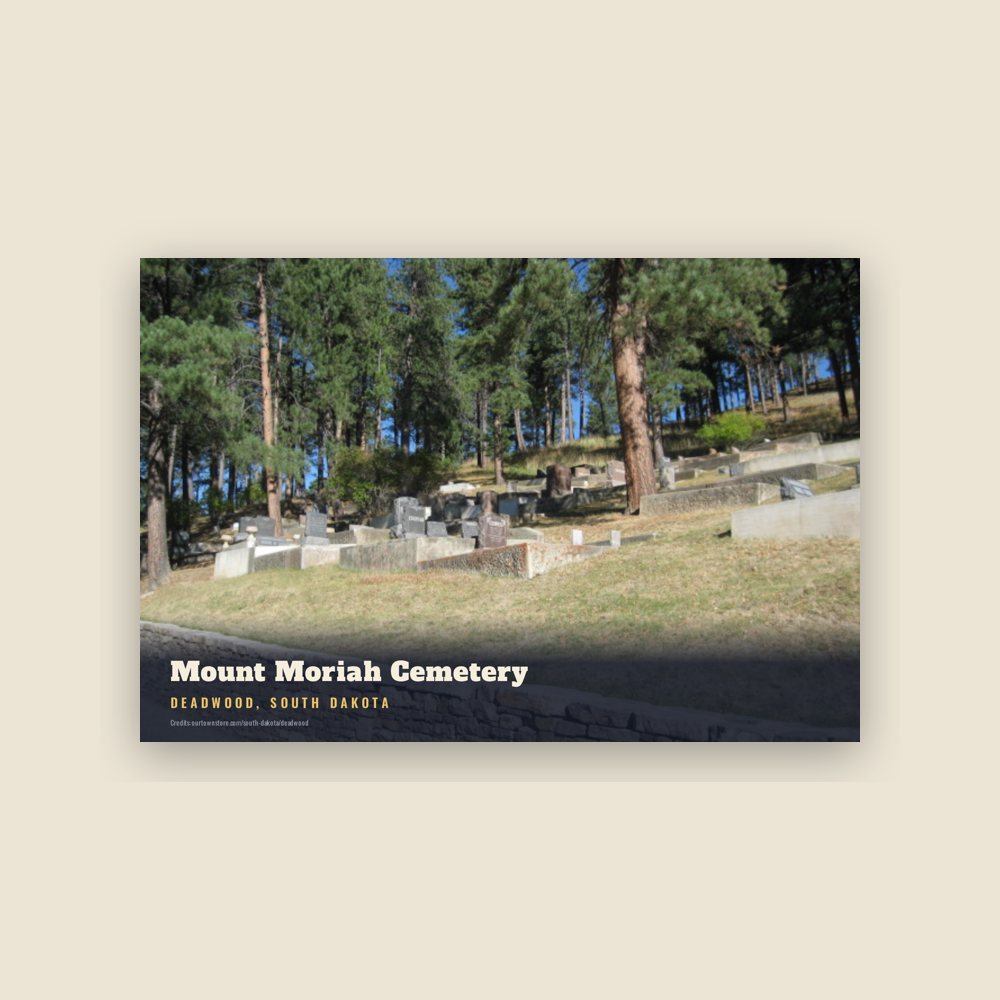
Deadwood became known for its lawlessness; murders were common, and justice for murders not always fair and impartial. The town attained further notoriety when gunman Wild Bill Hickok was killed on August 2, 1876. Both he and Calamity Jane were buried at Mount Moriah Cemetery, as well as other notable figures such as Seth Bullock.
Hickok's murderer, Jack McCall, was prosecuted twice, despite the U.S. Constitution's prohibition against double jeopardy. Because Deadwood was an illegal town in Indian Territory, non-native civil authorities lacked the jurisdiction to prosecute McCall. McCall's trial was moved to a Dakota Territory court, where he was found guilty of murder and hanged.
Beginning August 12, 1876, a smallpox epidemic swept through. So many people fell ill that tents were erected to quarantine the stricken.
In 1876, General George Crook pursued the Sioux Indians from the Battle of the Little Bighorn, on an expedition that ended in Deadwood in early September, known as the Horsemeat March. The same month, businessman Tom Miller opened the Bella Union Saloon.
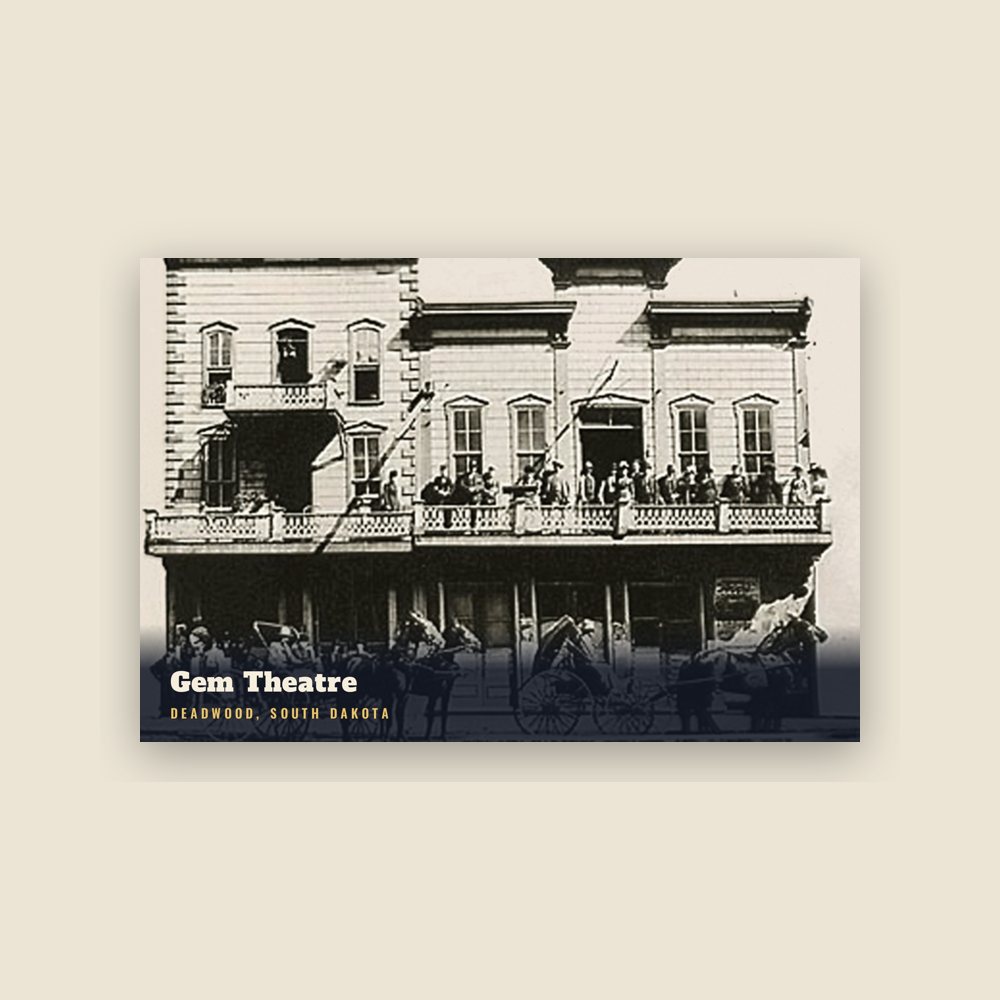
On April 7, 1877, Al Swearengen, who controlled Deadwood's opium trade, also opened a saloon; his was called the Gem Theater. The saloon burned down and was rebuilt in 1879. When it burned down again in 1899, Swearengen left town.
As the economy changed from gold panning to deep mining, the individual miners went elsewhere or began to work in other fields. Hence Deadwood lost some of its rough and rowdy character, and began to develop into a prosperous town.
The Homestake Mine in nearby Lead was established in October 1877. It operated for more than a century, becoming the longest continuously operating gold mine in the United States. Gold mining operations did not cease until 2002. The mine has been opened for visiting by tourists.
On September 26, 1879, a fire devastated Deadwood, destroying more than 300 buildings and consuming the belongings of many inhabitants. Many of the newly impoverished left town to start again elsewhere.
In 1879, Thomas Edison demonstrated the first successful incandescent lamp in New Jersey, and on September 17, 1883, Judge Squire P. Romans took a gamble and founded the "Pilcher Electric Light Company of Deadwood". He ordered an Edison dynamo, wiring, and 15 incandescent lights with globes. After delays, the equipment arrived without the globes. Romans had been advertising an event to show off the new lights and decided to continue with the lighting, which was a success and garnered further growth for his company.
Deadwood had electricity service less than four years after Edison commercialized it, less than a year after commercial service was started in Roselle, New Jersey, and around the same time that many larger cities around the country established the service.
In 1888, J.K.P. Miller and his associates founded a narrow-gauge railroad, the Deadwood Central Railroad, to serve their mining interests. In 1893, Chicago, Burlington and Quincy Railroad purchased the railroad. In 1902, a portion of the railroad between Deadwood and Lead was electrified for operation as an interurban passenger system, which operated until 1924. In 1930, the railroad was abandoned, apart from a portion from Kirk to Fantail Junction, which was converted to standard gauge. In 1984, Burlington Northern Railroad abandoned the remaining section.
Some of the other early town residents and frequent visitors included Martha Bullock, Aaron Dunn, E. B. Farnum, Samuel Fields, A. W. Merrick, Dr. Valentine McGillycuddy, Reverend Henry Weston Smith, Sol Star, and Charlie and Steve Utter.
Read the full history
Chinatown
The gold rush attracted Chinese immigrants to the area; their population peaked at 250. A few engaged in mining; most worked in service enterprises. A Chinese quarter arose on Main Street, as there were no restrictions on foreign property ownership in Dakota Territory, and a relatively high level of tolerance of different peoples existed in the frontier town. Wong Fee Lee arrived in Deadwood in 1876 and became a leading merchant. He was a community leader among the Chinese Americans until his death in 1921.
The quarter's residents also included African Americans and European Americans. During the 2000s, the state sponsored an archeological dig in the area, to study the history of this community of diverse residents.
20th and 21st centuries
Another major fire in September 1959 nearly destroyed the town again. About 4,500 acres (1,800 ha) were burned and an evacuation order was issued. Nearly 3,600 volunteer and professional firefighters, including personnel from the Homestake Mine, Ellsworth Air Force Base, and the South Dakota National Guard's 109th Engineer Battalion, worked to contain the fire. The property losses resulted in a major regional economic downturn.
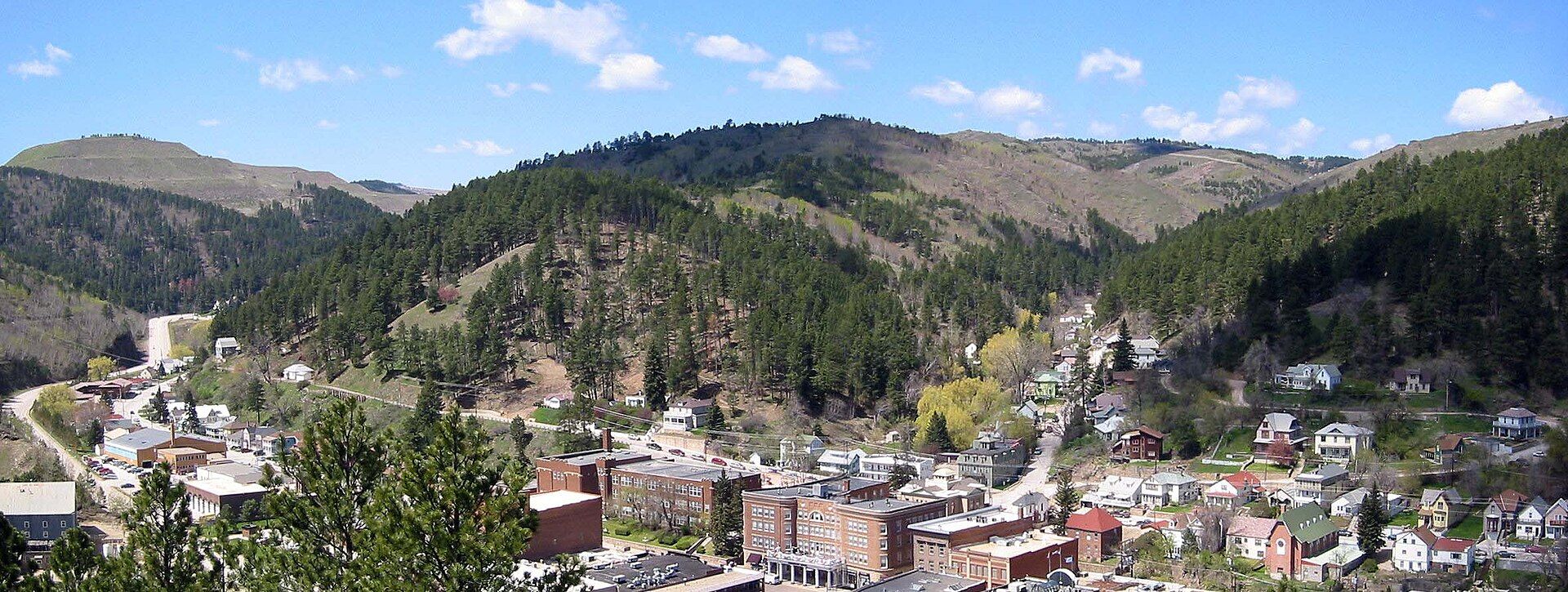
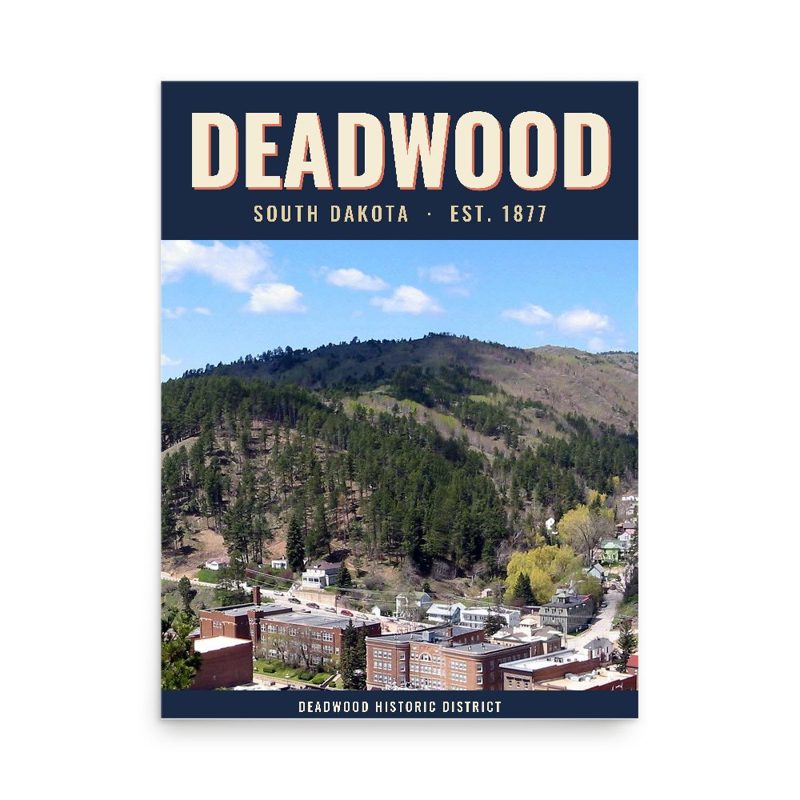
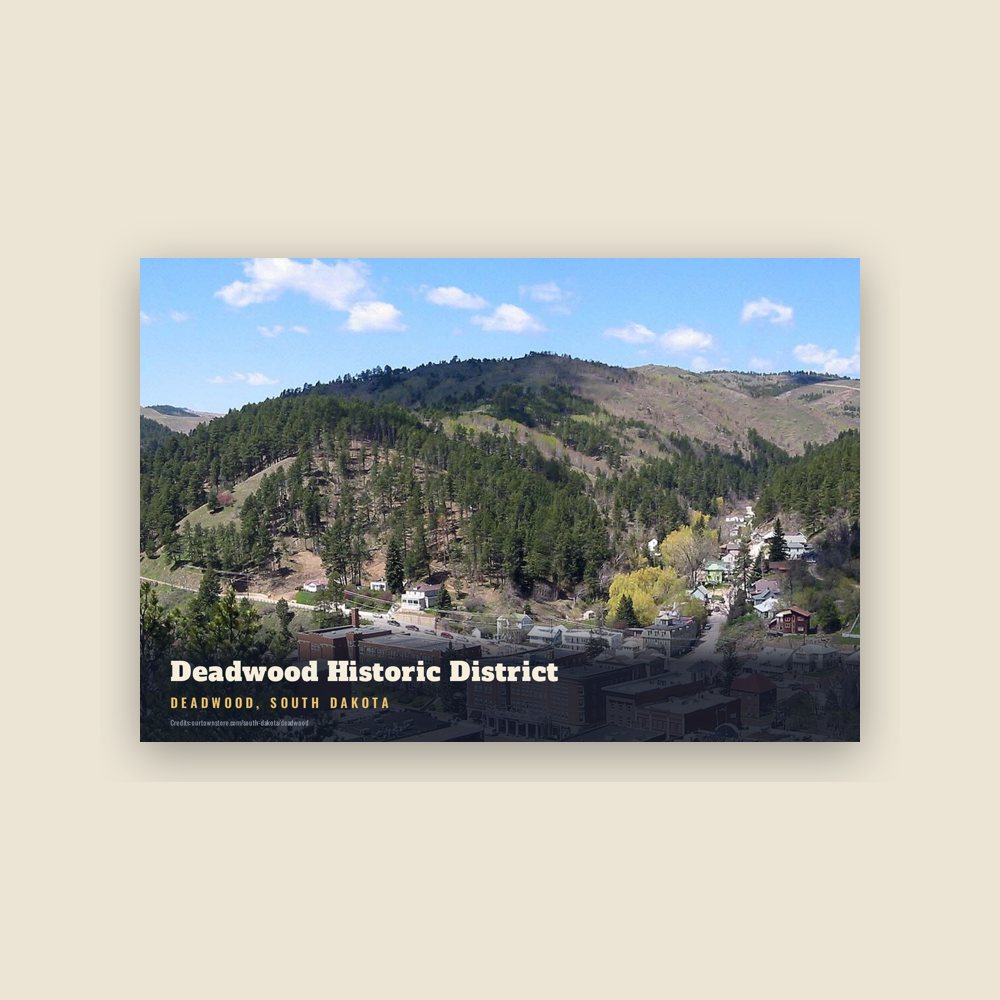
In 1961, the entire town was designated a National Historic Landmark, for its well-preserved collection of late 19th-century frontier architecture. Most of the town's buildings were built before 1900, with only modest subsequent development. The town's population continued to decline through the 1960s and 1970s. Interstate 90 bypassed Deadwood in 1964, diverting travelers and businesses. On May 21, 1980, a raid by county, state, and federal agents on the town's three remaining brothels—"The White Door", "Pam's Purple Door" and "Dixie's Green Door"—accomplished, as one reporter put it, "what Marshal Hickok never would have done", and the houses of prostitution were padlocked.
A fire in December 1987 destroyed the historic Syndicate Building and a neighboring structure. The fire prompted renewed interest in the area and hopes for redevelopment. Organizers planned the "Deadwood Experiment," in which gambling was tested as a means to stimulate growth in the city center. At the time, gambling was legal only in the state of Nevada and in Atlantic City.
Deadwood was the first small community in the U.S. to seek legal gambling revenue to maintain local historic assets. The state legislature legalized gambling in Deadwood in 1989, which generated significant new revenue and development. The pressure of development since then may have an effect on the historical integrity of the landmark district. Heritage tourism is important for Deadwood and the state.
Adapted (trimmed) from the Wikipedia article Deadwood, South Dakota, revision 1381734342 by its contributors, licensed CC BY-SA 4.0.









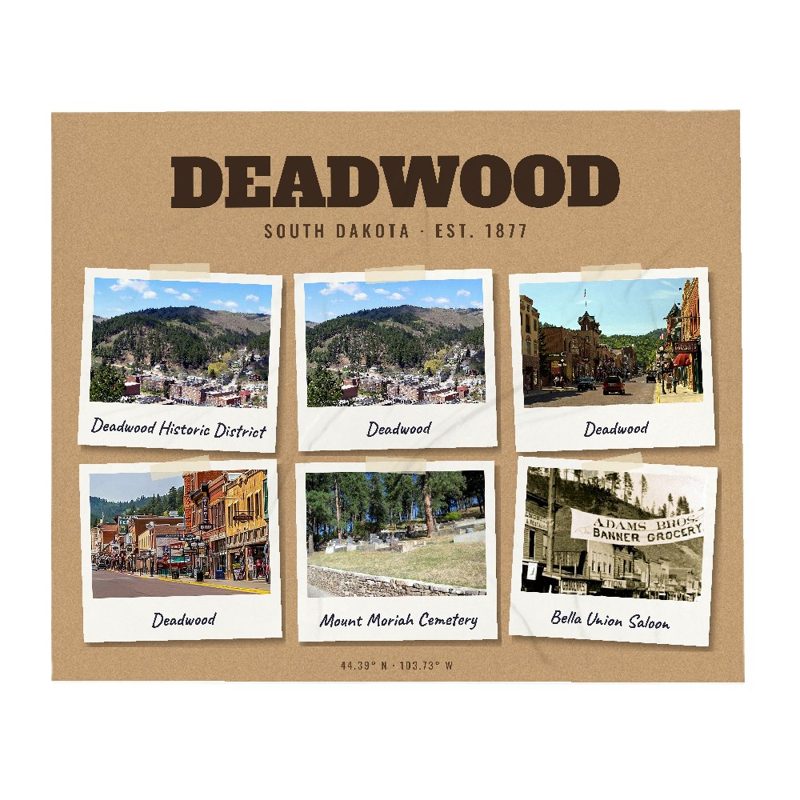

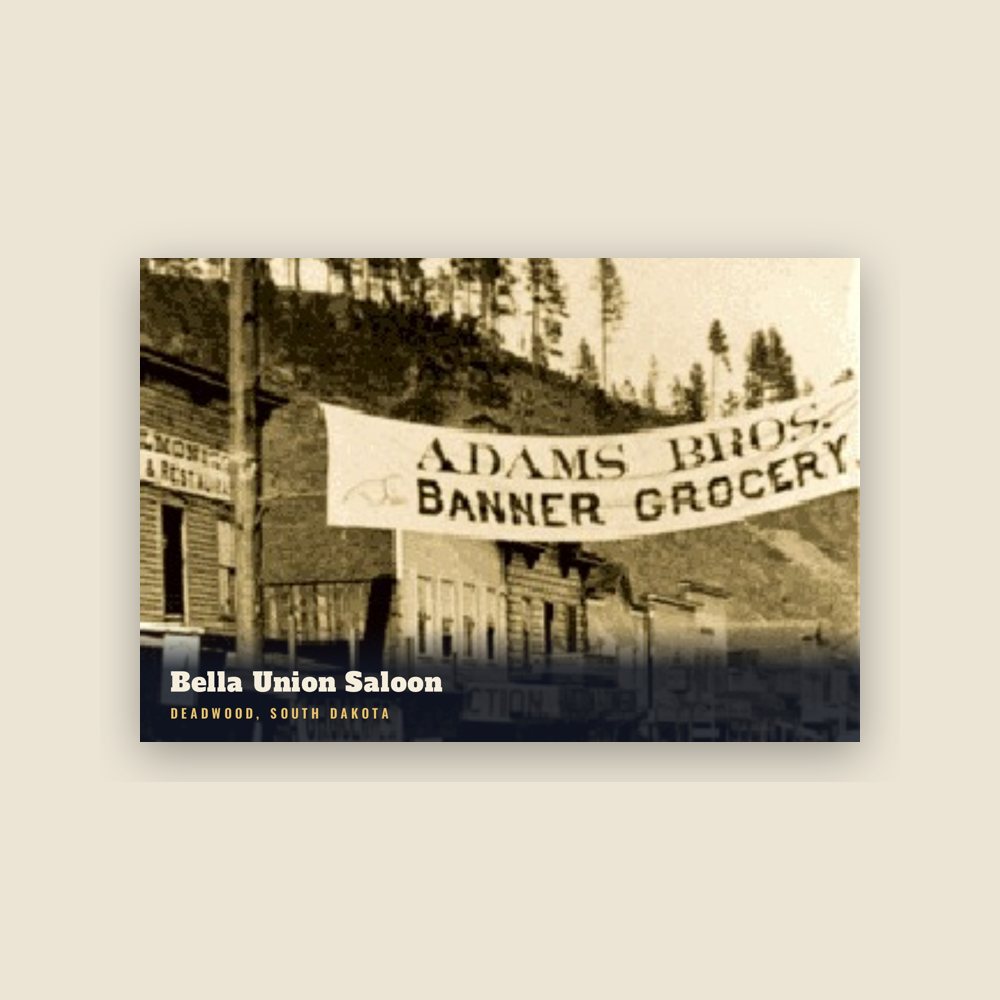
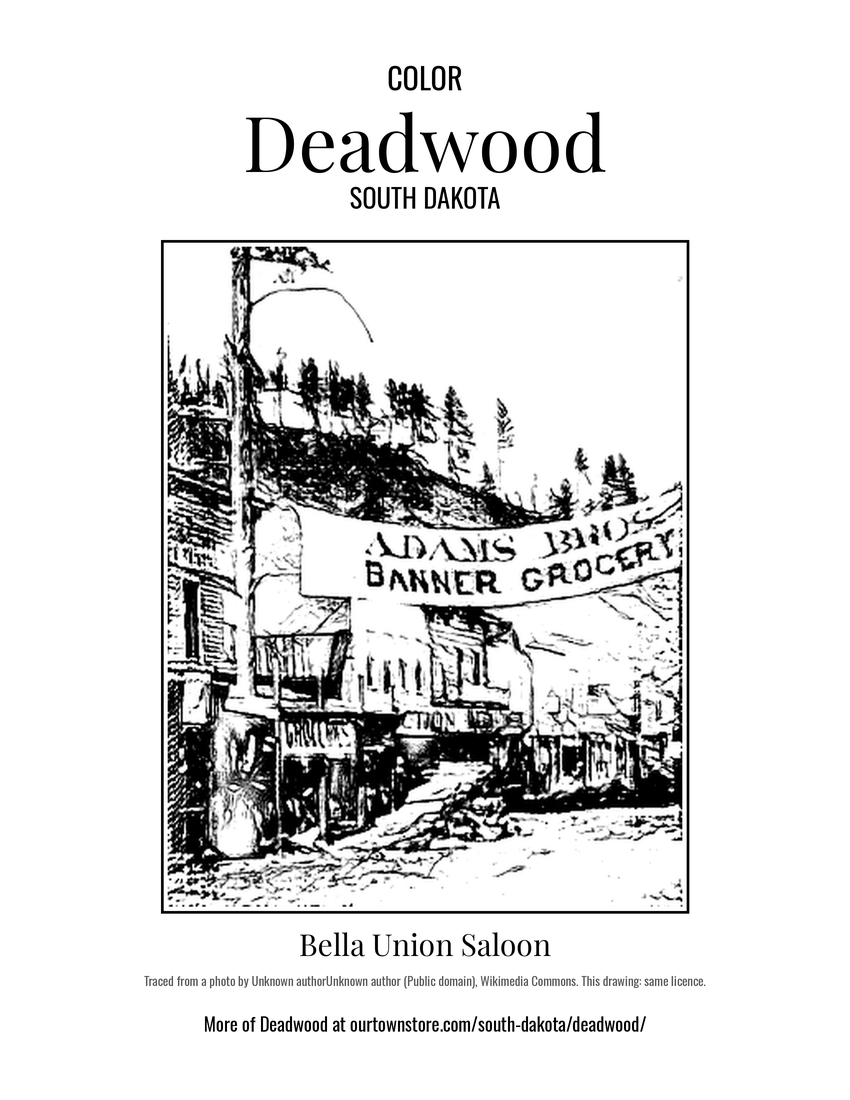 Bella Union Saloon
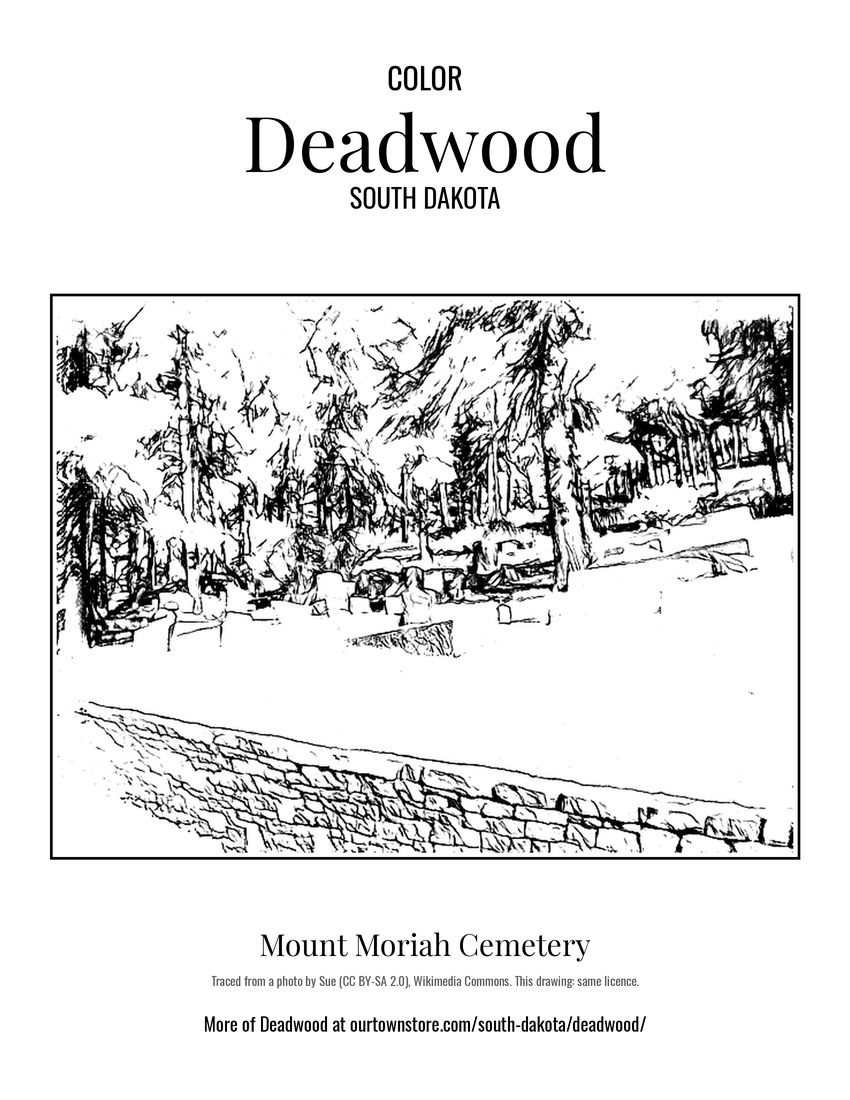 Mount Moriah Cemetery
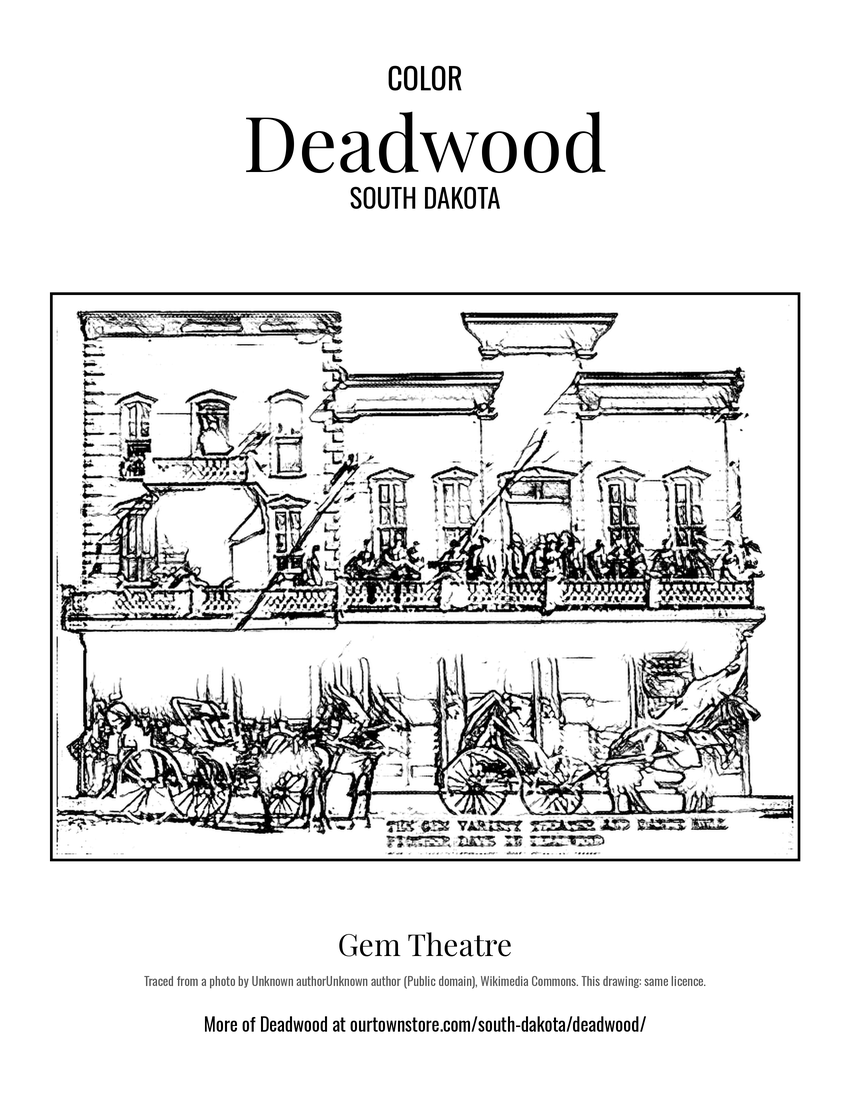 Gem Theatre
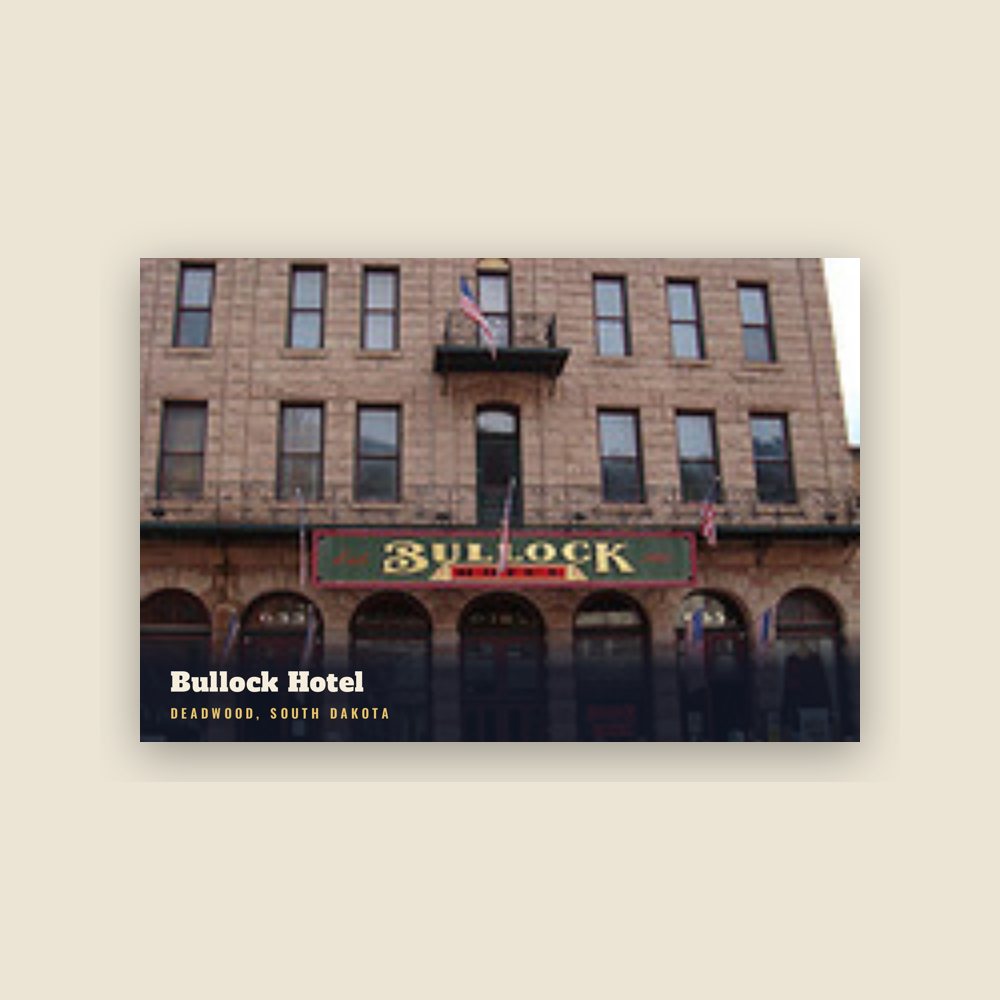
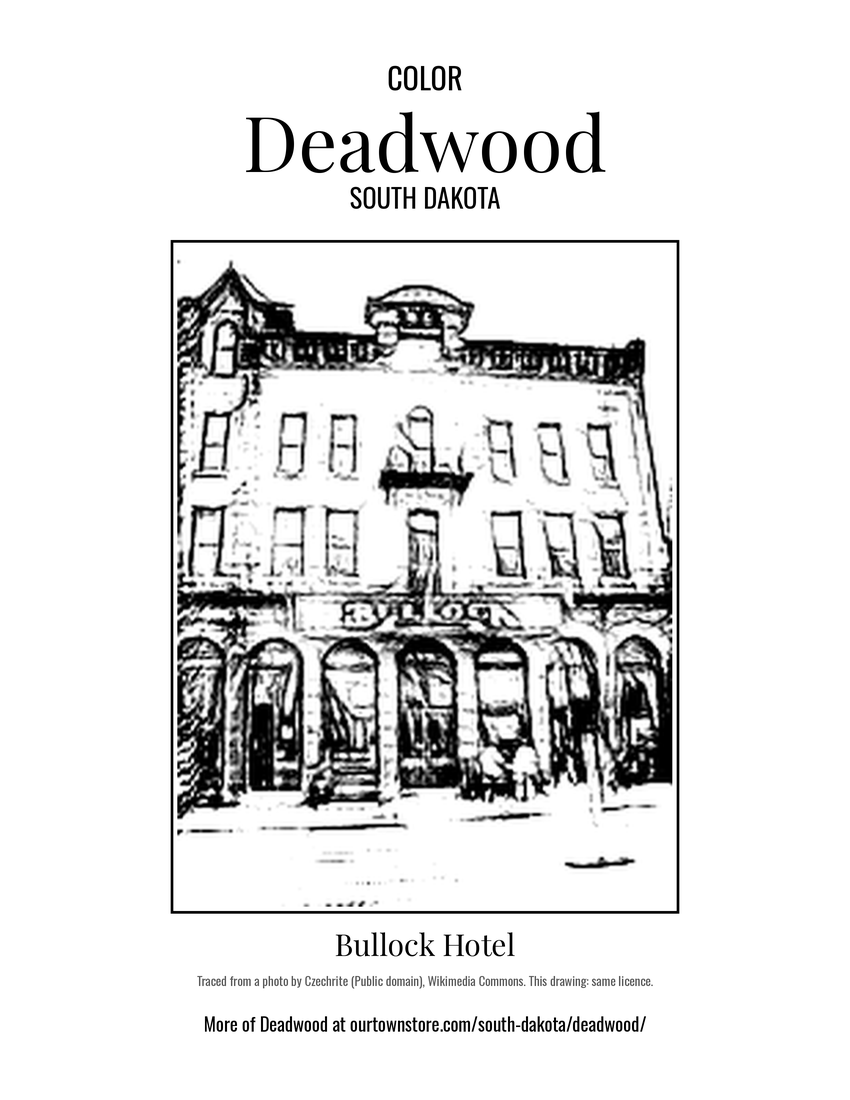 Bullock Hotel