A short history of Clemson
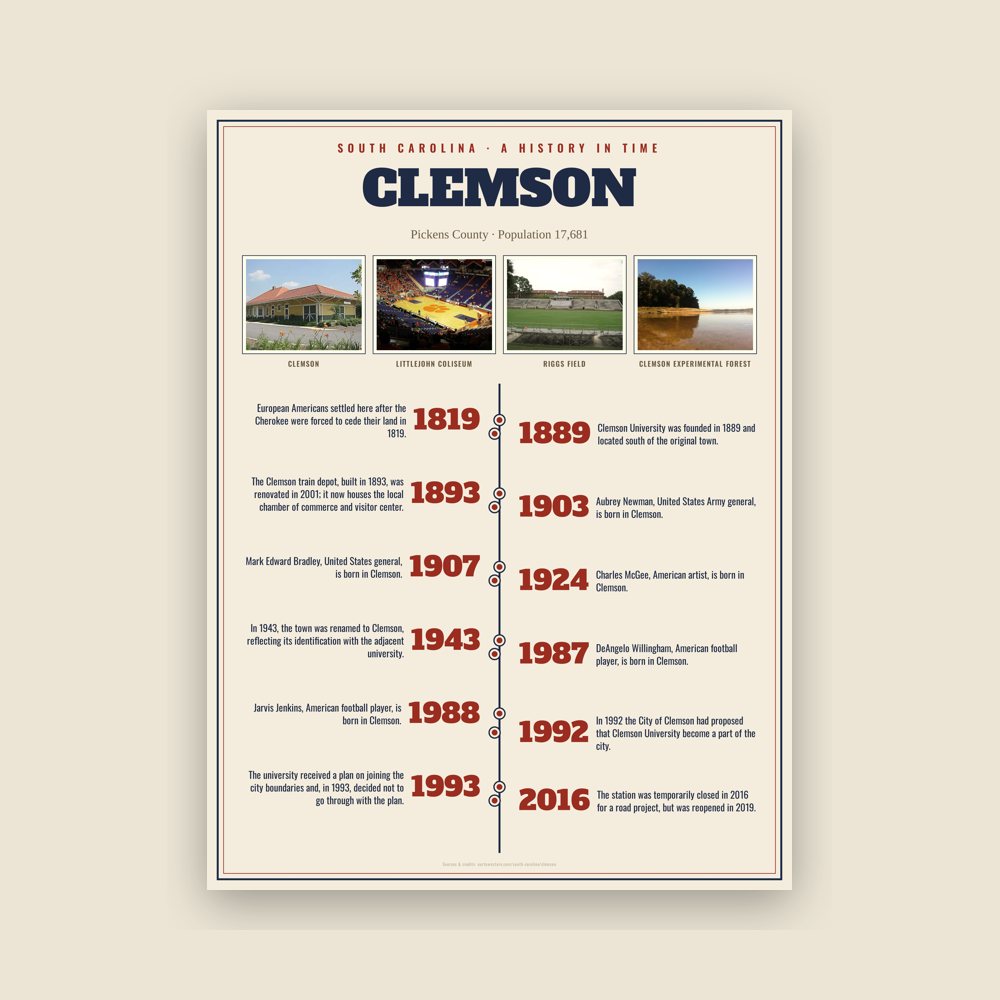
European Americans settled here after the Cherokee were forced to cede their land in 1819. They had lived at Keowee, and six other towns along the Keowee River as part of their traditional homelands in the Southeast. They migrated and settled in Tennessee and deeper into Georgia and Alabama, before most were subjected to forced Indian Removal in 1839 to Indian Territory (now Oklahoma).
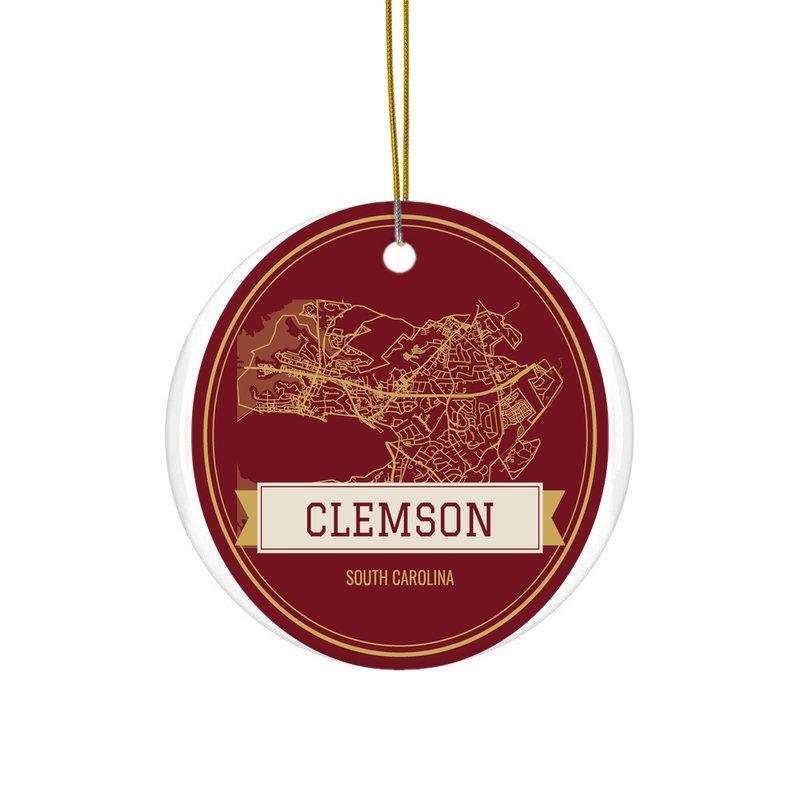
The community was originally named Calhoun. Clemson University was founded in 1889 and located south of the original town. In 1943, the town was renamed to Clemson, reflecting its identification with the adjacent university. Clemson University has since developed into a large public university that defines the town and serves as a cultural center. A small, multi-block downtown has some housing, retail and restaurants.
The university provides housing for students, but many students live off campus in a wide variety of apartment complexes. Outside the downtown, there are few paved sidewalks, but some streets have bike paths. The city's comprehensive plan has a historic preservation component to apply to keep a range of structures in the area.
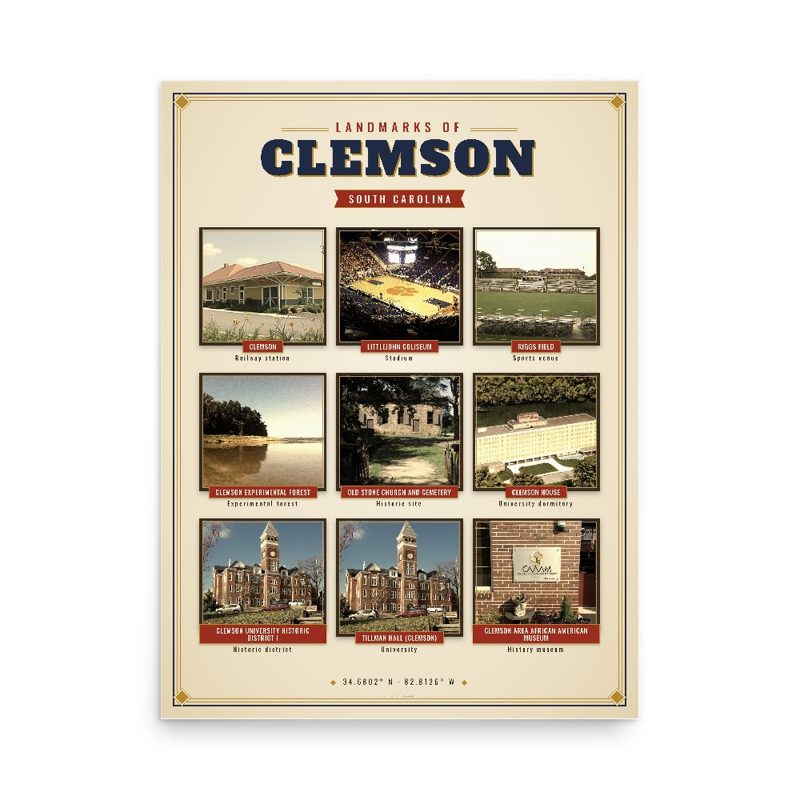
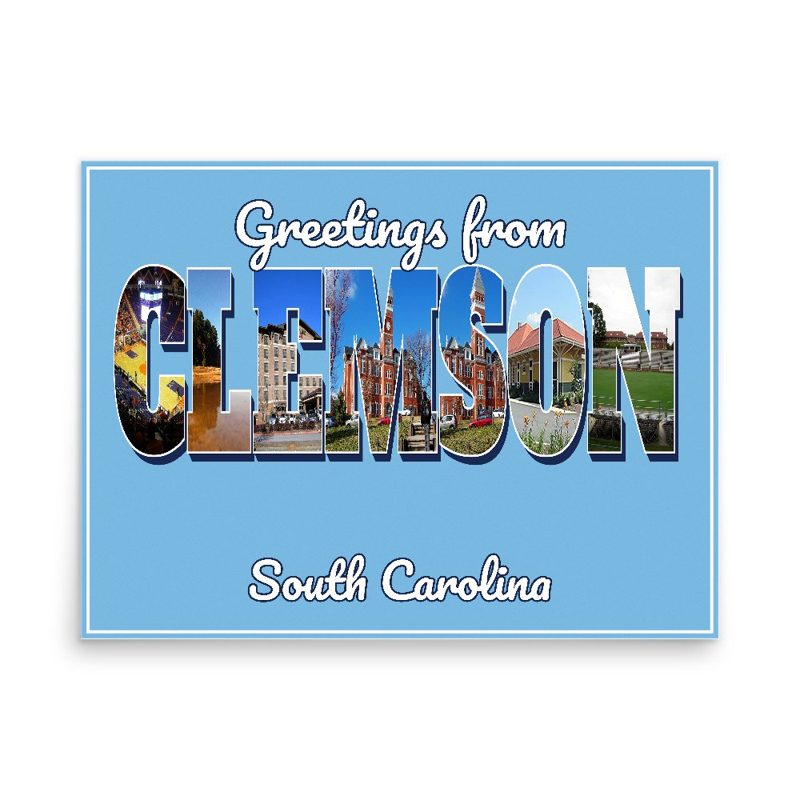
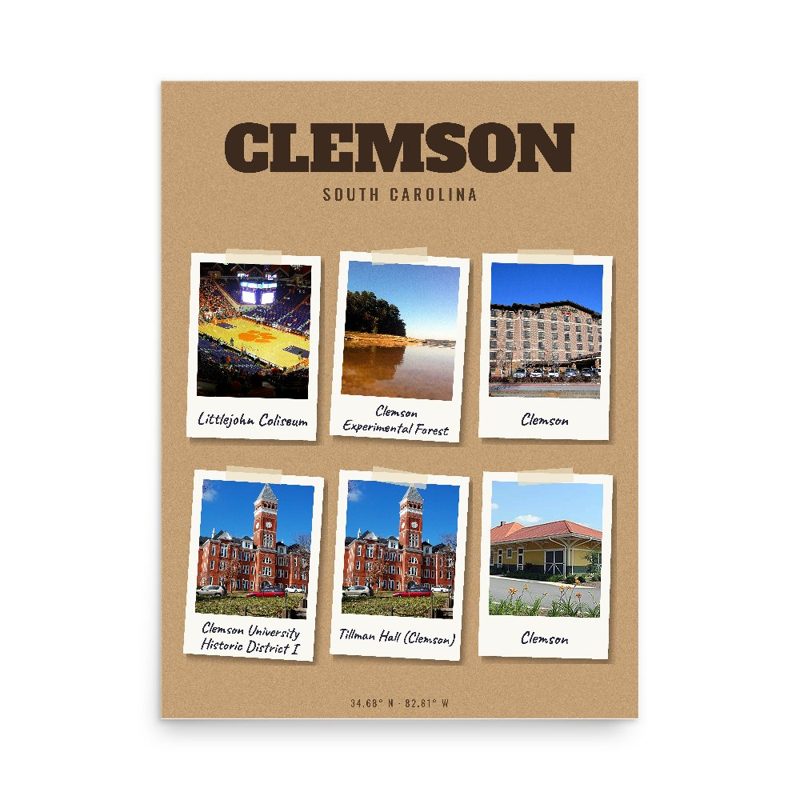
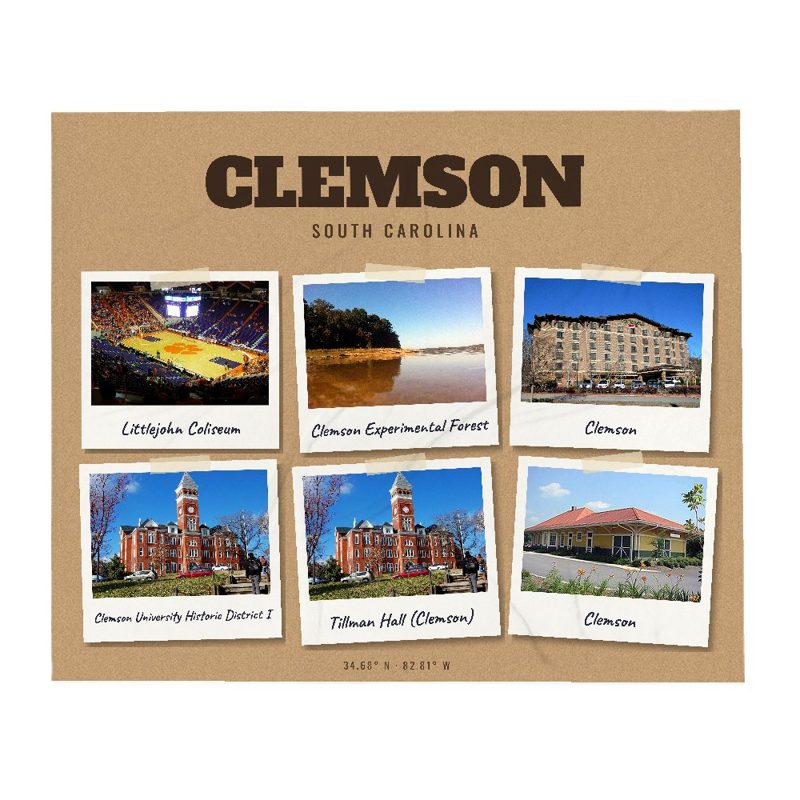
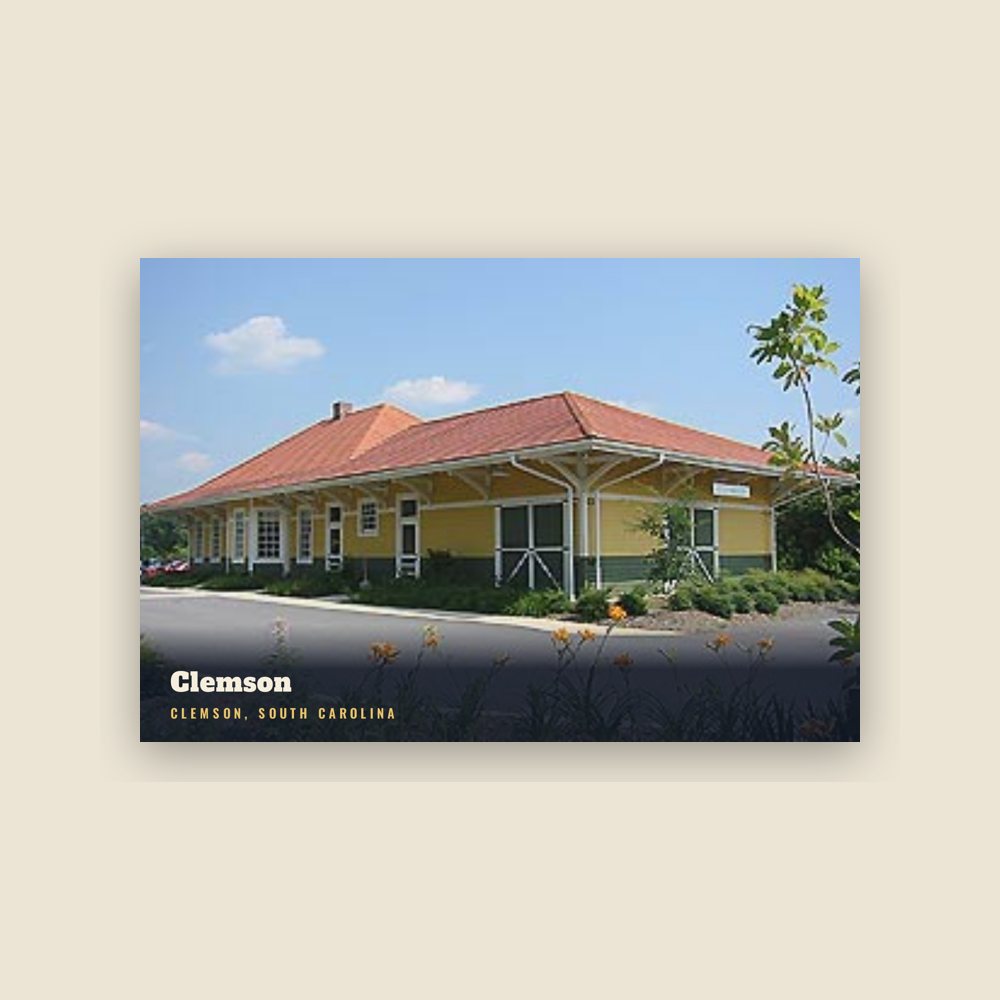
The Clemson train depot, built in 1893, was renovated in 2001; it now houses the local chamber of commerce and visitor center. The station was temporarily closed in 2016 for a road project, but was reopened in 2019. U.S. Route 123 runs along the northern end of the city and its edges have been developed with typical suburban-style shopping centers.
Read the full history
Development of Clemson College/University
Clemson University was founded as an agricultural college starting in 1889, on the former Fort Hill Plantation of statesman John C. Calhoun, which he had acquired by marriage. The plantation was originally owned by his mother-in-law, mother of his wife Floride. Floride Calhoun inherited the property after her mother's death in 1836 but, under South Carolina law, she likely lost any individual rights to it because of her marriage.
In the meantime, Floride and John C. Calhoun had a daughter named Anna Maria. At age 21, she married Thomas Green Clemson. After her father John C. Calhoun died in 1850; his widow Floride Calhoun gained total ownership of Fort Hill Plantation.
Because Anna Maria was the only living child, she inherited a part of Fort Hill when Floride died in 1866. Anna Maria bequeathed Thomas G. Clemson a portion of the property in her will. When Anna Maria died in 1875, he inherited the plantation. He knew that Anna Maria had wanted the land to be used as the site of an agricultural college, so Thomas Green Clemson bequeathed land for such a college in his will. After his death in 1888, what developed as Clemson University was founded on that land.
In 1992 the City of Clemson had proposed that Clemson University become a part of the city. The university received a plan on joining the city boundaries and, in 1993, decided not to go through with the plan.
Adapted (trimmed) from the Wikipedia article Clemson, South Carolina, revision 1383629076 by its contributors, licensed CC BY-SA 4.0.



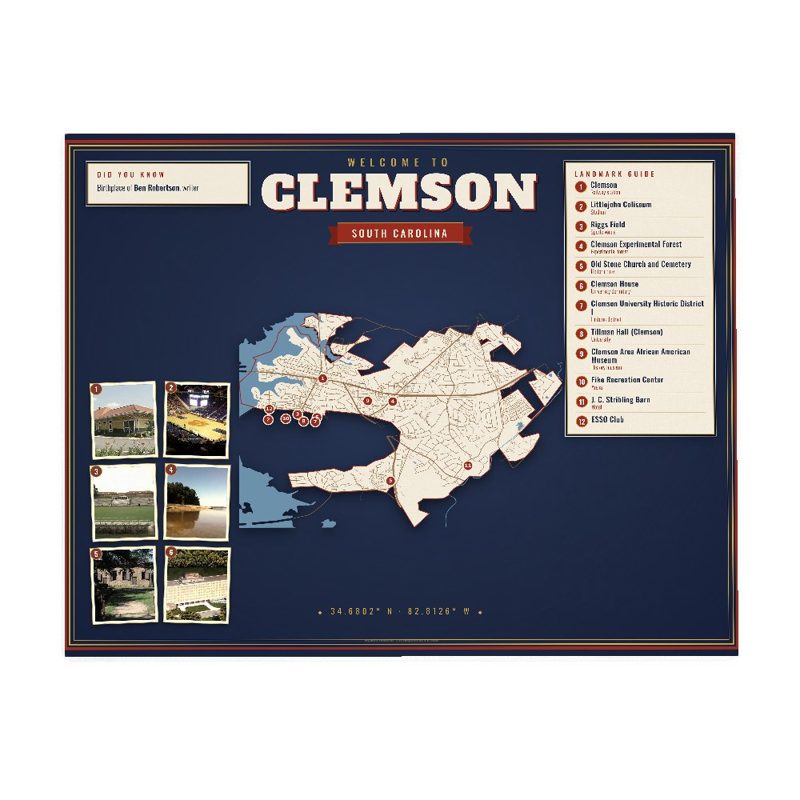















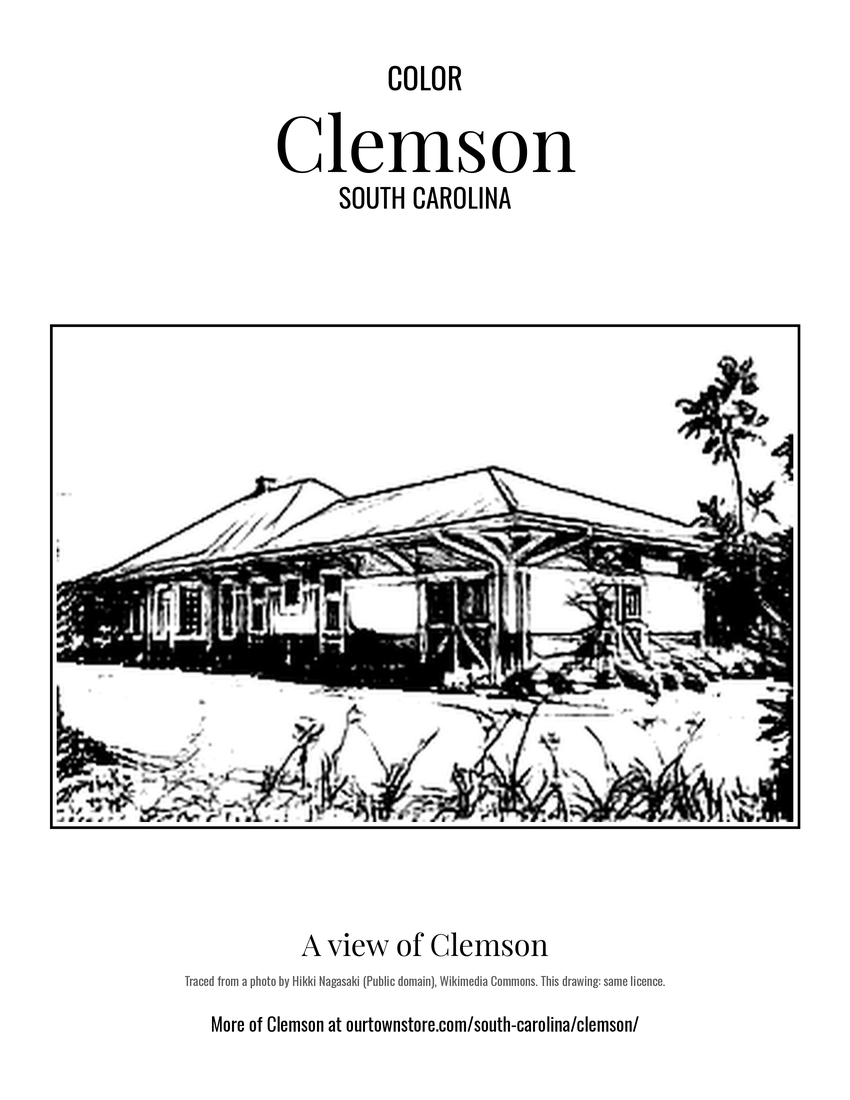 A view of Clemson
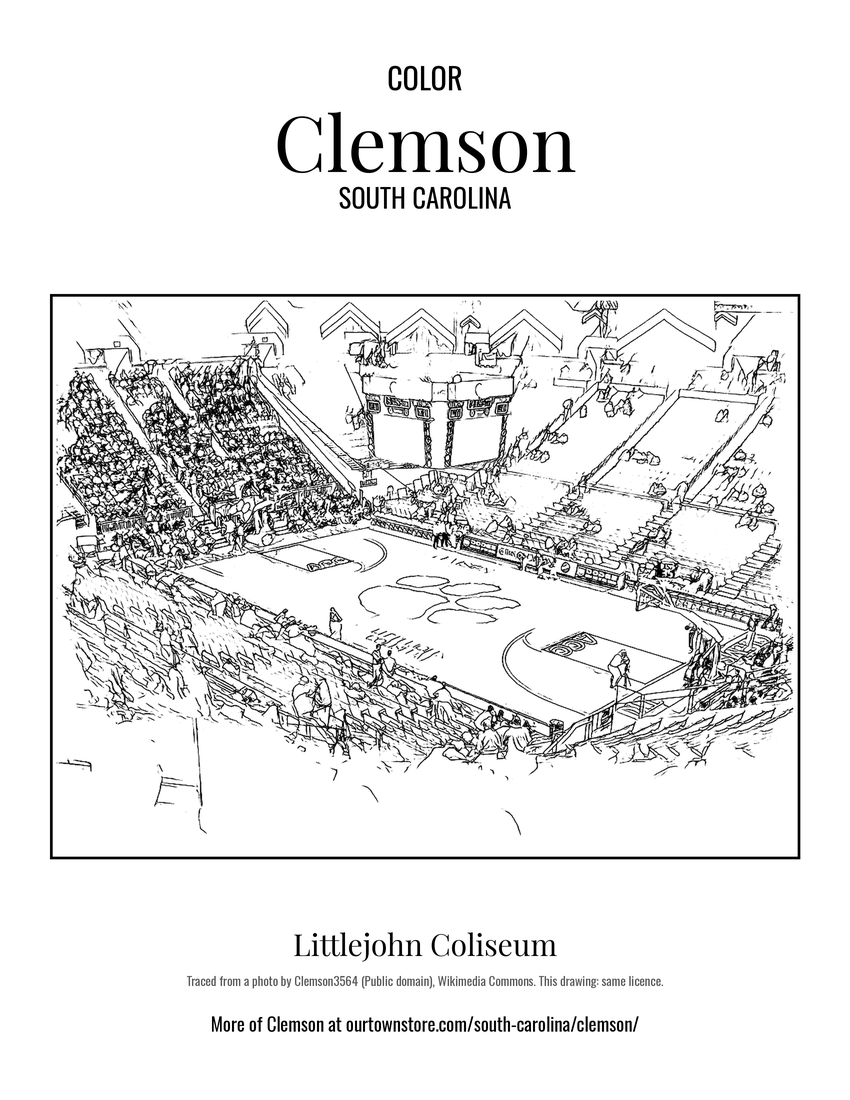 Littlejohn Coliseum
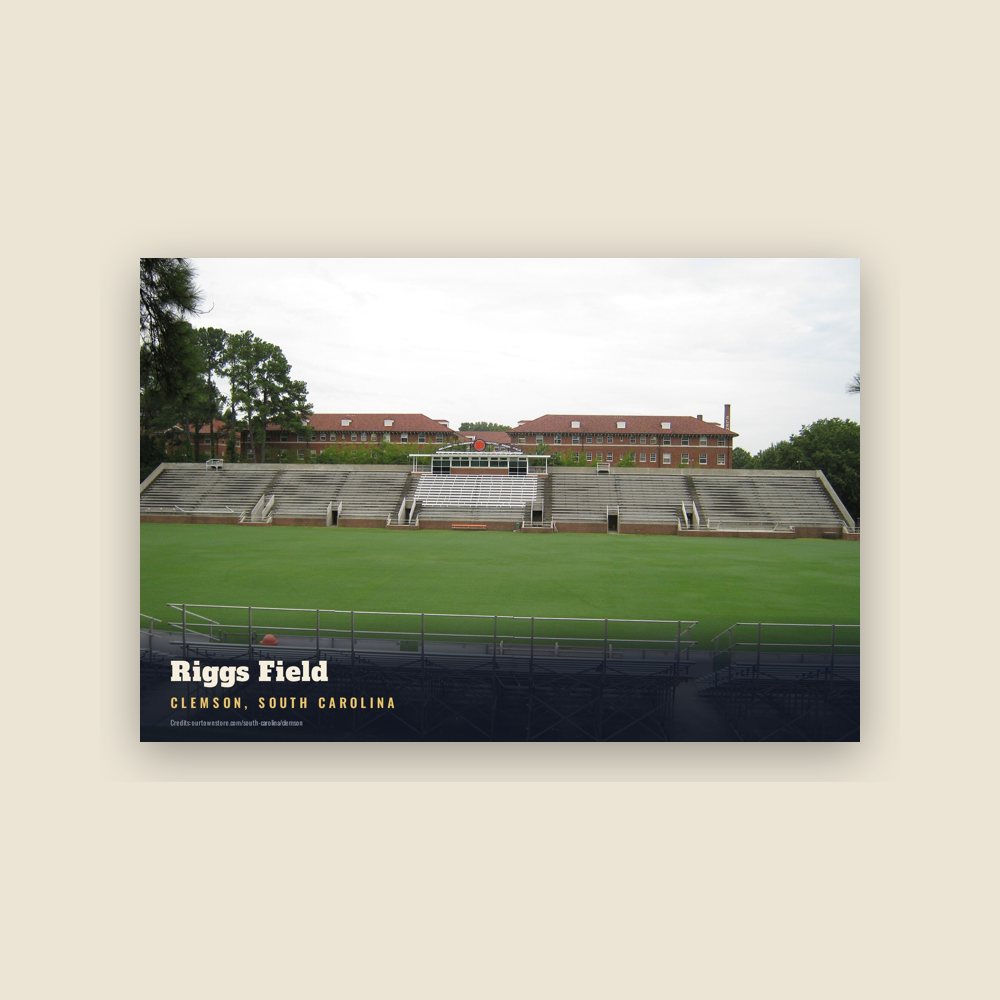
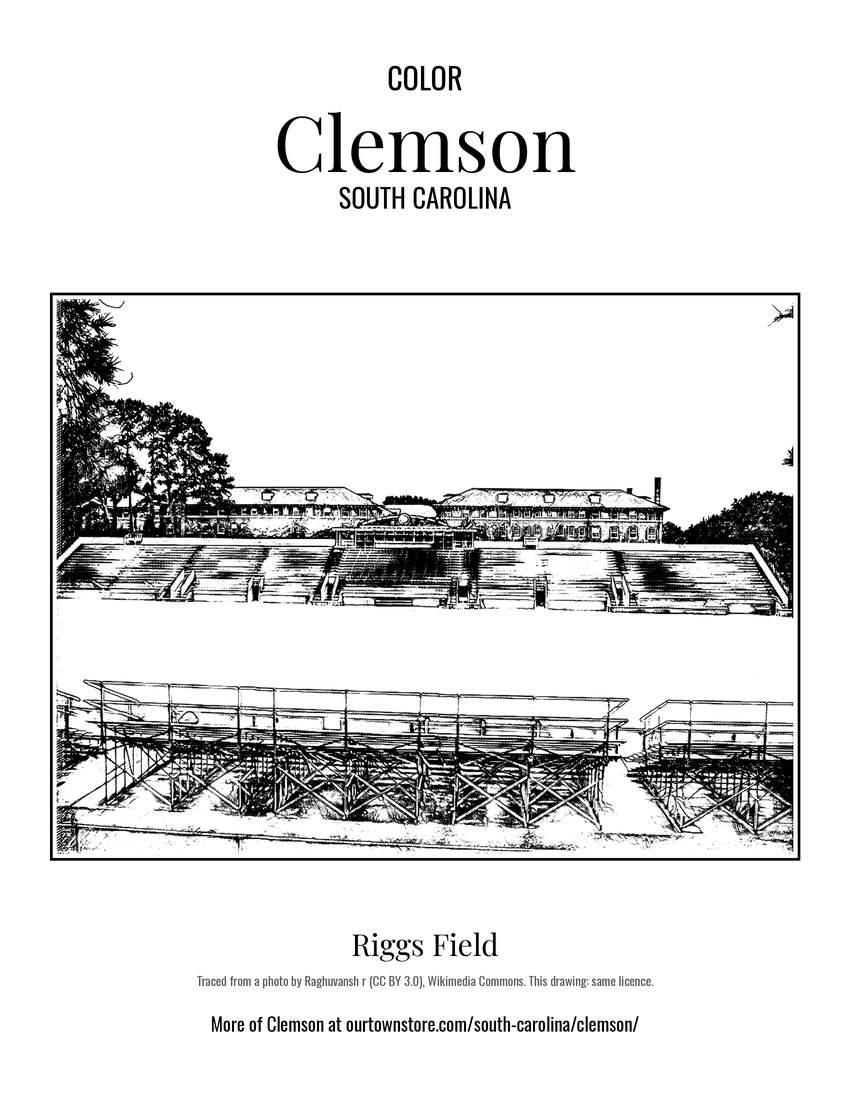 Riggs Field
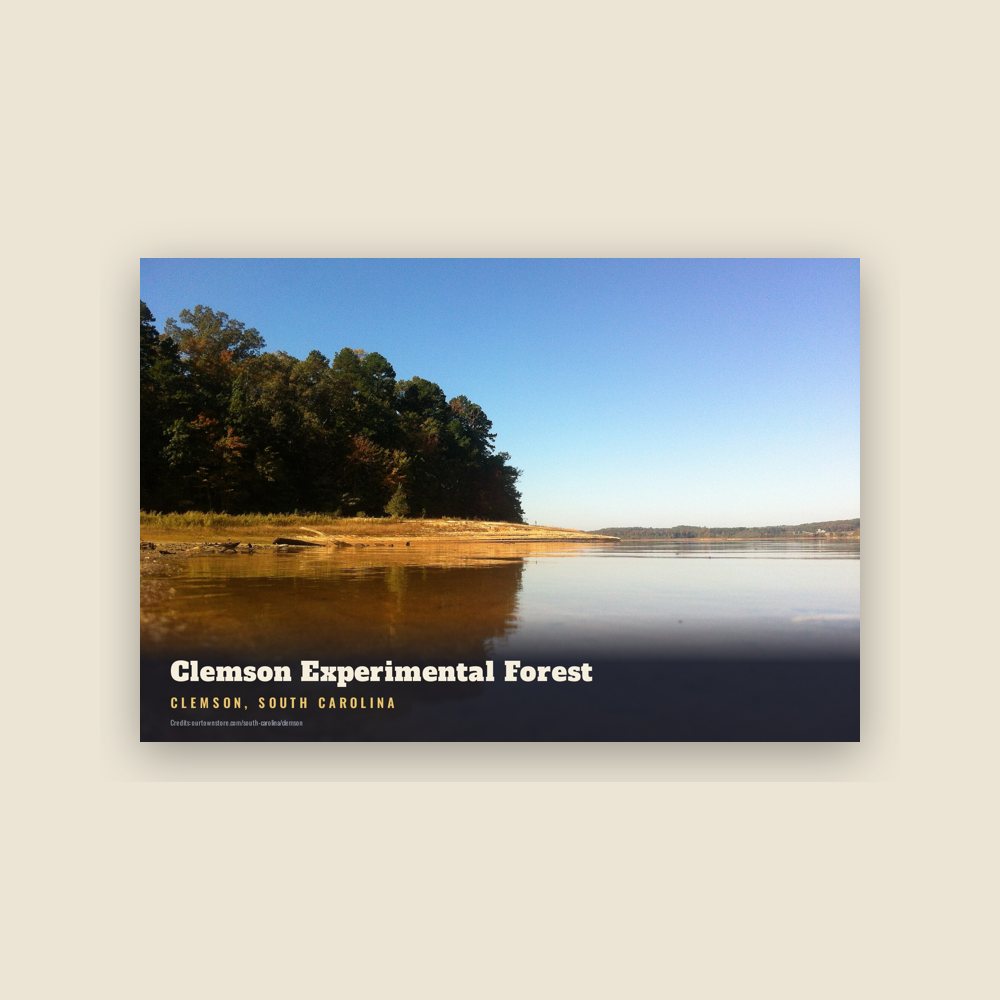
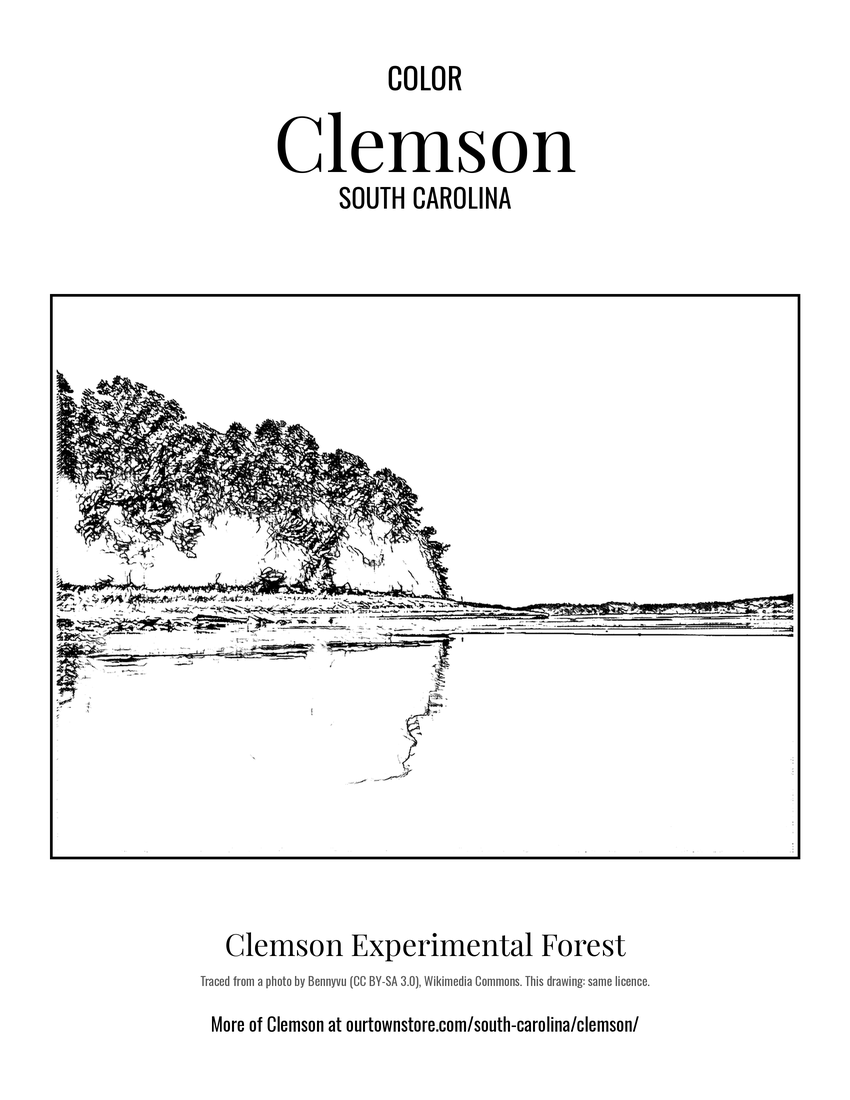 Clemson Experimental Forest