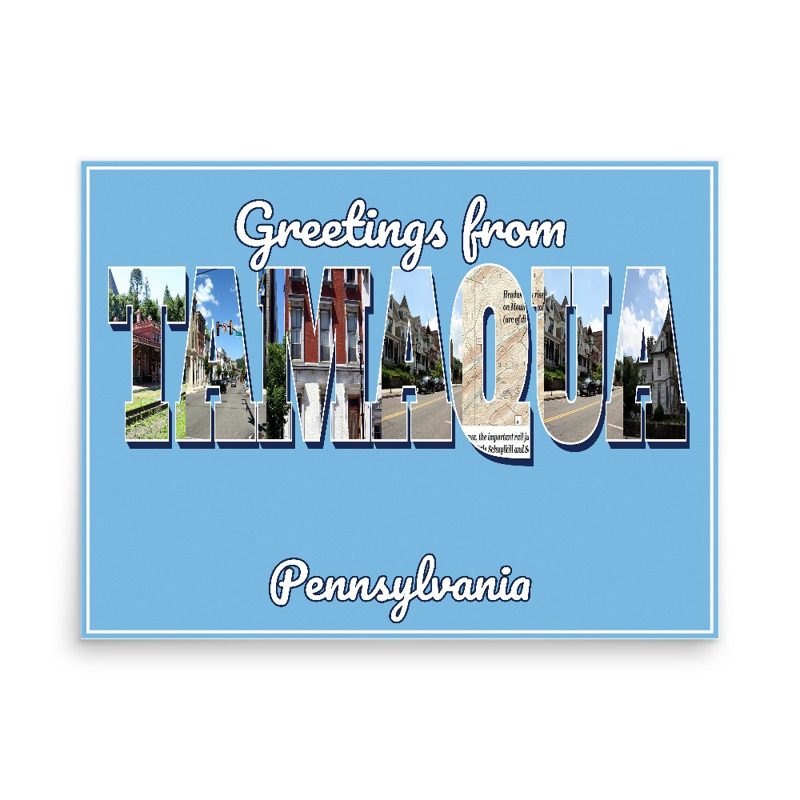
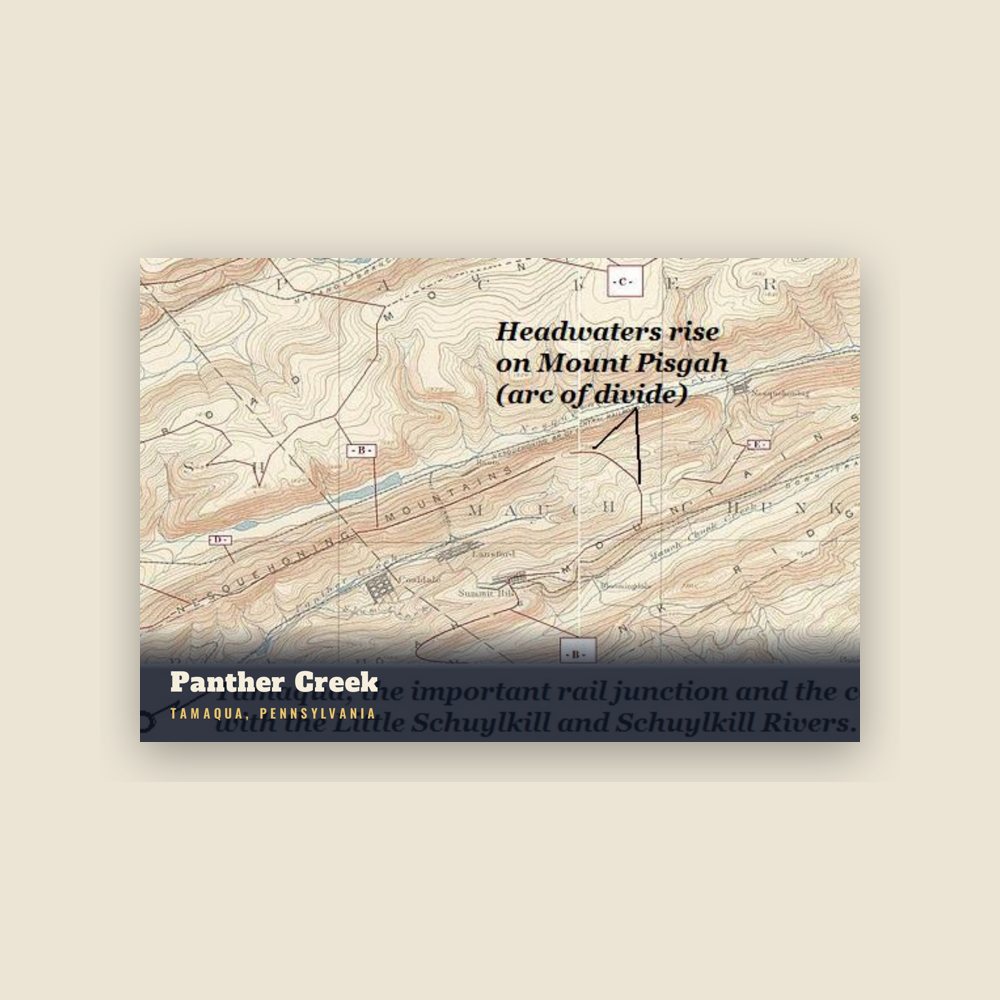
Tamaqua was settled in 1799 by Burkhardt Moser, his son Jacob (born 1790), and John Kershner, who built shelters and a sawmill at the confluence of the Little Schuylkill River and Panther Creek, which is downtown Tamaqua today.
According to property records, Moser had a partner named Houser, and together they owned 2,000 acres (810 ha) which Moser homesteaded. Moser built a log house at the base of Dutch Hill in 1801 for Mrs. Catherine Moser, who was the first adult to die and receive burial there on February 15, 1822 followed later in April that year by John Kershner.
Read the full history
19th century
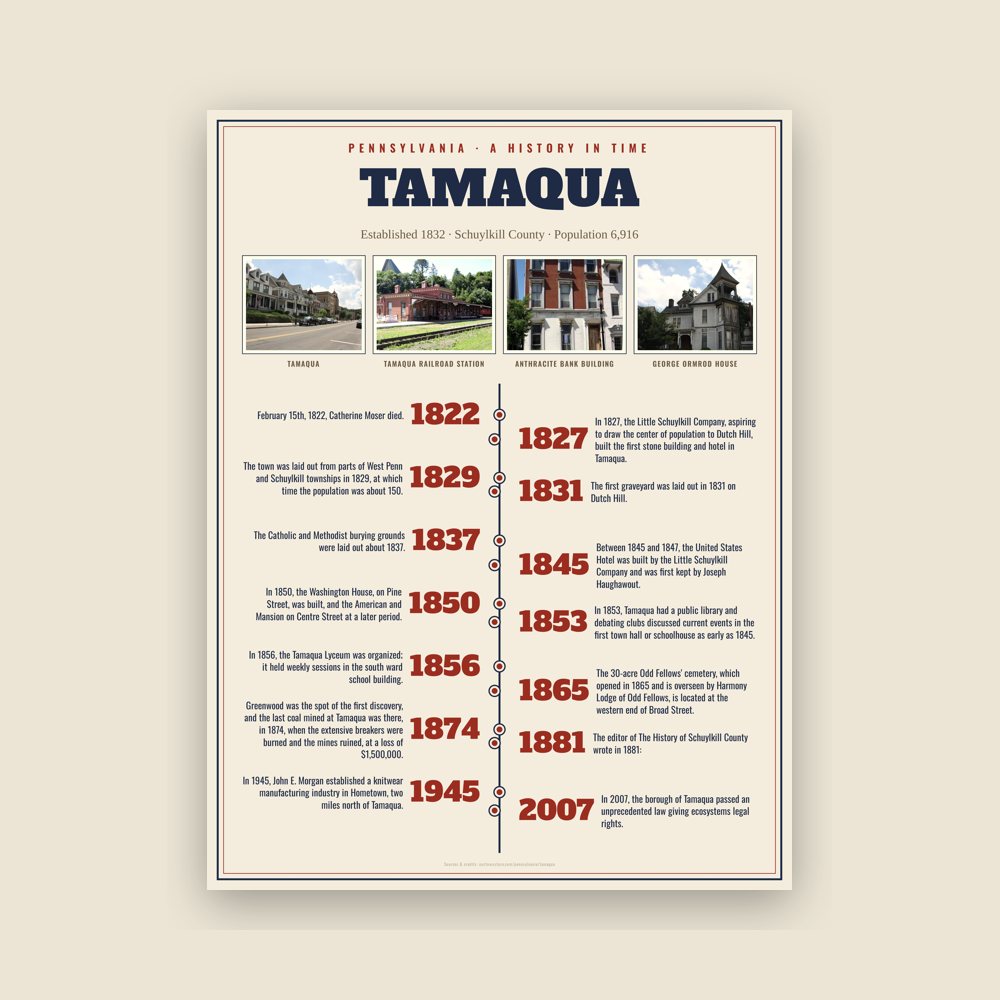
The town was laid out from parts of West Penn and Schuylkill townships in 1829, at which time the population was about 150. The design was to name it Tuscarora, but some enterprising person arose too early in the morning for the pioneers and gave that Indian name to the village four miles west. As the waters of the Tamaqua, rechristened Wabash, the west branch of the Little Schuylkill, passed through the tract, it was decided to name the infant with the name of the creek, Tamaqua, which is Indian for "running water".
Mr. Moser was an industrious man, clearing the forest around his mill and laying out a farm, never dreaming that beneath his fields lay the great seams of coal, the mining of which was in future years to open employment to tens of thousands. February 15th, 1822, Catherine Moser died. This was the first death of an adult person in the place. In April of the same year John Kershner passed away.
The first business relied upon to support the infant town was agriculture, which, with the manufacture of lumber, was the principal industry for twenty years. For this purpose the elevated sloping land east of the borough, as well as that upon the immediate north, was chosen by Moser.
In 1817, anthracite coal was discovered by Berkhard Moser and his son Jacob. For a number of years the quantity mined, consumed, and marketed was very inconsiderable; first sales being made to blacksmiths, and some was taken over the Blue mountains in sacks and sold at seven to twelve cents per bushel. Sales increased until in 1832, when the record first begins, they amounted to 14,000 tons.
Greenwood was the spot of the first discovery, and the last coal mined at Tamaqua was there, in 1874, when the extensive breakers were burned and the mines ruined, at a loss of $1,500,000. Up to 1874 Tamaqua alone had given to the markets 23,000 tons.
Roughly half of Moser's original log cabin is still intact and visible behind a house on the north side of East Broad Street. The discovery of anthracite coal in the region in the early 19th century led to Tamaqua's rise as a coal-producing community. The town was incorporated as a borough in 1832. The first coal breaker, called "The Greenwood" was built as noted in the quotation, at the site of the first mine at the lower end of the Panther Creek Valley. However, details about construction and development in Rahn Township and Coaldale on the county-line with sister-town Lansford from the same source history illustrate it was definitely not the first breaker in the valley. Lehigh Coal & Navigation Company, with 10,000 acres located between Mauch Chunk in present-day Jim Thorpe and Tamaqua, was known to have mine tailings in their lands in Coaldale. The Greenwood breaker in 1874, as noted in the above quote, was burned by the Molly Maguires in the labor troubles of that era.
Irish, Welsh, and German immigrants came to the borough in the 1840s and 1850s followed by a large influx of Italians, Lithuanians, Russians, Ukrainians, Slovaks, and Poles in the 1890s and early 20th century. During the 1860s and 1870s, Tamaqua also was the geographic center hub for the Molly Maguires. One murder commonly attributed to the Mollies was that of town policeman Benjamin Yost, who was shot to death early one morning while extinguishing a gas lamp at the corner of West Broad and Lehigh Streets.
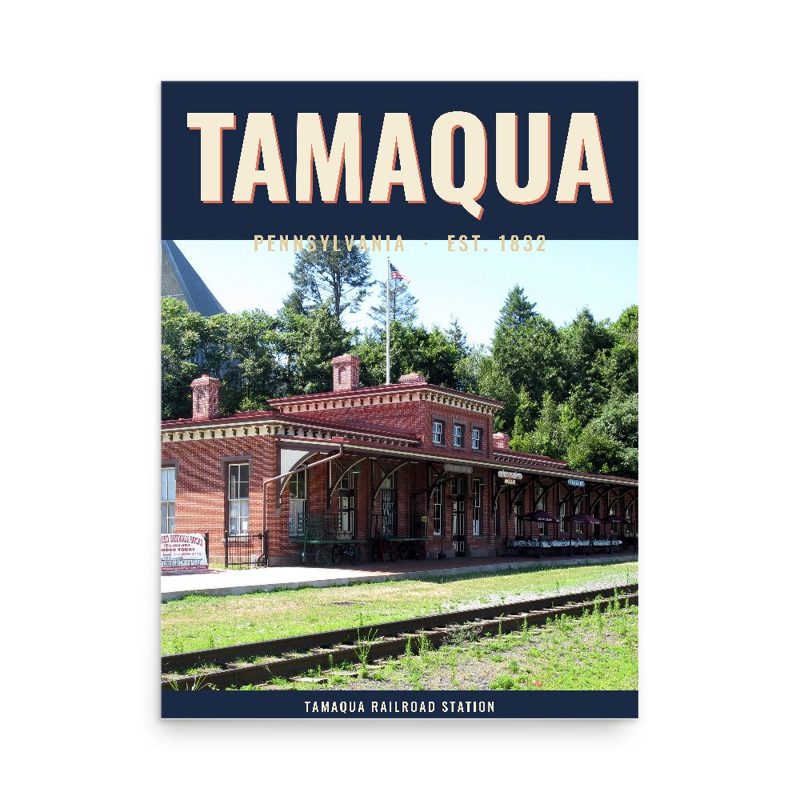
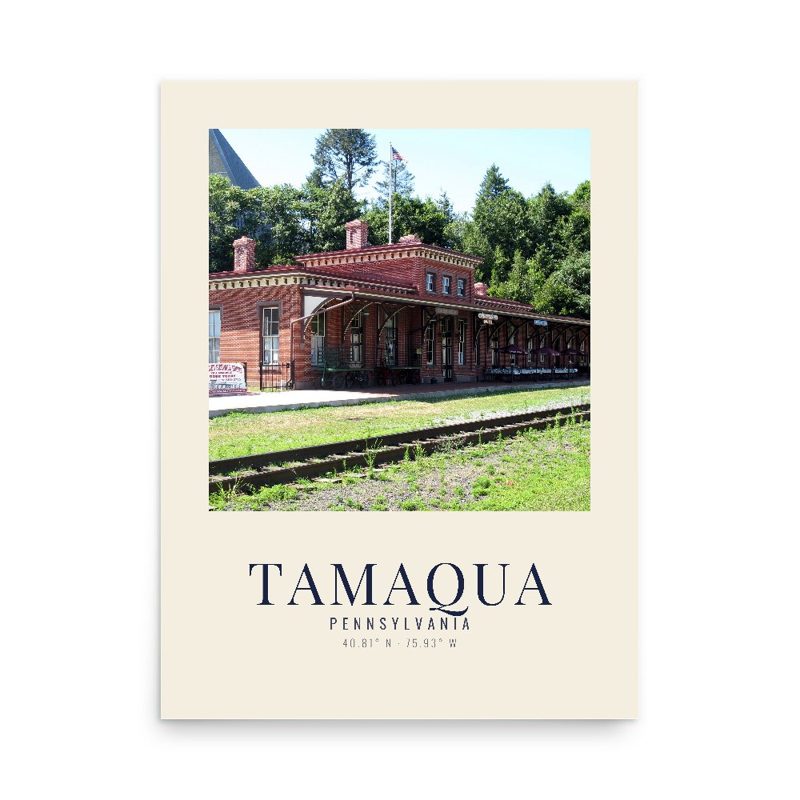
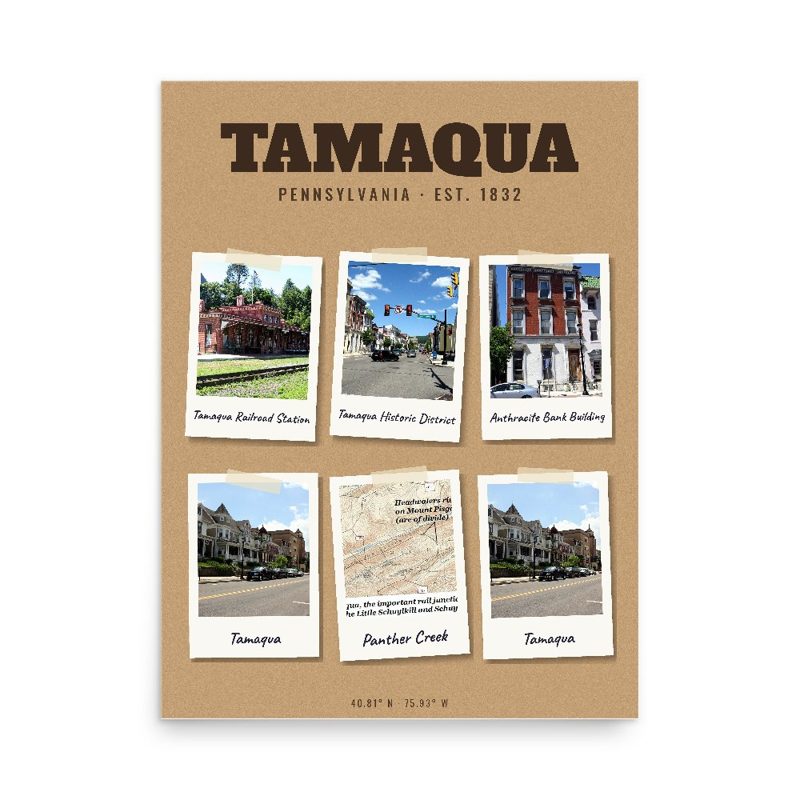
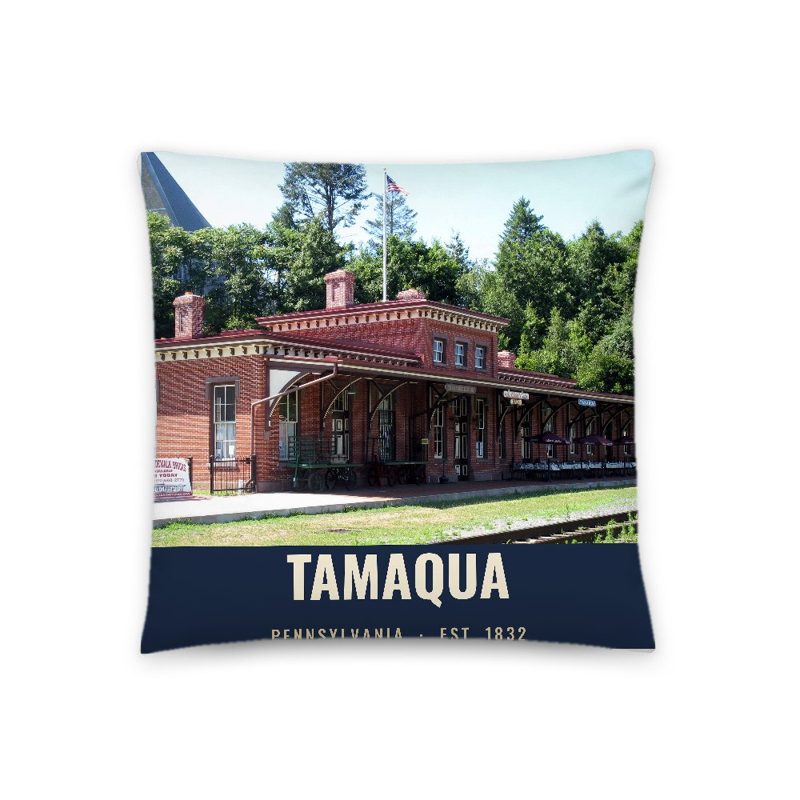
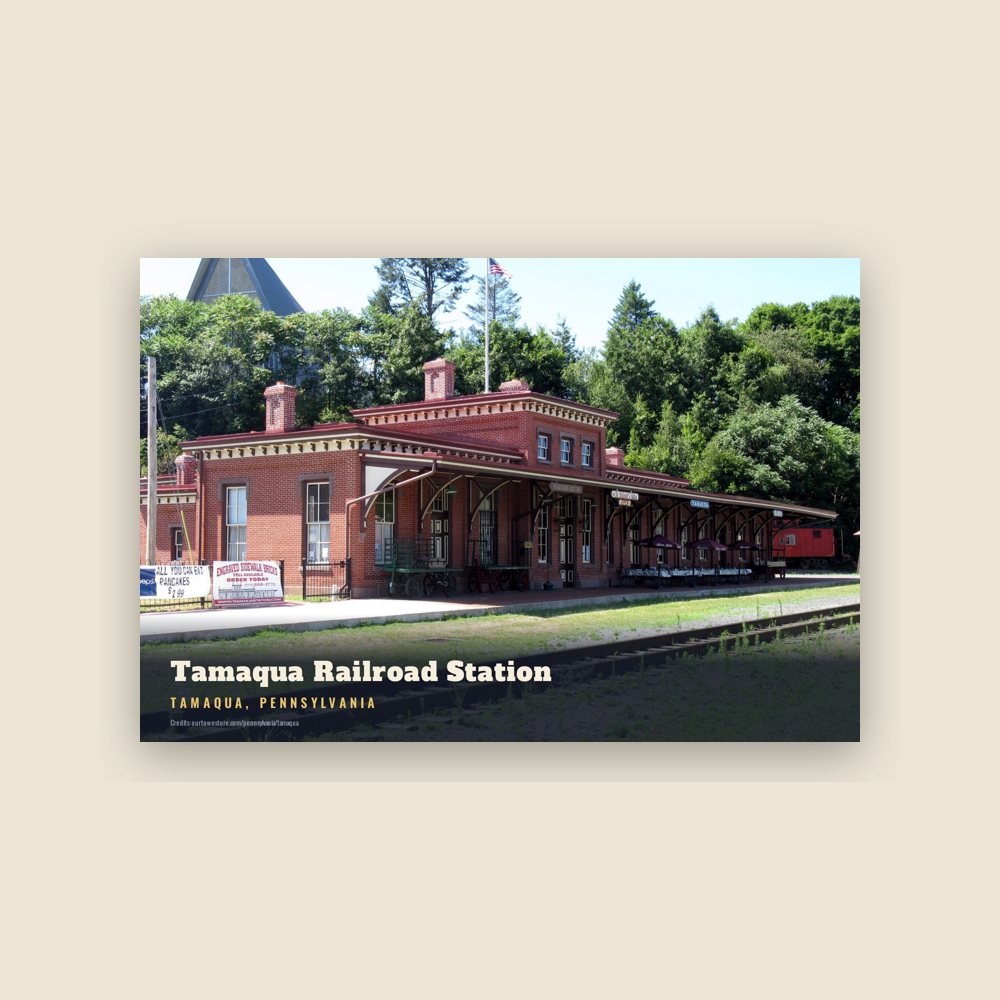
The Tamaqua Railroad station was constructed in 1874. It stood idle from the mid 1980s through the late 1990s after passenger railroad service to the town was discontinued. Initially planned to be demolished in the late 1980s, the non-profit group Save Our Station (S.O.S.) eventually managed to raise enough money to have it refurbished at a cost of $1.5 million. The station reopened in August 2004 and is now home to a full-service restaurant and gift shop. Rail excursions leave from there during the Tamaqua Historical Society's annual Heritage Festival on the second Sunday in October.
Hotels
The first tavern in Tamaqua was opened around 1807 in Berkhard Moser's house by the widow of John Kershner and her son-in-law, Isaac Bennett. In 1827, the Little Schuylkill Company, aspiring to draw the center of population to Dutch Hill, built the first stone building and hotel in Tamaqua. The house was converted into a dwelling thirty years afterward.
In 1832, James Taggart, one of the pioneers in Panther Creek Valley, came to Tamaqua and opened a hotel. Michael Beard took possession in 1846. The White Swan Inn (now Mundy’s Pub) was established in the early 1840s and is located at the corner of Cedar and South Greenwood streets.
Between 1845 and 1847, the United States Hotel was built by the Little Schuylkill Company and was first kept by Joseph Haughawout. In 1850, the Washington House, on Pine Street, was built, and the American and Mansion on Centre Street at a later period.
Literary societies and lyceums
In 1853, Tamaqua had a public library and debating clubs discussed current events in the first town hall or schoolhouse as early as 1845. In 1856, the Tamaqua Lyceum was organized; it held weekly sessions in the south ward school building. Matthew Newkirk of Philadelphia contributed 1,500 books to it, which passed into the hands of the Perseverance Fire Company when the society later disbanded. No records of the first organization remain. The principal citizens were members.
Cemeteries
The first graveyard was laid out in 1831 on Dutch Hill. The Catholic and Methodist burying grounds were laid out about 1837. The 30-acre Odd Fellows' cemetery, which opened in 1865 and is overseen by Harmony Lodge of Odd Fellows, is located at the western end of Broad Street. It is one of only two elaborate Victorian garden cemeteries in Schuylkill County. Zion's cemetery was opened in 1876.
20th century
Tamaqua remained a thriving community throughout the heyday of coal production in the United States through the early 20th century. Certain sections of the borough, such as Dutch Hill and the South Ward, had a reputation for "toughness." Those sections were also densely populated by immigrants from southern and eastern Europe. However, in the 1950s, as coal mining began tapering off, Tamaqua and other Coal Region communities built on anthracite began declining.
In 1955. Hurricane Diane caused tremendous damage to Tamaqua's railroad yards, and they never fully recovered. In 1971, the borough annexed neighboring Rahn Township and its Owl Creek section, home to the world's first fish hatchery.
In 1945, John E. Morgan established a knitwear manufacturing industry in Hometown, two miles north of Tamaqua. The company, Morgan Knitting Mills, Inc., grew into the second-largest employer in the area behind Atlas Powder Company.
In the mid 1950s, Morgan, working from a design developed by his wife, Anna Hoban Morgan, patented the widely known thermal underwear product lines. Since Morgan's death in 2000, the Morgan Trust has donated money to various causes in the Tamaqua area and established the John & Dorothy Morgan Cancer Center at Lehigh Valley Hospital–Cedar Crest in Allentown.
Dial telephone service arrived in Tamaqua on August 6, 1961. The borough uses area codes 570 and 272. Operators who worked the 12-position switchboard on the top floor of the Tamaqua National Bank at West Broad and Berwick Streets were transferred to Bell Telephone toll centers in either Hazleton or Pottsville.
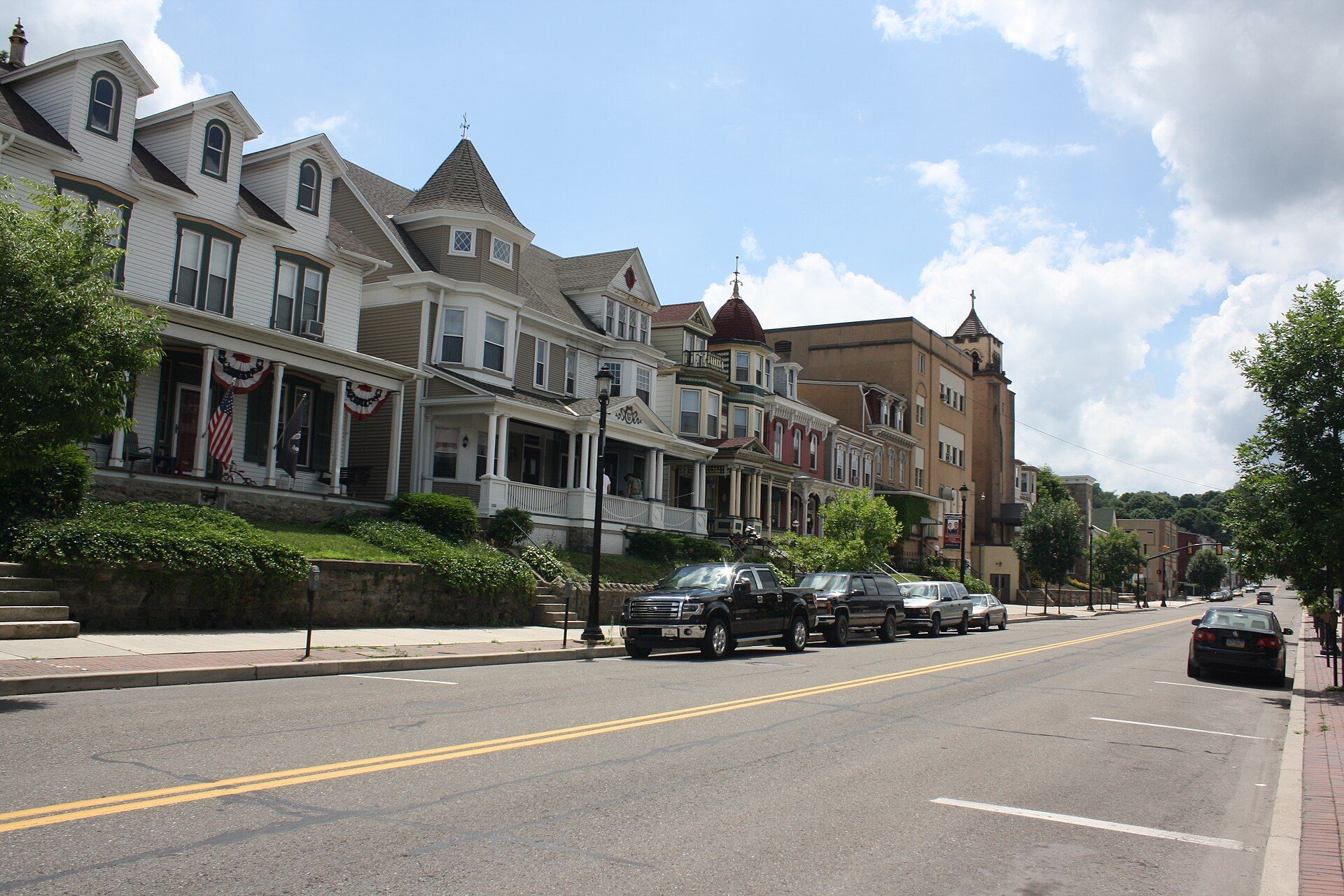
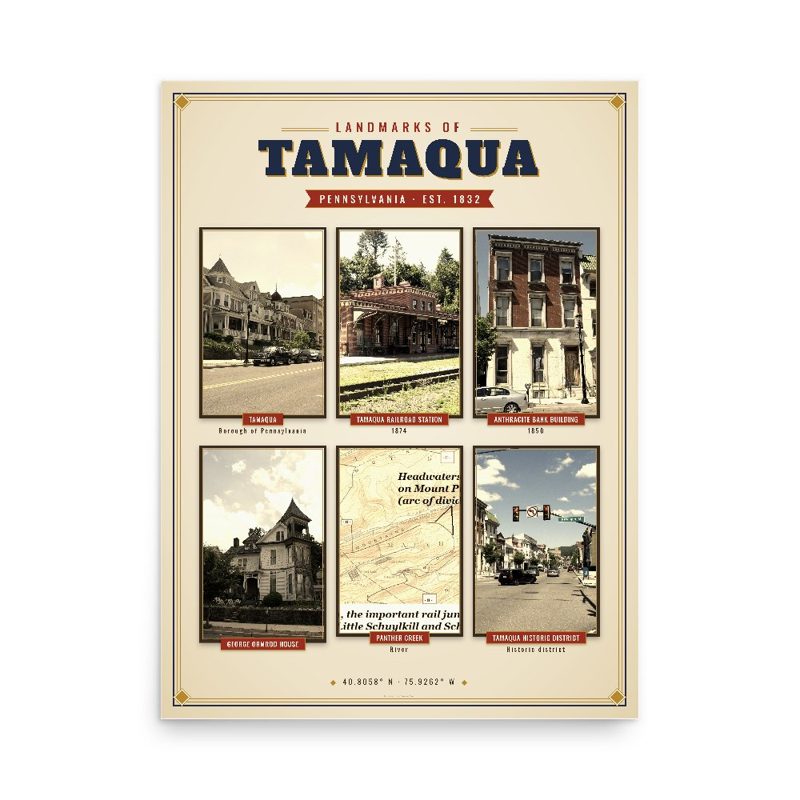
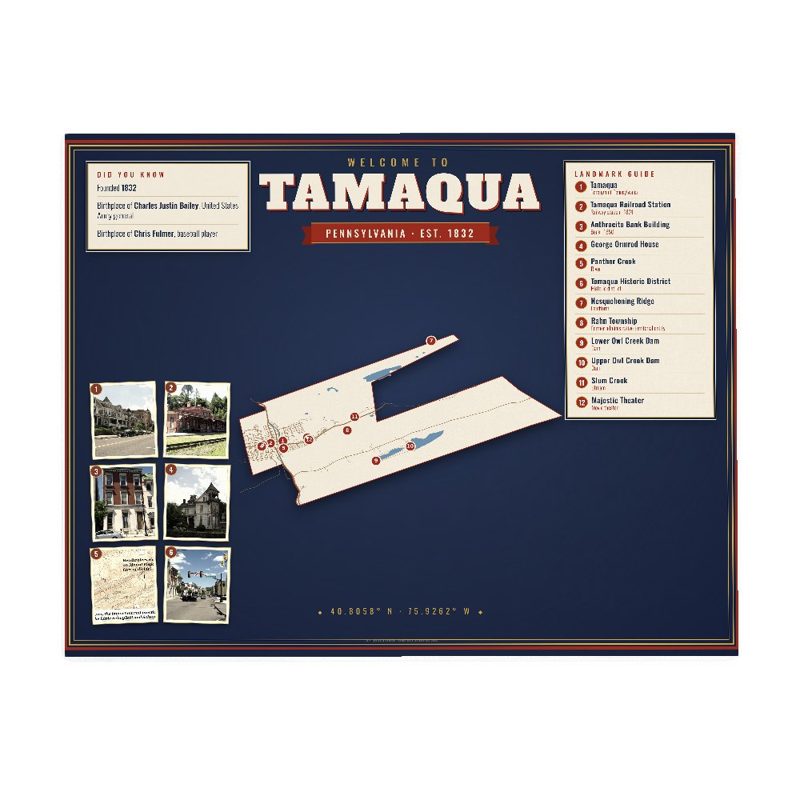
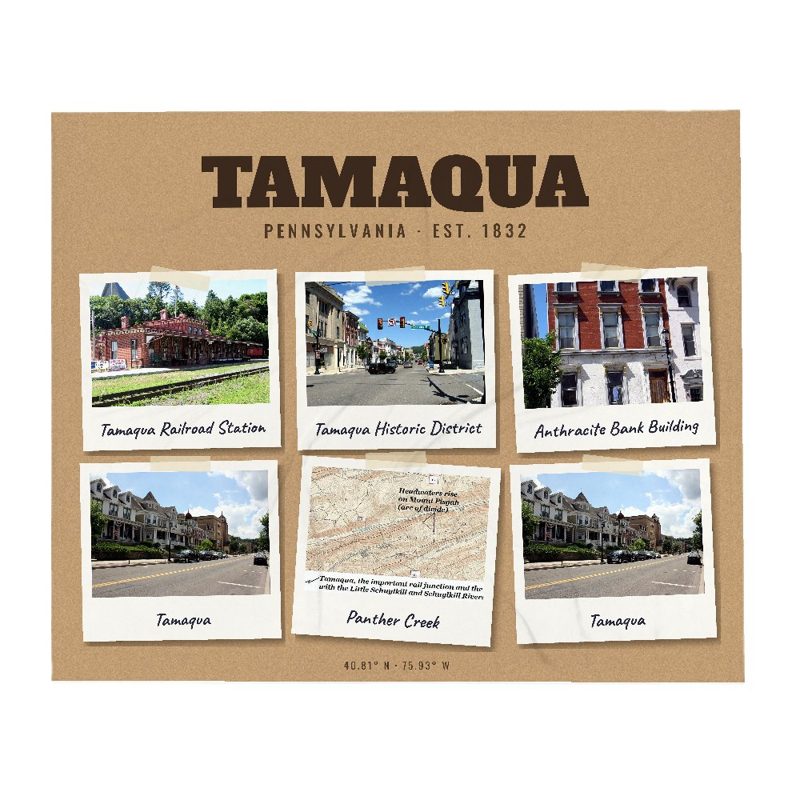
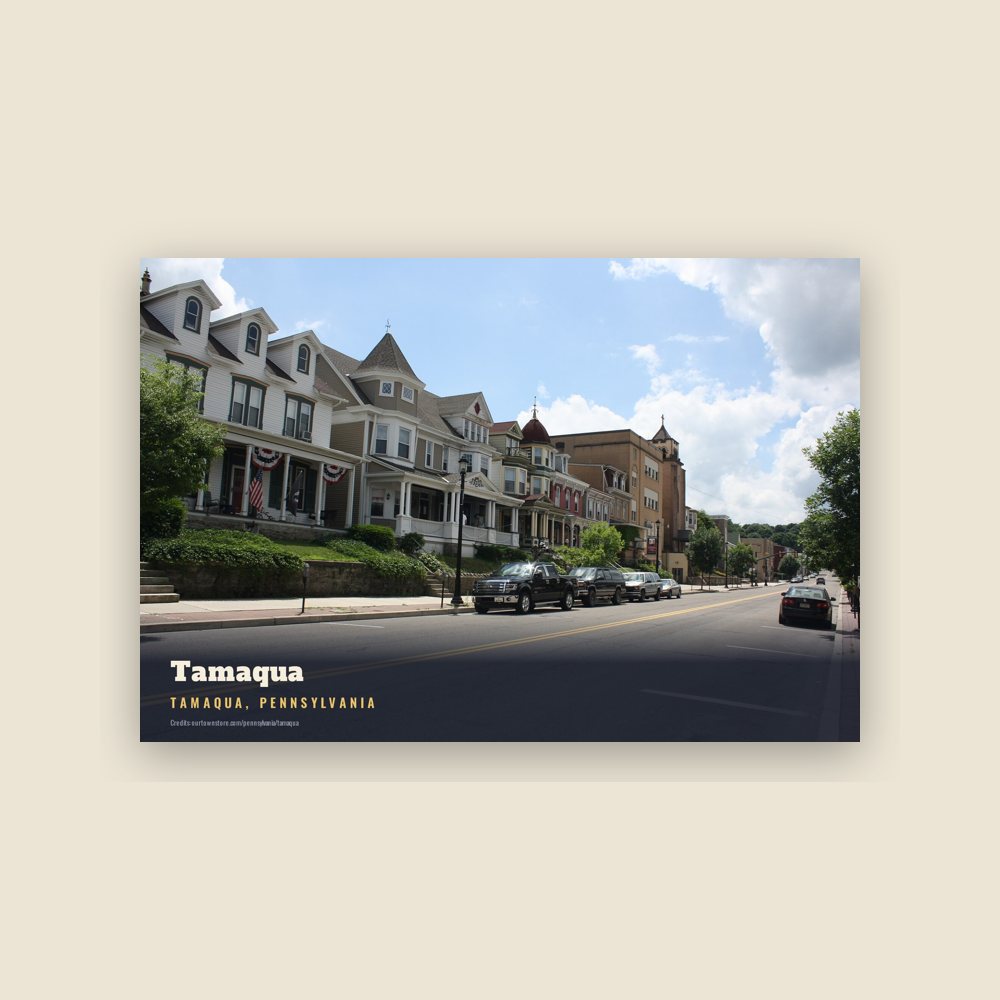
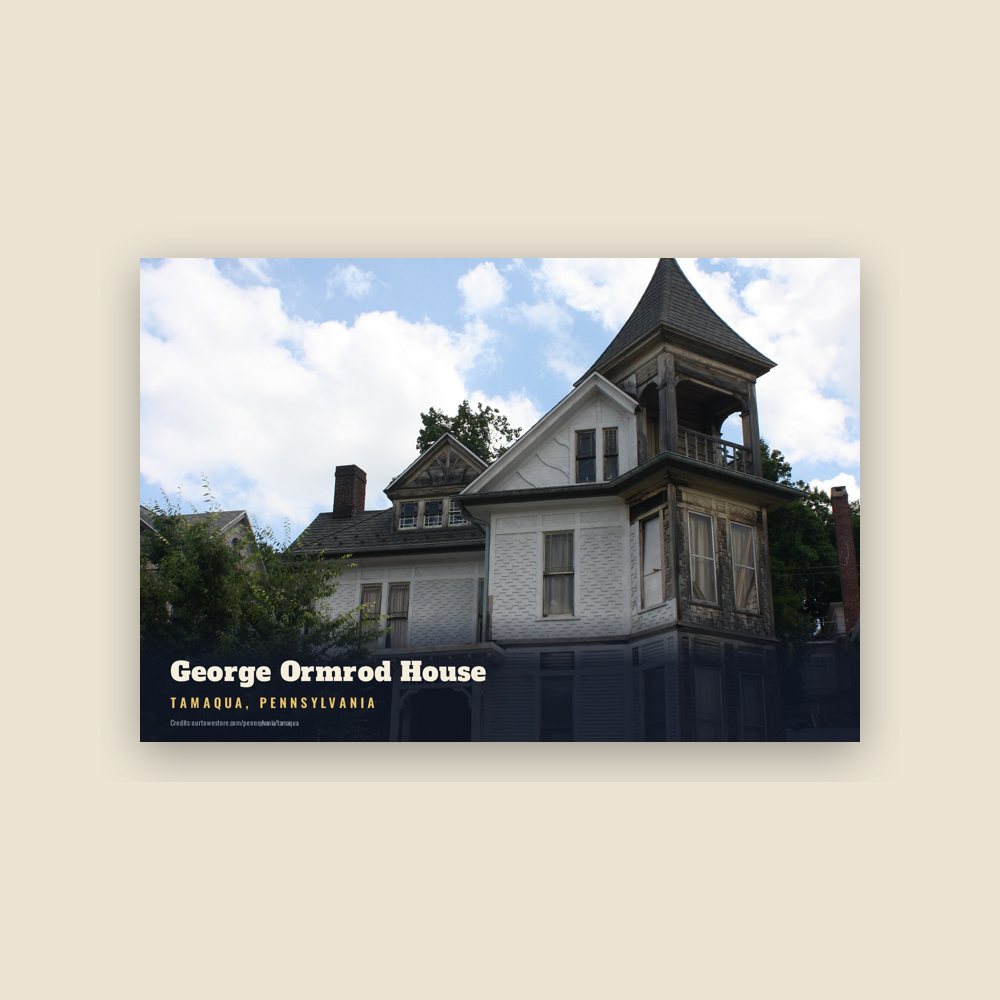
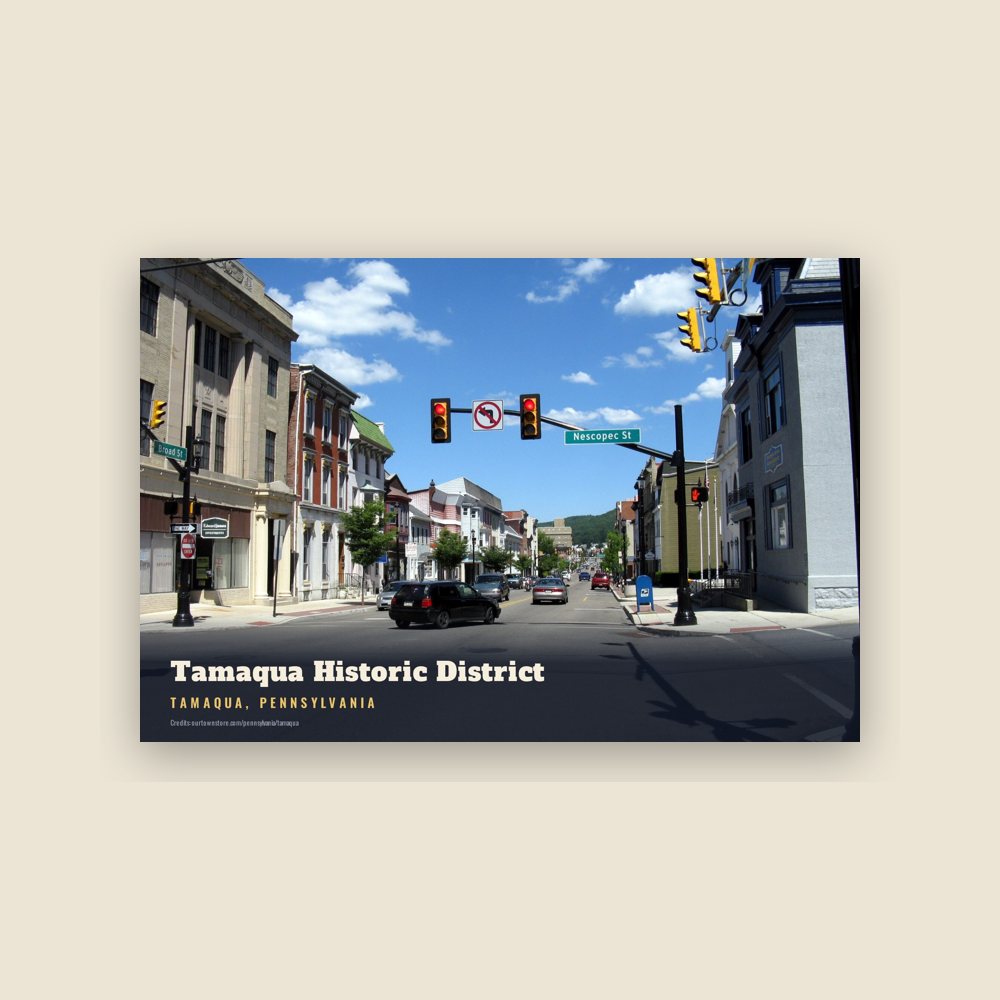
The 55-block Tamaqua Historic District, Anthracite Bank Building, George Ormrod House, and Tamaqua station have each been named to the National Register of Historic Places.
21st century
In 2007, the borough of Tamaqua passed an unprecedented law giving ecosystems legal rights. The ordinance establishes that the municipal government or any Tamaqua resident can file a lawsuit on behalf of the local ecosystem. Other townships, such as Rush, followed suit and passed their own laws.