Since 1887
A short history of West Hazleton
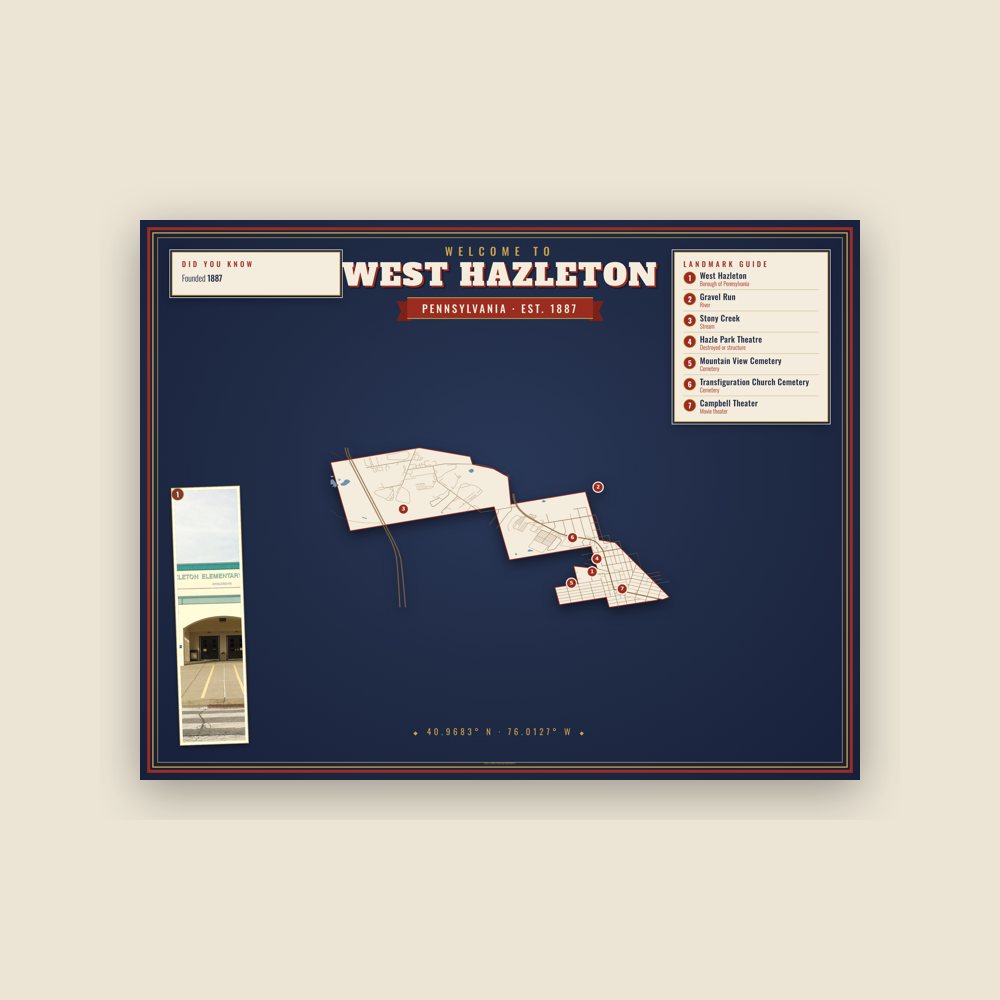
West Hazleton was founded by Conrad Horn, and it was officially established as a borough on March 12, 1887. West Hazleton gained prominence in the 19th and 20th centuries as an active anthracite coal mining community; it attracted thousands of European immigrants. The first burgess was J.W. McMurtrie; he served from 1888 to 1890.
The borough’s identity and economy were fundamentally shaped by the anthracite coal industry. During the late 19th and early 20th centuries, West Hazleton became a major mining hub, drawing a massive influx of European immigrants seeking work in the collieries. This population boom was dramatic; the town grew from a mere 191 residents in 1880 to a peak of over 7,300 by 1930. This era established the "patch town" culture that still influences the area today, characterized by tight-knit ethnic neighborhoods and community-centric organizations like the Pulaski Club.
Beyond industry, West Hazleton served as a regional center for recreation and sports. It was the longtime home of Hazle Park, which was once the premier amusement and social destination for the Greater Hazleton area. The borough also gained a brush with fame at Cranberry Ballpark, where baseball legend Babe Ruth once played. These landmarks, along with traditional church bazaars and social clubs, defined the social fabric of the borough during its most prosperous years.
As the coal industry declined following World War II, West Hazleton successfully pivoted toward manufacturing and commerce. The efforts of development groups like CAN DO, Inc. were instrumental in this transition, leading to the establishment of the Valmont Industrial Park. Today, while the borough remains a primarily residential community, it continues to serve as a commercial gateway for the region.
Adapted (trimmed) from the Wikipedia article West Hazleton, Pennsylvania, revision 1379600857 by its contributors, licensed CC BY-SA 4.0.