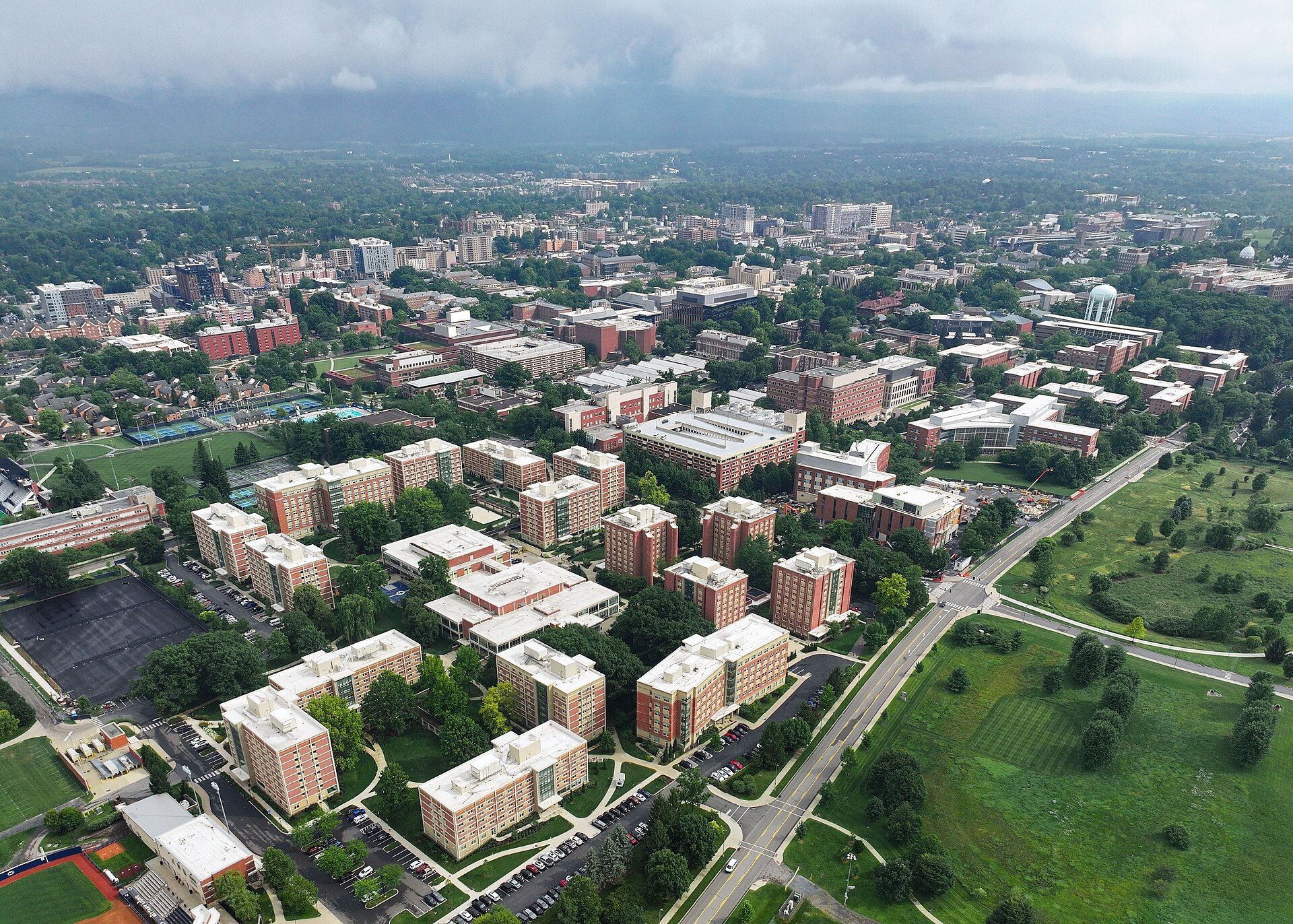
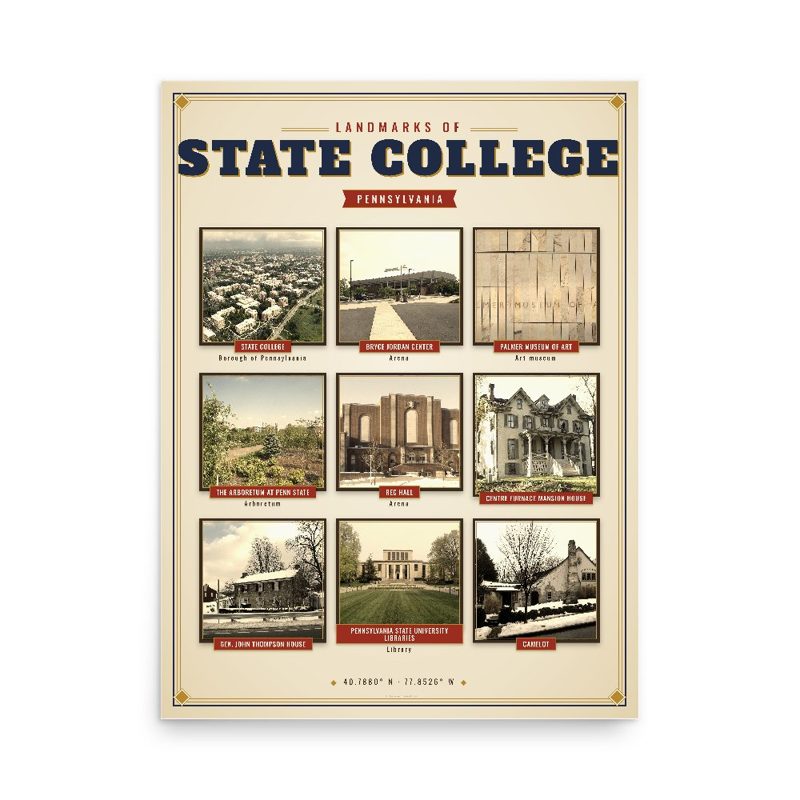
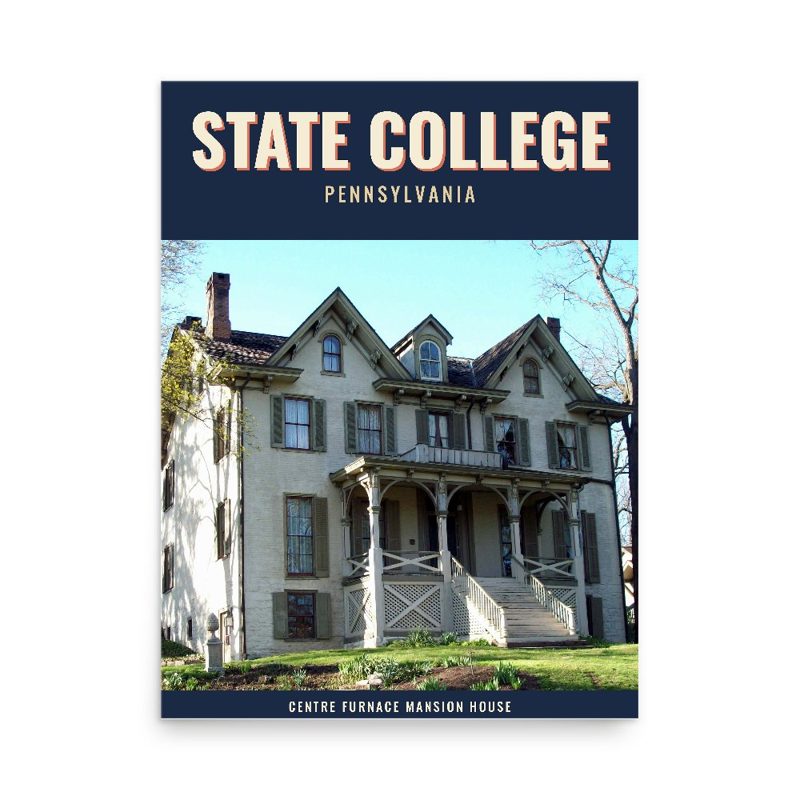
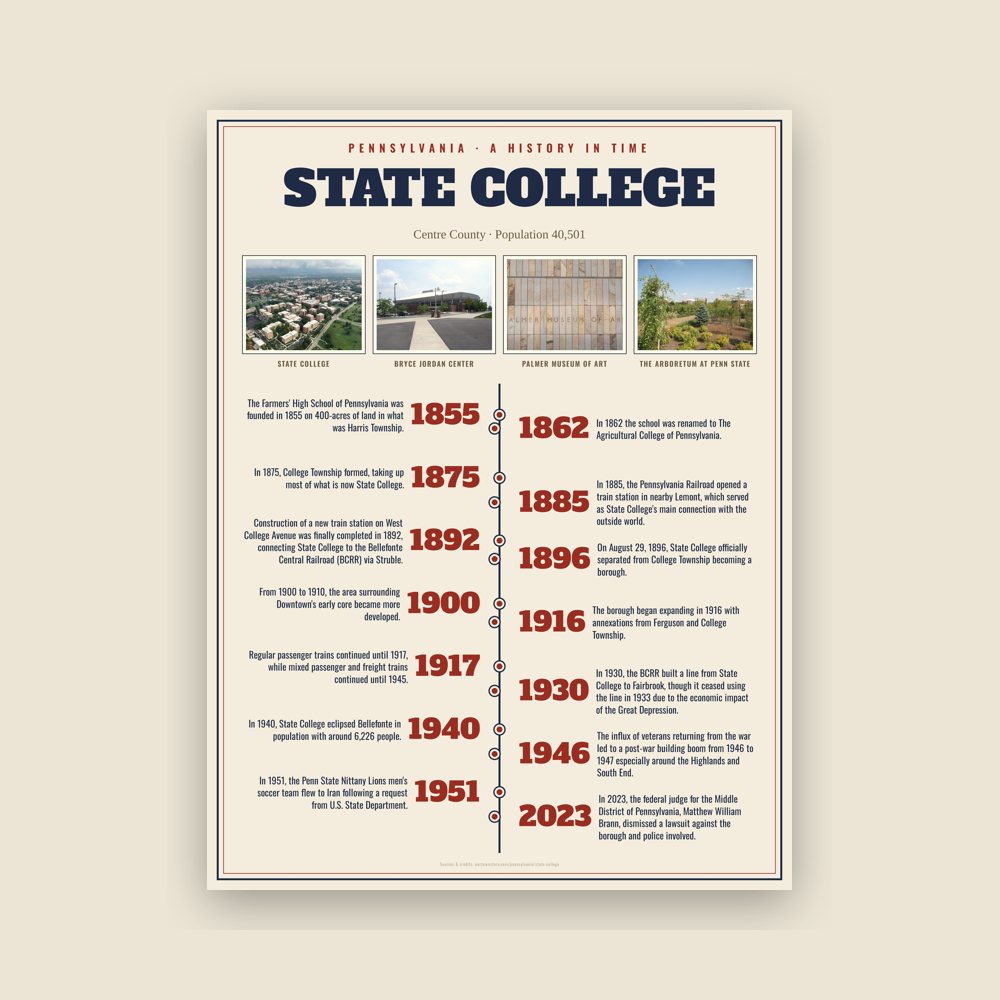
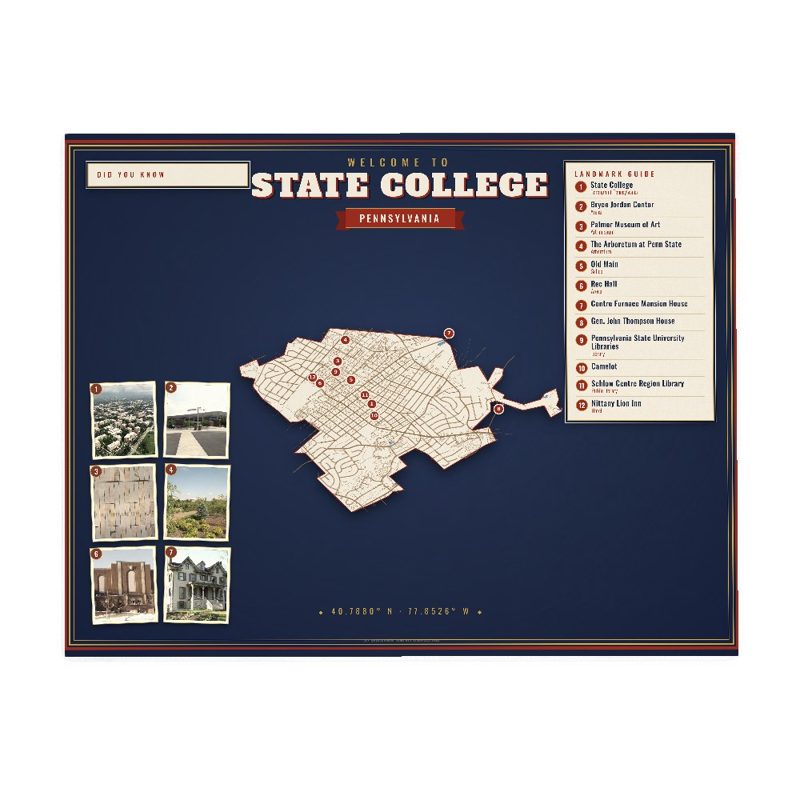
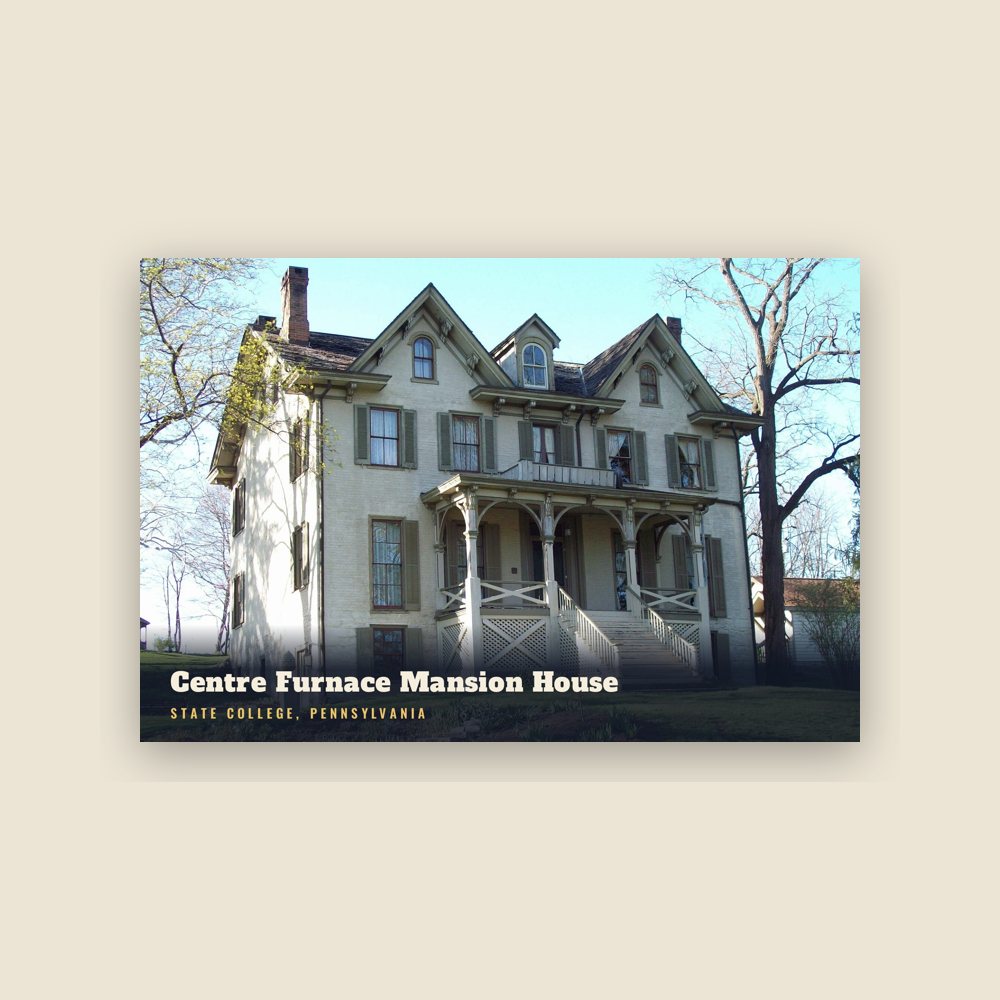
The Farmers' High School of Pennsylvania was founded in 1855 on 400-acres of land in what was Harris Township. Although the area was isolated from most of the state, the land was reasonably affordable and the Nittany Valley was rich in limestone, causing exceptional soil fertility. The land was clear-cut for charcoal, powering the adjacent Centre Furnace. In 1862 the school was renamed to The Agricultural College of Pennsylvania.
In 1875, College Township formed, taking up most of what is now State College. In 1885, the Pennsylvania Railroad opened a train station in nearby Lemont, which served as State College's main connection with the outside world. Passengers would have to catch an autobus or a hack to complete the journey to State College from the Lemont station. Construction of a new train station on West College Avenue was finally completed in 1892, connecting State College to the Bellefonte Central Railroad (BCRR) via Struble. The journey along the 20-mile-long line took 50 minutes, meandering through the Scotia Barrens and the Buffalo Run Valley before making it to Bellefonte. Regular passenger trains continued until 1917, while mixed passenger and freight trains continued until 1945. On August 29, 1896, State College officially separated from College Township becoming a borough.
From 1900 to 1910, the area surrounding Downtown's early core became more developed. The hilly area south of Beaver Avenue became known as Highland Park, before being referred to as the Highlands. The borough began expanding in 1916 with annexations from Ferguson and College Township. In 1917 the borough added the Hamilton, Highland Park, and South Side additions to its boundary. French professor I.P. Foster and businessman J. Laird Holmes donated land for the creation of Holmes-Foster, which would become the borough's first park in 1921; the borough's first hospital would open a few blocks north of the park in 1919.
Read the full history
Great Depression and WWII
In 1930, the BCRR built a line from State College to Fairbrook, though it ceased using the line in 1933 due to the economic impact of the Great Depression. Compared to the rest the country, State College was much more economically stable due to the expanding Pennsylvania State University. This led to State College and the surrounding townships being nicknamed "Happy Valley." The borough expanded throughout the 1930s with three more annexations, including Lytle's Addition. In 1940, State College eclipsed Bellefonte in population with around 6,226 people.
The influx of veterans returning from the war led to a post-war building boom from 1946 to 1947 especially around the Highlands and South End. Windcrest, a trailer park community built to accommodate returning veterans, was rented to married student veteran families.
Cold War and civil rights era
In 1951, the Penn State Nittany Lions men's soccer team flew to Iran following a request from U.S. State Department. The team was meant to play several exhibition matches in an attempt to "further goodwill" between the United States and Iran. The Nittany Lions lost their first match in Isfahan 2–0 in front of 5,000 spectators.
Milton S. Eisenhower, the brother of United States President Dwight D. Eisenhower, changed the name of the Pennsylvania State College to The Pennsylvania State University in 1953. He also sought to persuade the town to change its name from "State College" to "Mt. Nittany," but the referendum failed. Shortly after, the university would get its own postal address under the name “University Park.”
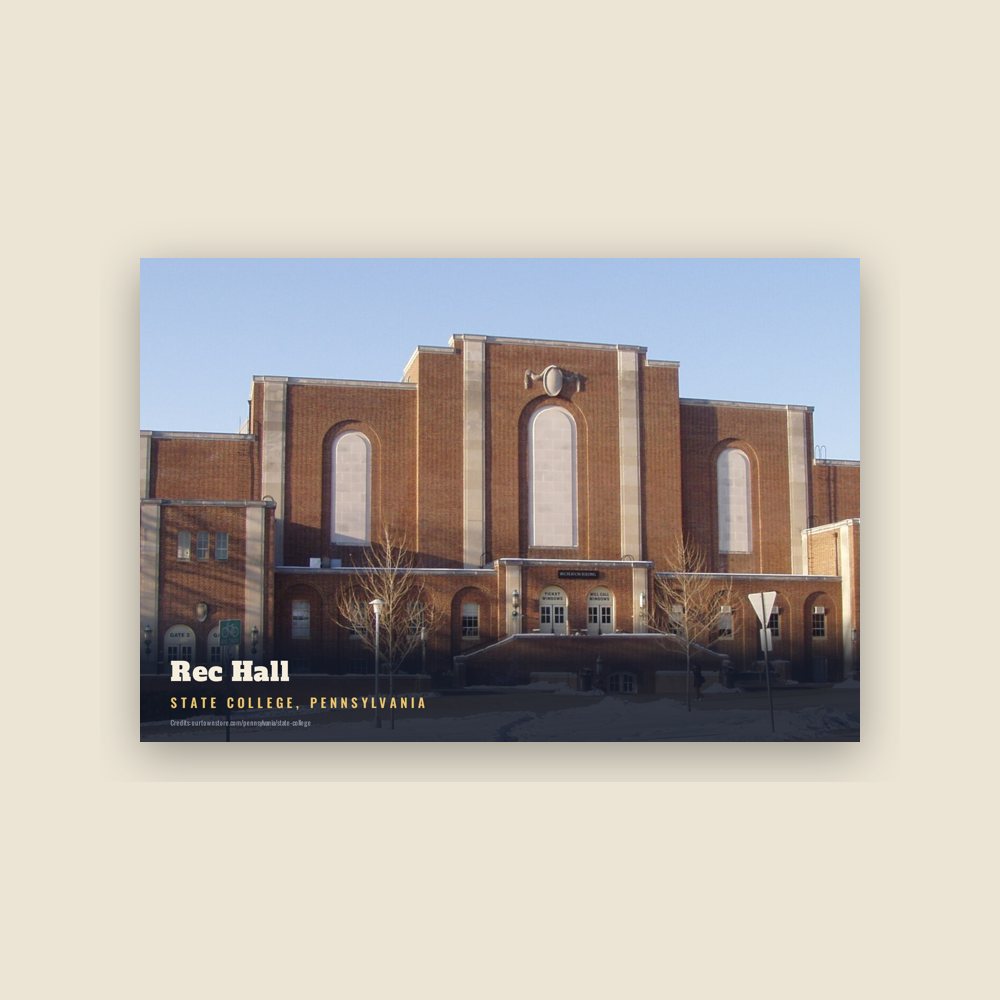
On January 21, 1965, at the height of the civil rights movement, Dr. Martin Luther King Jr. gave a speech on desegregation to an audience of about 8,000 community members and students in Rec Hall.
In 1970, in protest to the Vietnam War, attempts were made by university students to divest money from the Applied Research Laboratory, which produces torpedoes. A sit-in at Old Main led to the arrest of at least 30 people. Protests against the ARL escalated in 1972 when about 2,000 protesters blocking College Avenue and North Atherton Street were met with police in riot gear. The following day more than 5,000 protesters marched to the ARL, which temporarily shut down at the request of the university and Lieutenant Governor Ernest Kline.
In 1973, State College adopted a home rule charter which took effect in 1976; since then, it has not been governed by the state's Borough Code, although it retains "Borough of State College" as its official name.
In 1974, as the railroads in State College were abandoned, the Centre Area Transportation Authority (CATA) was incorporated. CATA began operating bus services from the borough to the surrounding townships, while the Penn State University operated the Campus Loops.
Construction boom
State College remained resistant to the economic shocks of the 2008 Great Recession as it did during the Great Depression. This led to a wave of investment into high-rises and other construction projects in the area. The tallest building in State College, the Fraser Centre, was finished in 2015. There have been several other high-rises built in Downtown State College since the Fraser Centre was completed, and one in the West End.
In 2011 an estimated 10,000 people protested downtown in support of the Penn State head football coach Joe Paterno after he was fired from the team following the Penn State child sex abuse scandal. The protests led to an estimated $200,000 in damages, including the destruction of a WTAJ news van.
Beginning in 2015 the borough council voted to change the name of State College to "City of THON" for 46 hours in honor of THON, the largest student-run philanthropic organization in the world, a tradition that would continue every year since.
On March 20, 2019, State College police officer Jordan Pieniazek shot and killed Osaze Osagie, a 29-year-old man, during a wellness check. An investigation by the state police was passed down to the district attorney of Centre County, Bernie Cantorna, who determined that the shooting was justified. Protests began after the district attorney's report was released on May 8, 2019. On May 31, 2020, thousands took part in a protest downtown against police brutality with an emphasis on the murder of George Floyd and killing of Osaze Osagie. It became one of the largest protests in the county's history. Demonstrations would continue for years, including a 24-hour occupation of the State College Borough municipal building in November 2020 and a march in 2021 outside the Marvin Gardens apartments where Osagie was fatally shot. In 2023, the federal judge for the Middle District of Pennsylvania, Matthew William Brann, dismissed a lawsuit against the borough and police involved. March 20 was declared “Osaze Osagie Day of Remembrance” by the State College Borough in 2023. Osagie's parents established two scholarships, The Osaze's Heart Community Service Scholarship for racially underrepresented State High seniors, and The Osaze Olufemi Osagie Memorial Scholarship for Educational Equity for Penn State students with intellectual and mental health diagnoses.
The borough became the first municipality in Pennsylvania to pass a resolution for a ceasefire in the Gaza war. The measure passed unanimously on December 20, 2023 after months of marches and demonstrations. A copy of the resolution was forwarded to President Joe Biden; senators John Fetterman and Bob Casey Jr.; and representative Glenn Thompson.