Since 1867
A short history of Saxton
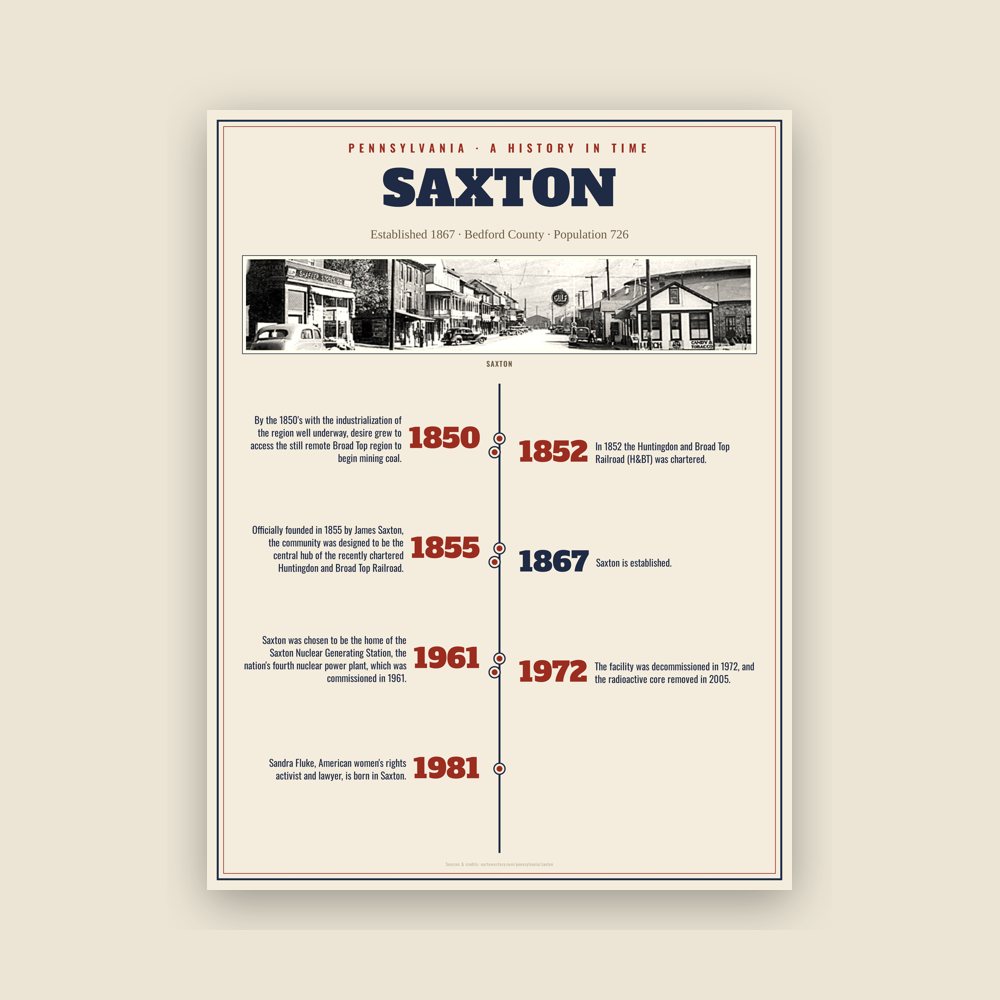
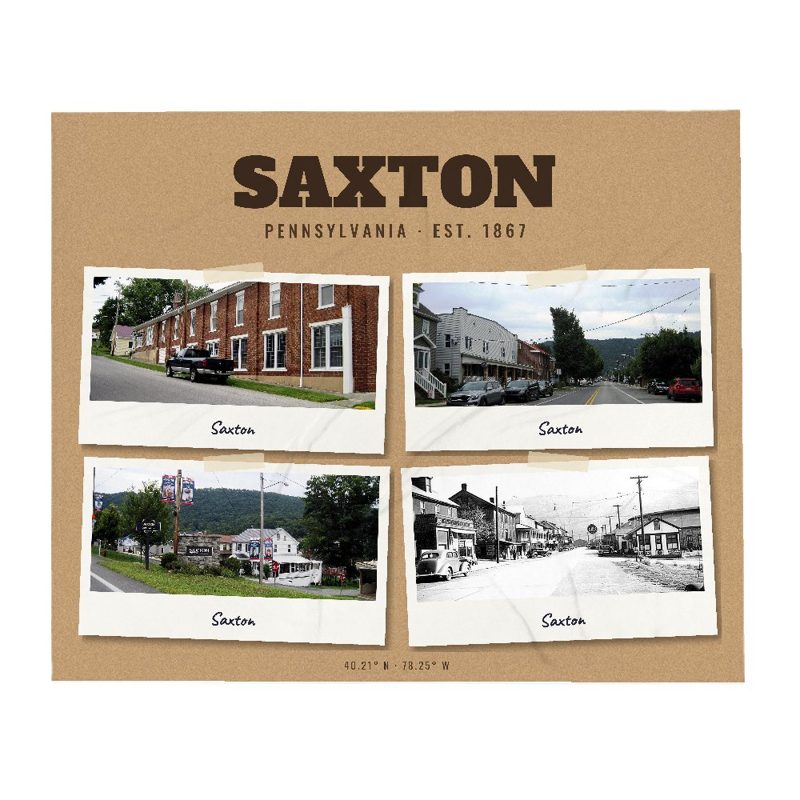
Officially founded in 1855 by James Saxton, the community was designed to be the central hub of the recently chartered Huntingdon and Broad Top Railroad. Despite its remote location, the region had been inhabited for centuries. Before Anglos arrived, Native Americans camped along the shores of the Raystown Branch of the Juniata. They often traveled through the region following the Warrior's Path, a branch of the Great Indian Path that was among the primary north/south routes in the mountains.
As the nascent United States grew and pushed the frontier west, a few settlers began building homesteads, farms, and mills throughout the valley that Saxton would eventually be located in. This followed the construction of Raystown, a fort and trading post that would grow into Bedford. Among the first settlers in the Broad Top area was Sebastian Shoup, who had constructed a homestead and gristmill by the 1780s. Under constant threat of roving bands of hostile Native American tribes, the early settlers constructed a stockade known as Shoup's fort.
Early surveys into the region discovered vast deposits of bituminous coal, iron ore, and limestone. During the early 1800s a number of limekilns and iron furnaces were constructed throughout the area. By the 1850's with the industrialization of the region well underway, desire grew to access the still remote Broad Top region to begin mining coal. In 1852 the Huntingdon and Broad Top Railroad (H&BT) was chartered. Seizing on the opportunity, James Saxton and Joseph Fockler purchased land with the intent of building a community. Thus, Saxton was created, and was intentionally designed to serve as the railroad's central hub. For almost 100 years, the H&BT would ship coal and iron from Saxton to places like Bedford, Huntingdon and Everett. From there it would go on to industrial centers, such as Pittsburgh or Baltimore.
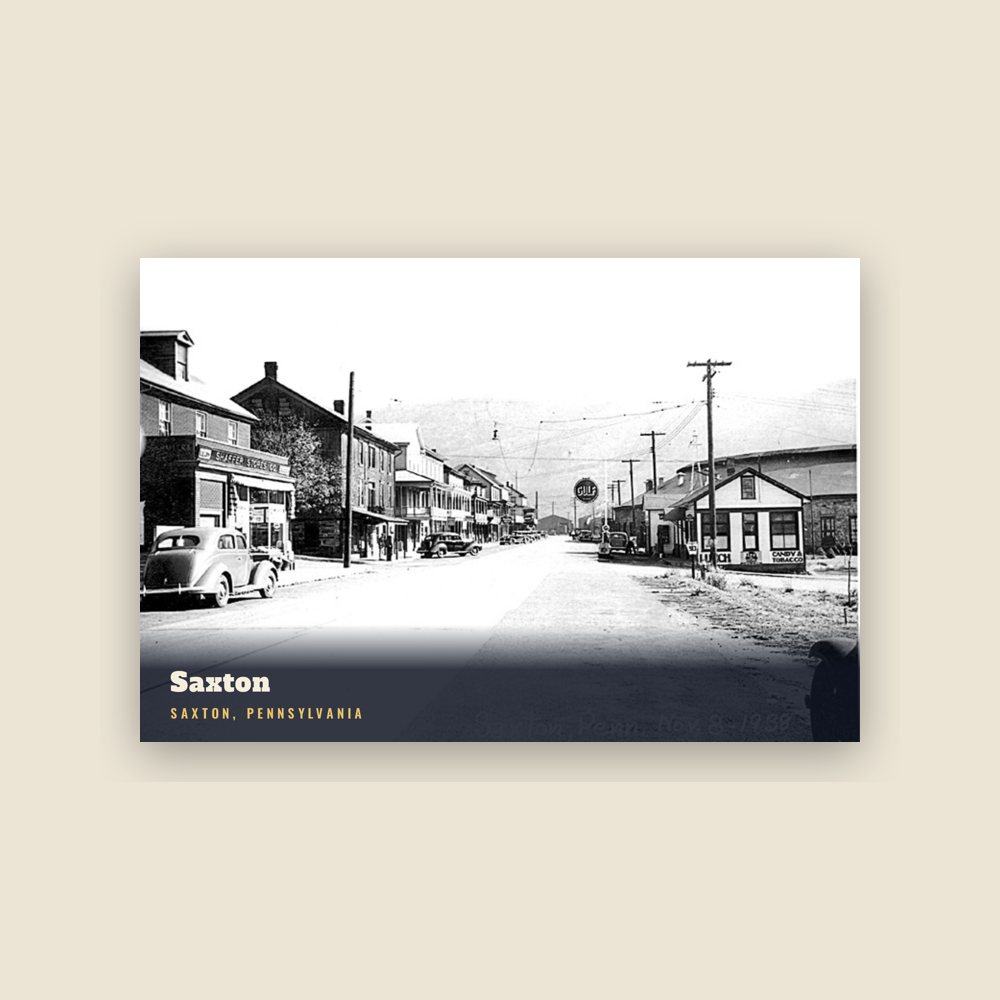
The thriving railroad attracted thousands of workers and their families to the town and surrounding area. In its heyday Saxton had a bowling alley, a toy factory, a candy factory, a coal power plant, dozens of shops and businesses, and even a 7 Up bottling plant. Saxton and the surrounding area were full of industry and other businesses. These included a pig iron furnace, coke ovens, a tannery, brickyards, dairies, and others. However, the prosperity would not last, as the mines began to become exhausted of coal after World War II. This in conjunction with the recession of 1949 caused the railroad to shut down in 1955. Most of the buildings and infrastructure owned by the railroad were abandoned, and has subsequently been salvaged or left to erode away.
Saxton was chosen to be the home of the Saxton Nuclear Generating Station, the nation's fourth nuclear power plant, which was commissioned in 1961. It was one of the first test facilities for peace-time plutonium use, as well as cooling methods that would be used to relieve meltdown situations such as the Fukushima Daiichi nuclear disaster in 2011. The facility was decommissioned in 1972, and the radioactive core removed in 2005.
Adapted (trimmed) from the Wikipedia article Saxton, Pennsylvania, revision 1378605598 by its contributors, licensed CC BY-SA 4.0.