Since 1898
A short history of Monessen
19th century
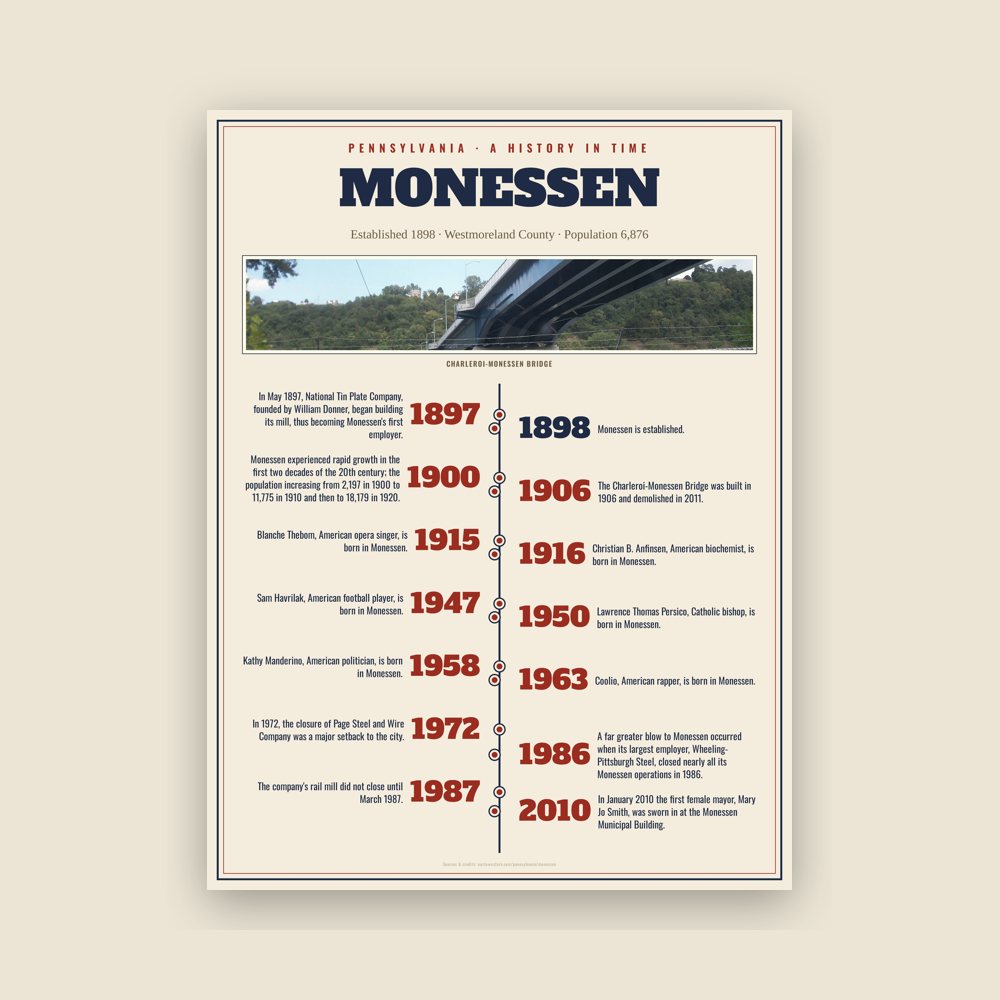
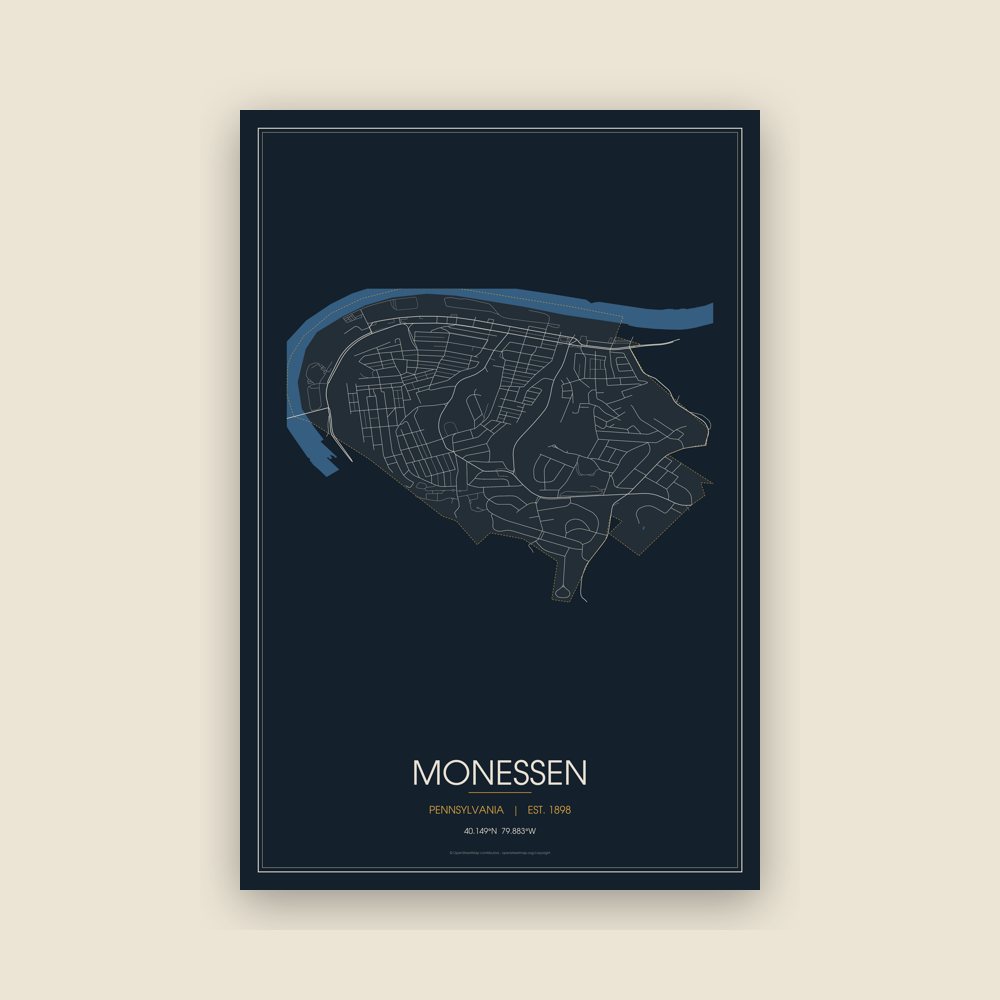
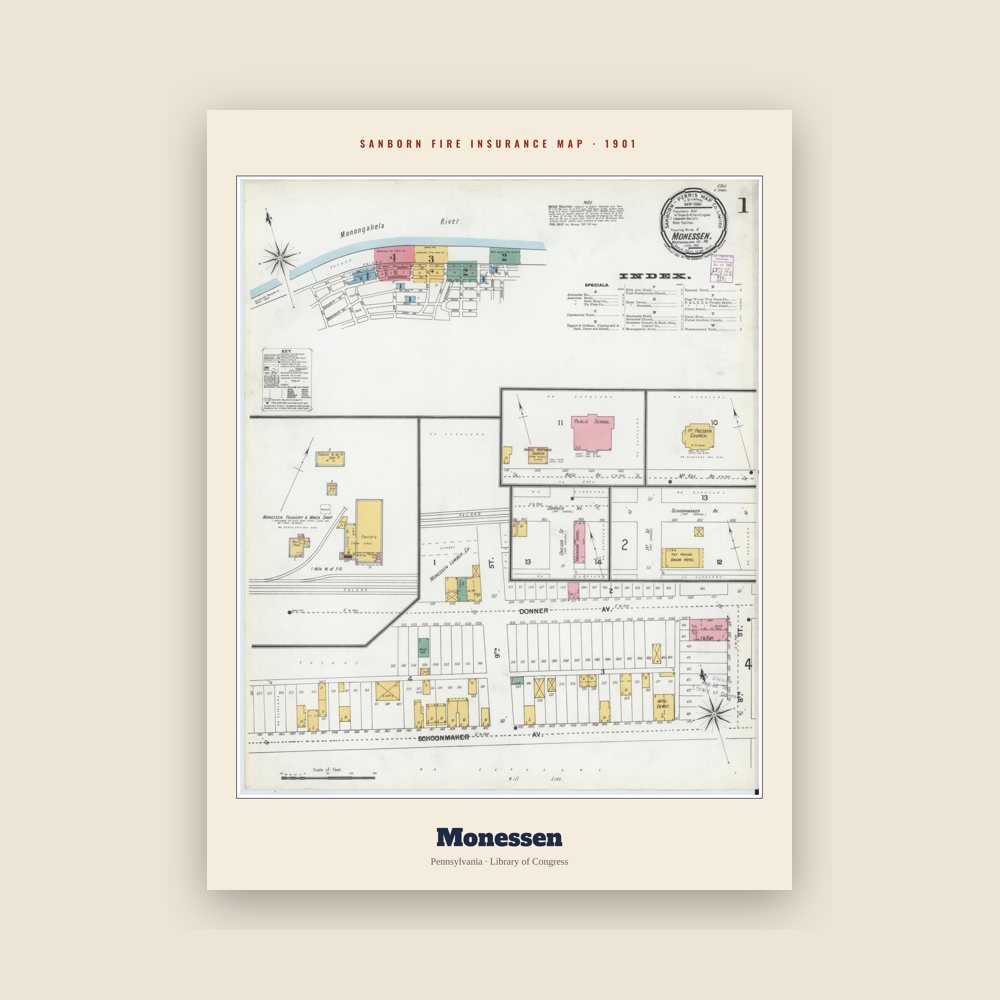
Named for the Monongahela River and the industrial German city of Essen, Monessen was created by land speculators fairly late in the history of the Mon Valley, after neighboring towns had already been settled. The East Side Land Company bought land from various farmers, laid out the streets, and then sold the lots to prospective residents and employers. James M. Schoonmaker, who made his fortune in coke, owned a controlling interest in the land company. Other investors in the land company who were also memorialized in street names include Philander C. Knox, James H. Reed, H. Sellers McKee, George O. Morgan, and George B. Motheral. In May 1897, National Tin Plate Company, founded by William Donner, began building its mill, thus becoming Monessen's first employer. Sales of lots began on July 27, 1897, for the general public and other employers. Monessen became a borough on September 3, 1898.
Read the full history
20th century
Monessen experienced rapid growth in the first two decades of the 20th century; the population increasing from 2,197 in 1900 to 11,775 in 1910 and then to 18,179 in 1920.
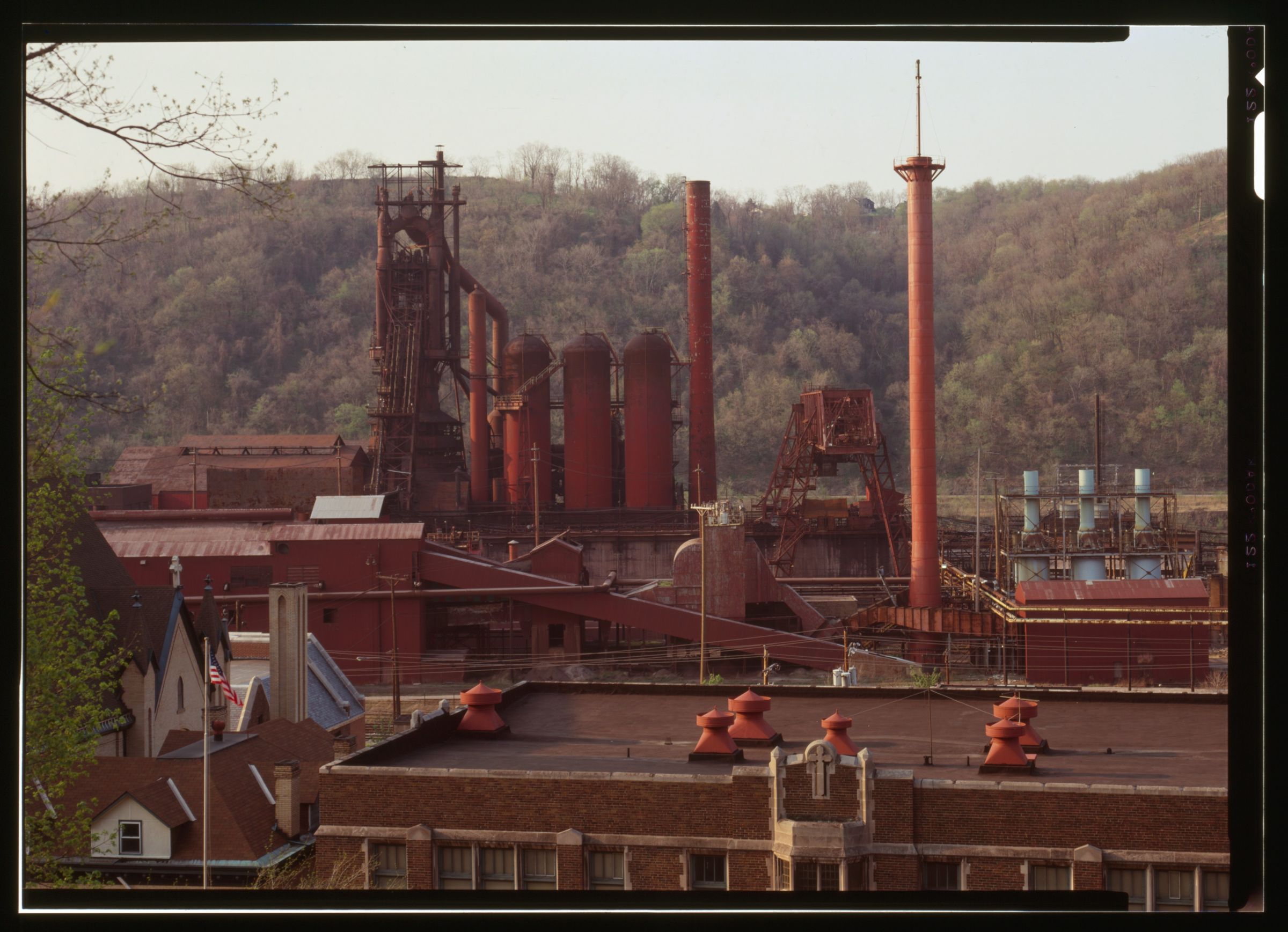
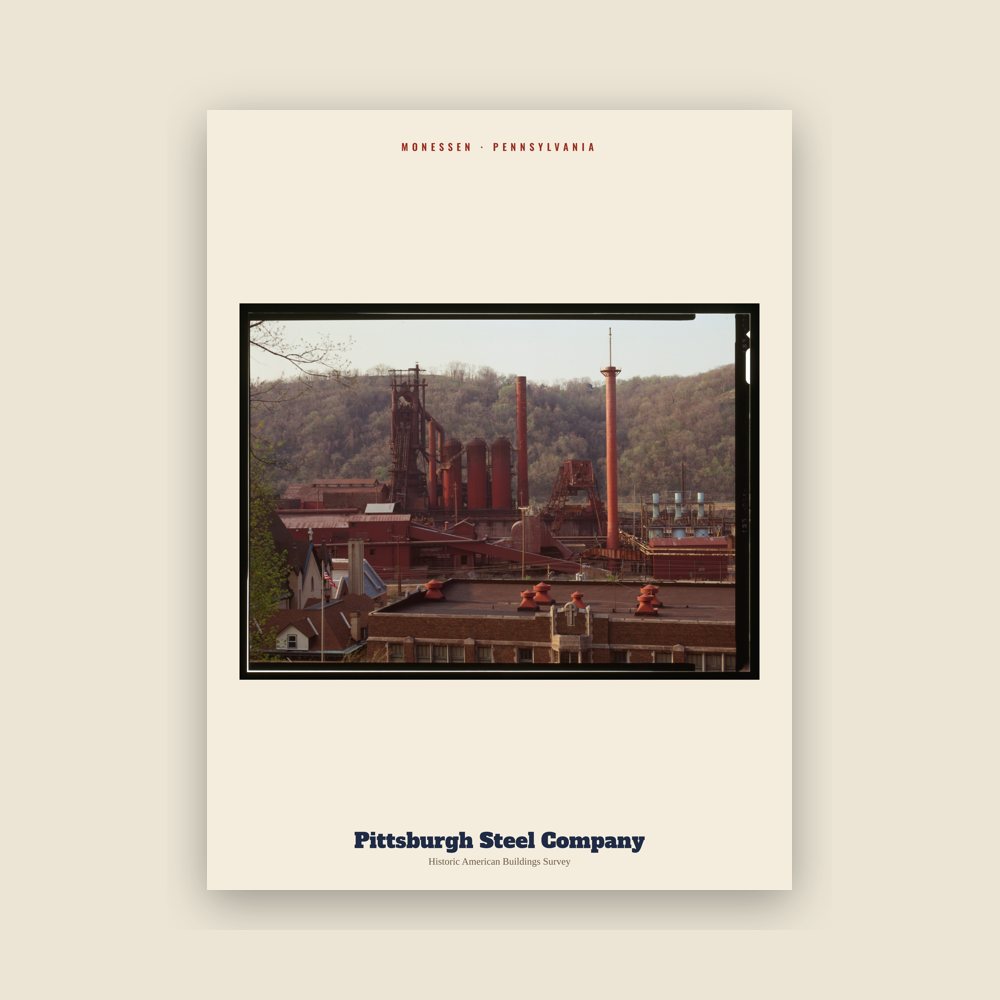
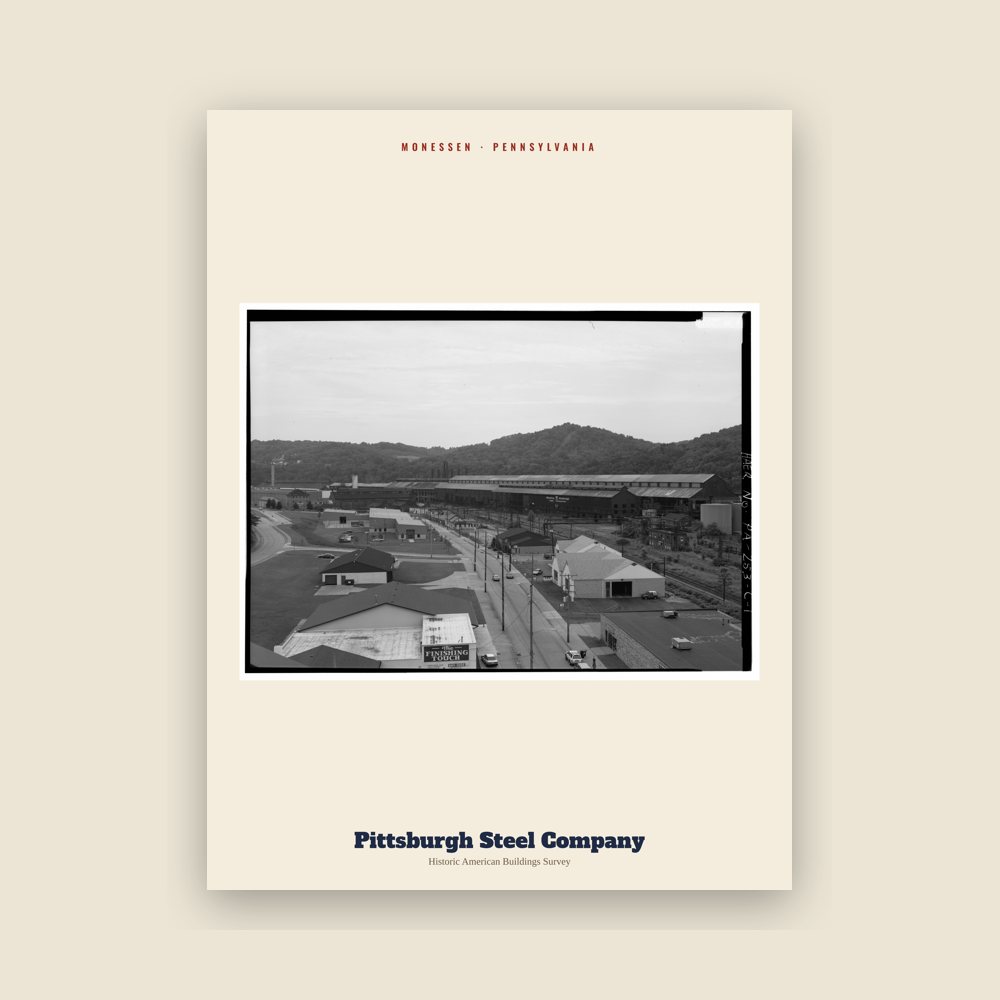
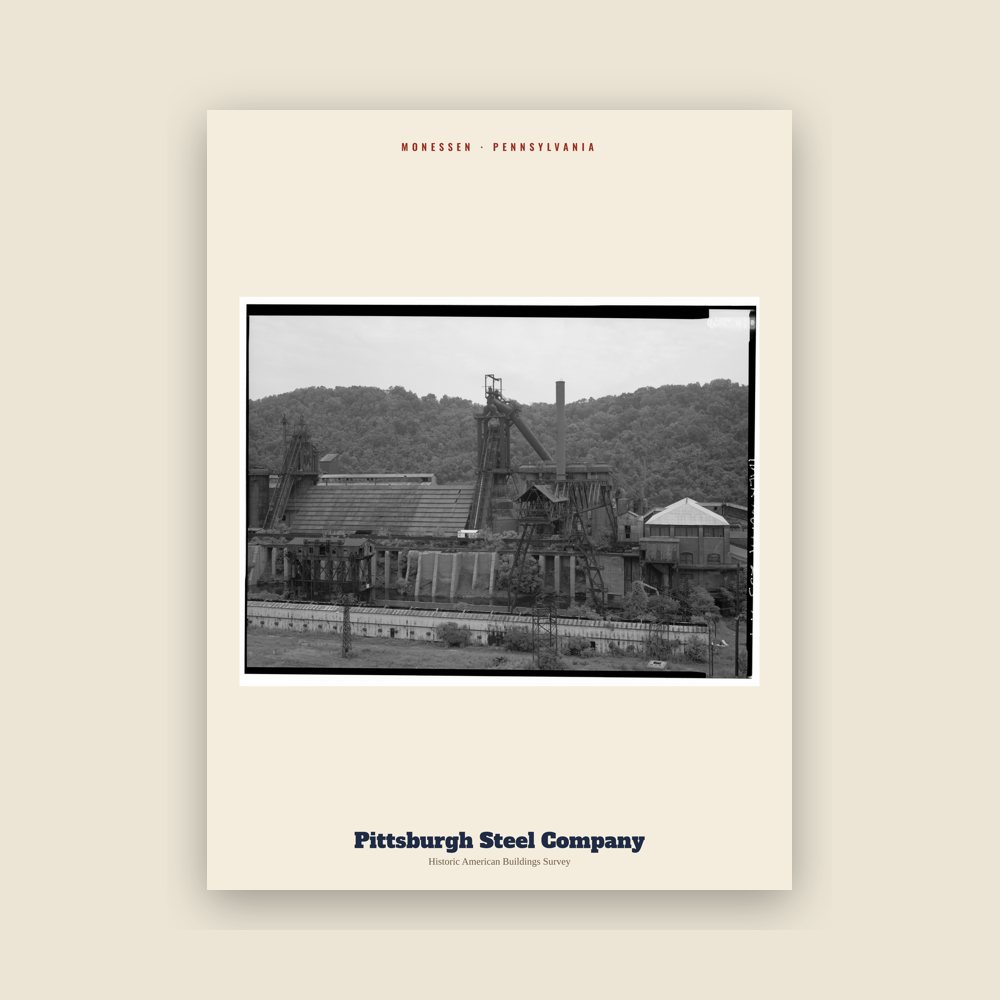
While there were many companies operating in Monessen, the largest employer was Pittsburgh Steel Company, later renamed Wheeling-Pittsburgh Steel. Pay often was determined by ethnic background. For example, a Welsh immigrant would be paid more than an Italian immigrant. A normal workweek was 84 hours with seven-day work weeks of 12 hours a day. Employers did not adopt the eight-hour workday until the 1920s.
Beginning in the middle to late 1960s, the region's manufacturers, especially the steel industry, found it harder to compete, which led to employee layoffs. In 1972, the closure of Page Steel and Wire Company was a major setback to the city. A far greater blow to Monessen occurred when its largest employer, Wheeling-Pittsburgh Steel, closed nearly all its Monessen operations in 1986. The company's rail mill did not close until March 1987. The mill's closure marked the end of an era in Monessen's history.
The city has made efforts for several years to clean up abandoned properties in hopes of revitalizing the city. In January 2010 the first female mayor, Mary Jo Smith, was sworn in at the Monessen Municipal Building. Older residents know the steel mills will not be returning to the area. Younger residents barely remember the mills or are even unaware of the city's industrial past. "I remember when they tore the blast furnaces down" in the mid-1990s, said one resident. "It was a big deal. My dad took me. I was 5."
21st century
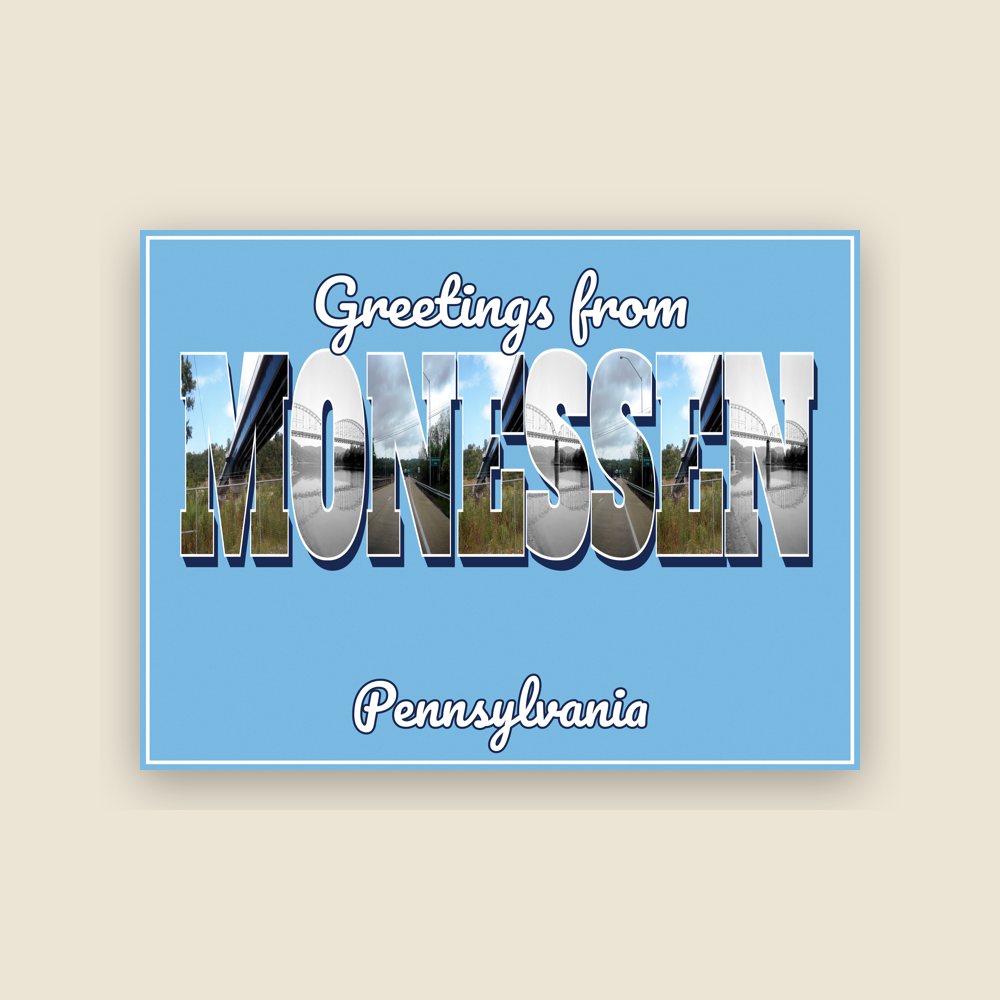
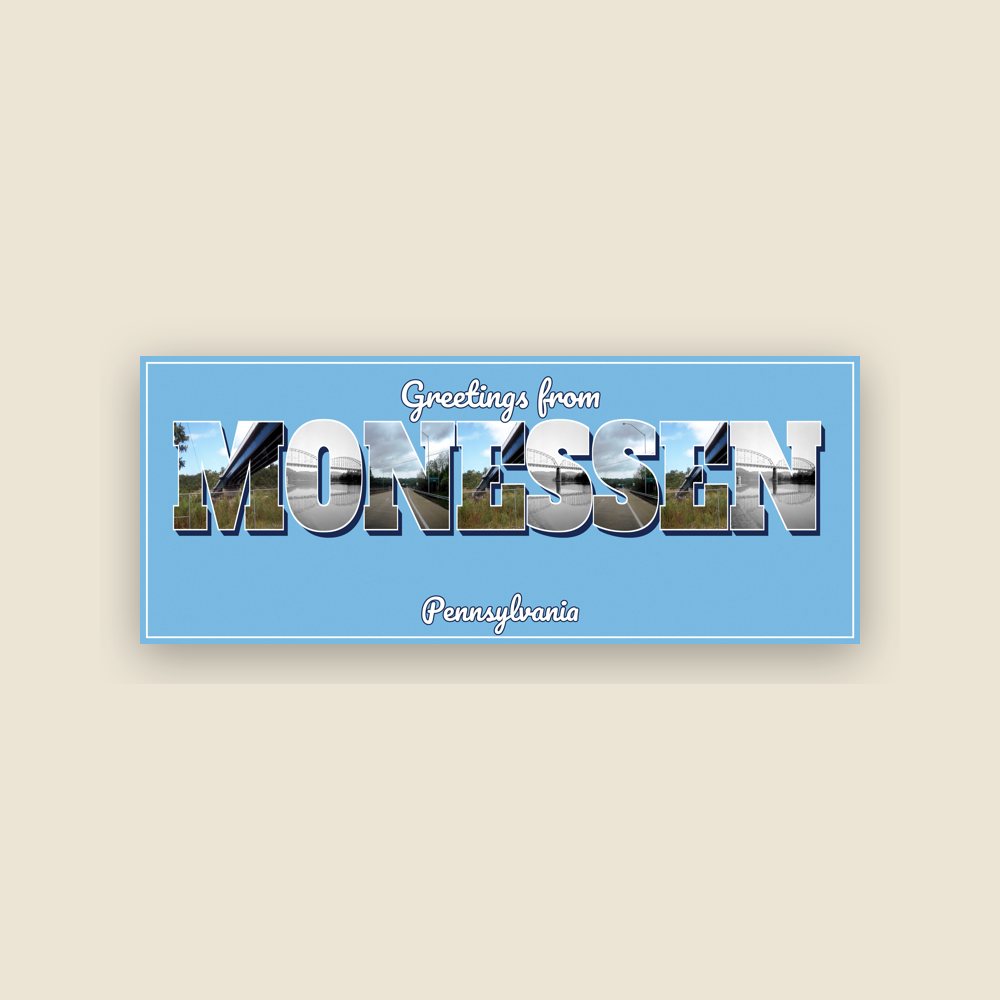
The Charleroi-Monessen Bridge was built in 1906 and demolished in 2011. It was listed on the National Register of Historic Places in 1988 and has yet to be removed from the register. Monessen has many military veterans who fought in WWI, WWII, Korea, Vietnam and the Gulf wars. There are many military war memorials and veterans plaques in the city. Some of the well known ones are the WWI Lady Victory Memorial in the Eastgate section of town, the Honor Roll at the City Park that includes all the names of those from Monessen who served in the military, the WWII Sherman Tank Memorial in the City Park as well as the Capt John Onderko Memorial Walking Track, The Lt Col Edward D'Alfonso Memorial Amphitheater, SP4 Robert Lhota Memorial Picnic Shelter, George Milika Memorial Picnic Shelter and the Anthony Madison Memorial Picnic Shelter. Monessen boasts a War Veterans Memorial Trust to maintain all these memorials in perpetuity. Monessen was home to the following veterans organizations; the Monessen Veterans Council, Disabled American Veterans post 131, Veterans of Foreign Wars Post 1190 and American Legion Post 28.
Adapted (trimmed) from the Wikipedia article Monessen, Pennsylvania, revision 1381435972 by its contributors, licensed CC BY-SA 4.0.
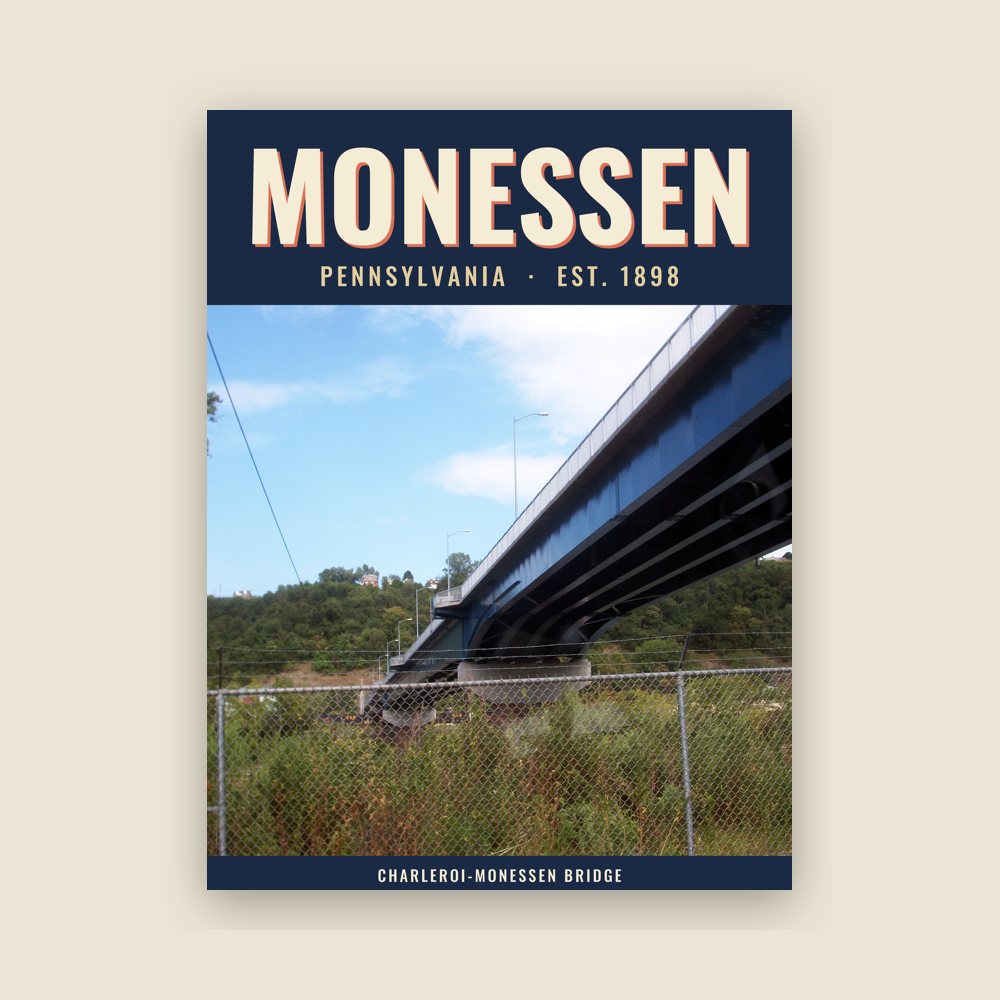
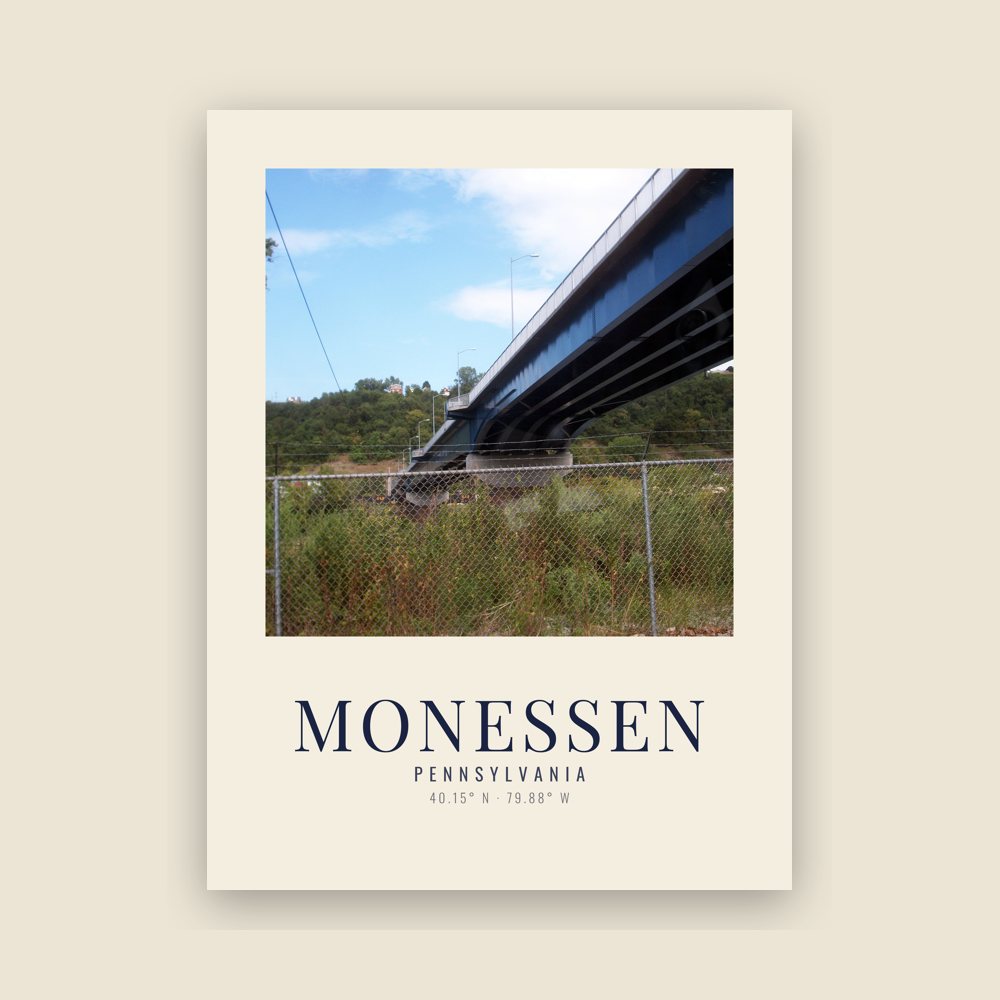
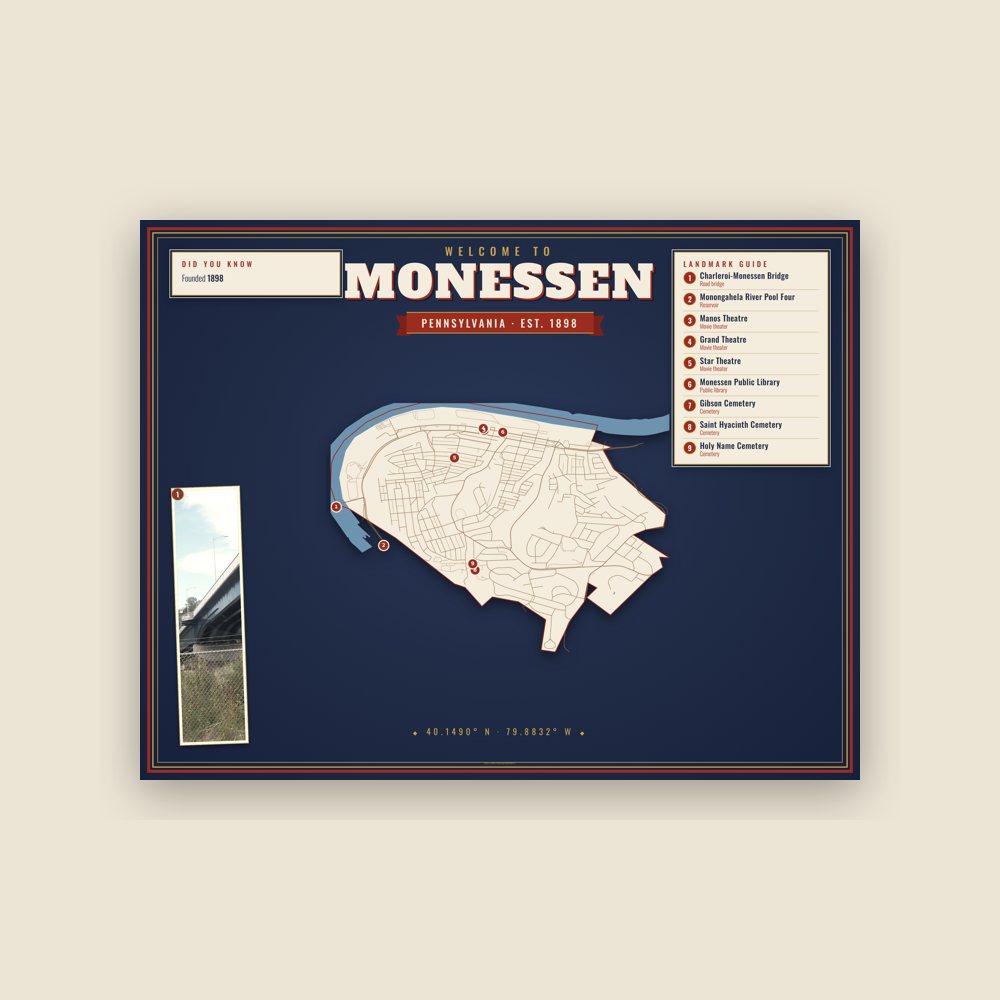
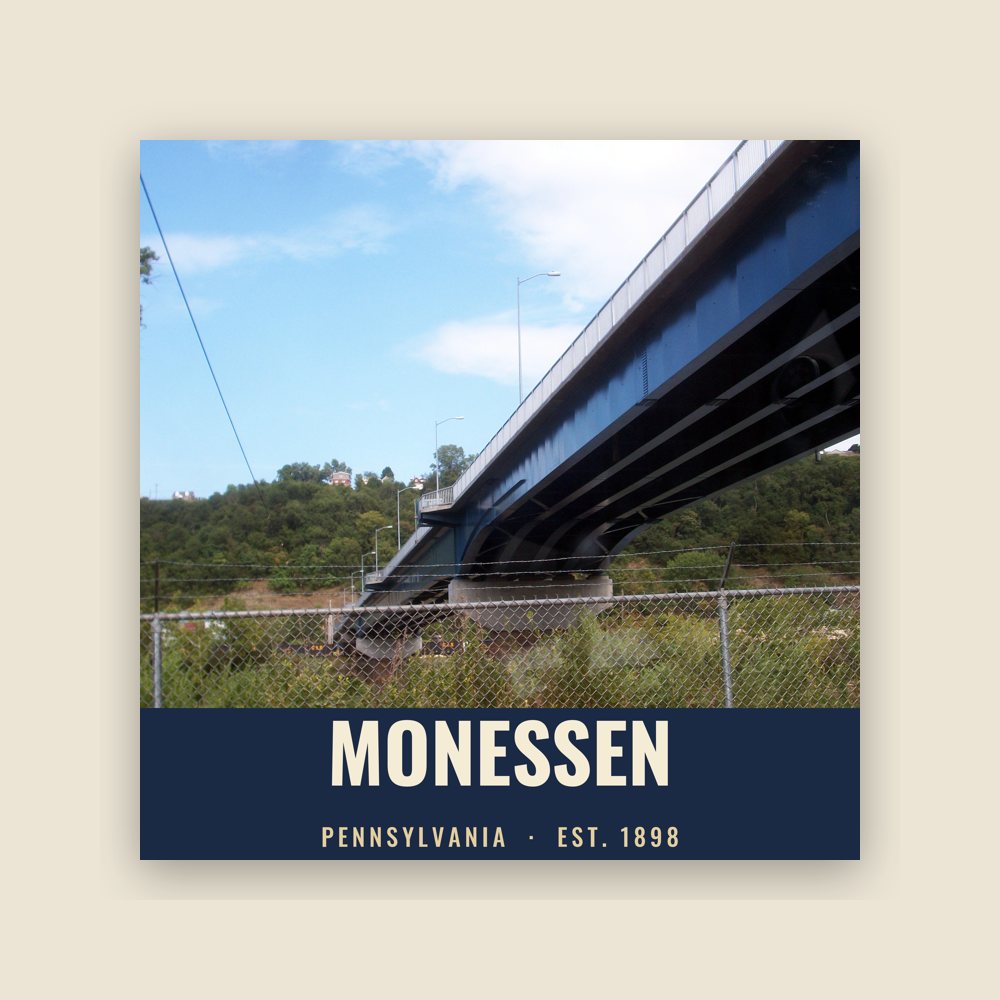
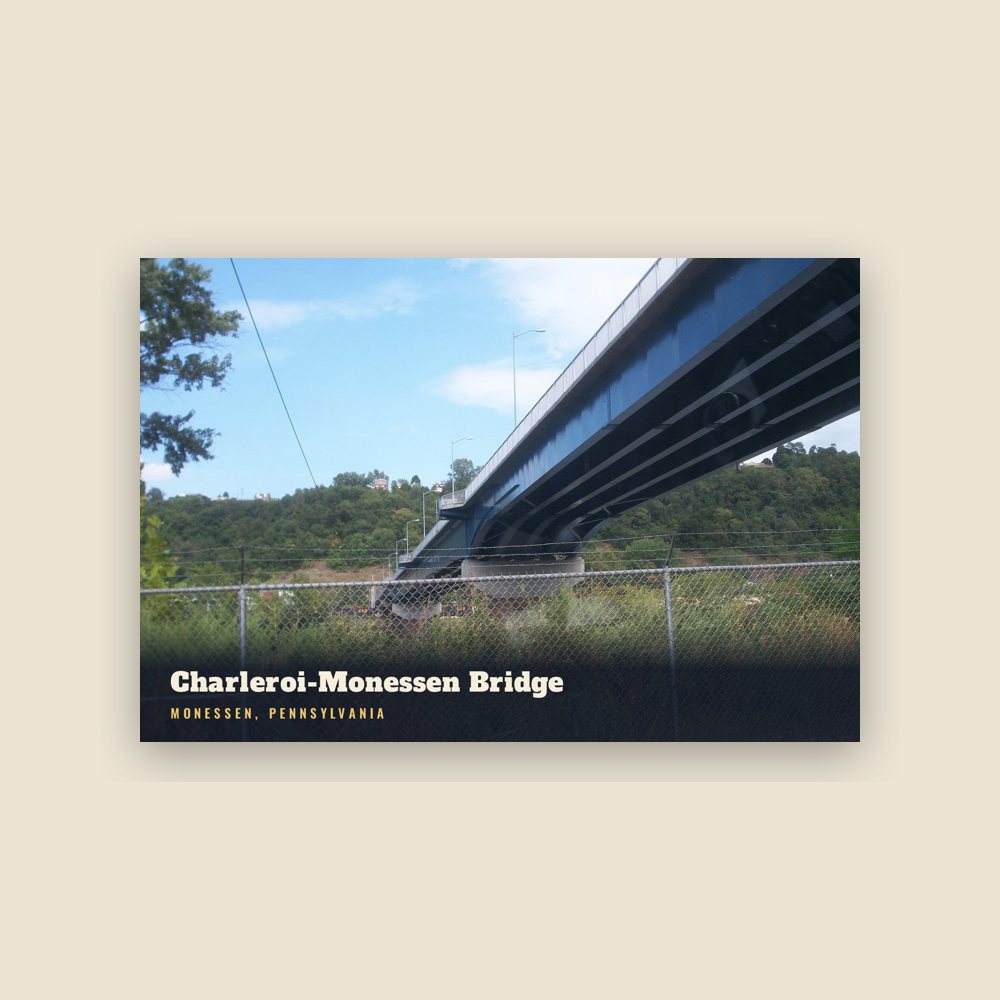
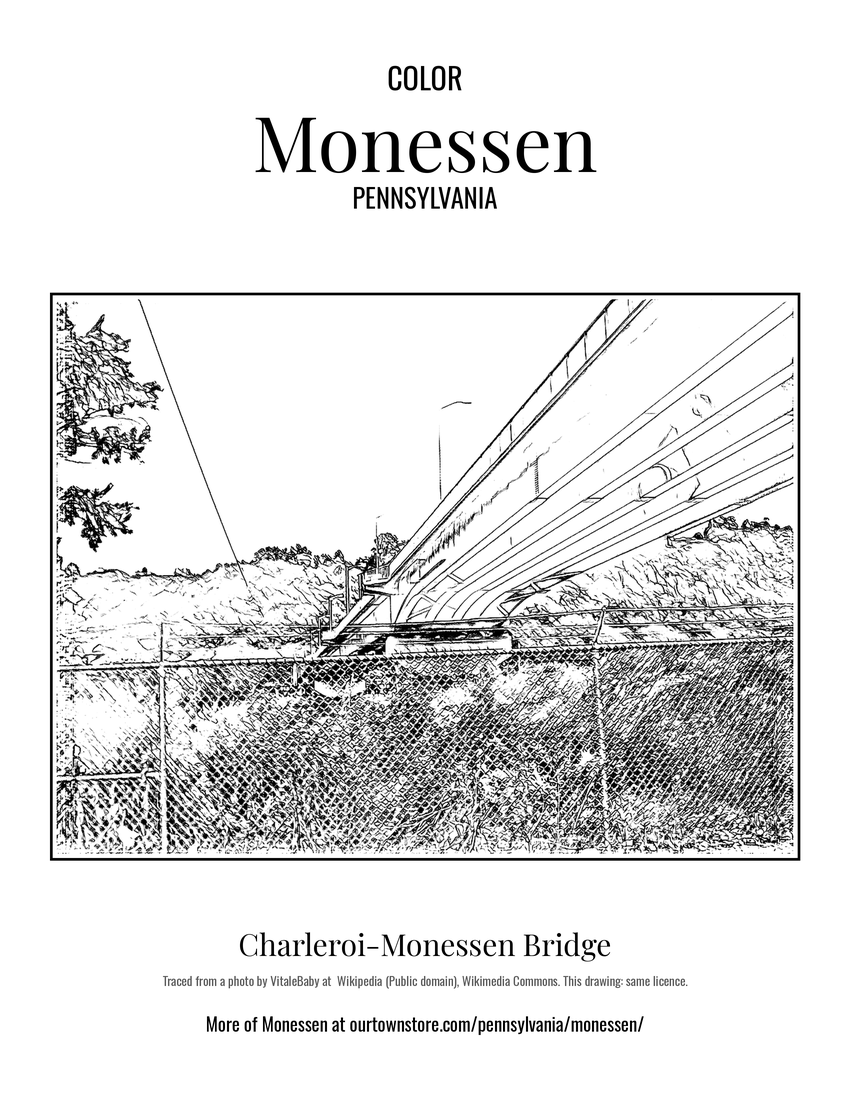 Charleroi-Monessen Bridge
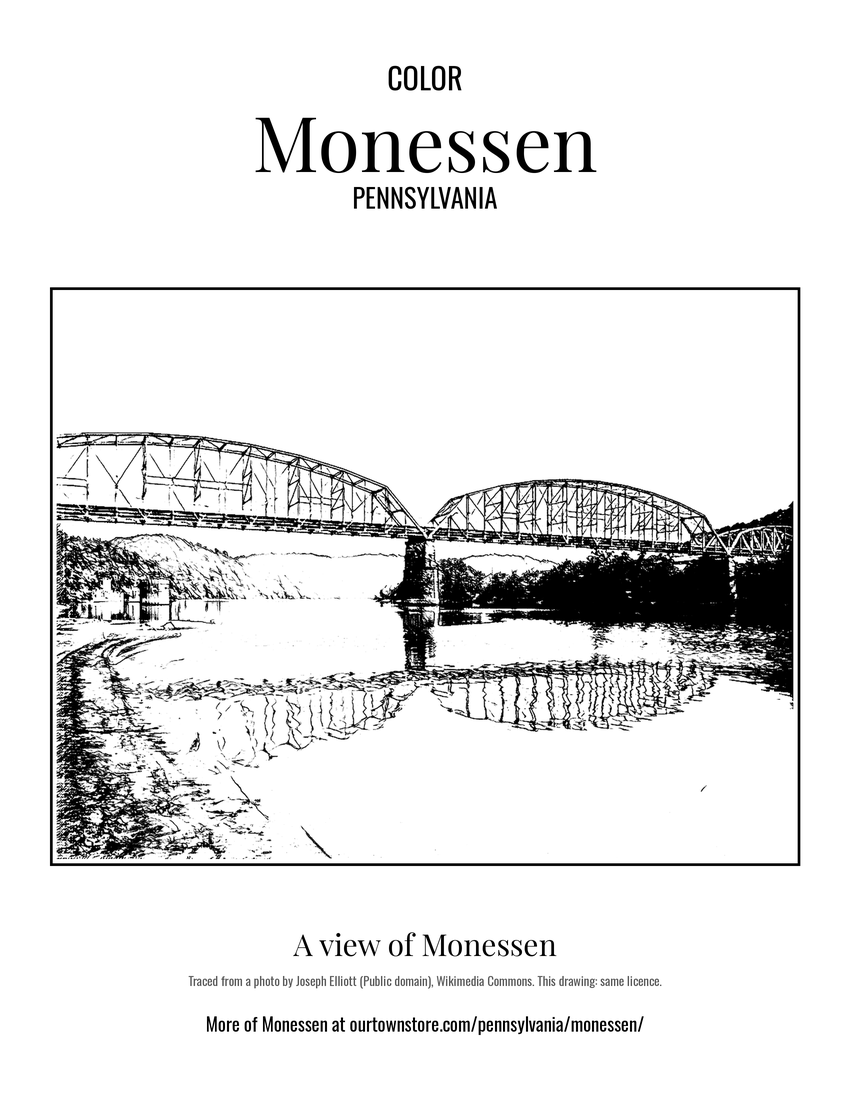 A view of Monessen
 A view of Monessen