Before white settlement, the Waldport area was home to the Alsi (Alsea) people, whose name for the bay and river, Alsi, meaning "peace", gave the waterway its name. During winter, extended families lived in large plank houses around the lower Alsea estuary, traveling seasonally between Seal Rock and Tenmile to fish, hunt, and gather shellfish and plants. The Alsea were part of the broader Yakonan-speaking language group along with the Yaquina, Yachats, Siuslaw, and Lower Umpqua peoples.
Following Franklin Pierce's 1855 executive order establishing the Coast Indian Reservation, Joel Palmer, Oregon's Superintendent of Indian Affairs, created the Alsea Subagency on Alsea Bay in September 1856 to administer tribes between Coos Bay and the Alsea River; the subagency, built by Indian laborers, operated until 1875. In 1861, the U.S. Army forcibly relocated the Alsea, Siuslaw, and a small band of Lower Umpqua people to the subagency, and Congress subdivided the Coast Reservation in 1865, creating a separate Alsea Reservation before eliminating it entirely a decade later, opening the area to non-Native settlement. Descendants of these tribes are today represented by the Confederated Tribes of Siletz Indians.
Read the full history
Settlement and founding (1879–1911)
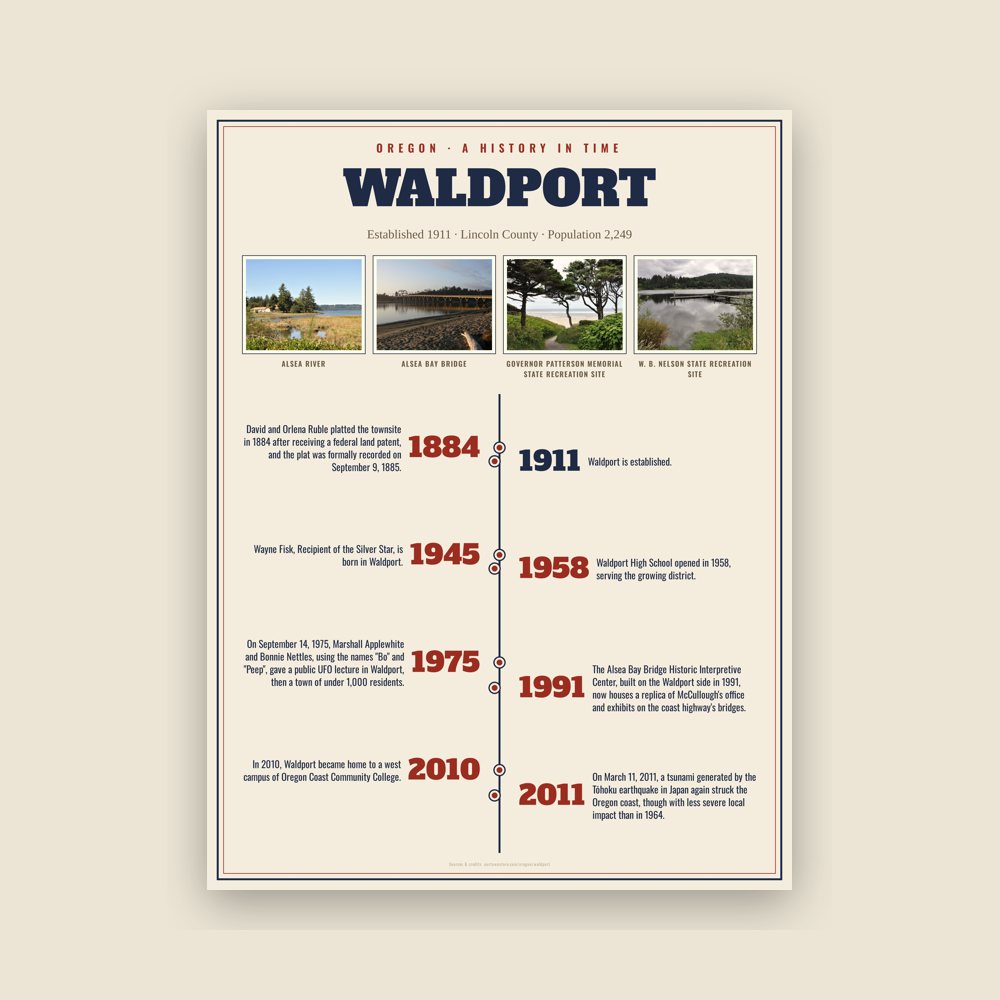
Non-Native settlement began in 1879 when David Ruble purchased squatter's rights from Lint Starr for $300, covering land that includes present-day "Old Town." Early arrivals reached the coast by floating supplies and building materials down the Alsea River by canoe, and salmon fishing quickly became central to the young settlement's economy. Many early settlers were of German descent, inspiring the town's name, wald (forest) plus port, reflecting its coastal location. David and Orlena Ruble platted the townsite in 1884 after receiving a federal land patent, and the plat was formally recorded on September 9, 1885. By the time Waldport incorporated in 1911, it had a dozen businesses and roughly 150 residents.
In 1910, the Port of Alsea district was formed, encompassing Waldport, Yachats, and Tidewater; it continues to hold much of the Alsea estuary in public trust and manage boating and fishing access on the bay.
Timber, fishing, and the coming of the highway
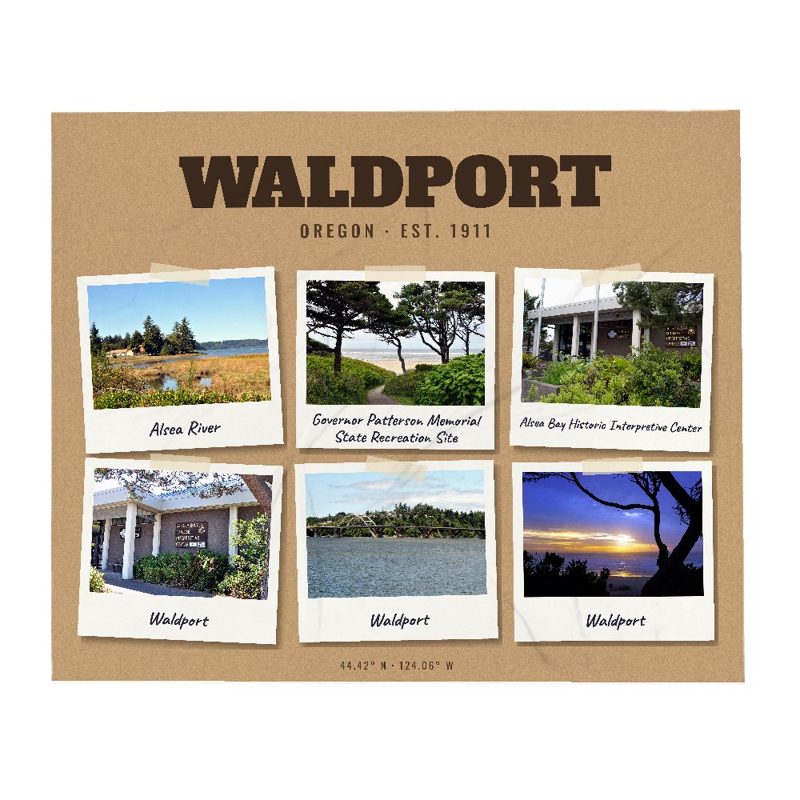
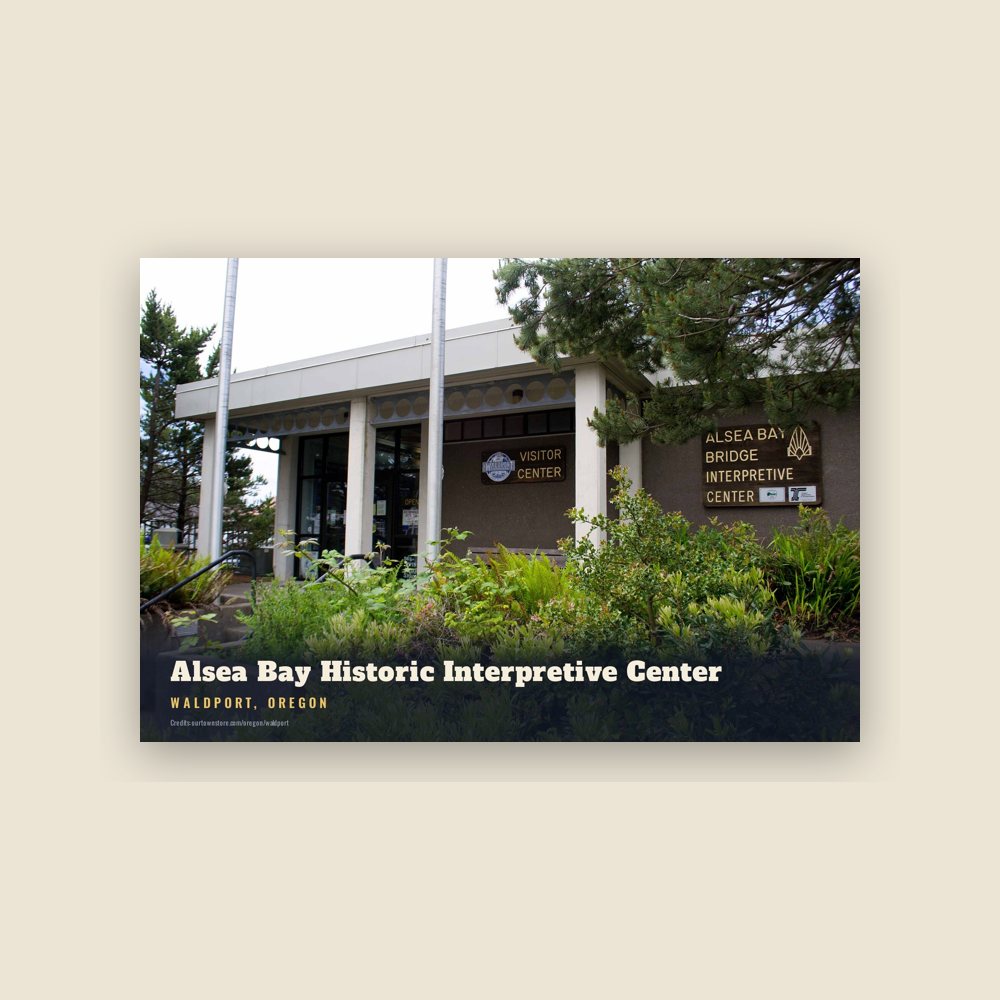
For its first several decades, Waldport's economy centered on salmon canneries, sawmills, dairying, and logging, with forest products remaining central to the local economy for a century. The town's isolation eased considerably in the 1930s with the construction of U.S. Route 101 (the Oregon Coast Highway) and its associated bridges. The 3,011-foot Alsea Bay Bridge, funded by the federal Public Works Administration, took three years to build and opened to traffic in 1936; it was one of five PWA-funded coastal bridges (also spanning Coos Bay, the Siuslaw River, the Umpqua River, and Yaquina Bay) that completed the Oregon Coast Highway, all designed by state bridge engineer Conde McCullough in his signature Art Deco style. Coastal tourism in Oregon jumped by more than two-thirds the year after the five bridges were finished, transforming Waldport's economy. Corrosion from the marine environment eventually forced the bridge's replacement; a new span, designed by HNTB, was built between 1988 and 1991, and the original McCullough bridge was subsequently demolished. The Alsea Bay Bridge Historic Interpretive Center, built on the Waldport side in 1991, now houses a replica of McCullough's office and exhibits on the coast highway's bridges.
World War I and the spruce boom (1917–1919)
Before Camp Angel's arrival, Waldport had already hosted a wartime military logging effort. In 1917, the U.S. Army created the Spruce Production Division to supply aircraft-grade Sitka spruce for the war effort after a labor strike led by the Industrial Workers of the World threatened the region's lumber supply. Over 3,370 soldiers were assigned to the division's Yaquina District, which included operations around Waldport, and in the summer of 1918 division soldiers built roads and rail lines to transport spruce logs to sawmills. Soldiers working with the Warren Spruce Company, organized in February 1918 to handle logging in the area, built a rail line and at least one bridge over a mile long to haul logs out of the heavily timbered Blodgett Tract between Waldport and Yachats, letting loggers transport whole logs by rail rather than wastefully splitting them by hand. When the war ended on November 11, 1918, construction of the spruce railroads halted immediately, and much of the division's equipment was later auctioned off cheaply— a windfall that gave established lumber companies a head start on postwar coastal logging using the newly built railroads and bridges. The rail line born of this wartime effort went on to serve Waldport-area logging operations into the 1930s.
Camp Angel and the Fine Arts Group (1942–1945)
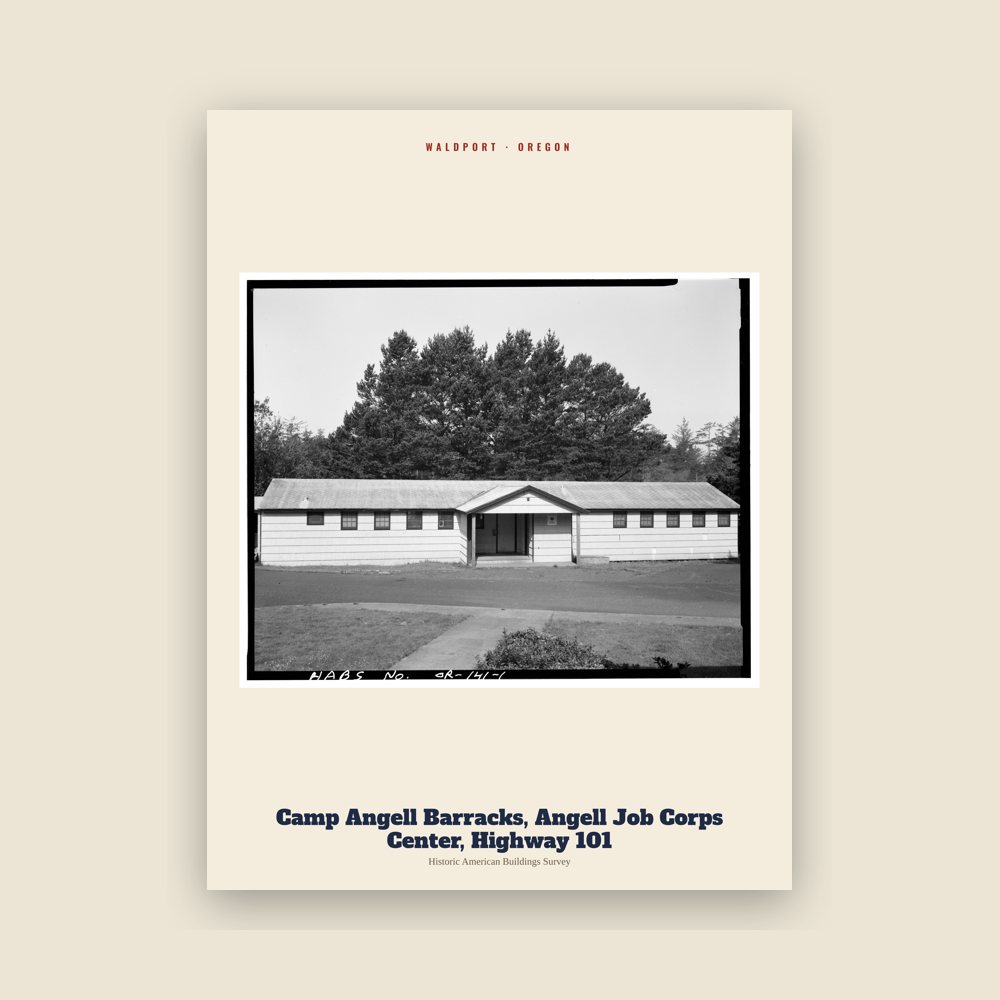
Camp Waldport, or Civilian Public Service Camp No. 56 was one of three conscientious objector camps in Oregon during World War II, established in 1942 and administered by the Mennonite Central Committee, home to the camp's Fine Arts Group. Internees' primary work was reforesting the Blodgett Peak Burn, land that had been heavily logged and later devastated by wildfire; workers replanted roughly 9,000 acres of burned Blodgett-tract forest, laboring 8 ½-hour days, six days a week, planting seedlings at eight-foot intervals even through 100 inches of winter rain. The work was dangerous. Five men died at the camp over its three years of operation, out of nineteen deaths across the entire CPS camp system, and Waldport was the only camp in the system located within the wartime coastal blackout zone.
In their off hours, camp members built a small but influential arts community. Camp internees included several poets and artists later linked to the Beat Generation and San Francisco Renaissance, among them Kemper Nomland, William Eshelman, Kermit Sheets, painter Morris Graves, and poets William Everson, Glen Coffield, George Woodcock, and Kenneth Patchen, along with poet William Stafford, who was interned there from 1942 to 1946. In 1943, Everson, Nomland, Sheets, and Eshelman co-founded the camp's in-house press, Untide Press, which published poetry volumes by Coffield, Everson, Patchen, and others in an inexpensive, accessible format. Camp Angel's Fine Arts Program, unique within the CPS system, staged original plays and produced hand-printed books throughout its operation, work later credited with helping seed the countercultural arts scenes of the following two decades.
Postwar growth and the 1964 tsunami
Waldport's economy boomed alongside the rest of the Oregon coast's timber industry after 1945, as sawmills expanded to meet heavy demand from California's construction market through the 1950s and 1960s. Fishing and dairying remained active alongside logging, and the community continued to rely on salmon canneries and small sawmills through the mid-20th century. Waldport High School opened in 1958, serving the growing district.
On the evening of March 27, 1964, a magnitude 9.2 earthquake off the coast of Alaska— the most powerful ever recorded in North America— sent a tsunami surging into the Oregon coast several hours later. In Waldport, the water in Alsea Bay first drained out dramatically before a series of surges over roughly twelve hours tore loose docks and boats and left capsized hulls scattered in the bay. Logs, mud, and debris driven inland blocked sections of Highway 101 near Waldport, requiring bulldozers to clear the roadway, and at least two motels near the water were flooded. The area between Waldport and Yachats suffered some of the worst damage on the central Oregon coast; statewide, the tsunami killed four children near Newport, among the few tsunami-related deaths recorded in Oregon history.
By the 1970s and into the 1980s, mechanization, corporate consolidation, and shrinking timber inventories brought a slow contraction to the coastal logging industry that had sustained Waldport for a century, a decline that accelerated with mill closures across the Oregon coast beginning in the late 1970s.
Heaven's Gate lecture (1975)
On September 14, 1975, Marshall Applewhite and Bonnie Nettles, using the names "Bo" and "Peep", gave a public UFO lecture in Waldport, then a town of under 1,000 residents. Roughly 200 people attended the meeting at the Bayshore Inn, advertised by flyers reading "UFOs—Why they are here," and Applewhite and Nettles told the room that a spaceship would soon arrive to carry believers to a "next evolutionary level." Shortly afterward, roughly 20 Waldport-area residents left with the pair, most first traveling to a gathering in Grand Junction, Colorado; accounts of the exact number vary between 20 and 23 in contemporary and later reporting. The group would later become known as Heaven's Gate; the episode ended in the mass suicide of 39 cult members in Rancho Santa Fe, California, on March 26, 1997, timed to the closest approach of Comet Hale–Bopp. In September 2025, on the 50th anniversary of the Waldport lecture, three early followers who survived the group returned to Waldport's Alsi Resort, the same building, under a different name, where the original 1975 meeting was held, to publicly share their accounts for the first time.
Late 20th and early 21st-century Waldport
As timber employment declined through the 1980s and 1990s, tourism and retirement migration increasingly shaped Waldport's economy and population. The city's population grew nearly 25 percent during the 1990s, and by the 2010s roughly a third of residents were 65 or older, reflecting a broader shift toward retirees drawn by the coast's scenery and slower pace of life. In 1988, construction began on a replacement for the aging, corrosion-damaged 1936 Alsea Bay Bridge; the new span opened in 1991, and the original McCullough-designed bridge was subsequently demolished, with the Historic Alsea Bay Bridge Interpretive Center opening that same year to preserve its memory. In 2010, Waldport became home to a west campus of Oregon Coast Community College. On March 11, 2011, a tsunami generated by the Tōhoku earthquake in Japan again struck the Oregon coast, though with less severe local impact than in 1964. Today, tourism, small business, and education anchor Waldport's economy, with commercial fishing through the nearby Newport port group remaining a significant regional industry even as the sawmills and canneries that once defined the town have largely disappeared.
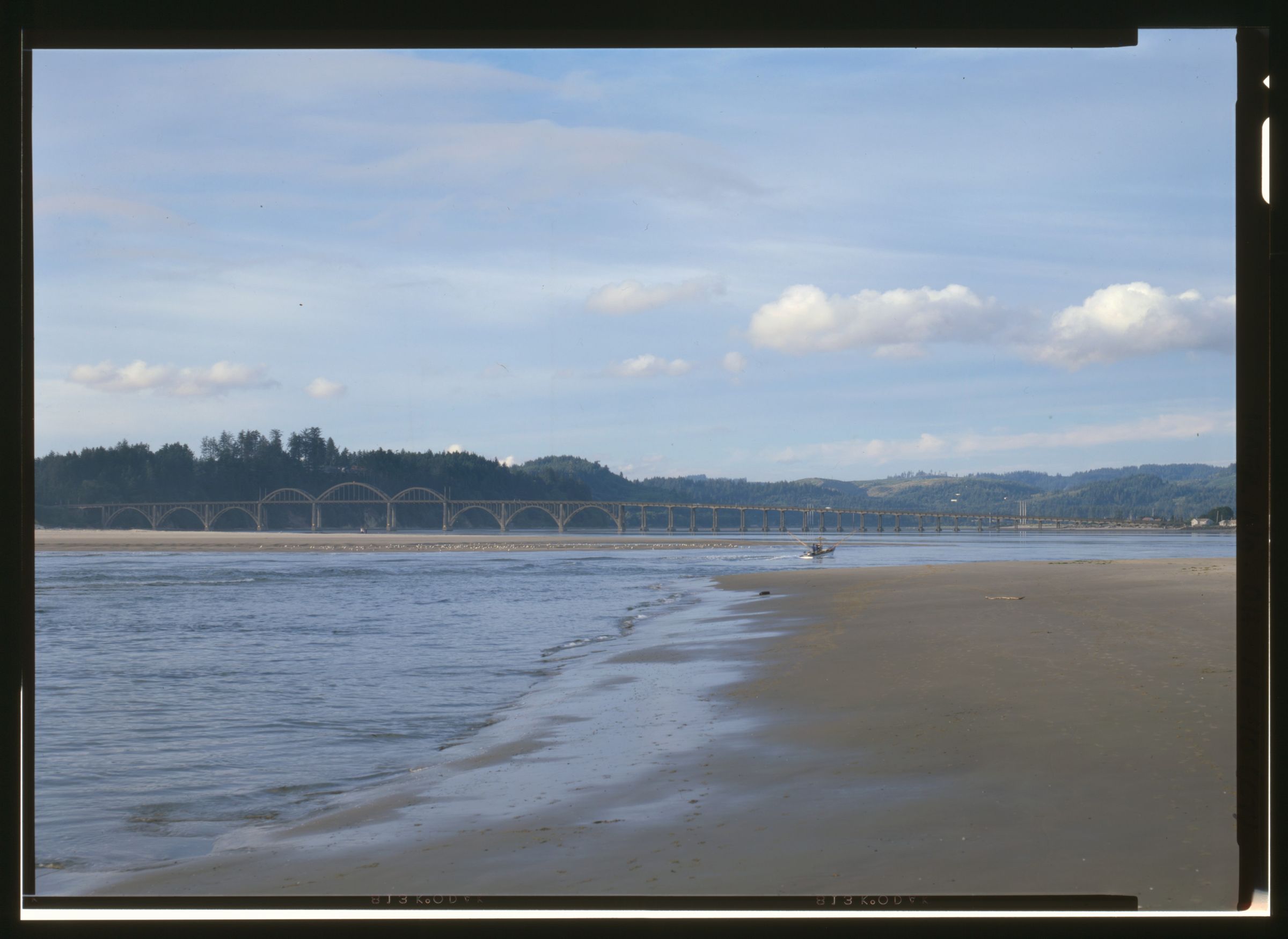
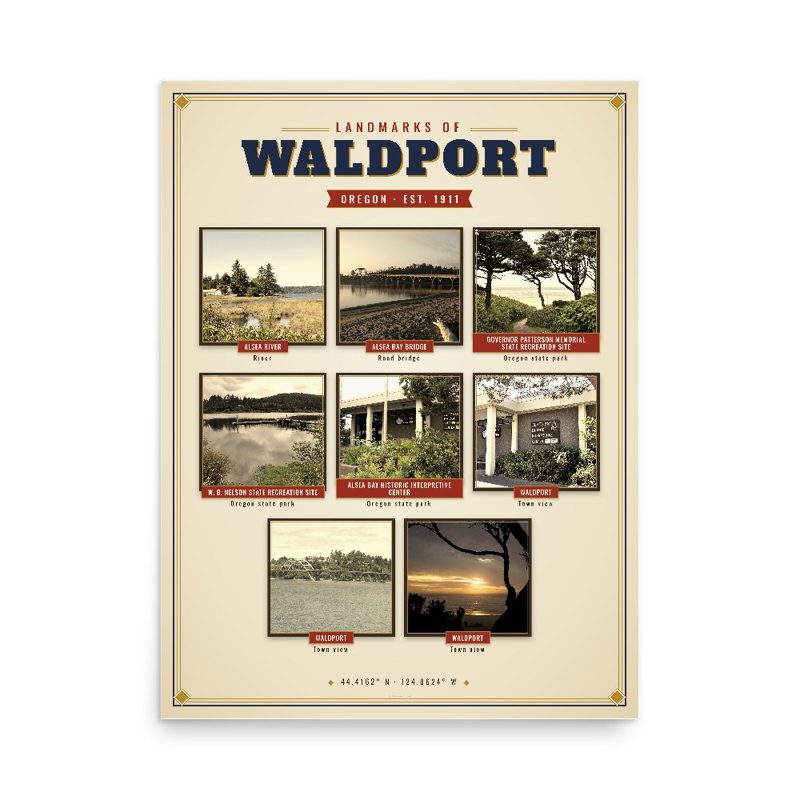
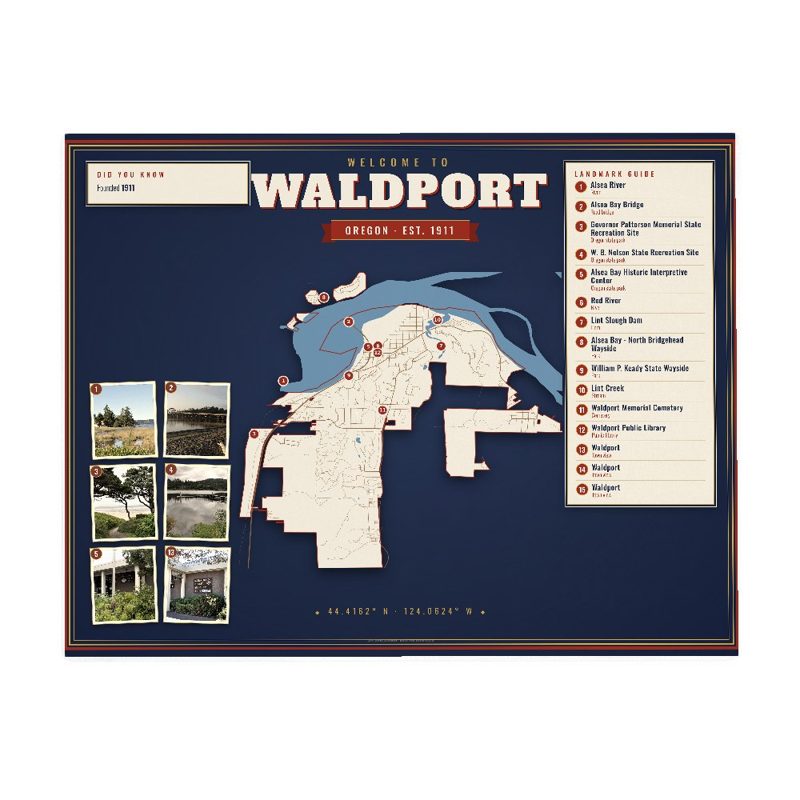
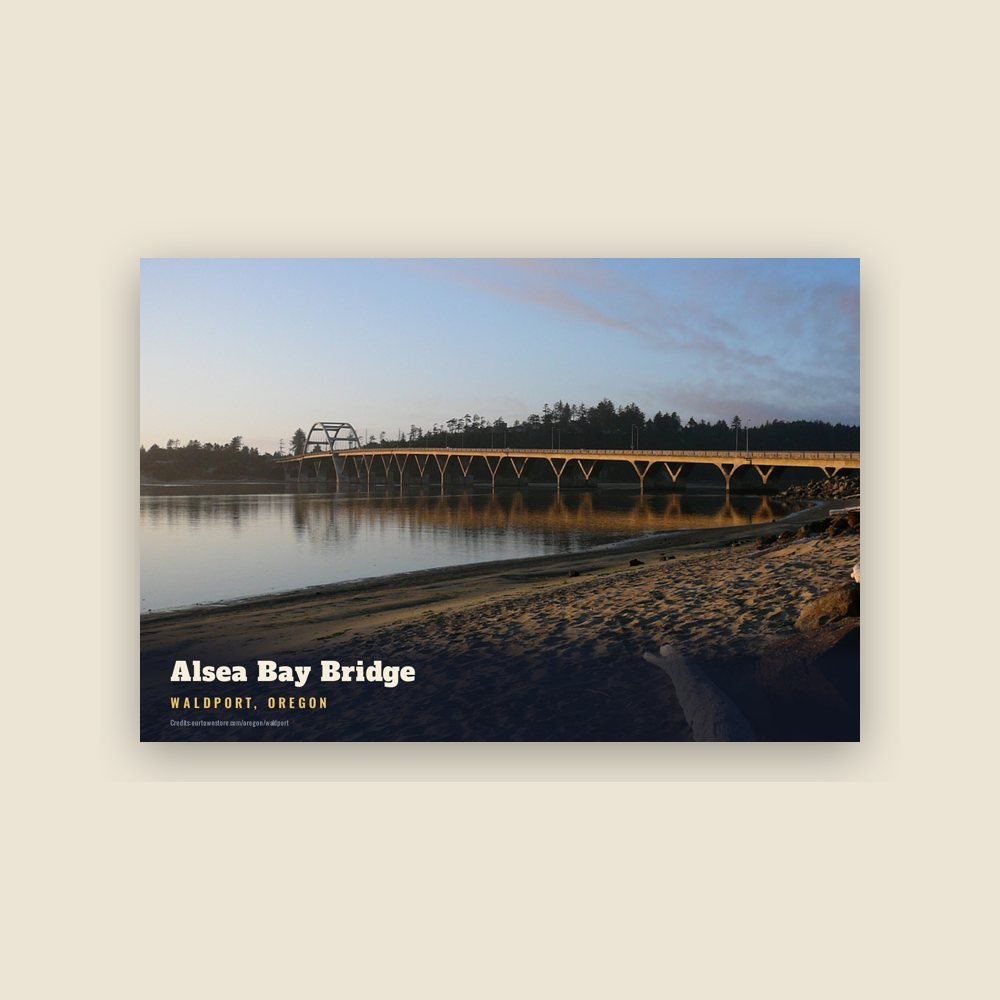
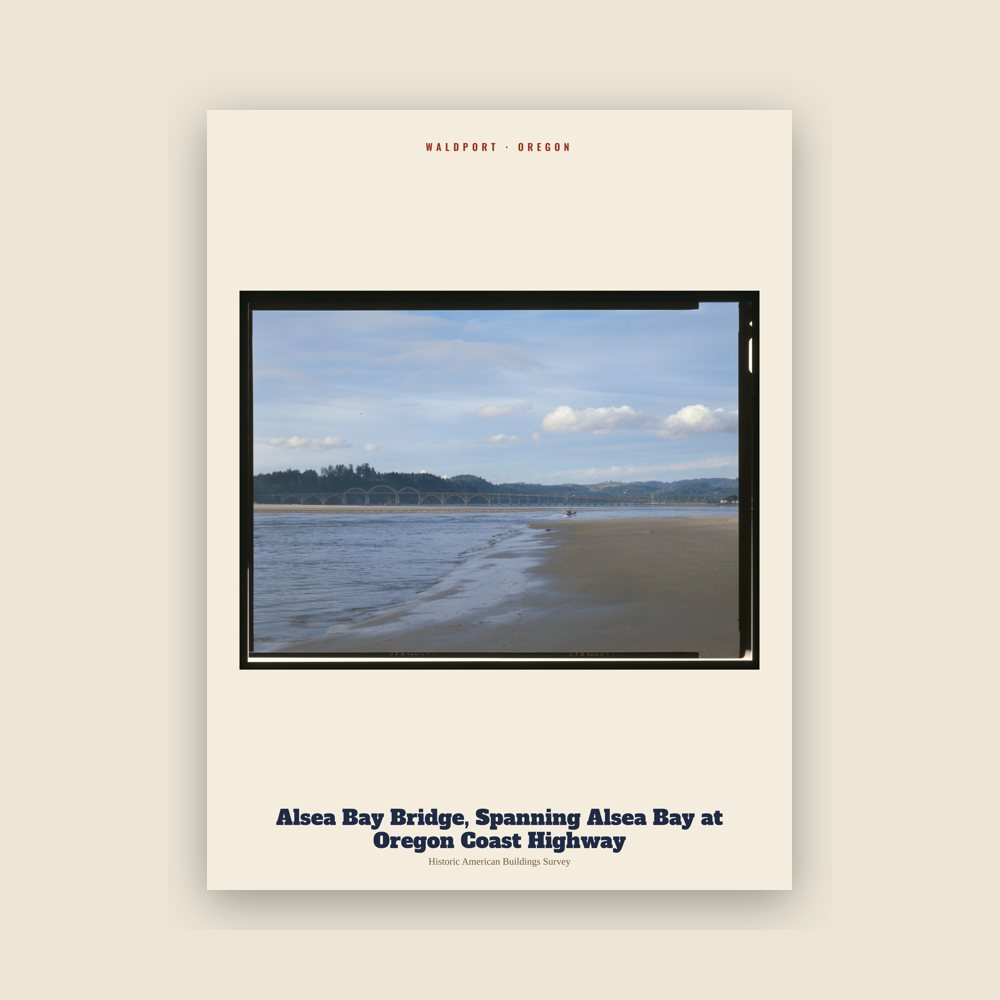
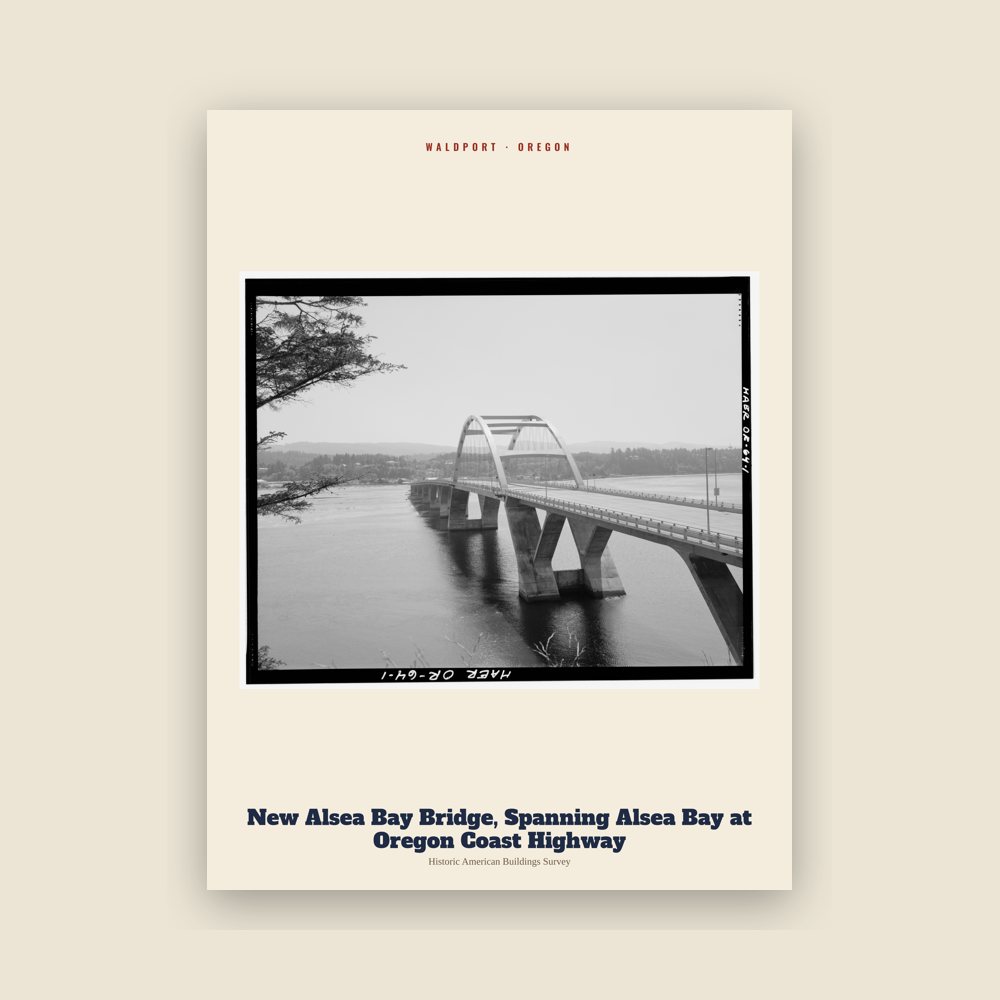
 Alsea Bay Bridge
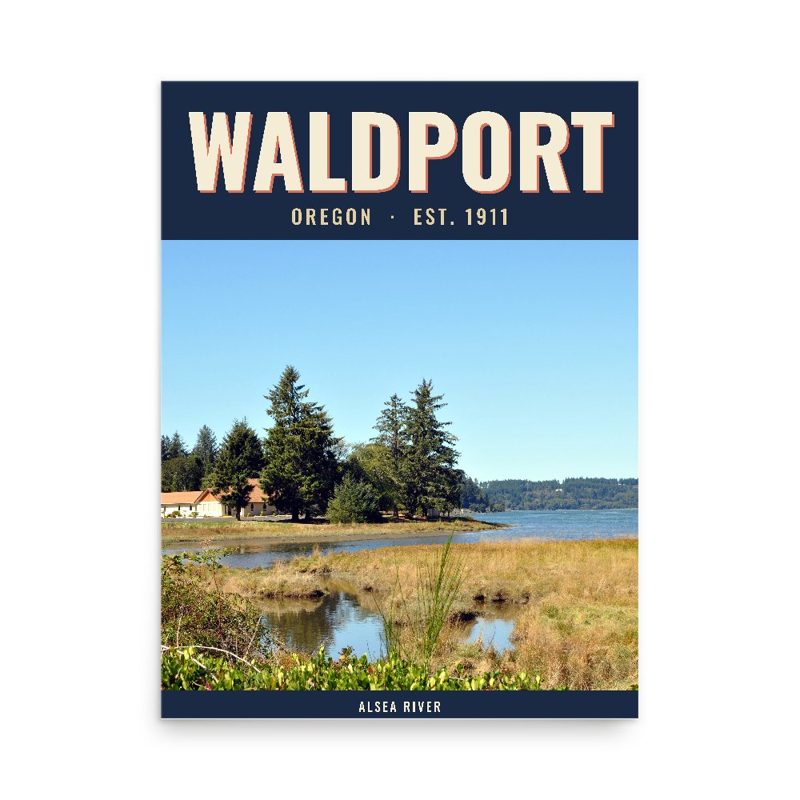
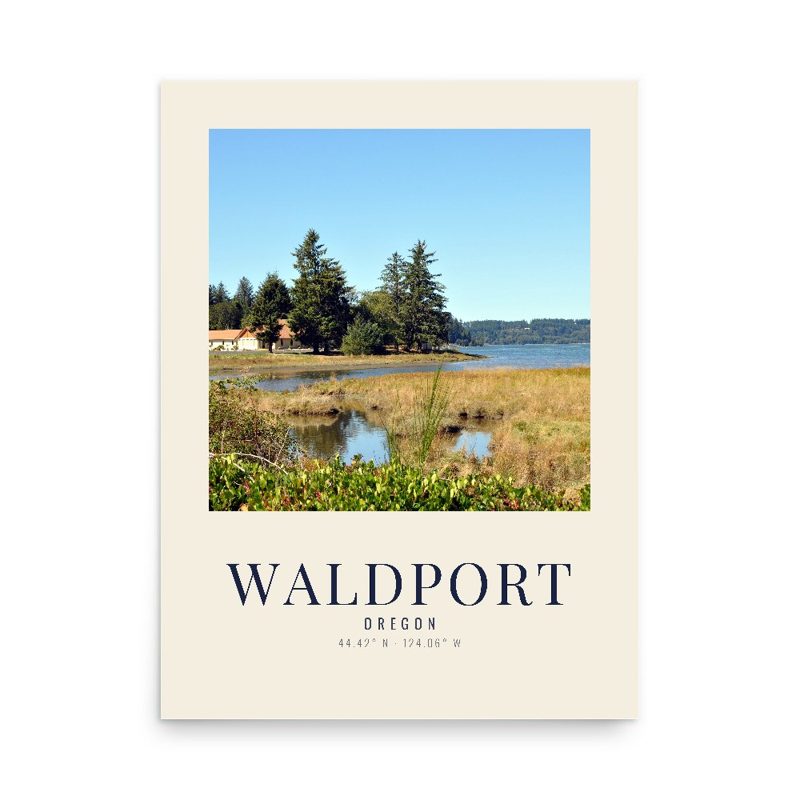
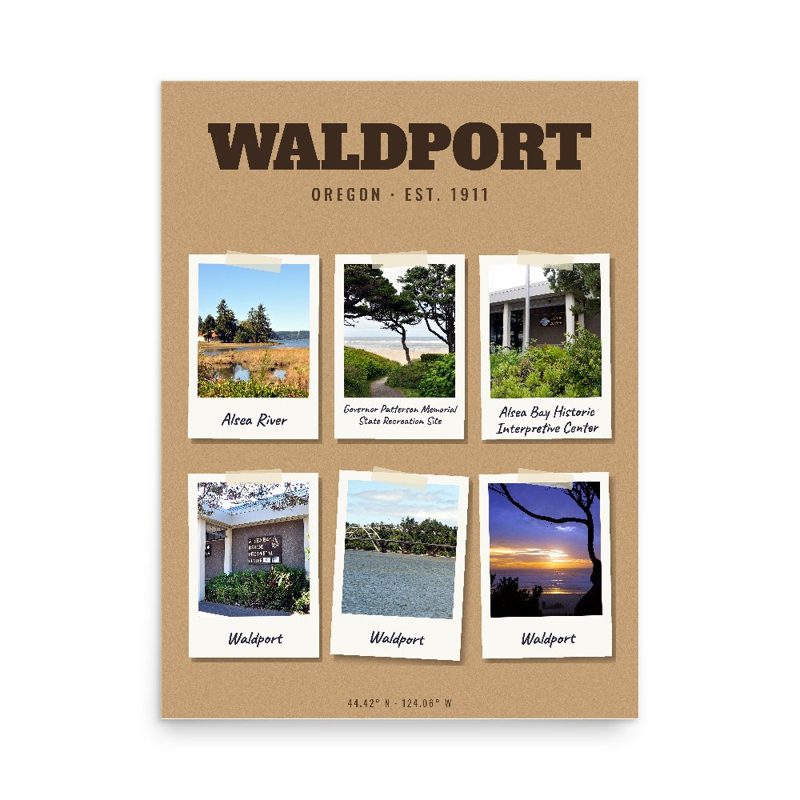
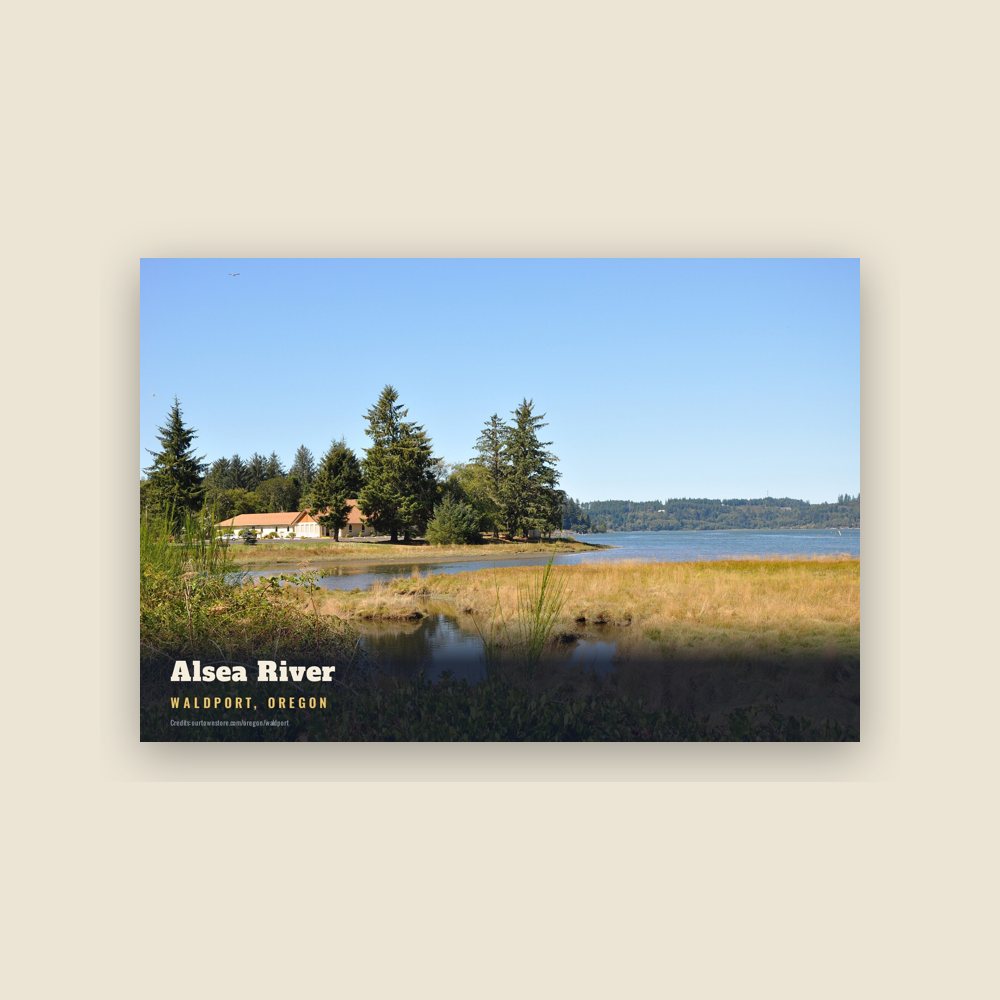
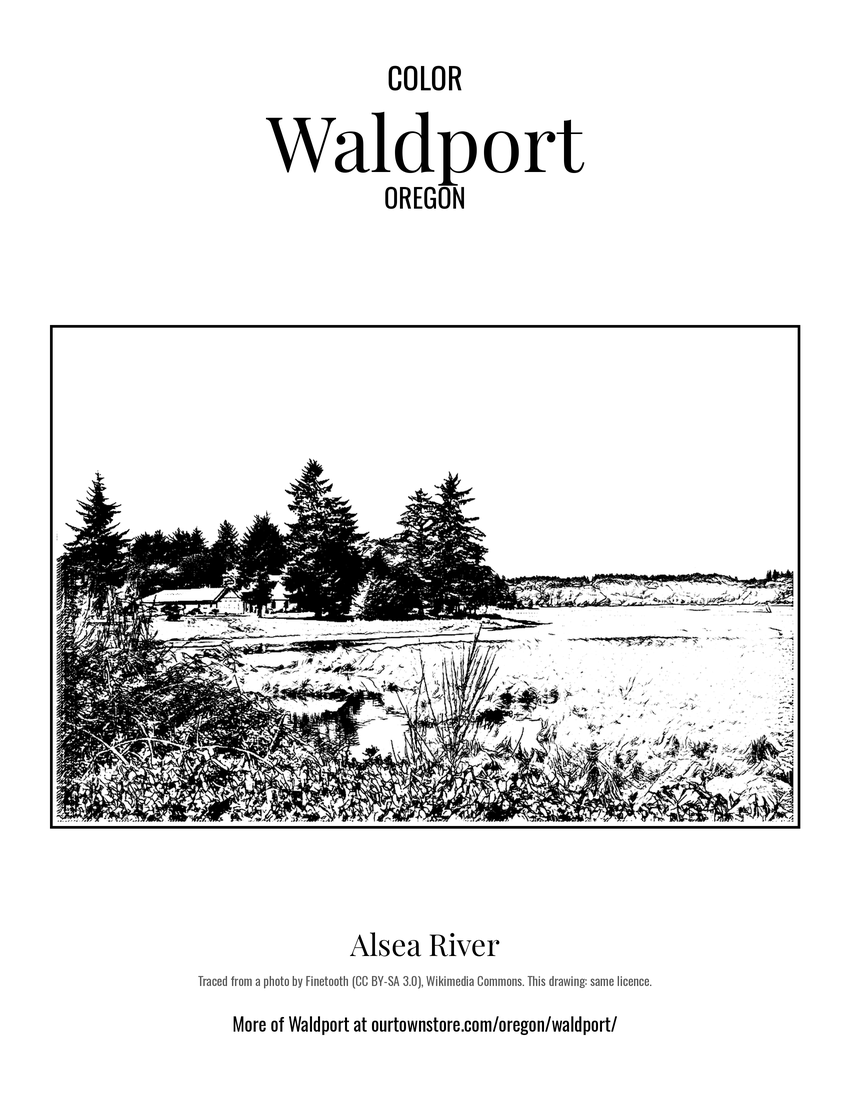 Alsea River
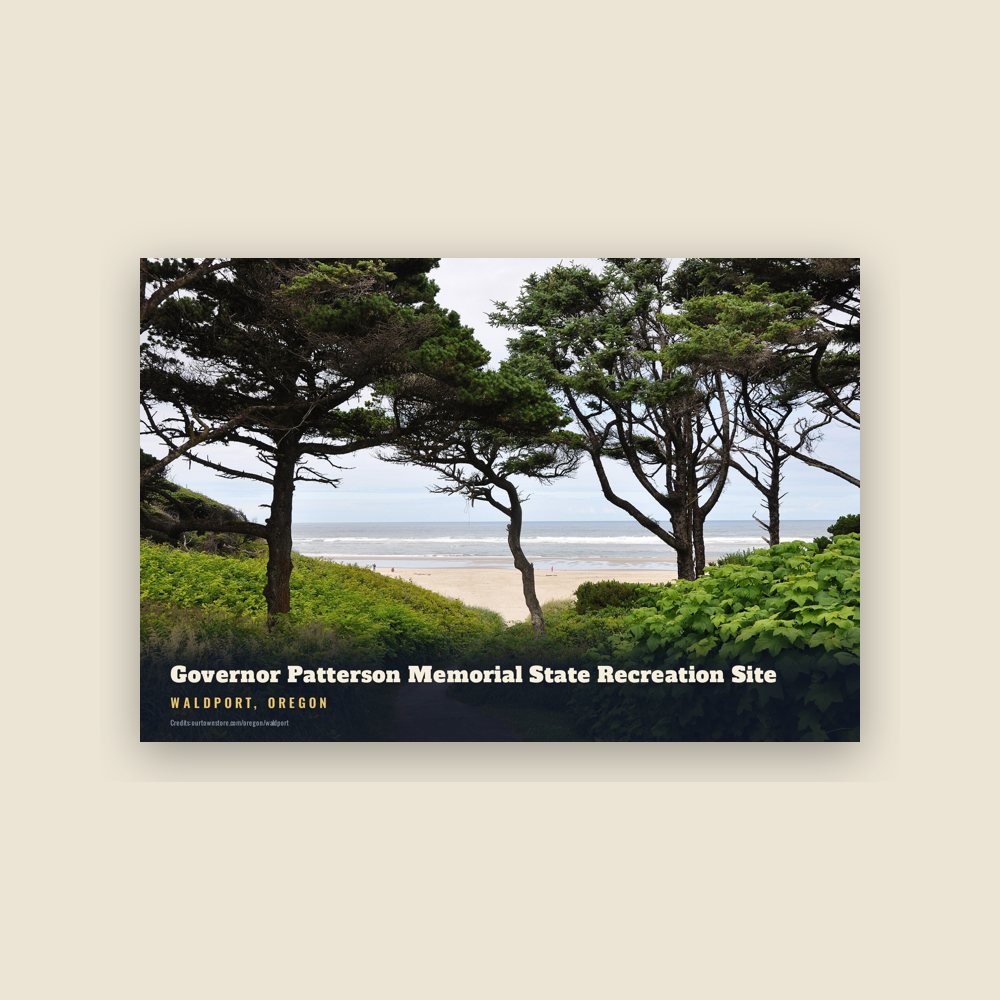
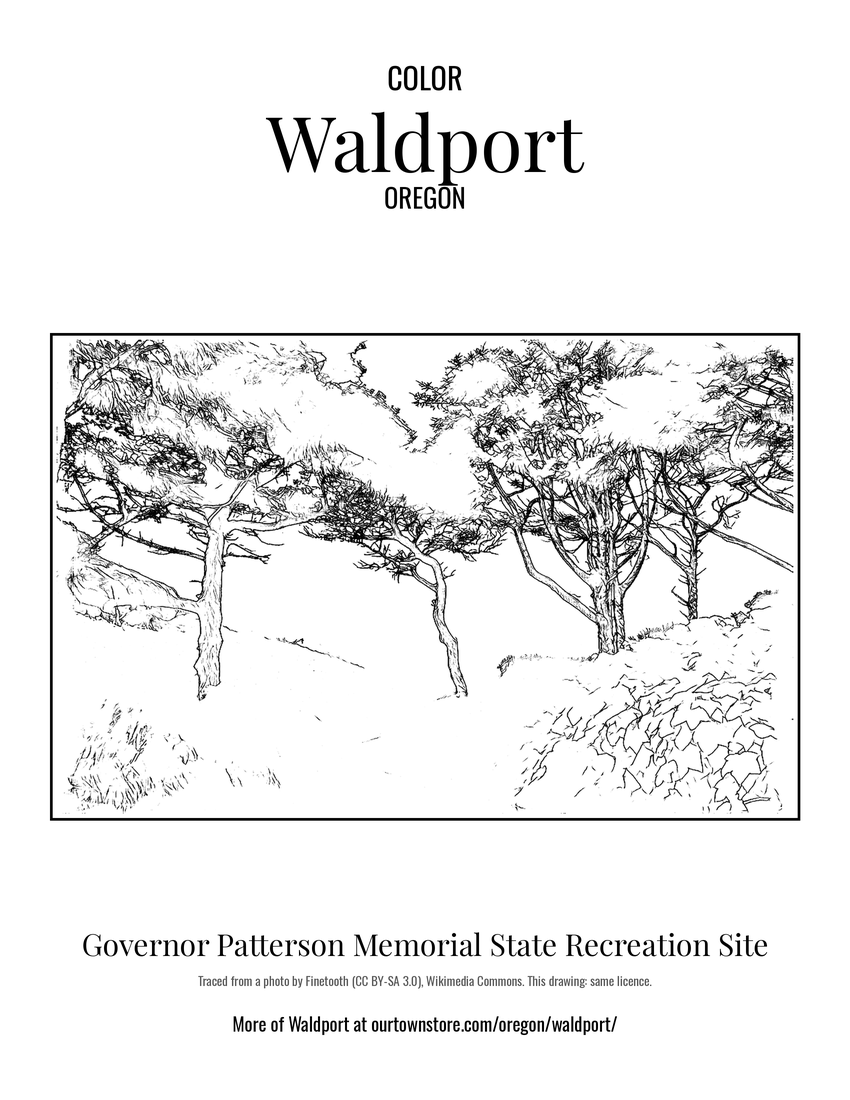 Governor Patterson Memorial State Recreation Site
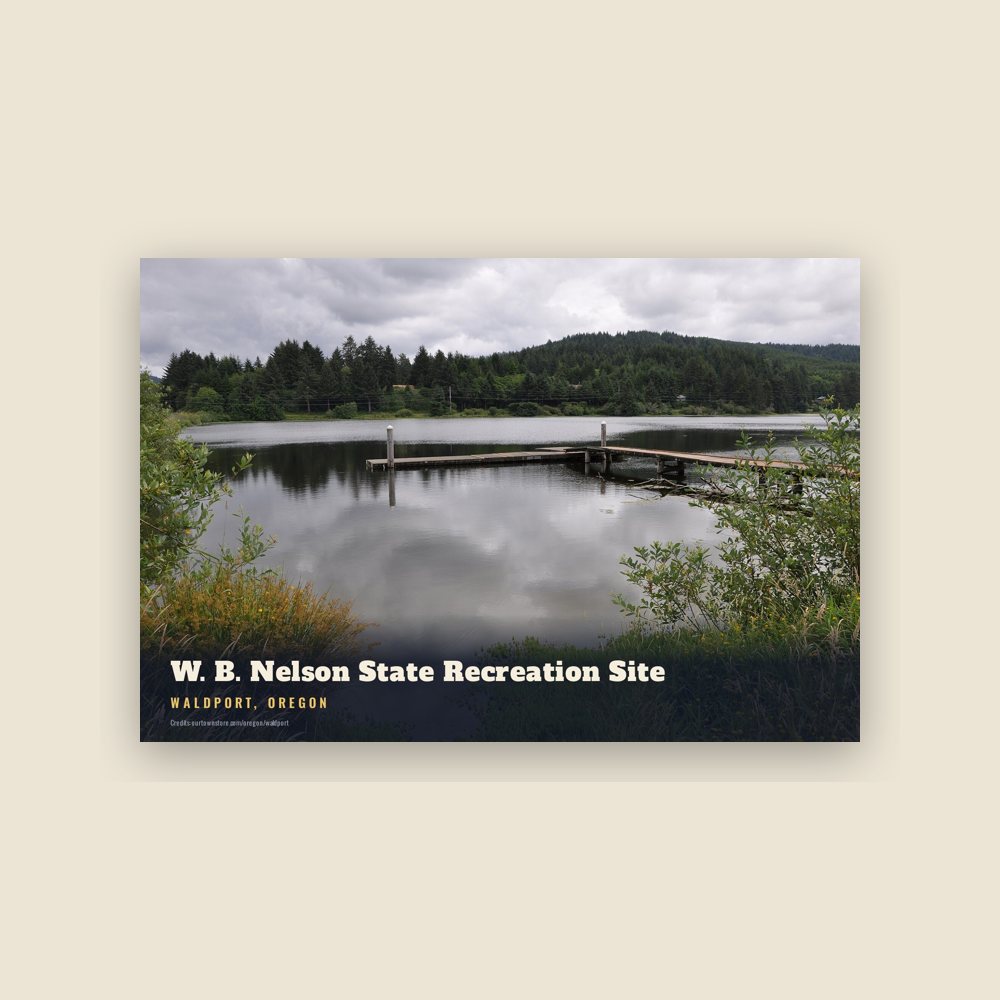
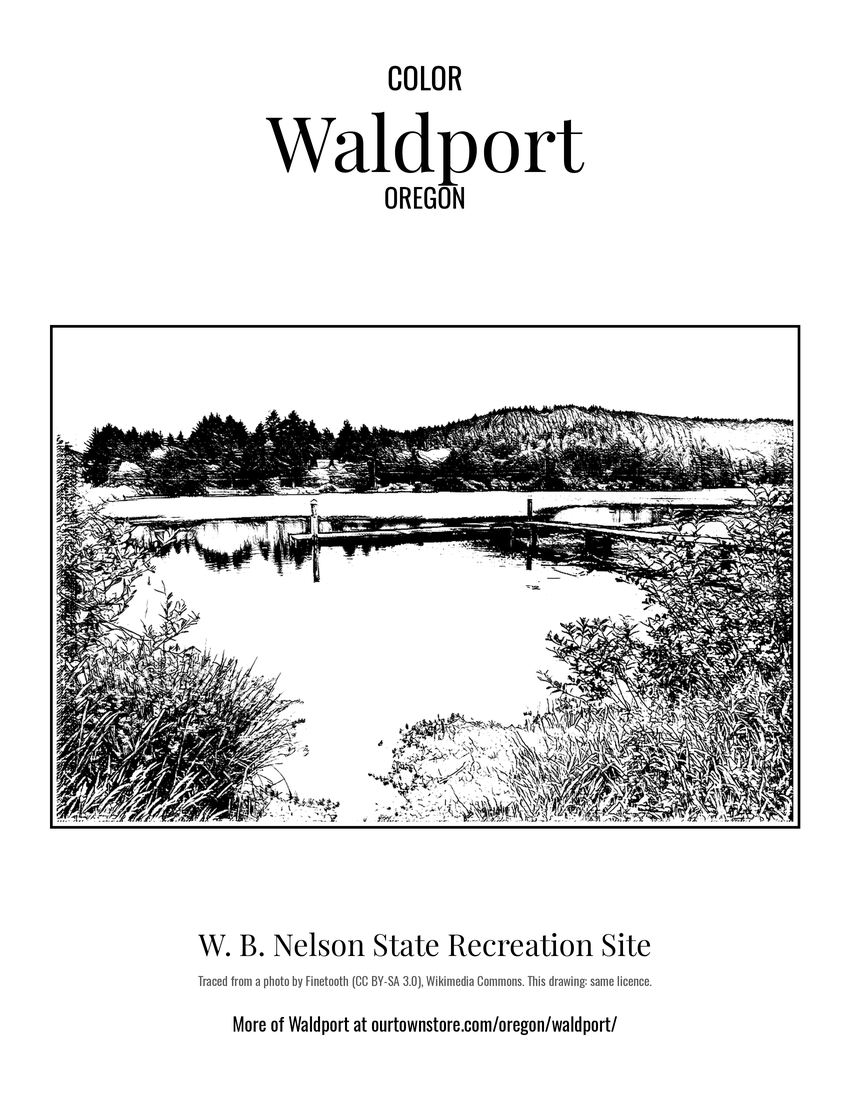 W. B. Nelson State Recreation Site