A short history of Madras
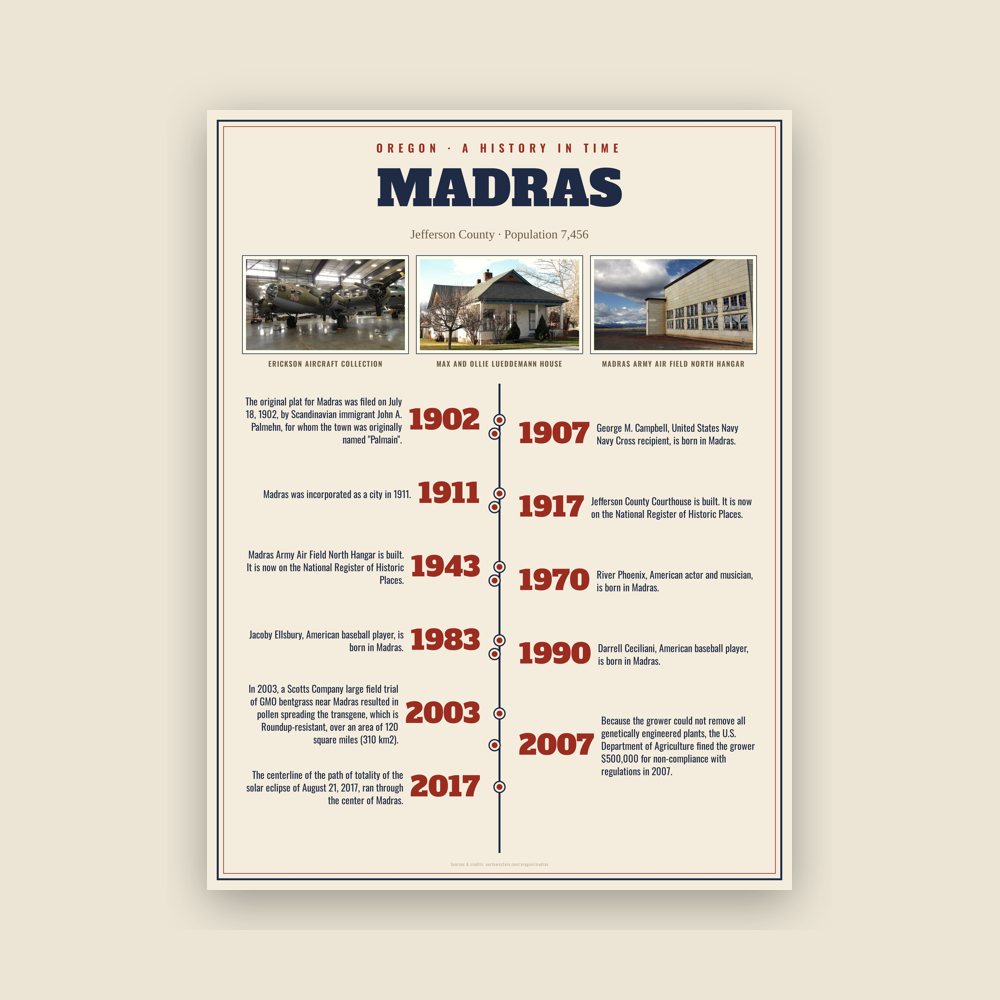
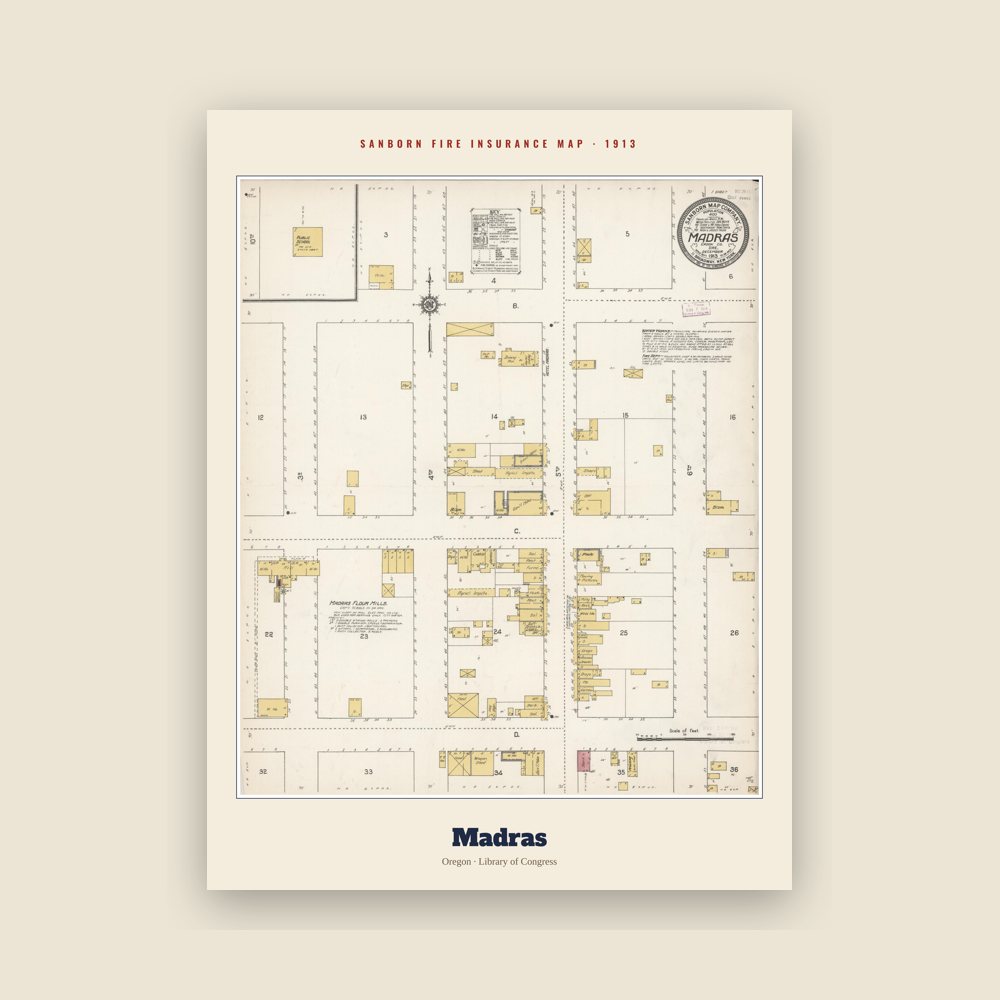
The original plat for Madras was filed on July 18, 1902, by Scandinavian immigrant John A. Palmehn, for whom the town was originally named "Palmain". The name was rejected by the U.S. Postal Service over its similarity to a post office named Parmen, and the name "Madras" was adopted, inspired by the cloth fabric of the same name, itself named for the city of Madras (now Chennai) in India.
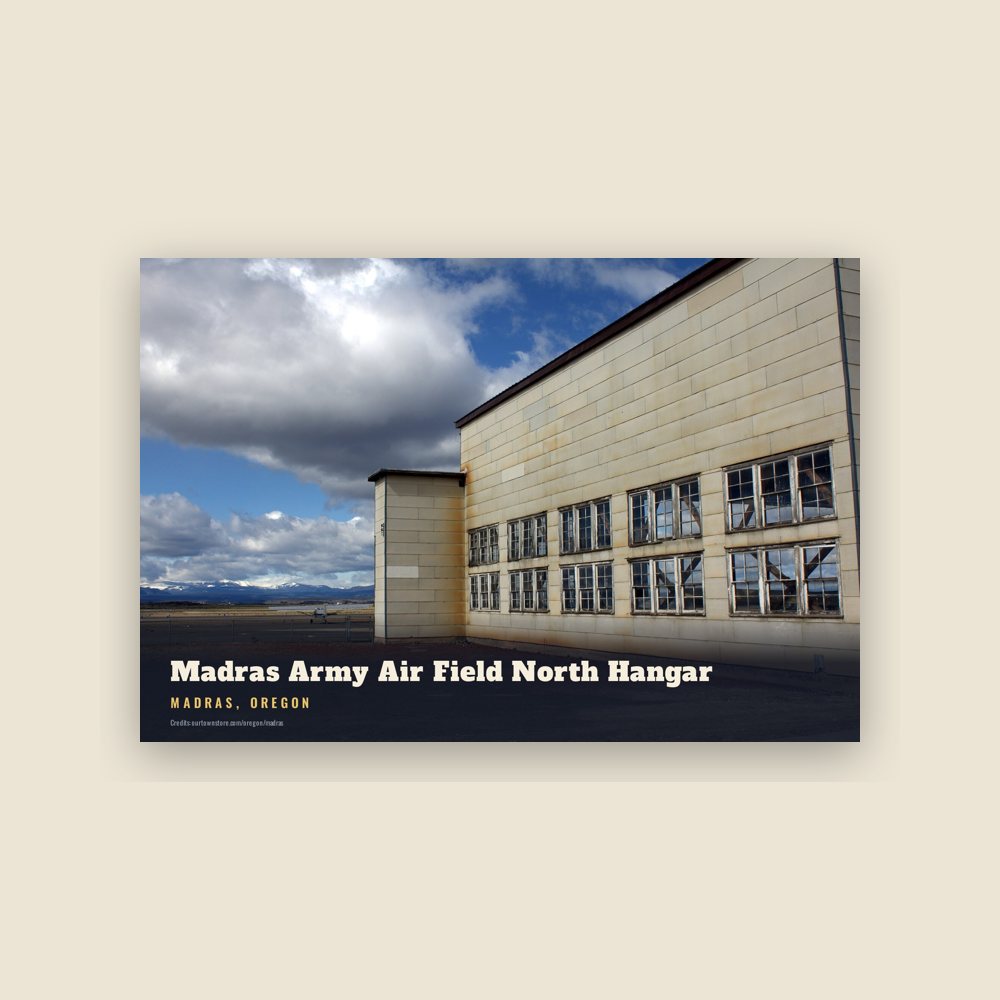
Madras was incorporated as a city in 1911. An Army Air Corps base, Madras Army Air Field, was built nearby during World War II. This airfield now serves as the Madras Municipal Airport. Homesteads approximately 5 miles (8 km) north of the city on Agency Plains were based on dryland wheat.
Read the full history
GMO incident
In 2003, a Scotts Company large field trial of GMO bentgrass near Madras resulted in pollen spreading the transgene, which is Roundup-resistant, over an area of 120 square miles (310 km2).
Because the grower could not remove all genetically engineered plants, the U.S. Department of Agriculture fined the grower $500,000 for non-compliance with regulations in 2007.
2017 solar eclipse
The centerline of the path of totality of the solar eclipse of August 21, 2017, ran through the center of Madras. Because the city is located in a high desert environment and has consistently clear skies in August, it was considered a prime eclipse viewing location. All of the hotel and motel rooms in the area had been reserved for several years. The town had prepared for an influx of about 100,000 visitors for the eclipse.
Adapted (trimmed) from the Wikipedia article Madras, Oregon, revision 1379617853 by its contributors, licensed CC BY-SA 4.0.

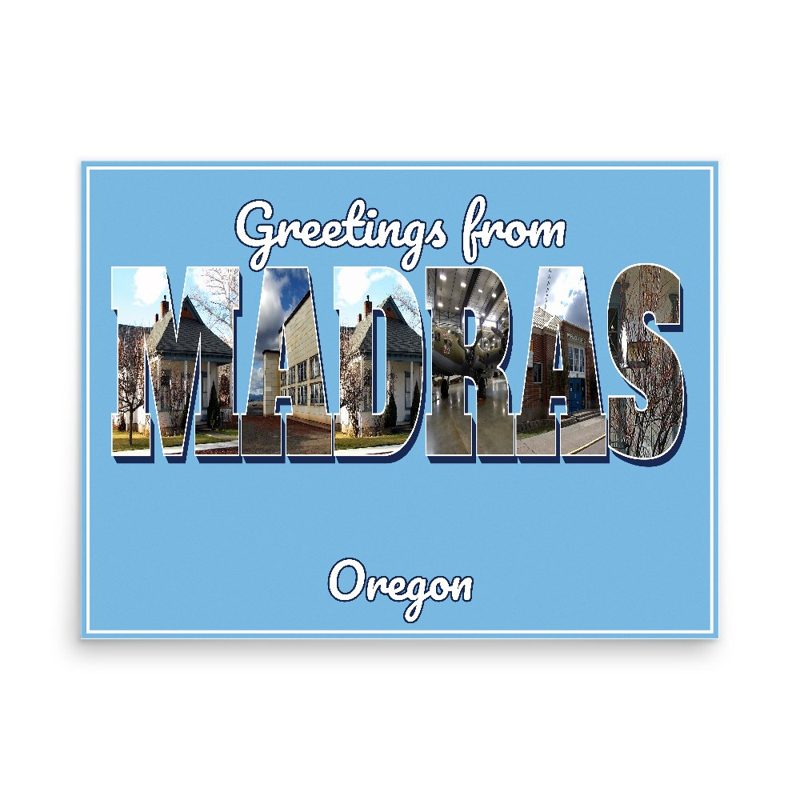
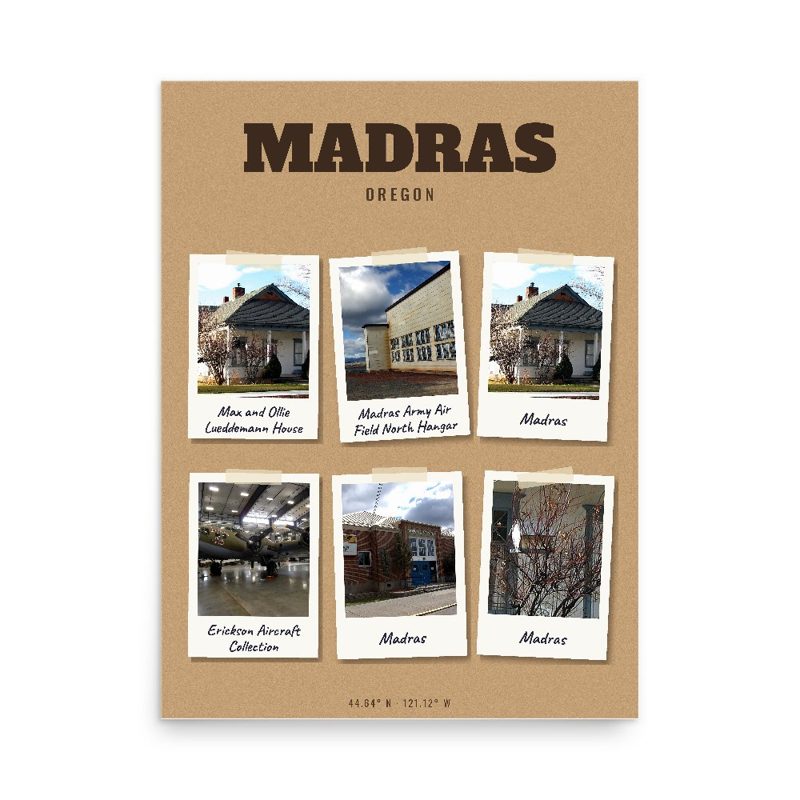
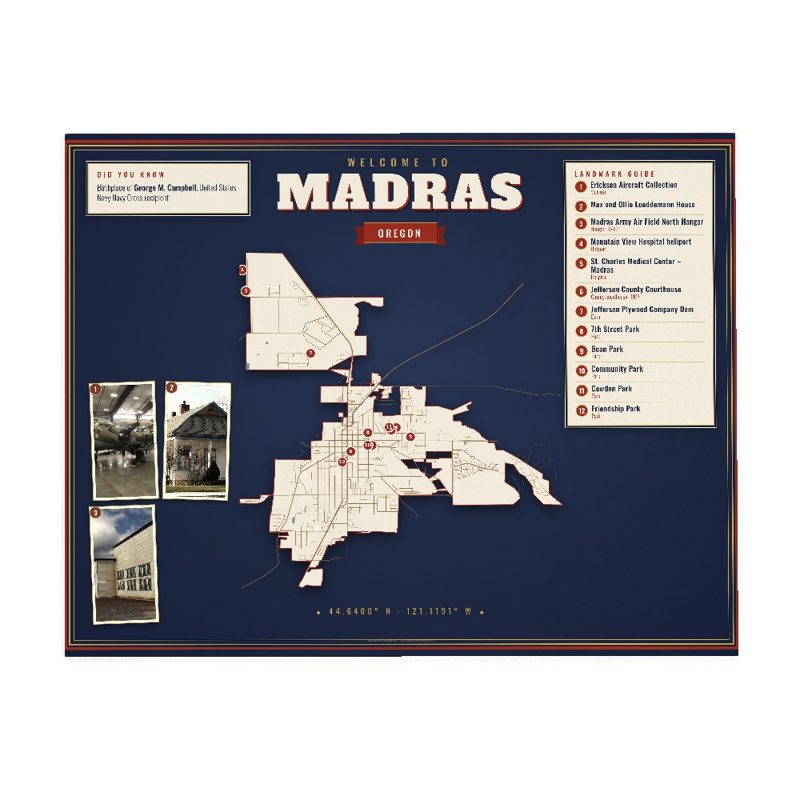














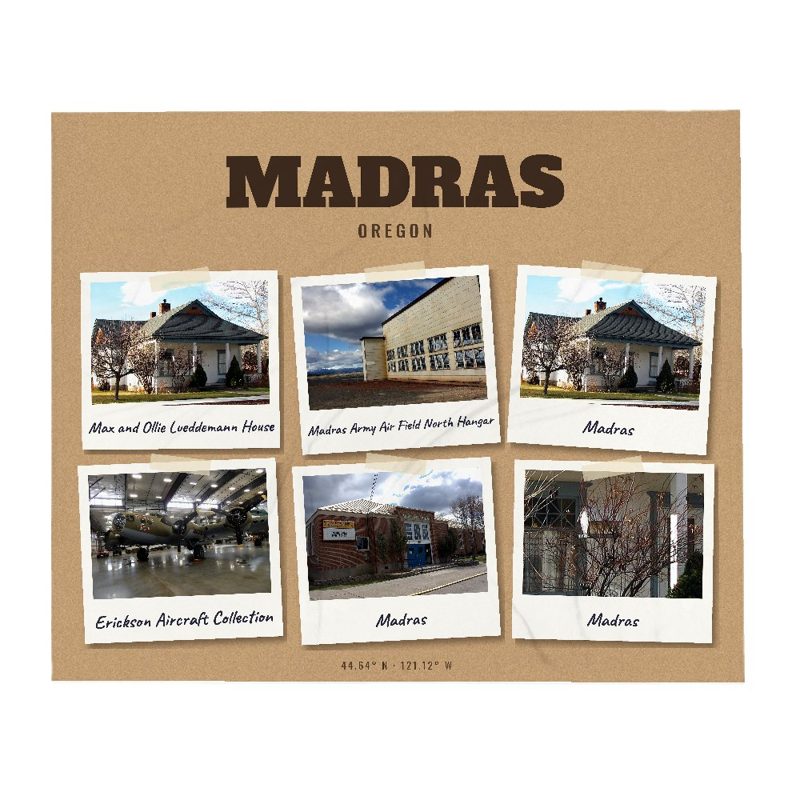


 Erickson Aircraft Collection
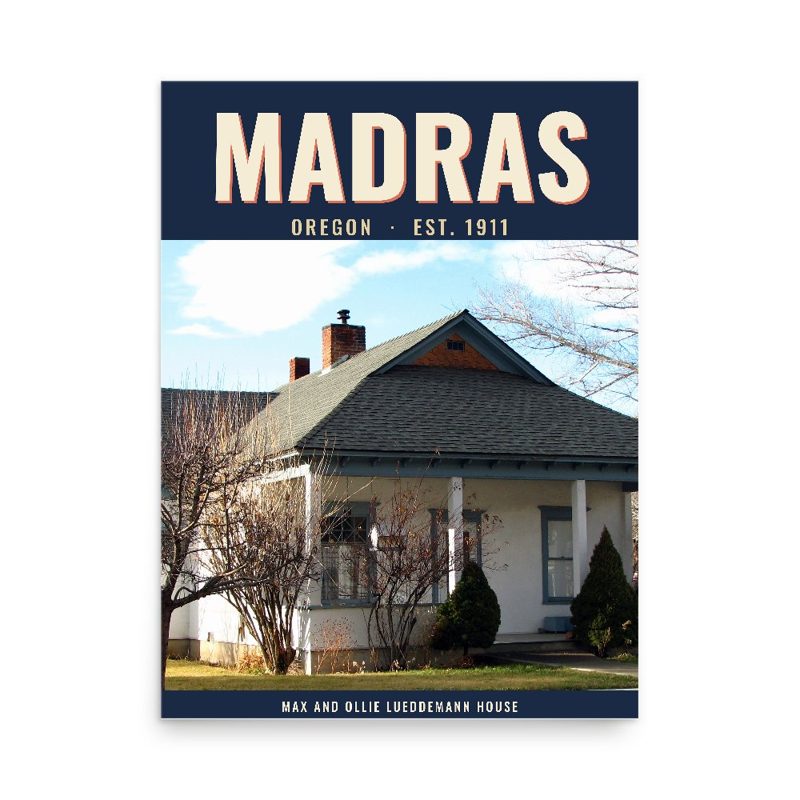
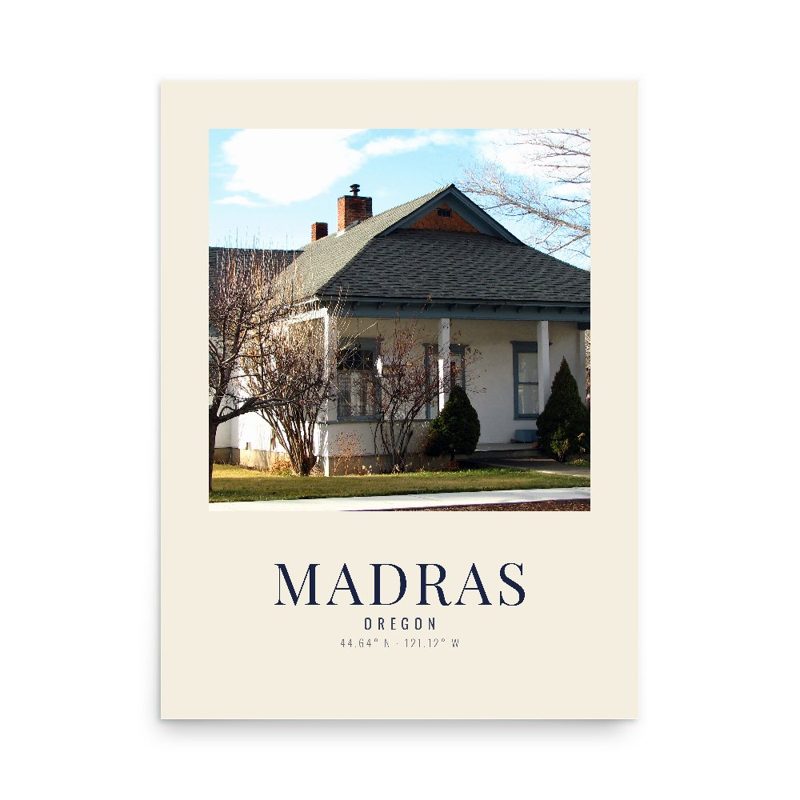
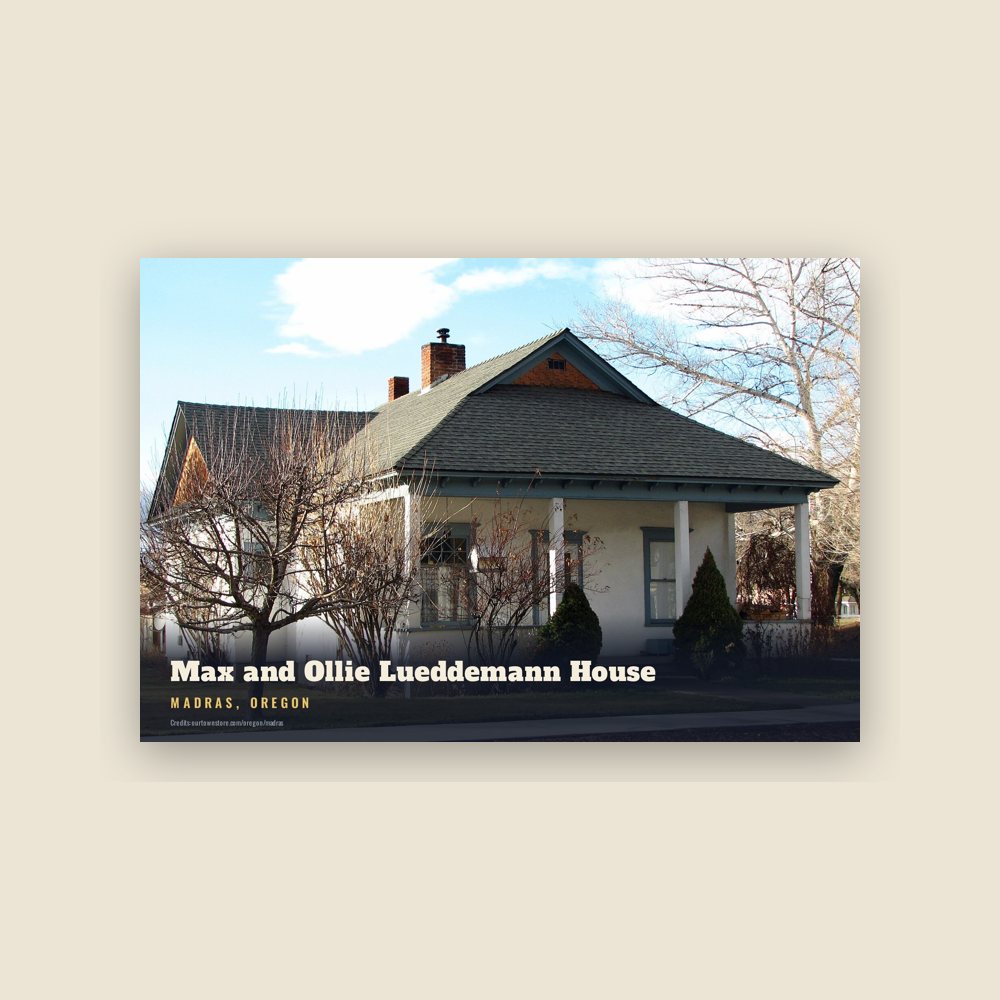
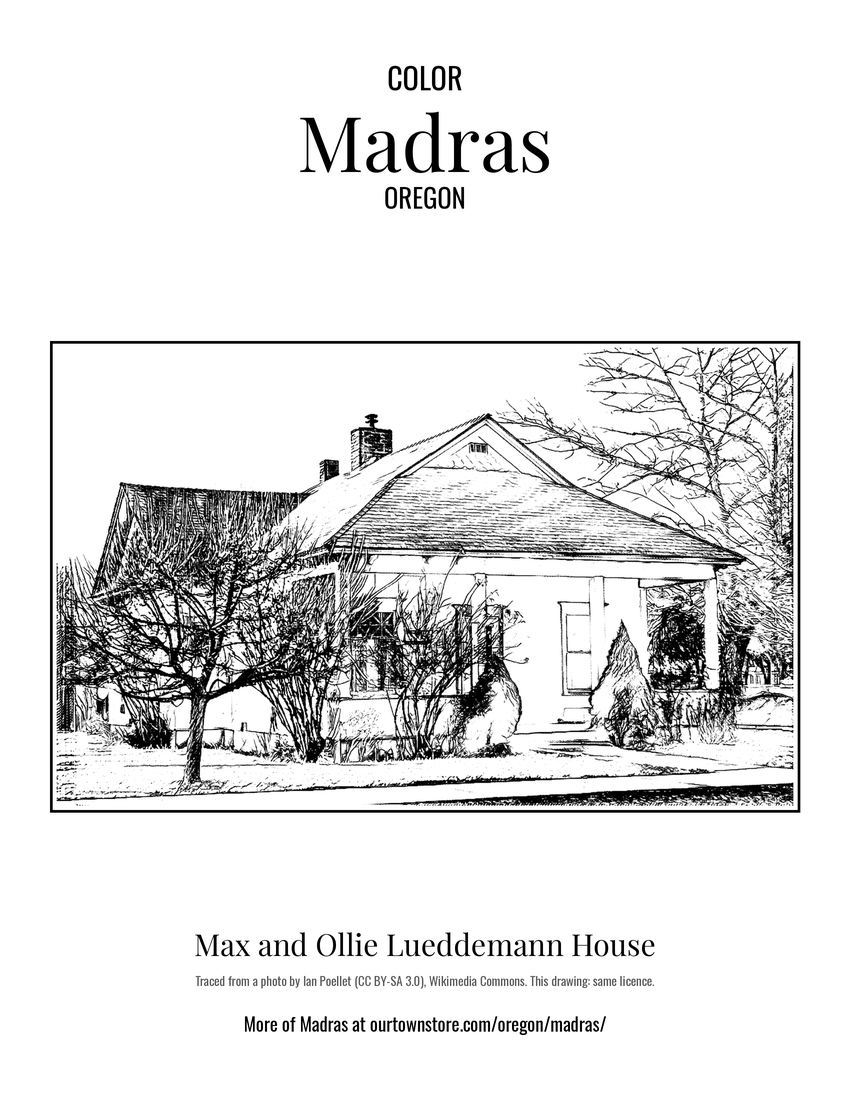 Max and Ollie Lueddemann House
 Madras Army Air Field North Hangar
 A view of Madras