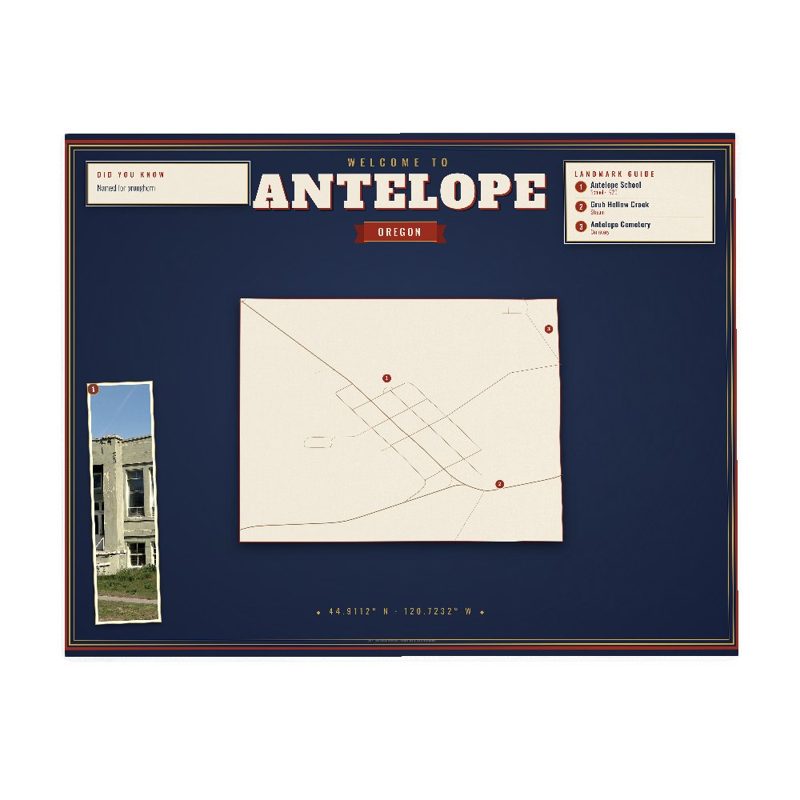
The Antelope Valley was probably named by European-American members of Joseph Sherar's party, who were packing supplies to mines in the John Day area. Sherar became known as the operator of a toll bridge across the Deschutes River, on a cut-off of the Barlow Road. In the early 19th century, the area supported many pronghorns, which are not true antelopes, but are often called "pronghorn antelopes".
Read the full history
19th century beginnings
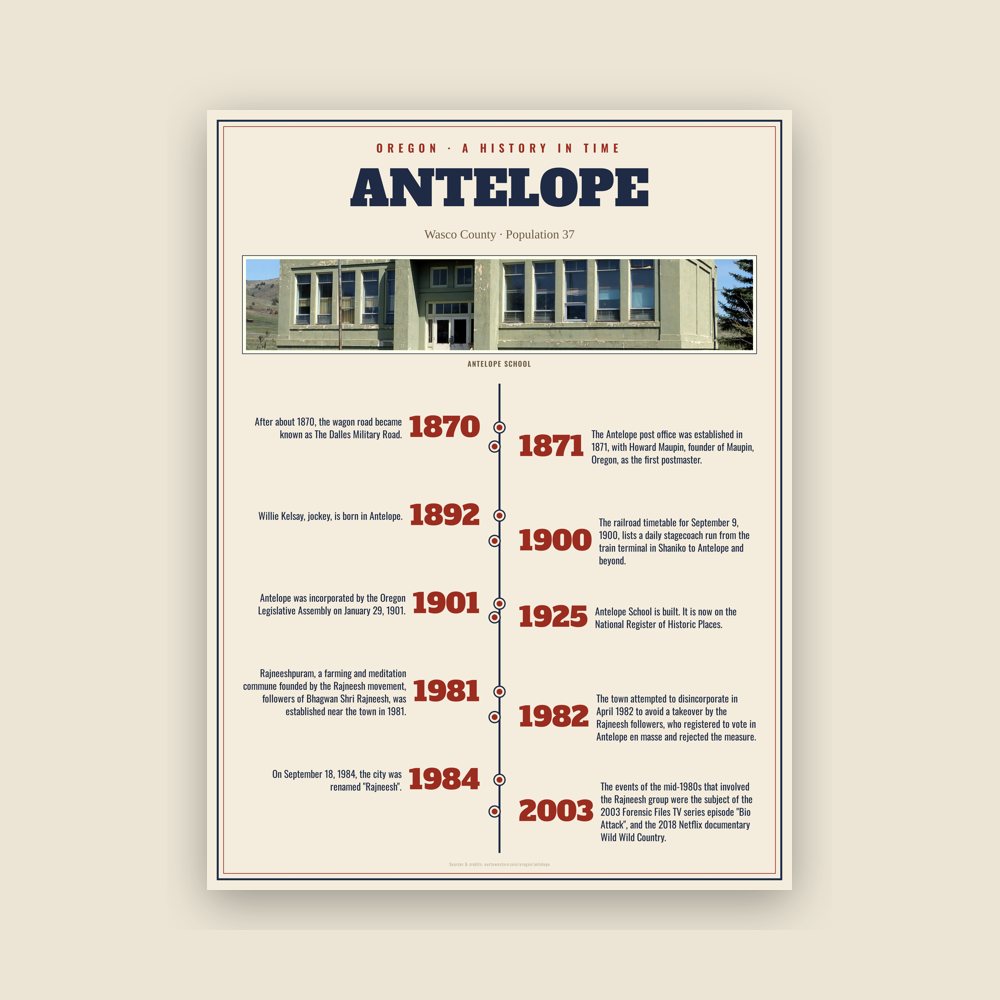
In the mid-19th century, Antelope began as a station along the wagon road connecting The Dalles on the Columbia River with gold mines near Canyon City. After about 1870, the wagon road became known as The Dalles Military Road. The road crossed the Deschutes River on Sherar's Bridge.
The Antelope post office was established in 1871, with Howard Maupin, founder of Maupin, Oregon, as the first postmaster. The town's population peaked around 1900, shortly after the Columbia Southern Railway completed a 70-mile (110 km) rail line from Biggs, on the Columbia River, to Shaniko, a few miles north of Antelope. The railroad timetable for September 9, 1900, lists a daily stagecoach run from the train terminal in Shaniko to Antelope and beyond. Antelope was incorporated by the Oregon Legislative Assembly on January 29, 1901.
Rajneesh movement
Rajneeshpuram, a farming and meditation commune founded by the Rajneesh movement, followers of Bhagwan Shri Rajneesh, was established near the town in 1981. The town attempted to disincorporate in April 1982 to avoid a takeover by the Rajneesh followers, who registered to vote in Antelope en masse and rejected the measure. The Rajneeshees gained a majority on the town council following the November 1982 elections and resignation of two other members. On September 18, 1984, the city was renamed "Rajneesh".
The organization collapsed in 1985 following the discovery by the authorities of criminal activities, such as a bioterror attack a year prior that exposed non-Rajneeshees in Wasco County to salmonella to prevent them from voting. On November 6, 1985, the remaining residents, which included both original residents and some remaining Rajneeshees, voted 34 to 0 to restore the original name, and it was subsequently restored in 1986. The U.S. Postal Service had never recognized the change of name.
Subsequent to the collapse of the commune, the property reverted to ownership by the State of Oregon for non-payment of taxes, and was sold to Montana billionaire Dennis Washington in 1991 for $3.65 million. Currently, the ranch, 18 miles (29 km) from Antelope, is operated by Young Life, a Christian parachurch organization, as a Christian youth camp known as "Washington Family Ranch".
The events of the mid-1980s that involved the Rajneesh group were the subject of the 2003 Forensic Files TV series episode "Bio Attack", and the 2018 Netflix documentary Wild Wild Country.
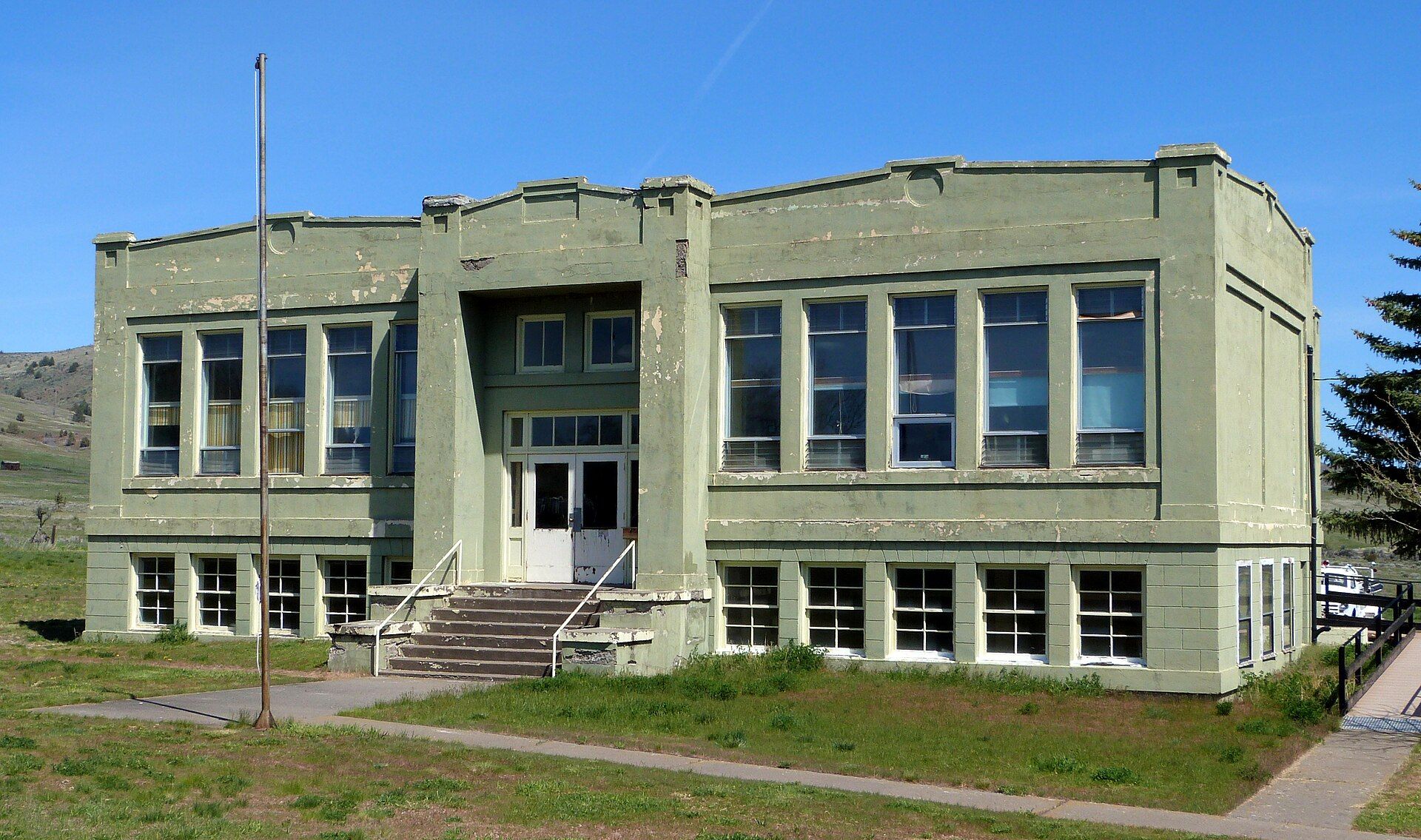
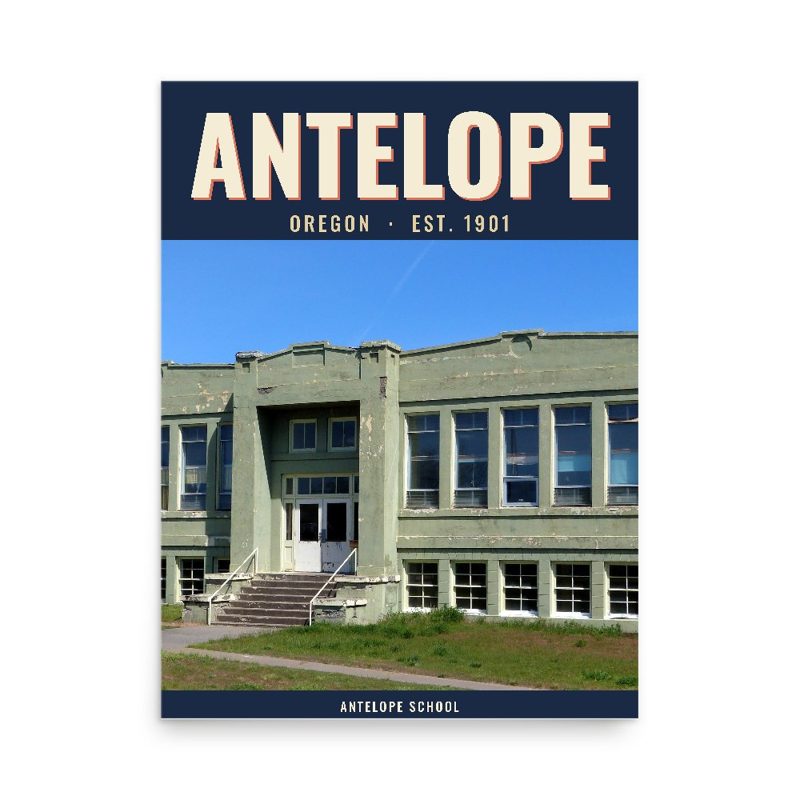
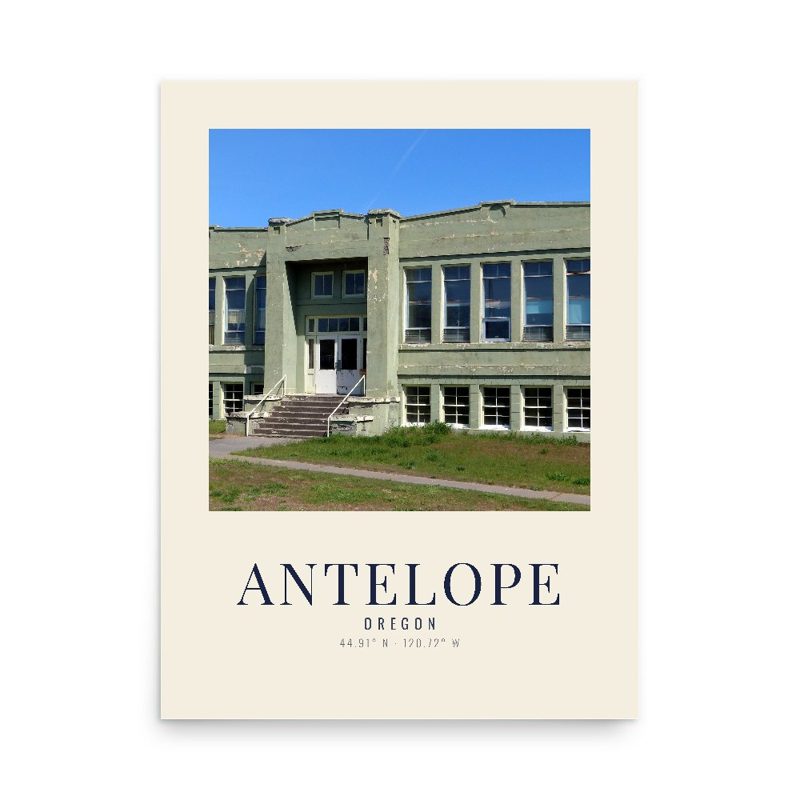
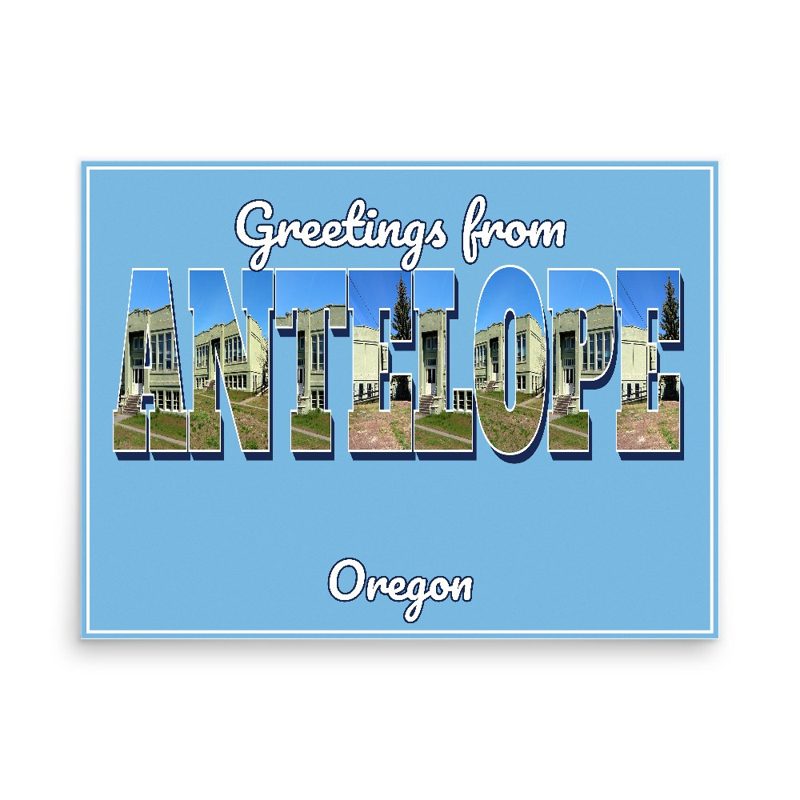
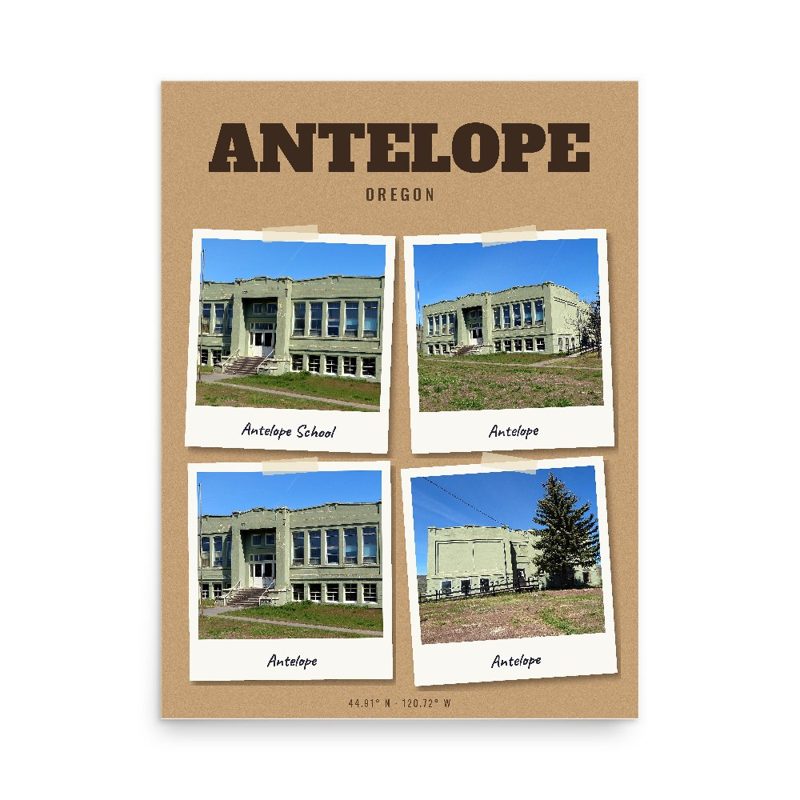








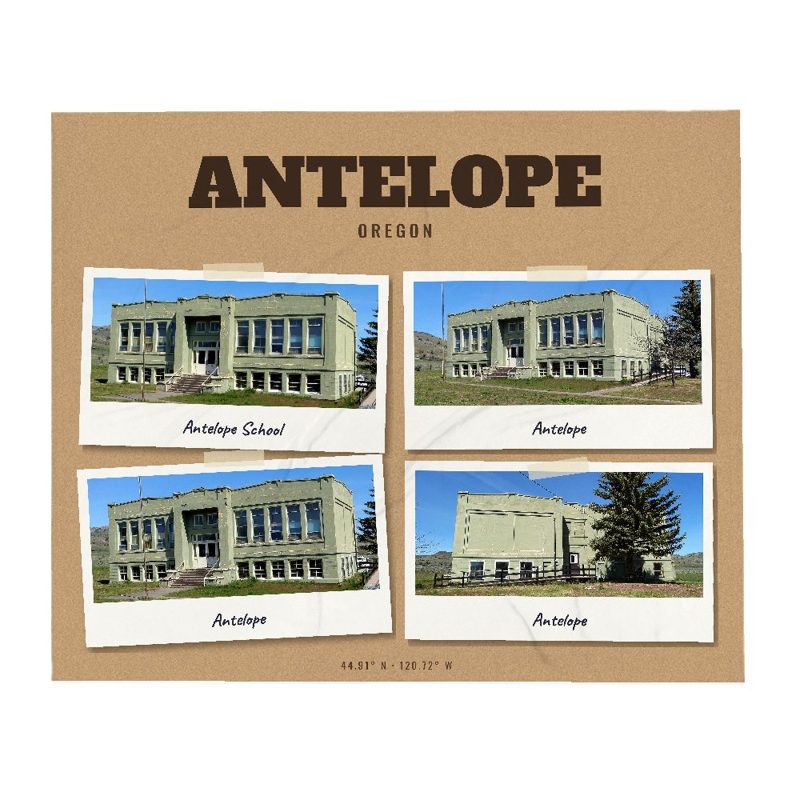
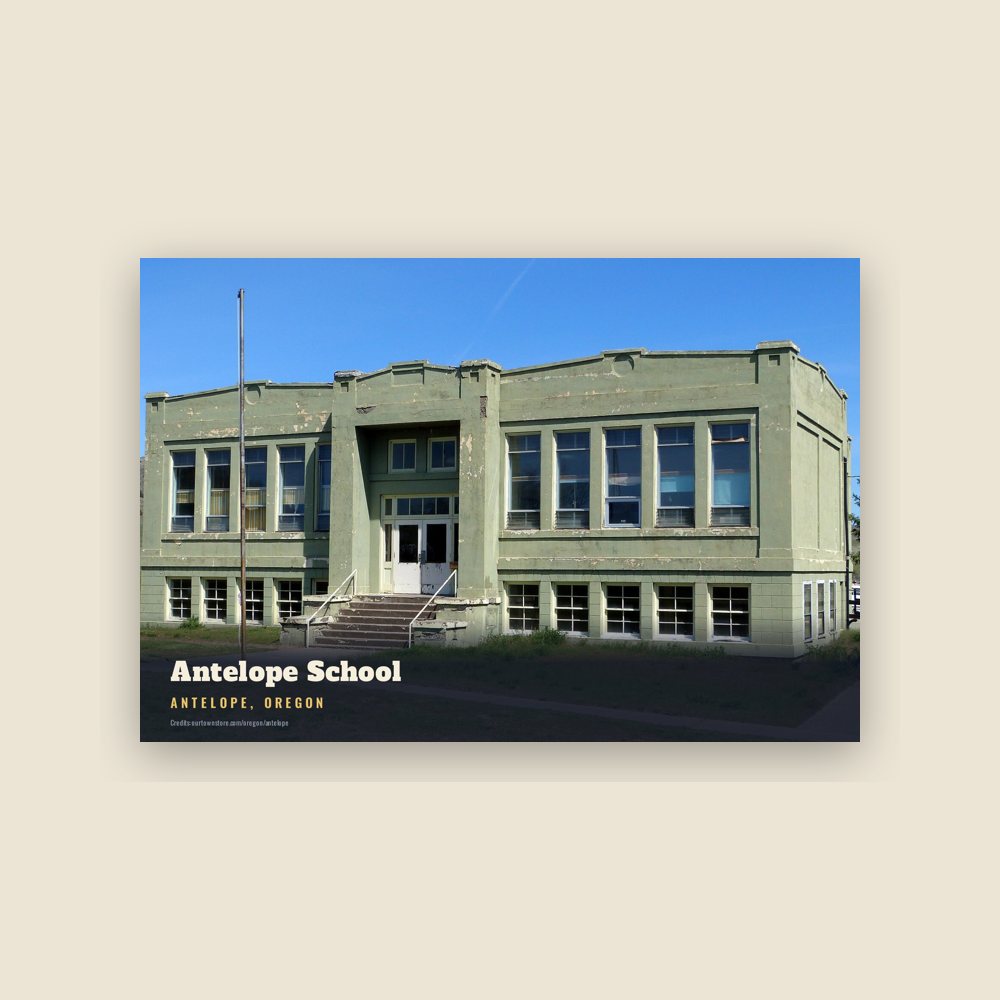
 Antelope School
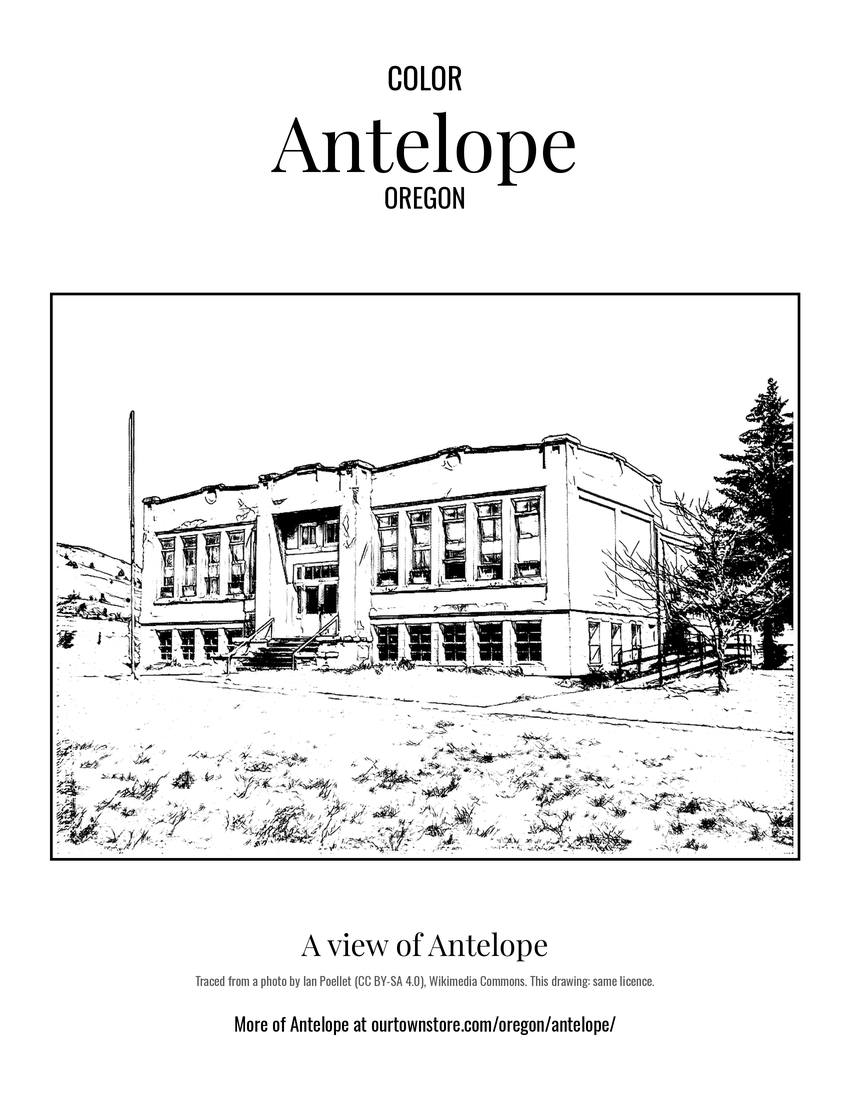 A view of Antelope
 A view of Antelope
 A view of Antelope