A short history of Miami
The city was founded in an unusual way, compared to other towns established in Indian Territory. Per the Encyclopedia of Oklahoma History and Culture, "... it was settled in a business-like way by men of vision who looked into the future and saw possibilities. It didn't just grow. It was carefully planned."
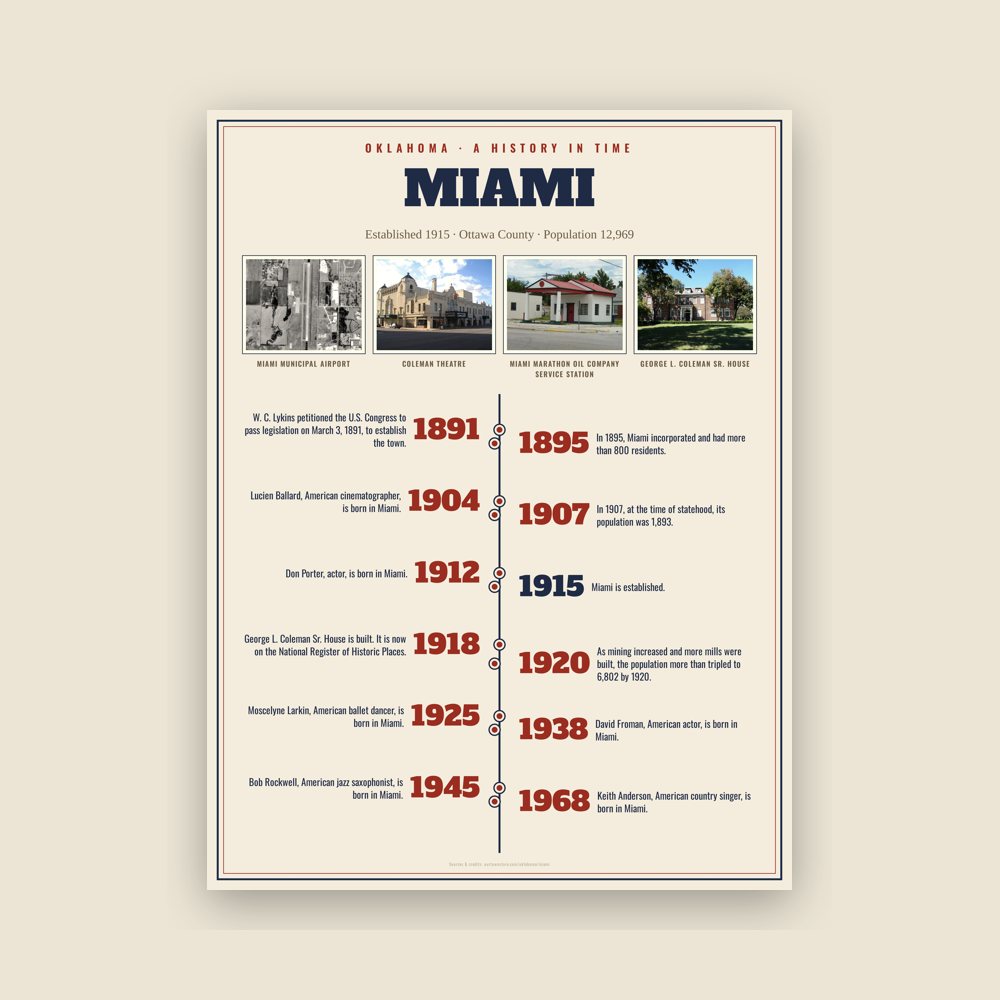
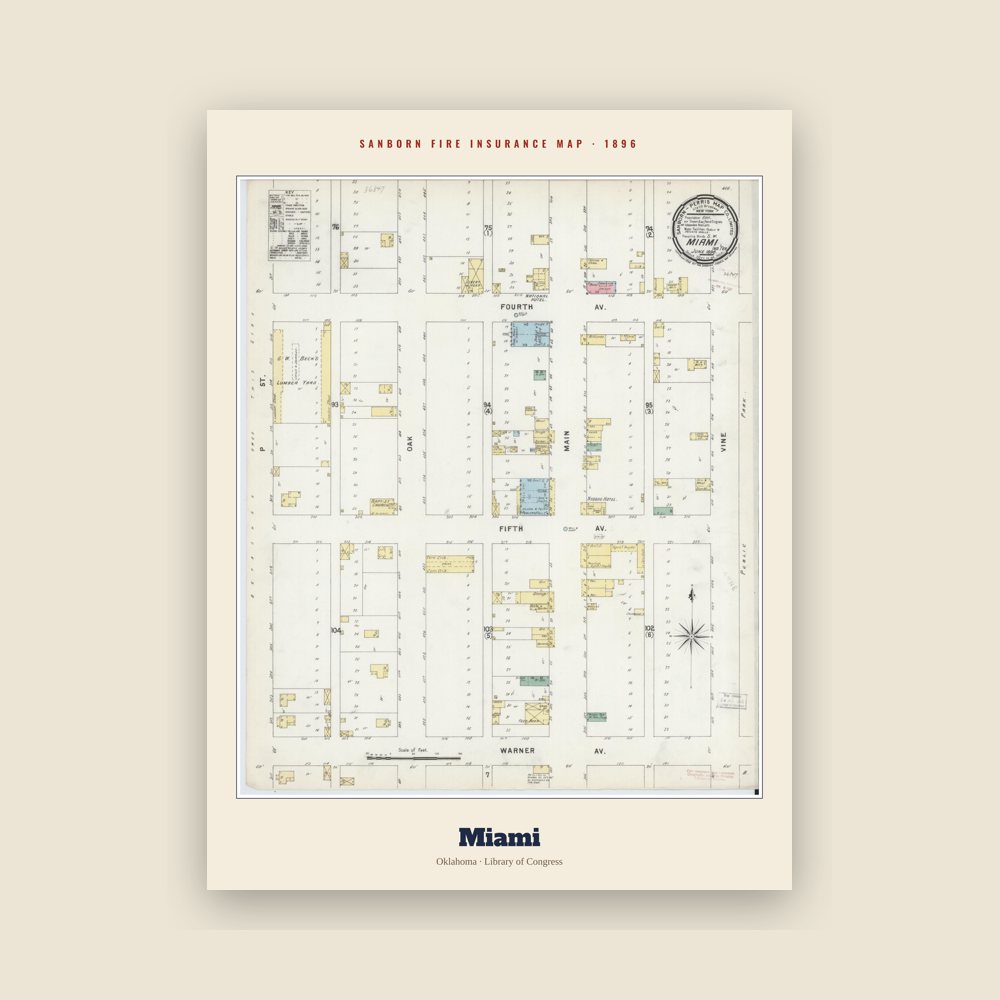
W. C. Lykins petitioned the U.S. Congress to pass legislation on March 3, 1891, to establish the town. He met with Thomas F. Richardville, chief of the Miami Tribe of Oklahoma, who agreed to meet in turn with the U.S. Indian Commission and the Ottawa Tribe. That meeting resulted in Congress authorizing the secretary of the United States Department of the Interior to approve the townsite purchase from the Ottawa. Lykins, Richardville, and Manford Pooler, chief of the Ottawa, are identified in historical accounts as "fathers of Miami". Lykins' company, the Miami Town Company, bought 588 acres (238 ha) of land from the Ottawa for $10 an acre. On June 25–26, 1891 they held an auction of lots. In 1895, Miami incorporated and had more than 800 residents.
The discovery of rich deposits of lead and zinc under Quapaw land a few miles north caused Miami to boom. In 1907, at the time of statehood, its population was 1,893. As mining increased and more mills were built, the population more than tripled to 6,802 by 1920.
Miami was on the route of the Jefferson Highway established in 1915, with that international road running more than 2,300 miles (3,700 km) from Winnipeg, Manitoba, Canada, across the border and to New Orleans, Louisiana. US Route 66 in Oklahoma also passed through Miami. An historic section of the Route 66 roadbed is marked in Miami.
It is the capital of the Miami Tribe of Oklahoma (after which it is named), Modoc Tribe of Oklahoma, Ottawa Tribe of Oklahoma, Peoria Tribe of Indians, and Shawnee Tribe.
Adapted (trimmed) from the Wikipedia article Miami, Oklahoma, revision 1376428084 by its contributors, licensed CC BY-SA 4.0.

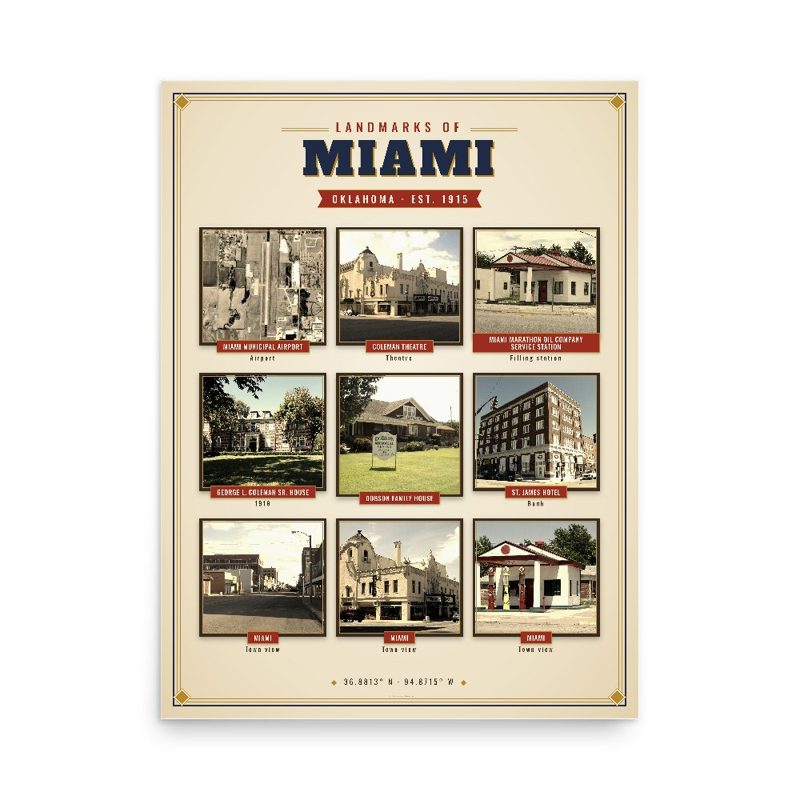
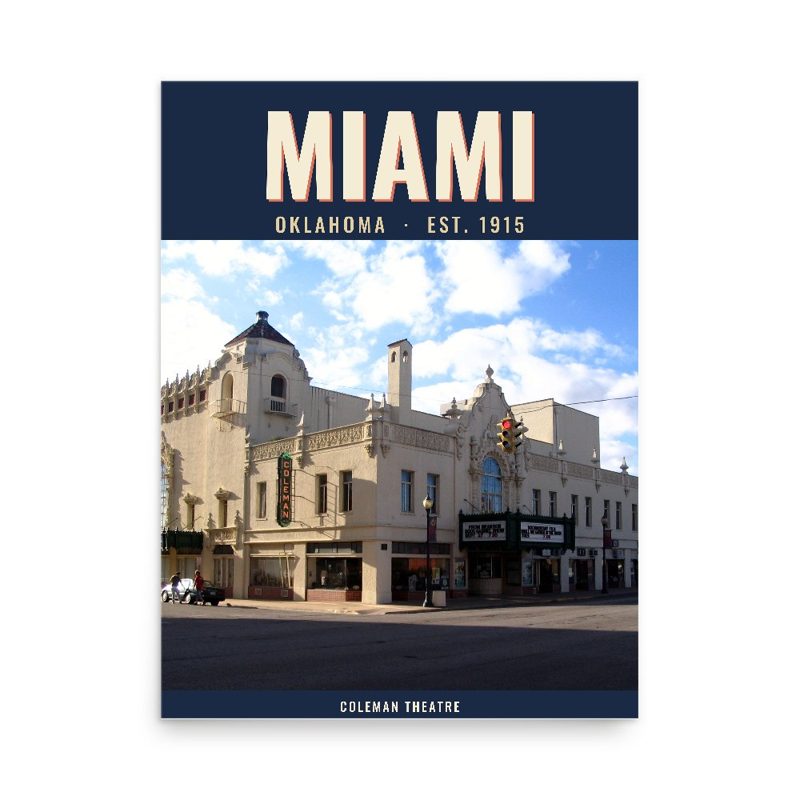
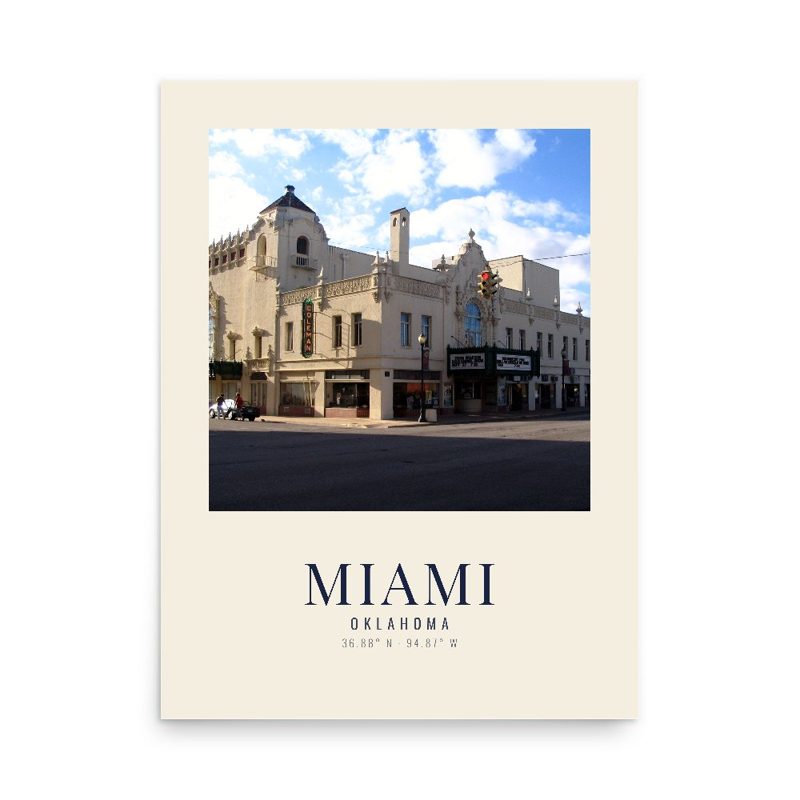
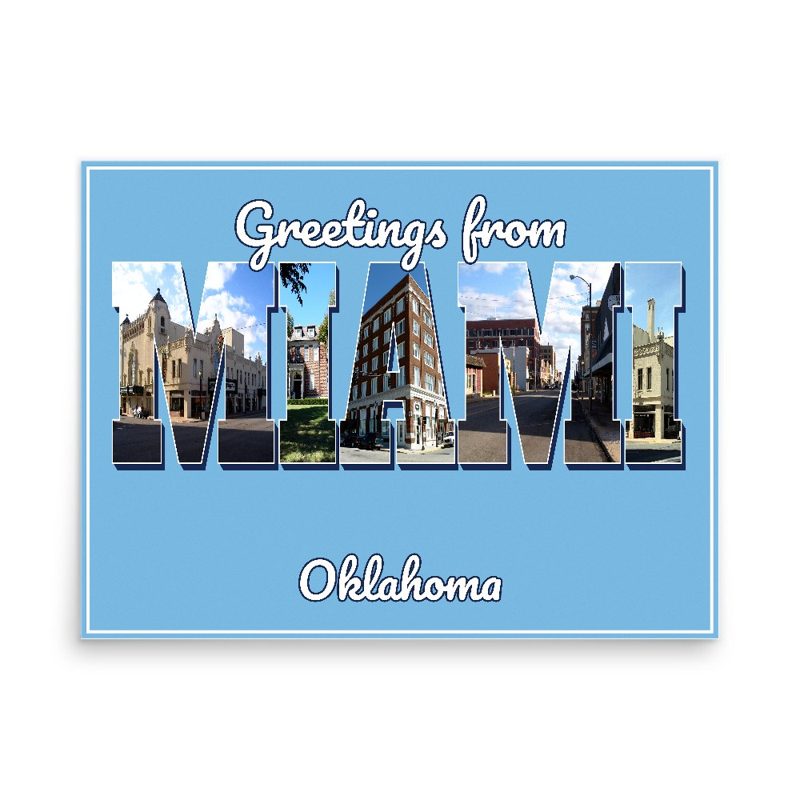
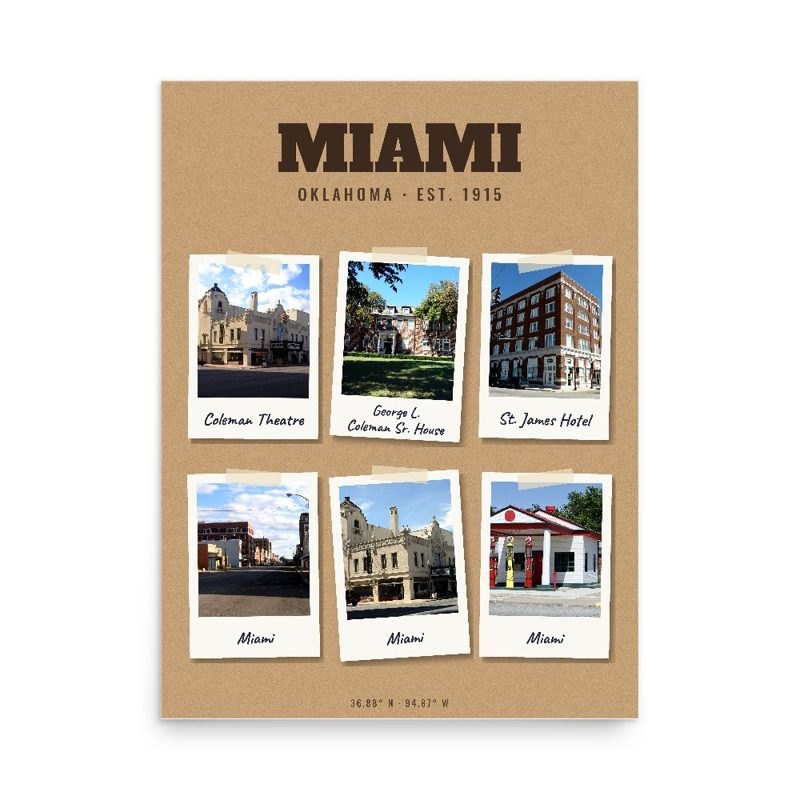
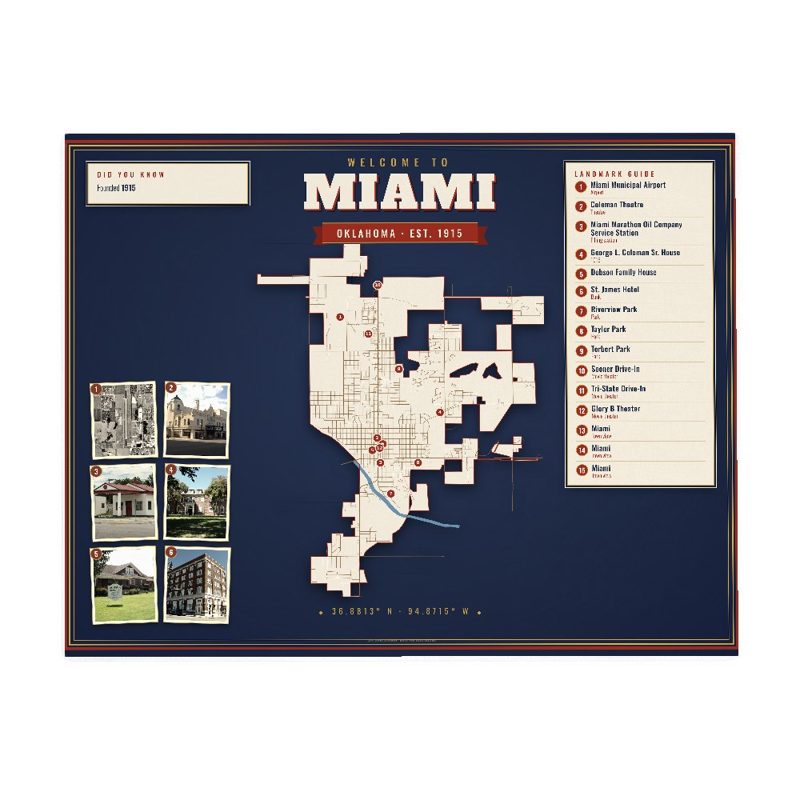

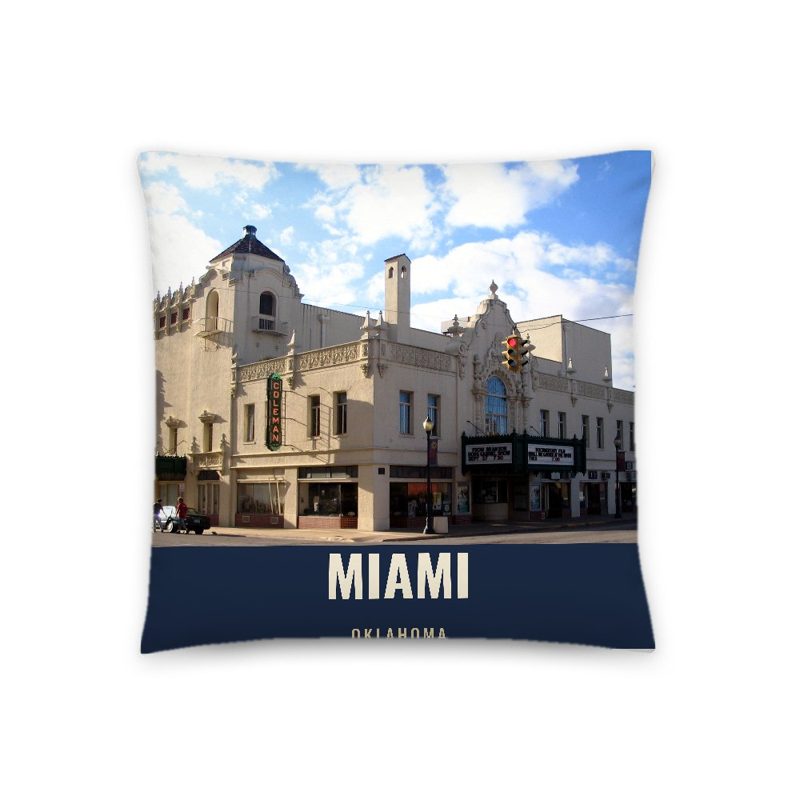
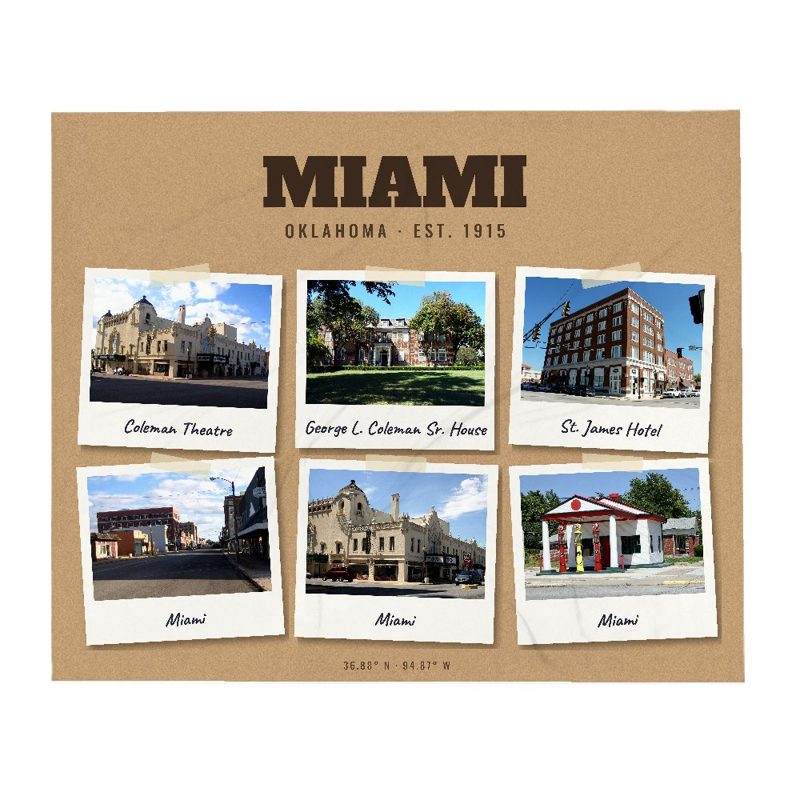
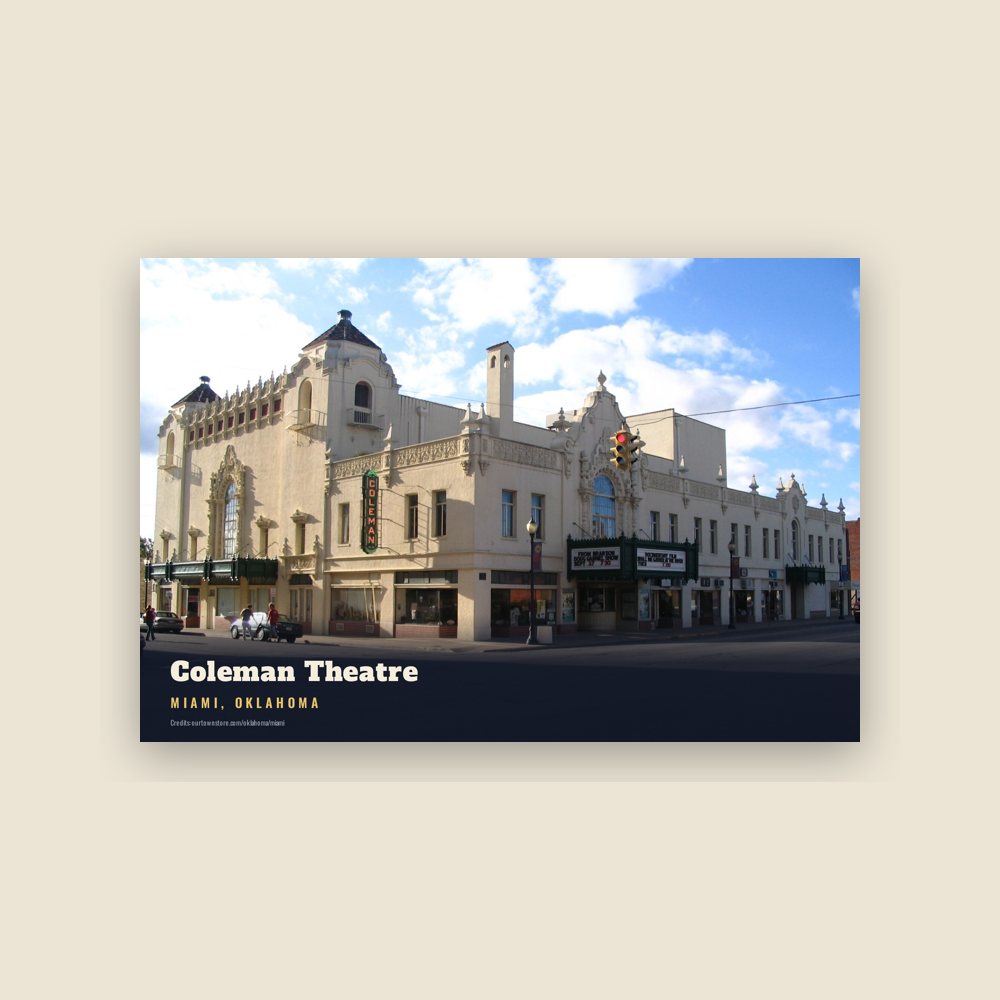

 Coleman Theatre
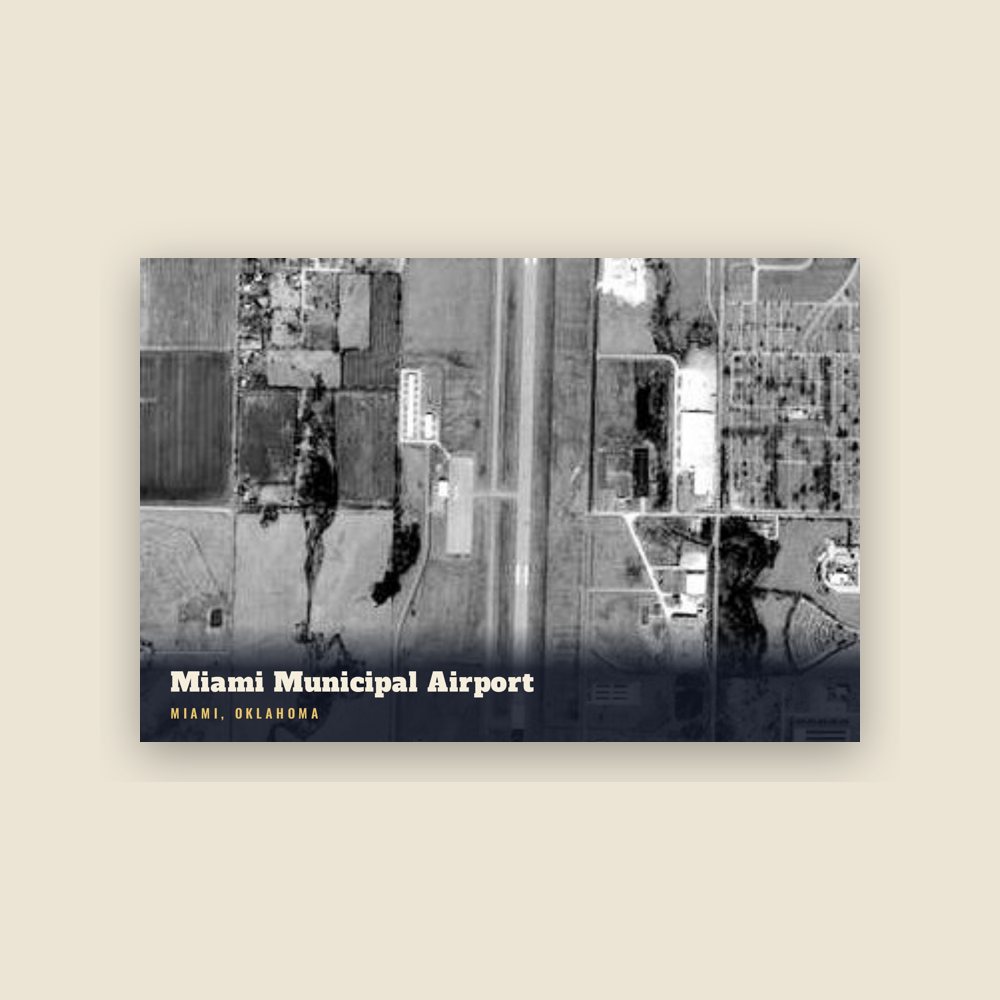
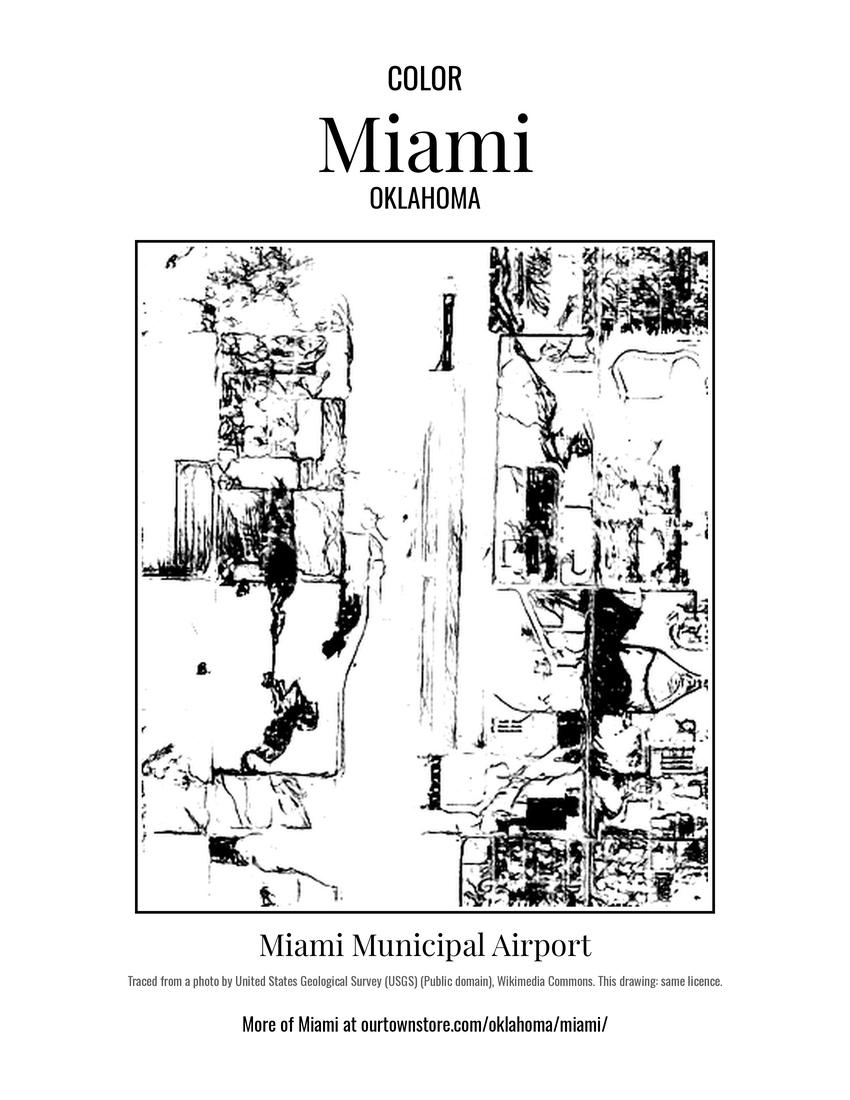 Miami Municipal Airport
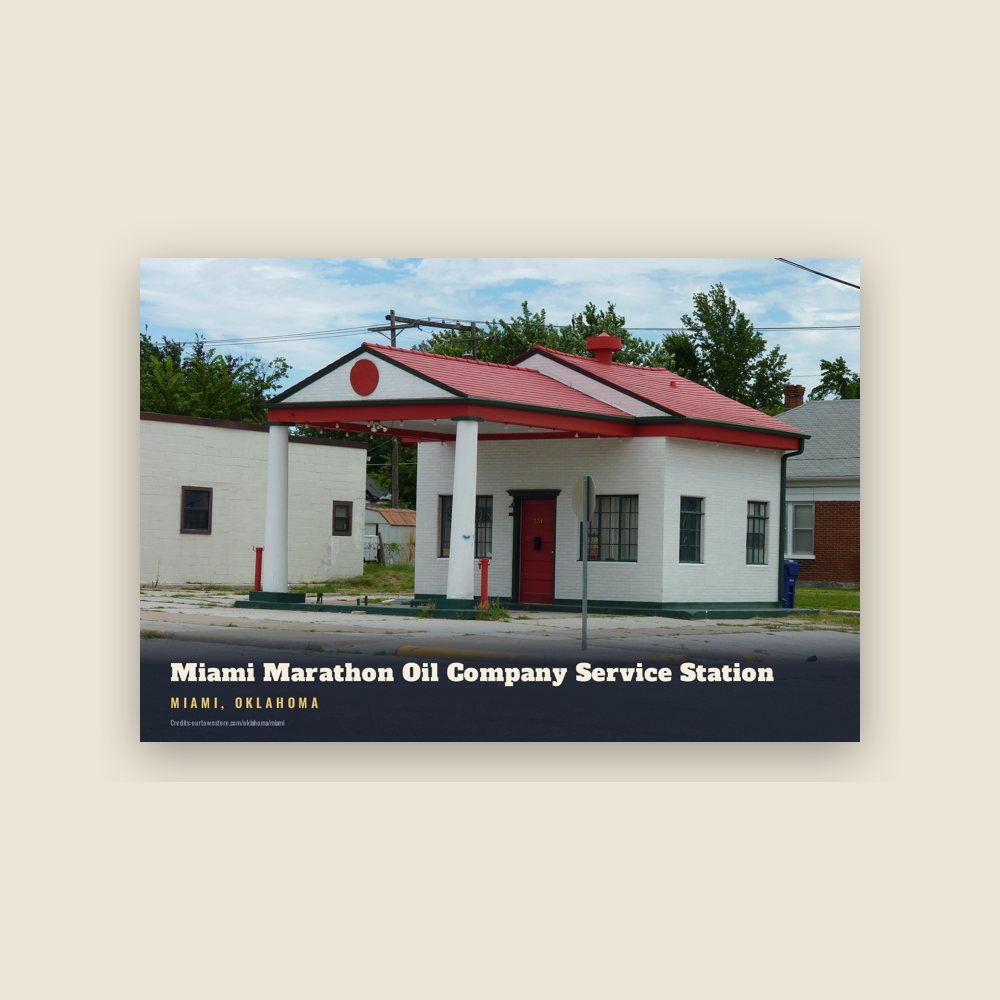
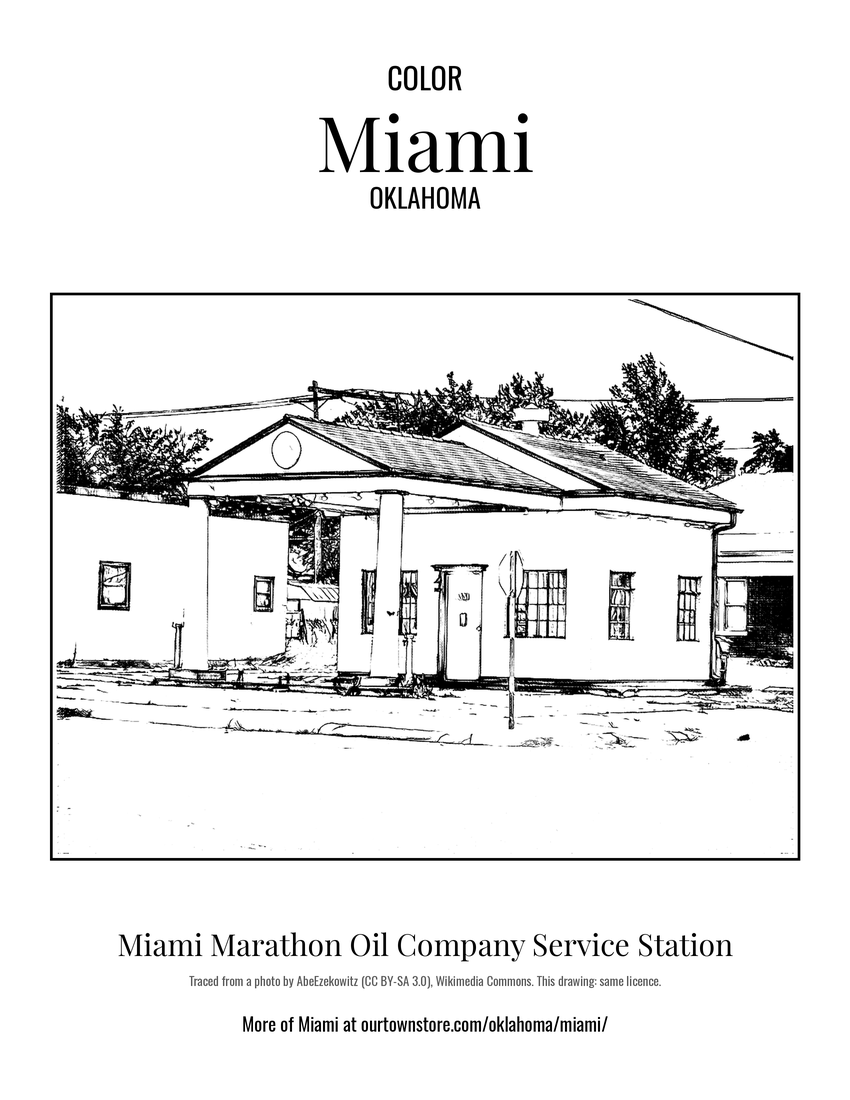 Miami Marathon Oil Company Service Station
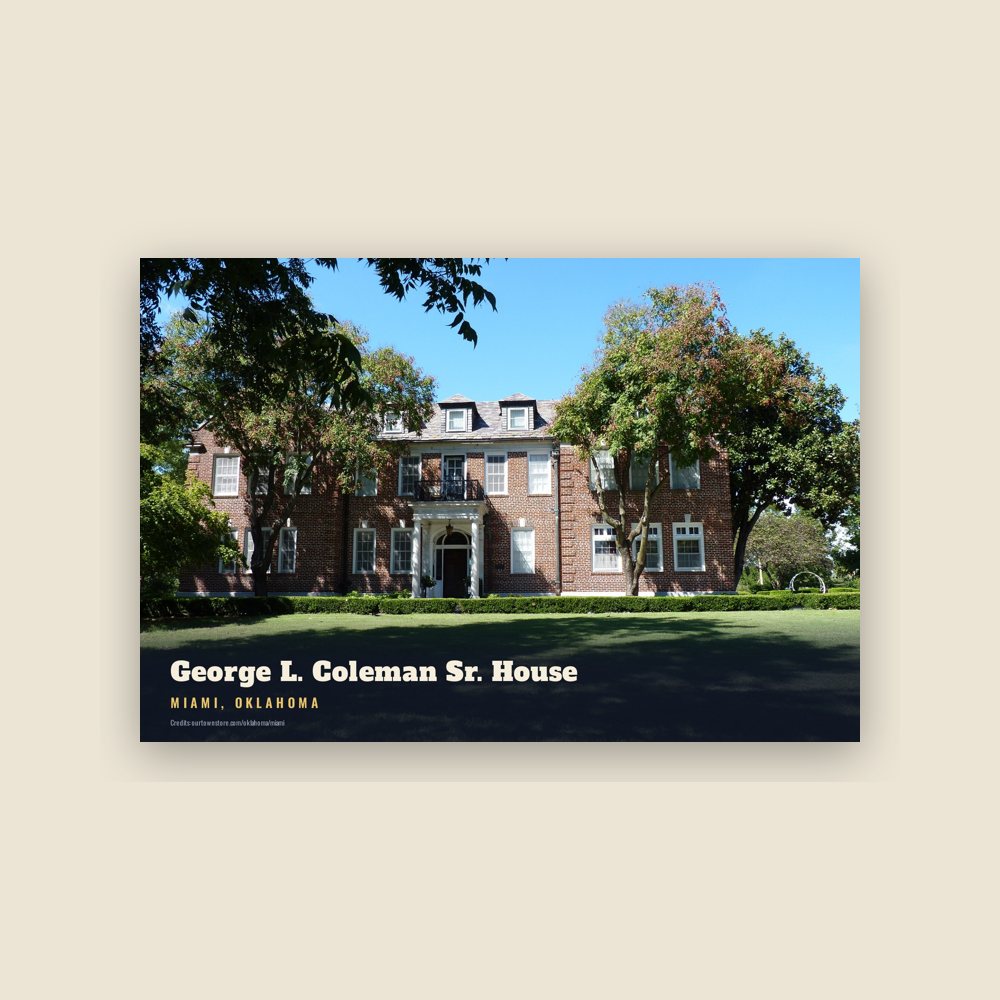
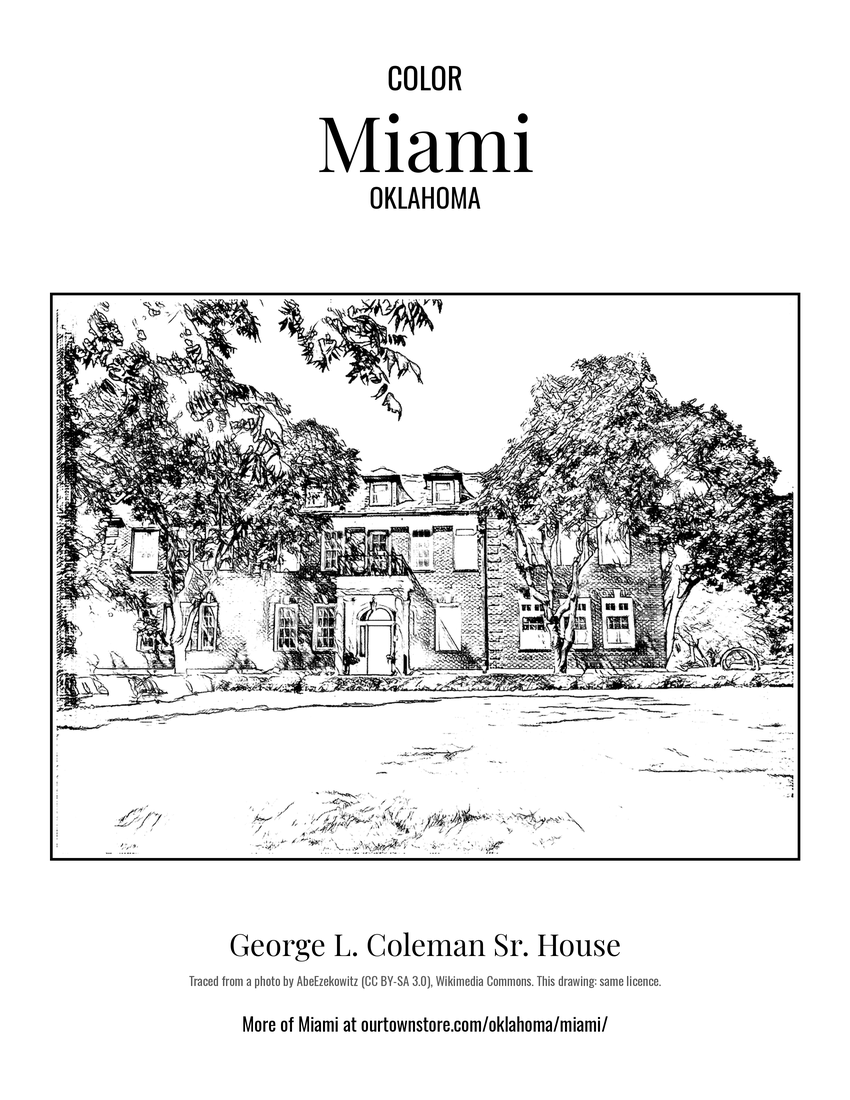 George L. Coleman Sr. House