A short history of Washington Court House
Washington Court House's first settlers appear to have been Edward Smith Sr., and his family, who emigrated from Pennsylvania in 1810. Smith and his family constructed a crude house in the thick woodlands near Paint Creek, but their efforts to clear the land were interrupted by his departure for military service in the War of 1812. Comparatively soon after returning from his martial pursuits, Smith drowned while attempting to cross a flooded creek, but his widow and 10 children survived and prospered despite the absence of their patriarch. Smith's descendants remained prominent in Fayette County for more than a century after his arrival from Pennsylvania, although many had left Washington Court House for other parts of the county. A family residence still stands on U.S. Route 62 not far outside the city's eastern boundary.
In 1833, Washington Court House (then known as Washington) contained a printing office, seven stores, two taverns, two groceries, a schoolhouse, a meeting house, and about 70 residential houses.
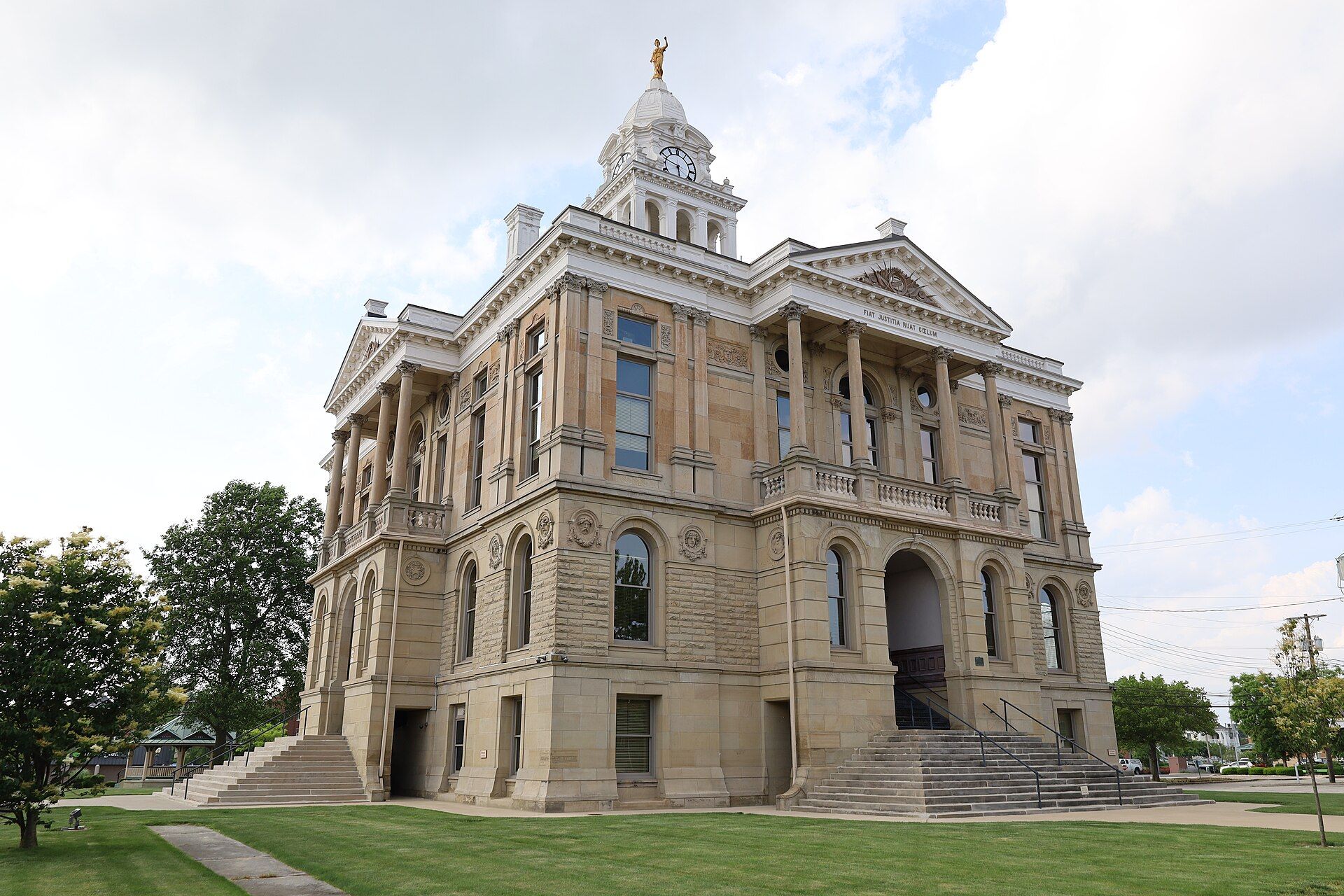
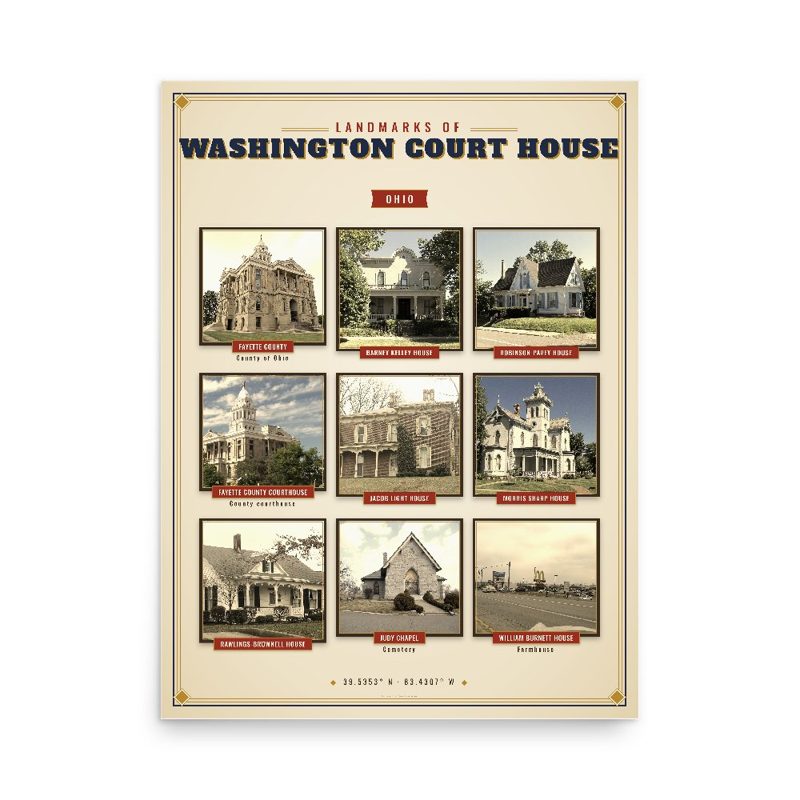
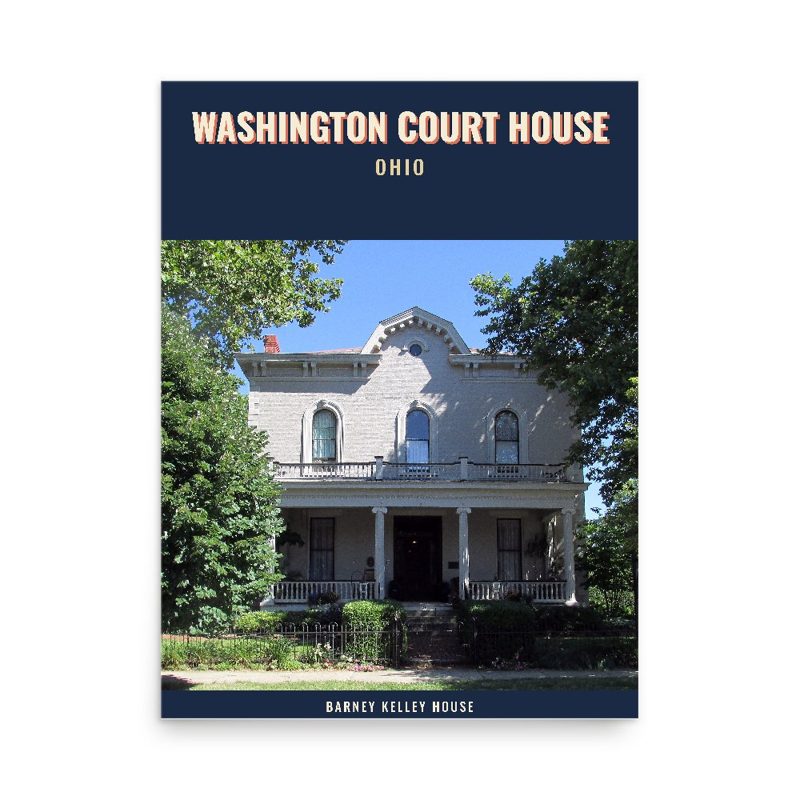
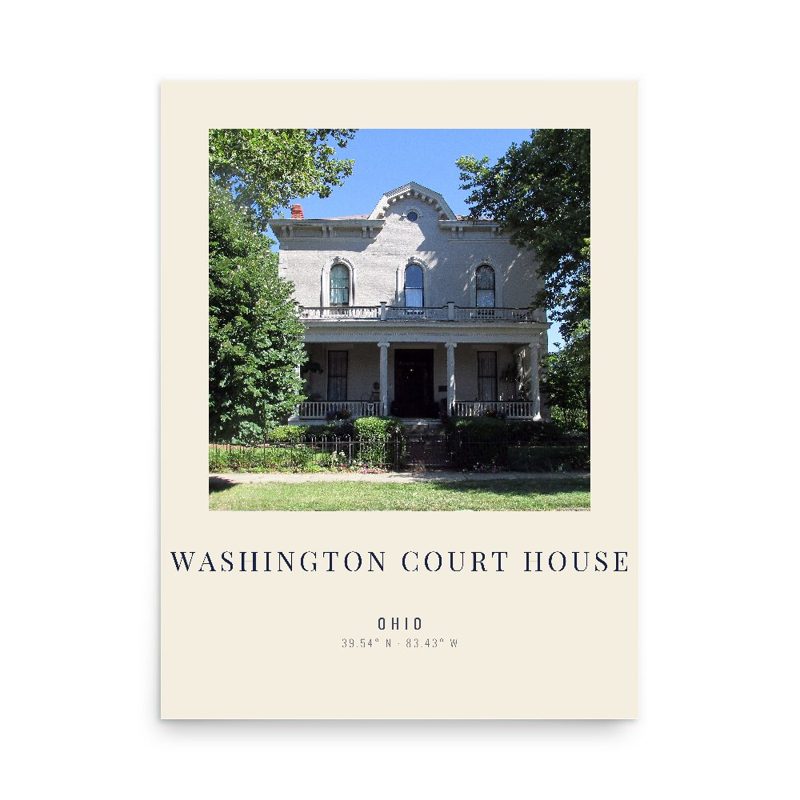
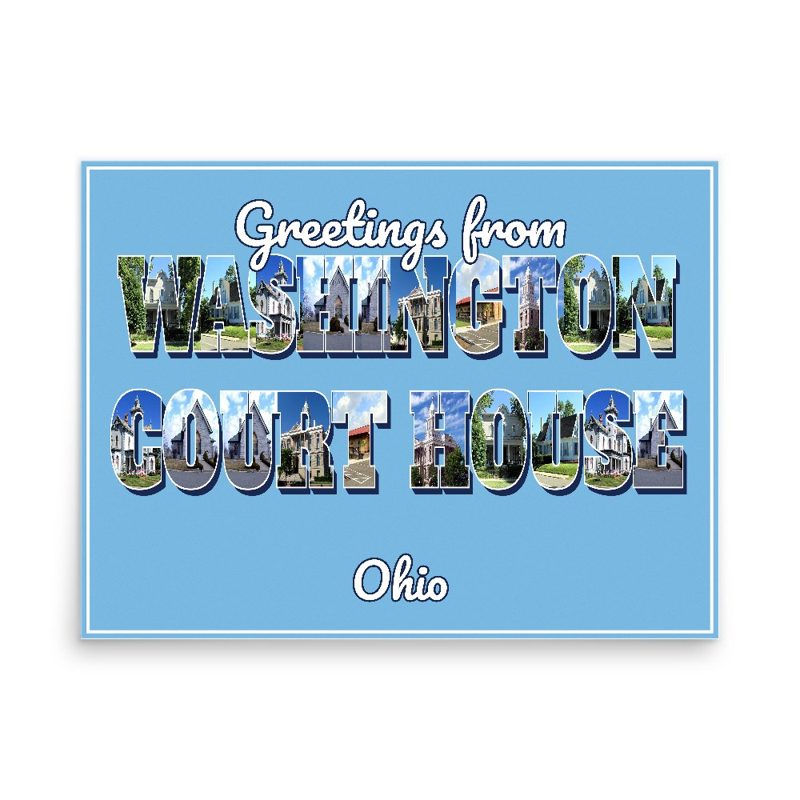
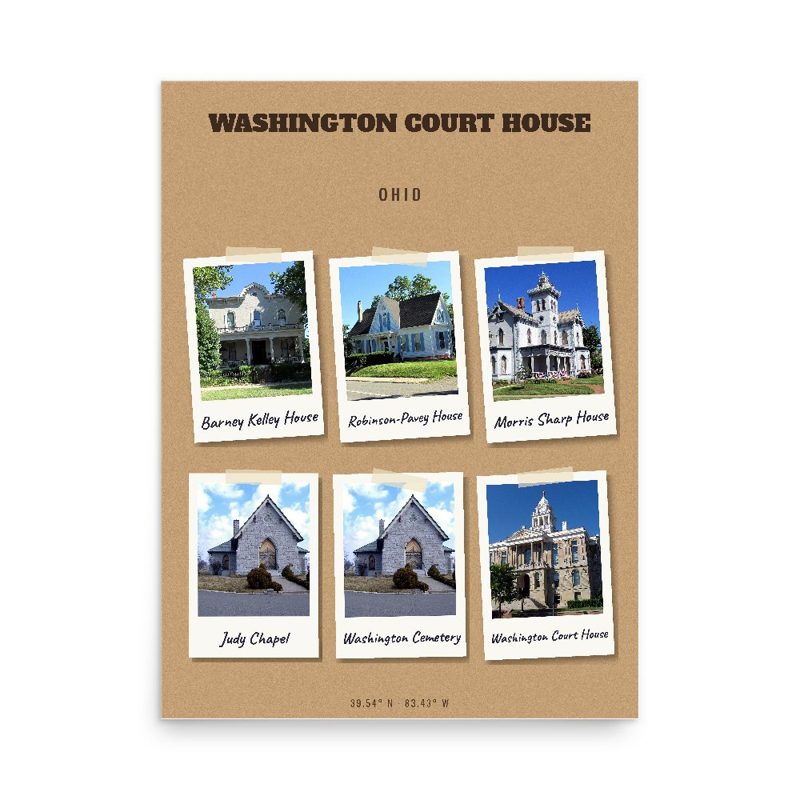
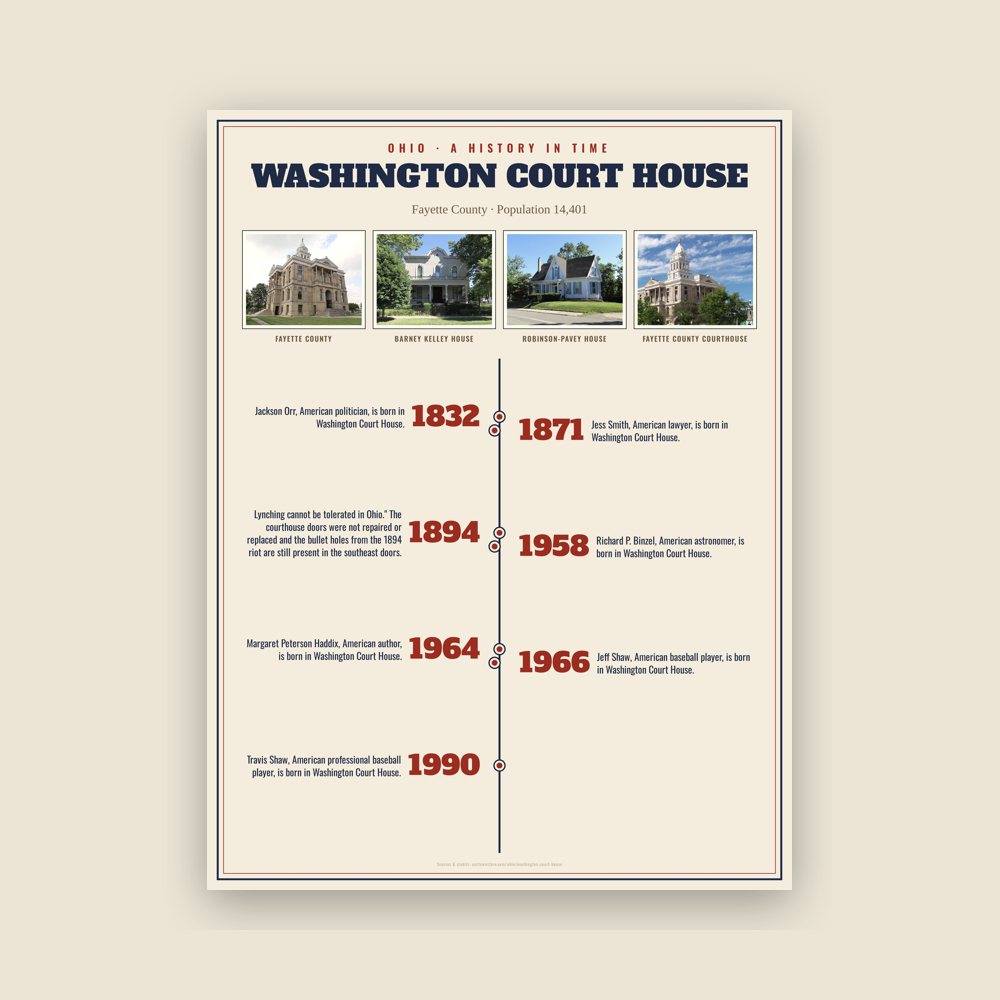
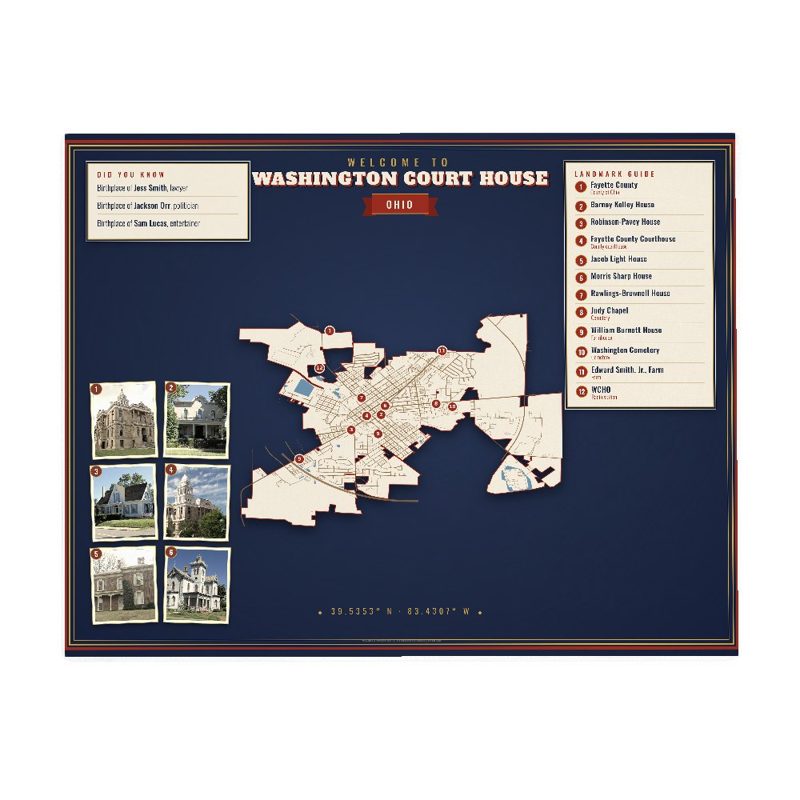
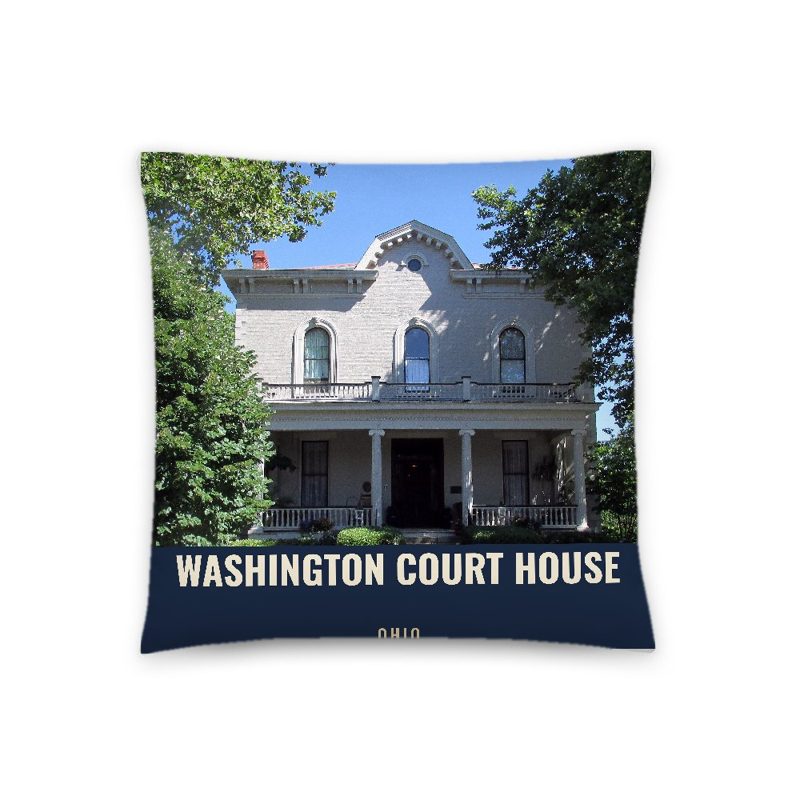
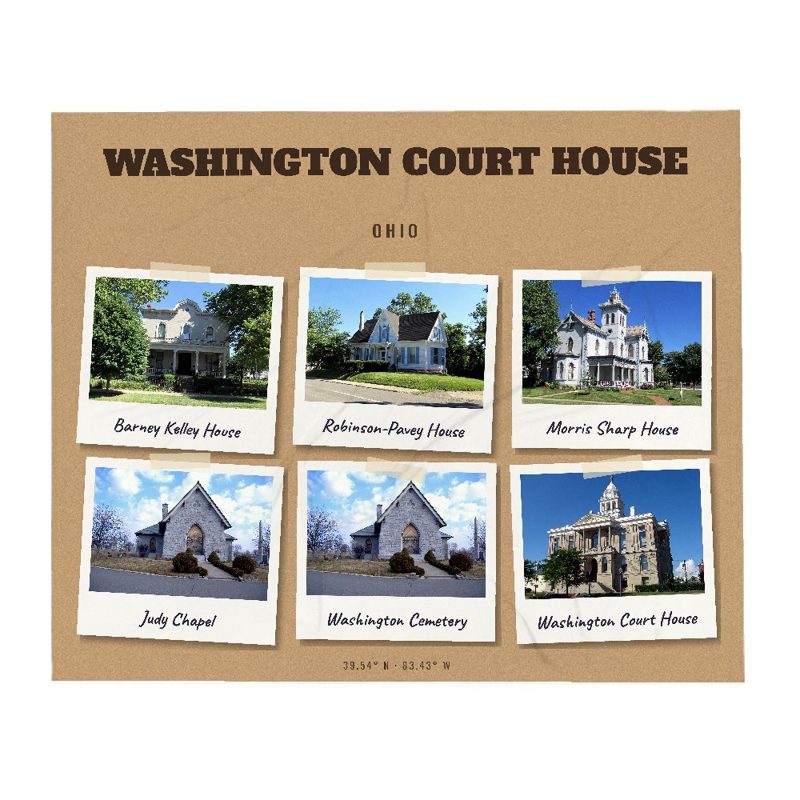
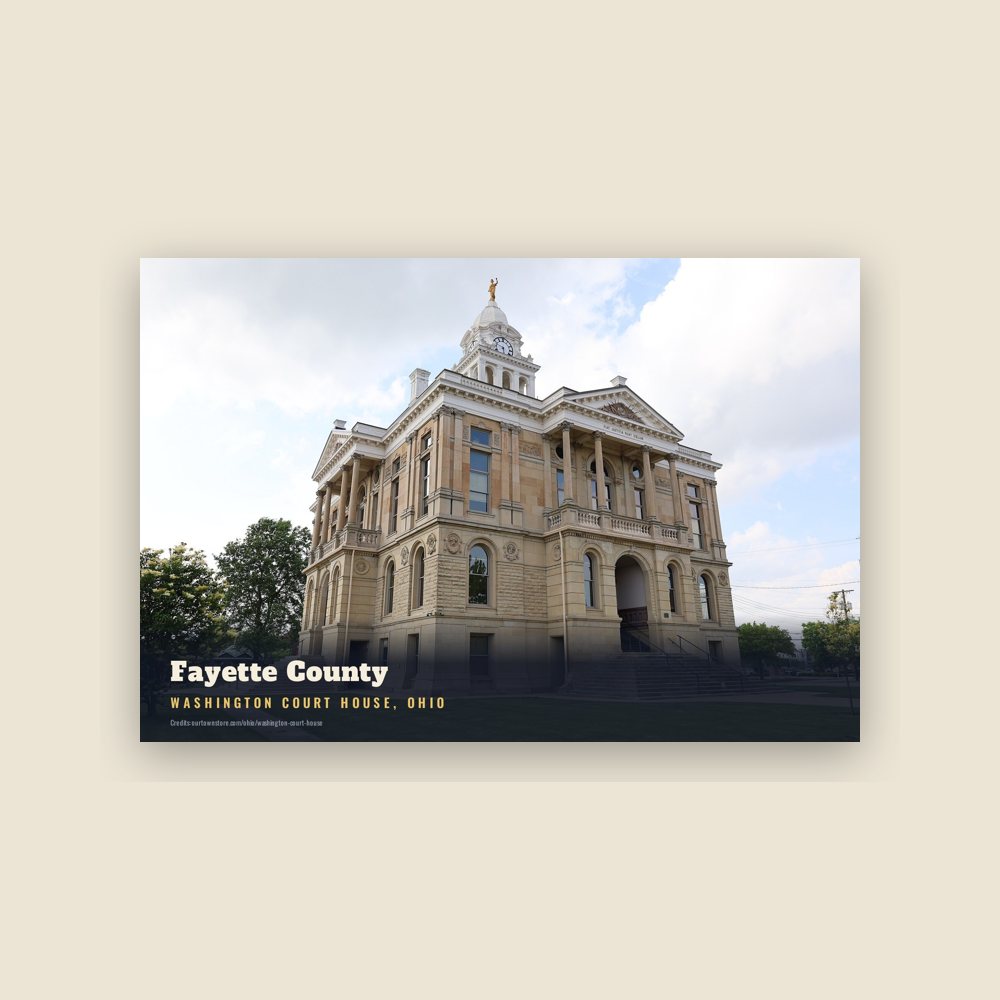
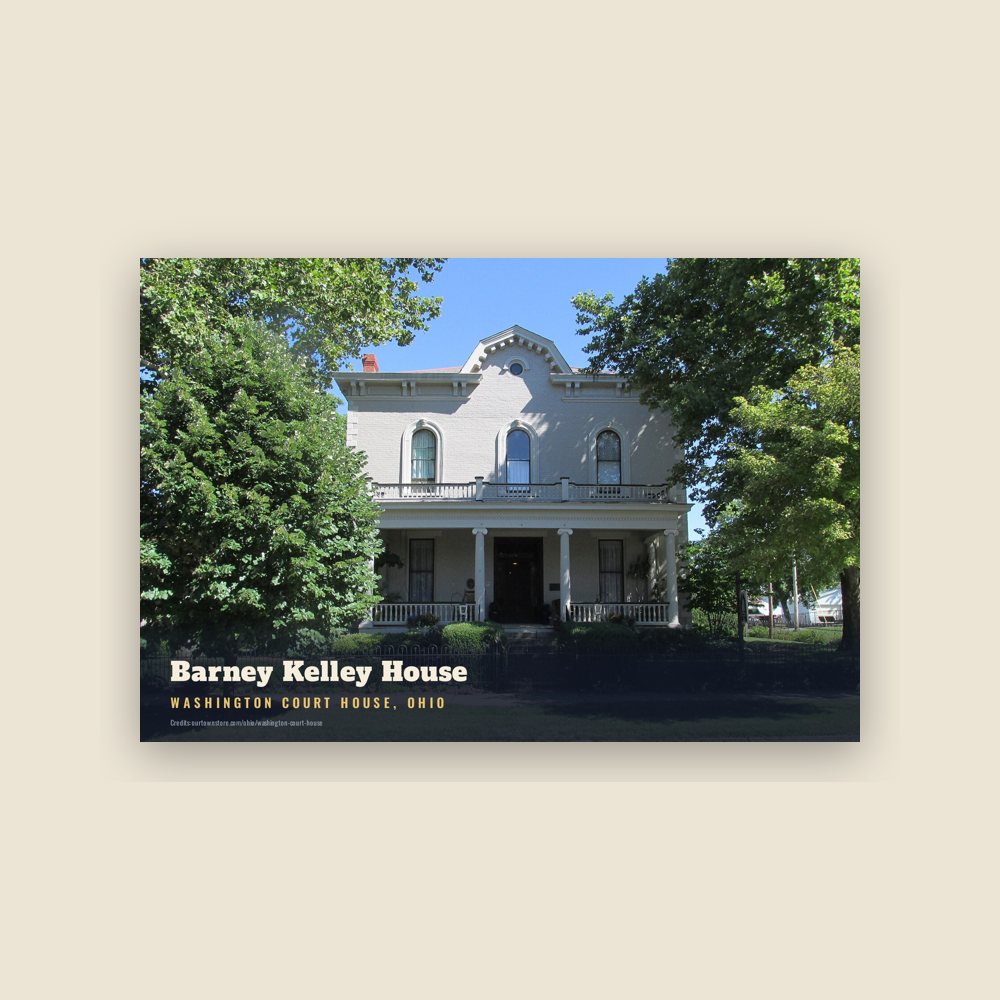
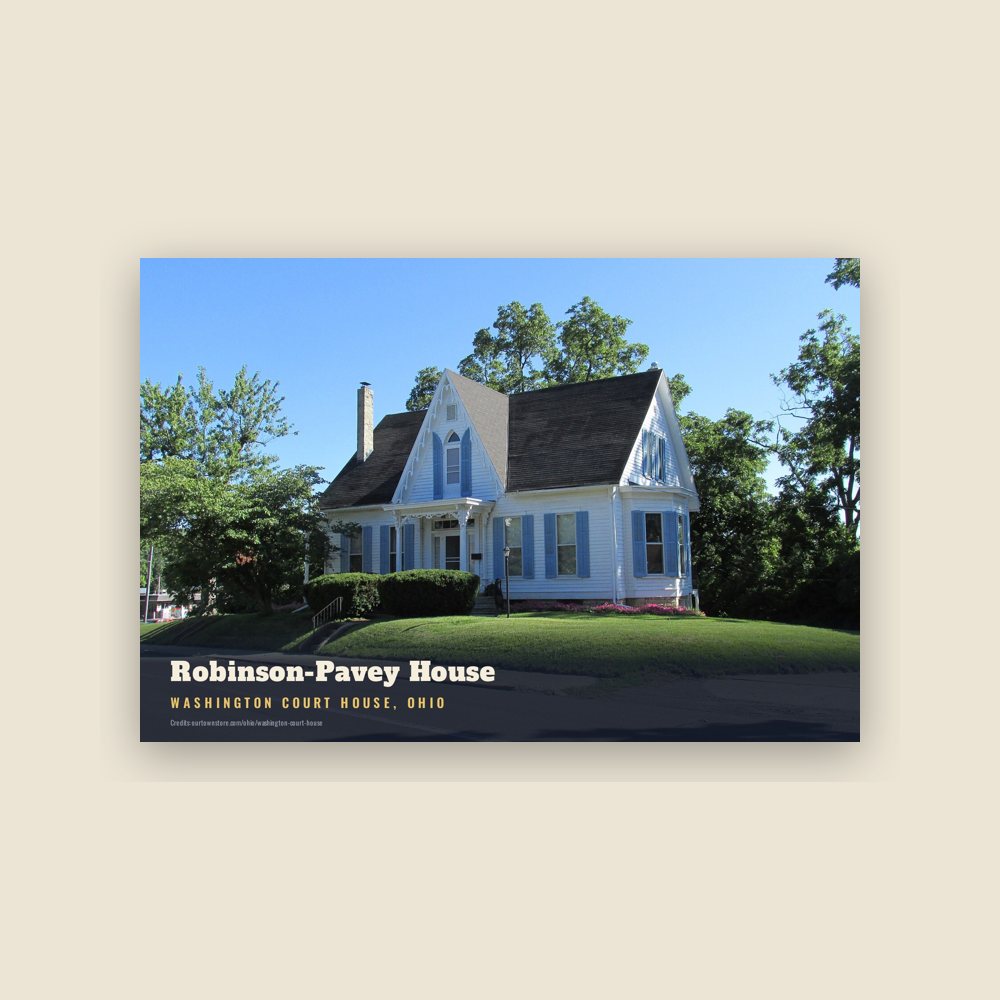
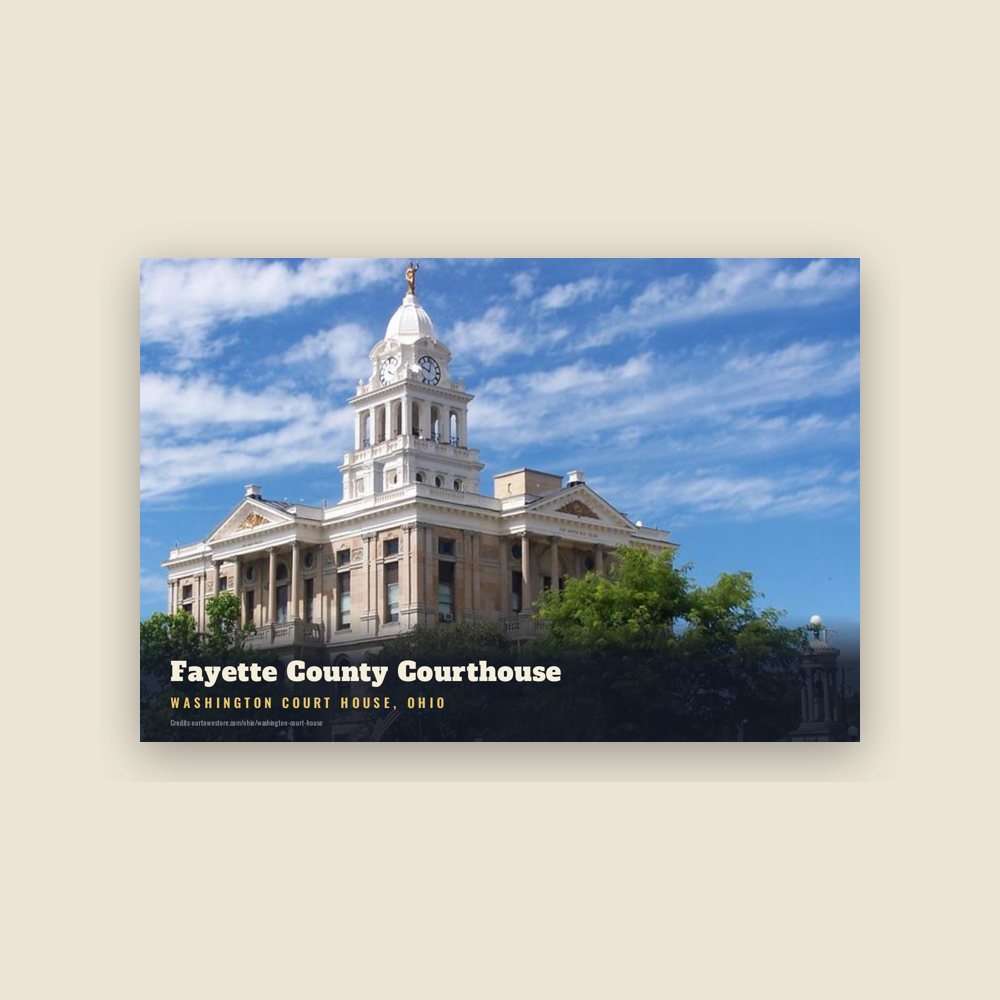
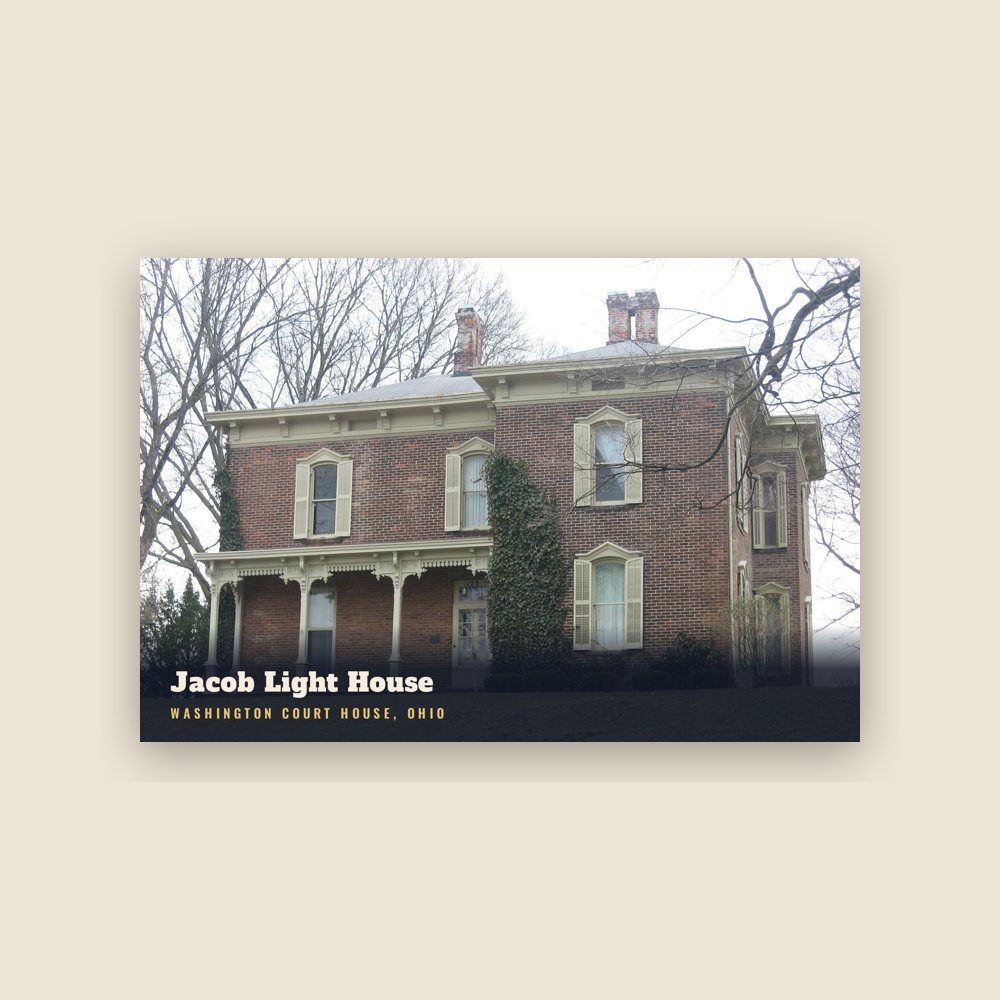
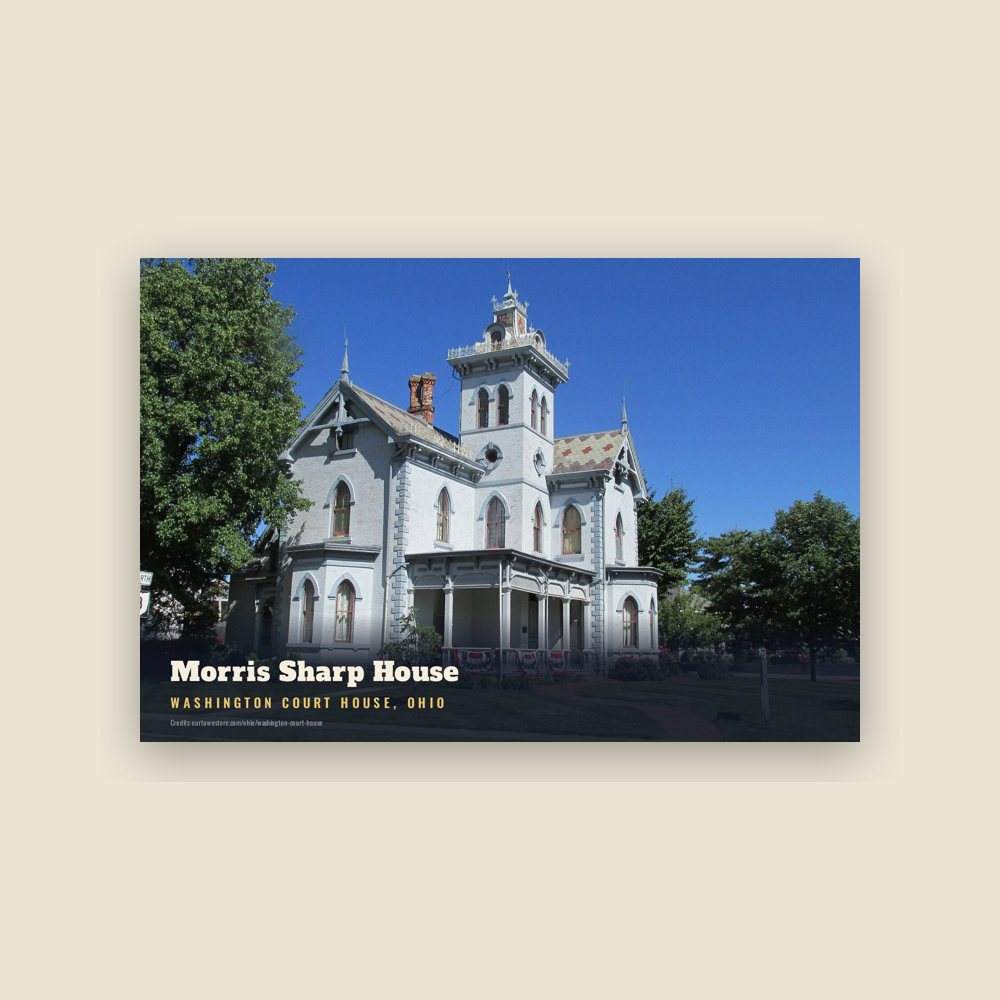
Numerous locations in the city are listed on the National Register of Historic Places. Downtown, the courthouse square has been named a historic district, and a similar designation has been accorded the city cemetery. Nine individual buildings are separately listed on the register: Judy Chapel at the cemetery, the former Washington School, the Fayette County Courthouse, the former William Burnett House (no longer standing), and the Barney Kelley, Jacob Light, Rawlings-Brownell, Robinson-Pavey, and Morris Sharp houses.
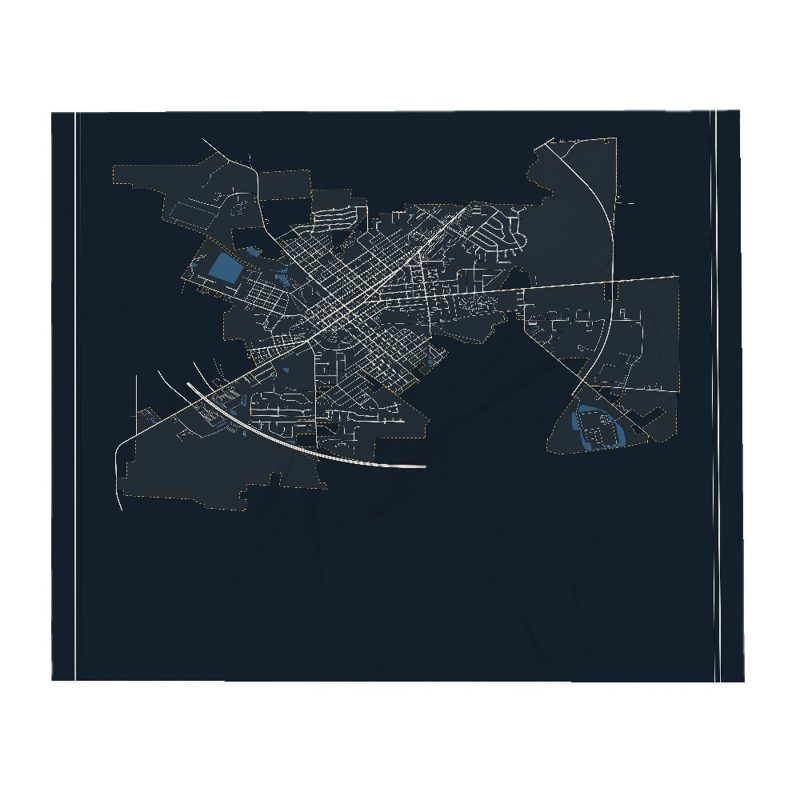
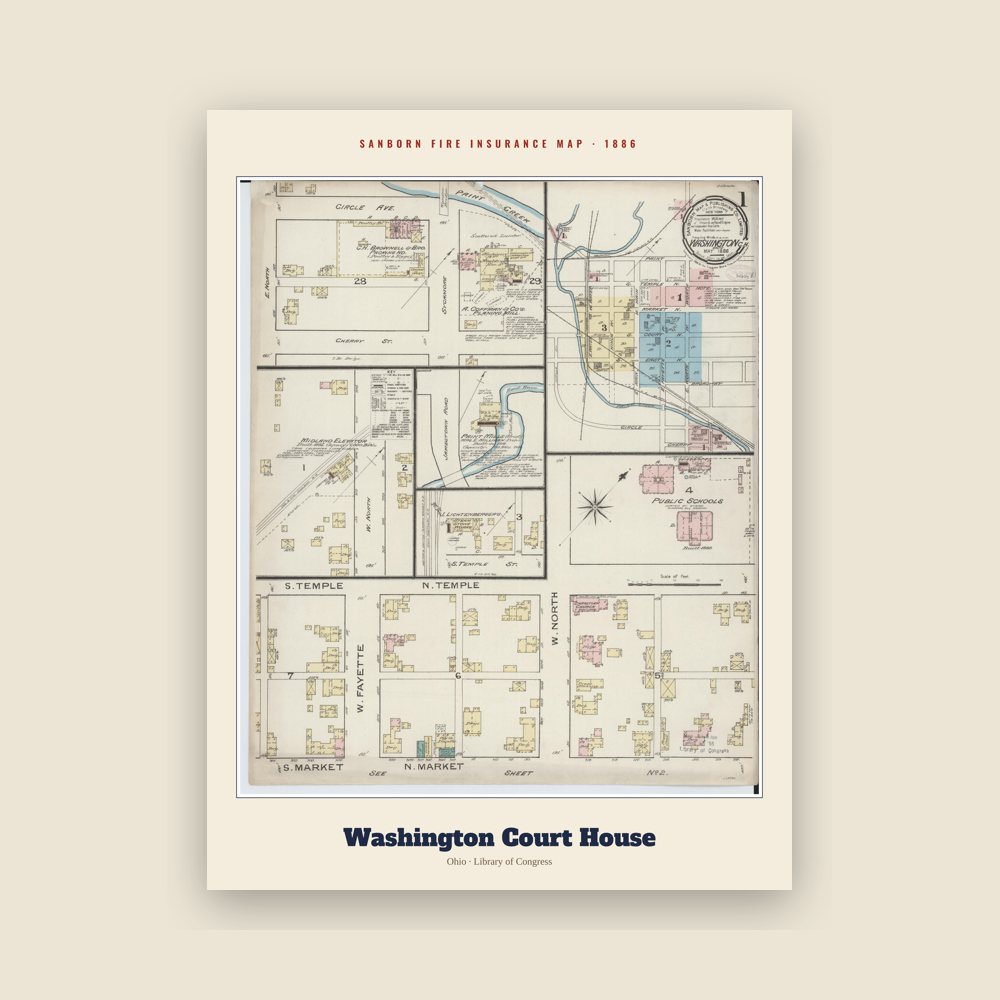
Streets within the downtown part of the city around the courthouse building are arranged northeast–southwest and northwest–southeast, rather than east–west and north–south, so that each side of the courthouse receives some sunlight every day of the year.
Adapted (trimmed) from the Wikipedia article Washington Court House, Ohio, revision 1376399361 by its contributors, licensed CC BY-SA 4.0.