Stow is named for Joshua Stow, its original proprietor. Landmarks include Kent State University Airport. Stow is the birthplace of Larry Csonka, player of football.
- CountySummit County
- Population34,483 (2020 U.S. Census)
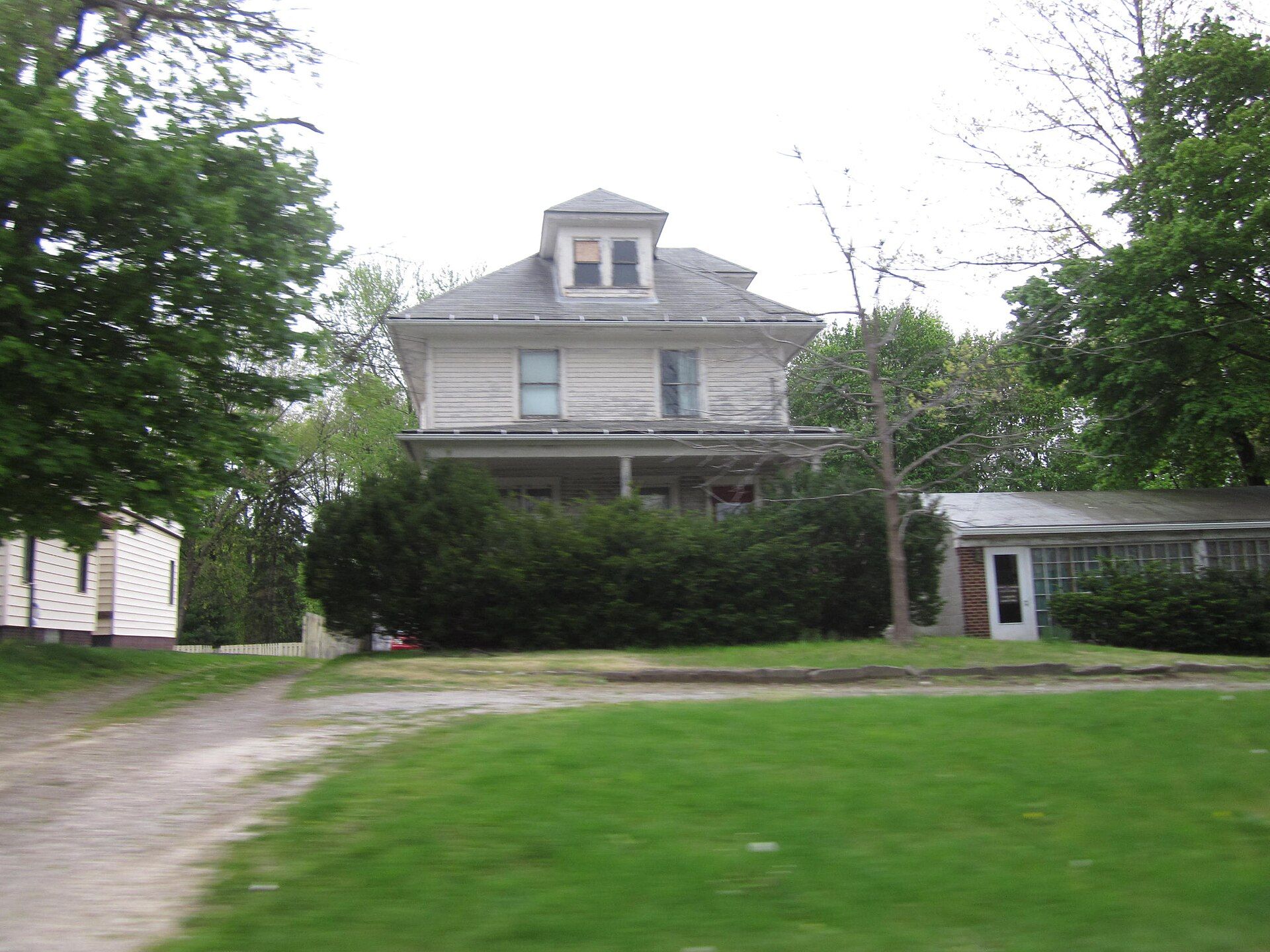
Stow is named for Joshua Stow, its original proprietor. Landmarks include Kent State University Airport. Stow is the birthplace of Larry Csonka, player of football.
Stow, Ohio gifts and souvenirs: 26 designs made from Stow's own map, landmarks and history, from $16 to $95. Printed to order and shipped free in the USA.
| Popular | Price |
|---|---|
| Stow Hometown Ornament | $23 |
| Stow Vintage Travel Poster | from $40 |
| Stow Varsity Crewneck | from $57 |
| Stow Est. Tee | from $33 |
| Stow Town Line Mug | from $26 |
| Stow Market Tote | $37 |
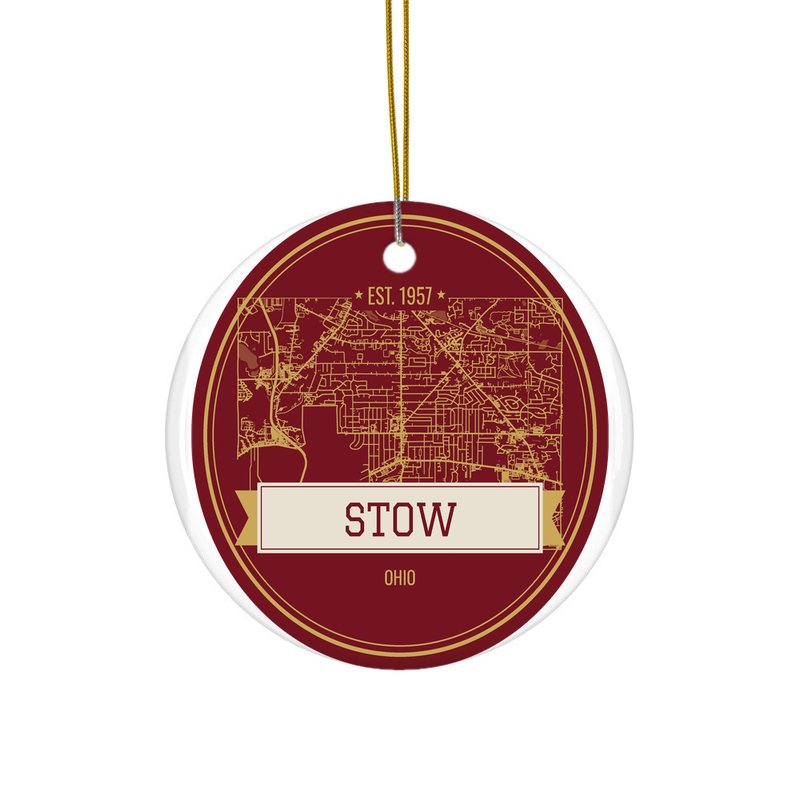
Ceramic keepsake, gold ribbon, in 3 styles
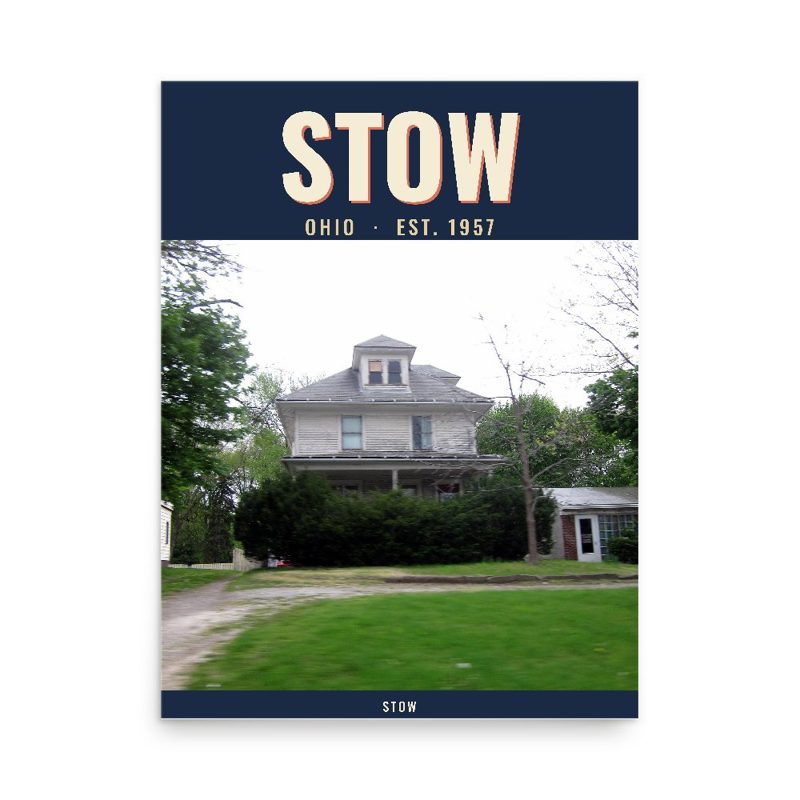
Its landmark photo in a classic travel-poster layout
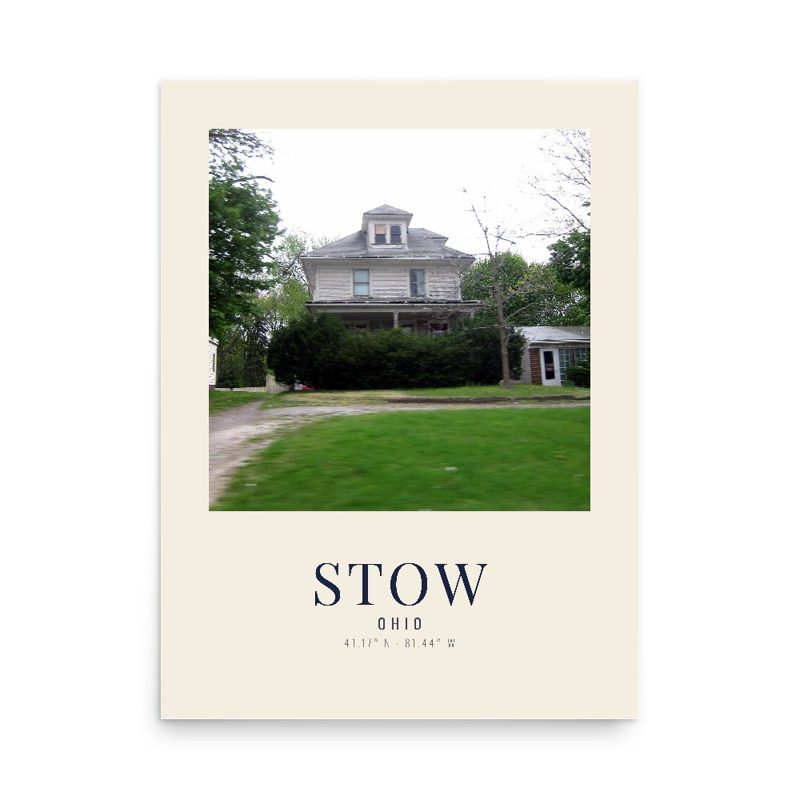
A local landmark photo as a gallery print
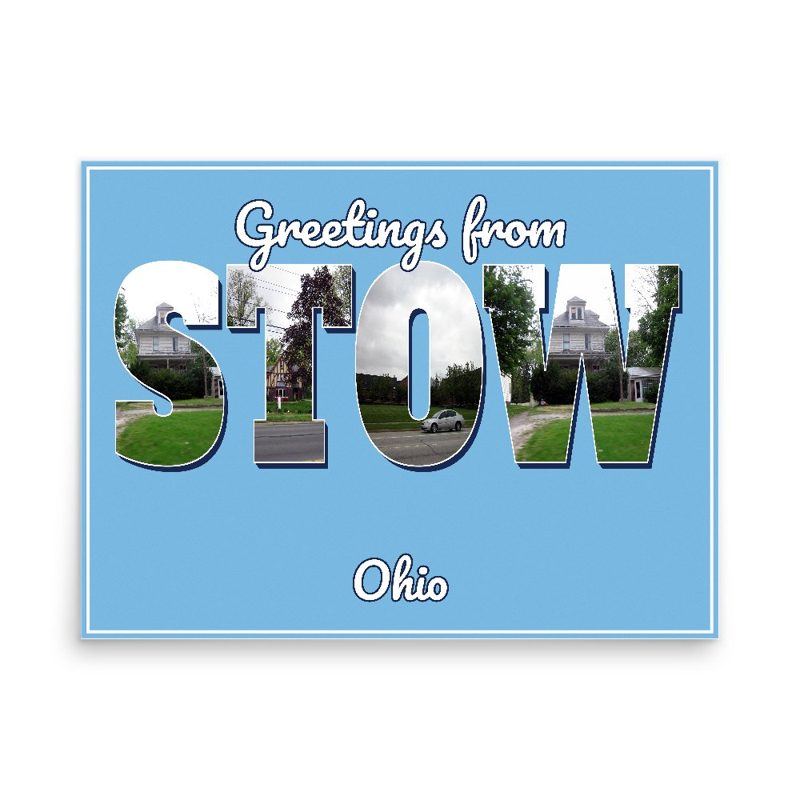
Classic large-letter postcard art, filled with local photos
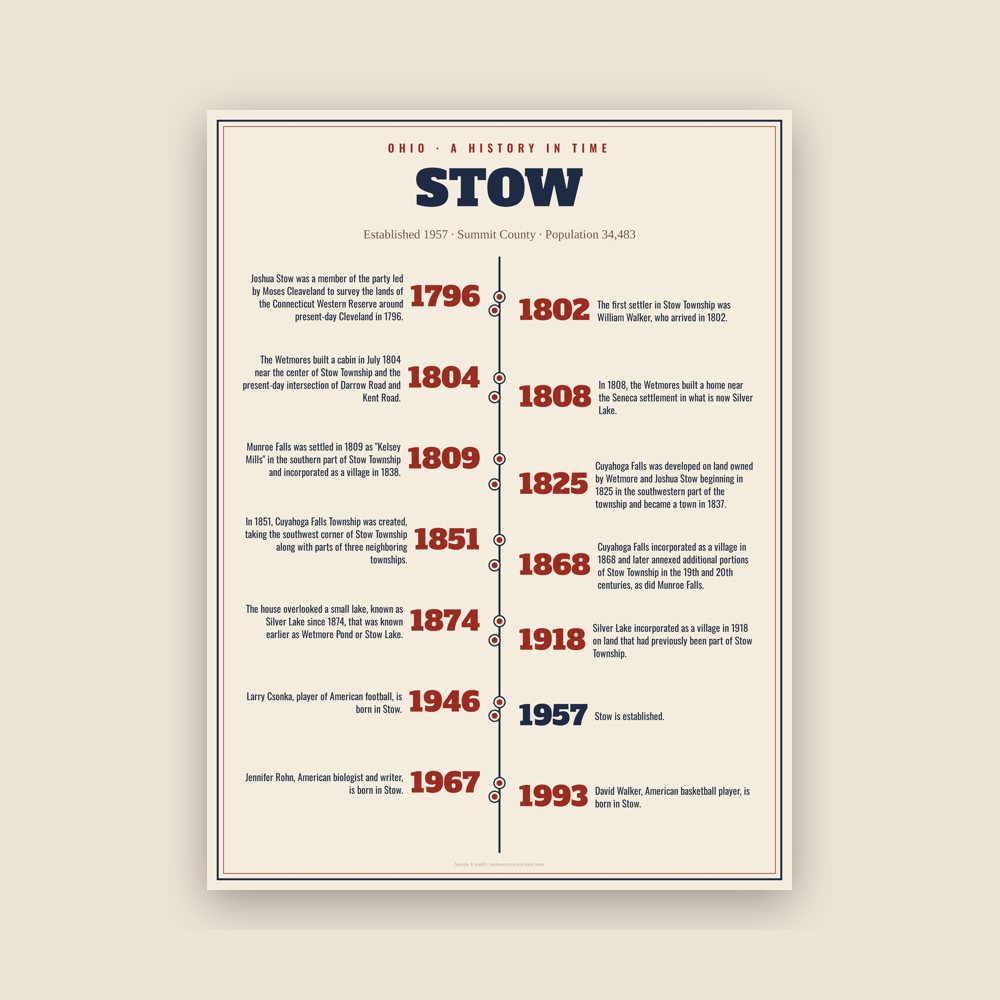
The town's story in dates, from its own records, for home or classroom
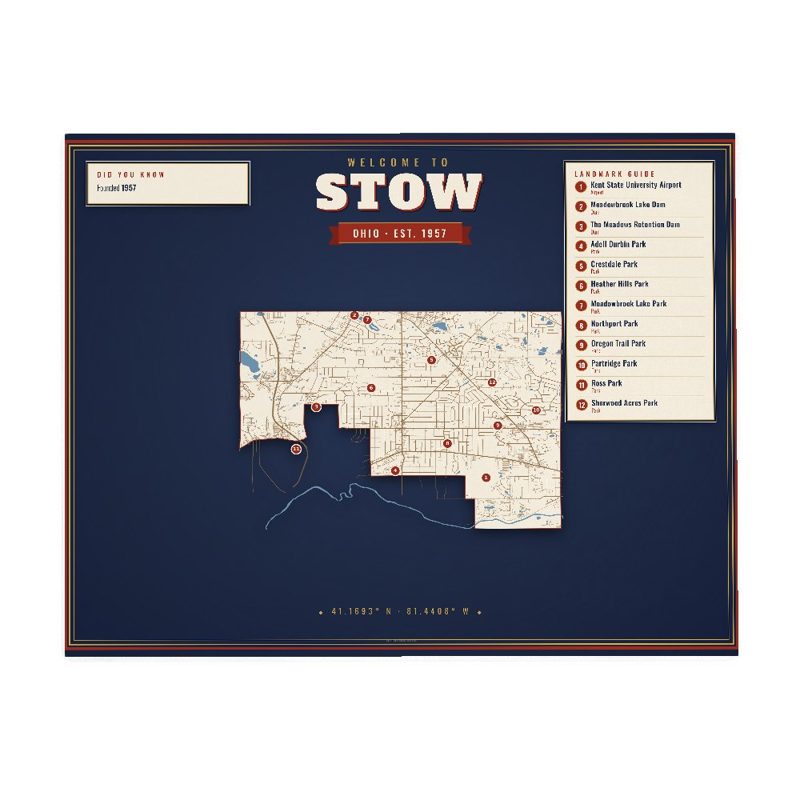
Map of local landmarks, washable fabric
Heavy-blend fleece, street map printed on the back
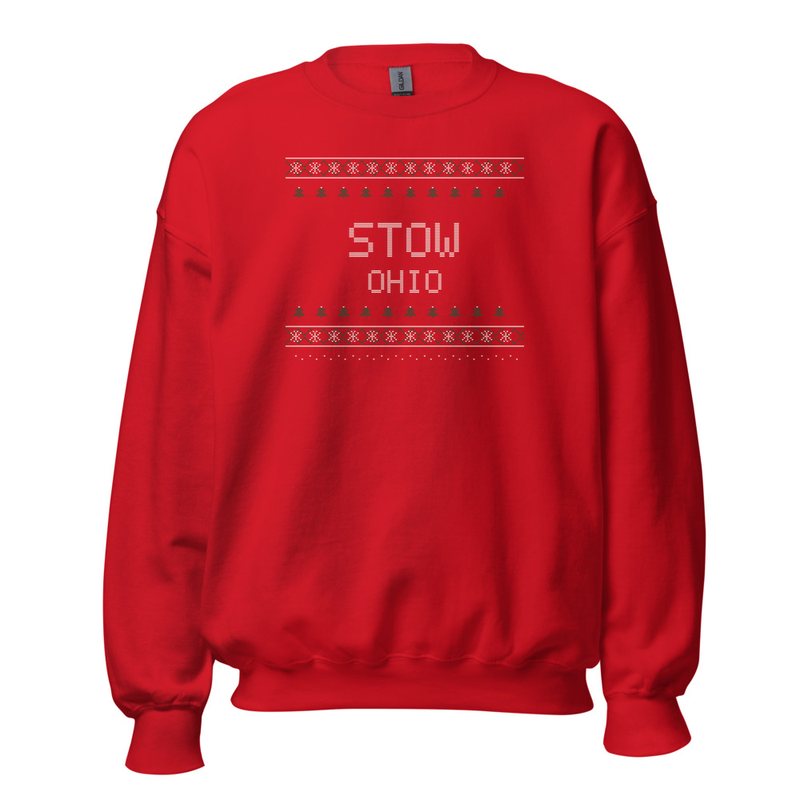
Red heavy-blend crewneck, knit-stitch town print
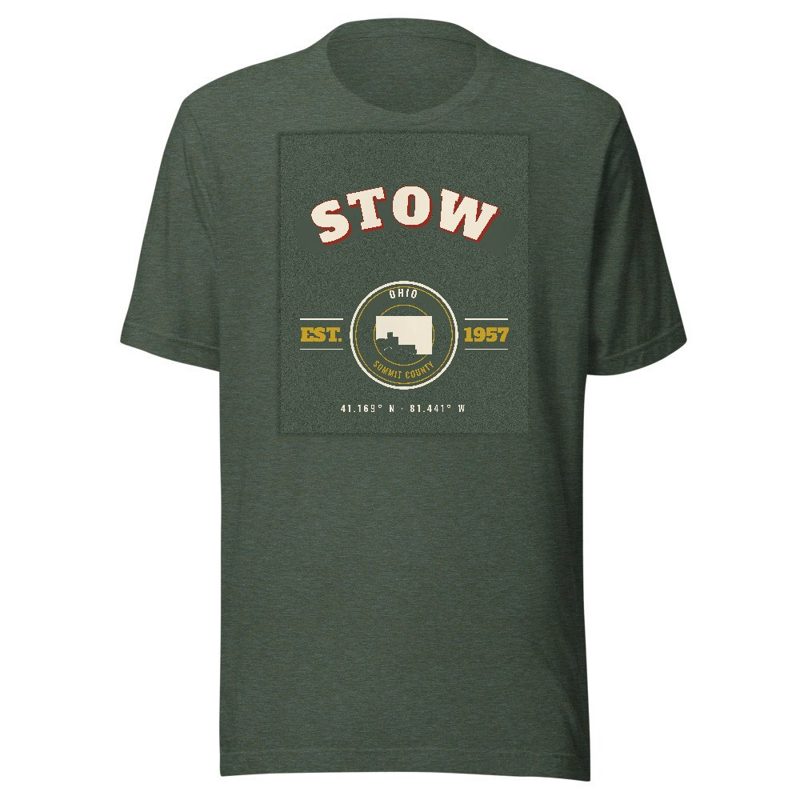
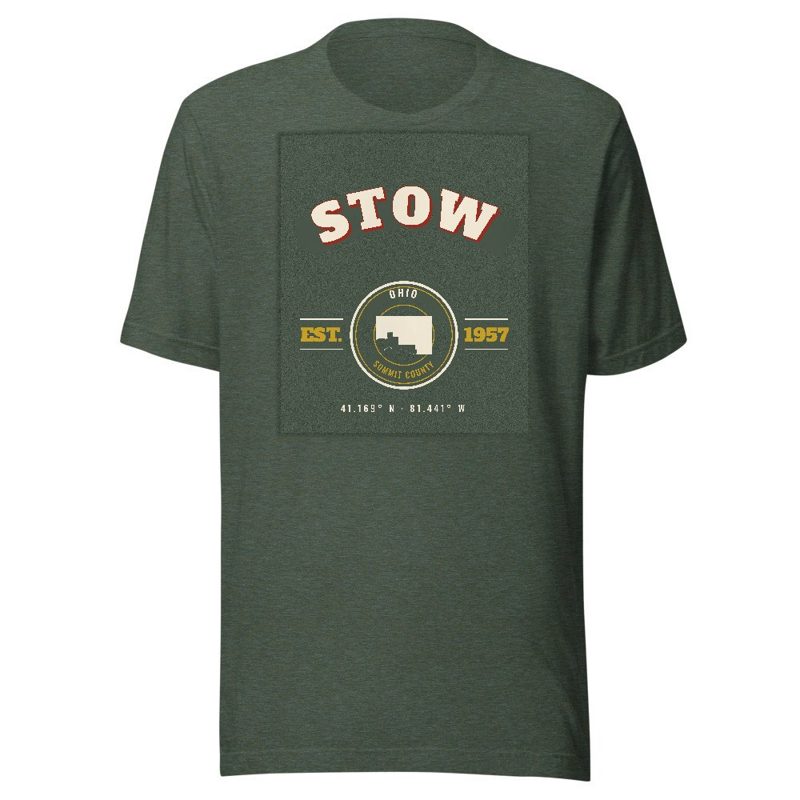
Soft Bella+Canvas jersey
Kids' Bella+Canvas jersey, youth sizes
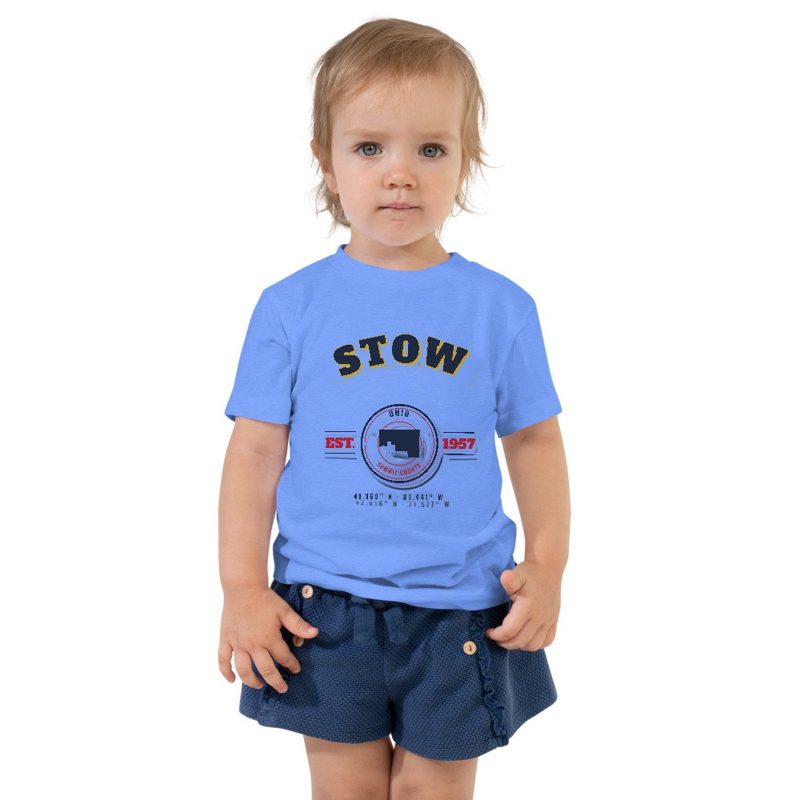
Bella+Canvas toddler jersey
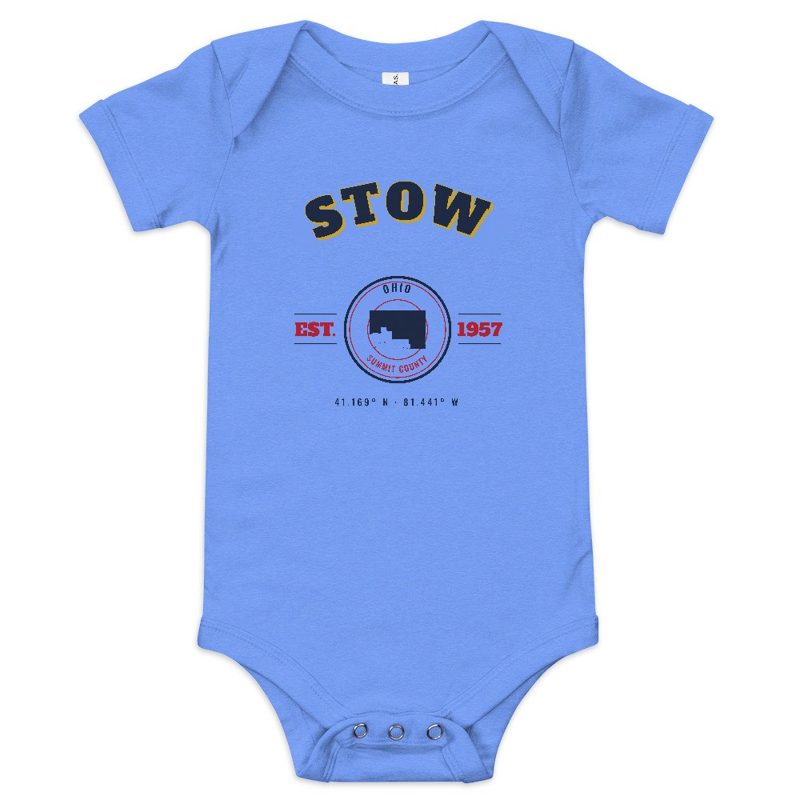
Bella+Canvas baby bodysuit
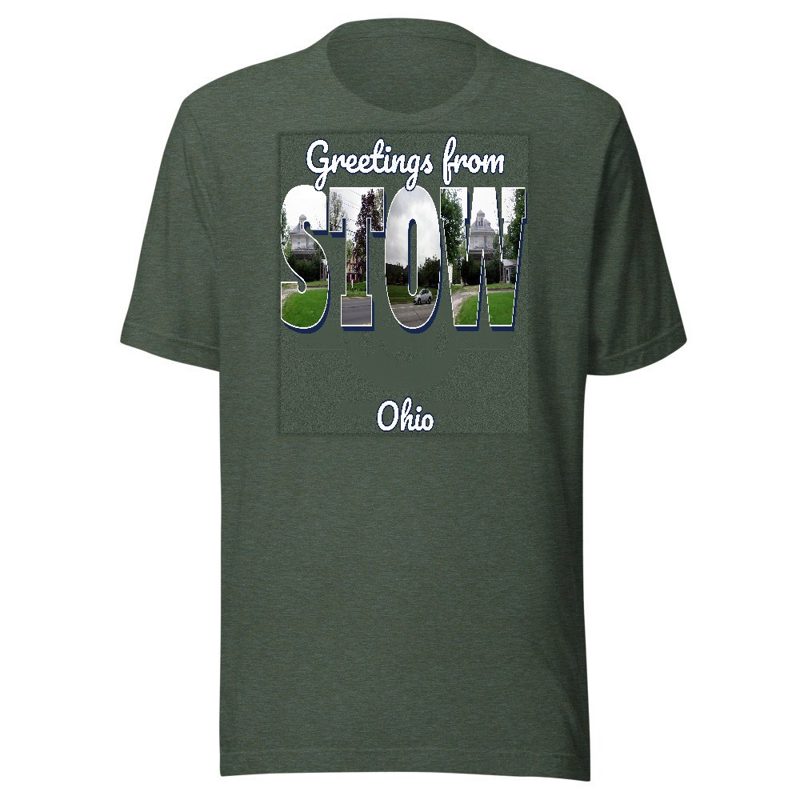
Large-letter postcard art filled with local photos
Glossy ceramic, dishwasher safe
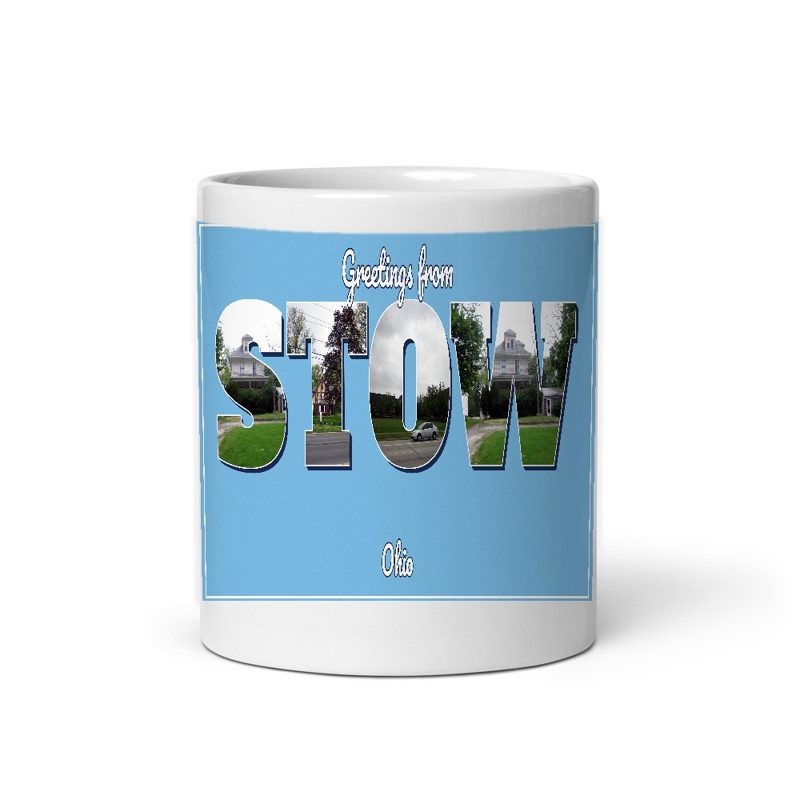
Large-letter postcard art filled with local photos, 11 oz ceramic
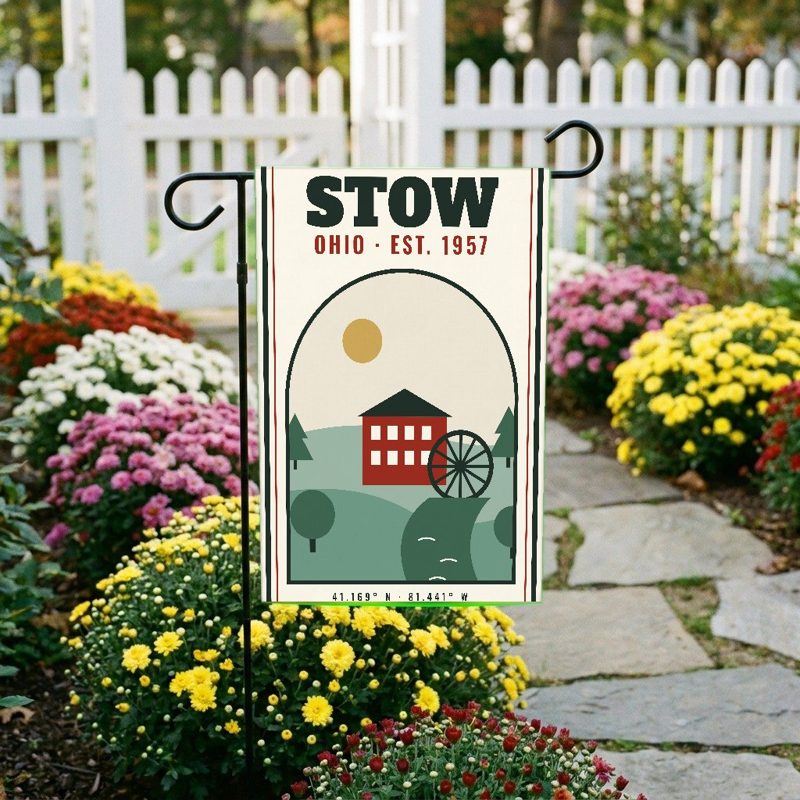
Weatherproof, for the front walk
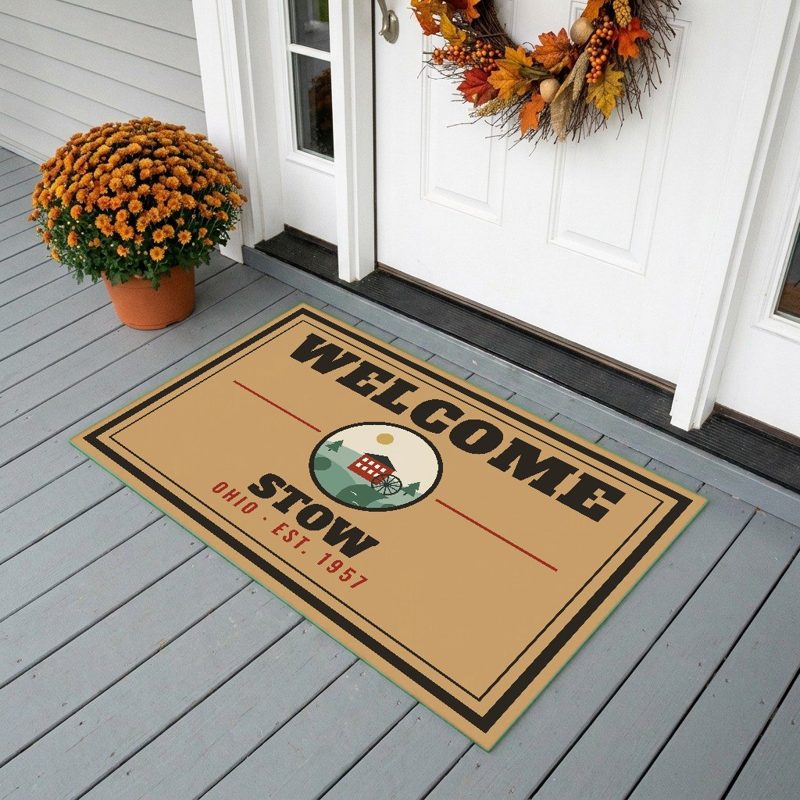
24″×16″, printed coir-look fibers, rubber back
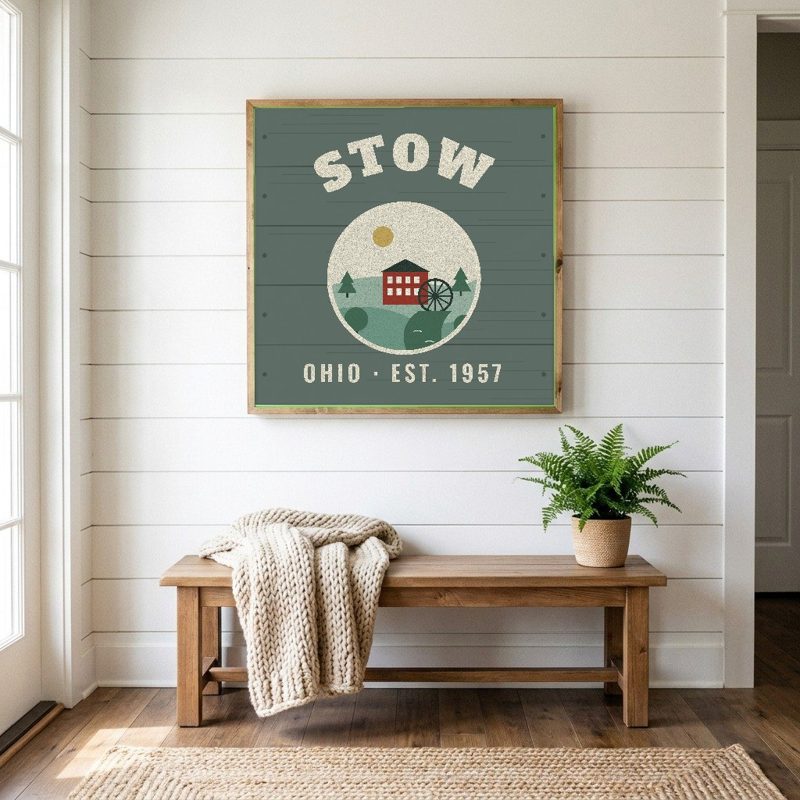
12″×12″ printed wood, ready to hang
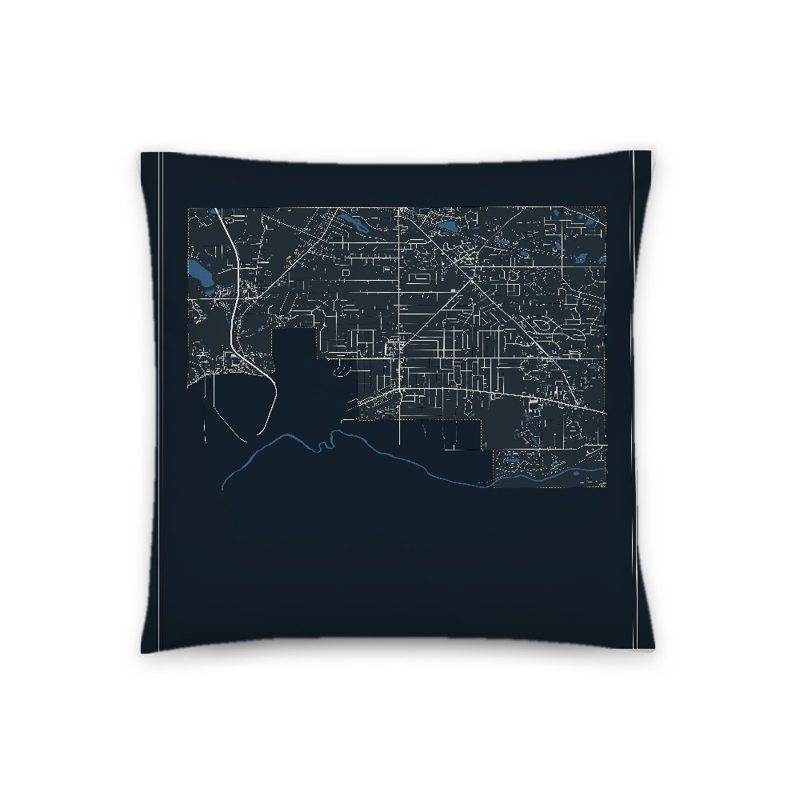
Soft-touch, zip cover
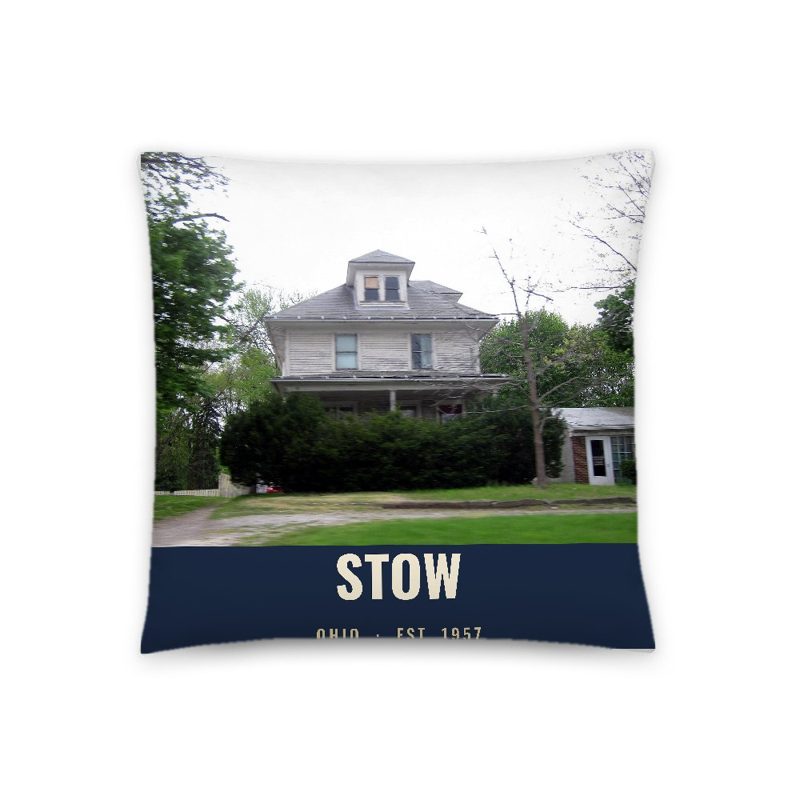
A local landmark photo with the town name, 18″×18″
Sturdy all-over-print tote
Large-letter postcard art on a sturdy tote
Foam-front trucker, printed (not embroidered) with local photos
Glossy top, cork back
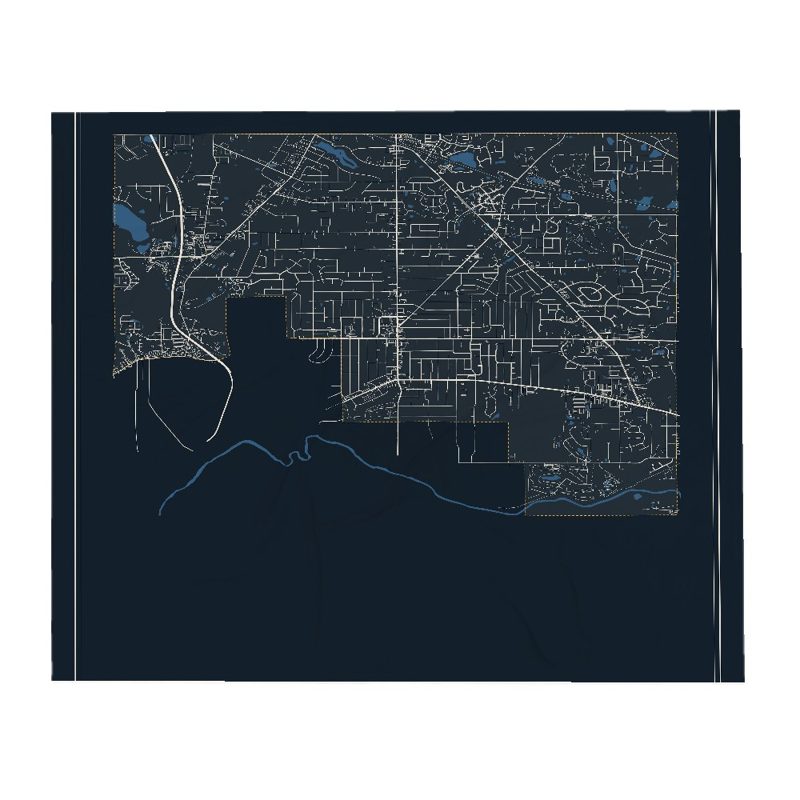
Soft fleece, 50″×60″
20 oz, double-wall stainless
Population 2010: 34,837 → 2020: 34,483
From Wikidata (CC0).
Stow is named for Joshua Stow, its original proprietor. Joshua Stow was a member of the party led by Moses Cleaveland to survey the lands of the Connecticut Western Reserve around present-day Cleveland in 1796. He was a native of Middletown, Connecticut, however, and never lived in Stow, though he spent both time and money developing the township and is quoted as saying it was "one of the prettiest and most romantic spots in the Western Reserve." The land that would eventually be known as Stow Township was the survey township "Town 3, Range 10" of the Western Reserve and was initially 25 square miles (65 km2). It was purchased by Joshua Stow for $14,154. Prior to the arrival of European settlers, the area around what is now Stow was inhabited by a tribe of Seneca Native Americans at a small settlement in the area that is now part of the neighboring village of Silver Lake.
The first settler in Stow Township was William Walker, who arrived in 1802. Walker built a cabin just south of the land of his father Robert in Hudson Township mistakenly believing he was building in Hudson. In 1804, when Stow Township was separated from Hudson Township and surveyed into lots by Joseph Darrow, it was discovered his house was actually in Stow Township. Walker purchased the lot his home was on and continued to live there. Darrow had been hired by Joshua Stow's land agent William Wetmore, a settler also from Middletown, Connecticut, who moved to Stow in 1804 with his family and several other settlers. The Wetmores built a cabin in July 1804 near the center of Stow Township and the present-day intersection of Darrow Road and Kent Road. In 1808, the Wetmores built a home near the Seneca settlement in what is now Silver Lake. The house overlooked a small lake, known as Silver Lake since 1874, that was known earlier as Wetmore Pond or Stow Lake. Stow Township was formally organized in 1808 with the first election held in 1811. 1808 was also the year it was made part of the original Portage County. It remained as part of Portage County until it was included in the new Summit County in 1840.
Most of the original 25-square-mile (65 km2) township is part of the present city of Stow, but parts of the original township form all or part of three neighboring communities. Munroe Falls was settled in 1809 as "Kelsey Mills" in the southern part of Stow Township and incorporated as a village in 1838. Cuyahoga Falls was developed on land owned by Wetmore and Joshua Stow beginning in 1825 in the southwestern part of the township and became a town in 1837. In 1851, Cuyahoga Falls Township was created, taking the southwest corner of Stow Township along with parts of three neighboring townships. Cuyahoga Falls incorporated as a village in 1868 and later annexed additional portions of Stow Township in the 19th and 20th centuries, as did Munroe Falls. Silver Lake incorporated as a village in 1918 on land that had previously been part of Stow Township. The remainder of Stow Township incorporated in 1957 as a village and became a city following the 1960 United States Census.
Adapted (trimmed) from the Wikipedia article Stow, Ohio, revision 1376407883 by its contributors, licensed CC BY-SA 4.0.
We share a part of every Stow sale with local partners, and we'd love to print from your collection. Old photographs, maps and postcards make the best keepsakes.
Partner with usA favorite landmark, your street, a school or team, an anniversary gift, a different product. Tell us and we'll get back to you by email.
3 free coloring pages of Stow, each traced from a photo of a local landmark. Print them at home, at school or for story hour.
Stow's population was 34,483 in the 2020 U.S. Census, down from 34,837 in 2010.
 A view of Stow
 A view of Stow
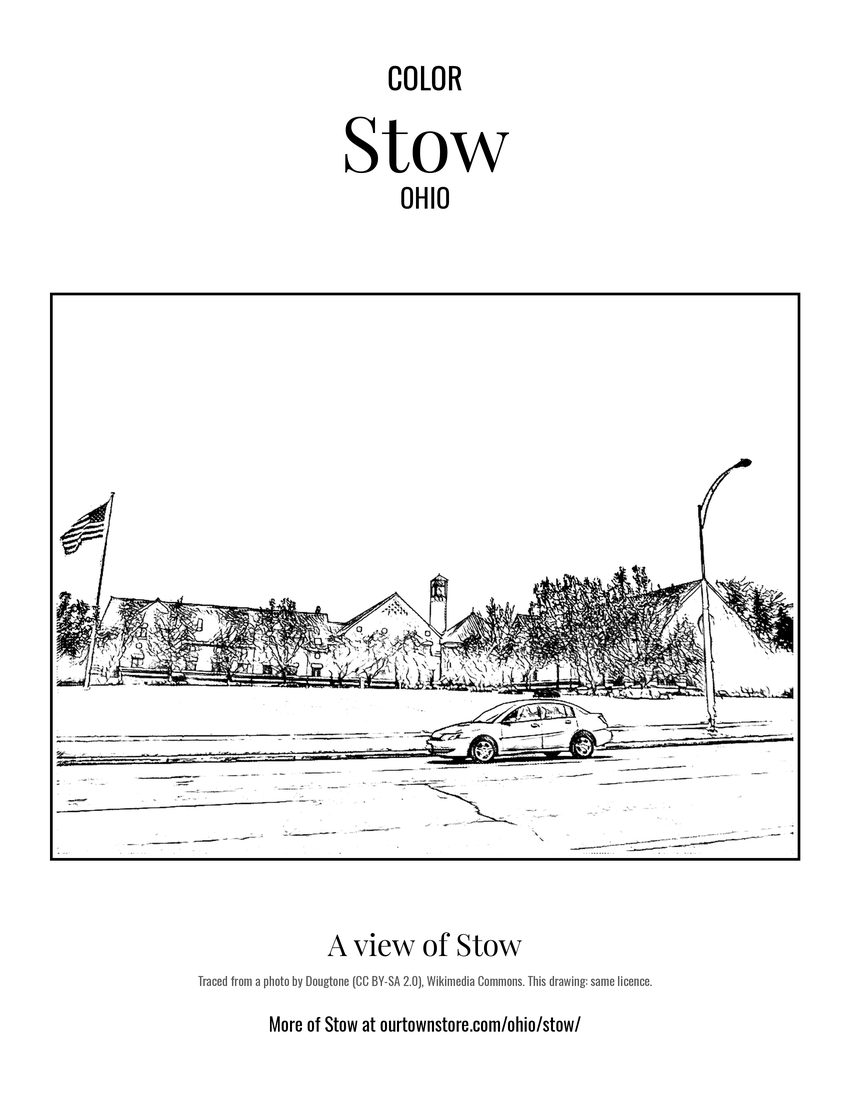 A view of Stow