Between 1000 B.C. and 1700 A.D., the Columbus metropolitan area was a center to indigenous cultures known as the Mound Builders, including the Adena, Hopewell and Fort Ancient peoples. Remaining physical evidence of the cultures are their burial mounds and what they contained. Most of Central Ohio's remaining mounds are located outside of Columbus city boundaries, though the Shrum Mound is maintained, now as part of a public park and historic site. The city's Mound Street derives its name from a mound that existed by the intersection of Mound and High Streets. The mound's clay was used in bricks for most of the city's initial brick buildings; many were subsequently used in the Ohio Statehouse. The city's Ohio History Center maintains a collection of artifacts from these cultures.
Read the full history
18th century
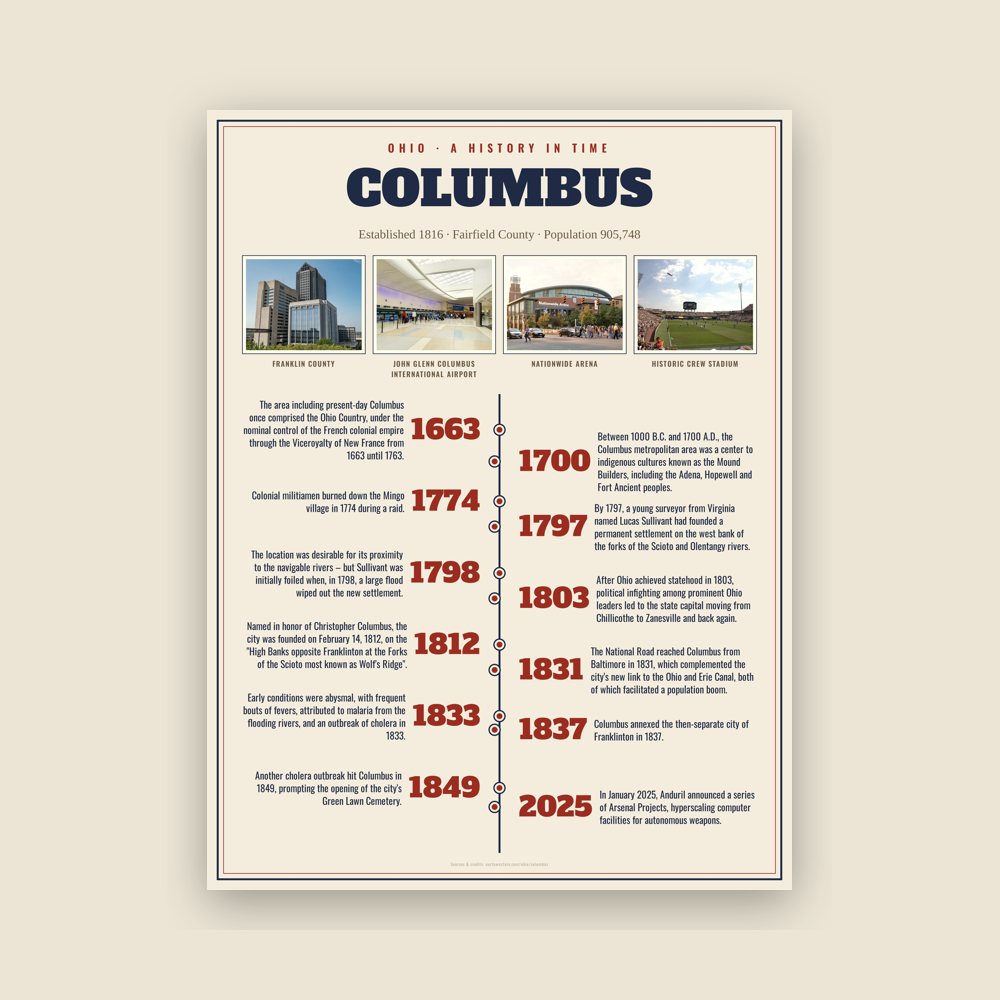
The area including present-day Columbus once comprised the Ohio Country, under the nominal control of the French colonial empire through the Viceroyalty of New France from 1663 until 1763.
In the 18th century, European traders flocked to the area, attracted by the fur trade. The area was often caught between warring factions, including American Indian and European interests. In the 1740s, Pennsylvania traders overran the territory until the French forcibly evicted them. Fighting for control of the territory in the French and Indian War became part of the Seven Years' War.
Up until the American Revolution, Central Ohio had continuously been the home of numerous indigenous villages. A Mingo village was located at the forks of the Scioto and Olentangy rivers, with Shawnee villages to the south and Wyandot and Delaware villages to the north. Colonial militiamen burned down the Mingo village in 1774 during a raid.
Virginia Military District
After the American Revolution, the Virginia Military District became part of the Ohio Country as a territory of Virginia. Colonists from the East Coast moved in, but rather than finding an empty frontier, they encountered people of the Miami, Delaware, Wyandot, Shawnee and Mingo nations, as well as European traders. The tribes resisted expansion by the fledgling United States, leading to years of bitter conflict. The decisive Battle of Fallen Timbers resulted in the Treaty of Greenville in 1795, which finally opened the way for new settlements. By 1797, a young surveyor from Virginia named Lucas Sullivant had founded a permanent settlement on the west bank of the forks of the Scioto and Olentangy rivers. An admirer of Benjamin Franklin, Sullivant chose to name his frontier village "Franklinton". The location was desirable for its proximity to the navigable rivers – but Sullivant was initially foiled when, in 1798, a large flood wiped out the new settlement. He persevered, and the village was rebuilt, though somewhat more inland.
After the Revolution, land comprising parts of Franklin and adjacent counties was set aside by Congress for settlement by Canadians and Nova Scotians who were sympathetic to the colonial cause and had their land and possessions seized by the British government. The Refugee Tract, consisting of 103,000 acres (42,000 ha), was 42 miles (68 km) long and 3–4.5 miles (4.8–7.2 km) wide, and was claimed by 67 eligible men. The Ohio Statehouse sits on land once contained in the Refugee Tract.
19th century
After Ohio achieved statehood in 1803, political infighting among prominent Ohio leaders led to the state capital moving from Chillicothe to Zanesville and back again. Desiring to settle on a location, the state legislature considered Franklinton, Dublin, Worthington and Delaware before compromising on a plan to build a new city in the state's center, near major transportation routes, primarily rivers. Franklinton landowners had donated two 10-acre (4.0 ha) plots in an effort to convince the state to move its capital there. The two spaces were set to become Capitol Square, including for the Ohio Statehouse and the Ohio Penitentiary. Named in honor of Christopher Columbus, the city was founded on February 14, 1812, on the "High Banks opposite Franklinton at the Forks of the Scioto most known as Wolf's Ridge". At the time, this area was a dense forestland, used only as a hunting ground.
The city was incorporated as a borough on February 10, 1816. Between 1816 and 1817, Jarvis W. Pike served as the first appointed mayor. Although the recent War of 1812 had brought prosperity to the area, the subsequent recession and conflicting claims to the land threatened the new town's success. Early conditions were abysmal, with frequent bouts of fevers, attributed to malaria from the flooding rivers, and an outbreak of cholera in 1833. It led Columbus to create the Board of Health, now part of the Columbus Public Health department. The outbreak, which remained in the city from July to September 1833, killed 100 people.
Columbus was without direct river or trail connections to other Ohio cities, leading to slow initial growth. The National Road reached Columbus from Baltimore in 1831, which complemented the city's new link to the Ohio and Erie Canal, both of which facilitated a population boom. A wave of European immigrants led to the creation of two ethnic enclaves on the city's outskirts. A large Irish population settled in the north along Naghten Street (presently Nationwide Boulevard), while the Germans took advantage of the cheap land to the south, creating a community that came to be known as the Das Alte Südende (The Old South End). Columbus's German population constructed numerous breweries, Trinity Lutheran Seminary and Capital University.
With a population of 3,500, Columbus was officially chartered as a city on March 3, 1834. On that day, the legislature carried out a special act, which granted legislative authority to the city council and judicial authority to the mayor. Elections were held in April of that year, with voters choosing John Brooks as the first popularly elected mayor. Columbus annexed the then-separate city of Franklinton in 1837.
In 1850, the Columbus and Xenia Railroad became the first railroad into the city, followed by the Cleveland, Columbus and Cincinnati Railroad in 1851. The two railroads built a joint Union Station on the east side of High Street just north of Naghten (then called North Public Lane). Rail traffic into Columbus increased: by 1875, eight railroads served Columbus, and the rail companies built a new, more elaborate station. Another cholera outbreak hit Columbus in 1849, prompting the opening of the city's Green Lawn Cemetery. On January 7, 1857, the Ohio Statehouse finally opened after 18 years of construction.
Before the abolition of slavery in the Southern United States in 1863, the Underground Railroad was active in Columbus and was led, in part, by James Preston Poindexter. Poindexter arrived in Columbus in the 1830s and became a Baptist preacher and leader in the city's African-American community until the turn of the century.
During the Civil War, Columbus was a major base for the volunteer Union Army. It housed 26,000 troops and held up to 9,000 Confederate prisoners of war at Camp Chase, at what is now the Hilltop neighborhood of west Columbus. Over 2,000 Confederate soldiers remain buried at the site, making it one of the North's largest Confederate cemeteries.
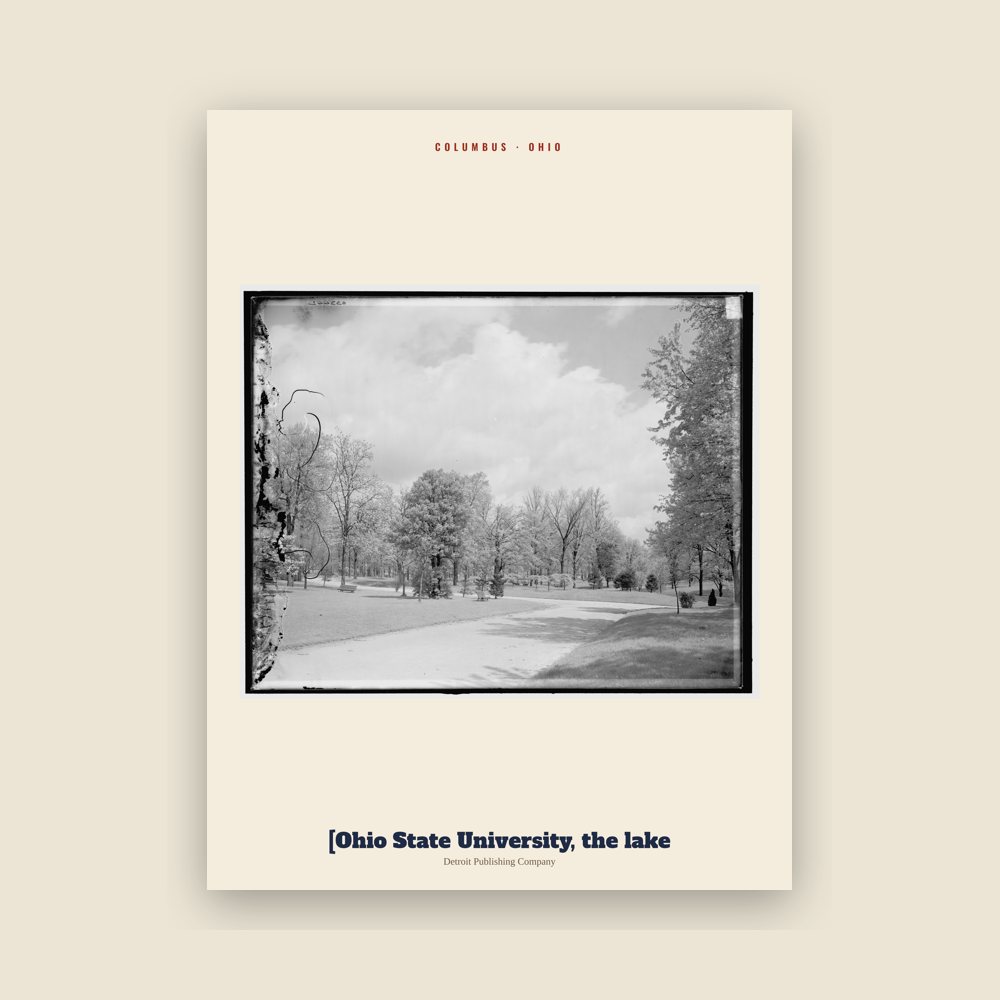
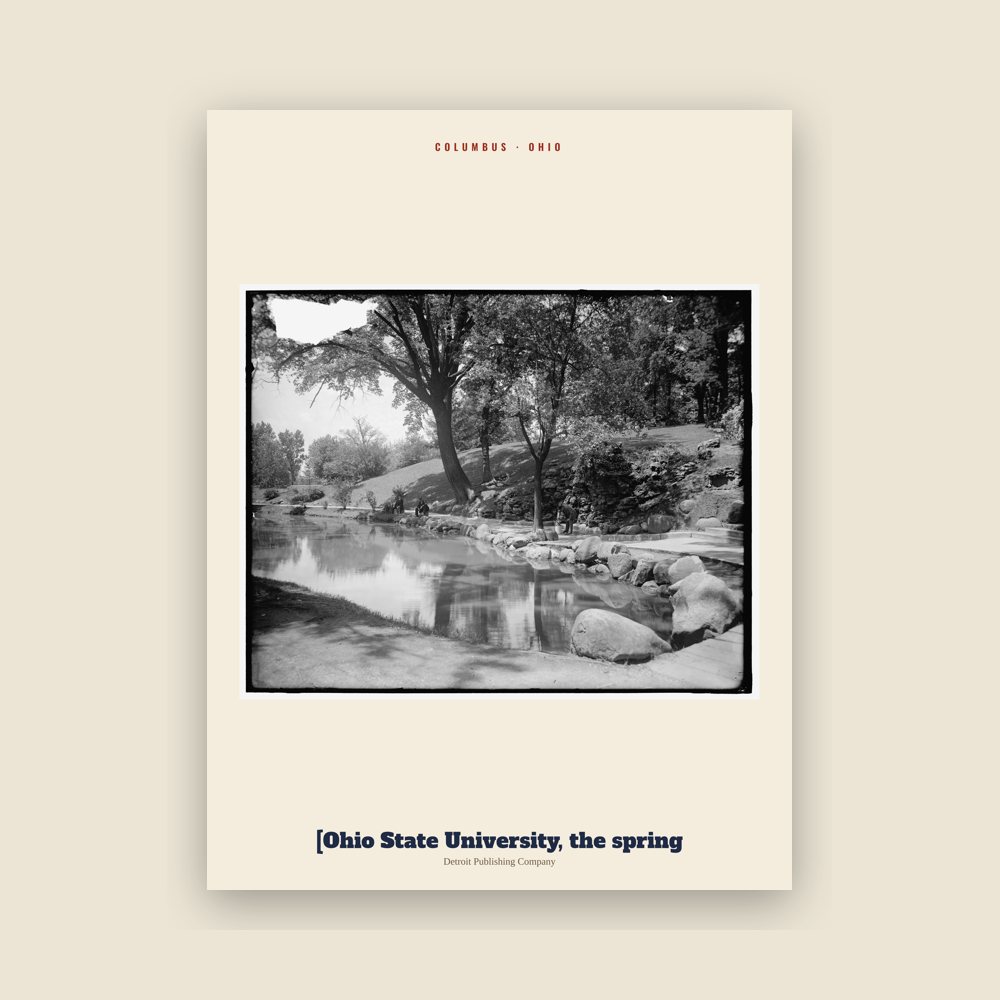
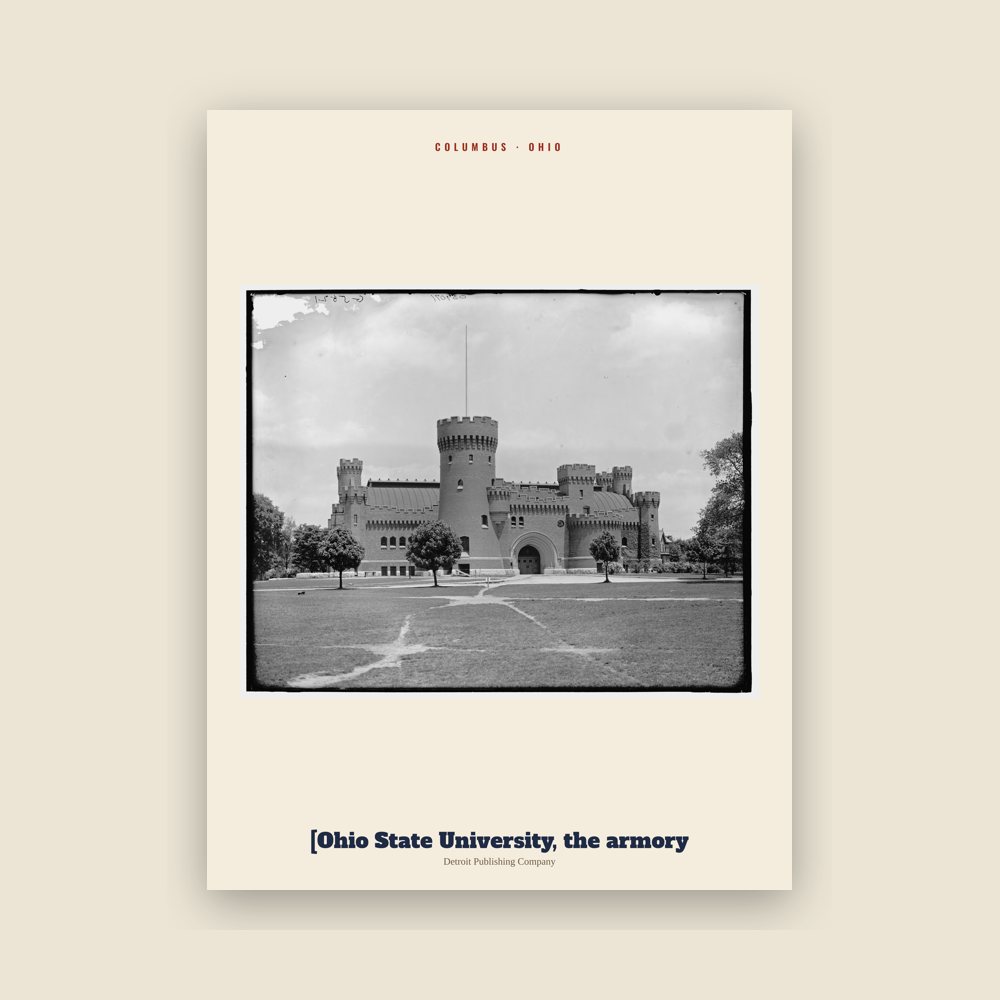
By virtue of the Morrill Act of 1862, the Ohio Agricultural and Mechanical College – which eventually became the Ohio State University – was founded in 1870 on the former estate of William and Hannah Neil.
By the end of the 19th century, Columbus was home to several major manufacturing businesses. The Jeffrey Manufacturing Company was a major supplier of coal mining equipment. The city became known as the "Buggy Capital of the World", thanks to the two dozen buggy factories, notably the Columbus Buggy Company, founded in 1875 by C.D. Firestone. The Columbus Consolidated Brewing Company also rose to prominence during this time and might have achieved even greater success were it not for the Anti-Saloon League in neighboring Westerville.
In the steel industry, Samuel P. Bush presided over the Buckeye Steel Castings Company. Columbus was also a popular location for labor organizations. In 1886, Samuel Gompers founded the American Federation of Labor in Druid's Hall on South Fourth Street, and in 1890, the United Mine Workers of America was founded at the old City Hall.
20th century
The Columbus Experiment was an environmental project in 1908 which involved construction of the first water plant in the world to apply filtration and softening, designed and invented by two brothers, Clarence and Charles Hoover. Those working to construct the project included Jeremiah O'Shaughnessy, name-bearer of the Columbus metropolitan area's O'Shaughnessy Dam. This invention helped drastically reduce typhoid deaths. The essential design is still used today.
The 1910 Columbus streetcar strike took place in downtown Columbus; the strike action turned into a violent riot, though was eventually unsuccessful.
Columbus earned one of its nicknames, "The Arch City", because of the dozens of wooden arches that spanned High Street at the turn of the 20th century. The arches illuminated the thoroughfare and eventually became the means by which electric power was provided to the new streetcars. The city tore down the arches and replaced them with cluster lights in 1914 but reconstructed them from metal in the Short North neighborhood in 2002 for their unique historical interest.
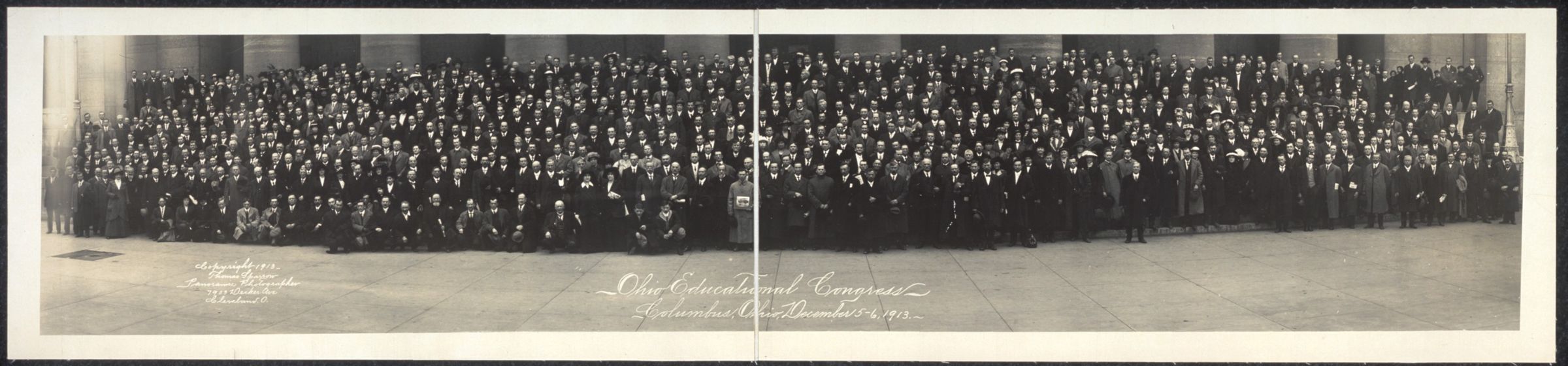
On March 25, 1913, the Great Flood of 1913 devastated the neighborhood of Franklinton, leaving over 90 people dead and thousands of West Side residents homeless. To prevent flooding, the Army Corps of Engineers recommended widening the Scioto River through downtown, constructing new bridges and building a retaining wall along its banks. With the strength of the post-World War I economy, a construction boom occurred in the 1920s, resulting in a new civic center, the Ohio Theatre, the American Insurance Union Citadel and to the north, a massive new Ohio Stadium. Although the American Professional Football Association was founded in Canton in 1920, its head offices moved to Columbus in 1921 to the New Hayden Building and remained in the city until 1941. In 1922, the association's name was changed to the National Football League. Nearly a decade later, in 1931, at a convention in the city, the Jehovah's Witnesses took that name by which they are known today.
The effects of the Great Depression were less severe in Columbus, as the city's diversified economy helped it fare better than its Rust Belt neighbors. World War II brought many new jobs and another population surge. This time, most new arrivals were migrants from the "extraordinarily depressed rural areas" of Appalachia, who would soon account for more than a third of Columbus's growing population. In 1948, the Town and Country Shopping Center opened in suburban Whitehall, and it is now regarded as one of the first modern shopping centers in the United States.
The construction of the Interstate Highway System signaled the arrival of rapid suburb development in central Ohio. To protect the city's tax base from this suburbanization, Columbus adopted a growth policy by linking sewer and water hookups to annexation to the city.
The city crossed the boundary of its traditional county when the Columbus City Council approved the initial annexation of land extending into Fairfield County on May 29, 1974, effective 30 days later (on Friday, June 28, 1974). By the early 1990s, Columbus had grown to become Ohio's largest city in land area and in population.
Efforts to revitalize downtown Columbus have had some success in recent decades, though like most major American cities, some architectural heritage was lost in the process. In the 1970s, landmarks such as Union Station and the Neil House hotel were razed to construct high-rise offices and big retail space. The PNC Bank building was constructed in 1977, as well as the Nationwide Plaza buildings and other towers that sprouted during this period. The construction of the Greater Columbus Convention Center has brought major conventions and trade shows to the city.
AmeriFlora '92 was held in the city in 1992, part of the Christopher Columbus Quincentennial Jubilee, celebrating the 500th anniversary of Columbus's first voyage. The organizers also planned to create a replica Native American village, among other attractions. Local and national native leaders protested the event with a day of mourning, followed by protests and fasts at City Hall. The protests prevented the native village from being exhibited. Annual fasts continued until 1997. A protest also took place during the dedication of the Santa Maria replica, an event held in late 1991 on the day before Columbus Day and in time for the jubilee.
21st century
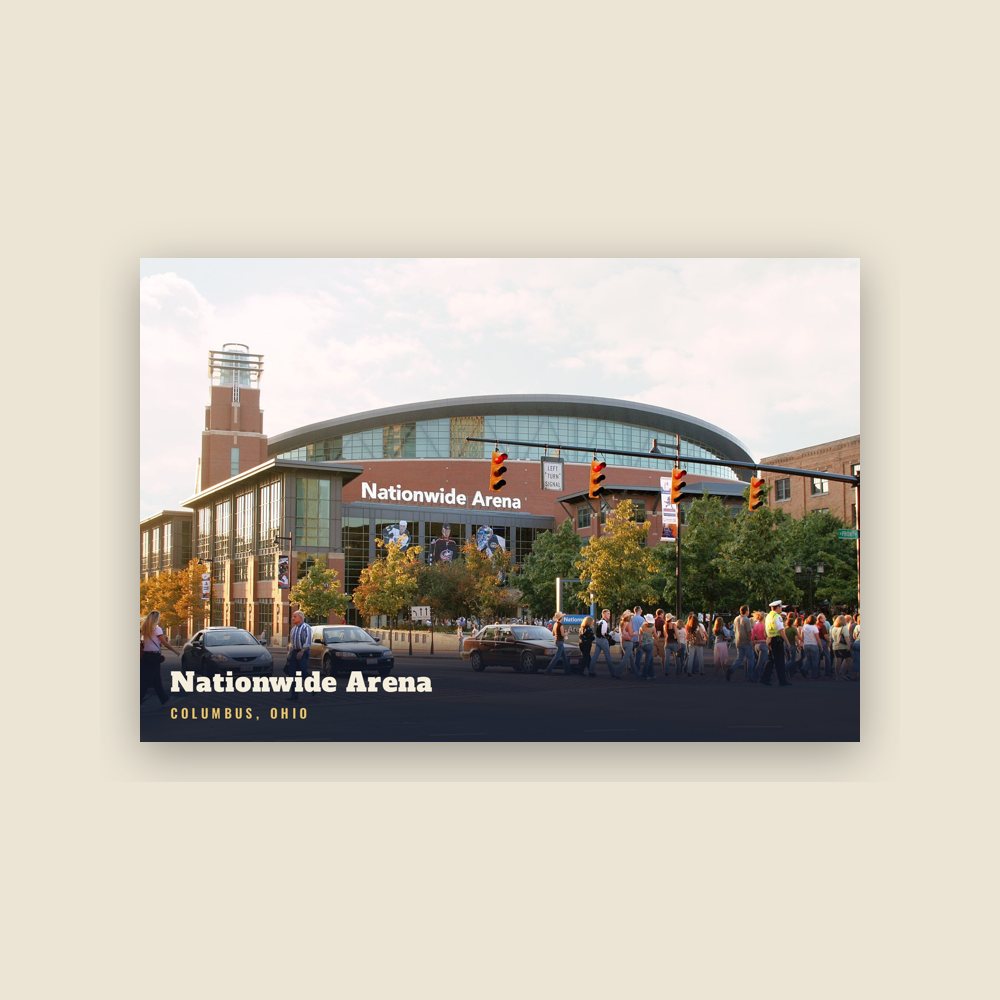
In 1999, just before the turn of the 21st century, the city's first African American mayor was elected. Michael Coleman, a Democrat, served 16 years, the longest of any mayor of the city. Coleman's administration led to Nationwide Insurance redeveloping the former Ohio Penitentiary site and nearby blocks into the Arena District. Similar new construction and redevelopment was taking place in the Brewery District, and a flood wall was completed in Franklinton in 2004, finally letting development resume in the neighborhood.
The Scioto Mile began development along the riverfront, an area that already had the Miranova Corporate Center and The Condominiums at North Bank Park. The 2010 United States foreclosure crisis forced the city to purchase numerous foreclosed, vacant properties to renovate or demolish them at a cost of tens of millions of dollars. The city is focused on downtown revitalization, with recent projects being the Columbus Commons park, parks along the Scioto Mile developed along with a reshaped riverfront, and developments in the Arena District and Franklinton.
The COVID-19 pandemic in Columbus began when the city reported its first official cases of COVID-19 in February and March 2020 and declared a state of emergency. Later in 2020, protests over the murder of George Floyd occurred in the city from May 28 into August. In November 2024, about a dozen masked men dressed in black carried red swastika flags in Columbus chanting racial slurs and using pepper spray.
In July 2024, Columbus was subject to a ransomware attack, for which the hacker group Rhysidia took credit. In August 2024, Columbus Mayor Andrew Ginther claimed that the files obtained by Rhysidia were "unusable" to the thieves due to being either encrypted or corrupted. Ginther's assertion was subsequently shown to be false by security researcher David Leroy Ross, who revealed that the files were intact and contained data including names from domestic violence cases and Social Security numbers of crime victims. Columbus then sued Ross for alleged criminal acts, negligence, and civil conversion, as well as taking out a restraining order against Ross, both of which actions were later defended by City Attorney Zach Klein. In response, a number of prominent cybersecurity researchers called on the city to drop the lawsuit.
In the 2020s, the city became a center for high technology, innovation, and high-tech manufacturing, particularly in artificial intelligence, robotics, and semiconductor device fabrication. In 2023, Intel announced plans to construct a $20 billion factory and Honda expanding its presence along with LG Energy Solutions with a $4.4 billion battery manufactory facility in Fayette County. In January 2025, Anduril announced a series of Arsenal Projects, hyperscaling computer facilities for autonomous weapons. They also announced the construction of a manufacturing facility in Columbus, to be named "Arsenal-1", with subsequent Arsenals planned. This facility will be designed to be able to manufacture advanced systems faster than near peer manufacturers. It is noted for its close ties with Ohio State University, with Anduril Industries sponsoring the football program for the 2025 to 2026 year, connections to the college administration, and much of Anduril-1's employees hailing from its applied science programs.
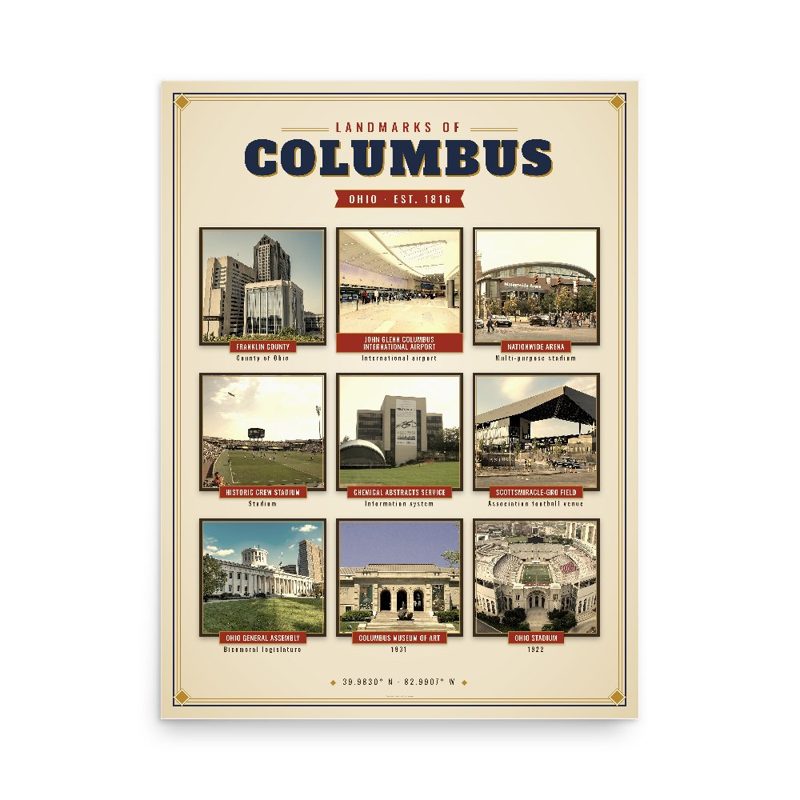
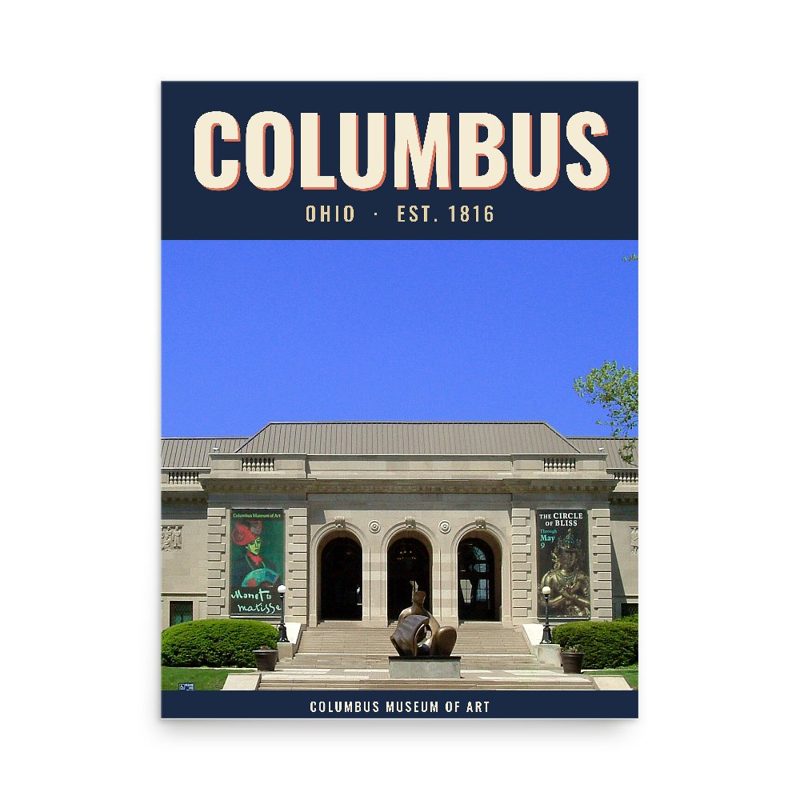
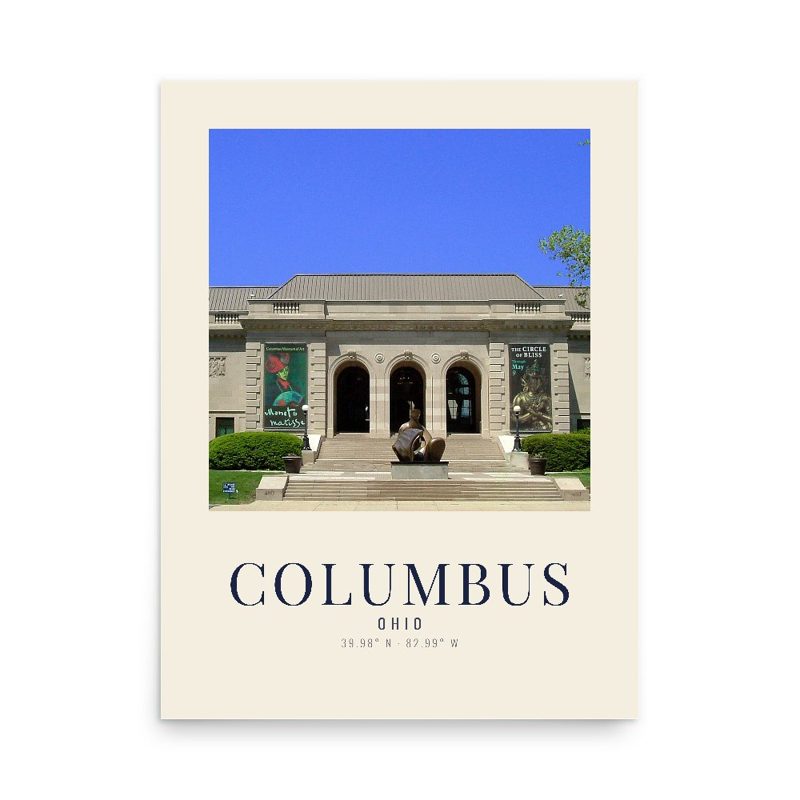
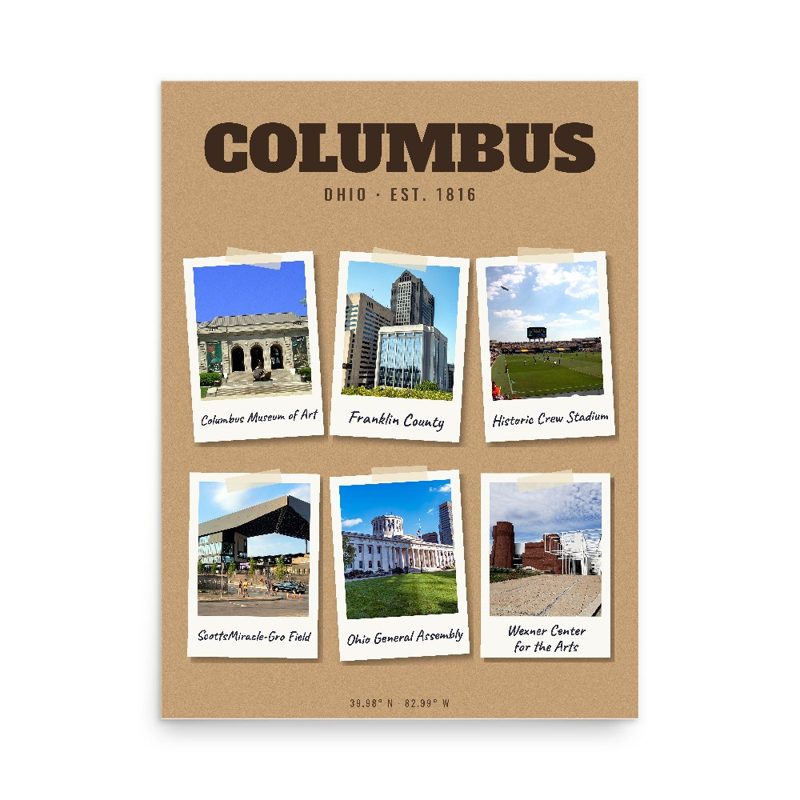
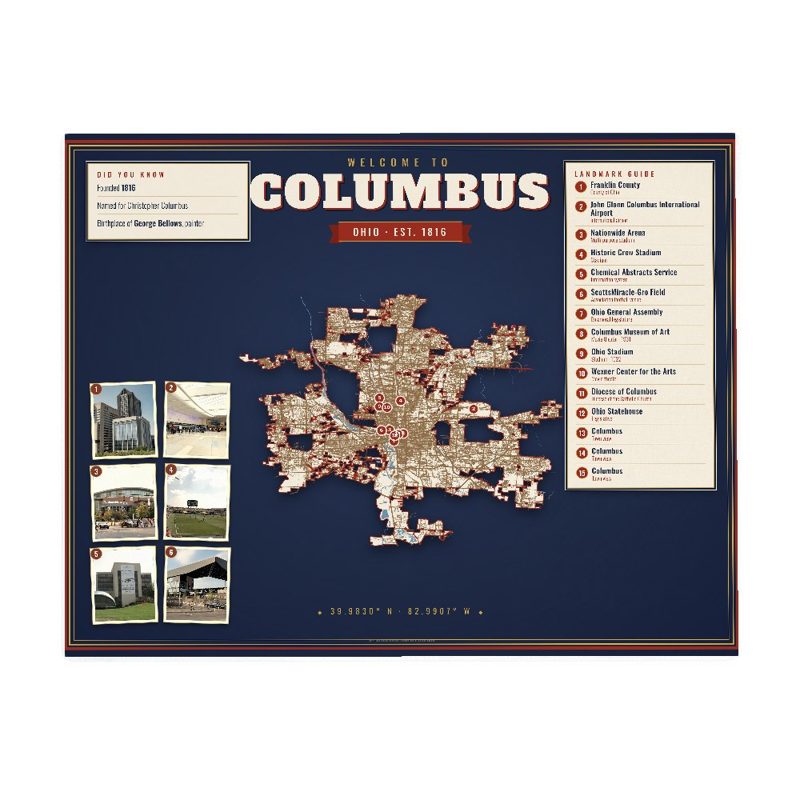


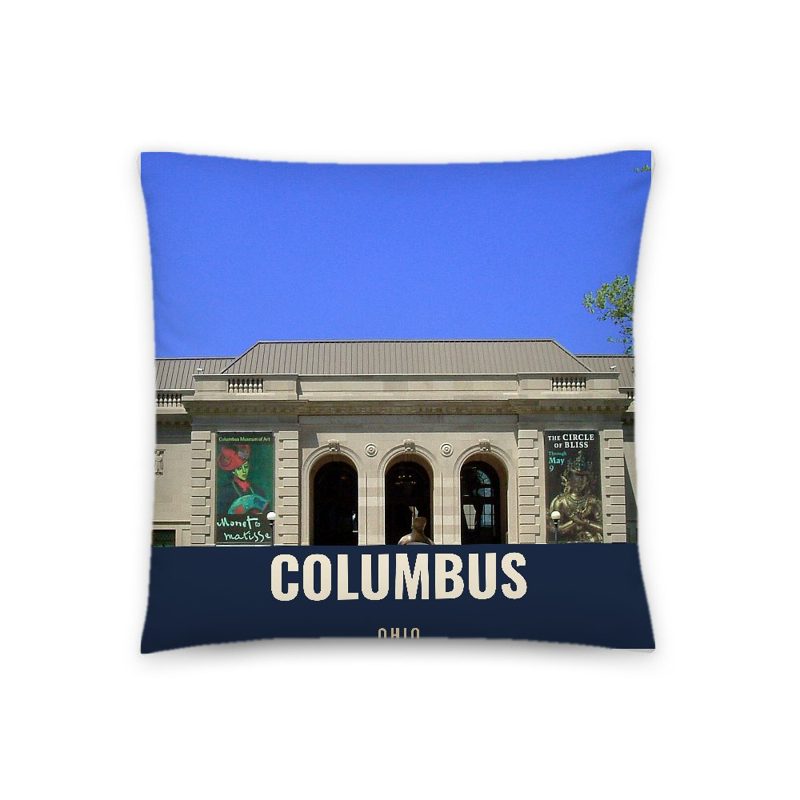


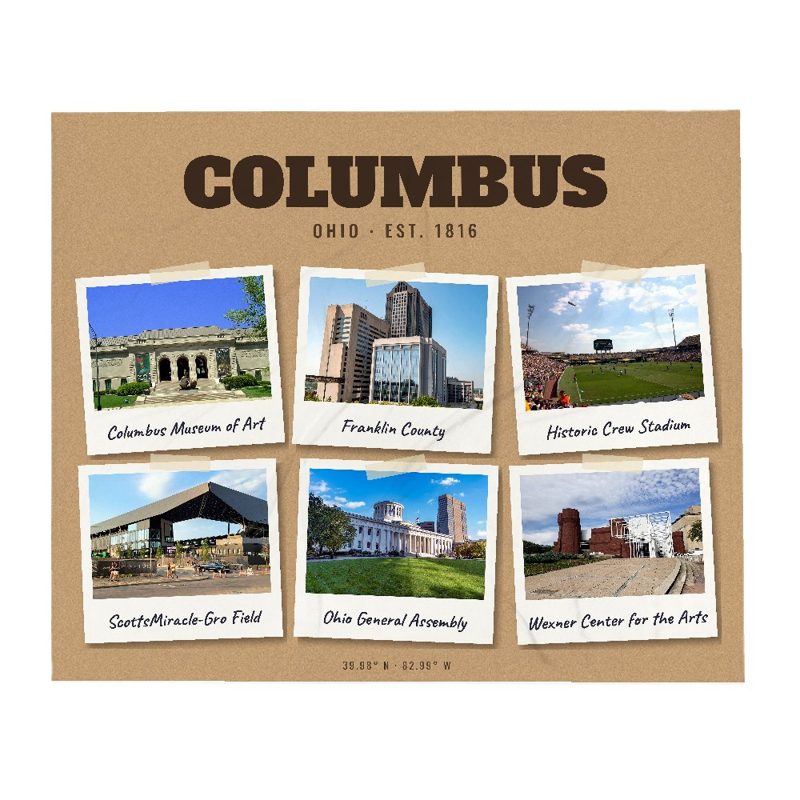
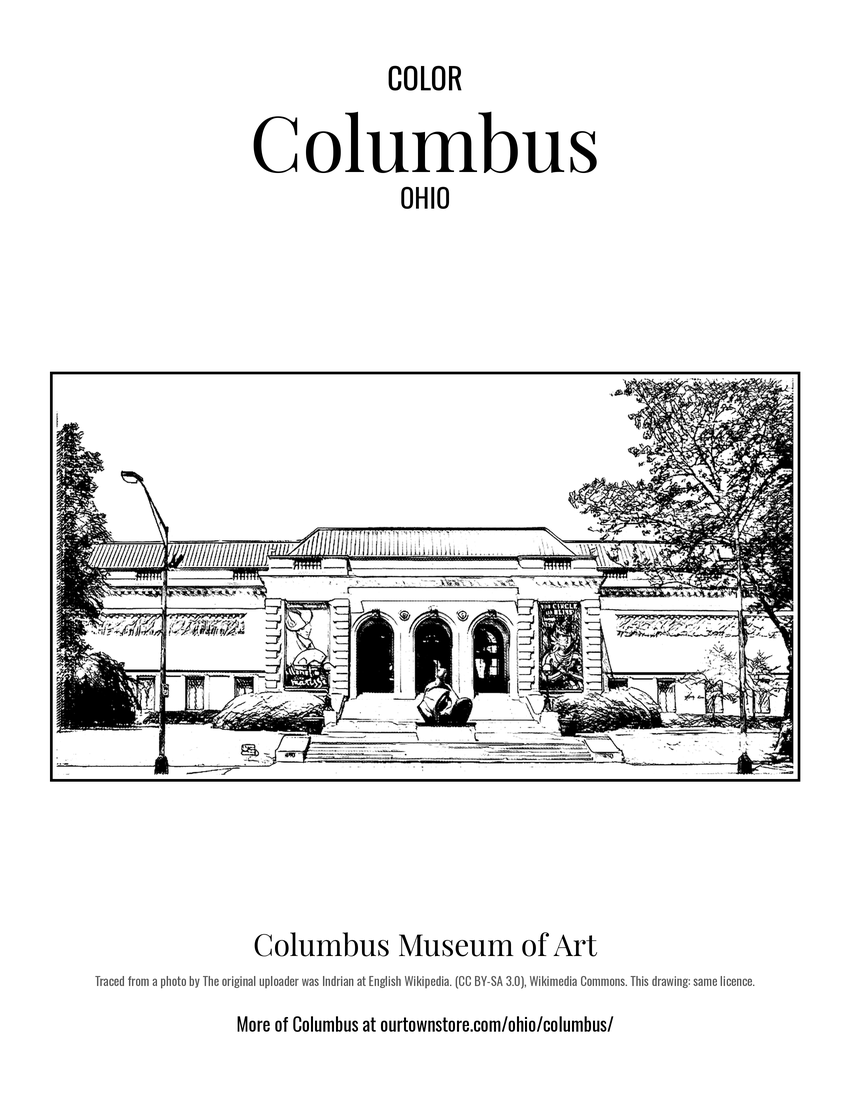 Columbus Museum of Art
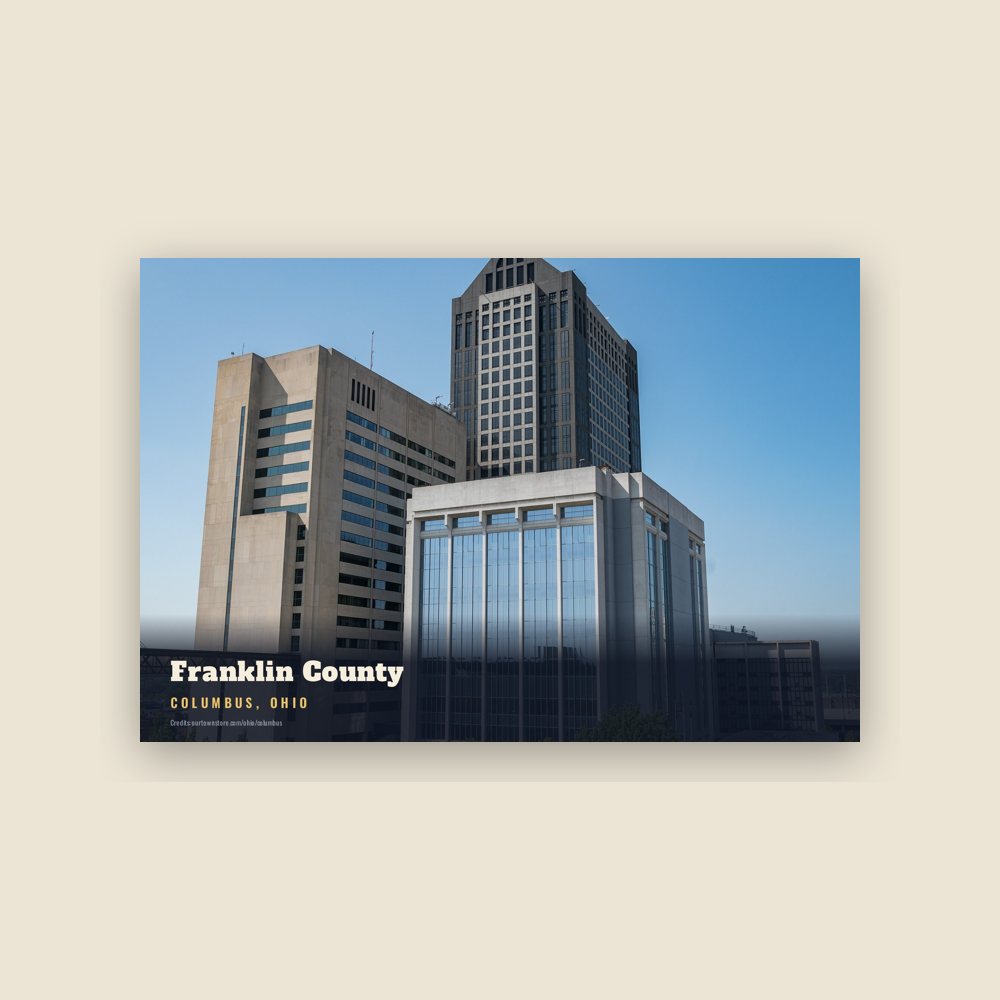
 Franklin County
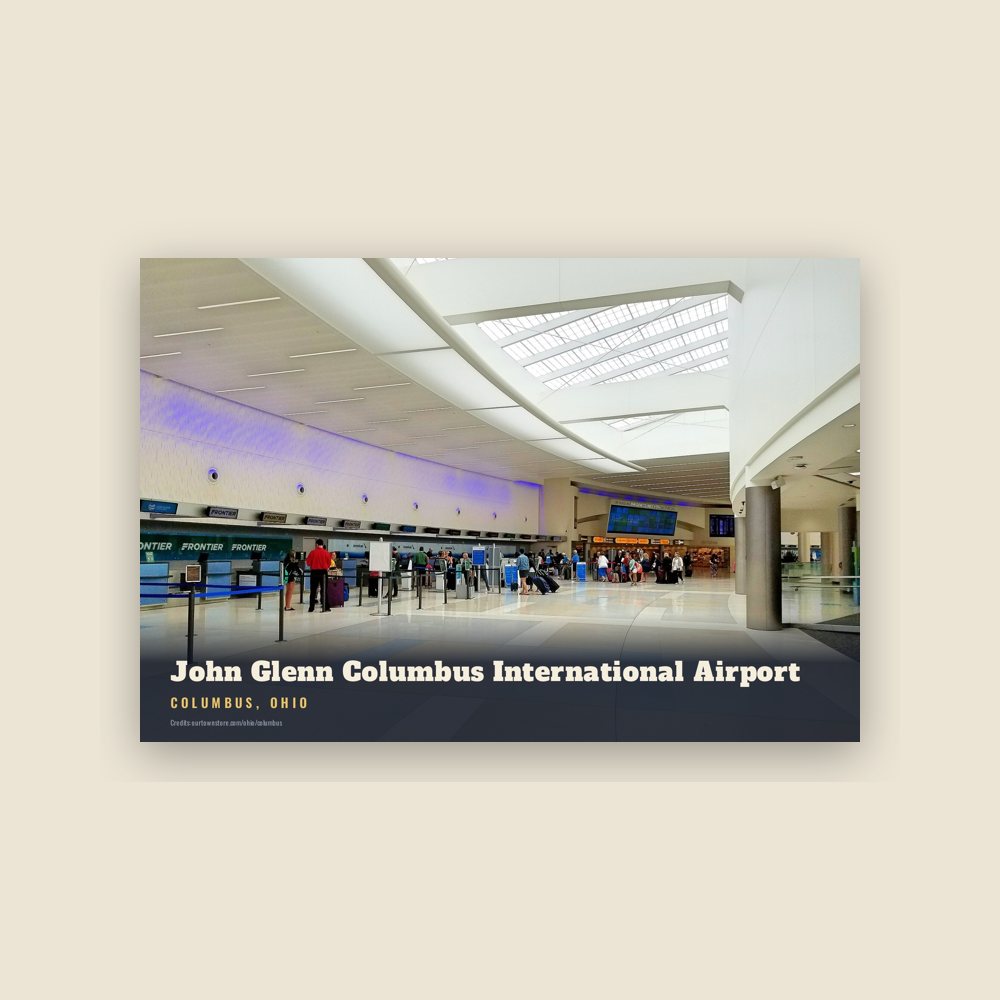
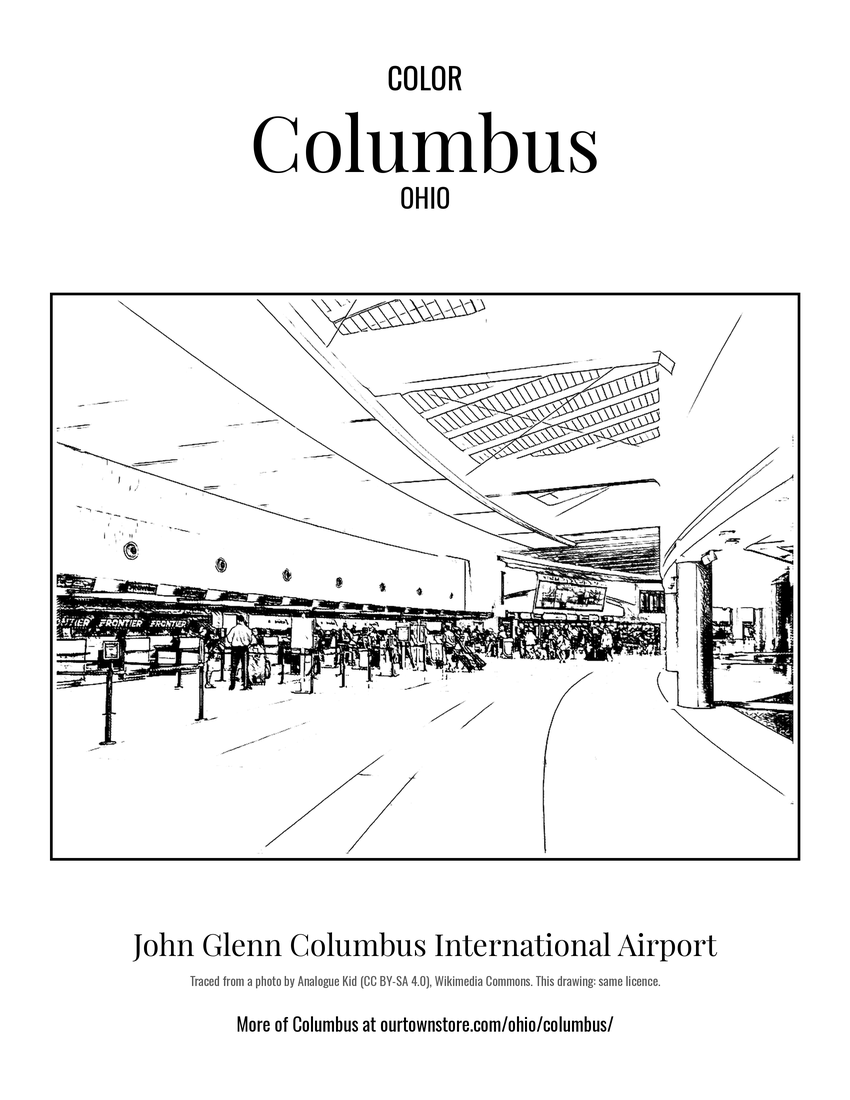 John Glenn Columbus International Airport
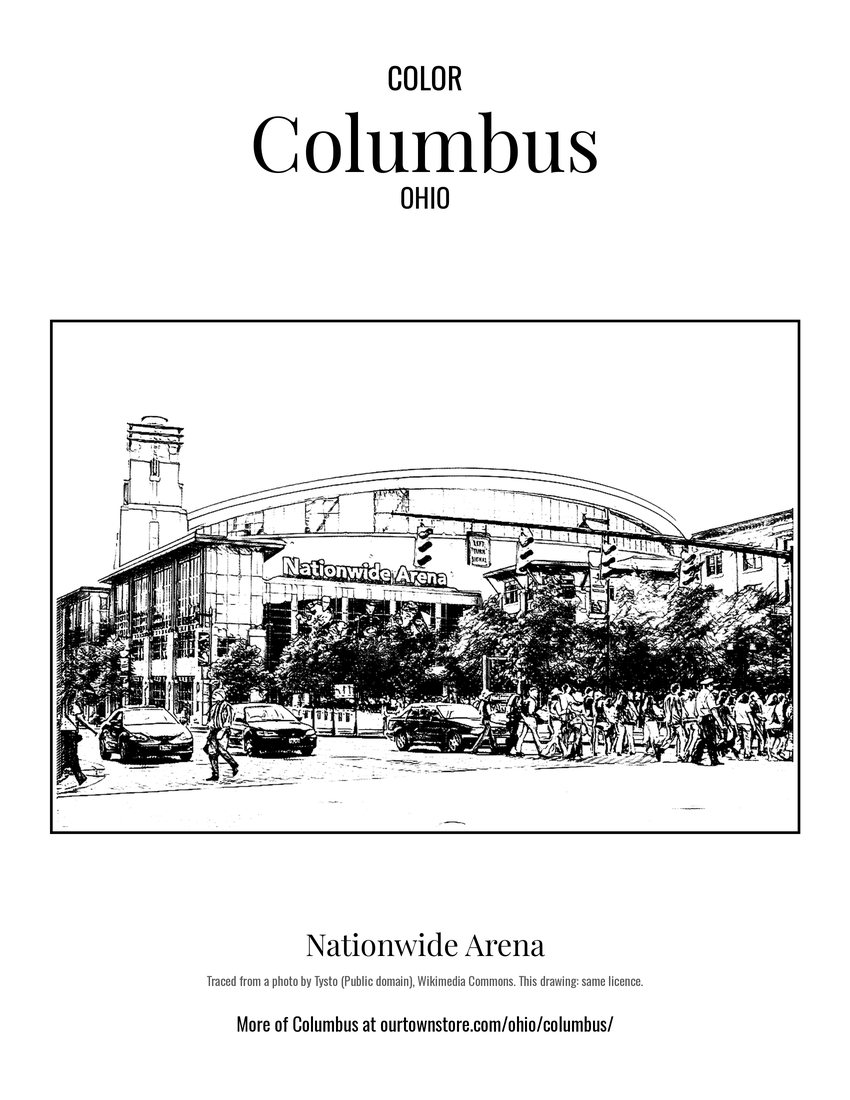 Nationwide Arena