A short history of Ashtabula
This area had long been inhabited by indigenous peoples. After the American Revolutionary War, the United States mounted the Northwest Indian War to push Native American peoples out of what it then called the Northwest - the area of the Midwest south of the Great Lakes and west of the Appalachian Mountains. The success of this military effort resulted in more European Americans entering Ohio and nearby territories.
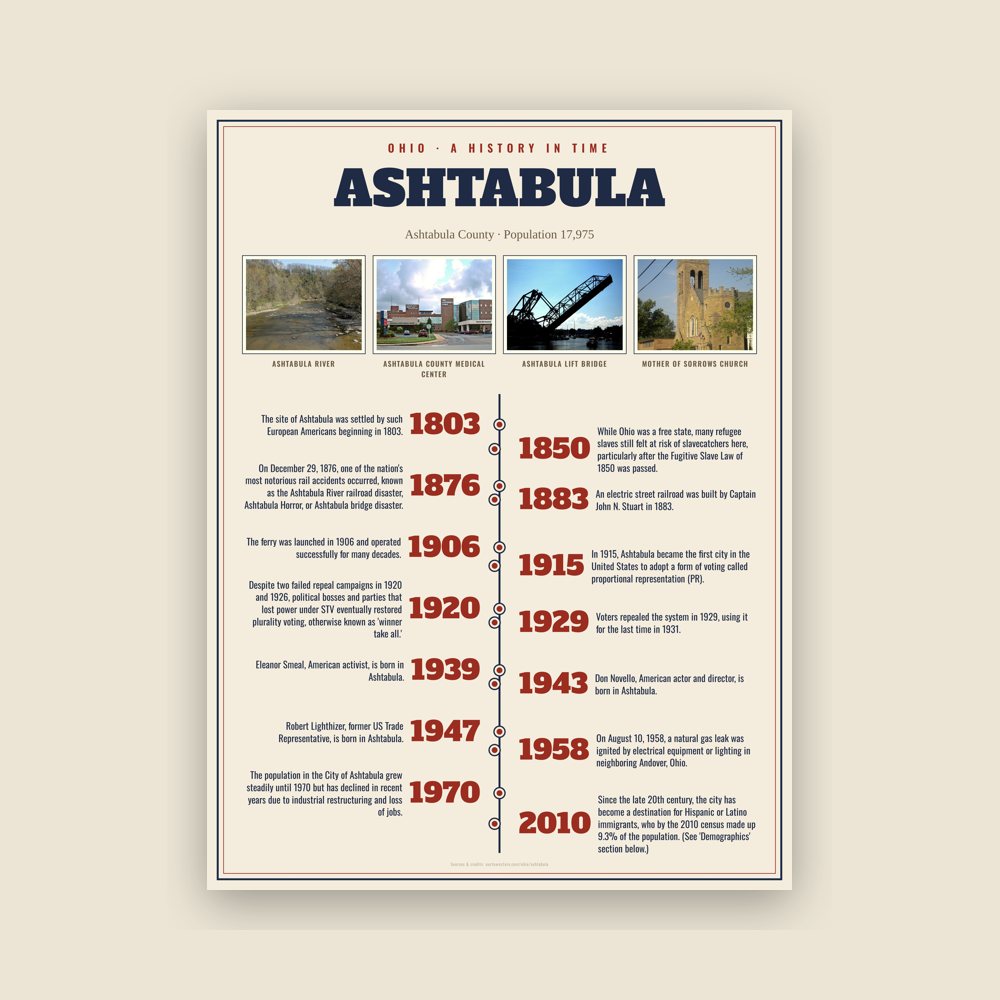
The site of Ashtabula was settled by such European Americans beginning in 1803. The city was incorporated in 1891. Located directly on Lake Erie and developed as a port for trade, the city contained several stops on the Underground Railroad. This informal, secret system was the means by which anti-slavery supporters helped escaped African-American slaves reach freedom in Canada in the years before the American Civil War. While Ohio was a free state, many refugee slaves still felt at risk of slavecatchers here, particularly after the Fugitive Slave Law of 1850 was passed. It required enforcement and cooperation by residents of free states to return escaped slaves and was biased toward slavecatchers, requiring little documentation of their claims. Among the Underground Railroad sites in Ashtabula is Hubbard House, one of the handful of former surviving termination points. Refugee slaves stayed in a basement of the house adjacent to the lake and then left on the next safe boat to Canada, gaining their freedom once they arrived in Ontario. The house is listed on the National Register of Historic Places.
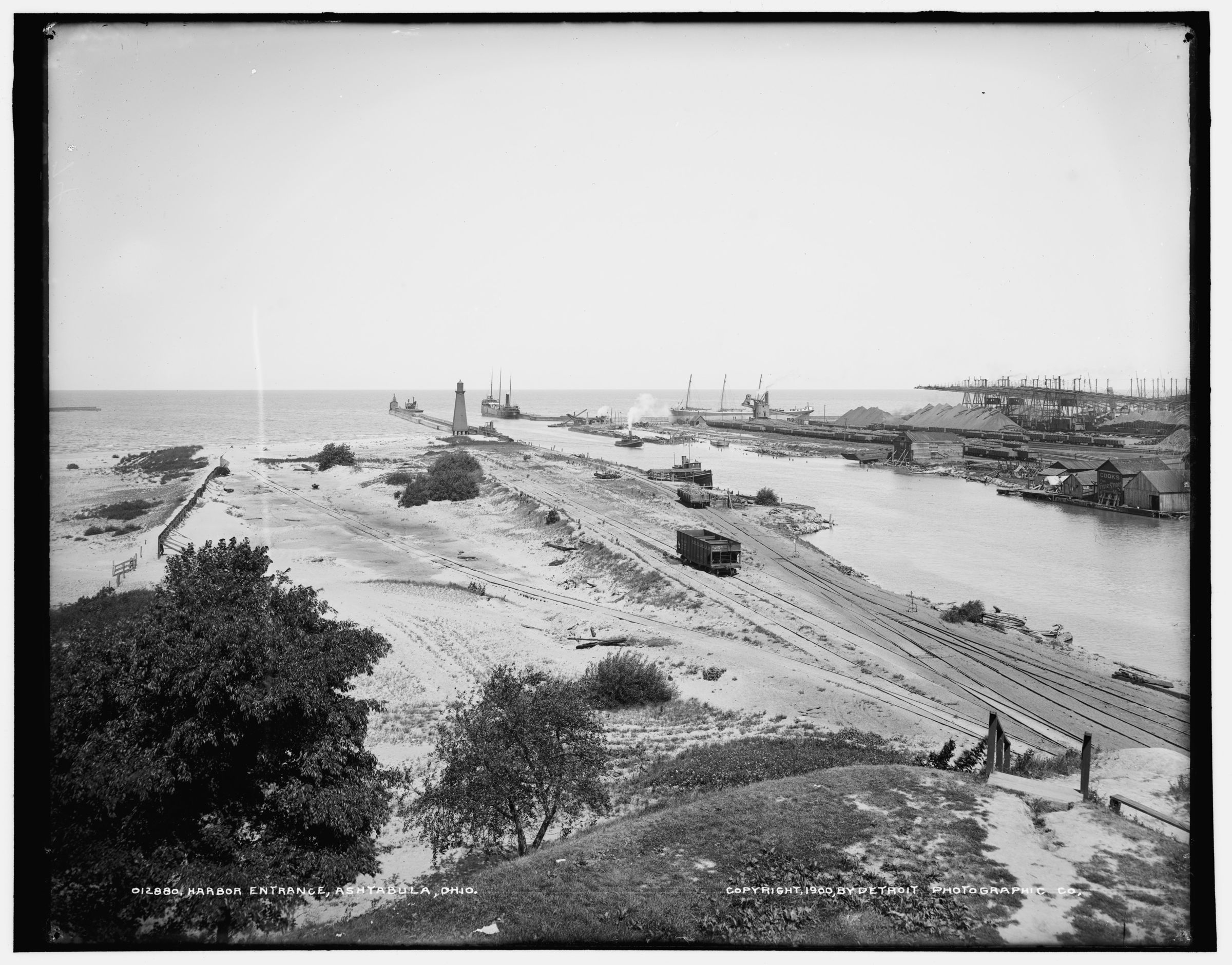
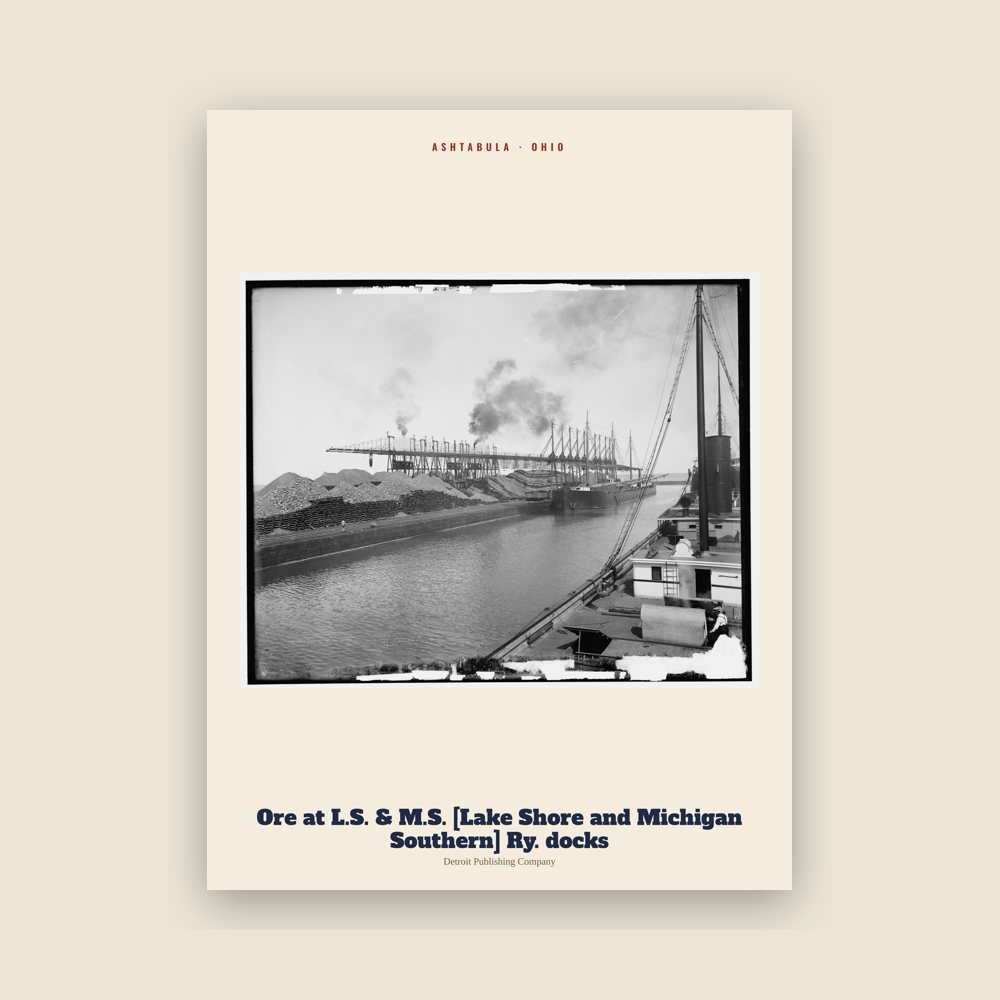
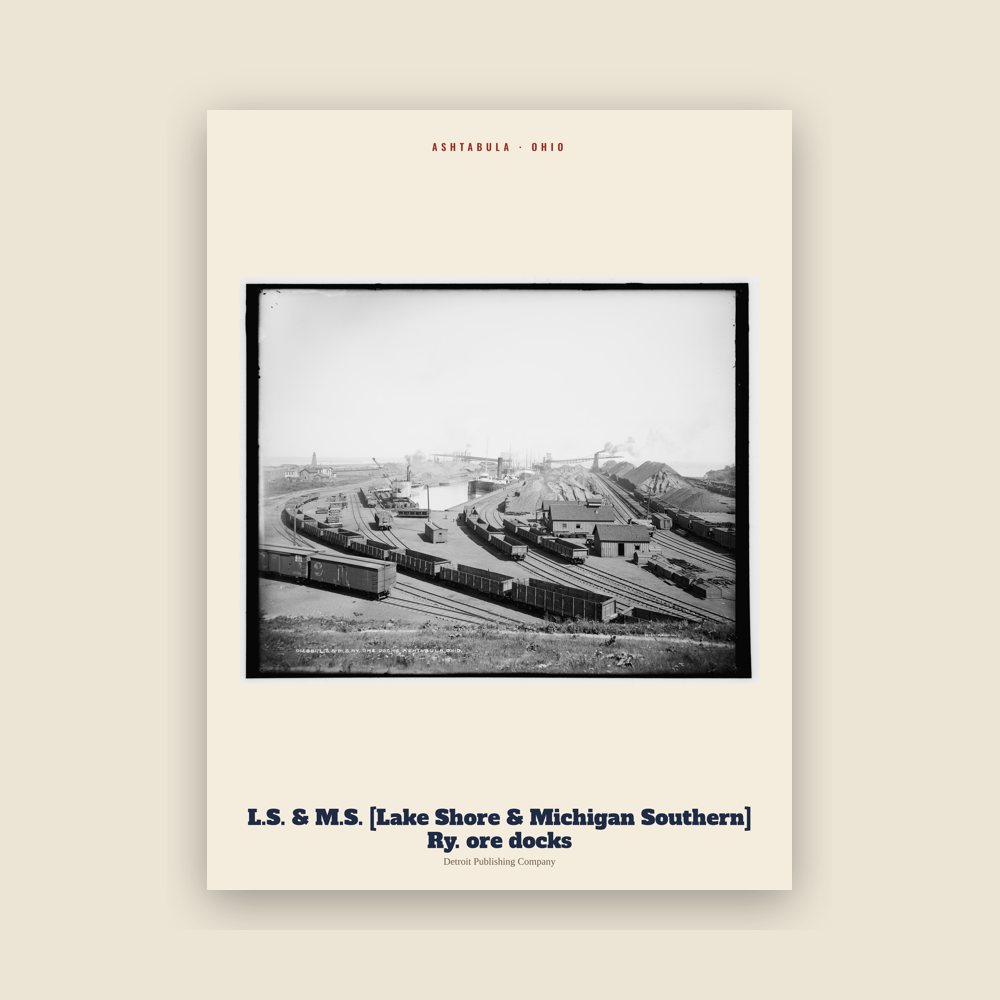
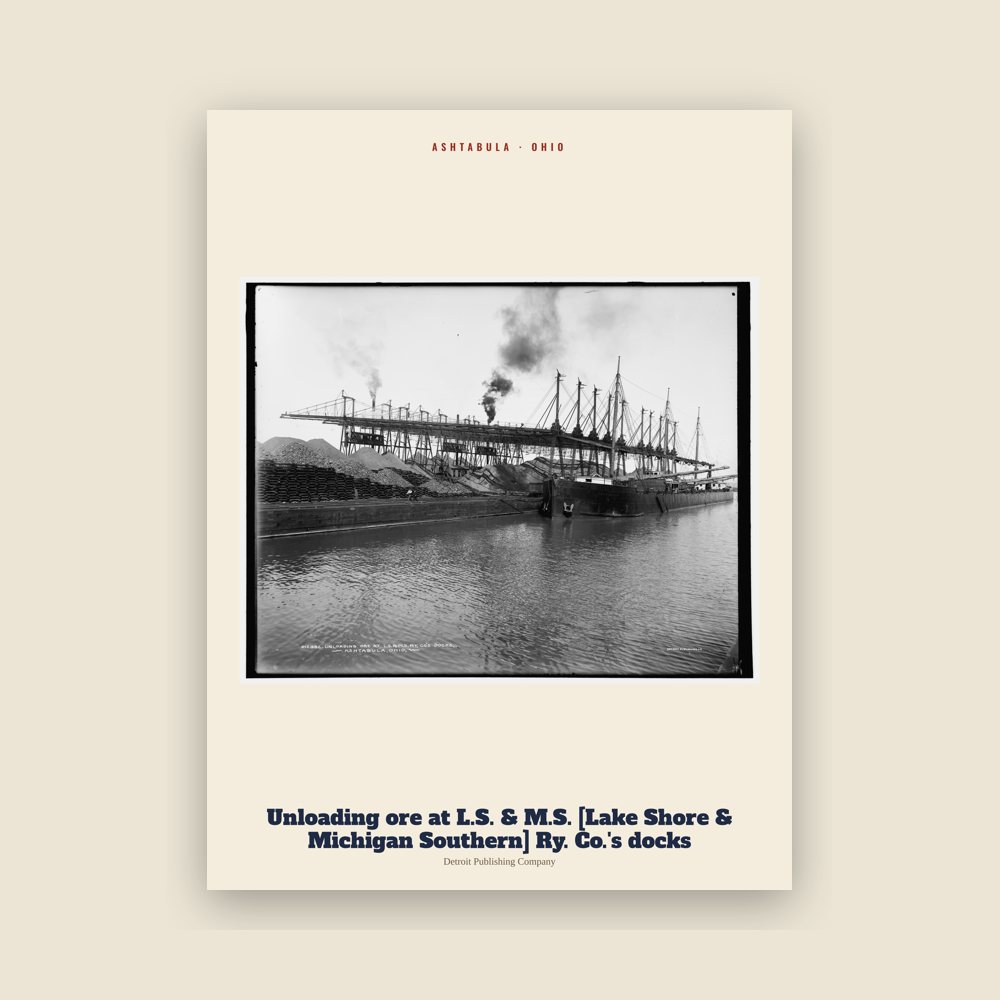
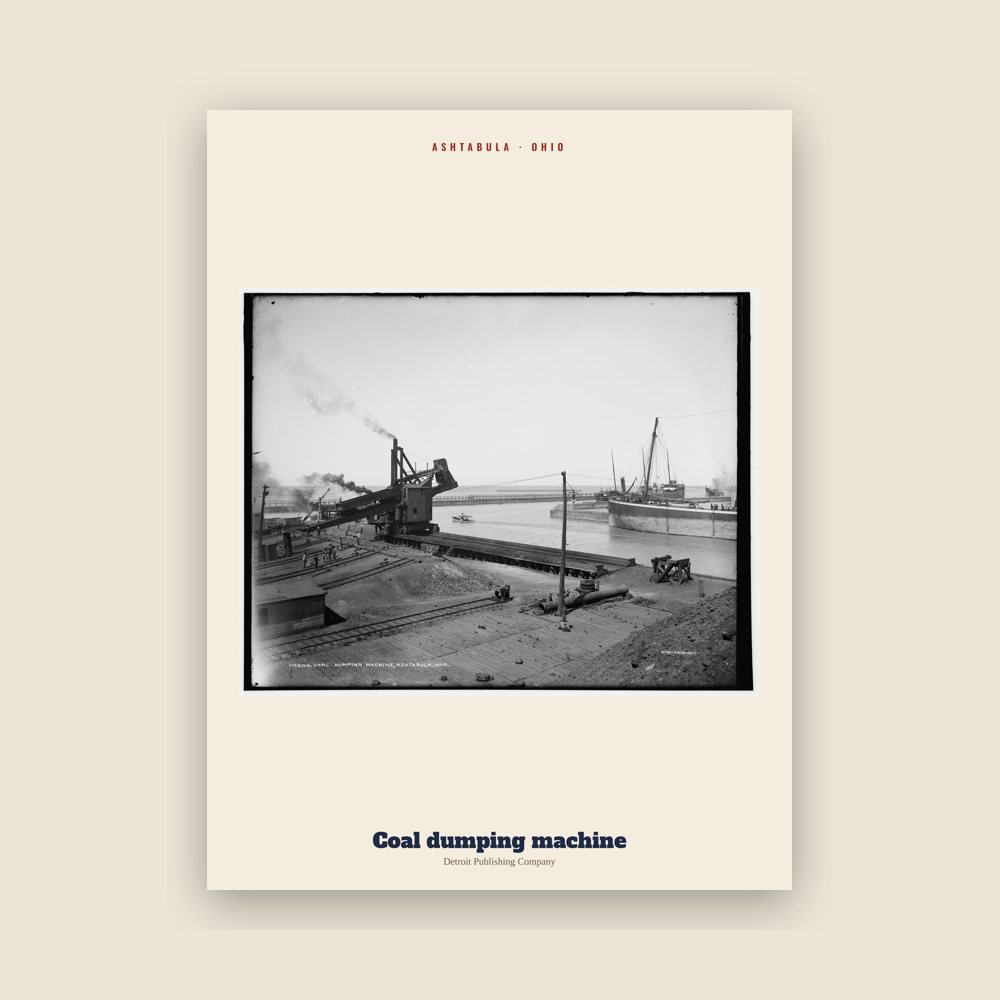
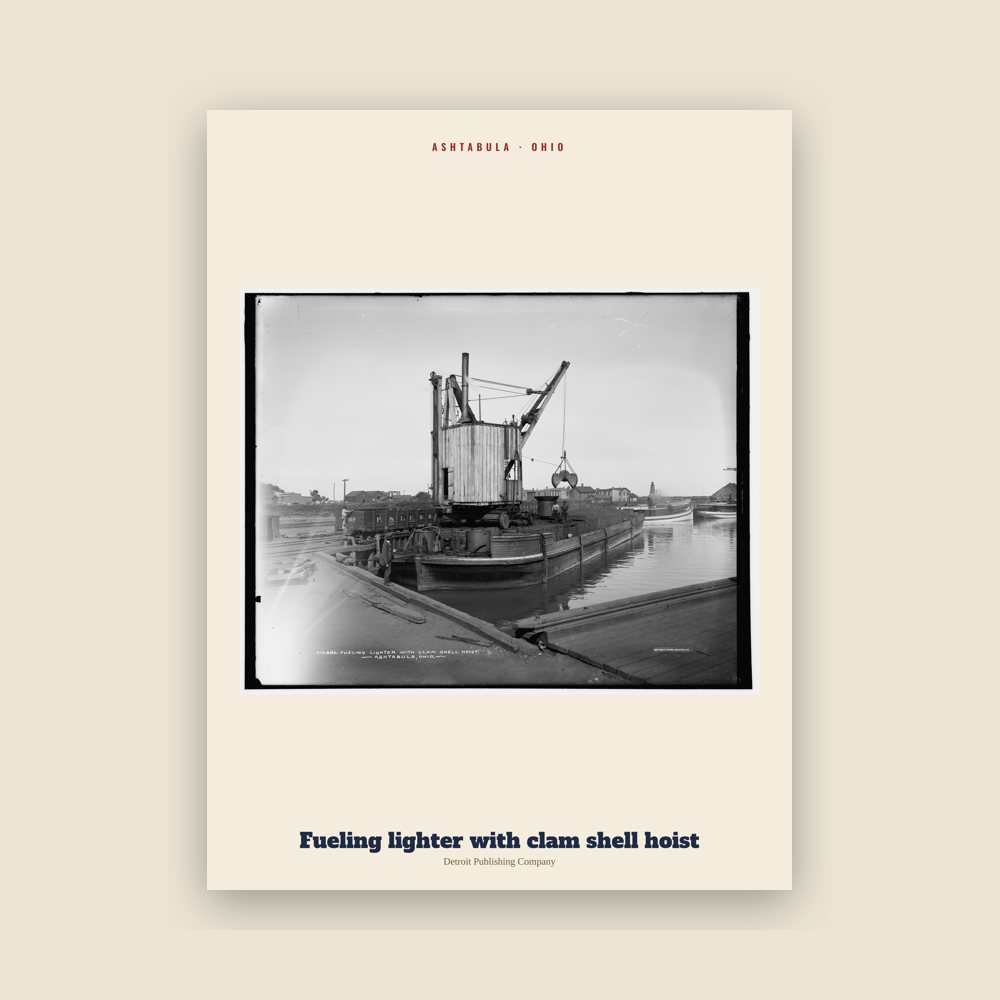
The city's harbor has been important as a large ore and coal port since the end of the 19th century, and integral to the steel manufacturing that was developed around the Great Lakes. Lake steamers and barges, built at shipyards along the Great Lakes and setting new records for size and tonnage, delivered cargoes of iron ore from the Mesabi Range in Minnesota. This continues as a coal port; a long coal ramp is visible in the harbor. Ore shipments are unloaded from 'lakers' (Great Lakes freighters) and shipped to surviving steel mills in Pennsylvania. Industrial jobs have declined since the late 20th century with much steel manufacturing moved offshore.
An electric street railroad was built by Captain John N. Stuart in 1883. However, in July 1890, the city council dispossessed him of the street railroad and associated franchises via a disputable court decision. Shortly after, 600–700 men started to tear up and remove the tracks under the cover of darkness.
Many European immigrants, particularly from Finland, Sweden, and Italy, were attracted to the industrial jobs in Ashtabula in the late 19th and early 20th centuries, as they could learn and accomplish tasks without having a great command of English. Ethnic rivalries among these groups were once a major influence on politics and daily life in Ashtabula.
A substantial percentage of the current residents are descended from those early 20th-century immigrants. The population in the City of Ashtabula grew steadily until 1970 but has declined in recent years due to industrial restructuring and loss of jobs. Since the late 20th century, the city has become a destination for Hispanic or Latino immigrants, who by the 2010 census made up 9.3% of the population. (See 'Demographics' section below.)
Read the full history
Tragedies
Construction of railroads connected Ashtabula to a national network that contributed to its success as a port. On December 29, 1876, one of the nation's most notorious rail accidents occurred, known as the Ashtabula River railroad disaster, Ashtabula Horror, or Ashtabula bridge disaster. As Lake Shore and Michigan Southern Railway Train No. 5, The Pacific Express, crossed the Ashtabula River bridge, the Howe truss structure collapsed, dropping the second locomotive and 11 passenger cars into the frozen creek 150 feet (46 m) below. A fire was started by the car stoves, and of the 159 people on board, 92 were killed and 64 were injured.
A rail ferry, also named Ashtabula, used to run from Ashtabula to Port Burwell, Ontario. The ferry was launched in 1906 and operated successfully for many decades. It collided with the steamer SS Ben Morell in September 1959, causing the ferry to sink.
On August 10, 1958, a natural gas leak was ignited by electrical equipment or lighting in neighboring Andover, Ohio. The resulting explosion destroyed a restaurant and five other buildings. 21 people were killed, and 15 injured.
Adapted (trimmed) from the Wikipedia article Ashtabula, Ohio, revision 1373903310 by its contributors, licensed CC BY-SA 4.0.

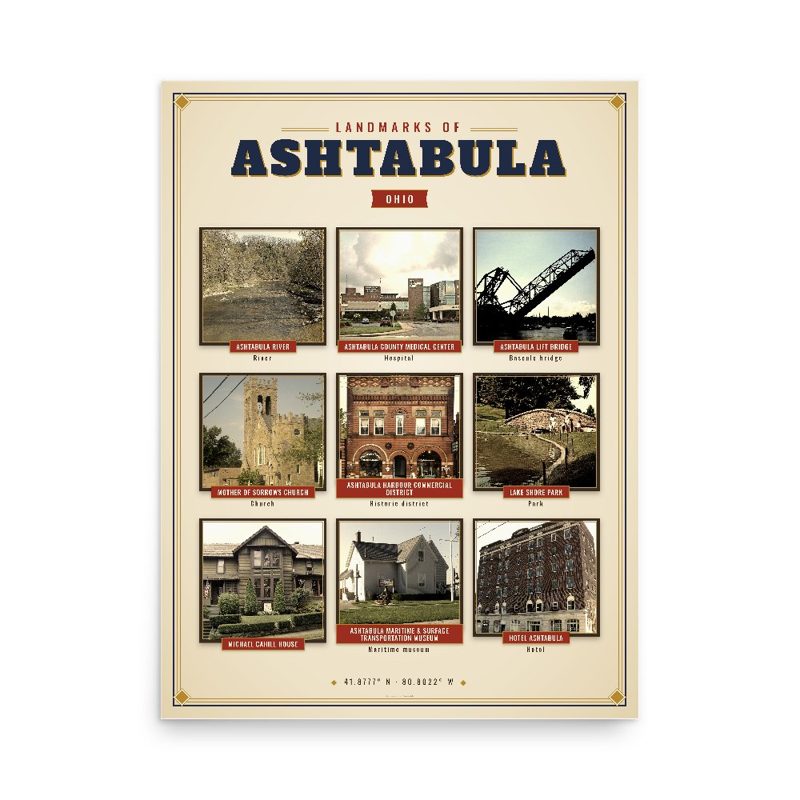

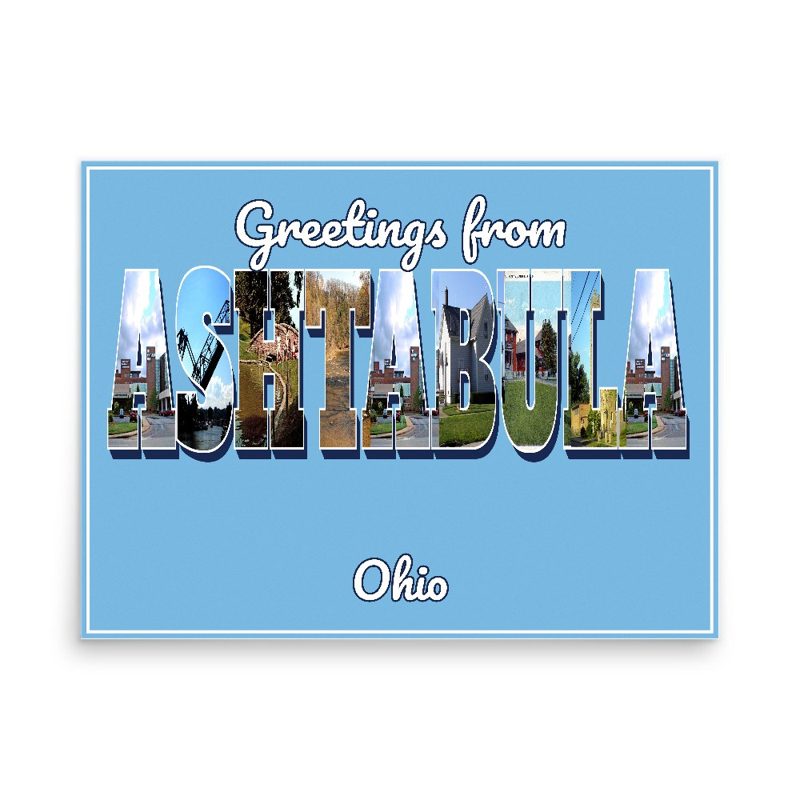

















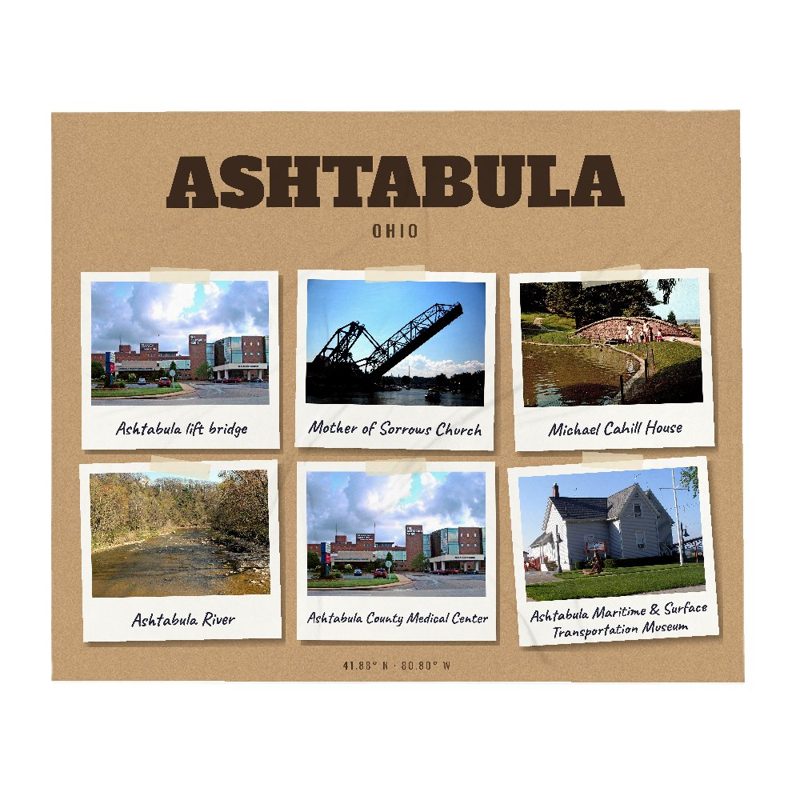

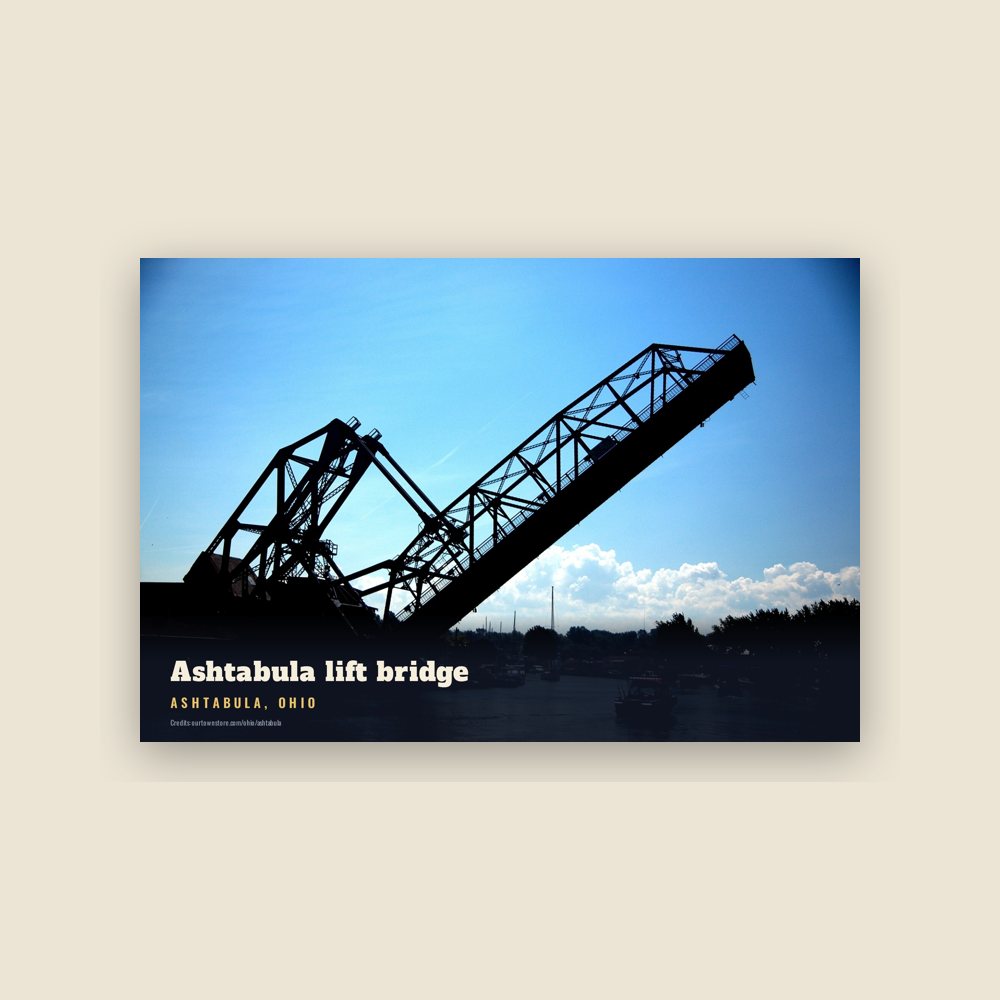


 Ashtabula lift bridge
 Ashtabula River
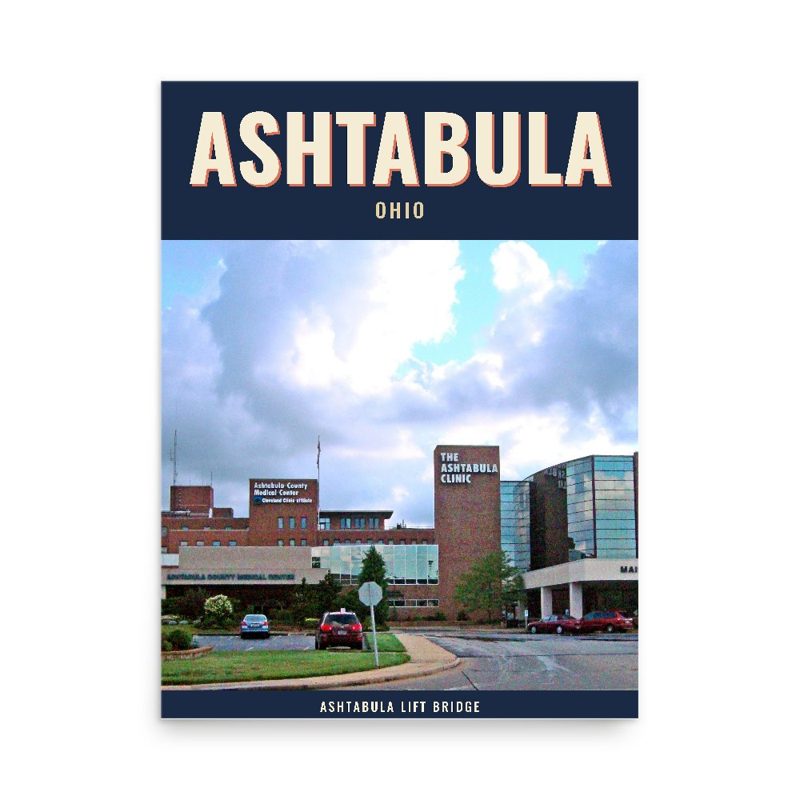
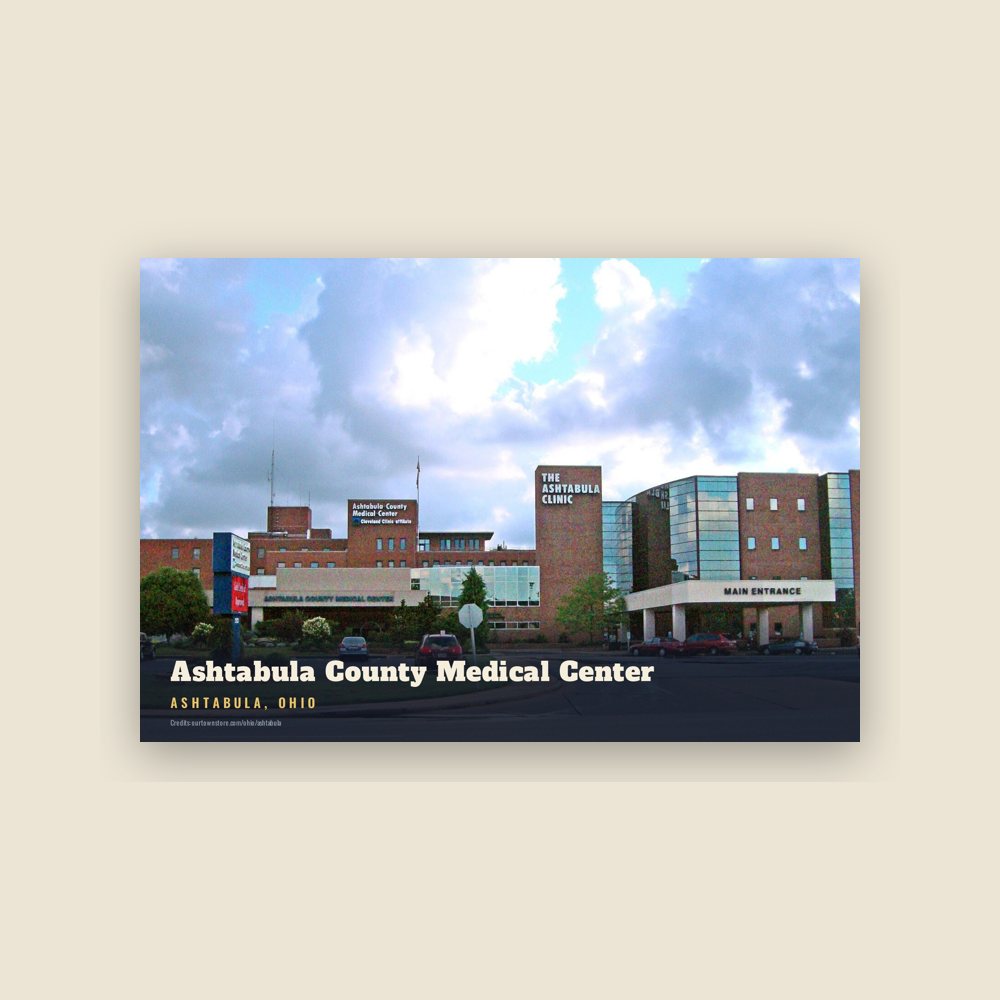
 Ashtabula County Medical Center
 Ashtabula County Medical Center