A short history of Fort Yates
A primarily Native American settlement developed here after a US Army post at this site was established in 1863 as the Standing Rock Cantonment, intended for the US Army garrison to oversee the Hunkpapa and Blackfeet bands, and the Inhunktonwan and Cuthead of the Upper Yanktonai, of the Lakota Oyate. In 1878 the US Army renamed the fort to honor Captain George Yates, who was killed by the Lakota Oyate at the Battle of Little Big Horn in 1876. The town that developed was also known as Fort Yates. The Army post and fort were decommissioned in 1903.
Fort Yates also served as the headquarters of the US Standing Rock Indian Agency, which in the late 19th century was headed by US Indian Service Agent James McLaughlin. Worried about the Hunkpapa Lakota chief Sitting Bull possibly taking part in the Ghost Dance movement, he ordered the arrest of the chief on December 14, 1890. During the bungled event the chief was shot and killed at dawn in his log cabin by agency non-Hunkpapa Dakota police.
Sitting Bull was buried at Fort Yates. In 1953, his family authorized his remains to be exhumed and transferred to a gravesite overlooking the Missouri River near his birthplace at Mobridge, South Dakota. A monument dedicated to Sitting Bull was installed at his burial site at Fort Yates. Another monument, with his bust on a pedestal, overlooks the Missouri River at the Mobridge burial site.
This city has become the tribal headquarters of the federally recognized Standing Rock Sioux Tribe, whose reservation encompasses it. They founded Sitting Bull College in Fort Yates, a tribal college now named for their noted 19th-century leader. Known also as "Long Soldier", it is the most populous electoral district of the reservation.
Adapted (trimmed) from the Wikipedia article Fort Yates, North Dakota, revision 1373561712 by its contributors, licensed CC BY-SA 4.0.
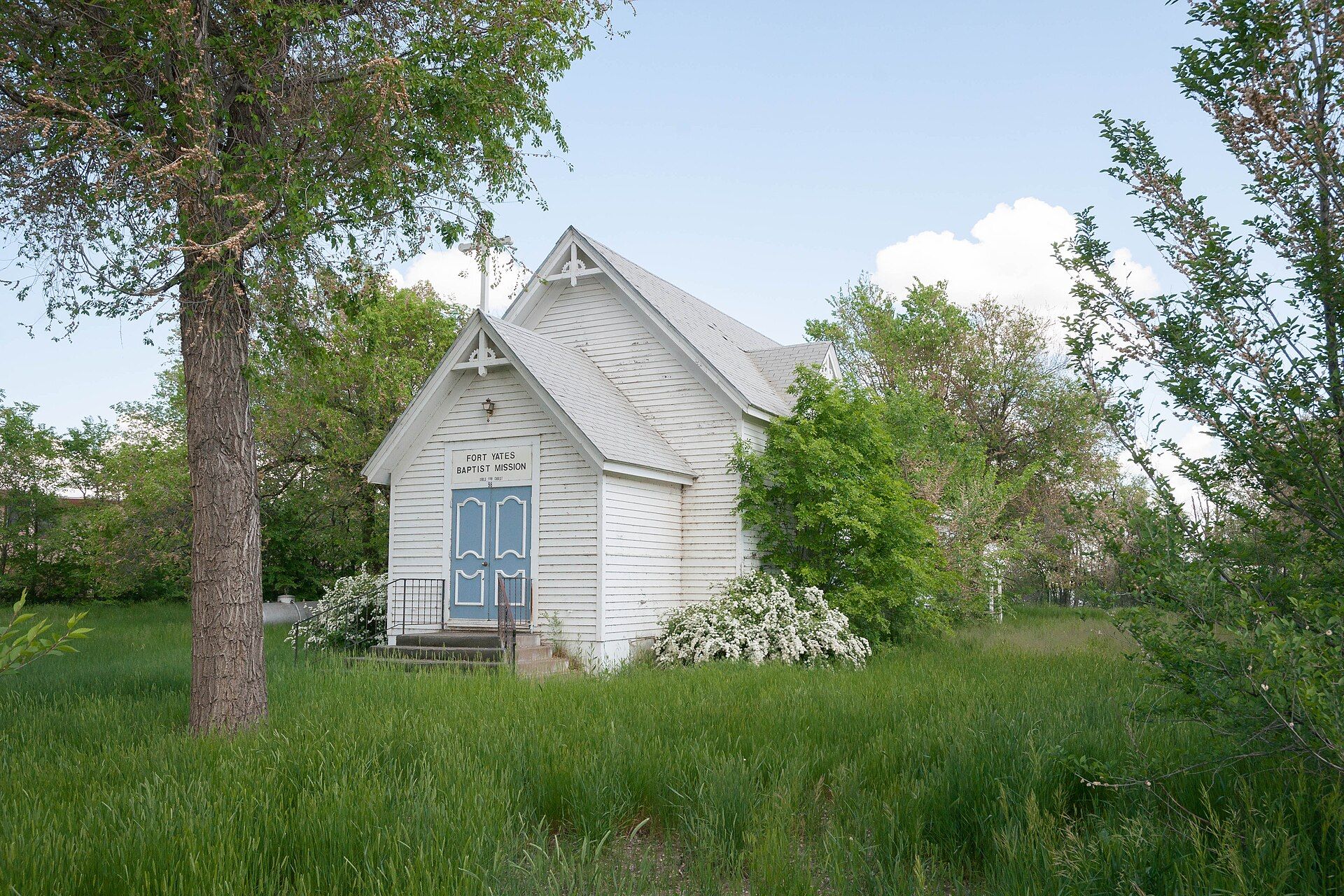












 A view of Fort Yates
 A view of Fort Yates
 A view of Fort Yates