A short history of Bismarck
For thousands of years, various indigenous peoples inhabited present-day central North Dakota. The historic Mandan Native American tribe occupied the area long before Europeans arrived. The Hidatsa name for Bismarck is mirahacii arumaaguash ("Place of the tall willows"); the Arikara name is ituhtaáwe [itUhtaáwe].
In 1872, European Americans founded a settlement at what was then called Missouri Crossing, so named because the Lewis and Clark Expedition crossed the river there on their exploration of the land acquired by the Louisiana Purchase in 1804–06. It had been an area of Mandan settlement. Later, the new town was called Edwinton, after Edwin Ferry Johnson, engineer-in-chief for the Northern Pacific Railway. Its construction of railroads in the territory attracted workers and settlers.
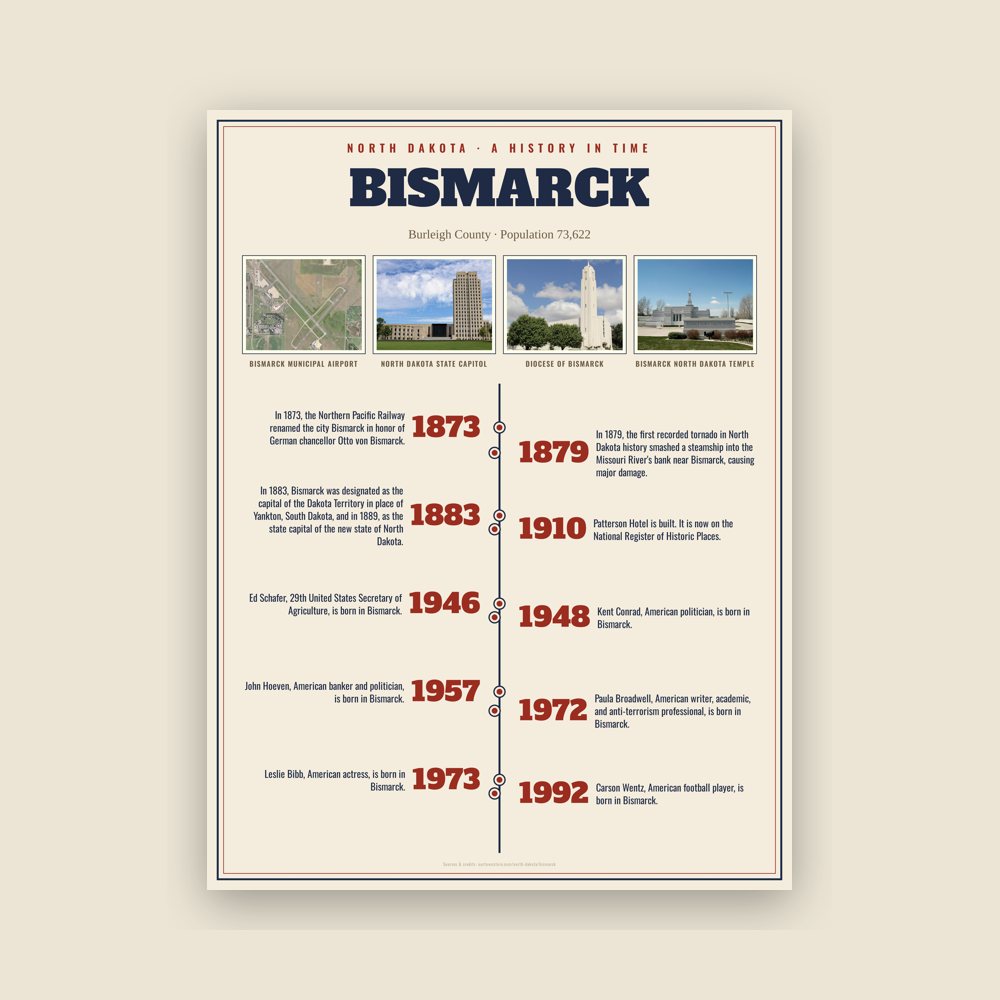
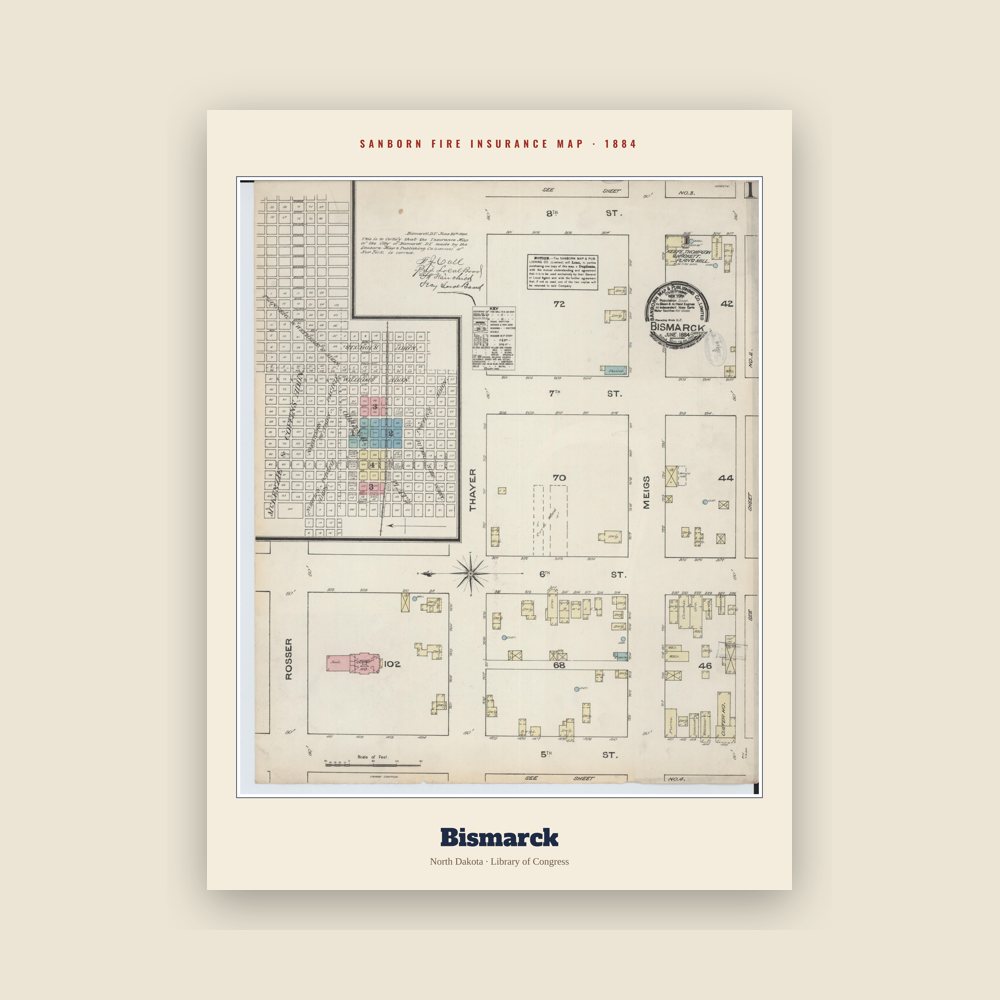
In 1873, the Northern Pacific Railway renamed the city Bismarck in honor of German chancellor Otto von Bismarck. Railroad officials hoped to attract German settlers to the area and German investment in the railroad. It is the only U.S. state capital named for a foreign statesman. The discovery of gold in the nearby Black Hills of South Dakota the following year was a great impetus for growth. Thousands of miners came to the area, encroaching on what the Lakota considered sacred territory, leading to heightened tensions with Native Americans.
Bismarck became a freight-shipping center on the "Custer Route" from the Black Hills. In 1879, the first recorded tornado in North Dakota history smashed a steamship into the Missouri River's bank near Bismarck, causing major damage.
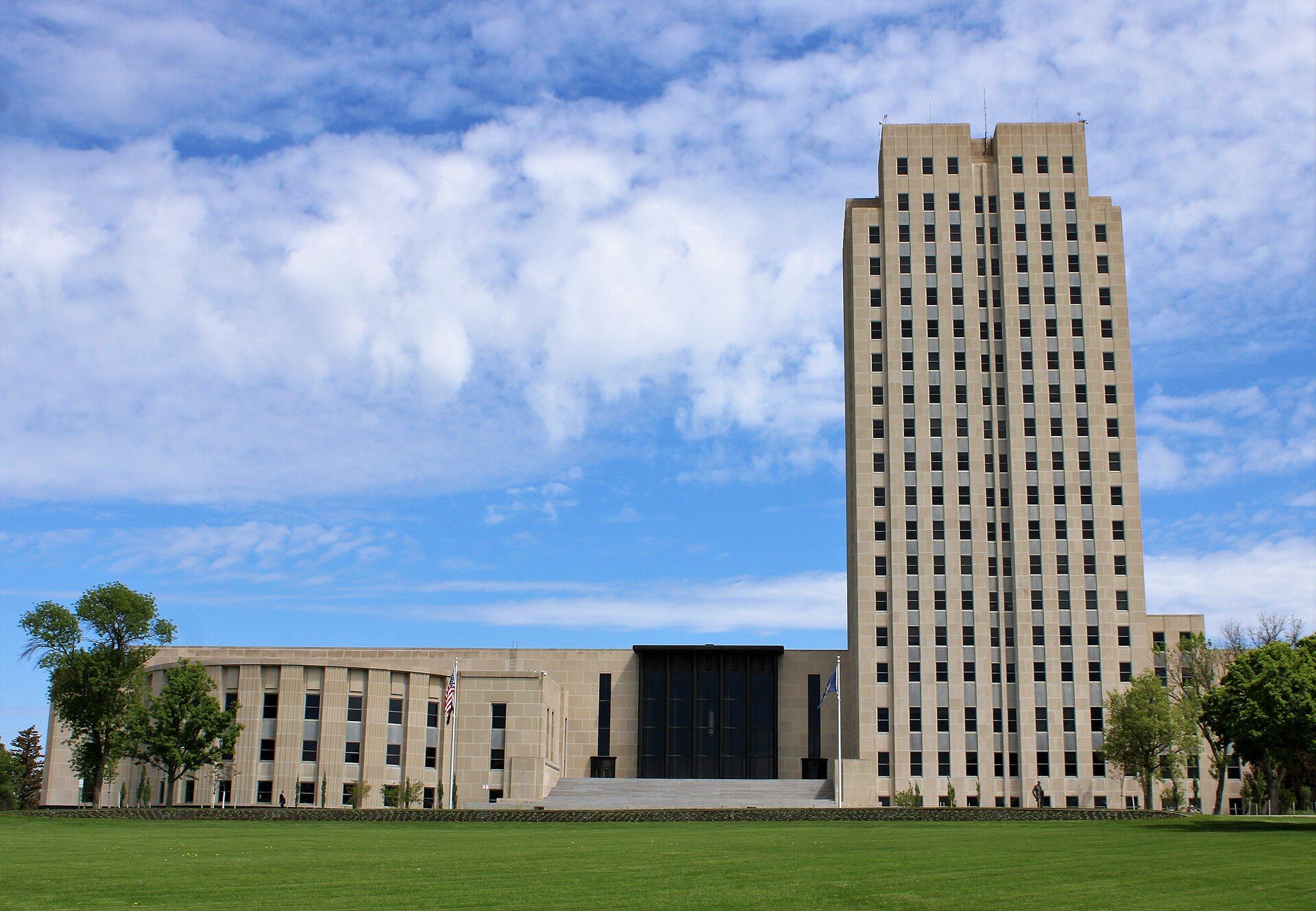
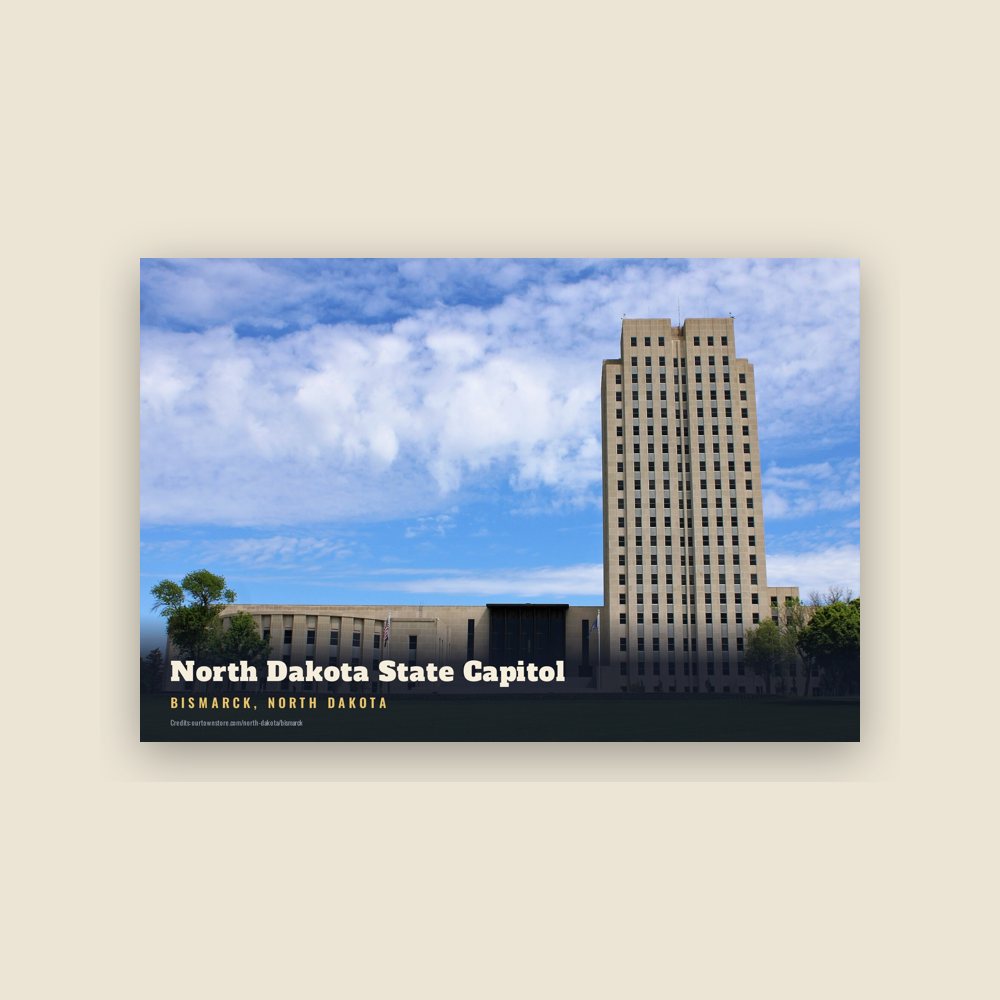
In 1883, Bismarck was designated as the capital of the Dakota Territory in place of Yankton, South Dakota, and in 1889, as the state capital of the new state of North Dakota.
Adapted (trimmed) from the Wikipedia article Bismarck, North Dakota, revision 1379272739 by its contributors, licensed CC BY-SA 4.0.
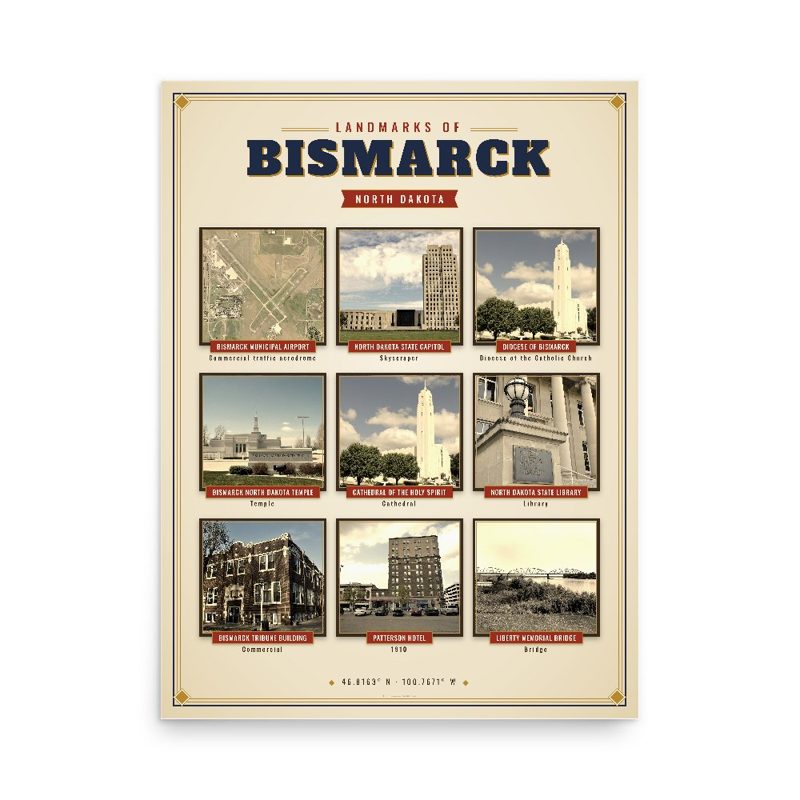


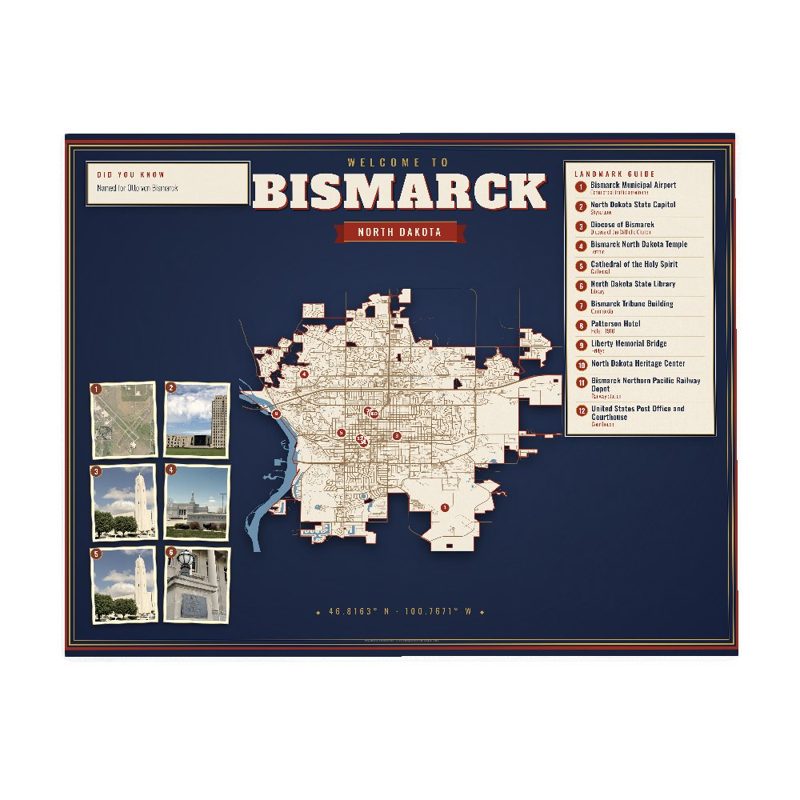















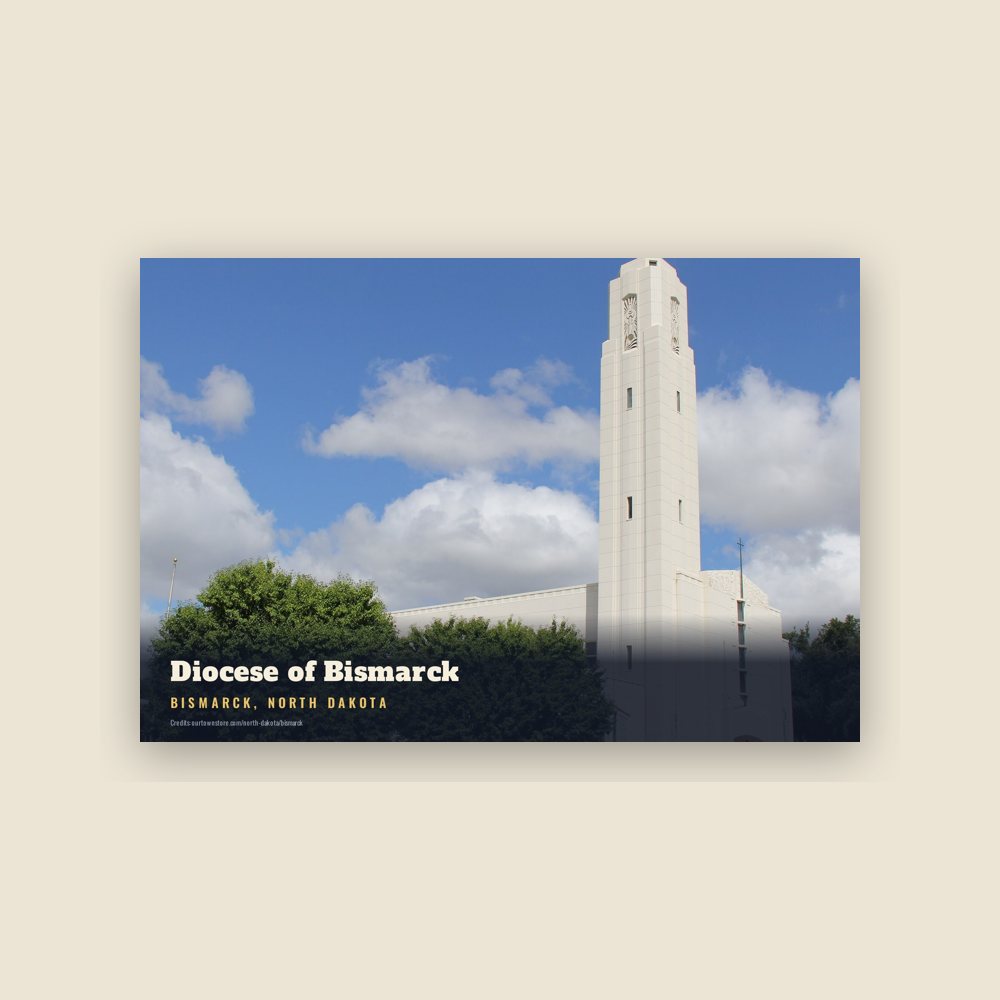
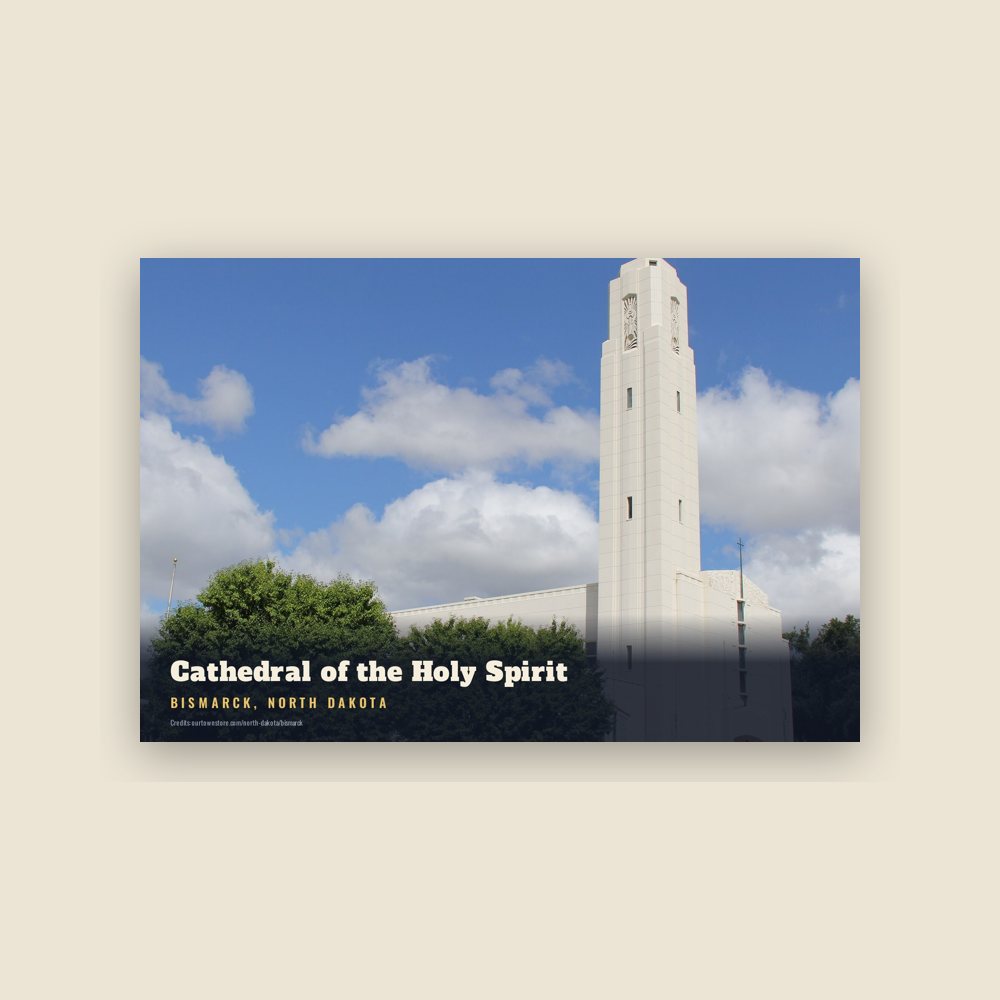
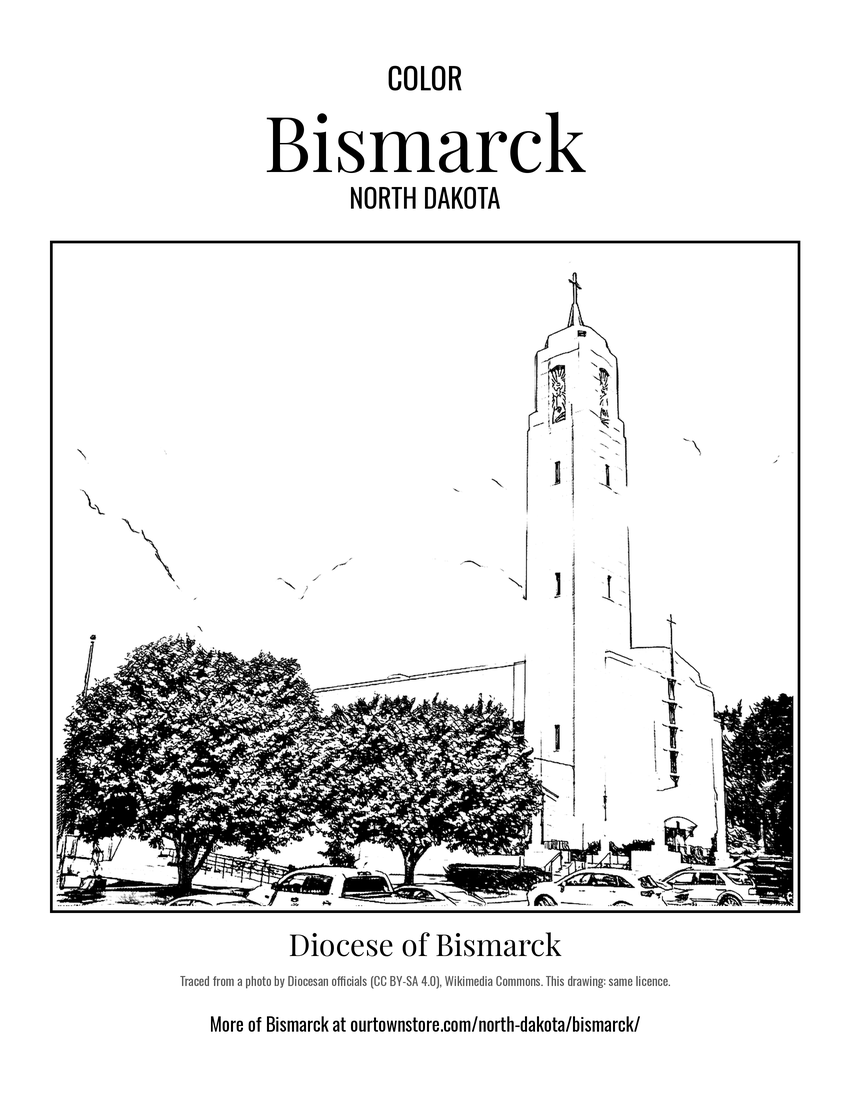 Diocese of Bismarck
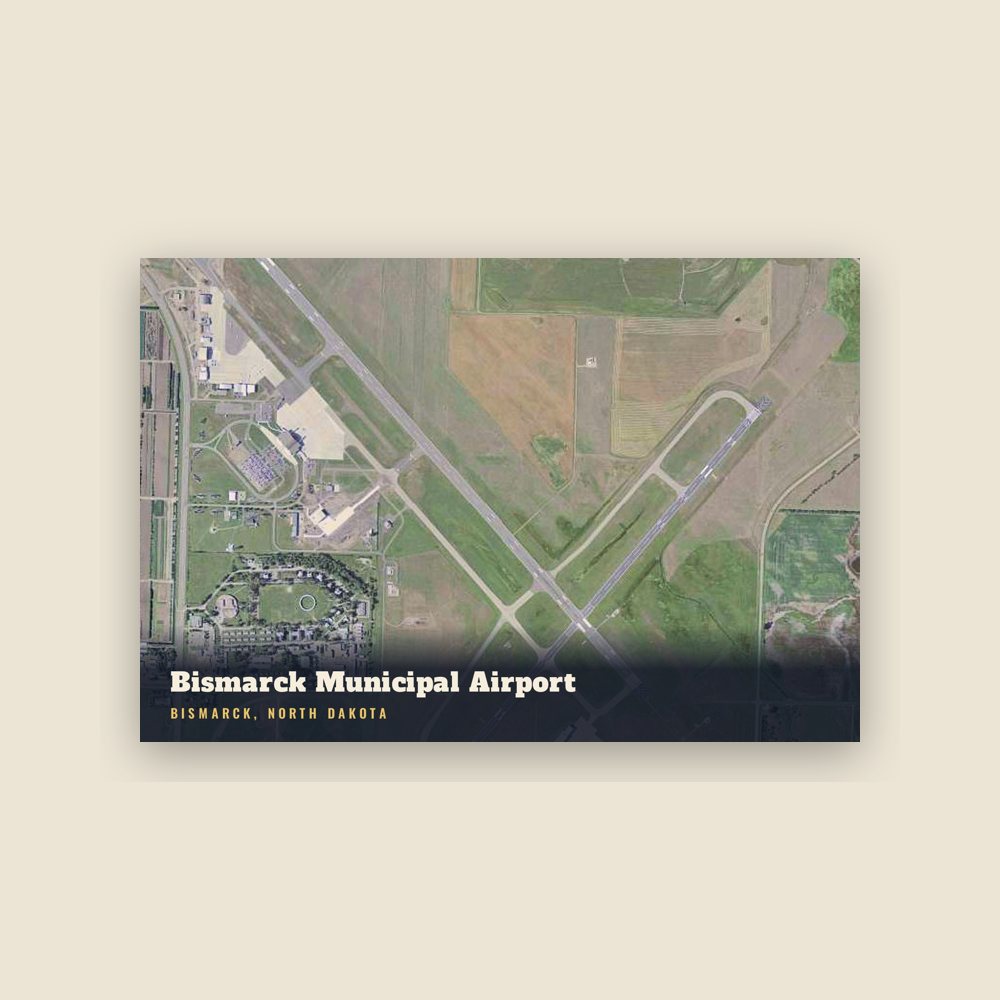
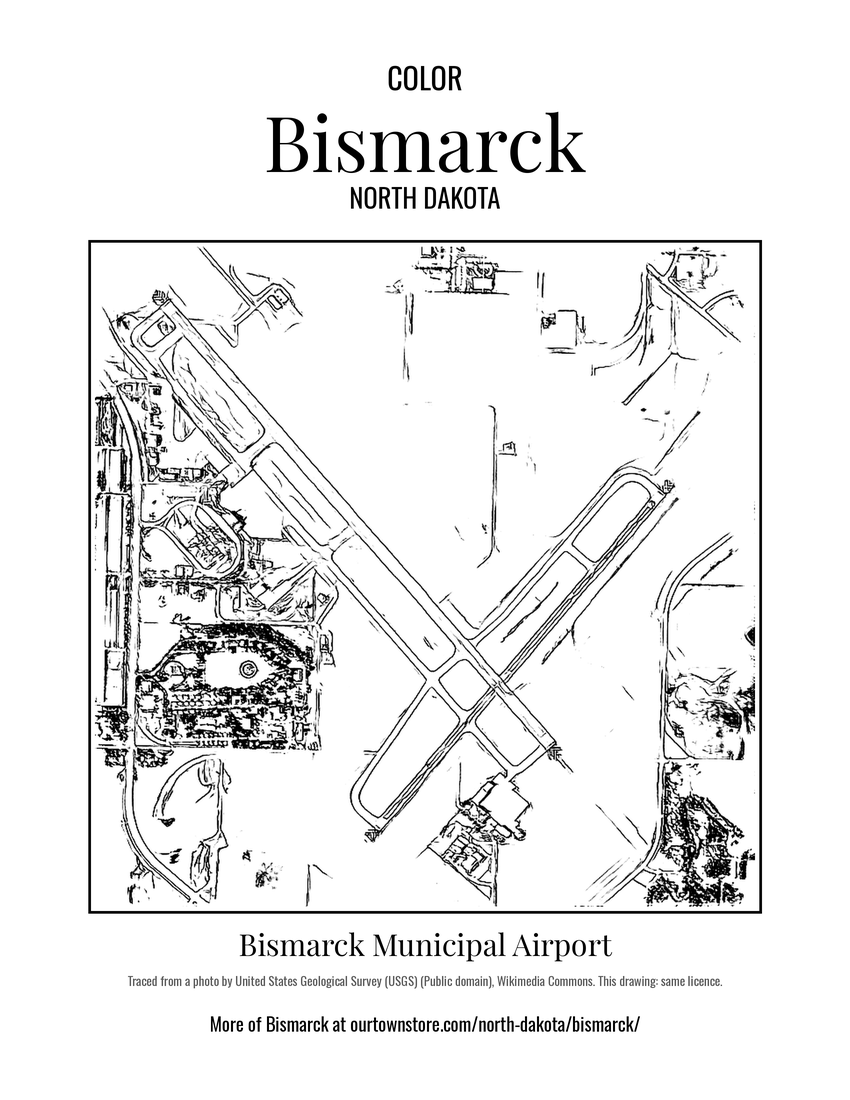 Bismarck Municipal Airport
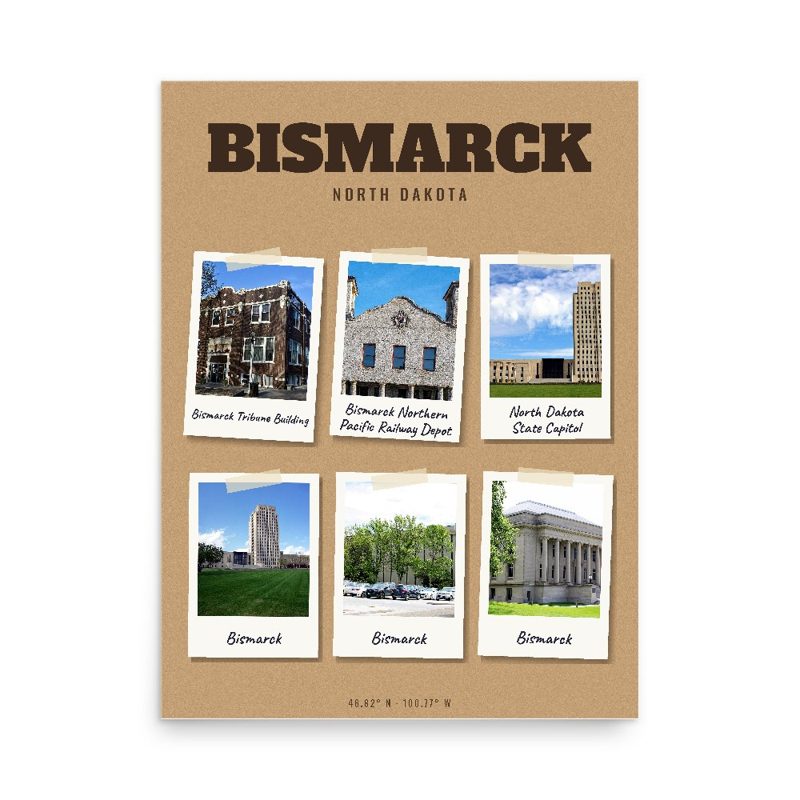
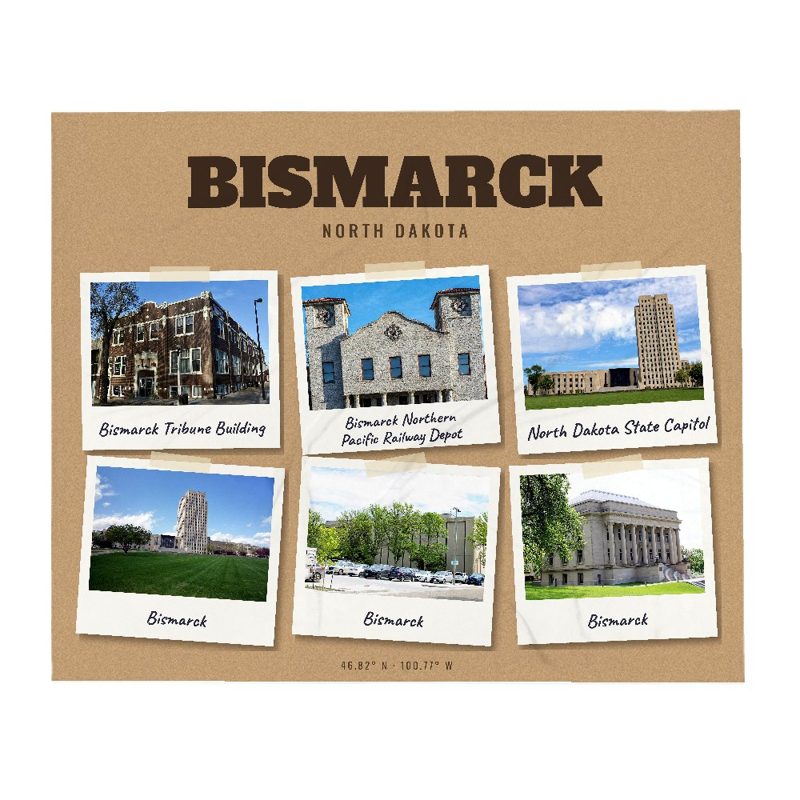
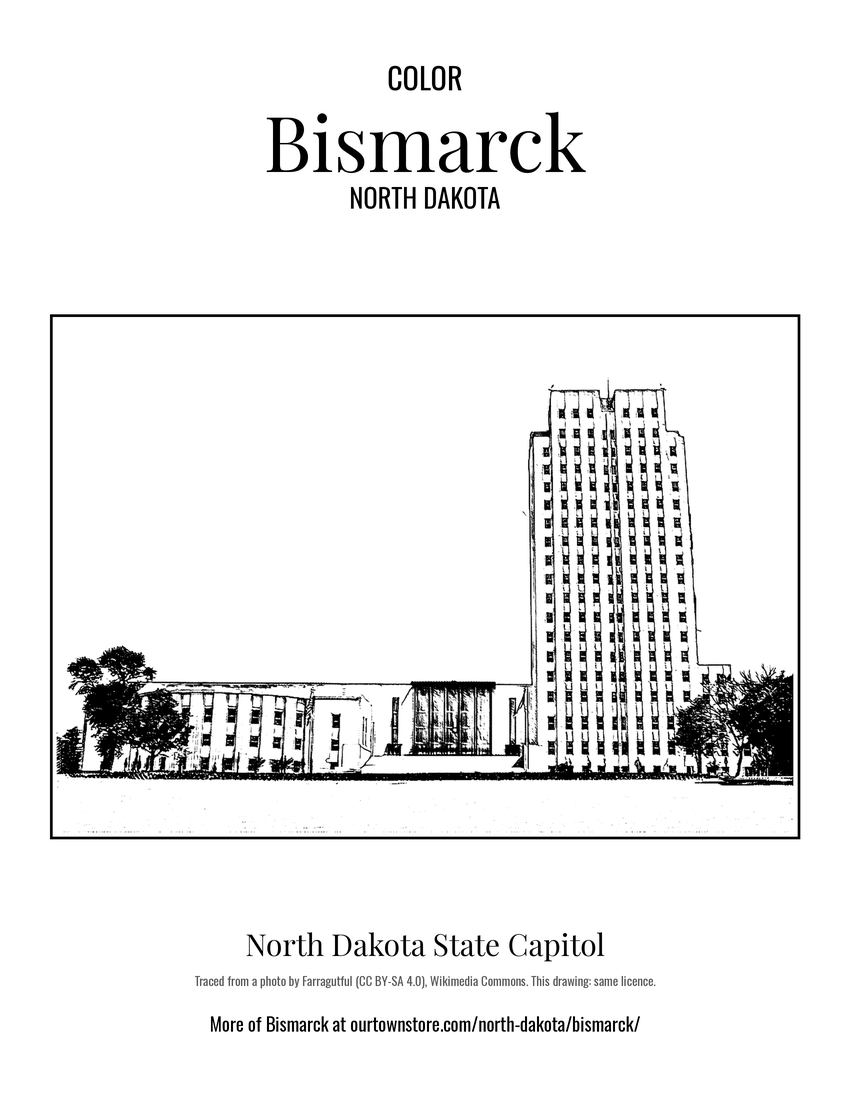 North Dakota State Capitol
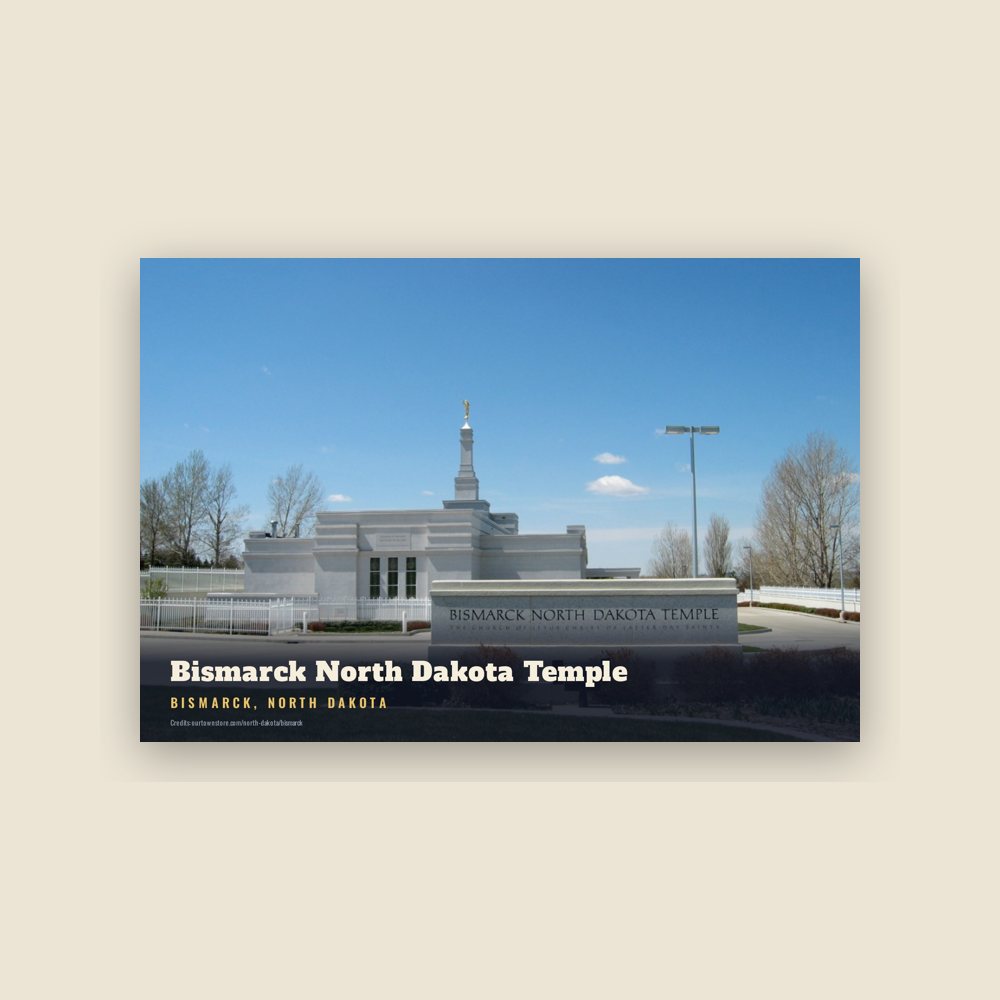
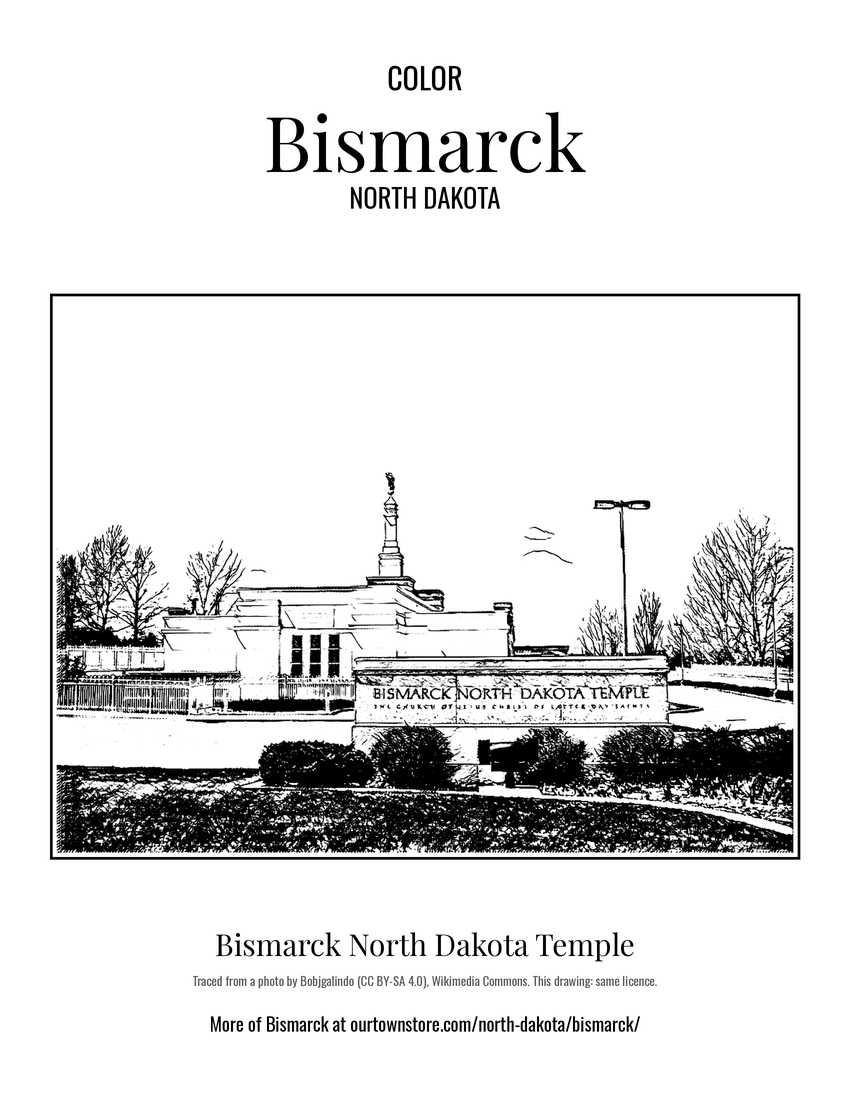 Bismarck North Dakota Temple