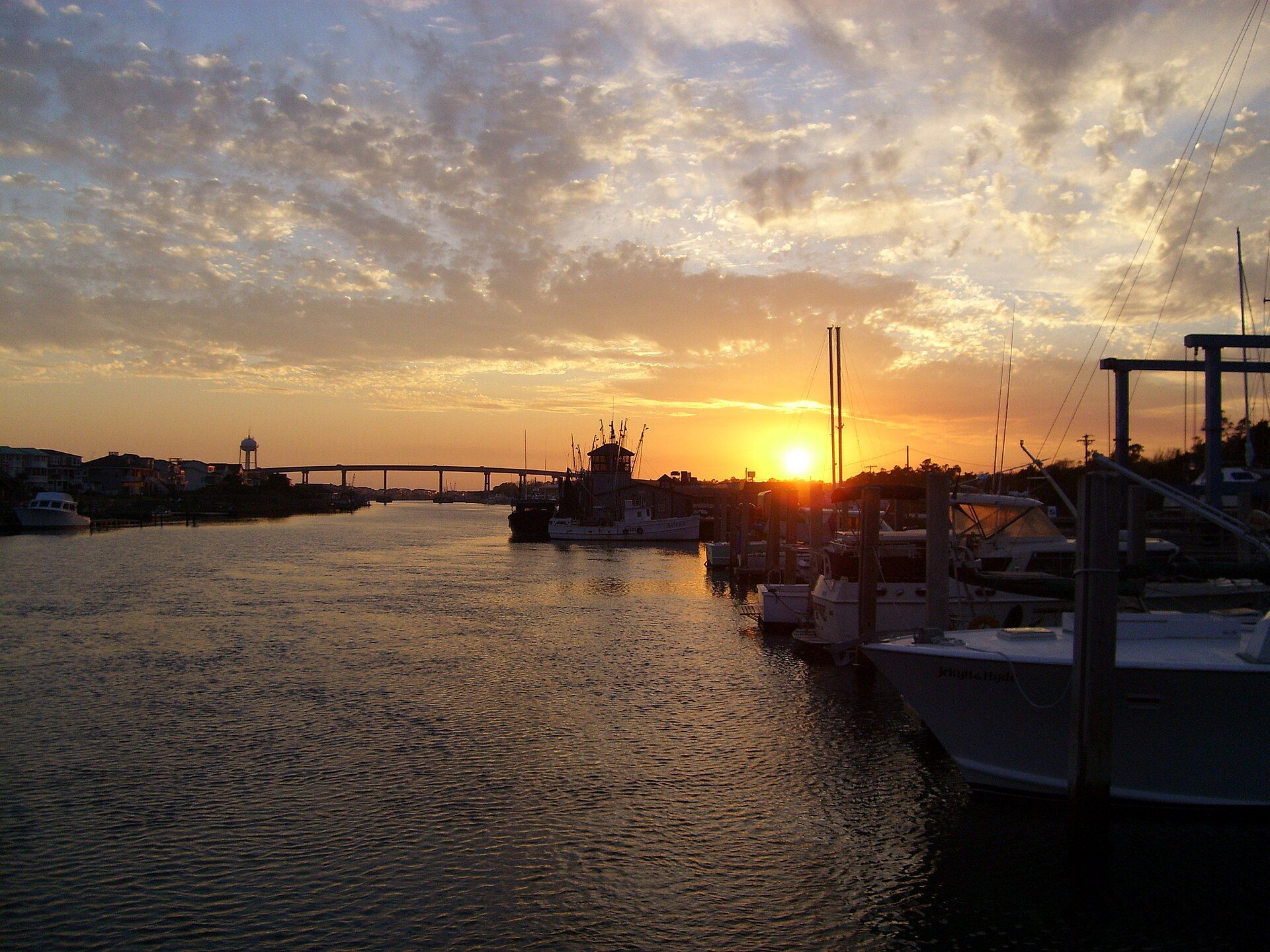
Holden Beach is a seaside town in Brunswick County, North Carolina. Landmarks include Holden Beach Bridge.
- CountyBrunswick County
- Population921 (2020 U.S. Census)
Holden Beach, North Carolina gifts and souvenirs: 27 designs made from Holden Beach's own map, landmarks and history, from $10 to $99. Printed to order and shipped free in the USA.
| Popular | Price |
|---|---|
| Holden Beach Hometown Ornament | $23 |
| Holden Beach Vintage Travel Poster | from $40 |
| Holden Beach Varsity Crewneck | from $57 |
| Holden Beach Est. Tee | from $33 |
| Holden Beach Town Line Mug | from $26 |
| Holden Beach Market Tote | $37 |
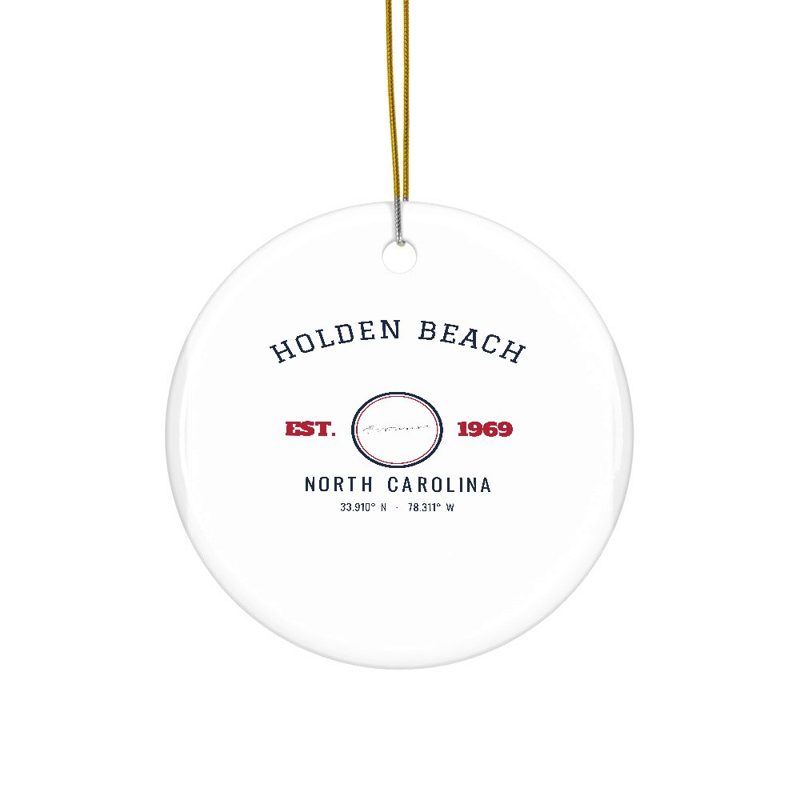
Ceramic keepsake, gold ribbon
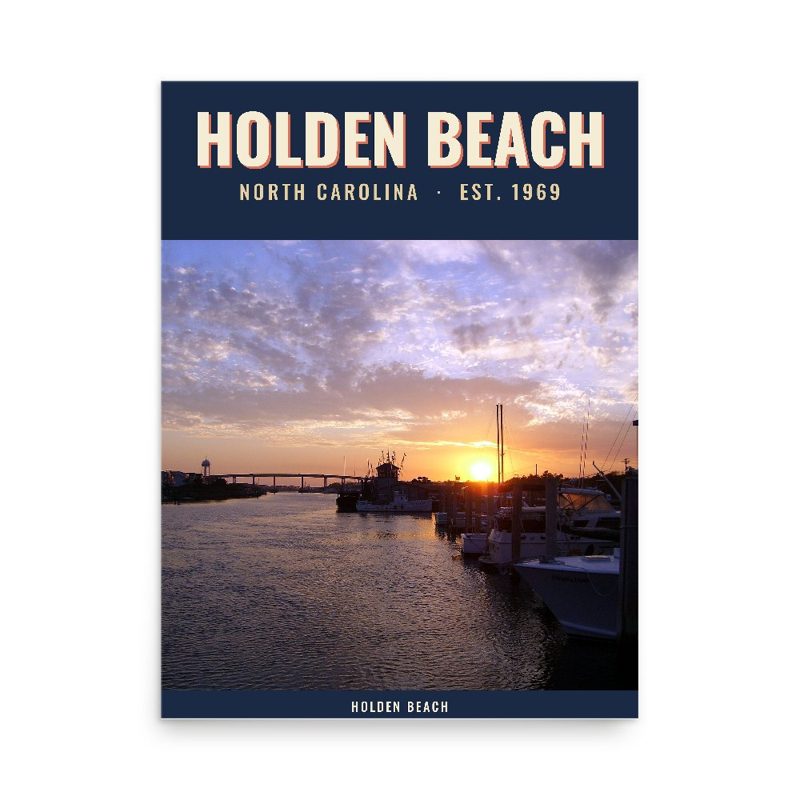
Its landmark photo in a classic travel-poster layout
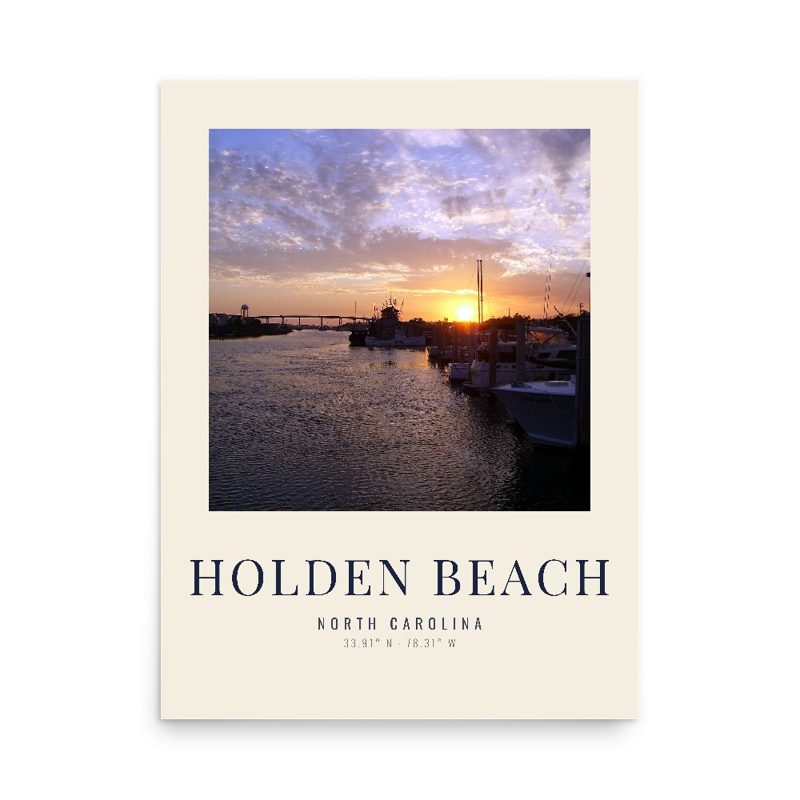
A local landmark photo as a gallery print
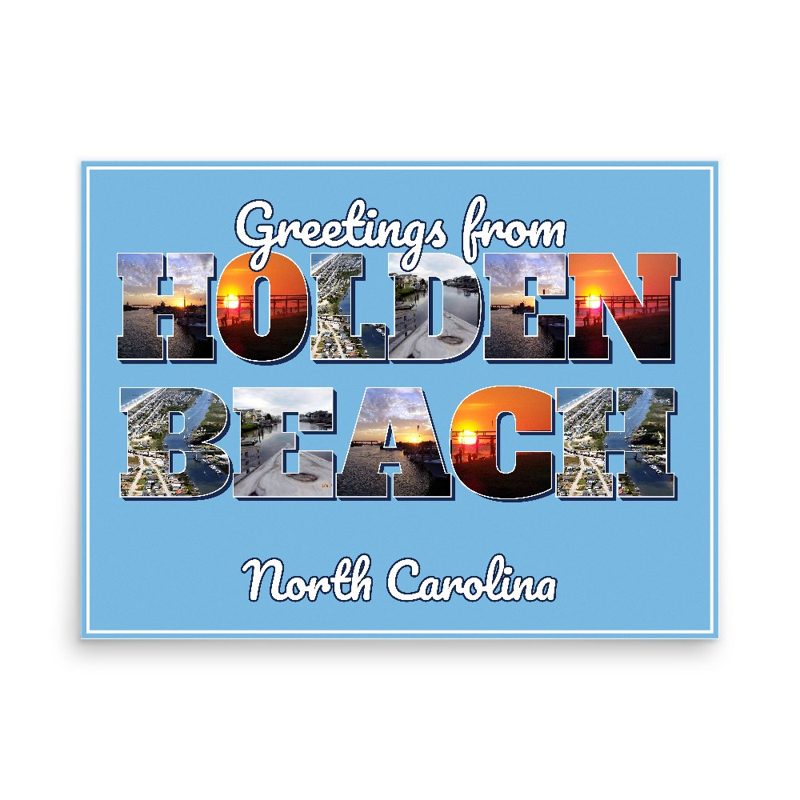
Classic large-letter postcard art, filled with local photos
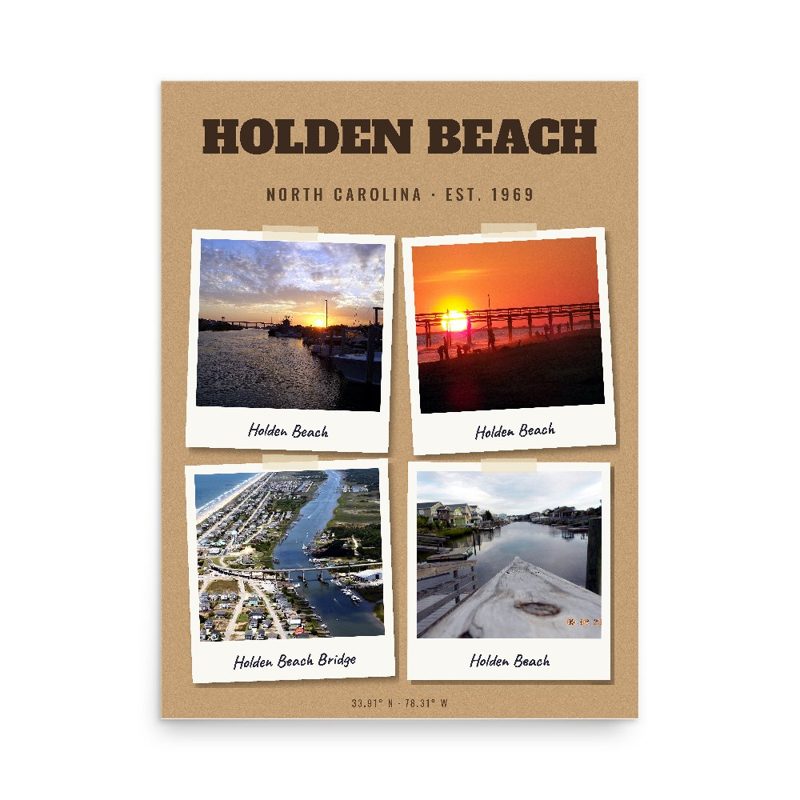
Six local landmarks as instant photos on kraft paper
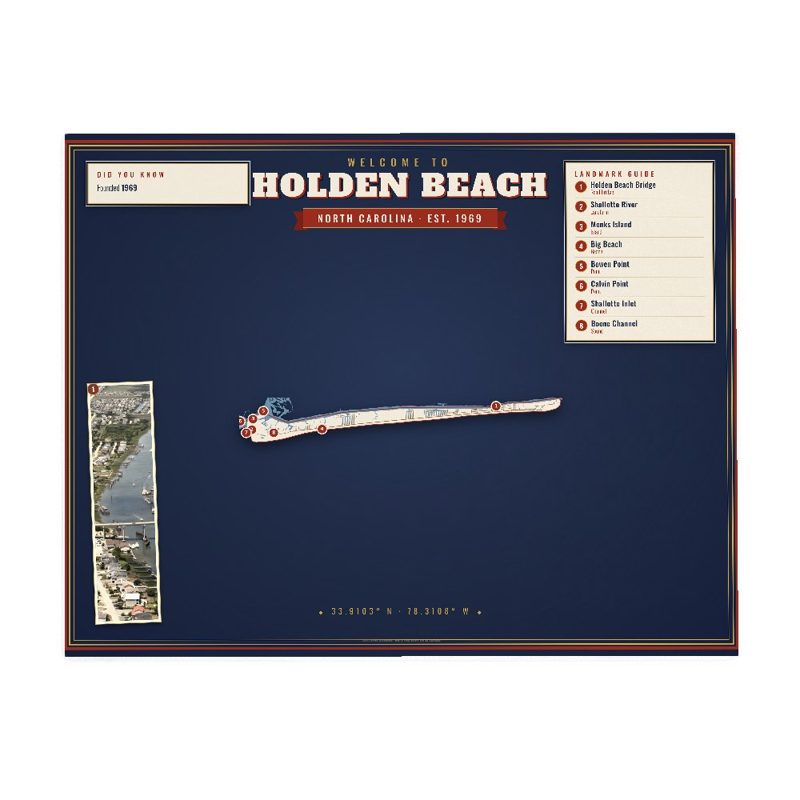
Map of local landmarks, washable fabric
Heavy-blend fleece, street map printed on the back
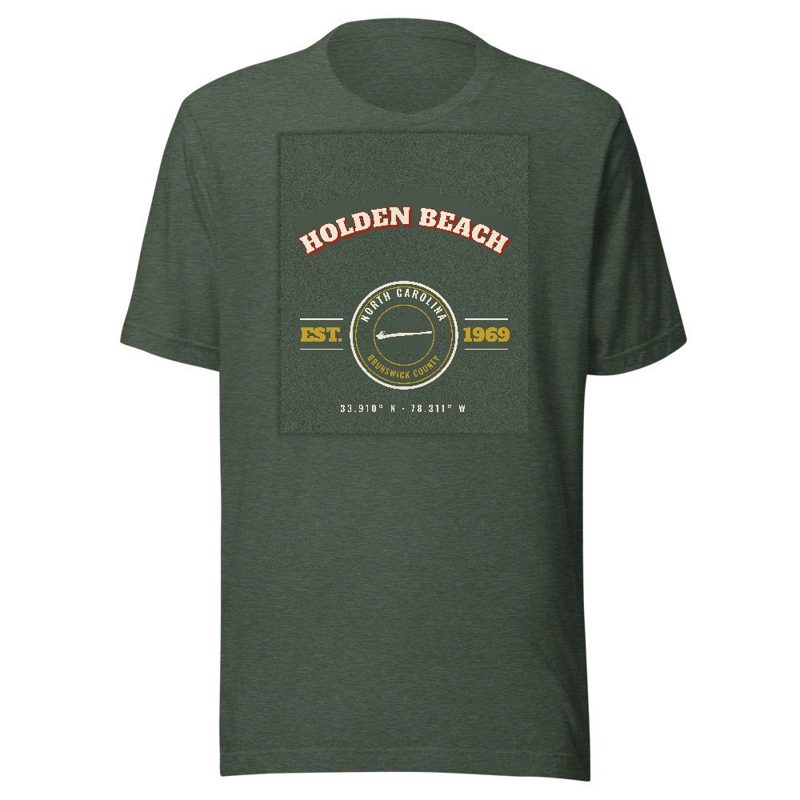
Soft Bella+Canvas jersey
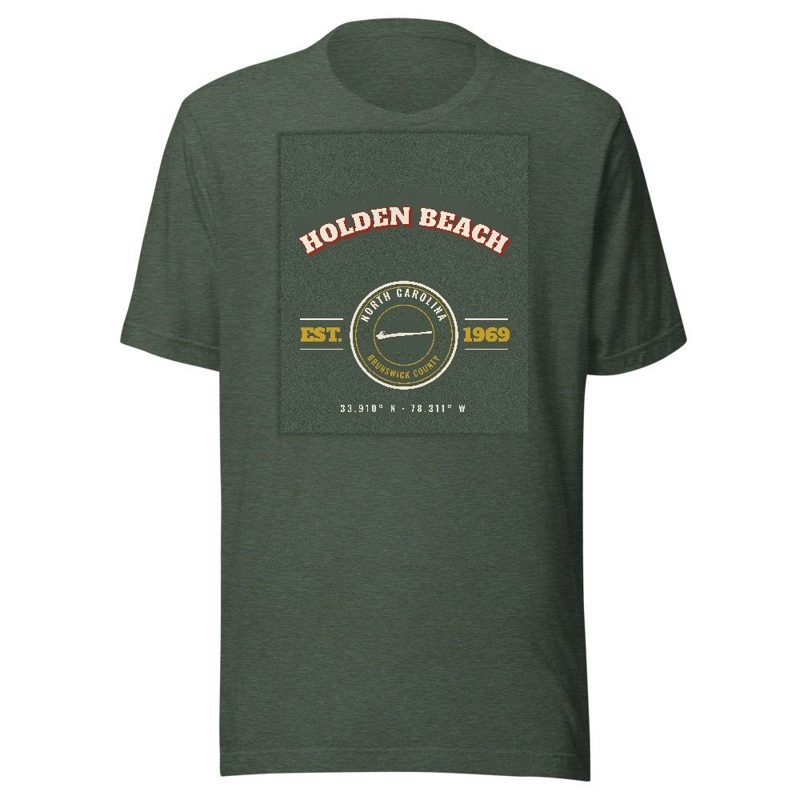
Kids' Bella+Canvas jersey, youth sizes
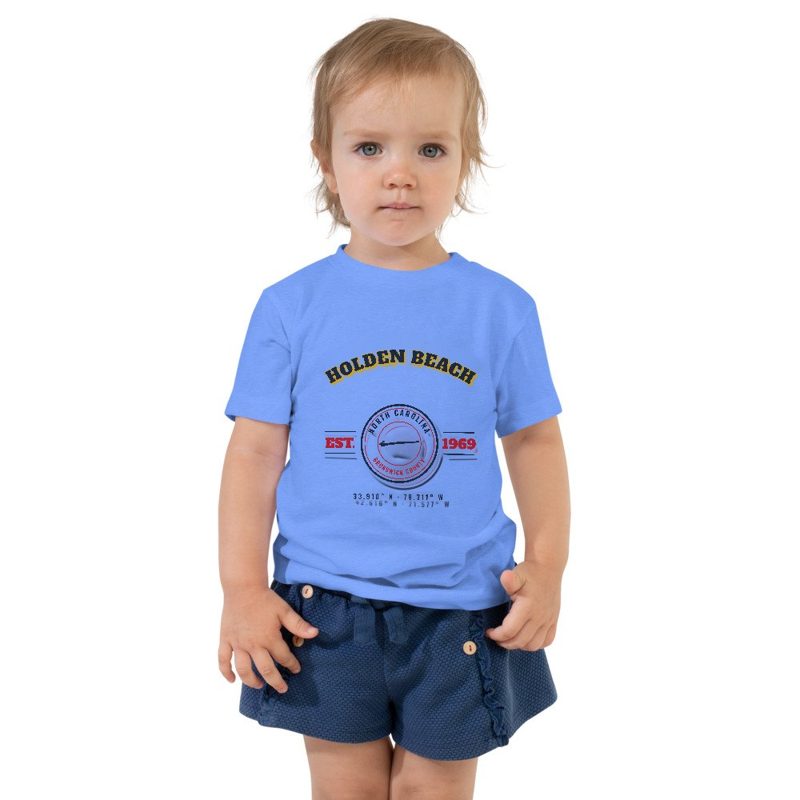
Bella+Canvas toddler jersey
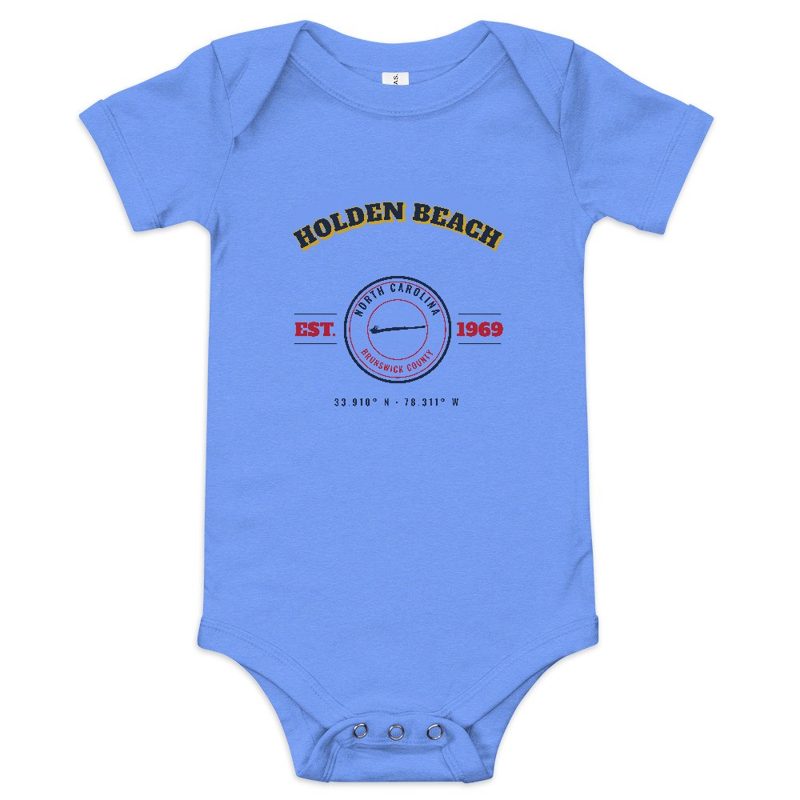
Bella+Canvas baby bodysuit
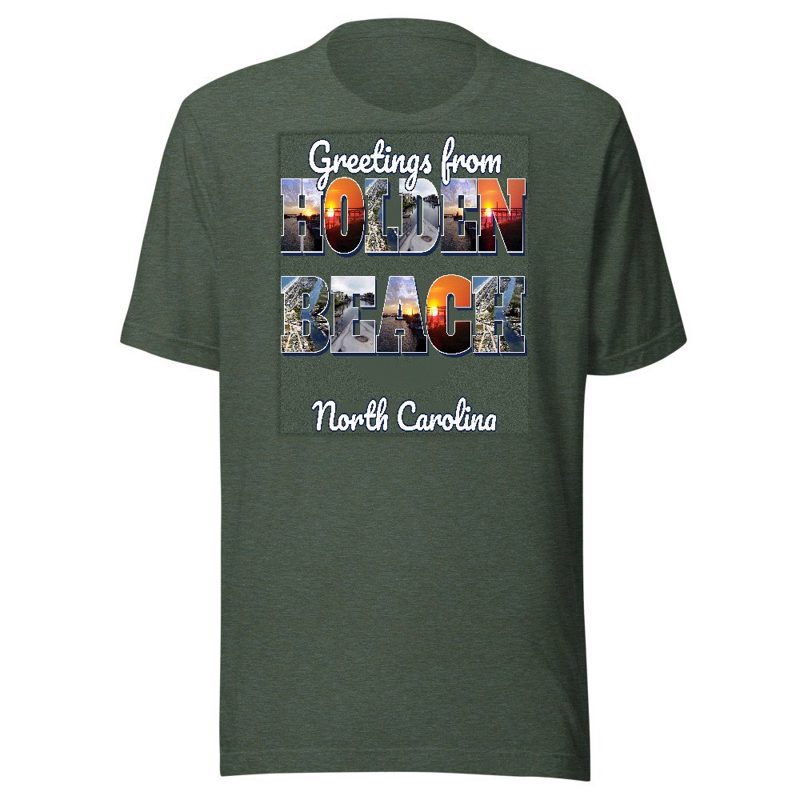
Large-letter postcard art filled with local photos
Glossy ceramic, dishwasher safe
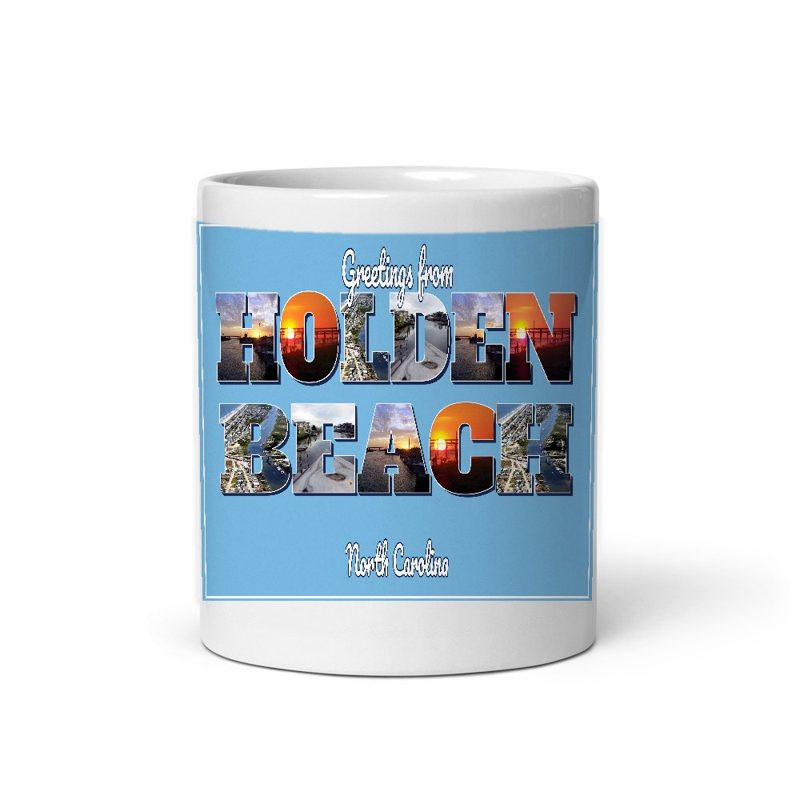
Large-letter postcard art filled with local photos, 11 oz ceramic
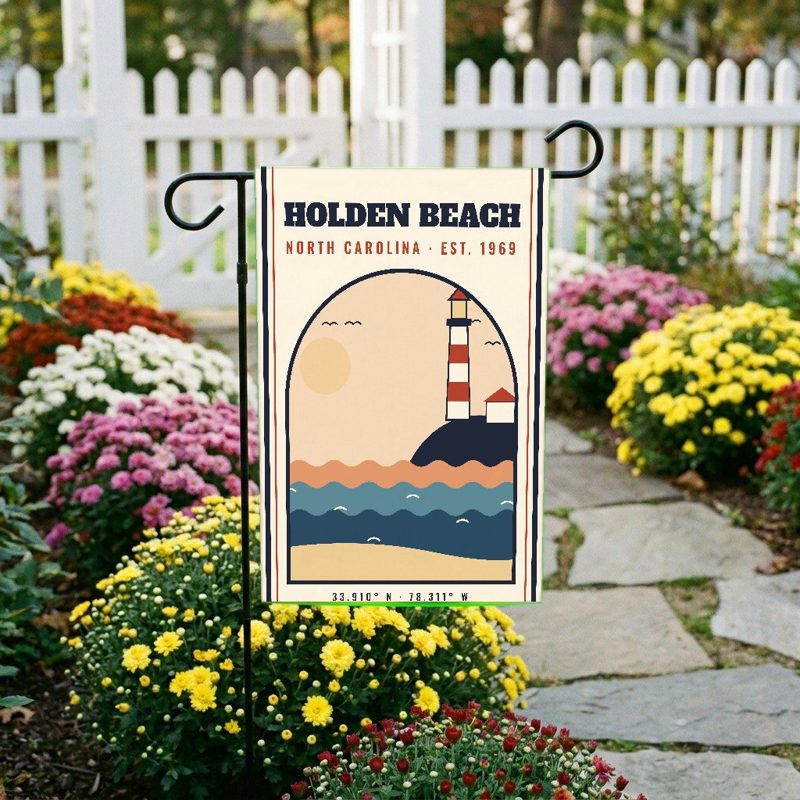
Weatherproof, for the front walk
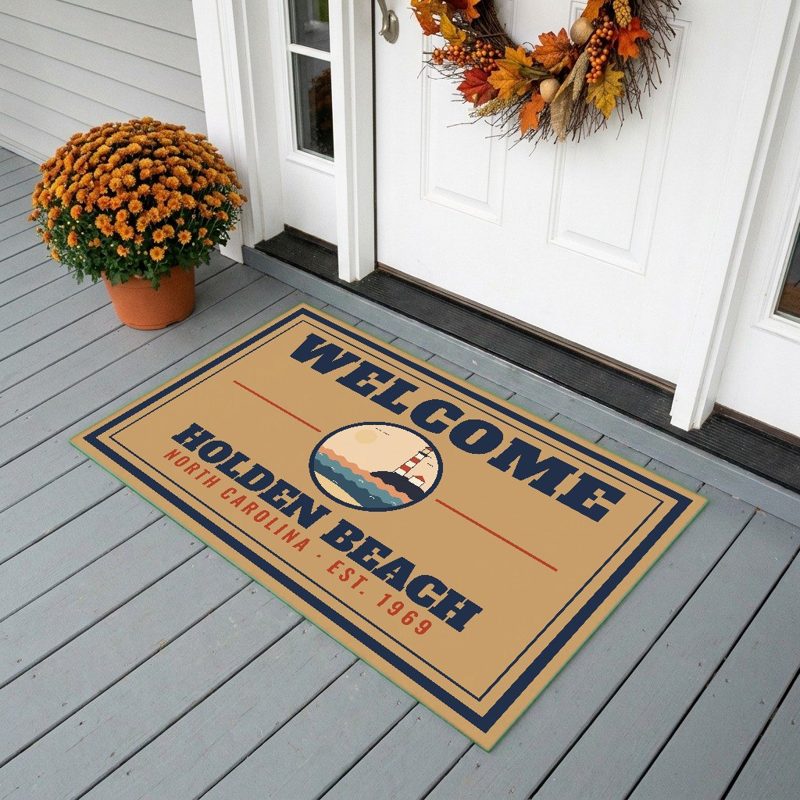
24″×16″, printed coir-look fibers, rubber back
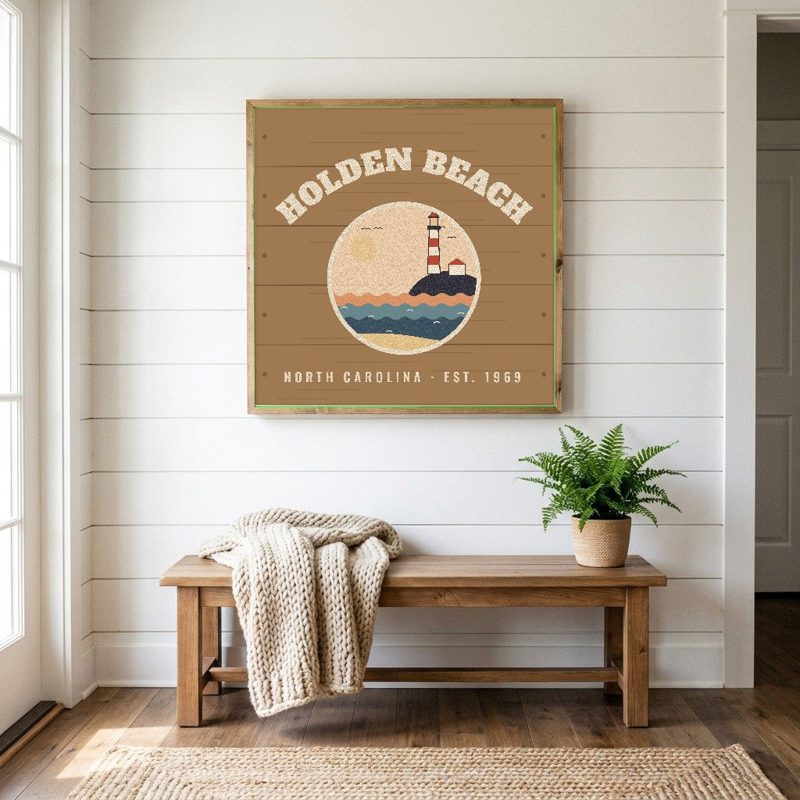
12″×12″ printed wood, ready to hang
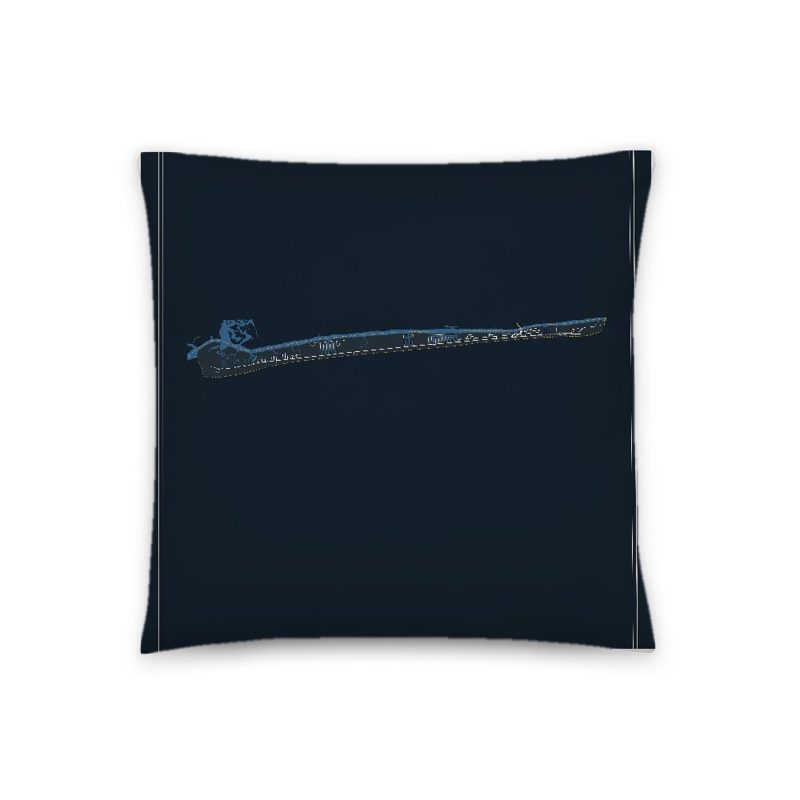
Soft-touch, zip cover
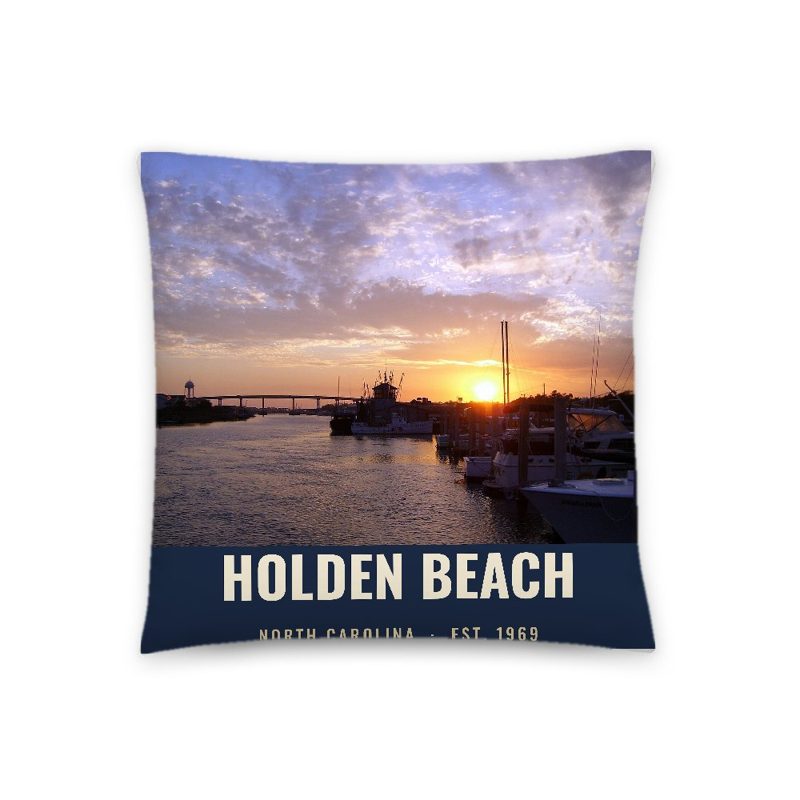
A local landmark photo with the town name, 18″×18″
Sturdy all-over-print tote
Large-letter postcard art on a sturdy tote
Foam-front trucker, printed (not embroidered) with local photos
Glossy top, cork back
Soft fleece, 50″×60″
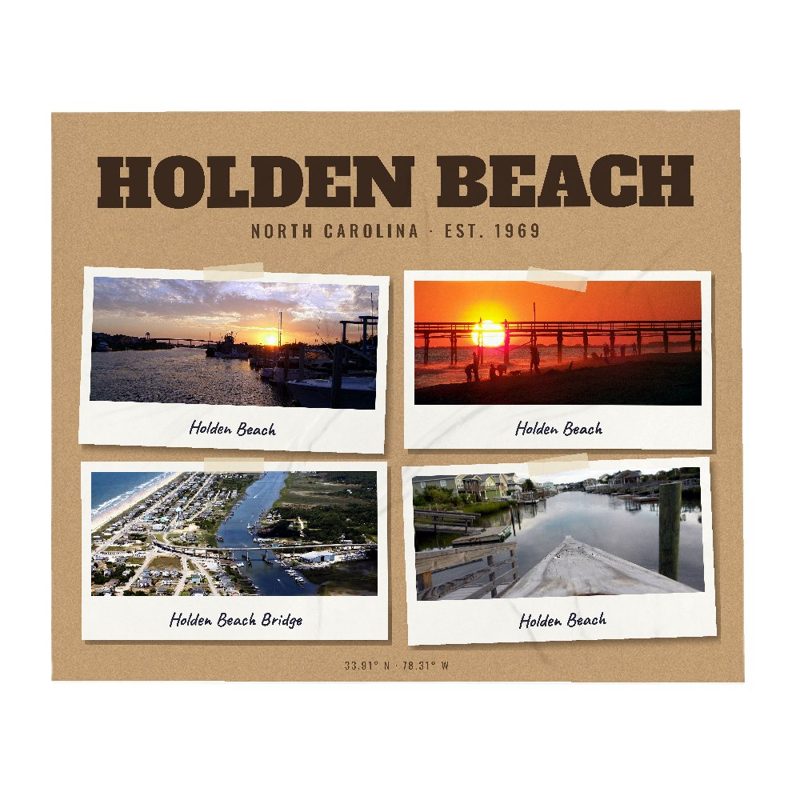
Six local landmarks as instant photos, soft fleece 50″×60″
20 oz, double-wall stainless
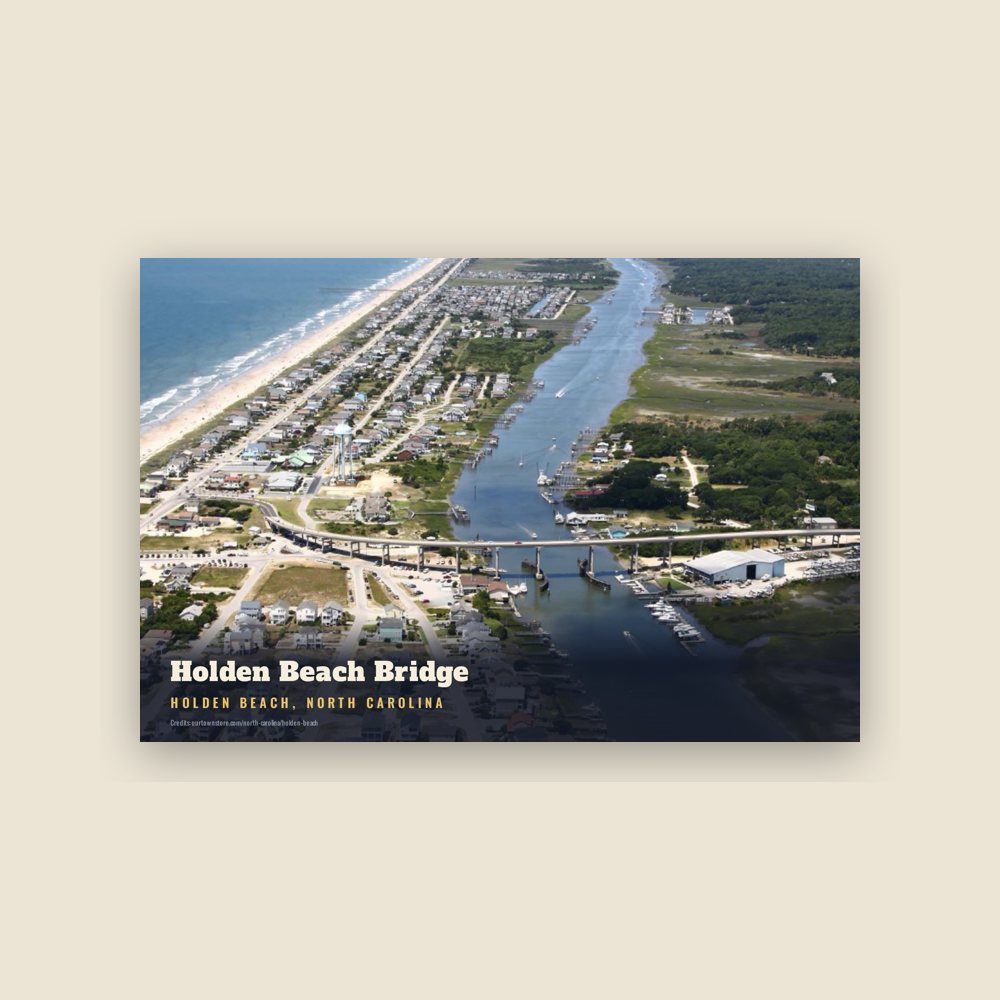
6″×4″ postcard, glossy front
Holden Beach is a seaside town in Brunswick County, North Carolina. Landmarks include Holden Beach Bridge.
Before the American Revolution, early settlers seeking land near Lockwood's Folly River applied for patents and received warrants for surveys of selected tracts. Upon payment of fifty shillings for each 100 acres (400,000 m2), the warrantee could receive a permanent grant for Royal Governor Arthur Dobbs.
Benjamin Holden in 1756 bought four mainland tracts and the island between his plantation and the ocean. This island extended from Lockwood's Folly Inlet west 6 miles (10 km) to Bacon Inlet. Benjamin and his sons used the island for fishing and cattle grazing. During the Civil War Holden Beach and Lockwood's Folley Inlet became the resting place of several shipwrecks: the Confederate blockade runners CSS Elizabeth and CSS Bendigo and the Union blockade ship USS Iron Age. The remains of the Bendigo can be seen on the eastern end of the island during the periods of low tide. Its wreck is marked with an orange navigation warning buoy and is located between Holden Beach and Oak Island. While the vessel's wreck is roughly 200 feet (61 m) long, only the base of the engine's exhaust funnel and a small portion of superstructure are visible above water. The ship is easily reached during low tide by swimming, but the wreck is extensively covered in abandoned fishing hooks and gear that may present potential hazards.
John Holden, Benjamin's grandson, started a commercial fishery on the island and in 1924 surveyed a section which he called Holden Beach Resort, the plat of which represented the first subdivision of beach property in Brunswick County. In 1925, he built the Holden Beach bridge; it was subsequently destroyed by the Inland Waterway construction. He negotiated with the state of North Carolina for the institution of a public ferry to reach the island, but he did not live to see the ferry begin operation in 1934.
Luther S. Holden, John's son, operated the old hotel that his father had built, started development of the property nearby and became a permanent resident in 1946. Soon afterwards, Luther S. Holden's son, John F. Holden, began building other homes and renting them to vacationers. A bit later, other smaller developments were started west of the ferry location. In the early 1940s one could buy an oceanfront house with the land for about $600. John F. Holden and his wife Johnsie actually began the development of Holden Beach that would slowly become a resort area. The Holdens had two sons, Lyn and J. Alan Holden, the seventh generation of Holdens to live on Holden Beach.
In 1954, the island had about 300 homes and a turnbridge. After that year's destructive Hurricane Hazel, which hit on October 15, 1954, the rebuilding was slow. On February 14, 1969, the island was incorporated, and on May 13, 1986, the Town of Holden Beach dedicated a new high-rise steel and concrete bridge, allowing better access to the then more than 1,900 homes on the island.
The one church on the island, the interdenominational Holden Beach Chapel, began as a Bible study in the home of Luther S. Holden and several other resident families on the island. Eventually land was donated and the church was erected in the 1940s. It was destroyed by Hurricane Hazel in 1954 but was rebuilt shortly thereafter. Today the chapel serves the many hundreds who live on and around Holden Beach and the numbers of visitors who vacation on the island during the summer months.
Adapted (trimmed) from the Wikipedia article Holden Beach, North Carolina, revision 1374430959 by its contributors, licensed CC BY-SA 4.0.
We share a part of every Holden Beach sale with local partners, and we'd love to print from your collection. Old photographs, maps and postcards make the best keepsakes.
Partner with usA favorite landmark, your street, a school or team, an anniversary gift, a different product. Tell us and we'll get back to you by email.
4 free coloring pages of Holden Beach, each traced from a photo of a local landmark. Print them at home, at school or for story hour.
Holden Beach's population was 921 in the 2020 U.S. Census, up from 575 in 2010.
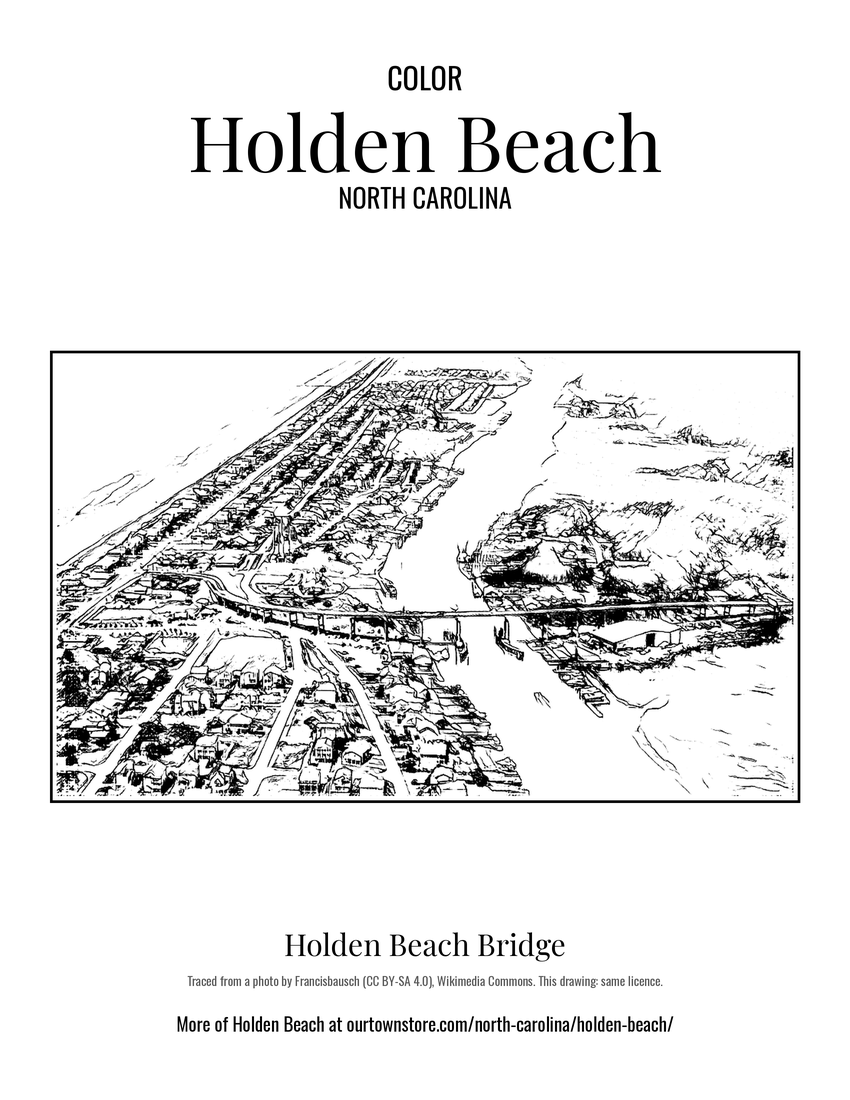 Holden Beach Bridge
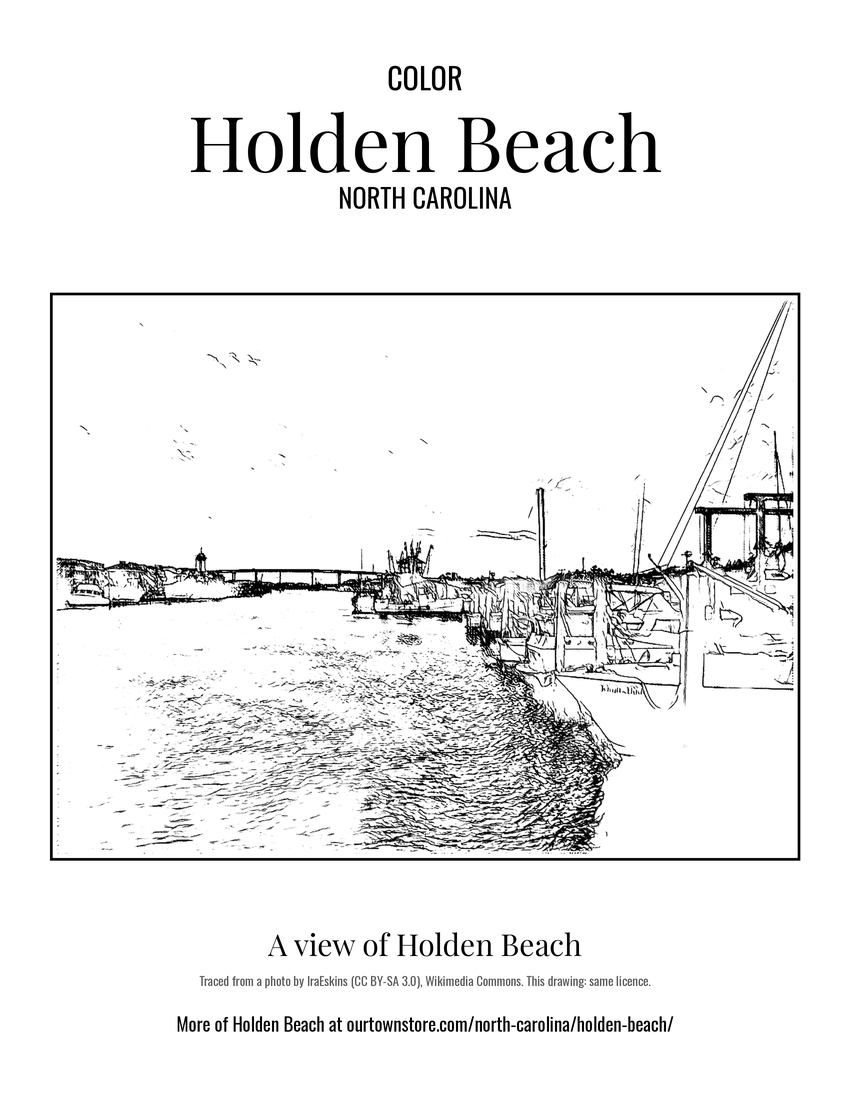 A view of Holden Beach
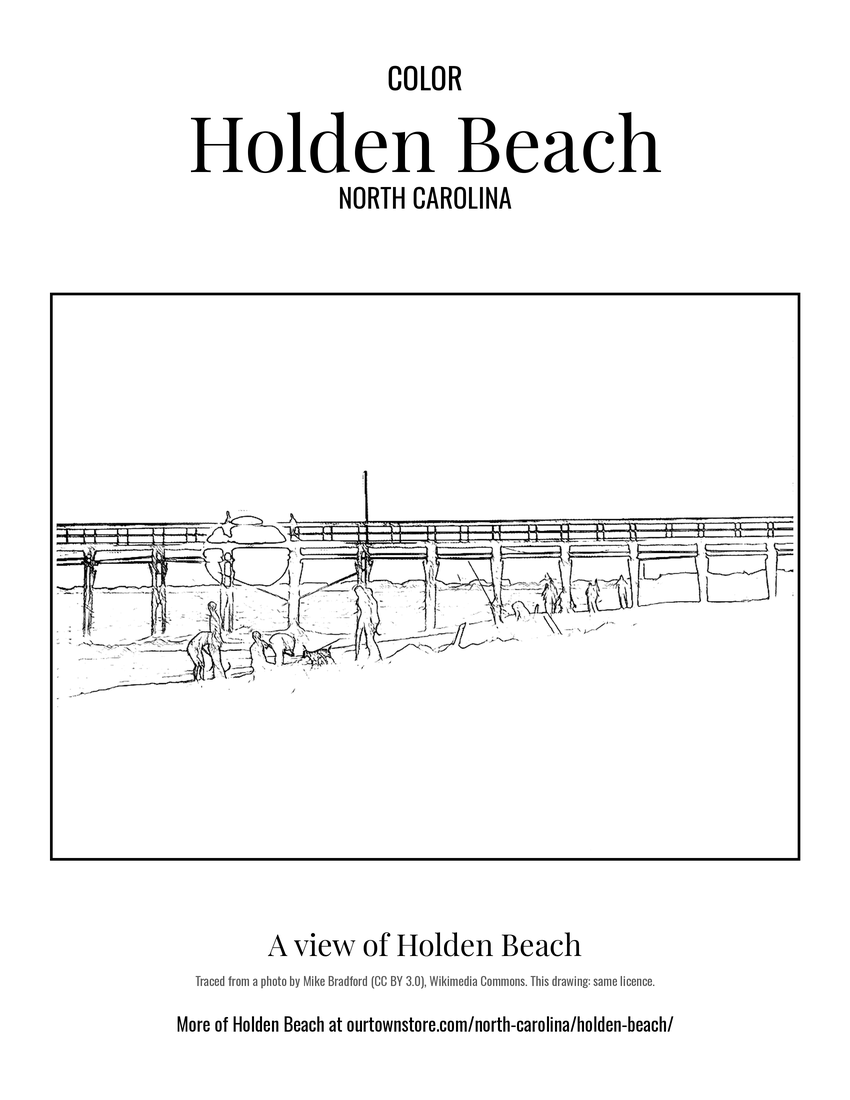 A view of Holden Beach
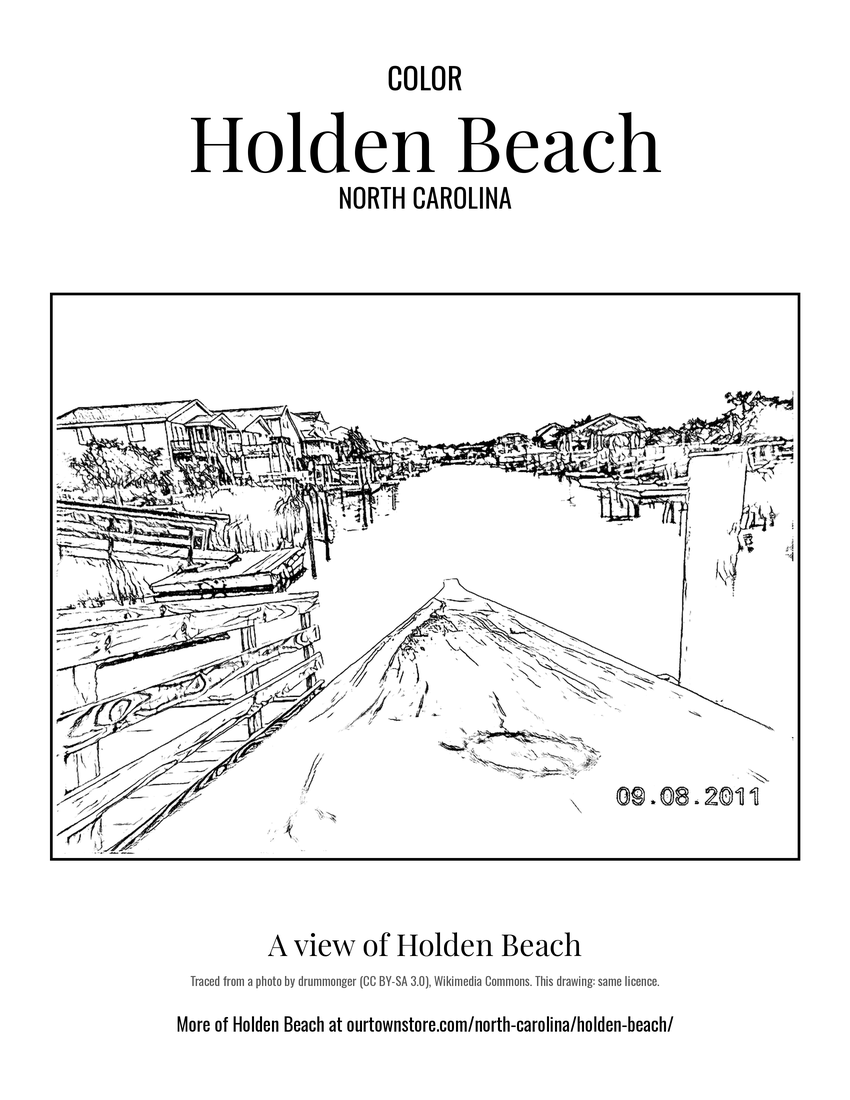 A view of Holden Beach