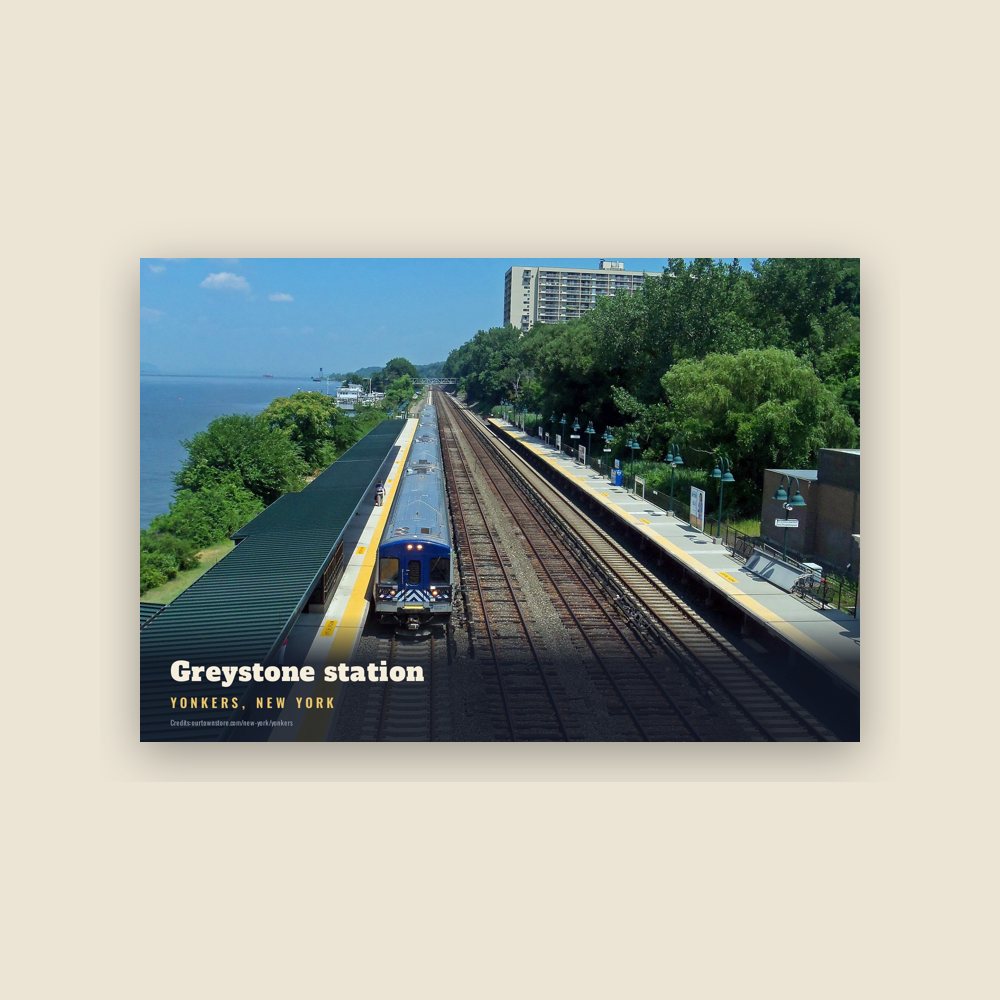
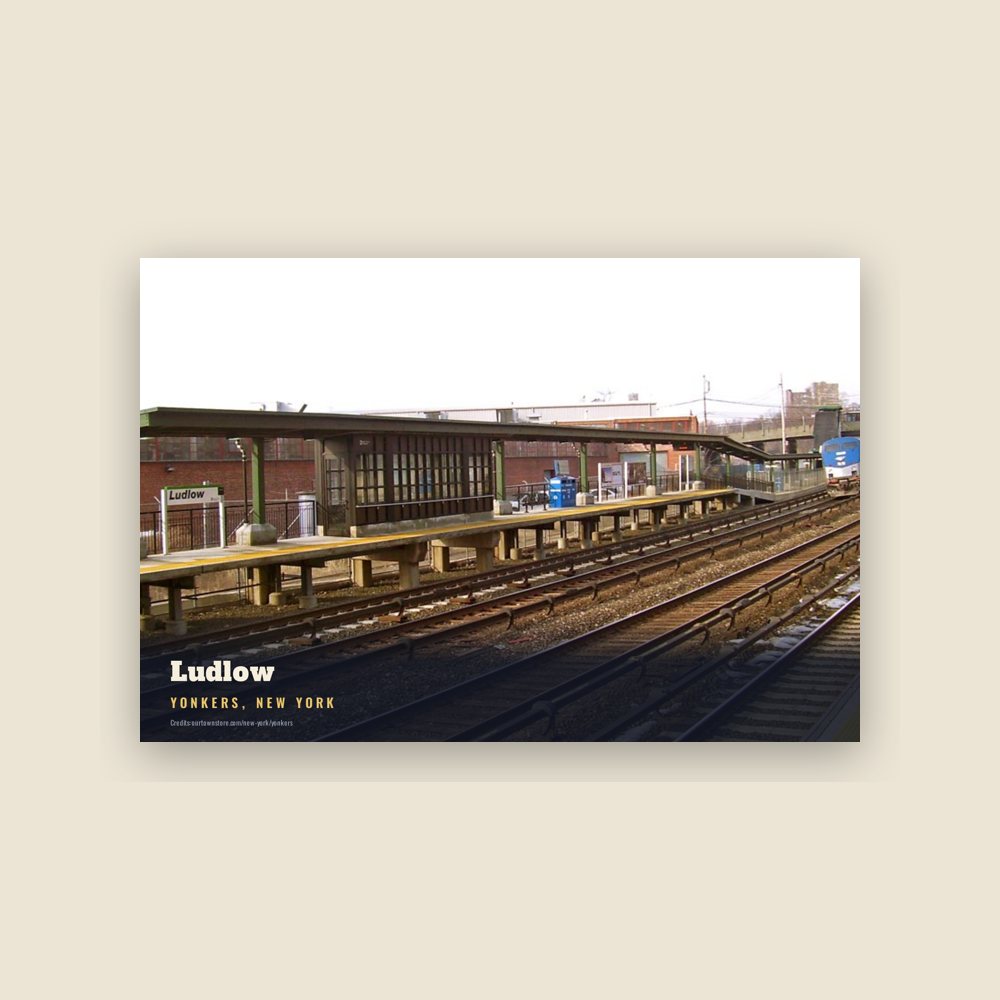
The indigenous Native American village of Nappeckamack was located near the Neperah stream (now the Saw Mill River, also known as Nepperhan Creek), which flowed into the Shatemuck (Hudson River). The land on which the city is built was once part of Colen Donck, a 24,000-acre (97-square-kilometer) Dutch land grant. It ran 12 miles (19 km) north from the present-day Manhattan–Bronx border at Marble Hill, and from the Hudson River east to the Bronx River.
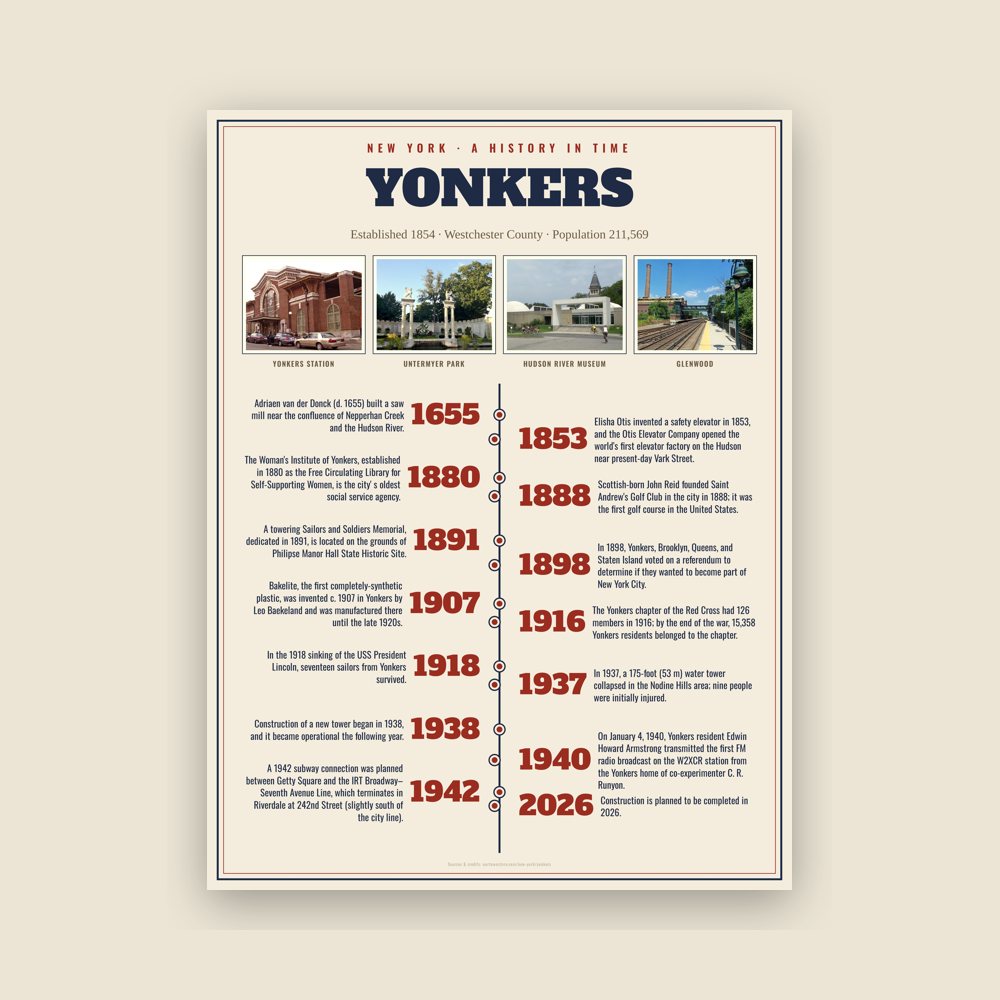
Adriaen van der Donck (d. 1655) built a saw mill near the confluence of Nepperhan Creek and the Hudson River. Near the site of Van der Donck's mill is the Philipse Manor Hall State Historic Site. The original structure was built by white workers and enslaved people for Frederick Philipse and his wife, Margaret Hardenbroeck de Vries, around 1682. Philipse was a wealthy Dutchman who, at his death, had amassed an estate which included what is now New York's borough of the Bronx, the city of Yonkers, and much of southern Westchester County. By the mid-18th century, the Philipse family had one of the largest manors and slave-holdings in the colonial North.
Philipse's great-grandson, Frederick Philipse III, was a prominent loyalist during the American Revolution who had economic and political ties to English businesspeople. Because of his political leanings, he fled to England. The New York revolutionary government confiscated and sold all lands and property belonging to the Philipse family. Today, the Enslaved Africans' Raingarden on the Yonkers waterfront preserves the memory of victims of the slave trade in Yonkers and Westchester County. Both the Philipse Manor Hall and the Raingarden are tour stops on the African American Heritage Trail of Westchester County. The home of one of Philipse's tenant farmers, Sherwood House, is a museum operated by the Yonkers Historical Society.
Read the full history
Gentrification and redlining
Yonkers has undergone several changes to neighborhoods in an effort to revitalize the city, which has included gentrification. Changes were made to its waterfront, which included revitalizing its green space.
Residents of the western area of downtown Yonkers opposed the Pierpointe, a condominium-complex development proposal that would build over 1,900 condominiums (including six 38-story towers), during the 1980s struggle against segregation. According to critics, the development would bring homelessness and gentrification to the area.
Downtown gentrification has raised concerns that poorer residents might be forced out of the city. A Yonkers Arts Gallery painting, But It's Ours: The Redline Between Poverty and Wealth by Shanequa Benitez, illustrates the effects of gentrification on Yonkers.
In an effort to combat redlining, the city announced the Yonkers Greenway: a $14 million rail trail along former railways such as the New York and Putnam Railroad. The 3.1-mile (5.0 km) greenway will run from Van Cortlandt Park to Getty Square. Construction is planned to be completed in 2026.
Incorporation and growth
The Village of Yonkers was incorporated in the western Town of Yonkers in 1854, and incorporated as a city in 1872. In 1873, the southern Town of Yonkers (outside the City of Yonkers) became the Town of Kingsbridge; this included Woodlawn Cemetery and the present-day neighborhoods of Kingsbridge, Riverdale, and Woodlawn Heights. The Town of Kingsbridge was annexed by New York City the following year as part of the Bronx. In 1898, Yonkers, Brooklyn, Queens, and Staten Island voted on a referendum to determine if they wanted to become part of New York City. Although the referendum passed elsewhere, Yonkers and neighboring Mount Vernon were not included in the consolidated city and remained independent. Some residents call Yonkers "the sixth borough" because of its location on the New York City border, its urban character, and the merger referendum.
A 1942 subway connection was planned between Getty Square and the IRT Broadway–Seventh Avenue Line, which terminates in Riverdale at 242nd Street (slightly south of the city line). The plan was dropped.
In 1937, a 175-foot (53 m) water tower collapsed in the Nodine Hills area; nine people were initially injured. The injury total increased by three after the collapse, bringing the number to 12. About 100,000 U.S. gallons (380,000 L) of water from the tower spilled, causing flooding in the area that crushed cars and damaged homes. Construction of a new tower began in 1938, and it became operational the following year.
Wartime
During the American Civil War, 254 Yonkers residents joined the U.S. Army and Navy. They enlisted primarily in four regiments: the 6th New York Heavy Artillery, the 5th New York Volunteer Infantry, the 17th New York Volunteers, and the 15th NY National Guard. During the New York City draft riots, Yonkers formed the Home Guards. The guards were a force of constables formed to protect Yonkers from rioting, which was feared to spread from New York City (it did not). Seventeen Yonkers residents were killed during the Civil War. A towering Sailors and Soldiers Memorial, dedicated in 1891, is located on the grounds of Philipse Manor Hall State Historic Site.
During World War I, 6,909 Yonkers residents (about seven percent of the city's population) entered military service. Most Yonkers men joined the 27th Division or the 77th Division. One hundred thirty-seven city residents were killed during the war. In the 1918 sinking of the USS President Lincoln, seventeen sailors from Yonkers survived. Civilians helped the war effort by joining organizations such as the American Red Cross. The Yonkers chapter of the Red Cross had 126 members in 1916; by the end of the war, 15,358 Yonkers residents belonged to the chapter. Mostly women, they prepared surgical dressings, created hospital garments for the wounded, and knit articles of clothing for refugees and soldiers. In addition to joining the Red Cross, Yonkers residents donated $19,255,255 to a number of war drives.
The city's factories were converted to produce items for World War II, such as tents and blankets from the Alexander Smith and Sons carpet factory and tanks from the Otis Elevator factory. Increased competition from less-expensive imports resulted in a decline in manufacturing in Yonkers after the war, and a number of industrial jobs were lost.
Industry
Yonkers was originally a small farming town which produced peaches, apples, potatoes, oats, wheat, and other agricultural goods to be shipped to New York City along the Hudson River. Water power created manufacturing jobs. Elisha Otis invented a safety elevator in 1853, and the Otis Elevator Company opened the world's first elevator factory on the Hudson near present-day Vark Street. The company moved to larger quarters during the 1880s, which later became the Yonkers Public Library. The Woman's Institute of Yonkers, established in 1880 as the Free Circulating Library for Self-Supporting Women, is the city' s oldest social service agency.
Around that time, the Alexander Smith and Sons Carpet Company in the Saw Mill River Valley expanded to 45 buildings, 800 looms, and more than 4,000 workers. It was known as one of the world's premier carpet-producing centers.
In addition to manufacturing, Yonkers played a key role in the development of recreational sports in the United States. Scottish-born John Reid founded Saint Andrew's Golf Club in the city in 1888; it was the first golf course in the United States. That year, the New York City and Northern Railway Company (later the New York Central Railroad) connected Yonkers to Manhattan and points north. A three-mile spur to Getty Square operated until 1943. Bakelite, the first completely-synthetic plastic, was invented c. 1907 in Yonkers by Leo Baekeland and was manufactured there until the late 1920s.
During the early 20th century, Yonkers hosted the Brass-Era automaker Colt Runabout. Although the vehicle reportedly ran well, the company went out of business. Yonkers was the headquarters of hat manufacturer Waring Hat Company, which was the largest in the nation when it opened. On January 4, 1940, Yonkers resident Edwin Howard Armstrong transmitted the first FM radio broadcast on the W2XCR station from the Yonkers home of co-experimenter C. R. Runyon. Yonkers had the longest-running pirate radio station, which was owned by Allan Weiner and operated during the 1970s and 1980s.
The Alexander Smith Carpet Company, one of the city's largest employers, ceased operations during a June 1954 labor dispute. In 1983, the Otis Elevator factory closed. A Kawasaki railcar-assembly plant opened in 1986 in the former Otis plant. With the loss of manufacturing jobs, Yonkers became a commuter town. Some neighborhoods, such as Crestwood and Park Hill, became popular with wealthy New Yorkers who wanted to live outside Manhattan without giving up urban conveniences. Yonkers's transportation infrastructure, which included three commuter railroad lines and five parkways and thruways, made it a desirable city in which to live. A 15-minute drive from Manhattan, it has a number of prewar homes and apartment buildings. Yonkers's manufacturing sector has also revived during the early 21st century. In 2024, Kawasaki rail reached a milestone with its 5,000th railway car.
Racial discrimination and United States v. Yonkers
In 1960, the population of Yonkers was 95.8 percent white and four percent Black. The city developed a national reputation for racial tension during the 1980s and 1990s, based on a long-term battle between the city and the NAACP over the construction of subsidized, low-income housing projects. Yonkers planned to use federal funding for urban renewal exclusively downtown; other groups, led by the NAACP, believed that the resulting concentration of low-income housing in traditionally-poor neighborhoods would perpetuate poverty. Although the city had been warned in 1971 by the United States Department of Housing and Urban Development about further construction of low-income housing in west Yonkers, it continued to support subsidized housing in this area between 1972 and 1977.
In 1980, the NAACP and the federal government filed suit against the city of Yonkers and its board of education in United States v. Yonkers. After a 1985 decision and an unsuccessful appeal, Yonkers's schools were integrated three years later. According to a ruling by federal judge Leonard B. Sand, Yonkers engaged in institutional segregation in housing and educational policies for more than 40 years. He connected the city's opposition to ending racial segregation from its public schools to the unlawful concentration of public housing and discrimination in private housing.
Yonkers gained national and international attention during the summer of 1988, when it backed out of its previous agreement to build municipal public housing in the eastern parts of the city (an agreement it had made in a consent decree after losing its appeal in 1987). After its reversal, the city was found in contempt of the federal courts. Sand imposed a fine on Yonkers which began at $100 and doubled every day, capped at $1 million per day by an appeals court, until the city capitulated to the federally-mandated plan. The city remained in contempt of court until September 9, 1988, when its city council relented as the financial impact threatened to close a library and reduce sanitation. The city also considered massive layoffs, which would have adversely affected its ability to provide services to the upper classes it was trying to retain. Nicholas C. Wasicsko, Yonkers's youngest mayor (elected at age 28), struggled in city politics. He helped end the city's contempt-of-court ruling, but was voted out of office as a result. Wasicsko's story, subject of the 2015 miniseries Show Me a Hero, was adapted from a 1999 nonfiction book of the same name by Lisa Belkin. The 2007 documentary Brick by Brick: A Civil Rights Story also covers racial discrimination and housing segregation in Yonkers.
As a result of the federal lawsuit, Yonkers's public-school enrollment dropped from 54 percent of the city's eligible population to under 30 percent as thousands of white families left the city for its suburbs or enrolled their children in private schools; this effectively gutted the city's middle class and tax base. The school district's estimated cost of integration was over $262 million. Forced to cut programs, Yonkers schools fell steeply in national rankings as test scores sharply declined. By 1995, The New York Times called the city's desegregation effort "a profound disappointment to blacks and whites alike". Michael Sussmann, the NAACP's lawyer during the case, blamed Sand for failing to allocate federal funds to help relieve the cost of integration.
21st century
Areas of Yonkers which bordered similar neighborhoods in Riverdale began seeing an influx of Orthodox Jews during the 2000s, and the Riverdale Hatzalah volunteer ambulance service began serving neighborhoods in the southwest part of the city. The Sherwood Park Cemetery is a small Jewish cemetery.
Two former Alexander Smith and Sons Carpet Company loft buildings (at 540 and 578 Nepperhan Avenue) have been repurposed to house the YoHo Artist Community, which has private studios there. Yonkers Raceway, a harness racing track, renovated its grounds and clubhouse and added video slot machines in 2006 to become Yonkers Raceway & Empire City Casino. MGM Resorts International bought the raceway and casino in 2018 for $850 million.
During the COVID-19 pandemic, the city opened several test sites at the ParkCare Pavilion of St. John's Riverside Hospital (considered a COVID-19 hotspot). The test site was operated by the New York State Department of Health during the pandemic. More test sites opened in the city as students prepared to return to school for in-person instruction.
In February 2023, the Yonkers City Council approved the US Post Office on Main Street for local-landmark status after its 1989 listing on the National Register of Historic Places in 1989. On September 29, 2023, a state of emergency was declared in the city after flash flooding affected most of the Hudson Valley and New York City. Most area parkways were closed and flooding was also reported in neighboring Mount Vernon. After the flooding, crews pumped water out of Yonkers homes.
The city has been used as a location for films and television series, and the City Hall courtroom is used for film scenes and commercials. The city along with neighboring Mount Vernon saw an increase in revenue grow from 2016. Catch Me If You Can (2002) and Mona Lisa Smile (2003) were partially filmed in the city. Yonkers is the setting of two feature films by local filmmaker Robert Celestino: Mr. Vincent (1997) and Yonkers Joe (2008). The city is the setting for the 2005 film A Tale of Two Pizzas, and Tyler, the Creator released "Yonkers" in 2011. Neil Simon's play, Lost in Yonkers, and its film version are set in the city. A new Lionsgate Studios facility hosts the Spanish multimedia communications group Mediapro, and a planned $500 million expansion would make it the largest such facility in the Northeast.
On May 27, 2026, the Yonkers City Council unanimously voted to rename the intersection of School Street and Brooke Street as "Earl DMX Simmons Way."