In 1643, John Carman and Robert Fordham sailed across the Long Island Sound from Stamford, Connecticut and purchased the land now occupied by the towns of Hempstead and North Hempstead from the Native Americans. This land included what is now East Hills, which at the time was inhabited by the Matinecock Native Americans. Dutch and English colonists began to settle the area during the remainder of the 17th century.
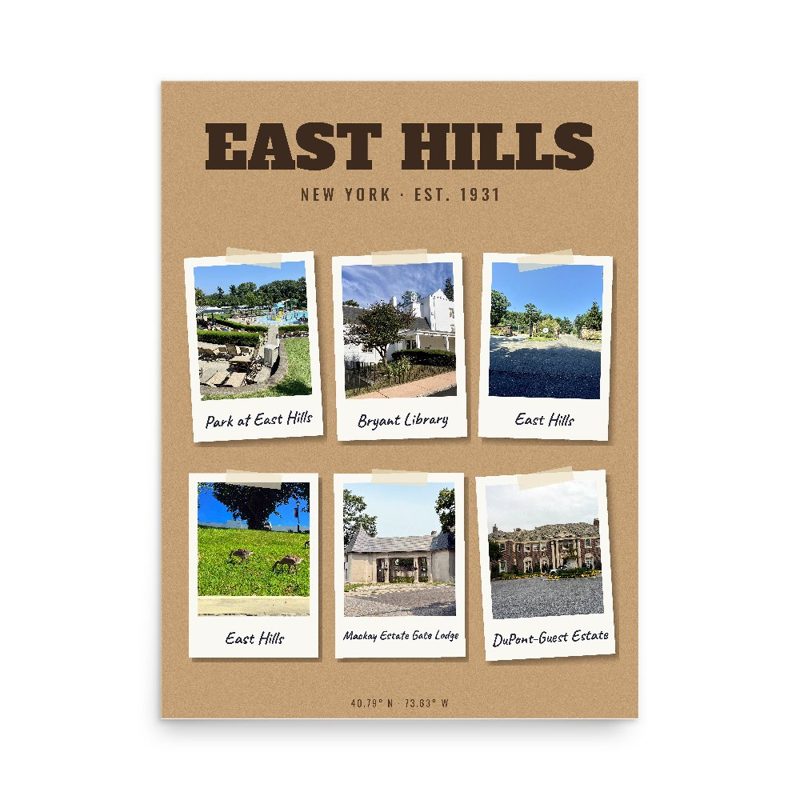
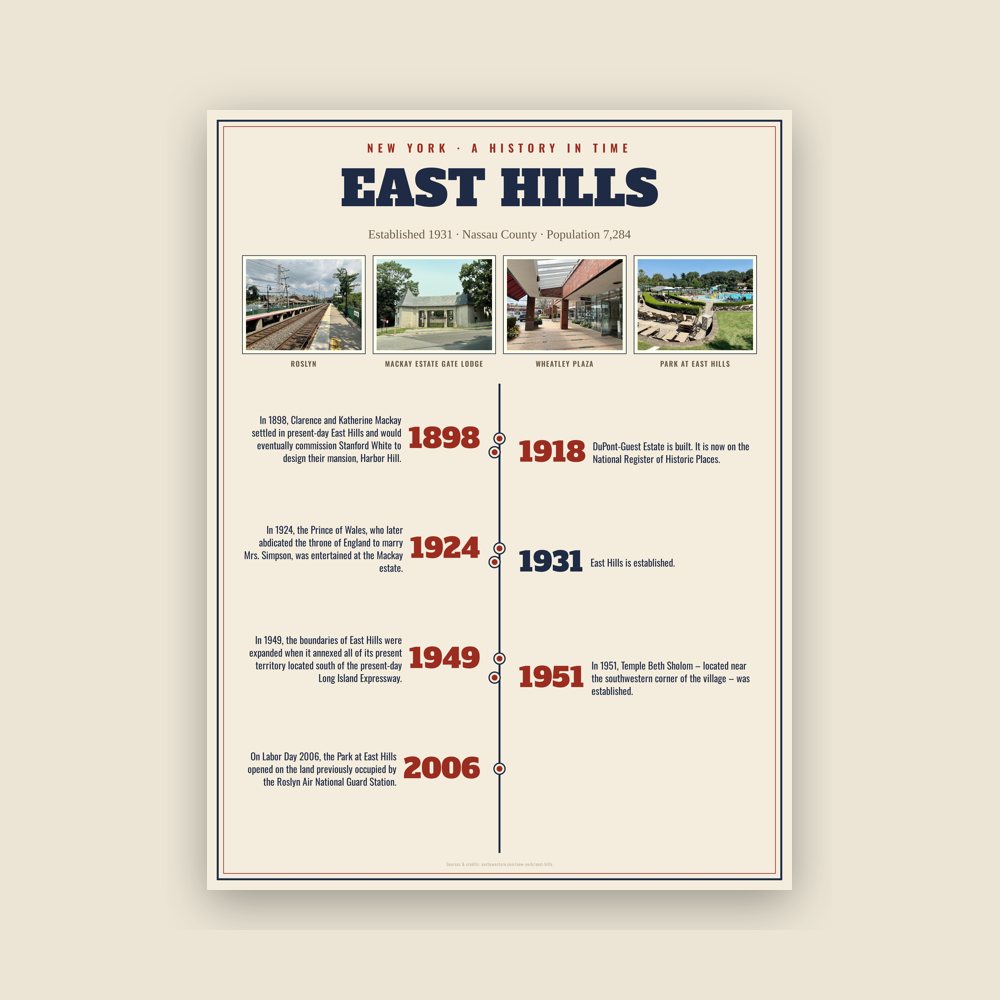
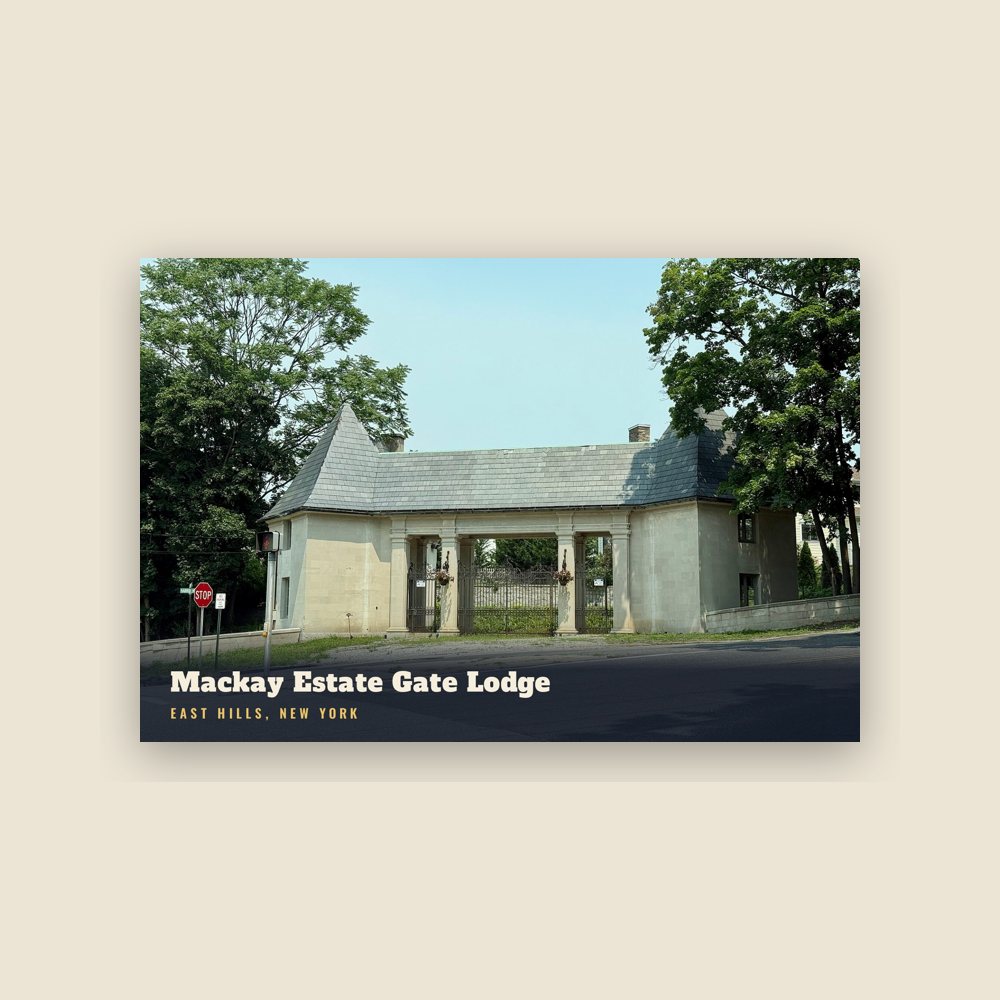
For a long time, much of what now is East Hills was home to a few wealthy families. In 1898, Clarence and Katherine Mackay settled in present-day East Hills and would eventually commission Stanford White to design their mansion, Harbor Hill. In 1924, the Prince of Wales, who later abdicated the throne of England to marry Mrs. Simpson, was entertained at the Mackay estate. Aviation pioneer Charles A. Lindbergh rested at the Mackay estate in 1927 after returning to the United States following his historic solo flight to Paris, France.
Read the full history
Village of East Hills (1931 – present)
The Village of East Hills was incorporated on June 24, 1931, and its first election was held a couple weeks later on July 8 in barns at the Mackay estate. Reasons for incorporating included the desire by many locals to be excluded from paying taxes for public improvements like sanitary sewer systems and highways, the desires to keep businesses out and to not be part of the Roslyn Sewer District, and to maintain local control through municipal home rule powers. Many of the proposals opposed by the locals were originally announced when Roslyn first wanted to incorporate as a village, as early plans called for that village's proposed boundaries to include what would become East Hills. As a result, the residents decided to incorporate East Hills as a separate village.
Willets was elected as Mayor and John Mackay, Stephen Willets, Ellen A. Hennessy, and Catherine Hechler were elected as Village Trustees. Charles Hechler – the husband of Catherine Hechler – was appointed as the Village Clerk.
The post-war era ushered in a huge population boom and suburbanization throughout the United States, which led to the construction of many new developments in the Village of East Hills. One of these developments, Strathmore, was developed by Levitt & Sons in the late 1940s. Another large-scale development built during this time, the Country Estates subdivision, was developed by Country Estates, Inc., over Clarence Mackay's former estate. Prior to building the Country Estates in East Hills, the firm developed the Flower Hill Country Estates development in nearby Flower Hill. A third notable development, Norgate, was developed by Gustav A. Mezger & Co. The 175-home Lakeville Estates subdivision – another major development built about this time – was developed by Klein & Teicholz.
Additionally, in order for the Roslyn Union Free School District to adequately serve the influx of families, the Moore & Hutchins-designed East Hills Elementary School was opened between the Canterbury Woods and Fairfield Park developments in 1953.
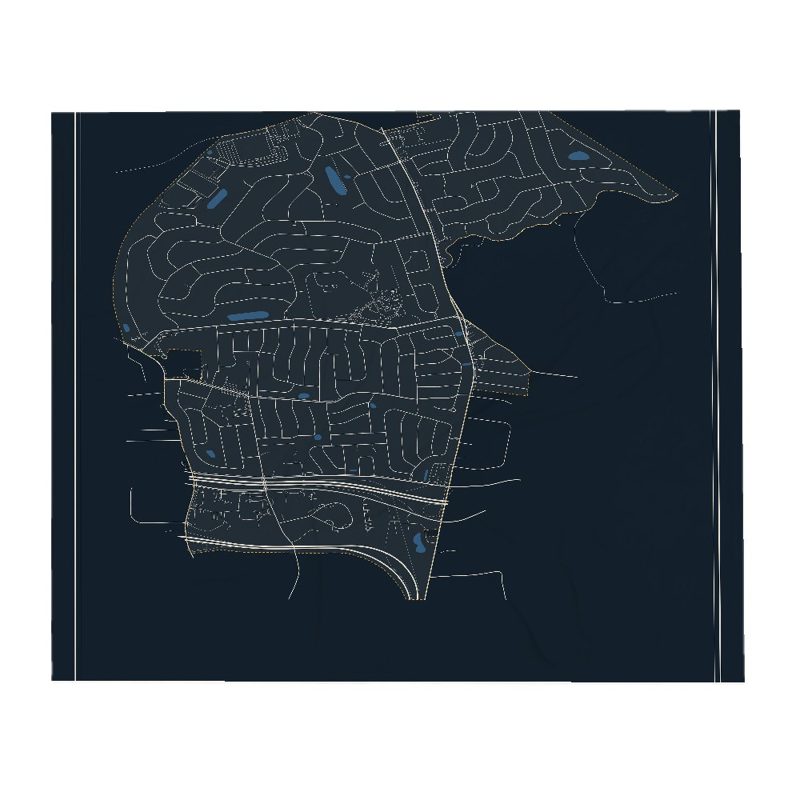
In 1949, the boundaries of East Hills were expanded when it annexed all of its present territory located south of the present-day Long Island Expressway. This territory – bounded by Roslyn Road to the west, Glen Cove Road to the east, the present-day Long Island Expressway to the north, and the Northern State Parkway to the south – had previously been part of the adjacent Village of Old Westbury, and was annexed by East Hills. Upon the transfer, policing of newly-acquired territory automatically switched that April from Old Westbury's municipal police department to the Nassau County Police Department.
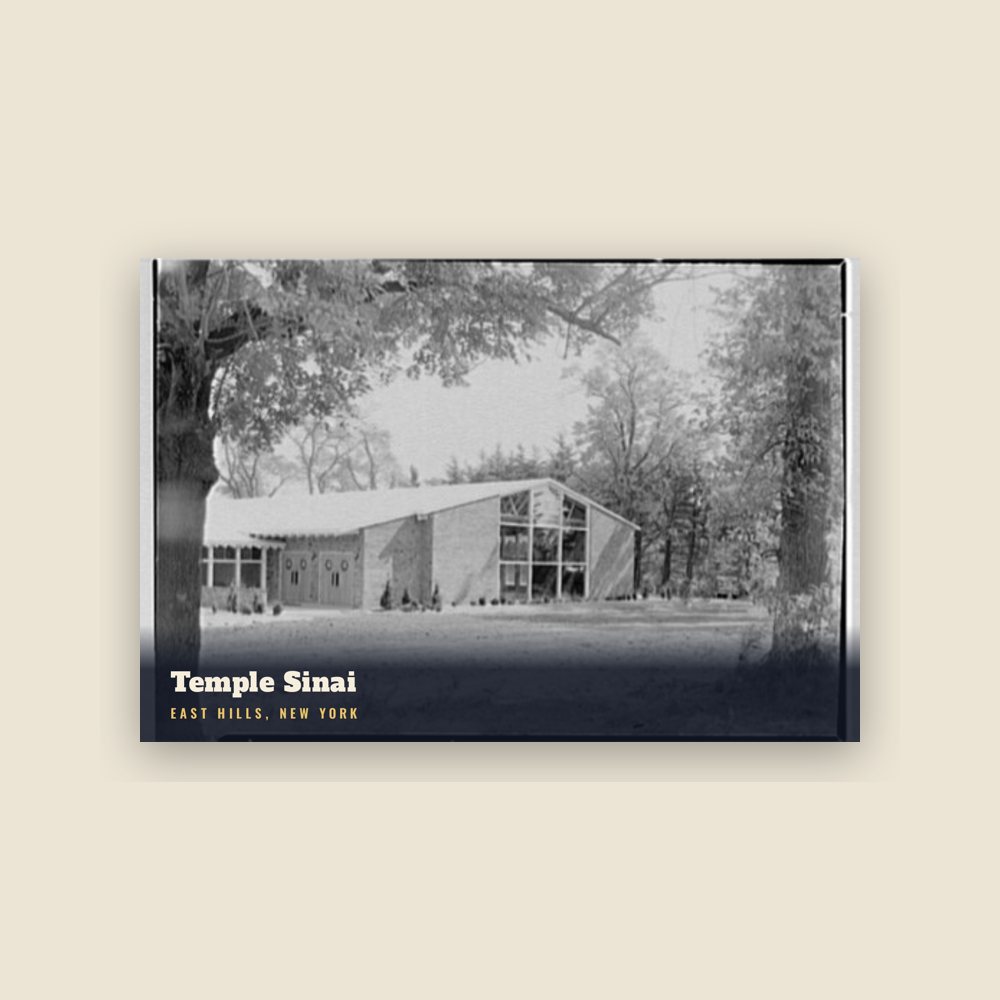
In 1951, Temple Beth Sholom – located near the southwestern corner of the village – was established. The first portion of its building, designed by Percival Goodman, opened the following year.
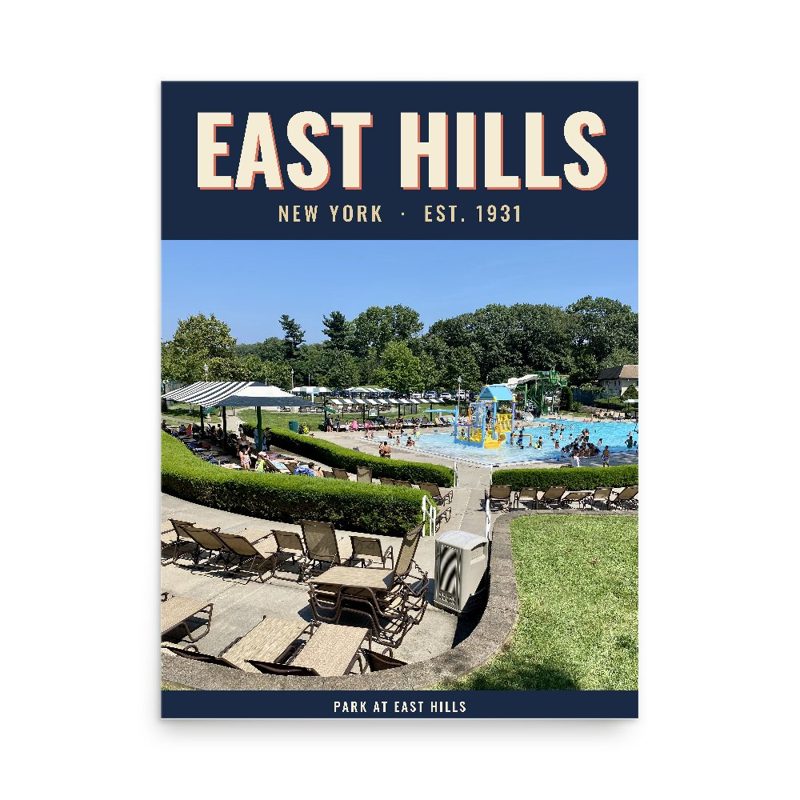
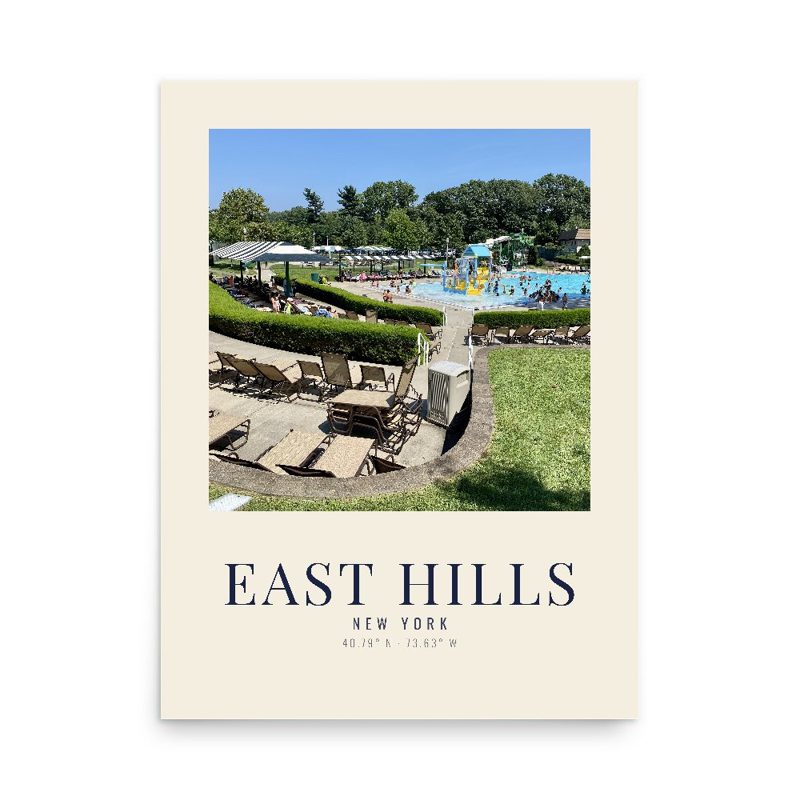
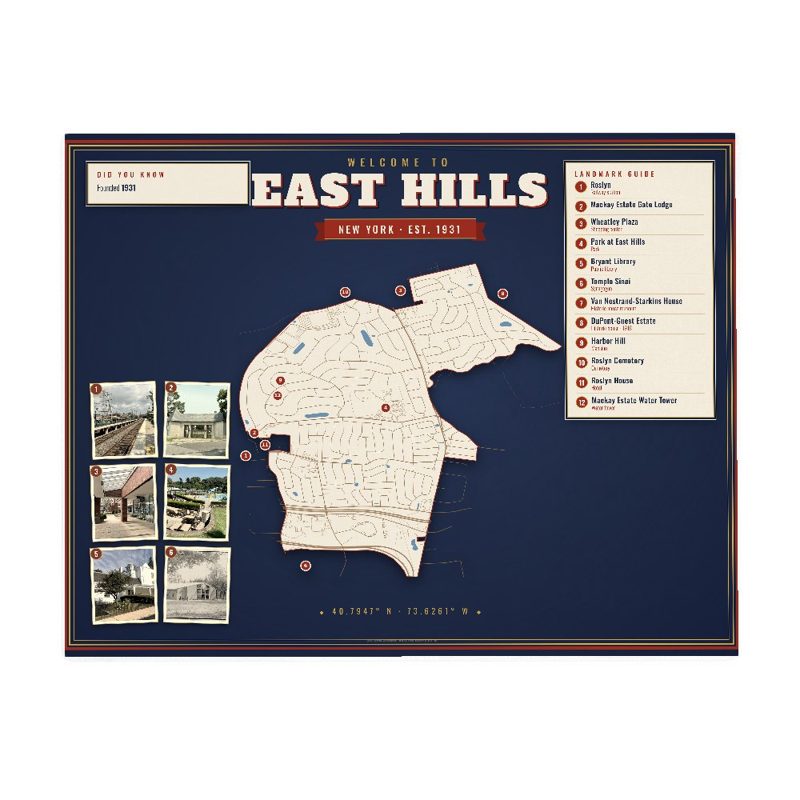
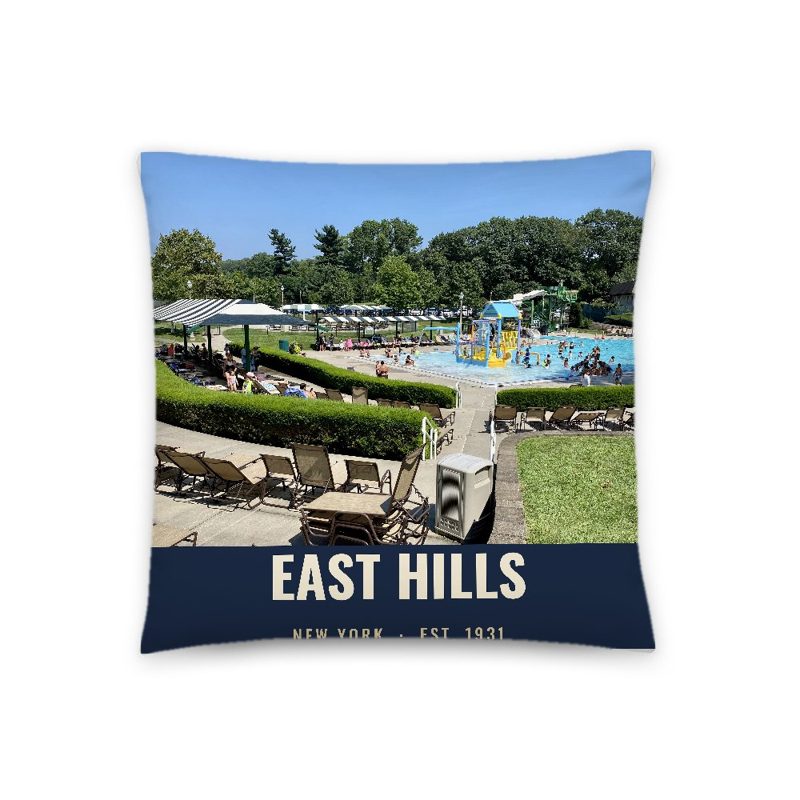
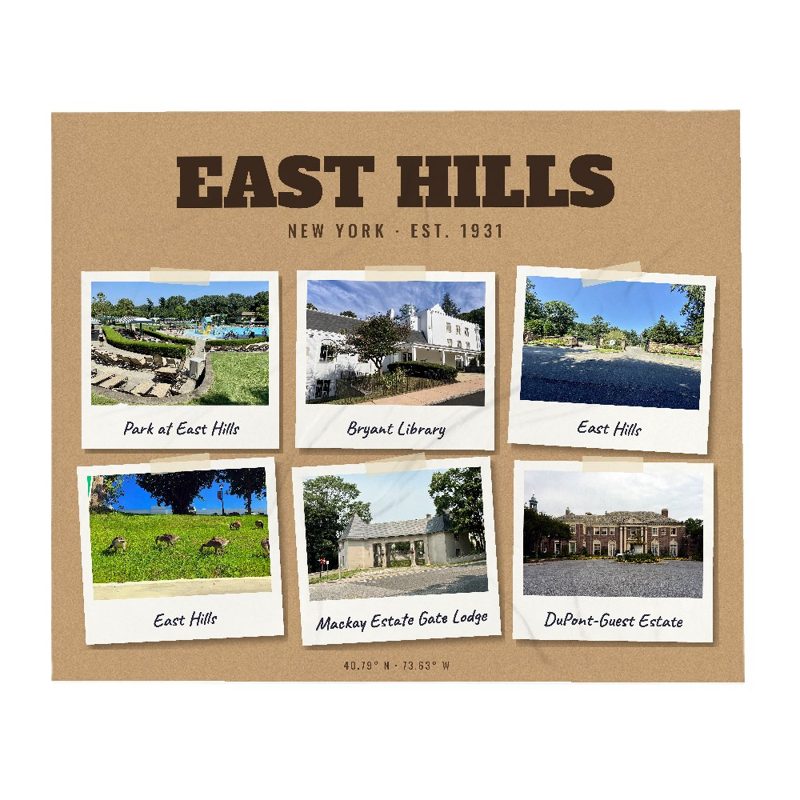
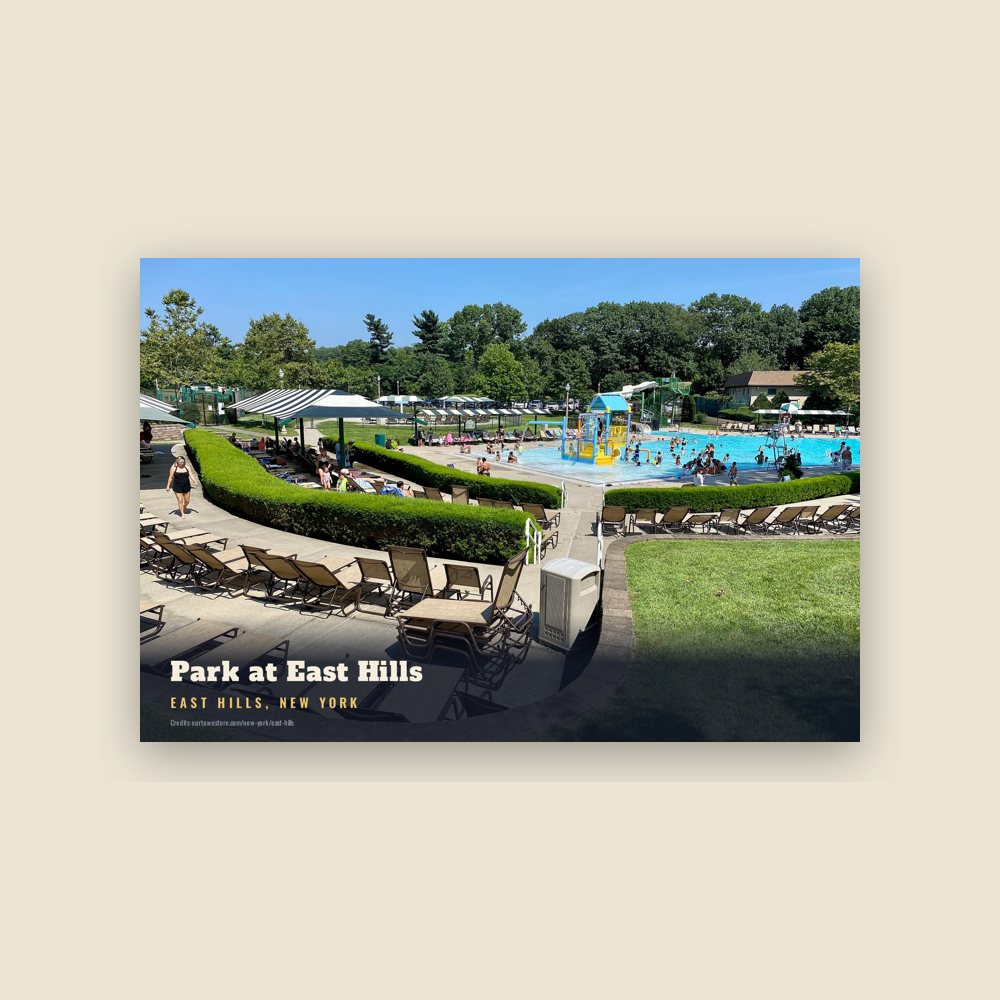
On Labor Day 2006, the Park at East Hills opened on the land previously occupied by the Roslyn Air National Guard Station. It has a pool, playground, dog park, theater, nature paths, senior facilities, fitness facilities, a baseball field, and tennis, pickleball, and basketball courts. It is also the location of the present East Hills Village Hall; the prior facility on Town Path was subsequently sold, demolished, and redeveloped as single-family housing after the move was complete. The construction of the park was financed through the sale of bonds; carrying and operating costs are paid through taxes.
Etymology
The name of East Hills was chosen based on its geography and location. The "East" reflects the village's geographic location adjacent to and east of Roslyn, and the "Hills" reflects the hilly geography of the village.
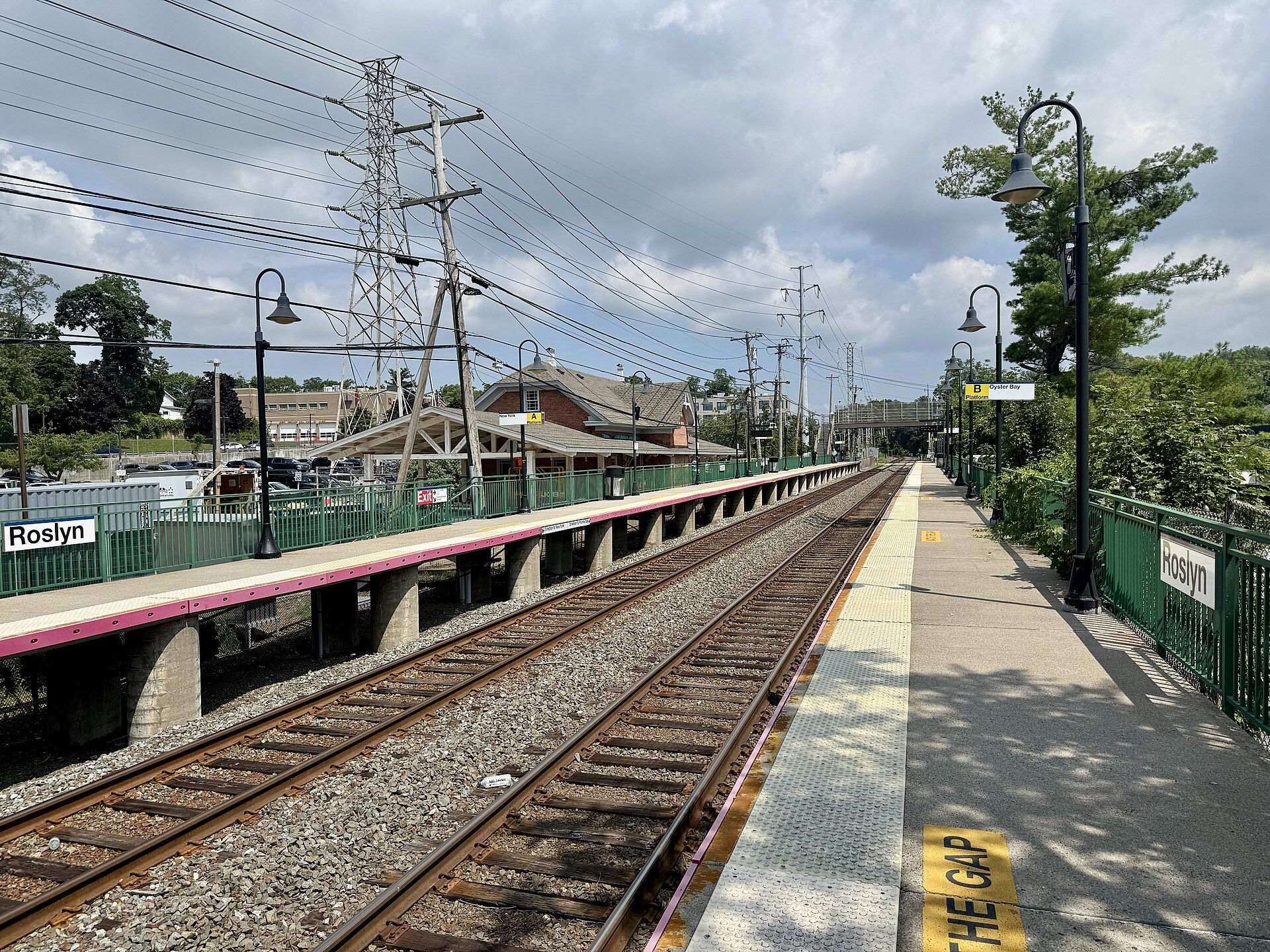
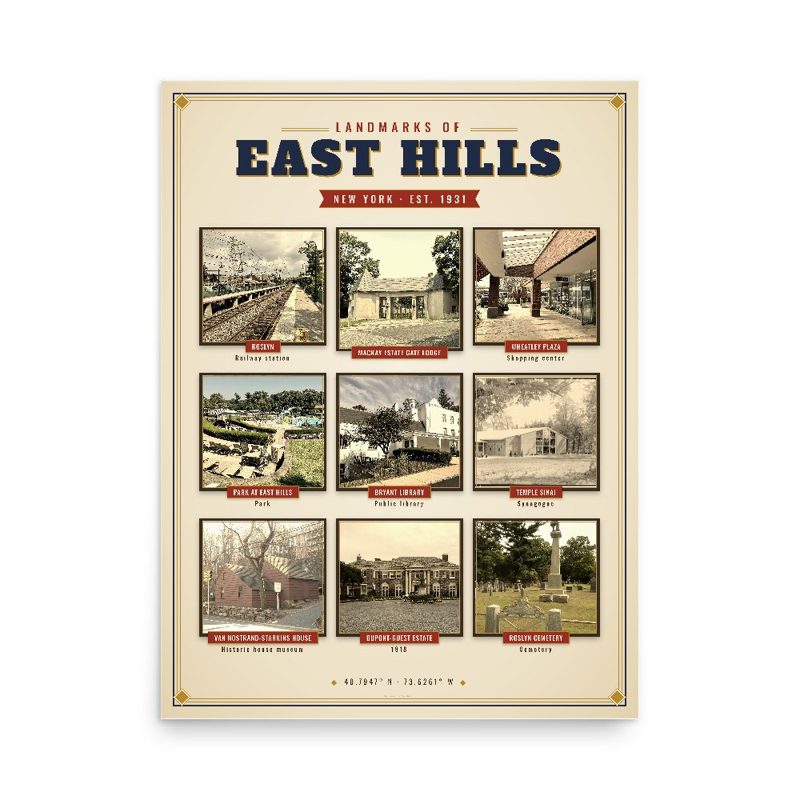



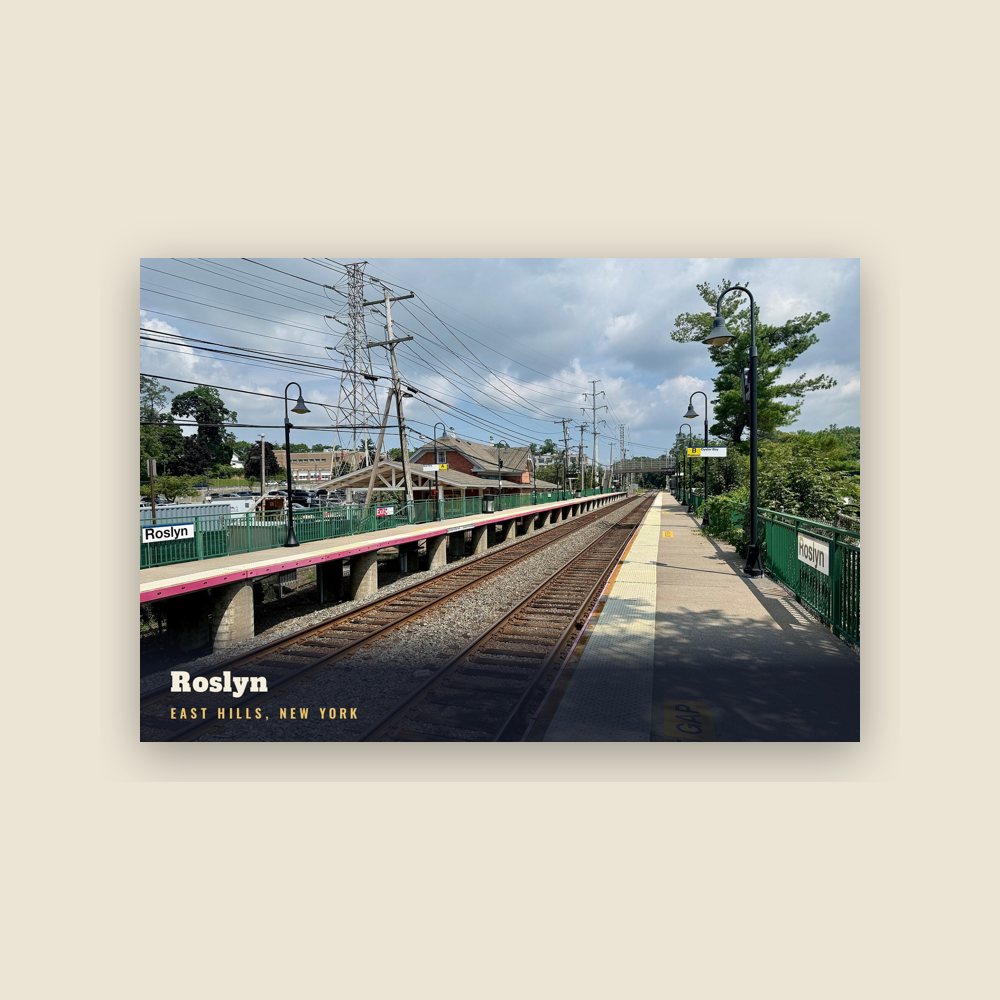
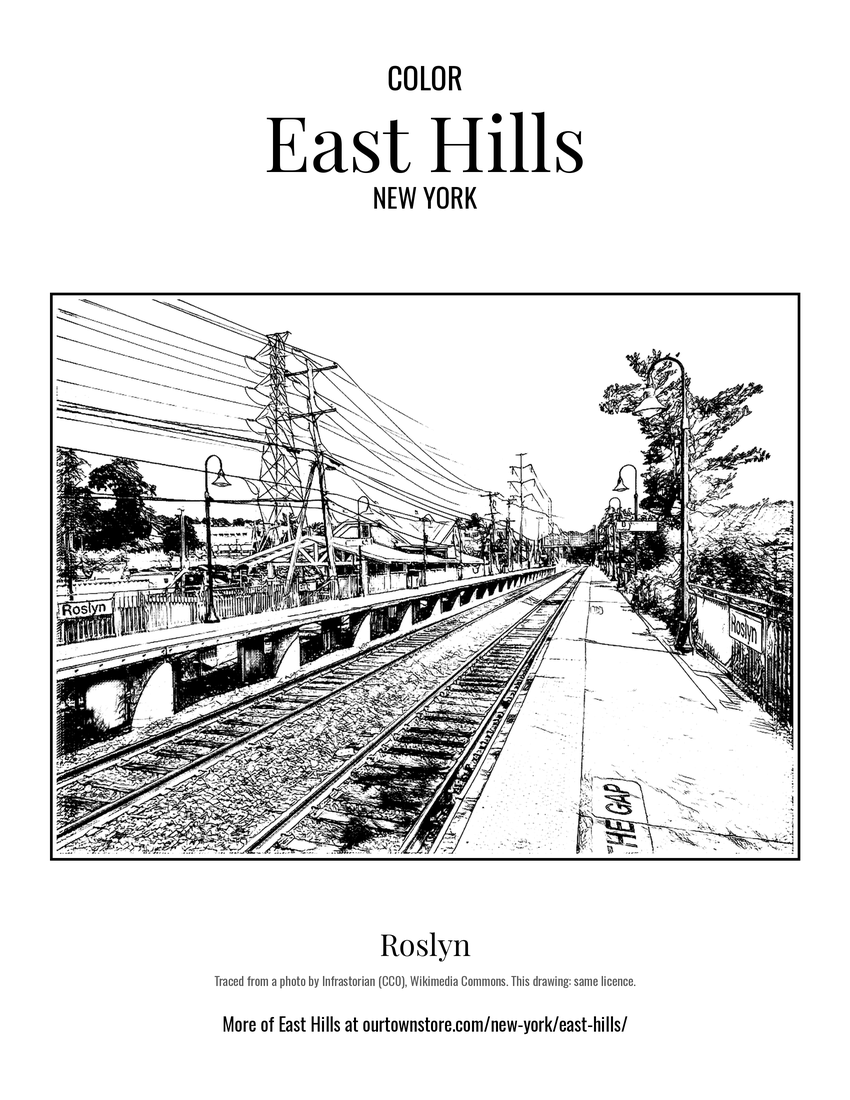 Roslyn
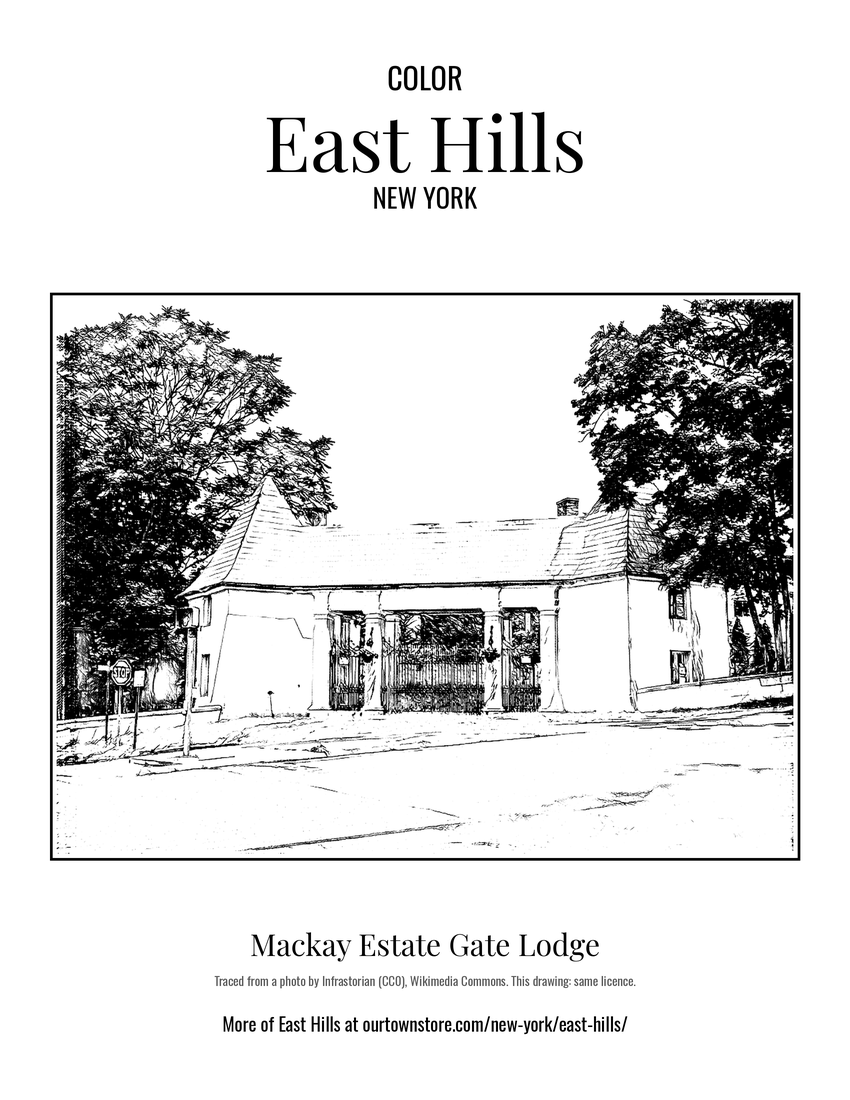 Mackay Estate Gate Lodge
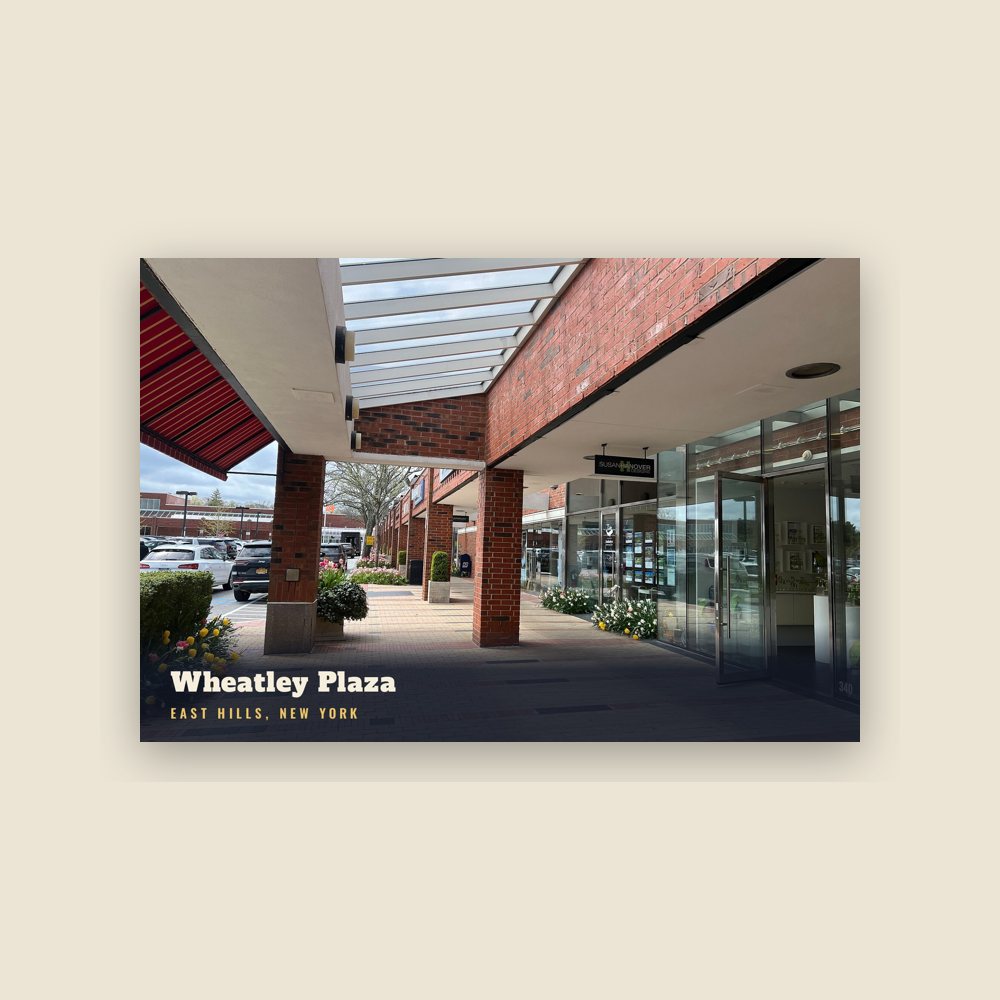
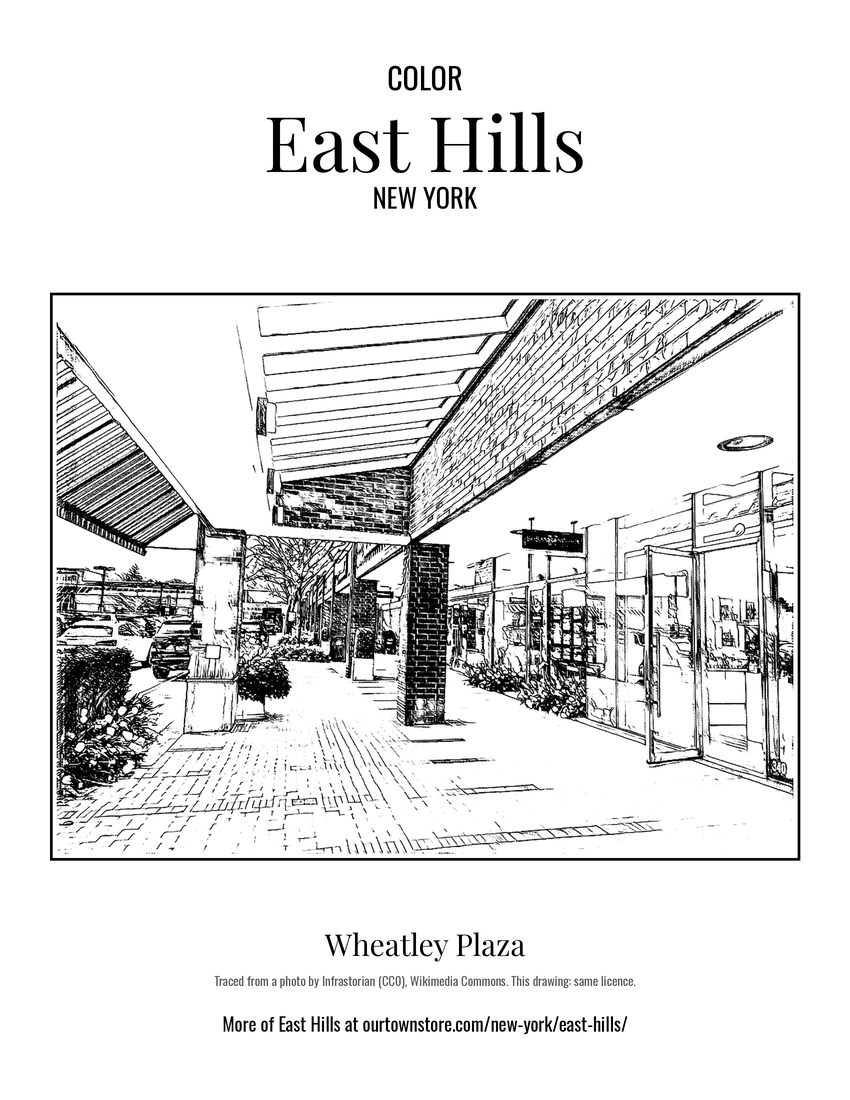 Wheatley Plaza
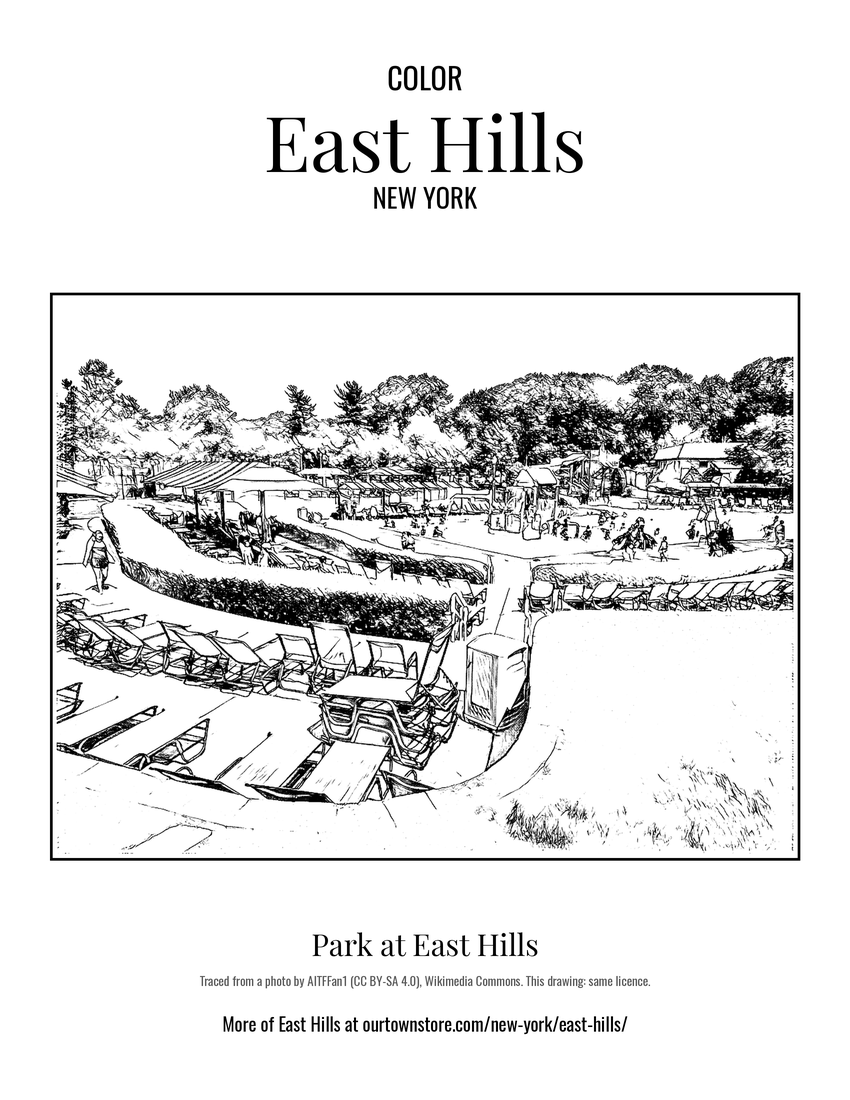 Park at East Hills