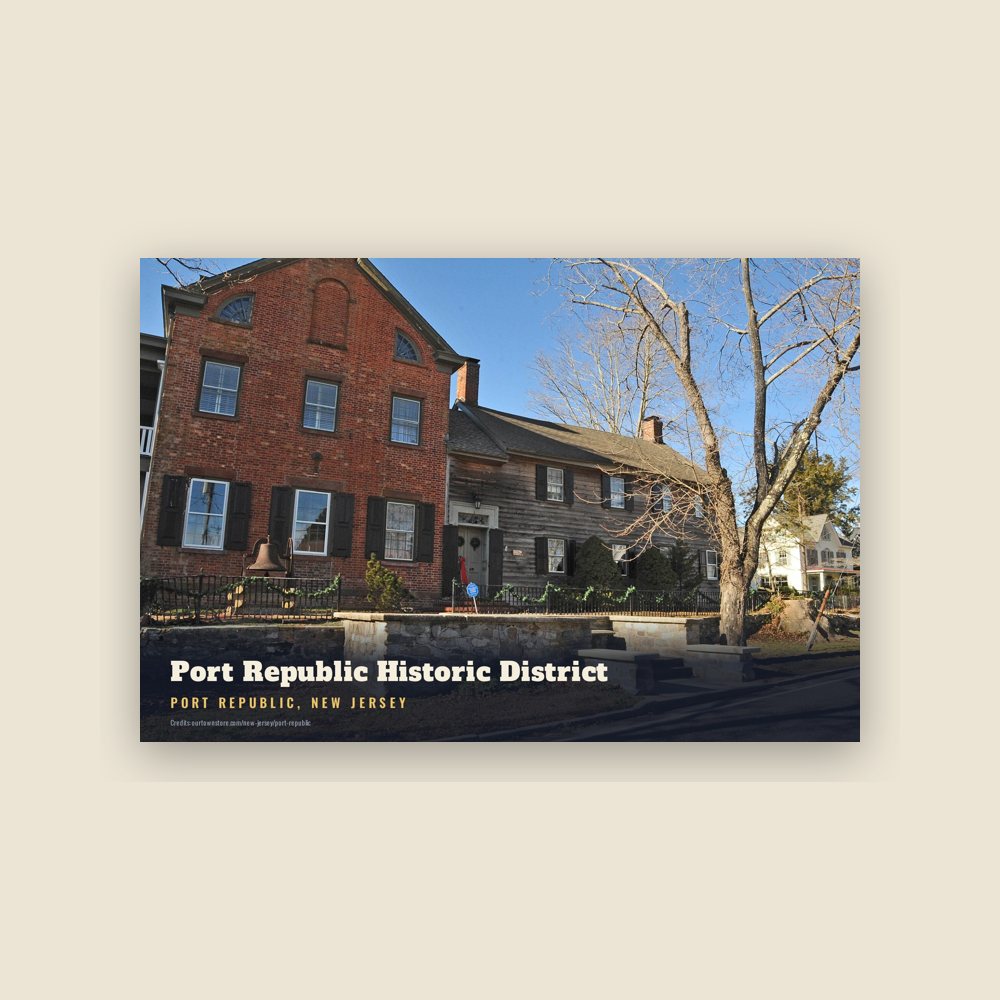
A short history of Port Republic
In 1774, Evi Smith, Hugh McCullum, and Richard Wescoat applied for a Royal charter to build a dam, sawmill, and gristmill on their land along Nacote Creek. While it has been claimed that Chestnut Neck was settled as early as 1637, no evidence to support this claim has been presented.
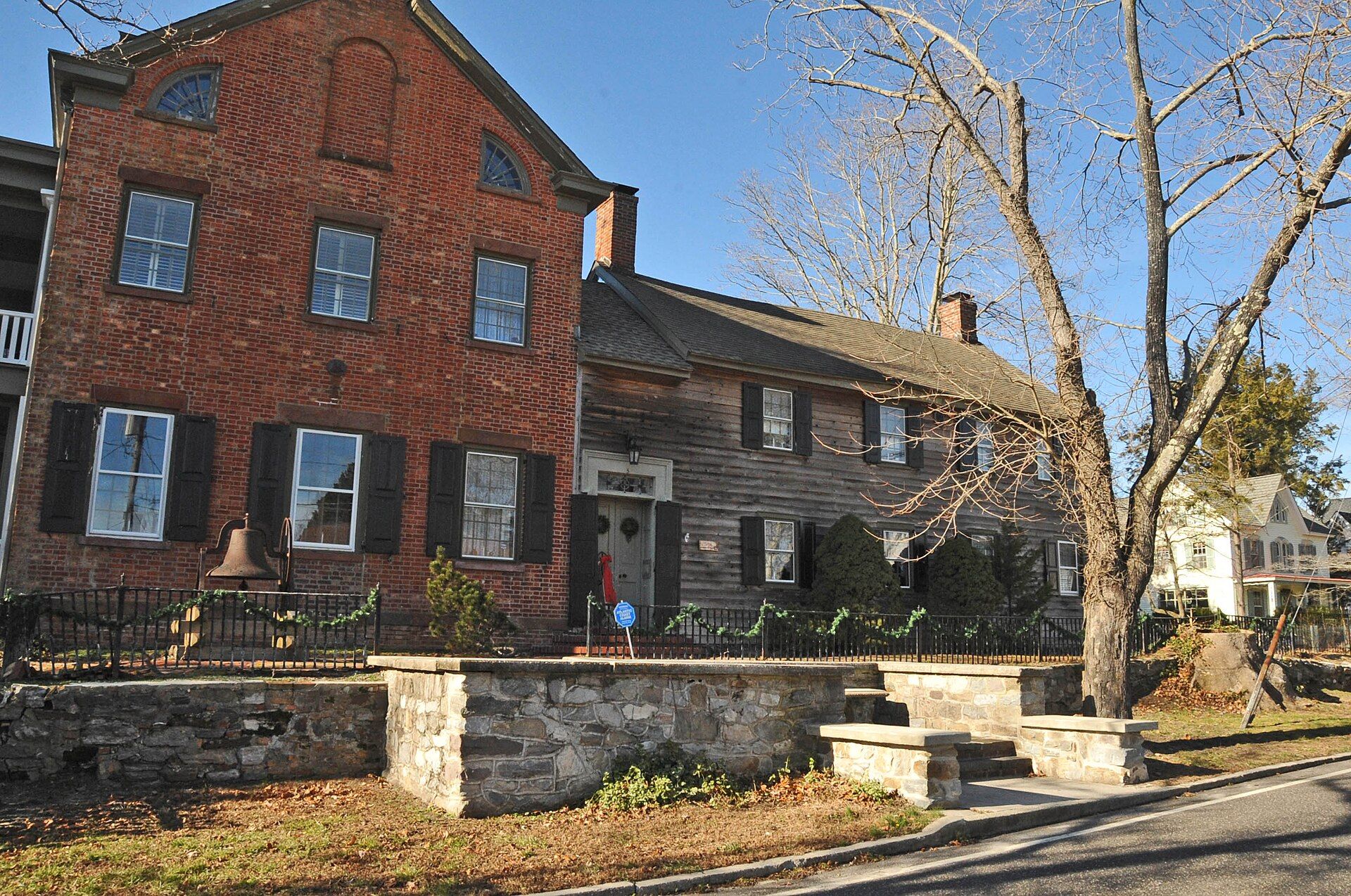
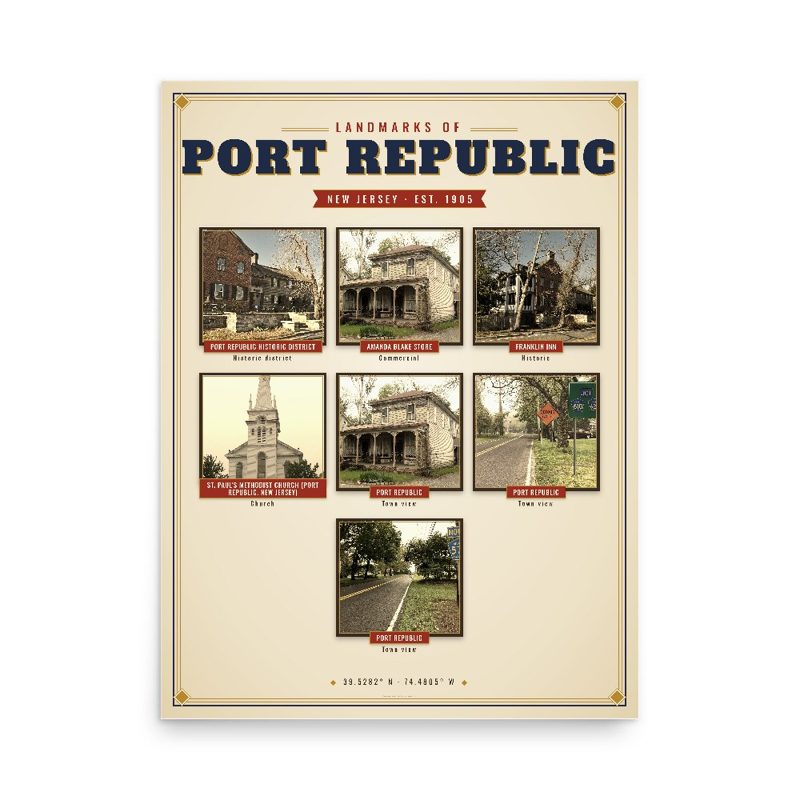
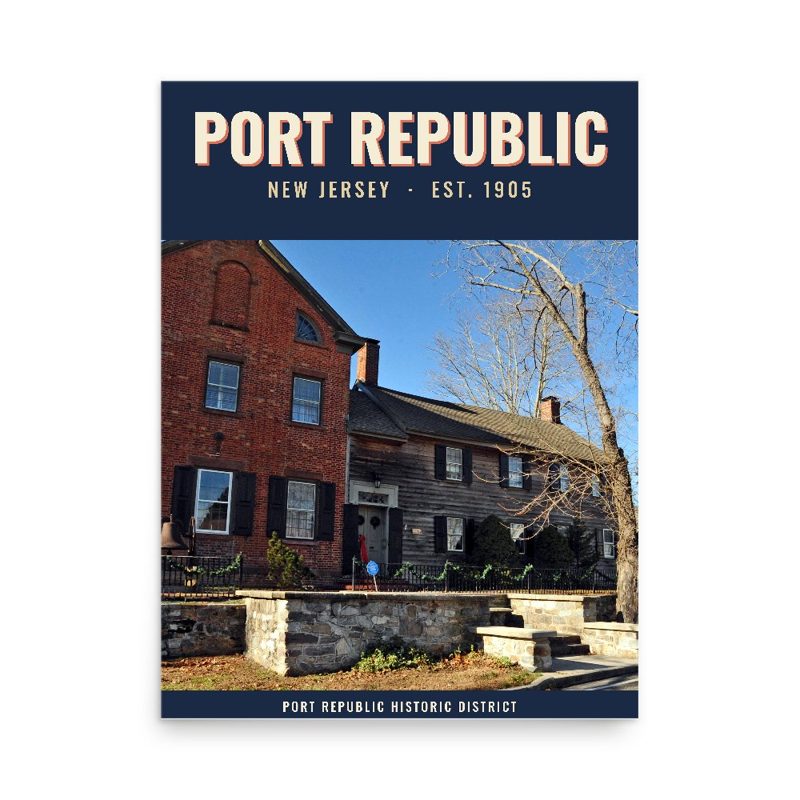
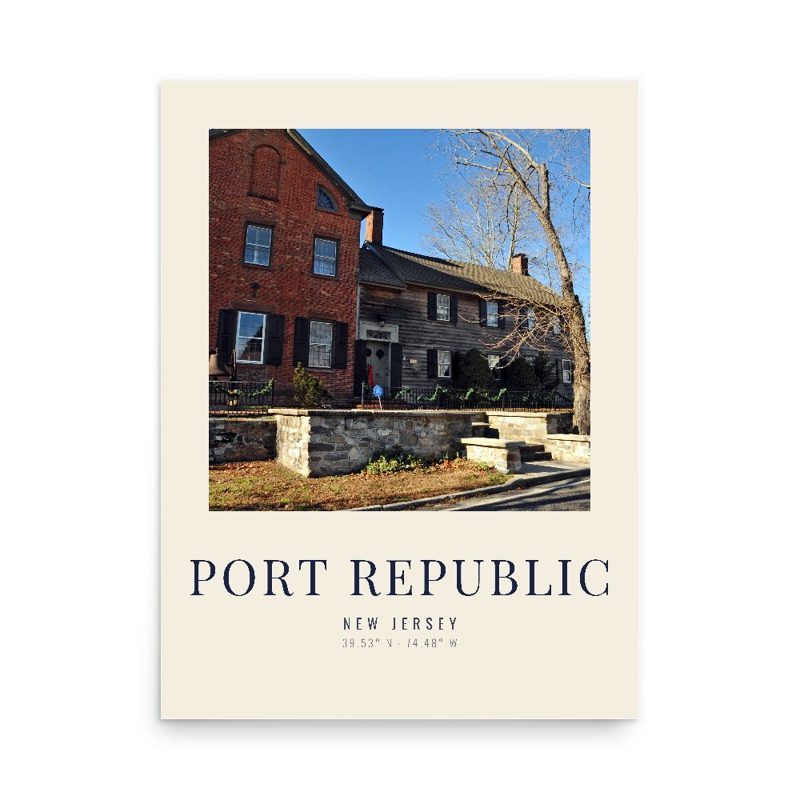
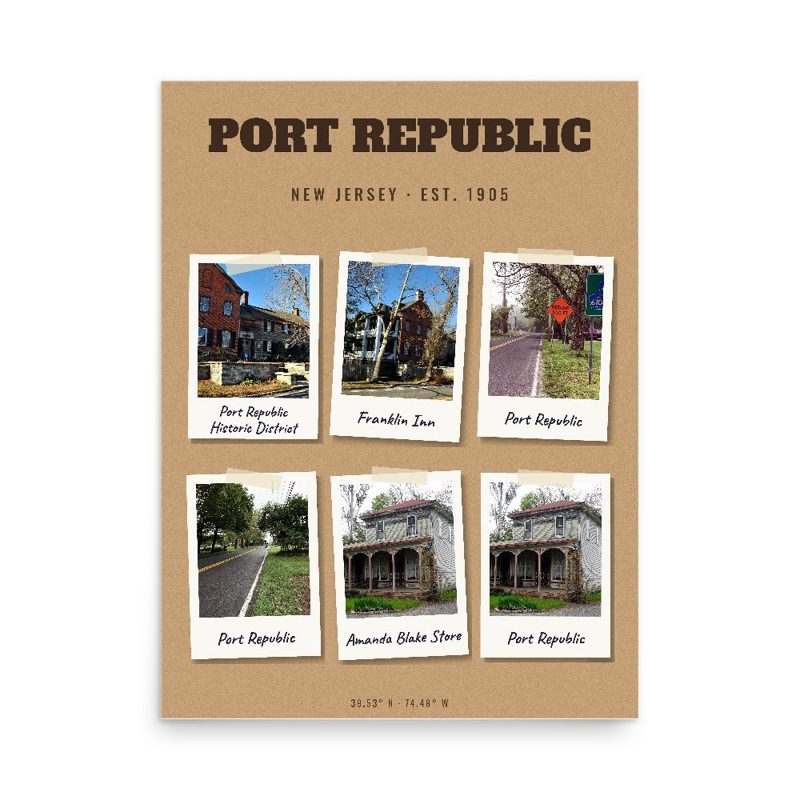
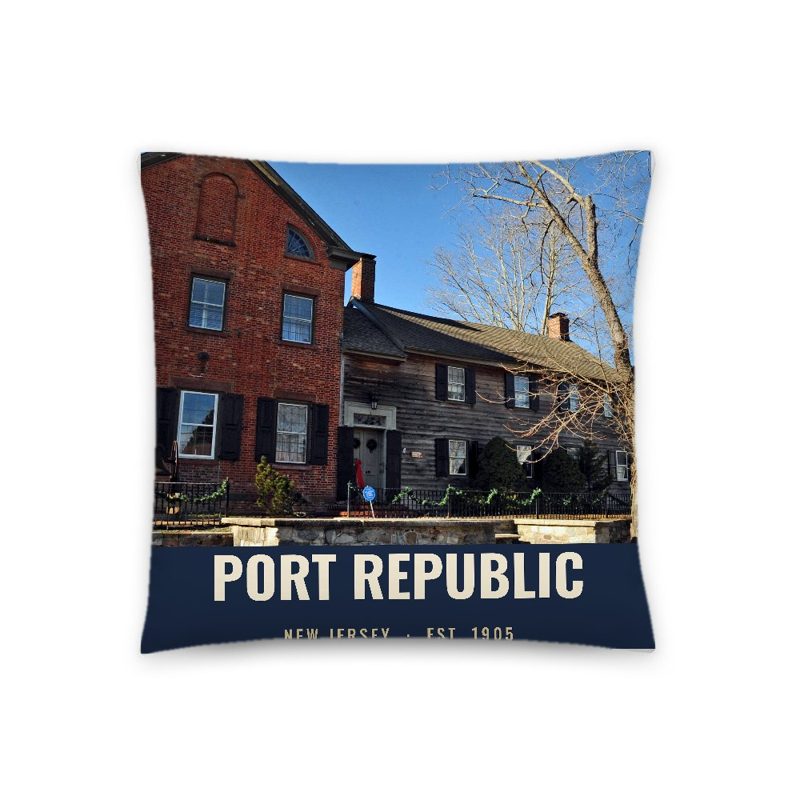
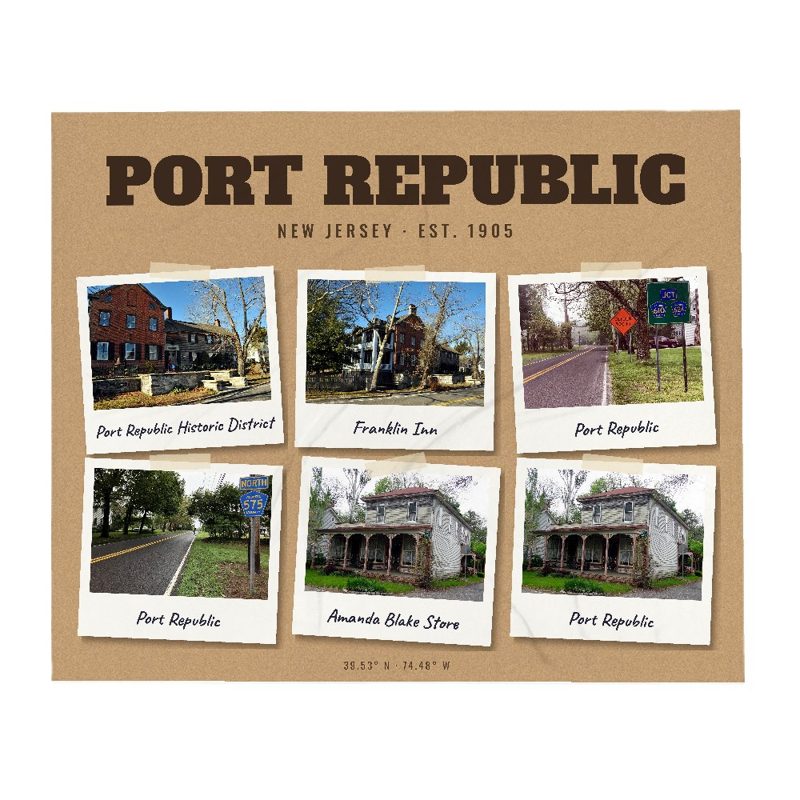
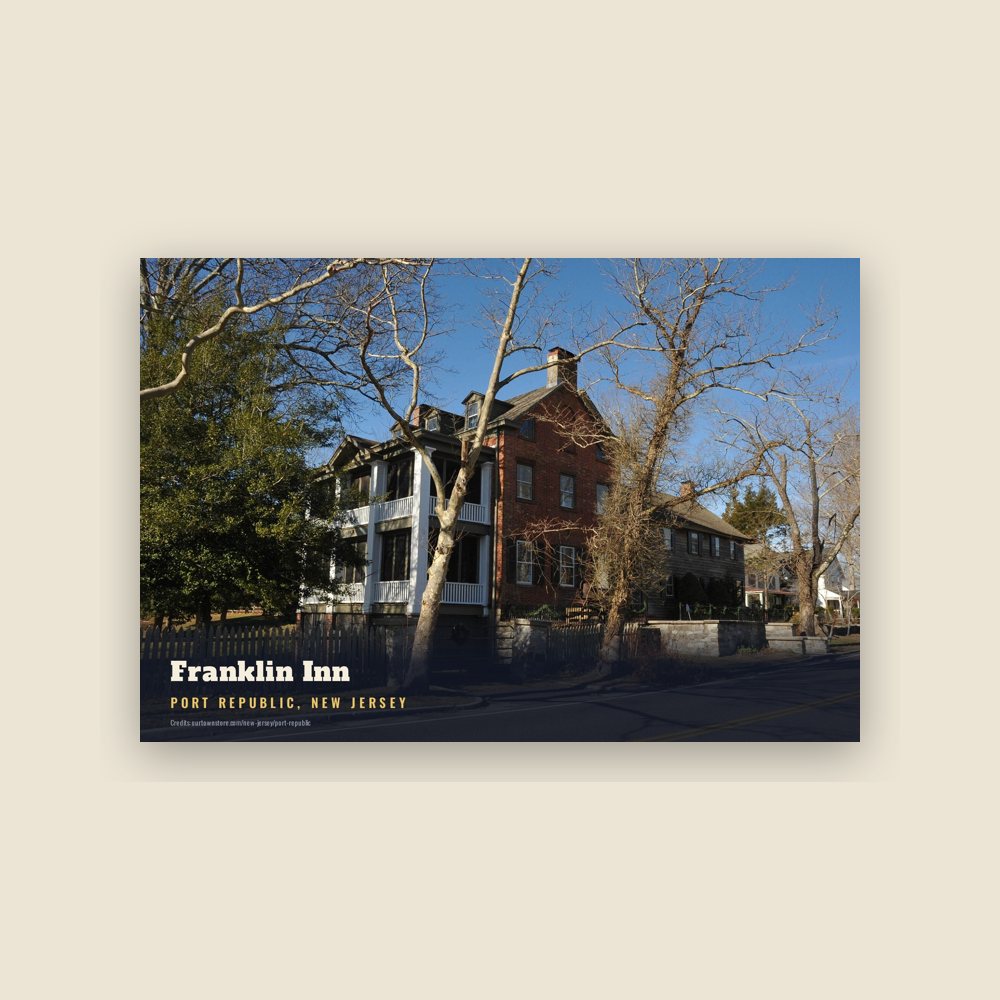
In its early days, Port Republic was known as Wrangleboro. During the American Revolutionary War, Port Republic provided refuge to the residents of the nearby community of Chestnut Neck when the British Army, arriving by ship, sacked their town on October 6, 1778. It had been used as a base by privateers who were capturing goods intended for British forces. Among the refugees was Daniel Mathis, a tavernkeeper who built the Franklin Inn in Port Republic, which is used as a private house today. Some of the British ships were trapped in the creek by the ebb tides.
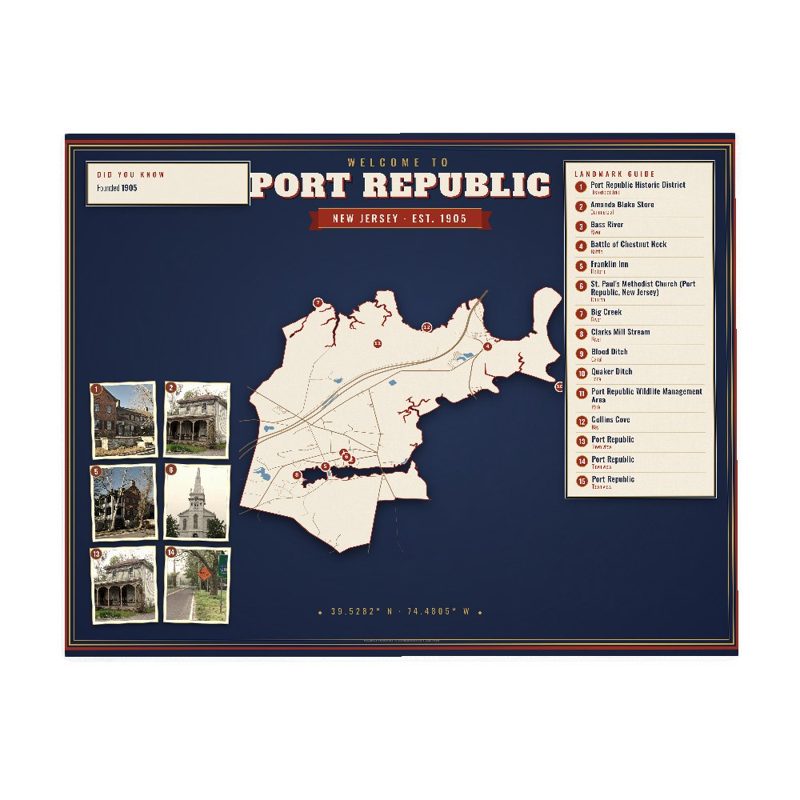
The General Lafayette Chapter of the Daughters of the American Revolution erected a monument on October 6, 1911, to mark the site of the Battle of Chestnut Neck. A Continental Army soldier at the top of the 50-foot (15 m) monument faces the river, "guarding the shore" against the approaching enemy.
In 1842, an effort was made to rename the area from Wrangleborough to Unionville, with a post office to be established under that name. As another Unionville existed in the state, the name "Port Republic" was chosen.
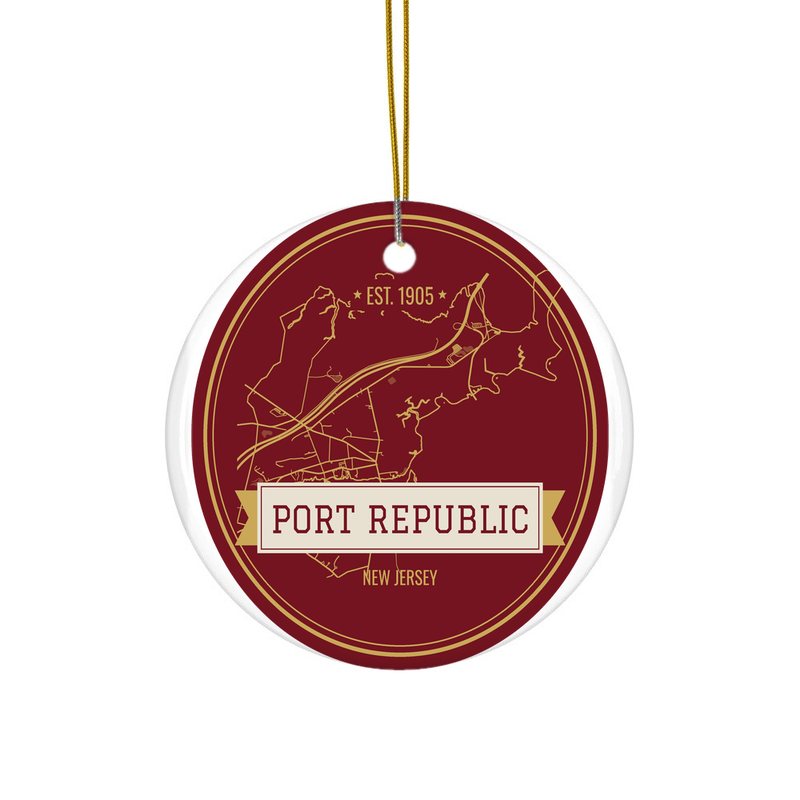
Port Republic was incorporated as a city by an act of the New Jersey Legislature on March 1, 1905, from portions of Galloway Township. The city's name derives from the "U.S. Republic".
Adapted (trimmed) from the Wikipedia article Port Republic, New Jersey, revision 1374792602 by its contributors, licensed CC BY-SA 4.0.