A short history of Essex Fells
Essex Fells was part of the Horseneck Tract, which was an area that consisted of what are now the municipalities of Caldwell, West Caldwell, North Caldwell, Fairfield, Verona, Cedar Grove, Essex Fells, Roseland, and portions of Livingston and West Orange.
In 1702, settlers purchased the 14,000 acres (57 km2) Horseneck Tract—so-called because of its irregular shape that suggested a horse's neck and head—from the Lenni Lenape Native Americans for goods equal to $325. This purchase encompassed much of western Essex County, from the Orange, or First Mountain in the Watchung Mountain range to the Passaic River.
In the late 1800s, Philadelphia developer Anthony S. Drexel realized the impact of train travel on residential development and sent Charles W. Leavitt to the northern New Jersey area near the end of the Caldwell line. Leavitt, Drexel and Drexel's son-in-law John F. Fell formed the Suburban Land Company and purchased 1,000 acres of land from the estate of Revolutionary War General William J. Gould. In order to create their residential development the group commissioned noted architect Ernest W. Bowditch. The community's name was derived by taking "Essex" from the name of the county and adding "Fells" from the name of John F. Fell which also means hill or down.
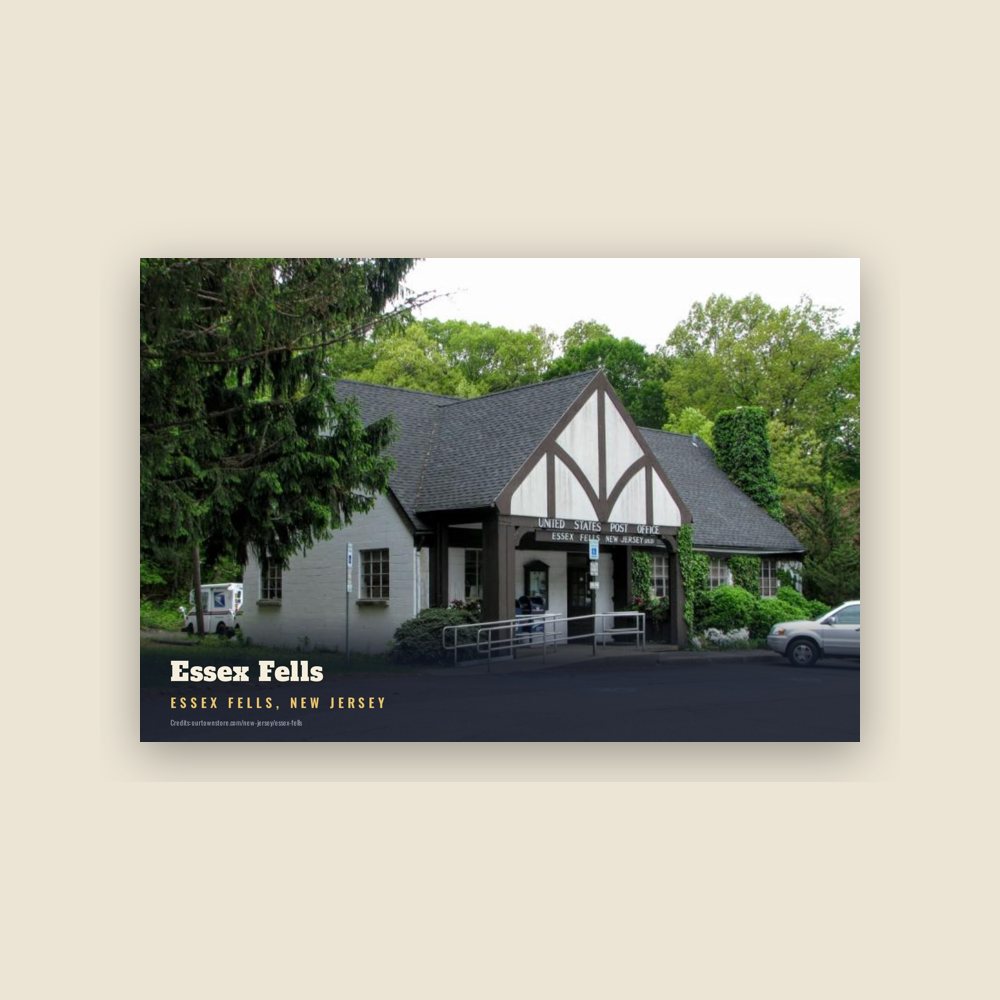
Based on an ordinance passed in 1928, commercial activity in the borough is limited to a single three-story building constructed to look like a house and two small workshops on a dead end. In 2000, Essex Fells had 750 houses, most of which were custom built, with many occupying lots several acres in size. The borough has no apartment buildings, office buildings or traffic lights, and until recently, no condominiums. The only units available for rental are in carriage houses and other ancillary structures.
In 1981, the borough was one of seven Essex County municipalities to pass a referendum to become a township, joining four municipalities that had already made the change, of what would ultimately be more than a dozen Essex County municipalities to reclassify themselves as townships in order take advantage of federal revenue sharing policies that allocated townships a greater share of government aid to municipalities on a per capita basis. Effective January 1, 1992, it again became a borough.
Adapted (trimmed) from the Wikipedia article Essex Fells, New Jersey, revision 1368276890 by its contributors, licensed CC BY-SA 4.0.