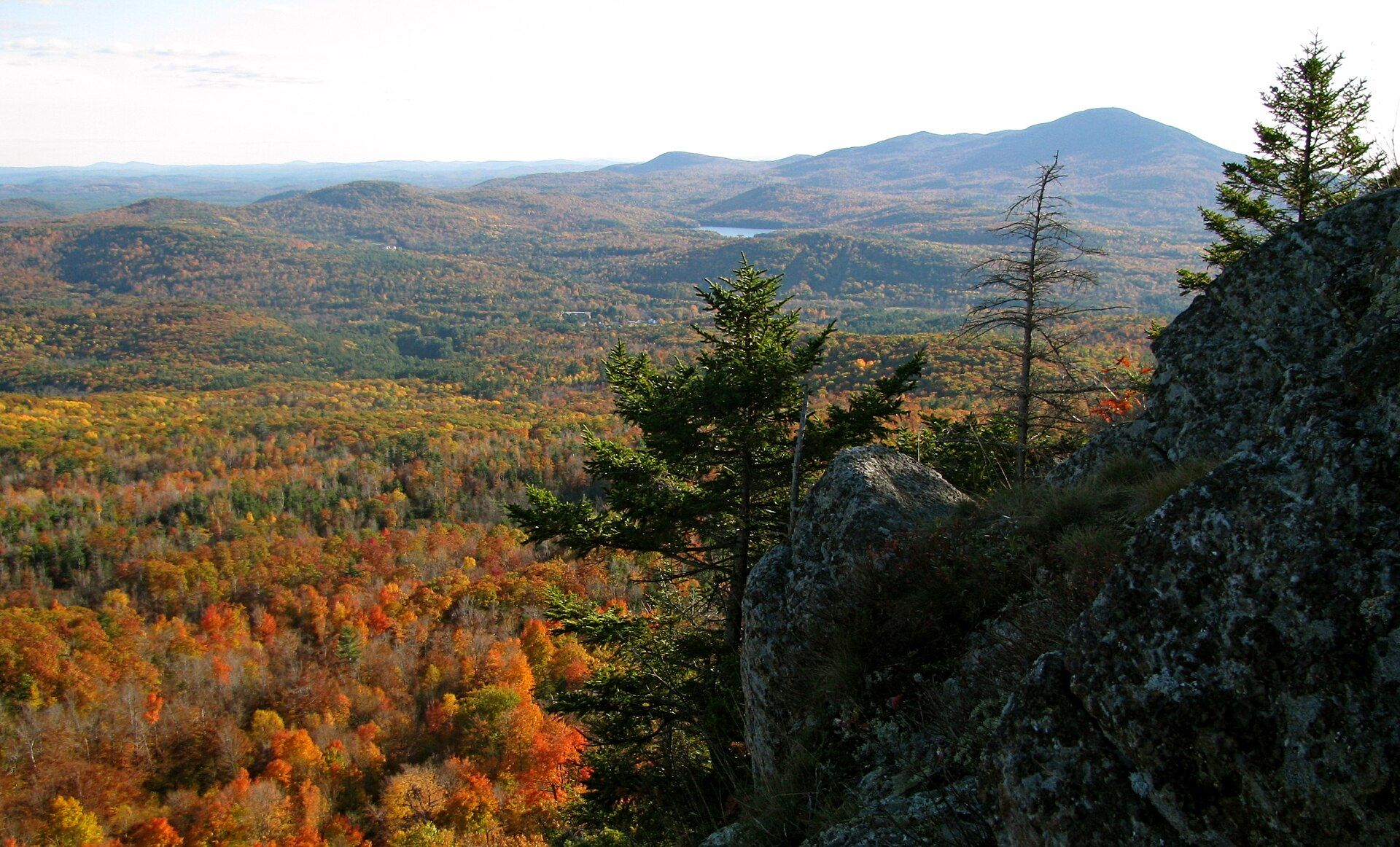
Warner developed into a prosperous farming community which produced meats, dairy goods, vegetables, hay and apples. Landmarks include Dalton Covered Bridge, New Hampshire Telephone Museum and Rollins State Park. Warner is the birthplace of Walter Harriman, governor of New Hampshire.
Every piece is drawn from Warner's own map data and historic archives, then printed and shipped from the USA when you order. No two towns look alike.
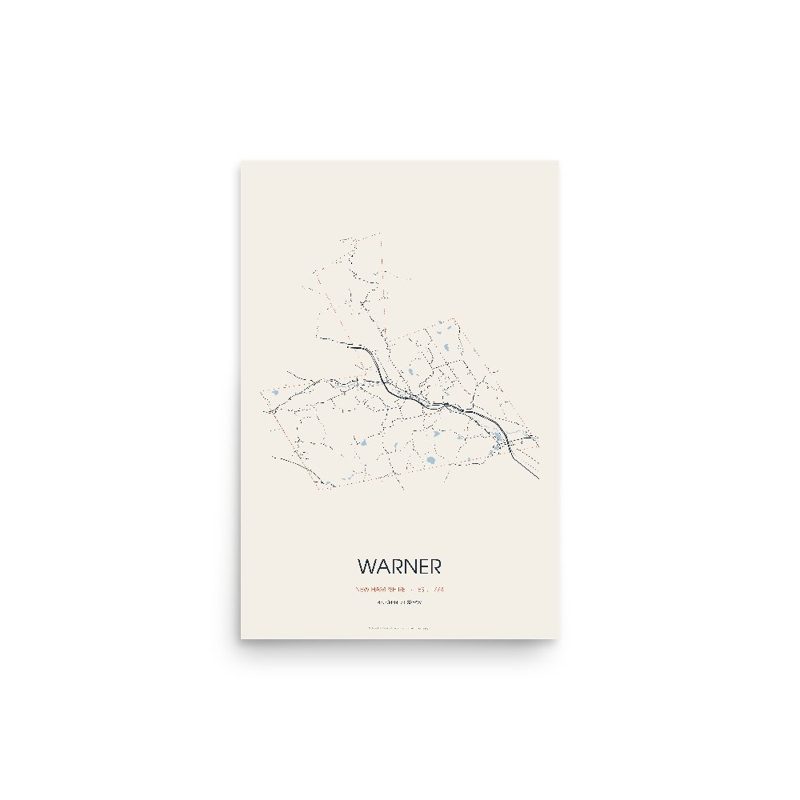
Every road in town, on archival matte paper
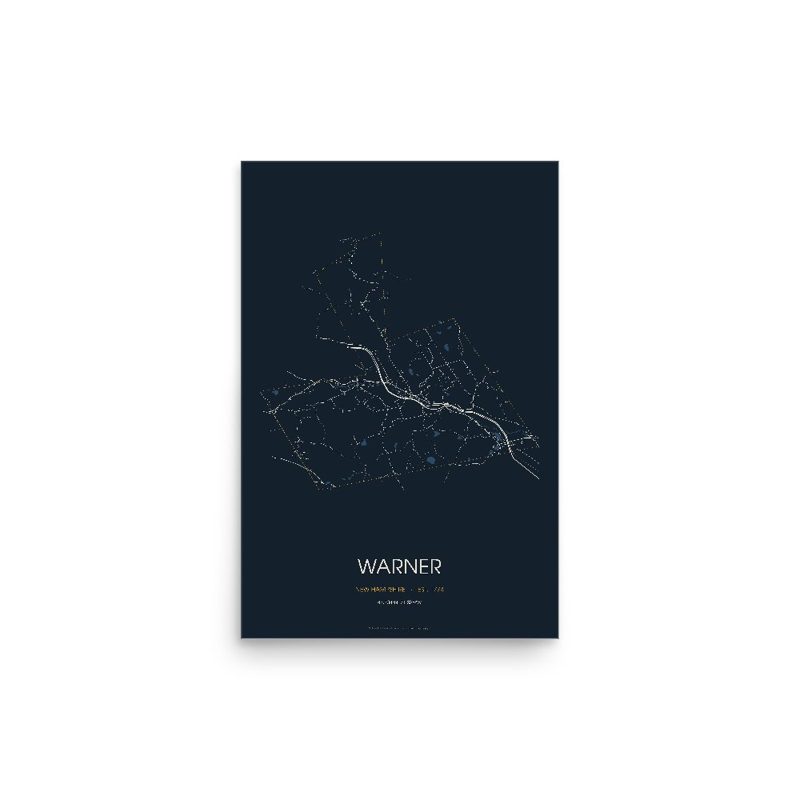
The same map, in navy and silver
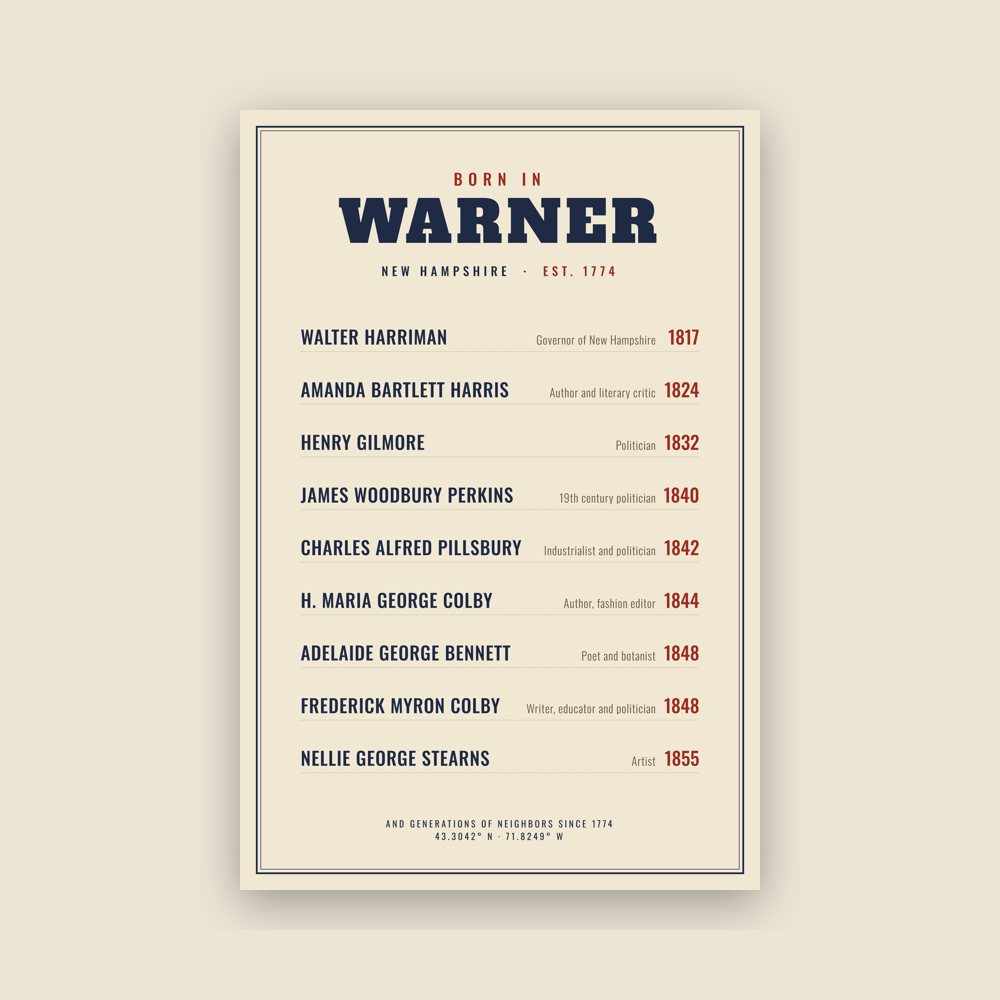
Famous natives, by birth year
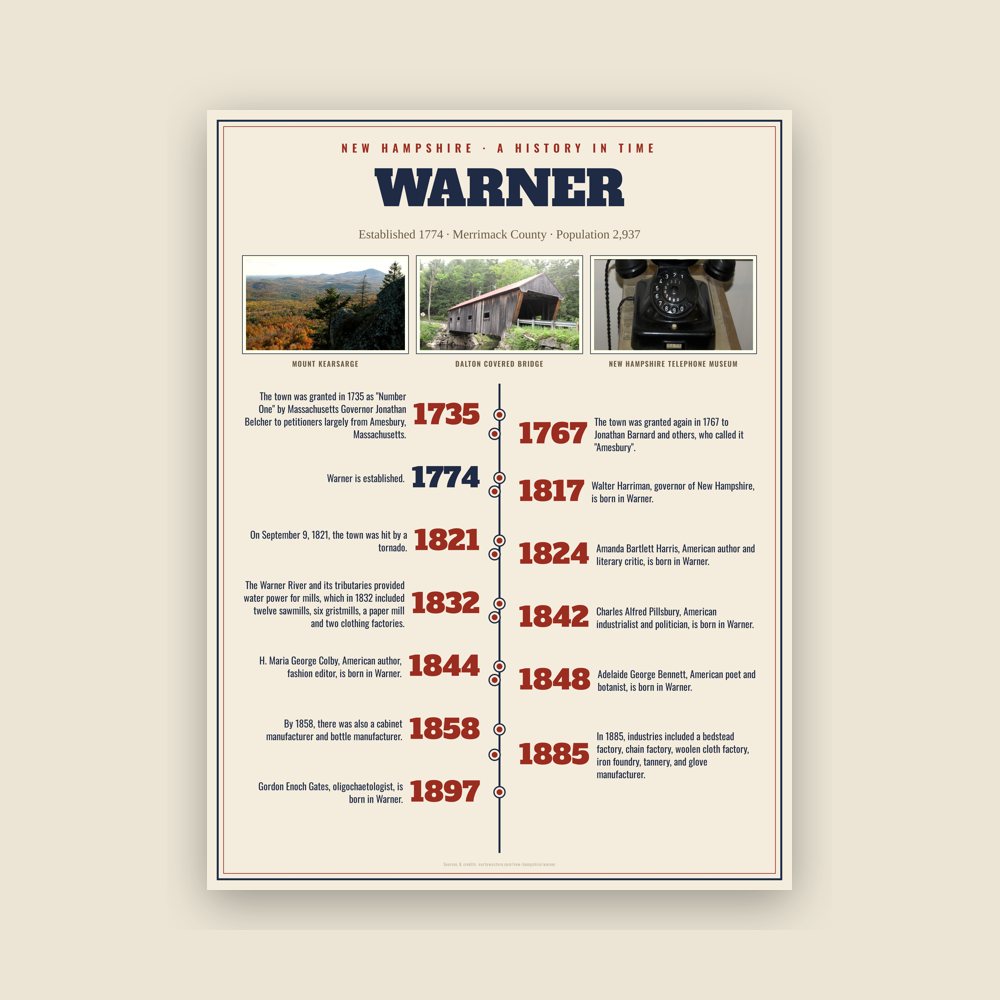
The town's story in dates, from its own records, for home or classroom
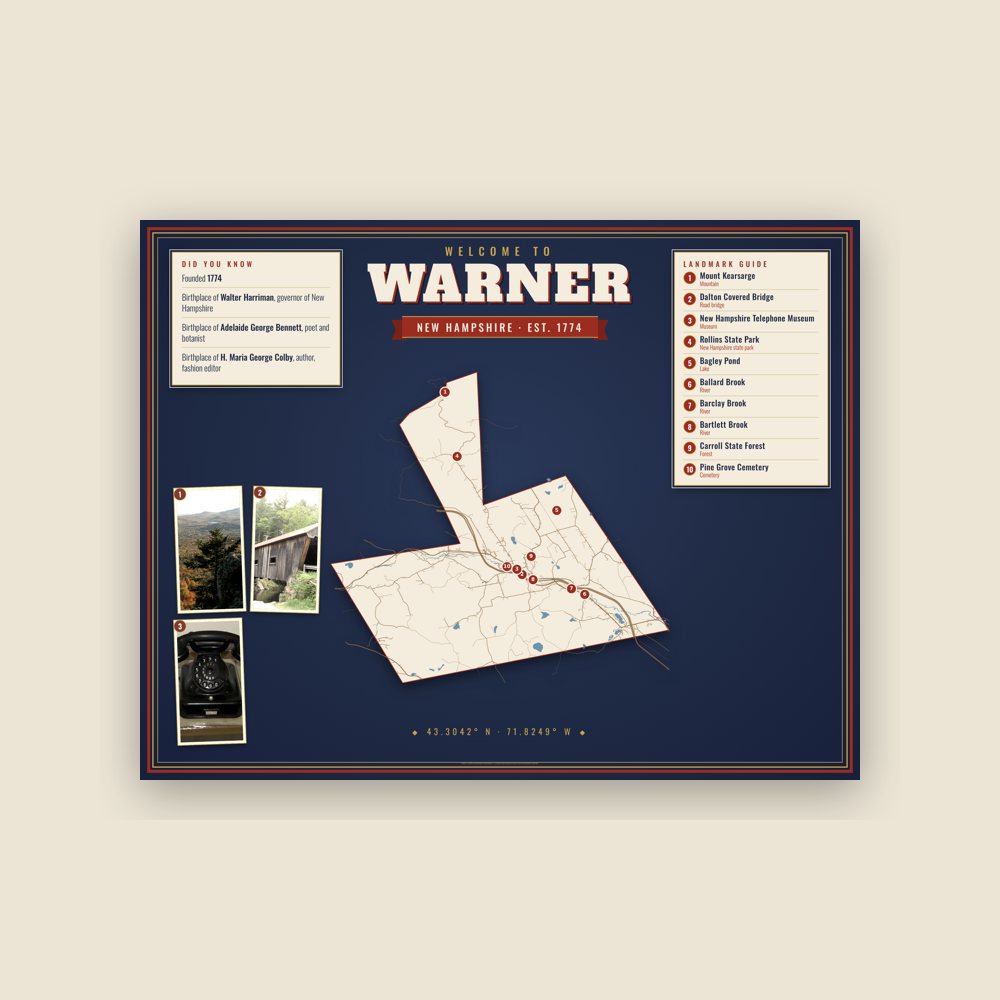
Map of local landmarks, washable fabric
Heavy-blend fleece, street map printed on the back
Soft Bella+Canvas jersey
Glossy ceramic, dishwasher safe
Ceramic keepsake, gold ribbon
Weatherproof, for the front walk
24″×16″, printed coir-look fibers, rubber back
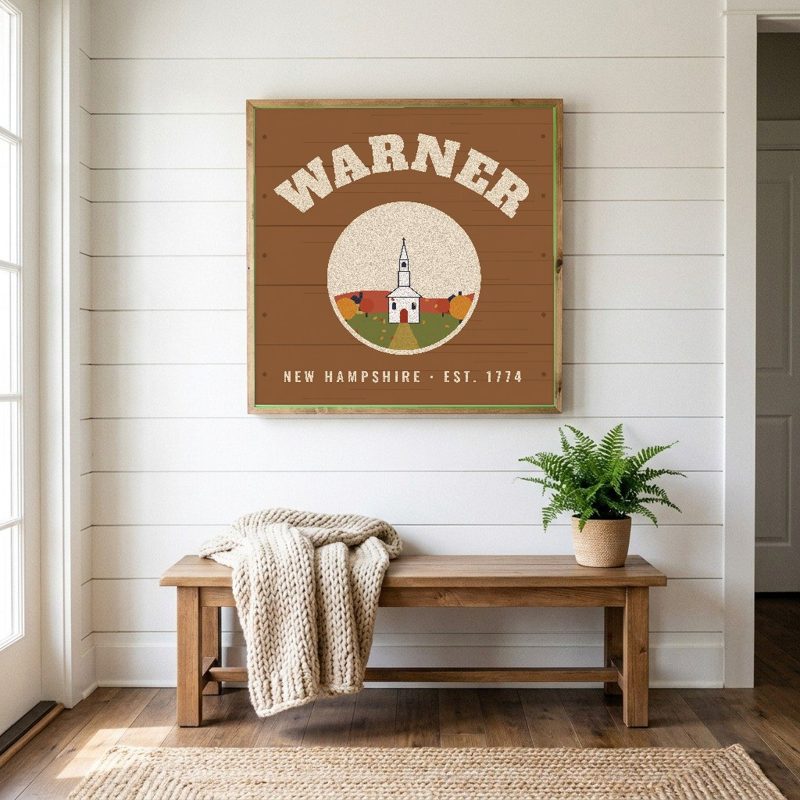
12″×12″ printed wood, ready to hang
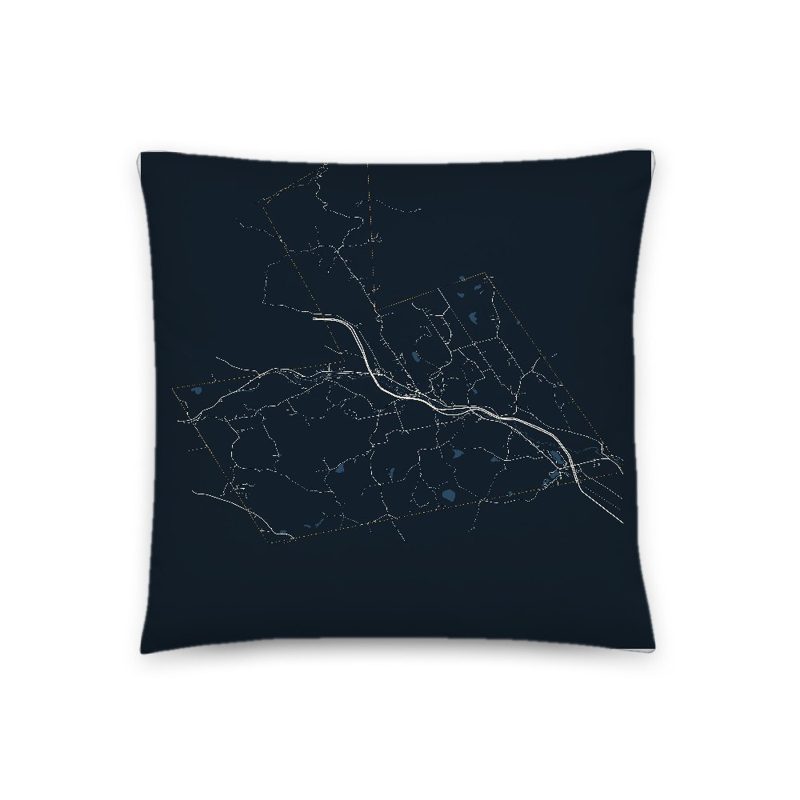
Soft-touch, zip cover
Sturdy all-over-print tote
Glossy top, cork back
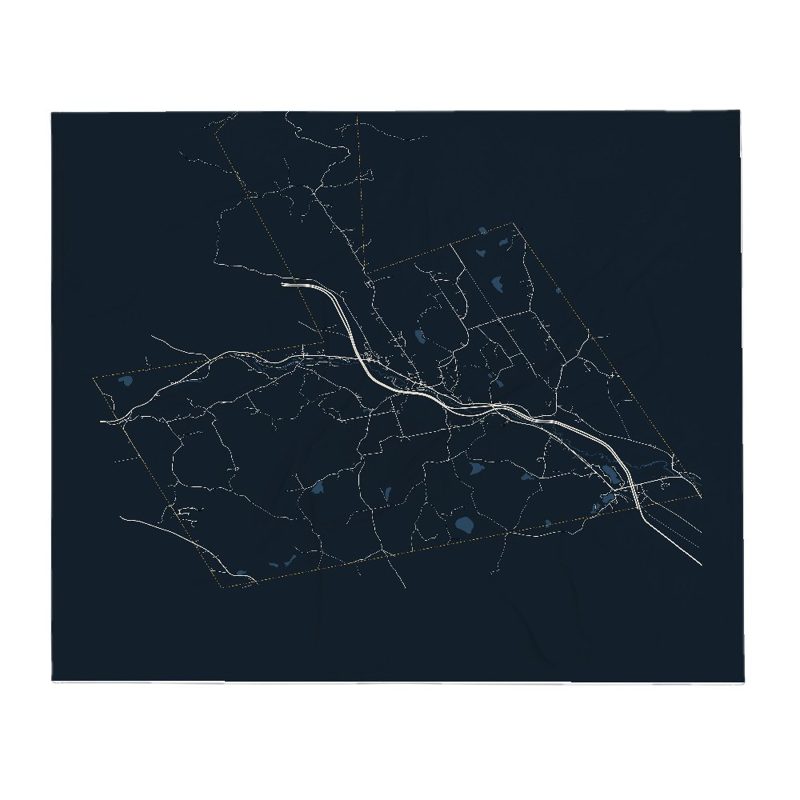
Soft fleece, 50″×60″
20 oz, double-wall stainless
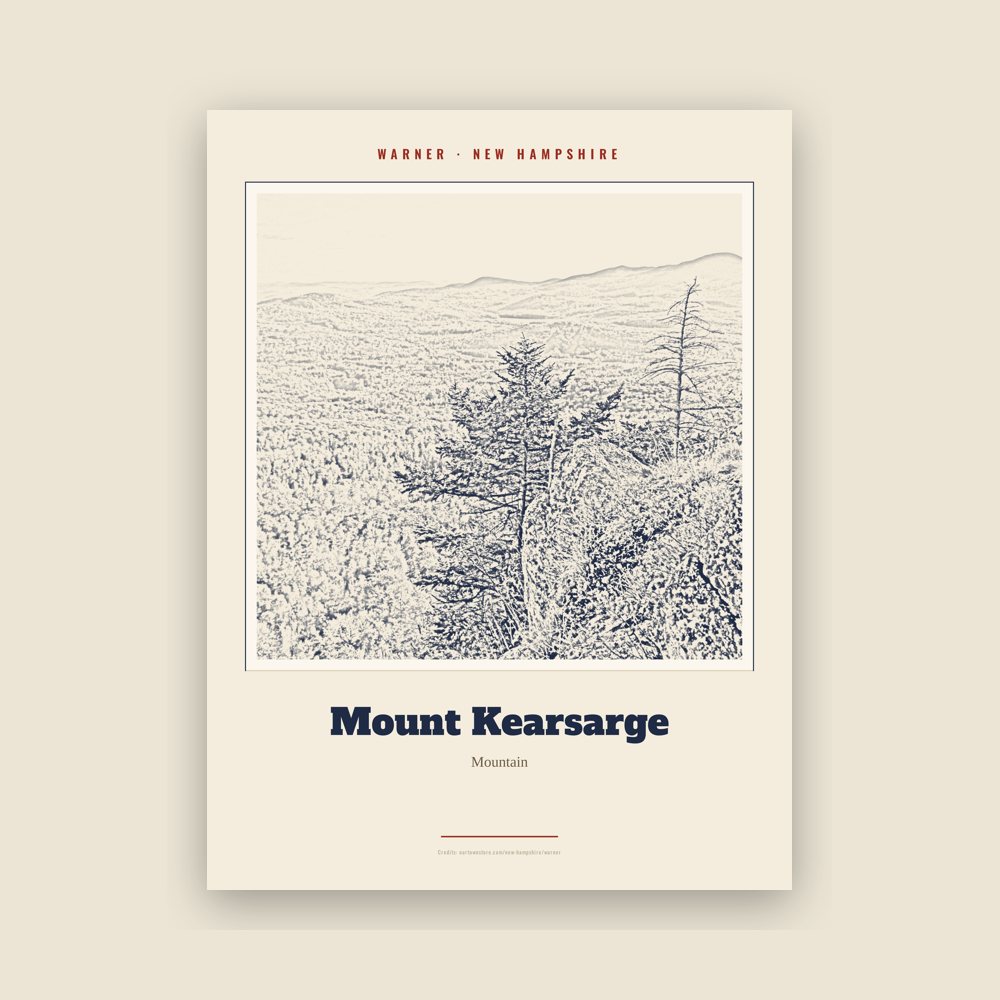
Archival matte print of a local landmark, credited to its photographer
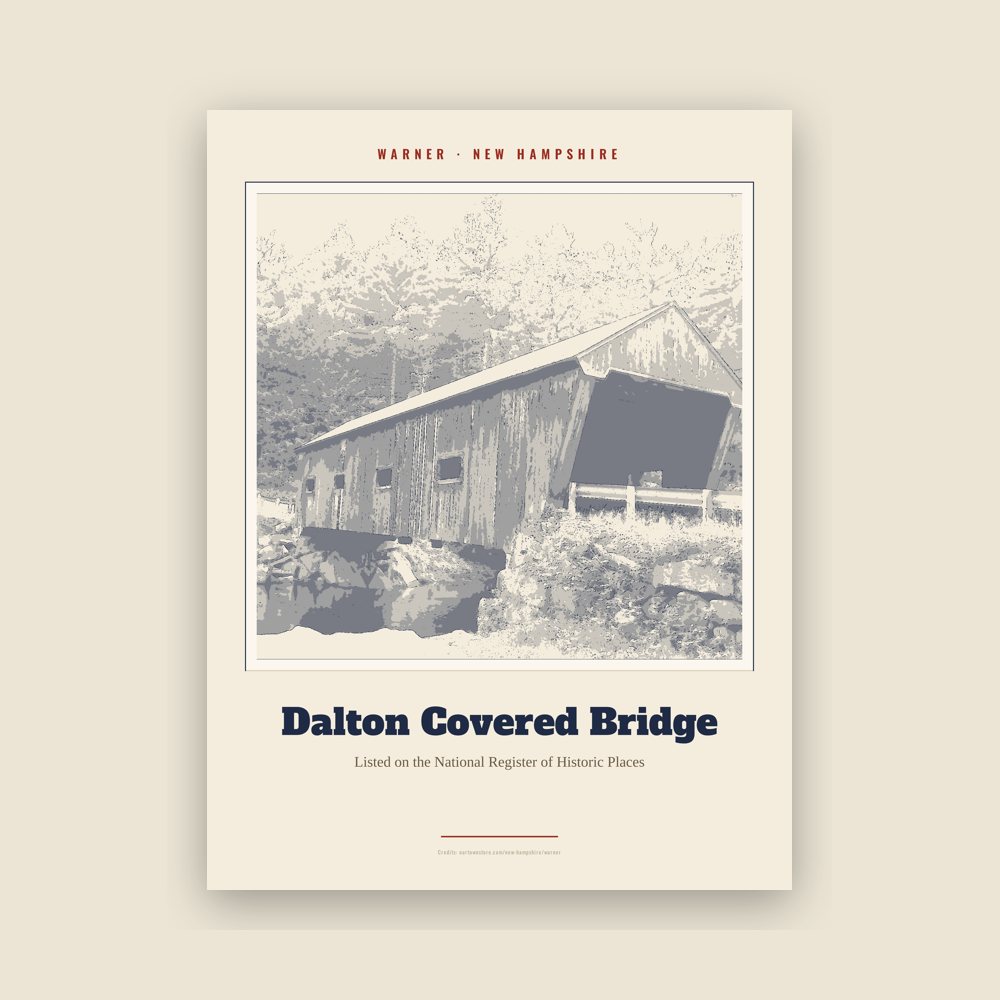
Archival matte print of a local landmark, credited to its photographer
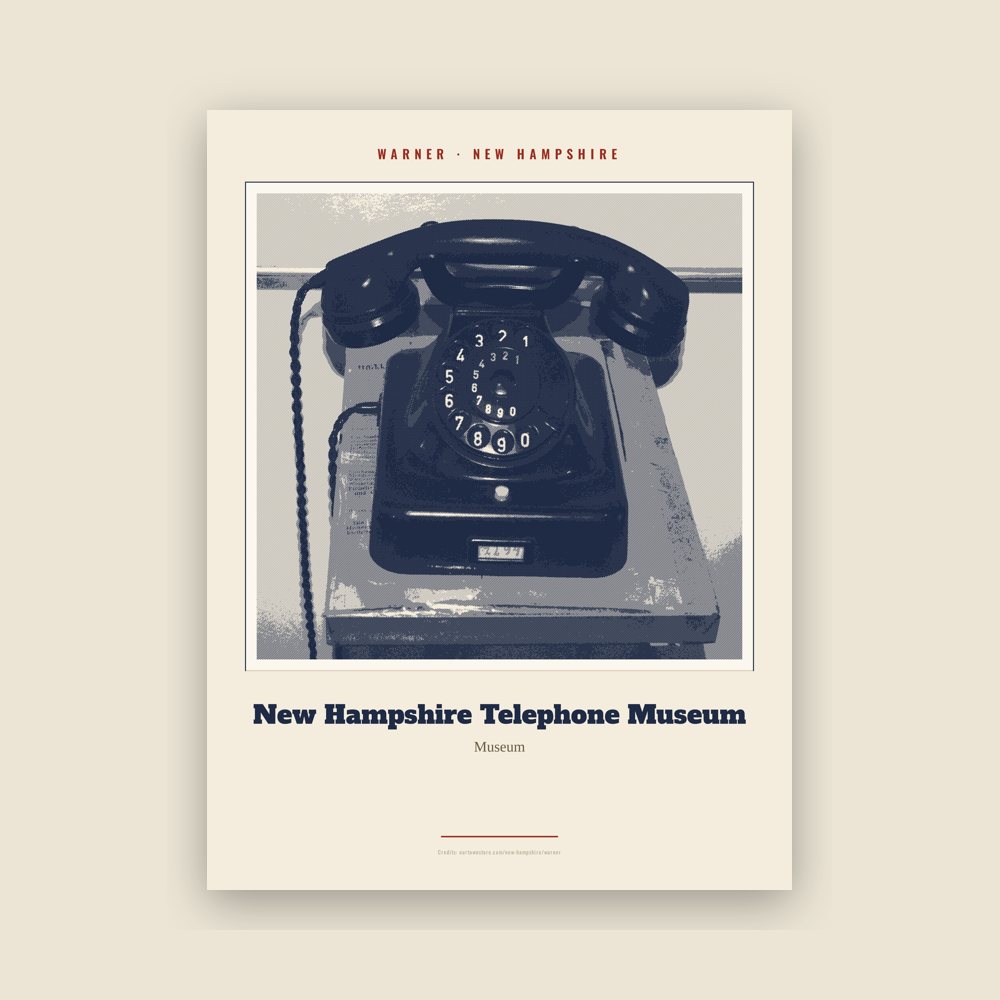
Archival matte print of a local landmark, credited to its photographer
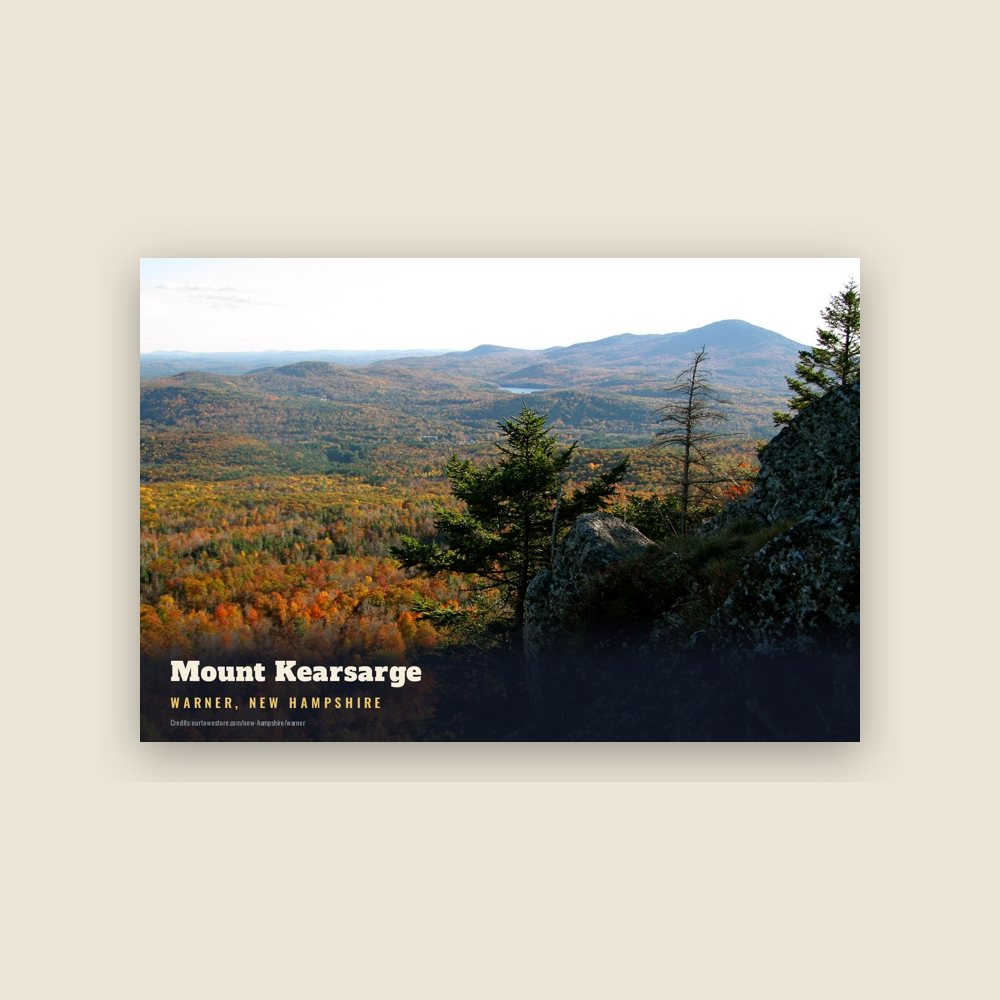
6″×4″ postcard, glossy front
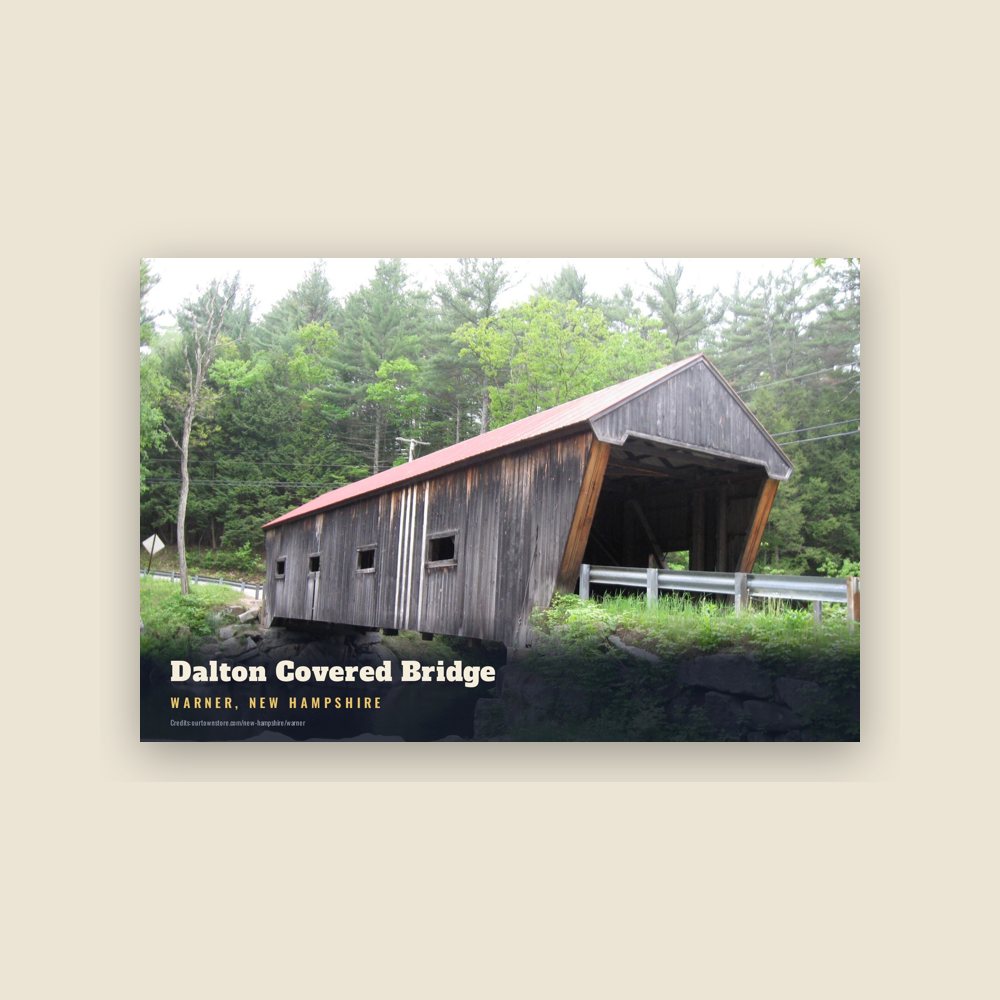
6″×4″ postcard, glossy front
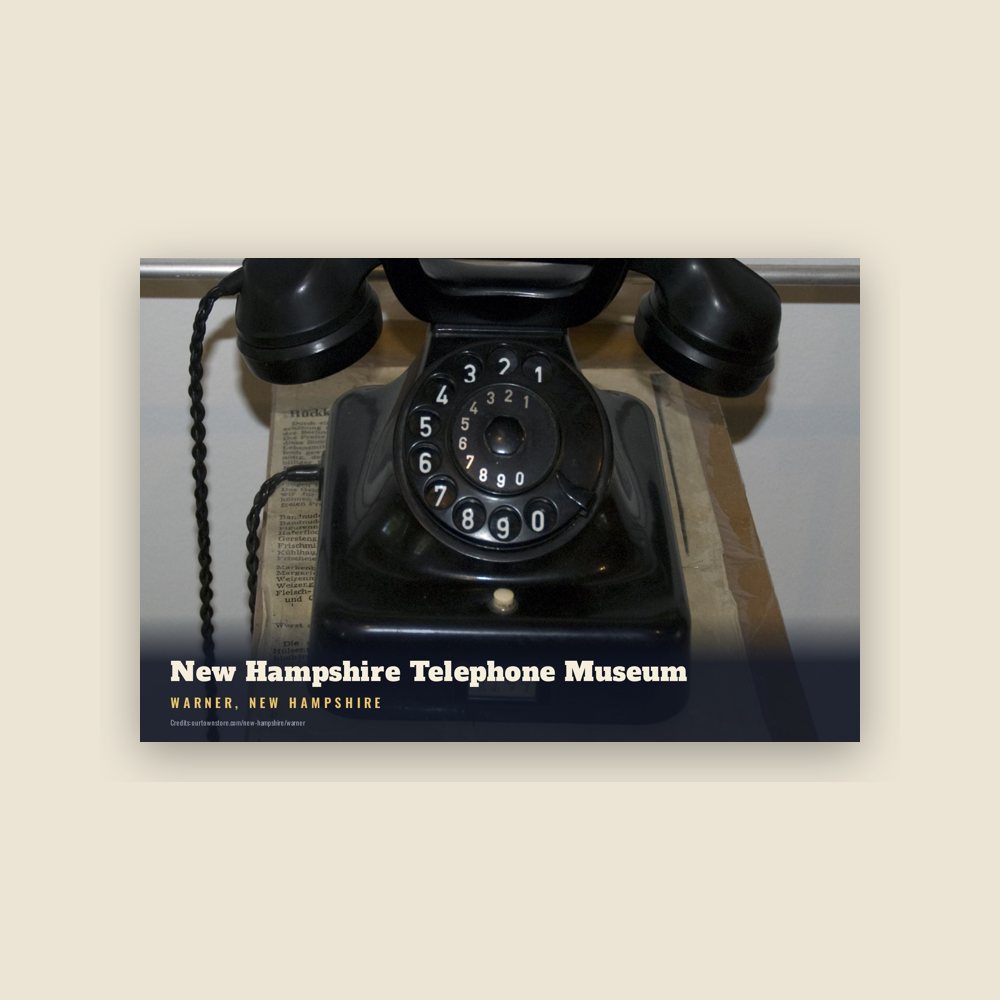
6″×4″ postcard, glossy front
Population 2010: 2,833 → 2020: 2,937
From Wikidata (CC0).
The town was granted in 1735 as "Number One" by Massachusetts Governor Jonathan Belcher to petitioners largely from Amesbury, Massachusetts. Called "New Amesbury", it was part of a line of settlements running between the Merrimack and Connecticut rivers intended to help defend Massachusetts against New France's predations. It was regranted by the Masonian Proprietors in 1749, when it was settled with four houses and a sawmill. Called "Jennesstown", it was abandoned and destroyed during the French and Indian War. The town was granted again in 1767 to Jonathan Barnard and others, who called it "Amesbury". But on September 3, 1774, it was incorporated as "Warner", named after Jonathan Warner, a leading Portsmouth citizen, namesake of the Warner House and relative of Governor John Wentworth. It was one of the last towns established under English provincial rule prior to the Revolution.
Warner developed into a prosperous farming community which produced meats, dairy goods, vegetables, hay and apples. The Warner River and its tributaries provided water power for mills, which in 1832 included twelve sawmills, six gristmills, a paper mill and two clothing factories. By 1858, there was also a cabinet manufacturer and bottle manufacturer. In 1885, industries included a bedstead factory, chain factory, woolen cloth factory, iron foundry, tannery, and glove manufacturer. On September 9, 1821, the town was hit by a tornado. It leveled houses and forests in a 16-to-18-mile (26 to 29 km) swath of destruction beginning west of Lake Sunapee, through New London and Sutton, over the southwest spur of Mount Kearsarge and ending at the Webster line. The storm killed four people in Warner, seriously injured others and destroyed considerable property.
Each October, on Columbus Day weekend, Warner hosts the annual Fall Foliage Festival, attracting thousands of people from all over New England and beyond.
Adapted (trimmed) from the Wikipedia article Warner, New Hampshire, revision 1379598571 by its contributors, licensed CC BY-SA 4.0.
We share a part of every Warner sale with local partners, and we'd love to print from your collection. Old photographs, maps and postcards make the best keepsakes.
Partner with us