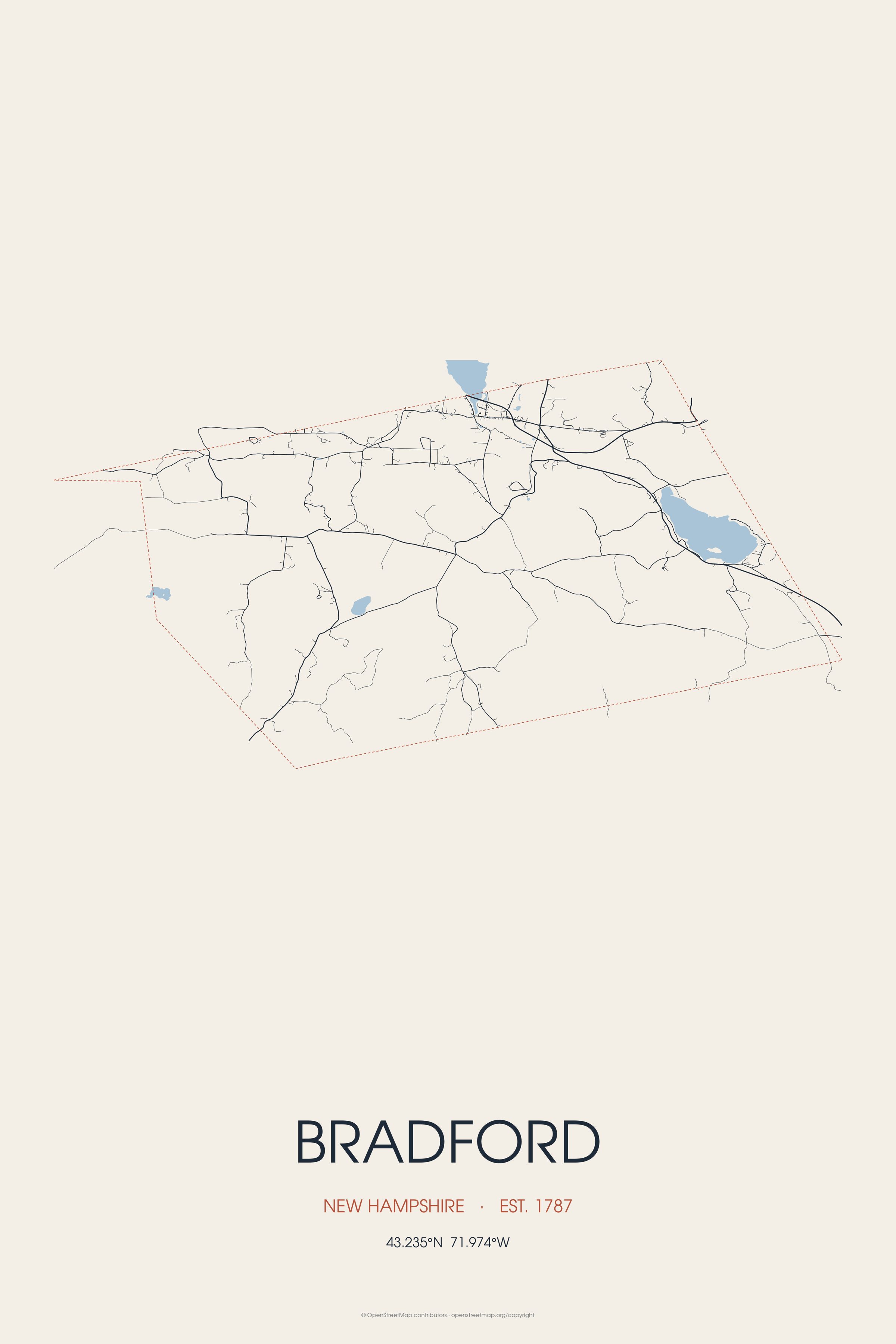
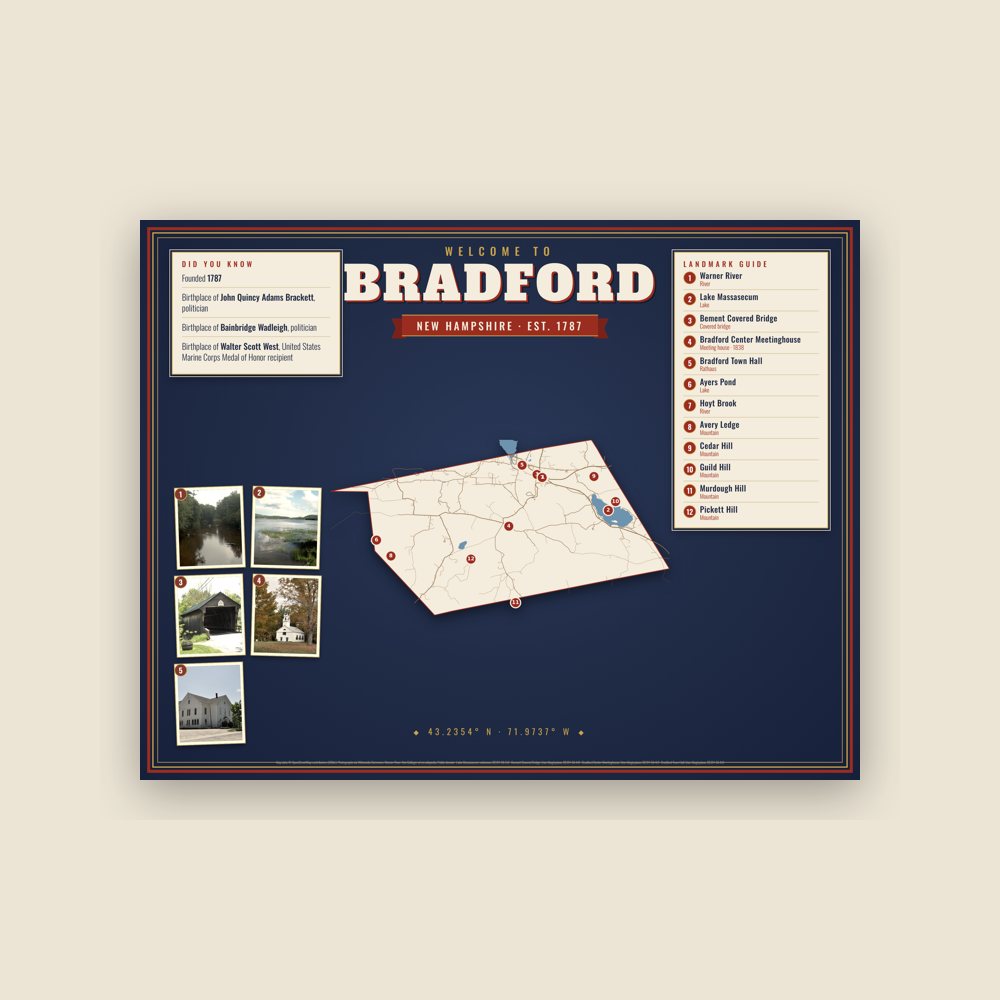
The town also includes the village of Bradford Center. Landmarks include Bement Covered Bridge, Bradford Center Meetinghouse and Bradford Town Hall. Bradford is the birthplace of John Quincy Adams Brackett, politician.
Every piece is drawn from Bradford's own map data and historic archives, then printed and shipped from the USA when you order. No two towns look alike.
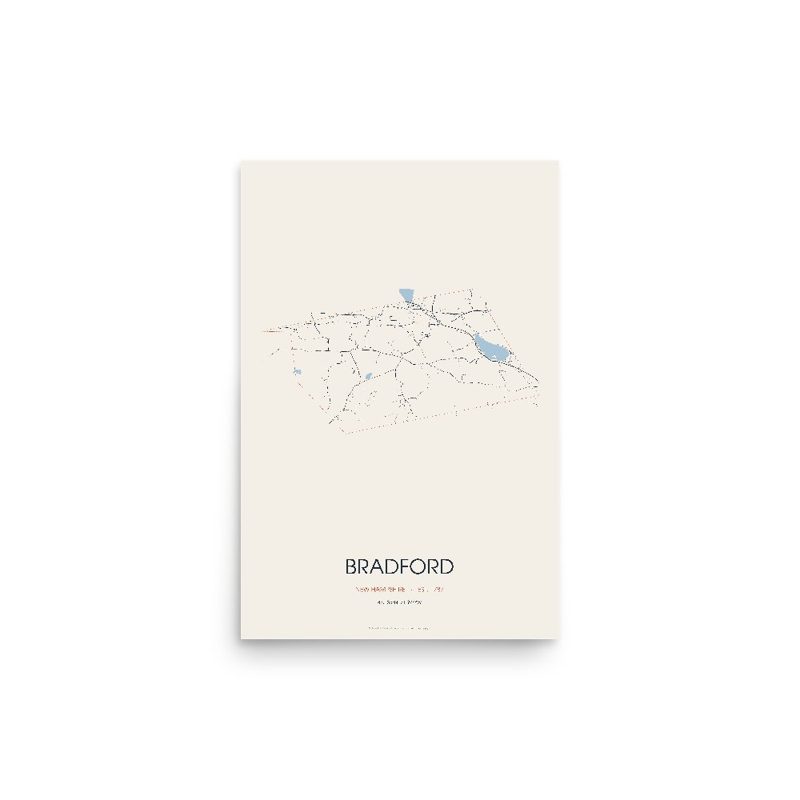
Every road in town, on archival matte paper
The same map, in navy and silver
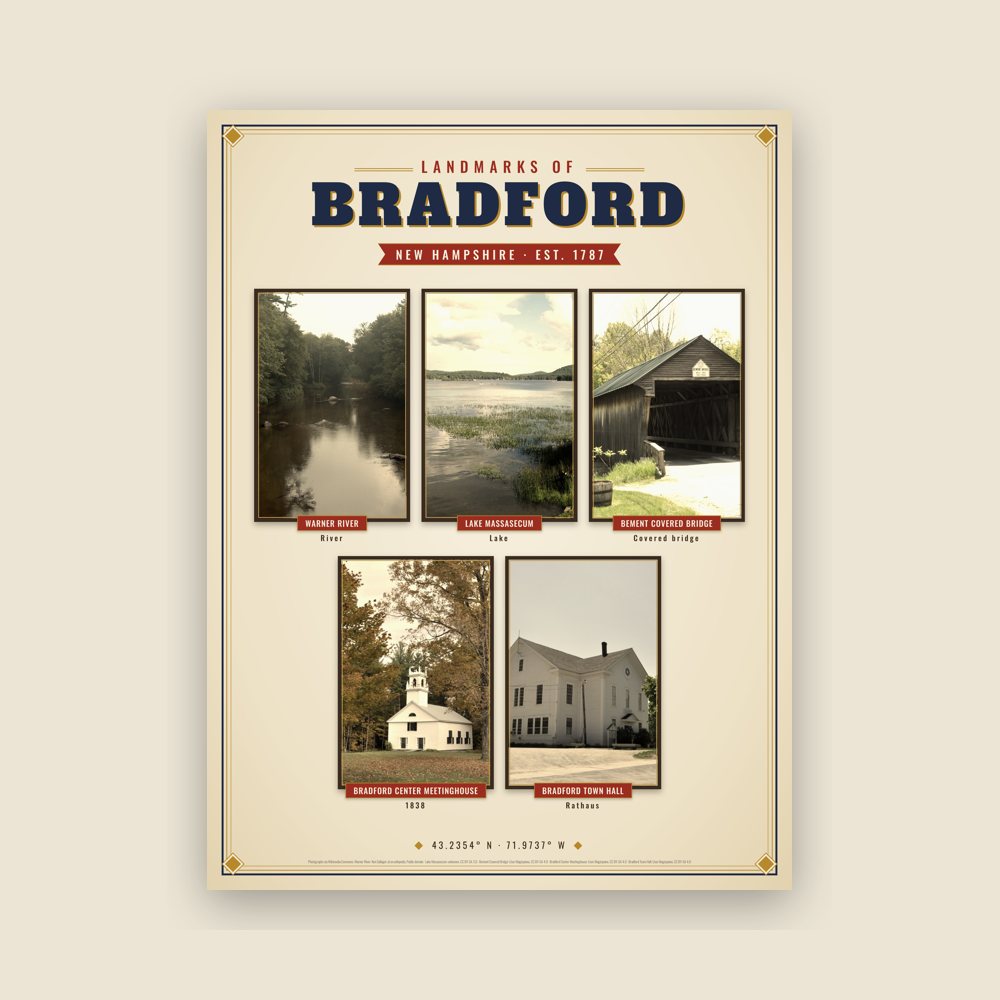
Nine local landmarks, archival matte
Map of local landmarks, washable fabric
Heavy-blend fleece, street map printed on the back
Soft Bella+Canvas jersey
Glossy ceramic, dishwasher safe
Ceramic keepsake, gold ribbon
Weatherproof, for the front walk
24″×16″, printed coir-look fibers, rubber back
12″×12″ printed wood, ready to hang
Soft-touch, zip cover
Sturdy all-over-print tote
Glossy top, cork back
Soft fleece, 50″×60″
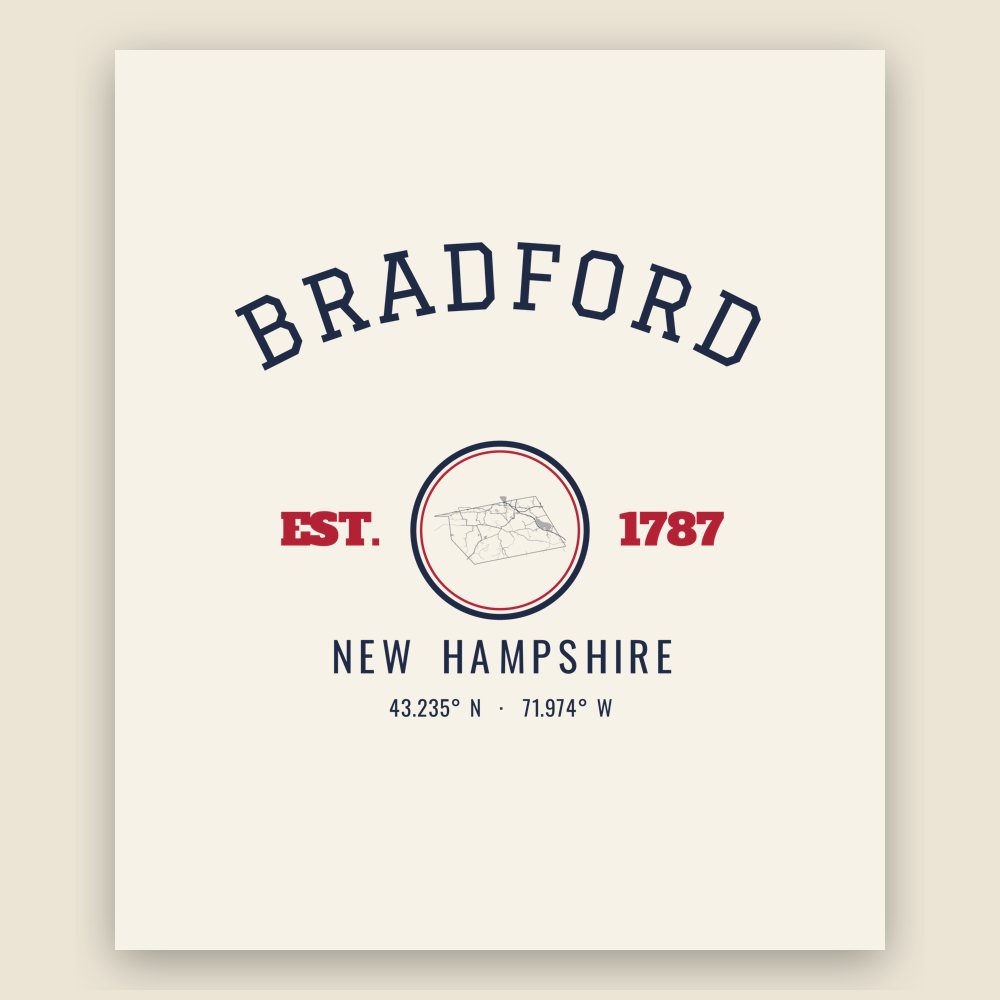
20 oz, double-wall stainless
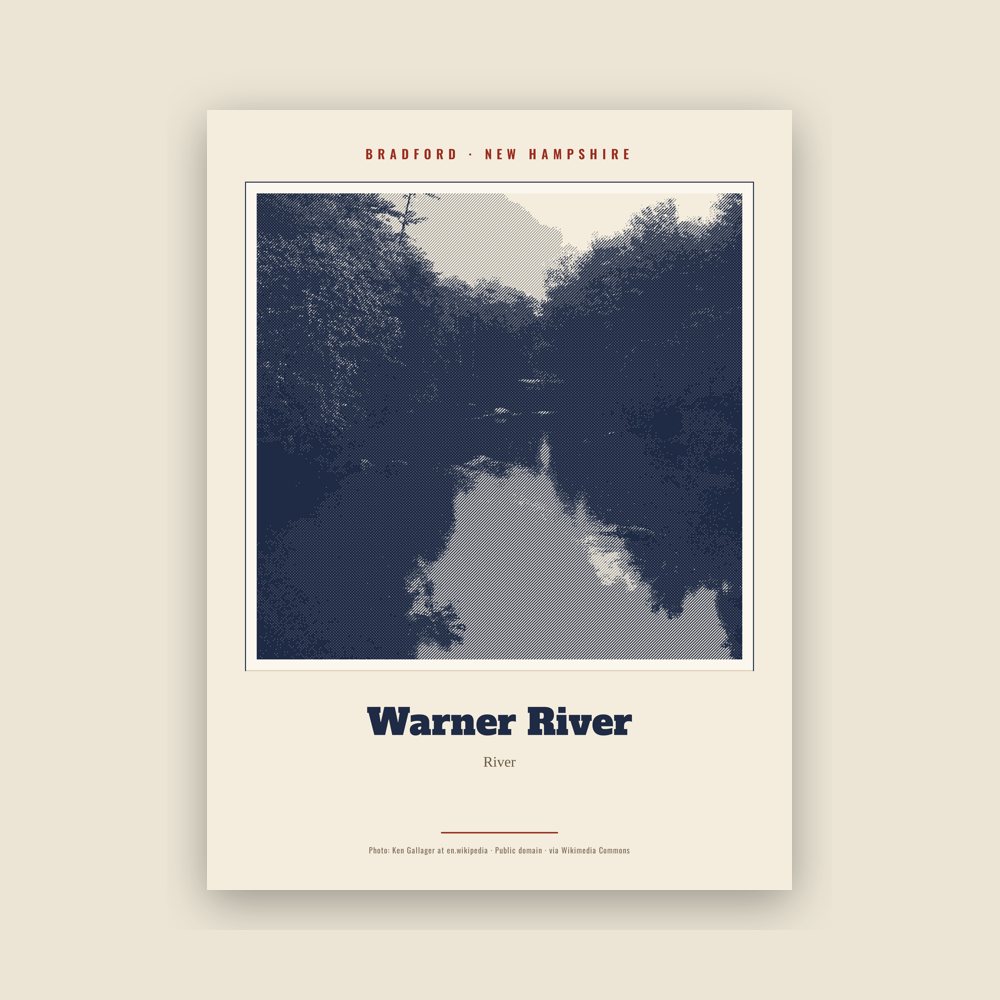
Archival matte print of a local landmark, credited to its photographer
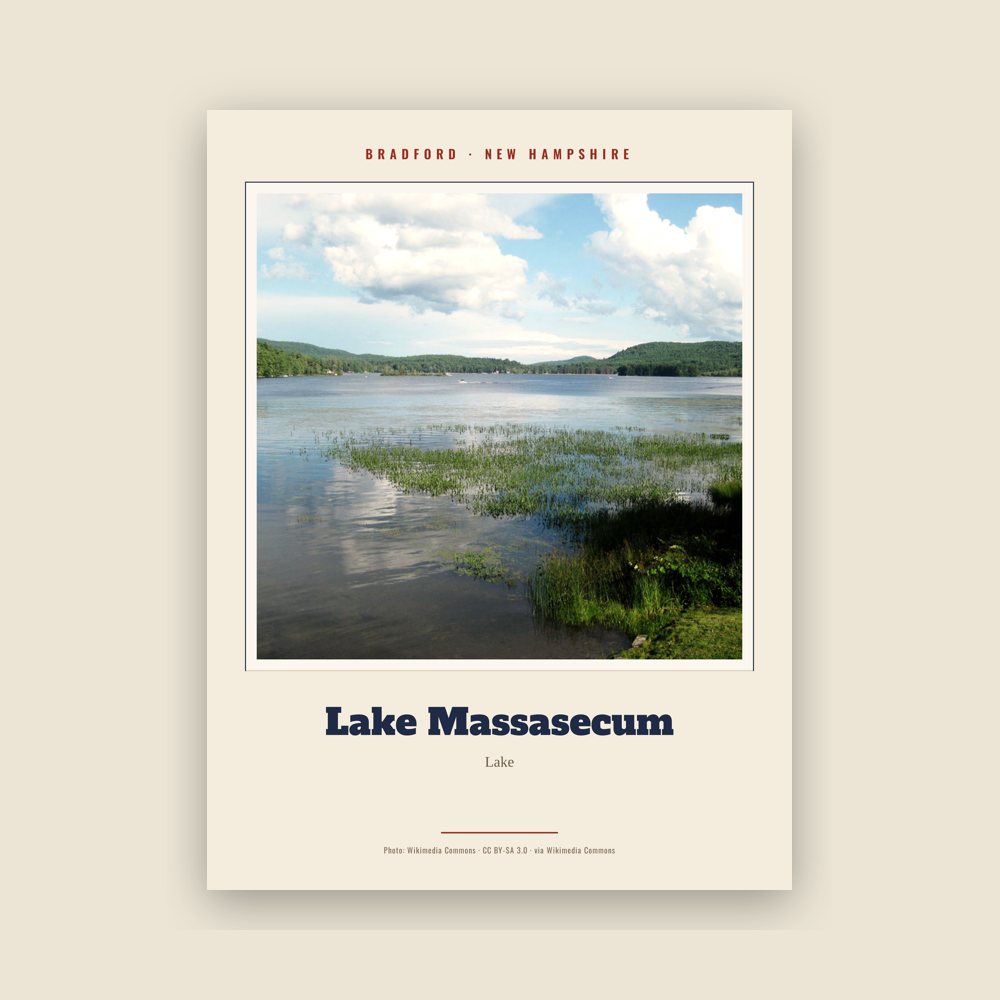
Archival matte print of a local landmark, credited to its photographer
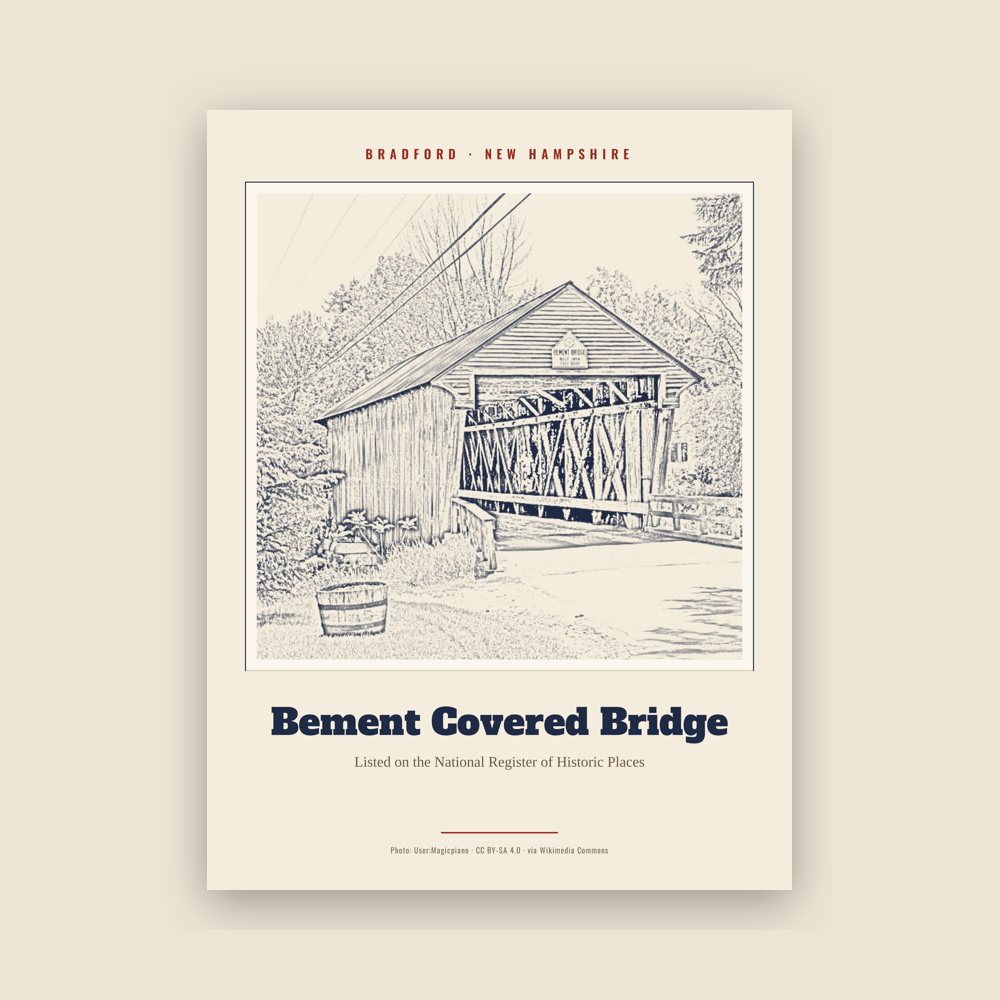
Archival matte print of a local landmark, credited to its photographer
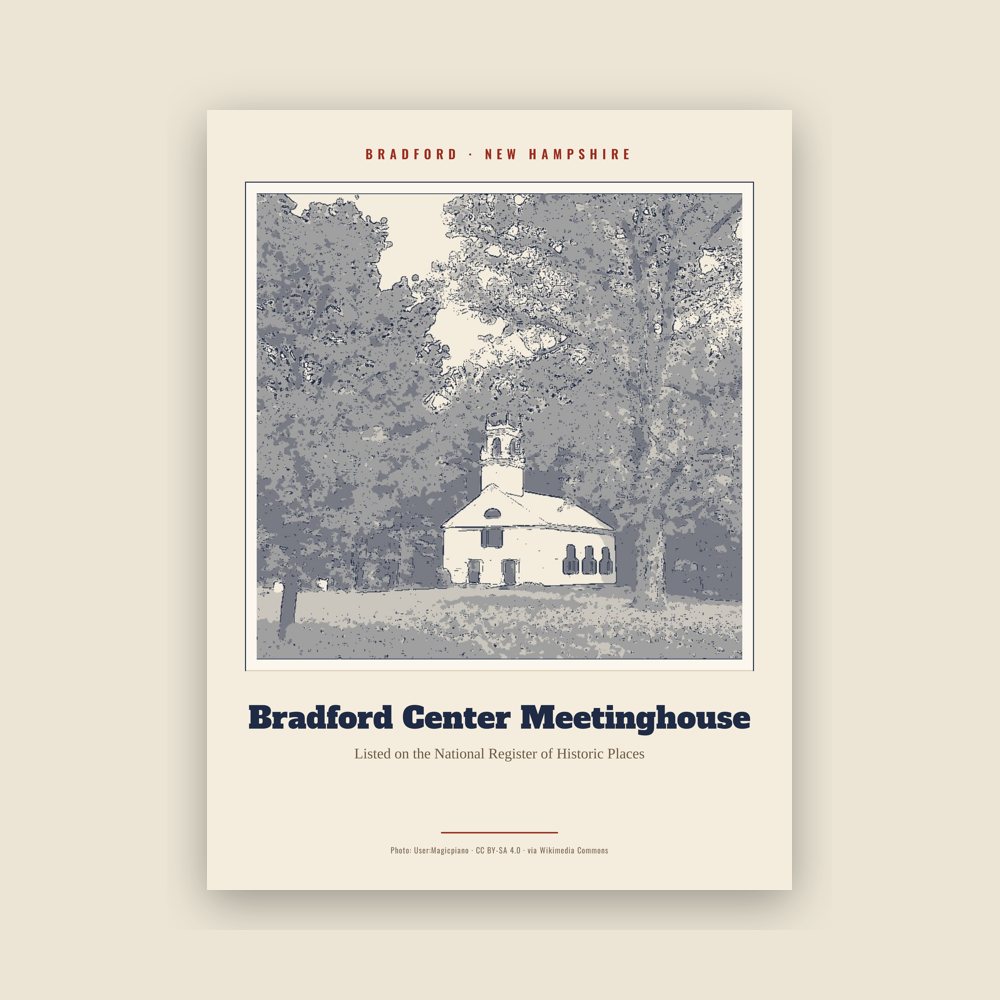
Archival matte print of a local landmark, credited to its photographer
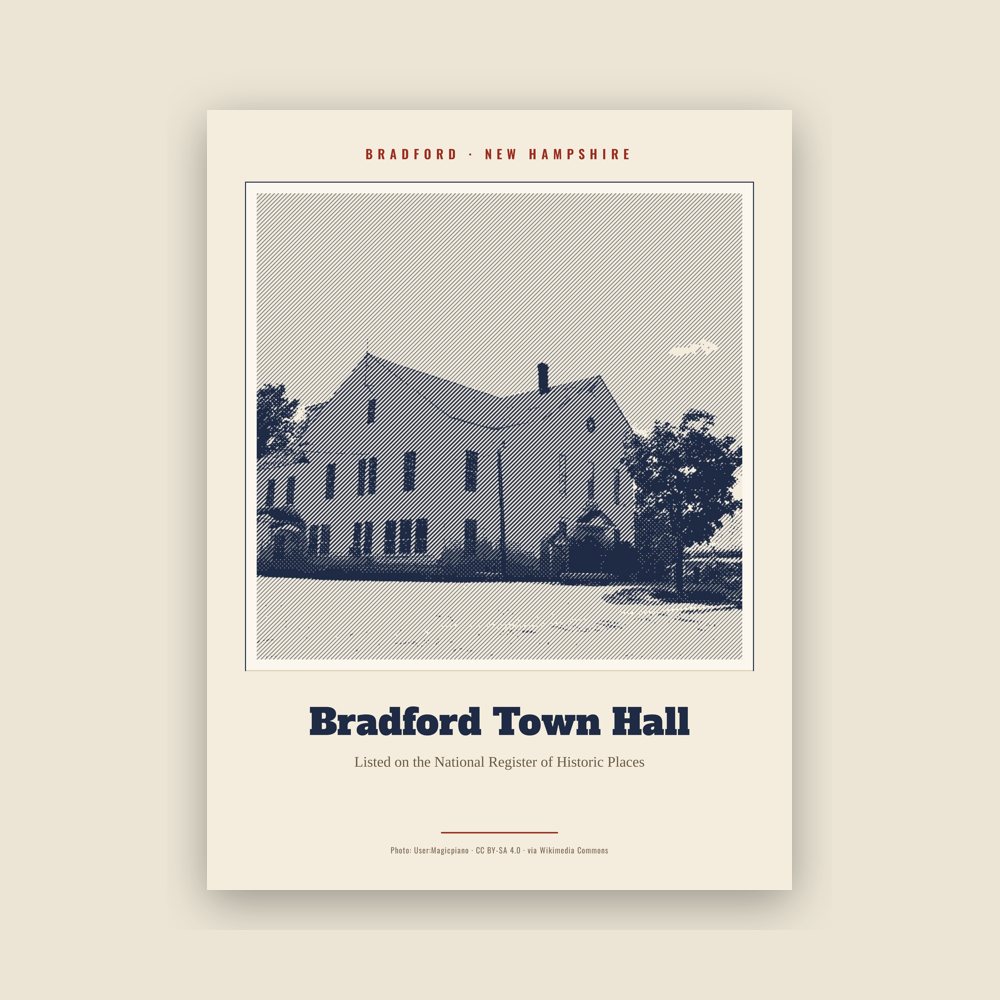
Archival matte print of a local landmark, credited to its photographer
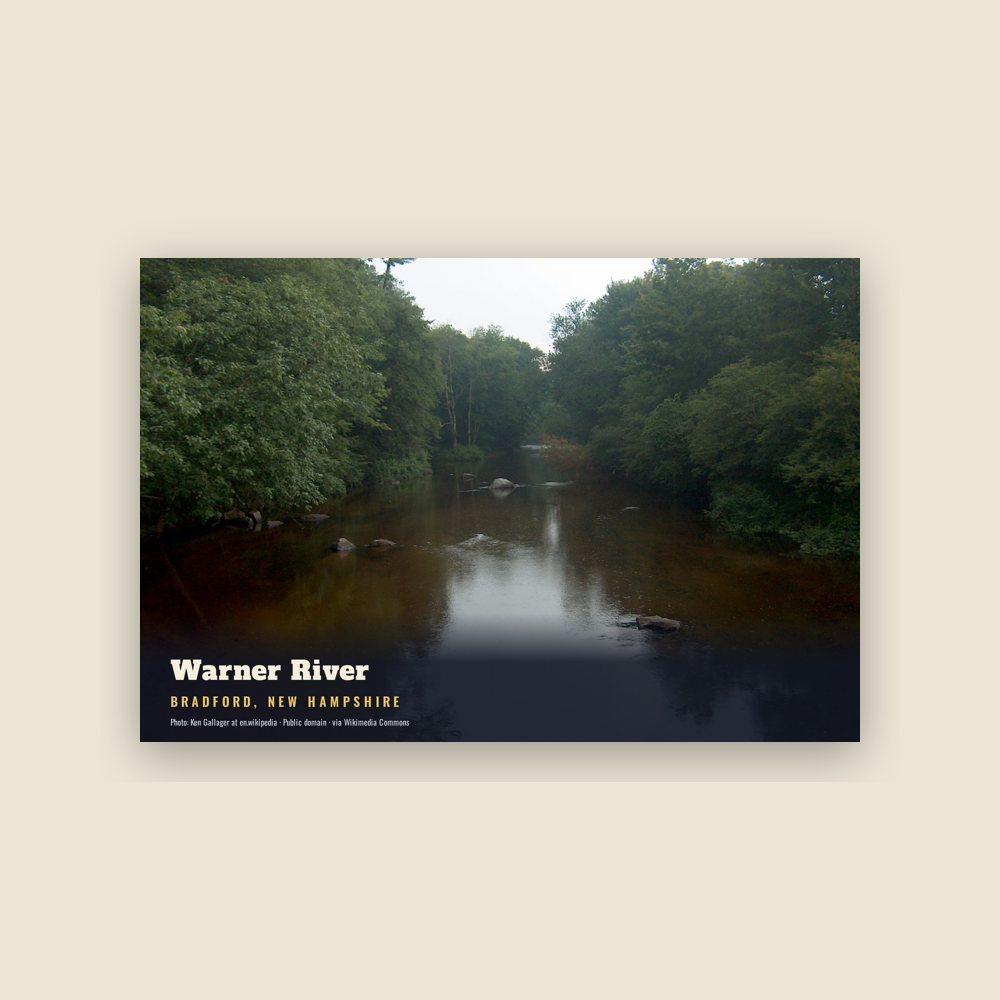
6″×4″ postcard, glossy front
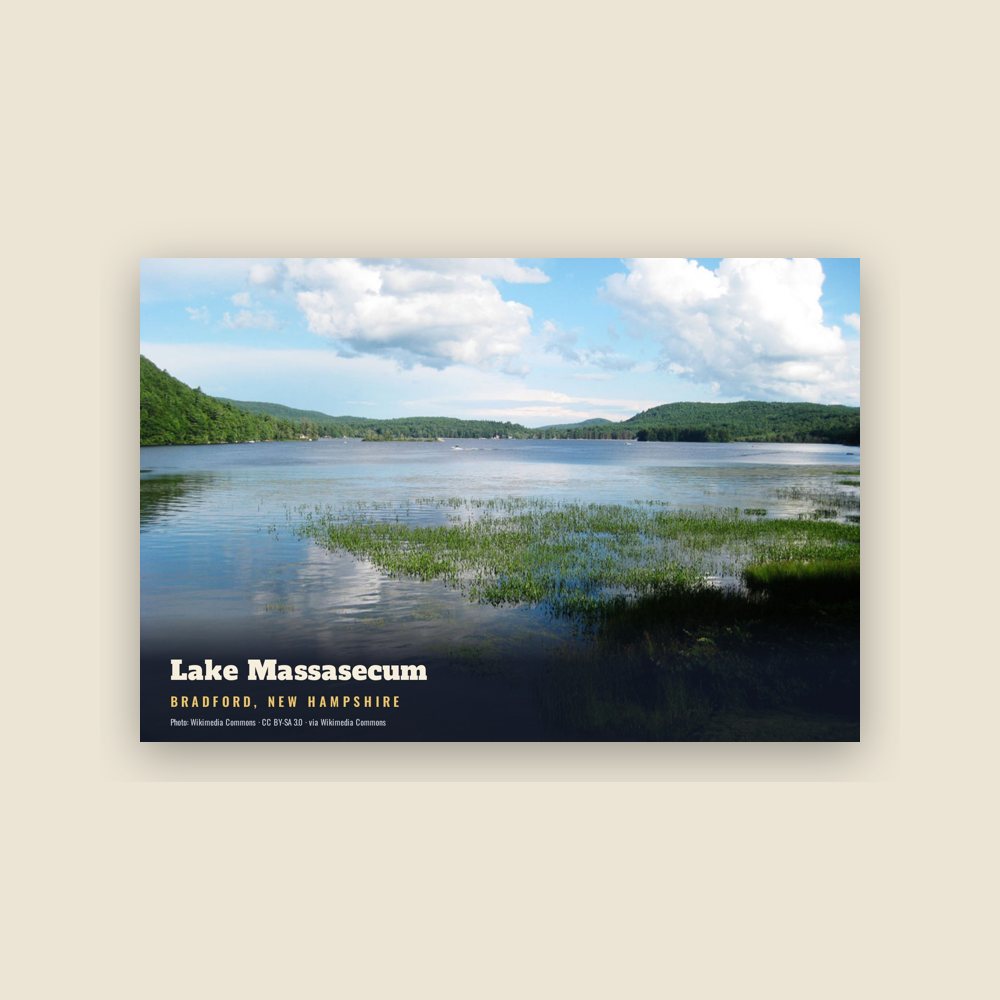
6″×4″ postcard, glossy front
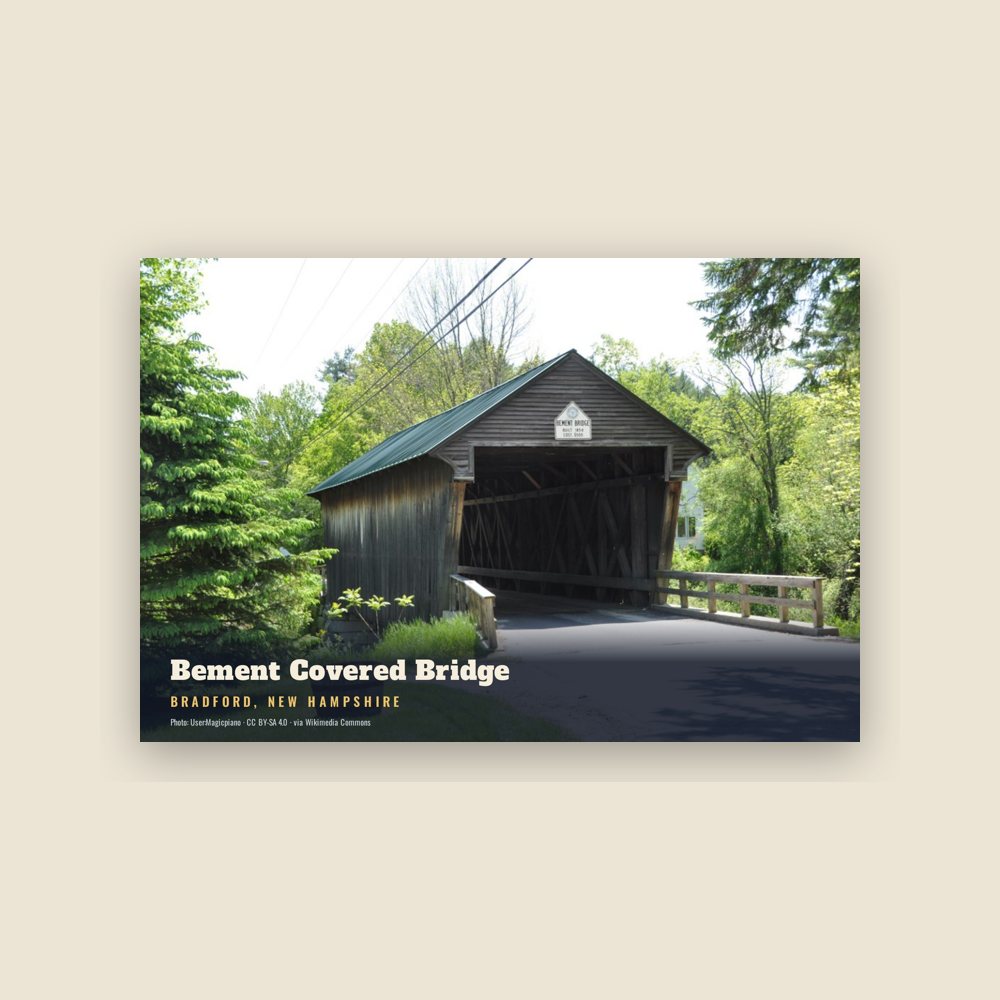
6″×4″ postcard, glossy front
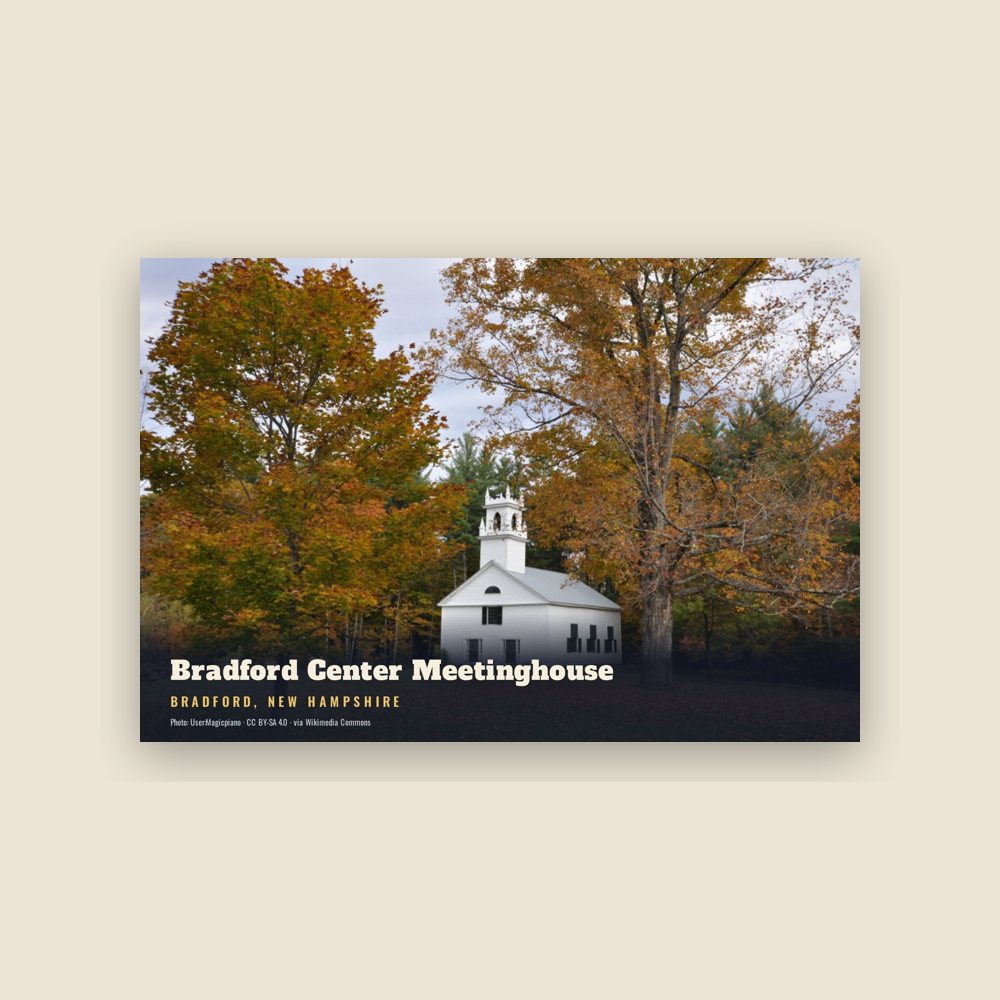
6″×4″ postcard, glossy front
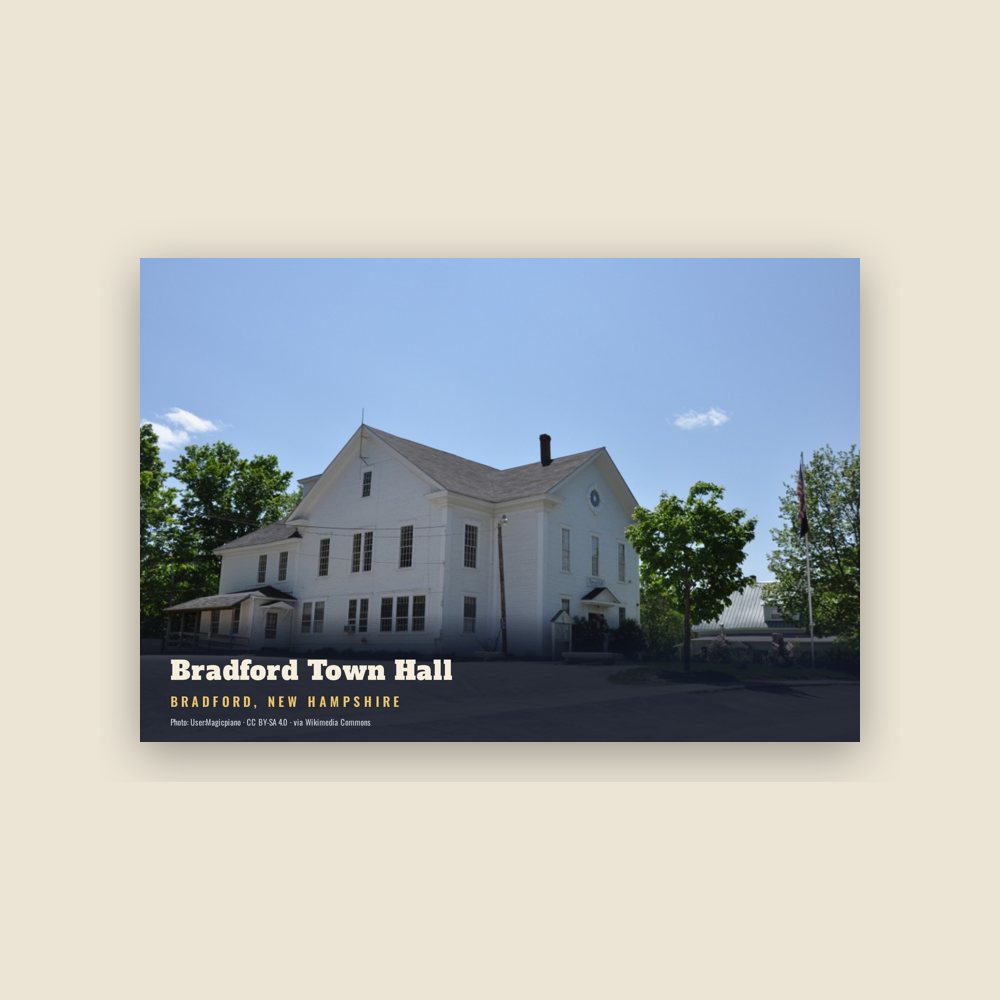
6″×4″ postcard, glossy front
Population 2010: 1,650 → 2020: 1,662
From Wikidata (CC0).
Granted by Governor Benning Wentworth in 1765 to John Pierce and George Jaffrey of Portsmouth, it was settled in 1771 by Deacon William Presbury and family. Three years later other settlers arrived, several of them from Bradford, Massachusetts, after which the town was named "New Bradford". Later, it was called "Bradfordton", but upon incorporation by the General Court on September 27, 1787, it was officially named Bradford.
Parts of the town are hilly, but the largest portion is in a valley with varied soil. Streams provided water power for watermills. By 1859, when Bradford's population reached 1,341, industries included one woolen mill, one sash, blind and door factory, one wheelwright shop, two sawmills, one gristmill, one tannery, and one clothing mill. In 1850, the Concord & Claremont Railroad opened from Concord to Bradford, which would remain its terminus until the line was extended to Claremont in 1871–1872.
Adapted (trimmed) from the Wikipedia article Bradford, New Hampshire, revision 1378506491 by its contributors, licensed CC BY-SA 4.0.
We share a part of every Bradford sale with local partners, and we'd love to print from your collection. Old photographs, maps and postcards make the best keepsakes.
Partner with us