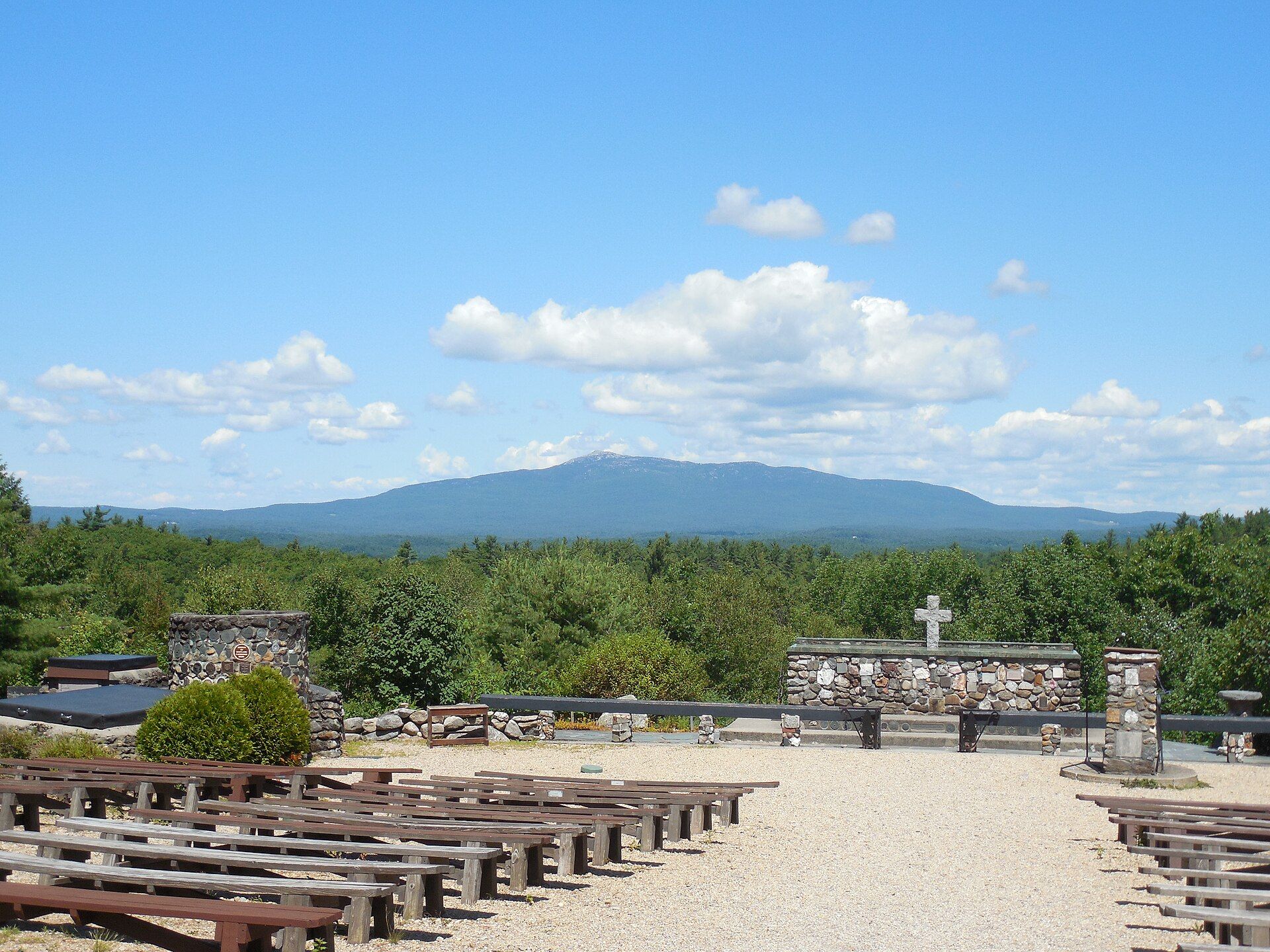
Rindge is home to Franklin Pierce University, the Cathedral of the Pines and part of Annett State Forest. Landmarks include Cathedral of the Pines and DiPietro Library. Rindge is the birthplace of Anne Kingsbury Wollstonecraft, botanist, scientific illustrator, writer and advocate for women's rights.
Every piece is drawn from Rindge's own map data and historic archives, then printed and shipped from the USA when you order. No two towns look alike.
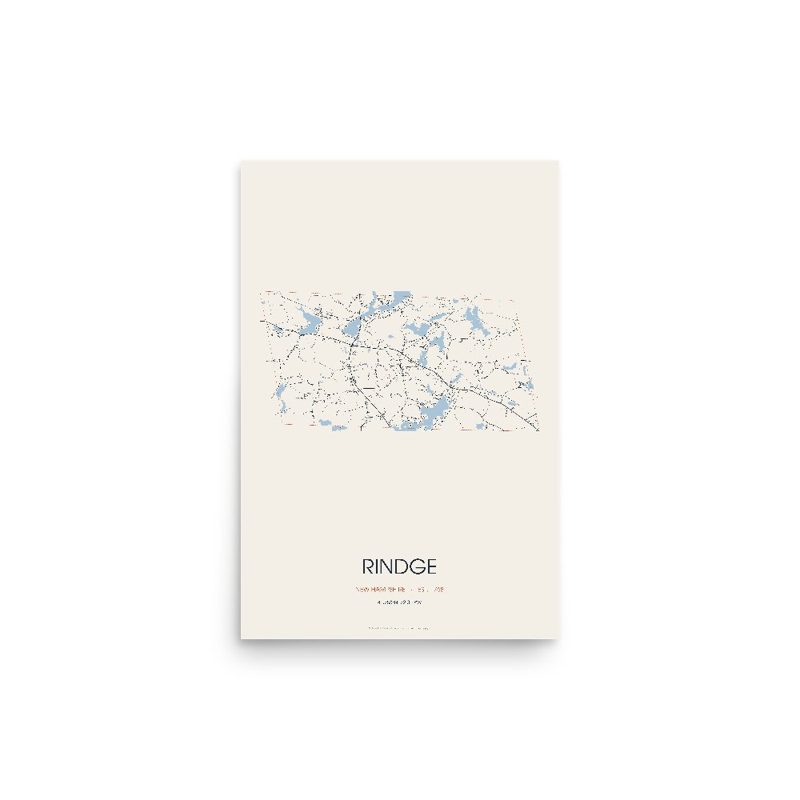
Every road in town, on archival matte paper
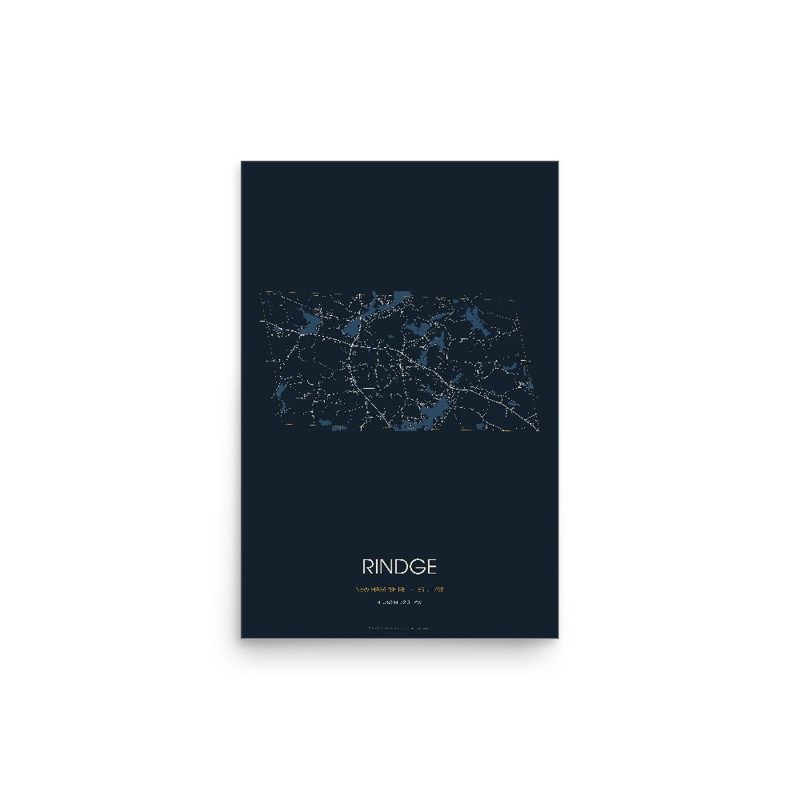
The same map, in navy and silver
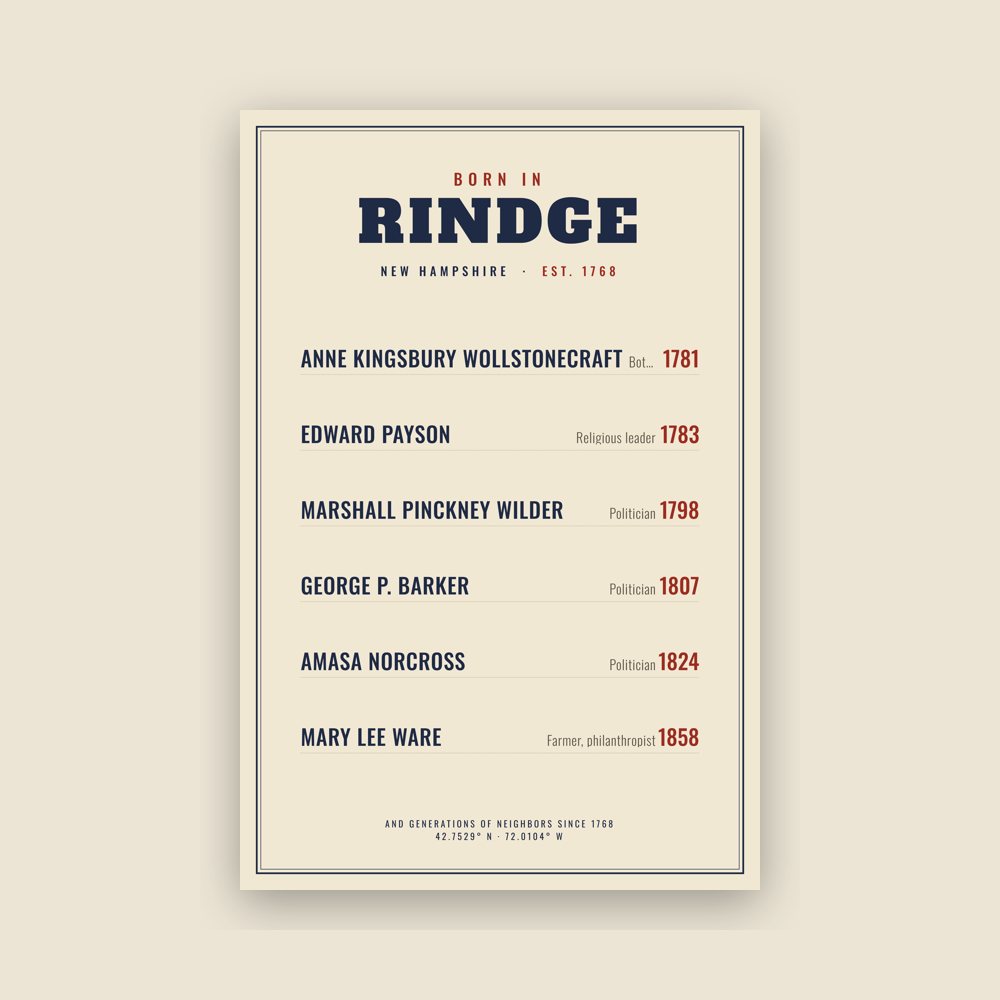
Famous natives, by birth year
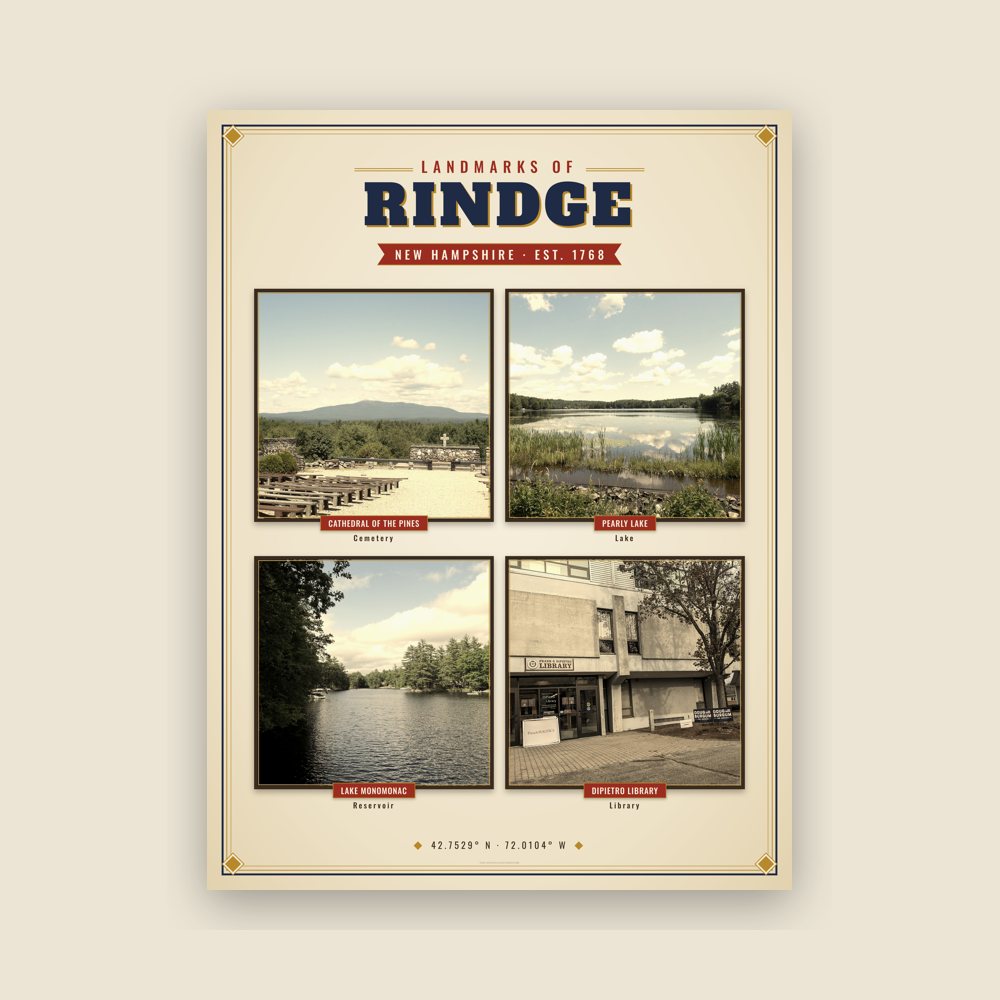
Nine local landmarks, archival matte
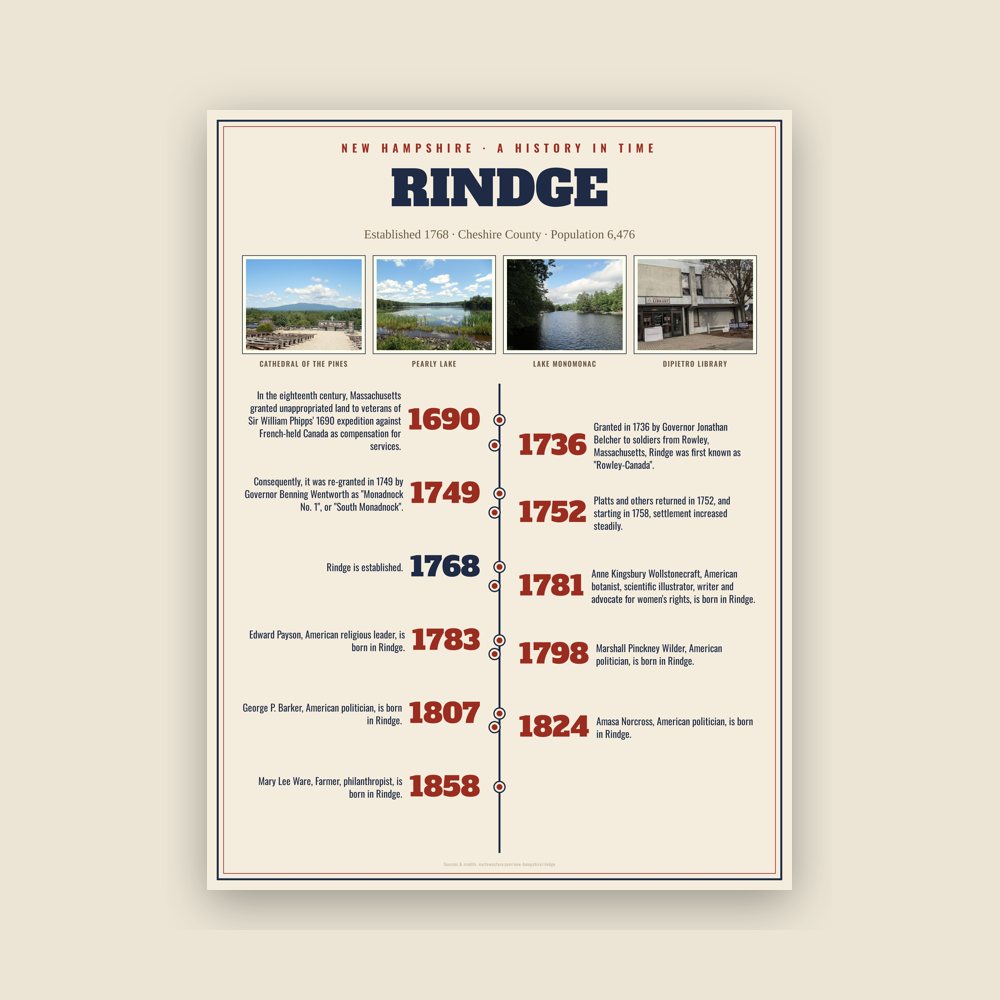
The town's story in dates, from its own records, for home or classroom
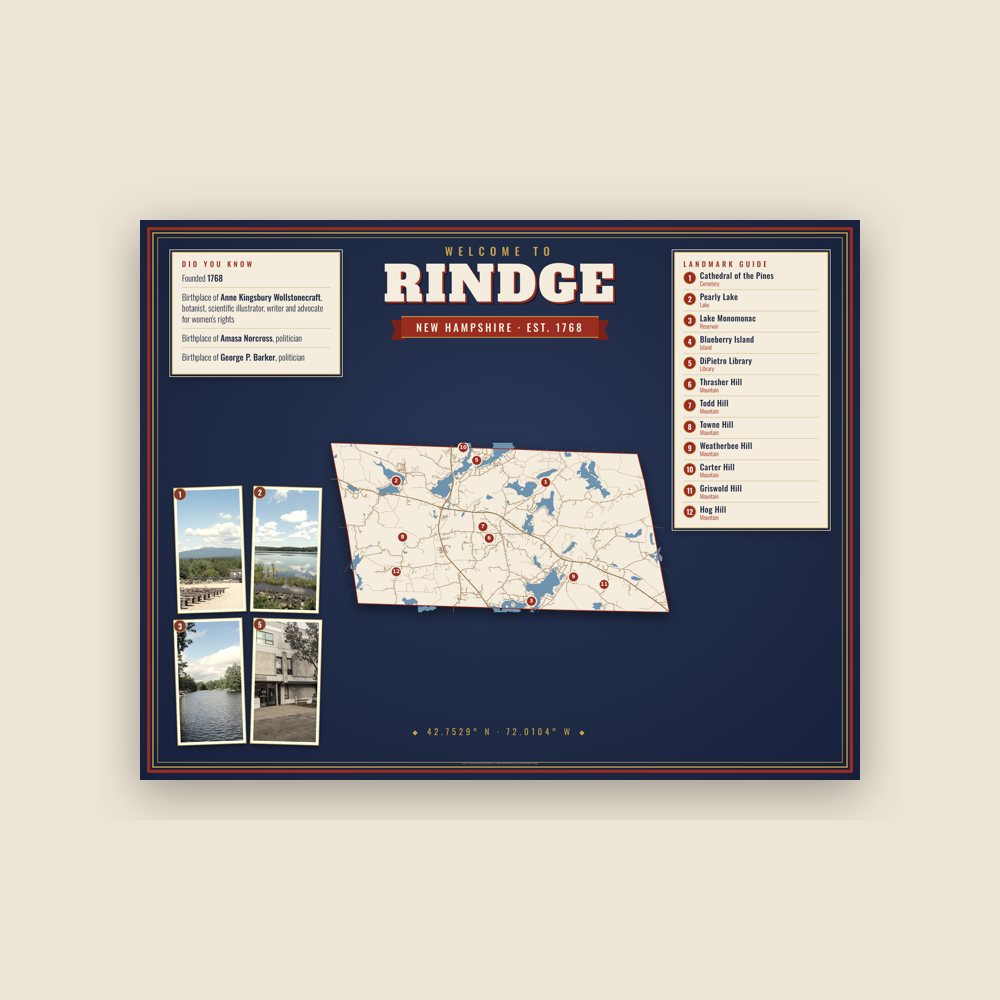
Map of local landmarks, washable fabric
Heavy-blend fleece, street map printed on the back
Soft Bella+Canvas jersey
Glossy ceramic, dishwasher safe
Ceramic keepsake, gold ribbon
Weatherproof, for the front walk
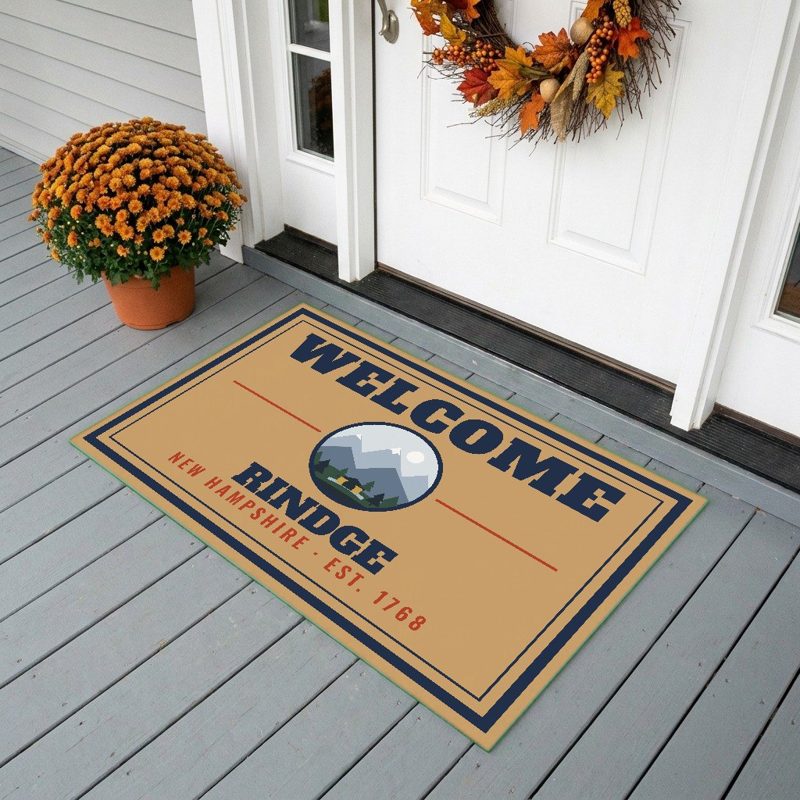
24″×16″, printed coir-look fibers, rubber back
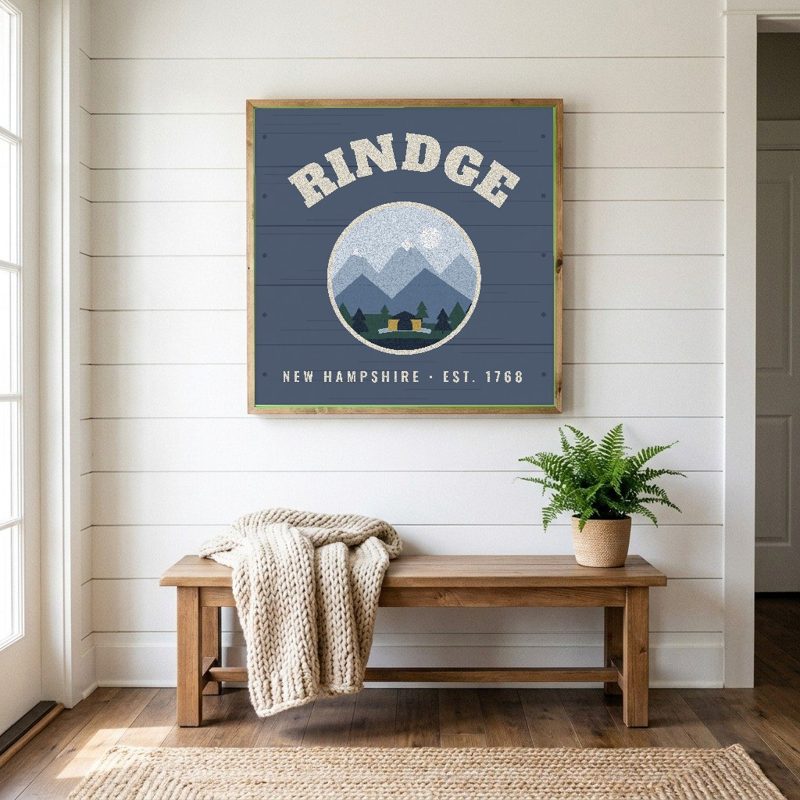
12″×12″ printed wood, ready to hang
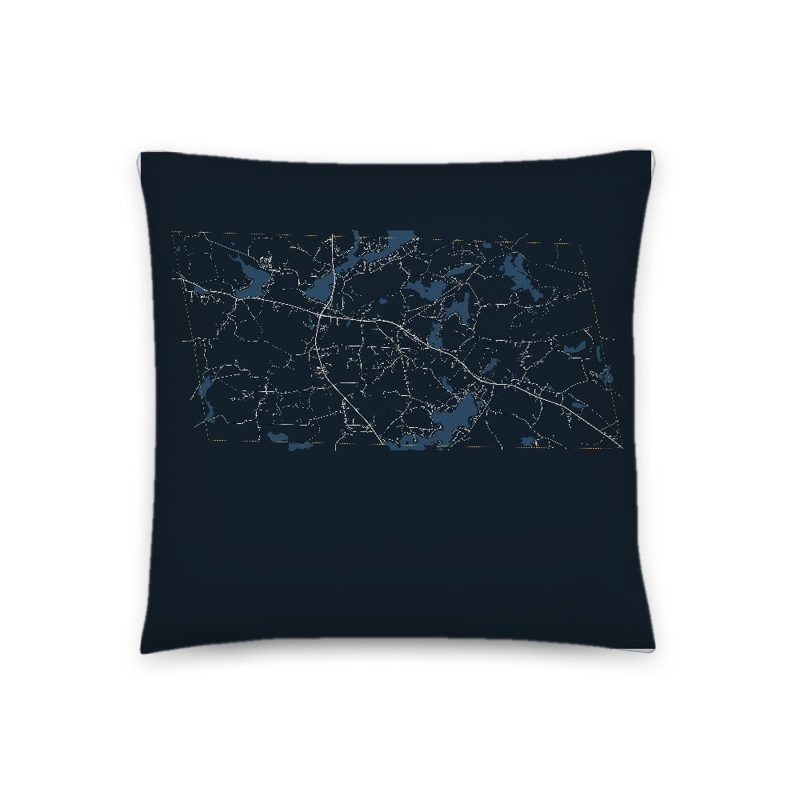
Soft-touch, zip cover
Sturdy all-over-print tote
Glossy top, cork back
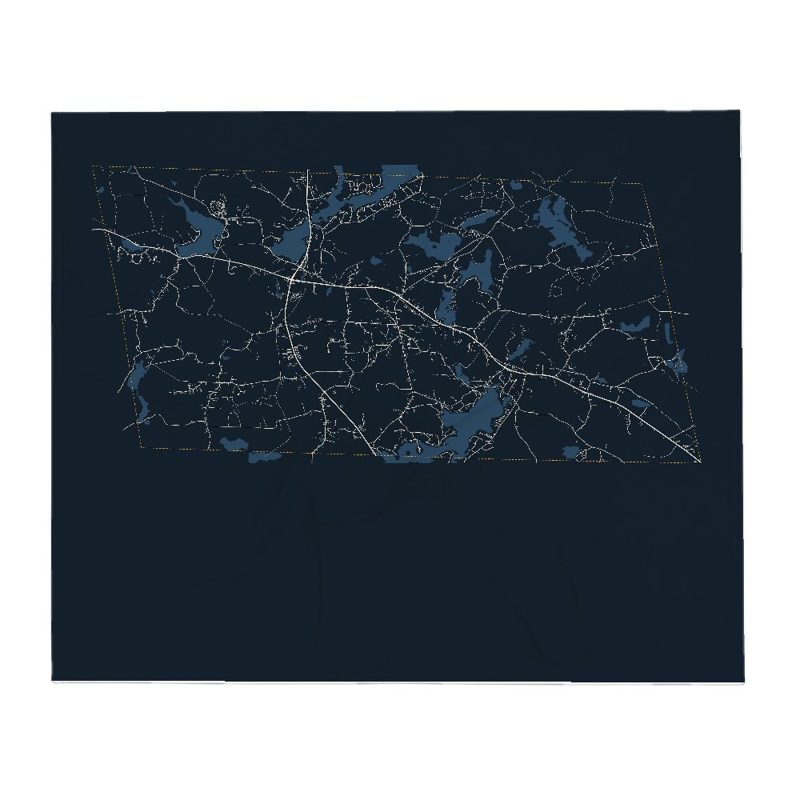
Soft fleece, 50″×60″
20 oz, double-wall stainless
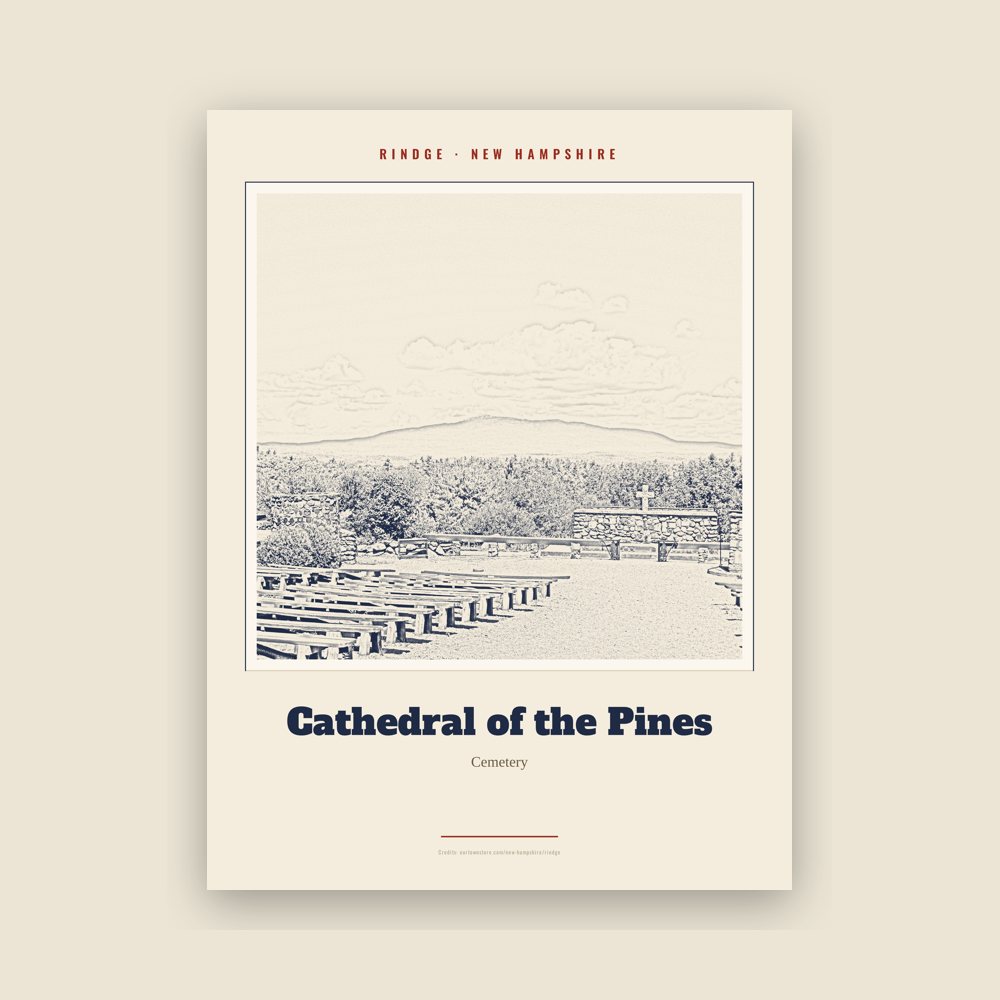
Archival matte print of a local landmark, credited to its photographer
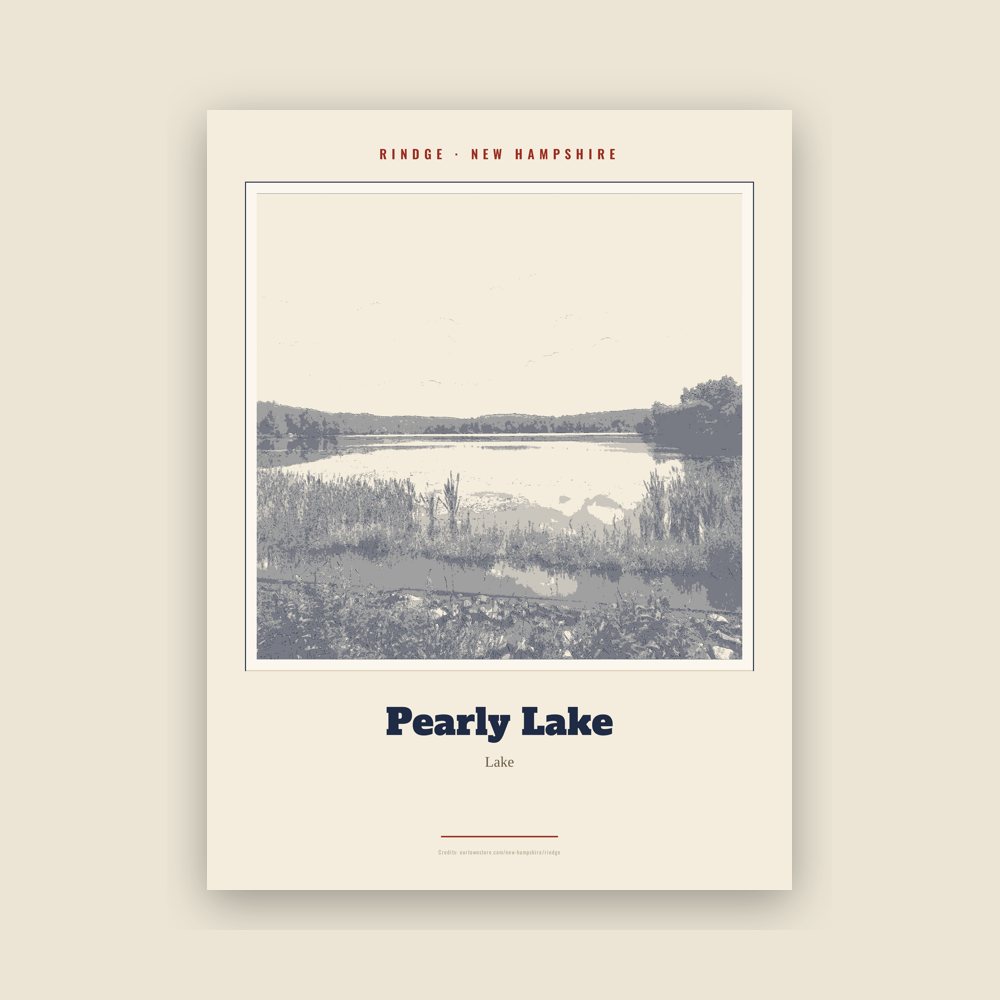
Archival matte print of a local landmark, credited to its photographer
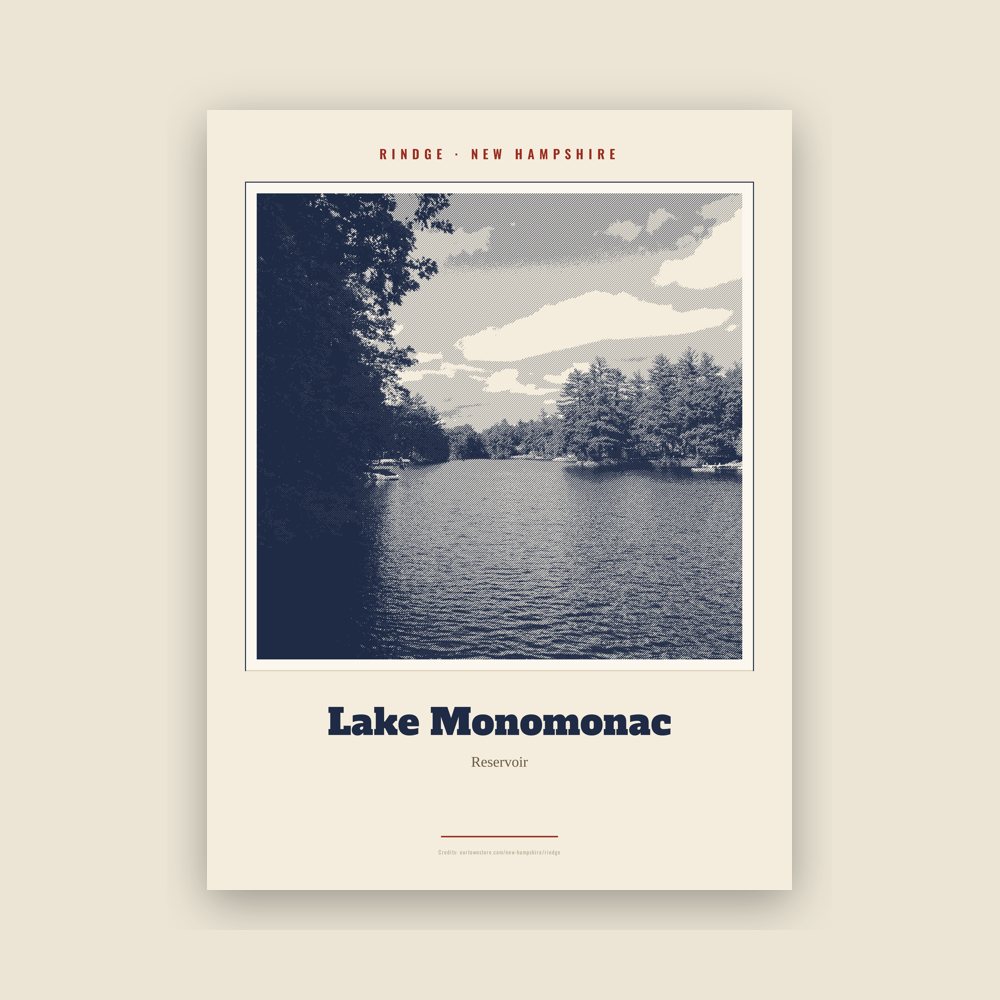
Archival matte print of a local landmark, credited to its photographer
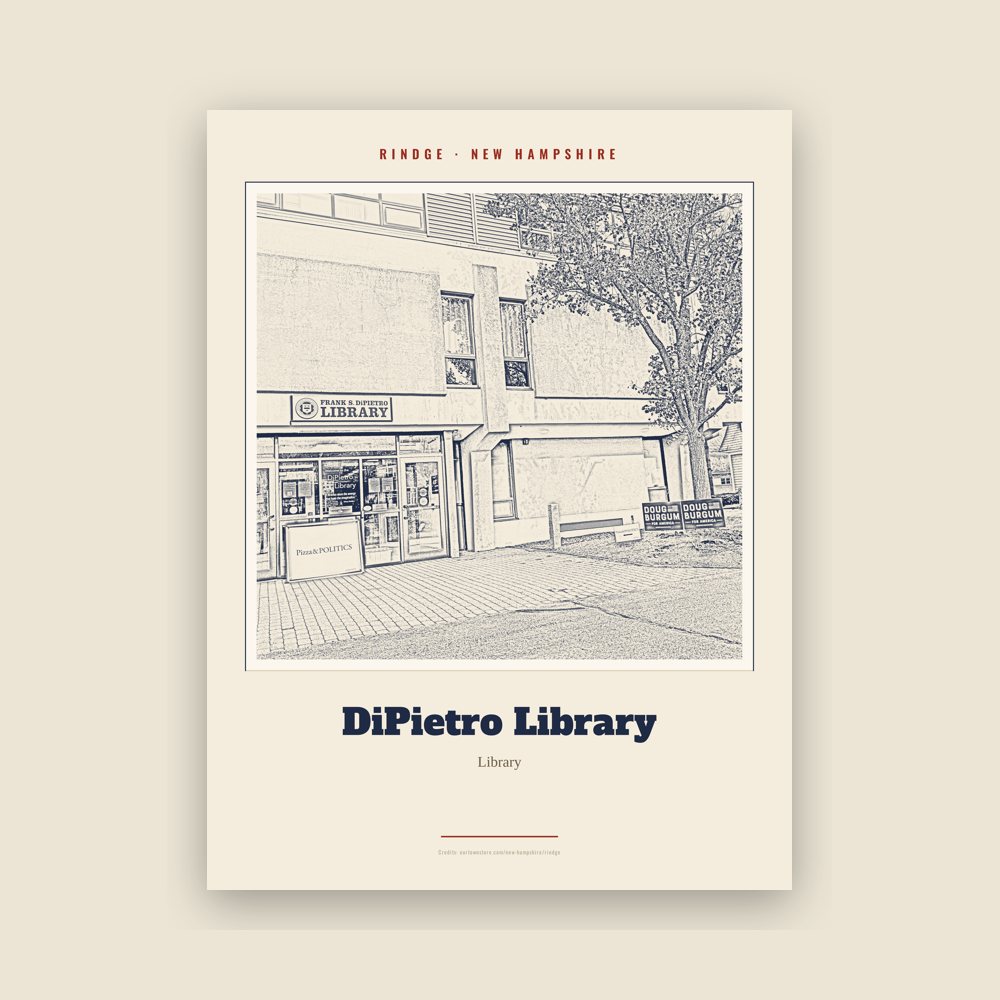
Archival matte print of a local landmark, credited to its photographer
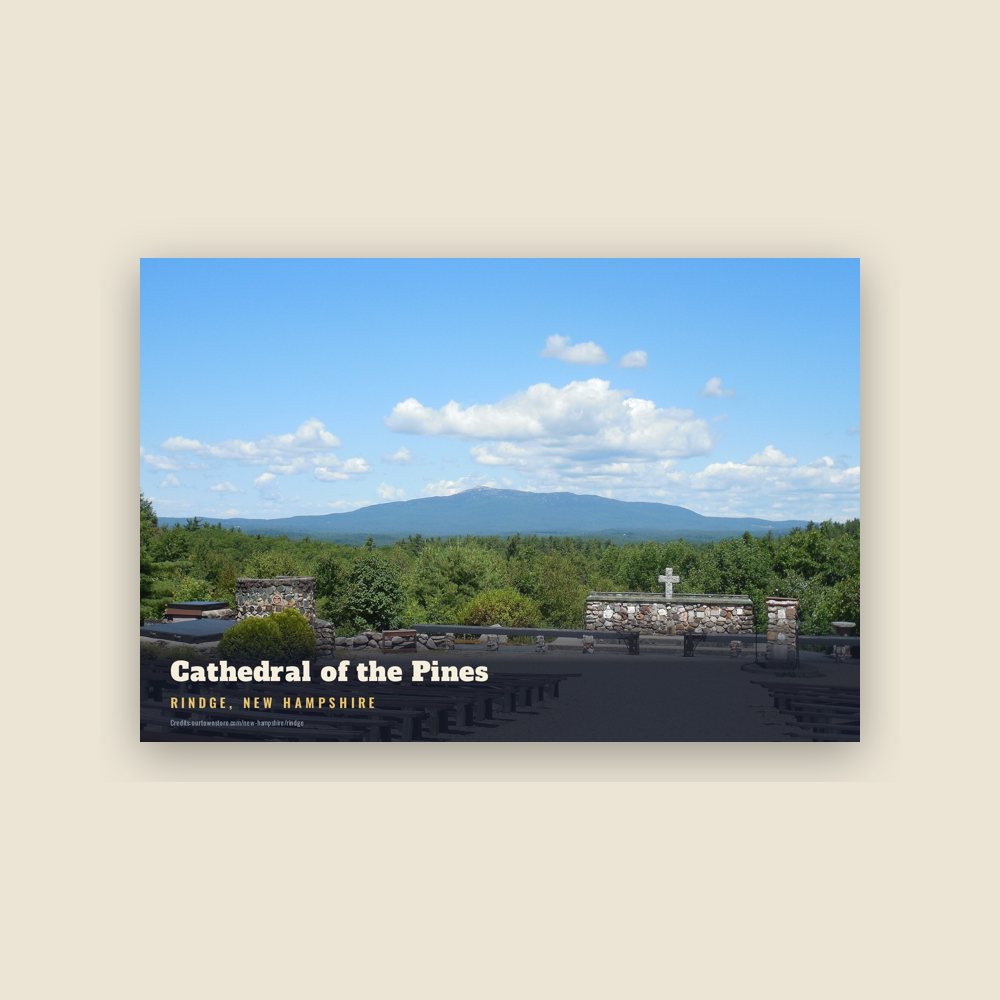
6″×4″ postcard, glossy front
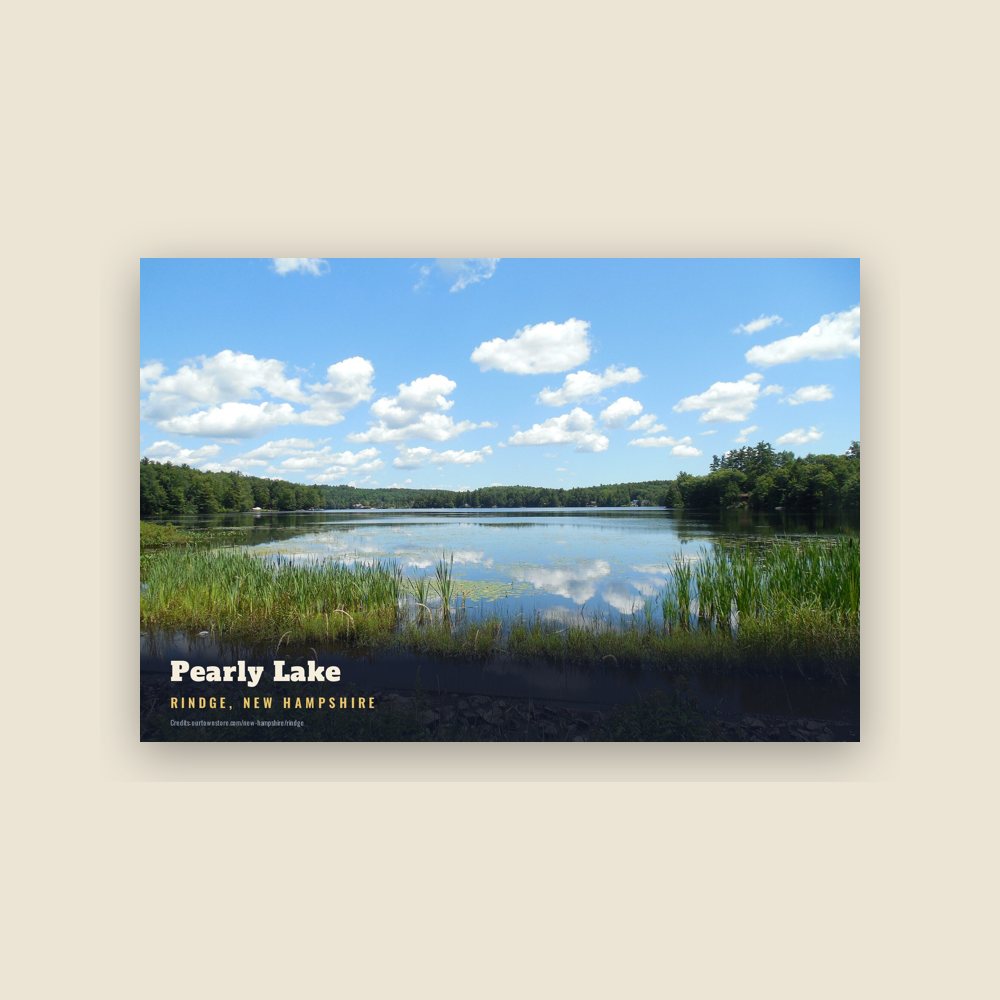
6″×4″ postcard, glossy front
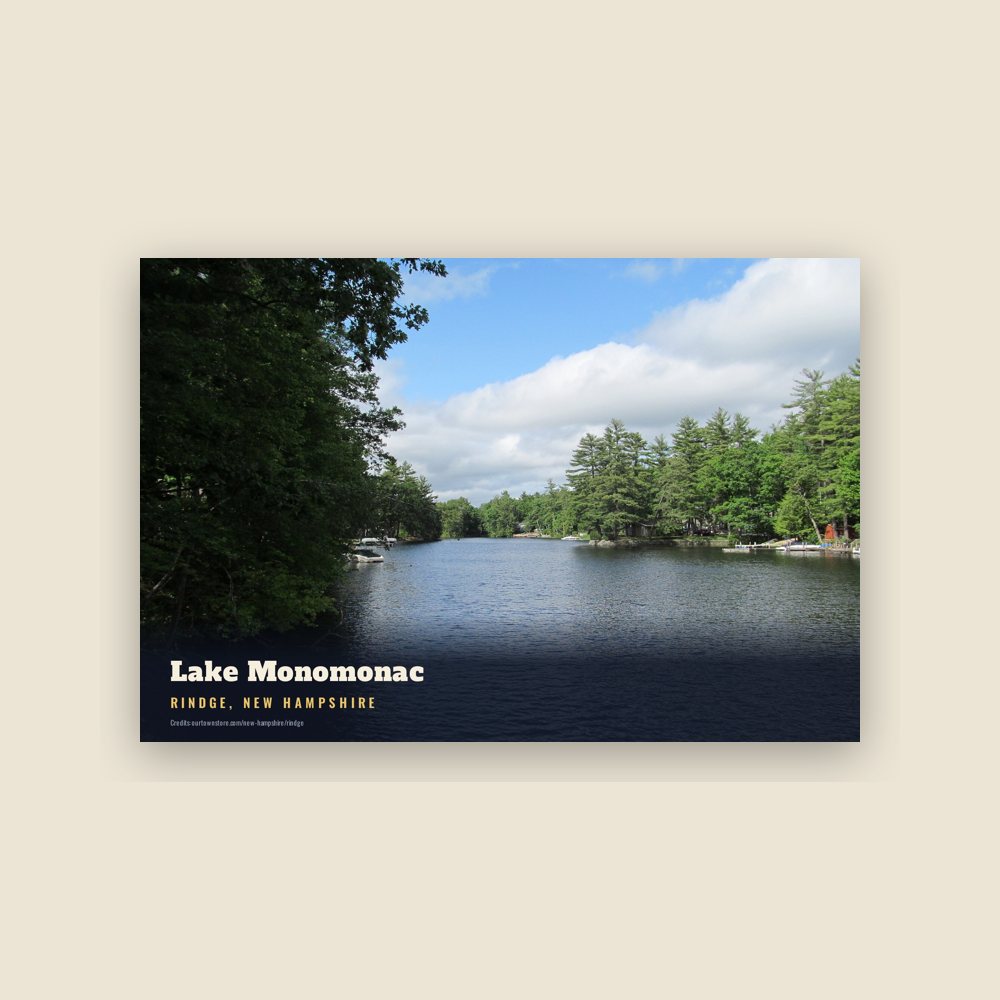
6″×4″ postcard, glossy front

6″×4″ postcard, glossy front
Population 2010: 6,014 → 2020: 6,476
From Wikidata (CC0).
The land in and around Rindge was originally inhabited by ancestors of the Abenaki tribe of Native Americans. Archeological evidence from nearby Swanzey indicates that the region was inhabited as much as 11,000 years ago (coinciding with the end of the last glacial period). As much as half of the Western Abenakis were victims of a wave of epidemics that coincided with the arrival of Europeans in the late 16th and early 17th centuries. Later, many of the Western Abenaki present in southwestern New Hampshire chose to relocate to Canada during Colonial times, primarily due to their allegiance with the French during the French and Indian Wars.
In the eighteenth century, Massachusetts granted unappropriated land to veterans of Sir William Phipps' 1690 expedition against French-held Canada as compensation for services. Whole townships were granted to certain military companies and became known as "Canada" townships. Granted in 1736 by Governor Jonathan Belcher to soldiers from Rowley, Massachusetts, Rindge was first known as "Rowley-Canada". But the Masonian proprietors were making competing claims to the area, and in 1740 commissioners of the Crown decided that the boundary between Massachusetts and New Hampshire lay south of Rowley-Canada. Consequently, it was re-granted in 1749 by Governor Benning Wentworth as "Monadnock No. 1", or "South Monadnock". The town was incorporated in 1768 by Governor John Wentworth as "Rindge", in honor of Captain Daniel Rindge of Portsmouth, New Hampshire, one of the original grant holders, and the one who represented New Hampshire's claim to the land before the king.
Captain Abel Platts is credited as being Rindge's first temporary settler, arriving in 1738 to take possession of his family's land grant. But disputes about the grants, combined with the outbreak in 1744 of King George's War, made it untenable to remain in Rindge, so early settlers abandoned it. Platts and others returned in 1752, and starting in 1758, settlement increased steadily. There were 1,274 residents by 1859, when water powered industries included three gristmills, thirteen sawmills, thirteen shingle mills, six stave mills, two planing mills, and several clapboard mills.
Adapted (trimmed) from the Wikipedia article Rindge, New Hampshire, revision 1379961854 by its contributors, licensed CC BY-SA 4.0.
We share a part of every Rindge sale with local partners, and we'd love to print from your collection. Old photographs, maps and postcards make the best keepsakes.
Partner with us