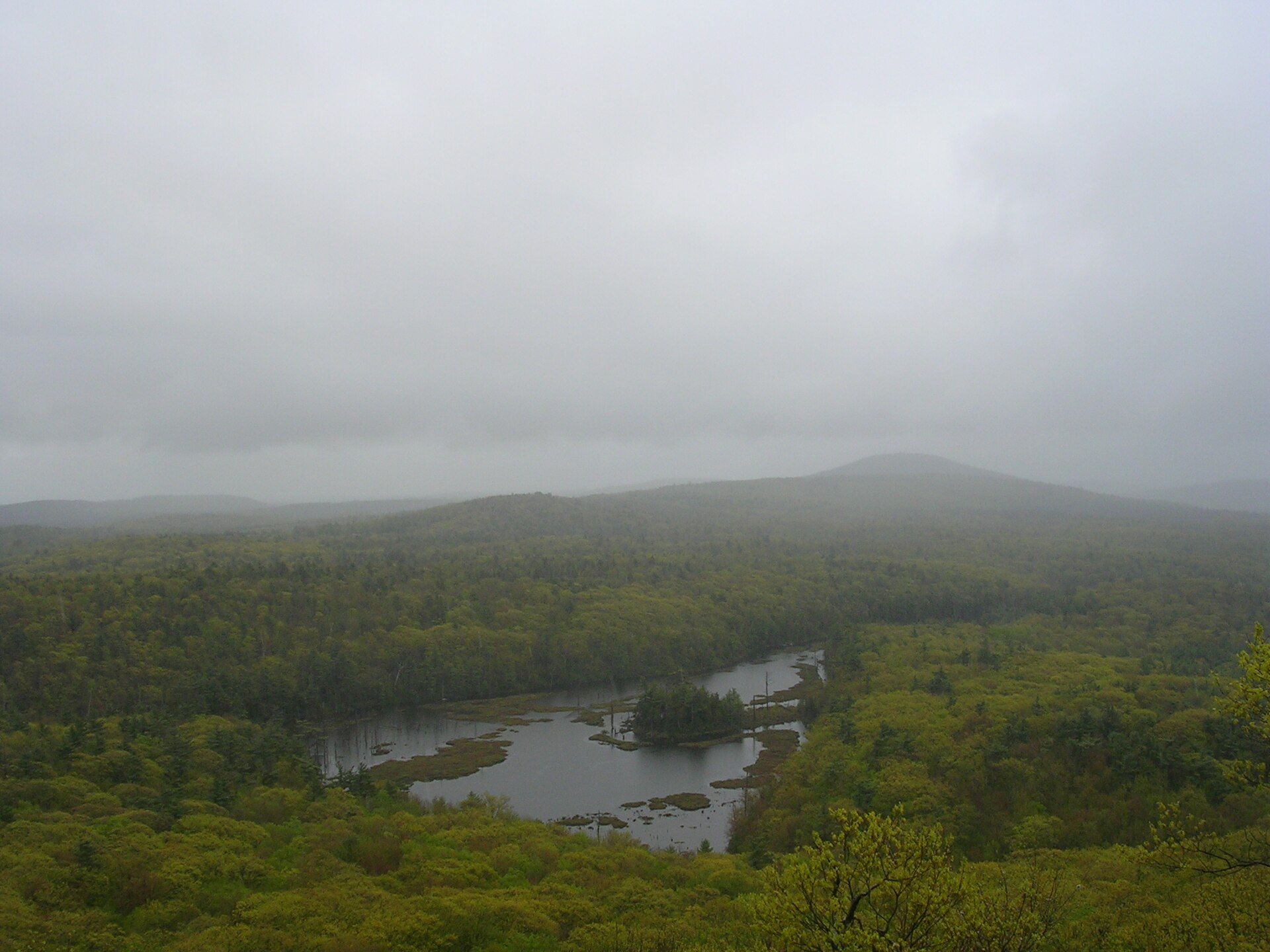
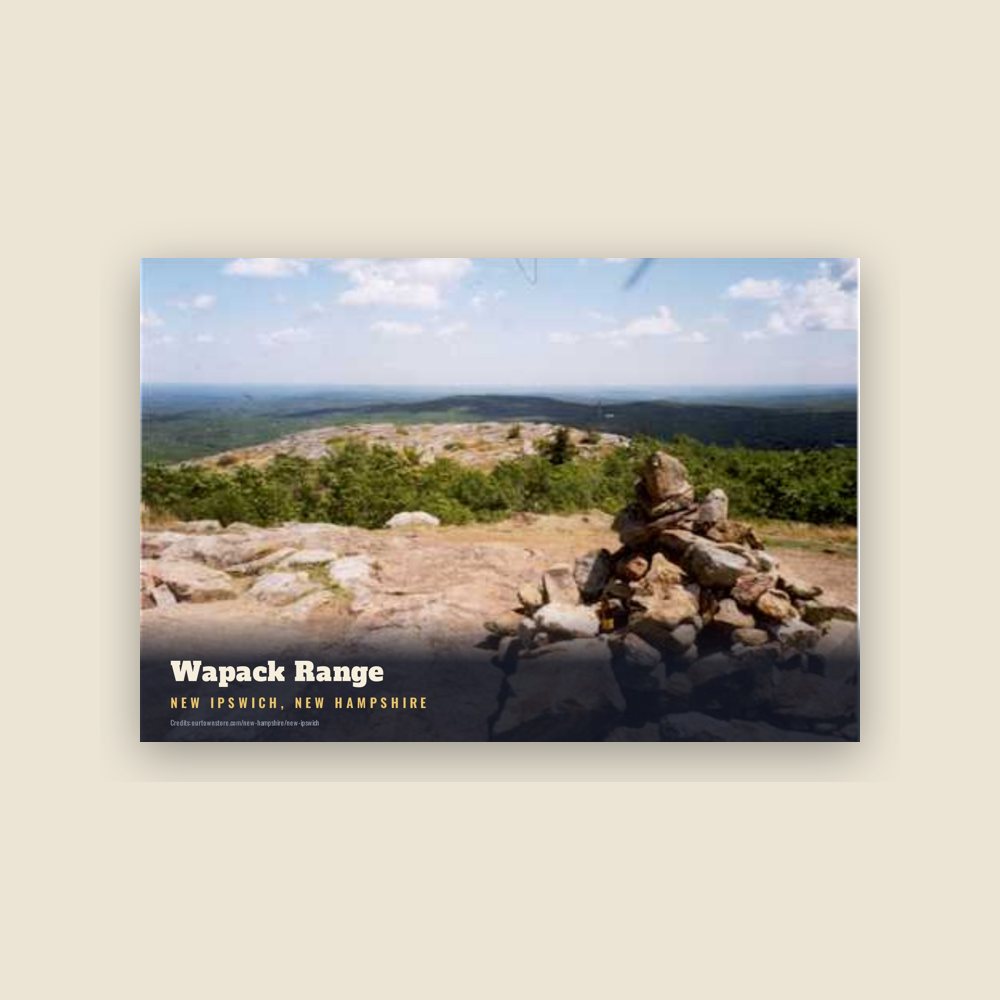
New Ipswich, situated on the Massachusetts border, includes the villages of Bank, Davis, Gibson Four Corners, Highbridge, New Ipswich Center, Smithville, and Wilder, though these village designations no longer hold the importance they did in the past. Landmarks include Wapack Range, New Ipswich Town Hall and Barrett House. New Ipswich is the birthplace of Augustus Addison Gould, conchologist.
Every piece is drawn from New Ipswich's own map data and historic archives, then printed and shipped from the USA when you order. No two towns look alike.
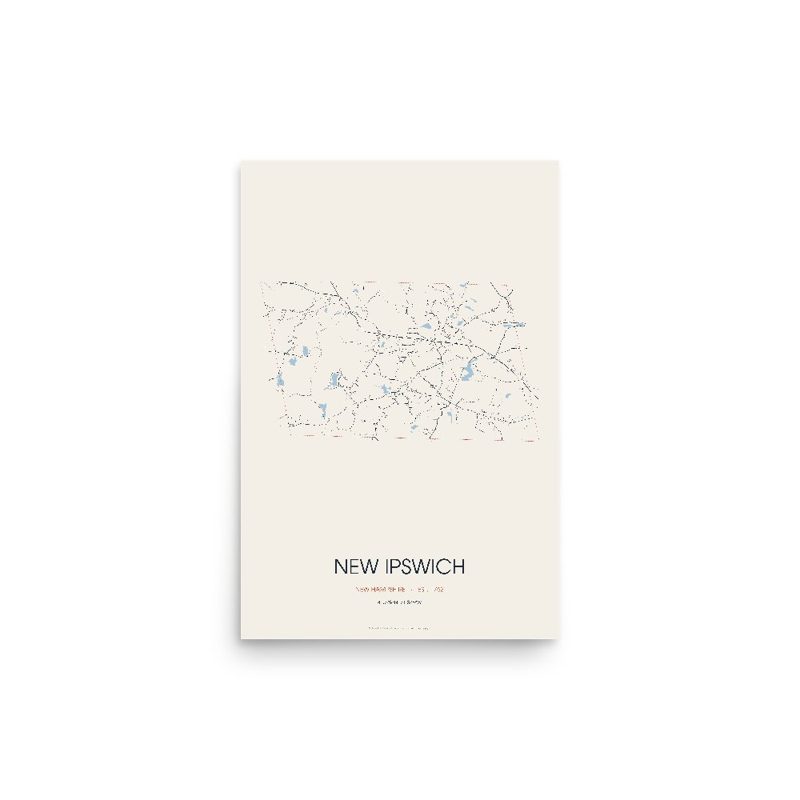
Every road in town, on archival matte paper
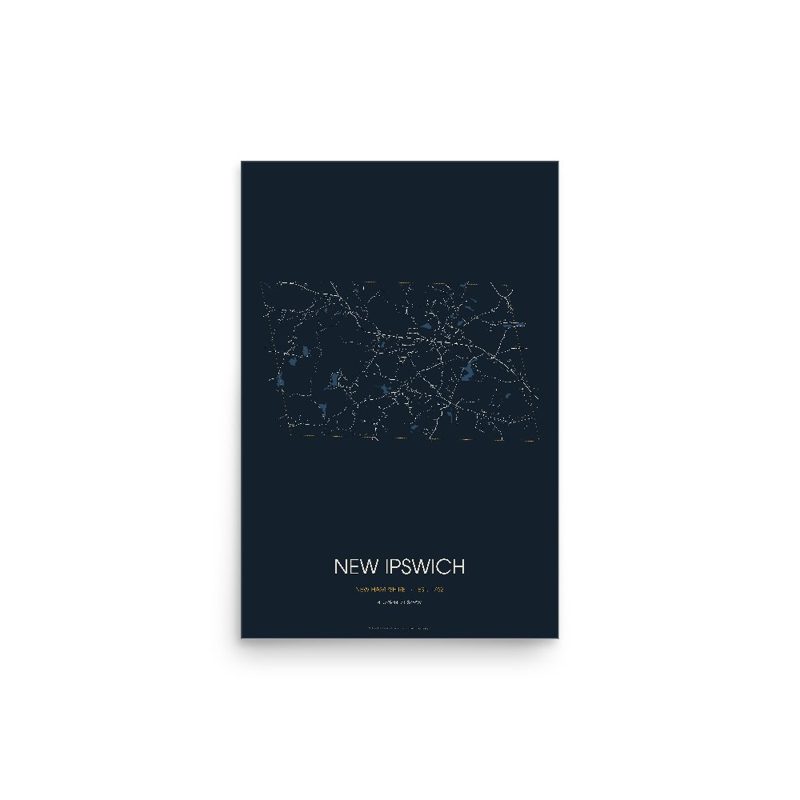
The same map, in navy and silver
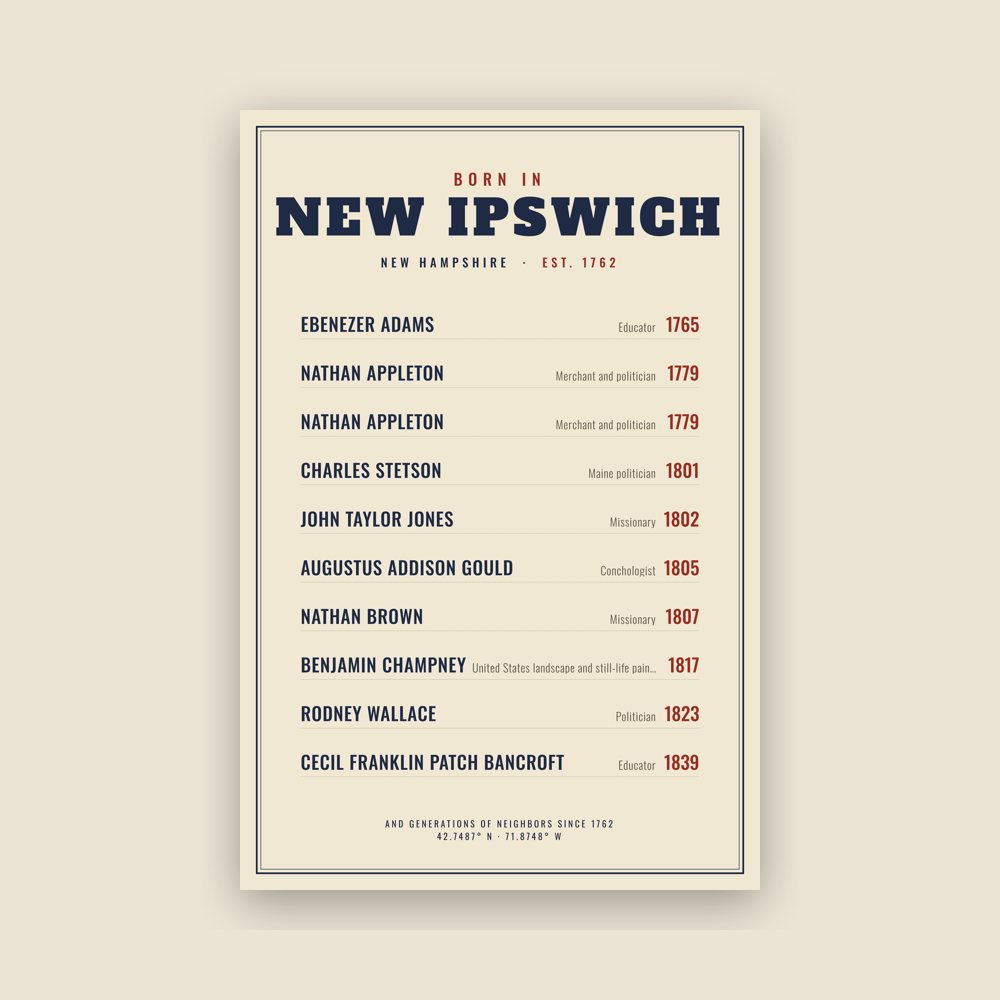
Famous natives, by birth year
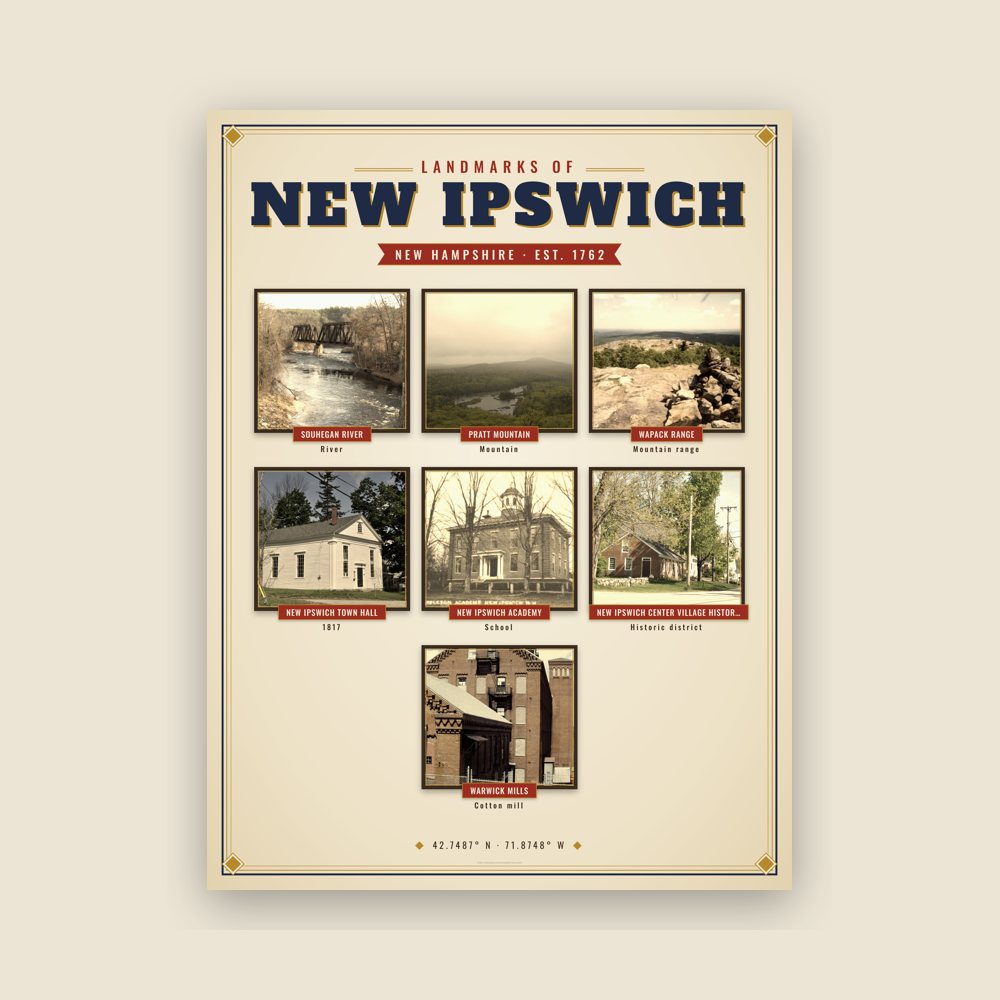
Nine local landmarks, archival matte
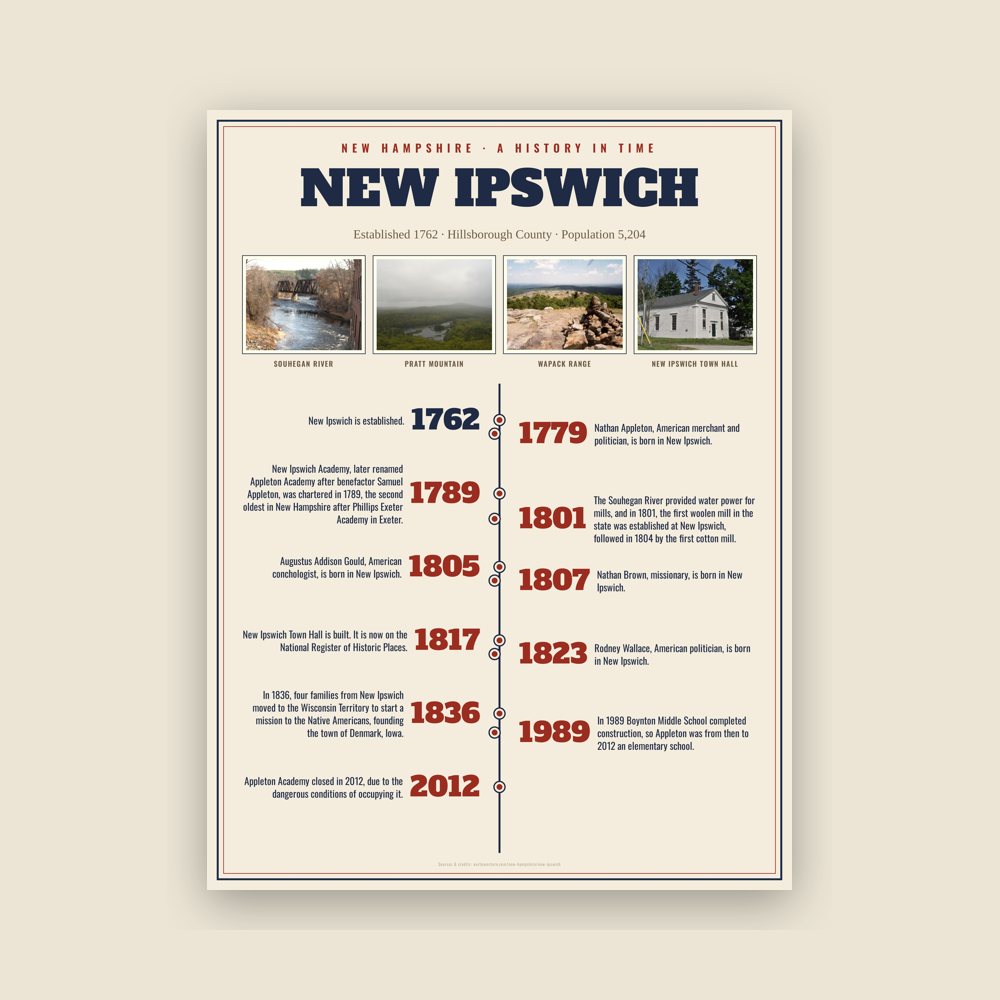
The town's story in dates, from its own records, for home or classroom
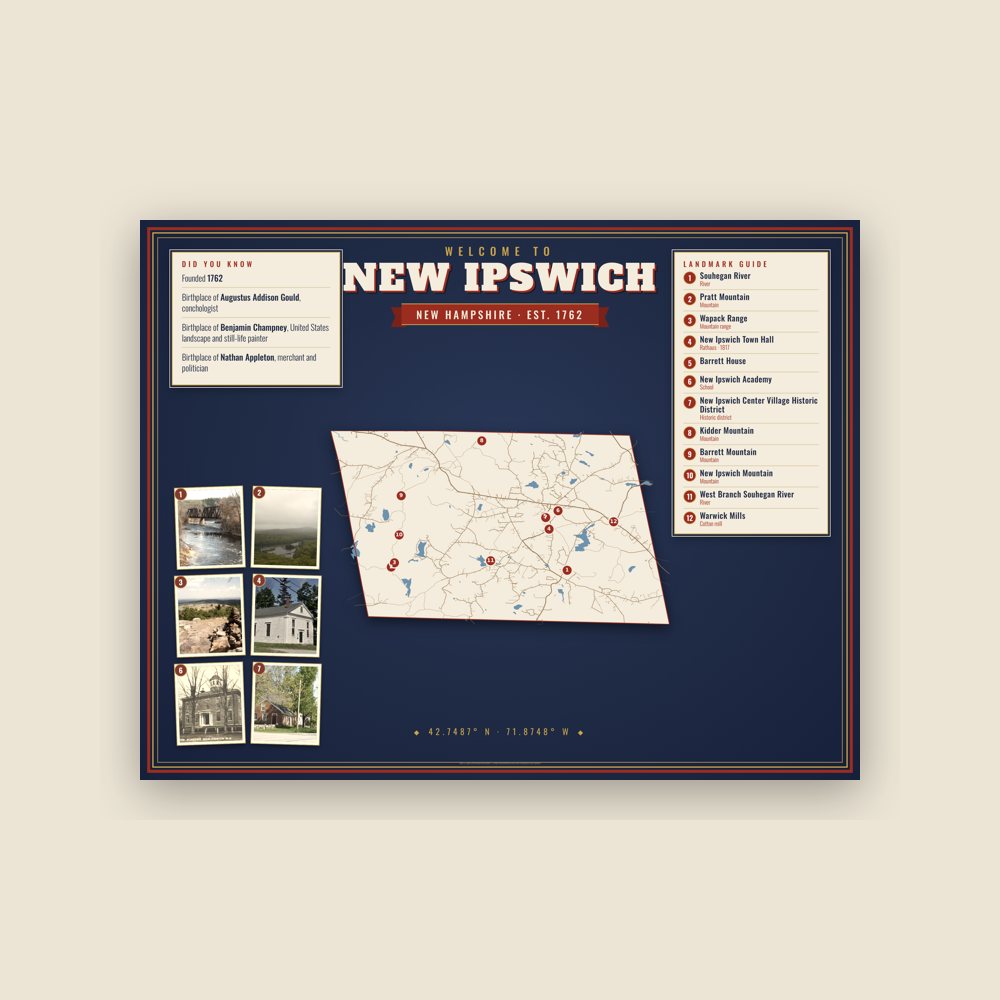
Map of local landmarks, washable fabric
Heavy-blend fleece, street map printed on the back
Soft Bella+Canvas jersey
Glossy ceramic, dishwasher safe
Ceramic keepsake, gold ribbon
Weatherproof, for the front walk
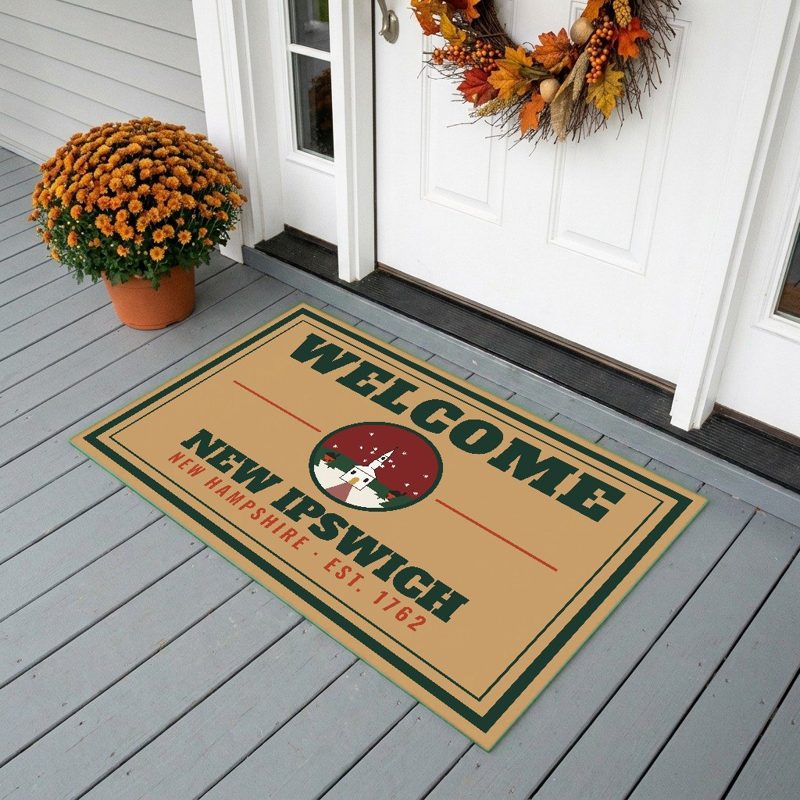
24″×16″, printed coir-look fibers, rubber back
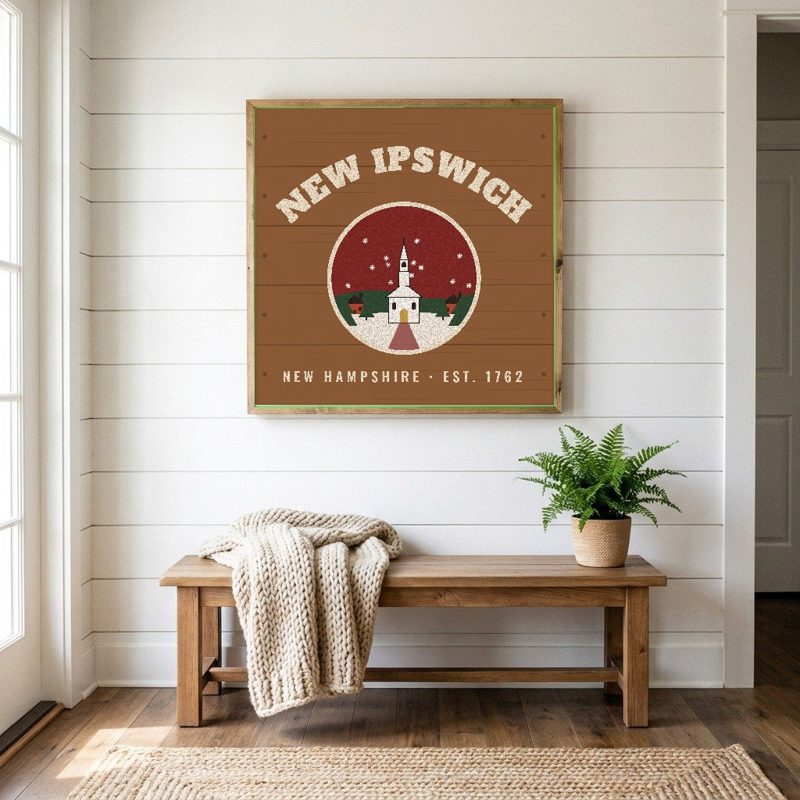
12″×12″ printed wood, ready to hang
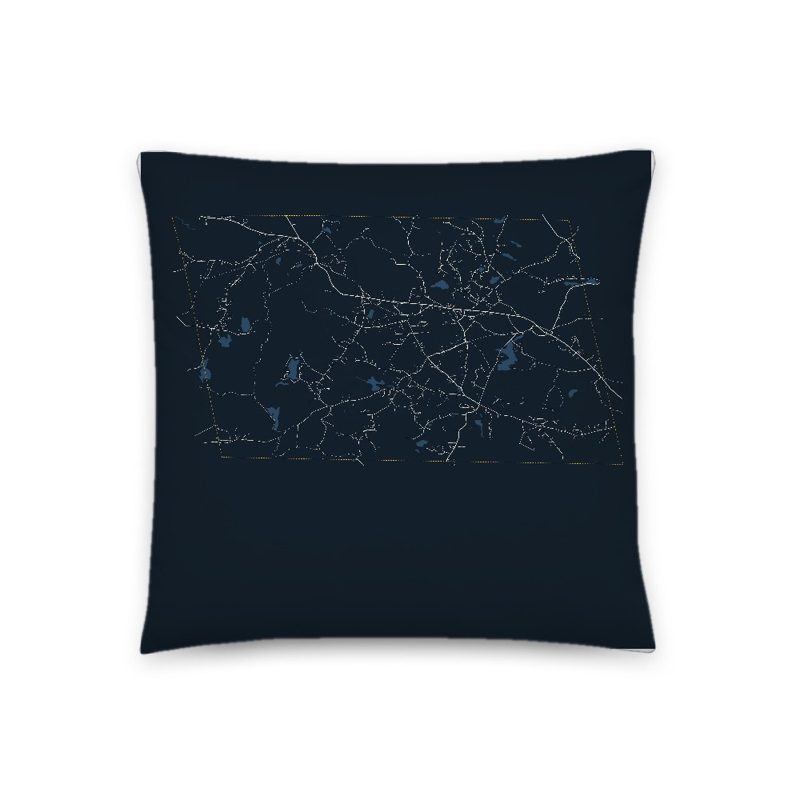
Soft-touch, zip cover
Sturdy all-over-print tote
Glossy top, cork back
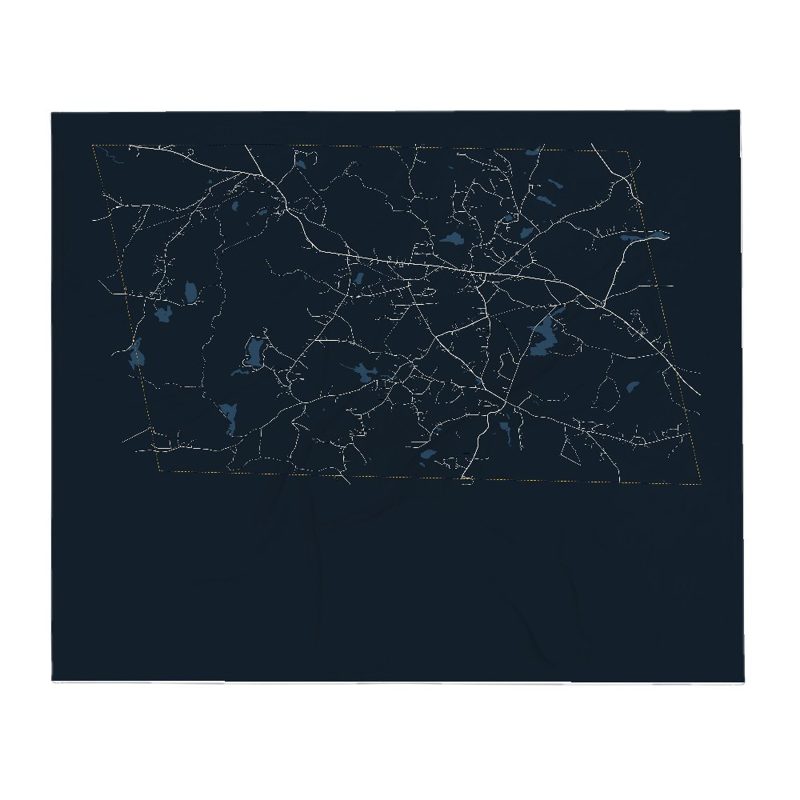
Soft fleece, 50″×60″
20 oz, double-wall stainless
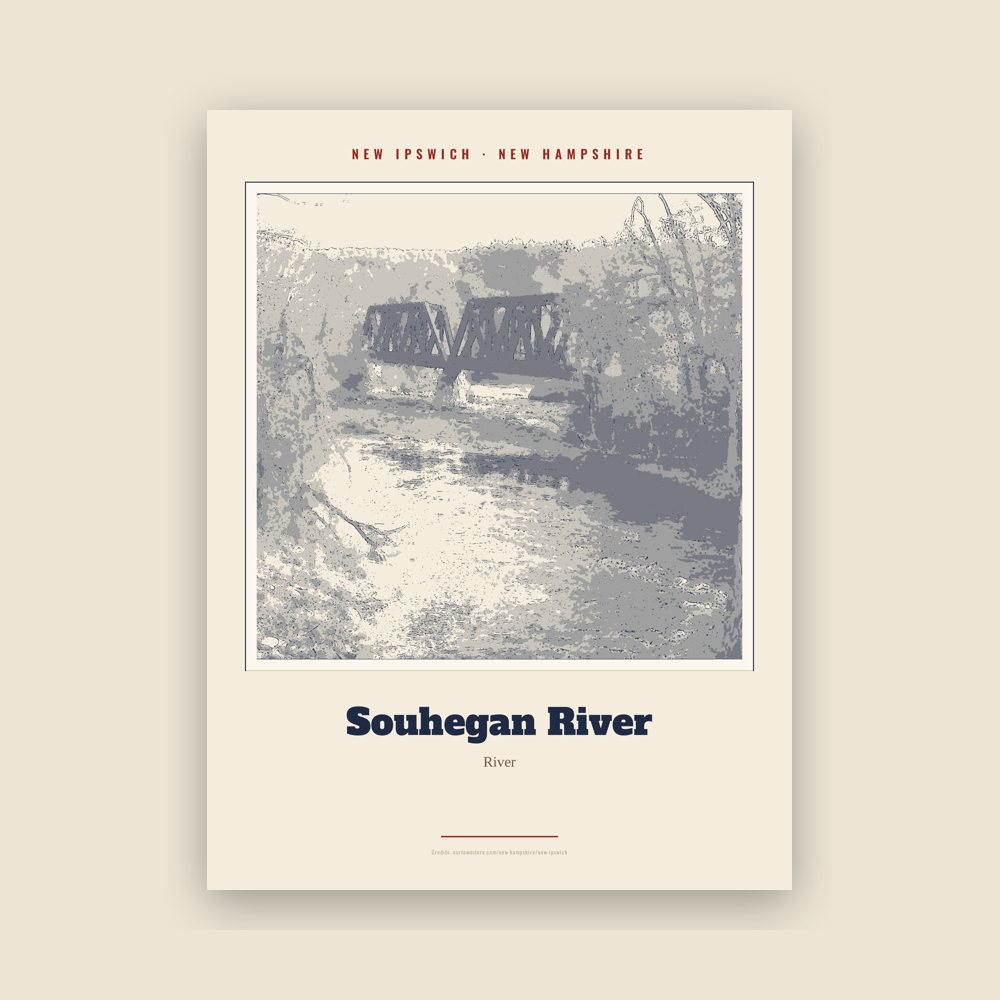
Archival matte print of a local landmark, credited to its photographer
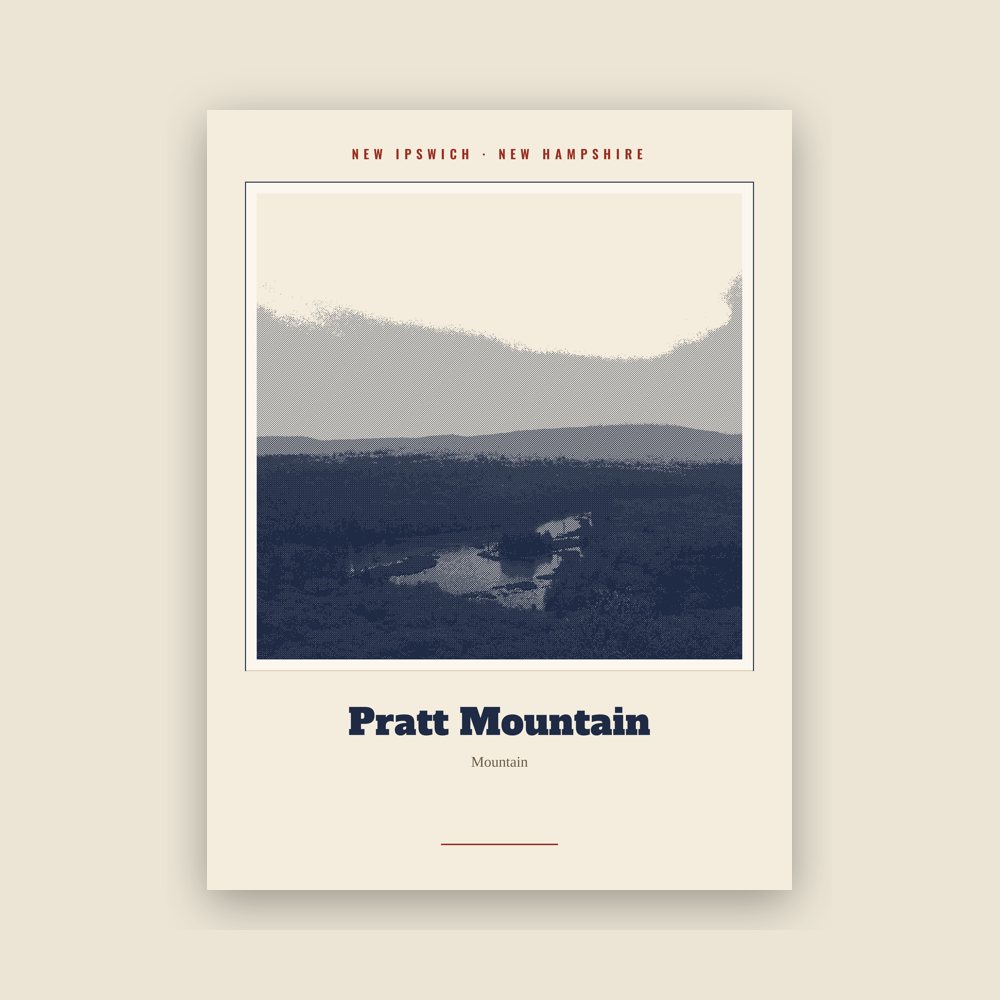
Archival matte print of a local landmark, credited to its photographer
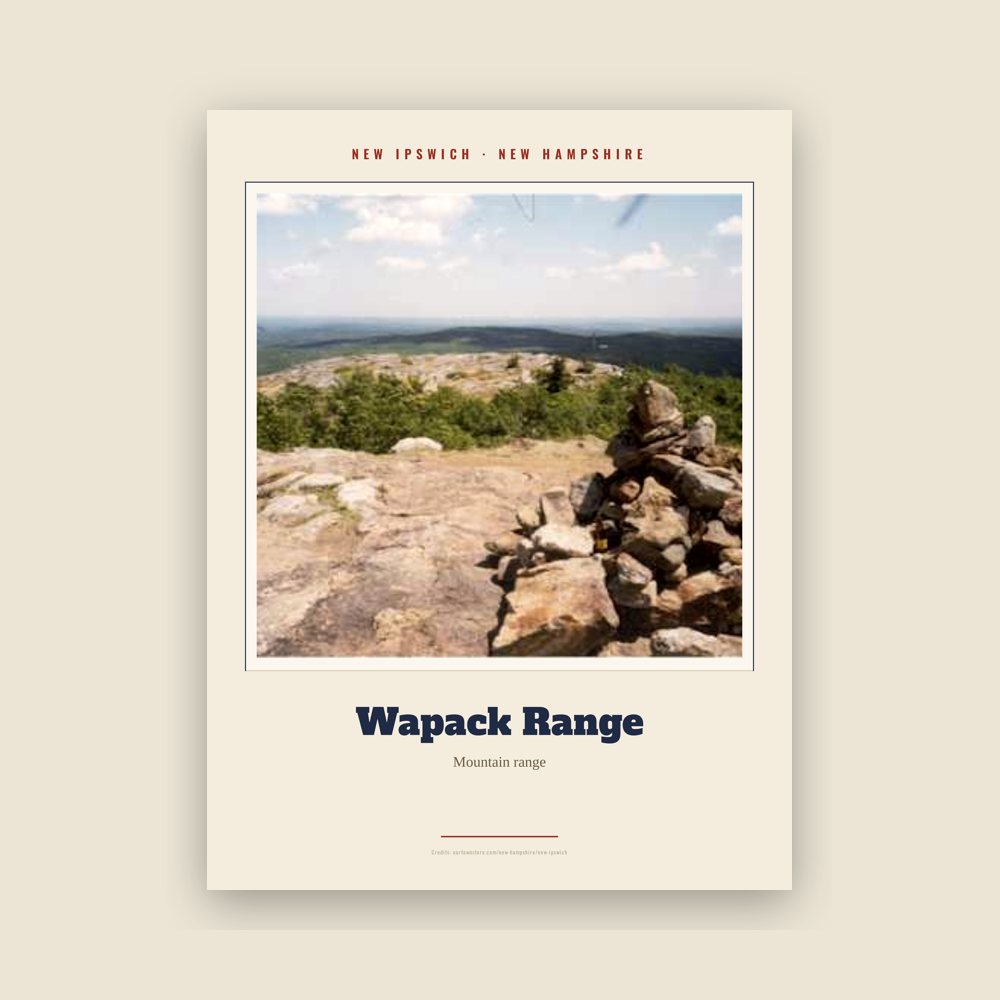
Archival matte print of a local landmark, credited to its photographer
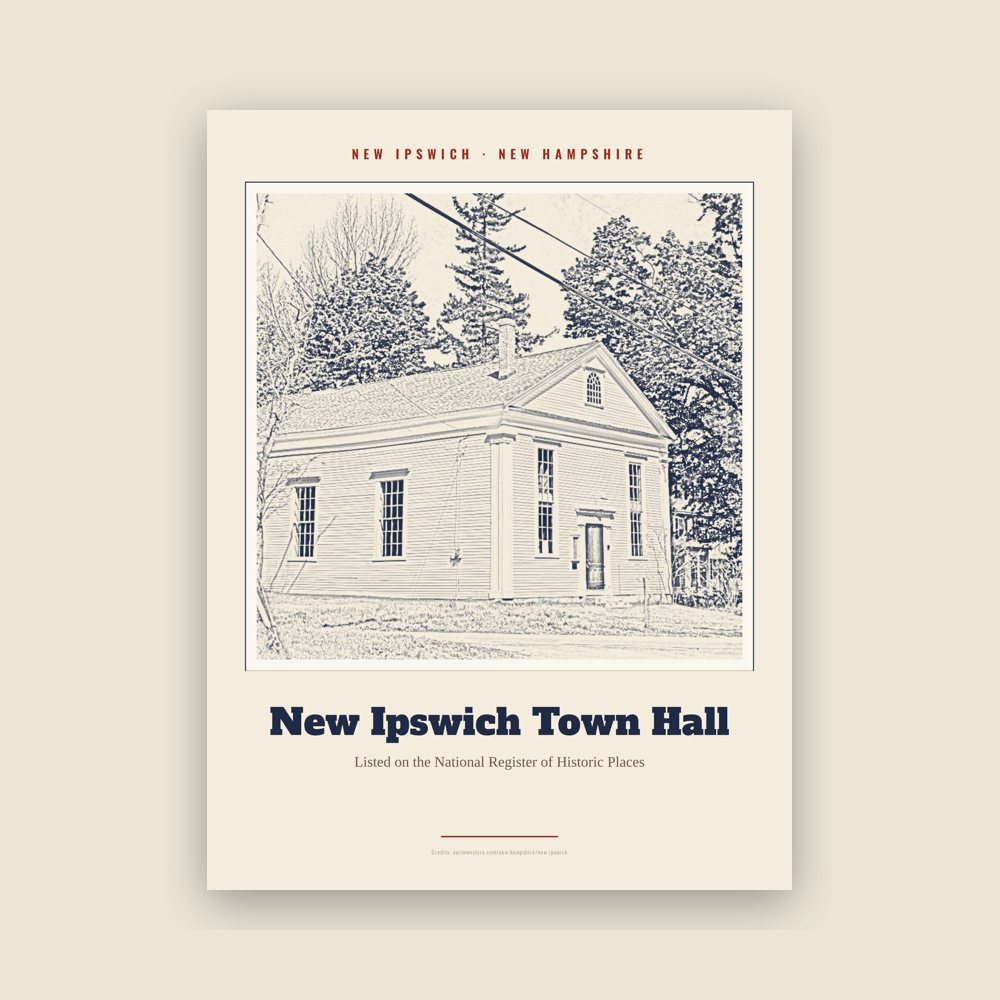
Archival matte print of a local landmark, credited to its photographer
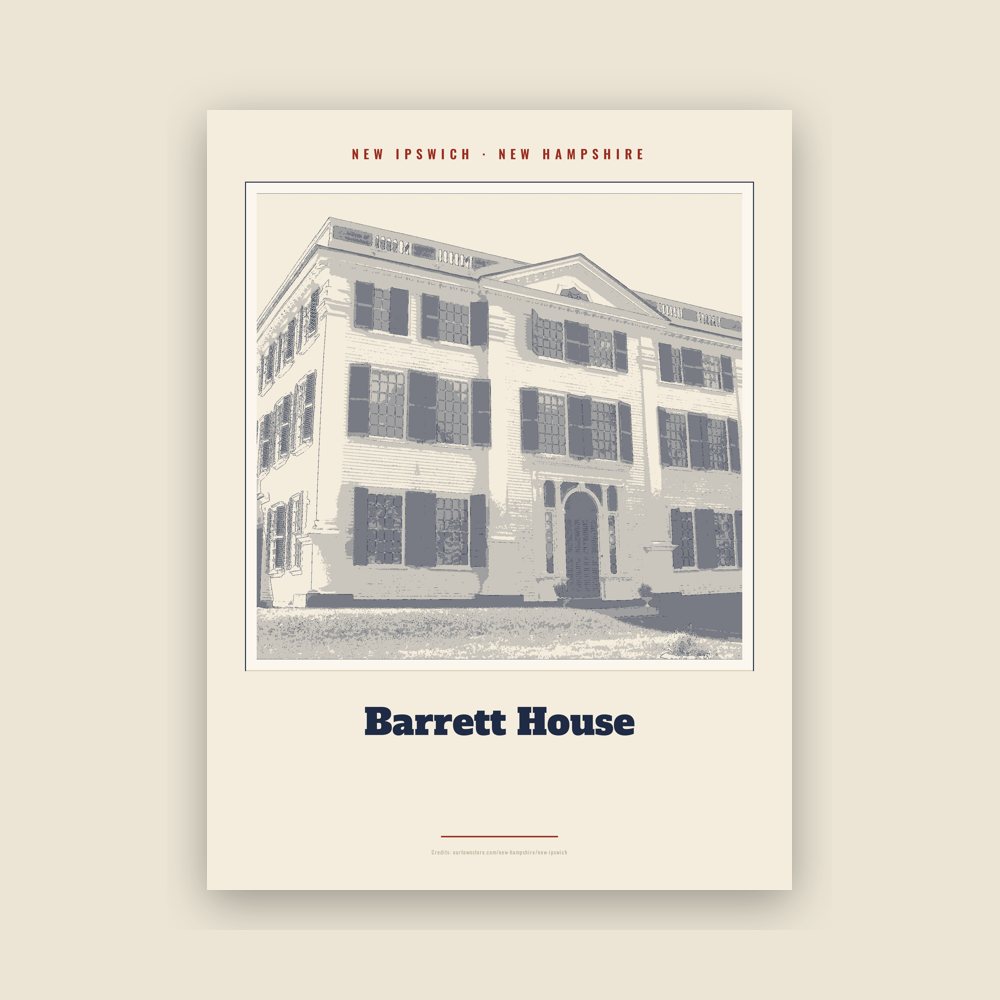
Archival matte print of a local landmark, credited to its photographer
Archival matte print of a local landmark, credited to its photographer
6″×4″ postcard, glossy front
6″×4″ postcard, glossy front
6″×4″ postcard, glossy front
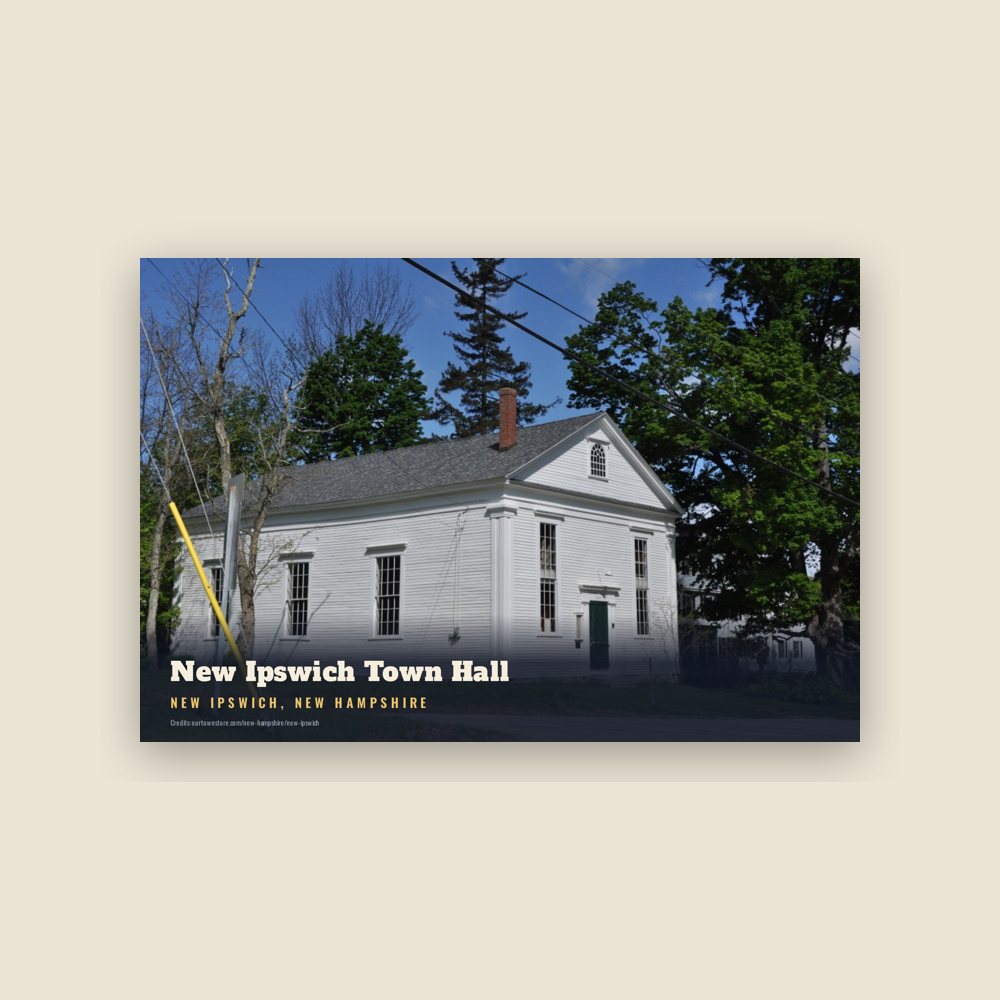
6″×4″ postcard, glossy front
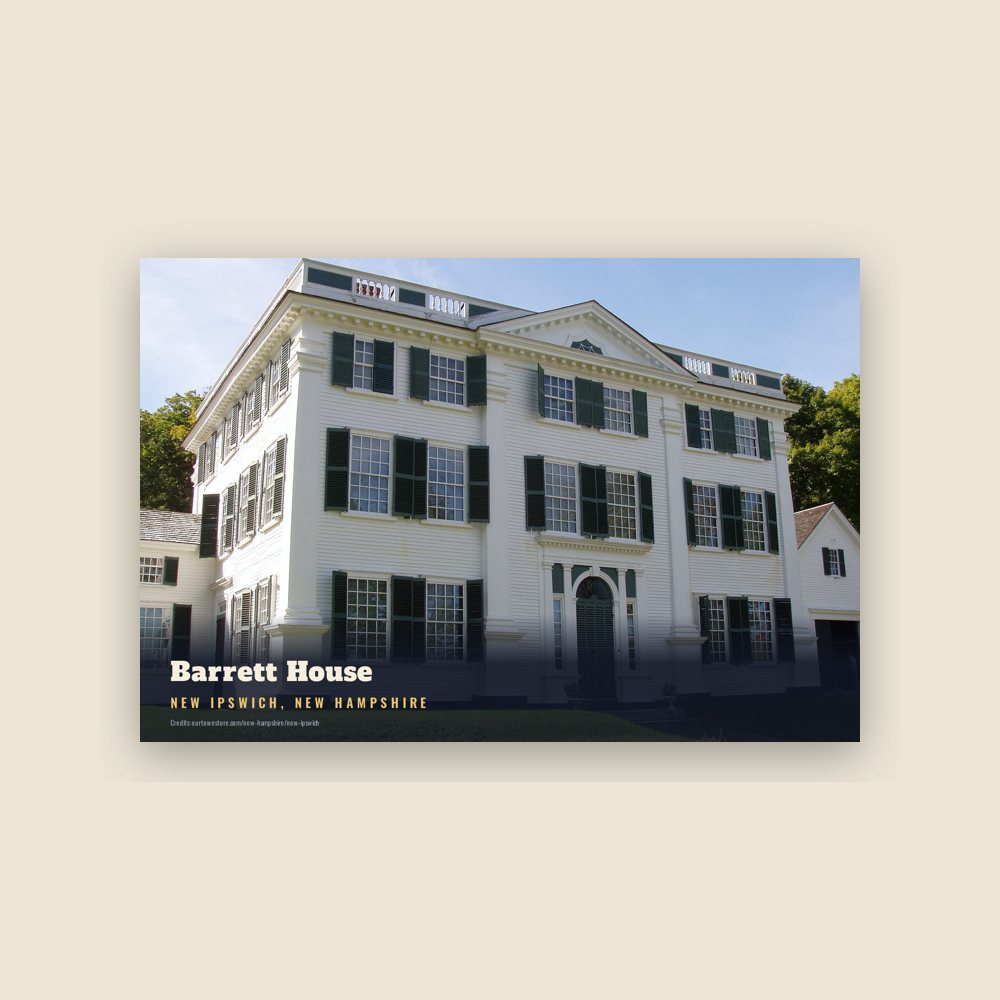
6″×4″ postcard, glossy front
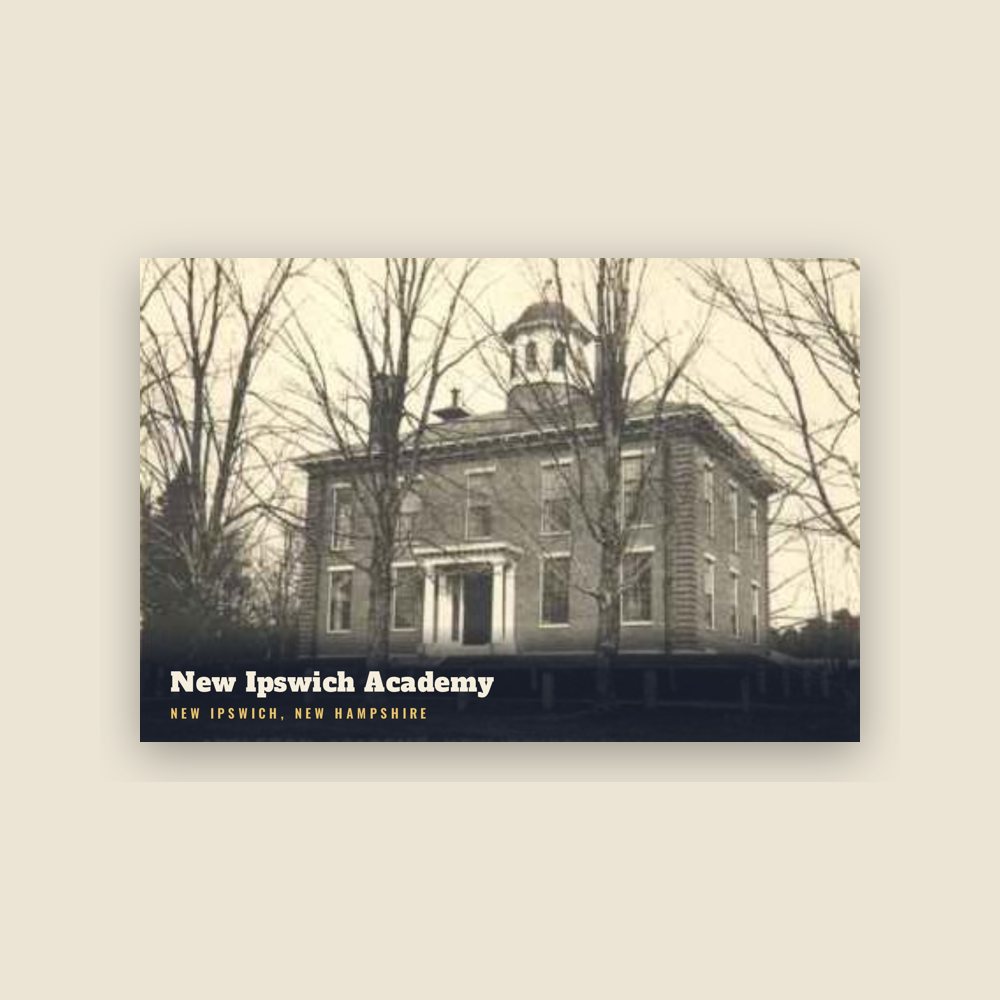
6″×4″ postcard, glossy front
Population 2010: 5,099 → 2020: 5,204
From Wikidata (CC0).
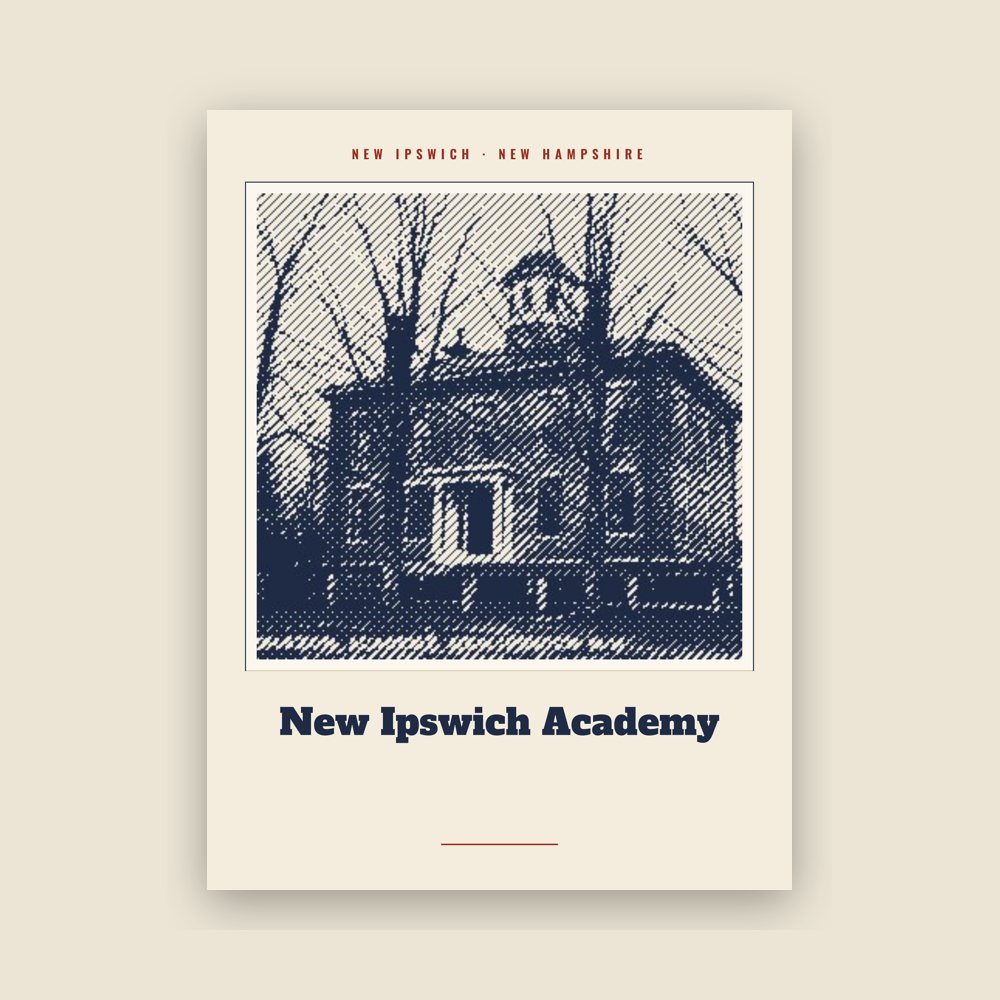
New Ipswich was granted in 1735 to 60 inhabitants of Ipswich, Massachusetts, whence the name is derived, by colonial Governor Jonathan Belcher and the General Court (Assembly) of Massachusetts. Settlement began in 1738, when Abijah Foster arrived with his wife and infant daughter. In 1762, Governor Benning Wentworth incorporated the town as "Ipswich", and then in 1766 as "New Ipswich". New Ipswich Academy, later renamed Appleton Academy after benefactor Samuel Appleton, was chartered in 1789, the second oldest in New Hampshire after Phillips Exeter Academy in Exeter. It would also serve as high school for the nearby communities of Mason and Greenville.
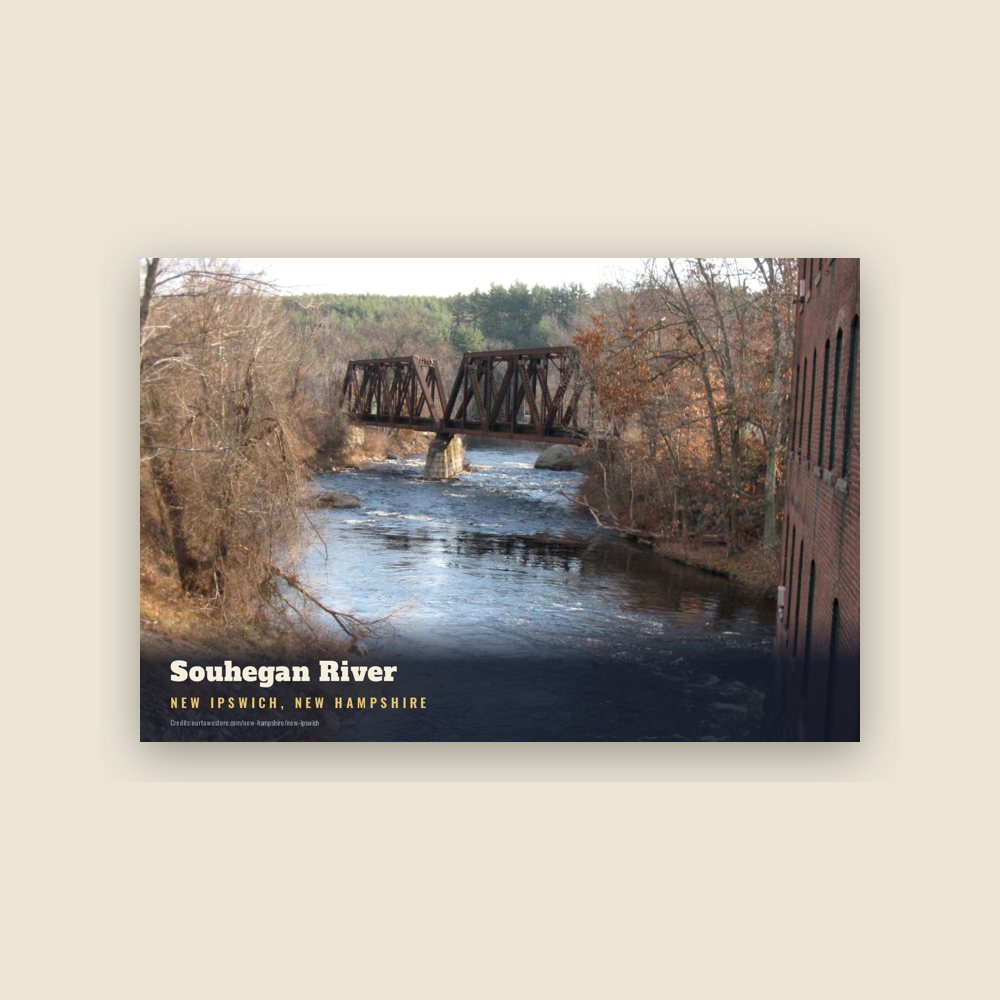
The Souhegan River provided water power for mills, and in 1801, the first woolen mill in the state was established at New Ipswich, followed in 1804 by the first cotton mill. Other early factories produced glass, potash and linseed oil. Cabinet making craftsmen produced elegant furniture. The town's affluence would be expressed in fine architecture, an example of which is the Barrett House, used as a setting for the 1979 Merchant Ivory film The Europeans, based on the novel by Henry James. Bypassed by the railroad, the early mill town was preserved.
In 1836, four families from New Ipswich moved to the Wisconsin Territory to start a mission to the Native Americans, founding the town of Denmark, Iowa.
In 1969, construction of Mascenic Regional High School was completed, rendering high school teaching in Appleton no more, although the building was still used to teach elementary schoolers and middle schoolers. In 1989 Boynton Middle School completed construction, so Appleton was from then to 2012 an elementary school. Appleton Academy closed in 2012, due to the dangerous conditions of occupying it.
In the past half century, a notable influx of peoples of Finnish descent, particularly of the Apostolic Lutheran Church of America, have settled in New Ipswich. Additionally, migrants from neighboring Massachusetts make up a large percentage of new residents.
Adapted (trimmed) from the Wikipedia article New Ipswich, New Hampshire, revision 1377787284 by its contributors, licensed CC BY-SA 4.0.
We share a part of every New Ipswich sale with local partners, and we'd love to print from your collection. Old photographs, maps and postcards make the best keepsakes.
Partner with us