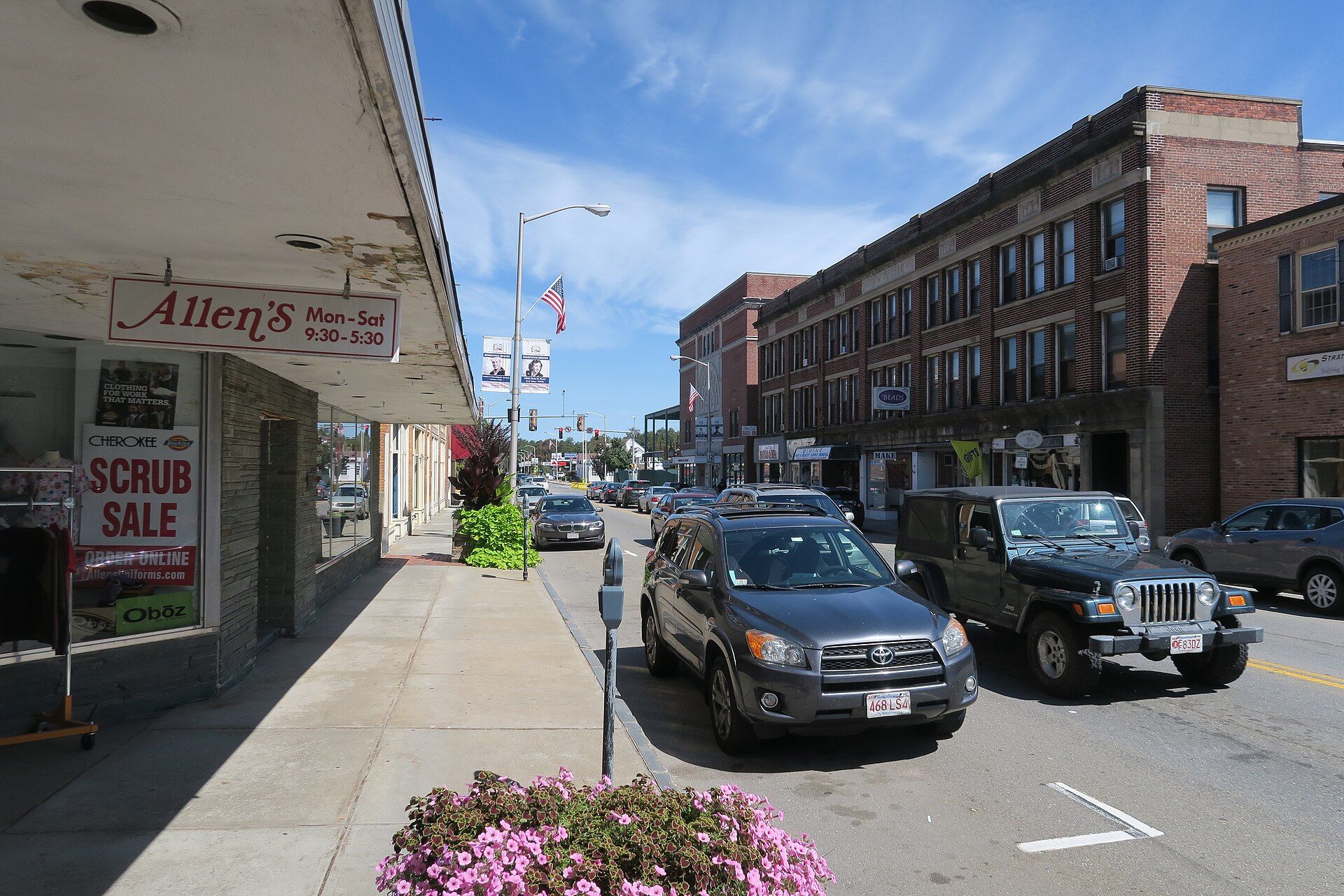
The town includes the villages of Waterville and Winchendon Springs. Landmarks include Massachusetts Route 12, Old Centre Historic District and Winchendon Village Historic District. Winchendon is the birthplace of William B. Washburn, businessman and politician from Massachusetts.
Every piece is drawn from Winchendon's own map data and historic archives, then printed and shipped from the USA when you order. No two towns look alike.
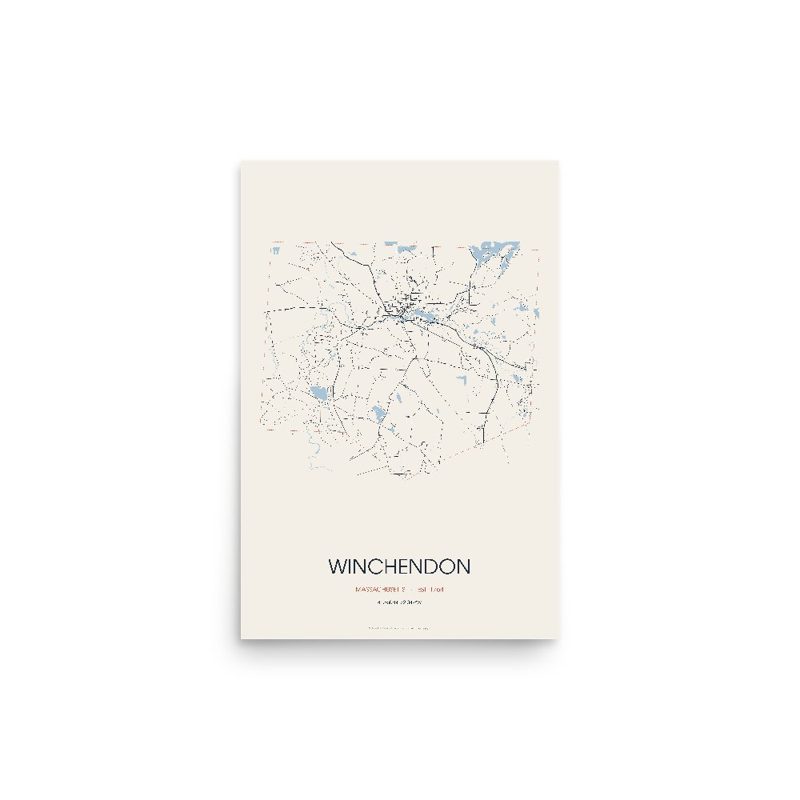
Every road in town, on archival matte paper
The same map, in navy and silver
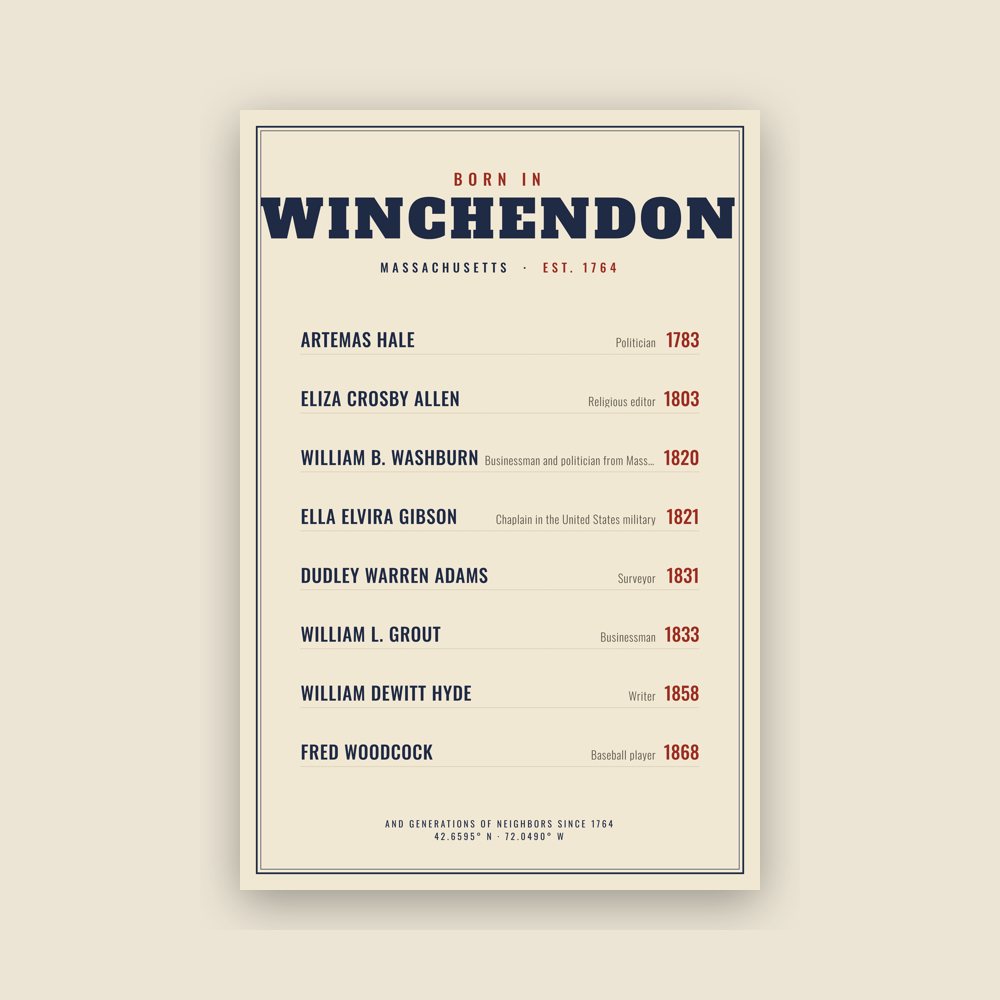
Famous natives, by birth year
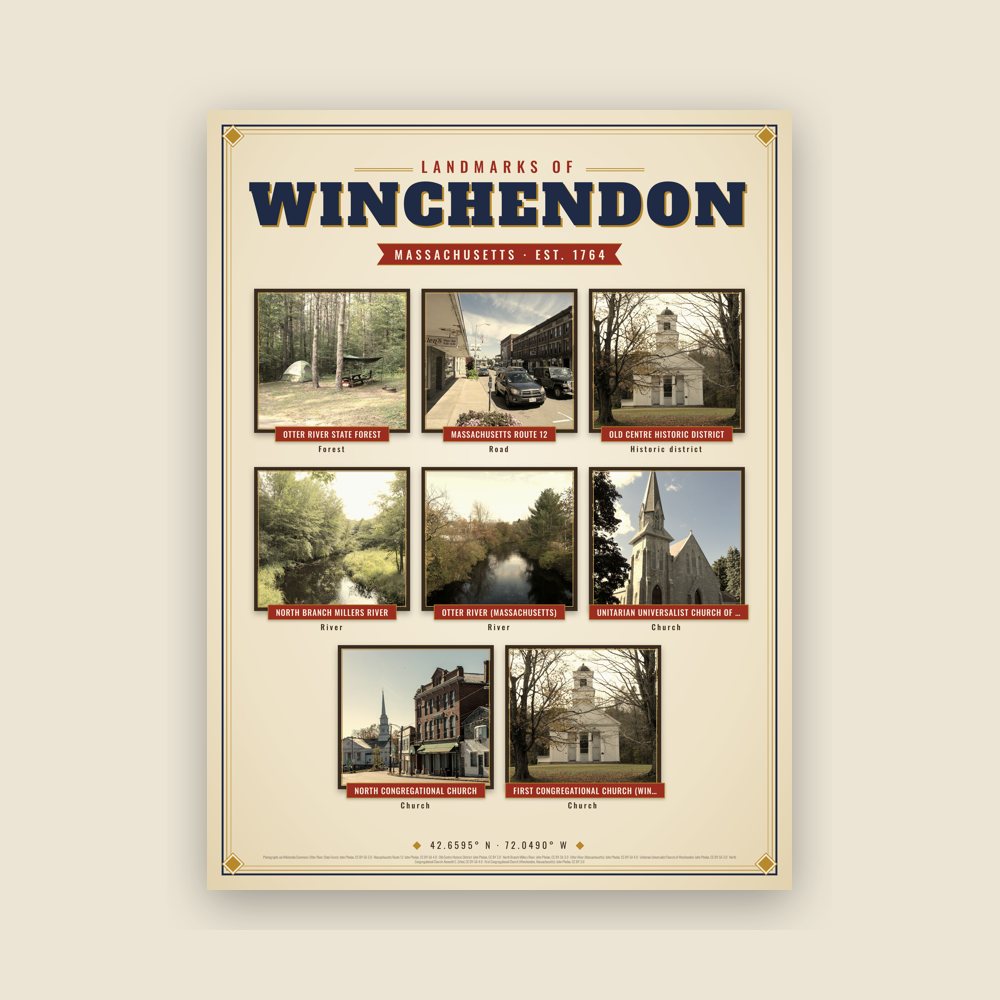
Nine local landmarks, archival matte
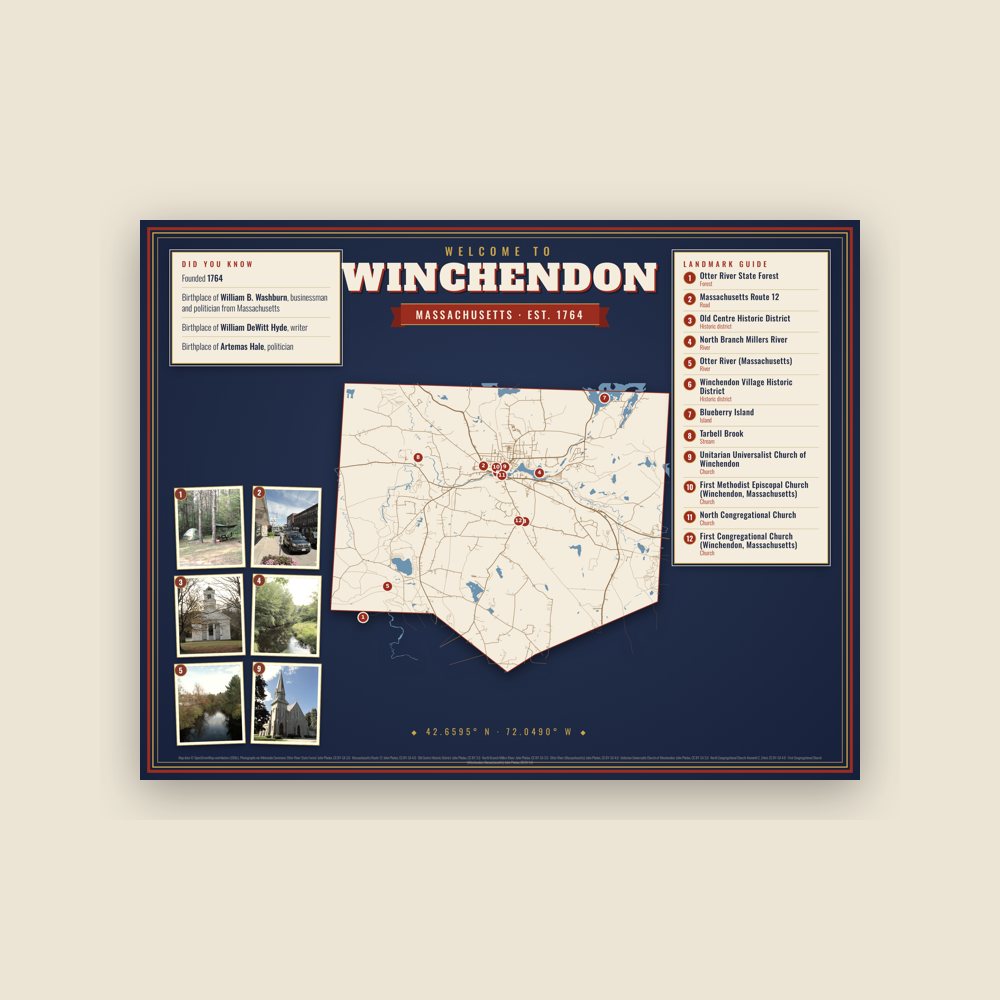
Map of local landmarks, washable fabric
Heavy-blend fleece, street map printed on the back
Soft Bella+Canvas jersey
Glossy ceramic, dishwasher safe
Ceramic keepsake, gold ribbon
Weatherproof, for the front walk
24″×16″, printed coir-look fibers, rubber back
12″×12″ printed wood, ready to hang
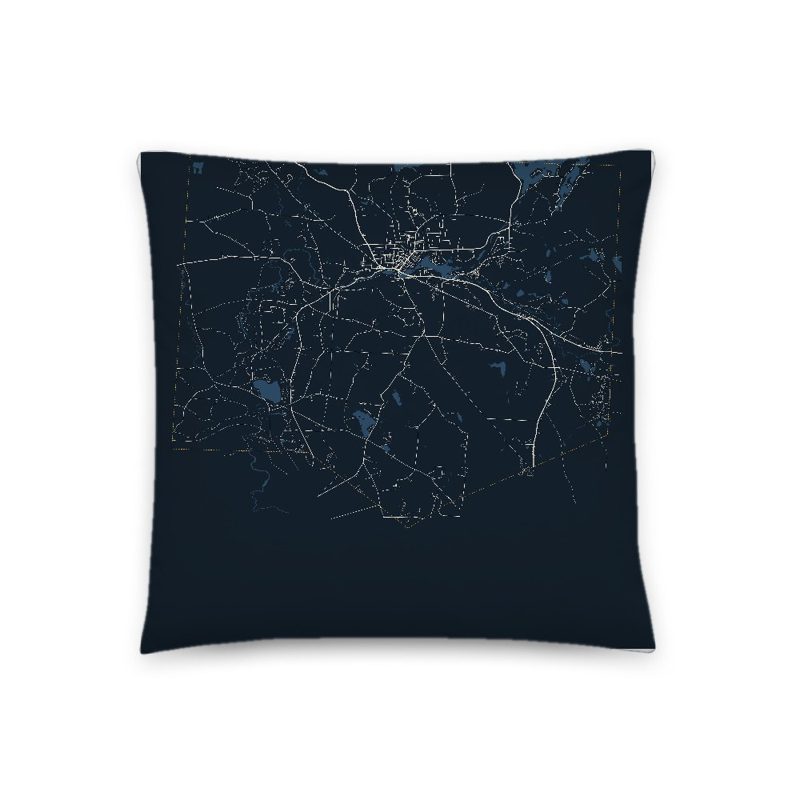
Soft-touch, zip cover
Sturdy all-over-print tote
Glossy top, cork back
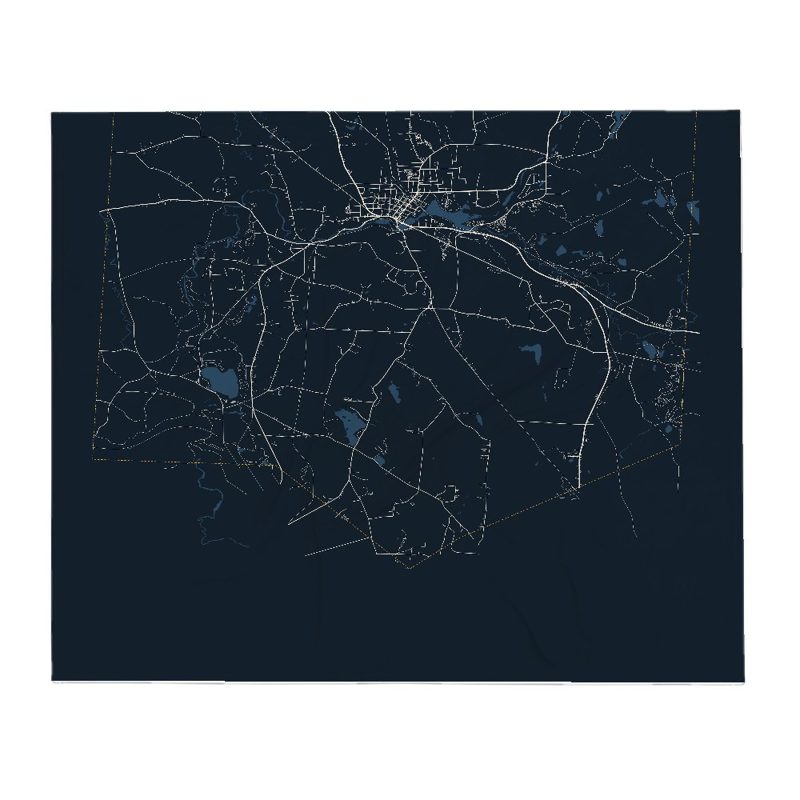
Soft fleece, 50″×60″
20 oz, double-wall stainless
Population 2010: 10,300 → 2020: 10,364
From Wikidata (CC0).
Winchendon is a small town in north-central Massachusetts, originally the country of the Pennacook Indians, and then the Nipnet/Nipmuck tribe.
The House of Representatives made the grant of New Ipswich Canada, now Winchendon, on June 10, 1735, in answer to a petition from Lt. Abraham Tilton of Ipswich. The petition was on behalf of veterans or surviving heirs participating in the 1690 expeditions against Canada. Winchendon was officially incorporated in 1764, named after Nether Winchendon, Buckinghamshire, England, which itself was the site of land owned by Governor Francis Bernard, who signed the town's incorporation into law. (The English village would be where the Governor would die, fifteen years later.) The Millers River provided water power for mills, and at one time Winchendon produced so many wooden shingles that it was nicknamed Shingletown.
Morton E. Converse started his business career in Converseville, New Hampshire, manufacturing acids. In 1873, he purchased a nearby mill to make wooden products. Apparently he started making toys there, but soon teamed with Orland Mason of Winchendon to form the Mason & Converse Company, which lasted until 1883. Converse then partnered with his uncle, Alfred C. Converse, and Converse Toy & Woodenware Company was formed. In 1887, the company changed its name to Morton E. Converse & Company. It remained in business until 1934 having been under the stewardship of Atherton D. Converse.
Converse made a great variety of toys, including Noah's Arks, doll furniture, kiddie riding racers, hobby horses, floor whirligigs, drums, wagon blocks, building blocks, pianos, trunks, ten pins, farm houses, and musical roller chimes. Such a large number of toys were made in Winchendon that it became known as Toy Town.
The original Giant Rocking Horse was built in 1912 by Morton Converse. The 12-foot (3.7 m) grey hobby horse was named Clyde, and made from nine pine trees. It was a copy of the company's #12 rocking horse. In 1914, Clyde entered the local parade to celebrate the town's 150th anniversary. Clyde was moved to the railroad station for about 20 years. Then in 1934, he moved to the edge of the Toy Town Tavern for about 30 years. After that, he was put in storage and fell into disrepair. A replica, Clyde II, was sculpted in 1988 by Winchendon native Sherman LaBarge, using the original as a model. He is now on display in a covered pavilion.
In addition to the manufacturing of wood products, Winchendon is known for its textile business during the Industrial Revolution. Located at the headwaters of the Millers River, Joseph 'Deacon' White of West Boylston, Massachusetts, with his son Nelson, purchased a textile mill in Spring Village in 1843. By 1857, the Nelson Mills had revamped a previous facility. In 1870, Joseph N. White, son of Nelson, traveled to Canada to recruit additional workers from Quebec. Spring Village became a prototype 'company town' with jobs, housing and a school for its workers. A second mill was built in 1887 and was known as the Glenallan Mill. The business thrived during the last half of the 19th and first half of the 20th centuries. As the south was modernized during the 1930s, textile operations in New England migrated south. Both World War II and the Korean War demands for denim were instrumental in keeping White Brothers, Inc. in business; the organization ceased operations in 1956 due to economic pressures from industrialization of the south.
Adapted (trimmed) from the Wikipedia article Winchendon, Massachusetts, revision 1376593325 by its contributors, licensed CC BY-SA 4.0.
We share a part of every Winchendon sale with local partners, and we'd love to print from your collection. Old photographs, maps and postcards make the best keepsakes.
Partner with us