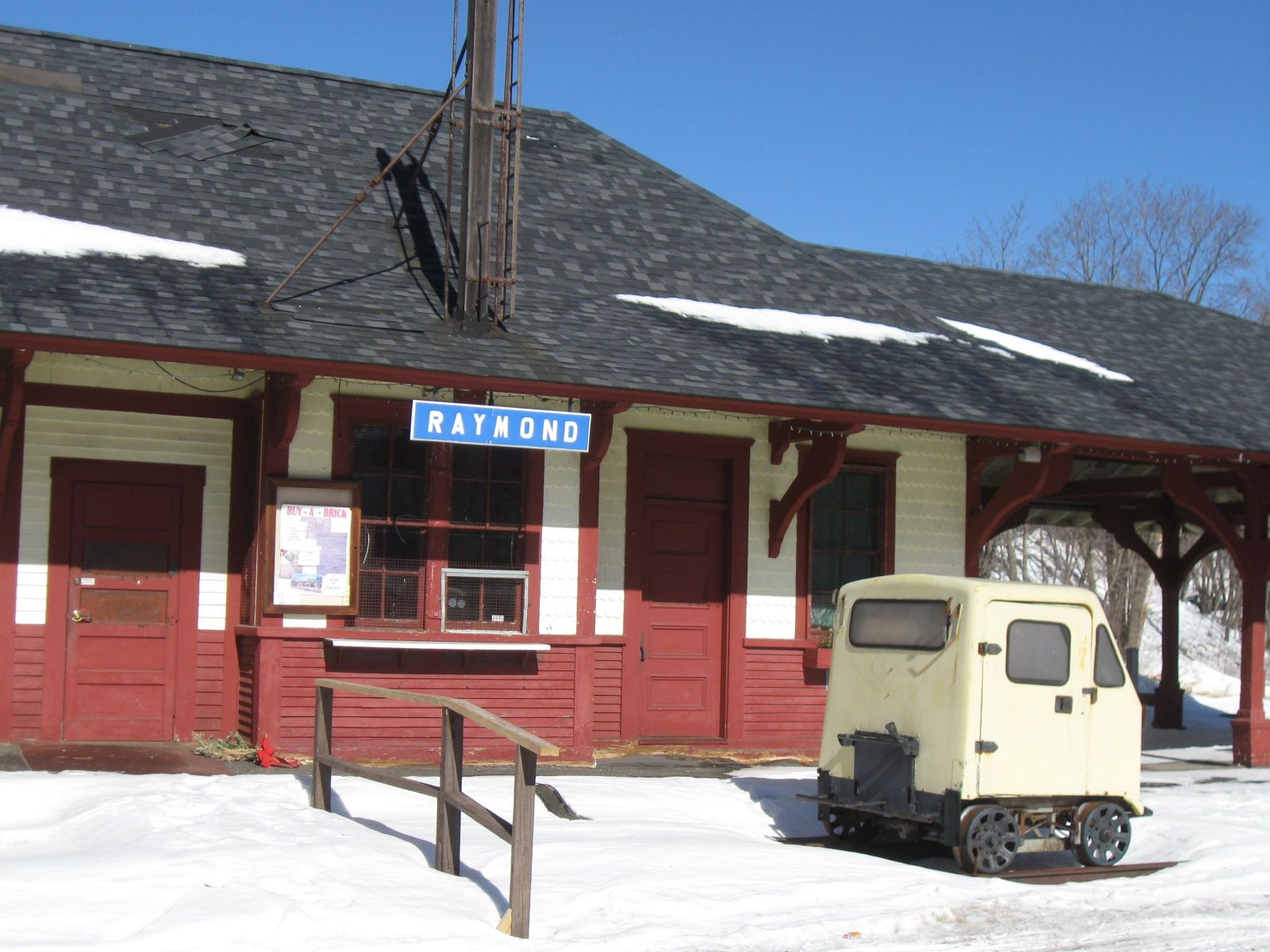
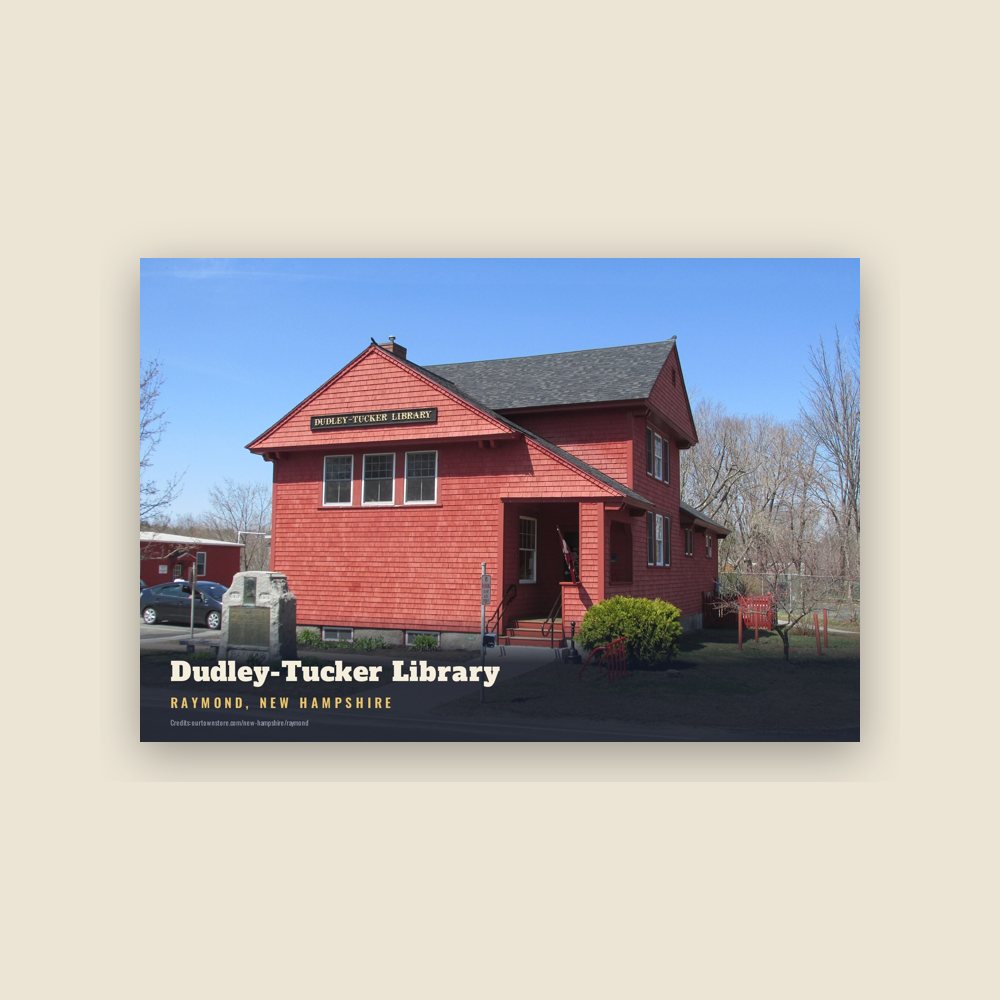
Joseph Fullonton, in his History of Raymond, published 1875, said that the name was chosen as "a new and classical one". Landmarks include Raymond Boston and Maine Railroad Depot, Camp Onway and Dudley-Tucker Library. Raymond is the birthplace of Marjorie Goetschius, composer, pianist, cellist and singer.
Every piece is drawn from Raymond's own map data and historic archives, then printed and shipped from the USA when you order. No two towns look alike.
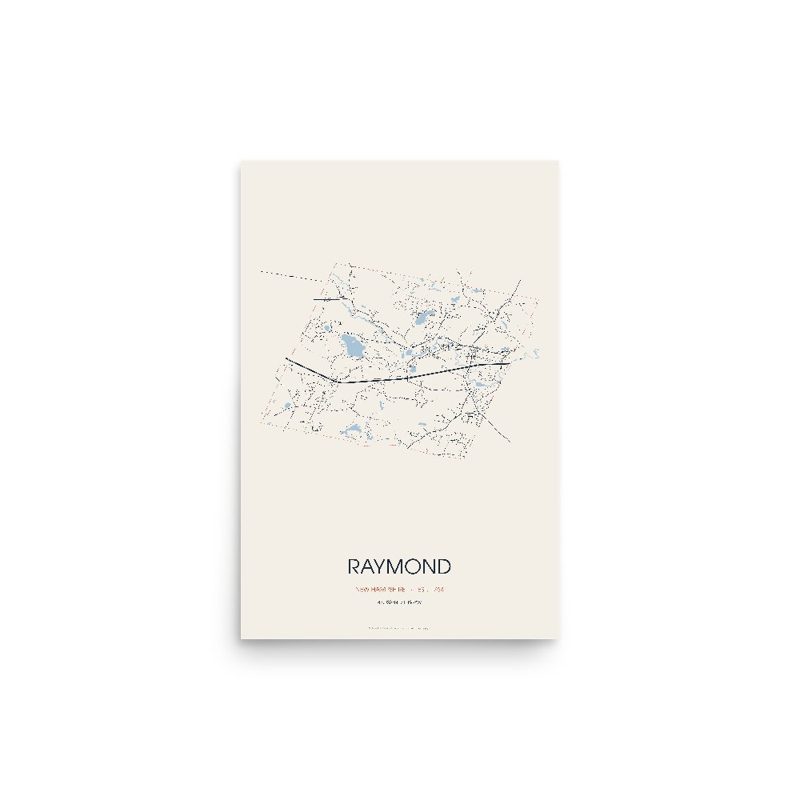
Every road in town, on archival matte paper
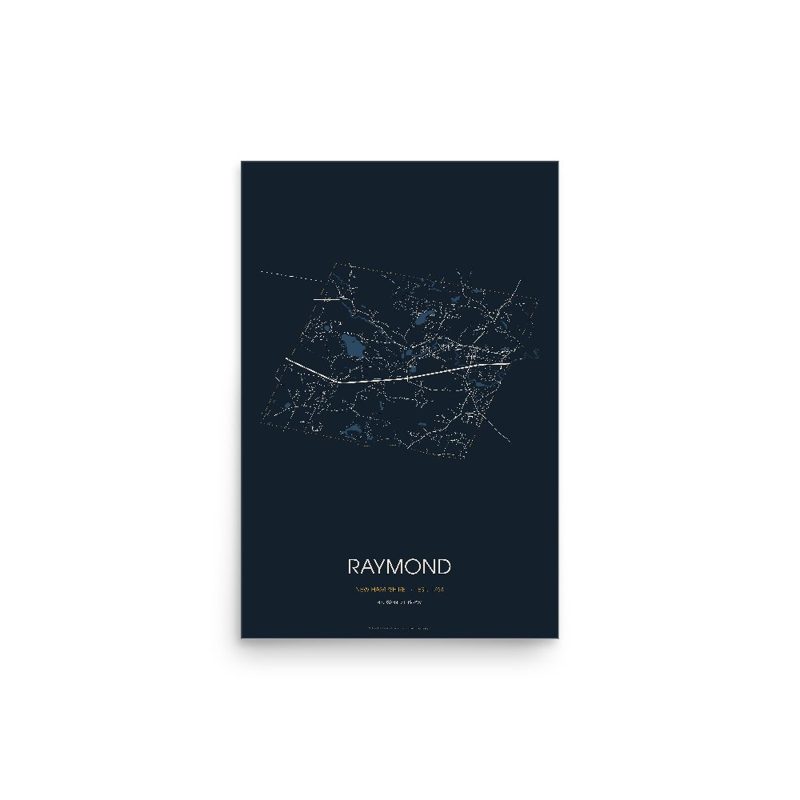
The same map, in navy and silver
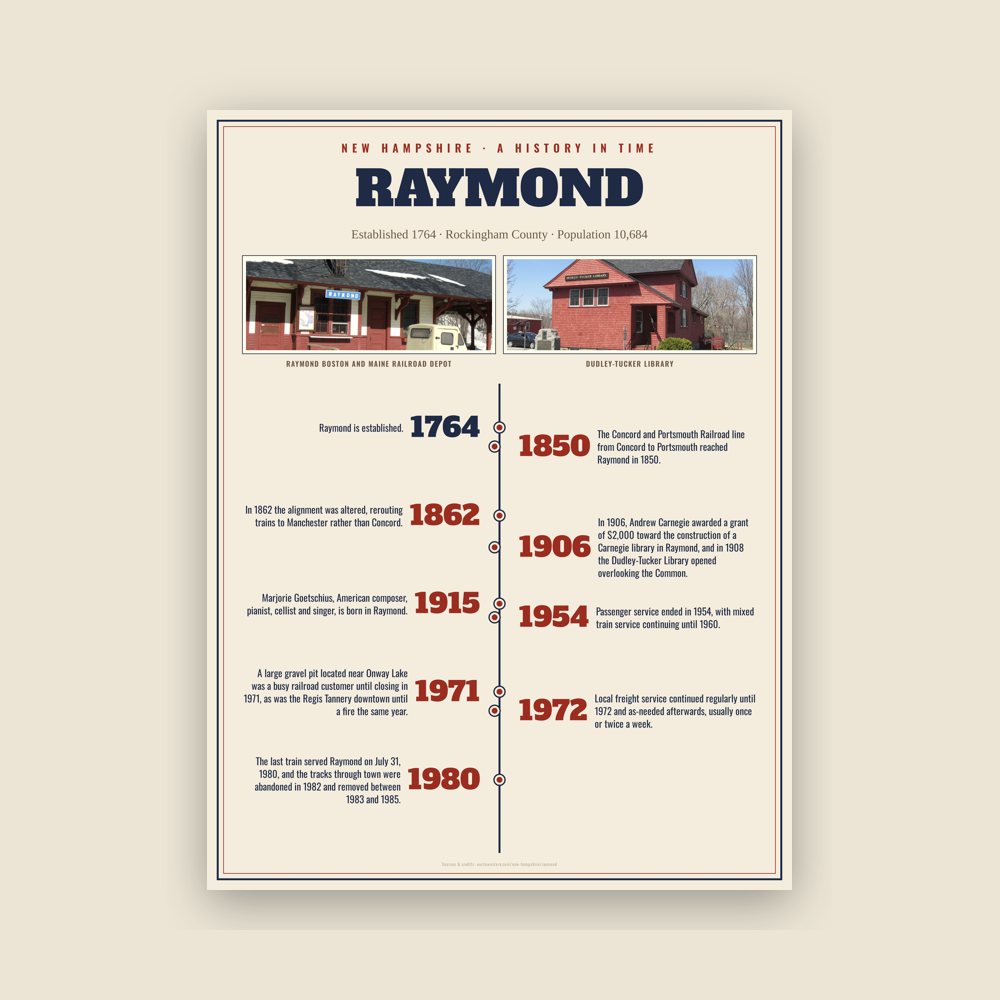
The town's story in dates, from its own records, for home or classroom
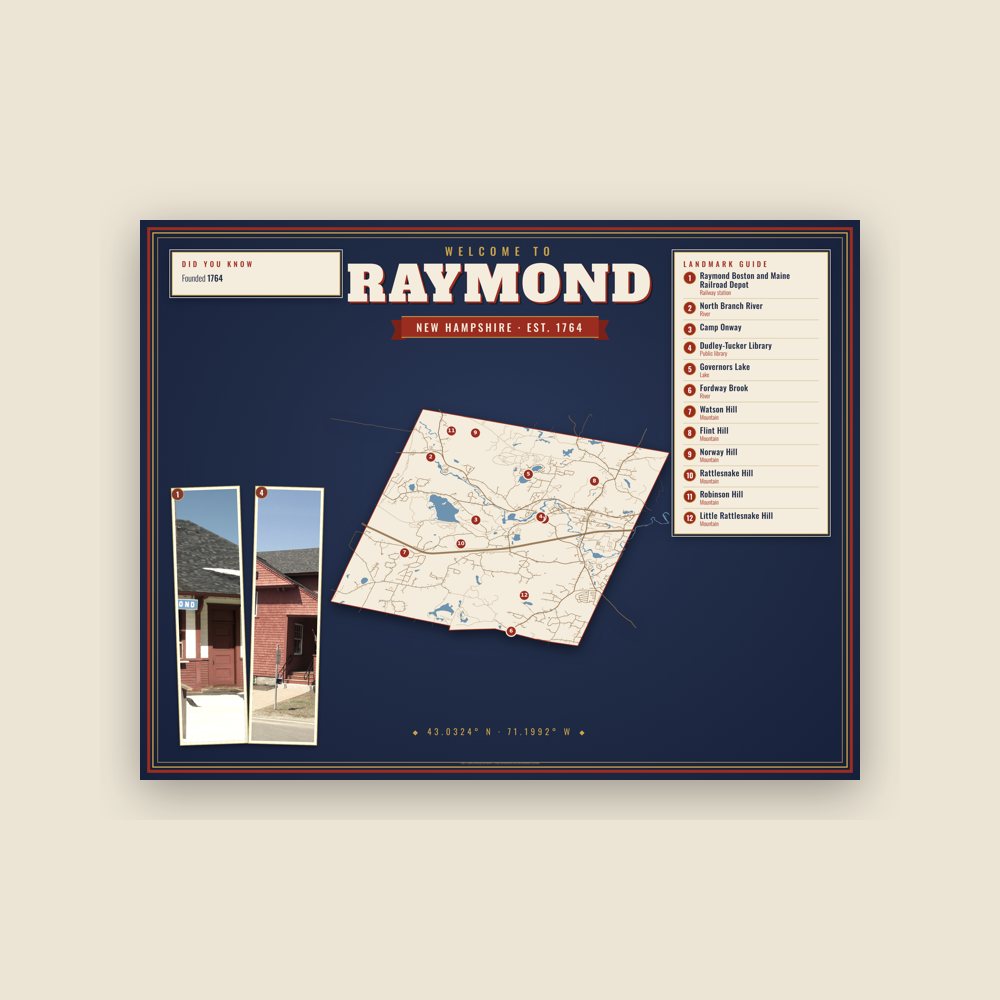
Map of local landmarks, washable fabric
Heavy-blend fleece, street map printed on the back
Soft Bella+Canvas jersey
Glossy ceramic, dishwasher safe
Ceramic keepsake, gold ribbon
Weatherproof, for the front walk
24″×16″, printed coir-look fibers, rubber back
12″×12″ printed wood, ready to hang
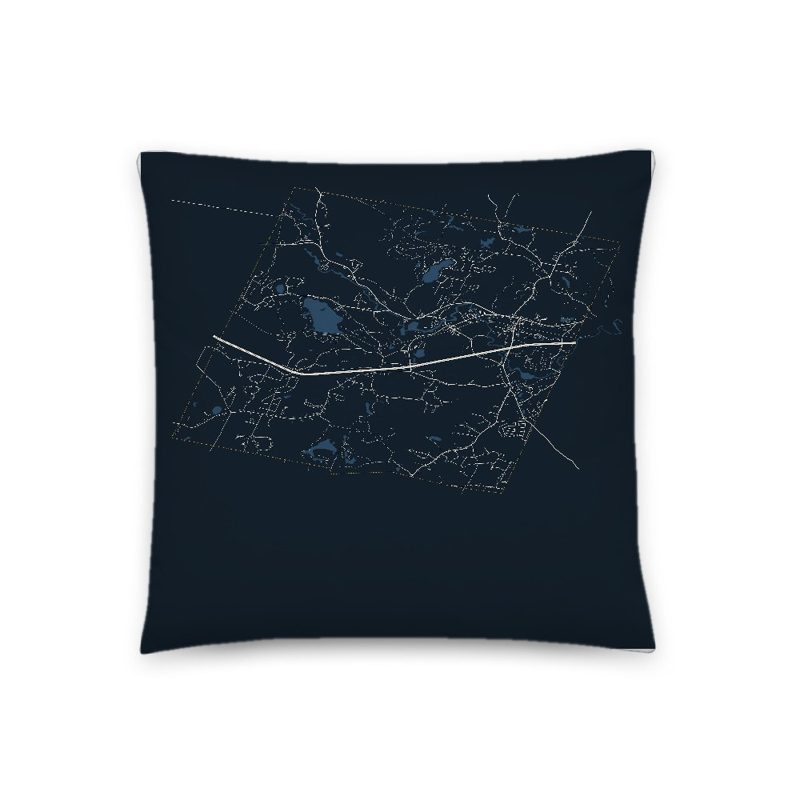
Soft-touch, zip cover
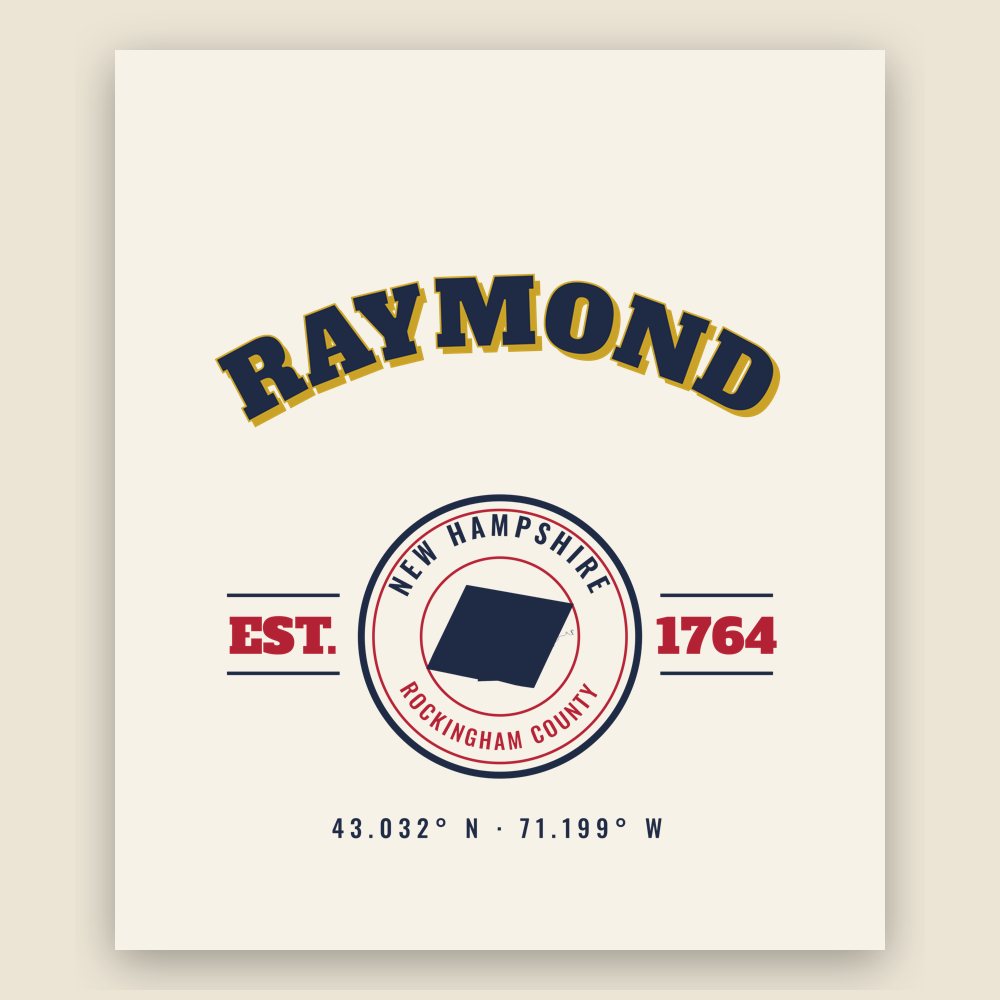
Sturdy all-over-print tote
Glossy top, cork back
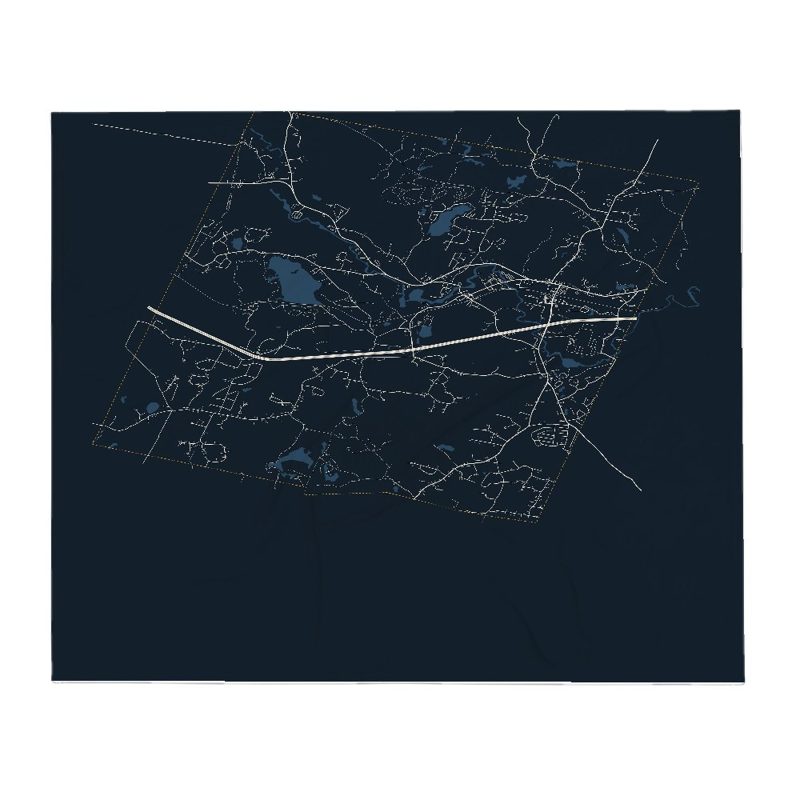
Soft fleece, 50″×60″
20 oz, double-wall stainless
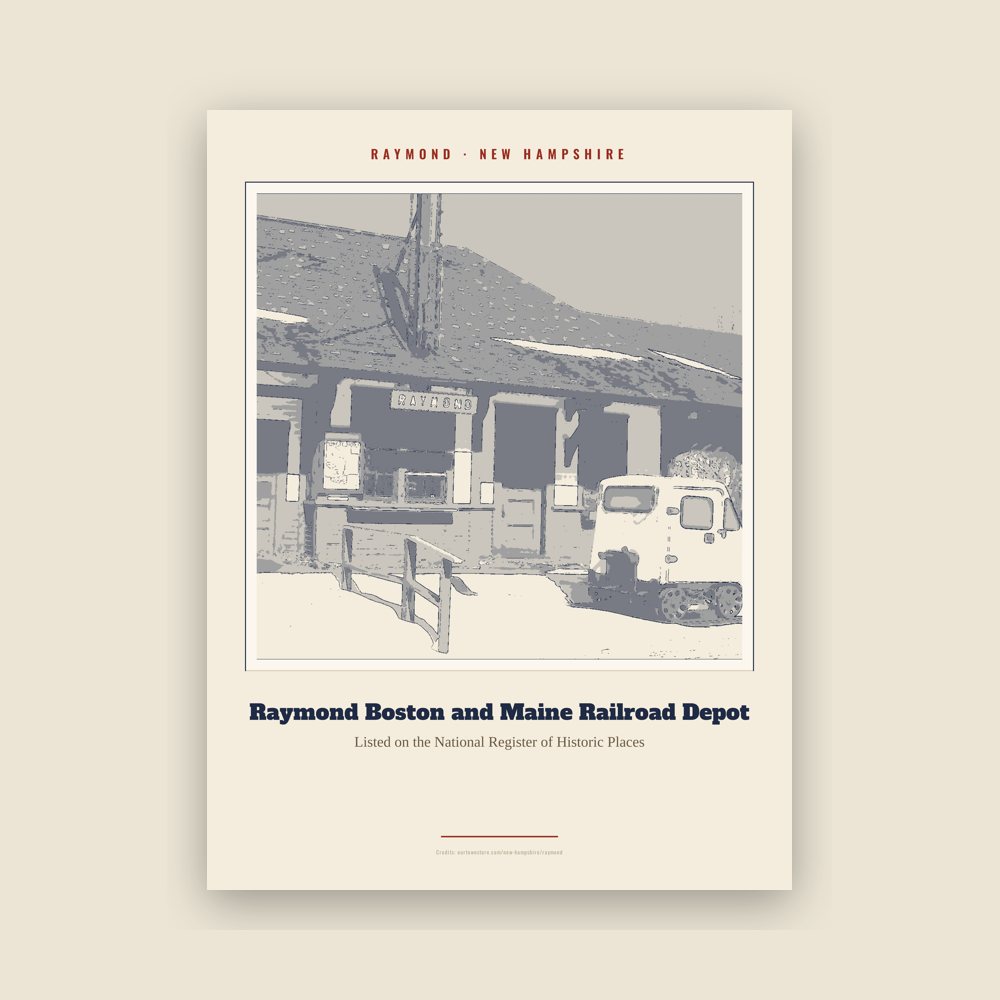
Archival matte print of a local landmark, credited to its photographer
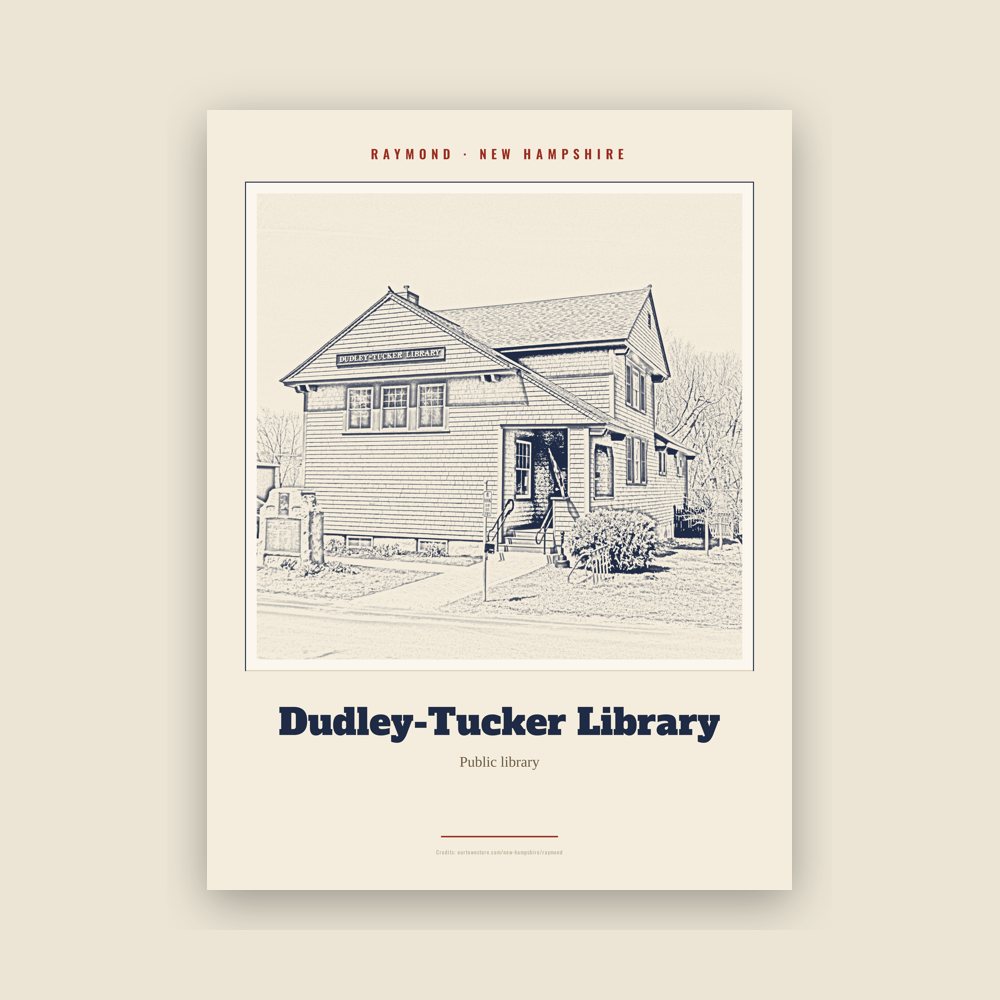
Archival matte print of a local landmark, credited to its photographer
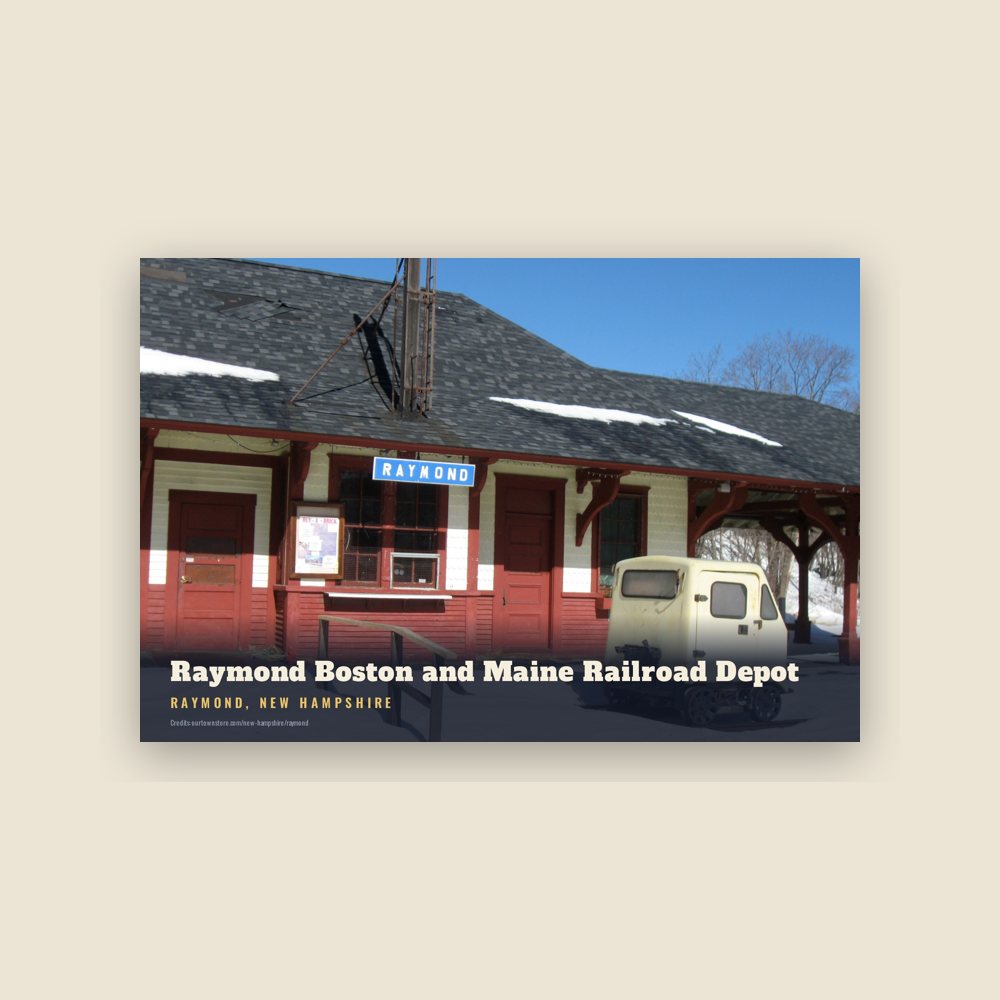
6″×4″ postcard, glossy front
6″×4″ postcard, glossy front
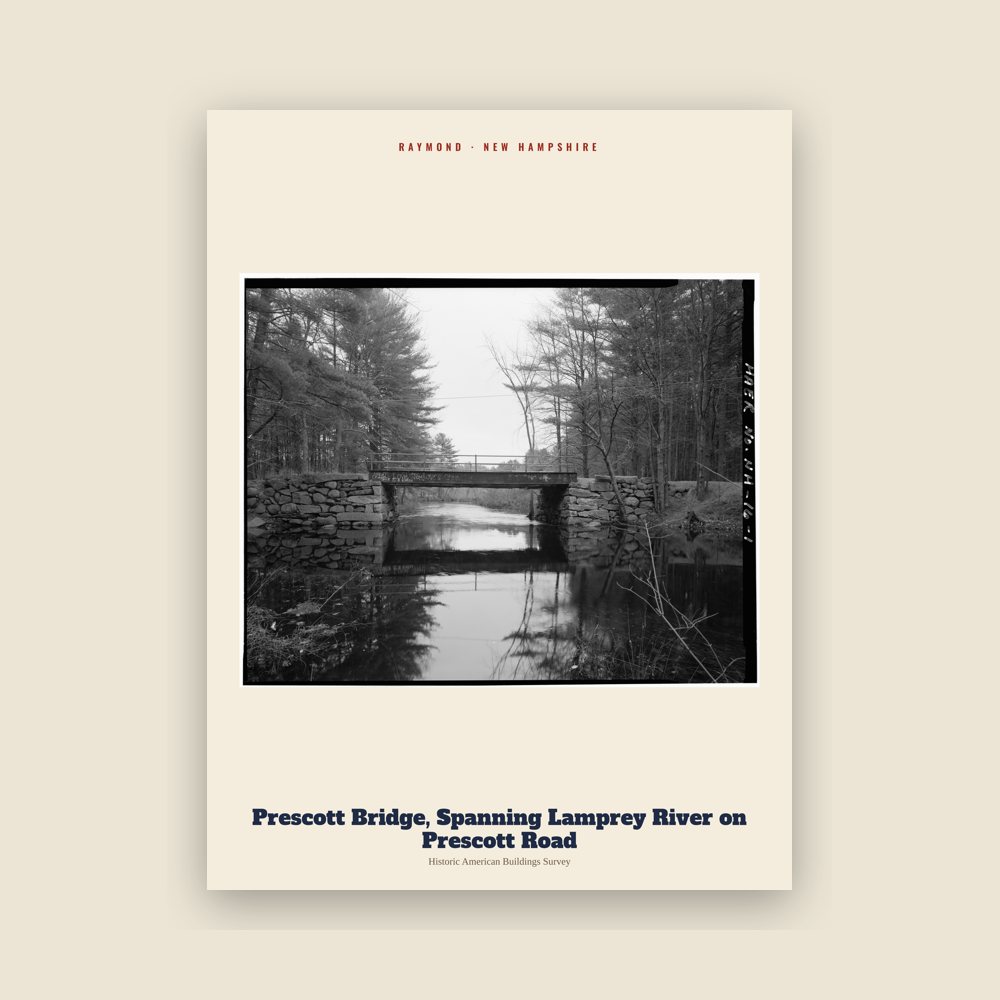
From the Library of Congress collections: a historic survey drawing or photograph of the town
Population 2010: 10,138 → 2020: 10,684
From Wikidata (CC0).
Joseph Fullonton, in his History of Raymond, published 1875, said that the name was chosen as "a new and classical one". Fullonton relates that the original name of Freetown "arose from the ship timber business" where the king claimed the best trees. The locals had other ideas and took the trees and "being successful here, none molesting, they called it Freetown." Fullonton states that at incorporation in 1764, changing the name from "Freetown" to "Raymond" was "taking a new and classical one, shows that there are minds not disposed to tread all the time in one path, but capable of thinking and advancing," and that the word "Raymond" means "the lustrous, luminous or shining world."
In 1906, Andrew Carnegie awarded a grant of $2,000 toward the construction of a Carnegie library in Raymond, and in 1908 the Dudley-Tucker Library opened overlooking the Common.
The Concord and Portsmouth Railroad line from Concord to Portsmouth reached Raymond in 1850. In 1862 the alignment was altered, rerouting trains to Manchester rather than Concord. However, freight and passenger trains still originated in Concord and traveled south on the New Hampshire Division Main Line before entering the Portsmouth Branch at Manchester. The line later became the Portsmouth Branch of the Boston and Maine Railroad. Passenger service ended in 1954, with mixed train service continuing until 1960. Local freight service continued regularly until 1972 and as-needed afterwards, usually once or twice a week. A large gravel pit located near Onway Lake was a busy railroad customer until closing in 1971, as was the Regis Tannery downtown until a fire the same year. There were no regular rail customers in Raymond from 1971 until 1976, when Rehrig Pacific opened a plastics injection plant near Route 102. The last train served Raymond on July 31, 1980, and the tracks through town were abandoned in 1982 and removed between 1983 and 1985. The line is now a rail trail, and the restored depot survives today as home to the Raymond Historical Society.
New Hampshire Historical Marker #273 in Raymond recognizes Frank J. Mafera, a resident who patented the first method for weaving chain link fencing in 1930, and then founded the Barnyard Fence Company (later renamed the New Hampshire Fence Company) in Raymond.
Adapted (trimmed) from the Wikipedia article Raymond, New Hampshire, revision 1378579236 by its contributors, licensed CC BY-SA 4.0.
We share a part of every Raymond sale with local partners, and we'd love to print from your collection. Old photographs, maps and postcards make the best keepsakes.
Partner with us