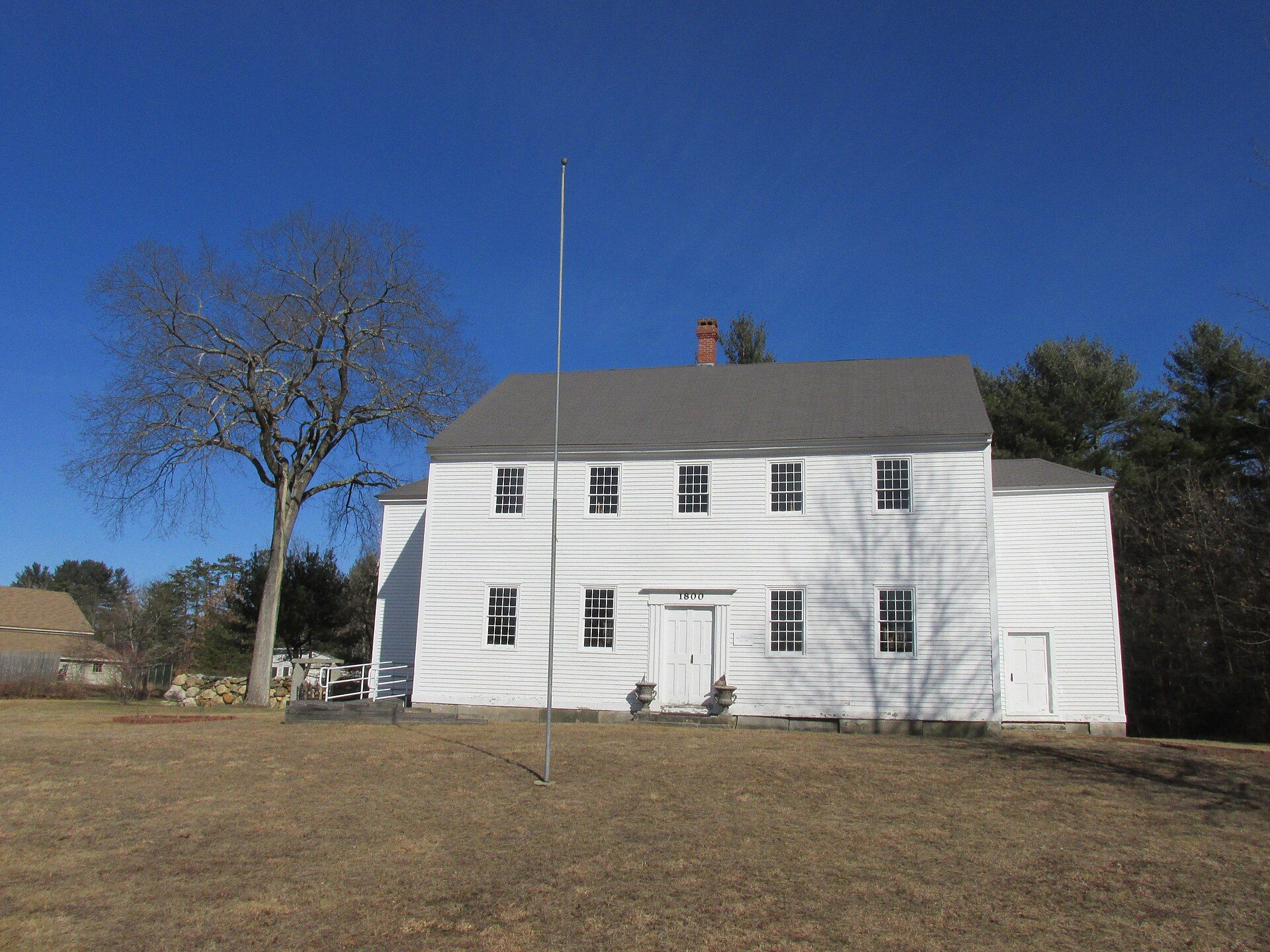
Fremont is crossed by the Rockingham Recreation Trail and NH Route 107. Landmarks include Fremont Meeting House.
Every piece is drawn from Fremont's own map data and historic archives, then printed and shipped from the USA when you order. No two towns look alike.
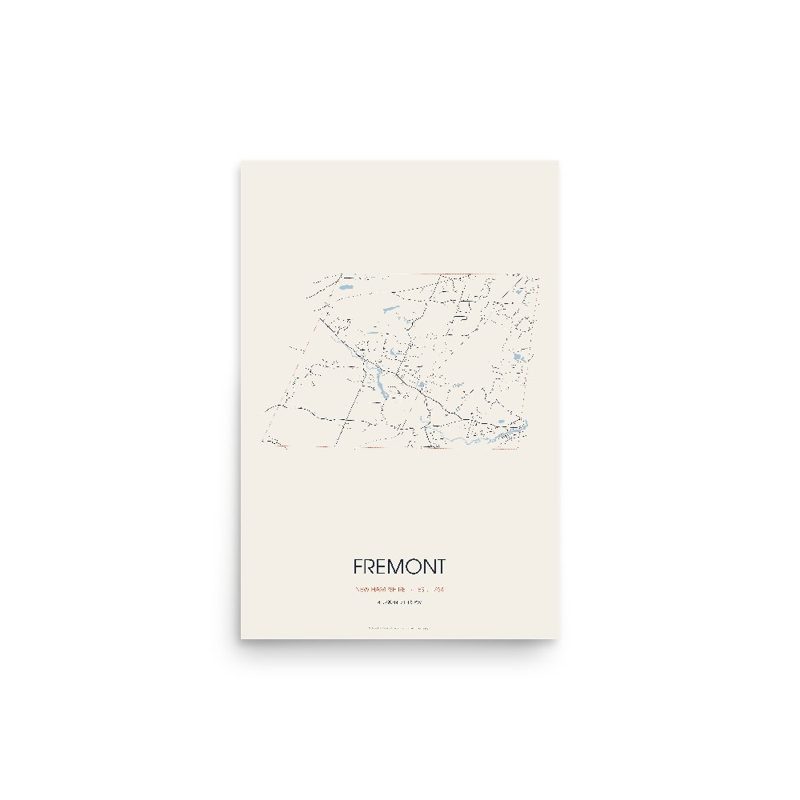
Every road in town, on archival matte paper
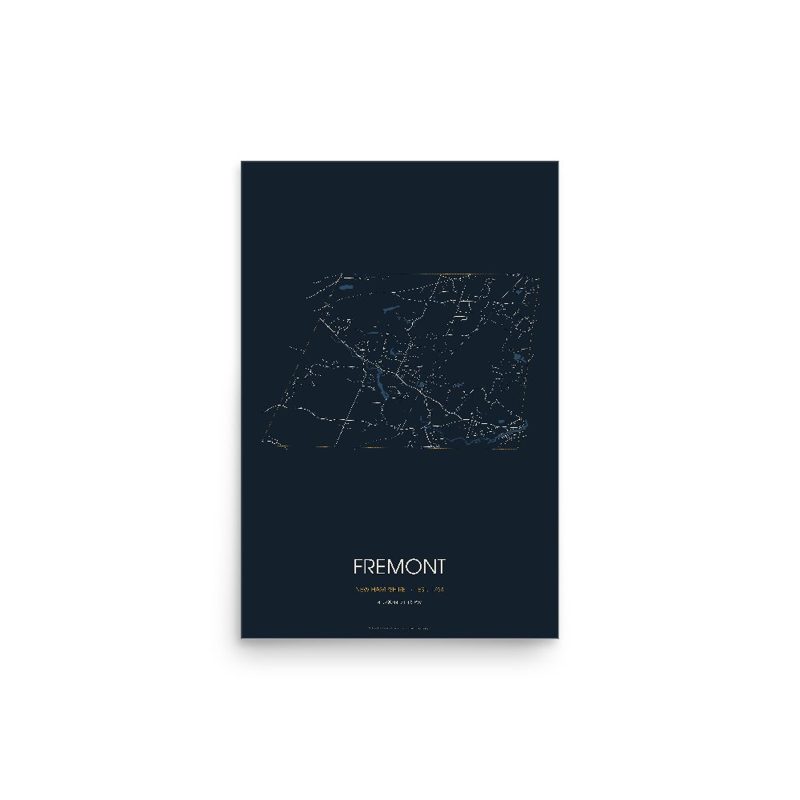
The same map, in navy and silver
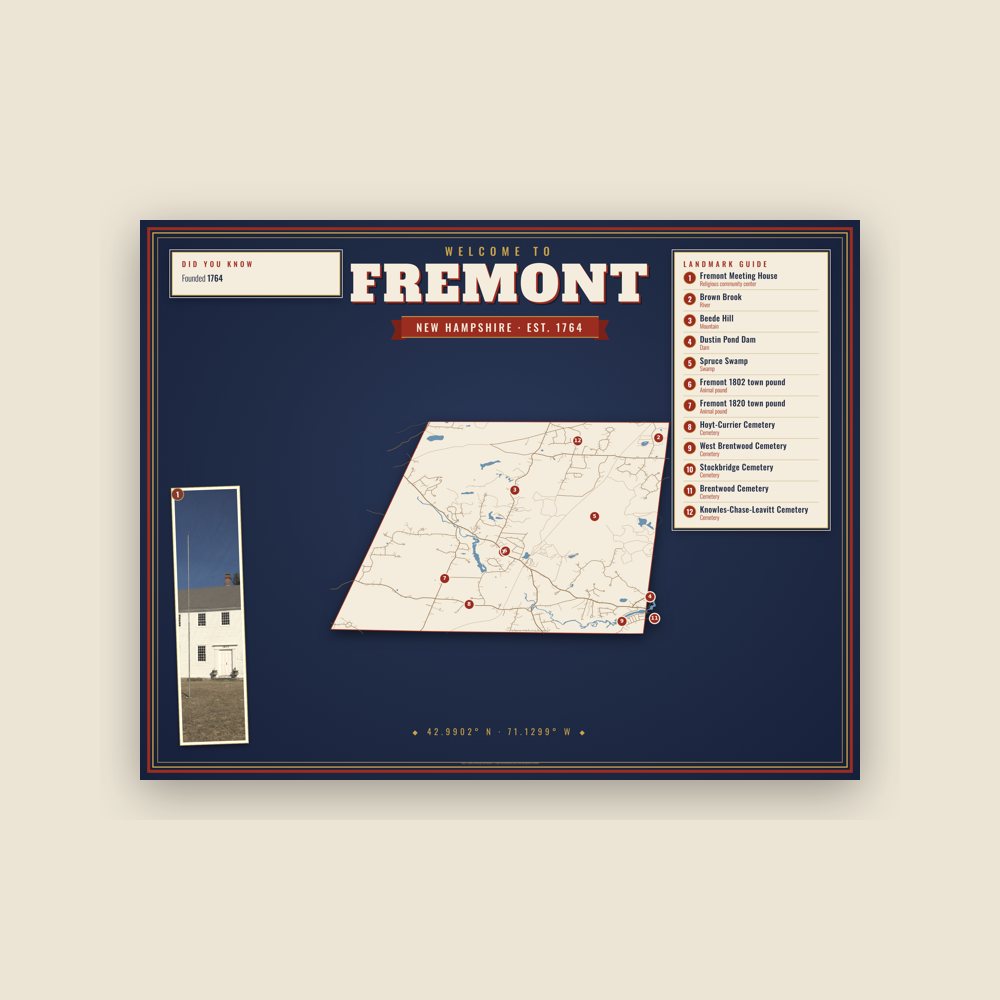
Map of local landmarks, washable fabric
Heavy-blend fleece, street map printed on the back
Soft Bella+Canvas jersey
Glossy ceramic, dishwasher safe
Ceramic keepsake, gold ribbon

Weatherproof, for the front walk
24″×16″, printed coir-look fibers, rubber back
12″×12″ printed wood, ready to hang
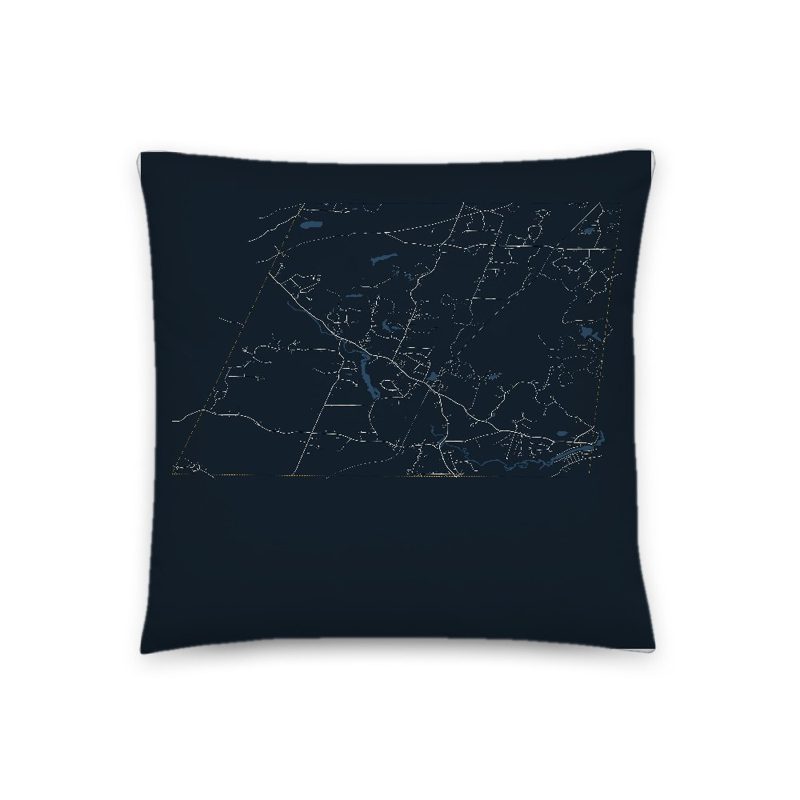
Soft-touch, zip cover
Sturdy all-over-print tote
Glossy top, cork back
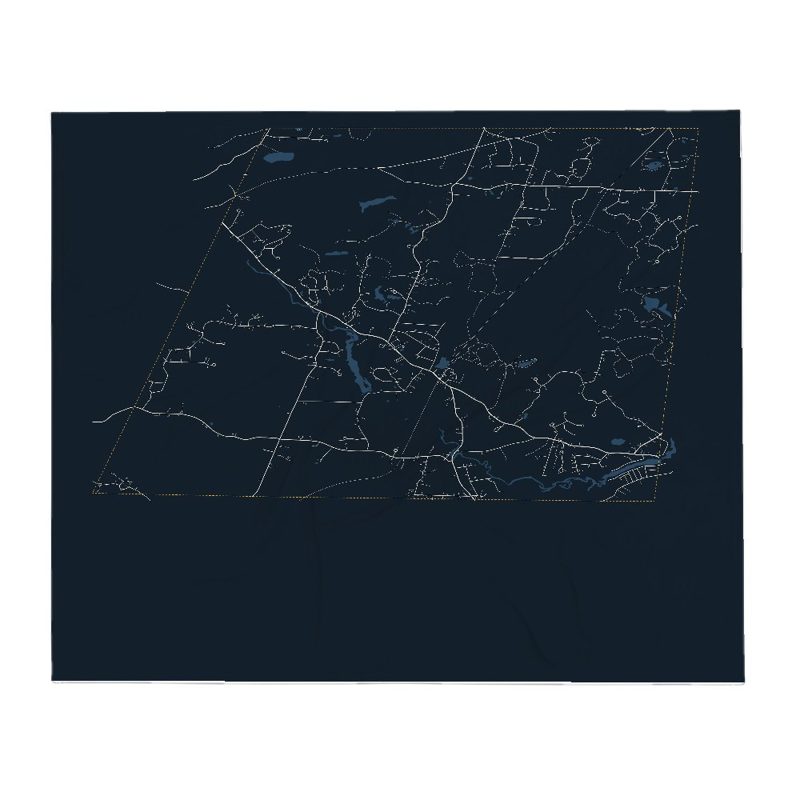
Soft fleece, 50″×60″
20 oz, double-wall stainless
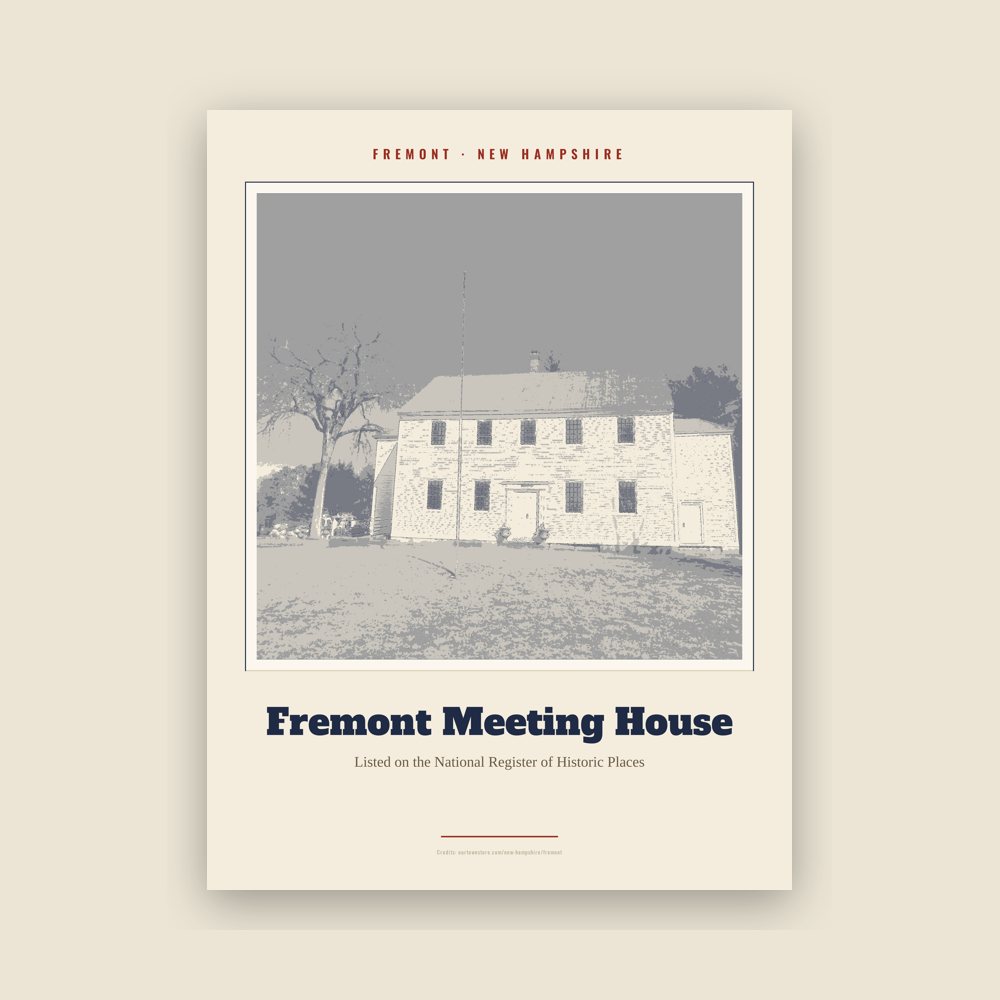
Archival matte print of a local landmark, credited to its photographer
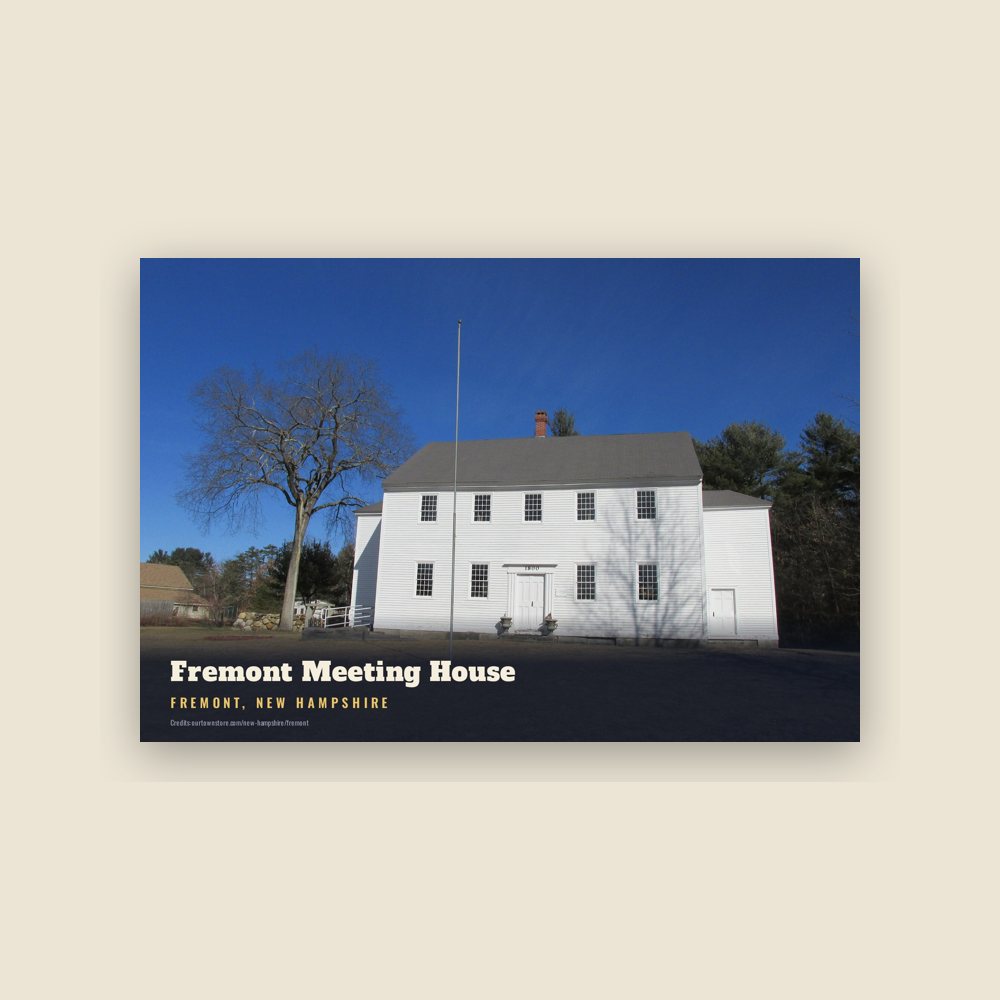
6″×4″ postcard, glossy front
Population 2010: 4,283 → 2020: 4,739
From Wikidata (CC0).
Settled in the 1720s, Fremont was originally part of Exeter. The area was once famous for its heavy growth of high-quality eastern white pine trees, reserved for use as masts of the Royal Navy. But residents began to use the wood for home construction. When in 1734 David Dunbar, surveyor-general, visited the Copyhold Mill to inspect fallen lumber, local citizens assembled, discharged firearms, and convinced Dunbar to leave. Dunbar returned emboldened with 10 men, but was forced to flee to a local tavern after citizens disguised as Indians attacked them. This insurrection became known as the Mast Tree Riot.
The town was granted in 1764 by colonial governor Benning Wentworth as "Poplin". In 1853, Poplin petitioned the state legislature to change the name. In 1854, it became "Fremont" after General John C. Frémont, the first candidate of the Republican Party in the presidential election of 1856.
The town is noted for the unspoiled Fremont Meeting House, built in 1800 and listed on the National Register of Historic Places since 1993. The town was once home to the largest brickyard in the state, producing five million bricks a year, and to the downtown Spaulding & Frost Cooperage, established in 1874, one of the oldest operating wooden barrel manufacturers in the country.
On August 10, 1959, a Boeing B-52 Stratofortress crashed in Fremont. The aircraft, serial number 54-2682, had departed Westover Air Force Base in Chicopee, Massachusetts. During flight at 34,000 feet (10,000 m), the crew heard several loud bangs, the radar system became inoperative, and the plane began to vibrate. As the vibrations became more severe, the plane began to lose altitude, and the pilot ordered the crew to bail out at 14,000 feet (4,300 m). The pilot remained with the aircraft for several additional minutes, then ejected. The plane crashed into Spruce Swamp at 2:50 p.m. local time. The pilot and seven crew members all survived. The crash was attributed to a failure of the radome on the nose of the aircraft.
Adapted (trimmed) from the Wikipedia article Fremont, New Hampshire, revision 1377350182 by its contributors, licensed CC BY-SA 4.0.
We share a part of every Fremont sale with local partners, and we'd love to print from your collection. Old photographs, maps and postcards make the best keepsakes.
Partner with us