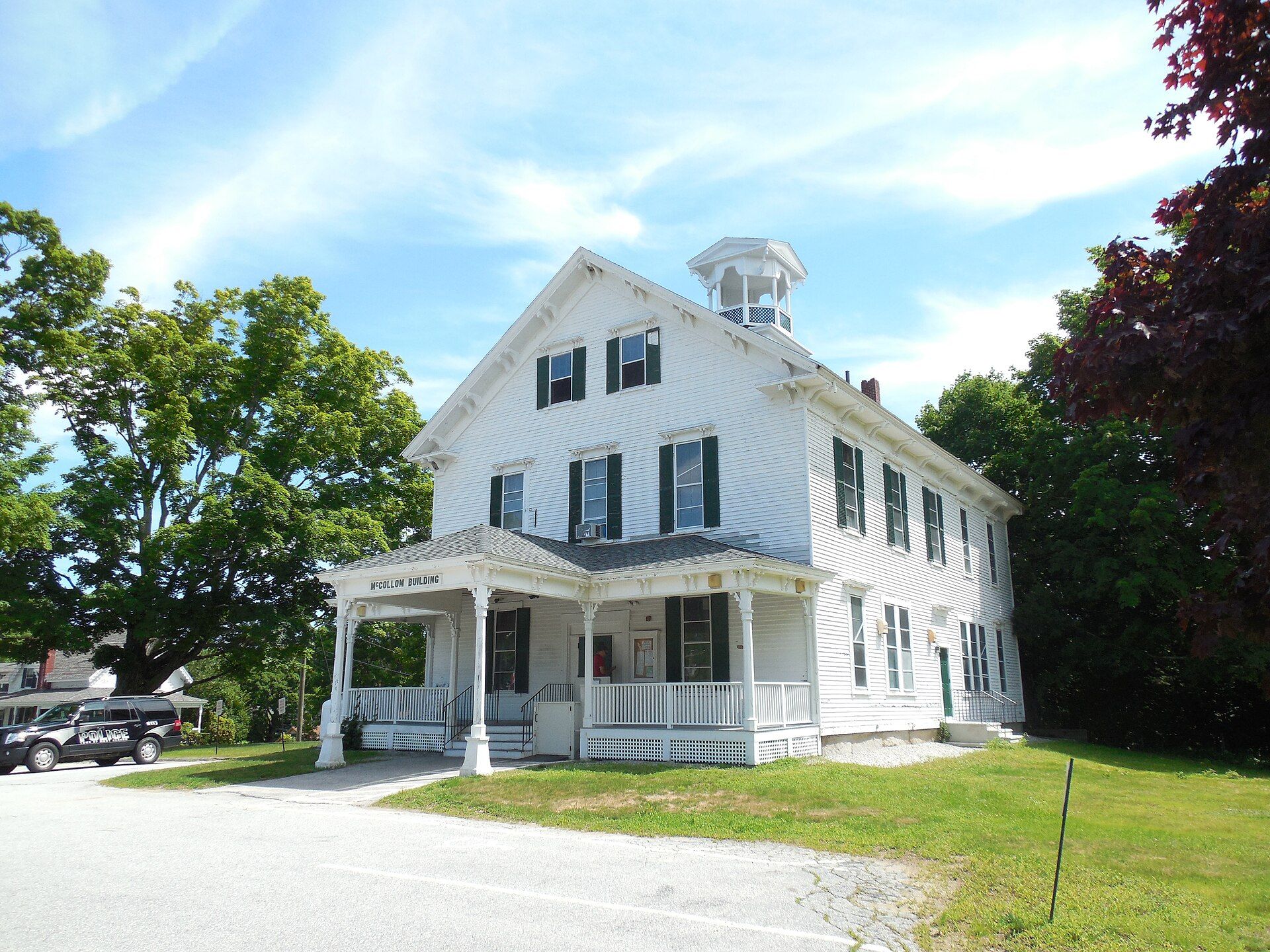
Mont Vernon's general history follows that of many towns in this region. Landmarks include McCollom Building and McCollom Institute. Mont Vernon is the birthplace of Doc Adams, baseball player and executive.
Every piece is drawn from Mont Vernon's own map data and historic archives, then printed and shipped from the USA when you order. No two towns look alike.
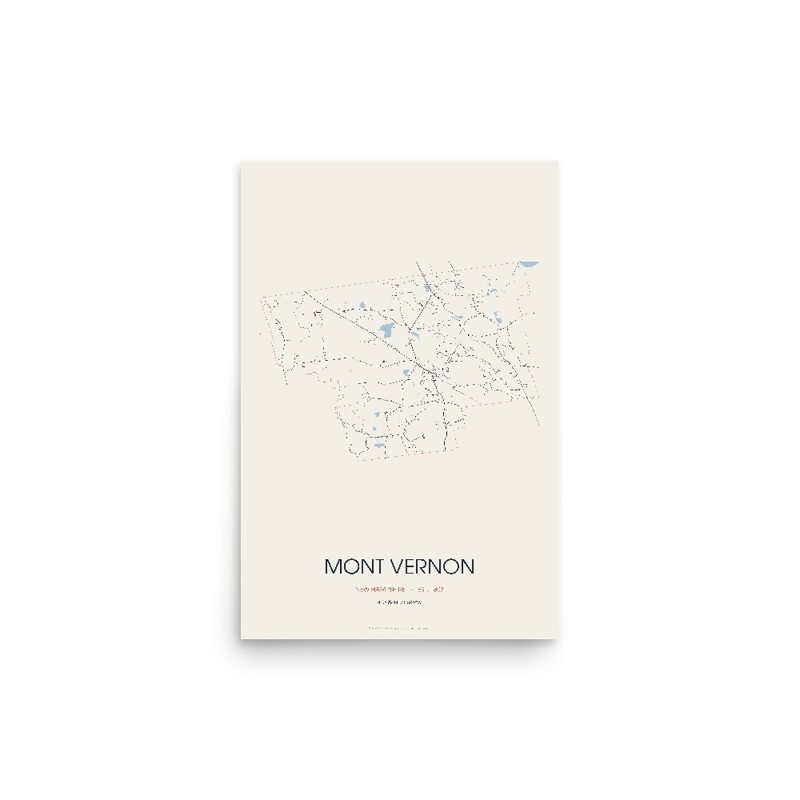
Every road in town, on archival matte paper

The same map, in navy and silver
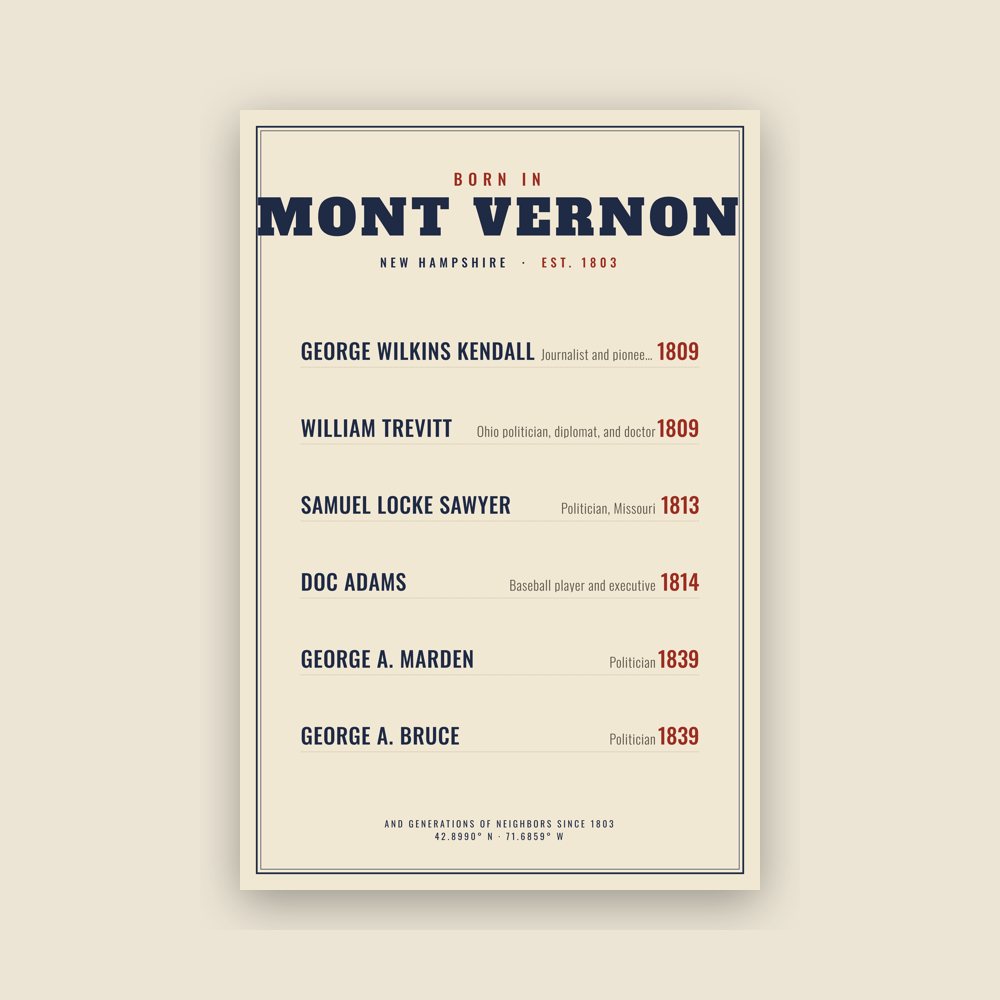
Famous natives, by birth year
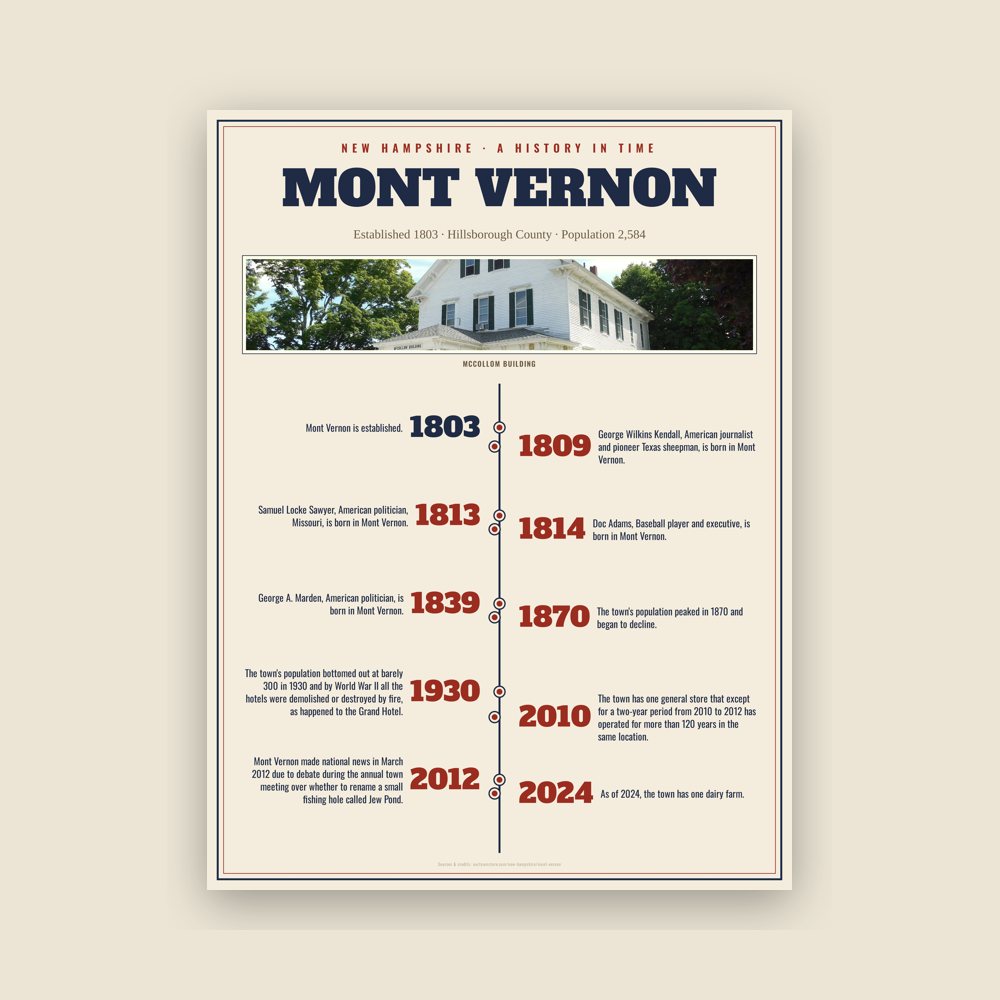
The town's story in dates, from its own records, for home or classroom
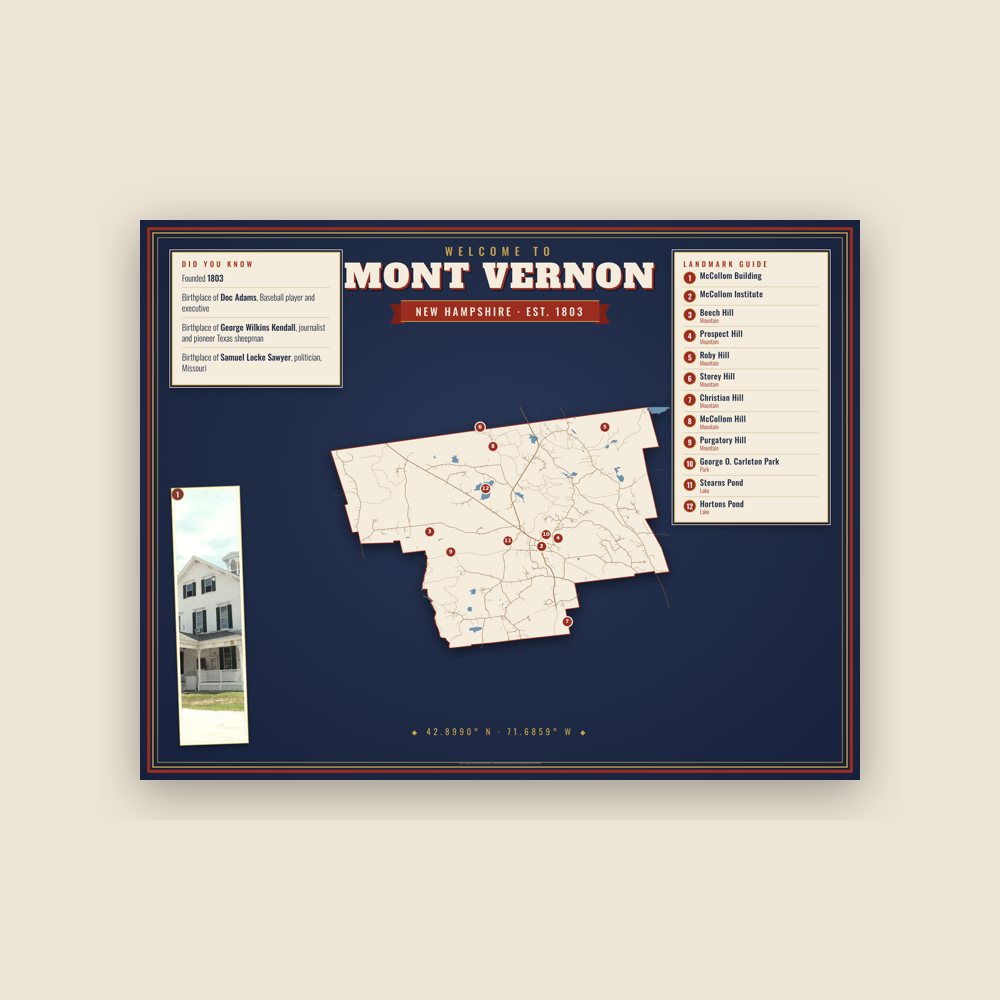
Map of local landmarks, washable fabric
Heavy-blend fleece, street map printed on the back
Soft Bella+Canvas jersey
Glossy ceramic, dishwasher safe
Ceramic keepsake, gold ribbon
Weatherproof, for the front walk
24″×16″, printed coir-look fibers, rubber back
12″×12″ printed wood, ready to hang
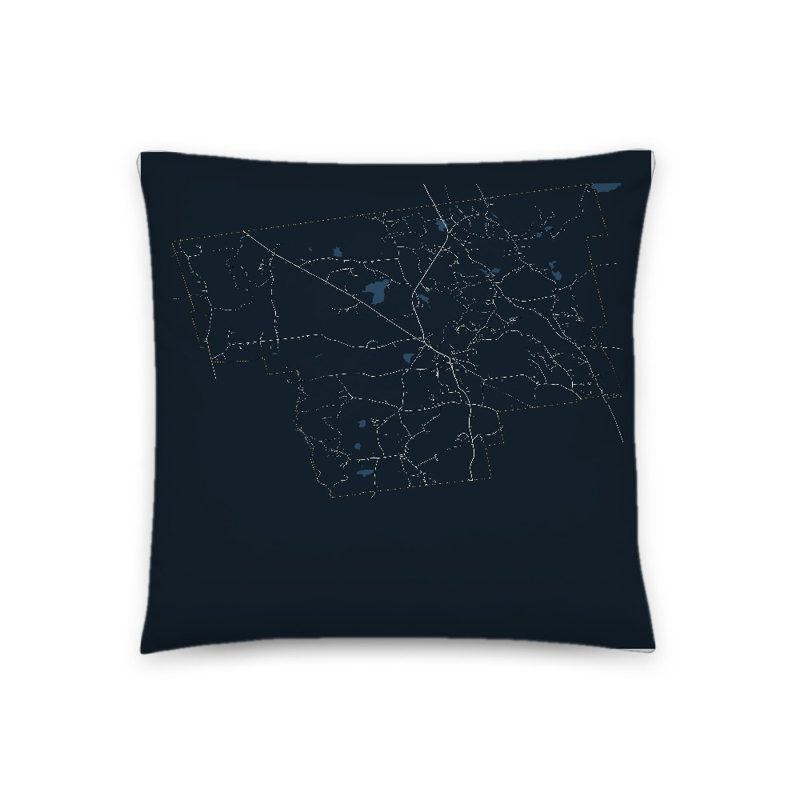
Soft-touch, zip cover
Sturdy all-over-print tote
Glossy top, cork back
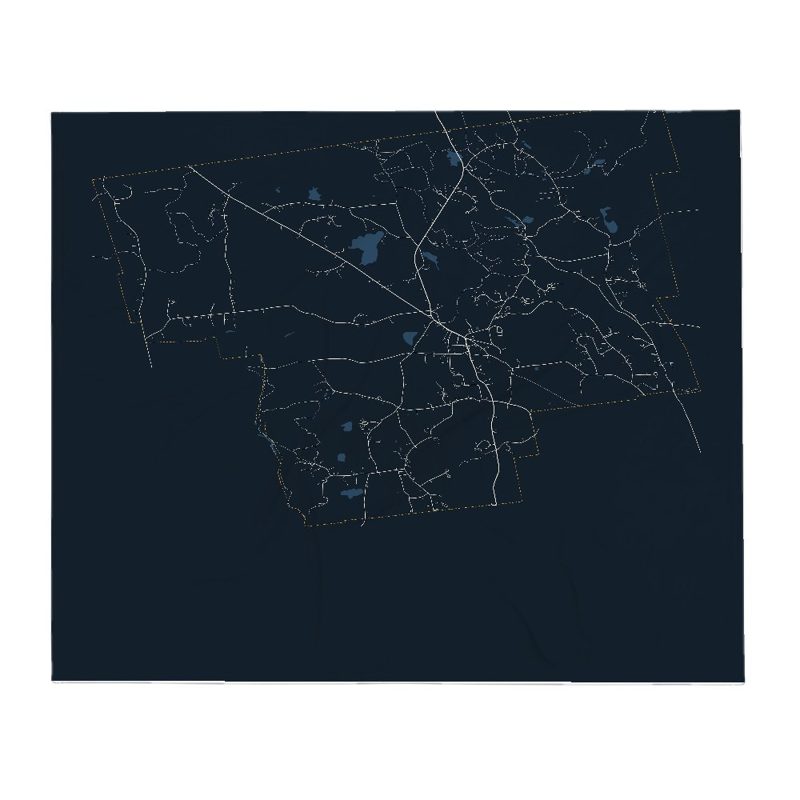
Soft fleece, 50″×60″
20 oz, double-wall stainless
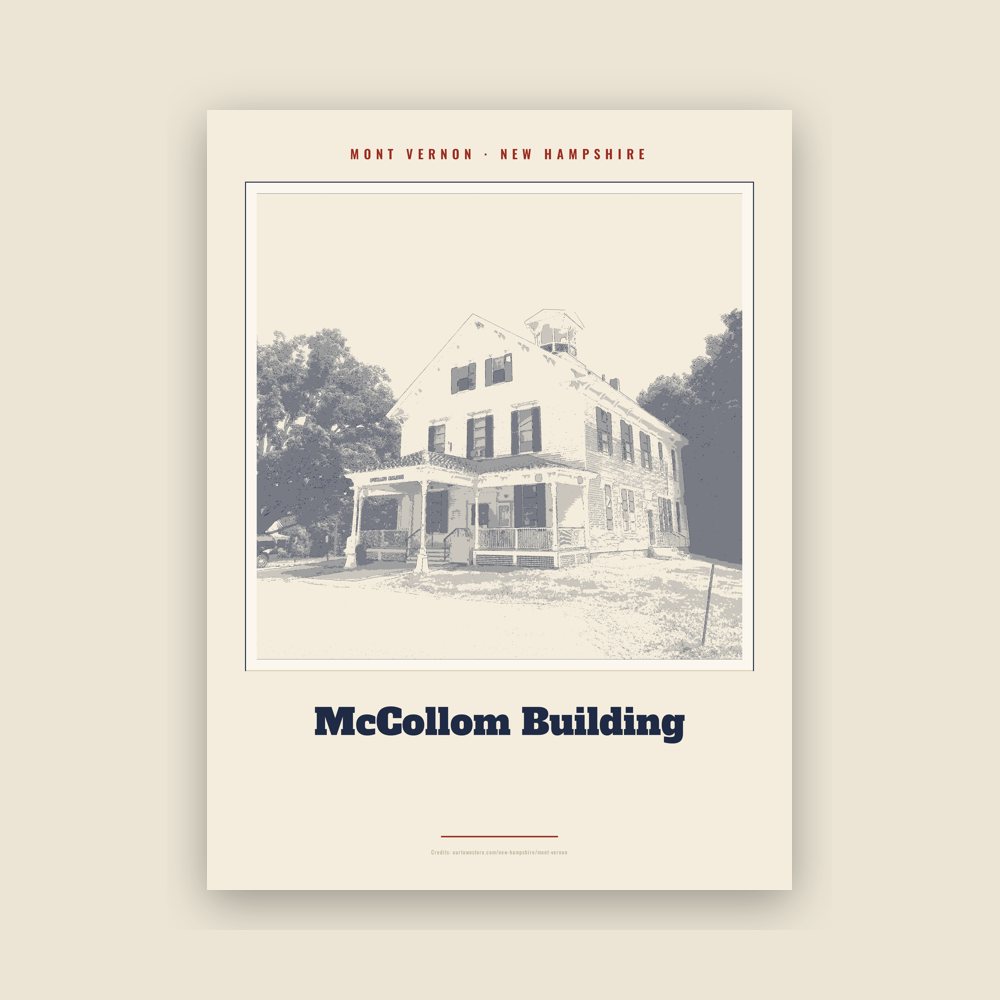
Archival matte print of a local landmark, credited to its photographer
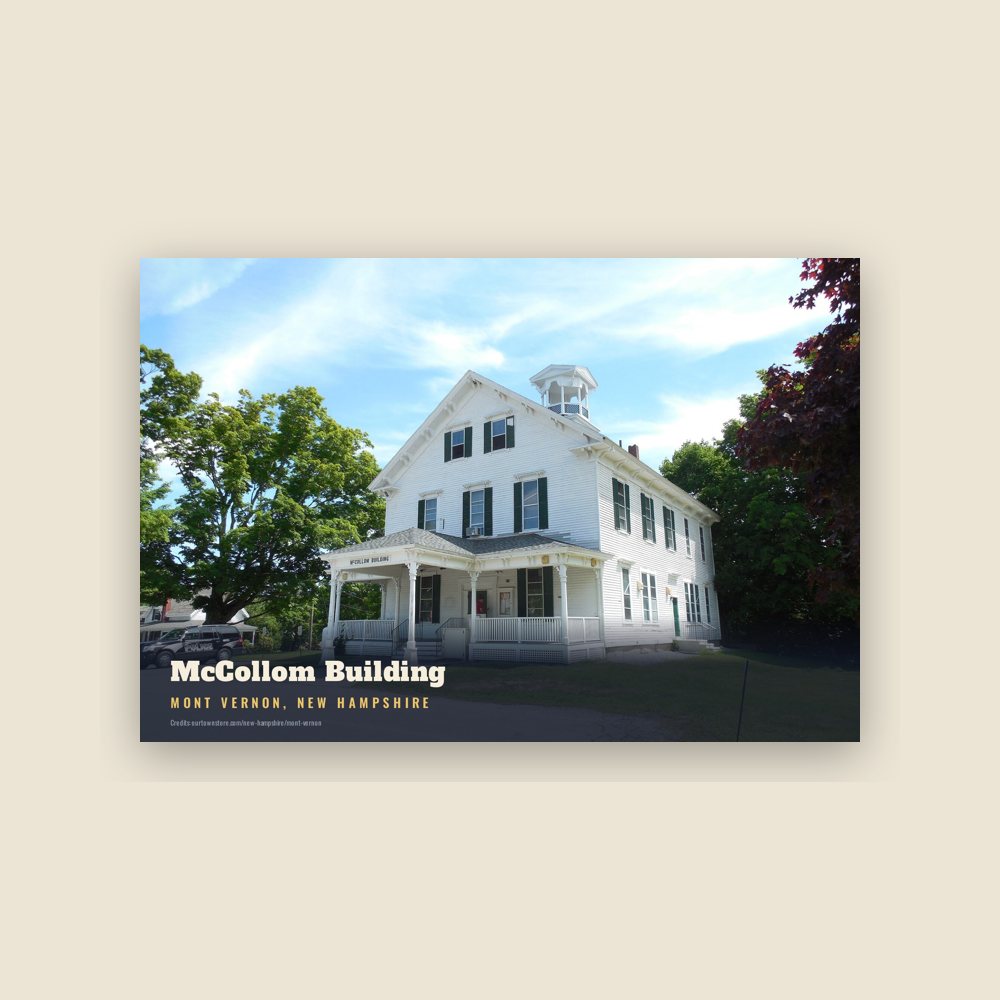
6″×4″ postcard, glossy front
Population 2010: 2,409 → 2020: 2,584
From Wikidata (CC0).
Mont Vernon broke away from neighboring Amherst in 1803, following a dispute over the town parish. It later added a small portion of neighboring Lyndeborough.
Mont Vernon's general history follows that of many towns in this region. Originally settled for agriculture, its farms were hard hit after the Civil War when railroads opened up better farming land in the Midwest. The town's population peaked in 1870 and began to decline.
By the late 1890s, it had become a tourist town, drawing summer visitors from points south, notably Boston, who escaped the heat in Mont Vernon's hills. At one point, it had five large summer hotels, including the Grand Hotel located on top of Grand Hill, and a number of boarding houses. The hotel business began to wither with the development of the automobile, which allowed tourists to reach places like the White Mountains of New Hampshire, and it was killed by the Great Depression. The town's population bottomed out at barely 300 in 1930 and by World War II all the hotels were demolished or destroyed by fire, as happened to the Grand Hotel.
Since the war, Mont Vernon has slowly become a suburban community. This was significantly accelerated in 1962–1963 when engineers and technicians employed at Sanders Associates in Nashua found homes in Mont Vernon attractive. It wasn't until the 1970 census that the town's official population passed mid-19th century highs.
Agriculture, including a 1940s and 1950s boom in chicken and egg farming, has all but disappeared. As of 2024, the town has one dairy farm. The town has one general store that except for a two-year period from 2010 to 2012 has operated for more than 120 years in the same location.
Mont Vernon made national news in March 2012 due to debate during the annual town meeting over whether to rename a small fishing hole called Jew Pond. The town eventually renamed it Carleton Pond, after the family which donated the surrounding property to the town.
Adapted (trimmed) from the Wikipedia article Mont Vernon, New Hampshire, revision 1378738671 by its contributors, licensed CC BY-SA 4.0.
We share a part of every Mont Vernon sale with local partners, and we'd love to print from your collection. Old photographs, maps and postcards make the best keepsakes.
Partner with us