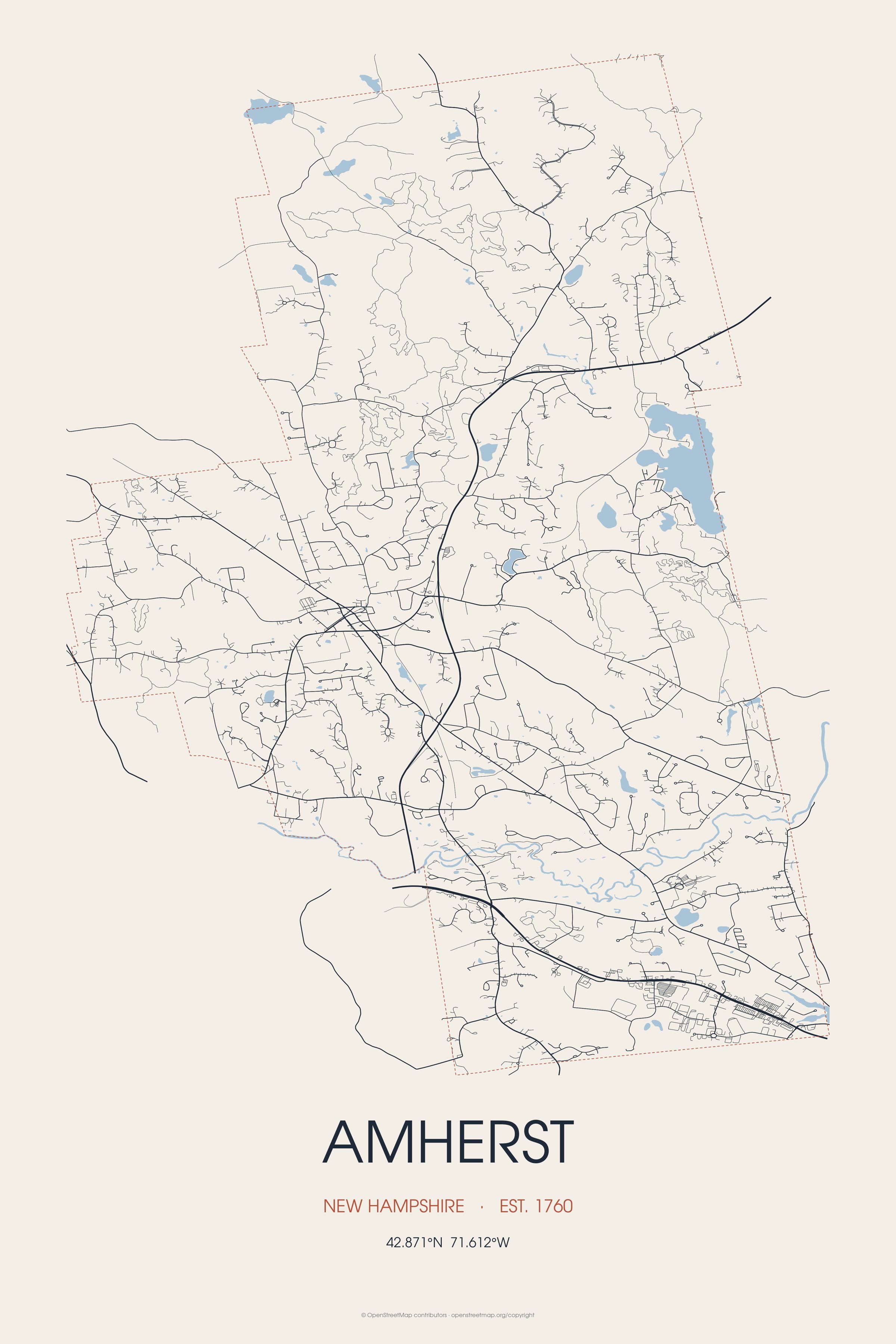
Amherst is home to Ponemah Bog Wildlife Sanctuary, Hodgman State Forest, the Joe English Reservation and Baboosic Lake. Landmarks include Amherst Village Historic District. Amherst is the birthplace of Horace Greeley, politician and publisher.
Every piece is drawn from Amherst's own map data and historic archives, then printed and shipped from the USA when you order. No two towns look alike.
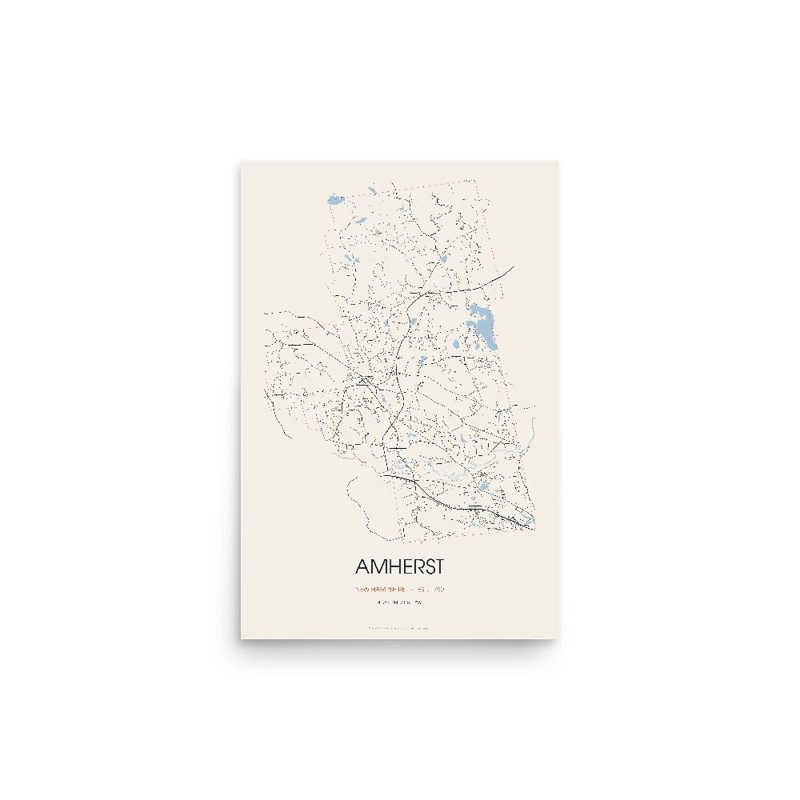
Every road in town, on archival matte paper
The same map, in navy and silver
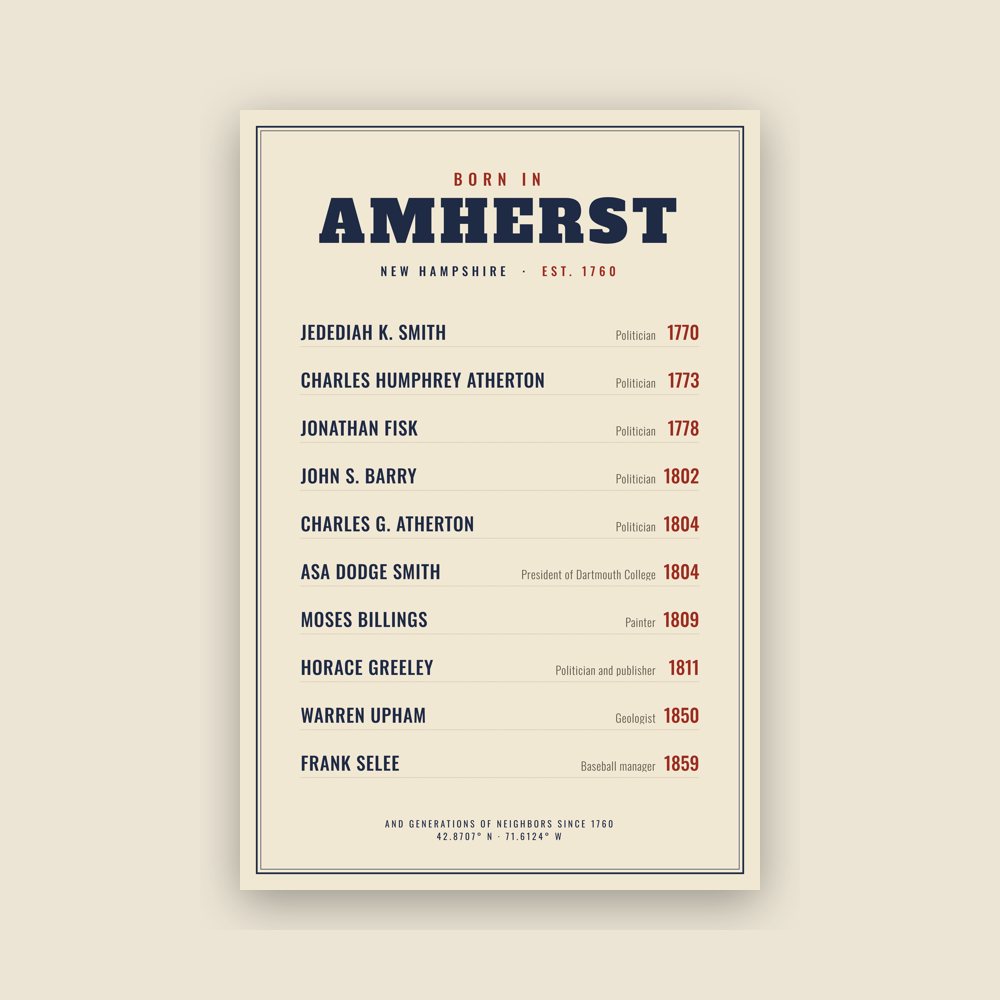
Famous natives, by birth year
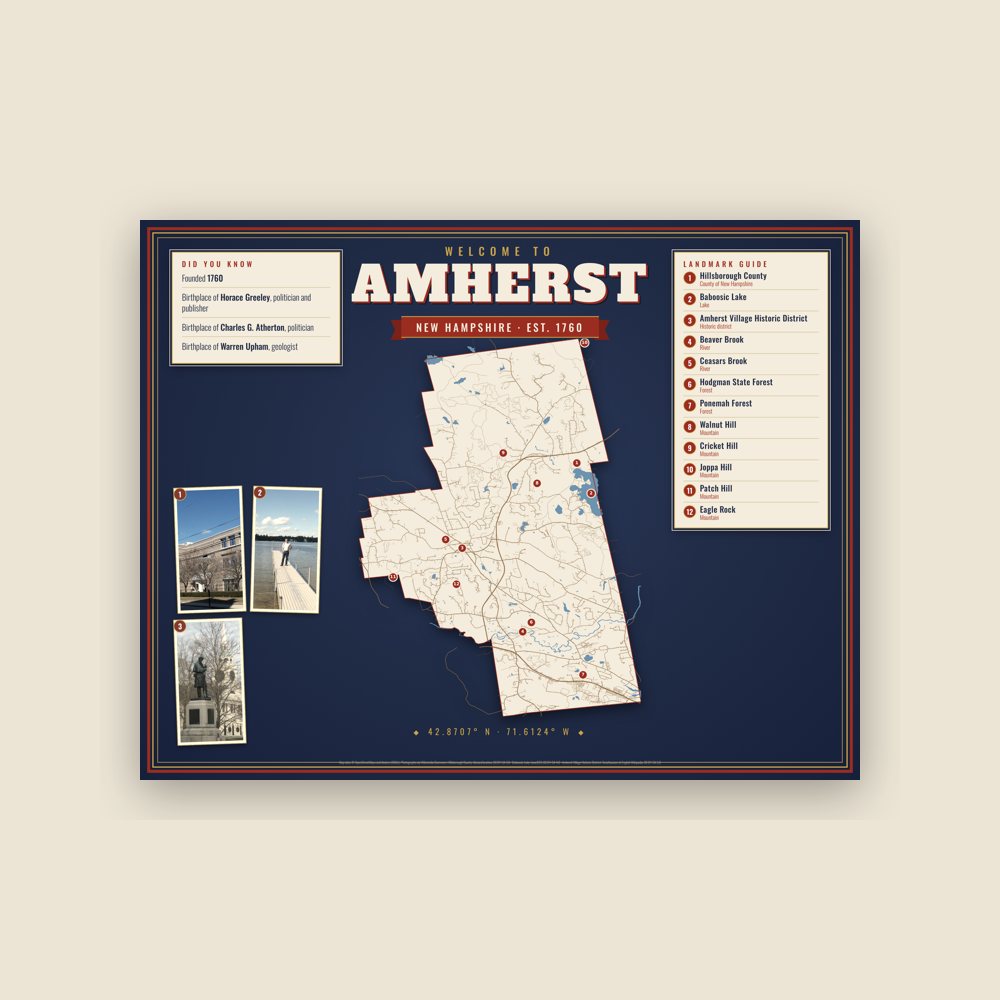
Map of local landmarks, washable fabric
Heavy-blend fleece, street map printed on the back
Soft Bella+Canvas jersey
Glossy ceramic, dishwasher safe
Ceramic keepsake, gold ribbon
Weatherproof, for the front walk
24″×16″, printed coir-look fibers, rubber back
12″×12″ printed wood, ready to hang
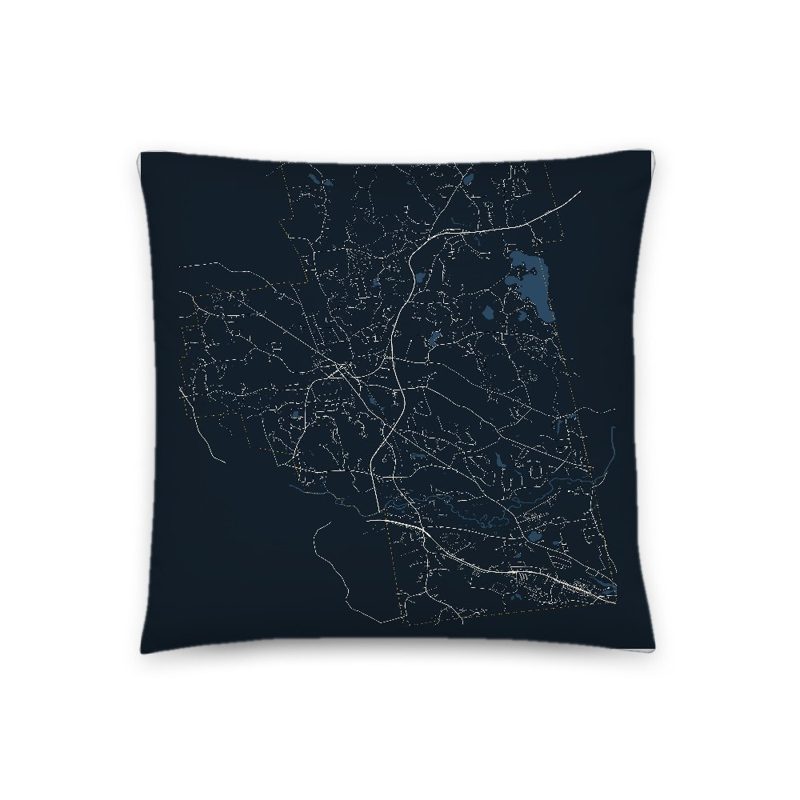
Soft-touch, zip cover
Sturdy all-over-print tote
Glossy top, cork back
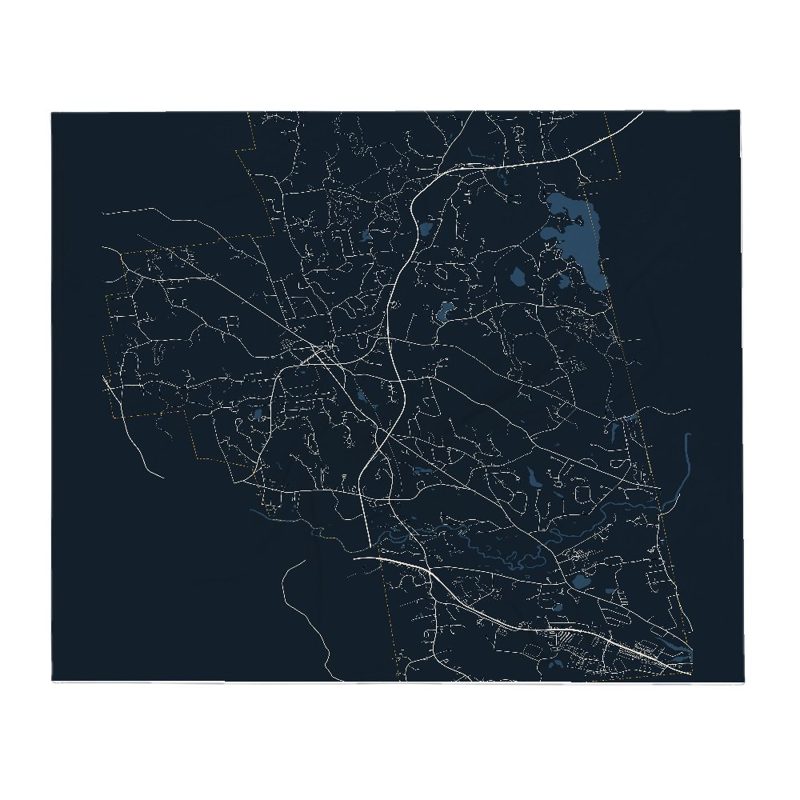
Soft fleece, 50″×60″
20 oz, double-wall stainless
Population 2010: 11,201 → 2020: 11,753
From Wikidata (CC0).
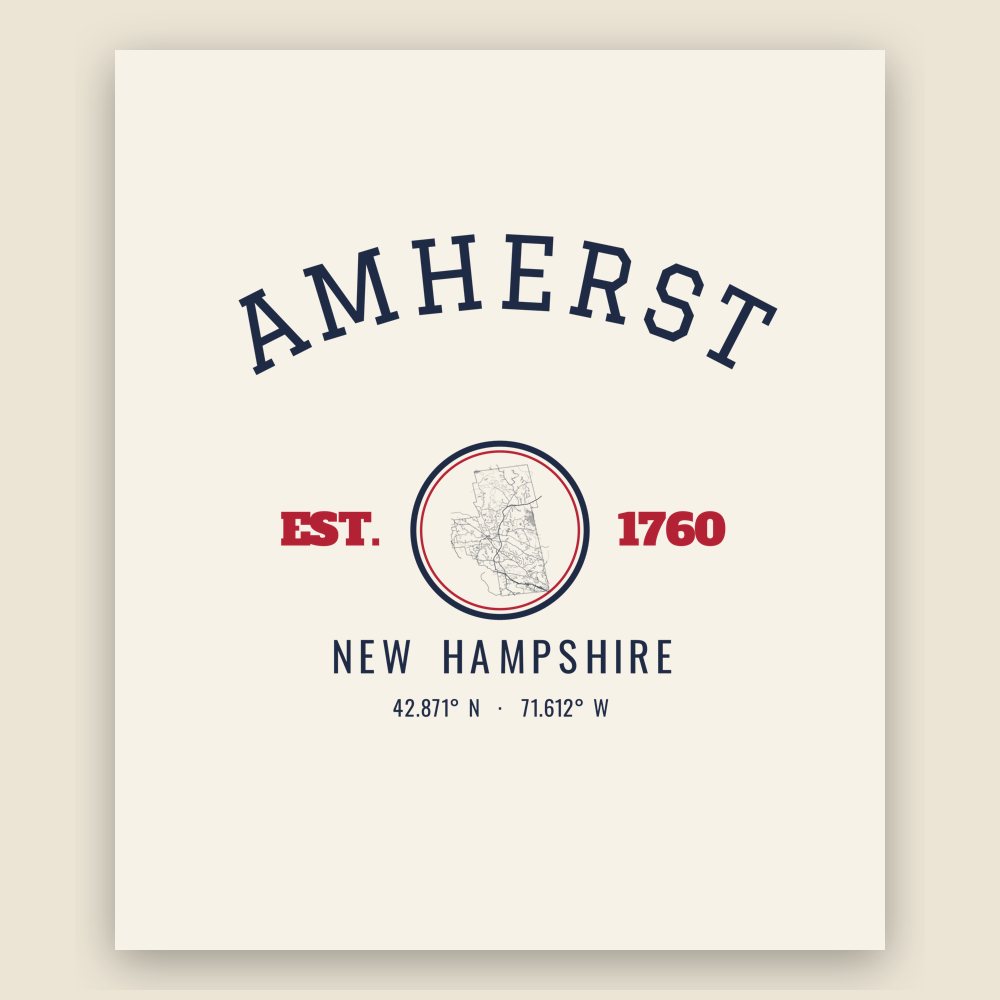
Like many towns in New England, Amherst was founded via a land grant issued to members of the colonial militia; the land grant which led to the town's foundation was issued in 1728 to veterans of King Philip's War. A colonial settlement was established at the land grant's location five years later in 1733, being initially named "Narragansett Number 3" and later "Souhegan Number 3". In 1741, the settlement's inhabitants established a Congregational church and hired a minister to preach in the settlement. On January 18, 1760, the settlement was chartered by the governor of New Hampshire Benning Wentworth, who renamed it after General Jeffery Amherst, who served as Commander-in-Chief, North America during the French and Indian War. Wentworth chartered Amherst as part of a wave of land grants he issued during the mid-18th century.
In 1770, Amherst became the county seat of Hillsborough County, due largely to its location on the county's major east-west road. It continued to prosper through the Revolutionary War and afterwards. In 1790, the southwestern section broke off and became the town of Milford, and in 1803, the northwest section departed to become Mont Vernon. The development of water-powered mills allowed Milford to grow at Amherst's expense, and the county seat was moved to Milford in 1866.
The town population remained relatively stagnant until after World War II, when Amherst and many surrounding towns saw an influx of newcomers as the town became part of the Greater Boston region.
Franklin Pierce, who later become the 14th President of the United States studied under Judge Edmund Parker in Amherst. He wed Jane Means Appleton, the daughter of a former president of Bowdoin College, in a house on the town green.
Adapted (trimmed) from the Wikipedia article Amherst, New Hampshire, revision 1378460388 by its contributors, licensed CC BY-SA 4.0.
We share a part of every Amherst sale with local partners, and we'd love to print from your collection. Old photographs, maps and postcards make the best keepsakes.
Partner with us