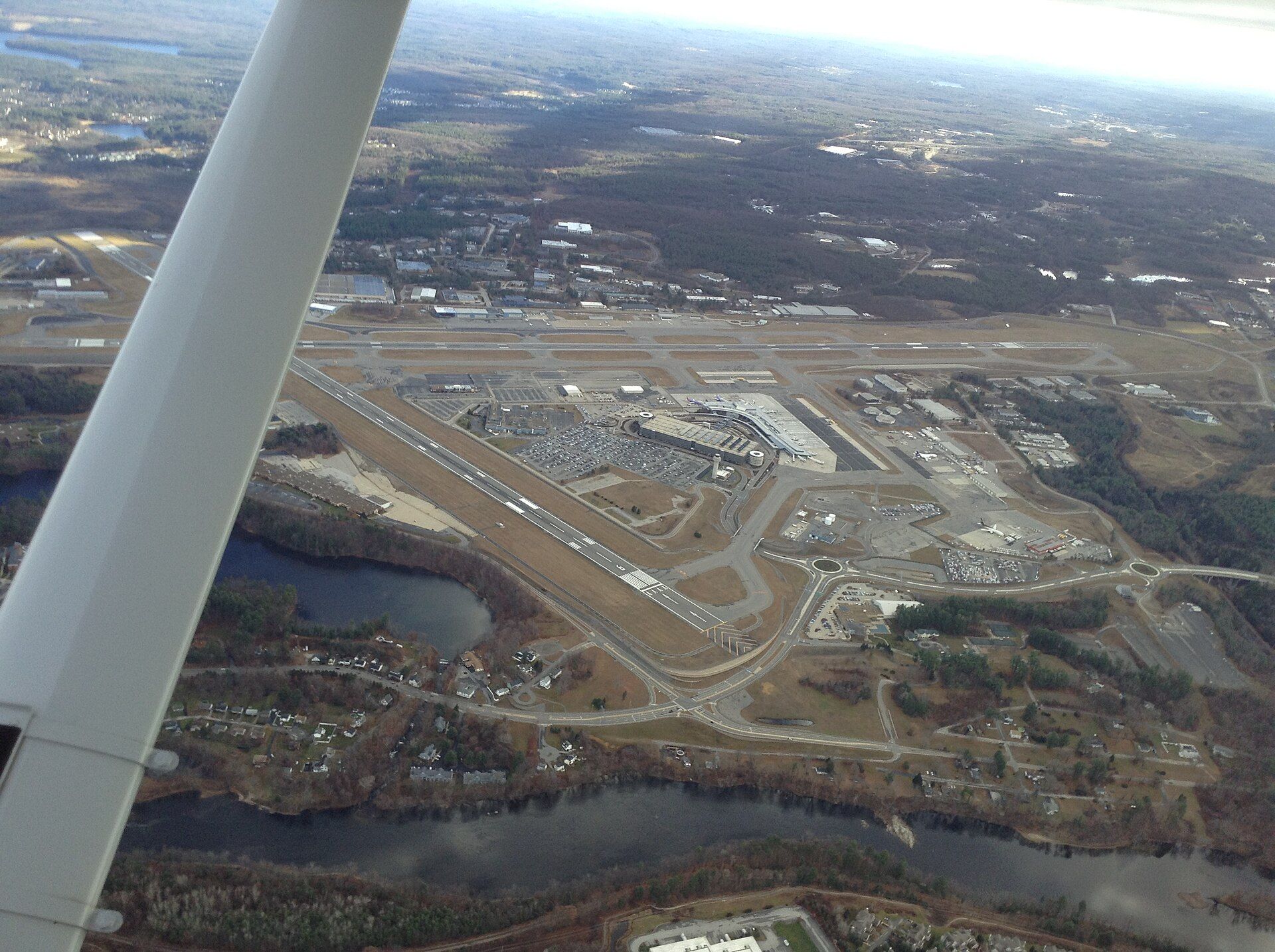
Manchester is the most populous city in the U.S. state of New Hampshire. Landmarks include Manchester–Boston Regional Airport, Diocese of Manchester and SNHU Arena. Manchester is the birthplace of Toby Fox, video game designer and composer.
Every piece is drawn from Manchester's own map data and historic archives, then printed and shipped from the USA when you order. No two towns look alike.
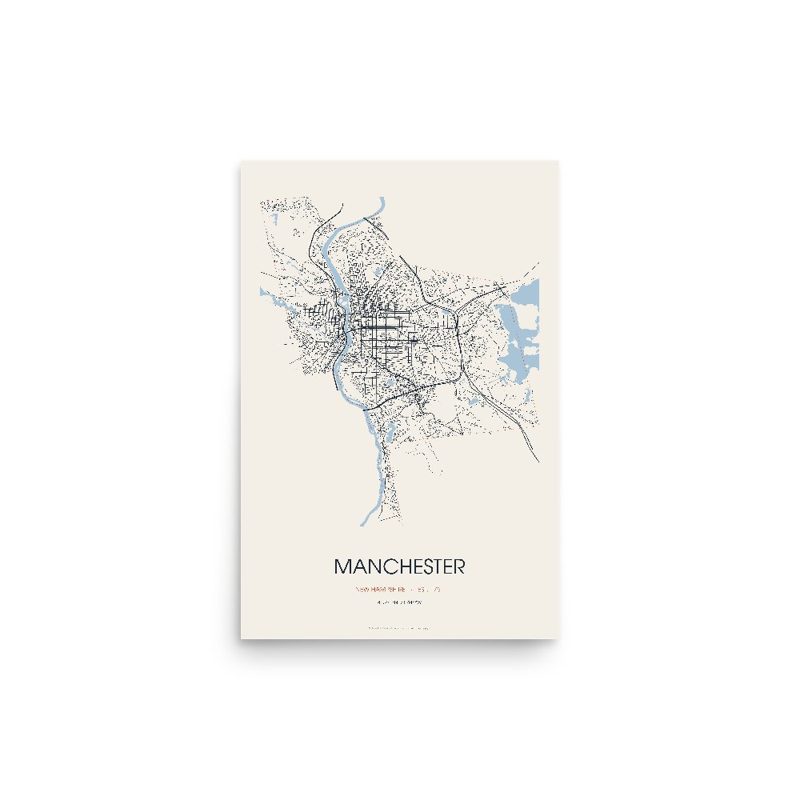
Every road in town, on archival matte paper
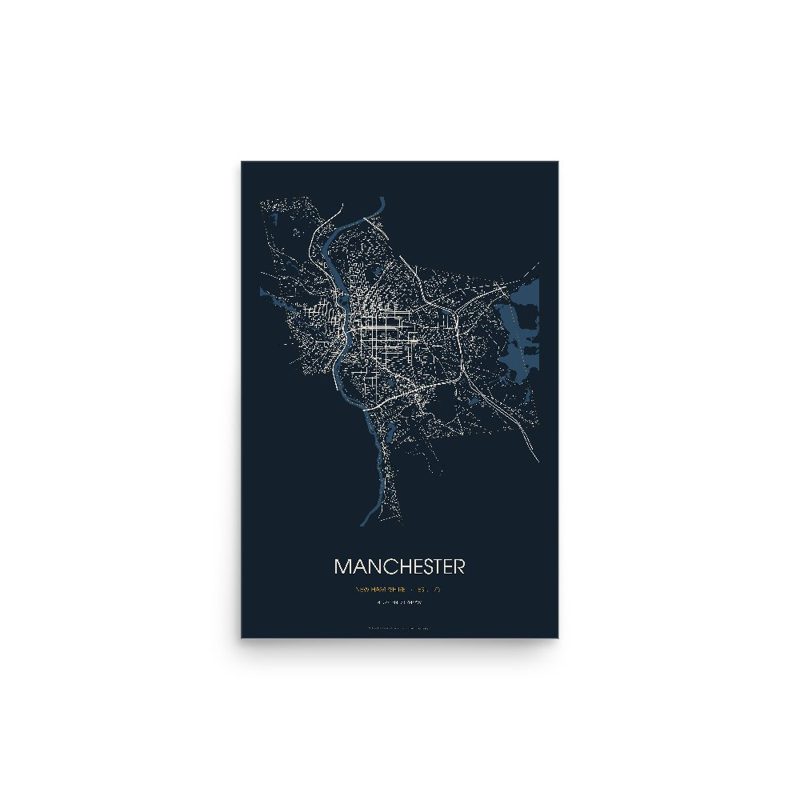
The same map, in navy and silver
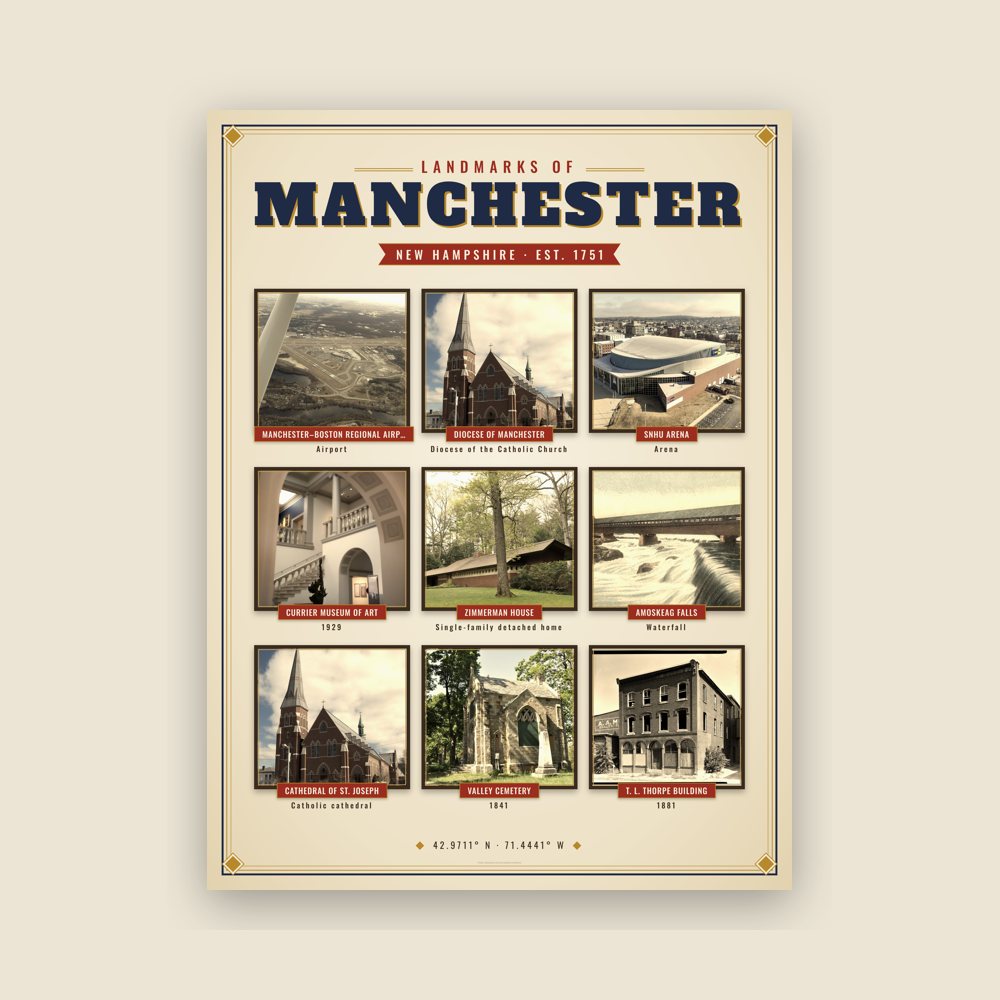
Nine local landmarks, archival matte
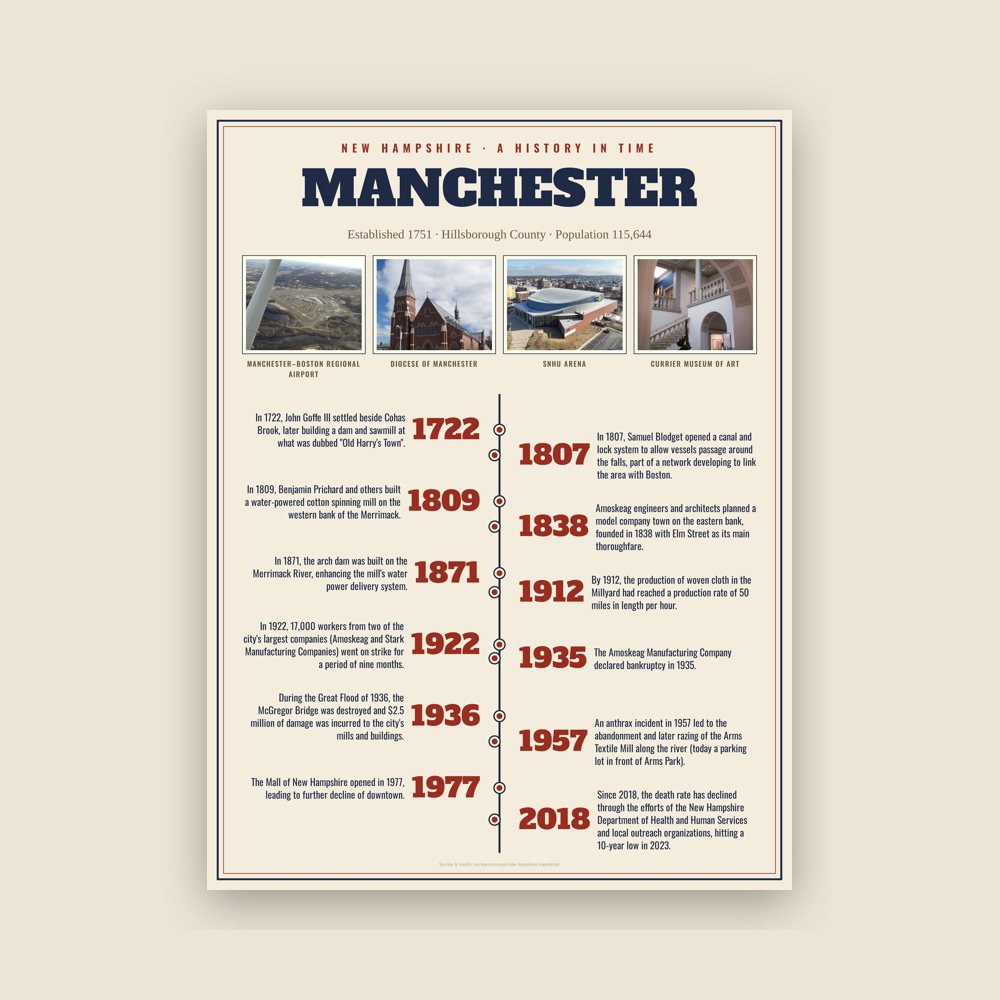
The town's story in dates, from its own records, for home or classroom
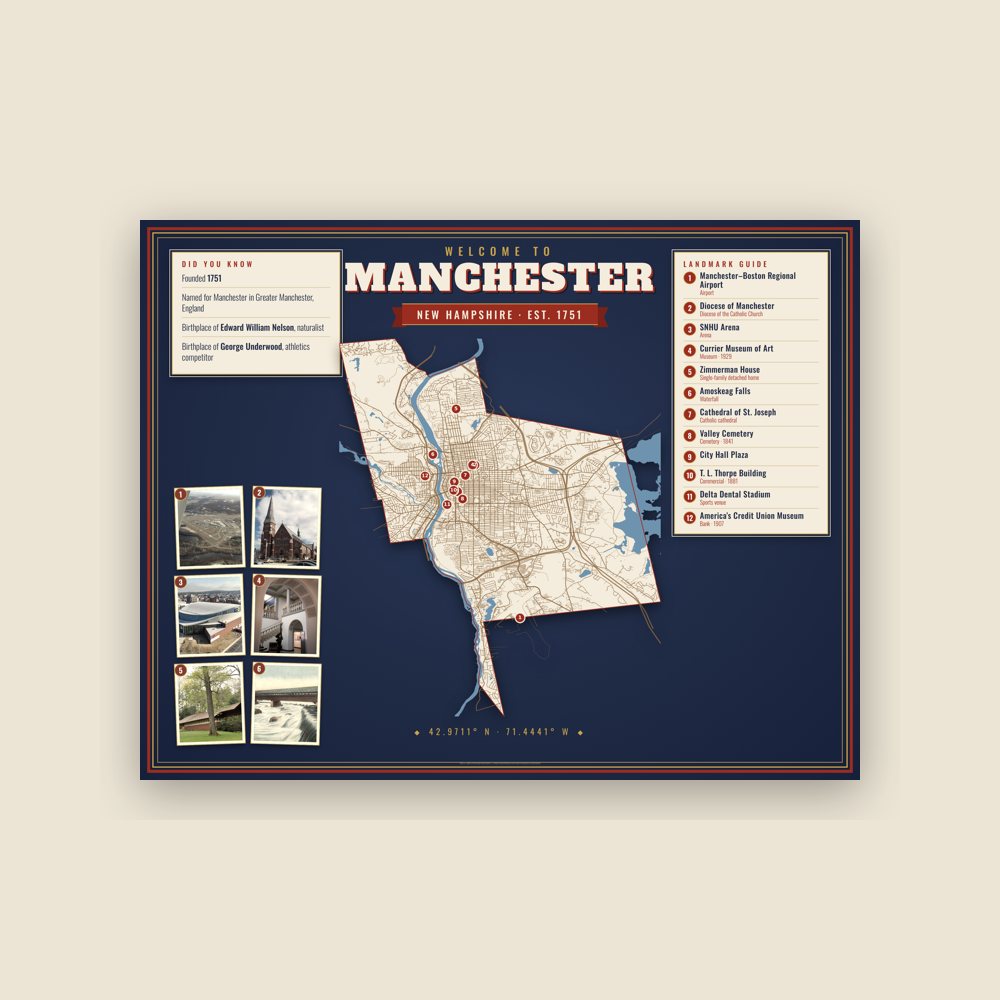
Map of local landmarks, washable fabric
Heavy-blend fleece, street map printed on the back
Soft Bella+Canvas jersey
Glossy ceramic, dishwasher safe
Ceramic keepsake, gold ribbon
Weatherproof, for the front walk
24″×16″, printed coir-look fibers, rubber back
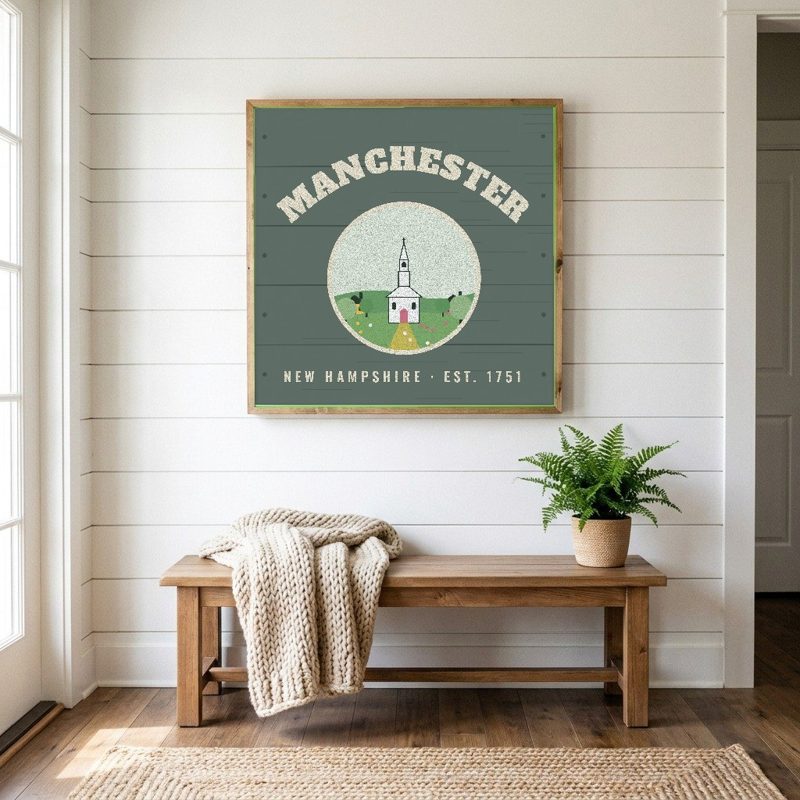
12″×12″ printed wood, ready to hang
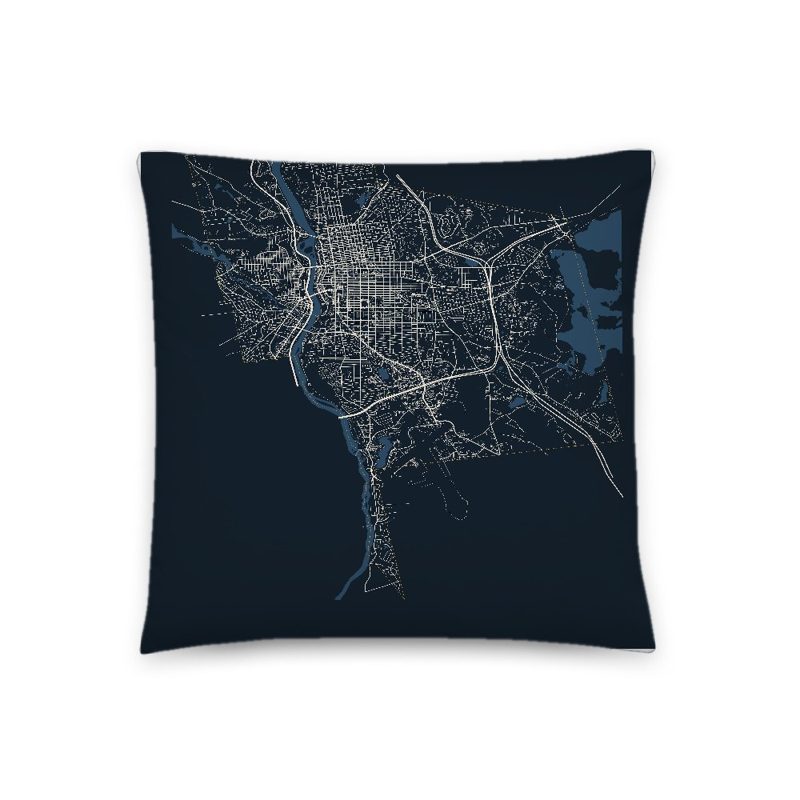
Soft-touch, zip cover
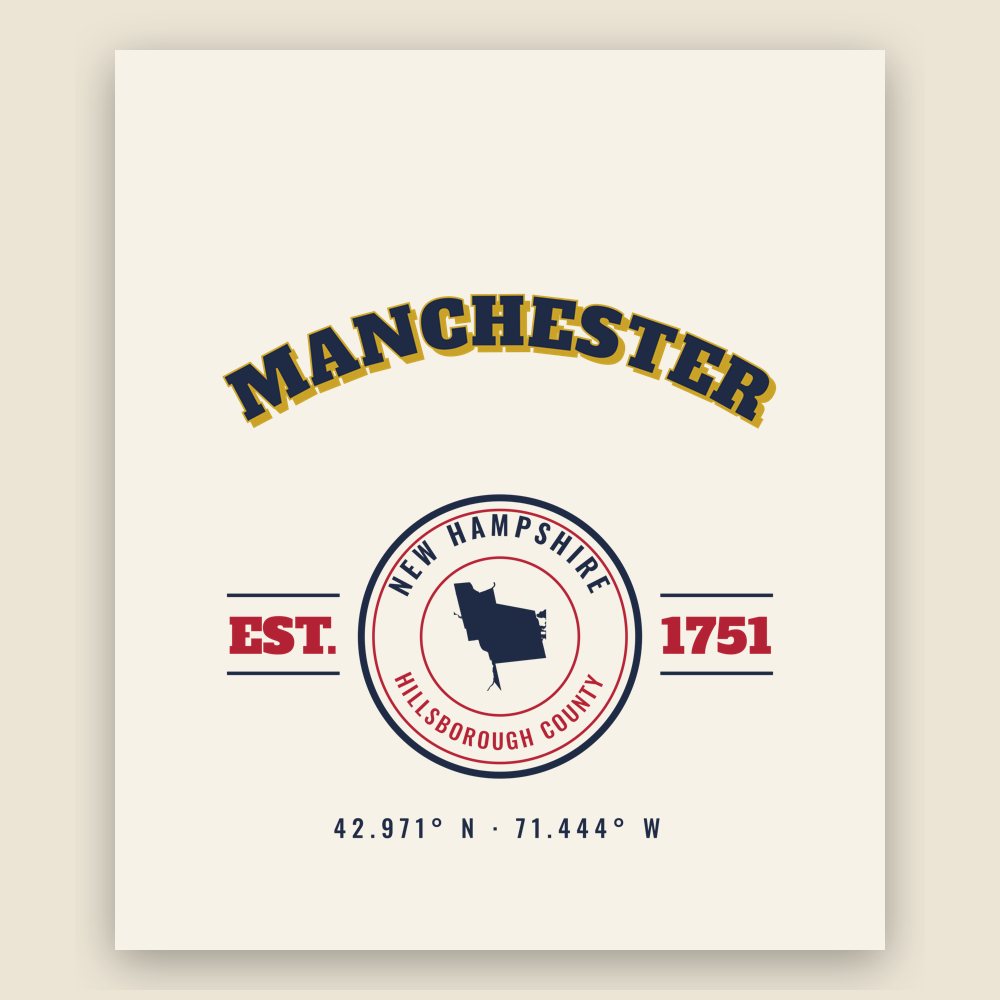
Sturdy all-over-print tote
Glossy top, cork back
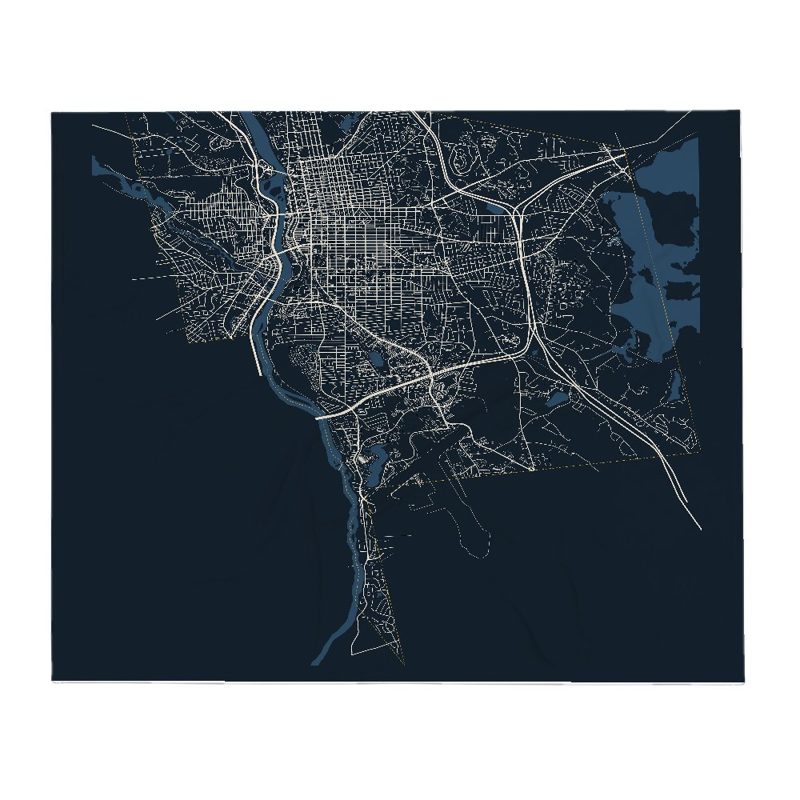
Soft fleece, 50″×60″
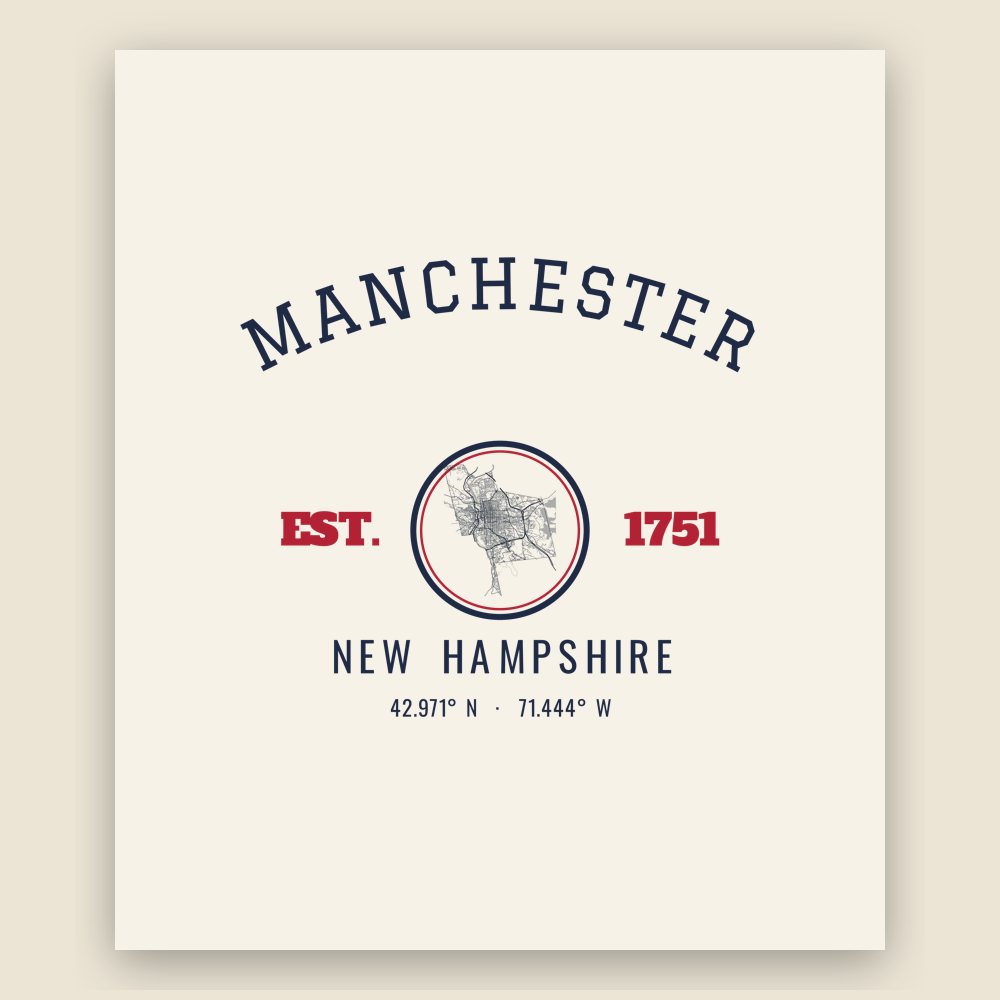
20 oz, double-wall stainless
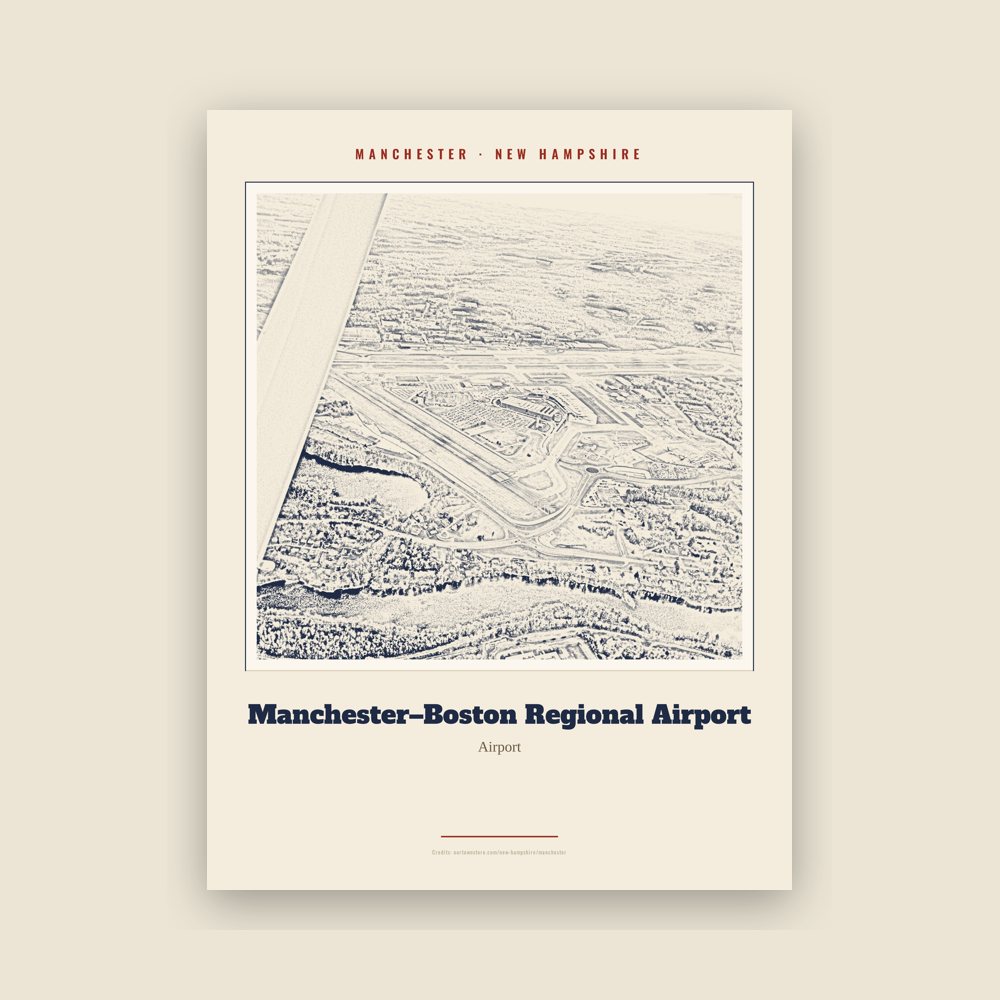
Archival matte print of a local landmark, credited to its photographer
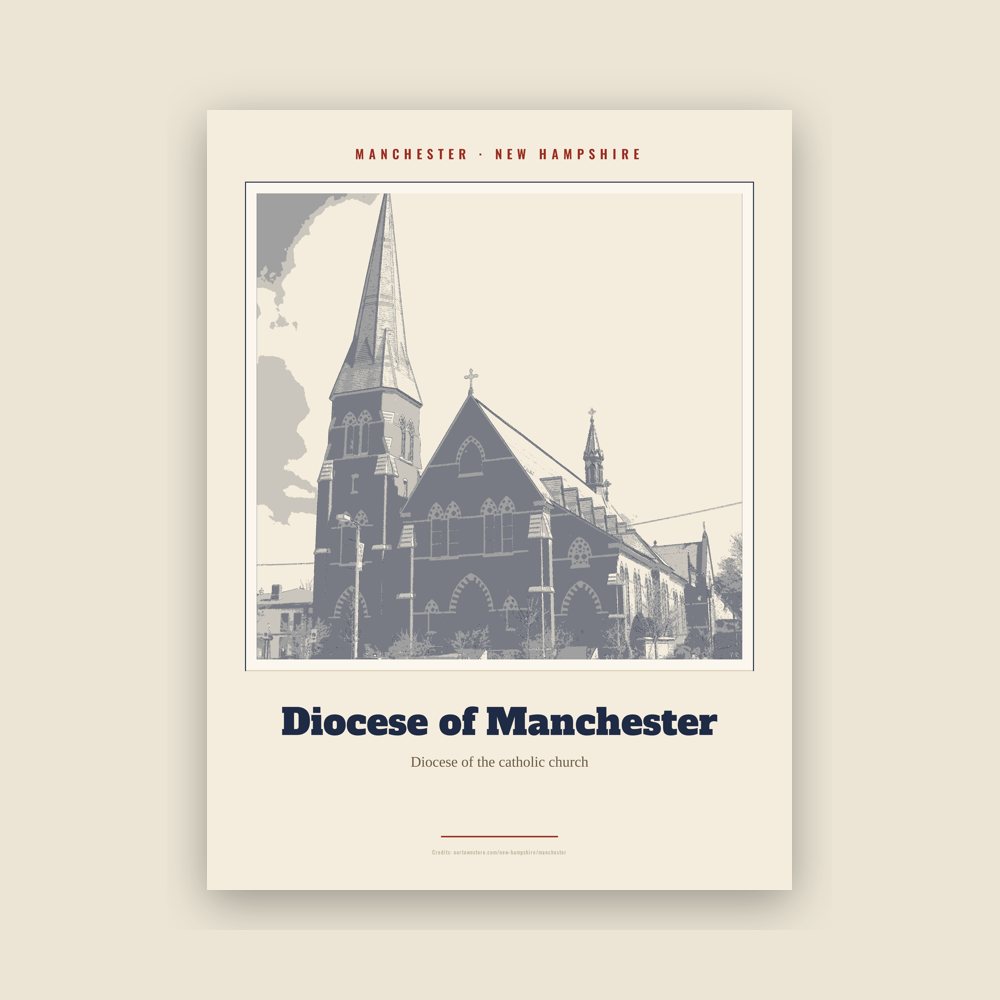
Archival matte print of a local landmark, credited to its photographer
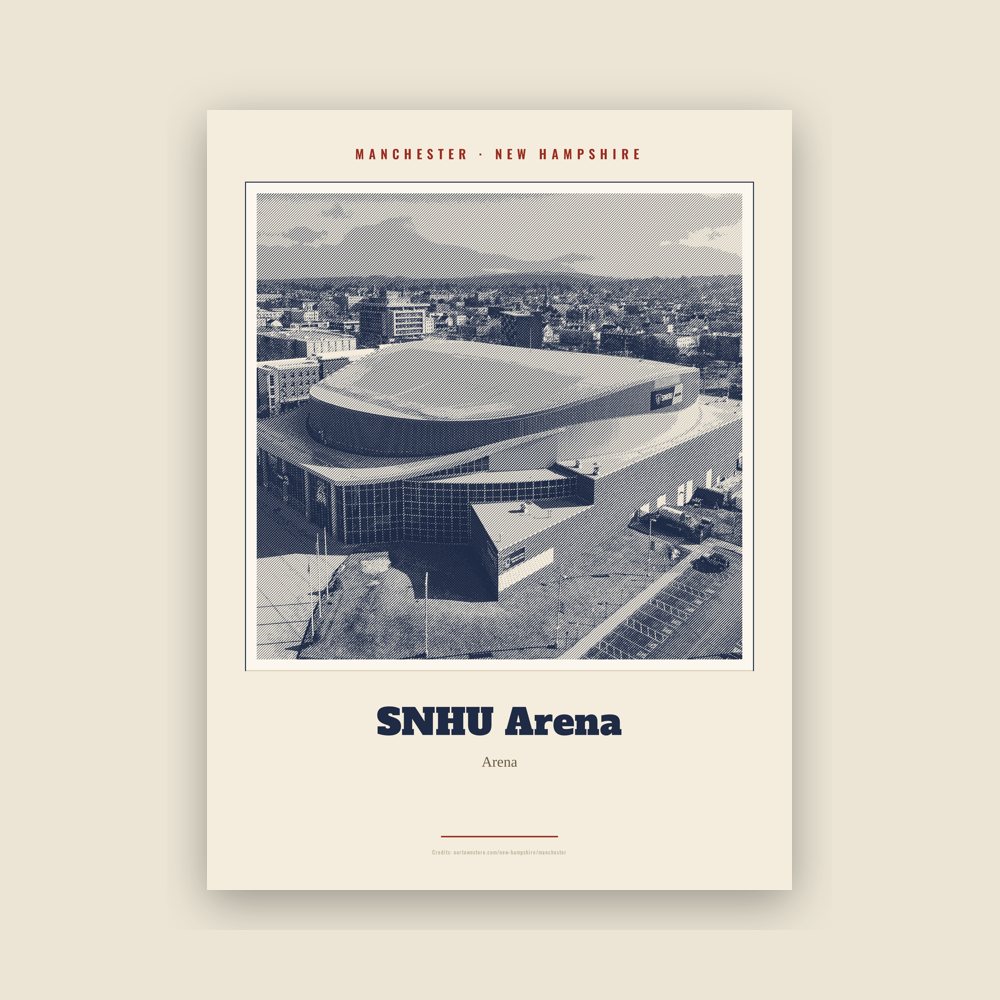
Archival matte print of a local landmark, credited to its photographer
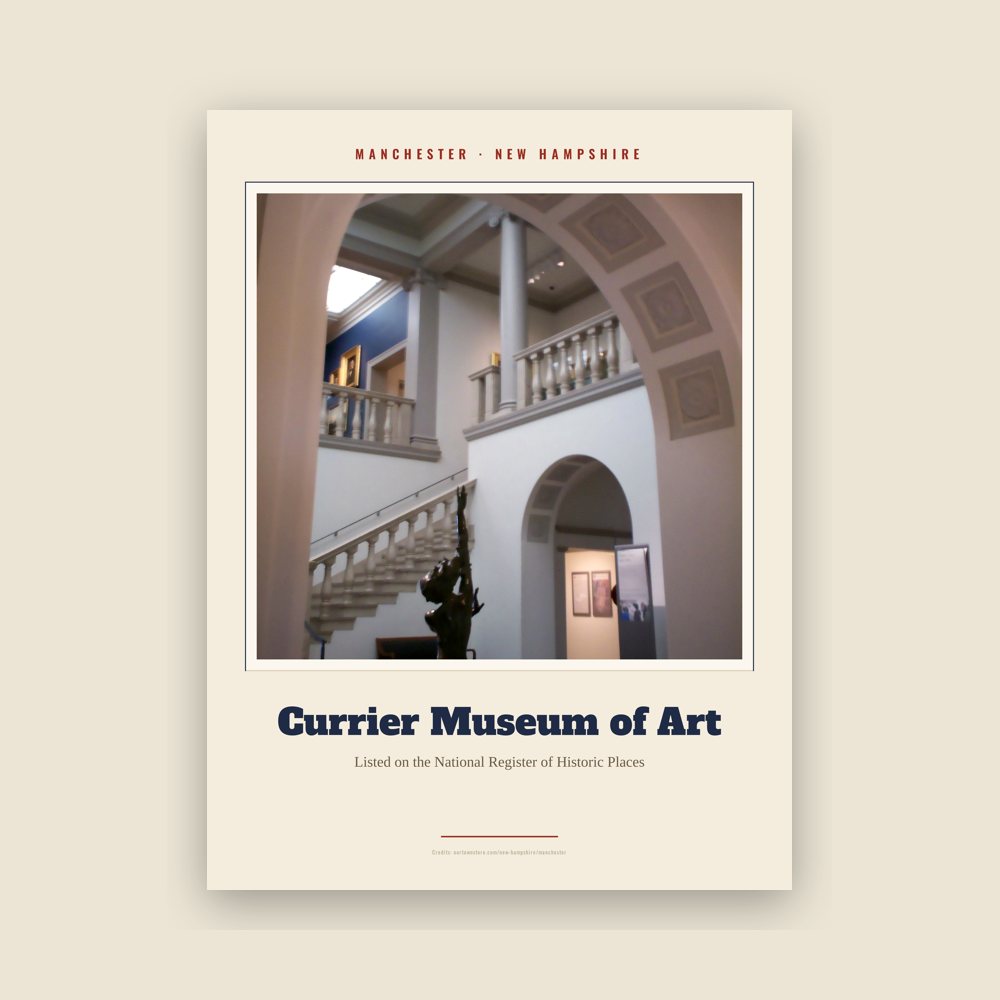
Archival matte print of a local landmark, credited to its photographer
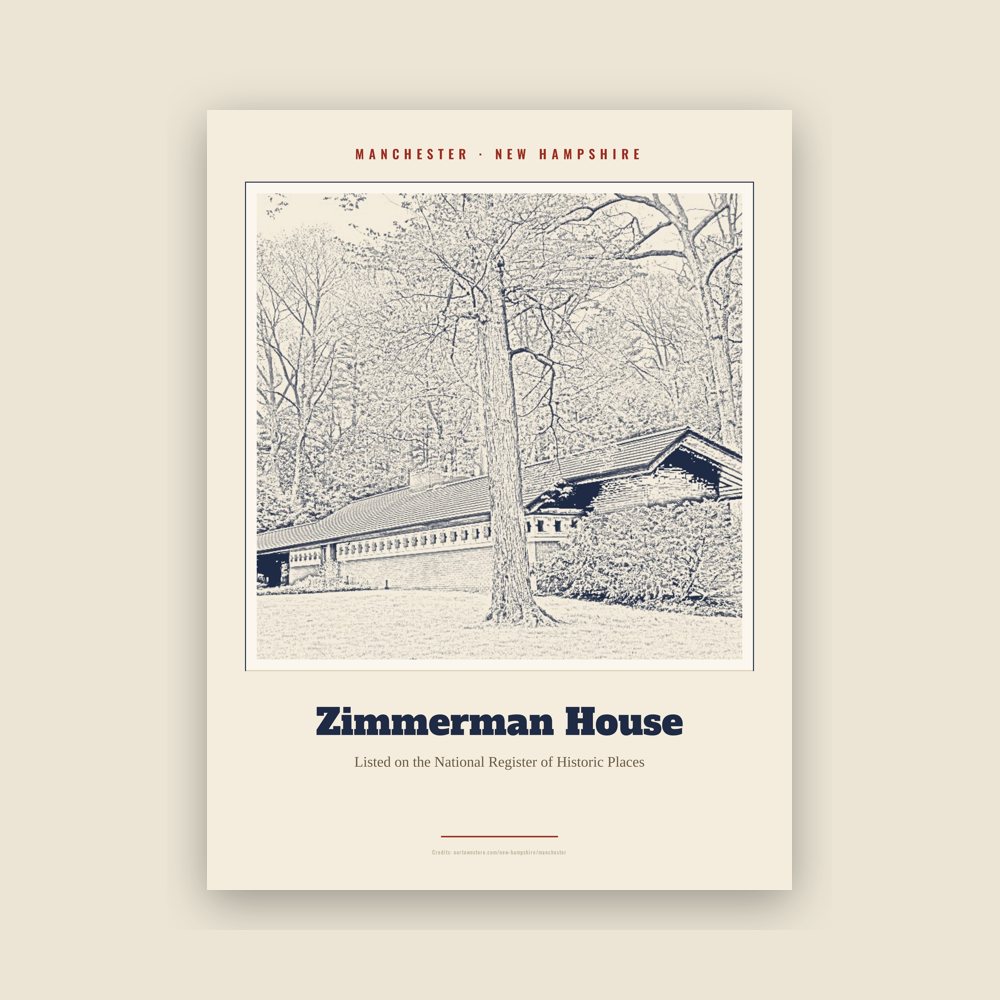
Archival matte print of a local landmark, credited to its photographer
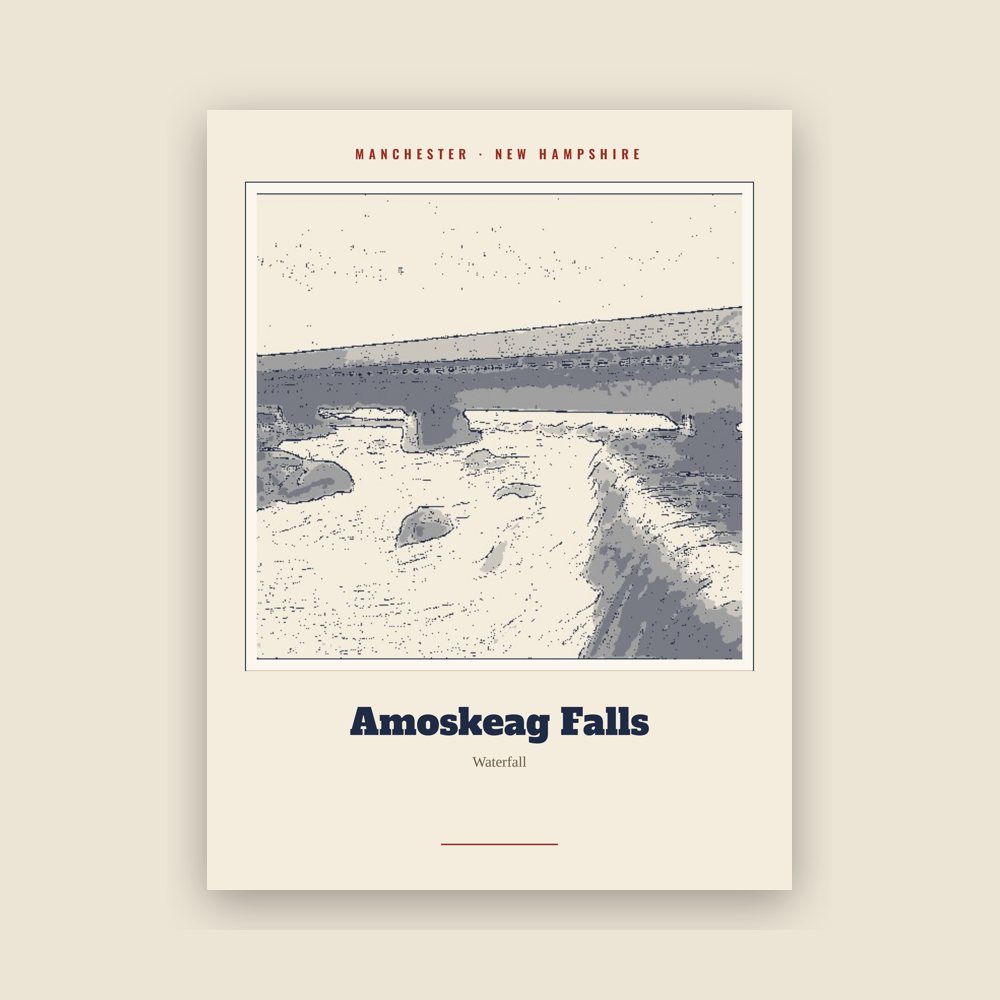
Archival matte print of a local landmark, credited to its photographer
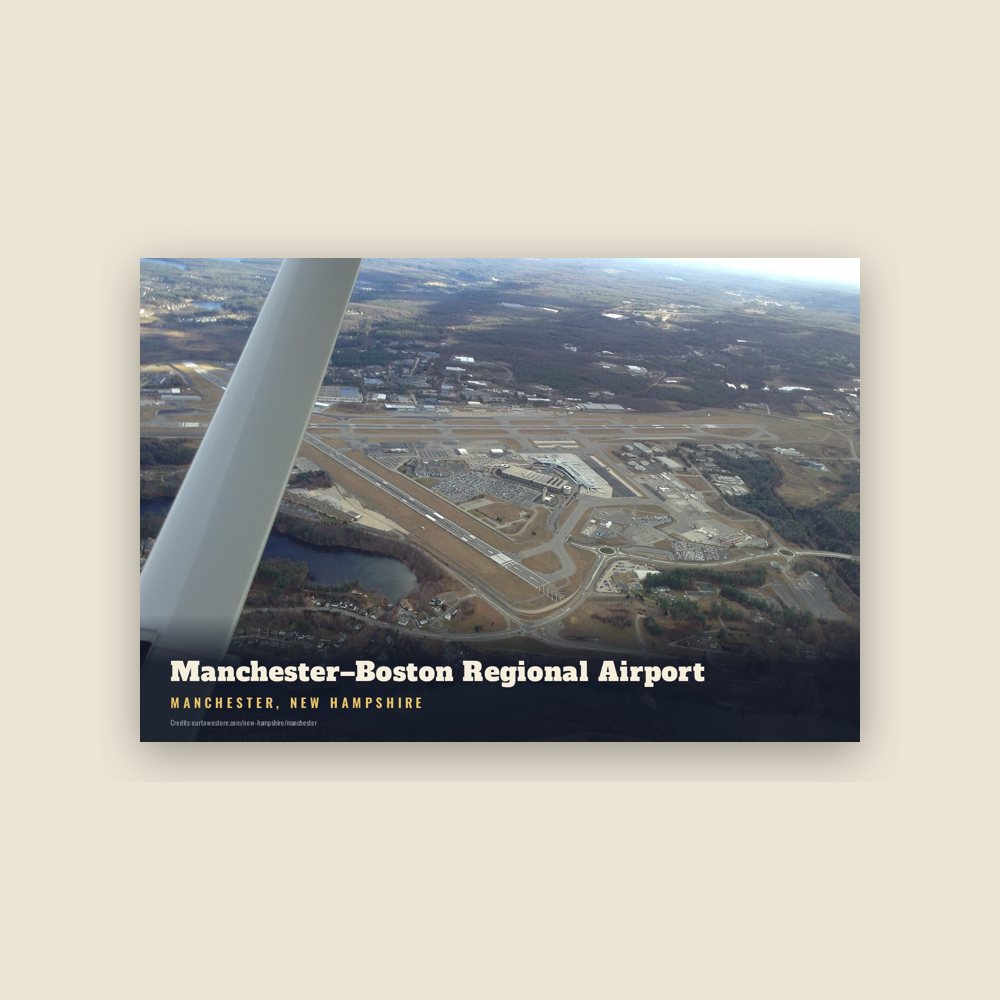
6″×4″ postcard, glossy front
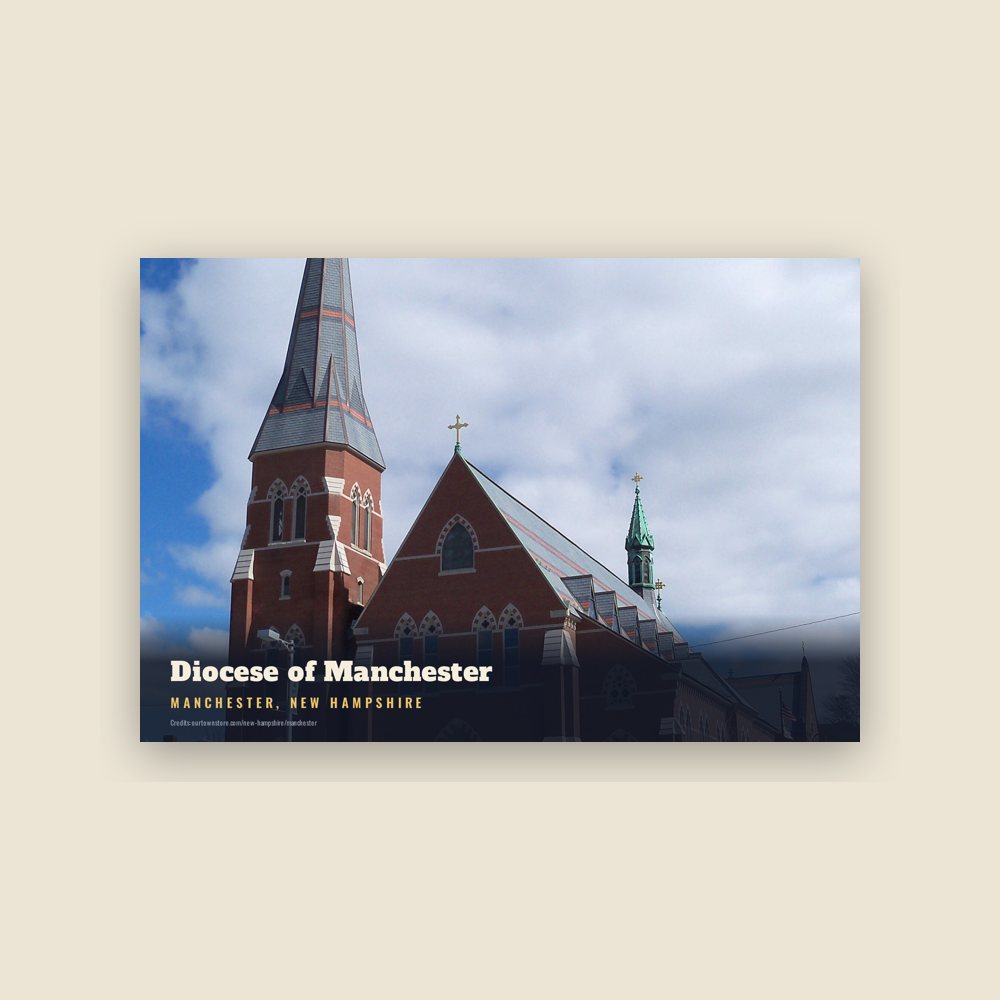
6″×4″ postcard, glossy front
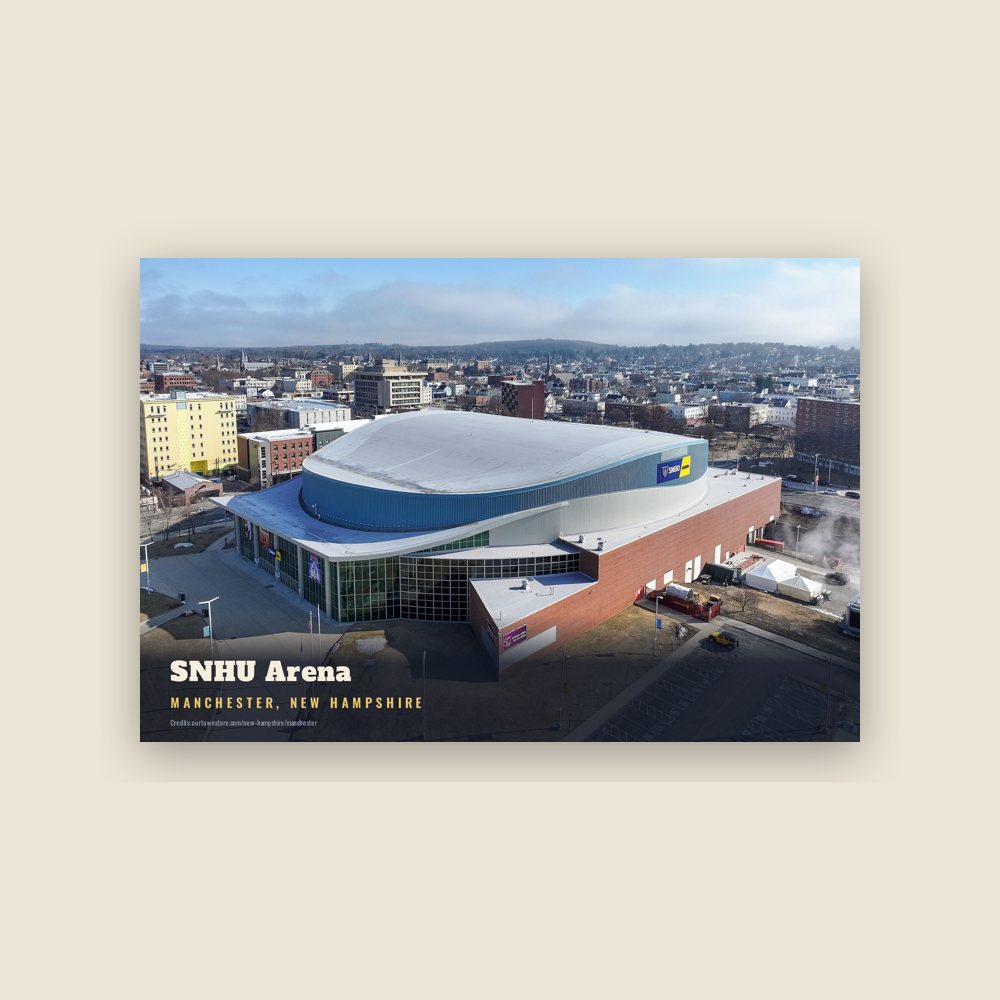
6″×4″ postcard, glossy front
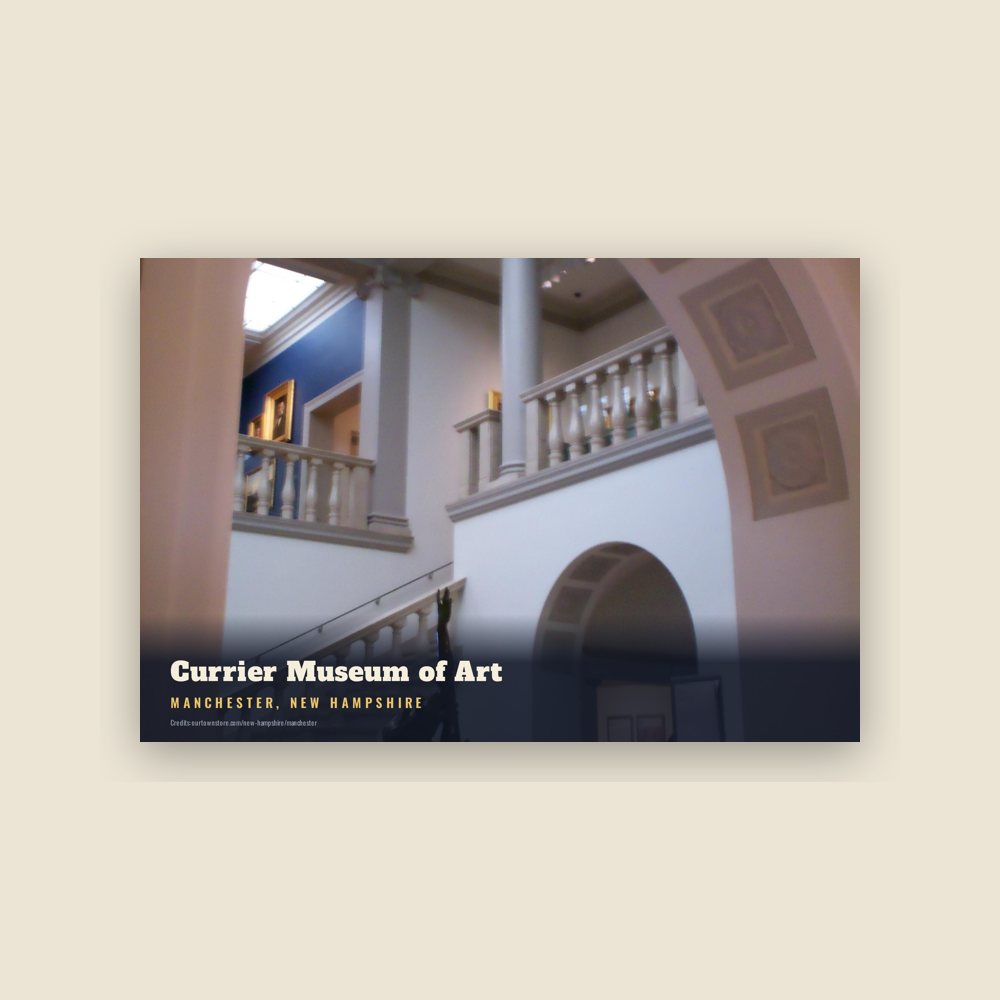
6″×4″ postcard, glossy front
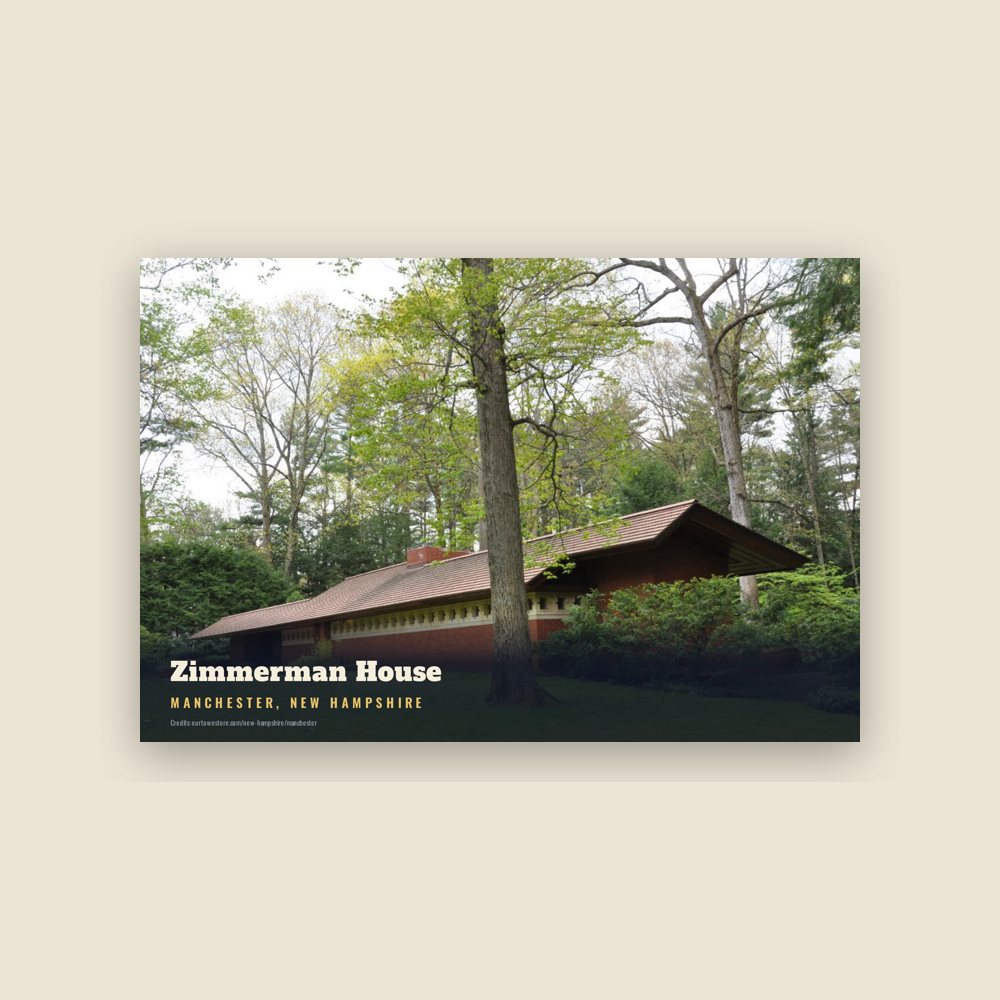
6″×4″ postcard, glossy front
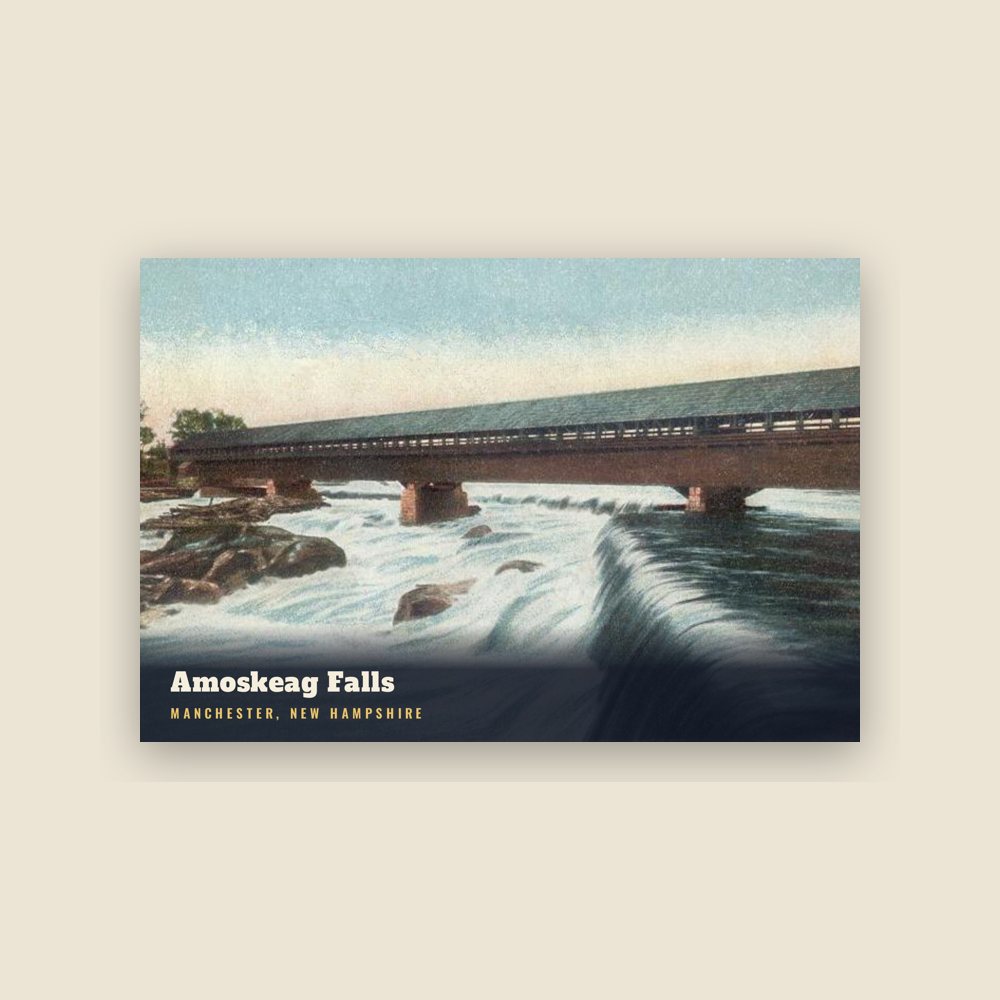
6″×4″ postcard, glossy front
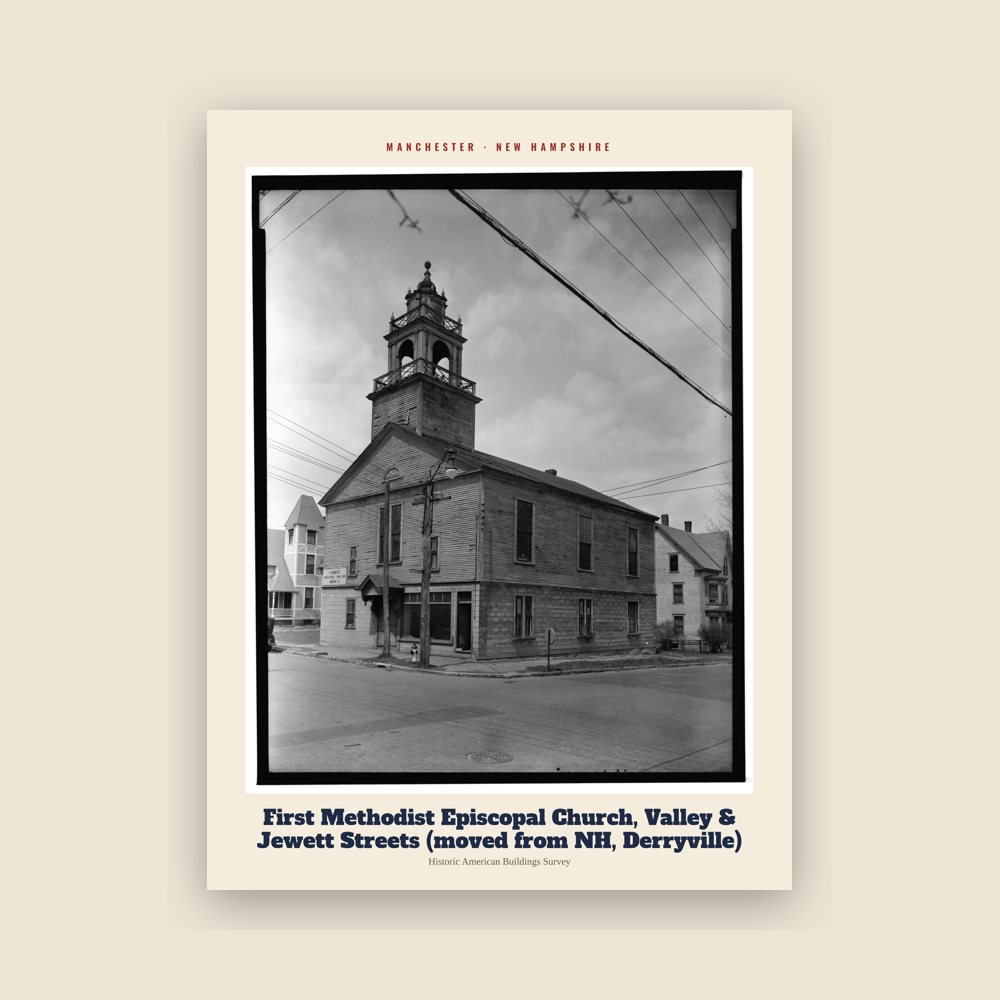
From the Library of Congress collections: a historic survey drawing or photograph of the town
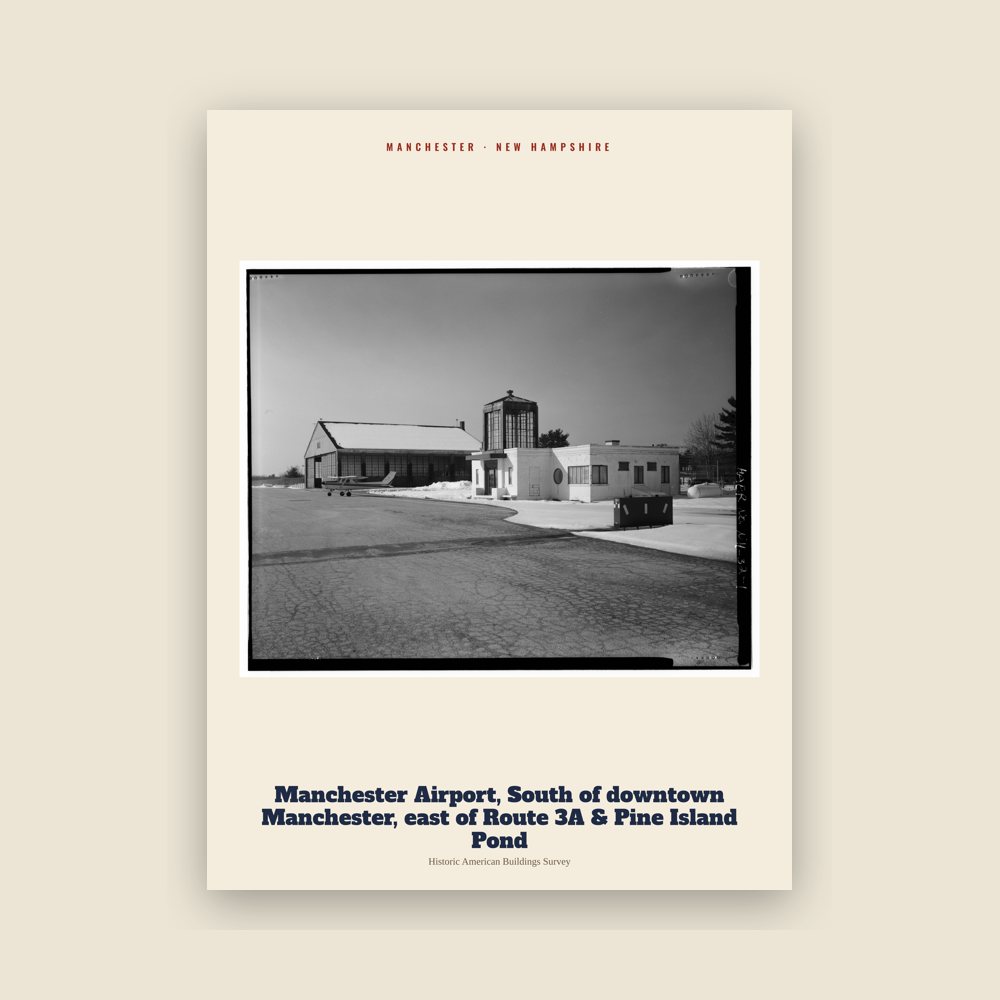
From the Library of Congress collections: a historic survey drawing or photograph of the town
Named for Manchester (city in Greater Manchester, England).
Population 2000: 107,219 → 2010: 109,565 → 2020: 115,644
From Wikidata (CC0).
The native Pennacook people called Amoskeag Falls on the Merrimack River—the area that became the heart of Manchester—Namaoskeag, meaning "good fishing place". In 1722, John Goffe III settled beside Cohas Brook, later building a dam and sawmill at what was dubbed "Old Harry's Town". It was granted by Massachusetts in 1727 as "Tyngstown" to veterans of Queen Anne's War who served in 1703 under Captain William Tyng. But at New Hampshire's 1741 separation from Massachusetts, the grant was ruled invalid and substituted with Wilton, Maine, resulting in a 1751 rechartering by Governor Benning Wentworth as "Derryfield"—a name that lives on in Derryfield Park, Derryfield Country Club, and the private Derryfield School.
In 1807, Samuel Blodget opened a canal and lock system to allow vessels passage around the falls, part of a network developing to link the area with Boston. He envisioned a great industrial center arising, "the Manchester of America", in reference to Manchester, England, then at the forefront of the Industrial Revolution. In 1809, Benjamin Prichard and others built a water-powered cotton spinning mill on the western bank of the Merrimack. Apparently following Blodgett's suggestion, Derryfield was renamed "Manchester" in 1810, the year the mill was incorporated as the Amoskeag Cotton & Woolen Manufacturing Company. It would be purchased in 1825 by entrepreneurs from Massachusetts, expanded to three mills in 1826, and then incorporated in 1831 as the Amoskeag Manufacturing Company.
Amoskeag engineers and architects planned a model company town on the eastern bank, founded in 1838 with Elm Street as its main thoroughfare. Incorporation as a city followed for Manchester in 1846, soon home to the largest cotton mill in the world—Mill No. 11, stretching 900 feet (270 m) long by 103 feet (31 m) wide, and containing 4,000 looms. Other products made in the community included shoes, cigars, and paper. The Amoskeag foundry made rifles, sewing machines, textile machinery, fire engines, and locomotives in a division called the Amoskeag Locomotive Works (later, the Manchester Locomotive Works). The rapid growth of the mills demanded a large influx of workers, resulting in a flood of immigrants, particularly French Canadians. Many current residents descend from these workers. In 1871, the arch dam was built on the Merrimack River, enhancing the mill's water power delivery system. By 1912, the production of woven cloth in the Millyard had reached a production rate of 50 miles in length per hour.
Throughout the late 19th century and the early 20th century, the city began to expand outward, and many streetcar suburbs such as Mast Road were built. Manchester was formerly home to a streetcar network, the Manchester Street Railway. The streetcar network was replaced with a bus network in the 1940s.
In 1922, 17,000 workers from two of the city's largest companies (Amoskeag and Stark Manufacturing Companies) went on strike for a period of nine months. After the strike, the textile industry began a slow decline, with the Great Depression hitting the city particularly hard. The Amoskeag Manufacturing Company declared bankruptcy in 1935. During the Great Flood of 1936, the McGregor Bridge was destroyed and $2.5 million of damage was incurred to the city's mills and buildings. After the flood, the Amoskeag Manufacturing Company reorganized out of bankruptcy as Amoskeag Industries, diversifying its manufacturing operations with new industries in the Millyard.
Manchester's economy benefitted from World War II, as the city was already well-positioned and equipped with industry to handle war-time production. In 1941, Grenier Field, on the city's border with Londonderry, was converted to a U.S. Army air base.
The city faced a decline in manufacturing in the 1950s and 1960s, with many Millyard buildings becoming abandoned during this time. An anthrax incident in 1957 led to the abandonment and later razing of the Arms Textile Mill along the river (today a parking lot in front of Arms Park). As part of urban renewal projects, the city filled in the Millyard canals to make room for roads and demolished several mill structures to make way for parking and roads. The Mall of New Hampshire opened in 1977, leading to further decline of downtown. However, during this time several important buildings were constructed in the downtown area, including the Hampshire Plaza in 1972 (the tallest building in New Hampshire until 1994, later renamed Brady Sullivan Plaza).
The 1980s brought renewed interest in the Millyard and downtown. The University of New Hampshire at Manchester opened a campus in the Millyard during this time, and Segway inventor Dean Kamen purchased two old mill buildings which became the headquarters for DEKA. Kamen purchased more buildings in 1984 and 1991, aiming to convert the Millyard into a high-tech center for smart manufacturing and offices. John Madden, a local developer, and Kamen worked with the city to implement capital improvements to the Millyard in the 1980s and early 1990s.
City Hall Plaza was built in downtown Manchester in 1992, to this day the tallest building in New Hampshire and northern New England. In 1991, the city went into economic decline as four major banks were shut down by federal regulators. Many shops and restaurants along the Elm Street thoroughfare closed during this time, as foot traffic declined. At the turn of the century, renewed interest in the Millyard led to a boom in development and business. Several high-tech firms opened offices or relocated to the Manchester Millyard in the 2000s, including Autodesk in 2000 and Dyn in 2004. Brady Sullivan, a local real estate developer, opened its first Millyard apartments in 2013. During the early to mid 2010s, Manchester saw an uptick in opioid-related deaths, reporting more opioid-related deaths per capita than any city in the United States in 2016. Since 2018, the death rate has declined through the efforts of the New Hampshire Department of Health and Human Services and local outreach organizations, hitting a 10-year low in 2023.
Manchester has continued to grow steadily and transform itself into a cultural and commerce hub for the state of New Hampshire. The mill town's 19th-century affluence left behind some of the finest Victorian commercial, municipal, and residential architecture in the state.
Adapted (trimmed) from the Wikipedia article Manchester, New Hampshire, revision 1378775372 by its contributors, licensed CC BY-SA 4.0.
We share a part of every Manchester sale with local partners, and we'd love to print from your collection. Old photographs, maps and postcards make the best keepsakes.
Partner with us