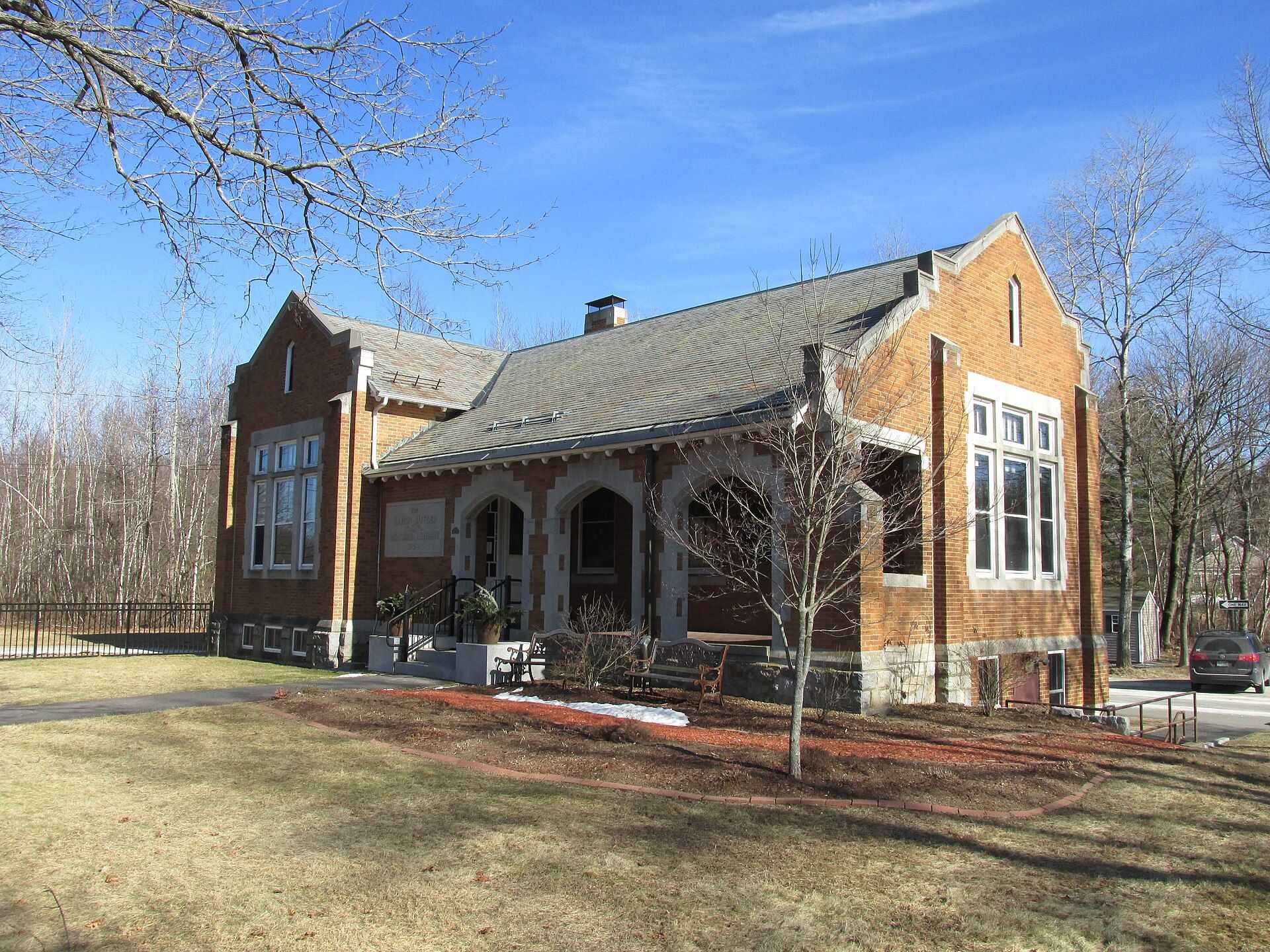
The area which became Litchfield was originally known as "Naticook". Landmarks include Aaron Cutler Memorial Library. Litchfield is the birthplace of Jack McQuesten, known as the 'father of the Yukon' - a grubstaker for prospectors.
Every piece is drawn from Litchfield's own map data and historic archives, then printed and shipped from the USA when you order. No two towns look alike.
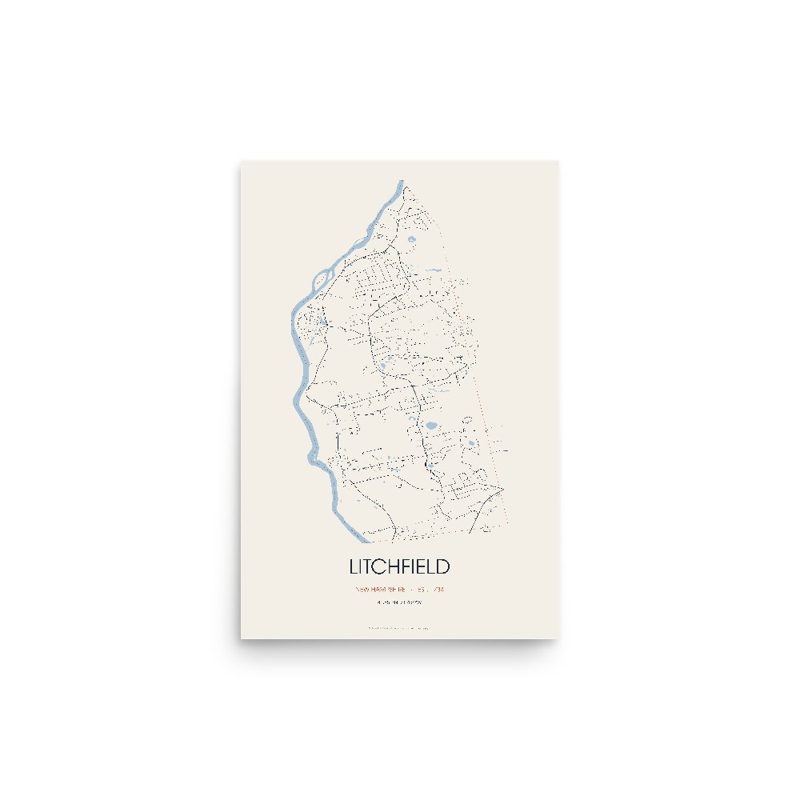
Every road in town, on archival matte paper
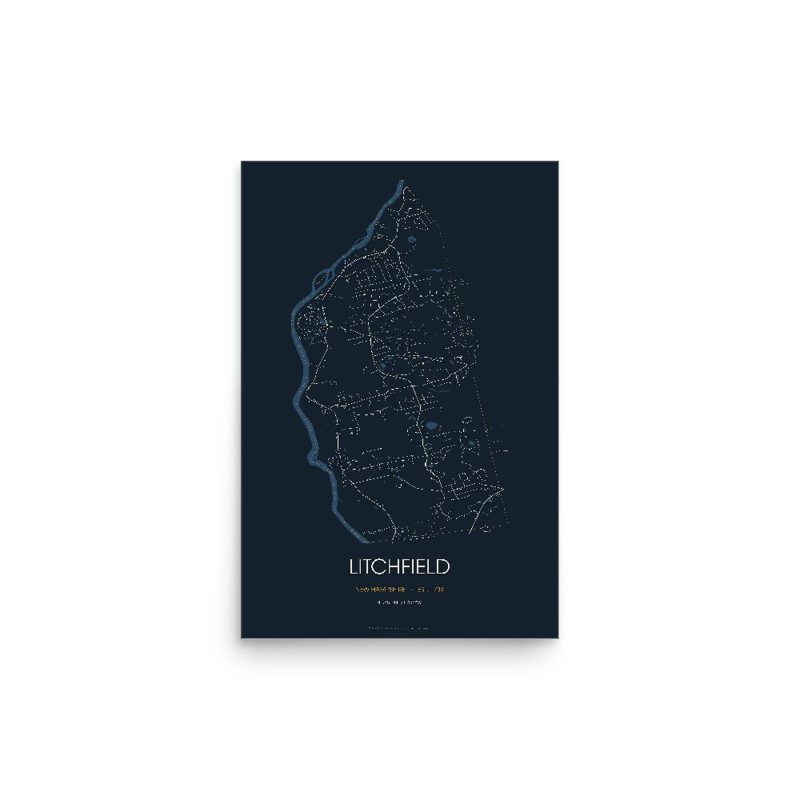
The same map, in navy and silver
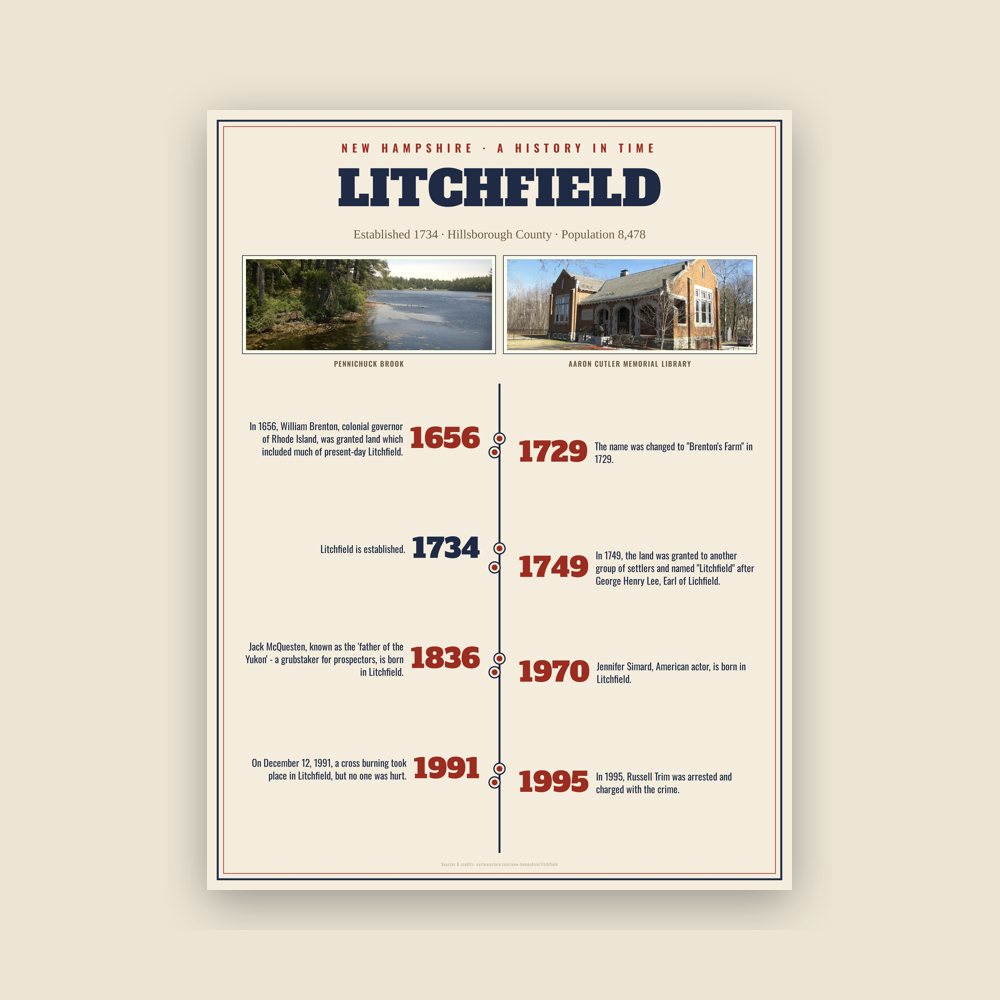
The town's story in dates, from its own records, for home or classroom
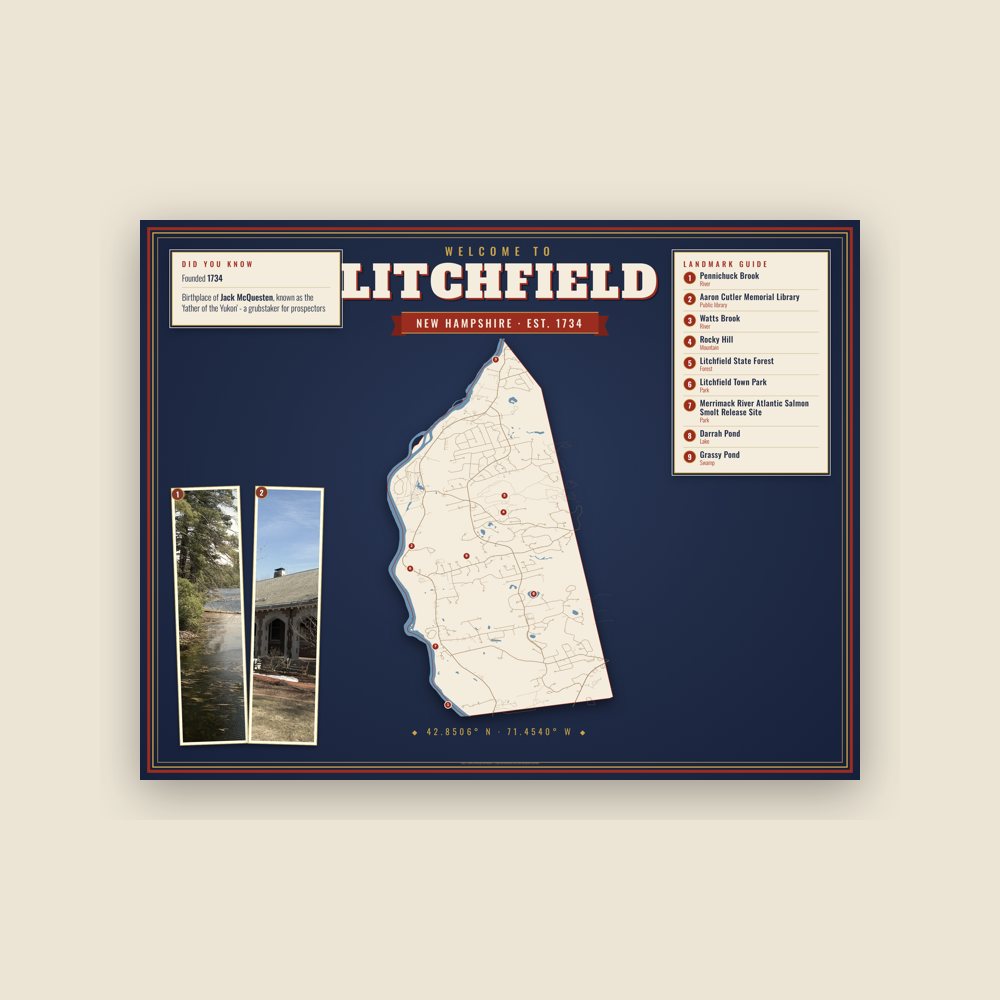
Map of local landmarks, washable fabric
Heavy-blend fleece, street map printed on the back
Soft Bella+Canvas jersey
Glossy ceramic, dishwasher safe
Ceramic keepsake, gold ribbon
Weatherproof, for the front walk
24″×16″, printed coir-look fibers, rubber back
12″×12″ printed wood, ready to hang
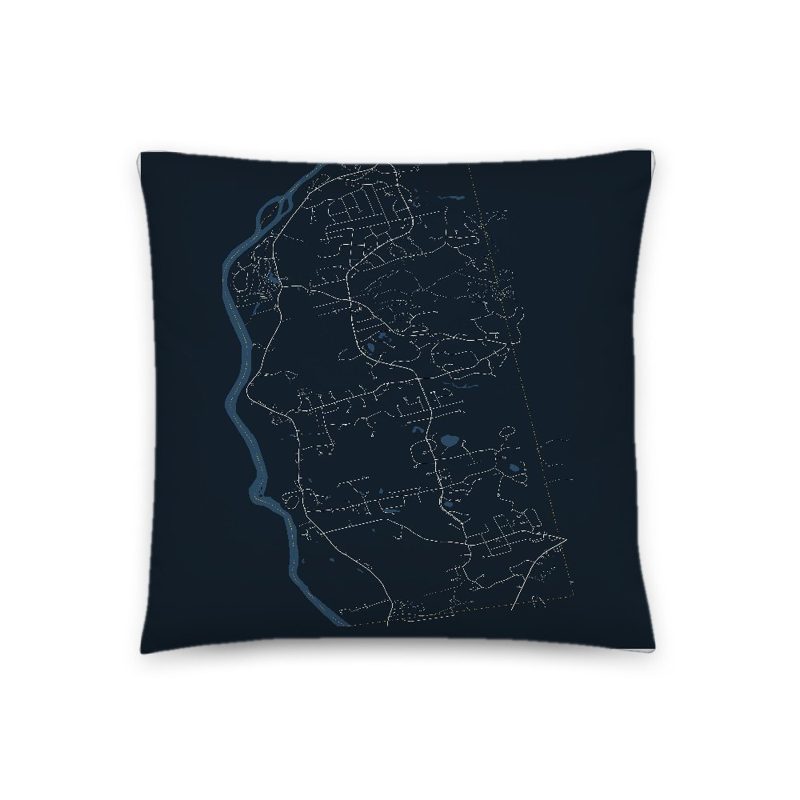
Soft-touch, zip cover
Sturdy all-over-print tote
Glossy top, cork back
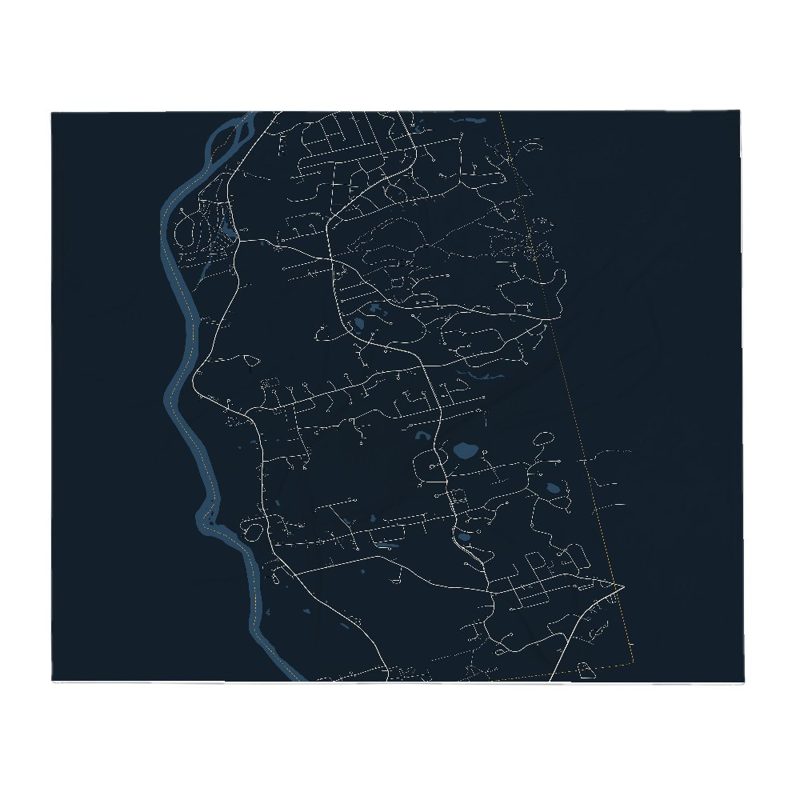
Soft fleece, 50″×60″
20 oz, double-wall stainless
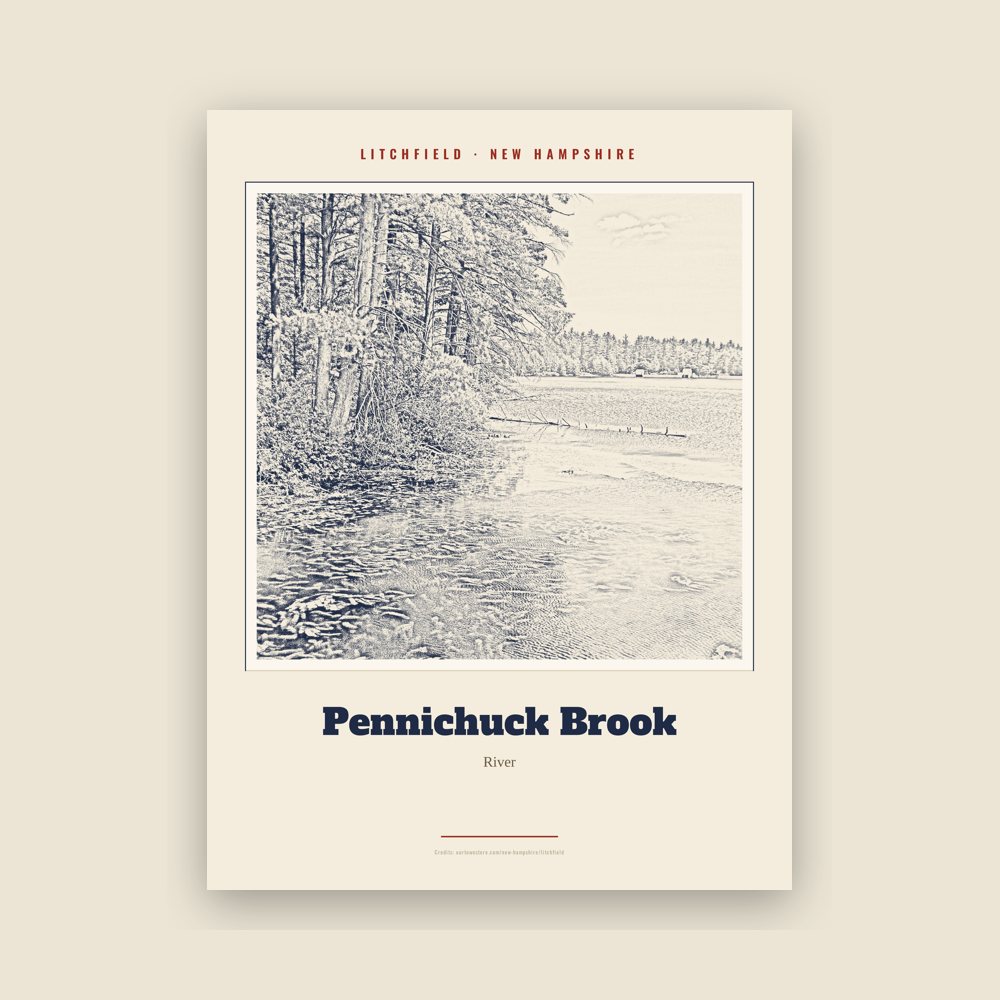
Archival matte print of a local landmark, credited to its photographer
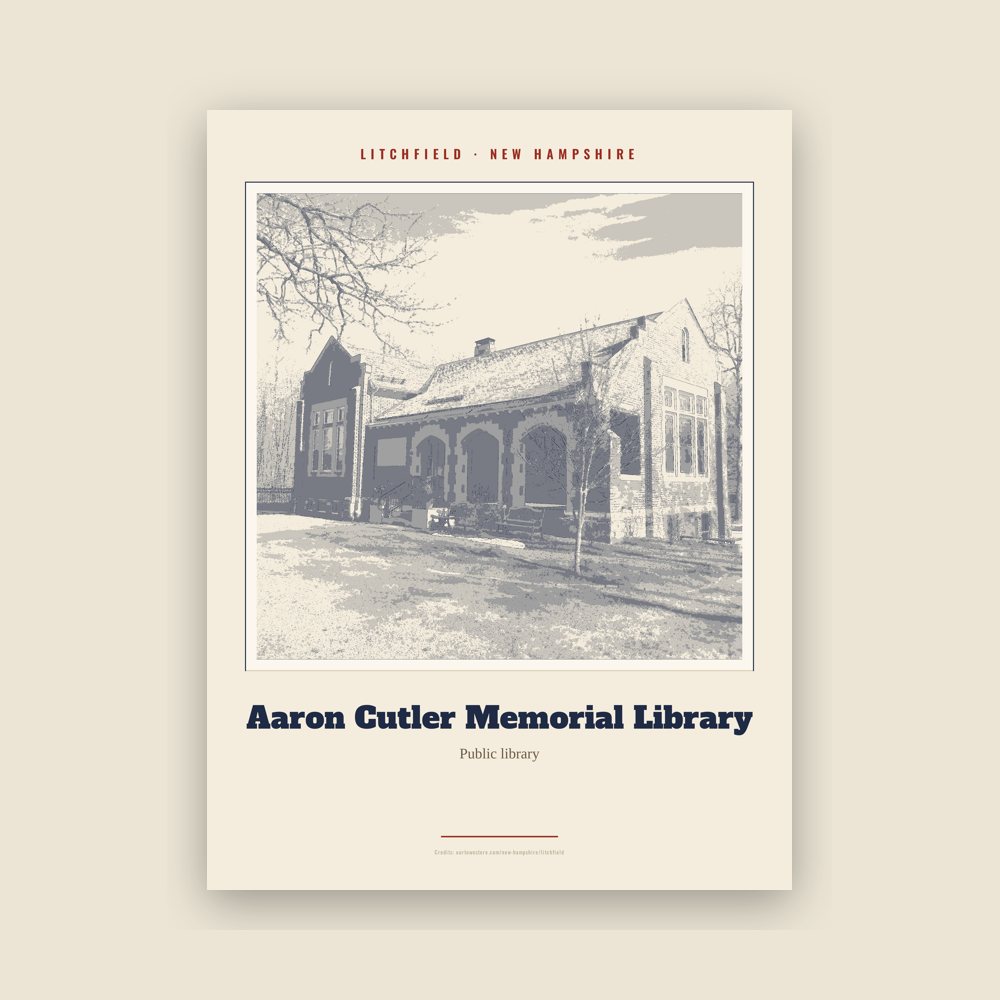
Archival matte print of a local landmark, credited to its photographer
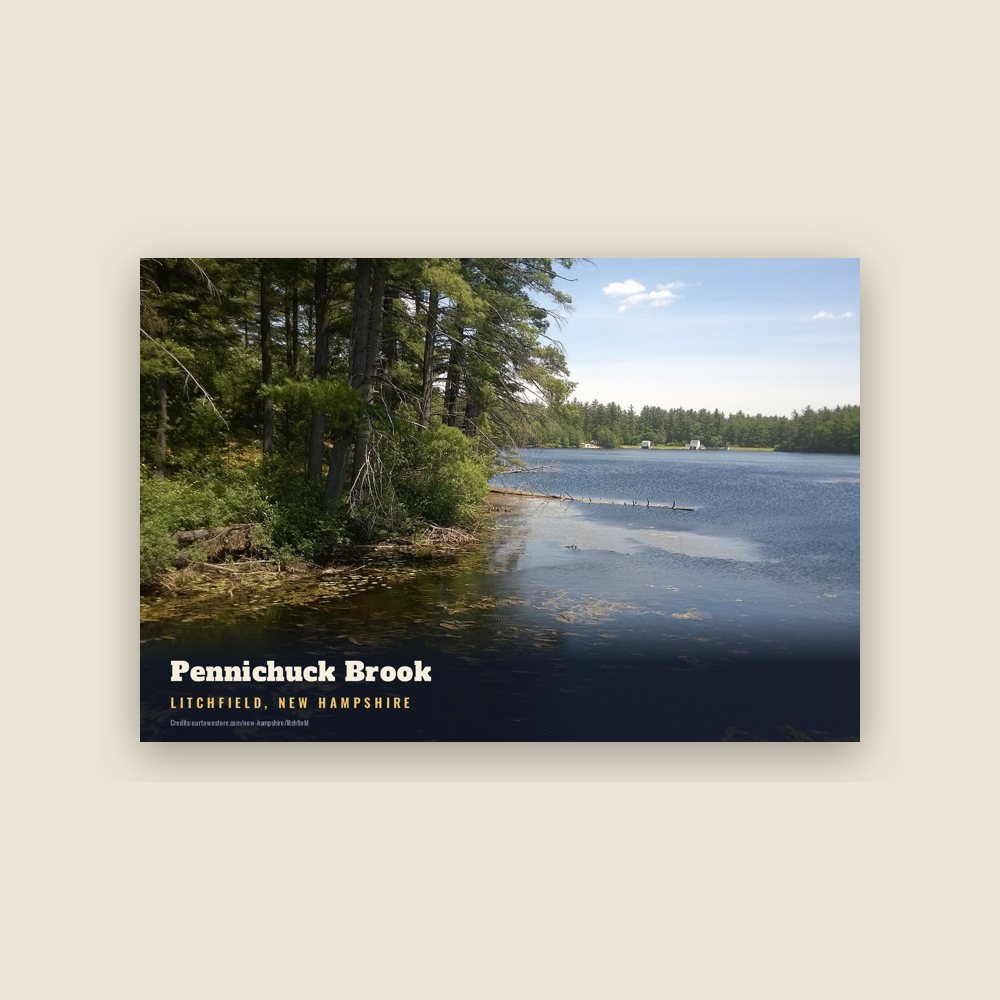
6″×4″ postcard, glossy front
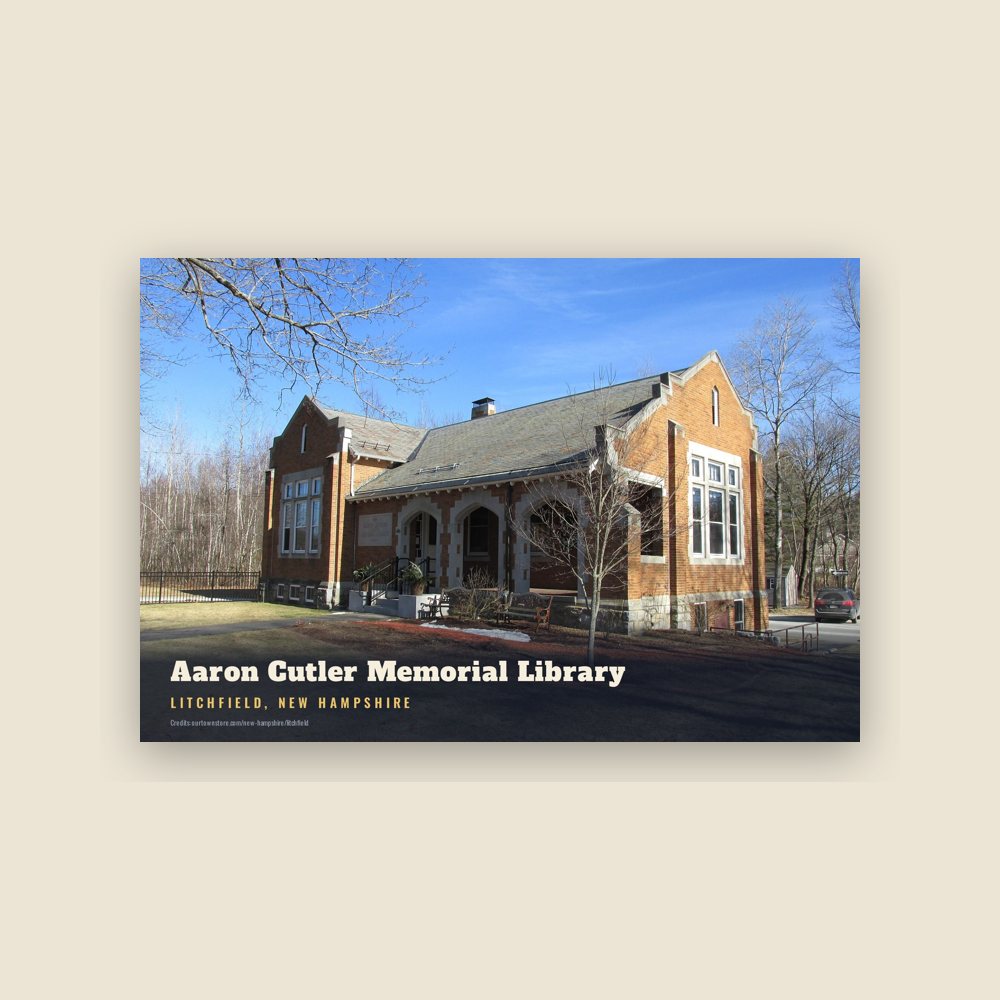
6″×4″ postcard, glossy front
Population 2010: 8,271 → 2020: 8,478
From Wikidata (CC0).
Prior to European settlement, the area was populated by the Abenaki people. They were skilled with fishing and were adept in agriculture as well. The New Hampshire Archaeological Society has located over 30 Native American sites along the shore of the Merrimack River in Litchfield, with artifacts several thousands of years old being uncovered.
Most of Litchfield was part of the large town known as Dunstable, which was organized in the 1600s and included land along both sides of the disputed New Hampshire-Massachusetts boundary, and out of which were carved several towns and cities in both states. The area which became Litchfield was originally known as "Naticook". In 1656, William Brenton, colonial governor of Rhode Island, was granted land which included much of present-day Litchfield. The name was changed to "Brenton's Farm" in 1729. The town was first incorporated into Massachusetts on July 4, 1734. The first town meeting was held on Monday, July 29, 1734, at 1 pm at the house of Aquila Underwood to choose town officers. In 1749, the land was granted to another group of settlers and named "Litchfield" after George Henry Lee, Earl of Lichfield. Litchfield was incorporated into the Province of New Hampshire on June 5, 1749.
Litchfield lacks any major population center or central village. Historically farmland, the town experienced steep population growth starting in the 1970s, along with the rest of southern New Hampshire, as a bedroom community and exurb for Greater Boston. The original town hall was located along New Hampshire Route 3A in the east-central portion of the town; the current town hall lies at the town's geographic center at the intersection of Hillcrest Road and Albuquerque Avenue. There are no large commercial districts in the town, though a few small industrial parks, convenience stores, and small restaurants dot the landscape.
On December 12, 1991, a cross burning took place in Litchfield, but no one was hurt. In 1995, Russell Trim was arrested and charged with the crime.
Adapted (trimmed) from the Wikipedia article Litchfield, New Hampshire, revision 1379539942 by its contributors, licensed CC BY-SA 4.0.
We share a part of every Litchfield sale with local partners, and we'd love to print from your collection. Old photographs, maps and postcards make the best keepsakes.
Partner with us