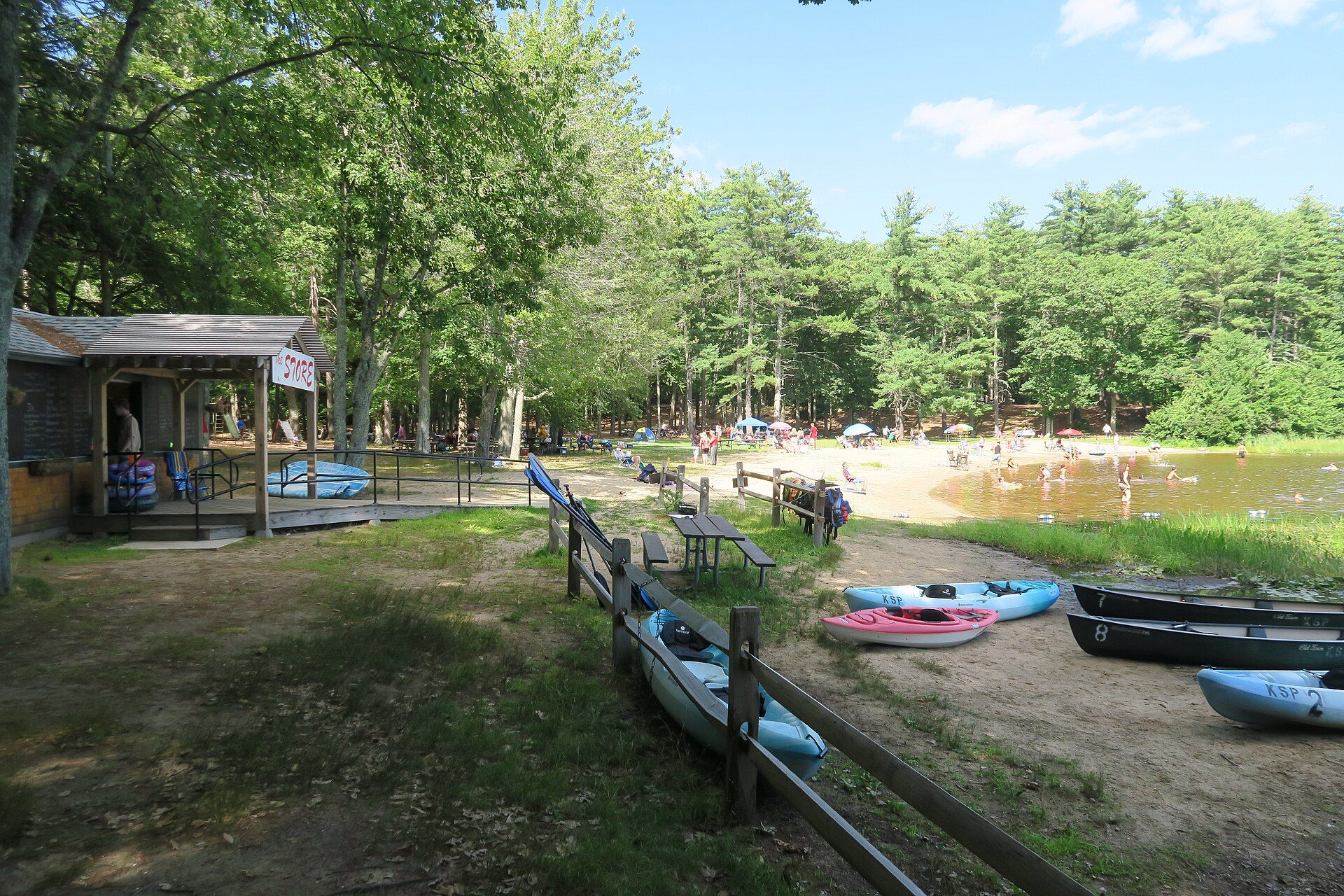
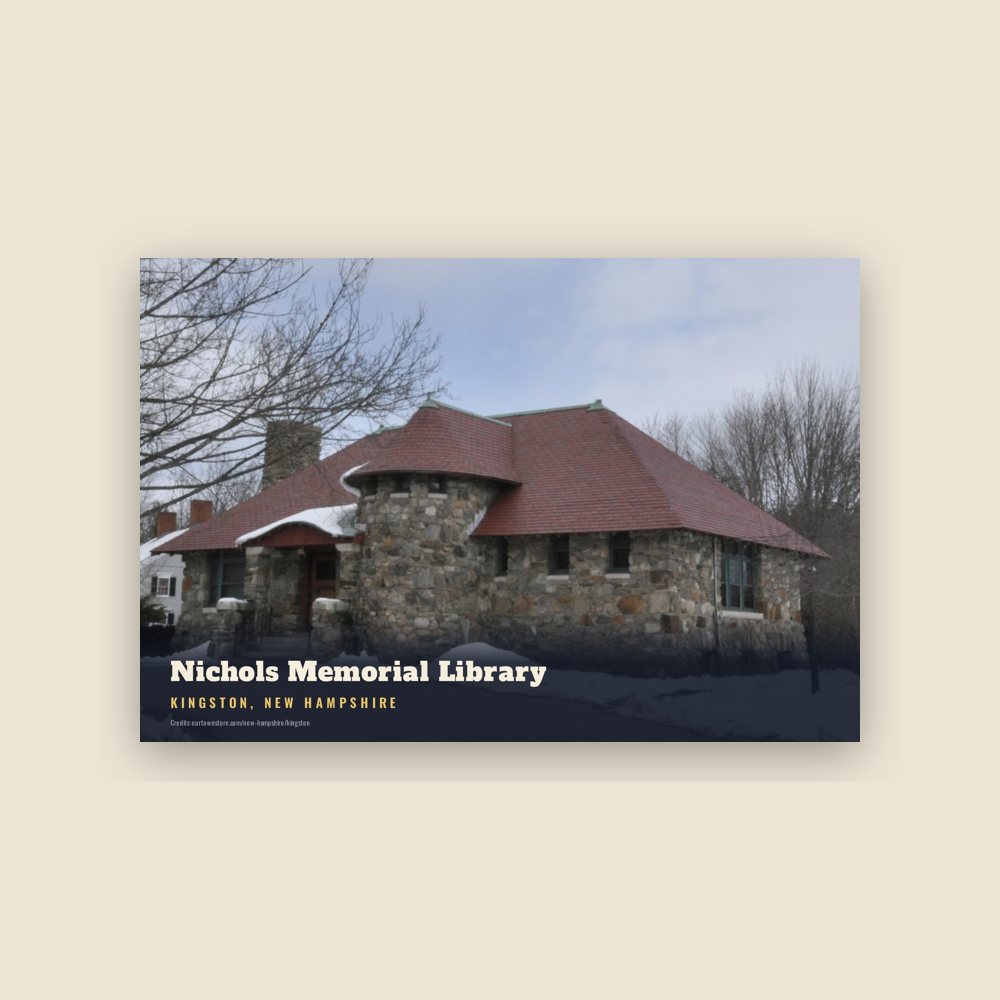
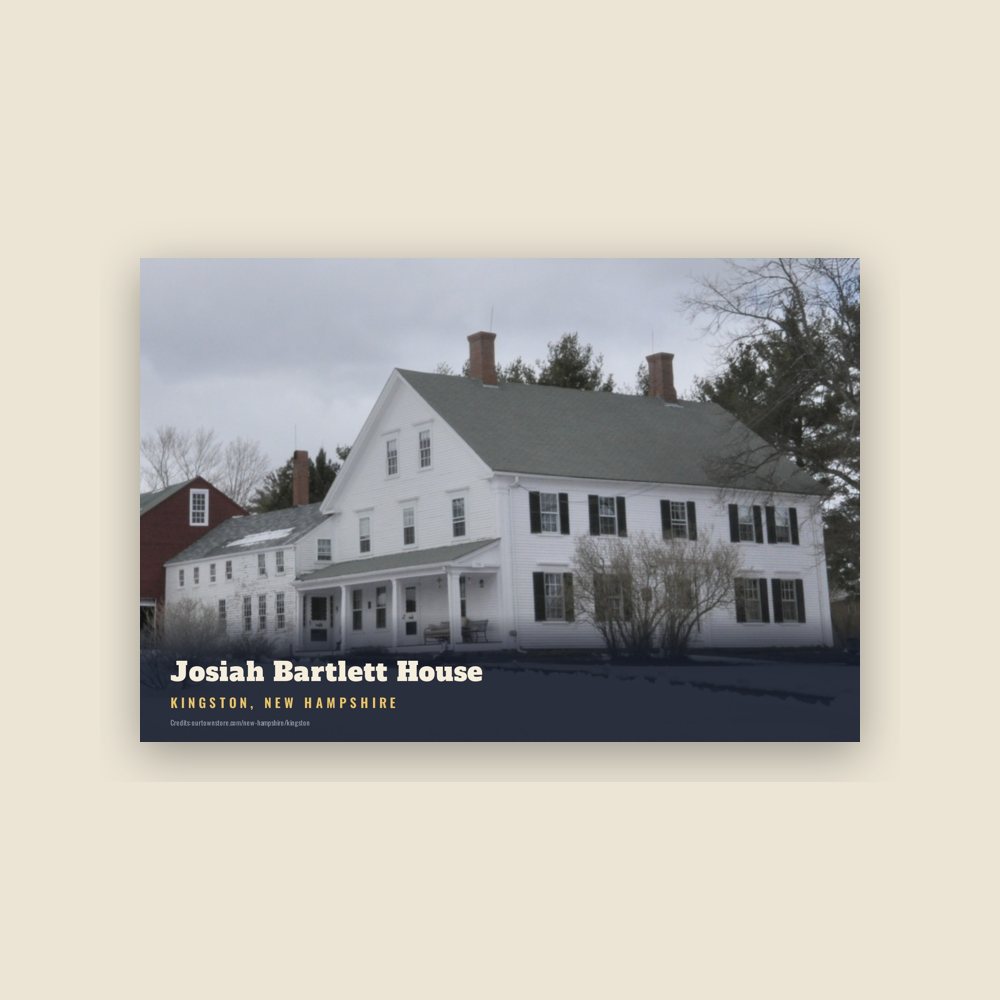
Kingston was the fifth town to be established in New Hampshire. Landmarks include Kingston State Park, Nichols Memorial Library and Josiah Bartlett House. Kingston is the birthplace of Josiah Bartlett Jr., physician and politician.
Every piece is drawn from Kingston's own map data and historic archives, then printed and shipped from the USA when you order. No two towns look alike.
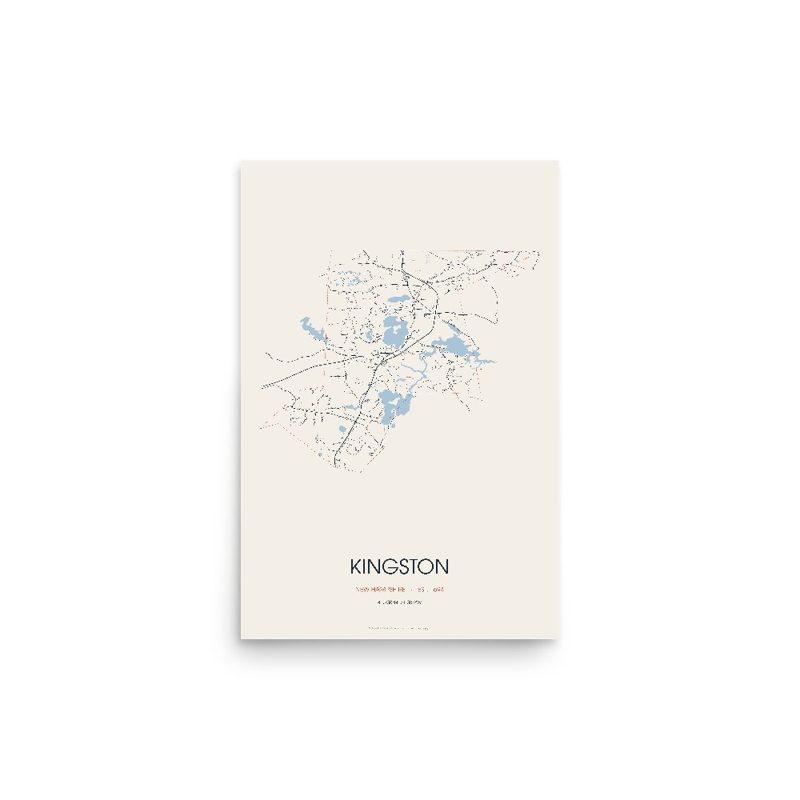
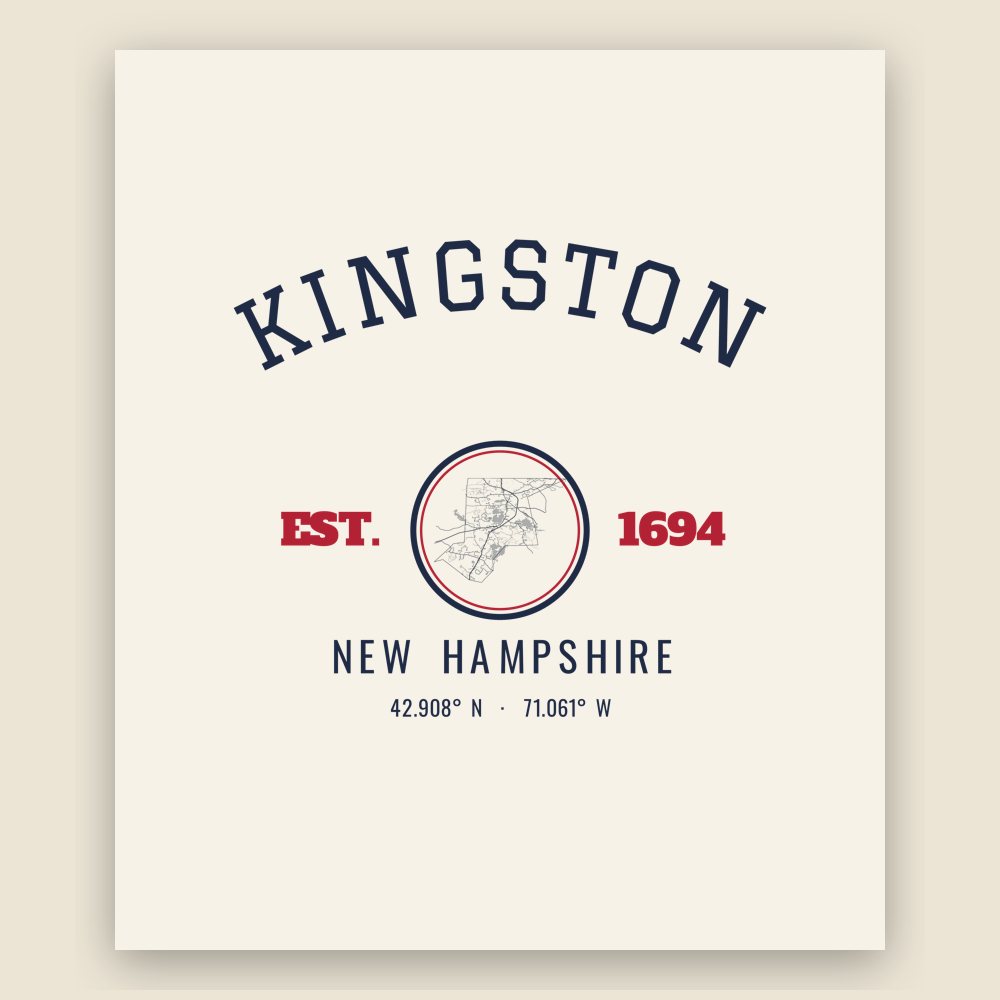
Every road in town, on archival matte paper
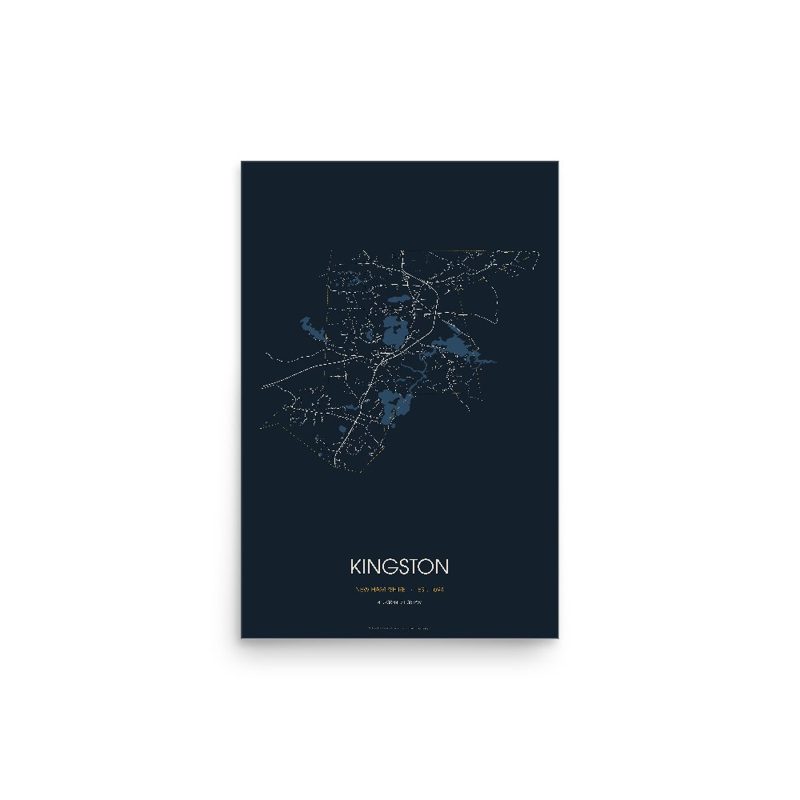
The same map, in navy and silver
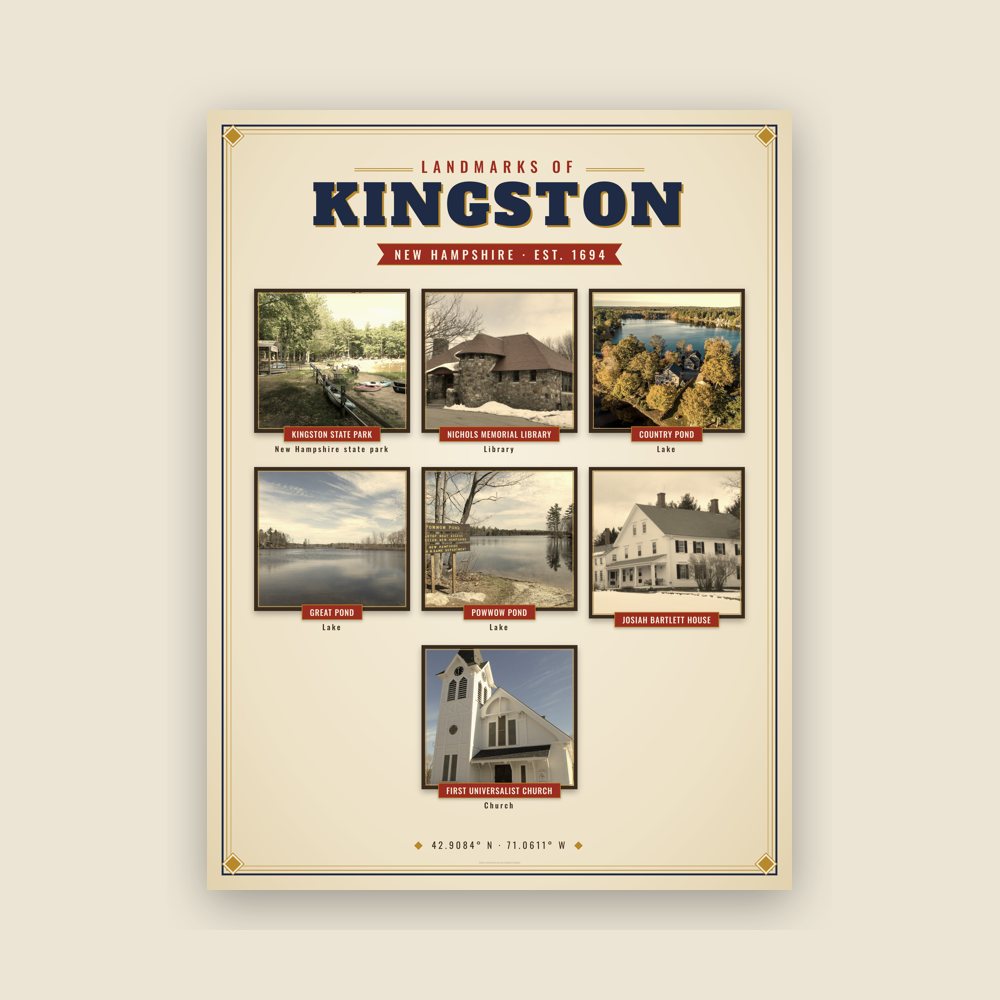
Nine local landmarks, archival matte
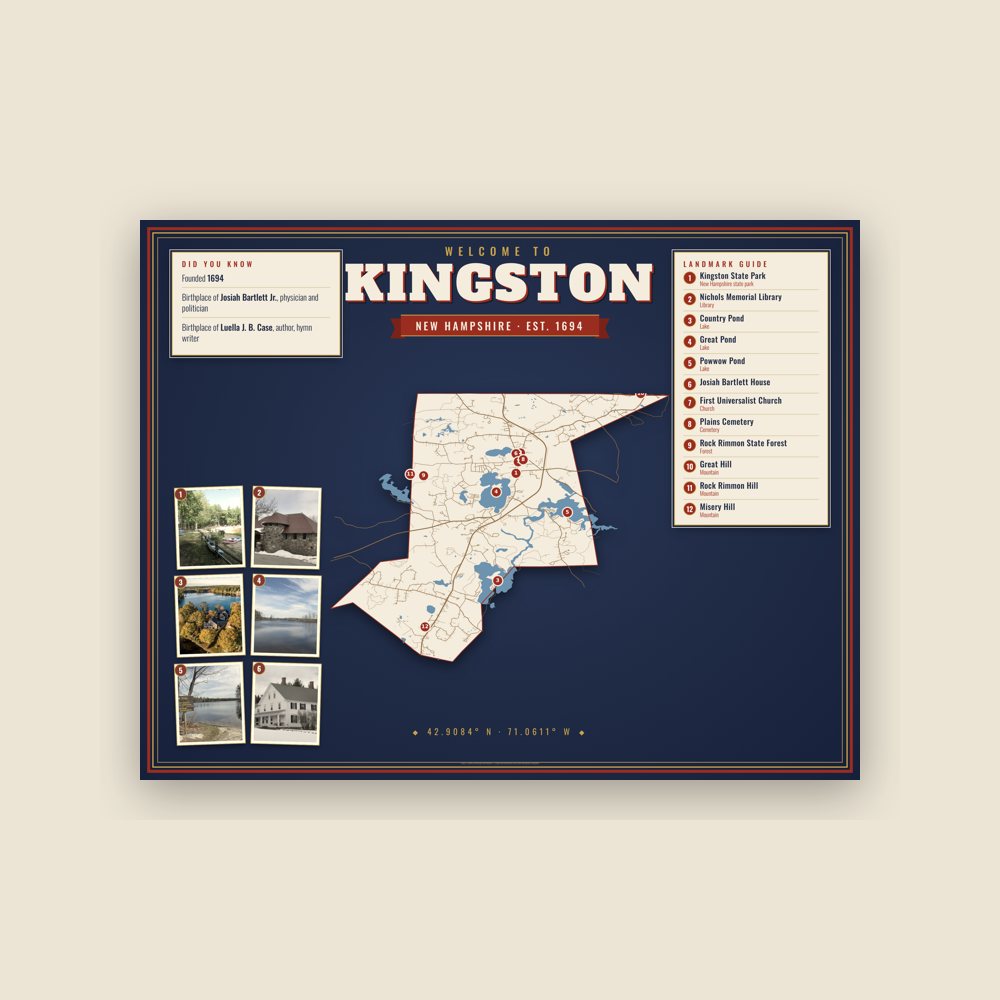
Map of local landmarks, washable fabric
Heavy-blend fleece, street map printed on the back
Soft Bella+Canvas jersey
Glossy ceramic, dishwasher safe
Ceramic keepsake, gold ribbon
Weatherproof, for the front walk
24″×16″, printed coir-look fibers, rubber back
12″×12″ printed wood, ready to hang
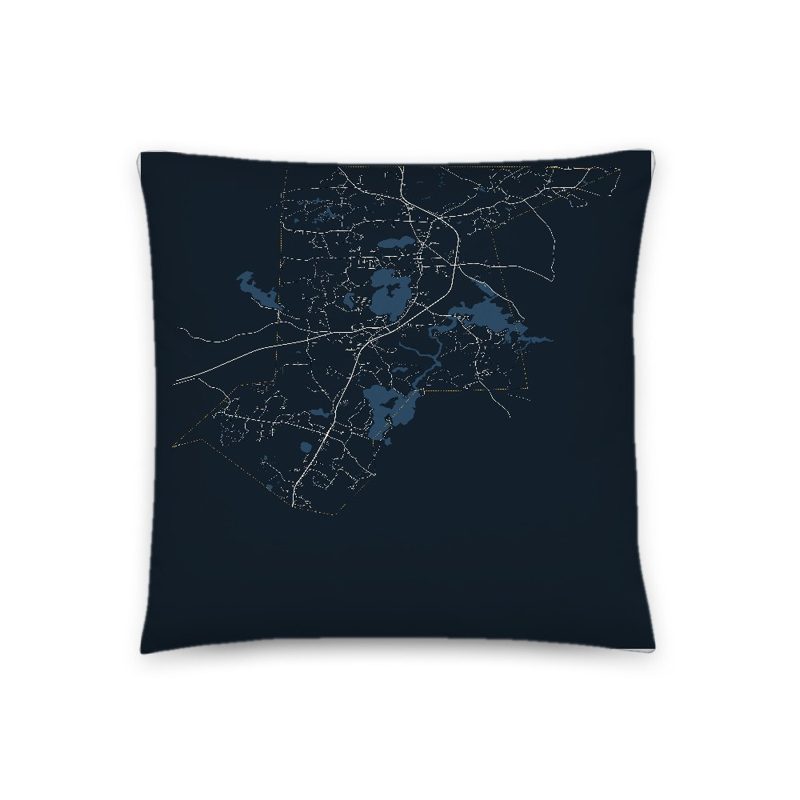
Soft-touch, zip cover
Sturdy all-over-print tote
Glossy top, cork back
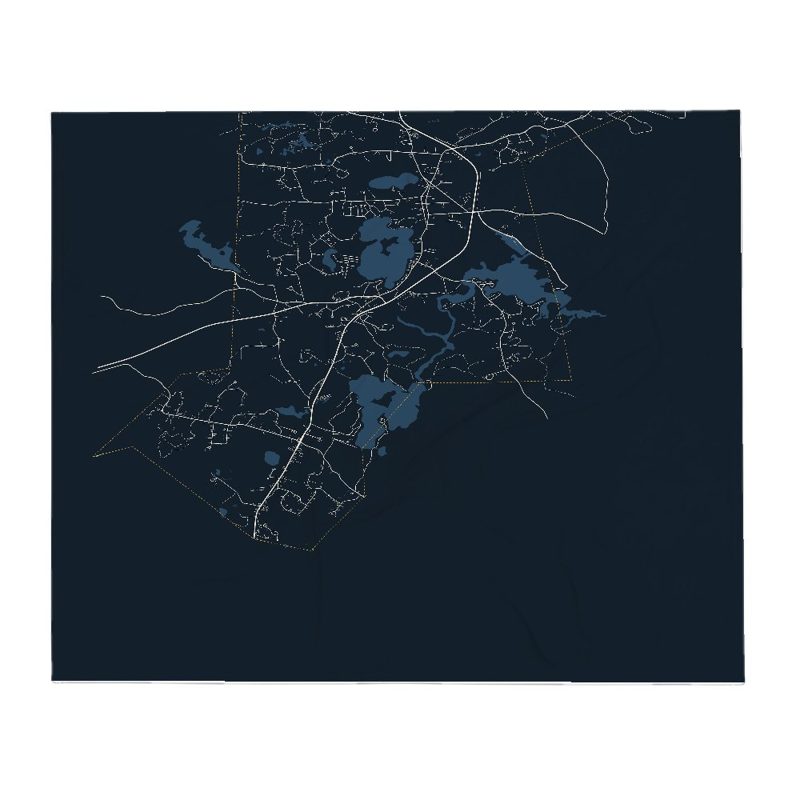
Soft fleece, 50″×60″
20 oz, double-wall stainless
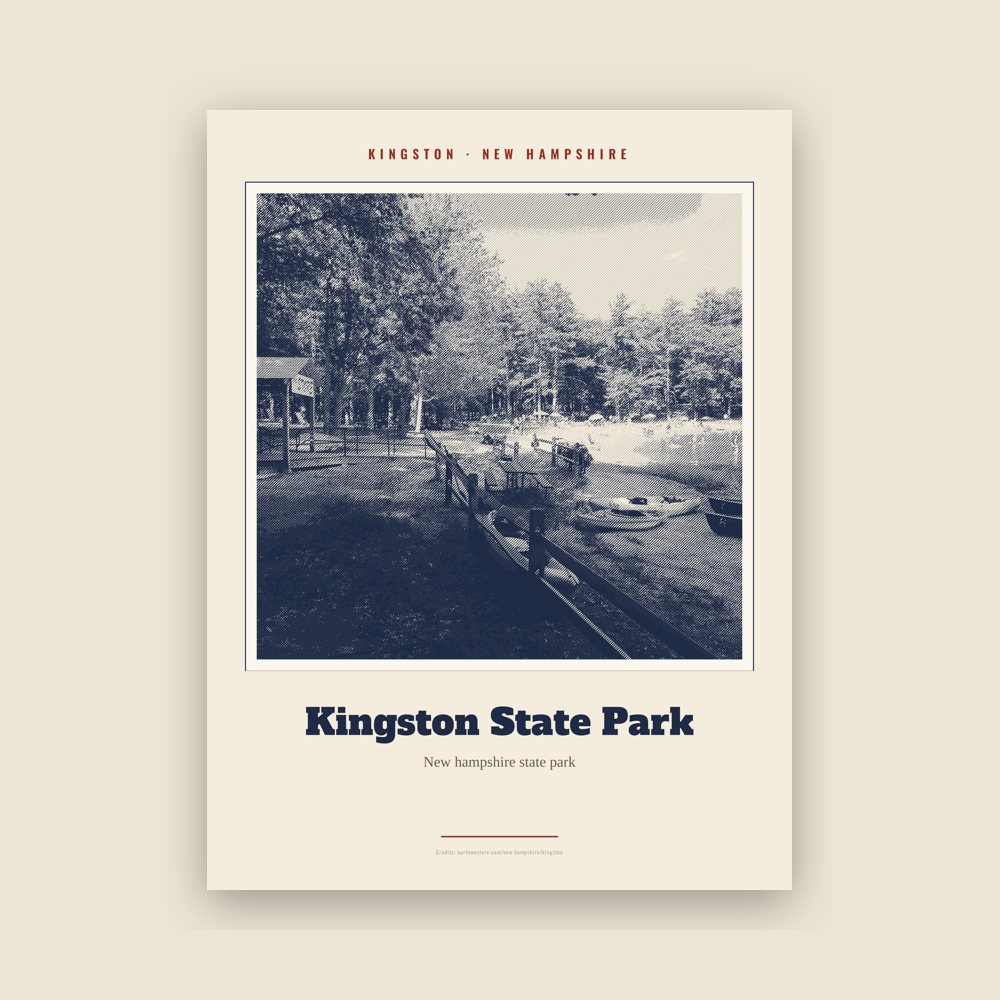
Archival matte print of a local landmark, credited to its photographer
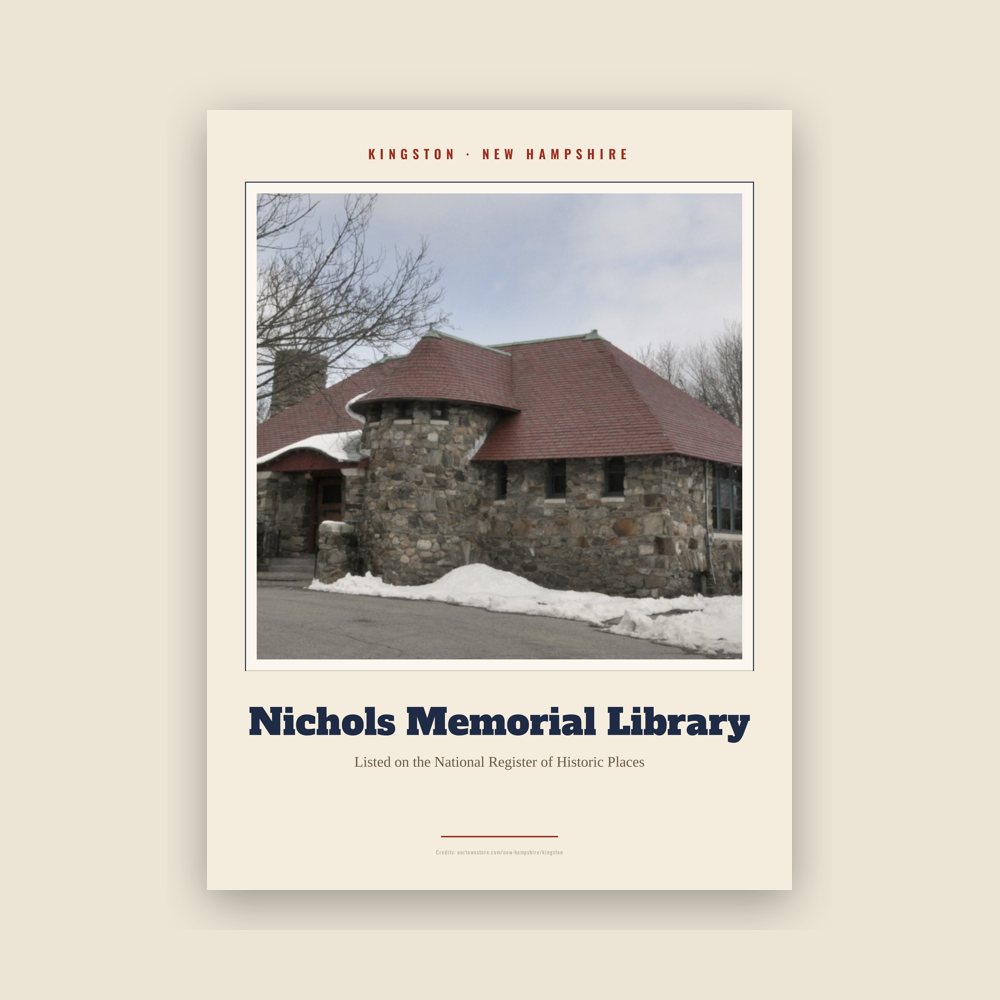
Archival matte print of a local landmark, credited to its photographer
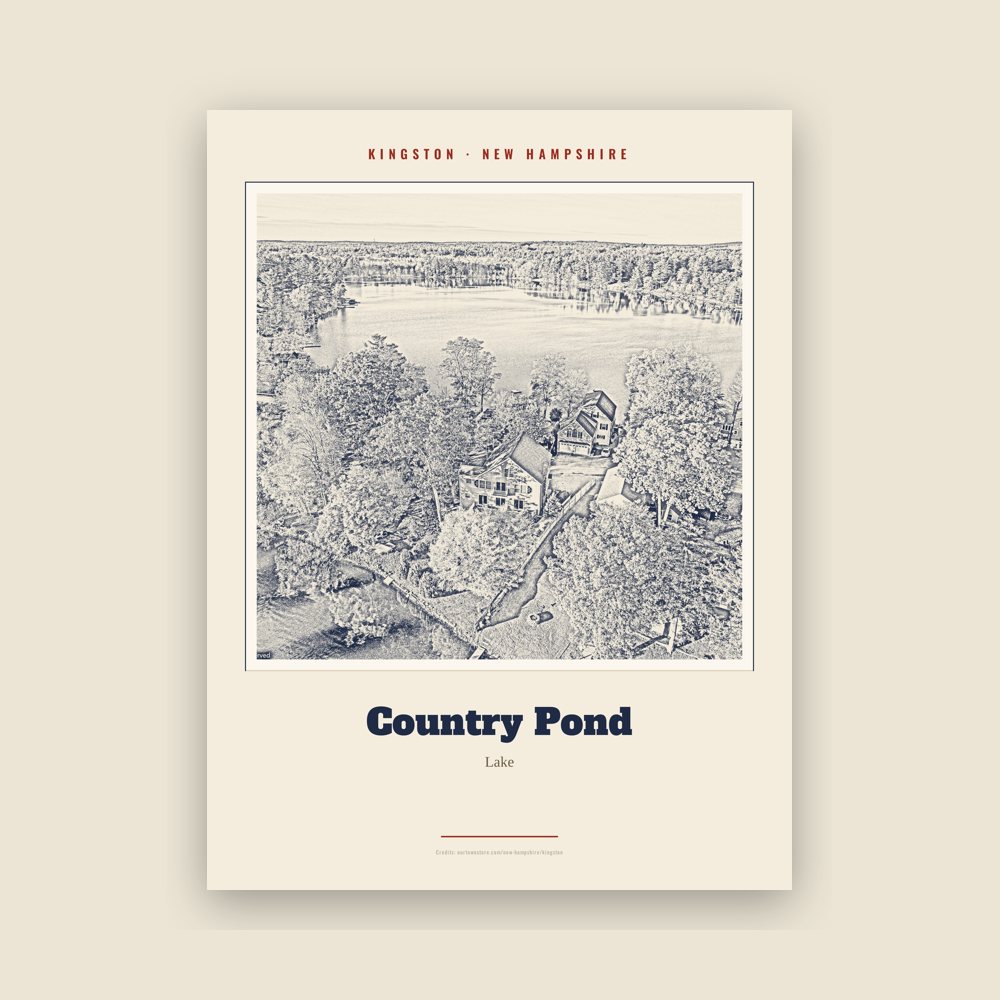
Archival matte print of a local landmark, credited to its photographer
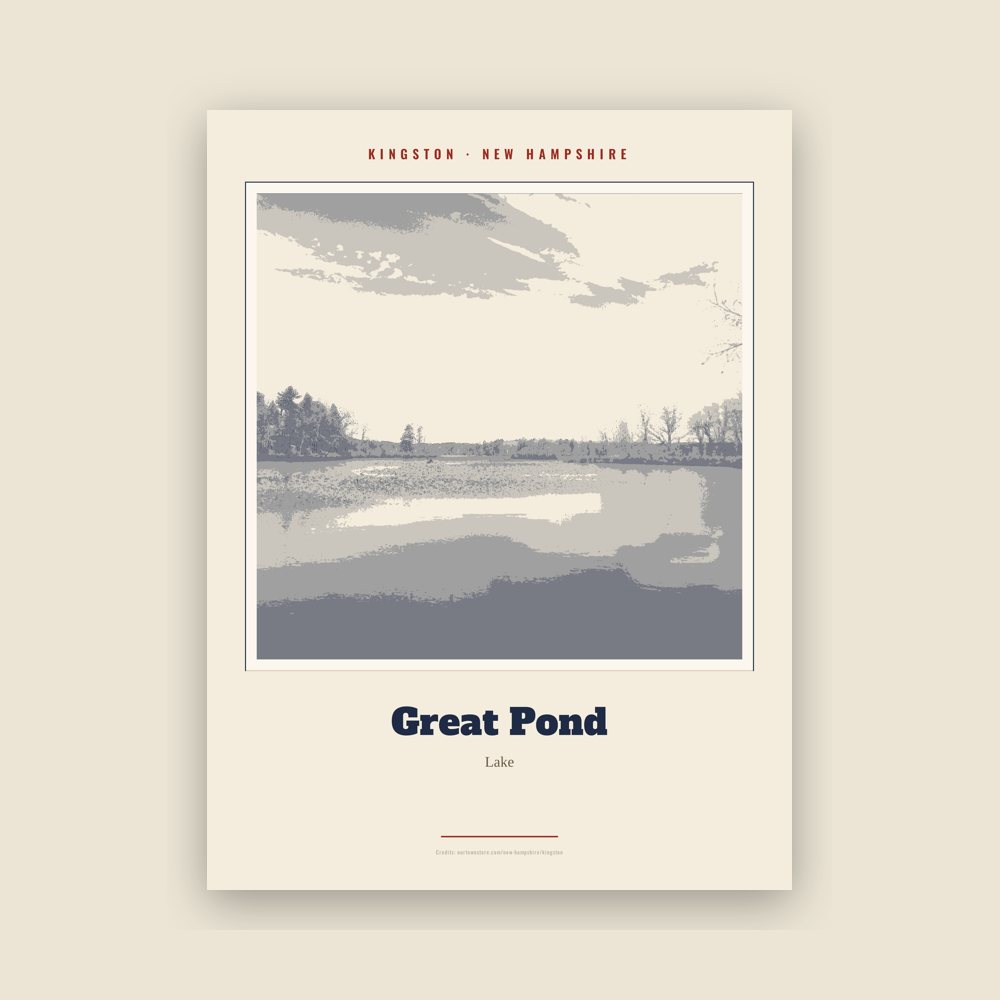
Archival matte print of a local landmark, credited to its photographer
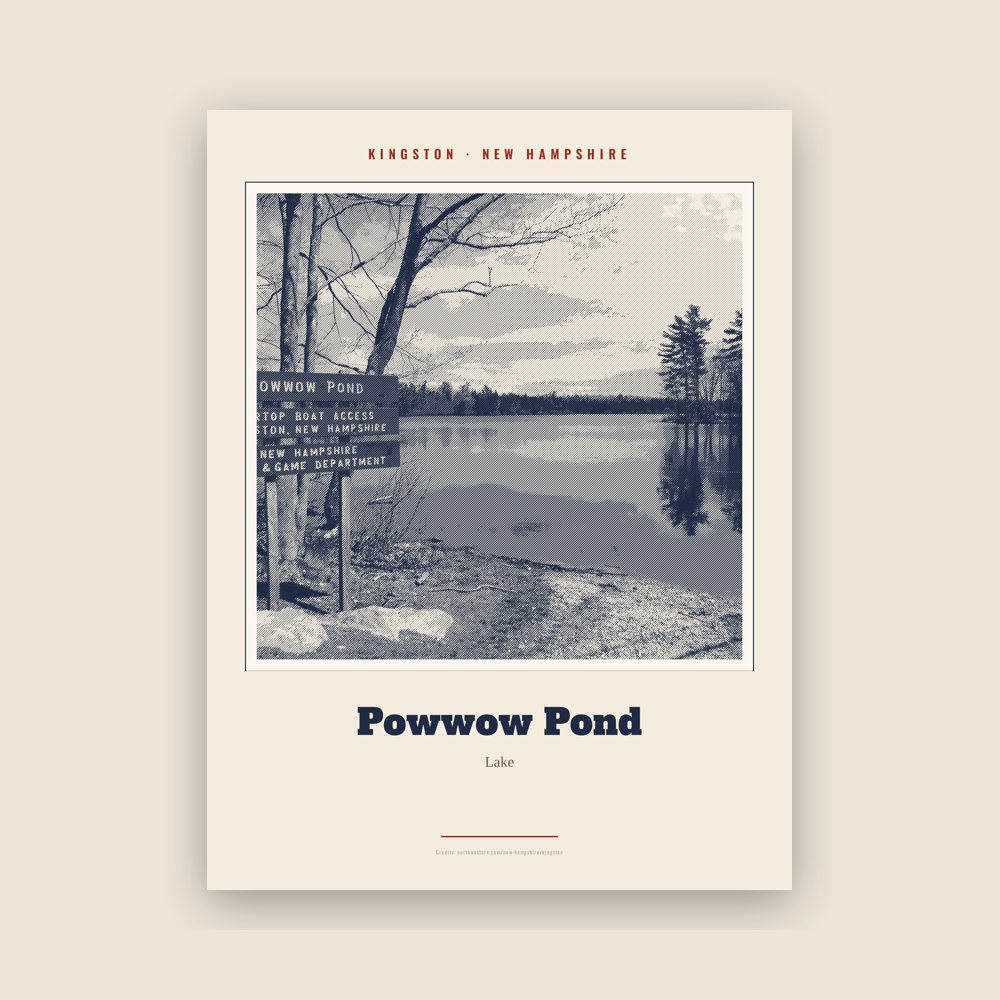
Archival matte print of a local landmark, credited to its photographer
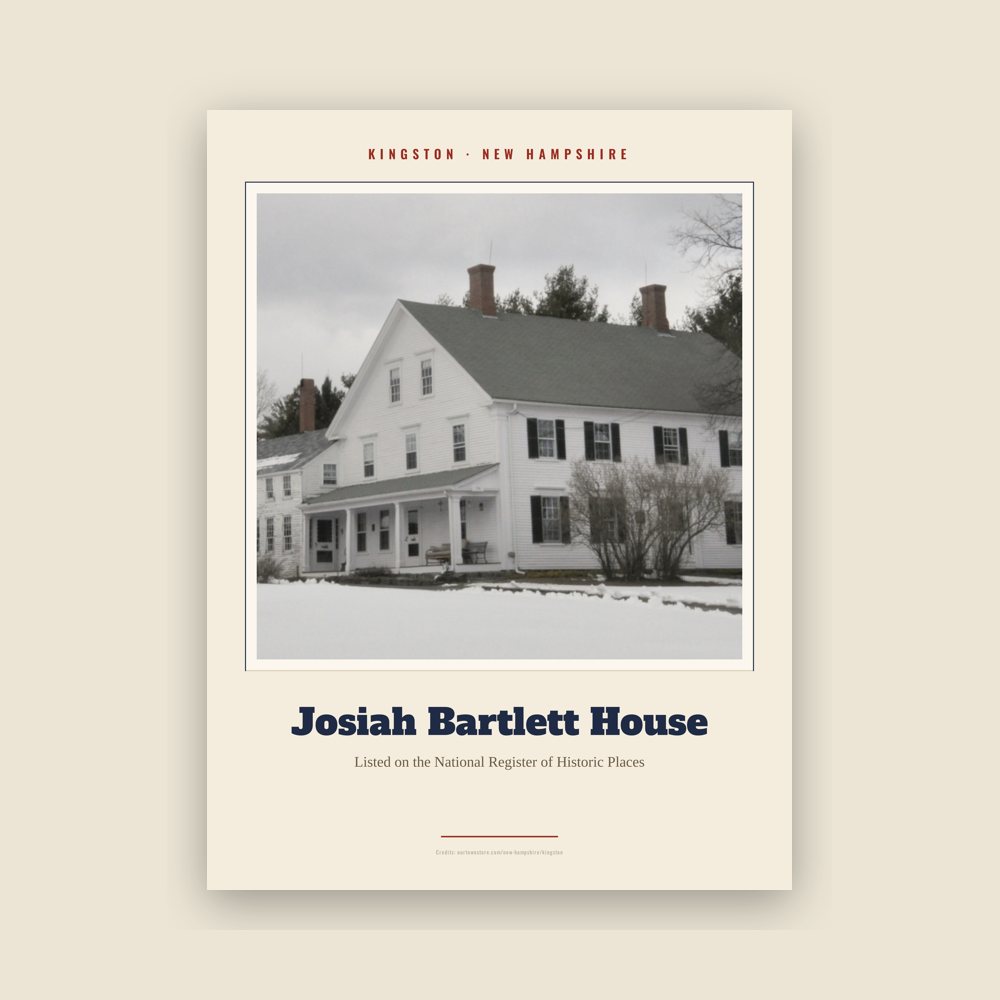
Archival matte print of a local landmark, credited to its photographer
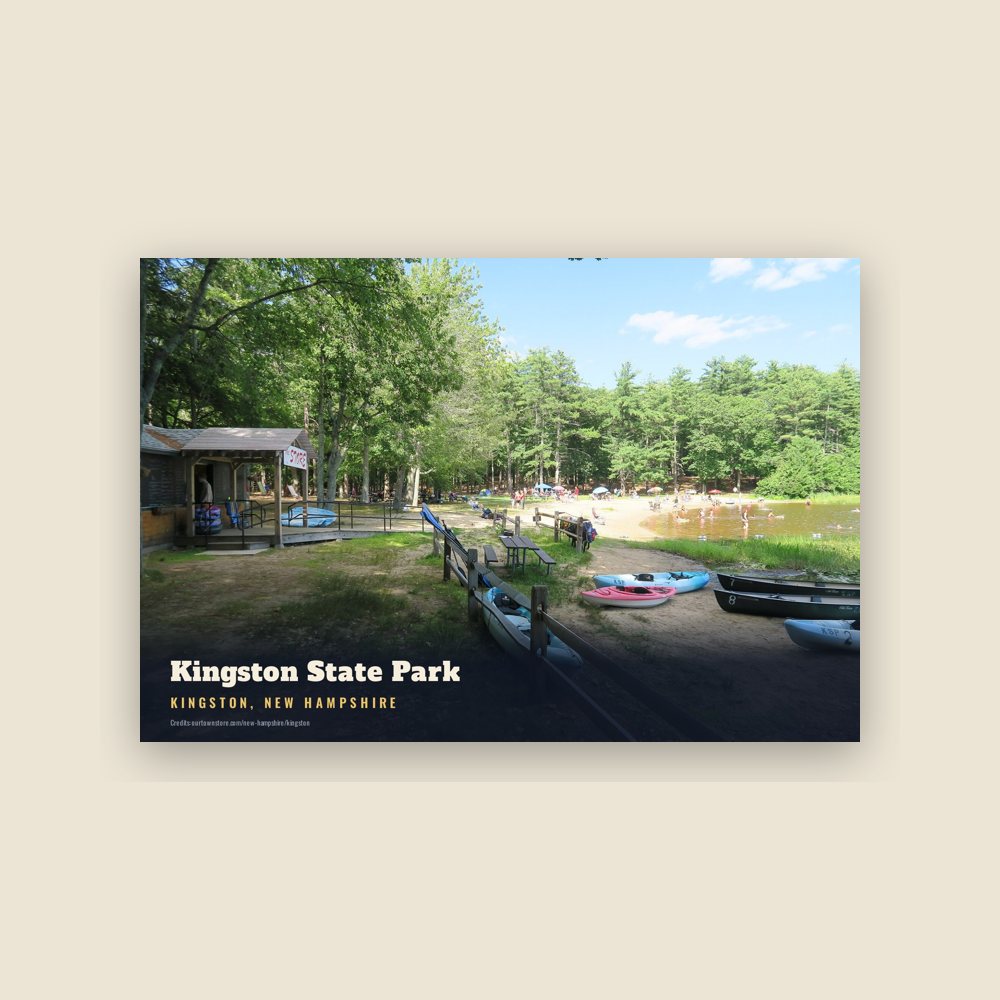
6″×4″ postcard, glossy front
6″×4″ postcard, glossy front
6″×4″ postcard, glossy front
6″×4″ postcard, glossy front
6″×4″ postcard, glossy front
6″×4″ postcard, glossy front
Population 2010: 6,025 → 2020: 6,202
From Wikidata (CC0).
Kingston was the fifth town to be established in New Hampshire. Originally, it was a part of Hampton. After King Philip's War, the establishment of new settlements was made possible by peace treaties with the local Indian tribes and, in 1692, by geographical and jurisdictional agreements between the provinces of Massachusetts Bay and New Hampshire. Consequently, certain residents of Hampton petitioned for a grant of a separate township to be created from the western part of Hampton. And so, in 1694, King William III of England granted a royal charter establishing the town of "Kingstown", so named in honor of the King. Use of the title rather than the King's name was common at the time. The original charter exists to this day.
The Kingston historic district encompasses the town center of Kingston. Historic buildings and sites within the district include the Kingston town hall; the Josiah Bartlett House, home of the second signer of the U.S. Declaration of Independence; the First Universalist Church; the Sanborn Seminary; the Nichols Memorial Research Library; the Kingston Historical Museum (housed in the town's first fire house); The 1686 House restaurant; the Masonic building; the Cemetery at the Plains (where Josiah Bartlett is buried); the Church on the Plains; and the Grace Daley House and barn, home to the town's first church-owned parsonage (1835).
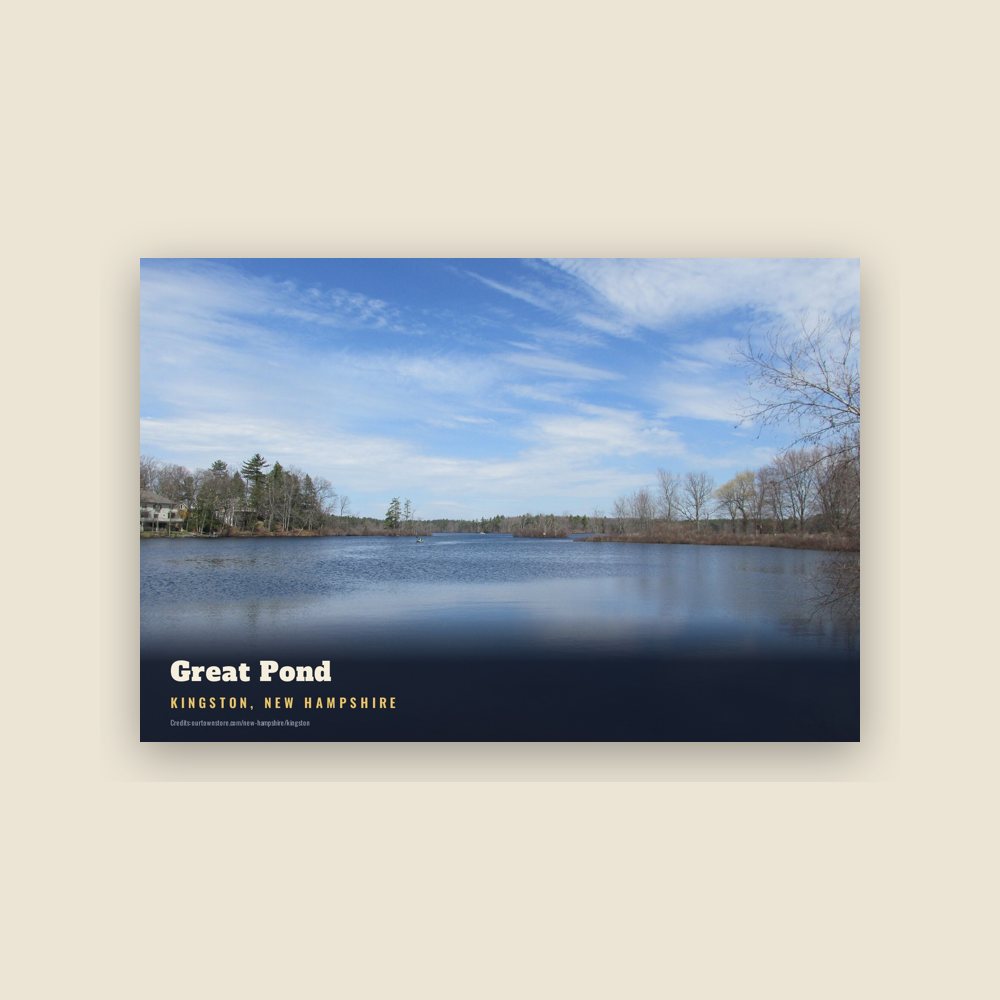
West Kingston is located along the road to Danville, in the western section of town, southwest of Great Pond. Evidence of the early inhabitants was manifested by the construction of a log garrison house on the present Great Pond Road. This well-built house consisted of two large rooms downstairs and a huge open chamber on the second floor. In later years a small ell was attached to the north side. The historic house was demolished at the beginning of the 20th century. The stone step at the main entrance and what must have been the "cellar hole" of this dwelling are still visible.
In the midst of an agrarian society, the charcoal manufacturing industry took root and became a major business in West Kingston. Charcoal was carried by horse-drawn wagons to the Massachusetts cities of Haverhill, Lawrence, North Andover, Newburyport, Lowell, and Amesbury, as well as to Exeter, New Hampshire. Some was sold by street peddlers to be used in homes for the purpose of kindling fires. A great deal was also used by the large machine shops and by the silversmiths.
Many individuals manufactured shoes in their small, one-room shoe shops. Such a shop stood until recently near the Thomas Page residence. Some people sewed shoes in their own homes. Unlike the large-scale factories of today, concerned with mass production, these enterprises constructed the whole shoe, hand-sewing it with an artisan's touch.
A cooper shop on the Wadleigh Farm produced barrels made entirely of wood: the staves were made of pine and hardwoods, and were bound with hoops of birch. Skilled workers made hooks to hold hoops together. When a sufficient number of barrels was collected, the men hauled them to Newburyport to be sold - probably to be used by fishermen in packing fish.
Adapted (trimmed) from the Wikipedia article Kingston, New Hampshire, revision 1374452987 by its contributors, licensed CC BY-SA 4.0.
We share a part of every Kingston sale with local partners, and we'd love to print from your collection. Old photographs, maps and postcards make the best keepsakes.
Partner with us