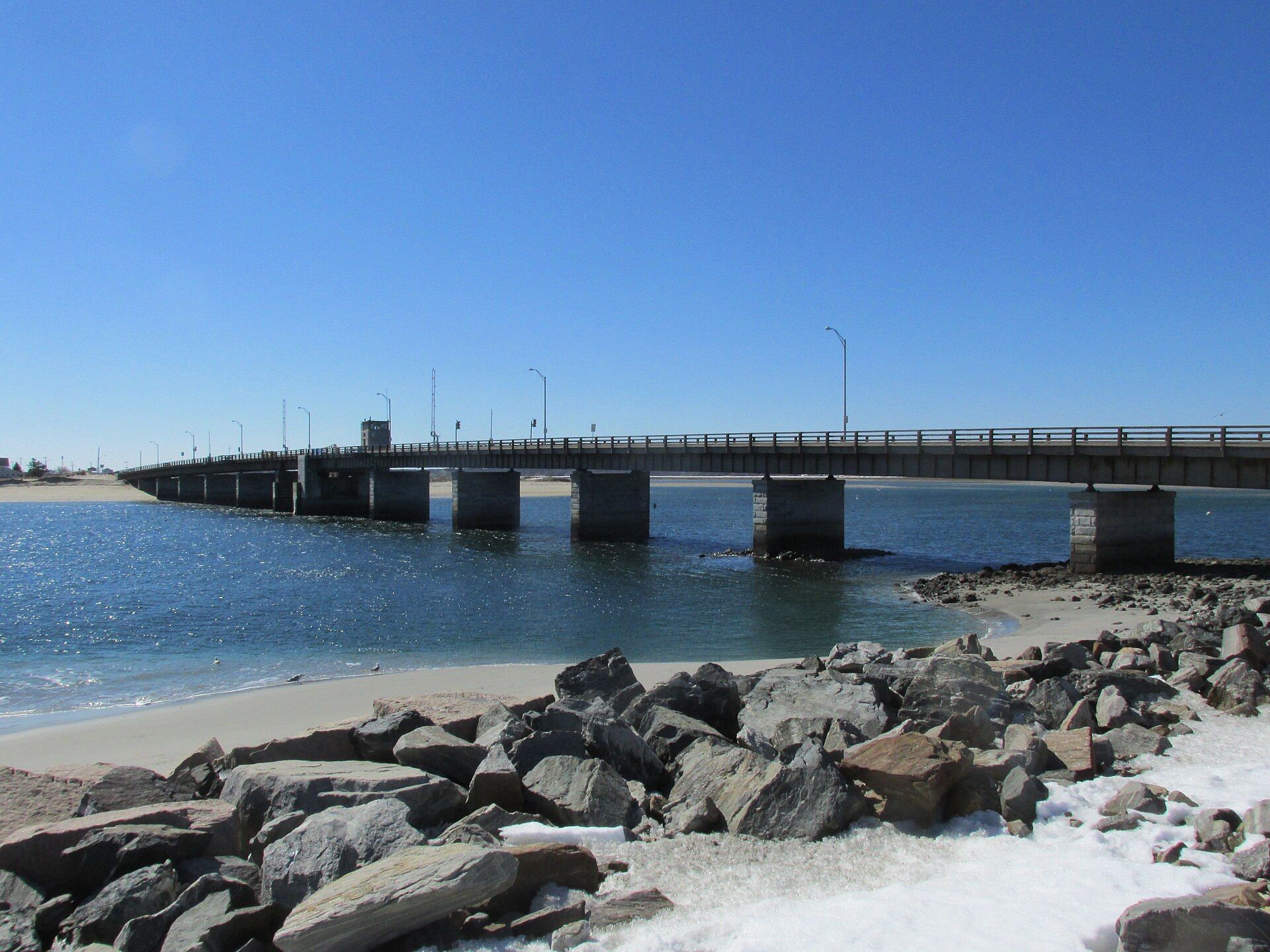
First called the "Plantation of Winnacunnet", Hampton was one of four original New Hampshire townships chartered by the General Court of Massachusetts, which then held authority over the colony. Landmarks include Hampton Beach State Park, Hampton Bridge and New Hampshire Marine Memorial. Hampton is the birthplace of Jane Pierce, first Lady of the United States from 1853 to 1857.
Every piece is drawn from Hampton's own map data and historic archives, then printed and shipped from the USA when you order. No two towns look alike.

Every road in town, on archival matte paper

The same map, in navy and silver
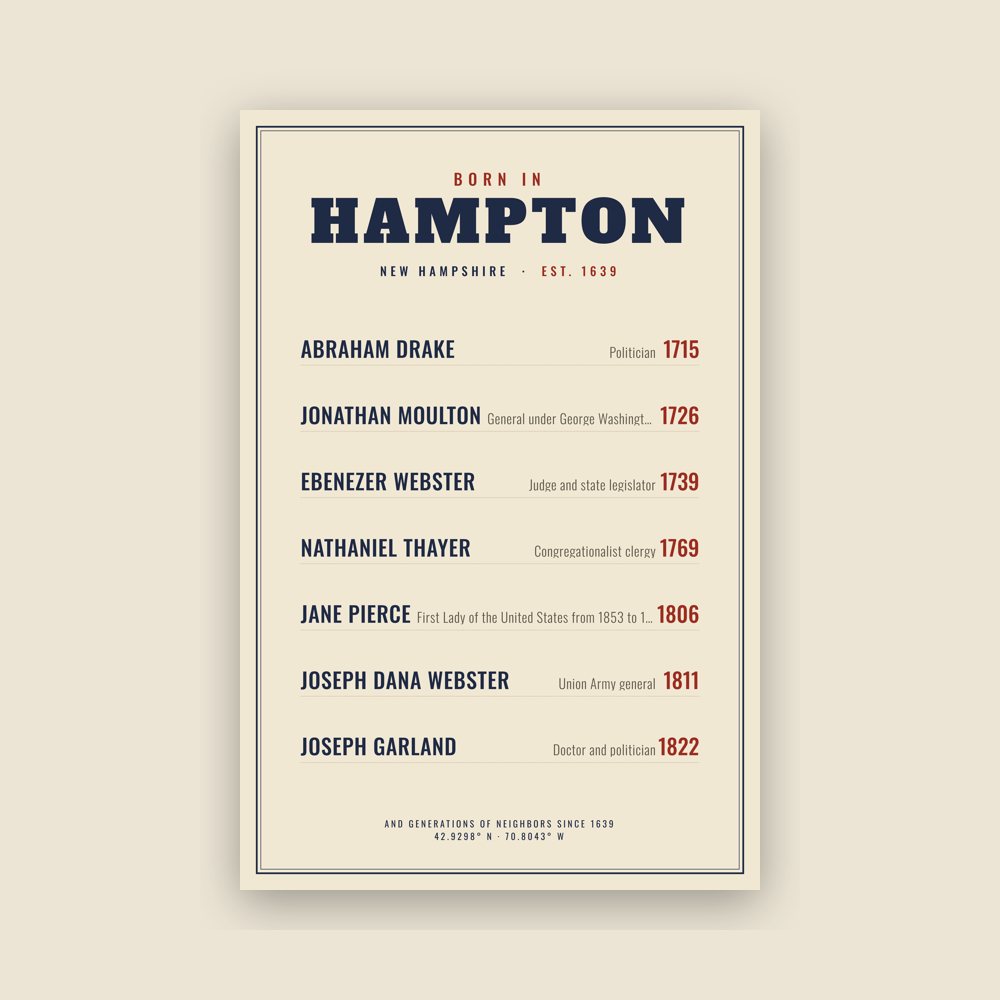
Famous natives, by birth year
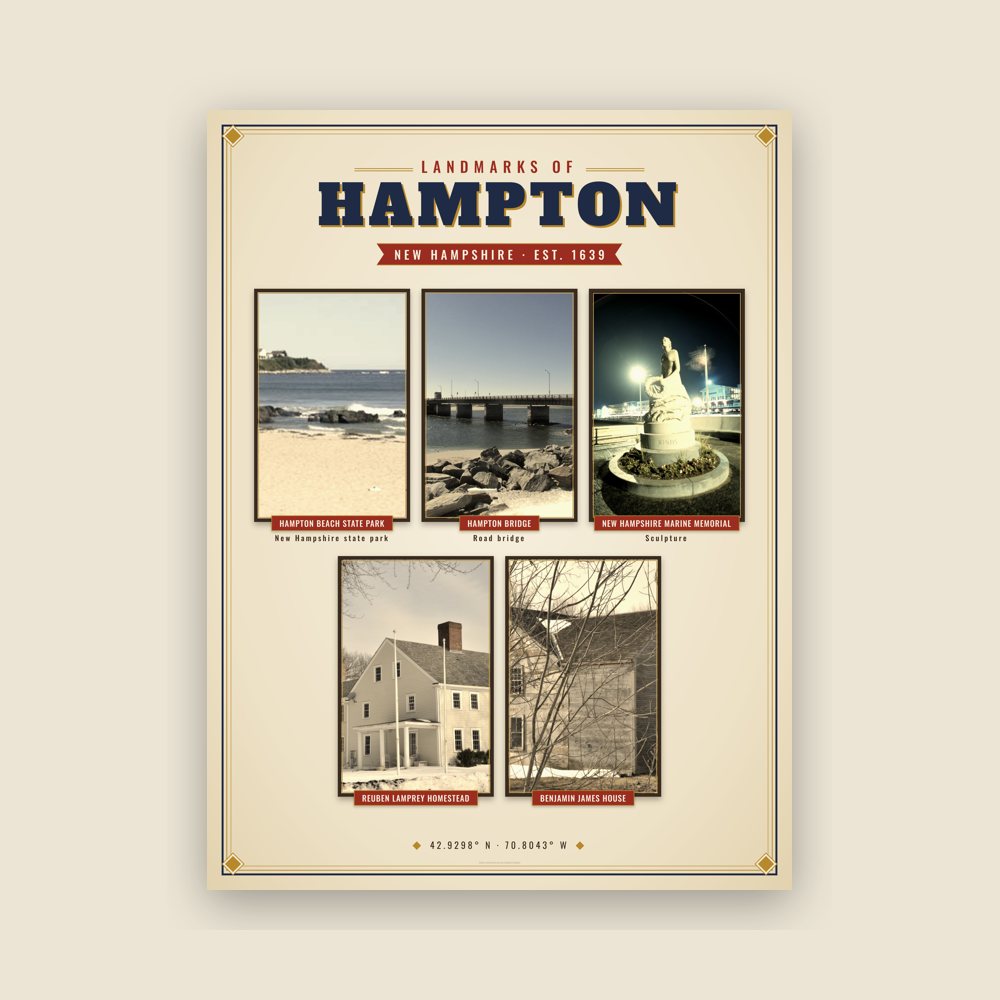
Nine local landmarks, archival matte
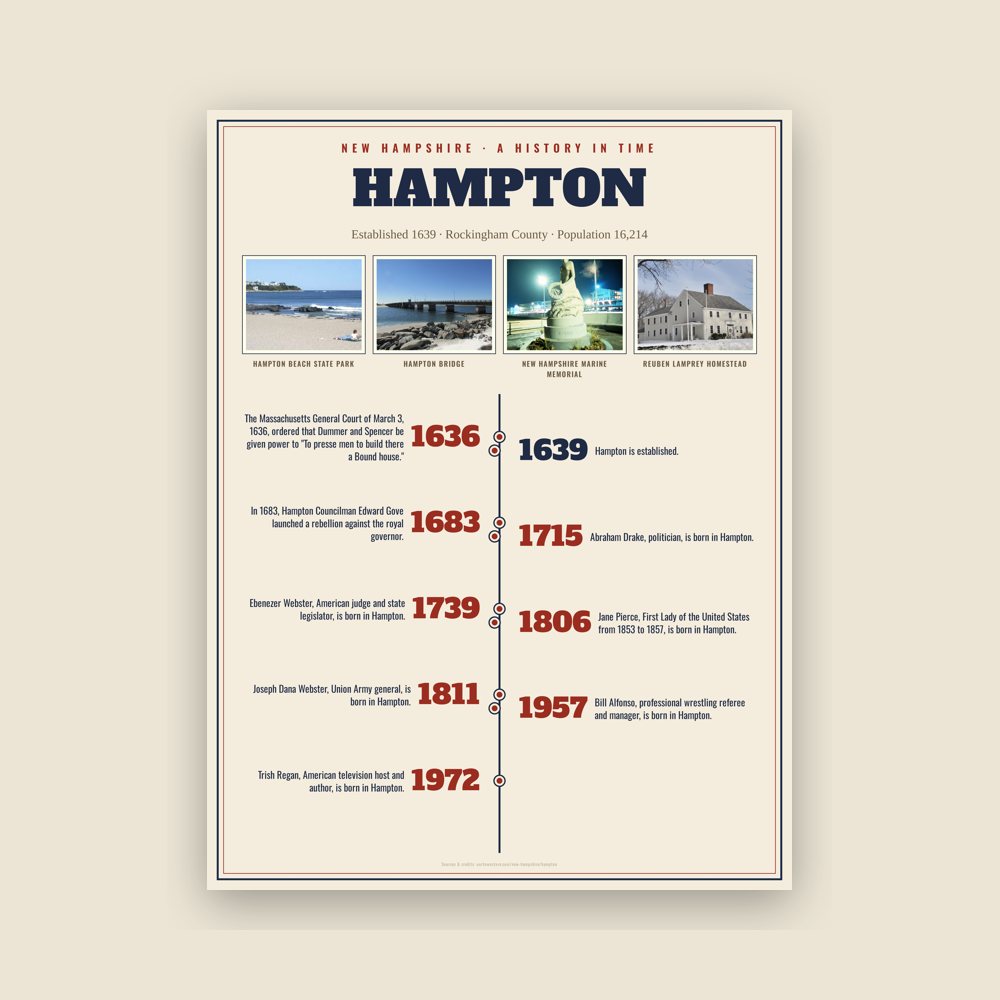
The town's story in dates, from its own records, for home or classroom
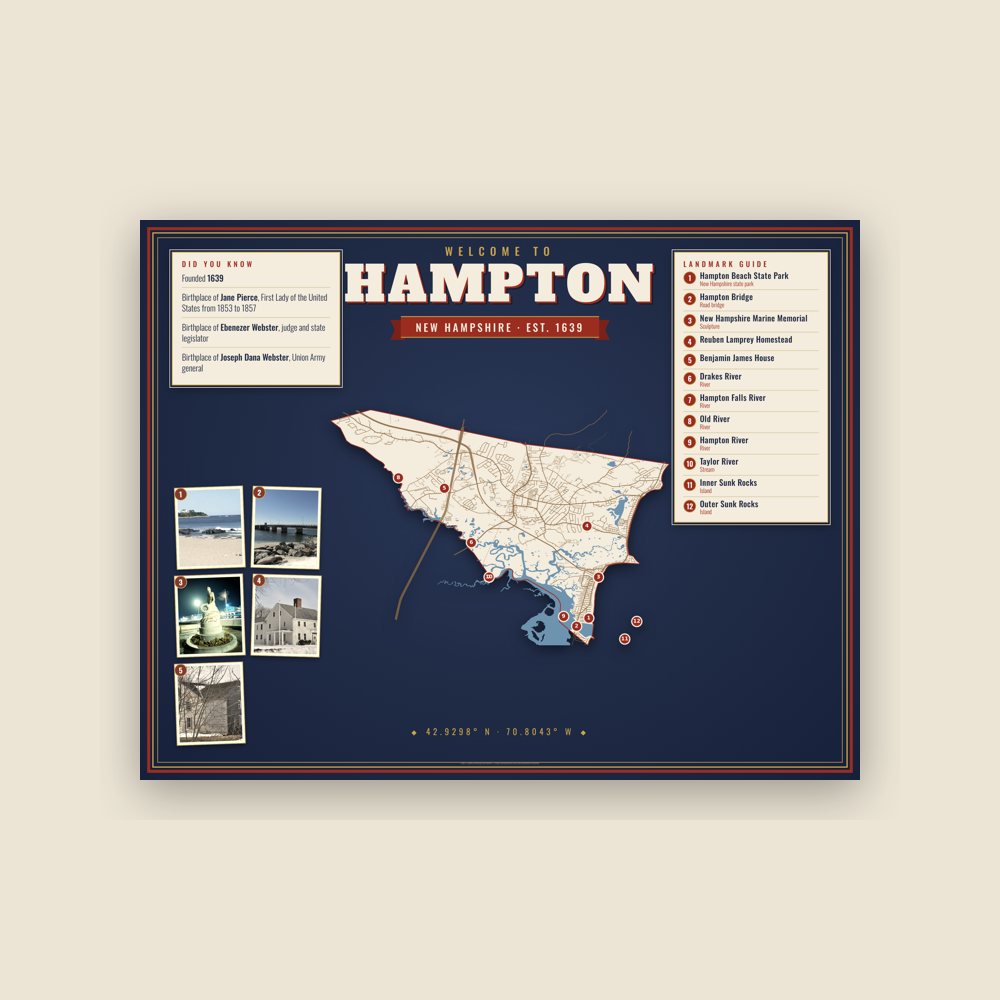
Map of local landmarks, washable fabric
Heavy-blend fleece, street map printed on the back
Soft Bella+Canvas jersey
Glossy ceramic, dishwasher safe
Ceramic keepsake, gold ribbon
Weatherproof, for the front walk
24″×16″, printed coir-look fibers, rubber back
12″×12″ printed wood, ready to hang
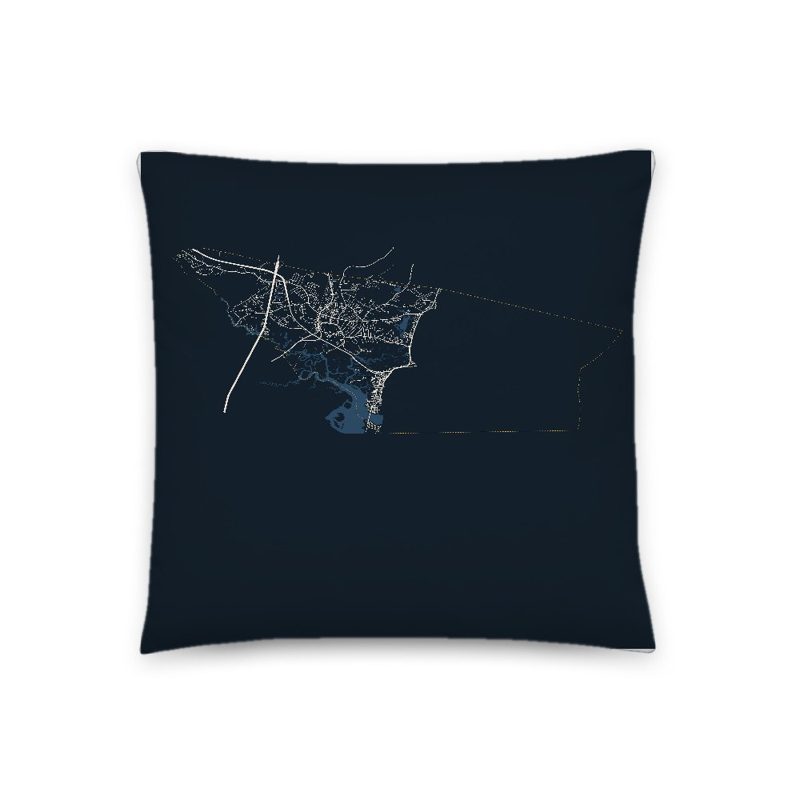
Soft-touch, zip cover

Sturdy all-over-print tote
Glossy top, cork back
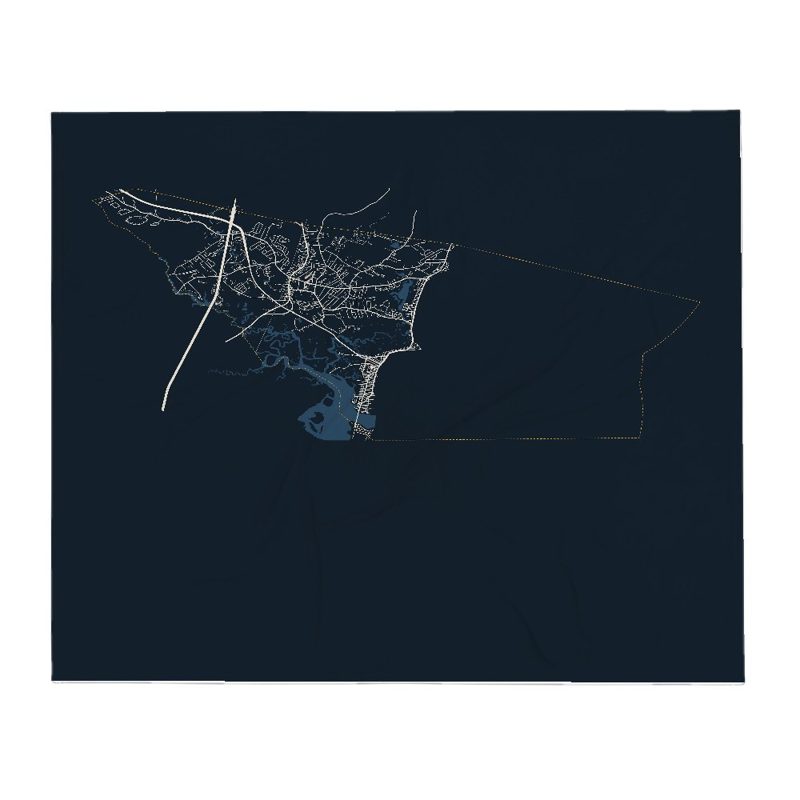
Soft fleece, 50″×60″
20 oz, double-wall stainless
Archival matte print of a local landmark, credited to its photographer
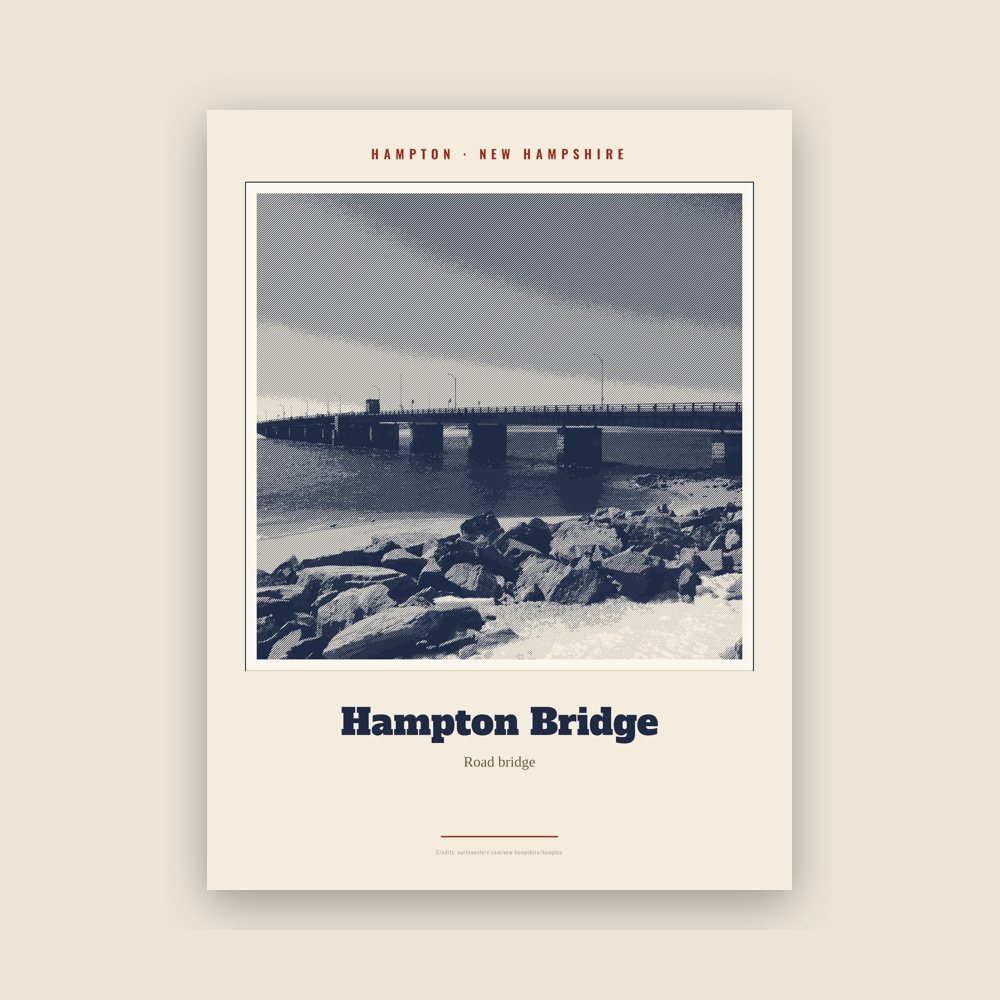
Archival matte print of a local landmark, credited to its photographer
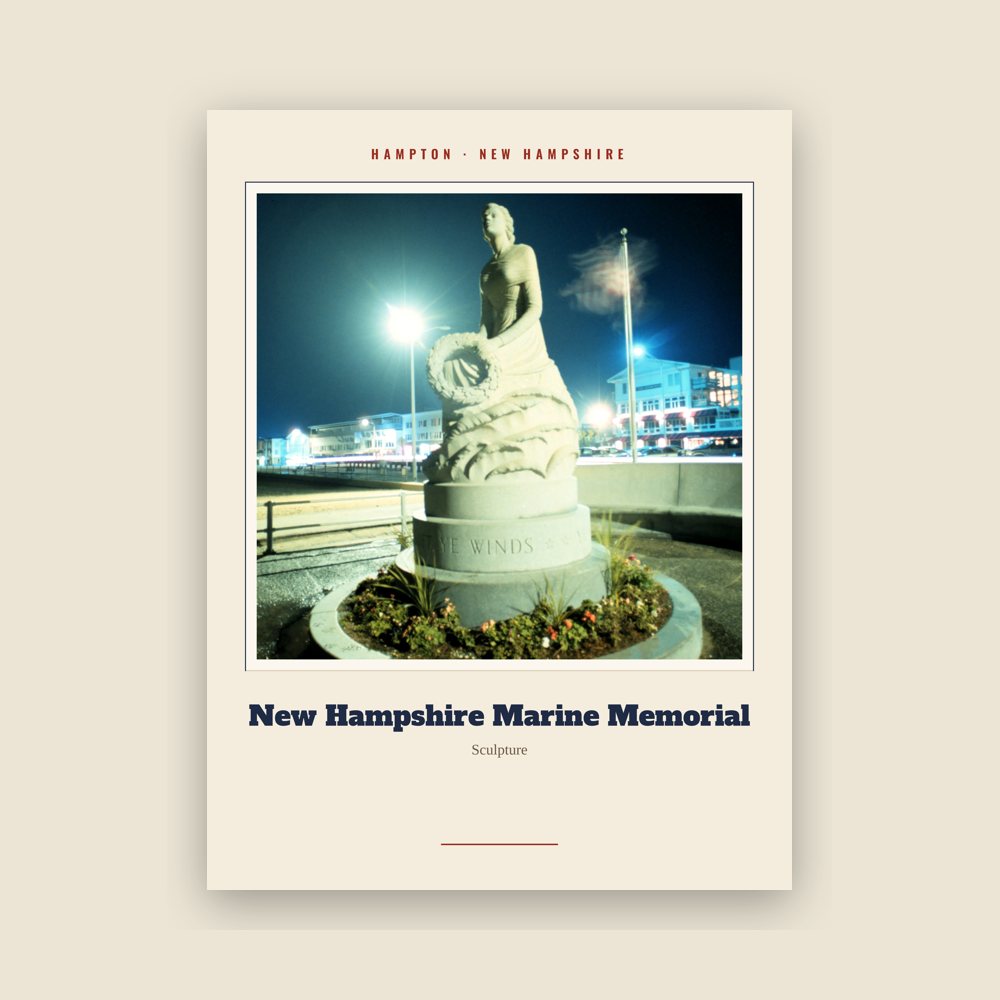
Archival matte print of a local landmark, credited to its photographer
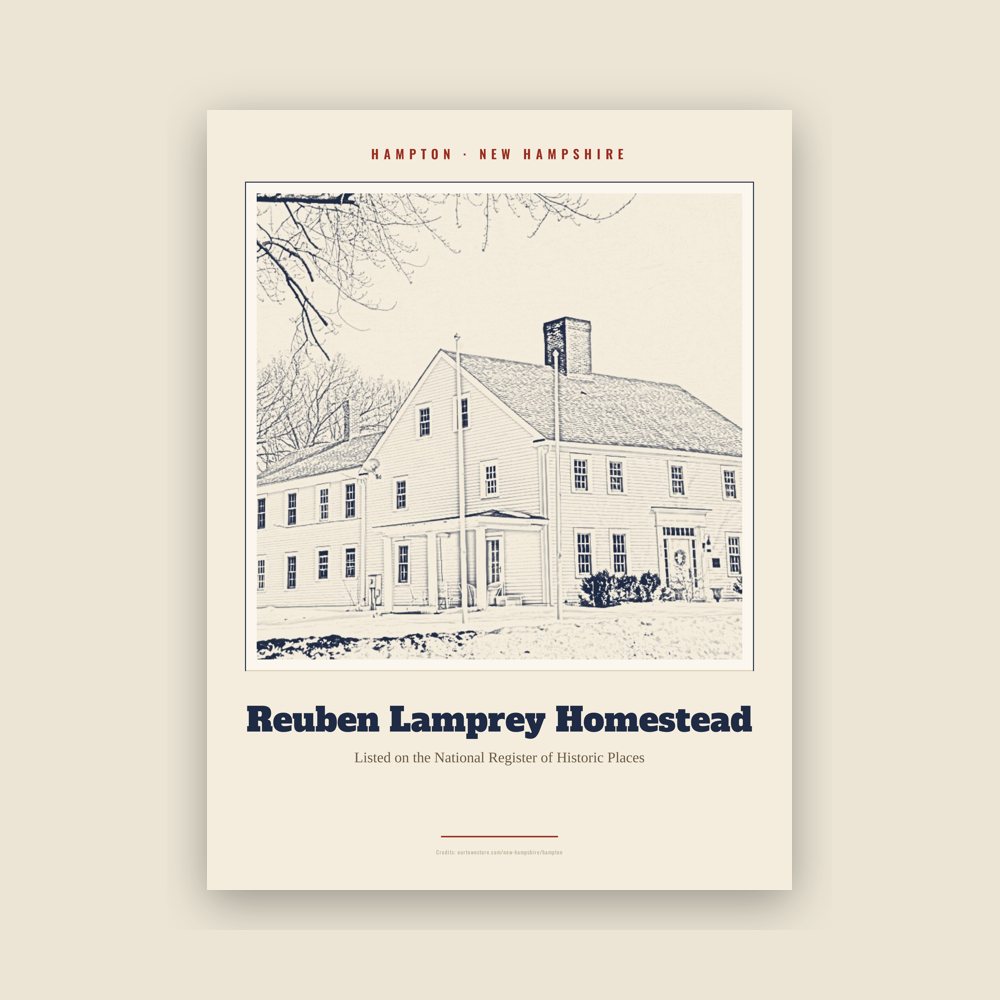
Archival matte print of a local landmark, credited to its photographer
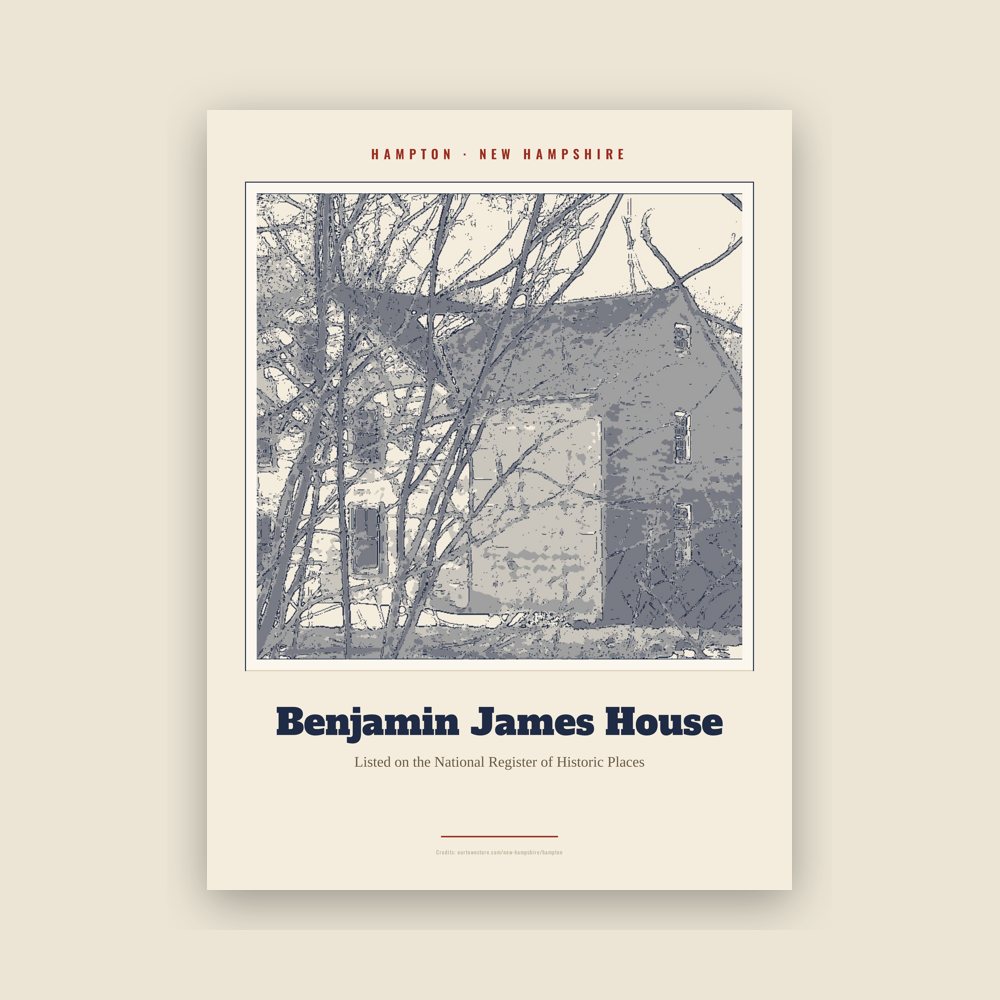
Archival matte print of a local landmark, credited to its photographer
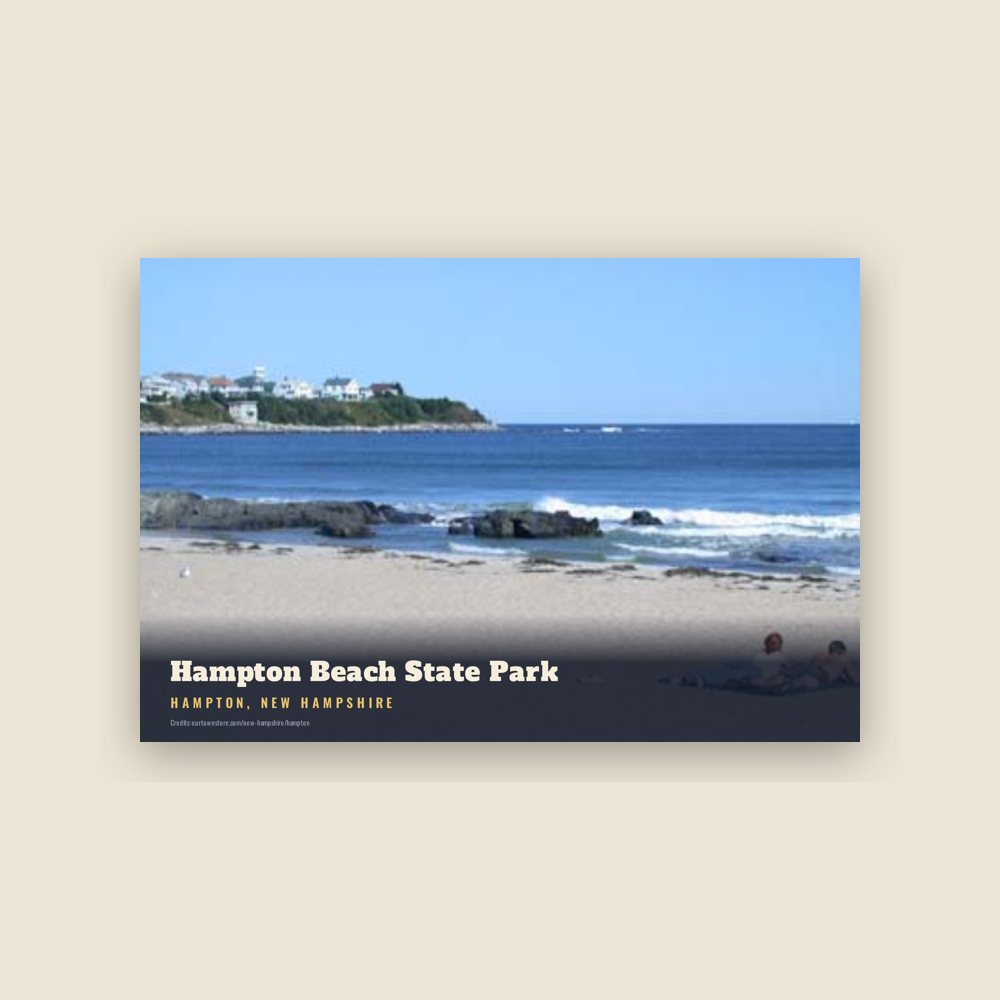
6″×4″ postcard, glossy front
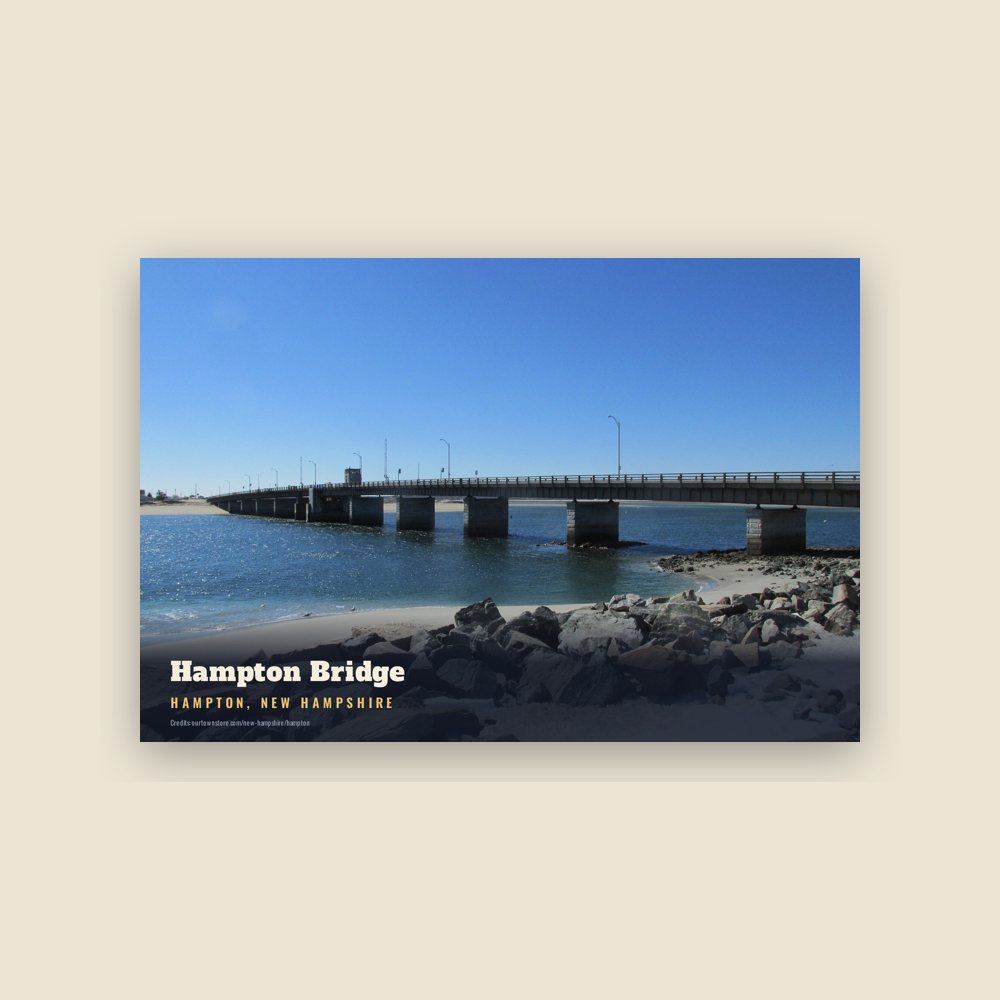
6″×4″ postcard, glossy front
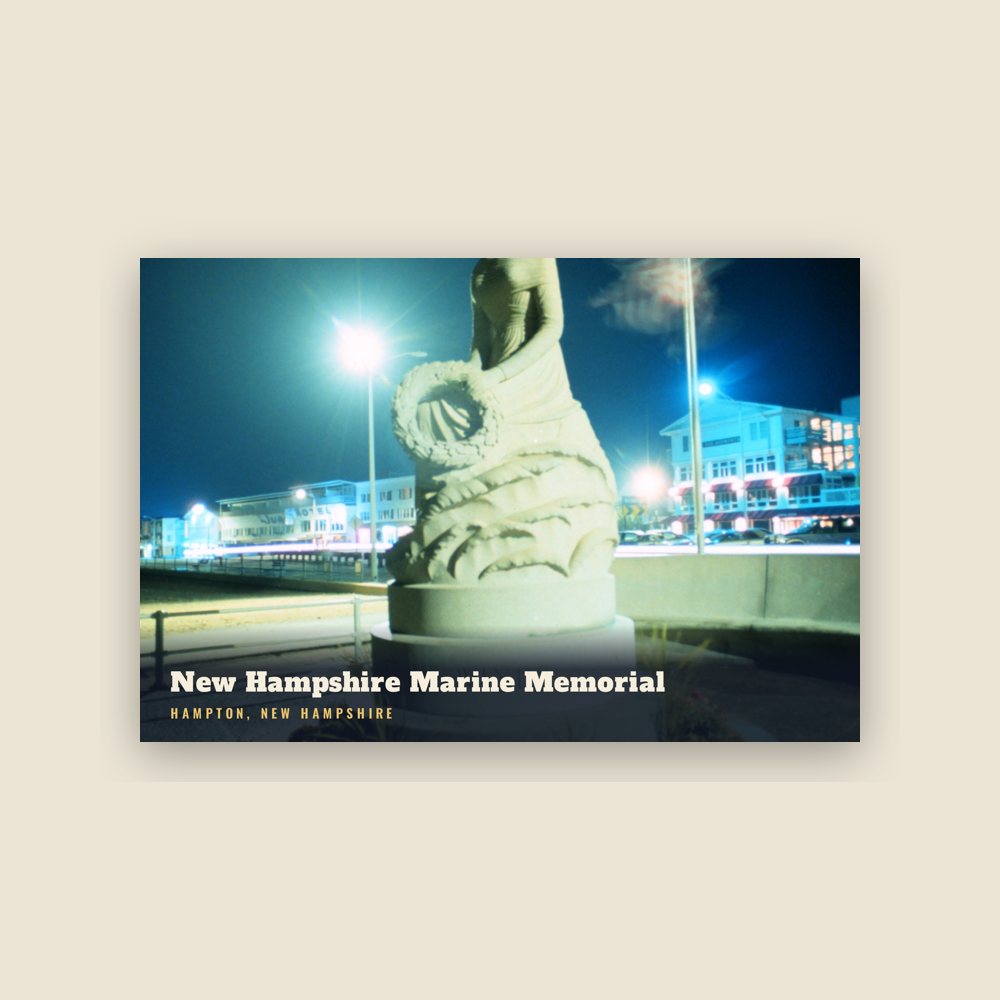
6″×4″ postcard, glossy front
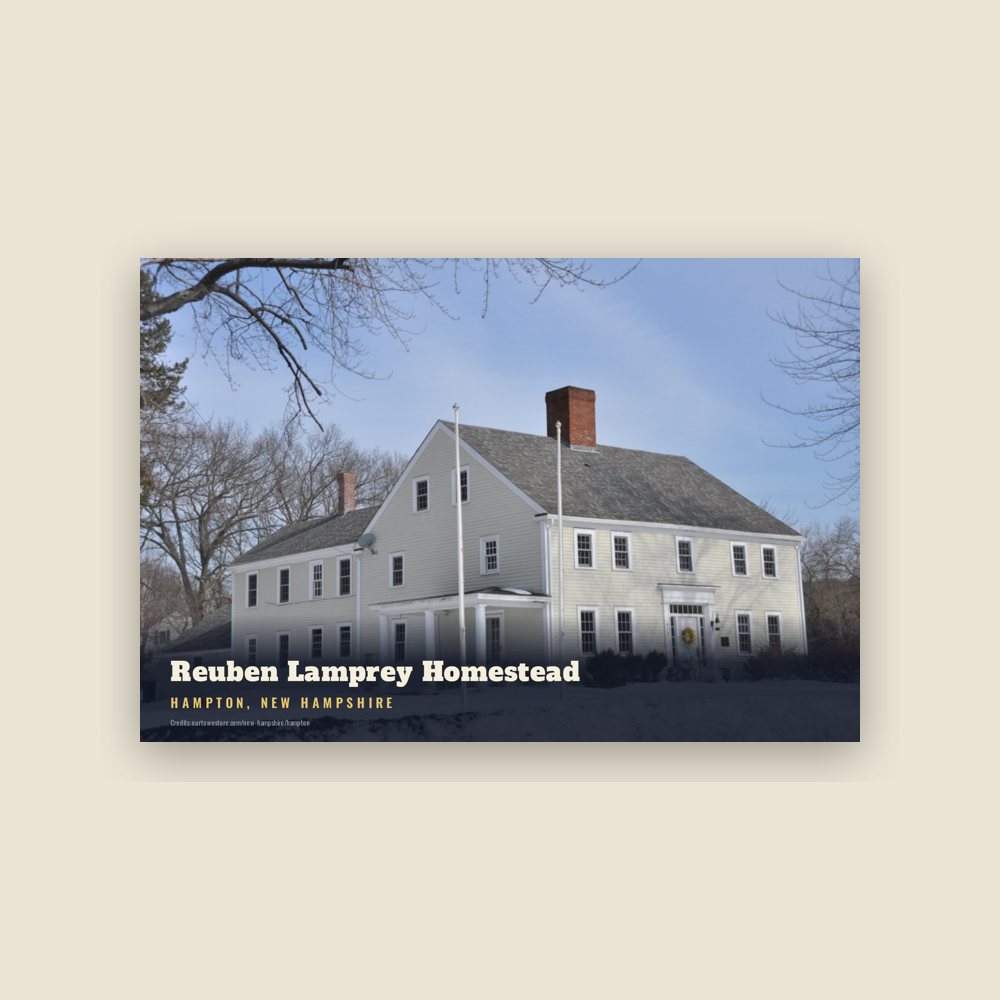
6″×4″ postcard, glossy front
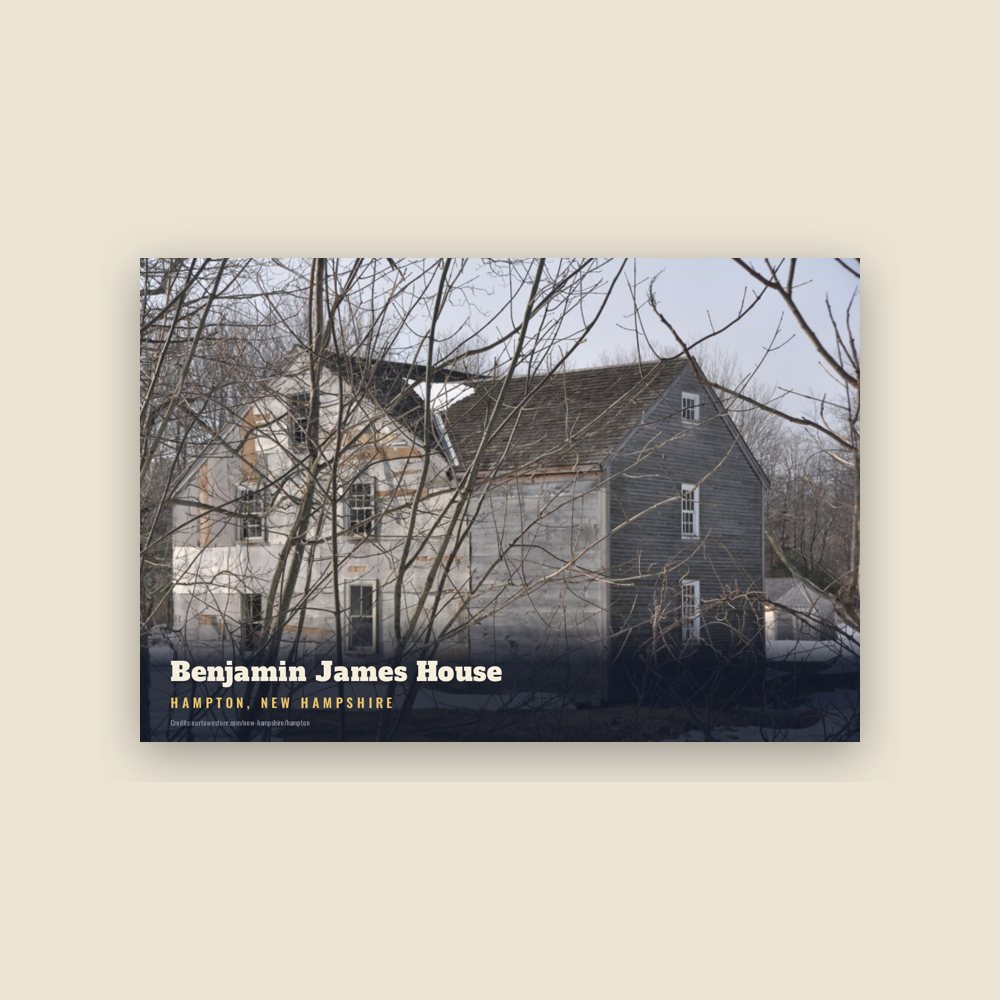
6″×4″ postcard, glossy front
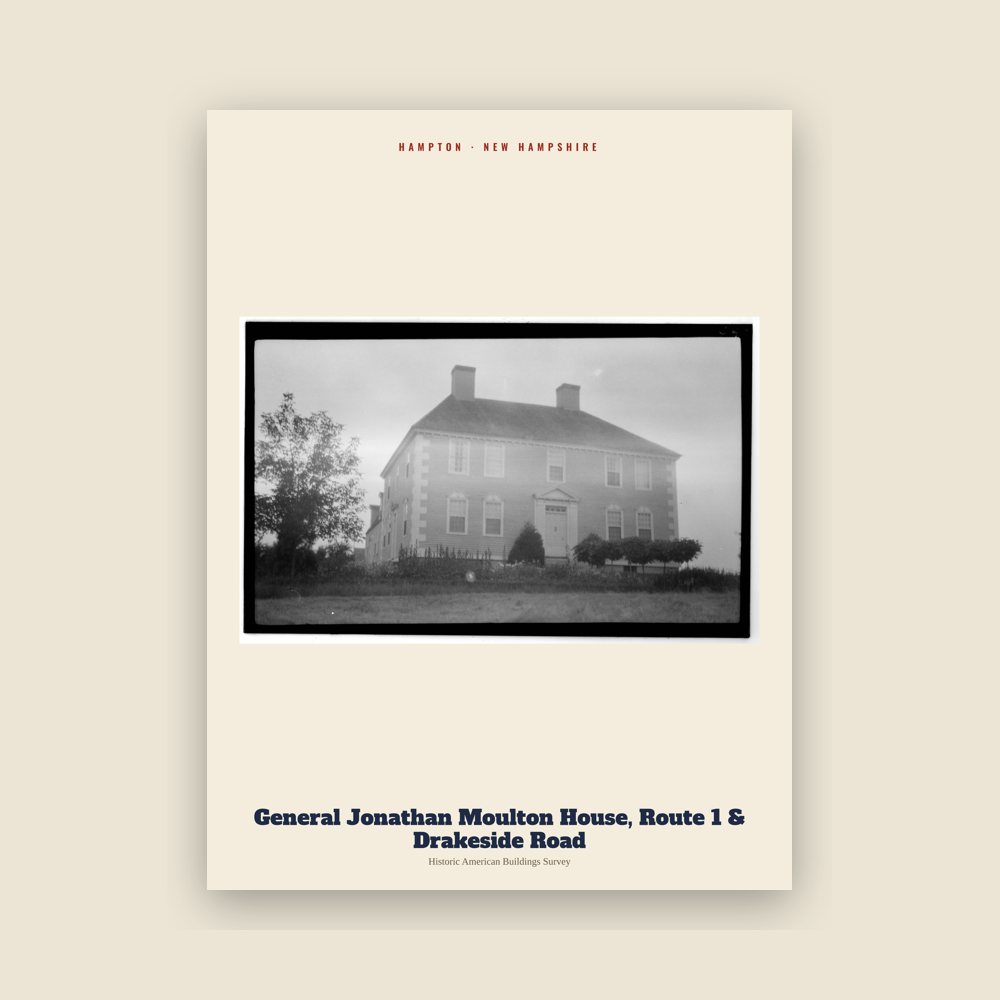
From the Library of Congress collections: a historic survey drawing or photograph of the town

From the Library of Congress collections: a historic survey drawing or photograph of the town
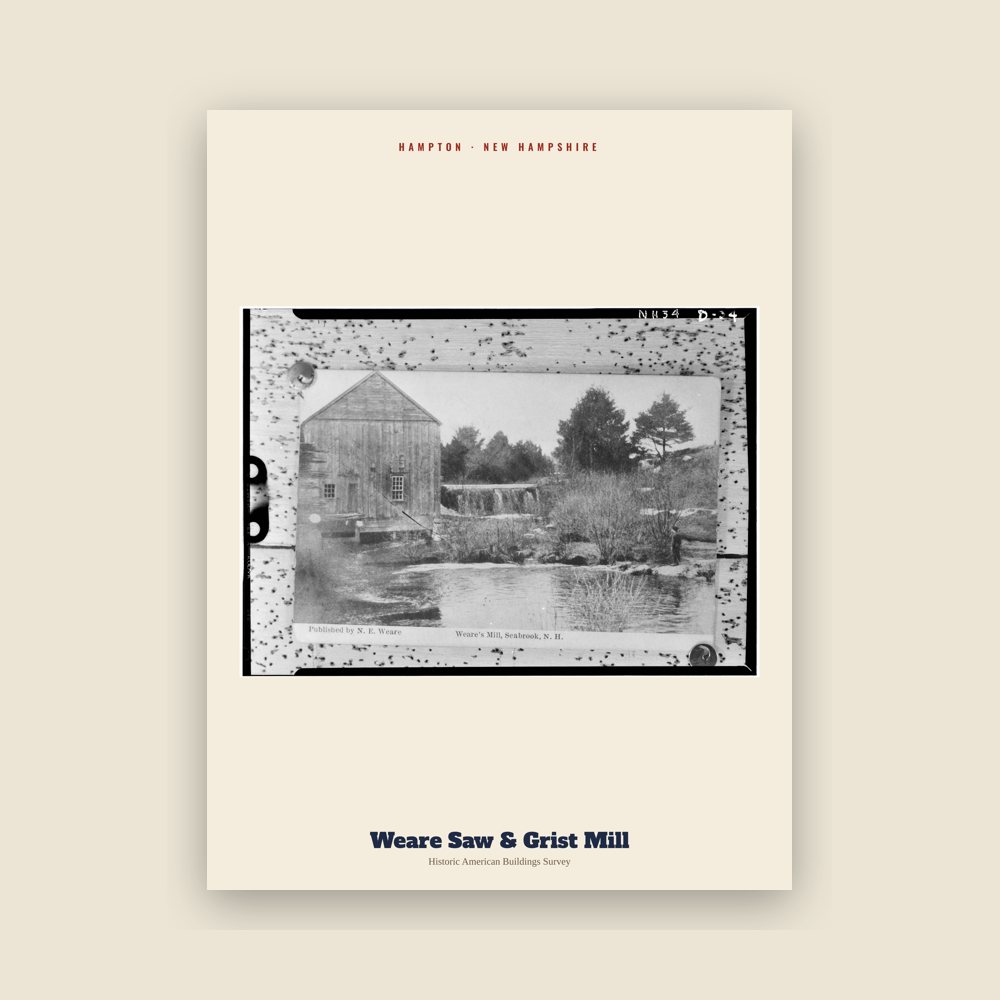
From the Library of Congress collections: a historic survey drawing or photograph of the town
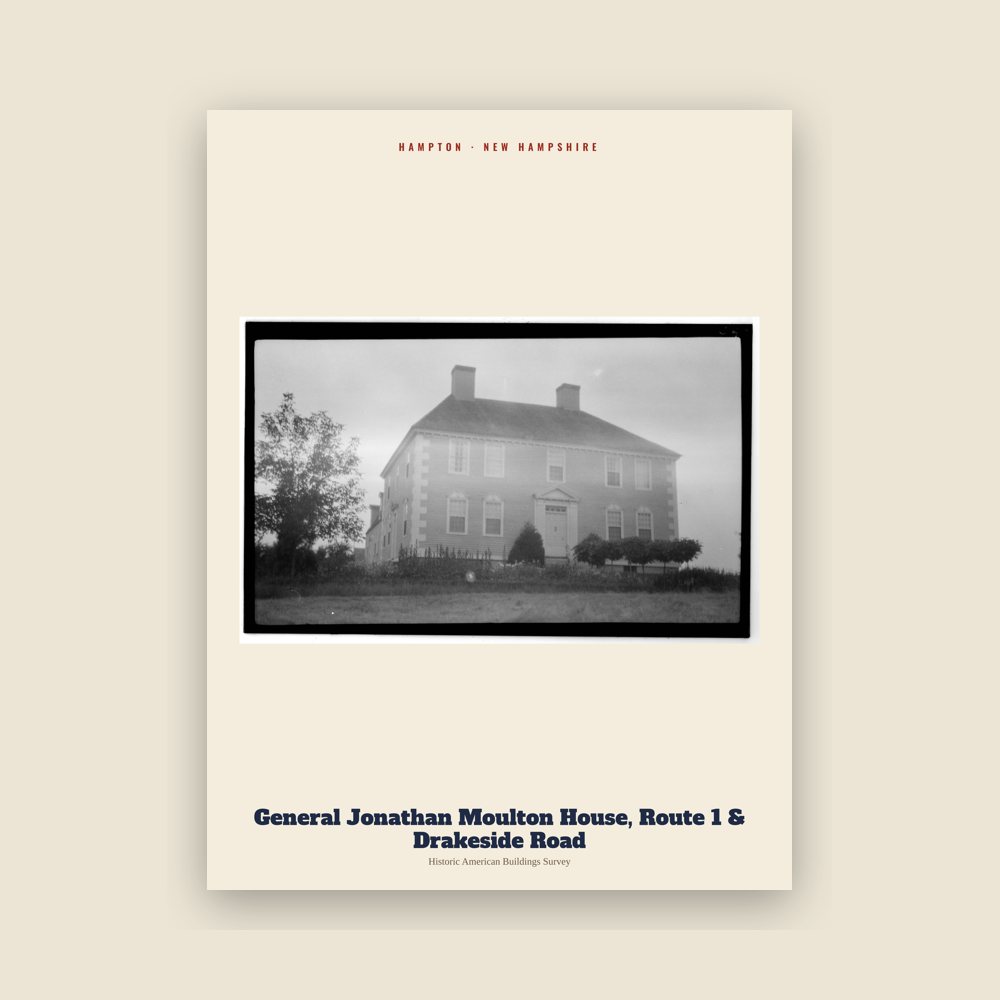
From the Library of Congress collections: a historic survey drawing or photograph of the town
Population 2010: 15,430 → 2020: 16,214
From Wikidata (CC0).
First called the "Plantation of Winnacunnet", Hampton was one of four original New Hampshire townships chartered by the General Court of Massachusetts, which then held authority over the colony. Winnacunnet is an Algonquian Abenaki word meaning "pleasant pines" and is the name of the town's high school, serving students from Hampton and the surrounding towns of Seabrook, North Hampton, and Hampton Falls.
In March 1635, Richard Dummer and John Spencer of the Byfield section of Newbury, Massachusetts, came round in their shallop, coming ashore at the landing, and were much impressed by the location. Dummer, who was a member of the General Court, got that body to lay its claim to the section and plan a plantation here. The Massachusetts General Court of March 3, 1636, ordered that Dummer and Spencer be given power to "To presse men to build there a Bound house."
The town was settled in 1638 by a group of parishioners led by Oxford University graduate Reverend Stephen Bachiler,who had formerly preached at the settlement's namesake: Hampton, England.The town, incorporated in 1639, once included Seabrook, Kensington, Danville, Kingston, East Kingston, Sandown, North Hampton and Hampton Falls. Since Hampton was founded under the authority of the Massachusetts charter, it was the only one of the four New Hampshire towns that did not hold a vote to join Massachusetts. When the other three towns voted to join, Hampton became part of Old Norfolk County.
On September 18, 1679, the Acts of Privy Council records that Stephen Bachiler's son-in-law, "Christopher Hussey of Hampton, Esquire", was appointed by King Charles II to "govern the province of New Hampshire" as a member of the newly established council of seven men.
In 1683, Hampton Councilman Edward Gove launched a rebellion against the royal governor. He was arrested, and Crown Magistrate Richard Waldron sentenced him to be hanged, drawn, and quartered, the only time in New Hampshire history that one received that sentence. While Gove was waiting in the Tower of London, King James II commuted his sentence and he returned to Hampton.
Also among Hampton's earliest settlers was Thomas Leavitt, who previously had been among the first settlers at Exeter. His descendant Thomas Leavitt, Esq., lived in Hampton Falls, and was the leading Democratic politician in southern New Hampshire for many years. He made a noted early survey and plan of the town of Hampton in 1806. James Leavitt, of the same family, occupied the home which had previously belonged to Gen. Jonathan Moulton. Later members of the family ran Leavitts' Hampton Beach Hotel, a fixture in the area for generations.
Construction of the railroad in the 1850s, as well as the Exeter and Hampton Trolley line, made Hampton's oceanfront a popular resort. Hampton Beach remains a tourist destination, offering shops, restaurants, beaches, and summer seasonal housing.
Adapted (trimmed) from the Wikipedia article Hampton, New Hampshire, revision 1378399368 by its contributors, licensed CC BY-SA 4.0.
We share a part of every Hampton sale with local partners, and we'd love to print from your collection. Old photographs, maps and postcards make the best keepsakes.
Partner with us