A short history of University City
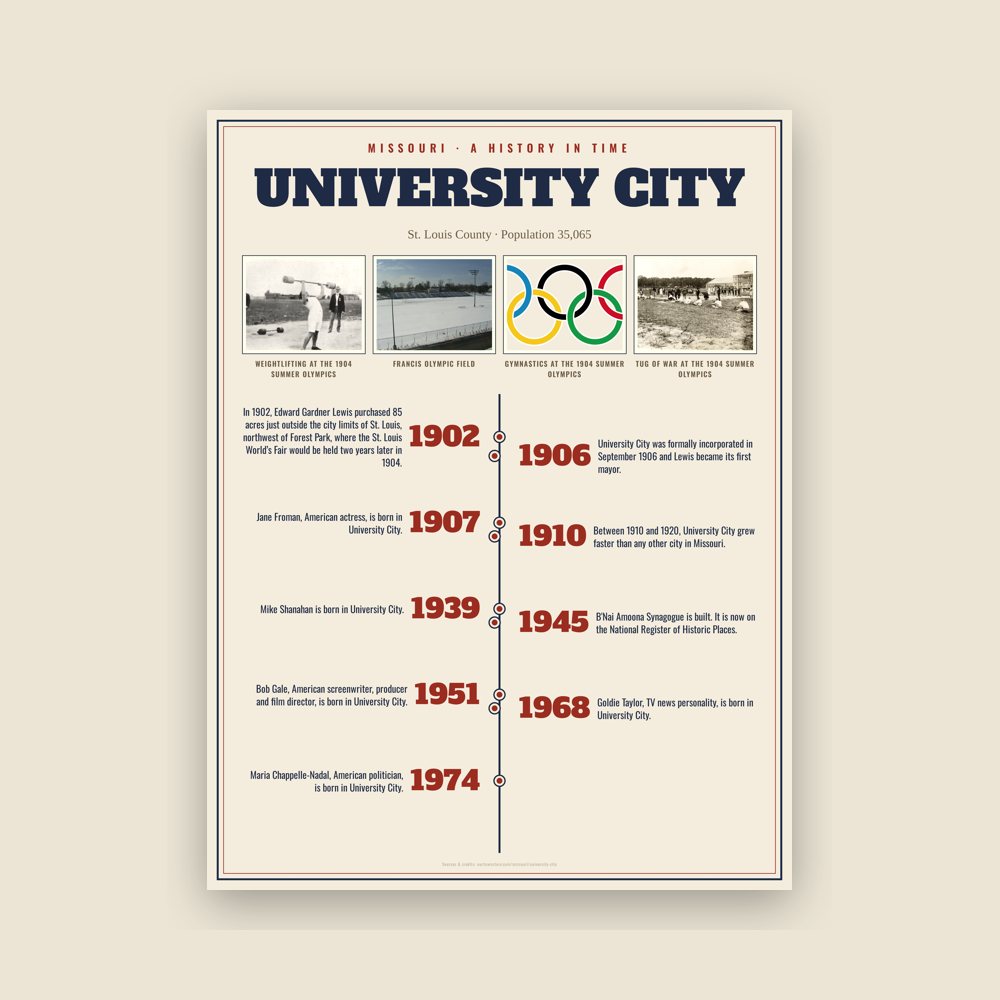
In the late 19th century, the area that is now University City was primarily farms and small farming communities. In 1902, Edward Gardner Lewis purchased 85 acres just outside the city limits of St. Louis, northwest of Forest Park, where the St. Louis World’s Fair would be held two years later in 1904. Lewis was the publisher of Woman’s Magazine and Woman’s Farm Journal. The 85-acre area would be the headquarters for Lewis’s publishing company, as well the site for a model city, inspired by the City Beautiful movement.
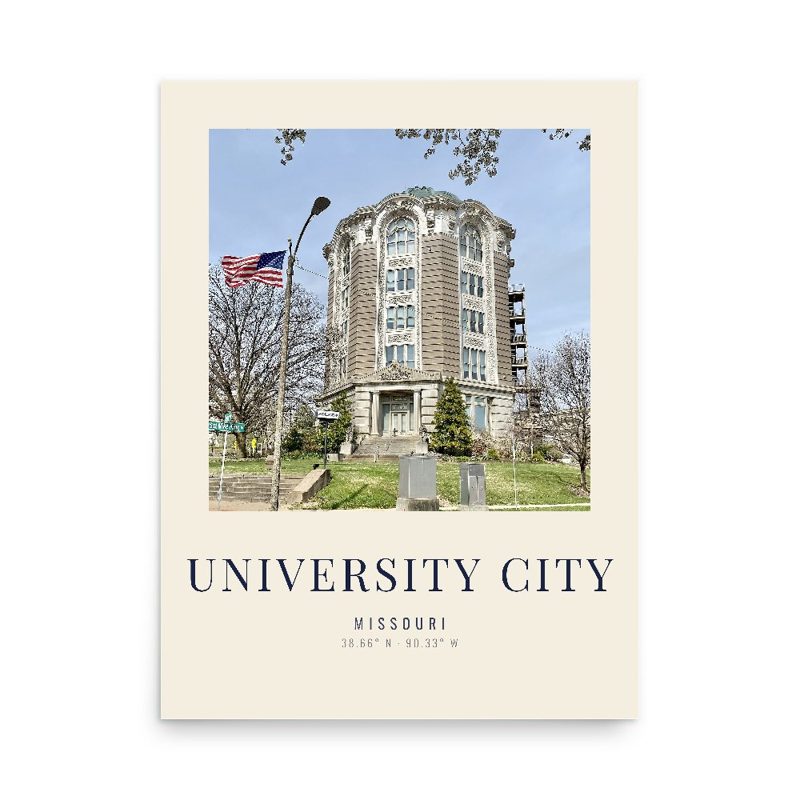
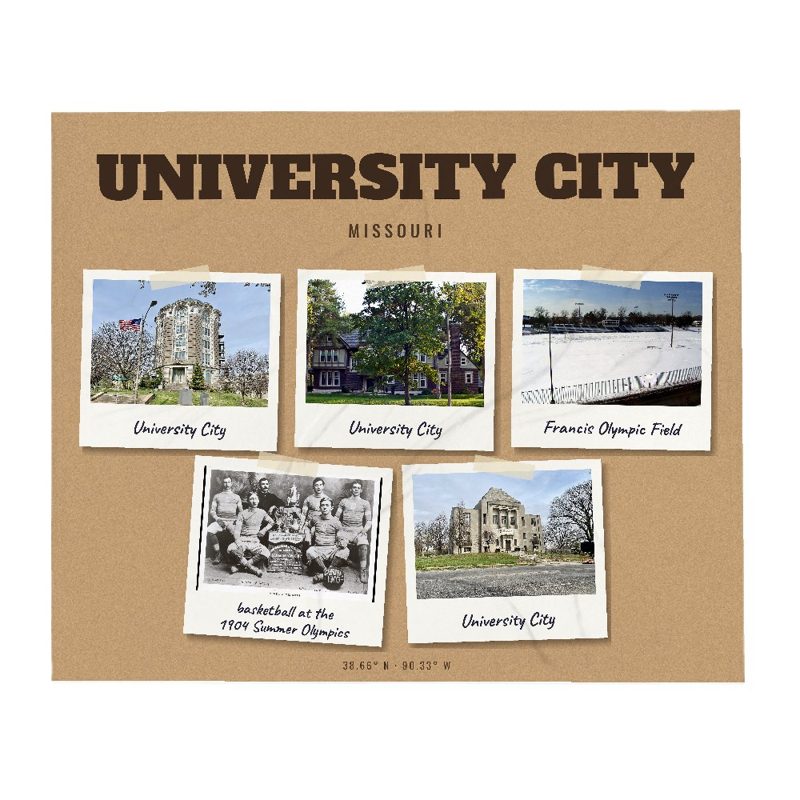
In 1903, Lewis broke ground for his publishing company’s headquarters: the Magazine Building (now City Hall), an ornate octagonal 135-foot tower. Soon, other architecturally significant structures and developments were erected, including an austere Egyptian temple, the Art Academy, and the Lion Gates. The Egyptian temple once served as a Masonic Temple and is now home to the Church of Scientology of St. Louis. The Art Academy and the Lion Gates were designed by the Eames & Young architecture firm, which enlisted sculptor George Julian Zolnay to create the Lion Gates.
University City was formally incorporated in September 1906 and Lewis became its first mayor. Between 1910 and 1920, University City grew faster than any other city in Missouri. By the 1920s, University City’s main business corridor, along Delmar Boulevard just north of Washington University, was a bustling commercial district with new multifamily housing attracting new residents. Streetcars were the primary mode of transportation for shoppers and residents alike. After World War II, the city experienced its greatest housing construction.
In the 1960s, Black people displaced by urban renewal projects in the city of St. Louis began to move west into St. Louis County. "University City was the first county municipality to struggle with the issues of fair housing and traditions of segregation," Nini Harris wrote. One innovative and controversial attempt to combat segregation was The University City Home Rental Trust.
Adapted (trimmed) from the Wikipedia article University City, Missouri, revision 1381254073 by its contributors, licensed CC BY-SA 4.0.



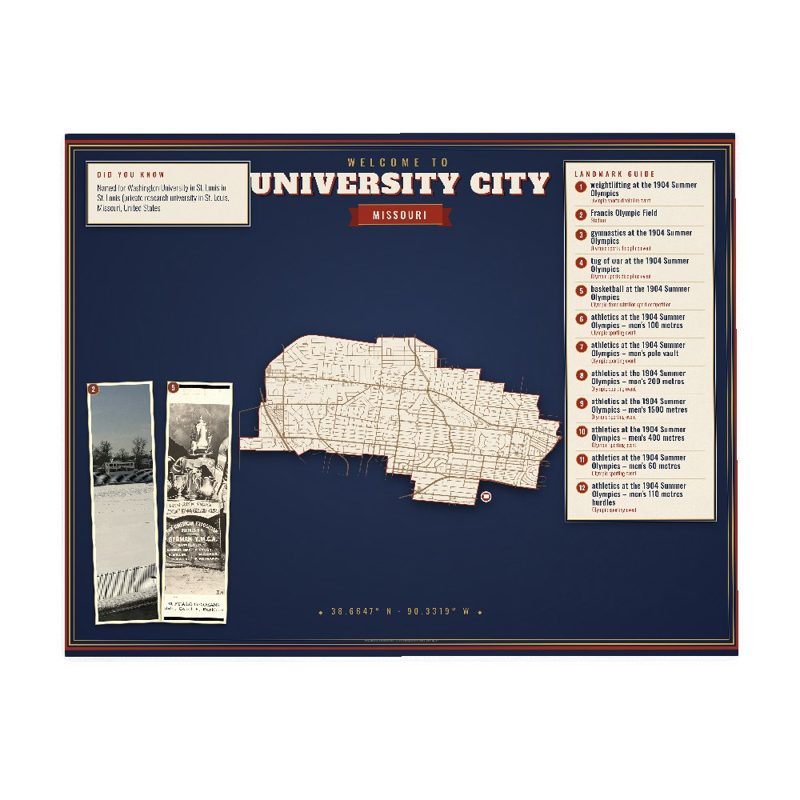

















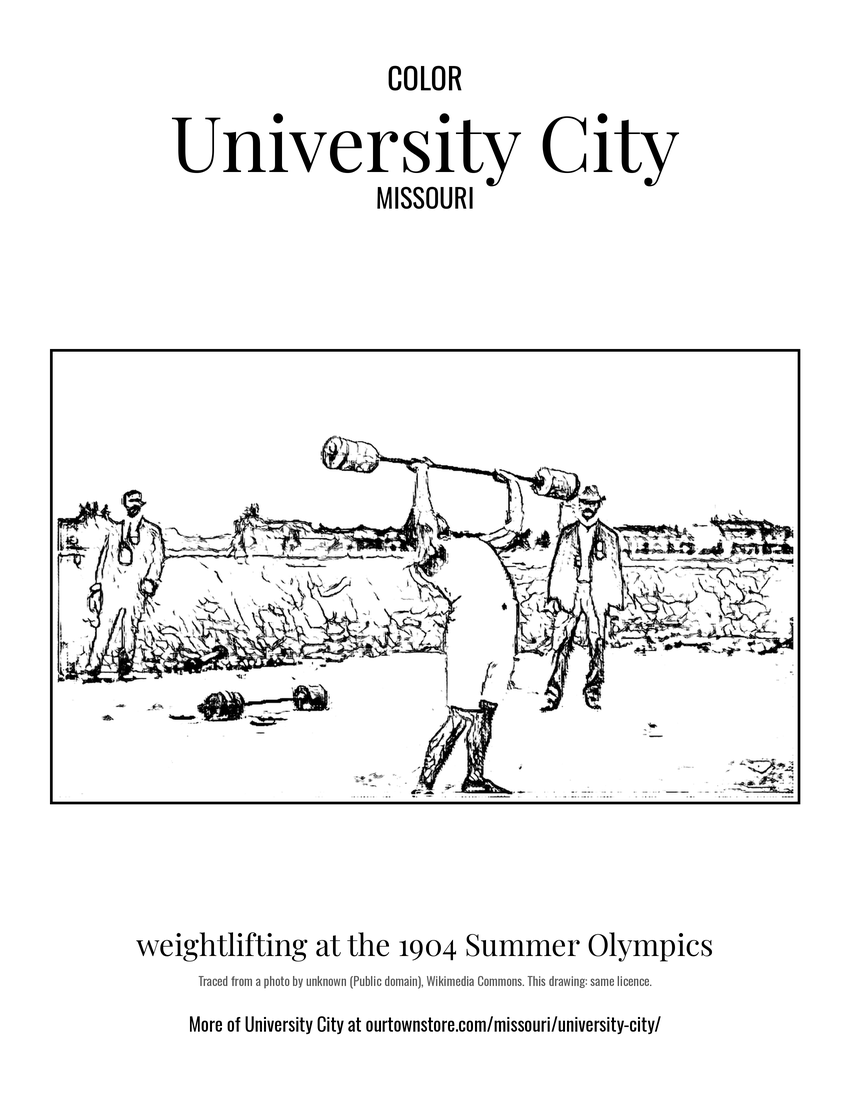 weightlifting at the 1904 Summer Olympics
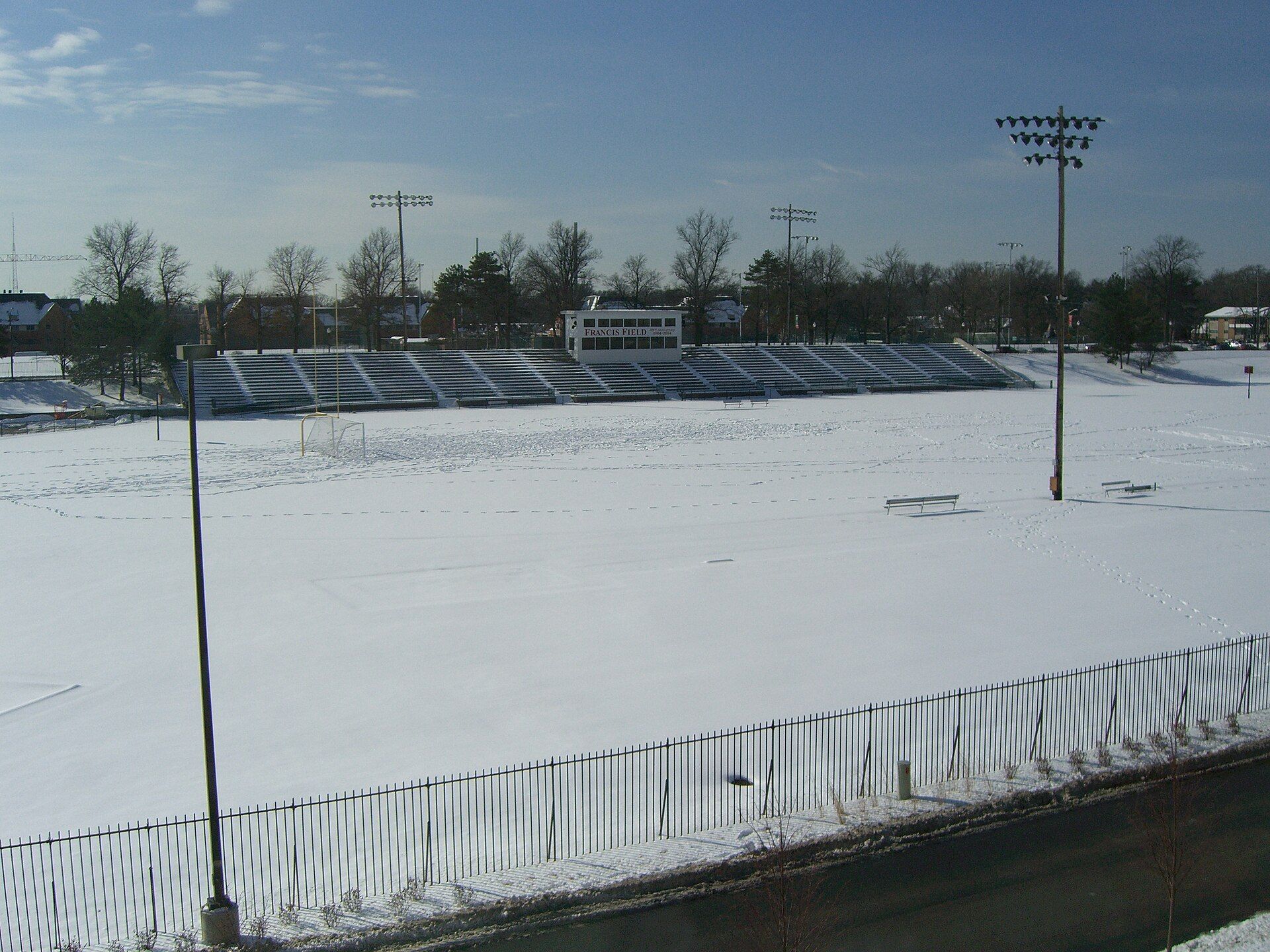
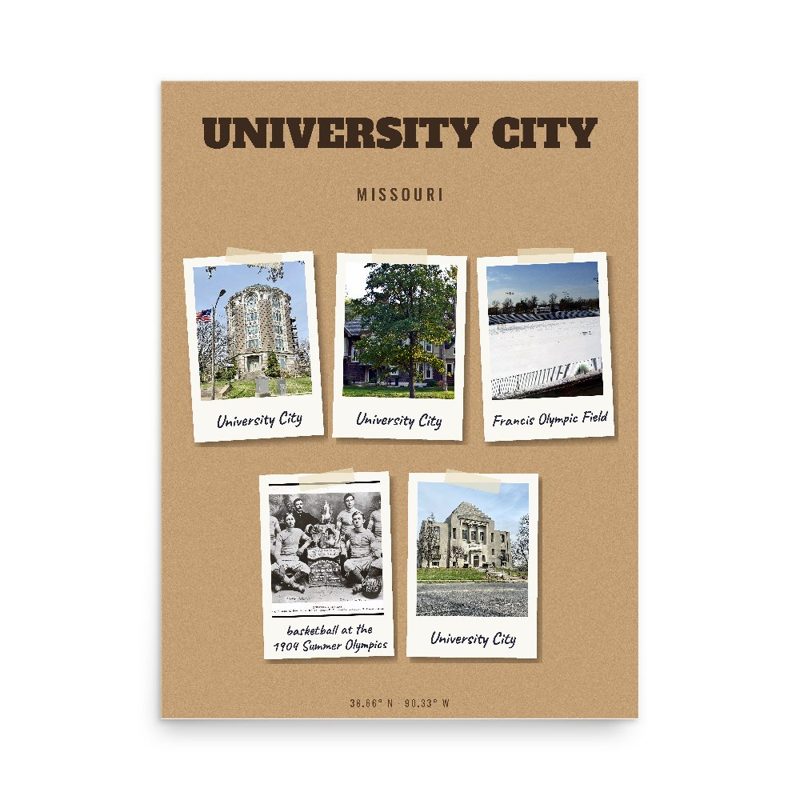
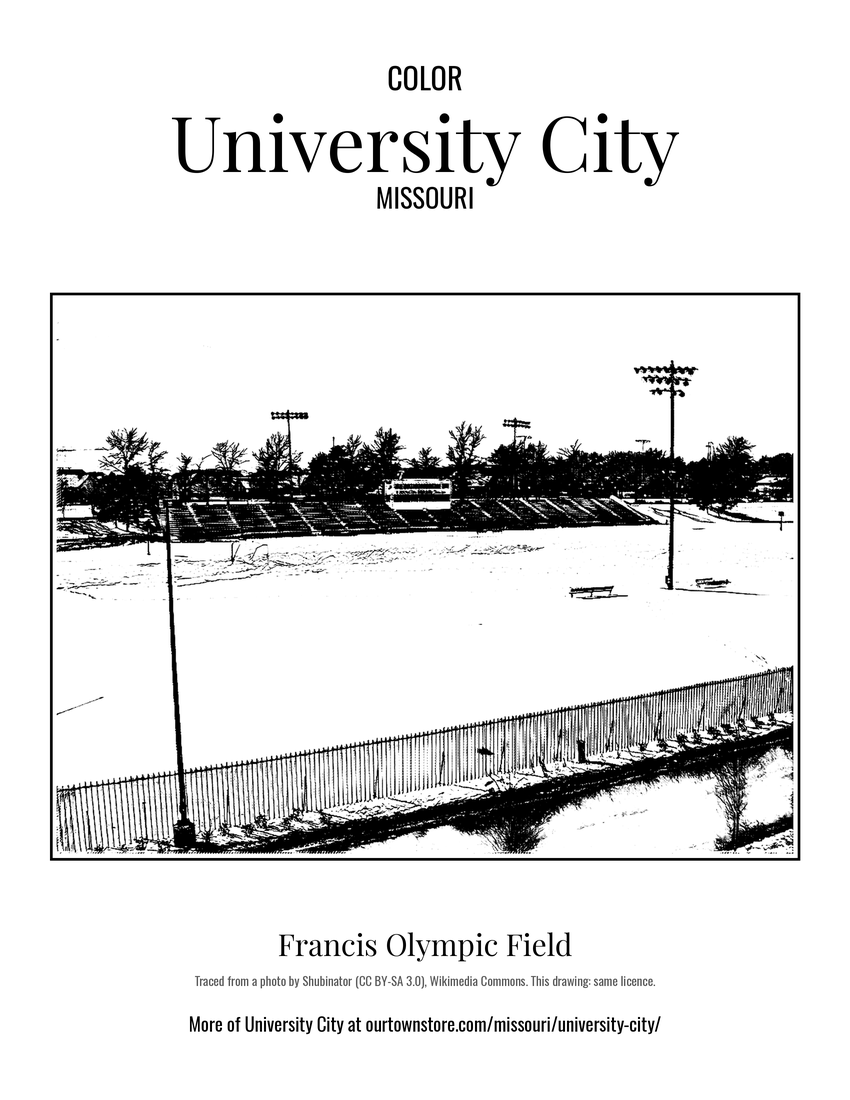 Francis Olympic Field
 gymnastics at the 1904 Summer Olympics
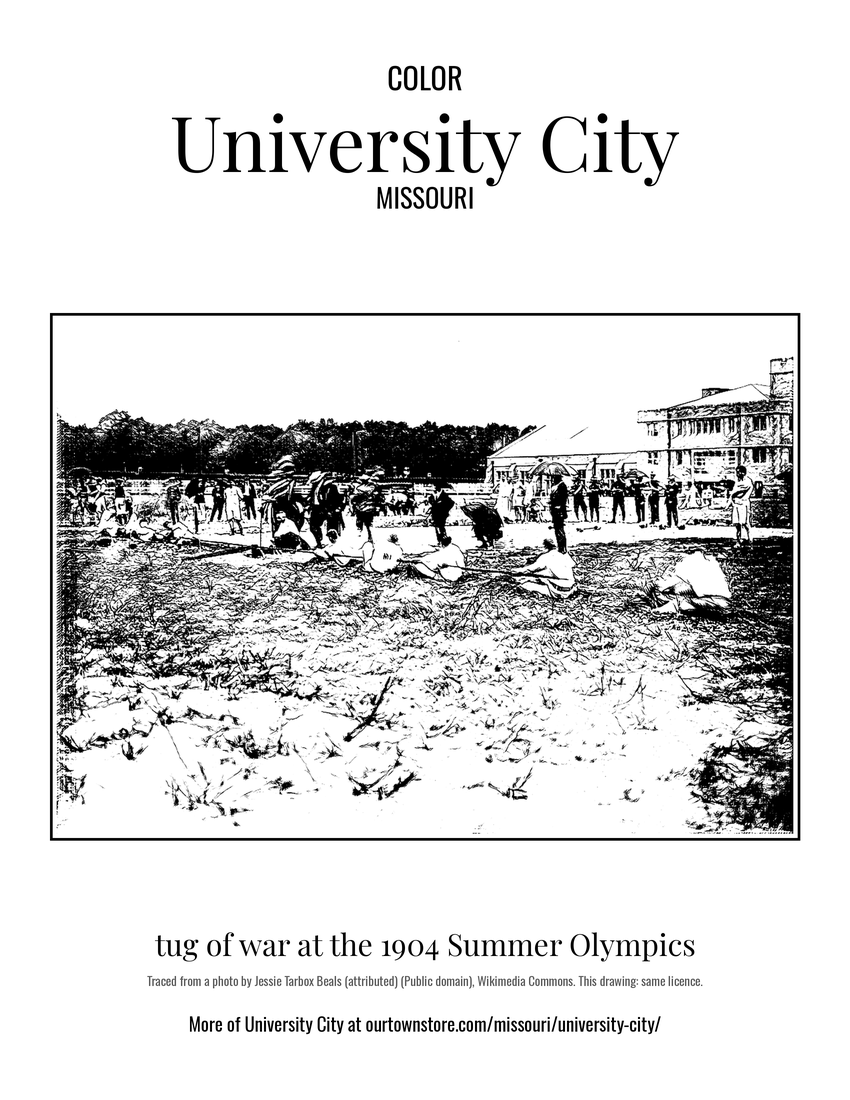 tug of war at the 1904 Summer Olympics