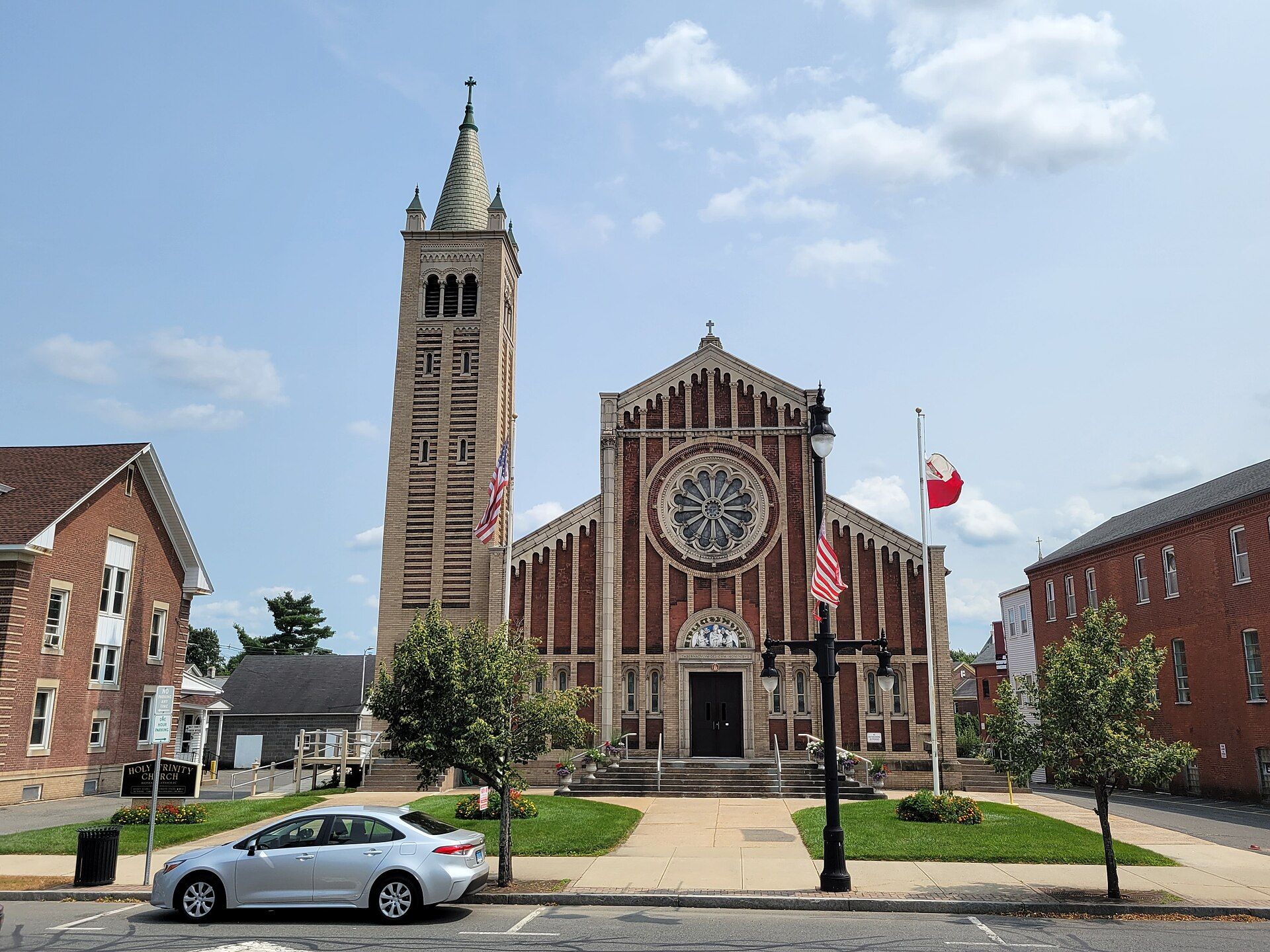
Westfield was first settled by Europeans in 1660. Landmarks include Holy Trinity Parish, Westfield, Stanley Park and Mechanic Street Cemetery. Westfield is the birthplace of Ferdinand Vandeveer Hayden, u.S geologist and surgeon.
Every piece is drawn from Westfield's own map data and historic archives, then printed and shipped from the USA when you order. No two towns look alike.
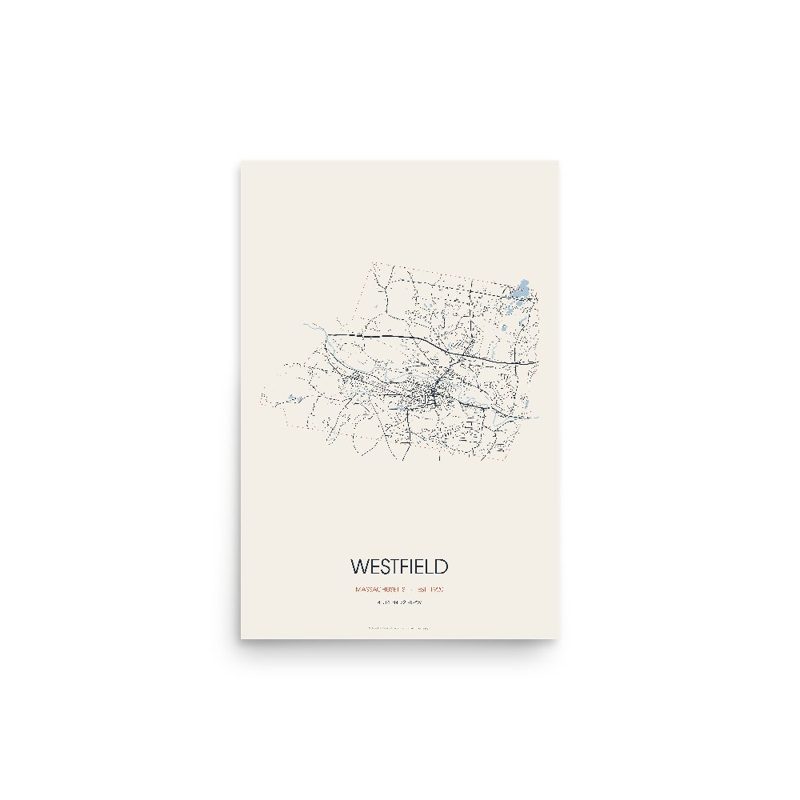
Every road in town, on archival matte paper
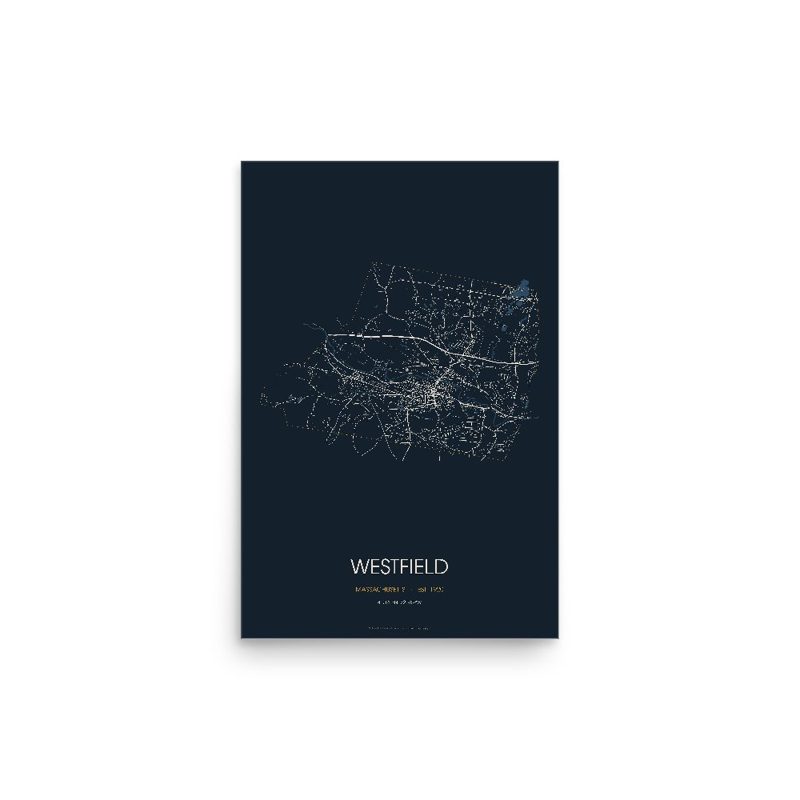
The same map, in navy and silver
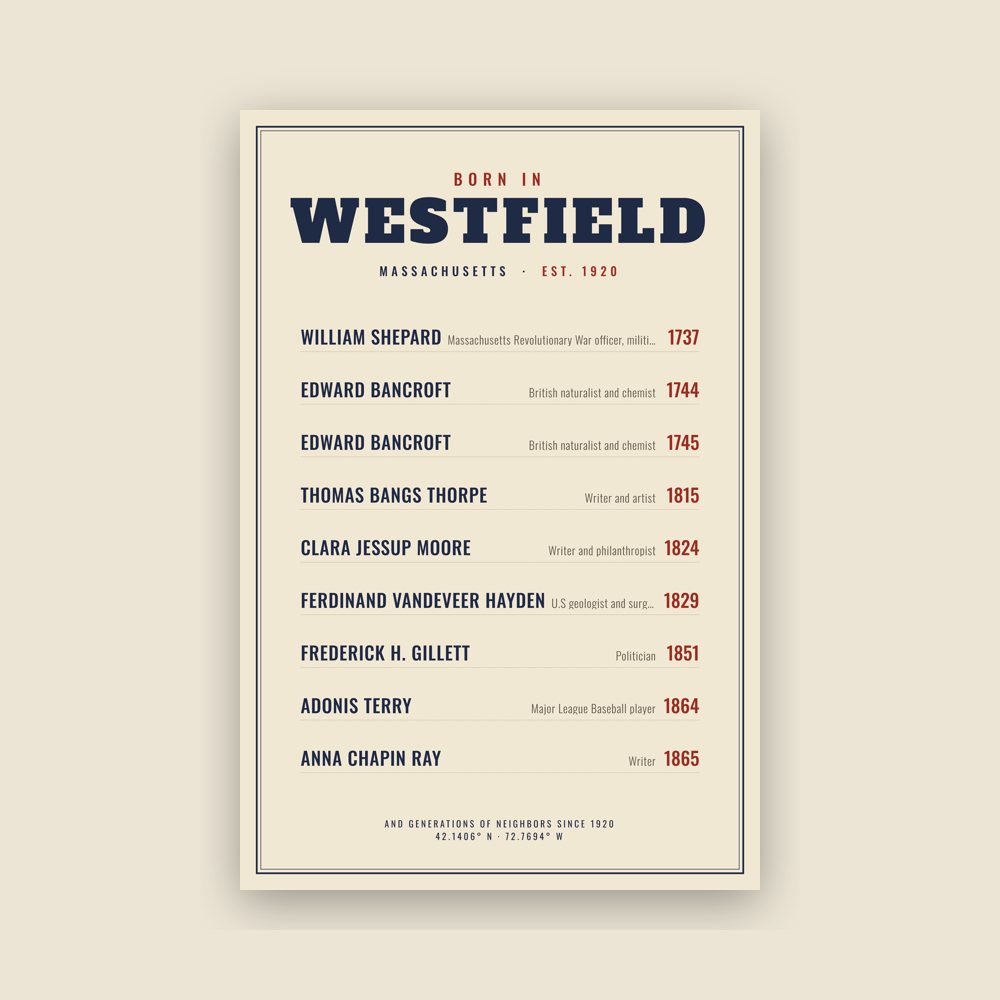
Famous natives, by birth year
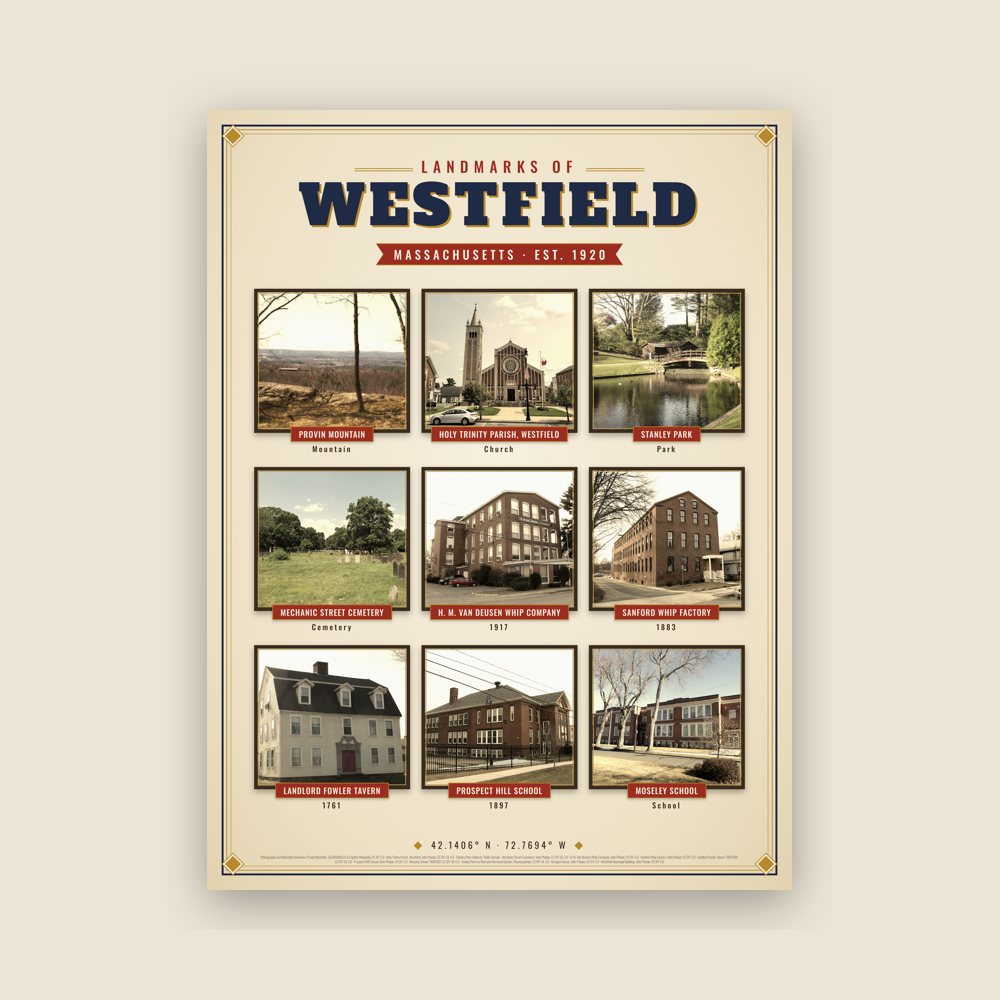
Nine local landmarks, archival matte
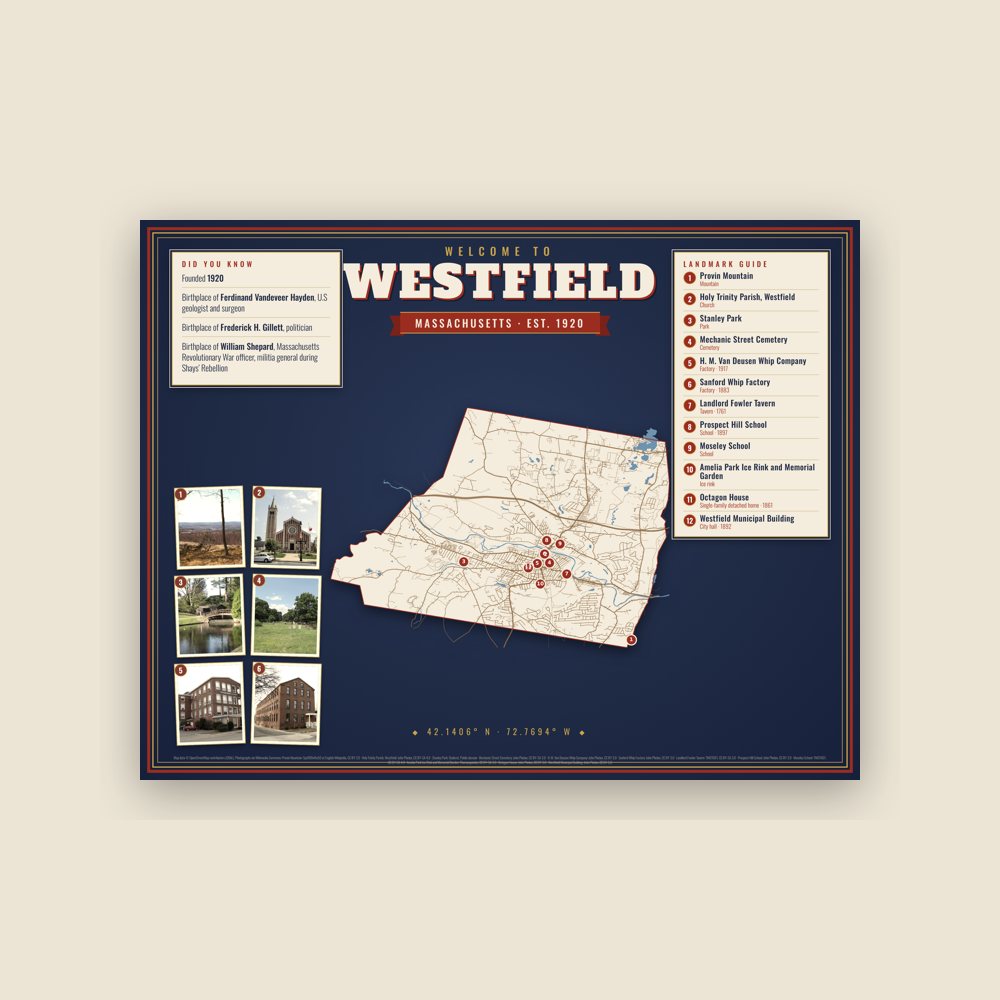
Map of local landmarks, washable fabric
Heavy-blend fleece, street map printed on the back
Soft Bella+Canvas jersey
Glossy ceramic, dishwasher safe
Ceramic keepsake, gold ribbon
Weatherproof, for the front walk
24″×16″, printed coir-look fibers, rubber back
12″×12″ printed wood, ready to hang
Soft-touch, zip cover
Sturdy all-over-print tote
Glossy top, cork back
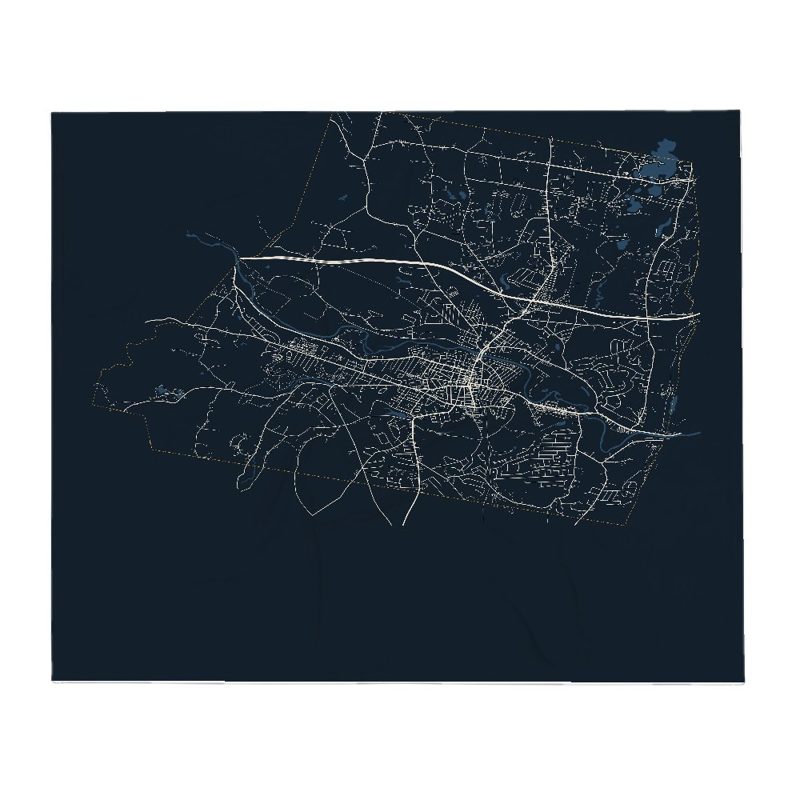
Soft fleece, 50″×60″
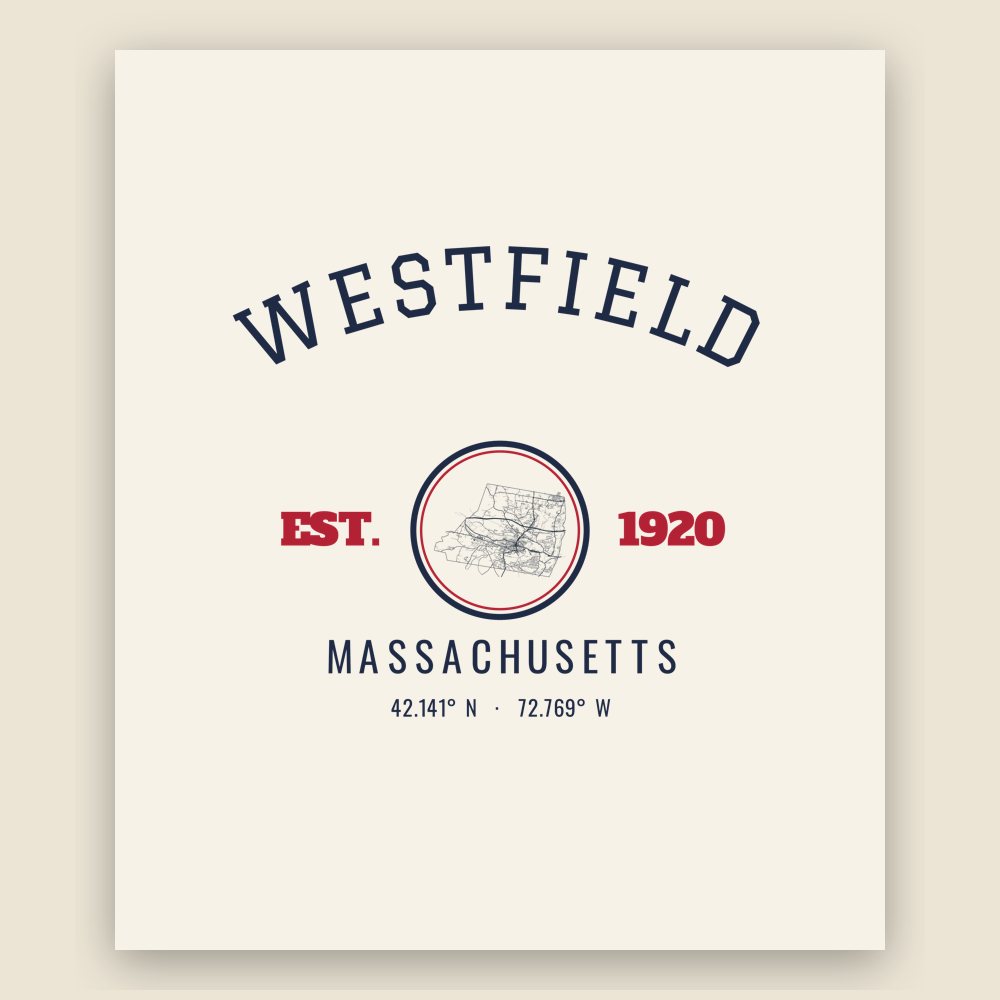
20 oz, double-wall stainless
Population 1790: 2,204 → 2010: 41,094 → 2020: 40,834
From Wikidata (CC0).
The area was originally inhabited by the Pocomtuc, and was called Waranoke or Woronoco (meaning "the winding land"). Trading houses were built in 1639 to 1640 by European settlers from the Connecticut Colony. Massachusetts asserted jurisdiction, and prevailed after a boundary survey. In 1647, Massachusetts made Woronoco part of Springfield. Land was "incrementally purchased from the Native Americans and granted by the Springfield town meeting to English settlers, beginning in 1658." The area of Woronoco or "Streamfield" began to be permanently settled in the 1660s. In 1669, "Westfield" was incorporated as an independent town; in 1920, it would be re-incorporated as a city. The name Westfield would be named for being at the time the most westerly settlement. "Streamfield" was considered a name for the town for being settled in between two "streams" that flow downtown, the Westfield River and the Little River.
From its founding until 1725, Westfield was the westernmost settlement in the Massachusetts Colony, and portions of it fell within the Equivalent Lands. Town meetings were held in a church meeting house until 1839, when Town Hall was erected on Broad Street. This building also served as City Hall from 1920 to 1958. Due to its alluvial lands, the inhabitants of the Westfield area were entirely devoted to agricultural pursuits for about 150 years.
Early in the 19th century, the manufacture of bricks, whips, and cigars became economically important. At one point in the 19th century, Westfield was a prominent center of the buggy whip industry, and the city is still known as the "Whip City". Other firms produced bicycles, paper products, pipe organs, boilers and radiators, textile machinery, abrasives, wood products, and precision tools. Westfield transformed itself from an agricultural town into a thriving industrial city in the 19th century, but in the second half of the 20th century its manufacturing base was eroded by wage competition in the U.S. Southeast, then overseas.
Meanwhile, with cheap land and convenient access to east–west and north–south interstate highways, the north side developed into a warehousing center to C & S Wholesale, Home Depot, Lowes and other corporations. South of the river, the intersecting trends of growth of Westfield State University and declining manufacturing changed the city's character. Students comprise some 15% of Westfield's population, and the old downtown business district caters increasingly to them while mainstream shopping relocates to a commercial strip called East Main Street, part of U.S. Route 20.
Only four buildings exceed four stories in height. Until a major fire on January 6, 1952, the Westfield Professional Building covered half a downtown city block and was six stories tall. The entire building was consumed with extensive damage to neighboring buildings because the fire department's ladder and snorkel vehicles weren't tall enough and the building did not have a sprinkler system. Subsequent zoning prohibited virtually all new construction over three stories, even after improvements in fire suppression technologies and vehicles became available. No building is allowed to be taller than the town's firetruck ladders.
In the early 20th century, Westfield was at the center of the Pure Food movement, an effort to require stricter standards on the production of food. Louis B. Allyn, a Westfield resident and pure foods expert for McClure's Magazine, lived in Westfield until his murder. In 1906, Congress passed the Pure Food and Drug Act of 1906. In June 2017, the administration of Massachusetts Governor Charlie Baker announced a $300,000 grant to the city for an industrial park expansion.
In 1939, Westfield became the first city in Massachusetts, as well as all of New England, to elect a female Mayor when Alice Burke defeated incumbent Raymond H. Cowing.
Adapted (trimmed) from the Wikipedia article Westfield, Massachusetts, revision 1380087484 by its contributors, licensed CC BY-SA 4.0.
We share a part of every Westfield sale with local partners, and we'd love to print from your collection. Old photographs, maps and postcards make the best keepsakes.
Partner with us