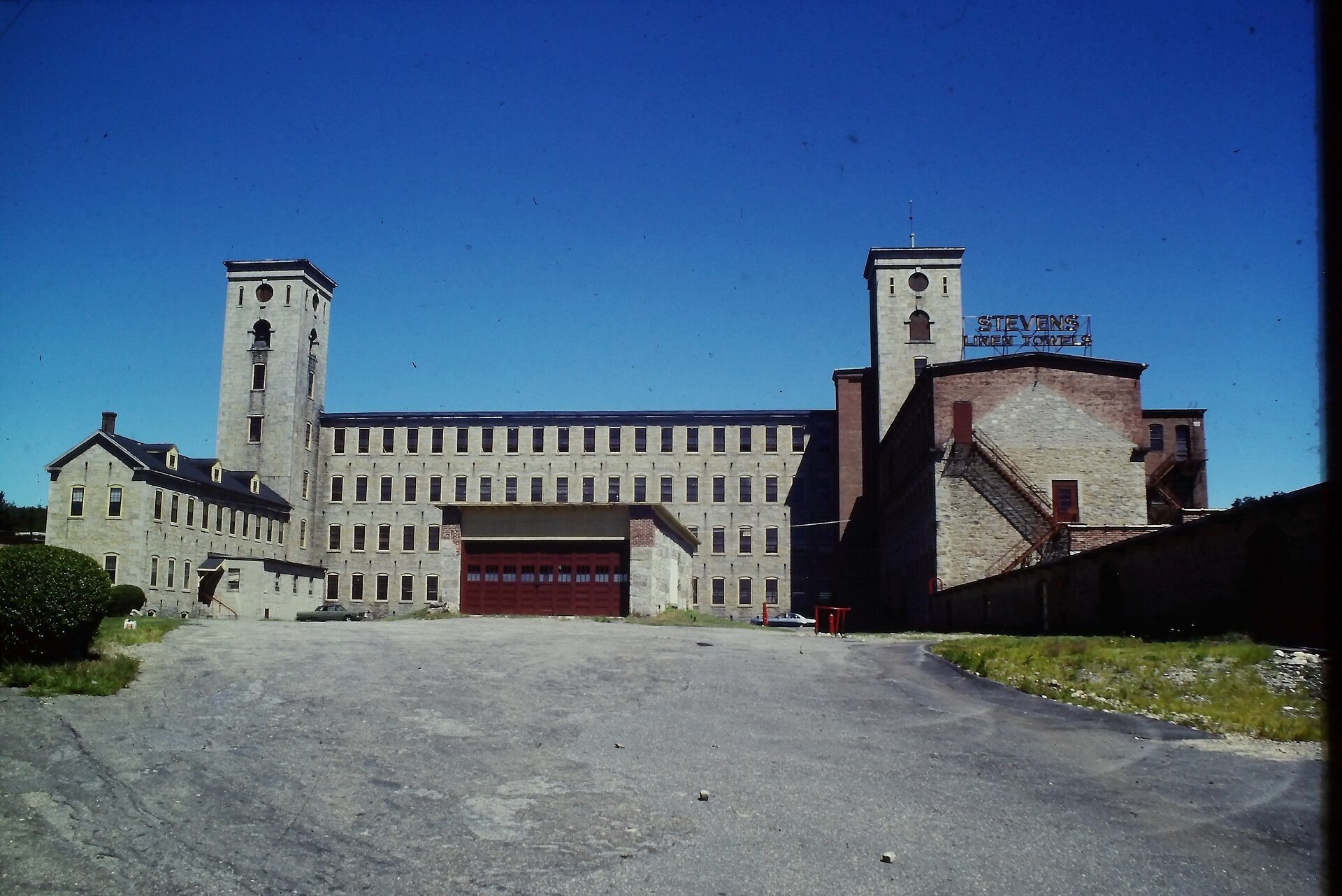
Named after statesman Daniel Webster, the town was founded by industrialist Samuel Slater, and was home to several early American textile mills. Landmarks include St. Joseph Basilica, St. Joseph Parish, Webster and Stevens Linen Works Historic District. Webster is the birthplace of Richard Lindzen, physicist.
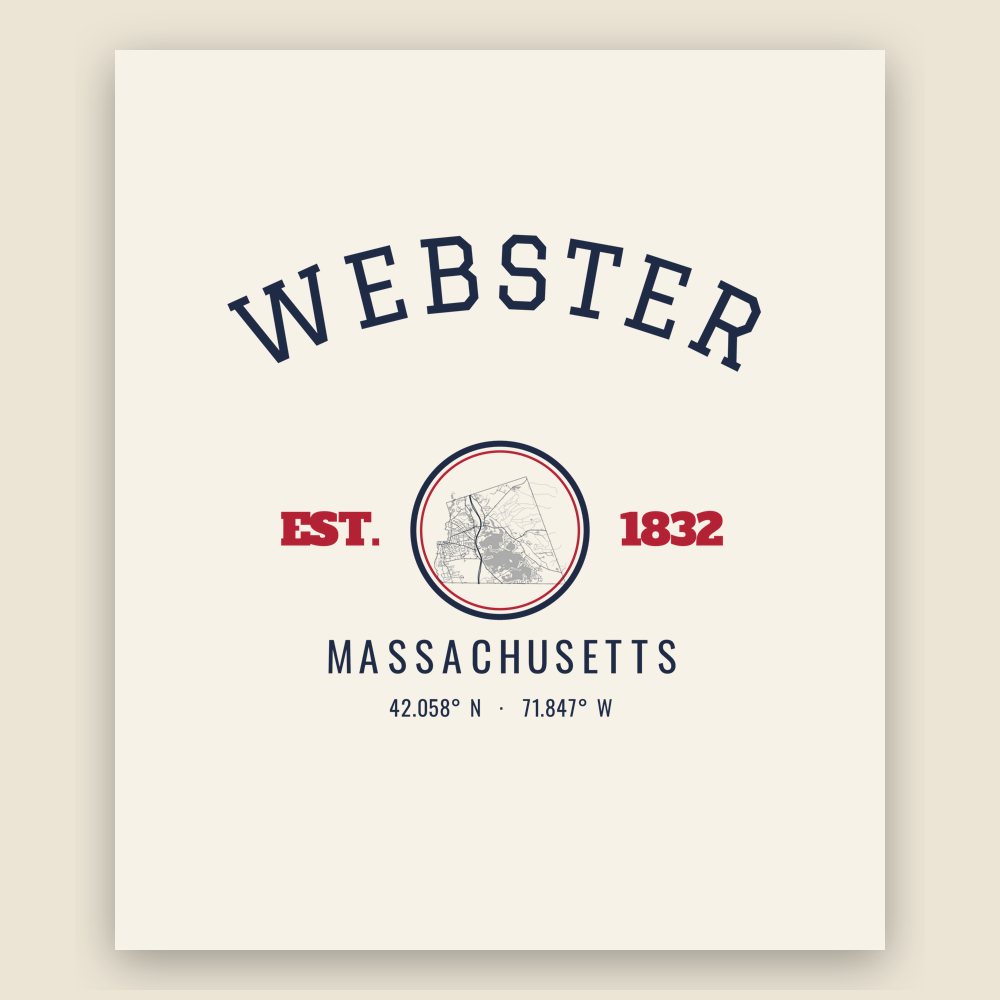
Every piece is drawn from Webster's own map data and historic archives, then printed and shipped from the USA when you order. No two towns look alike.
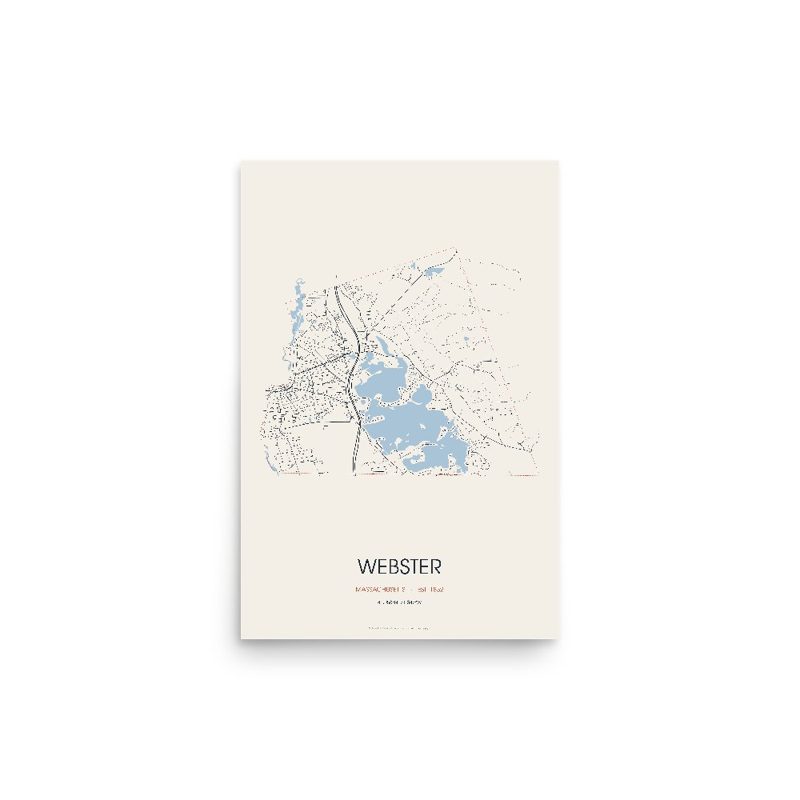
Every road in town, on archival matte paper
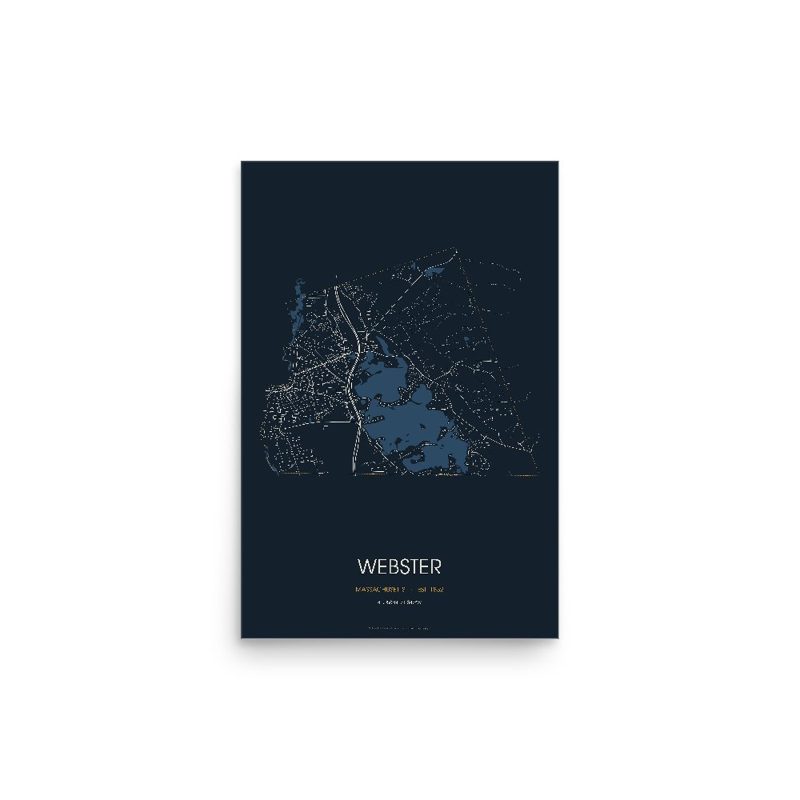
The same map, in navy and silver
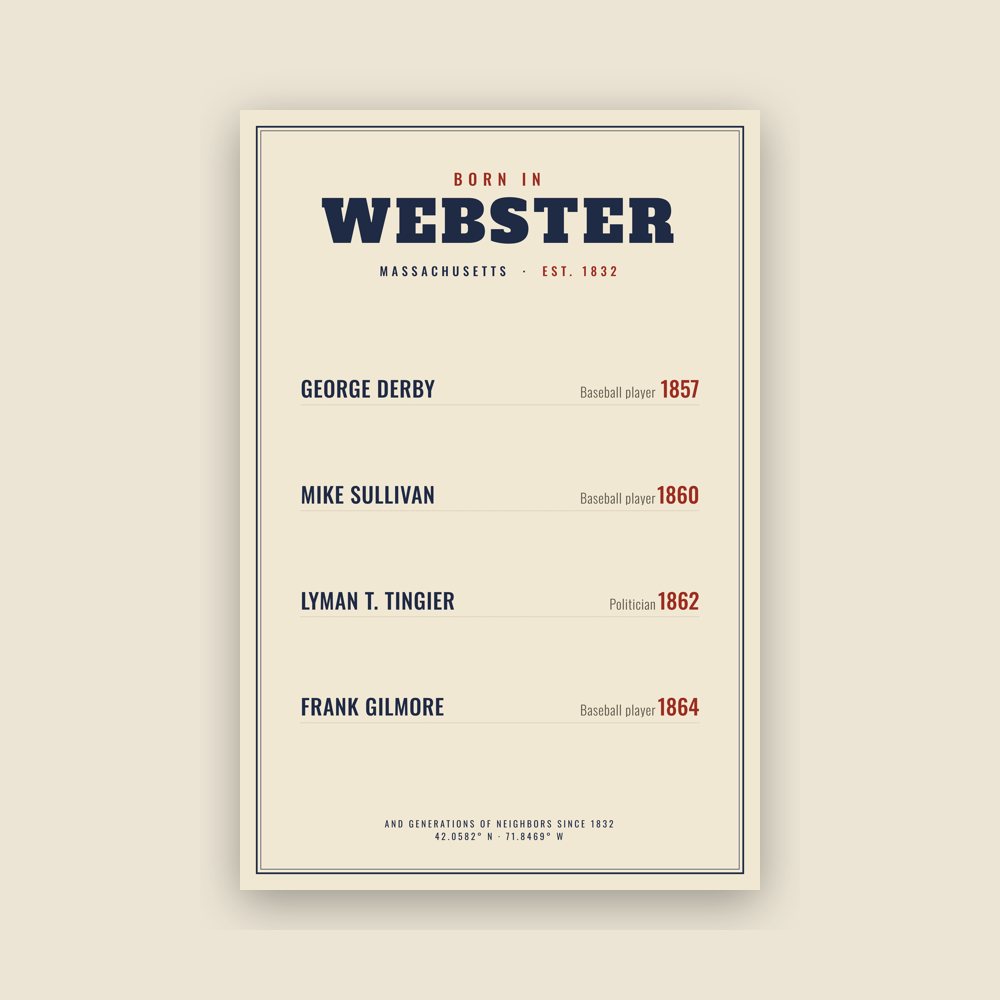
Famous natives, by birth year
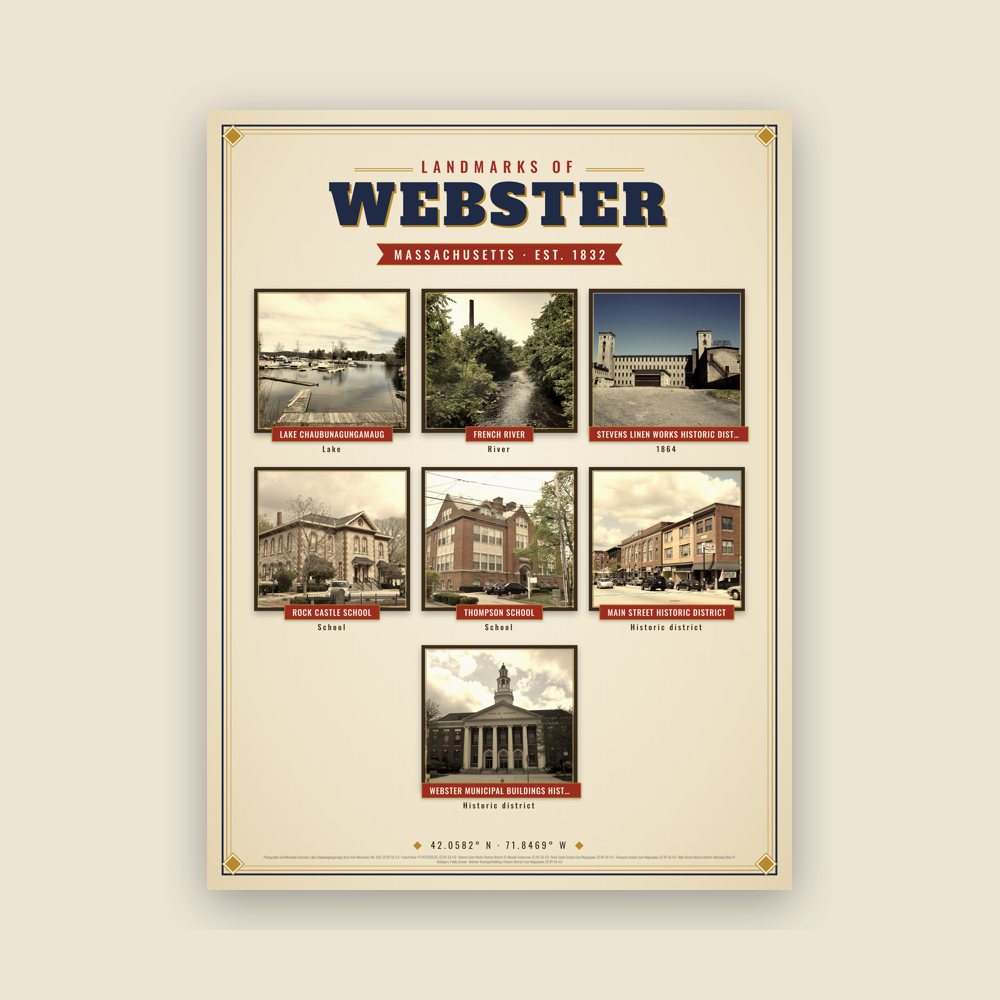
Nine local landmarks, archival matte
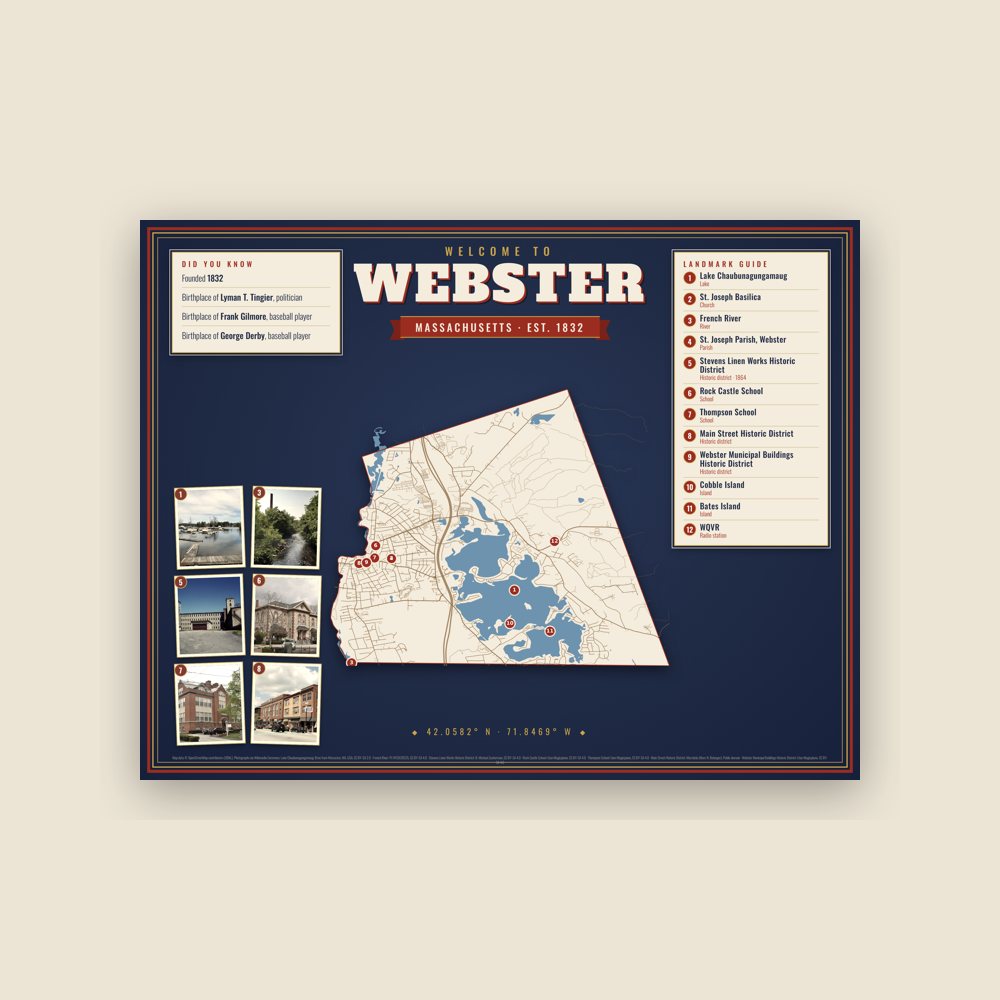
Map of local landmarks, washable fabric

Heavy-blend fleece, street map printed on the back

Soft Bella+Canvas jersey
Glossy ceramic, dishwasher safe
Ceramic keepsake, gold ribbon
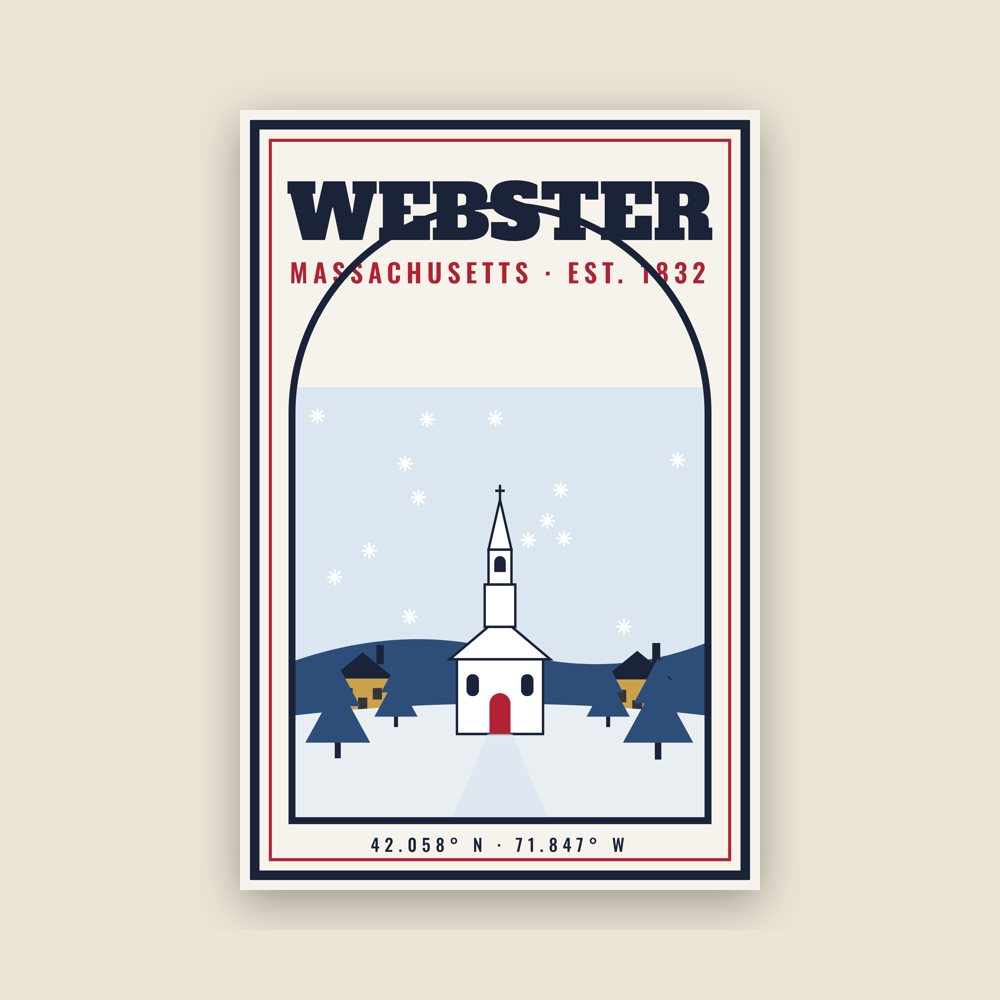
Weatherproof, for the front walk
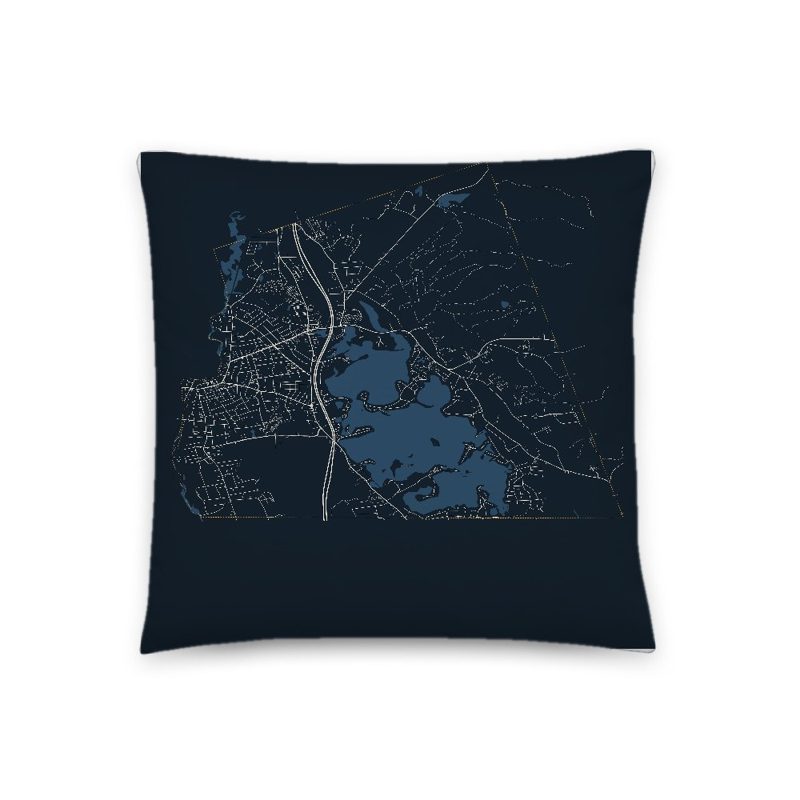
Soft-touch, zip cover

Sturdy all-over-print tote
Glossy top, cork back
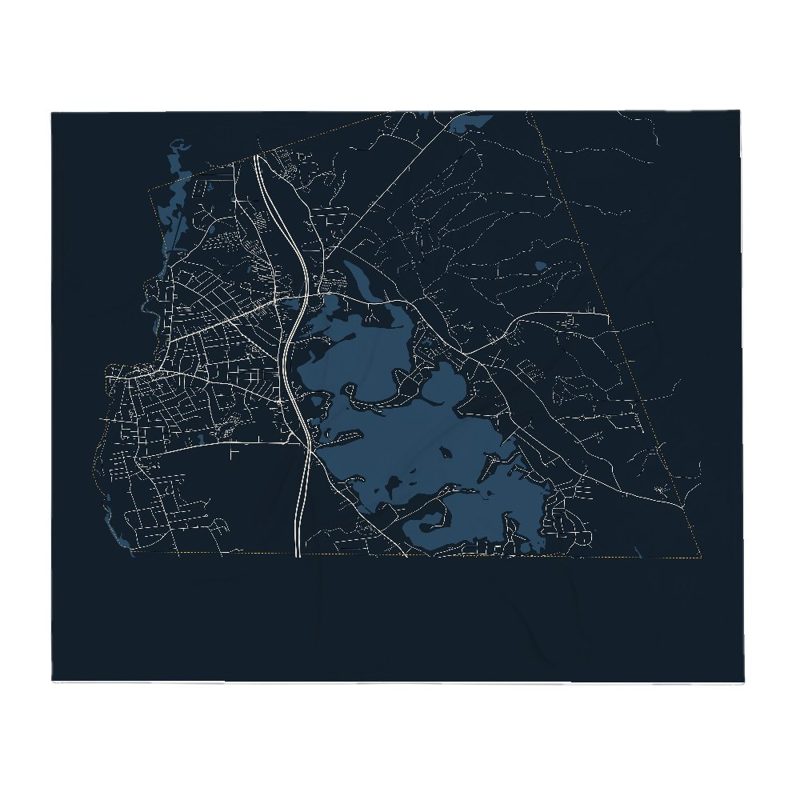
Soft fleece, 50″×60″
20 oz, double-wall stainless
Population 2010: 16,767 → 2020: 17,776
From Wikidata (CC0).
The area that is now Webster was the ancestral home of the Nipmuc people for thousands of years. It was first colonized by Europeans in 1713 and was officially incorporated on March 6, 1832. The area forming the town had previously been divided among the town of Dudley, the town of Oxford and an unincorporated gore. The primary founder was the manufacturer Samuel Slater, who came to the area after his celebrated activities in Pawtucket, Rhode Island, and founded several textile mills, one of which was taken over by the Cranston Print Works in 1936. He named the town after his friend Daniel Webster. Slater spent his last years in Webster and died and is buried there in Mount Zion Cemetery.
Adapted (trimmed) from the Wikipedia article Webster, Massachusetts, revision 1378268814 by its contributors, licensed CC BY-SA 4.0.
We share a part of every Webster sale with local partners, and we'd love to print from your collection. Old photographs, maps and postcards make the best keepsakes.
Partner with us