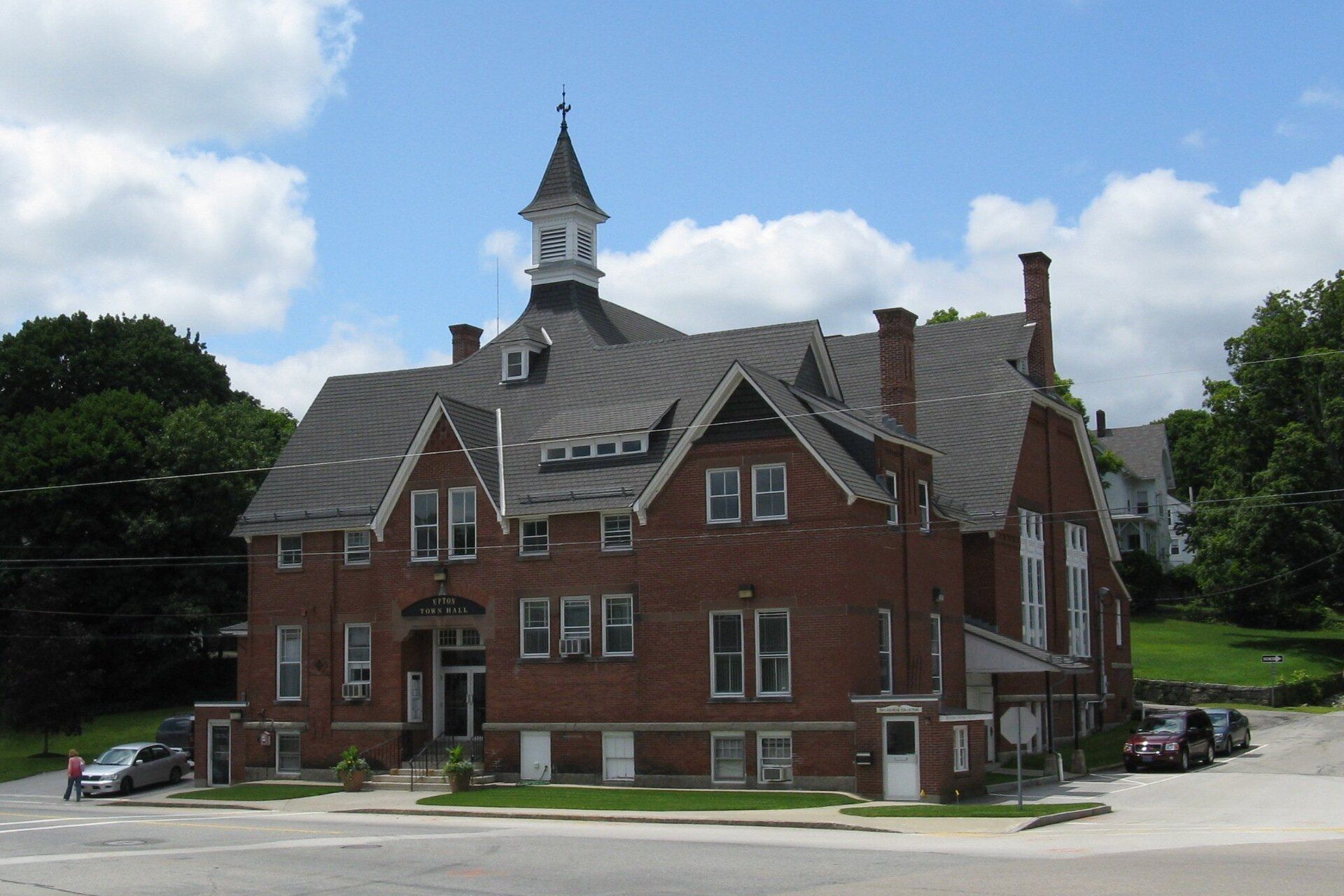
Archeological evidence indicates that present-day Upton began to be inhabited by indigenous peoples during the late Archaic Period. Landmarks include Knowlton Hat Factory, Upton Town Hall and Upton State Forest. Upton is the birthplace of Arthur L. Newton, athlete.
Every piece is drawn from Upton's own map data and historic archives, then printed and shipped from the USA when you order. No two towns look alike.
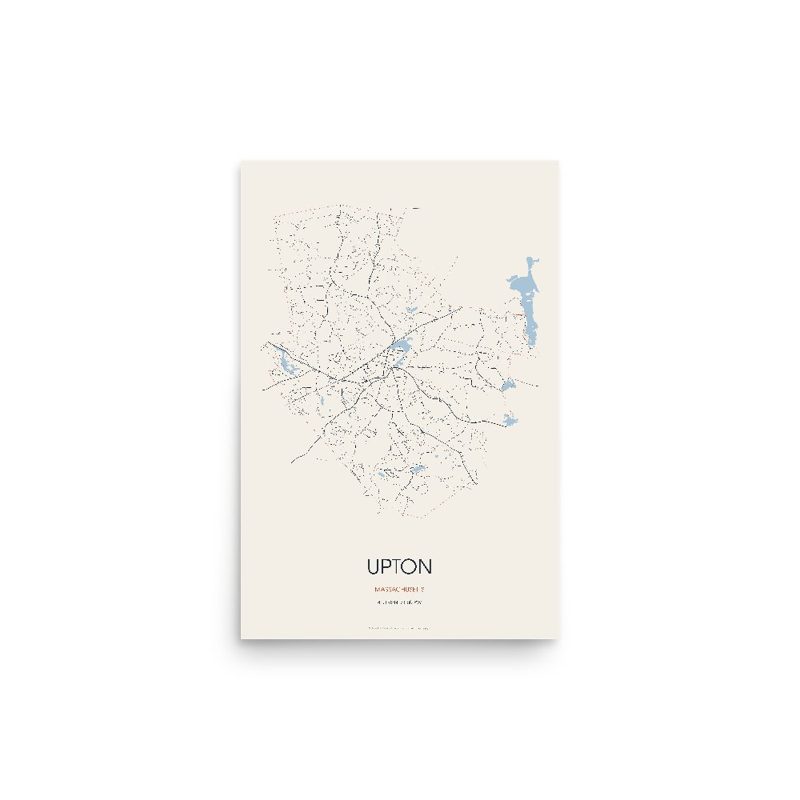
Every road in town, on archival matte paper
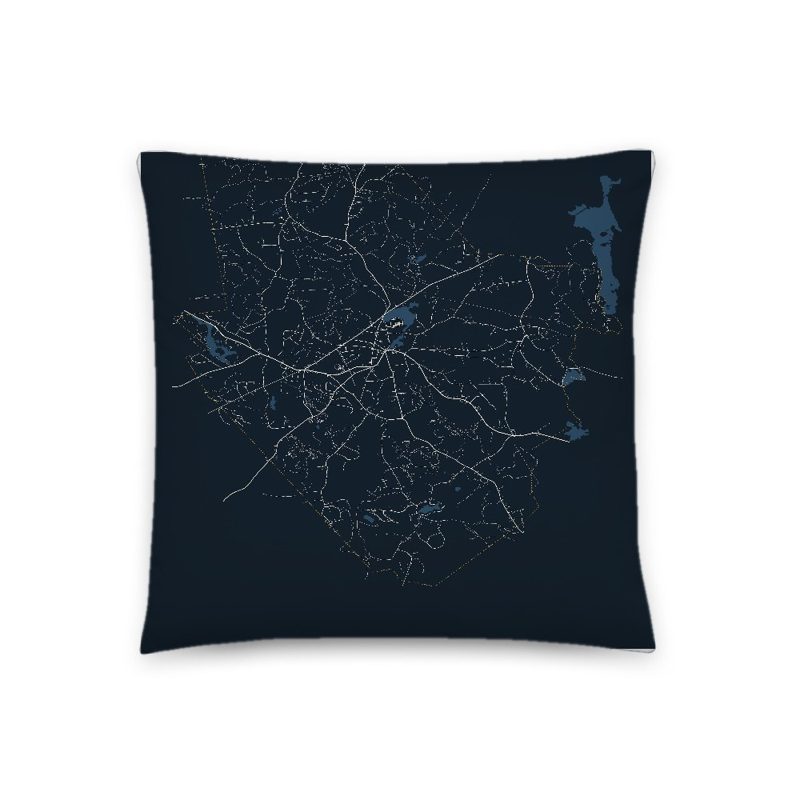
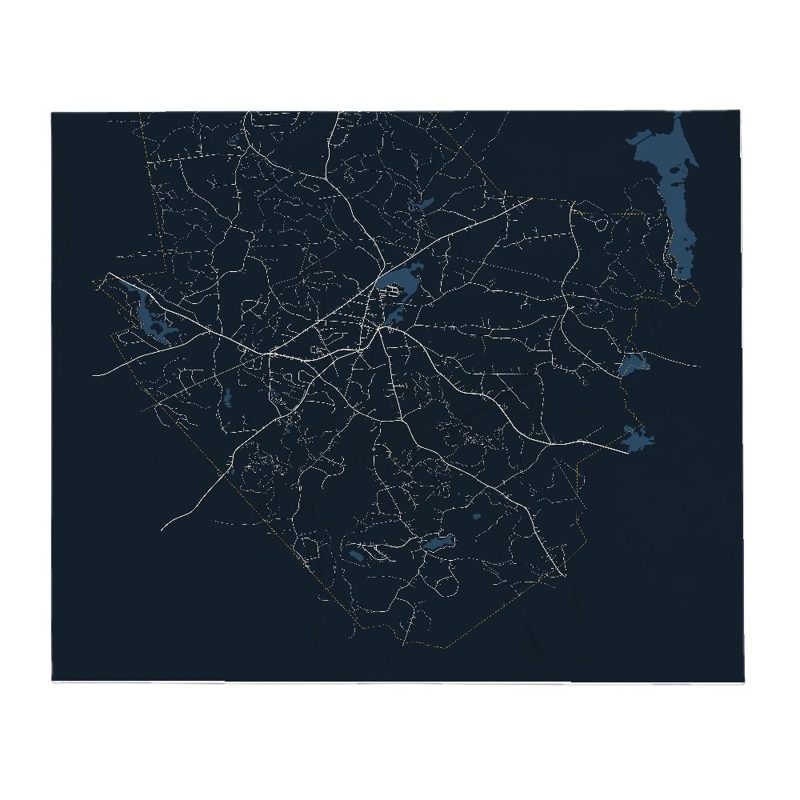
The same map, in navy and silver
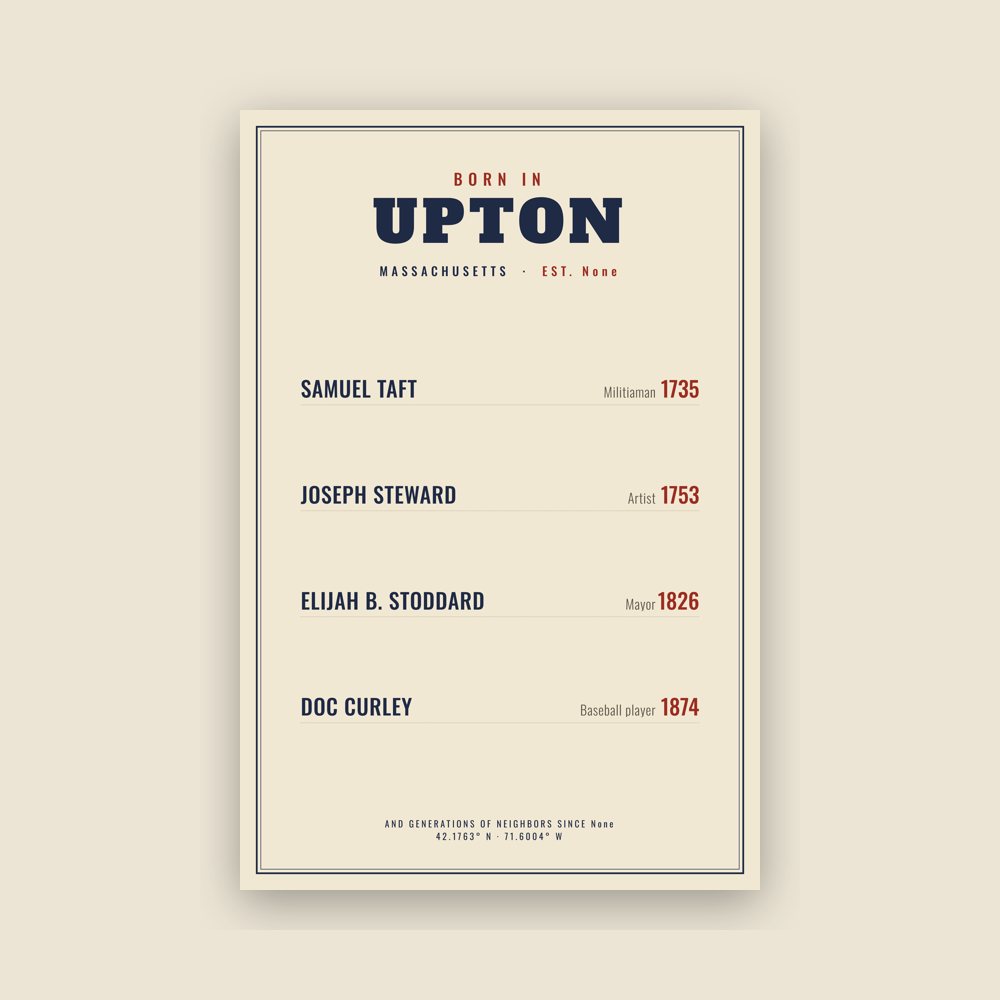
Famous natives, by birth year
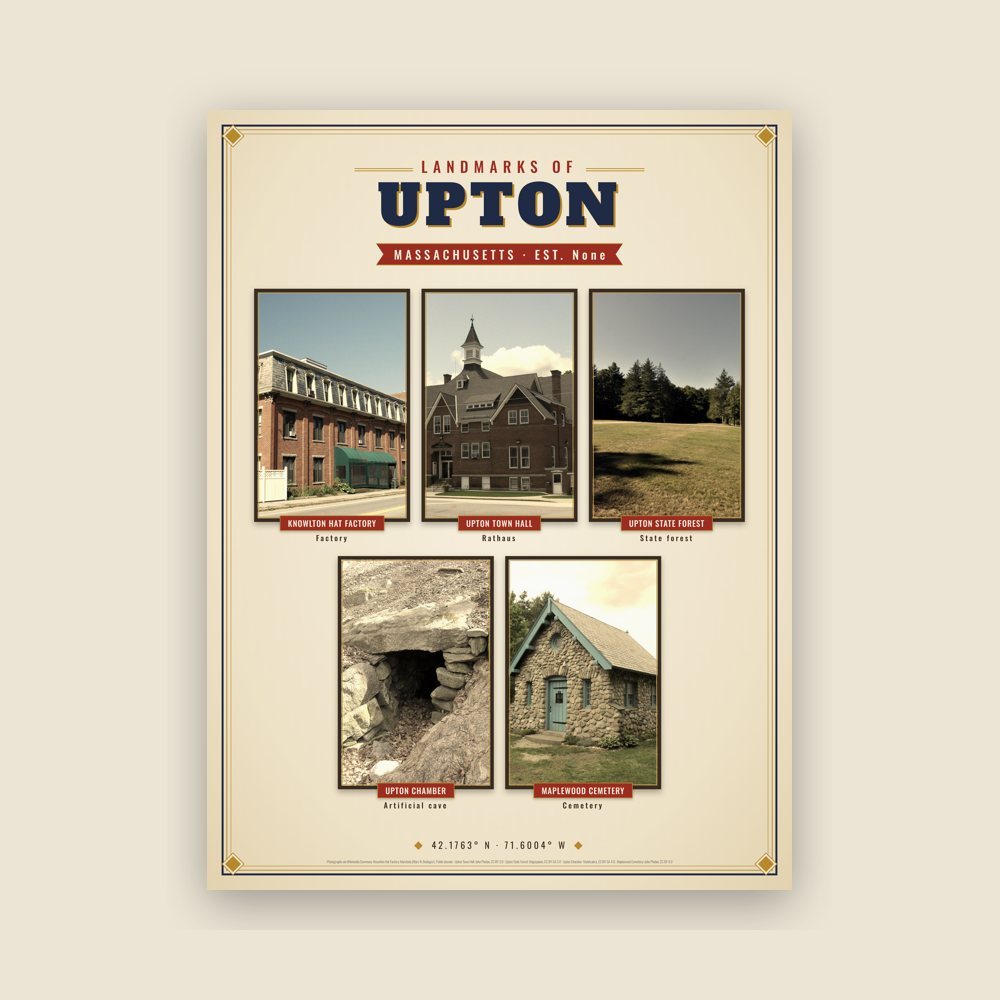
Nine local landmarks, archival matte
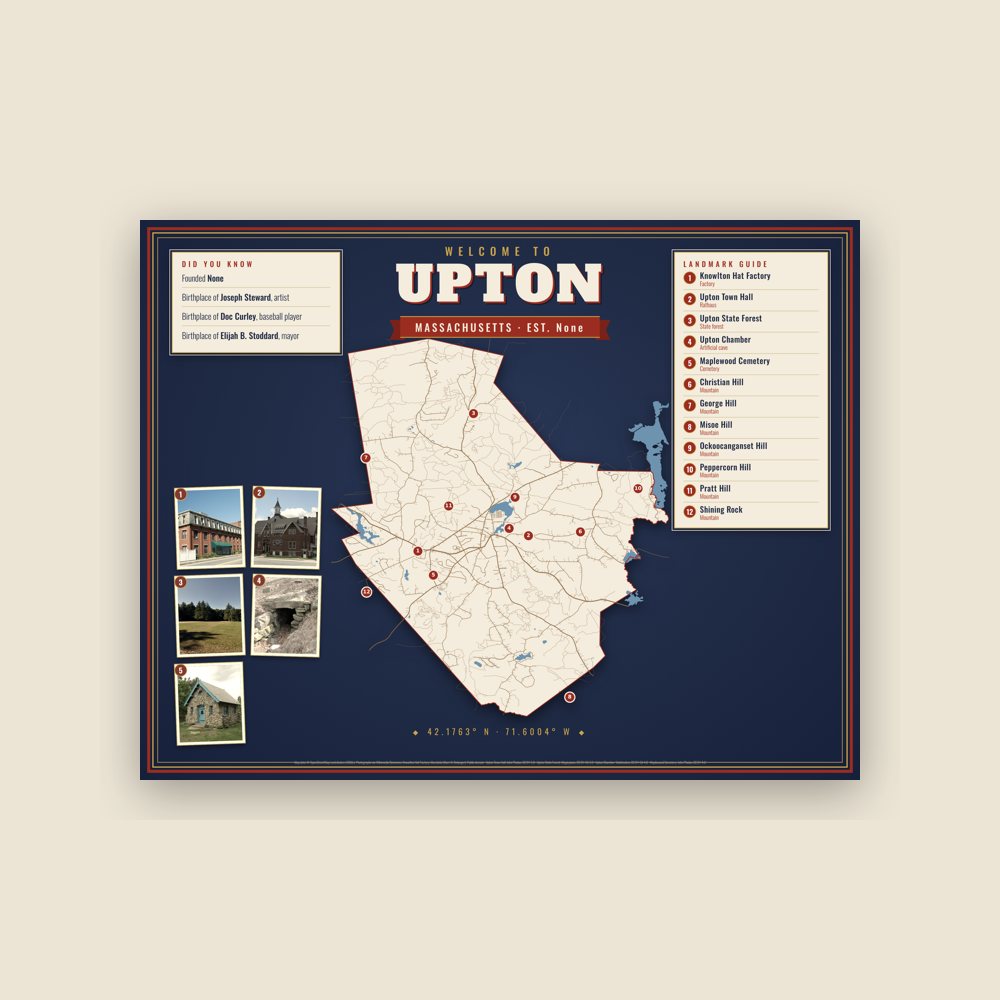
Map of local landmarks, washable fabric
Heavy-blend fleece, street map printed on the back
Soft Bella+Canvas jersey
Glossy ceramic, dishwasher safe
Ceramic keepsake, gold ribbon
Weatherproof, for the front walk
Soft-touch, zip cover
Sturdy all-over-print tote
Glossy top, cork back
Soft fleece, 50″×60″
20 oz, double-wall stainless
Population 2000: 7,542 → 2010: 7,542 → 2020: 8,000
From Wikidata (CC0).
Archeological evidence indicates that present-day Upton began to be inhabited by indigenous peoples during the late Archaic Period. The area was originally settled by Algonquin peoples, but was mainly inhabited by Nipmuc peoples by the Woodland Period.
Four late Archaic settlements have been noted in the areas around Pratt Hill and Pratt Pond, two of which remained in use through the Woodland Period. Late Archaic peoples of New England lived nomadic or semi-nomadic lives, and it was unlikely the Archaic sites in present-day Upton were occupied year round; instead these were likely seasonally-occupied sites for activities such as hunting, fishing, or quarrying and tool making. Evidence of quarrying and tool making is present at one of the Pratt Hill sites.
The Woodland Period saw dramatic population increases in the region, spurred by ecological changes which resulted in increased abundance of food sources-- particularly nuts and game. During the Woodland Period Upton remained the site of seasonal encampments rather than permanent settlements. Limited agriculture began to be practiced seasonally in the area, though most food was obtained through hunting and gathering. These encampments were used by the residents of larger villages located in present-day Grafton and Uxbridge. The indigenous population of this area is thought to have peaked shortly before European contact.
Important trails are known to have passed through present-day Upton during the precolonial era, notably, the Old Connecticut Path bisected the area. More localized trails connected the Upton area to villages in present-day Grafton, Uxbridge, and Westborough.
The town was first settled by Europeans in 1728. Residents in outlying areas of surrounding towns were finding it difficult to fulfil the obligation to attend church every Sunday, so they petitioned the state for creation of a new town central to their homes, and in 1735 Upton was incorporated, taking land from Hopkinton, Mendon, Uxbridge, and Sutton.
Upton was home to a number of members of the Taft family, including an American Revolutionary War soldier named Samuel Taft, who was born there. Samuel Taft had 22 children and hosted President George Washington on his inaugural tour of New England in 1789. Three-term mayor of Worcester, historian Judge Henry Chapin was born here on May 13, 1811.
Between 1730 and 1850, Upton had many small shoe shops, called ten–footers. These operations were gradually merged into large assembly-line manufacturing companies. By 1837, Upton produced 21.7% of the boots made in Worcester County.
William Knowlton founded what was to become the world's largest women's hat factory: Knowlton Hat Factory was built in 1872 and added to the National Historic Register in 1982.
The Upton Fire Department was incorporated at Town Meeting on April 9, 1839, and has served Upton and its residents for 175 years.
Adapted (trimmed) from the Wikipedia article Upton, Massachusetts, revision 1378531502 by its contributors, licensed CC BY-SA 4.0.
We share a part of every Upton sale with local partners, and we'd love to print from your collection. Old photographs, maps and postcards make the best keepsakes.
Partner with us