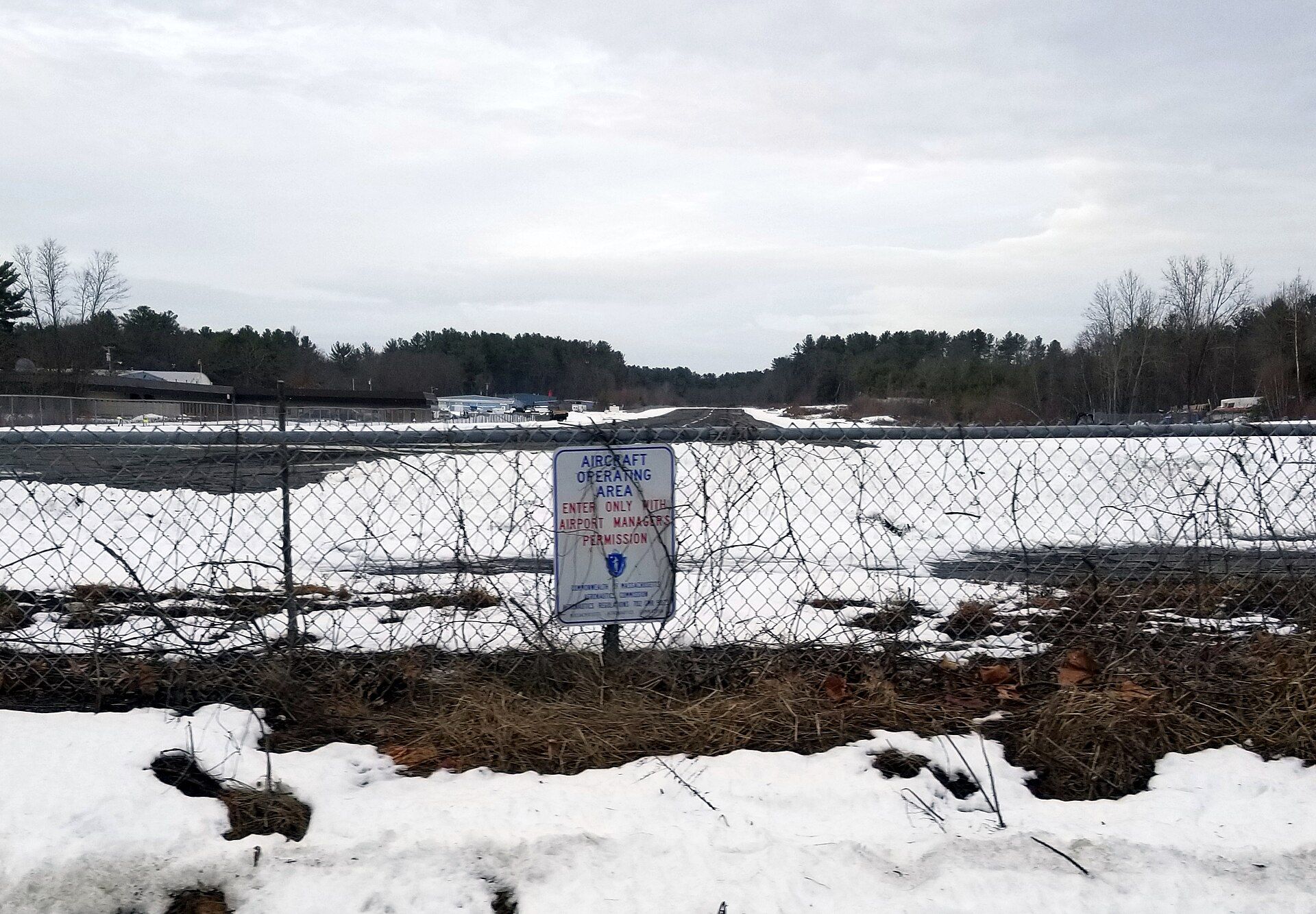
Today, Hopedale has become a bedroom community for professionals working in Greater Boston and is home to highly ranked public schools. Landmarks include Hopedale Industrial Park Airport, Bancroft Memorial Library and Hopedale Village Historic District. Hopedale is the birthplace of Dana Gould, stand-up comedian.
Every piece is drawn from Hopedale's own map data and historic archives, then printed and shipped from the USA when you order. No two towns look alike.
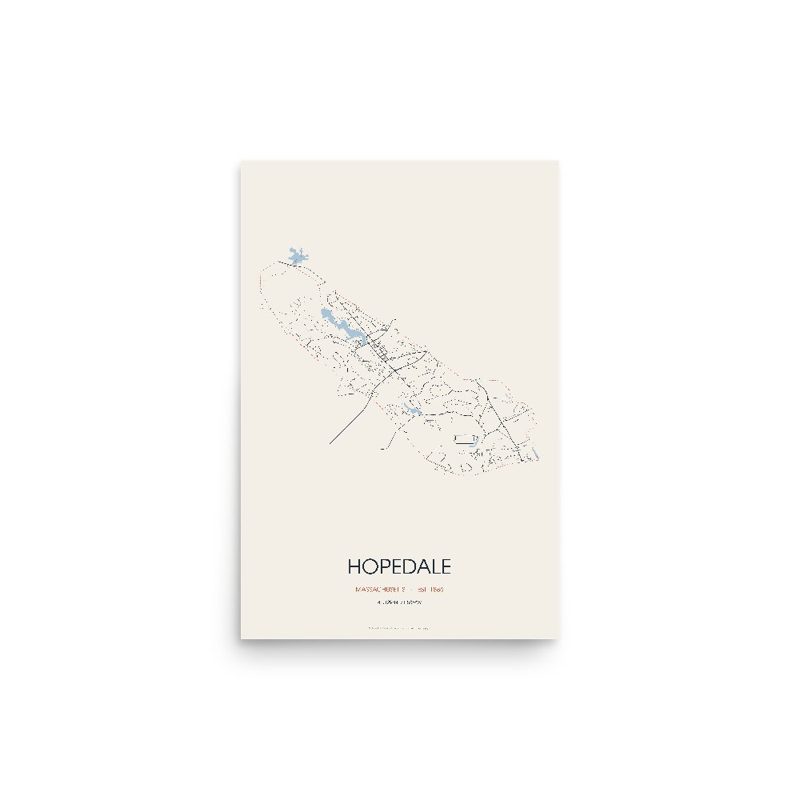
Every road in town, on archival matte paper

The same map, in navy and silver
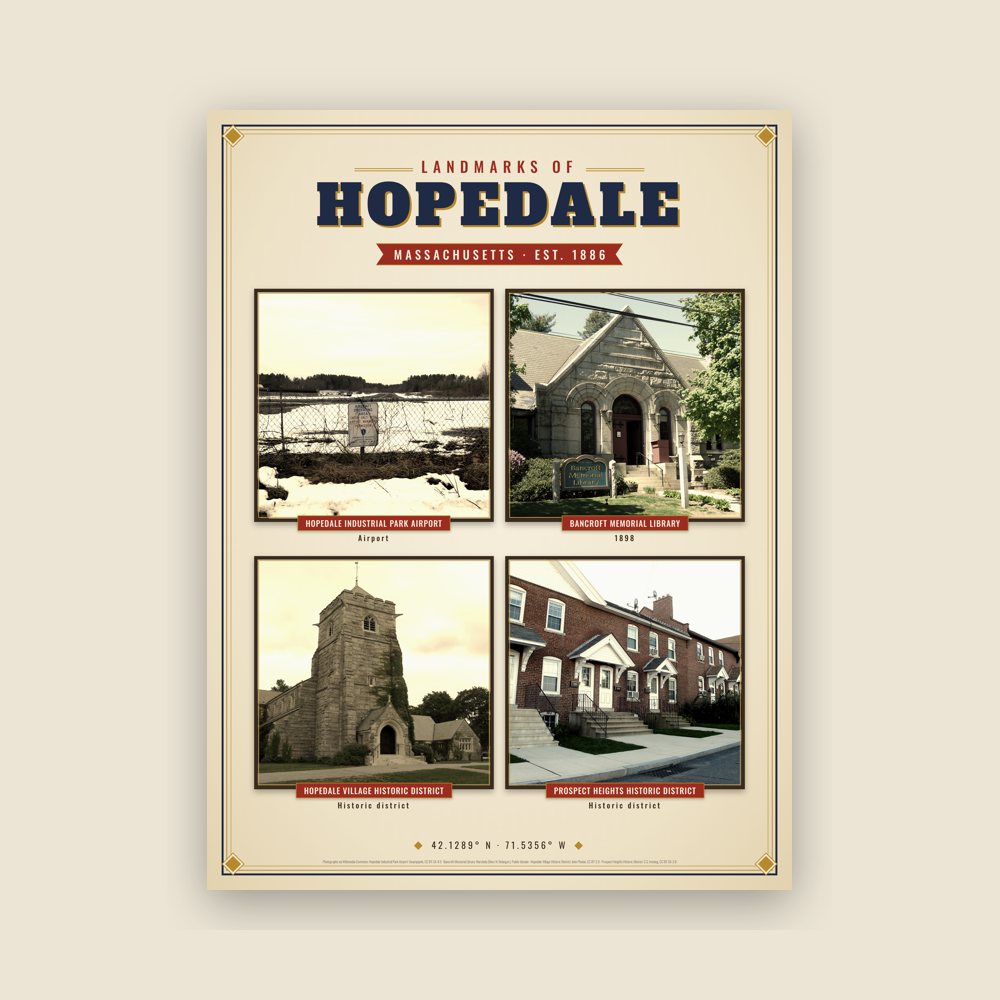
Nine local landmarks, archival matte
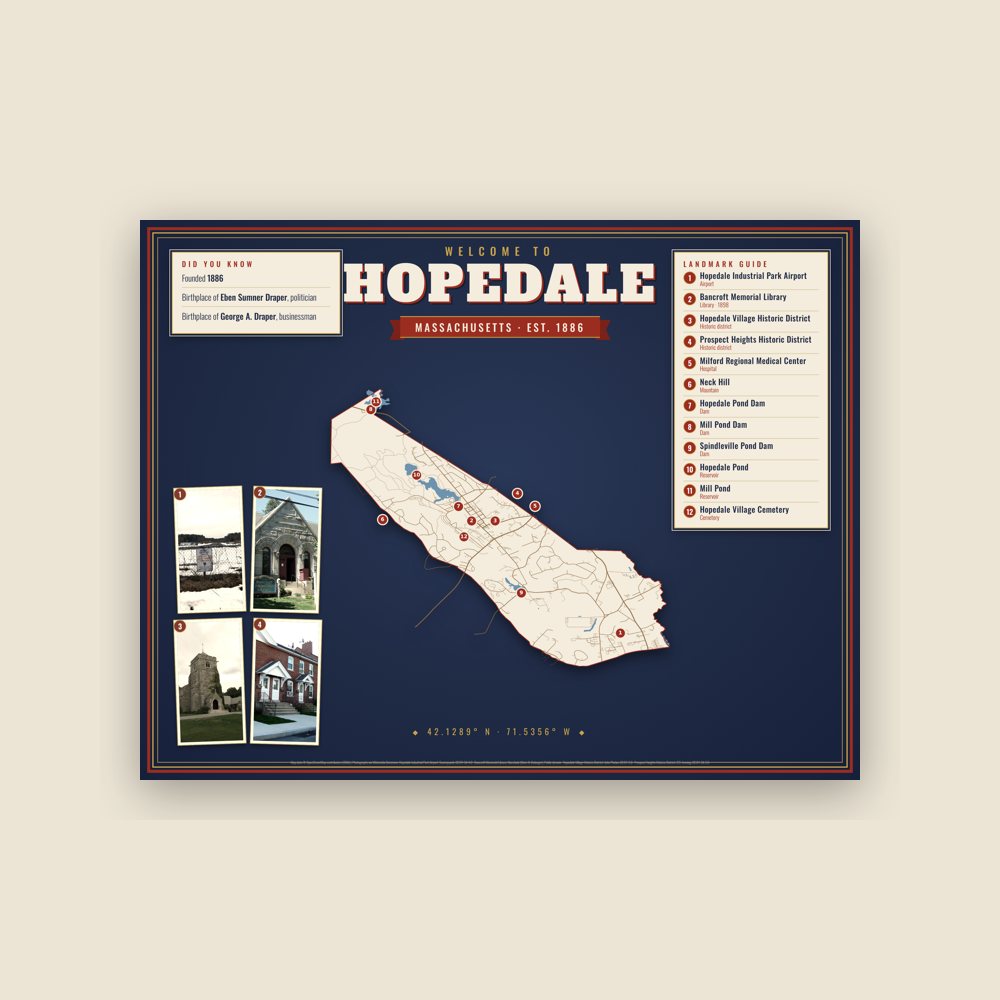
Map of local landmarks, washable fabric
Heavy-blend fleece, street map printed on the back
Soft Bella+Canvas jersey
Glossy ceramic, dishwasher safe
Ceramic keepsake, gold ribbon
Weatherproof, for the front walk
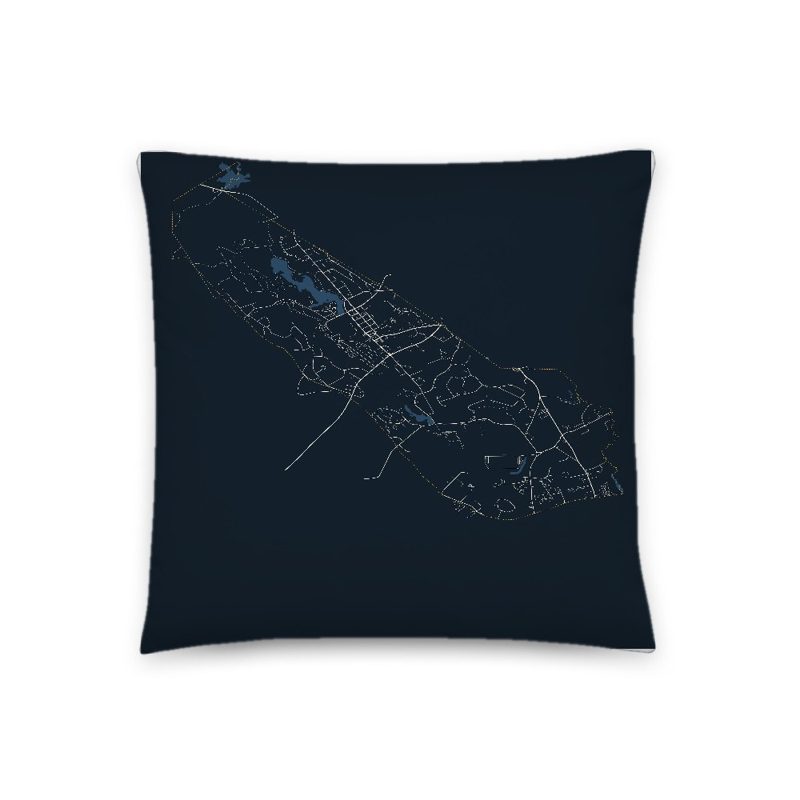
Soft-touch, zip cover
Sturdy all-over-print tote
Glossy top, cork back
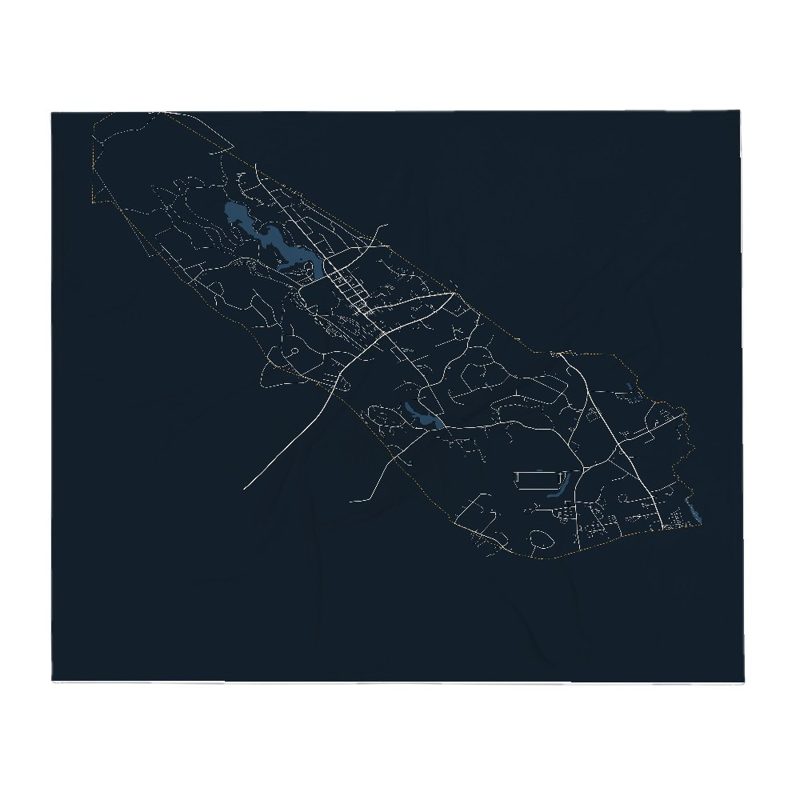
Soft fleece, 50″×60″
20 oz, double-wall stainless
Population 2010: 5,911 → 2020: 6,017
From Wikidata (CC0).
Hopedale was first settled by Europeans in 1660. Benjamin Albee built a mill on what is now the south end of Hopedale in 1664. A 64-square-mile (170 km2) area of the Blackstone Valley was incorporated as the town of Mendon. In 1780, Milford separated from Mendon. On August 26, 1841, Adin Ballou, along with the Practical Christians, gave Hopedale its name, within the town of Milford. Ballou and the Practical Christians established the Hopedale Community based on Christian and socialist ideologies in 1842. The utopian commune went bankrupt in 1856, and its assets were purchased by Ebenezer and George Draper, manufacturers of looms. Various industries developed under the direction of the Draper brothers, including the Hopedale Machine Company and Hopedale Furnace Company. The town was officially incorporated in 1886 when it separated from Milford. George Draper designed, paid for, and constructed the town hall, which is constructed of granite from Milford and sandstone, and was dedicated in 1887. The Unitarian church was another gift from the Drapers, and the Bancroft Memorial Library was a gift from a superintendent at the plant. The marble sculpture outside the library was paid for by the Drapers and shipped from Rome in 1904. In 1905, women were granted permission to swim at the town beach.
The family loom business continued to develop with subsequent generations, and at its peak, the Draper Corporation was the largest maker of textile looms in the United States. The company was acquired by Rockwell International in 1967. The Draper factory in Hopedale closed on August 29, 1980. There have been several attempts at redeveloping the facility and its surrounding property, most recently in 2007, 2018, and finally, 2020, when it was announced that it would be fully demolished. The Draper factory was slated to be demolished beginning in July 2020, and as of October 2020, demolition has begun. To many of the citizens’ surprise, the latter attempt was successful, and the land where the factory once sat has been completely leveled and cleaned. To this day, only a few of the external satellite buildings remain scattered throughout downtown. It is not yet known what the land will be used for.
Hopedale is included in the Blackstone River Valley National Heritage Corridor, although much of the town lies within the Charles River watershed.
Adapted (trimmed) from the Wikipedia article Hopedale, Massachusetts, revision 1374432470 by its contributors, licensed CC BY-SA 4.0.
We share a part of every Hopedale sale with local partners, and we'd love to print from your collection. Old photographs, maps and postcards make the best keepsakes.
Partner with us