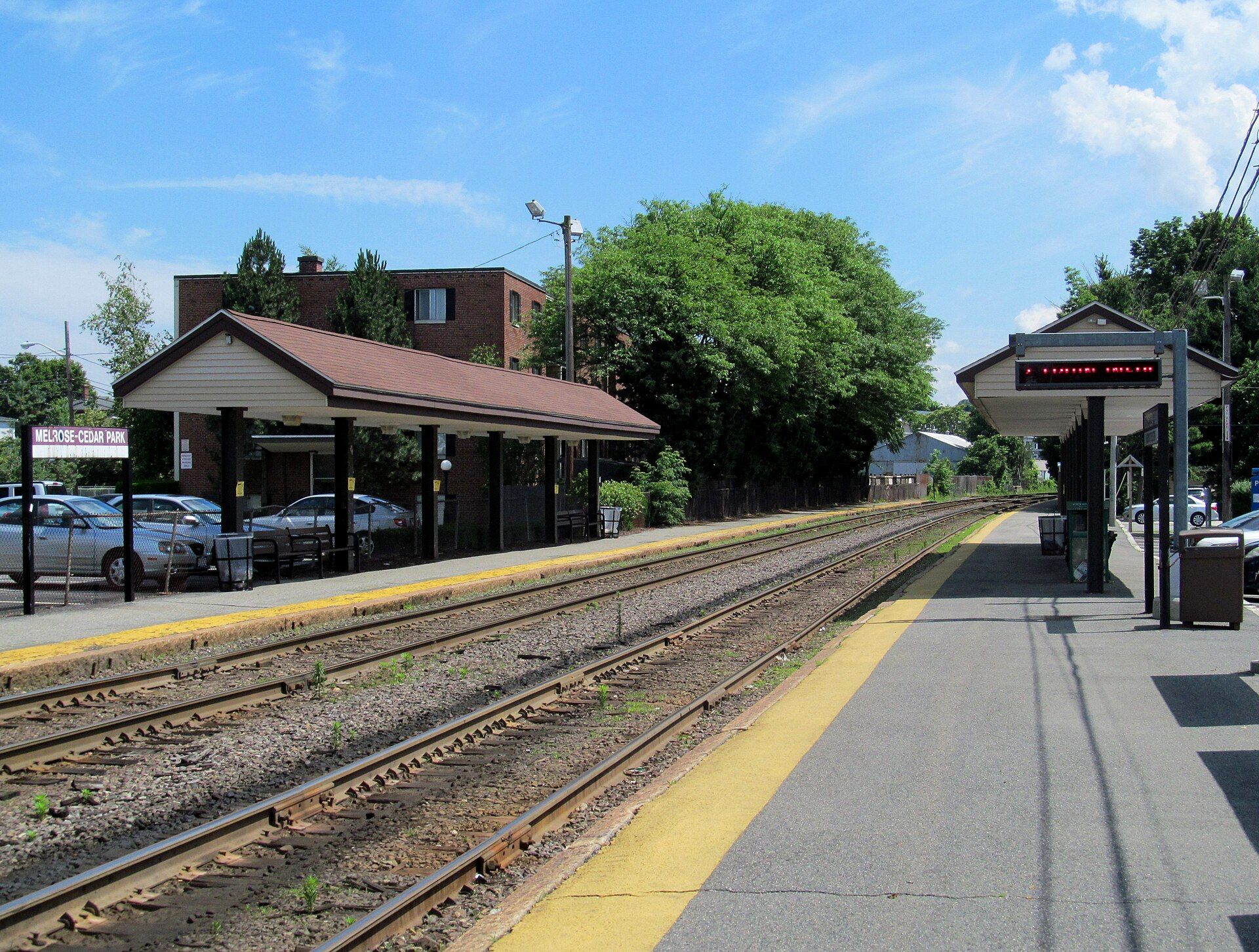
Melrose was originally called "Ponde Fielde" for its abundance of ponds and streams or "Mystic Side" because of its location in a valley north of the Mystic River. Landmarks include Melrose/Cedar Park station, Melrose Highlands station and Fells Connector Parkways. Melrose is the birthplace of Geraldine Farrar, soprano opera singer and film actress.
Every piece is drawn from Melrose's own map data and historic archives, then printed and shipped from the USA when you order. No two towns look alike.
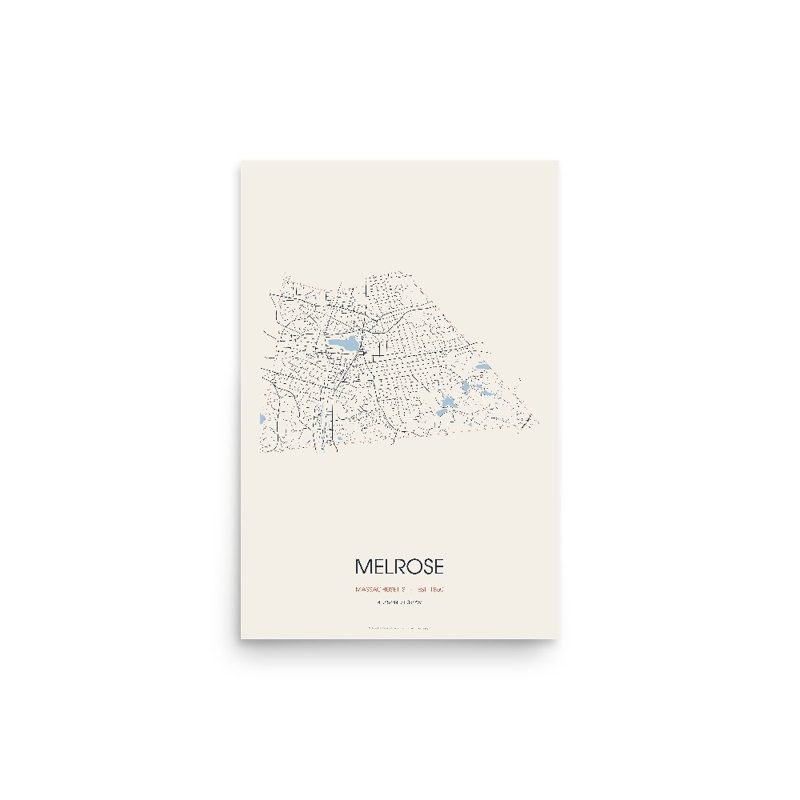
Every road in town, on archival matte paper
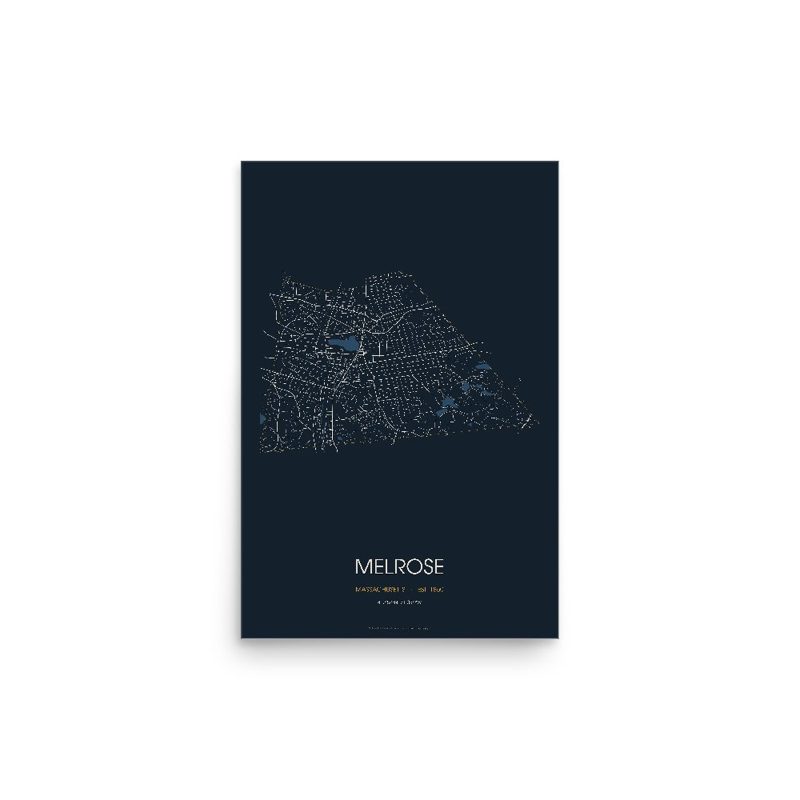
The same map, in navy and silver
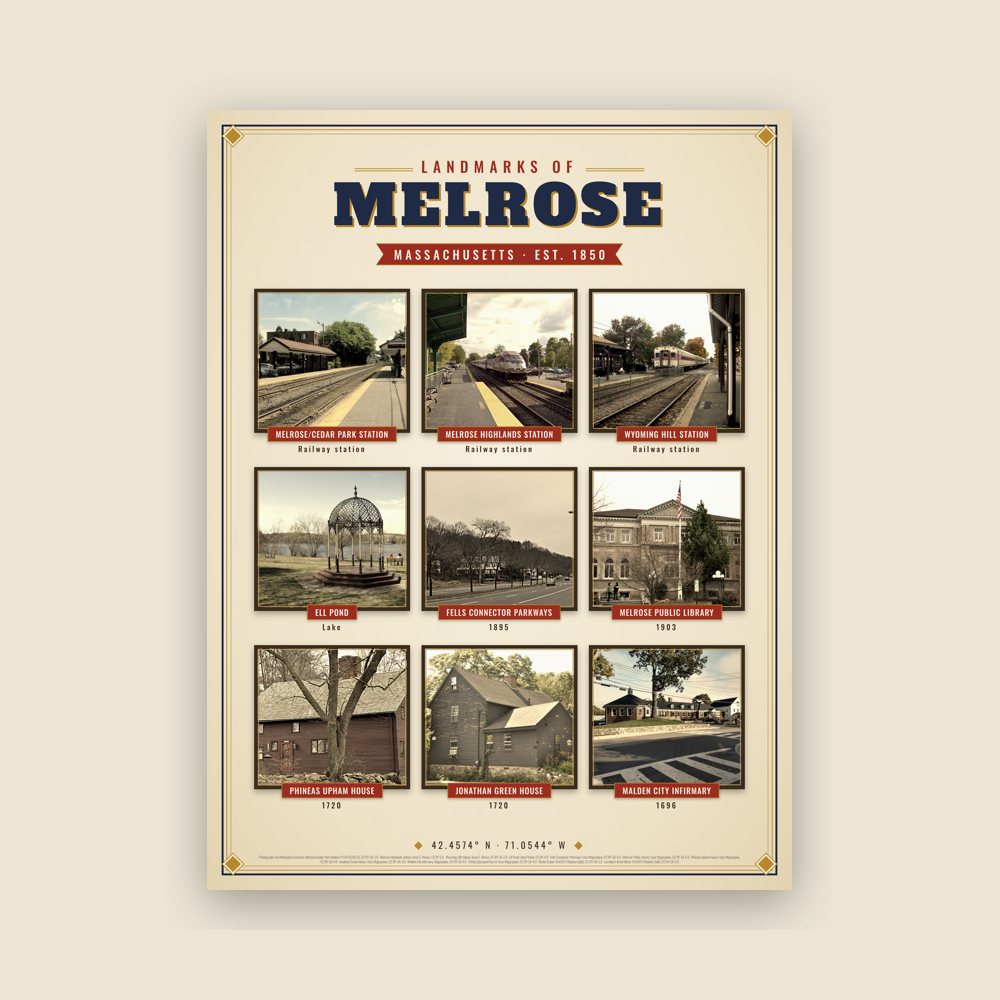
Nine local landmarks, archival matte
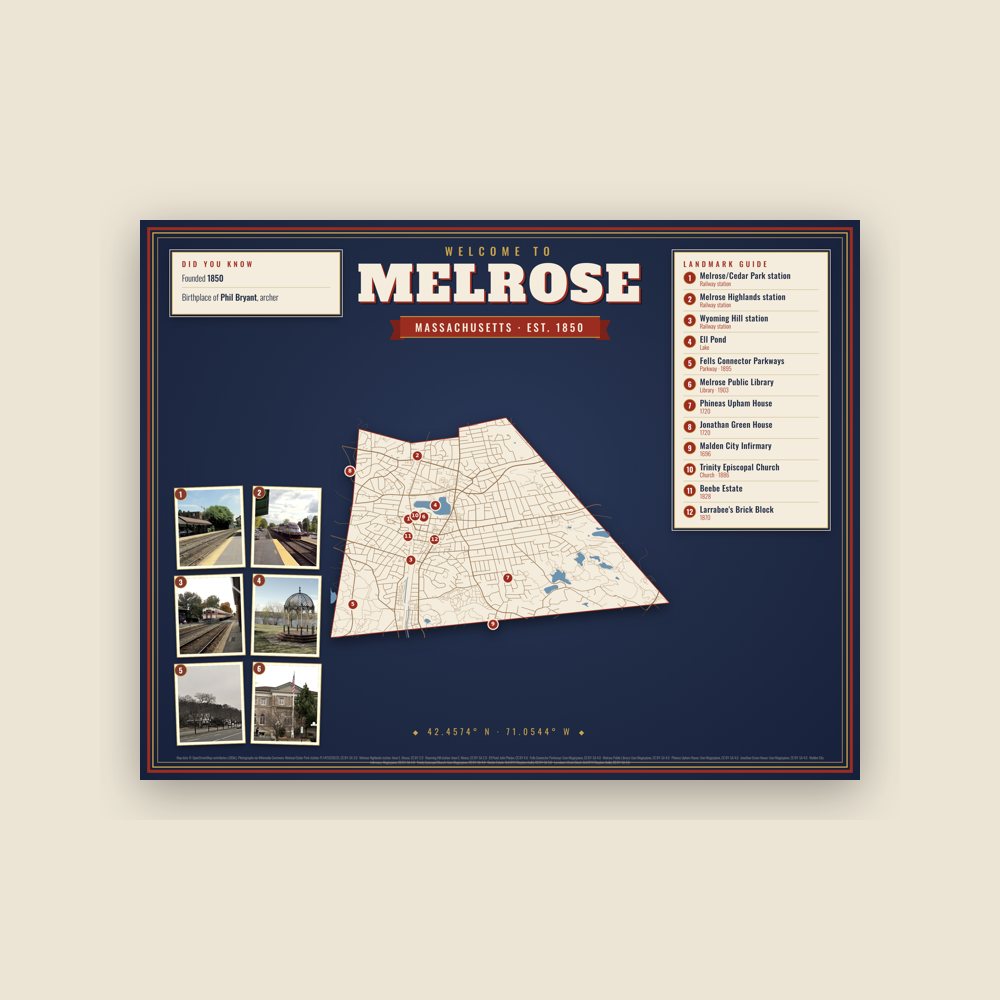
Map of local landmarks, washable fabric
Heavy-blend fleece, street map printed on the back
Soft Bella+Canvas jersey
Glossy ceramic, dishwasher safe
Ceramic keepsake, gold ribbon
Weatherproof, for the front walk
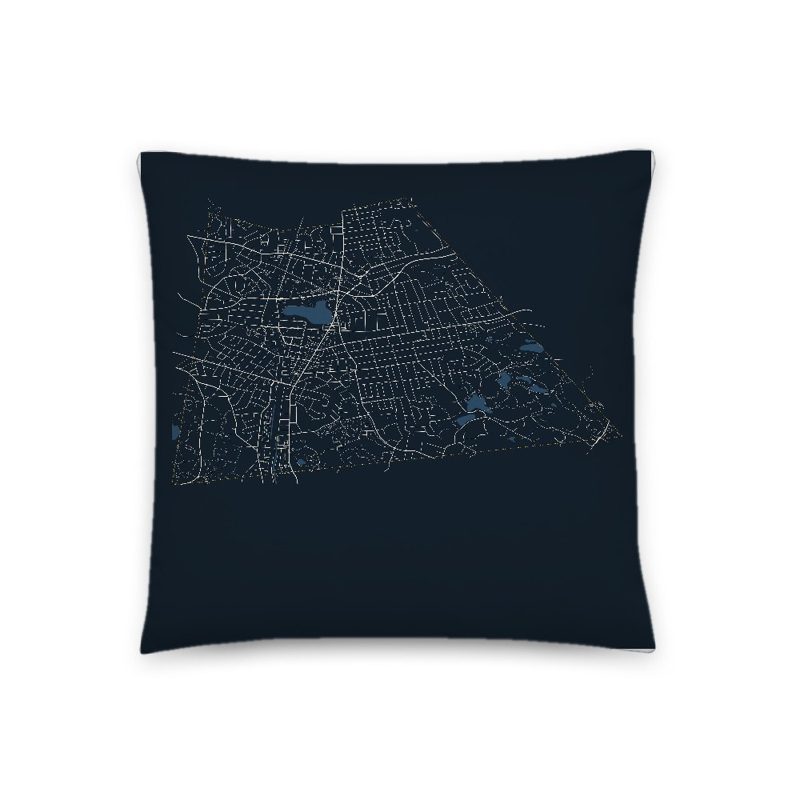
Soft-touch, zip cover
Sturdy all-over-print tote
Glossy top, cork back
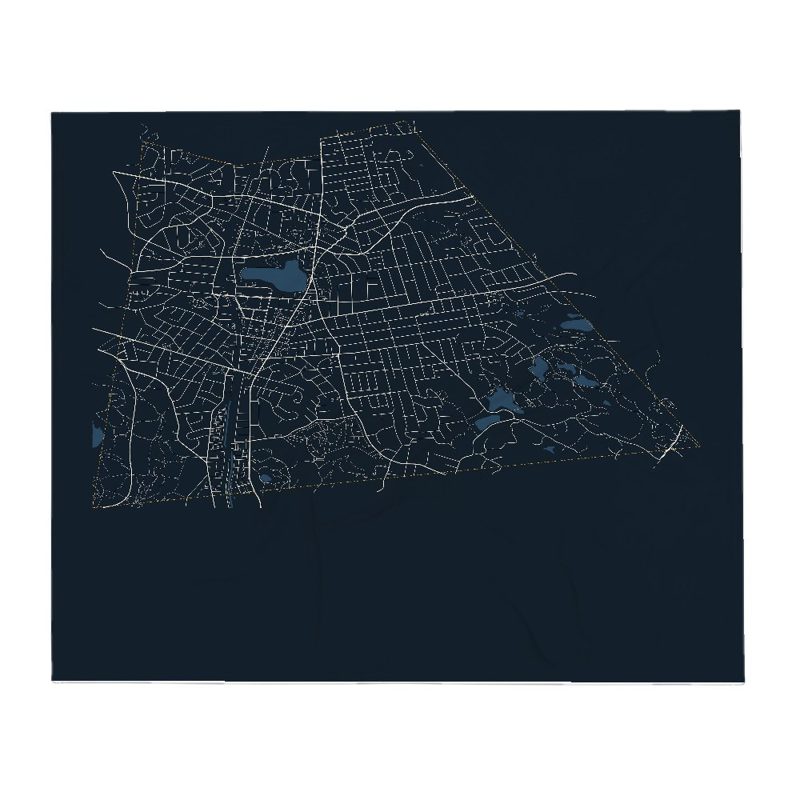
Soft fleece, 50″×60″
20 oz, double-wall stainless
Population 2010: 26,983 → 2020: 29,817
From Wikidata (CC0).
Melrose was originally called "Ponde Fielde" for its abundance of ponds and streams or "Mystic Side" because of its location in a valley north of the Mystic River. The area was first explored by Richard and Ralph Sprague in 1628 and became part of Charlestown in 1633 along with a large area of land encompassing most of the surrounding communities.
In 1649, the neighborhood of Charlestown known as Malden was incorporated as a separate town; the new town of Malden included most of present-day Melrose (then called North Malden) within its borders. North Malden largely remained a lightly populated farming community. By 1845, the Boston and Maine Railroad had built three stops (now the commuter rail stations of Wyoming Hill, Melrose/Cedar Park, and Melrose Highlands). Boston workers in search of a country atmosphere moved to the area and began commuting to work. The population of North Malden began growing, and in 1850 North Malden split from Malden proper and was incorporated as the town of Melrose. The town then annexed the highlands from neighboring Stoneham in 1853, creating the city's current borders. The name "Melrose" comes from the burgh of Melrose, Scotland. It was a reference to the Eildon hills of Melrose, Scotland, which the new town resembled. The name was suggested and advocated for by William Bogle, a Scotland native and longtime resident of North Malden.
The population of Melrose continued to grow throughout the second half of the nineteenth century. Farmland was increasingly partitioned into smaller parcels for residences and businesses. The fire department and the town's school district were founded, and the town hall was built in 1873. In 1899, the City of Melrose became the 33rd incorporated city in Massachusetts. Levi S. Gould became the city's first mayor on January 1, 1900. Melrose reached a peak in a population of 33,180 residents in 1970, before beginning a slow decline continuing through 2010. On April 1, 1982, Downtown Melrose was added to the National Register of Historic Places; the public library was similarly added to the register in 1988.
Adapted (trimmed) from the Wikipedia article Melrose, Massachusetts, revision 1374818199 by its contributors, licensed CC BY-SA 4.0.
We share a part of every Melrose sale with local partners, and we'd love to print from your collection. Old photographs, maps and postcards make the best keepsakes.
Partner with us