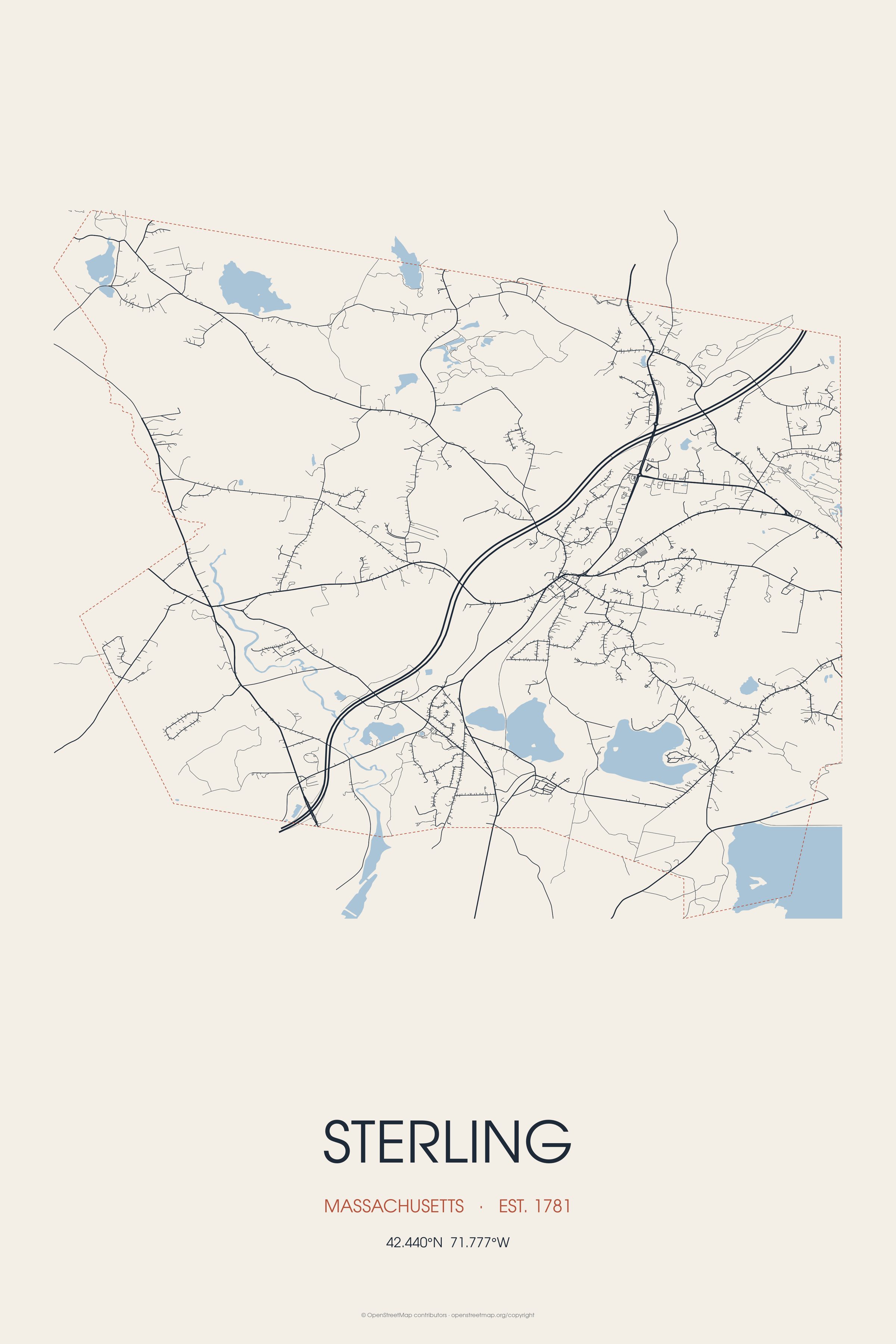
Among these first settlers were families such as Beman, Sawyer, Houghton, and Osgood – names reflected to this day in the names of Sterling's oldest roads. Landmarks include Sterling Center Historic District, Stephen Hastings House and Sterling Airport. Sterling is the birthplace of Jay Cutler, bodybuilder.
Every piece is drawn from Sterling's own map data and historic archives, then printed and shipped from the USA when you order. No two towns look alike.
Every road in town, on archival matte paper
The same map, in navy and silver
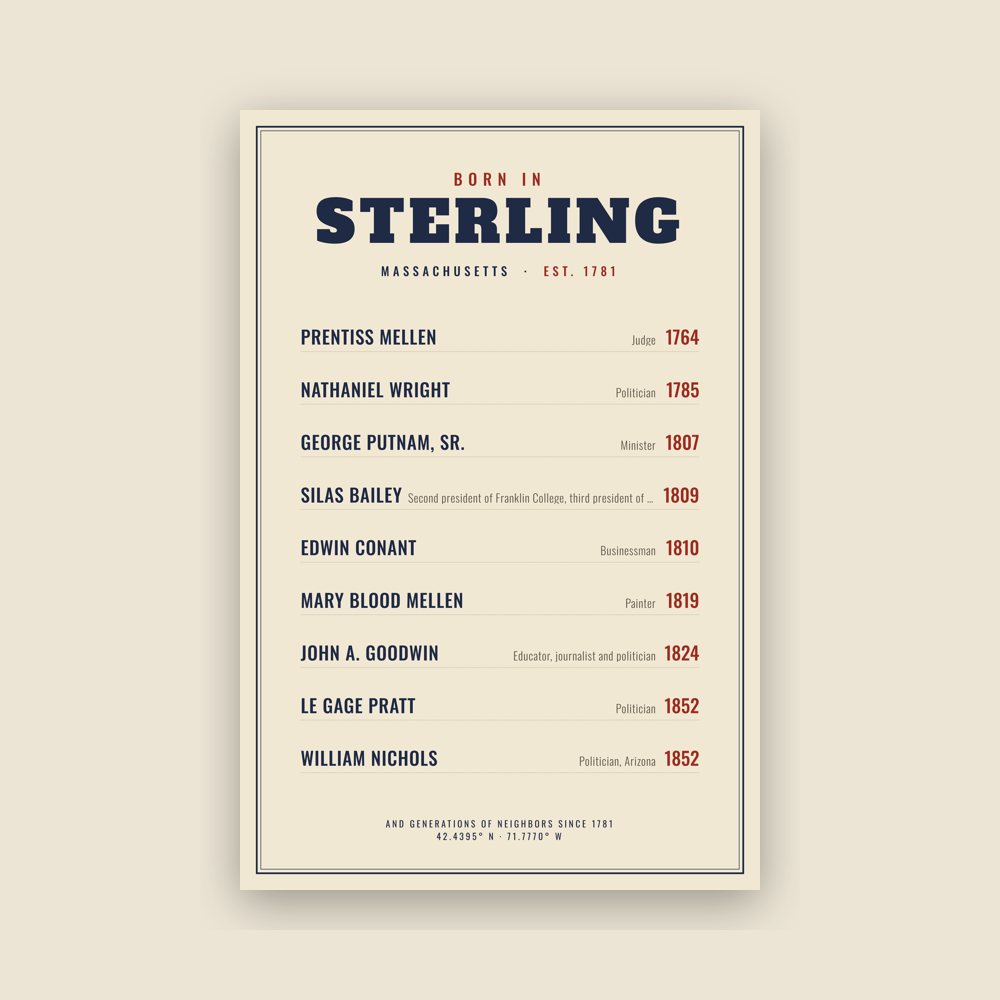
Famous natives, by birth year
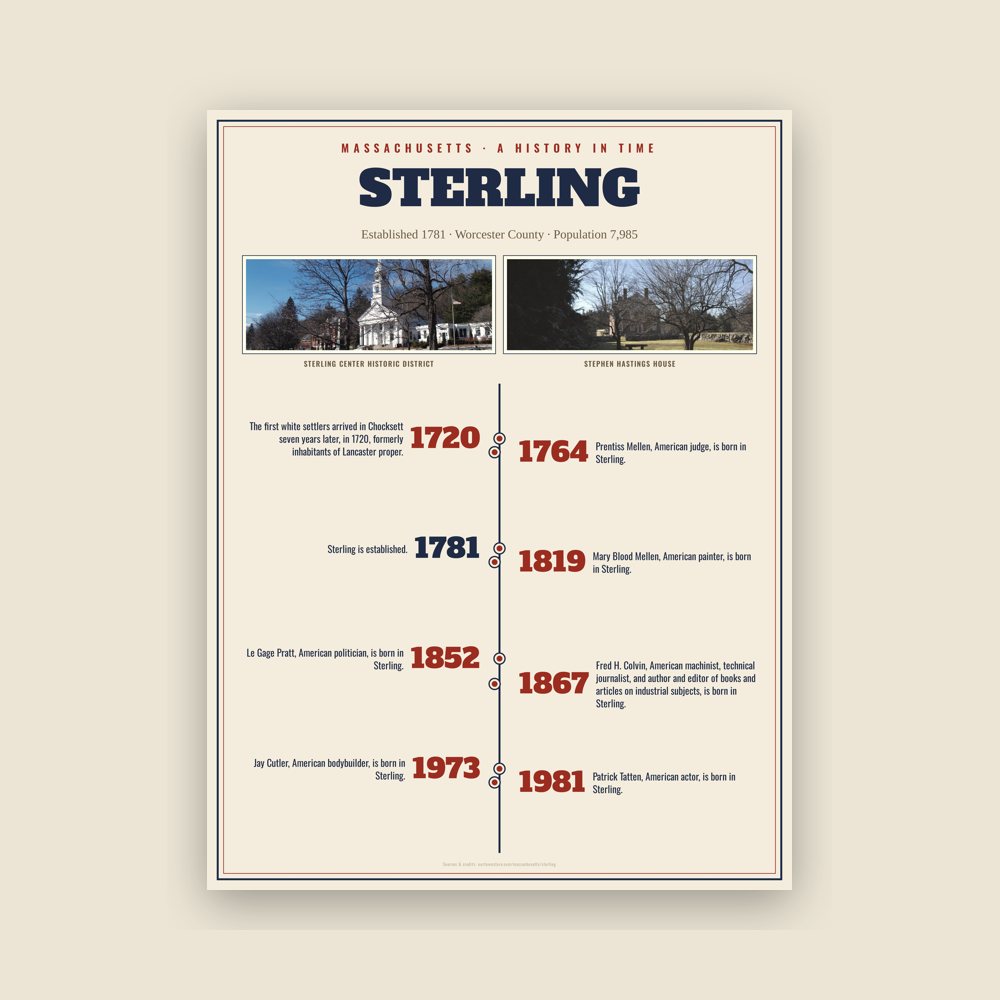
The town's story in dates, from its own records, for home or classroom
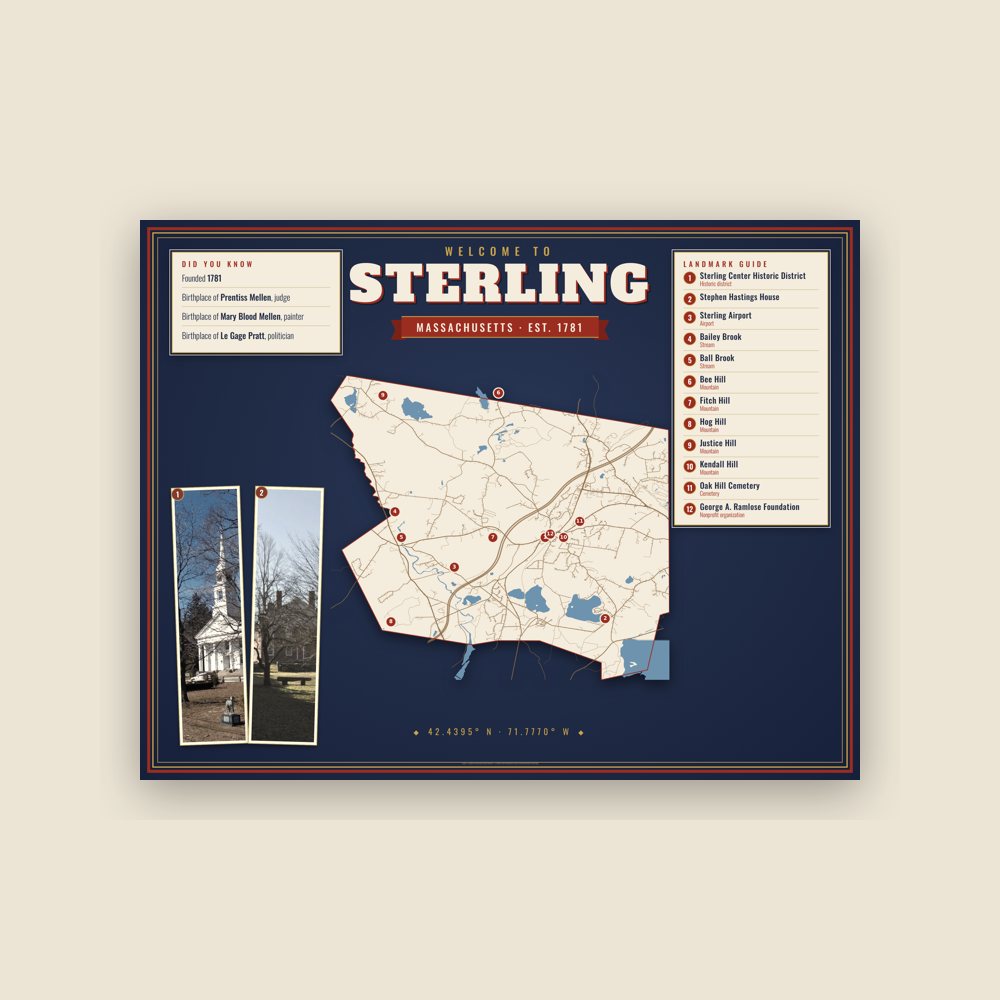
Map of local landmarks, washable fabric
Heavy-blend fleece, street map printed on the back
Soft Bella+Canvas jersey
Glossy ceramic, dishwasher safe
Ceramic keepsake, gold ribbon
Weatherproof, for the front walk
24″×16″, printed coir-look fibers, rubber back
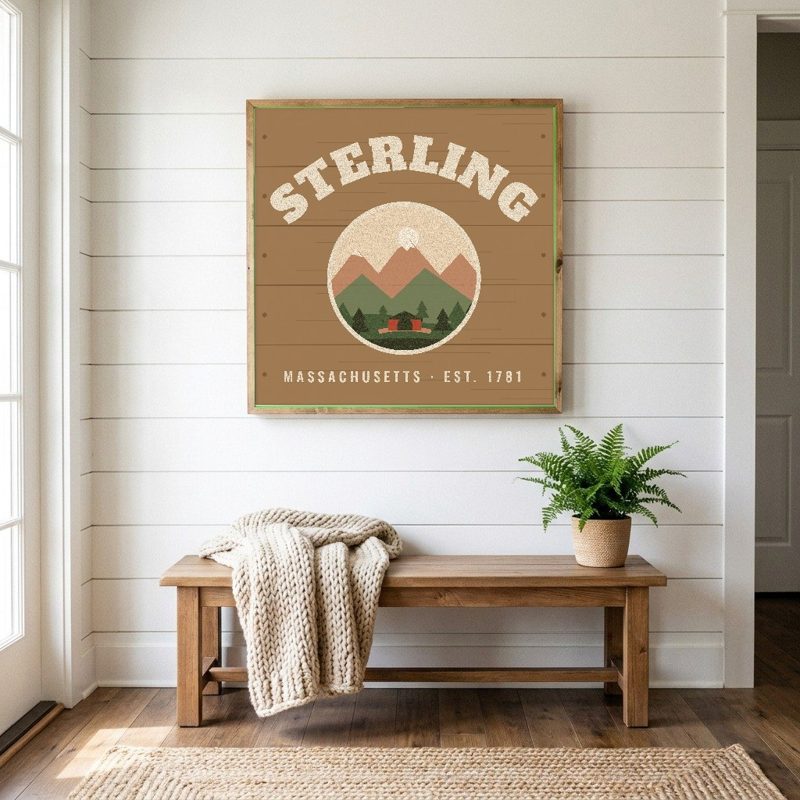
12″×12″ printed wood, ready to hang
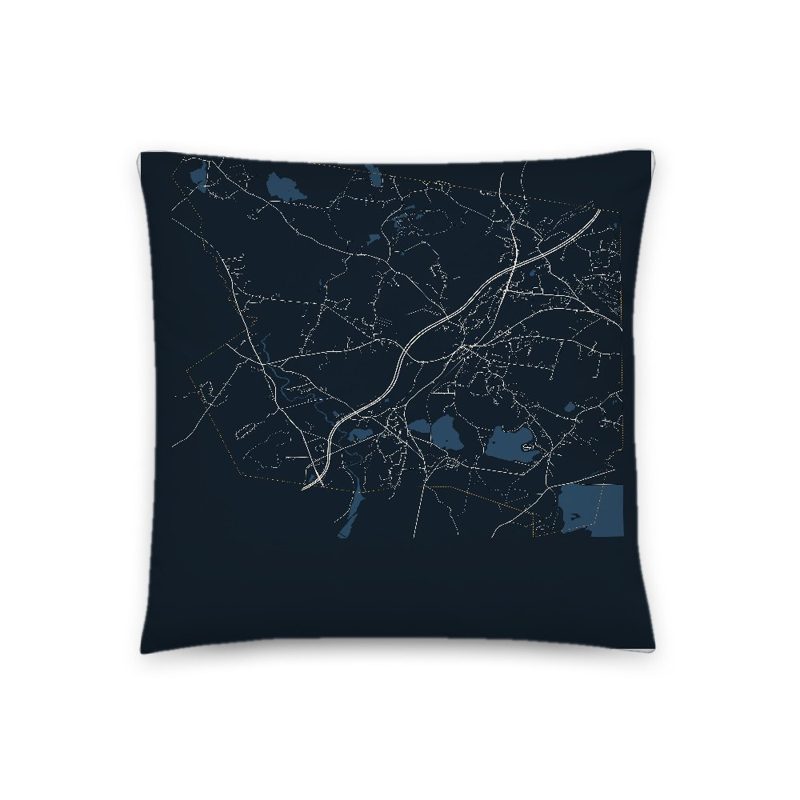
Soft-touch, zip cover
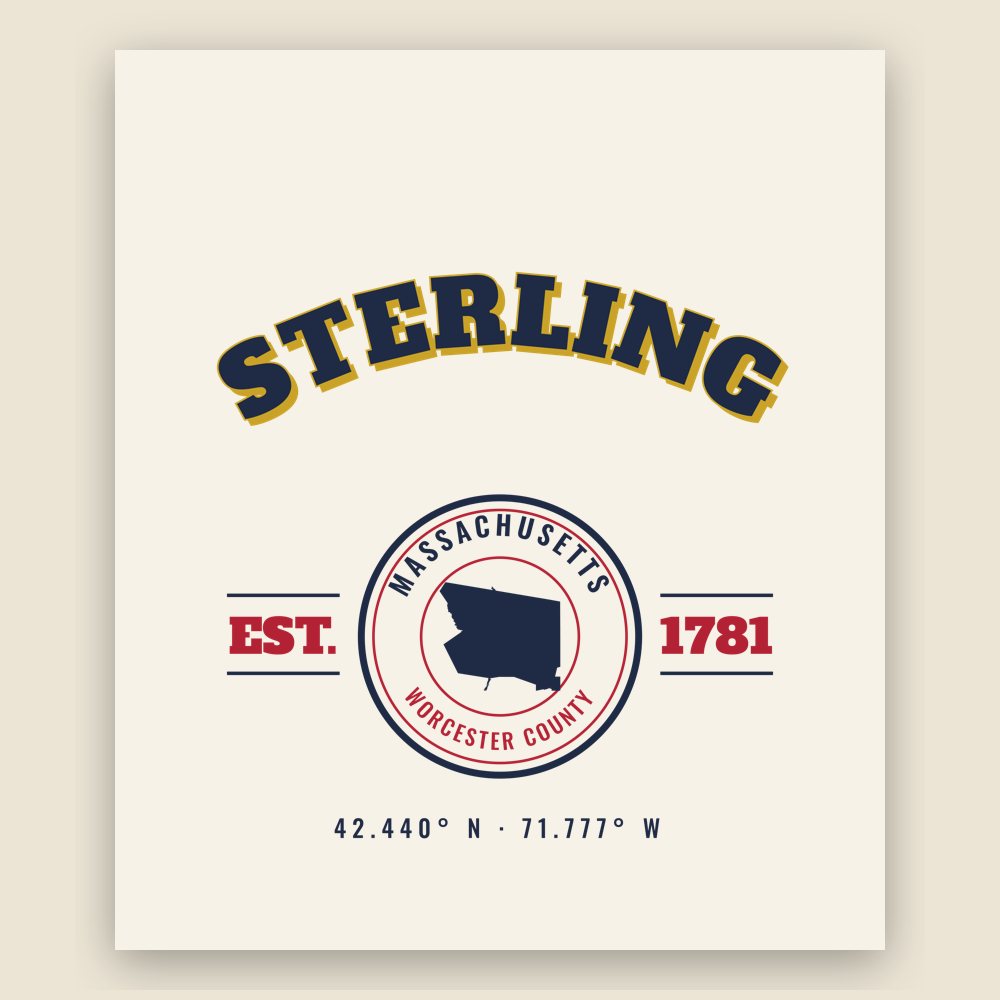
Sturdy all-over-print tote
Glossy top, cork back
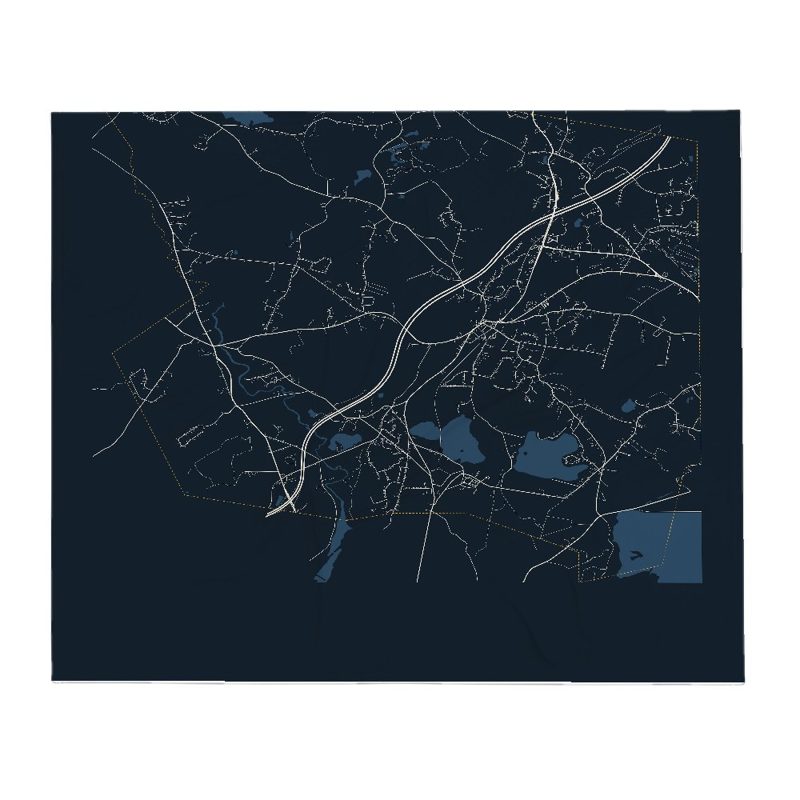
Soft fleece, 50″×60″
20 oz, double-wall stainless
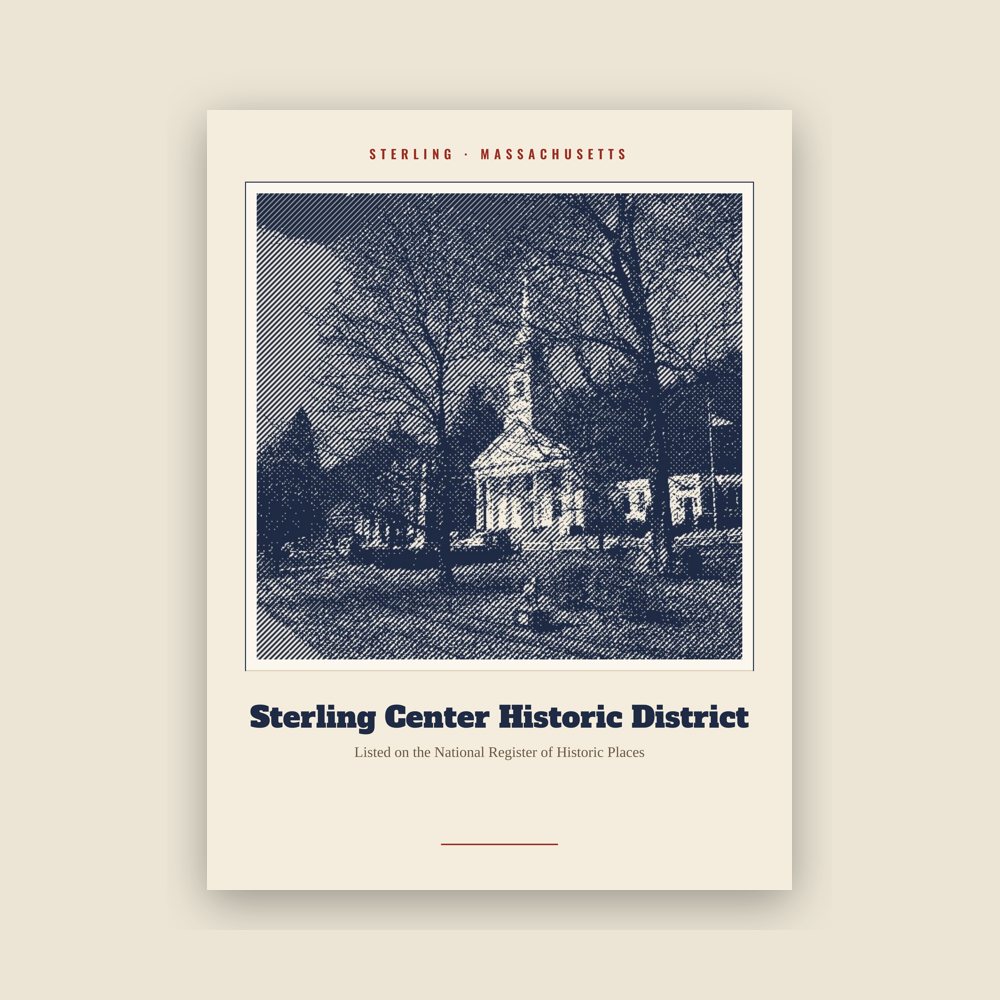
Archival matte print of a local landmark, credited to its photographer
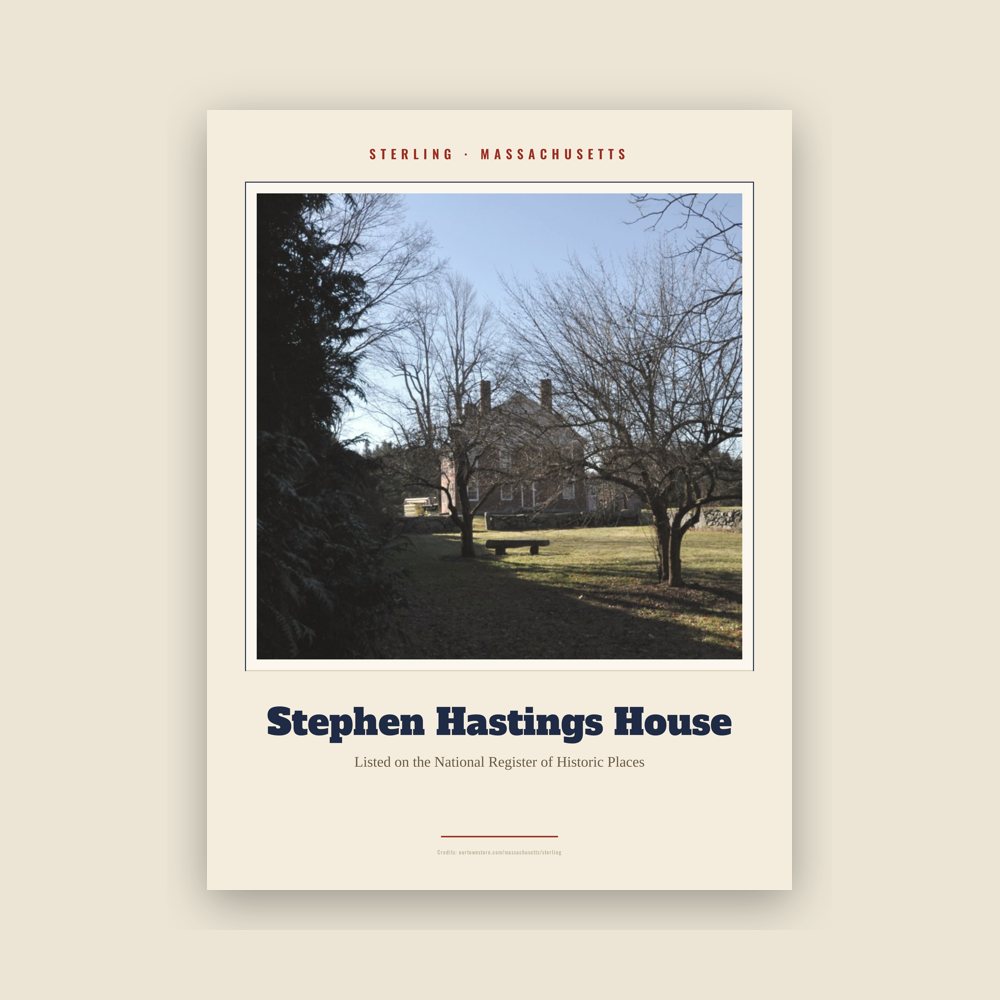
Archival matte print of a local landmark, credited to its photographer
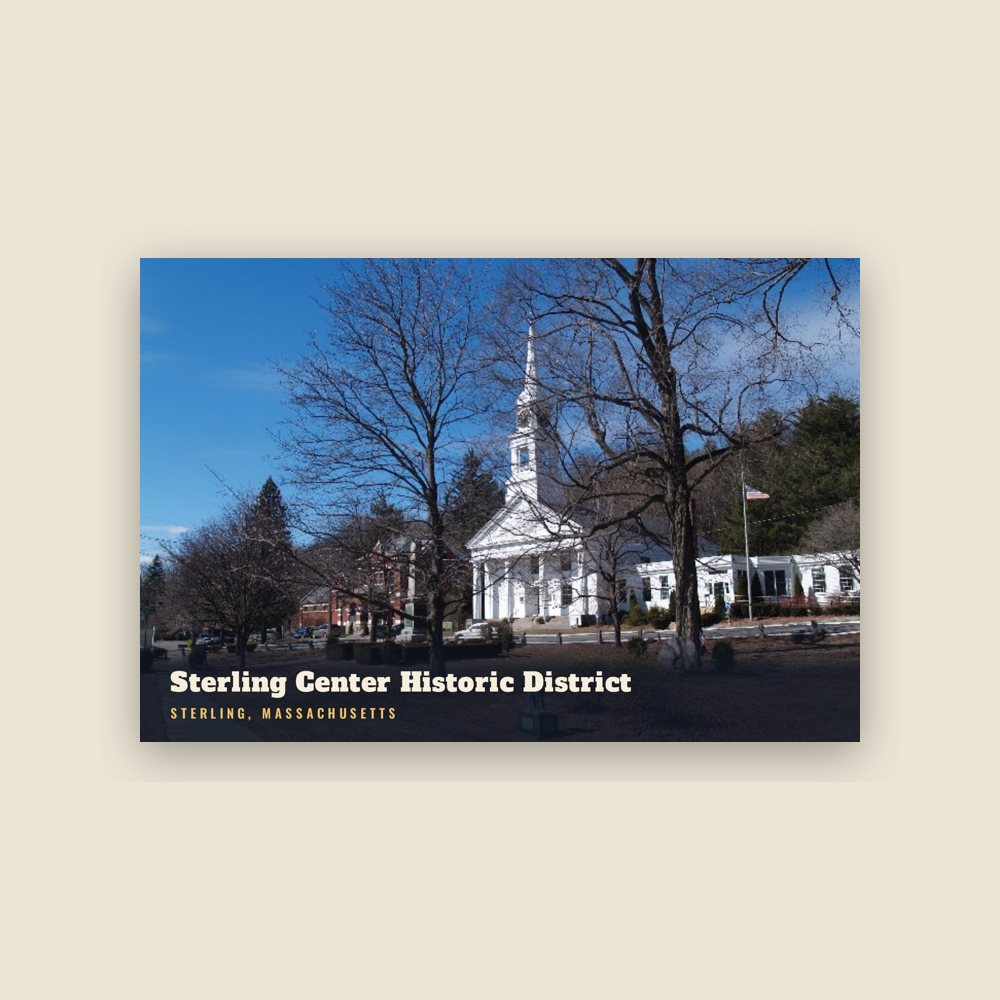
6″×4″ postcard, glossy front
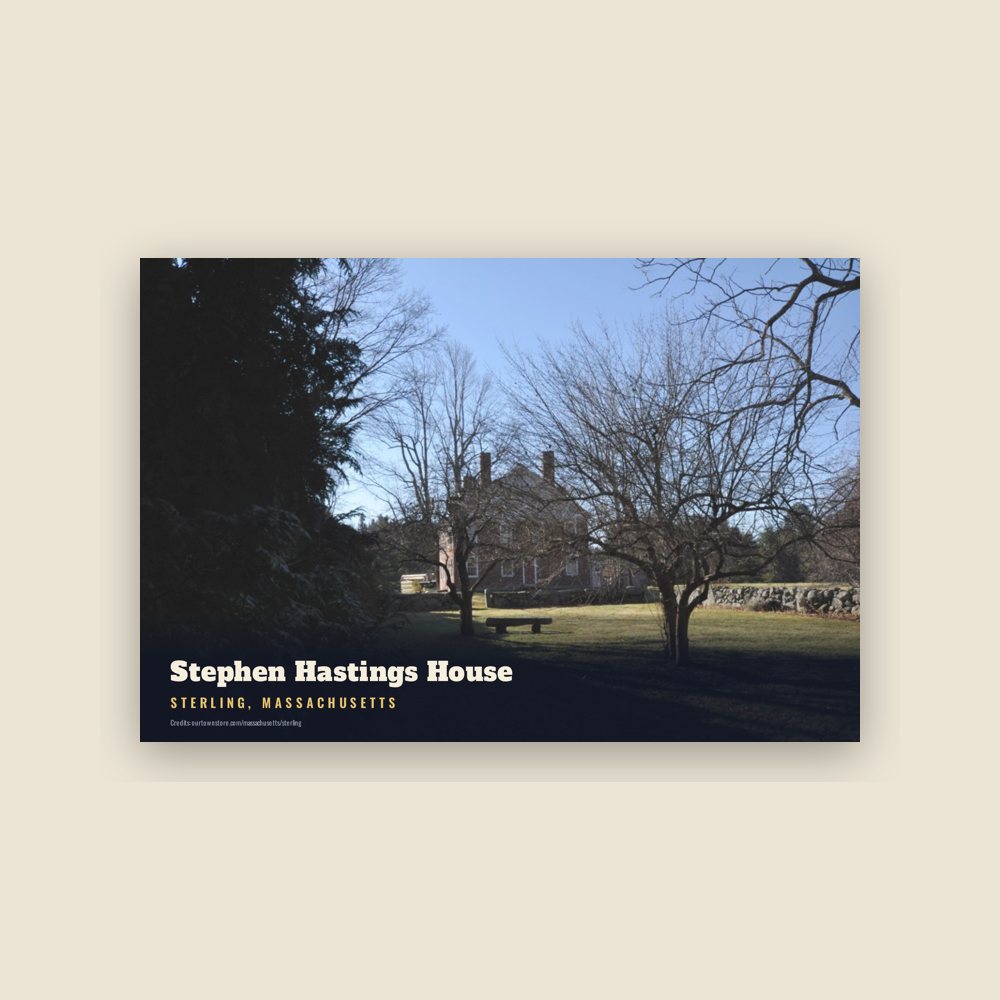
6″×4″ postcard, glossy front
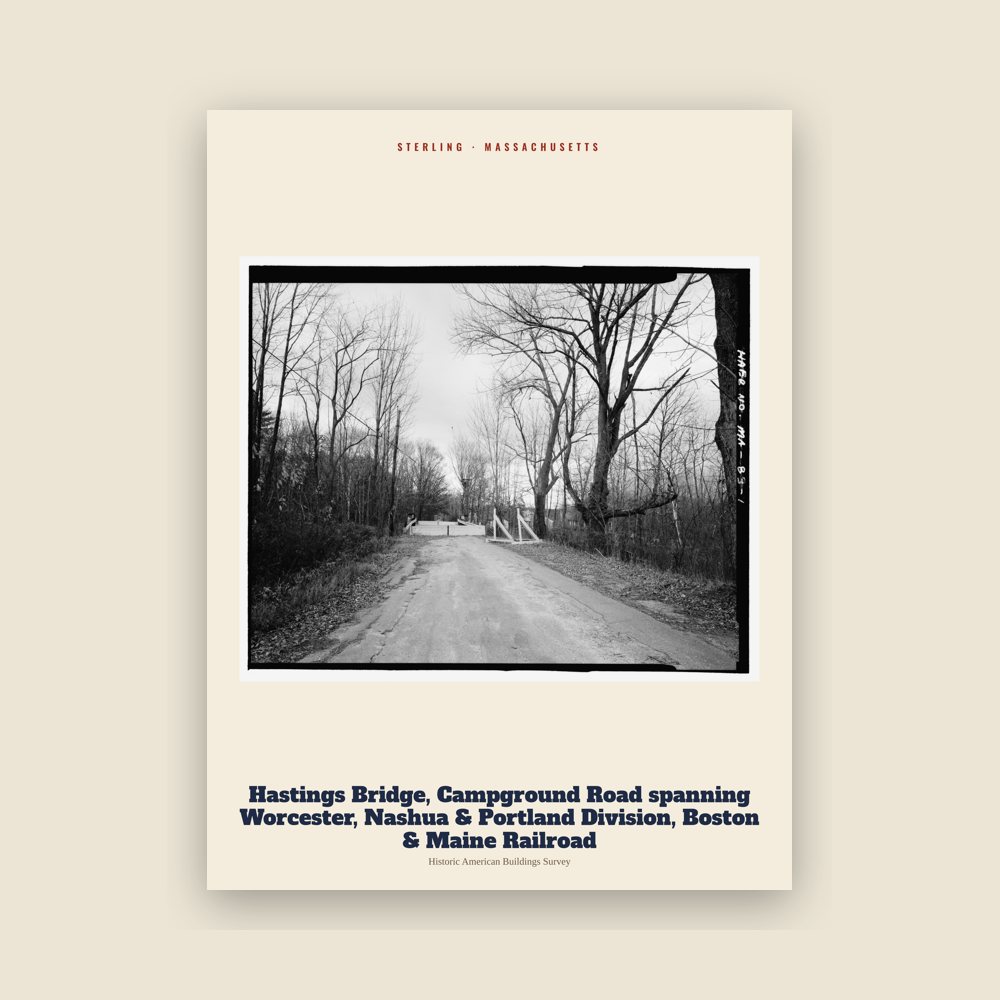
From the Library of Congress collections: a historic survey drawing or photograph of the town
Population 2020: 7,985
From Wikidata (CC0).
Previous to its incorporation, it was "the Second Parish of Lancaster." It was commonly called by a portion of its Indian name, Chocksett. There was an Indian fort and graveyard located between East Waushacum Pond and West Waushacum Pond. Sagamore Sam, a Nashaway sachem and insurgent during King Philip's War, was from Waushacum.
The Nipmuc minister, Peter Jethro, worked in the area in the 1670s. The original Indian name of the area was Woonsechocksett. The land encompassing the Chocksett region was not originally included in the first land sold by the great Indian Chief Sholan to the settlers of the Lancaster grant. However, Sholan's nephew Tahanto would eventually sell the Chocksett land to the inhabitants of Lancaster in 1713.
The first white settlers arrived in Chocksett seven years later, in 1720, formerly inhabitants of Lancaster proper. Among these first settlers were families such as Beman, Sawyer, Houghton, and Osgood – names reflected to this day in the names of Sterling's oldest roads.
A short time after settlement, in 1733, the residents of the Chocksett area requested its own incorporation, separate from Lancaster, due to the "great inconvenience" of a long distance to the church in Lancaster's center. This request was denied. However, by 1780 the population of Chocksett was so numerous as to constitute a majority. So the voters of the area voted out the existing Lancaster town officers and began to conduct town business and meetings in Chocksett. This was enough to convince the rest of Lancaster that it was now time for Chocksett, the Second Parish of Lancaster, to go its own way.
In 1781, Chocksett was incorporated as its own town: Sterling. The town derives its name from General William "Lord Stirling" Alexander, who served under Gen. George Washington in the New York and other campaigns. His portrait hangs in the town hall, and the town commemorated Alexander with a medallion during its bicentennial celebration in 1981. A duplicate portrait resides in the town hall of New Windsor, NY.
Adapted (trimmed) from the Wikipedia article Sterling, Massachusetts, revision 1375525189 by its contributors, licensed CC BY-SA 4.0.
We share a part of every Sterling sale with local partners, and we'd love to print from your collection. Old photographs, maps and postcards make the best keepsakes.
Partner with us